The Construction Of The New Thanet Parkway Station Is Substantially Complete And It Will Open To Passengers On 31 July 2023
The title of this post, is the same as that of this page on the Network Rail web site.
The opening date is the most important information, but the rest of the page is worth a read, as it gives details of the work, that is still to do.
Much concerns sorting out the kevel crossings.
Consortium To Develop Low-Cost Operations To Revive France’s Local Lines
The title of this post, is the same as that of this article on Railway Gazette.
This was the first paragraph.
Thales has joined forces with a group of companies and the Nouvelle-Aquitaine Regional Council to develop innovative digital signalling and operations with a view to cutting the cost of running trains on lightly-used rural lines.
When I first read this article, I immediately thought, that the French problem is similar to problems we have in the UK, and I’ve also seen in other countries in Europe like Germany and The Netherlands.
The French consortium are looking at these technologies.
- Platform-agnostic, autonomous train positioning and odometry without trackside infrastructure.
- Cyber-secured data transmission via public telecommunications networks.
- High-density digital terrain mapping.
- Formal methods of generating safety data.
- A tablet-based supervision and operations interface for drivers.
- Integrated surveillance of level crossings.
- Network surveillance using sensors mounted on rail vehicles.
Thales says that the technology ‘will be fully interoperable with the core network and promises to reduce investment and operating costs by more than 30%’. Apart from reviving rural railways, it will improve safety, ‘especially at level crossings’, the company said.
As someone, who was designing and installing automation on heavy machinery nearly sixty years ago, I feel the French are on the right track.
I have a few thoughts.
Could Drone And/Or Missile Guidance Technology Be Used?
It should be noted that Thales Air Defence are a company who manufacture several successful missiles including the NLAW. They are also a subsidiary pf Thales Group, who are leading the French rural rail consortium.
I wouldn’t be surprised to find, that Thales have access to loads of applicable technology.
Could Drivers Use A Tablet To Drive The Train?
I don’t see why not!
The Elizabeth Line has been designed to use auto-reverse to speed up operations at Paddington, which I wrote about in Crossrail Trains Will Have Auto-Reverse.
I suspect that the driver has a simple controller to monitor the reversing train and stop it in an emergency.
Integrated Surveillance Of Level Crossings
Whoever solves this tricky problem will do the railways of the world a big service.
Network Surveillance Using Sensors Mounted On Rail Vehicles
This is starting to happen all over the world.
Conclusion
I think that the results of this French study will be felt worldwide.
Extending the Elizabeth Line – Stratford To Walthamstow and Chingford
A lot of people in Walthamstow and Chingford would like a direct rail connection to Stratford with its shopping, sporting, entertainment and employment opportunities.
The Hall Farm Curve used to provide this connection, but it was removed in 1968, despite having been electrified in 1960.
This map from cartometro.com shows the curve.

Note.
- The Chingford branch line is shown in orange.
- The triple-track Stratford branch of the West Anglia Main Line crosses the Chingford branch line at right angles.
- Lea Bridge station reopened in 2016.
It has been stated that the Hall Farm Curve would be reinstated as an electrified single track.
There would probably be a need for a crossover to the North of the former Hall Farm junction to enable trains from Lea Bridge to get to the Chingford-bound track.
The Hall Farm Curve would also give access to Elizabeth Line and Greater Anglia services at Stratford. But it may be that when the Elizabeth Line opens fully in November, travellers get used to going into Liverpool Street and changing there.
Services Between Stratford and Chingford Via Walthamstow
Providing this service might be difficult, but not impossible.
- Trains could use the High Meads Loop at Stratford.
- Digital signalling may allow more trains to be squeezed in.
- Chingford could certainly handle eight trains per hour (tph)
But there is always the problem of the level crossing at Highams Park station.
Changing Between The Elizabeth And Chingford Branch Lines At Liverpool Street Station
Consider.
- At present Liverpool Street station on the Lizzie Line has sixteen trains per hour (tph).
- Eight tph go to both Eastern termini at Abbey Wood and Shenfield.
- In the West two tph go to each of Heathrow Terminal 4, Heathrow Terminal 5, Maidenhead and Reading, with the other eight tph reversing at Paddington.
- If you travel in the Eastern end of a Lizzie Line train, you should enter Liverpool Street station opposite to where all London Overground services including those to and from Chingford terminate in the station.
- The walking route between the Elizabeth And Chingford Branch Lines At Liverpool Street is step-free.
Some passengers will use this route to places like Walthamstow Central, but others moan, that there is no direct connection between the Victoria and Lizzie Lines.
Stations Without Step-Free Access On The Chingford Branch Line
These stations on the Chingford Branch Line do not have full step-free access between train and street.
- Bethnal Green
- Cambridge Heath
- London Fields
- Hackney Downs
- Clapton
- St. James Street
- Walthamstow Central
- Wood Street
Only Hackney Downs and Walthamstow Central have been mentioned with respect to installing some form of step-free access.
Increasing Capacity Between Liverpool Street And Chingford
The Chingford Branch Line can handle pairs of four-car trains and running these all day, would surely be the best way to increase capacity.
Conclusion
If money was no object, the Chingford Branch Line could be improved to make it a much better feeder line for the Elizabeth Line.
I also have a feeling, that a lot of people living in North-East London will switch their travelling from the Victoria Line to the Chingford Branch Line and the Lizzie Line.
Driver Hospitalized After Brightline Train Hits Pickup Truck In Hallandale Beach
The title of this post, is the same as that of this article on 850 WFTL.
The driver certainly didn’t have a full load in the front of his pickup.
This paragraph describes the incident.
Dashcam video provided by Brightline captured the moment the driver of the silver pickup drove around the gate arm and onto the track a split second before impact. The arm was down when the collision happened.
Perhaps, the driver was trying to get a Darwin Award.
London Bus Crash: Children Injured As Double-Decker Hits Shop
The title of this post, is the same as that of this article on the BBC.
These are the first three paragraphs.
Three children and two adults have been taken to hospital after a double-decker bus hit a shop in north-east London.
The crash happened on Selwyn Avenue, Highams Park, at about 08:20 GMT, the Metropolitan Police said.
London Ambulance Service (LAS) said 14 other people were treated at the scene, near Highams Park Overground station, but did not need hospital treatment.
The driver is quoted as saying, that his brakes failed.
This Google Map shows the route of the 212 bus route through Highams Park.
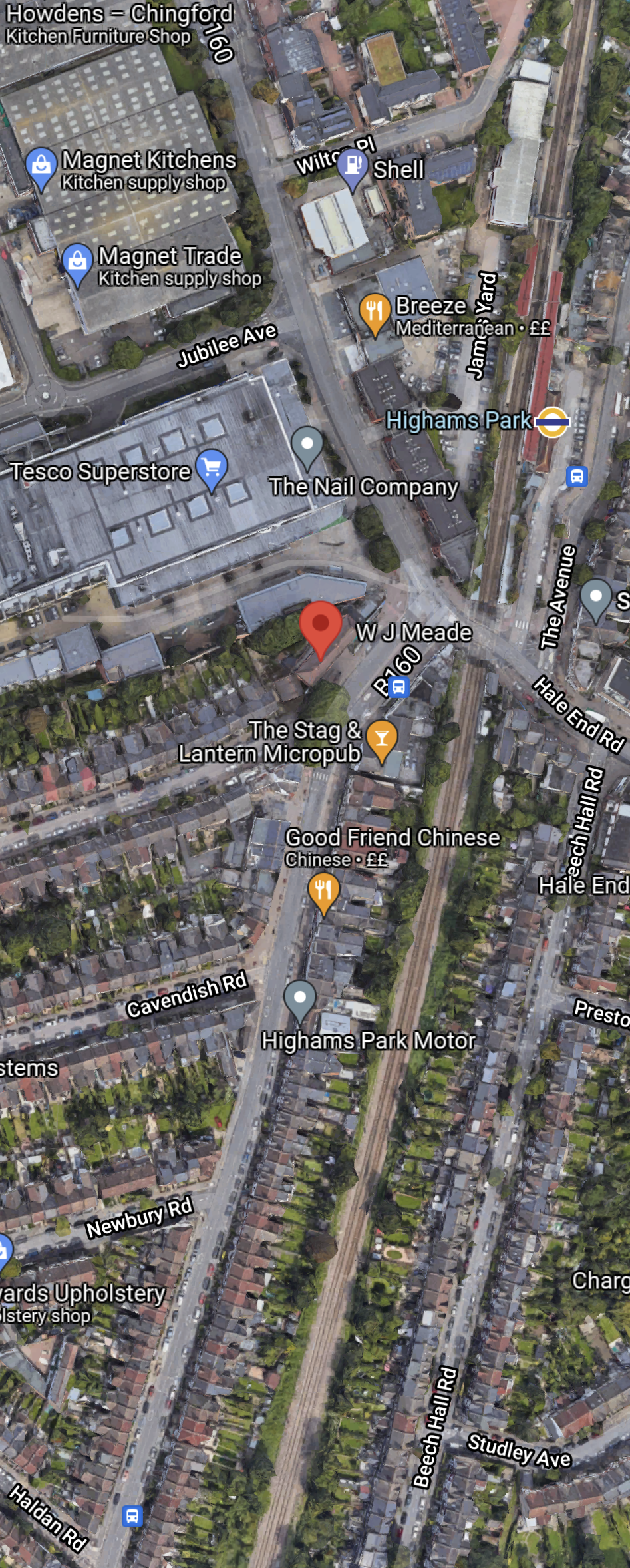
Note.
- The red arrow in the middle of the map shows the location of the crash.
- The bus route runs North-South on the map to the West of the railway line.
The pictures in the article show that the bus was going to Chingford, which is in the North.
In May las year, I took a ride on a 212 bus,which I described in A Trip On An Electric Double Deck Bus On Route 212 Between Chingford And St. James Street Stations.
This is an extract from that post.
I know someone, who used to manage this route and they called it a basket case.
I can certainly understand that.
- The route is narrow in places with cars parked on both sides of the road. This must delay services.
- I was lucky with the level crossing at Highams Park station, but at busy times it could be a nightmare.
Will the new Class 710 trains on the parallel Chingford Branch Line improve matters, by attracting passengers away from their cars in the area and the buses?
There has also been talk of a new station at Chingford Hatch, which could also be served by the 212 bus.
I can’t help feeling that the level crossing was something to do with the crash. Especially as a train went through just before the crash.
Interestingly, a few months ago, I used a black cab driven by a guy, who lives near Highams Park station. He felt the level crossing could be closed and drivers could use other routes. He also said, that since the new trains had started running, more were using the trains.
Perhaps improving the railway, with a couple of new stations, would also take the pressure of the buses.
The Completed Bridge At Feltham Station
I took these pictures of the completed bridge at Feltham station.
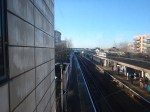
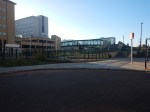
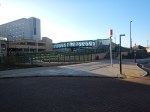
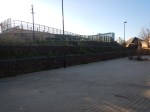

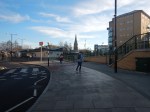
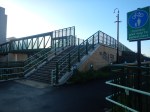
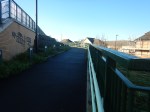
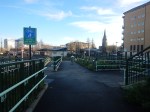
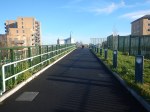
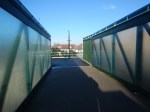
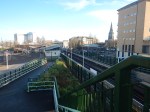
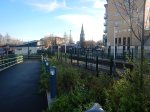
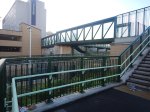
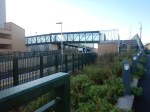
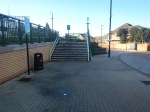
Note.
- The platforms at Feltham station have been lengthened.
- The level crossing at the station has been removed.
- The new bridge allows pedestrians to cross the railway.
- 4. The new bridge has already been vandalised.
In addition to the bridge, there is also a bridge with lifts in the station.
Level Crossing Trouble On The Northumberland Line
There is an article on Chronicle Live, which is entitled Exodus Fears Over Northumberland Line Underpass Plans For Ashington.
There is also this sub-heading.
Opponents of a planned underpass in Ashington as part of work on the Northumberland Line rail project are being urged to have their say.
So what are some people protesting about?
This page on the ABC Railway Guide is entitled Hospital Crossing Level Crossing and gives details of the level crossing, that Network Rail want to replace with an underpass.
- The crossing is a public footpath crossing with whistleboards.
- Individual and collective risk rating is high.
- It is used by 110 pedestrians and cyclists per day.
- There don’t seem to have been many recent incidents.
I know of a similar crossing in a similar town to Ashington, where there have been several deaths and suicides.
As the Northumberland Line is likely to have a half-hourly service, which will mean four trains per hour (tph) over the crossing, I doubt any Health and Safety professional would sign off the Northumberland Line without separation of the trains from pedestrians and cyclists.
Admittedly, the main complaint of the residents is noise and drunken pedestrians, but aren’t the latter most likely to be run over by a train.
There is also suggestions that the crossing be moved further to the North.
This Google Map shows the crossing.
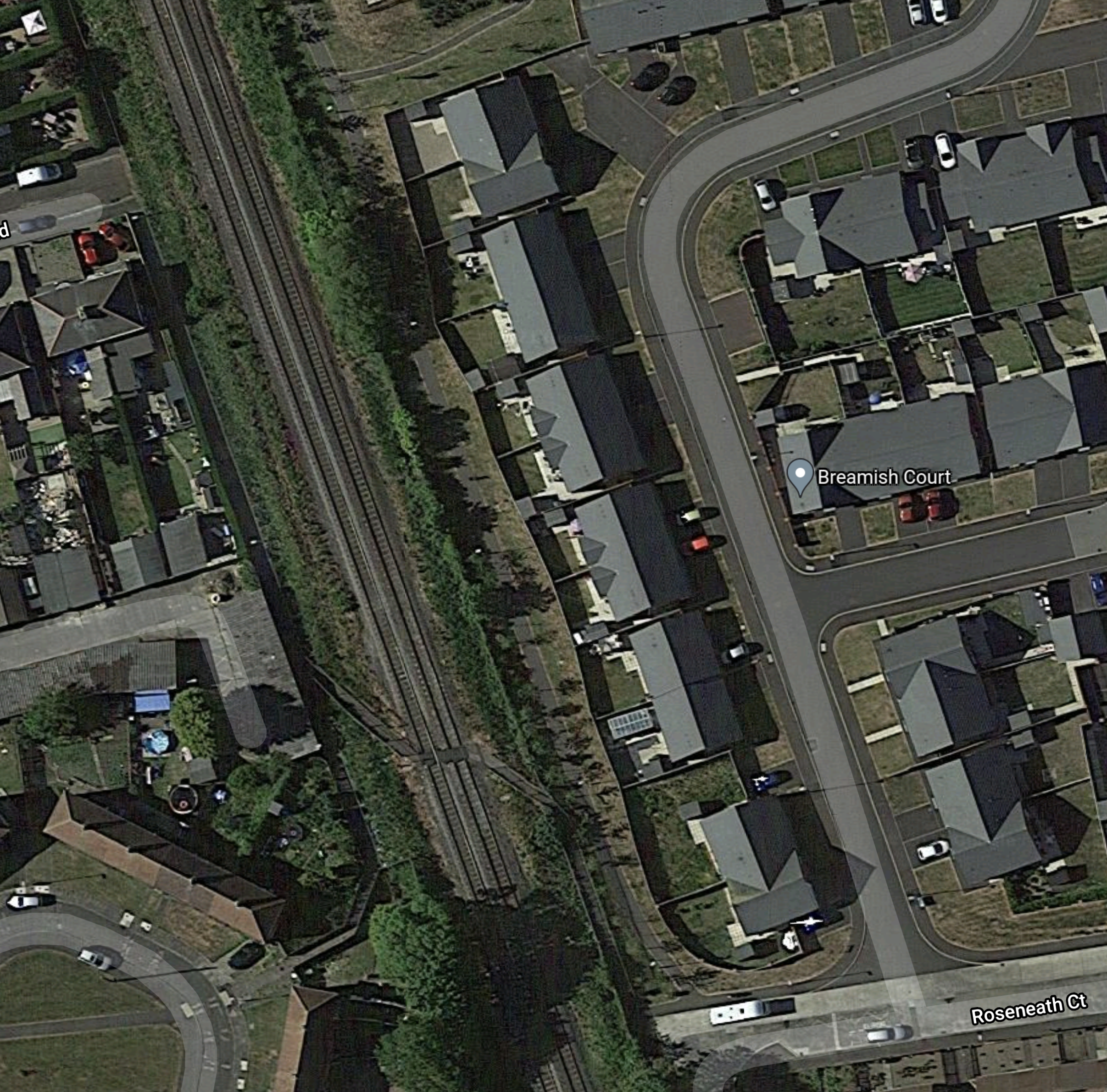
Note how the crossing zig-zags across the railway.
This second Google Map shows a 3D visualisation from the East.
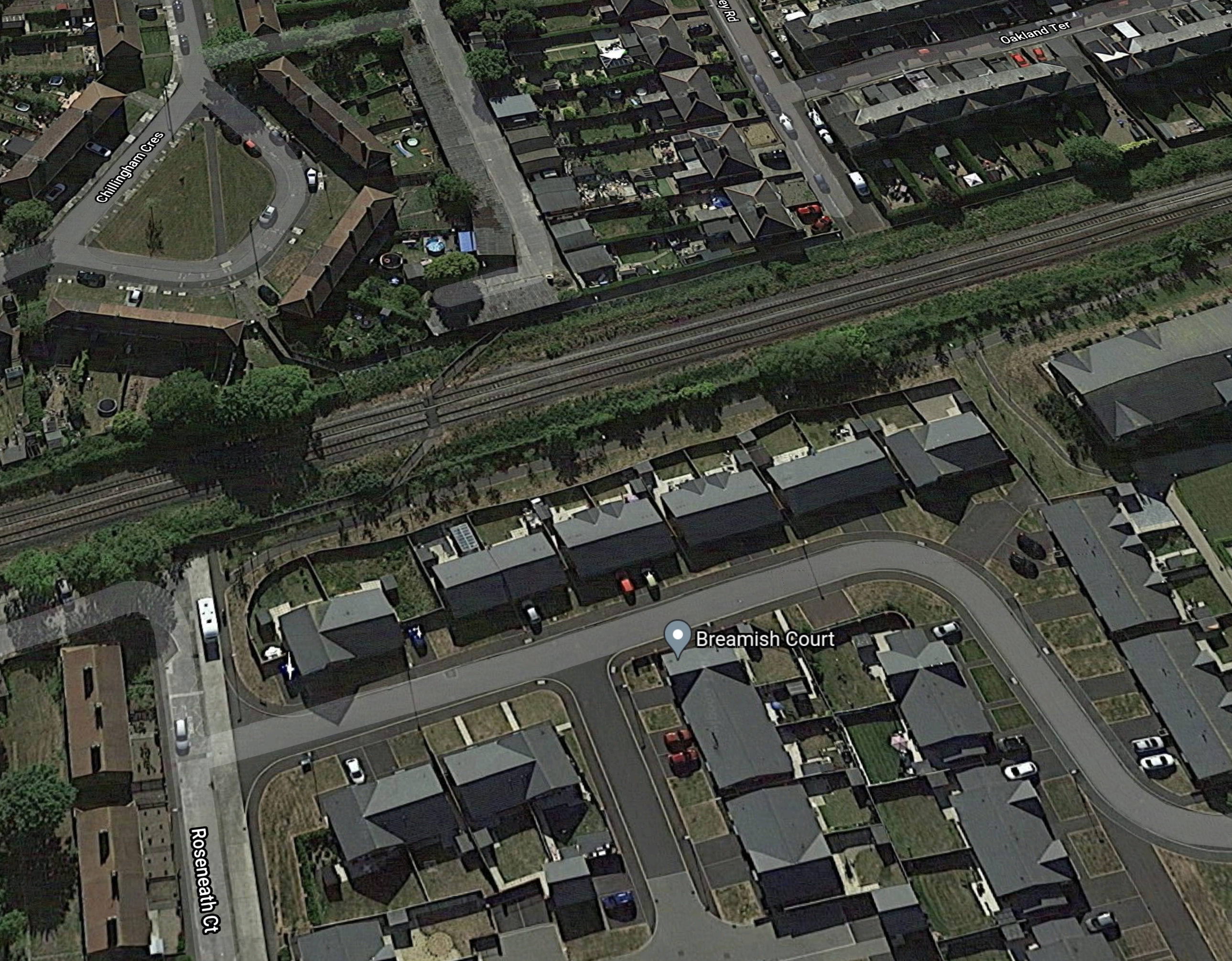
The proposed underpass would appear to connect Roseneath Court in the bottom-left and Darnley Road in the top-right.
- It does appear that the current route goes behind houses on both sides of the railway.
- I would suspect that underpasses could be built in line with both Roseneath Court and Darnley Road.
- But either route would mean that the noisy and the drunks would walk further in a parallel direction to the railway and would create more disturbance.
This level crossing argument will run and run, as many do.
The Effect Of Battery-Electric Trains
I think it is likely that services on this line could be run by battery-electric trains.
These trains could be new trains from CAF, Hitachi or Vivarail or modern electrical multiple units, that have been upgraded with batteries.
- They would be capable of 100 mph or more on the East Coast Main Line.
- They would run on battery power at an appropriate speed of perhaps 80 mph on the Northumberland Line, which is not planned to be electrified.
- I suspect the passenger trains will cruise up and down the Northumberland Line faster than the current freigtht trains.
- On battery power with no overhead wires, they will be very quiet trains.
Paradoxically, these new trains, although much better for passengers, could be more dangerous for the users of level crossings because of their faster speed and lower noise.
Russian Convoys
This article on Railway Gazette is entitled Five-Train Platoons To Operate With Virtual Coupling.
This is the first paragraph.
Russian Railways is planning to use platooning technology to operate flights of up to five freight trains next year using radio data exchange between locomotives to create a virtual coupling. The aims to reduce headways from 12 to 6 to 8 min, increasing capacity on congested sections of the Trans-Siberian main line.
As a Control Engineer, I must believe that if the Russians get the programming right, then it should work.
Similar techniques will probably be used with digital signalling in the UK and Europe, where each train is controlled by the signalling. But each train will probably have a driver.
The problem in Russia could also be the large number of ungated level crossings, which according to some I’ve met are prone to a lot of accidents, as drivers regularly chance it after too much vodka.
Purfleet Station – 19th August 2021
According to this article on Ian Visits, Purfleet station is going to be transformed and renamed Purfleet-on-Thames station.
- The station will be moved Northwards
- 2850 homes will be built in the local area.
- The current level crossing will be replaced by a bridge.
So I went to the station, took a look and took these pictures.


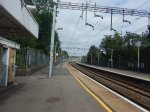


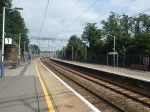
Note.
- The level crossing is at the Southern end of the station.
- Whilst I was there, I didn’t see anybody use the footbridge.
- Everybody used the level crossing.
- The bus stops could be better placed.
But the station building and the platforms weren’t in the worst of conditions.
This Google Map shows Purfleet station.

Note.
- It would appear that the only building in the way of moving the road to the North would be the station ticket office.
- As my pictures show the platforms are long and could probably be extended at the Northern end.
The article on Ian Visits has a good map of the area, showing the development and the new road layout.
It would be good if building bridges to replace level crossings was always as easy as this.
The Cambridge Re-signalling, Relock and Recontrol Project
This project is Network Rail’s big signalling project in the Cambridge area and it is fully described in this document on the Network Rail web site.
The project is called the C3R Project for short and its scope is described in this Network Rail infographic.

Note.
- 125 miles of track are to be resignalled.
- Seventeen stations are likely to be resignalled.
- Eight level-crossings are to be upgraded.
Network Rail’s document splits the project into five sections.
- Cambridge Power Signal Box – This will be upgraded.
- Safety Interlocking Equipment – This will be upgraded with a computer-based system.
- Closure Of Three Signal Boxes – Control will be relocated to Cambridge Power Signal Box.
- Seven Level Crossing Upgrades – These will be upgraded to full barrier crossings.
- Land Acquisition – As necessary to complete the works.
Upon completion the project will have replaced around 690 signalling assets.
Network Rail also say that the outline design contract to Alstom and it is expected to be completed in the last quarter of 2021.
Network Rail also says this about completion.
Subject to obtaining the necessary consents and design approvals, the detailed design and delivery of the signalling upgrade could begin by end of 2021 and be complete around the end of 2024.
My experience of project management and the railways of East Anglia, says that subject to one caveat, that this is a reasonable timescale.
The Level Crossing Problem
The problem could be the level crossings, as local interests are very protective of their supposed right to cross unhindered.
I particularly remember the Little Cornard Derailment, because a solicitor, who regularly instructed my late wife, was seriously injured in the derailment.
This is the first paragraph of the Wikipedia entry.
The Little Cornard derailment occurred on 17 August 2010 when a passenger train collided with a road vehicle on a level crossing on the Gainsborough Line near Little Cornard, Suffolk, and partly derailed. The vehicle, a tanker lorry, had begun crossing over the track when the Class 156 train from Sudbury destined for Marks Tey struck it whilst travelling at a speed of approximately 40 miles per hour (64 km/h)
Note.
Although, my late wife had died in 2007, one of her barrister colleagues told me of the link.
East Anglia and other rural parts of the UK suffer regularly from this type of accident.
This Google Map shows a 3D visualization of the site of the derailment.
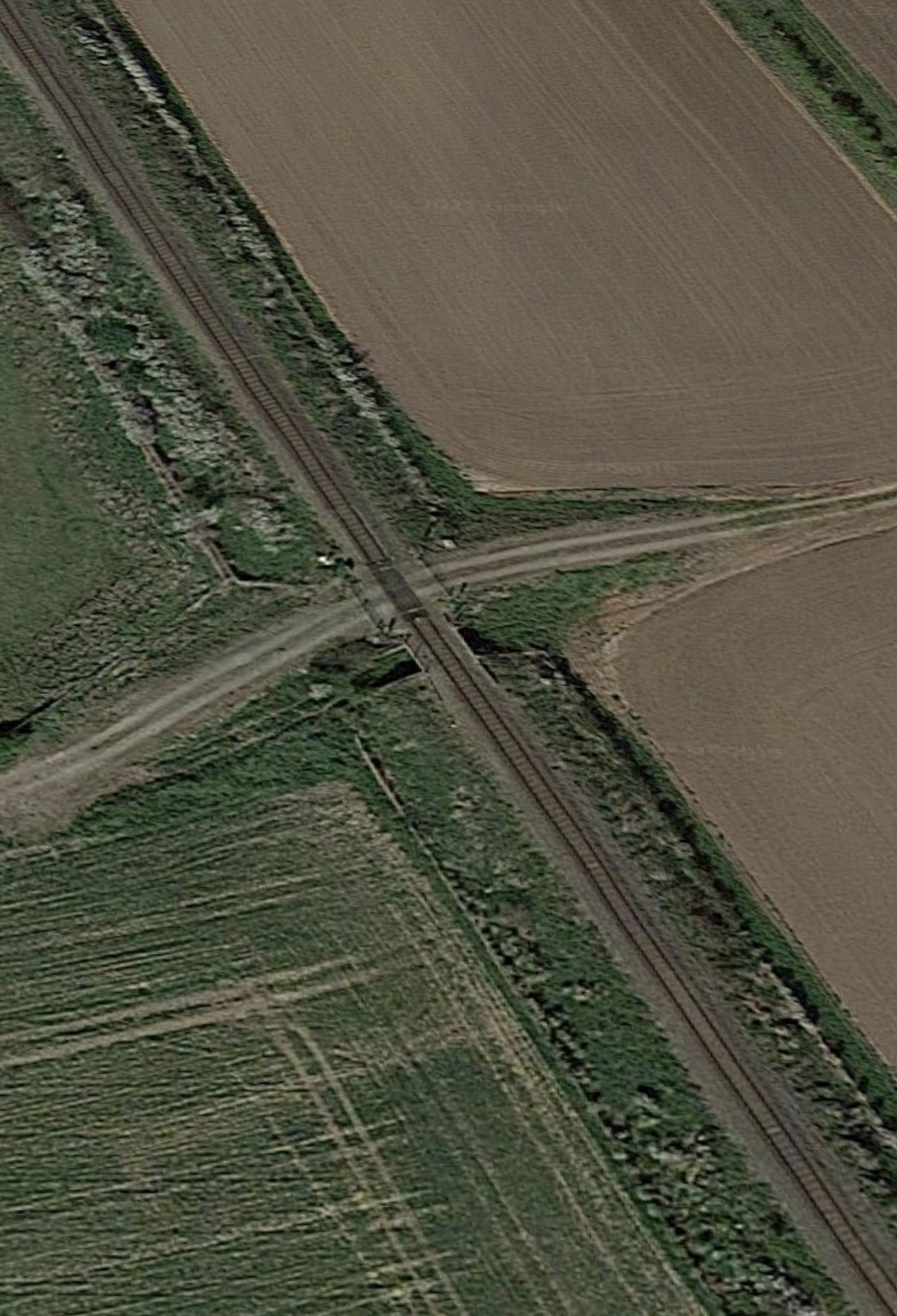
It appears to be rather remote.
I am totally appalled that there was such primitive safety equipment on this crossing.
- I have worked in seriously dangerous chemical plants, where Health and Safety rules forbade anyone entering the plant without full training.
- As a sixteen-year-old in 1963, I was designing and installing systems on industrial guillotines, so that workers didn’t lose their hands.
- A proportion of work, I did whilst working for ICI was about Health and Safety.
- I have travelled extensively in tour buses in Eastern Europe and seen some appealing driving at level crossings.
- According to a Hungarian friend, if you want to see bad driving at level crossings try Russia. He put it down to the local firewater.
This experience leeds me to believe that one of two things should be done with all level crossings on the railway.
- There should be a strong safety system on the crossing.
- The level crossing should be closed.
Will Network Rail be allowed by local interests to upgrade all the crossings they need?
The Level Crossings Network Rail Propose To Upgrade
These are the crossings Network Rail propose to upgrade.
Meldreth Road Level Crossing
This Google Map shows the Meldreth Road level crossing.
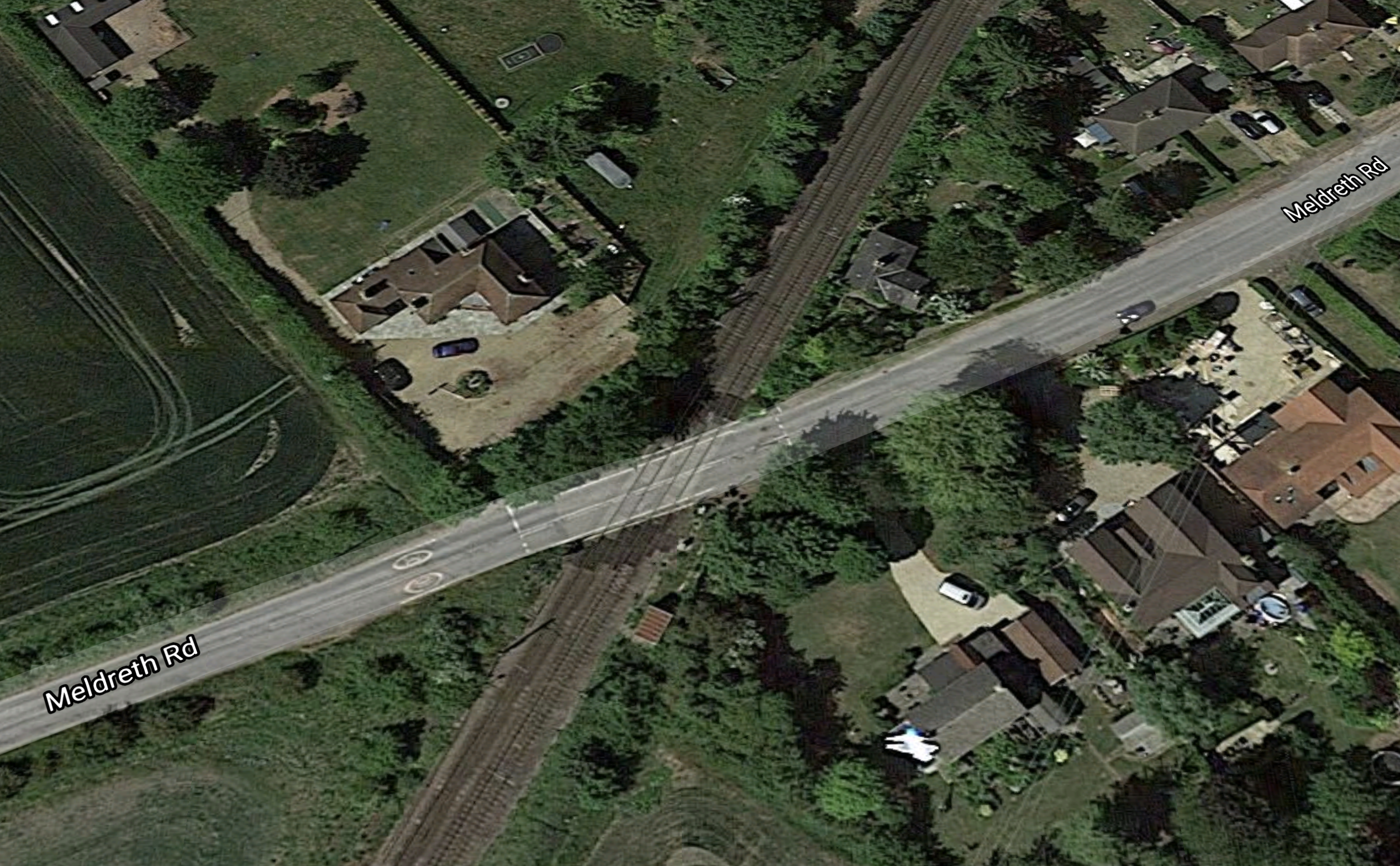
Note.
- Meldreth Road is the A10 between Cambridge and Royston.
- The double-track rail is the Cambridge Line between Cambridge and the East Coast Main Line.
- The line has a maximum speed of 90 mph.
- In every hour there are up to 10-12 passenger trains per hour (tph) through the level crossing.
- There are perhaps ten other trains per day, or less than one tph.
The ABC Railway Guide gives a line speed of 90 mph and adds these risk factors.
- Sun Glare
- Frequent Trains
It is very much a classic case of a busy railway crossing a busy road.
I also think that Network Rail has another problem here.
Pressure from train operators and passengers, could lead to more and faster trains through this level crossing.
In my view, the best solution to that problem would be to drop the railway into a cutting and put the road on a bridge over the top.
But this would be a very expensive and disruptive solution, which might mean that the road and/or railway were to be closed for several months.
The only other solution would be to run all trains between Royston and Cambridge under the control of digital signalling and Automatic Train Operation.
Trains would be timed so, that trains in opposite directions crossed on the level crossing, when the full barriers were down to stop traffic.
If this could be done, it could have various effects.
- This would halve the number of level crossing closures in every hour.
- The timekeeping might even impress drivers.
- It might even train drivers to expect two trains, so if one was a minute or so late, they might be more prepared to wait.
This technique would give whole new meaning to a double cross.
This page on the My Councillor web site, gives details of opposition to the project by Councillor Susan van der Ven.
Six Mile Bottom Level Crossing
This Google Map shows the Six Mile Bottom level crossing.
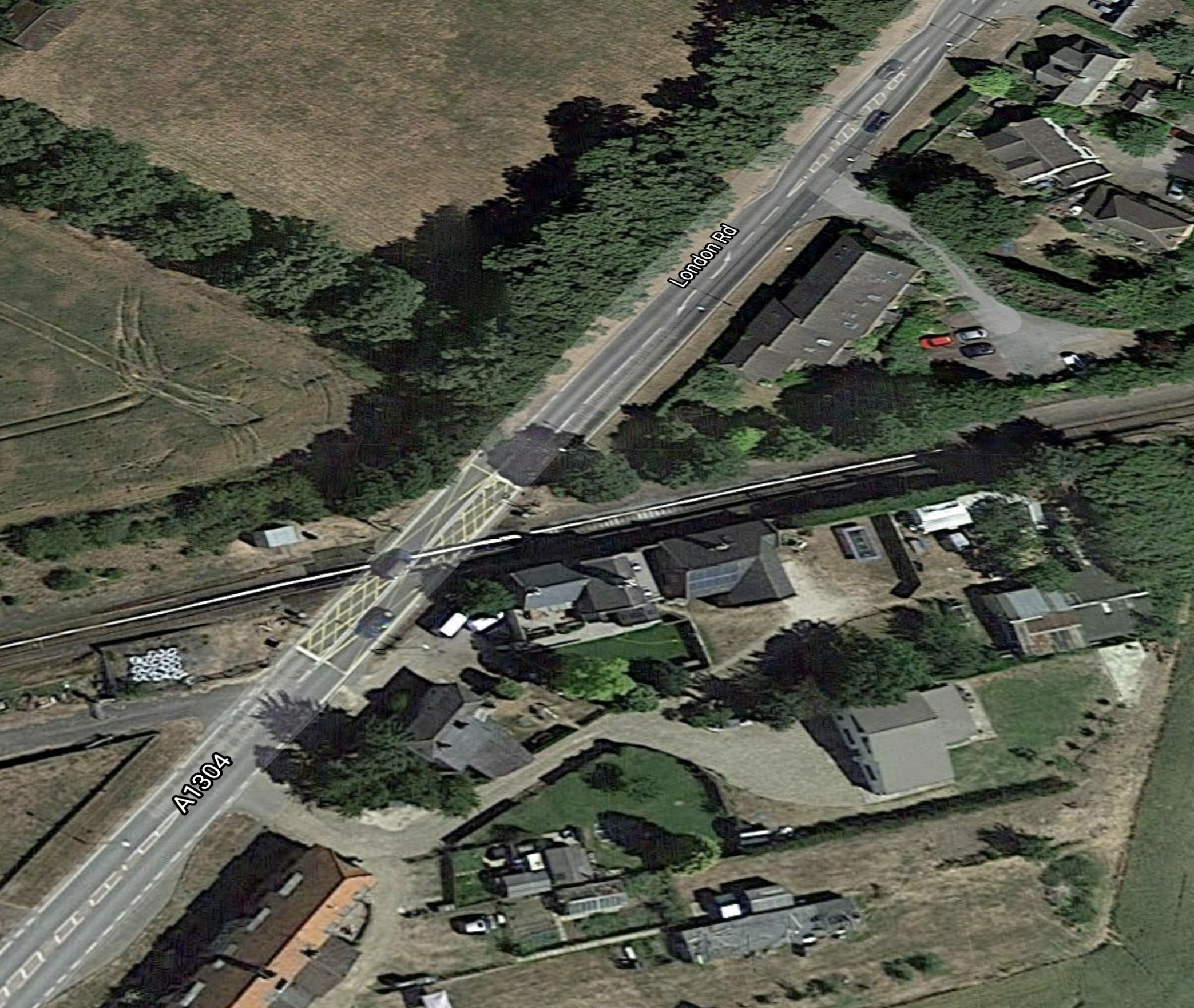
Note.
- The road is the A1304 which is the main link between Newmarket and the South.
- The road can get very busy, when there is a big race meeting.
- The rail track is only single track.
- The line has a maximum speed of up to 75 mph.
- In every hour there are no more than one passenger tph in both directions.
- There are some occasional freight trains over the crossing.
The ABC Railway Guide gives a line speed of 60 mph and adds these risk factors.
- Large Numbers Of Users
- Sun Glare
I used to drive across this level crossing regularly, when I lived in the area and the trouble is that it is on a straight road, that encourages high speed.
Legend has it, that this was one of public roads used by Vincent to test their high performance motorcycles.
In the time I lived near the crossing, I can remember a serious accident between a car and a train, at the crossing.
It would appear that a partial solution has been applied.
This video shows how much brighter LED lights have been fitted to the crossing.
Let’s hope this encourages drivers to slow down, when the crossing is closed.
How many other level crossings would be improved with bright LED lights like these?
Dullingham Level Crossing
This Google Map shows the Dullingham level crossing.
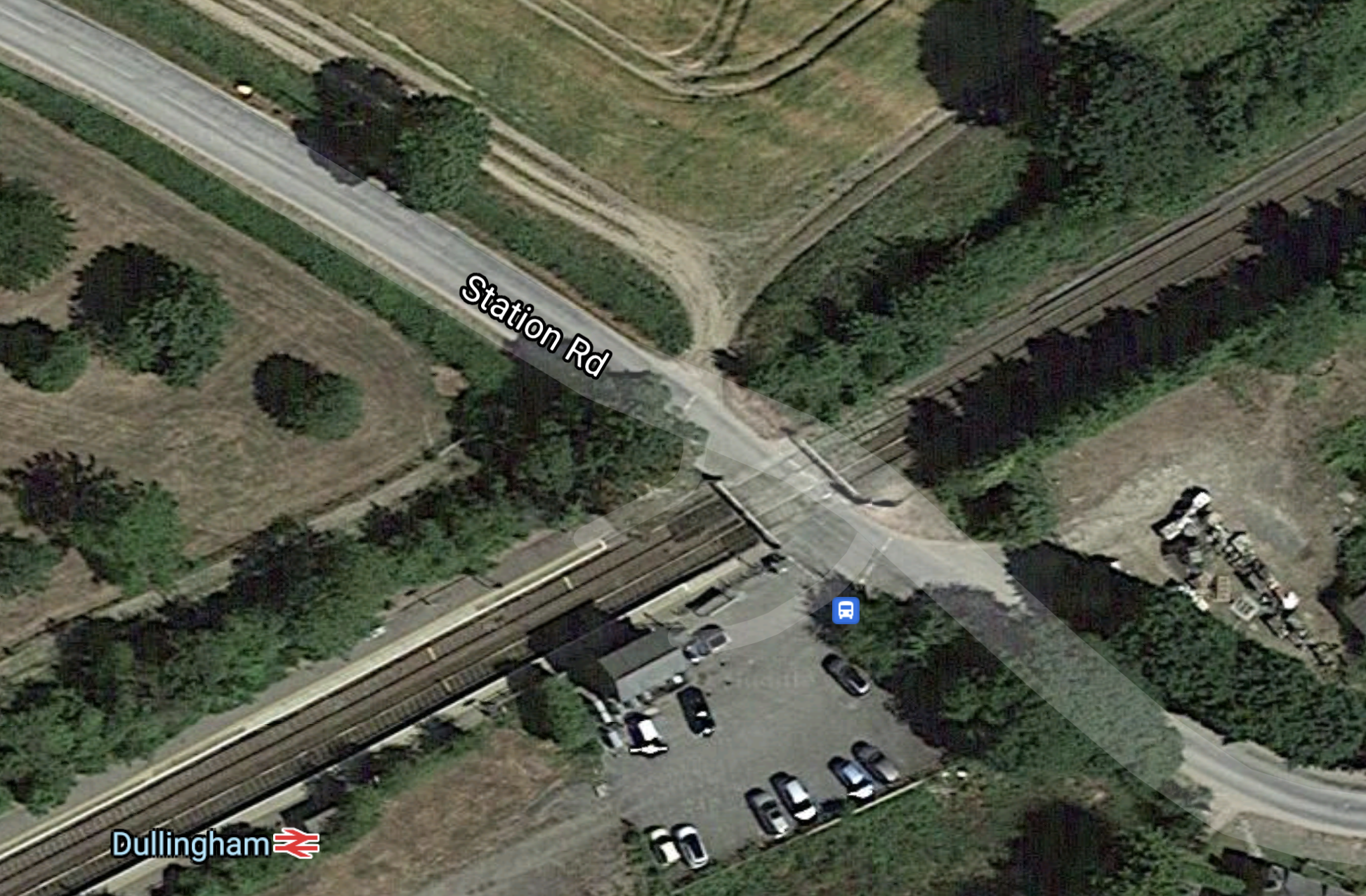
Note.
- The current barriers are operated manually by the signalman in Dullingham signal box.
- The road is a local road and the small amount of traffic could probably be easily handled by an automatic crossing with full barriers.
- The rail line is the same at that at Six Mile Bottom, but is double-track.
The ABC Railway Guide gives a line speed of 60 mph and adds these risk factors.
- Poor Visibility for Approaching Road Vehicles
- Crossing is Near a Station
- Crossing Approach
- Sun Glare
From my local experience, I suspect that an automatic crossing with full barriers might even cause less delay to road traffic.
Milton Fen Level Crossing
This Google Map shows the Milton Fen level crossing.
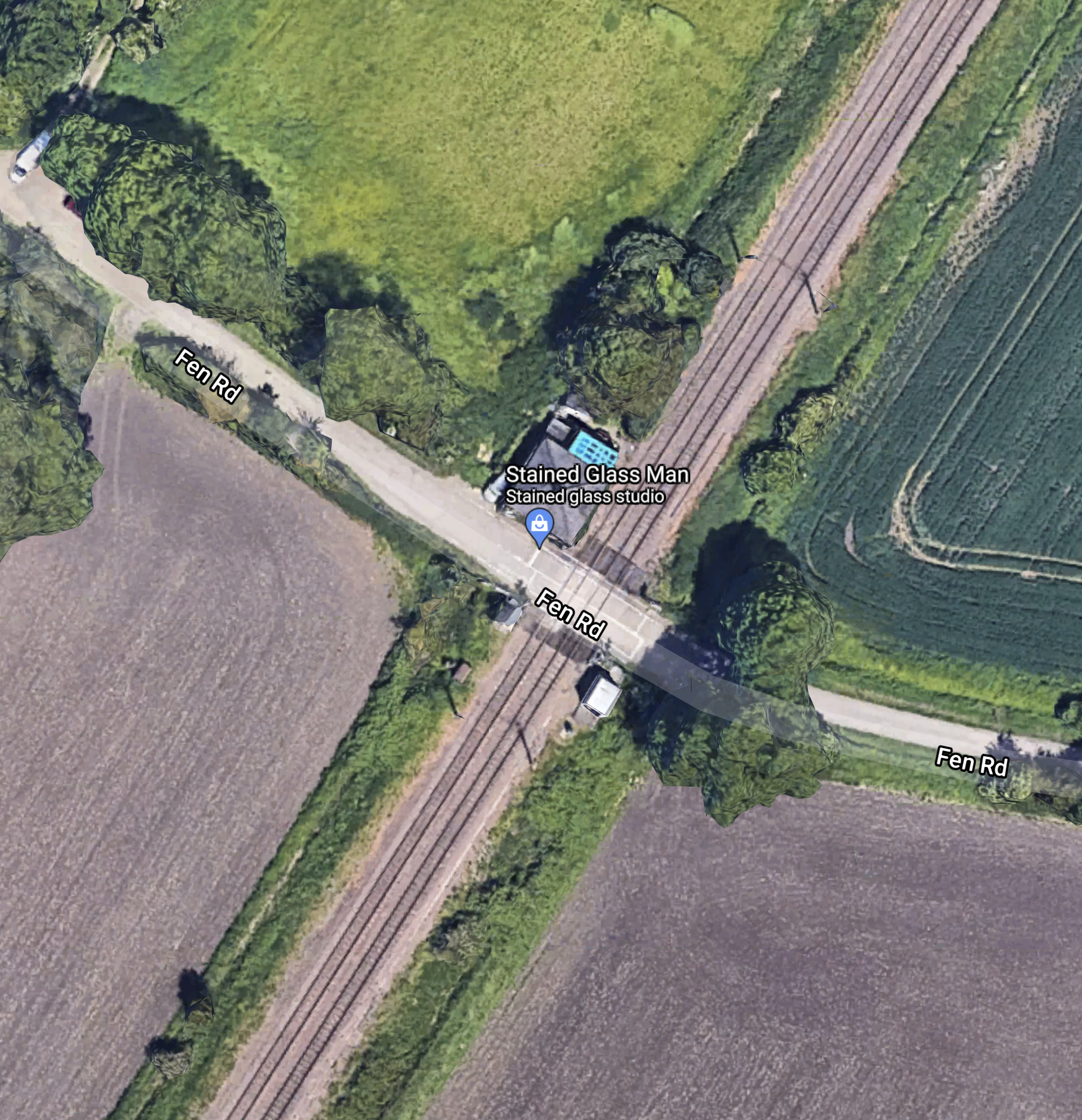
Note.
- The road is a local road and the small amount of traffic could probably be easily handled by an automatic crossing with full barriers.
- The railway is the Fen Line between Cambridge and Ely.
- It looks like there are three passenger tph and the occasional freight trains through this crossing.
- The line speed of the rail line is 75 mph.
The ABC Railway Guide gives a line speed of 75 mph and adds these risk factors.
- Sun Glare
- Frequent Trains
It should also be noted that I can find reports of serious accidents and deaths on this crossing.
It looks to me, that an automatic crossing with full barriers could work well on this level crossing.
Waterbeach Level Crossing
This Google Map shows the Waterbeach level crossing.
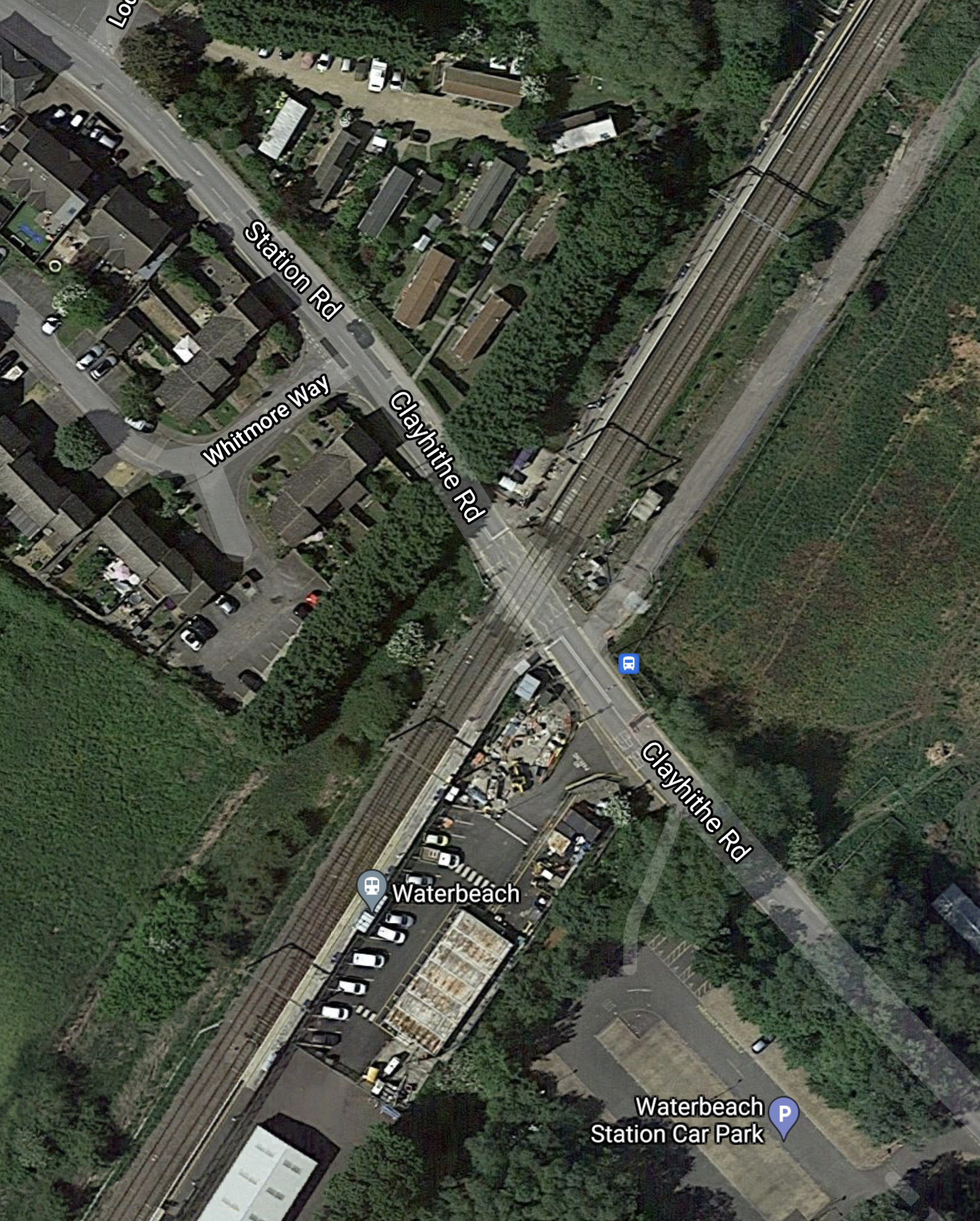
Note.
- The road is a local road, but could the traffic be easily handled by an automatic crossing with full barriers?
- The railway is the Fen Line between Cambridge and Ely.
- It looks like there are three passenger tph and the occasional freight trains through this crossing.
- The line speed of the rail line is 75 mph.
- Waterbeach station is split with one platform either side of the level crossing, which is used by passengers to cross the line.
The ABC Railway Guide gives a line speed of 75 mph and adds these risk factors.
- Poor Visibility for Approaching Road Vehicles
- Crossing is Near a Station
- Crossing Approach
- Large Numbers of Users
- Blocking Back
- Frequent Trains
It should also be noted that Network Rail rate this crossing as high risk.
There is probably a long-term solution for this level crossing
Under Future Plans in the Wikipedia entry for Waterbeach station, this is said.
Plans to develop a New Town of 8,000 to 9,000 homes on the former Waterbeach Barracks site have been outlined by South Cambridgeshire District Council. As part of the proposal, there are plans to relocate the station to a new site and extend the platforms to accommodate 12 car trains.
Surely, a well-designed transport network to serve all these houses would see the level crossing closed and a new station built at a convenient location.
Dimmocks Cote Level Crossing
This Google Map shows the Dimmocks Cote level crossing.

Note.
- The road is the A1123, so could the traffic be easily handled by an automatic crossing with full barriers?
- The railway is the Fen Line between Cambridge and Ely.
- It looks like there are three passenger tph and the occasional freight trains through this crossing.
- The line speed of the rail line is 75 mph.
The ABC Railway Guide gives a line speed of 75 mph and adds these risk factors.
- Infrequent Trains
- Deliberate Misuse or User Error
It should also be noted that Network Rail rate this crossing as high risk.
Croxton Level Crossing
This Google Map shows the Croxton level crossing.
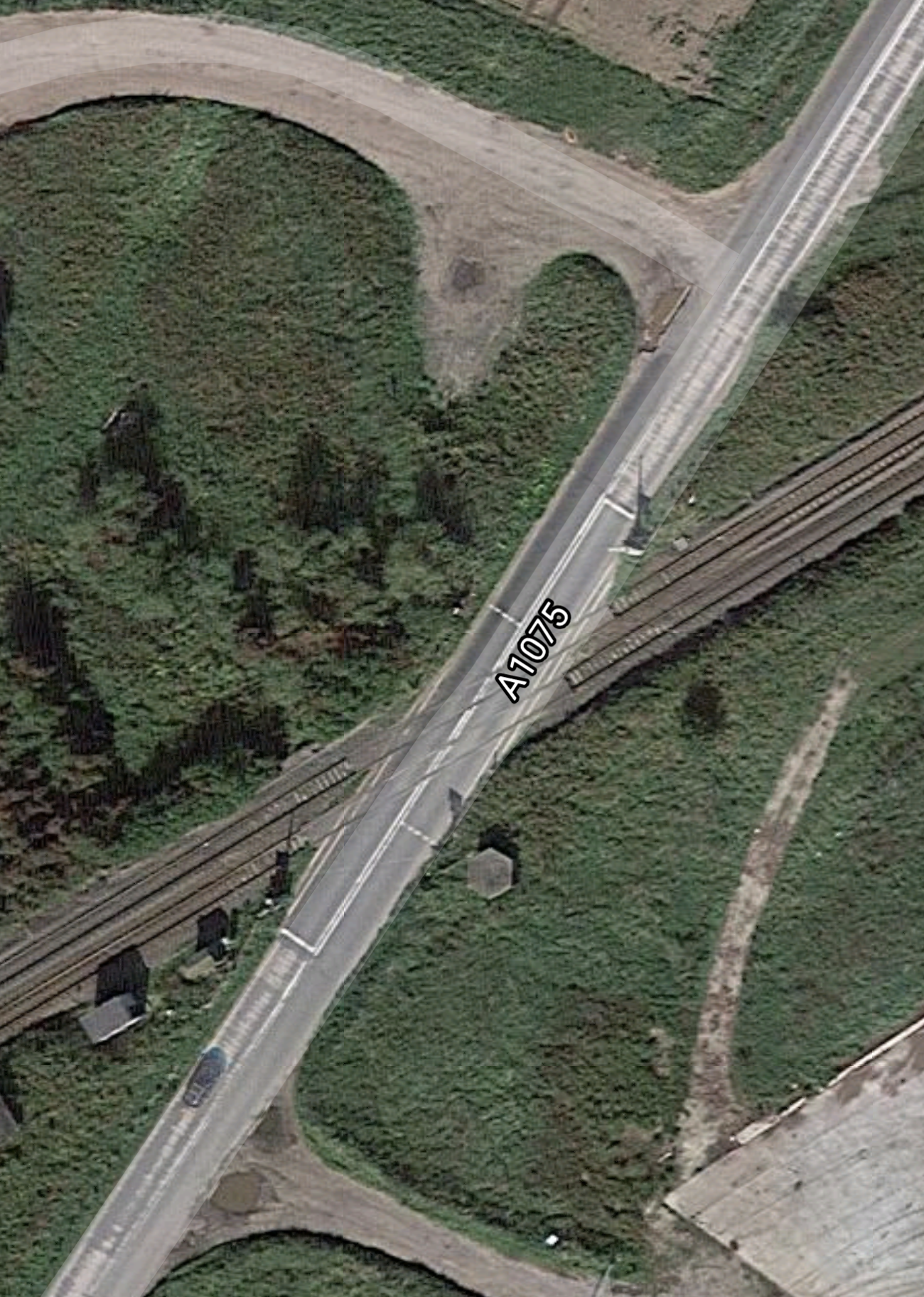
Note.
- The road is the A1075, so could the traffic be easily handled by an automatic crossing with full barriers?
- The railway is the Breckland Line between Norwich and Ely.
- It looks like there are two passenger tph and the occasional freight trains through this crossing.
- The line speed of the rail line is 75-90 mph.
It should also be noted that Network Rail rate this crossing as high risk.
The ABC Railway Guide gives the line speed as 40 mph and adds these risk factors.
- Poor Visibility for Approaching Road Vehicles
- Crossing Approach
- Large Numbers of Users
- Sun Glare
- Deliberate Misuse or User Error
This crossing sounds like it could be an accident waiting to happen.
Although, I would feel that installing similar lights to those at Six Mile Bottom could be a big help!
Summarising The Proposed Level Crossing Upgrades
I can split these by topic.
Full Barrier installation
It would appear that all barriers can probably be replaced with the latest full barrier technology.
Improved Lighting
The video from Six Mile Bottom was impressive and probably shows how fairly simple improvements can increase safety.
Local Opposition
On this brief summary of all the level crossings, that Network Rail propose to upgrade to automatic crossing with full barriers, it would appear that only the Meldreth Road crossing is seeing opposition from local interests. Although, I do have doubts, that the development of all those houses at Waterbeach will ever happen because of local opposition.
Major Construction Works
It would appear that only two upgrades could require major works.
Meldreth Road – But only if it was felt that a substantial solution was needed.
Waterbeach – If a new station were to be built to cater for future housing development.
The others would only need barrier replacement and other appropriate improvements.
I would also feel that most of the work could be carried out without major disruption to train services or road traffic.
Modern Digital Signalling With Automatic Train Operation
Modern digital signalling with in-cab displays and a measure of automatic train operation offers three main gains to train operators and passengers.
- More services can be squeezed safely into the existing network, without building controversial and expensive new lines.
- Trains can run at higher average speeds.
- Trains can run to timetable easier.
It should be noted that South of Doncaster the East Coast Main Line is being converted to this type of signalling and this will allow the Azumas and other trains to run at 140 mph, where the track allows, to speed up services between King’s Cross and the North.
Services Between King’s Cross and Cambridge
South of Hitchin, some services between King’s Cross and Cambridge share the lines with the expresses to and from the North.
For that reason the 100 mph Class 700 trains and the 110 mph Class 387 trains, would be out of their speed range like Morris Minors on the M1.
In 2018, I wrote Call For ETCS On King’s Lynn Route, based on an article in Rail Magazine, which called for 125 mph trains to Cambridge and King’s Lynn, so they wouldn’t slow the expresses.
It does appear to me that the digital signalling part of the C3R Project will enable 125 mph trains to run between King’s Cross and King’s Lynn via Cambridge.
- Oxford has 125 mph non-stop local trains to London, so why not Cambridge?
- A nine-car Class 800 train has a similar seating capacity to a twelve-car Class 700 train, but the seats are better and the train can travel at 125 mph.
- These trains would significantly reduce the fifty minute journey time between King’s Cross and Cambridge.
This would be a real Cambridge Express.
Developing Services Around Cambridge
Just as full digital signalling is helping London to expand its railways with Crossrail and Thameslink. I believe that the C3R Project will help to squeeze more trains through Cambridge.
In a few years time, I believe Cambridge will have a core route consisting of Cambridge North, Cambridge and Cambridge South stations with much expanded services to Bury St. Edmunds, Ely, Ipswich, Kings Lynn, London, Norwich, Peterborough, Stansted Airport, Stevenage and Wisbech.
Ten years ago, I was told by one of Cambridge’s eminent thinkers, that Cambridge needed the connectivity to bring in the people that the economy needs.
The pandemic has changed things, but not Cambridge’s desire to create more businesses expand.
A Connection To Peterborough
Peterborough is the other half of Cambridgeshire’s area and shares the Cambridgeshire & Peterborough Combined Authority with Cambridge.
Peterborough station is well connected to the North and Midlands.
- LNER’s connect the station to most stations on the East Coast Main Line.
- It has hourly services to Birmingham, Leicester, Liverpool, Manchester and Nottingham.
But the connection between Cambridge and Peterborough is not of the quality and frequency that the two cities need.
A Connection To Stevenage
Stevenage is an important manufacturing and technology centre, with a strong presence in aerospace.
Stevenage station is well connected to the North and South.
- LNER and other services connect the station to most stations South of Leeds and York on the East Coast Main Line.
- The new service from East Coast Trains will provide a direct service to Newcastle and Edinburgh with a frequency of seven trains per day (tpd).
- It has a direct suburban line to King’s Cross.
- It has a direct suburban line to Moorgate.
Stevenage seems to be acquiring more long distance services as time progresses.
But the connection between Cambridge and Stevenage is currently poor, at just two tph, which stop everywhere.
Improve the connection between Cambridge and Stevenage and have more calls of services to and from the North at Stevenage and Cambridge and \stevenage would benefit.
Currently, the fast Cambridge services take 27 minutes to do the 30.3 miles between Cambridge and Stevenage, which is an average speed of 67.3 mph.
A Connection To Wisbech
Progress seems to be being made on a service between Cambridge and Wisbech, which I wrote about in Hope For Wisbech Line Revival.
This was the conclusion of that post.
I very much feel that the Cambridgeshire & Peterborough Combined Authority and Network Rail can create a very useful branch line to Wisbech.
There is not much infrastructure to be built and upgraded.
-
- A new station will be built at Wisbech, which I feel is likely to be a Park-and-Ride on the A47.
- A bay platform will probably need to be reopened at March station.
- March station will need to be step-free.
- There may be a station and a passing loop at Coldham.
- Track and signalling will need to be replaced.
But the big project needed is the remodelling at Ely, which will have to be done to increase capacity, through the bottleneck.
Greater Anglia’s Class 755 trains would appear to be ideal for the branch and could operate on battery power.
This connection could be a very valuable connection.
It certainly looks like there are better plans to connect Wisbech to Cambridge, than there are to improve the connections between Cambridge and Peterborough and Stevenage.
Conclusion
The C3R Project will give the Cambridge compatible signalling with the East Coast Main Line and I feel increasingly Cambridge could be treated as a series of stations just off the East Coast Main Line and we might see some services develop, that seem strange to today’s travellers.
A simple example could be a Regional Metro running between Peterborough and Stevenage.
- It would call at March, Ely, Waterbeach, Cambridge North, Cambridge, Cambridge South, Royston and Hitchin.
- It would run at a frequency upwards of two tph.
- It could even connect to Lincoln.
Other North-South services through Cambridge like Thameslink and Norwich and Stansted would combine to give perhaps six tph through the three main Cambridge stations.
The C3R Project will open up lots of possibilities.
 The Anonymous Widower