Around The Hounslow Loop Line
The Hounslow Loop Line is a suburban railway in South-West London, that runs in a loop off the Waterloo to Reading Line.
Today, to get to know the line, I took a Hounslow train from Waterloo and after passing through Clapham Junction, Putney and Barnes stations, the train took to the Hounslow Loop Line calling at a succession of stations on both sides of the Thames.
We waited a minute or so at Hounslow station, before starting to return via Whitton and Twickenham stations.
When the train got to Richmond station, I changed to the North London Line to come home directly, whilst the train went back into Waterloo, by way of the Waterloo to Reading Line.
These pictures give a flavour of the Hounslow Loop Line.


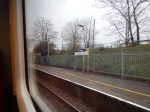


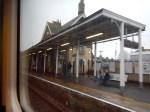
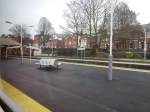
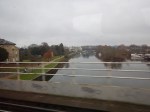
It is a very tidy suburban line.
- Most platforms have been lengthened to take ten-car trains.
- Whitton station has been rebuilt as I wrote about in How To Spend Five Million Pounds.
- It has a triangular junction with the North London Line around Kew Bridge station.
- In the mid-2000s, the train frequency on the line was doubled from 2 trains per hour (tph) to four.
All of this work has led to a 162% increase in passengers between 2004-5 and 2007-8.
I wonder what is the limit of trains round the Hounslow Loop Line.
This is more proof if it were needed, that suburban lines need at least 4 tph to really bring in the passengers.
Transport for London’s Orbital Railway
In August 2014, I wrote Will The Gospel Oak To Barking Line Be Extended To Hounslow?, which was based on a Modern Railways report on the Mayor’s Transport Infrastructure Plan for 2050. This is said.
There may be a case for further orbital rail capacity, says the document – it shows an indicative, uncosted network to link Hounslow, Old Oak Common, Neasden, West Hampstead, Harringay, Walthamstow, Barking, Abbey Wood, Bexleyheath, Norwood Junction, Sutton and New Malden and back to Hounslow, with another route between Abbey Wood and New Malden via Lewisham, Peckham Rye and Wimbledon.
The proposed orbital railway passes takes a route from Hounslow to Wimbledon via the following stations.
- Whitton
- Twickenham
- Strawberry Hill
- Teddington
- Kingston
- New Malden
- Raynes Park
Nothing concrete has been said since about the railway, but the following is happening or planned.
- The Gospel Oak to Barking Line (GOBlin) is being electrified.
- New four-car Class 710 trains will go to the GOBlin and the Watford DC Line.
- More five-car Class 378 trains will be available to boost services on the North London Line.
All these should happen by the end of 2018.
Will More North London Line Trains Go To Richmond?
Currently the North London Line service from Richmond is 4 tph to and from Stratford.
It takes around an hour, which is ten minutes faster than going via Waterloo and taking the Jubilee Line.
The only possibly faster way would be when Old Oak Common station is opened and a change there would be made to Crossrail.
I estimate, that this could result in a timing of around 45 minutes or perhaps lightly less.
As Old Oak Common station, will also have connections to HS2, the West Coast Main Line ans other important routes, Richmond to Old Oak Common could become a very heavily used route.
4 tph would probably not be enough trains, especially as the current service to the East from Willesden Junction is 8 tph.
So I think it quite likely, that the frequency between Richmond and Old Oak Common stations would be eight tph.
The extra four trains, wouldn’t need to go all the way to Stratford, as there has been talk of alternative routes.
- Terminate at Old Oak Common.
- Terminate at somewhere convenient on the North London Line.
- Terminate at Barking via the Gospel Oak to Barking Line
- Go Along the Dudding Hill Line to Brent Cross Thameslink
The choice would be large.
But could Richmond handle the increased frequency of trains?
If the trains used the same route as now, there is probably a current limit of 4 tph, as the route is shared with the District Line from Gunnersbury station. Especially, as the District Line service will be increased!
So alternative ways of turning the trains is needed.
Trains could take the Houslow Loop Line after South Acton station and go through Hounslow, Whitton and perhaps terminate at Twickenham, where it should be possible to create a suitable bay platform.
But it’s not just events at Twickenham that need more capacity and North London Line services, so could we see services going in a loop via Hounslow, Whitton, Twickenham and Richmond?
This Google Map shows the line between Richmond and North Sheen stations.

Between Richmond and North Sheen Stations
Note.
- Richmond station is to the West.
- North Sheen station to the East.
- The North London Line turns North off the line through the two stations.
In some ways, North Sheen station is a bit of a mess and a real problem.
- It has a level crossing at one end.
- It has no disabled access.
- There is another three level crossings between Mortlake and Barnes stations, which are the next stations on the line towards London.
- The level crossings feature regularly in Google News with respect to accidents, failures and suicides.
It might be best, if North Sheen station was completely rebuilt and the level crossings are consigned to the dustbin of history.
This map from carto.metro.free.fr shows the layout of lines at Richmond station.
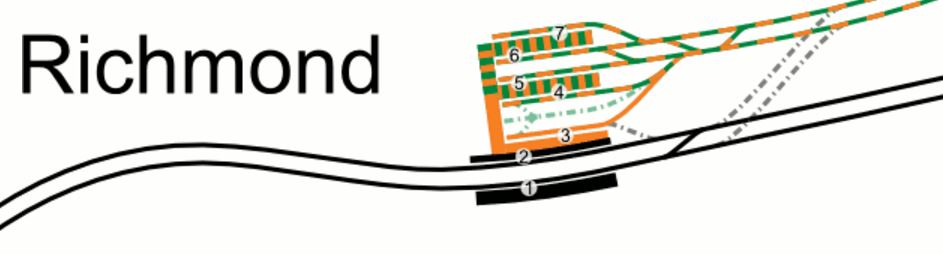
Platforms And Lines At Richmond Station
I don’t think it would be too difficult to complete the loop, so that trains from the North London Line could turn without needing a terminal platform
It has a level crossing at one end.It has no disabled access.There is another three level crossings between Mortlake and Barnes stations, which are the next stations on the line towards London.
Improving Richmond To Waterloo
But the problems of the level crossings are still there!
These posts describe the line between Richmond and Barnes station.
- Is There A Worse Station Than This In London?, describes North Sheen station.
- Mortlake Station With A Level Crossing
- A Level Crossing In White Hart Lane, Barnes
- A Pair Of Level Crossings At Vine Road, Barnes
Currently, 8 tph run on the lines between Richmond and Waterloo via Clapham Junction stations.
In the other direction, the service is as follows.
- 2 tph to Reading
- 2 tph to Windsor and Eton Riverside.
- 2 tph to Waterloo via Hounslow and Brentford
- 2 tph to Waterloo via Kingston and Wimbledon.
Richmond will become an important station connecting lots of places to Old Oak Common.
Will 8 tph between Richmond and Waterloo be sufficient?
Heathrow Airtrack
Heathrow Airtrack was an attempt to create a link from Waterloo to Heathrow Airport.
Wikipedia says this about the proposal.
The scheme, estimated to cost around £673 million, was controversial mainly because of the projected impact on local road traffic due to the high number of level crossings on the route.
Trains would have been 2 tph calling at the following stations.
- Clapham Junction
- Richmond
- Twickenham
- Feltham
- Staines
Could another 2 tph be squeezed in through Richmond?
With difficulty and Automatic Train Operation, it might be a possibility.
But it also looks like the level crossings have already killed one project.
On the other hand, it does appear that if more capacity could be created between Richmond and Waterloo, other services would follow.
An Updated Manningtree Station
I stopped off at Manningtree station on the way to the football last night to have a look at the new step-free subway and perhaps buy a drink in the buffet.
Having a drink en route to Ipswich, is probably a good idea at the moment, as Ipswich station is being updated and there is nowhere between the station and Portman Road to buy one.
These were the pictures I took.
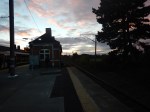
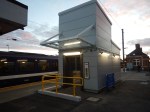
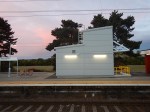
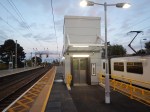


Note.
- There is a loop on the Northern side of the station, which has been modified to create a short through Platform 4.
- The subway is fully operational, although signs say there is still work to do.
- The subway is ideally placed for a passenger to get off a Norwich-bound train, walk to the subway and cross underneath the lines to either the station exit or a train on the Harwich branch waiting in Platform 1.
As to the buffet, it wasn’t worth a visit, as the cider, which is so important for coeliacs, was rubbish.
The New Manningtree Depot
This article in Rail News says this about the new Stadler Flirts ordered by Greater Anglia.
The trains will be maintained at the existing depots, including Crown Point at Norwich, and also at a new depot at Manningtree which is to be built on a former industrial site alongside the main line.
This Google Map shows the area.
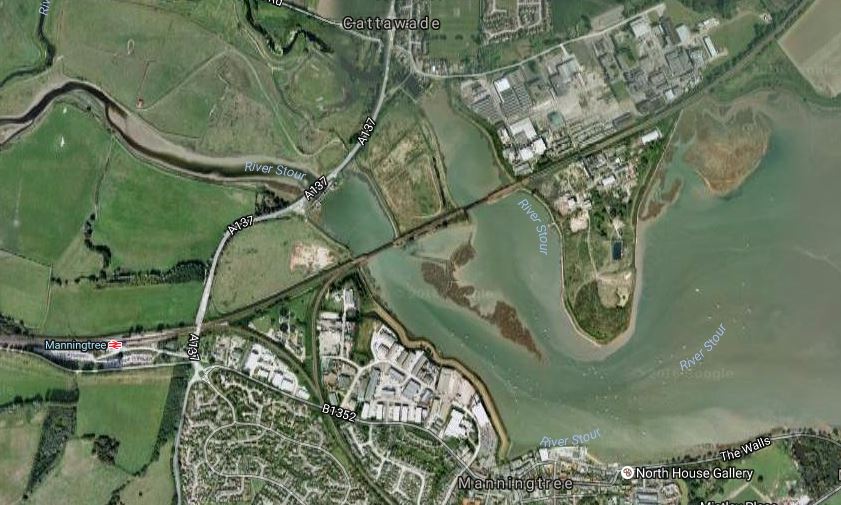
Manningtree Depot Site
The Great Eastern Main Line crosses the map, with Manningtree station clearly marked.
Going East, there is a fully-electrified triangular junction, where the Harwich Branch or Mayflower Line joins the main line, followed by two crossings of the River Stour.
Then to the North and South of the main line, there is a large derelict industrial site, which I suspect will be the location of the depot, as it is the only place that fits the Rail News description.
I suppose the biggest question about this depot, as will it be North or South of the main line. But there is masses of space and I wouldn’t be surprised to see the site used for other commercial purposes as well.
Other questions might include.
- Will housing be developed in the area? Probably not, as it could be liable to flooding.
- Will the depot be developed with limited overhead wires for safety and ascetic reasons?
- Will a station be built to serve the area?
- If one is, will it have extensive car parking in the space available?
- How will environmentalists react to development of the deelict industrial site?
I do suspect locally, that the new employment opportunities will be welcomed.
The Manningtree Station Level Crossing
This Google Map shows a close-up of Manningtree station.

Manningtree Station
Note how the road crosses the railway at the right. Wikipedia says this about the crossing.
A second peculiar feature just east of the station is a combination of a road underpass and a level crossing. The underpass has limited height and the parallel level crossing is needed to permit higher vehicles to cross the railway.
This article on the BBC has a video about the crossing, which surely makes a case for improvements.
The title of the article is Bus trapped on Manningtree railway crossing: Driver fined says it all.
Luckily, the only damage was to the driver’s wallet!
With increased traffic on the railway lines through the crossing, will we be seeing improvements to this crossing, which surely must cause problems for trucks at times?
Platform 4
I think we’ll be seeing more use of Platform 4 as the lines get busier and the traffic gets faster.
- I have read somewhere, that the updated Platform 4 will be used as a means of allowing fast trains to overtake. I suppose a Colchester to Ipswich local train could wait in Platform 4, whilst a London to Norwich express went through on Platform 3.
- Perhaps the line could be used by trains going down the Harwich Branch to improve connectivity to the branch with London to Norwich expresses in the Peak.
- I also think for operational reasons train companies like to have a station before a depot, so that any sleeping passengers can be woken and offloaded.
But seriously, why would you get Platform 4 ready for increased use and not use it?
The Future Of The Mayflower Line
Wikipedia for Harwich Town station says this about services on the line.
As of December 2015 the typical weekday off-peak service is one train per hour to Manningtree, although there some additional services at peak times. Trains generally call at all stations along the Mayflower Line; some are extended to or from Colchester and/or London Liverpool Street.
I suspect that an ideal service would be at least two trains per hour (tph) on the line, which were timed to connect with fast services on the Great Eastern Main Line at Manningtree.
Currently there are direct trains in the Peak to and from Liverpool Street. The train, that I got to Manningtree last night was actually going to Harwich, after dividing into two at Colchester, with the front half of the train going on to Clacton-on-Sea.
In the new franchise, Greater Anglia will be running new Aventra trains on the branch. As they are buying five and ten-car trains, I would assume that the five-car version will work the Mayflower Line.
- This will mean that there will be an increase in capacity on the line.
- There will also be a large increase in comfort.
- I would assume that two five-car trains are easily joined and separated to provide shared services, such as I experienced last night.
- As the journey between Harwich Town and Manningtree takes twenty-two minutes, two trains would be needed to run a 2 tph service.
Running 2 tph may be a problem, as the electrification is one of the Treasury’s budget specials. Wikipedia says this.
The line diverges from the Great Eastern Main Line at Manningtree and is double-track for passenger services as far as Harwich International where connecting ferry services are available to Hoek van Holland and Esbjerg. Beyond Harwich International, the original second track remains in place as a through-siding, but only the “up” (Manningtree-bound) line was electrified and that section to Harwich Town is bi-directional.
But Bombardier may have a solution, in that the line was used for the BEMU trial, where a Class 379 train with an onboard battery, ran one way on the overhead wires, charging the battery at the same time.
As all Aventras will be wired to accept onboard energy storage, will we be seeing battery power on the Mayflower Line?
I think the answer is yes!
On my way to Manningtree, I was sitting next to a lady going to Harwich and when I talked about the battery train test of twenty months ago, she said she’d ridden the train and liked it. She didn’t qualify her initial statement with any negative statement.
Rainham (Kent) Station
There are two stations with the same name and this Rainham station is the one in Kent, which is to the East of Gillingham on the Chatham Main Line.
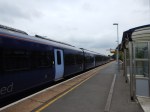
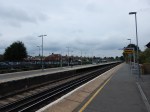

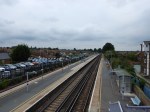
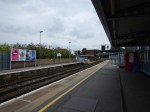


It is a busy station, which has these typical off-peak services.
- 2 trains per hour (tph) to London St Pancras via Chatham and Ebbsfleet International
- 3 tph to London Victoria via Chatham and Bromley South (1ph calling at Denmark Hill)
- 1 tph to Sittingbourne and Faversham only
- 2 tph to Dover Priory via Canterbury East
- 2 tph to Ramsgate via Margate
Adding them up gives 5 tph in both directions, with a choice of Highspeed or traditional services to and from two London termini.
The station has benefited from the East Kent Resignalling Project. This is said in Wikipedia.
Rainham has a new bay platform off the up-line, which can accommodate a 12-car train, labelled Platform 0. It is now being used as a Terminus for a couple of evening rush hour trains.
It would appear to be an extra platform, that has been fitted well into the layout of the station.
If Thameslink does run a service from Rainham to Luton from 2018, the platform would have no difficulty turning the two trains per hour.
This will give a 2 tph service to three London termini; London Bridge, Blackfriars and St. Pancras on its way to Luton.
The level crossing at the station, probably limits the number of trains through Rainham station, despite the fact that some may be timed to pass in the station, which reduces the number of times it closes to road traffic.
So using the bay platform 0 for Thameslink, increases the frequency to the West of the station to 7 tph, but leaves that through the crossing at 5 tph.
It seems to be a sensible way to increase train frequencies without choking road traffic too much.
I very much like the thinking behind the design.
Related Posts
A Design Crime – Ebbsfleet International Station
Between Abbey Wood And Belvedere Stations
Connecting North Kent And The Medway Towns To Ebbsfleet International Station
Extending Crossrail To Gravesend
What Do You Do With A Problem Like Sheppey?
The Level Crossing At Lydney
This article in Rail News talks about the closure of the Severn Tunnel for electrification and the effects, that this will have locally.
This is said.
The closure means many more passenger and freight trains running through the Cotswolds and the Forest of Dean via Stroud, Gloucester and Lydney, and the extra rail traffic means that a number of level crossings will be much busier, with an extra 44 passenger trains and 27 freight using the diversion from Swindon on an average day.
So I searched and found this Google Map of Lydney station and the adjacent level crossing.
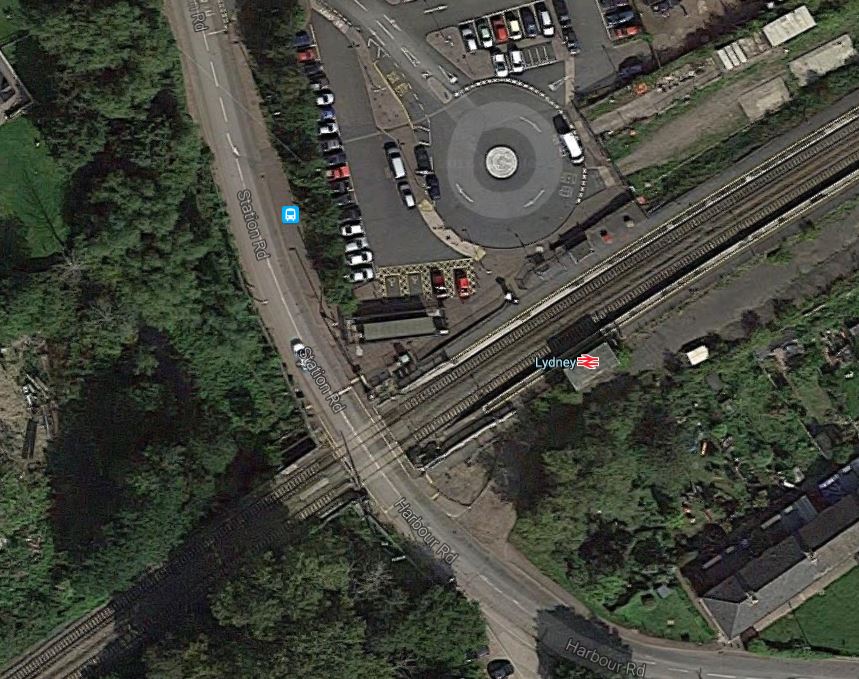
Lydney Station and Level Crossing
It looks like they’ll be having an interesting time during the closure.
A Level Crossing That Should Be Closed
One of my Google Alerts found this article in the Bicester Advertiser, which is entitled Tunnel could be dug under Bicester London Road railway line to keep route open.
So I found a Google Map of the crossing and Bicester Village station.
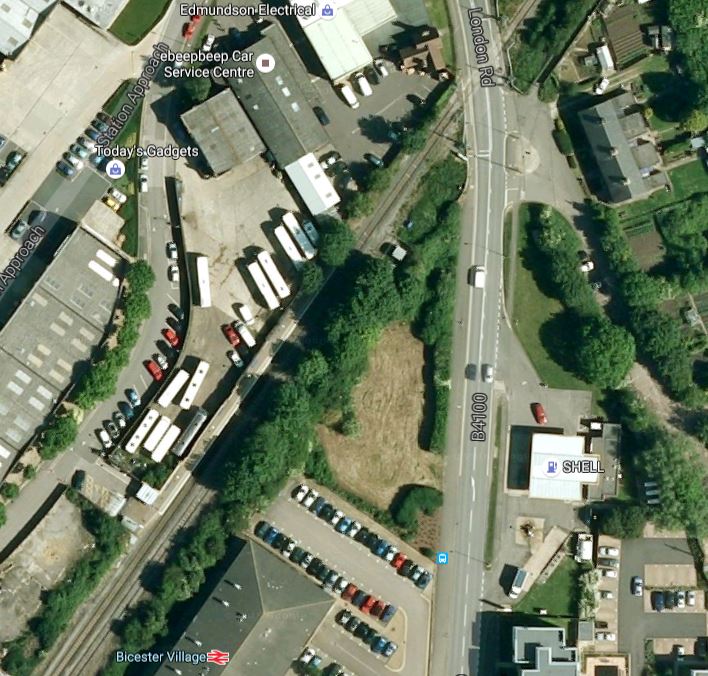
Bicester Village Station And The London Road Level Crossing
If you consider that when the next phase of the East West Rail Link opens in a few years time, the following passenger trains will be going through the station.
- 2 trains per hour (tph) from London Marylebone to Oxford
- 2 tph from Oxford to London Marylebone
- 2 tph from Reading to Bedford/Milton Keynes
- 2 tph from Bedford/Milton Keynes to Reading
That is 8 tph for a start and when you add in a few long freight trains, it is surely a good idea to close the level crossing and dig a road tunnel under the rail line.
Could Electrification Be Removed From The Chingford Branch Line?
This article in Rail Engineer also quotes Jon Shaw of Bombardier on onboard energy storage in the new Aventra trains, like the Class 710 trains that will work the Chingford Branch Line.
As part of these discussions, another need was identified. Aventra will be an electric train, but how would it serve stations set off the electrified network? Would a diesel version be needed as well?
So plans were made for an Aventra that could run away from the wires, using batteries or other forms of energy storage. “We call it an independently powered EMU, but it’s effectively an EMU that you could put the pantograph down and it will run on the energy storage to a point say 50 miles away. There it can recharge by putting the pantograph back up briefly in a terminus before it comes back.
I believe that once the concept of onboard energy storage is accepted, that Network Rail and operators, will question whether there is a need for so much electrification.
In a few years time, all trains, except perhaps a few engineering ones, on the Chingford Branch Line North of St. James station will be new Class 710 trains with the following characteristics.
- Enough onboard energy storage to handle regenerative braking and handle the twenty mile out-and-back trip on the branch.
- By using onboard energy storage, the trains have a remote wake-up facility, as discussed in Do Bombardier Aventras Have Remote Wake-Up?.
- The ability to raise and lower a pantograph quickly.
So would it be possible to remove electrification, North of Clapton Junction.
This map from carto.metro.free.fr shows the area of Coppermill junction, with the Chingford Branch Line shown conveniently in orange.

Coppermill Junction
I will now list the advantages of removing the electrification between Clapton Junction and Chingford.
Maintaining The Overhead Wires
Overhead wires get damaged, vandalised and stolen at a surprisingly high frequency.
Network Rail would love to see the wires come down.
The only objectors would be the thieves, who nick the wires to sell.
The Sidings At Chingford Could Be Without Electrification
As all the trains stored there would have their own onboard energy storage, they would move in and out under their own power.
The Chingford sidings could thus be without electrification.
This would.
- Reduce maintenance costs for the sidings.
- Enable track layouts to be changed without changing the electrification.
- Increase safety levels for everybody working in the sidings.
The only electrification needed at Chingford might be a short stretch of overhead wire to top up trains low on electricity.
All Height Restrictions Could Be Removed At The Highams Park Level Crossing
After the recent accident on the M20, reported in this story on the BBC,, which is entitled M20 motorway shut after lorry crash causes bridge collapse, I don’t think it is wise to underestimate the stupidity of some drivers.
So if there were no overhead wires at the Highams Park level crossing, it might avoid a serious incident.
Easing Station Rebuilding and Building
Wood Street station needs to be rebuilt to make the station step-free and it would be much easier and less disruptive to train services, if there were no overhead wires to get in the way.
If any new stations are added to the line, then the cost of building must be more affordable, if there are no overhead wires to get in the way.
Less Visual and Noise Intrusion
Obviously, removal of overhead wires will reduce the visual intrusion.
But, it will also reduce the noise, as overhead wires are a source of noise from electric trains.
Note too, that as the new trains will use regenerative braking at most times, there will be much less noise from wheel-brakes.
A Safer Railway
There is no doubt, that a railway without electrification is a safer railway, as there is no electricity, except for points and signals.
Conclusion
It would be advantageous for several reasons if electrification could be removed from the Chingford Branch Line.
Related Posts
Improving The Chingford Branch Line
Could Reversing Sidings Be Used On The Chingford Branch Line?
Could The Hall Farm Curve Be Built Without Electrification?
New Stations On The Chingford Branch Line
Rumours Of Curves In Walthamstow
Will Walthamstow Central Station On The Victoria Line Be Expanded?
Improving The Chingford Branch Line
The Chingford Branch Line has a four trains per hour (tph) service between Liverpool Street and Chingford via Hackney Downs and Walthamstow Central stations.
Those that I know who live in the area, have a few simple wishes.
- New trains with wi-fi and other passenger-friendly features.
- More trains to improve services and take the pressure off the Victoria Line.
- A service from Chingford and Walthamstow to Stratford and Crossrail.
- Perhaps some new stations.
- Step-free access at St. James Street and Wood Street stations.
The following sections tackle these wishes in more detail.
New Class 710 Trains
The biggest change to the line will come with the new Class 710 trains in a couple of years time.
Thirty new four-car Class 710 trains will replace the same number of Class 315 and Class 317 trains, that currently work the Cheshunt and Chingford services.
- As the number of trains and their length is the same, the service frequency and capacity will be no worse than at present.
- The trains will be modern and have air-conditioning and all the features that passengers now expect.
- The trains will be fitted with various driver aids to ensure accurate timekeepers.
- Nothing has been said about wi-fi, but most other new Aventras will have free wi-fi fitted, so I suspect it will be fitted or there will be a big argument.
- I am of the belief that all Class 710 trains will be fitted with enough onboard energy storage to handle regenerative braking and short movements not connected to the overhead wires.
- Onboard energy storage would also mean the trains could be fitted with remote wake-up, so that trains stabled overnight at Chingford, can be driver and passenger ready before the driver arrives to start the service in the morning.
It should be noted that London Overground has taken an option for another twenty-four trains. So could some of these trains be added to the fleet on the Chingford Branch to increase capacity and service on the Branch?
The Highams Park Level Crossing
In an ideal world, more services would be provided on the Chingford Branch to Liverpool Street for the following reasons.
- The Victoria Line from Walthamstow Central now has the trains to handle passengers to Central London, but the station doesn’t have the capacity to handle them, due to its cheapskate 1960s design.
- The Chingford Branch has direct access to Crossrail at Liverpool Street whereas the Victoria Line doesn’t connect to London’s new train line.
- The Chingford Branch has direct access to the North London Line at Hackney Downs and the new Class 710 trains, will mean that North London Line services will be increased.
- Crossrail could release extra platform space at Liverpool Street for more London Overground services.
But there is one major problem to increased services on the current Chingford Branch. They must all go through the level crossing at Highams Park Station.
- There is only long detours, if the crossing is closed.
- Extra trains would cause significant traffic congestion.
- Extra trains would mean the crossing would be closed for a large proportion of every hour.
As it is unlikely that the money could be found for a bridge or tunnel at Highams Park, the only thing that can be done, is make sure that all train services be at maximum length, which is probably eight cars.
Obviously, longer trains would help, but in the long term, I’m certain that London Overground would want to run more frequent services between Liverpool Street and Chingford.
I think it is true to say that the train frequency of the Chingford Branch through Highams Park is probably limited by a maximum of eight closures per hour of the Highams Park level crossing, unless the level crossing could be closed or by-passed.
But is maximum use being made of the level crossing closures now?
At present in the Off Peak.
- Trains arrive at Highams Park from Chingford at 14, 29, 44 and 59 minutes past the hour.
- Trains leave Highams Park for Chingford at 08, 23, 38 and 53 minutes past the hour.
I don’t think that this means that a Northbound and a Southbound train can share a single closure of the level crossing. This page on the National Rail web site, shows live departures at Highams Park.
If they could, then that would cut the number of times the crossing closed in the Off Peak by half.
Things that will help, is that the Class 710 trains will have extensive driver aids and probably onboard signalling, so the precise timekeeping that would be required, so two trains shared a level crossing closure, could be a lot easier.
Eight trains per hour in the Off Peak in both direction through Highams Park station is a distinct possibility.
This 8 tph frequency could be continued through the Peak, as it’s probably better than the current timetable.
Eight Trains Per Hour From St. James Street To Chingford
So it looks like that modern Class 710 trains running to a precise timetable could mitigate the problems of the Highams Park Level Crossing and allow eight trains per hour between St. James Street and Chingford.
|As there is no other trains using the branch, except moving empty and some engineering trains to and from the sidings at Chingford, there is probably little to interfere with an 8 tph schedule.
South From St. James Street
South from St. James Street station, the trains go through the Coppermill Junction area and cross the West Anglia Main Line.
The Chingford Branch then joins the line from Tottenham Hale to Hackney Downs, as this map from carto.metro.free.fr shows.
Coppermill Junction
The map shows Coppermill Junction, where the Chingford Branch Line crosses the West Anglia Main Line, that runs North from Liverpool Street to Tottenham Hale, Bishops Stortford, Stansted Airport and Cambridge.
I suspect that there would be a problem fitting another four tph through Hackney Downs station and on to Liverpool Street.
In Rumours Of Curves In Walthamstow, I talked about how two curves would be rebuilt, based on information from an informant with detailed knowledge.
- The Hall Farm Curve would be rebuilt as a bi-directional single-track connection between St. James and Lea Bridge stations.
- The Coppermill Curve would be rebuilt to give a connection between St. James and Tottenham Hale stations.
The Hall Farm Curve is the significant one for passenger services on the Chingford Branch Line, as it would mean that the current service of 4 tph between Chingford and Liverpool Street would be augmented by a second 4 tph between Chingford and Stratford.
- Waltham Forest would get an 8 tph metro service between St. James and Chingford stations.
- There are extensive bus connections at Chingford, Walthamstow Central and Stratford.
- The line has good connections to the Victoria Line, the Jubilee Line, the Central Line and Crossrail.
The only infrastructure needed would be the single-track Hall Farm Curve. If the Class 710 trains were to be fitted with onboard energy storage, this curve would not even need to be electrified.
Conclusion
By using the features of the new Class 710 trains, Chingford can be given four trains per hour to Liverpool Street and 4 trains per hour to Stratford, if a new single-track Hall Farm Curve without electrification is built between St. James and Lea Bridge stations.
Related Posts
Could Electrification Be Removed From The Chingford Branch Line?
Could Reversing Sidings Be Used On The Chingford Branch Line?
Could The Hall Farm Curve Be Built Without Electrification?
Crossrail 2 And The Chingford Branch Line
New Stations On The Chingford Branch Line
Rumours Of Curves In Walthamstow
Will Walthamstow Central Station On The Victoria Line Be Expanded?
Wikipedia – Chingford Branch Line
Another Level Crossing Crash In East Anglia
This afternoon, I was in Cambridge trying to get to Ely.
I didn’t!
This report in the East Anglian Daily Times, which is entitled Investigation underway after car driver seriously hurt during train strike at level crossing near Ely – rail services severely disrupted, explains what happened and why I didn’t get to Ely!.
This is said.
Network Rail is investigating whether it had been asked for permission to open a gate at a level crossing before a vehicle was hit by a train.
I won’t prejudge their enquiry, but it strikes me there are these ways that the Land-Rover could have been on the crossing and hit by the train.
- The signalman erroneously gave the driver permission to cross.
- The phone system was broken.
- The driver crossed without permission.
- The vehicle broke down, whilst crossing.
My father always taught me to drive defensively and assume that everybody else is an idiot. Similar things were also said to me, when I was learning to fly.
In one case, not too far away from the level crossing, where the accident happened, I was driving home and at another crossing, the half-barriers were down and on enquiry they had been that way for half-an-hour with the lights flashing. I phoned the signaller and he told me all trains had been stopped for safety reasons and that we could all cross, by weaving through the barriers.
Eventually, I did this with extreme care, but others reversed and went the long way round.
Today, once clear of Cambridge and its troubles, I came across a very irate Abellio employee. Not with me, or the company, but with the accident, as she had had a big afternoon of complaints.
In my view, the driver was at fault, as he did not appear to assume that the signaller was an idiot.
Incidentally, the Abellio employee was of the opinion, that all crossings should be replaced with ones with full barriers.
Certainly, in this day and age, user-worked level crossings are not safe enough for many of the idiots on our roads.
Lincoln’s Tower Bridge
I took these pictures of the new bridge over the railway by one of Lincoln’s notorious level crossings.
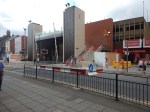
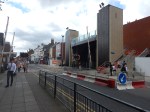
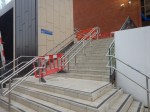
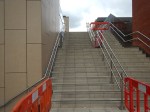
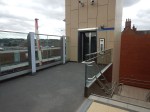
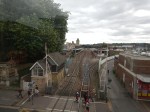
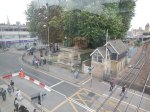
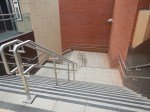
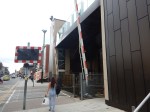
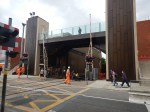
Note.
- The bridge may mean that pedestrians can get across easily when the level crossing is closed, but it doesn’t do anything for the vehicles.
- One of the reasons for the height, is to clear the wires, if the line should be electrified.
- This article in Rail Engineer describes how it was built.
- Reportedly, the bridge is the first part of a £12million scheme, which includes a second bridge over another nearby level crossing.
It’s certainly a striking footbridge.
The Natives Are Getting Restless
It would appear that Network Rail have stirred up a hornet’s nest in Suffolk over the tricky subject of level crossings.
Over the last couple of days, three letters have appeared in The Times either supporting or opposing the closures.
I’ve also had talks with old friends in the County and some are not happy.
This web page on Network Rail’s web site, which is entitled Anglia level crossings proposals, gives more details. This is said.
We have been working to reduce the risk that level crossings pose and have developed proposals to manage the possible closure or change of use of around 130 level crossings in Anglia across Cambridgeshire, Essex and Suffolk.
We believe it’s possible to close level crossings:
- with private rights only
- by diverting people to where a nearby alternative exists
- by providing a new public route to a nearby alternative
We will also look to downgrade level crossings to non-motorised users. None of the crossings in this proposal involve closing public A or B roads.
We recognise the importance of public rights of way and where possible we will maintain easy access to the countryside.
Having read the full document, I would say that Network Rail are trying to do there best to eliminate these hazards of a bygone age.
But try telling that to some of the locals.
What should bring it home to the locals is the Roudham train crash on April 10th, 2016, when a Class 170 train hit a tractor on a level crossing.
The train hasn’t been returned to service, so as I wrote in An Illustration Of East Anglia’s Rail Problems, the operator is scratching sround for trains.
So one place’s level crossing accident, is another area’s lack of trains.
There are rumours, that the Roudham crash was caused by human error, but the main cause of the crash, was the fact the level crossing existed.
All level crossings should be removed.
 The Anonymous Widower