Hackney Downs Station
I wanted to go to Tottenham today, to answer a few questions that had arisen in my mind after the trip yesterday to IKEA.
I started at Hackney Downs station.
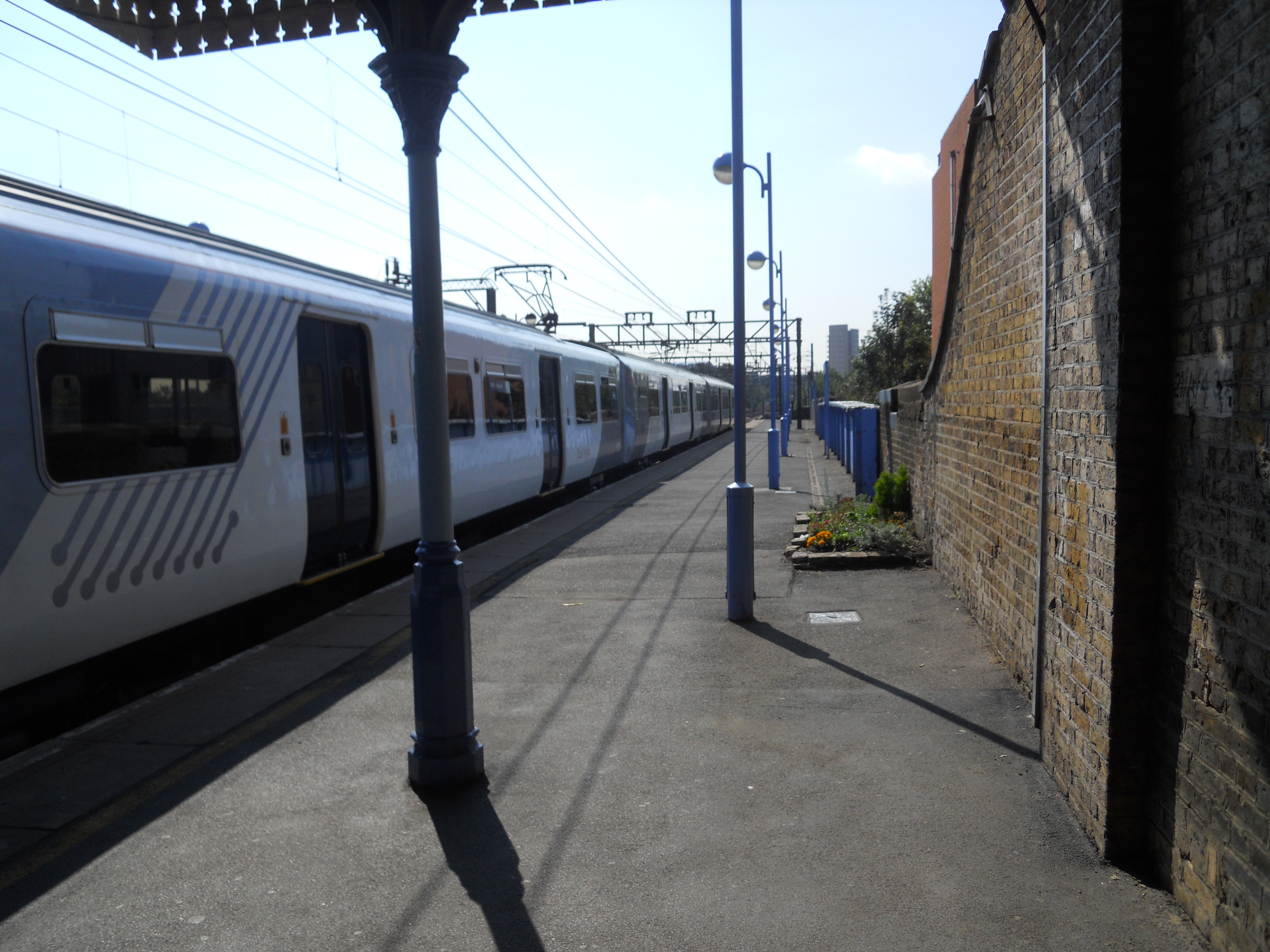
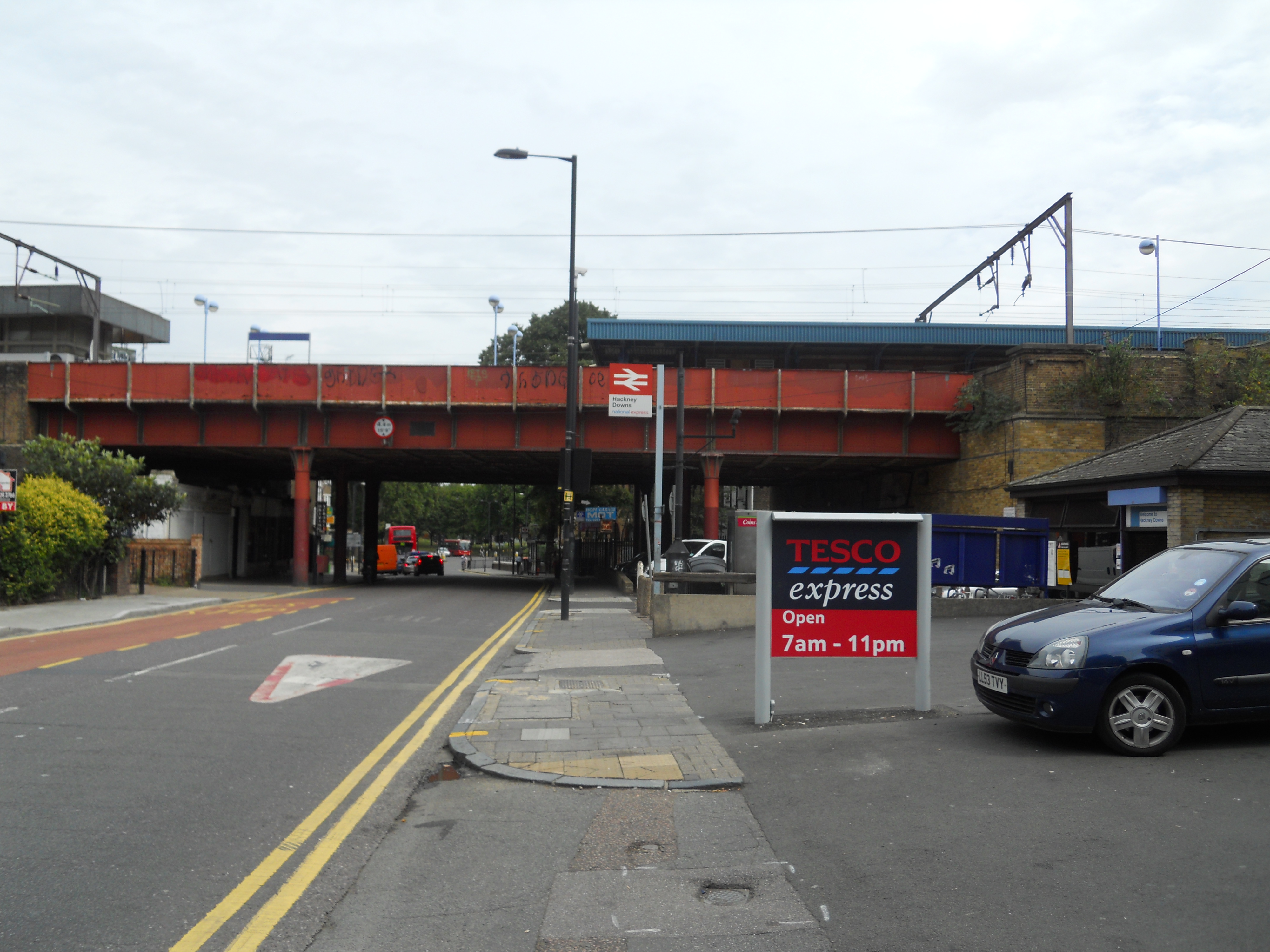
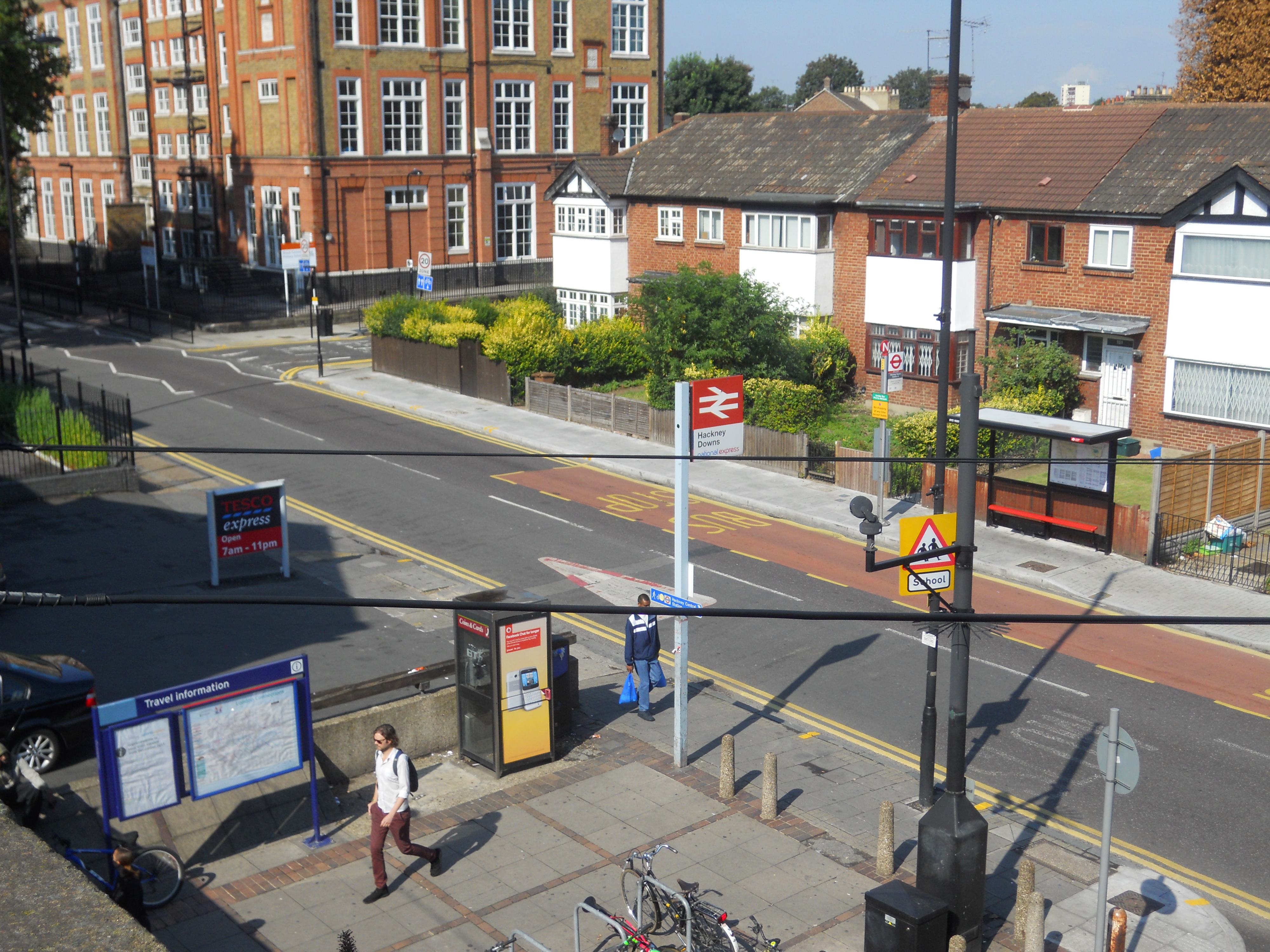


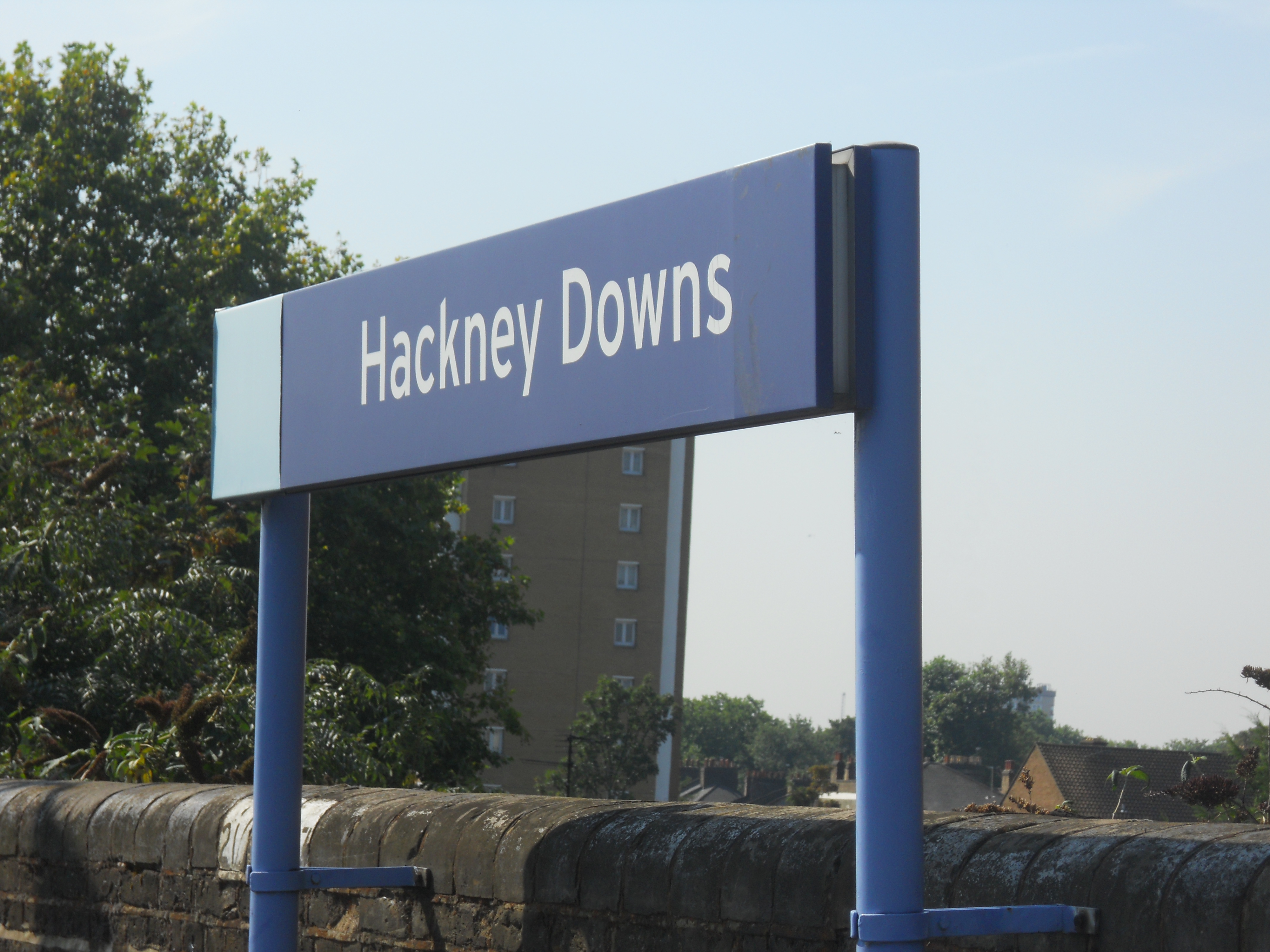
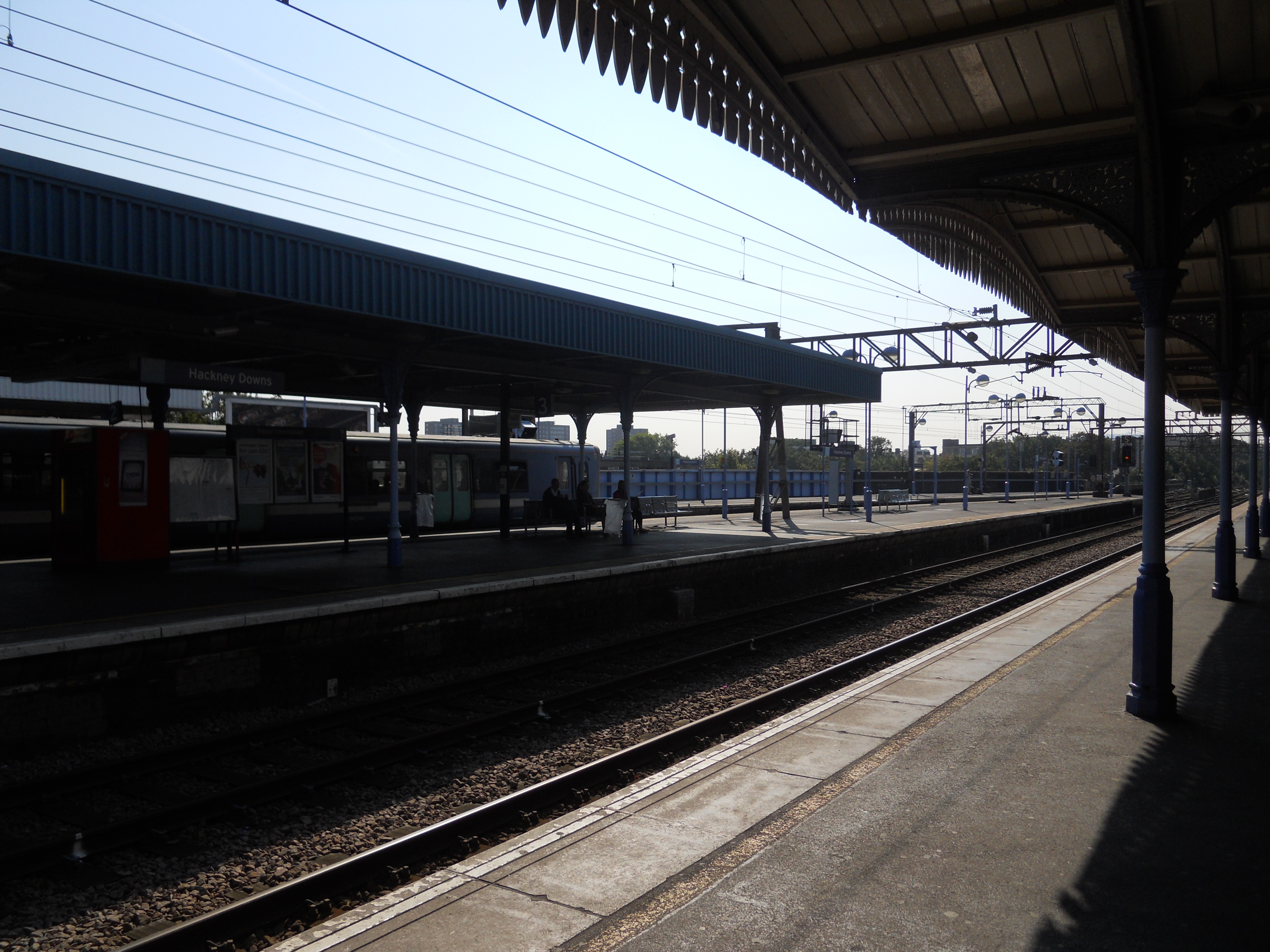
To say it is a dump would not be fair, as I suspect that staff try hard to keep a station that has lacked investment for years, working well.
It could be a very good station and I think it could be made into a major interchange by just a few changes and perhaps by borrowing ideas from the Overground.
The access to the platforms, which is by steep staircases, must be improved. I’m not disabled, but do appreciate the problems of those who are. In a wheelchair, unless accompanied by say four of Her Majesty’s squaddies, you wouldn’t stand a chance.
It is dark and dingy too and desperately in need of an imaginative repainting. Hackney has lots of artists, so perhaps they could help or design a scheme. Has a station ever been converted into an art gallery? I know the Musee d’Orsay was formerly a station, but they threw the trains out. Babies and bathwaters come to mind.
How about adding a food shop and a coffee bar?
The interface to the buses underneath the station is poor, as the picture in the gallery shows. There should be a light-controlled crossing over Dalston Lane.
But there is a lot going for the station.
It is close to the open space of Hackney Downs.
It is well served by services going to Enfield, Tottenham, Chingford, Cheshunt, Hertford and of course, Liverpool Street.
A walkway did link it to Hackney Central and this could be reinstated to create a true rail interchange for Hackney.
Is The London Overground a Success?
The three most important lines of the London Overground are now well established. I like it and I use the system several times a week. Admittedly, I have a station at the end of my road, but it is still about a kilometre away. The trains are comfortable, clean and I’ve only been late once.
But do others feel the same way as I do?
So I typed “London Overground success” into Google to see what I got.
I found this article, which is sub-titled, Tangerine Dreams. Here’s a flavour.
That the London Overground has been a success is difficult to deny. Whilst it has certainly had its share of delays and difficulties (such as with the rollout of the 378s), its current performance and satisfaction figures accurately portray the step change in service that has happened on the NLL and elsewhere since the Operator effectively made its debut in 2007. In a city where other Operators such as South Eastern are increasingly feeling the heat from passengers over the level of service they provide, London Overground’s performance also serves to highlight that there are effective ways to address the challenges that London’s railway infrastructure brings.
The rest of the article should be read and it is generally positive about London’s newest railway.
Politician’s of all colours will claim that the success is all down to them. In my view, given how the Overground built on successful ideas, rather than try revolutrionary new ones, I would say you’d have to be really stupid to make the project fail and be an unloved railway.
For a transport project to be successful, you have to locate it so that it takes people where they want to go. The Overground does this well, although you could argue it needs more links to the Underground, as Highbury and Islington, Whitechapel and Richmond aren’t really enough. But West Hampstead will come and possibly there will be others if the politicians decide to invest in success.
One factor that helps, is it is the least claustrophobic and most photogenic of London’s railways, with the possible exception of the DLR. I would recommend both the DLR and the Overground to visitors who want to get a different perspective of London.
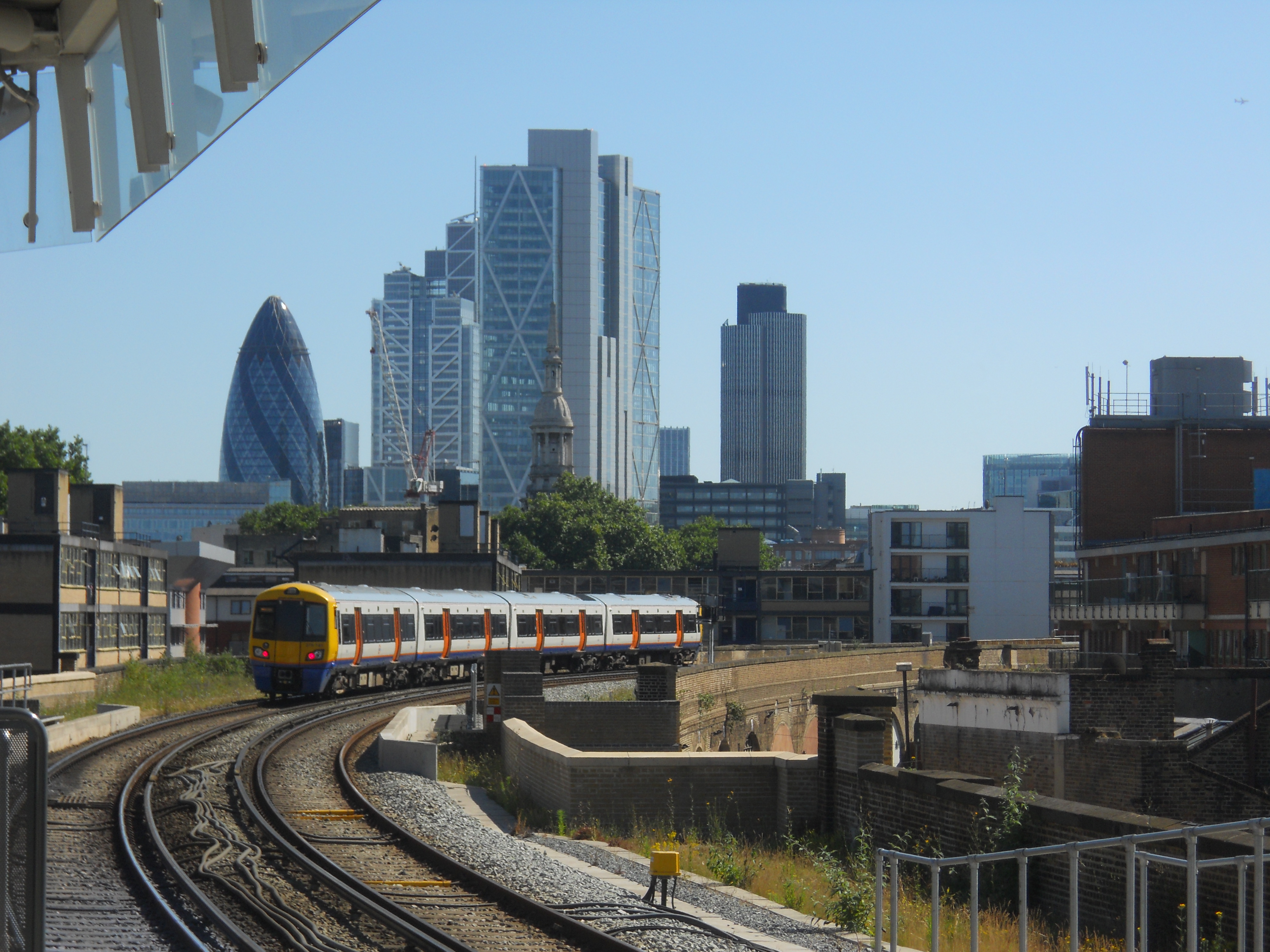
Overground Train on the Embankment South of Hoxton Station
I’ve used this picture before to show how different the Overground is. This view even ended up in Modern Railways to illuastrate an article about links between the City and transport projects.
I think the next question is can we build on this success?
The Dark At The End of the Tunnel
After the walk, we were taken into the original entrance of the Thames Tunnel.

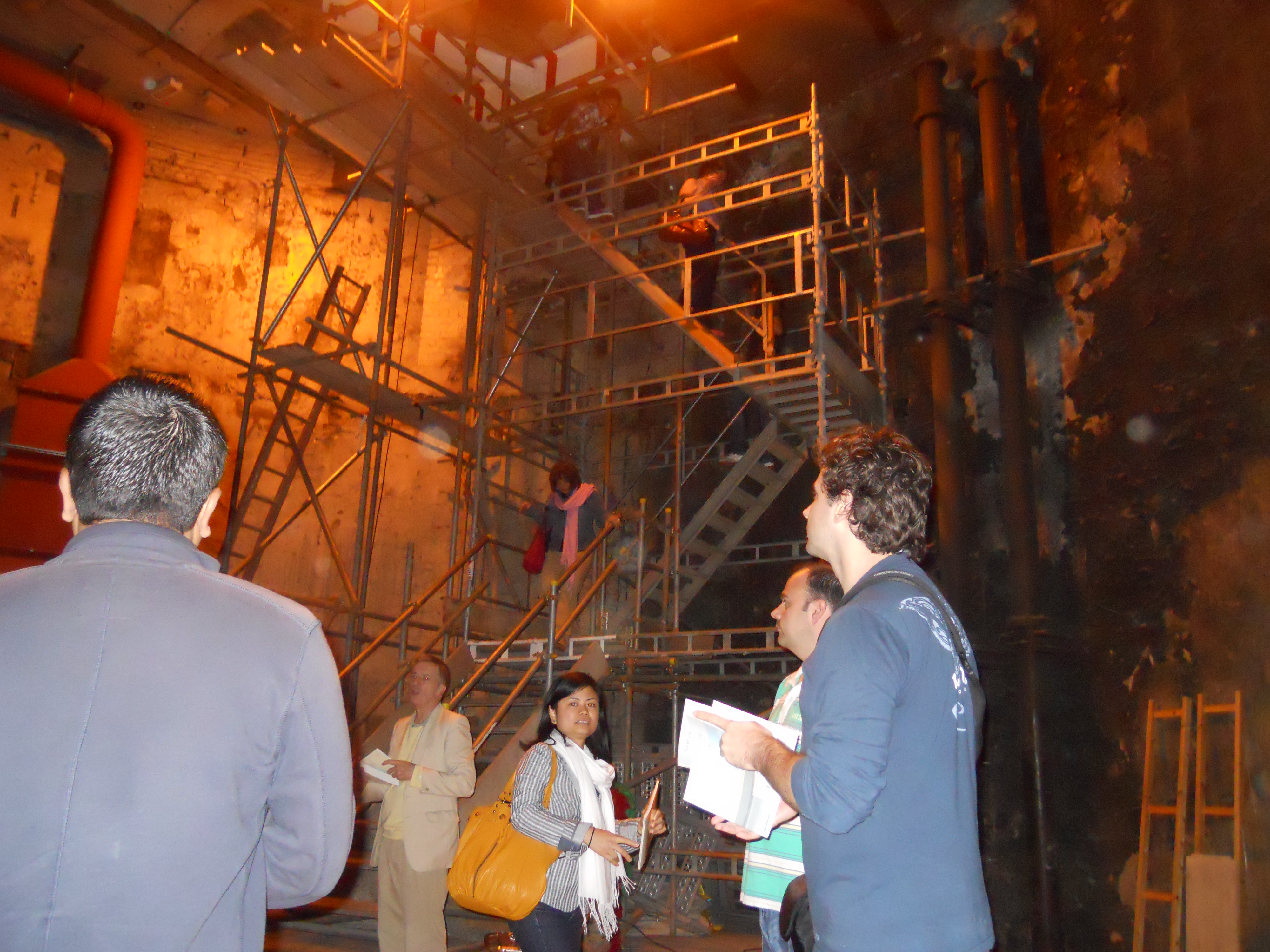
This large chamber is one of the original caissons that were sunk so that the tunnel could be excavated. Note the remains of the staircase and the soot from steam trains on the walls. You could also hear the London Overground rumbling beneath your feet.
The Brunel Museum will be improving the access to this chamber, which until recently hadn’t been open for about a 150 years
A Visit to the London Wetland Centre
I’d been wanting to go for some time and felt that as this morning was hot, it might be a bit cooler to stand amongst the old reservoirs, that now make up the London Wetland Centre. So I took the North London Line to Gunnersbury, then a few stops back on the District line to Hammersmith and then a 283 bus to the centre.
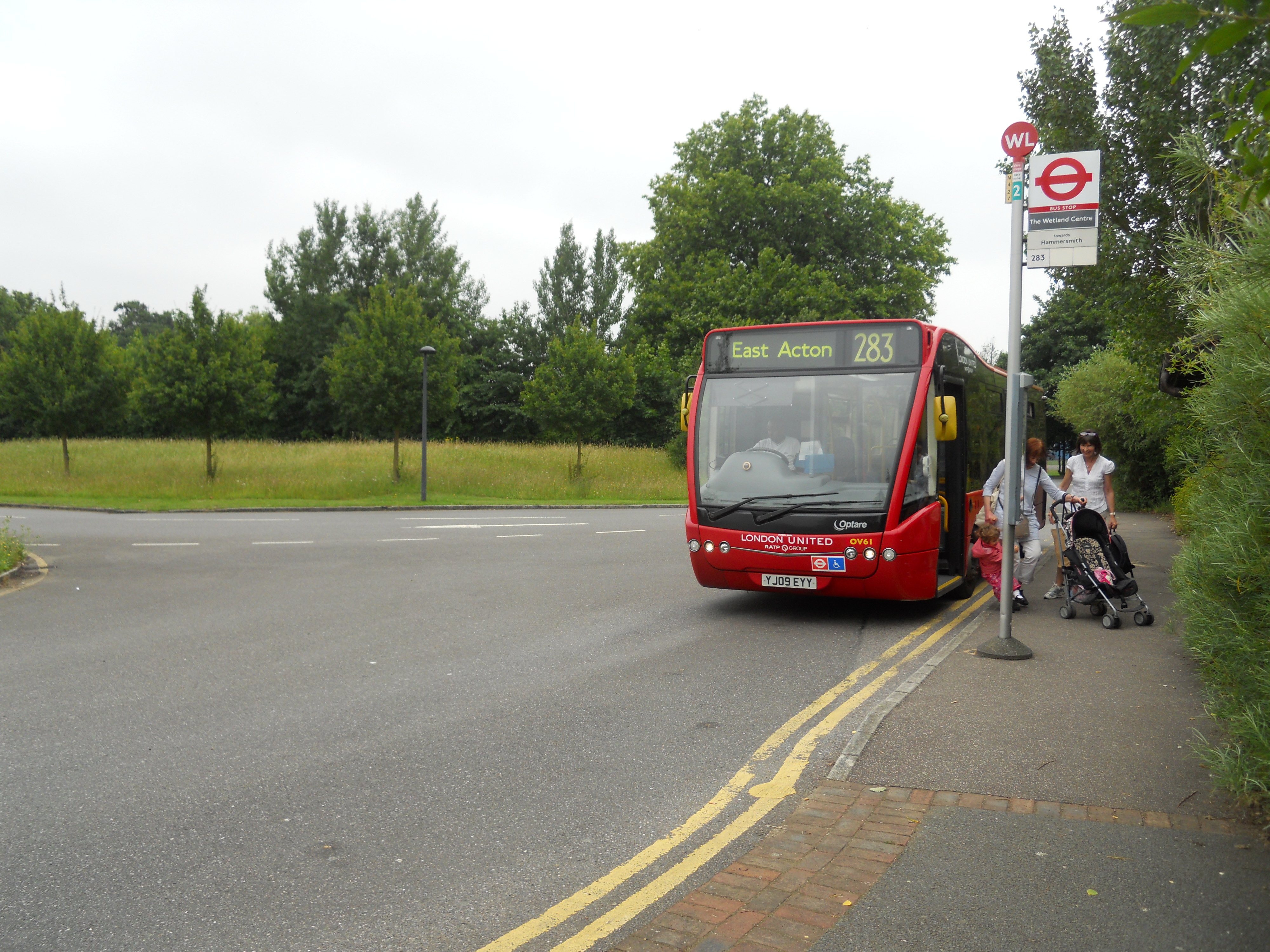
283 Bus at the London Wetland Centre
It wasn’t a difficult ride and using the Overground to go from North East to South West London is preferable than the Underground, as the views are better and the trains are a lot more comfortable in hot weather.
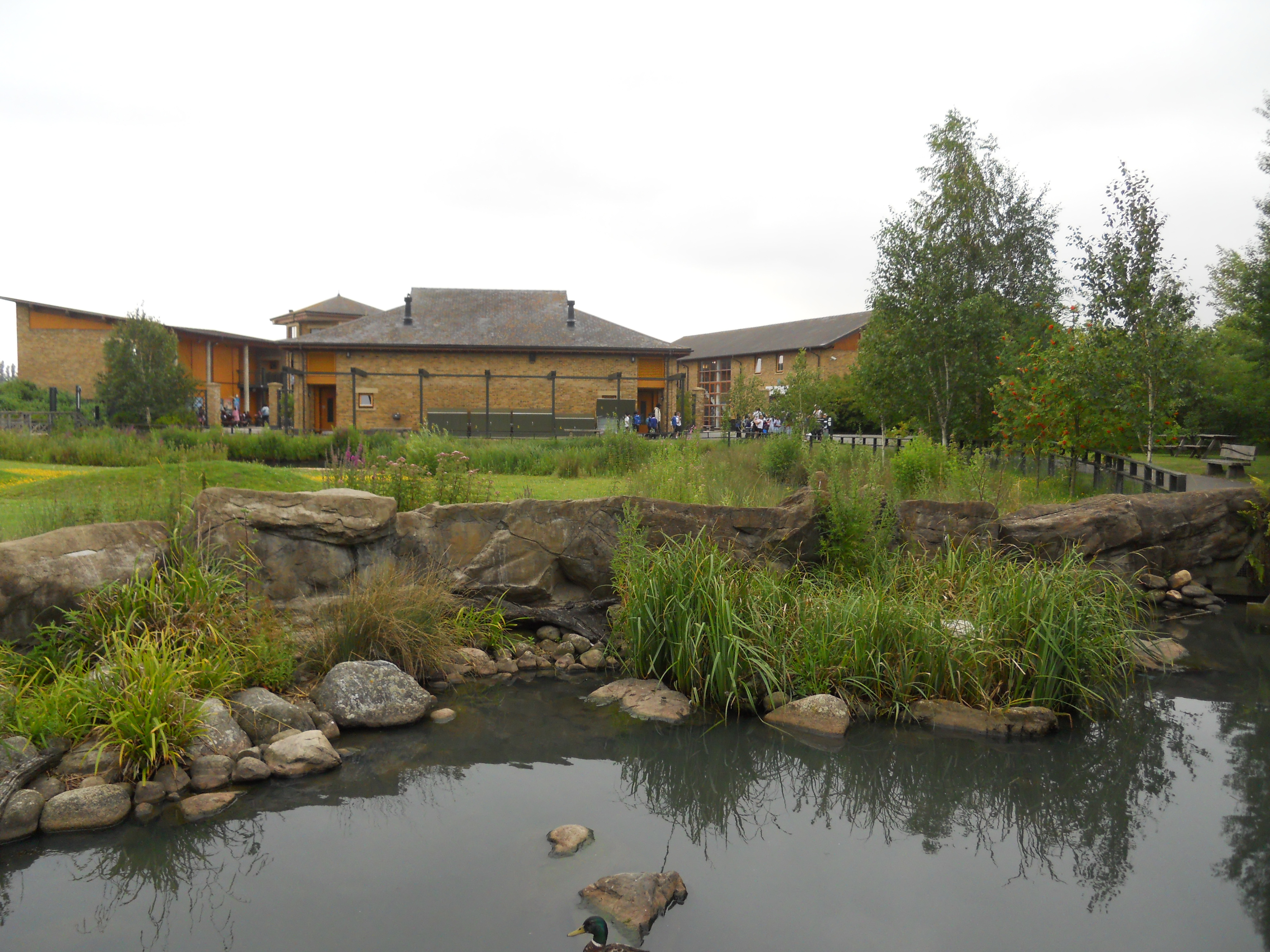
The Peter Scott Visitor Centre
The centre is impressive and very much worth a visit. I stayed for a couple of hours and walked around the site observing the various birds. Not that I know much about what is what without a book and some binoculars, which I had forgot to take. Although the signage was good and very much in a style that Sir Peter would have approved of. Ponds are laid out by habitat and country or continent, with a large wild area that attracts all of the birds that either live in or visit London.
When it started to rain, I had a coffee in the excellent cafe, which I checked as to whther they knew their gluten-free or not! They did incidentally.
I then left on the bus to Hammersmith, before taking the Metropoitan line to King’s Cross to get the bus home.
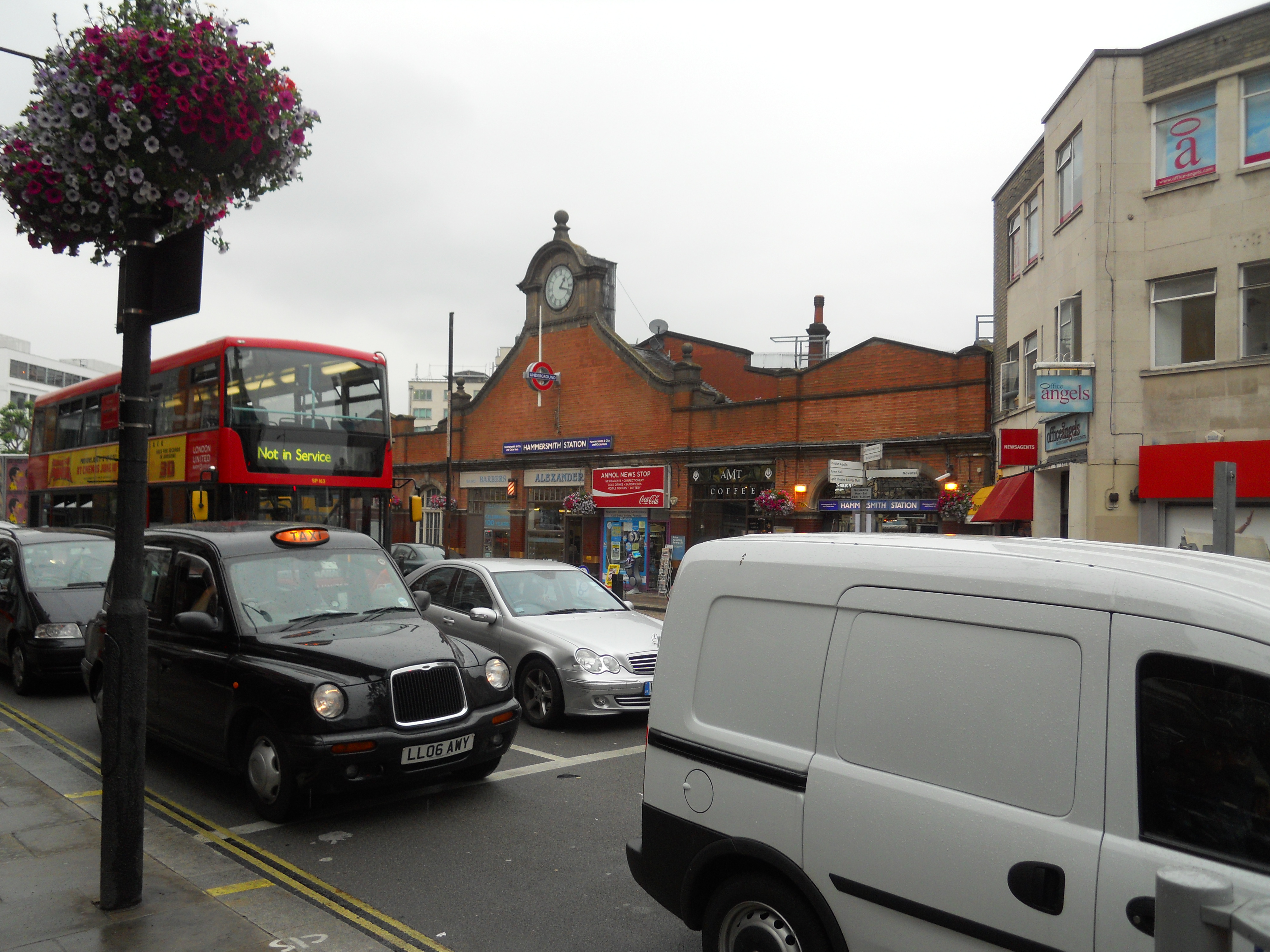
Hammersmith Station on the Metropolitan line
The picture shows the Metropolitan line station at Hammersmith, which has been refurbished since the Undergound reorganised the Circle line. It certaining looked better than it did, when I went with my father from Wood Green to Earl’s Court avoiding the deep Tube lines. Anybody in their right mind would have used the Piccadilly line all the way. But my father had a phobia of deep lines, so went by steam train to King’s Cross, Metropolitan line to Hammersmith and then back to Earl’s Court on the District.
So How Good Is The Overground?
The London Underground is known all over the world and compares well with systems in many cities. It has its problems, but it doesn’t have some of those of say Rome or New York.
Now the Underground has an upstart little brother in the shape of the Overground, which has been in operation for the last couple of years.
Like their middle brother, the Docklands Light Railway, the Overground has been built on the cheap, by reusing old railway lines, tunnels and other infrastructure and then adding new trains and rebuilt stations.
But just as with the DLR, it has been a formula that has worked. The Overground has just one major tunnel, which for an urban railway must be a world record. But what a tunnel, with more history than many museums, as the Thames Tunnel is thought to be the first tunnel built under a navigable river and was built by Marc Brunel and his son Isambard Kingdom Brunel, in the first half of the nineteenth century.
The Overground currently consists of five lines, with a sixth due to open in late 2012. I use the North London Line and the East London Line often as much as seven or eight times a week, as Dalston Junction and Dalston Kingsland stations are within walking distance from where I live.
I like the lines, as the new trains are comfortable with plenty of space for parcels and bikes and they generally run to time. Only once have I had trouble and that was on the North London Line, where I suspect that a delay of twenty minutes or so was caused by a freight train, that shares that line was running late.
The lines also compare well with the previous lines, one of which I described here. But then those lines as I remember them were last upgraded in the 1950s or even earlier.
The Overground also reaches a lot further and in time it will reach all round London and to the lines to Southampton and Portsmouth and eventually HS2 to Birmingham and the North. In a few weeks the North London Line will have a new link at Stratford for HS1 and the London City Airport.
In some ways the Overground and especially the North London Line is unique in that it is a siteseeing railway, which links tourist sites like Kew Garden, Hampstead Heath, Brick Lane, Camden Market and Crystal Palace with a ride that in places gives superb views of the city.
Overground Train on the Embankment South of Hoxton Station
This picture taken of a train on the embankment just south of Hoxton station, shows how the Overground is part of the city in a way that the Underground never can or will ever be.
Several people riding the line have told me has got them their first or a better job and reports have appeared showing that the Overground has improved job prospects and property prices, and even reduced crime. I’ve also heard the latter from a Police Sargeant.
But this is one of the reasons you improve the transport infrastructure, as properly done it makes peoples lives better.
But it is not all good.
The trains can get overcrowded at times and the platforms in places may not be capable of being lengthened, although adding more carriages to the trains might be fairly easy.
Connections to the Underground need to be better and the lack of a Central line connection at Shoreditch HIgh Street is the most glaring. Hopefully Crossrail at Whitechapel will resolve this problem, but will this new line put more pressure on the East London Line?
I do also think that the freight use of the North London Line might get to be a serious problem, especially if trains get larger and more frequent as more containers move off the roads to rail.
The Overground Remembers
In the Great War, 64 men, who worked for the old North London Railway were killed. A memorial was set up to remember them in the old Broad Street station, which was demolished to make way for Broadgate. I used to get off trains from Ipswich at Liverpool Street in the 1970s and then take trains from Broad Street station to Metier’s offices in Stonebridge Park. It must have been the only station in the UK, where you needed to wear a miner’s helmet to be able to see anything. The trains were dark too, with slam doors giving the impression of prison cells. The smell was horrendous and was a mixture of body odour, curry and urine. Well probably not curry in those days, but something when it was emitted from the body the wrong way, gave off a truly obnoxious smell. Wikipedia says this of Broad Street station.
The station was badly damaged in World War II and was never fully repaired.
They certainly didn’t replace the light bulbs.
When the station was closed and demolished, the memorial to the dead was stored at Richmond.
Now though, London Overground has decided to erect the memorial at Hoxton station, directly behind the Geffrye Museum.
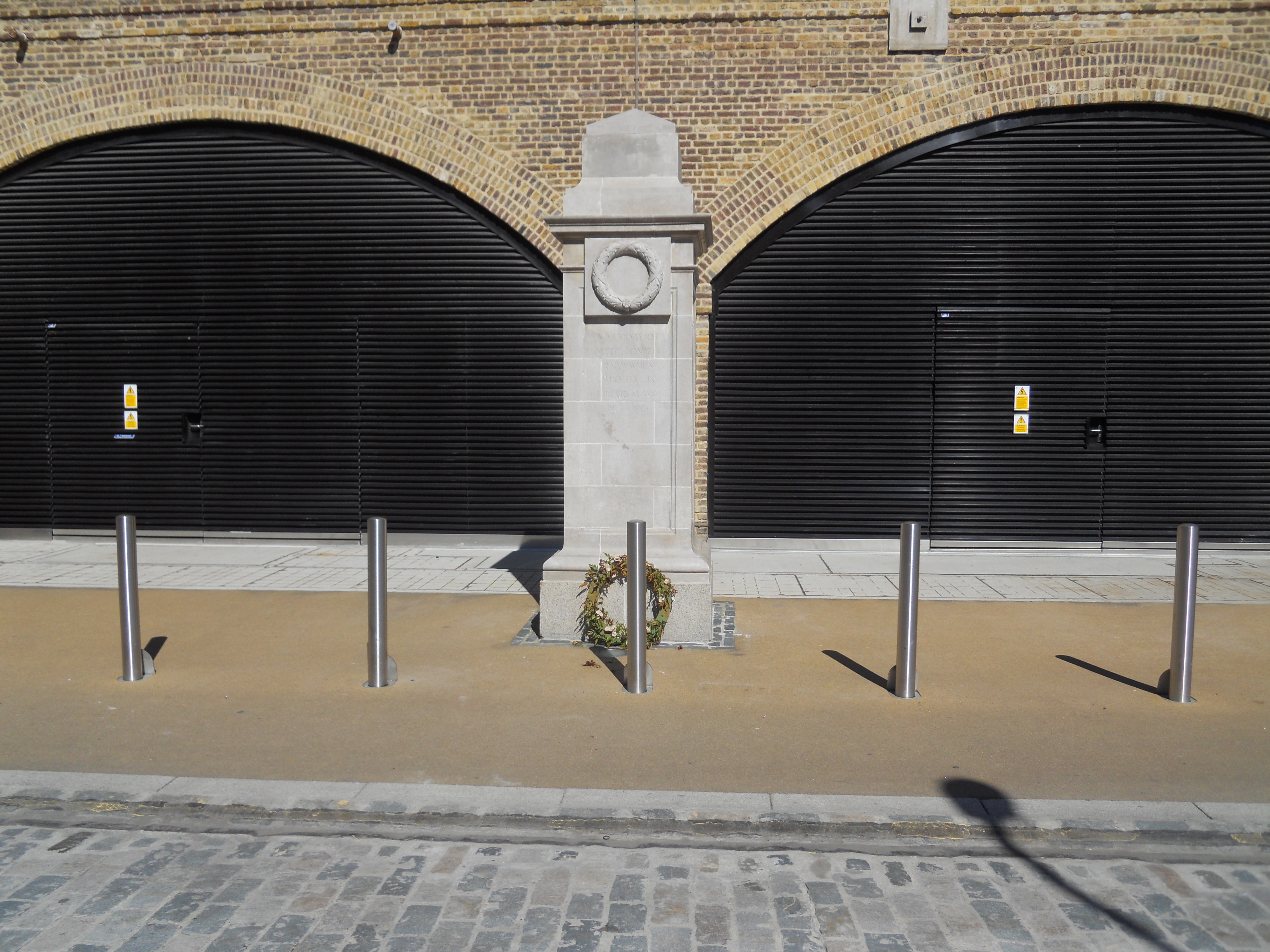
The North London Railway Memorial to Employees Who Died in the Great War
The inscription on the memorial says.
In memory of North London Railwaymen Who fell in the Great War 1914-1919
As Hoxton is the nearest station to Broad Street on the old North London Railway, it can be said that London Overground has truly done the right thing.
The Barriers Go Down at Dalston Junction
I came back through Dalston Junction station today and the barriers are down at the Southern exit.
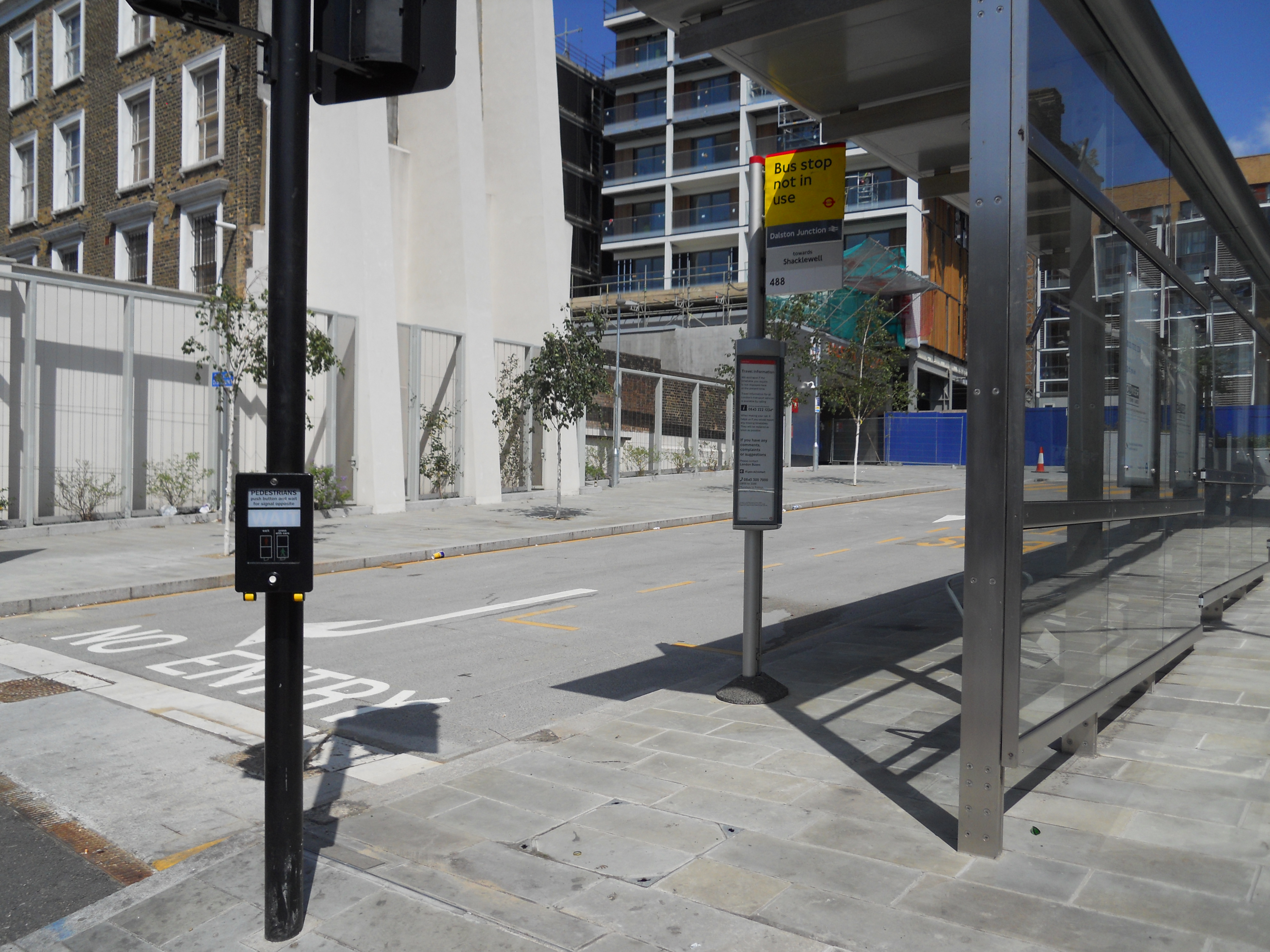
The Barriers Are Down at Dalston Junction
As you can see they’ve got all the signs up for the extension of the 488 bus route, which starts tomorrow on Saturday the 4th.
The bus spider map for Dalston has the new route fully shown, but they haven’t updated the maps in the station yet.
Is The Cause of High Unemployment Our Housing and Transport Policies?
There was a program on BBC Radio 5 this morning about unemployment. It was the usual left versus right battle, which has been fought so many times to a non-conclusion, that the program got boring, so I went shopping at Upper Street.
I have lived in several houses and flats in my life and in some ways, where I am now suits me best. Visitors like it too and they feel it is absolutely right for me.
So what is this house like. It’s a three bed-roomed house with two en-suite bathrooms and one that isn’t. It’s modern and it’s built upside down, with two bedrooms, a bathroom and the garage on the ground floor and a seven-metre square living area, kitchen and a bedroom on the first floor. It has a lot of chocolate-coloured steel and big glass windows. Unfortunately, it was built by Jerry. It doesn’t have a garden, but it does have two patios front and back.
In some ways the nearest to it in feel, was our flat in Cromwell Tower, in the Barbican, where we raised our three sons for the first few years of their lives. There we had three bedrooms, a large living room, kitchen, an underground car park and superb views across to St. Paul’s.
My house is however not the sort of house that most people aspire to or in fact that many can afford.
So many prefer one of Pete Seeger ‘s Little Boxes on a new estate somewhere in the countryside with space for two cars. After all, these sort of estates don’t get inhabitated by the riff-raff do they? They are also as eco-friendly as Obama’s Beast.
I have now come to the conclusion that I don’t like to live in the countryside. It is all so sterile, unfriendly and full of lots of little cliques. After the loss of C and my son, not one person in the village came to see me. After all I was a loser wasn’t I, especially as I had a stroke? There’s a great belief too, that widows might decide to walk off with your partner! It was a real relief to escape on a train to somewhere, where something actually happened. But there was no public transport, so simple things like getting any food meant a taxi or scounging a lift.
I also should say I hated living in Cockfosters as a child. There the problem was that there were no children of my own age and most of my school friends lived some distance away. Only when I was old enough to work in my father’s print works and ride my bike all over the area did I feel liberated.
How I live now, is surprisingly similar to how C and I used to live with the boys in the Barbican and St. John’s Wood before that. Except of course that I am now alone and do the things like food shopping, that C used to do. But then when I wander round Chapel Market, it’s like going back to the early seventies and she’s still guiding me.
It’s a friendly and a mixed area, with some good shops, four pubs that know their gluten-free within walking distance, several gardens and superb public transport links. The people are friendly too and I’m starting to add to my circle of friends. In this sort of mixed area, you also develop passing acquaintances with people, who you say hello to as you pass. In the countryside, it’s a bit difficult to talk to someone about their basset hound as I did today, when the dog is in the back of a 4×4 passing at speed.
So the sort of mixed area where I live is not to most people’s taste, but in my view, if we want to decrease unemployment and create worthwhile jobs, then this sort of area can do it’s bit. Another mixed area, I know well is the centre of Cambridge and it could be argued that that mixing helps with the development of ideas.
How many good ideas have been hatched in pubs or coffee shops? Sterile country villages might have an award winning gastro-pub, but the only ideas that come out of places like that, are things like better ways to cook asparagus.
One of the complaints in all the villages I’ve lived was the lack of any staff locally. This was mainly because, those same people didn’t want any affordable housing built, that might spoil their view and lower the tone of the place. I have a lovely lady, who sorts my house out, once a week and she was fairly easy to find. Incidentally she comes on a bus from the other side of Dalston JUnction station. so just at a selfish level, good public transport helps people to get to their jobs. In those much admired villages, there is no public transport, so everybody has to drive, so those that can’t afford their own car, often can’t get a decent job. But then a lot of those that live in villages don’t want more public transport, because of all the noise and inconvenience of passing a bus in a large 4×4. But they have their own cars anyway!
To illustrate what I say further, I will take the Suffolk town of Haverhill, which has large numbers of little boxes, which asre being added too at a fast rate. There are jobs in the town, but many require a car to get to, as the town isn’t the most cycle-friendly and the public transport is limited. Haverhill is also a sensible commute to Cambridge, where there are far better-paid and more worthwhile jobs, but the only way to do it, is to use a bus or car. There used to be a railway, but that was axed in the Beeching cuts. Axing it actually wasn’t the problem, but building over the right-of-way was, as that railway, which is needed to provide a link etween Sudbury and Cambridge, could have been reinstated. In Scotland, they have been reinstating railways like Airdrie to Bathgate with some degree of success.
If I was in charge of eployment policy in this country, I would reinstate railways like Sudbury to Cambridge, as they not only create employment, but allow people to get better jobs. Recently, the line from Ipswich to Cambridge has been updated with better and bigger trains and the investment has led to a large increase in passenger numbers.
Where I live, we also have the example of the recently-rebuilt North and East London Lines of the London Overground, which are now used and liked by everybody. In fact, so much so, that frequencies are being increased.
I have also read and heard stories how the new lines have decreased unemployment, just by enabling people to move more easily from where they live to where the jobs are.
I think too, we concentrate on unemployment and rightly so, but in many cases better transport links will enable people to move up the employment ladder. This is just as important, as not only does it create a need to replace the person who’s left, but if people earn more, they tend to spend more and that helps to create jobs.
Branas Boxes Bite Again
I have a new delivery of some IKEA furniture tomorrow and to finish it off I need some more Branas boxes.
As I was going to have a coffee with a friend in Covent Garden, I thought that I might go on from there. But getting to Covent Garden had been difficult on the Piccadilly line as someone had stupidly been hit by a train at Southgate. So the obvious route back to IKEA at Edmonton which involved using the Piccadilly line to Manor House and then a 341 bus, was probably a no-no!
So I decided after my coffee to take the circular route from Embankment of a District line train to Wimbledon and then the Tramlink to IKEA at Ampere Way. Afterwards I intended to continue on the tram to West Croydon to get the London Overground to Dalston Junction.

The Chimneys at IKEA Croydon
The two chimneys of the old power station that give the road its name are still there.
As are the concrete blocks, that sit in the pedestrian entrance to catch the drunk, the lame and the elderly.
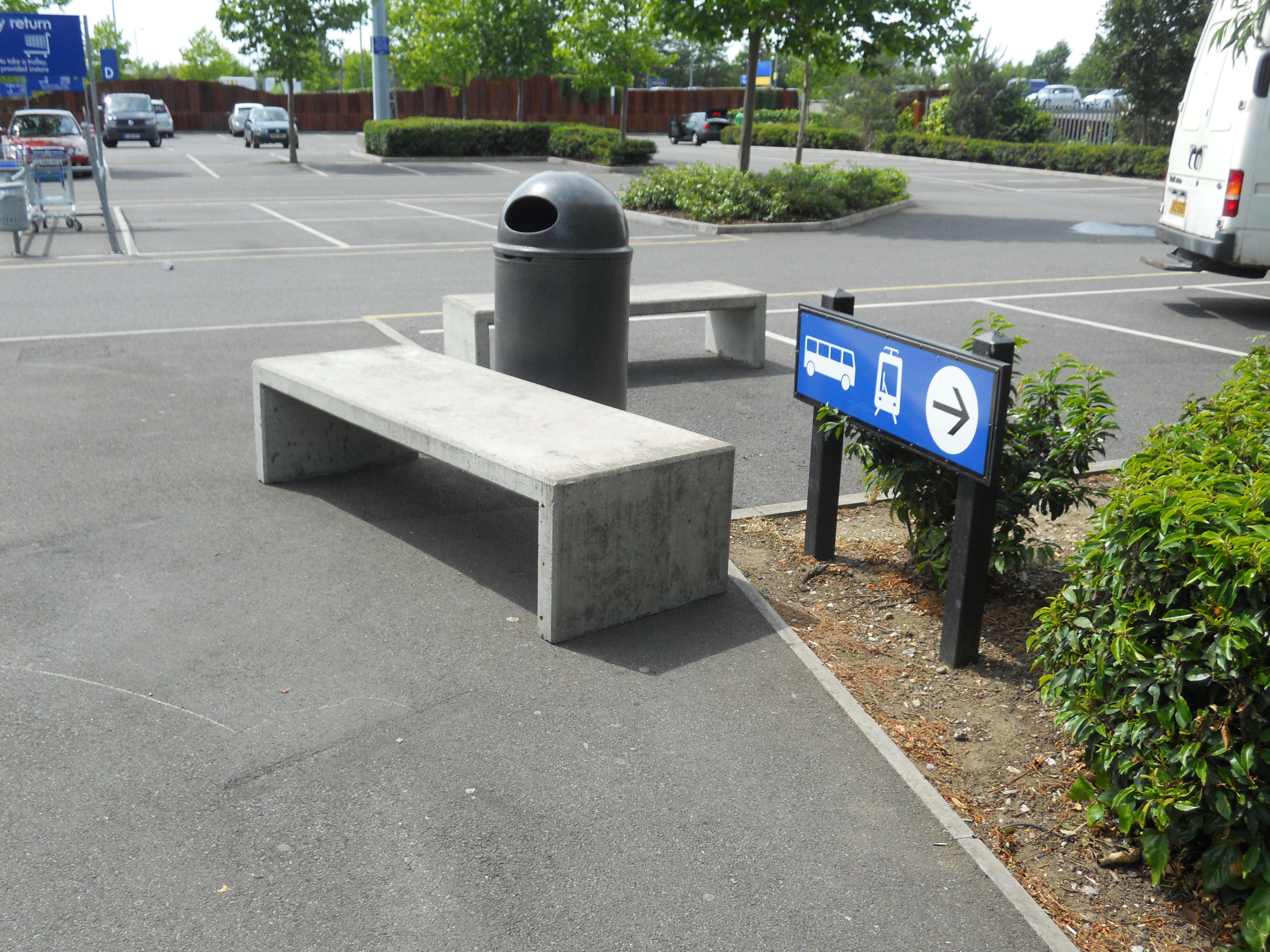
Welcome to IKEA - Again!
They may have been moved since I last visited the store.
I did have a nice lunch in IKEA before I bought another eight boxes.
Or should I say seven and four-fifths boxes? As when I checked out, a bottom was missing! I did check them, as I’d been caught once before, but I obviously didn’t check well enough! It meant another walk through the store as punishment to get a replacement. At least I didn’t take it home and now will be plotting a return.
IKEA at Croydon at least has one advantage over Edmonton. It is easy to take a trolley to the tram stop. Not that I did as many had done and dump it somewhere awkward for pedestrians, but I was able to leave it in a handy trolley park to shorten the walk considerably.
From Ampere Way I took the tram to West Croydon to get the East London line to Dalston Junction.
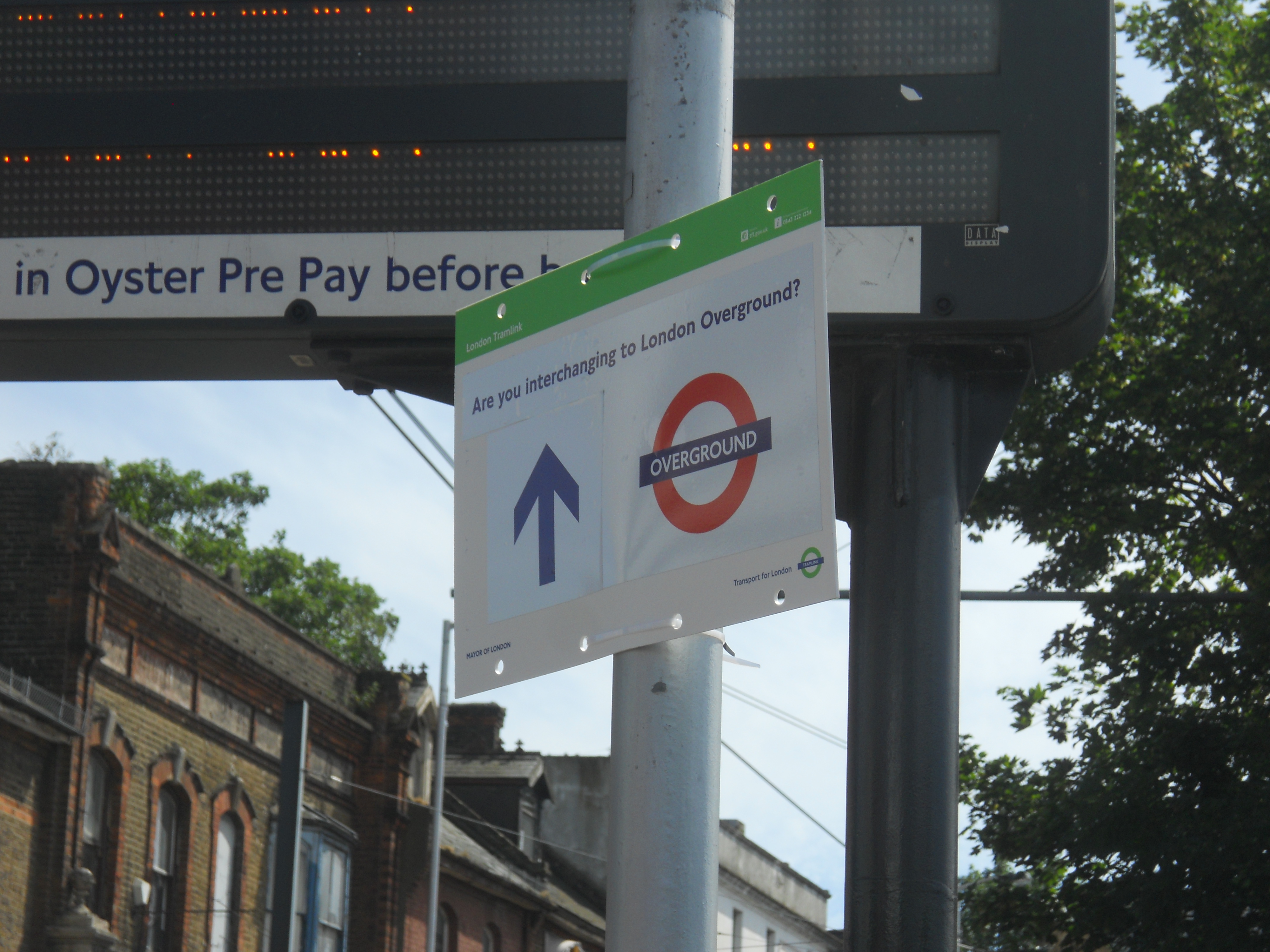
Overground Directions at West Croydon
The picture shows the excellent signage at the West Croydon interchange.
I actually changed trains between West Croydon and Dalston Junction, at Surrey Quays, so that I got on a train that ended its journey at Dalston Junction, which meant I only had a short walk to the lift.
It was then a couple of stops on a 38 bus home.
It would be so much easier, if I could buy the Branas boxes online in fours.
Dalston Junction Gets a Step Nearer To Being Fully Open
I went past Dalston Junction station this morning and the Southern entrance can now be used by pedestrians. Not only does this give me a safer route to the trains, without fighting my way through all the obstructions on the Kingsland Road, but it’s a couple of minutes quicker.
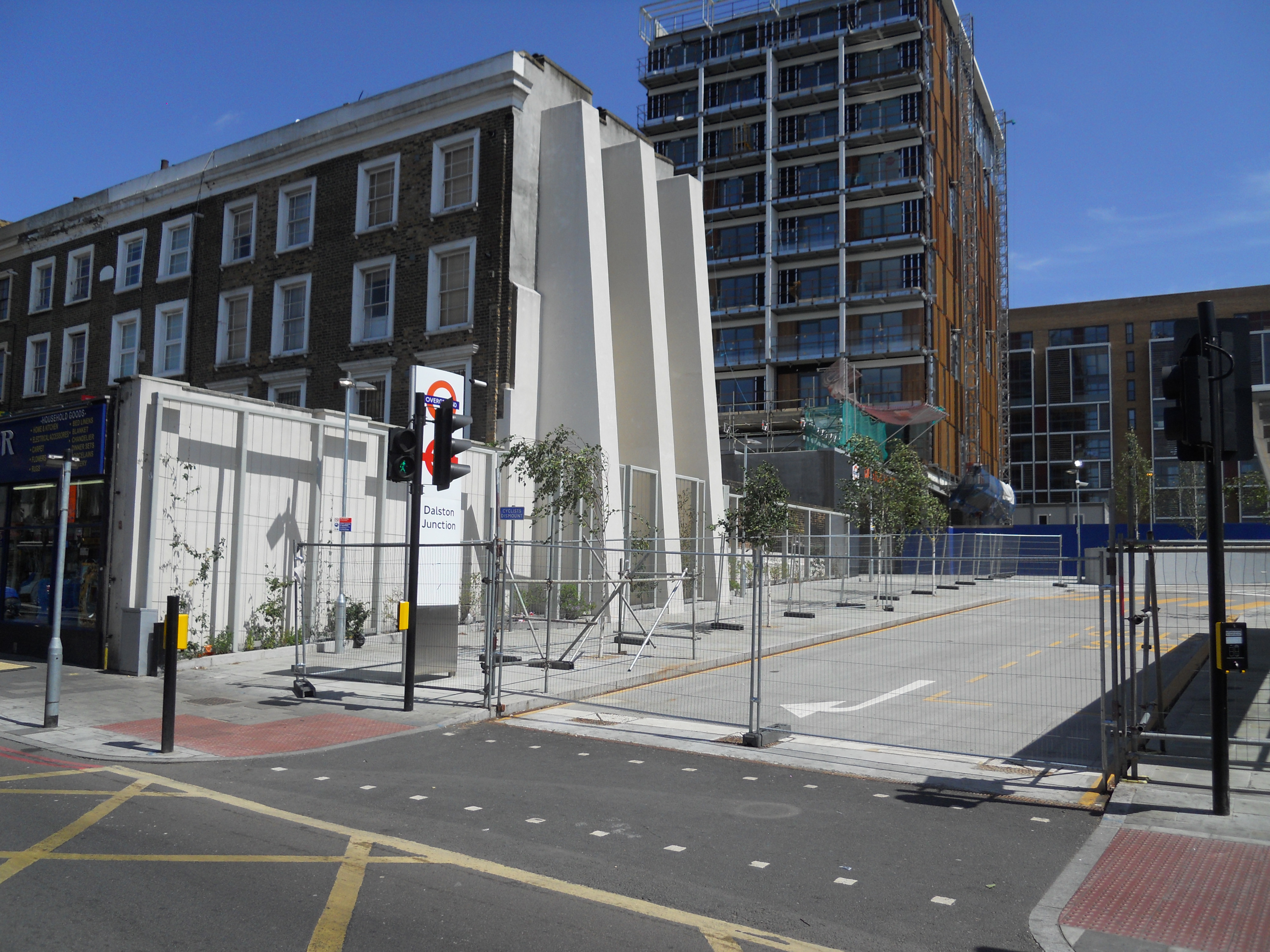
The Almost Fully Open Southern Entrance at Dalston Junction Station
There is still a wire fence, but according to the staff, I sopke to, it will remain open.
It also means that if you want to change at Dalston Junction to or from a 76 or 149 bus say, then it is all very quick and easy, as there is a light-controlled crossing across the Kingsland Road.
All the station needs now is the opening of the bus stand in the station itself, the extension of the 488 route and another light-controlled crossing over Dalston Lane.
Incidentally, it has been announced that there will be more trains on the North and West London Lines. So a trip to Earl’s Court will be just one across platform change from Dalston Junction.
 The Anonymous Widower