The Most Well Known Piece of Art In The World
I took the Northern Line to Finchley Central station today, to see the plaque dedicated to the creator of the most well known piece of art in the world. Although we generally don’t think of it as such, the London Underground map is so recognisable, that show it to many five-year-olds in farawy places and they will recognise Harry Beck ‘s amazing solution to the problem of how to create an understandable map for a transport system. It was so good, that within a few decades it had become a standard used all over the world.
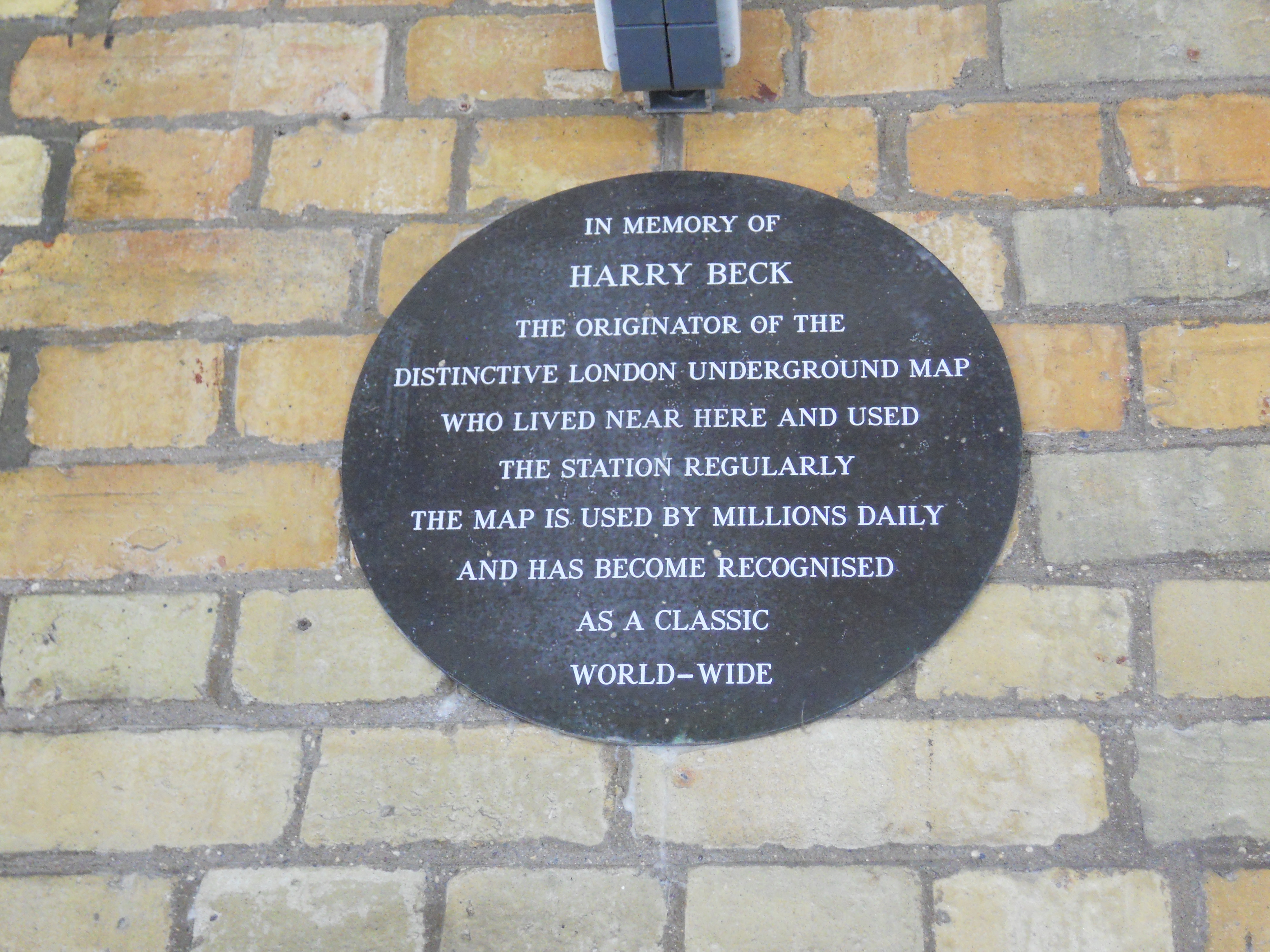
Plaque Remembering Harry Beck at Finchley Central
The picture shows the plaque dedicated to Harry, who used the station regularly.
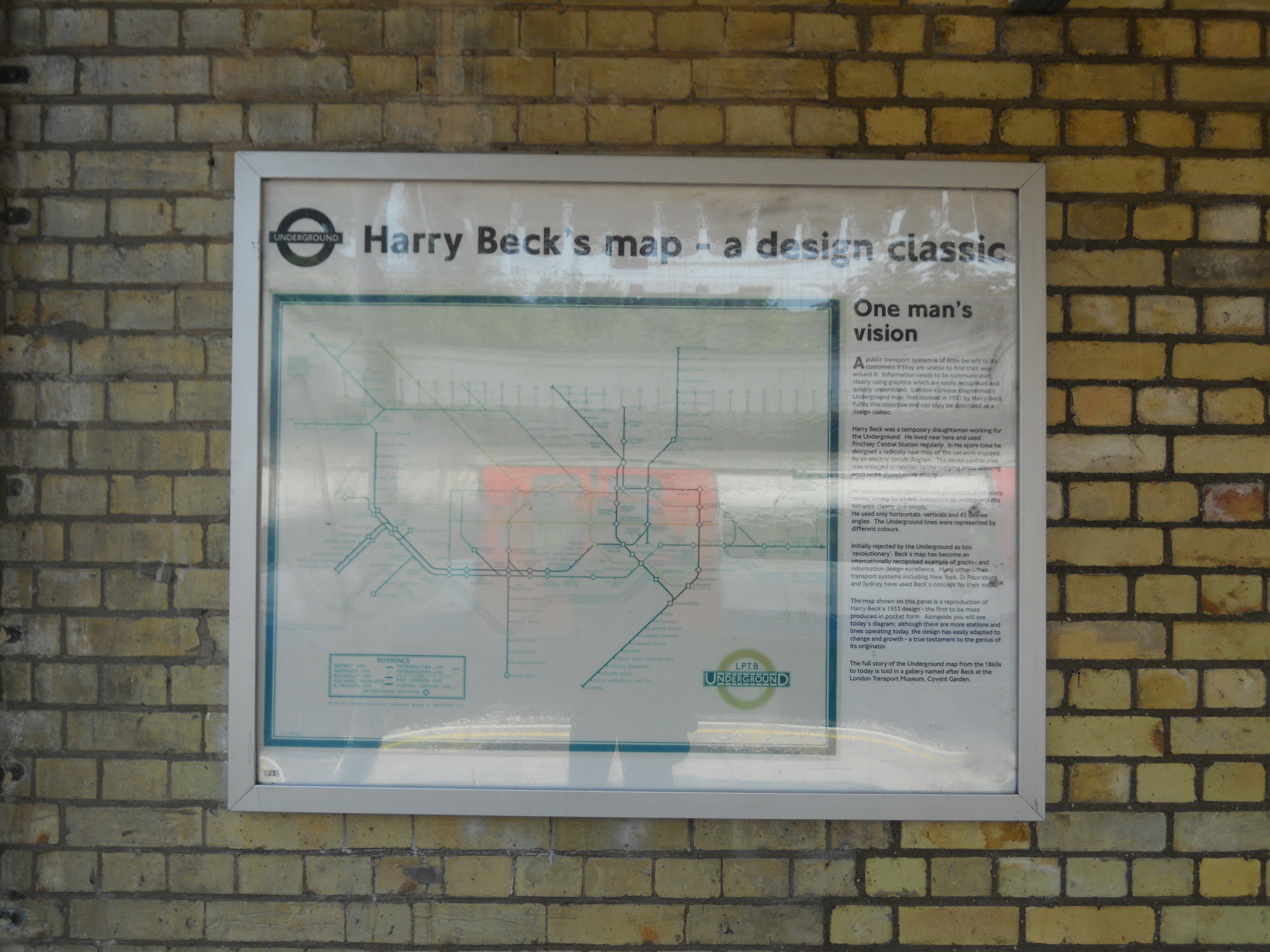
Harry Beck's Original London Underground Map
This picture shows a facimile of his original map.
Alomgside this is said in the text.
The map shown on this panel is a reproduction of Harry Beck’s 1933 design – the first to be mass produced in a pocket form. Alongside you will see today’s diagram; although there are more stations and lines operating today, the design has been easily adapted to change and growth – a true testament to the genius of its originator.
There is little more to say. Except that all modern Underground maps acknowledge Beck in the bottom left corner.
Do London Underground Use a Different Calendar to Everyone Else?
I thought thw 2nd and 3rd of July was a weekend this year until I saw this!
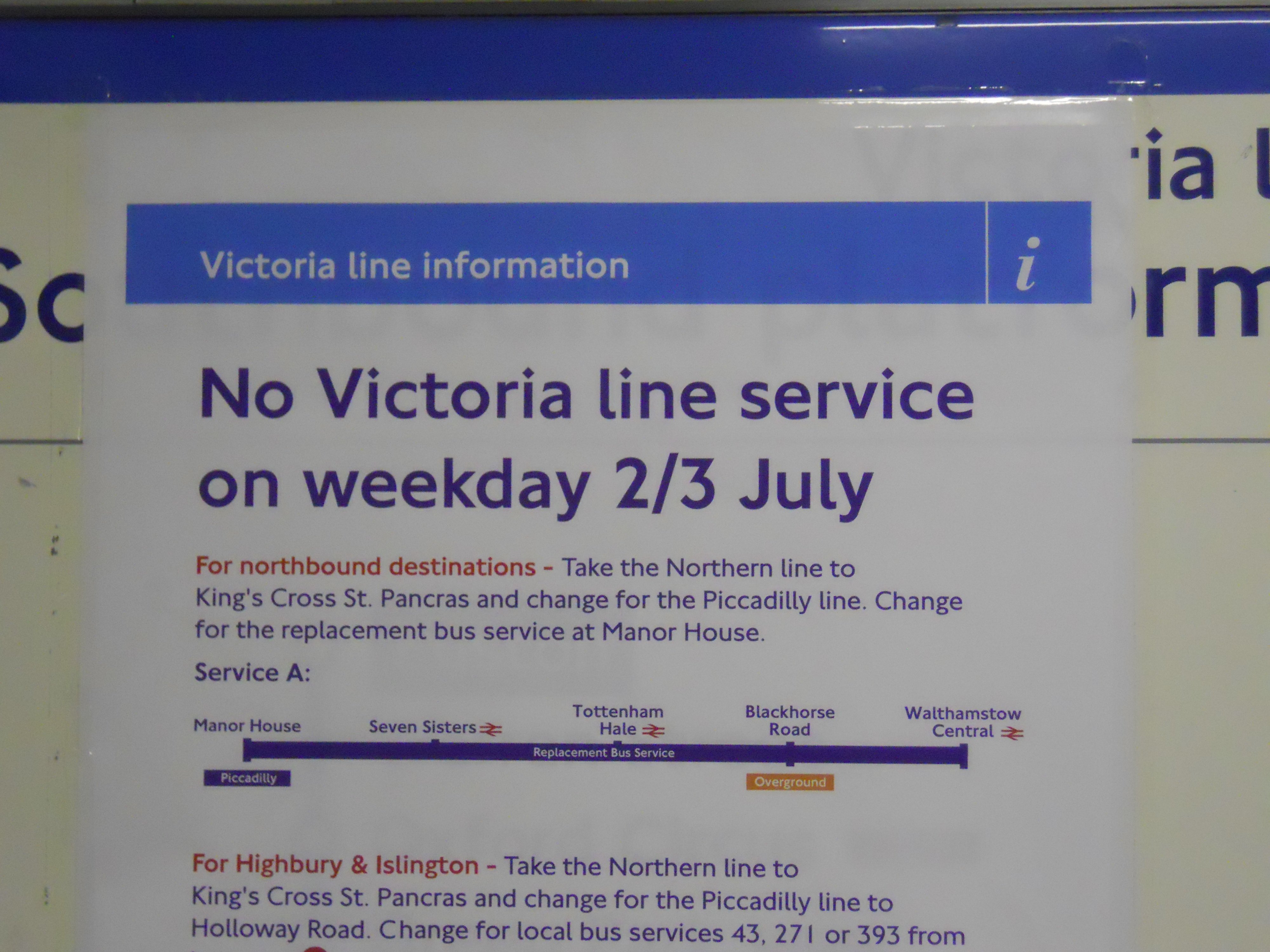
2nd/3rd of July Is Not a Weekday
But who knows?
Perhaps Not The Cheapest Way To Borrow Money!
I saw this advert on the Underground today.
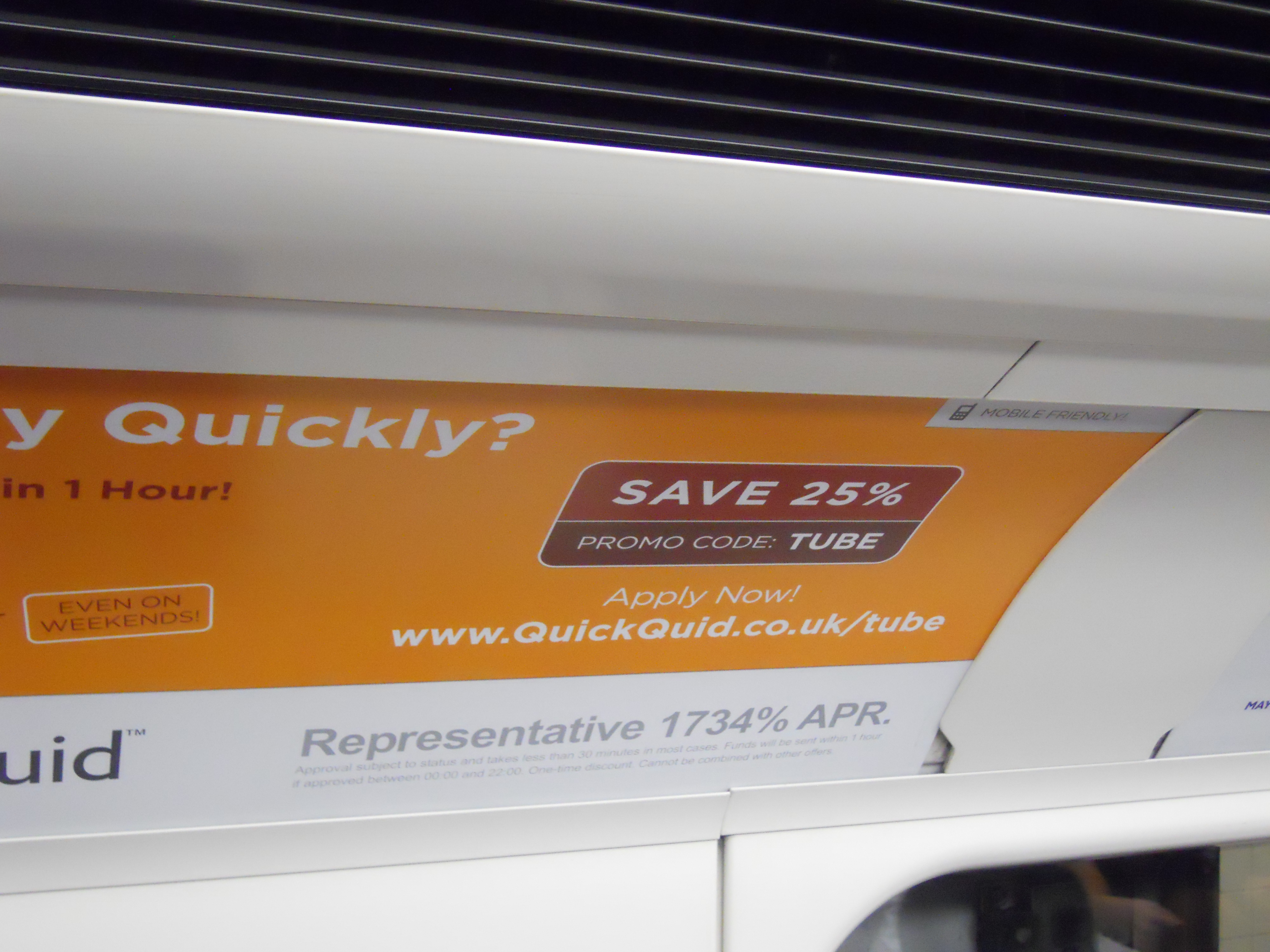
An Advert for QuickQuid on the Tube
Note the interest rate of 1734% APR!
Are Long Dresses a Health and Safety Problem?
I seem to remember in the late 1960s, when women started to wear long dresses again regurlarly on the street, that the Underground warned them to be careful on escalators.
Now that such dresses are popular again, I am surprised that the warning has not been repeated in this Health and Safety obsessed world .
If you go back in history the first escalator on the Underground was installed in 1911 at Earl’s Court station. I’m not sure of my facts, but that surely was about the date, when skirts got a little bit shorter than floor length for general wear.
So How Good Is The Overground?
The London Underground is known all over the world and compares well with systems in many cities. It has its problems, but it doesn’t have some of those of say Rome or New York.
Now the Underground has an upstart little brother in the shape of the Overground, which has been in operation for the last couple of years.
Like their middle brother, the Docklands Light Railway, the Overground has been built on the cheap, by reusing old railway lines, tunnels and other infrastructure and then adding new trains and rebuilt stations.
But just as with the DLR, it has been a formula that has worked. The Overground has just one major tunnel, which for an urban railway must be a world record. But what a tunnel, with more history than many museums, as the Thames Tunnel is thought to be the first tunnel built under a navigable river and was built by Marc Brunel and his son Isambard Kingdom Brunel, in the first half of the nineteenth century.
The Overground currently consists of five lines, with a sixth due to open in late 2012. I use the North London Line and the East London Line often as much as seven or eight times a week, as Dalston Junction and Dalston Kingsland stations are within walking distance from where I live.
I like the lines, as the new trains are comfortable with plenty of space for parcels and bikes and they generally run to time. Only once have I had trouble and that was on the North London Line, where I suspect that a delay of twenty minutes or so was caused by a freight train, that shares that line was running late.
The lines also compare well with the previous lines, one of which I described here. But then those lines as I remember them were last upgraded in the 1950s or even earlier.
The Overground also reaches a lot further and in time it will reach all round London and to the lines to Southampton and Portsmouth and eventually HS2 to Birmingham and the North. In a few weeks the North London Line will have a new link at Stratford for HS1 and the London City Airport.
In some ways the Overground and especially the North London Line is unique in that it is a siteseeing railway, which links tourist sites like Kew Garden, Hampstead Heath, Brick Lane, Camden Market and Crystal Palace with a ride that in places gives superb views of the city.
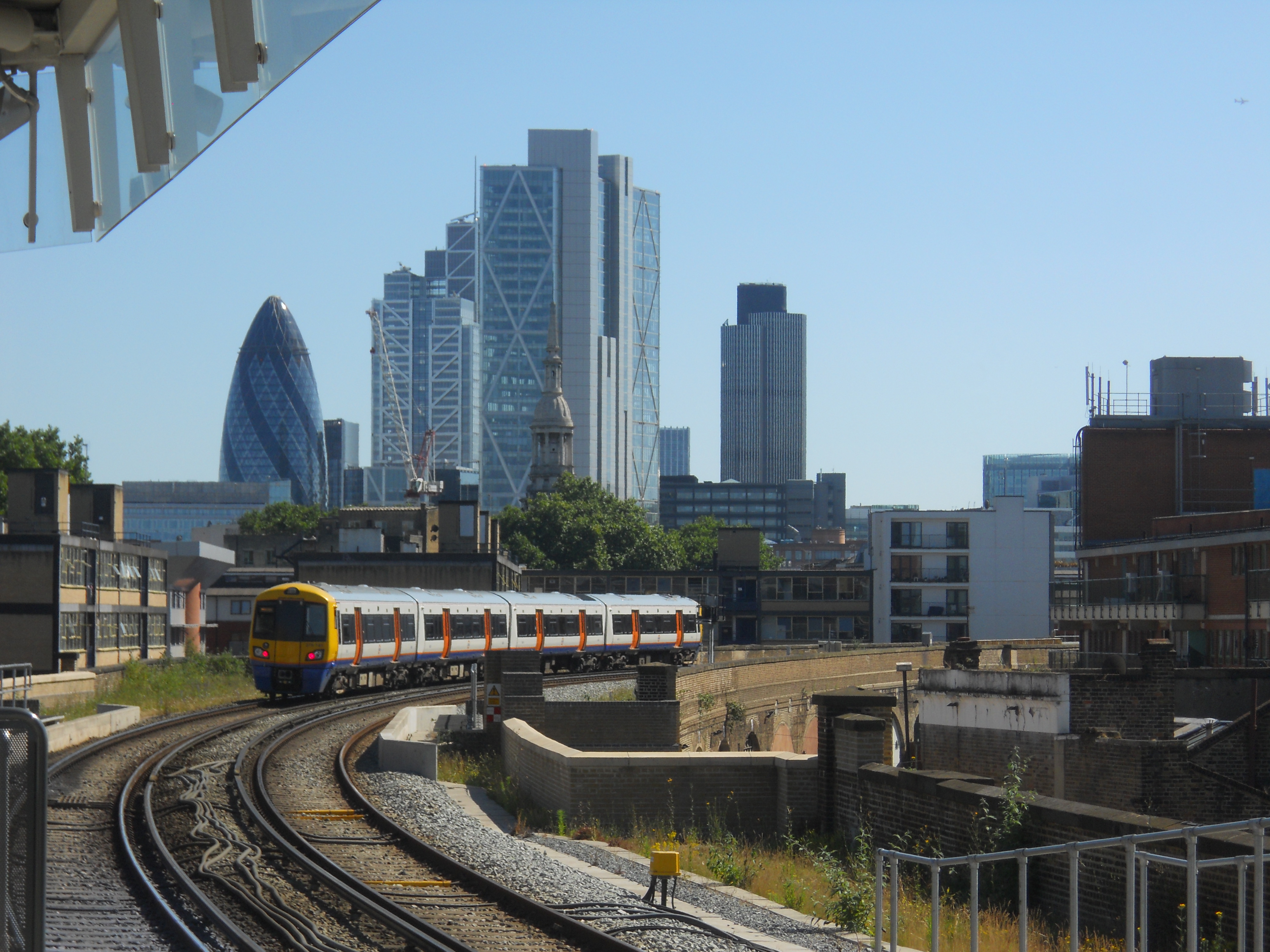
Overground Train on the Embankment South of Hoxton Station
This picture taken of a train on the embankment just south of Hoxton station, shows how the Overground is part of the city in a way that the Underground never can or will ever be.
Several people riding the line have told me has got them their first or a better job and reports have appeared showing that the Overground has improved job prospects and property prices, and even reduced crime. I’ve also heard the latter from a Police Sargeant.
But this is one of the reasons you improve the transport infrastructure, as properly done it makes peoples lives better.
But it is not all good.
The trains can get overcrowded at times and the platforms in places may not be capable of being lengthened, although adding more carriages to the trains might be fairly easy.
Connections to the Underground need to be better and the lack of a Central line connection at Shoreditch HIgh Street is the most glaring. Hopefully Crossrail at Whitechapel will resolve this problem, but will this new line put more pressure on the East London Line?
I do also think that the freight use of the North London Line might get to be a serious problem, especially if trains get larger and more frequent as more containers move off the roads to rail.
Is This Why It’s Called CrossRail?
After my experiences last week of all the hold-ups and chaos in Oxford Street caused by CrossRail, it now appears that they are going to be responsible for a lot more problems in the Liverpool Street/Moorgate area. I took a 76 bus yesterday, that once it got to Moorgate became a tourist bus, with a tour of the Barbican. And coming back from Bank a 21 went all round the houses the other way.
I didn’t get particularly angry, but some wag will put a connection between getting cross with London’s new railway. To be fair, a lot of the problems are caused by unfamiliarity with the new walking routes and hopefully in a couple of months things will be better. The removal of the last of the dreaded bendy buses in the next few months will help, as all they seem to do is block junctions and light-controlled crossings.
The Tube Map In German
The Times publishes the work of an interprising academic today. It is the London Underground Tube Map translated into German. You can download it here.
He is not the first. There is another one here, which seems to have been designed after the consumption of copious amounts of alcohol and ham. Click on this map for explanations of the various names. I particularly like Southgate, for which the term “penalty misser” has been used.
A Walk From Bromley-By-Bow
In some ways London can be confusing to the visitor in that it does tend to reuse place names. For instance tonight I wanted a walk and as there had been reports of a new bridge over the River Lee at Bow, I thought I’d try and find it. So I went not to Bromley but to Bromley-by-Bow station, which is on the District and Metropolitan lines. This is also the destination of the 488 bus, which starts running from Dalston Junction station tomorrow, so I wanted to see if it was worth a visit.
Initial impressions were not good, as I took a rather grim underpass to the other side of a dual carriageway leading to the Blackwall Tunnel and then passed a typical Tescos.
Has any of their supermarkets, ever won an award for atchitecture? This one certainly didn’t deserve one, unless it was for the demolishing the worst building in East London.
My walk had to get better.
Dalston Junction to Canary Wharf with an Awkward Parcel
This morning I had to take an awkward parcel, which was something I’d sold on eBay to Canary Wharf for the buyer to take away. It wasn’t that heavy, but it was 60 cm. long and 36 cm. in diameter. I’d wrapped it in an IKEA carrier bag, and it wasn’t too difficult to carry to Dalston Junction station. The station has a lift and this took me down to the platform, where I was able to wait in a New Cross train until it left. I took the train to Canada Water, where I used the lift to get me to the Jubilee line for Canary Wharf, where another lift and an escalator got me to the level of the shopping centre, where I was to meet the buyer outside Waitrose.
After lunch in Carluccio’s and some shopping in Waitrose, I retraced my route, with a large shopping bag, that except for the two hundred metres or so, happily sat on the floor of the lift or train.
It just shows how if you have to move something large, you can often do it using the stations with lifts. At least with a bit of planning!
Branas Boxes Bite Again
I have a new delivery of some IKEA furniture tomorrow and to finish it off I need some more Branas boxes.
As I was going to have a coffee with a friend in Covent Garden, I thought that I might go on from there. But getting to Covent Garden had been difficult on the Piccadilly line as someone had stupidly been hit by a train at Southgate. So the obvious route back to IKEA at Edmonton which involved using the Piccadilly line to Manor House and then a 341 bus, was probably a no-no!
So I decided after my coffee to take the circular route from Embankment of a District line train to Wimbledon and then the Tramlink to IKEA at Ampere Way. Afterwards I intended to continue on the tram to West Croydon to get the London Overground to Dalston Junction.

The Chimneys at IKEA Croydon
The two chimneys of the old power station that give the road its name are still there.
As are the concrete blocks, that sit in the pedestrian entrance to catch the drunk, the lame and the elderly.
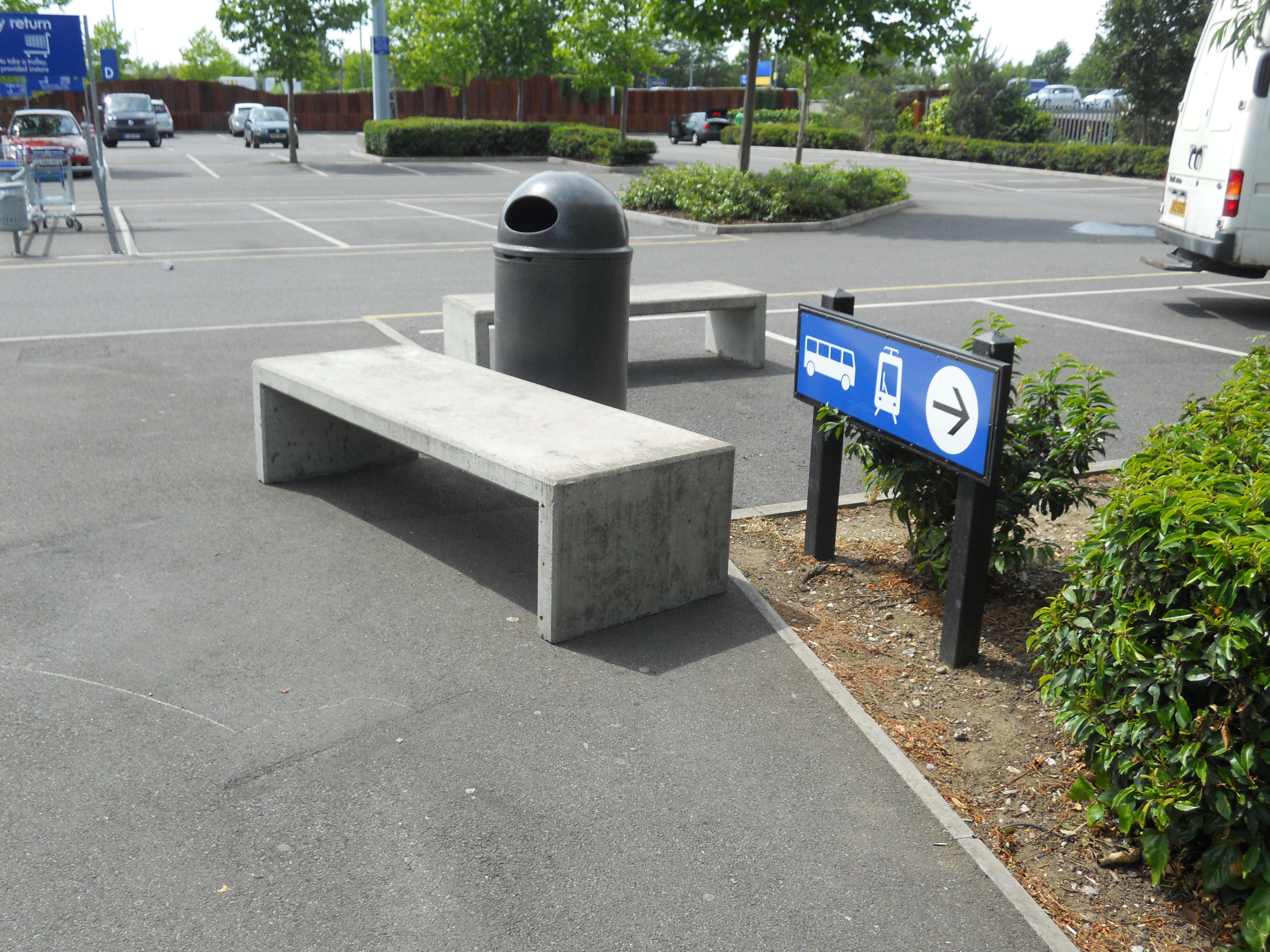
Welcome to IKEA - Again!
They may have been moved since I last visited the store.
I did have a nice lunch in IKEA before I bought another eight boxes.
Or should I say seven and four-fifths boxes? As when I checked out, a bottom was missing! I did check them, as I’d been caught once before, but I obviously didn’t check well enough! It meant another walk through the store as punishment to get a replacement. At least I didn’t take it home and now will be plotting a return.
IKEA at Croydon at least has one advantage over Edmonton. It is easy to take a trolley to the tram stop. Not that I did as many had done and dump it somewhere awkward for pedestrians, but I was able to leave it in a handy trolley park to shorten the walk considerably.
From Ampere Way I took the tram to West Croydon to get the East London line to Dalston Junction.
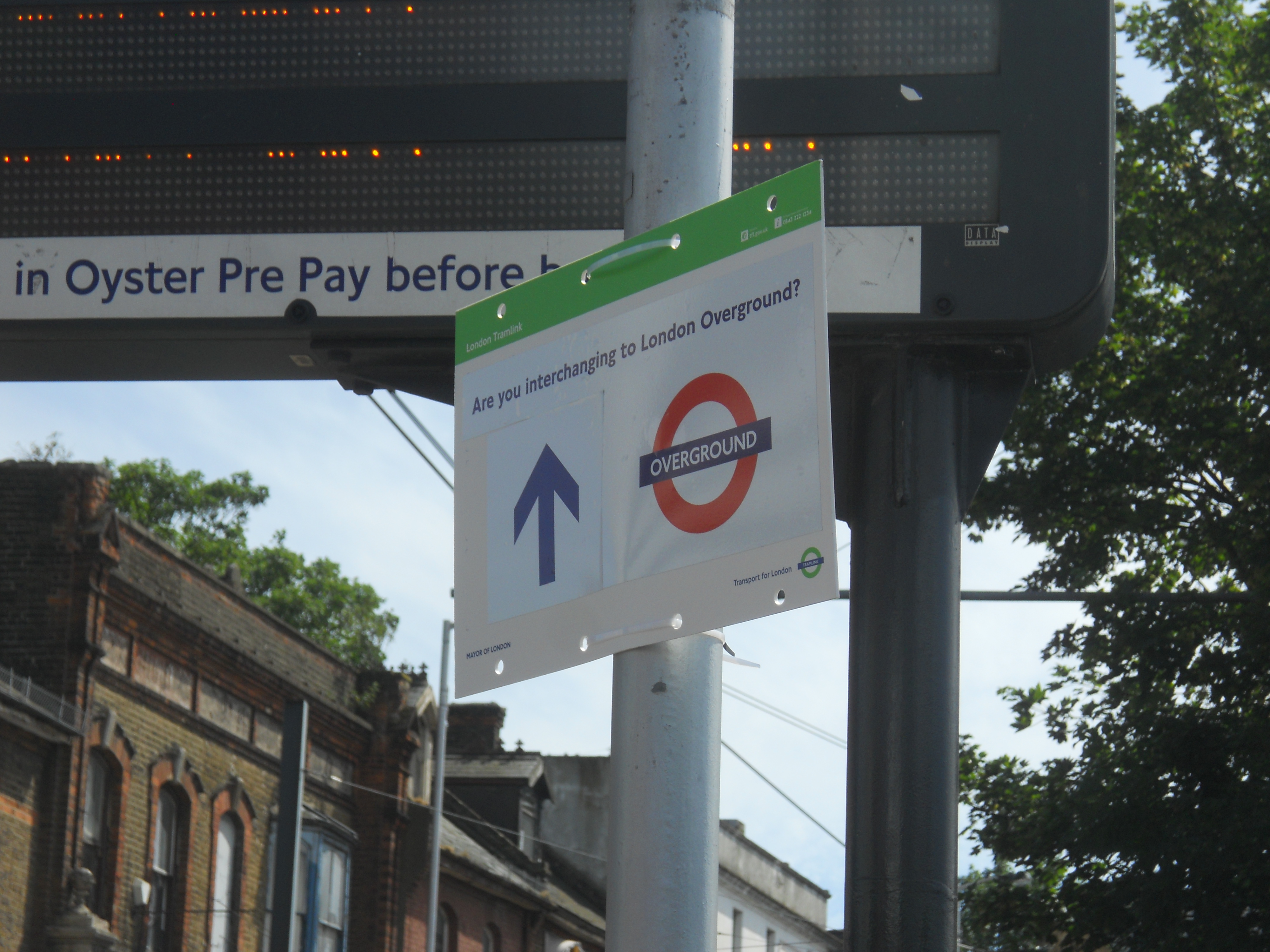
Overground Directions at West Croydon
The picture shows the excellent signage at the West Croydon interchange.
I actually changed trains between West Croydon and Dalston Junction, at Surrey Quays, so that I got on a train that ended its journey at Dalston Junction, which meant I only had a short walk to the lift.
It was then a couple of stops on a 38 bus home.
It would be so much easier, if I could buy the Branas boxes online in fours.
 The Anonymous Widower