Reflections At Seventy
I completed by seventh decade this morning at about three, if I remember what my mother told me about the time of my birth correctly.
Dreams Of A Shared Retirement With Celia
Perhaps twelve years ago, my wife;Celia and I made a decision and that was to sell everything in Suffolk, after she retired from the law in perhaps 2015 or so and retire to a much smaller house in somewhere like Hampstead in London.
I remember too, that we discussed retirement in detail on my sixtieth birthday holiday in Majorca.
But of course, things didn’t work out as planned.
Two Deaths And A Stroke
Celia died of a squamous cell carcinoma of the heart on December 11th, 2007.
Then three years later, our youngest son died of pancreatic cancer.
Whether, these two deaths had anything to do with my stroke, I shall never know!
Moving To Dalston
Why would anybody in their right mind move to Dalston in 2010?
It is my spiritual home, with my maternal grandmother being born opposite Dalston Junction station,my father being being born just up the road at the Angel and grandfathers and their ancestors clustered together in Clerkenwell and Shoreditch. My Dalstonian grandmother was from a posh Devonian family called Upcott and I suspect she bequeathed me some of my stubbornness. My other grandmother was a Spencer from Peterborough and she could be difficult too! But that could be because she was widowed at forty-nine!
Celia and I had tried to move to De Beauvoir Town in the 1970s, but couldn’t get a mortgage for a house that cost £7,500, which would now be worth around two million.
So when I gave up driving because the stroke had damaged my eyesight, Dalston and De Beauvoir Town were towards the top of places, where I would move.
I would be following a plan of which Celia would have approved and possibly we would have done, had she lived.
But the clincher was the London Overground, as Dalston was to become the junction between the North London and East London Lines. Surely, if I could find a suitable property in the area, it wouldn’t lose value.
But I didn’t forsee the rise of Dalston!
Taking Control Of My Recovery
I do feel that if I’d been allowed to do what I wanted by my GP, which was to go on Warfarin and test my own INR, I’d have got away with just the first very small stroke I had in about 2009.
In about 2011, one of the world’s top cardiologists told me, that if I got the Warfarin right, I wouldn’t have another stroke.
As a Control Engineer, with all the survival instincts of my genes that have been honed in London, Liverpool and Suffolk, I have now progressed to the drug regime, I wanted after that first small stroke.
I still seem to be keeping the Devil at bay.
Conclusion
I’m ready to fight the next ten years.
In And Out Of The Angel
The area around Angel tube station, is one I visit regularly.
- I shop in the same Marks and Spencer, Boots and Woolworths, that my grandmother used before the Great War.
- Woolworths is now Waitrose.
- I visit Chapel Market, as she probably did.
- I often walk close to where my father was born and past the church where my grandparents married.
- Perhaps, once a week, I’ll buy myself lunch or dinner in the area.
- I regularly, use the area to change buses or get on and off the Northern Line.
It’s also an area of memories of life with C and the children around 1970, when we lived in the Barbican and we’d regularly walk up the hill with the children to shop at Marks and Spencer.
But not at the moment. This article on the BBC is entitled Angel Islington flooded by water main burst.
These are pictures I took of the traffic. Or lack of it!

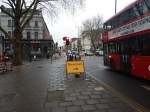
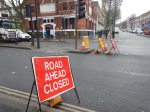
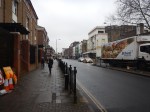
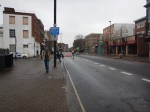
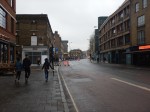
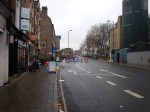
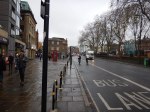
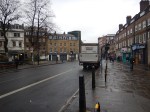
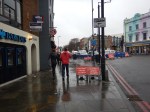
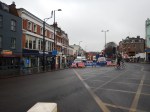
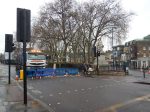
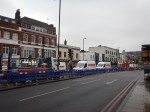
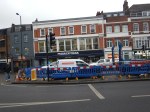
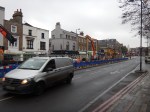
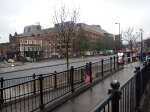
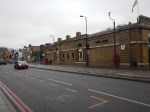
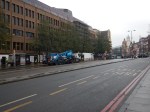
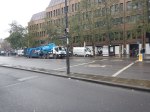
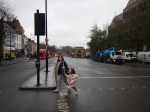
There are no buses from Dalston to the Angel, so the only way to go is to go South to Old Street or Moorgate stations and then get the Northern Line up to the Angel.
At least the buses are running the other way, so I can get home easily.
It is a pain, but it will be sorted.
Yesterday, I had to get to Boots to pick up my Warfarin and the pharmacist did as usual, ask me for my yellow book.
I don’t have one, as I see the GP every three months or so, have a chat about my INR and he writes a prescription, which is electronically sent to Boots for me to collect.
To show how stable my INR level is, I’ve now been on 4 mg. a day of Warfarin for over three years now.
Discussing this with the pharamacist, I told her, I put this stability down to being a coeliac on a gluten-free diet.
There are some hints at research in this area at eminent Universities, but with my experience, it seems that if you are on Warfarin, a gluten-free dietmay help to stabilise your INR levels.
Draft Hackney Central And Surrounds Masterplan
Last week, I went to a consultation about the Draft Hackney Central And Surrounds Masterplan in the Narrow Way by HackneyCentral station.
If you want to see the full version of the masterplan it is available at www.hackney.gov.uk/spd.
About Myself
As this article will be sent to the Council Planning Department, I’ll say a little bit about myself.
- Widowed, in my seventieth year and living alone.
- I’m coeliac, which I inherited from my father.
- I always describe my politics as left-wing Tory and very radical.
- As someone, who has helped create two high class technology businesses sold for millions of pounds, I’m very entrepreneurial.
- My father and three of my grandparents were all born within the triangle based on the Angel, Dalston Junction and Highbury Corner.
- My father was the least racist person, I’ve ever met. I hope his attitude has rubbed off on me!
- My two grandfathers were of part-Jewish and part-Huguenot ancestry respectively.
- As my two grandmothers families came from Northants and Devon, I usually describe myself as a London mongrel.
- My late wife and myself partly brought our three sons up in the Barbican.
- My middle son talks of that time in a tower block with affection, so I’m not against well-designed tower blocks.
After a stroke, left me unable to drive, I returned to my roots.
My Views On The Masterplan
I like lots of things about it. And especially these!
- The prominence given to new workspace, shops and the creation of jobs.
- The creation of new housing, where I’m only against bad tower blocks.
- The opening up of the railway viaduct, so it becomes a feature. Network Rail get a lot of stick, but they know how to look after railway brickwork.
- The creation of a public square at the bottom of the Narrow Way.
- The creation of more pedestrian streets.
- Better use of the bus garage site.
- Improvement of Bohemia Place.
It wouldn’t be me, to not put in my own wish list.
The Overground
Truth be told, I don’t think Transport for London, thought the Overground would be the success, it has turned out to be. So the designers did the minimum they felt they could get away with and would satisfy their political masters!
But the London Overground’s success has been repeated in places like the Borders Railway, Electrification in Liverpool, new stations in Leeds and the Todmorden Curve, and it is now proven in the UK, that if you give the population a good train service, they’ll use it.
Now that the walkway has connected Hackney Central and Hackney Downs stations and other improvements to the complex are in the pipeline, I think that serious consideration should be given to creating a second entrance to Hackney Central from Graham Road.
Failing that, pedestrian routes should be improved, so that access to the cluster of buildings around the Town Hall and the Empire is easier.
Hackney Central As A Meeting Point
Once the public square is created at the bottom of the Narrow Way, use of the area as a meeting point should be encouraged.
Consider.
- Hackney Central is where two rail lines cross.
- The London Overground through Hackney Downs gets new trains in 2018.
- There are several bus routes passing through the area.
- Bohemia Place and the railway arches must have potential for specialist shops and cafe/restaurants like Leon.
- Leon was started by a Hackney resident.
Who said it’s all about location?
Learning From Other Cities And Towns
I travel extensively, in the UK and Europe and see both good and bad examples of how to develop cities and towns.
Recently, I went to Blackburn and I was totally surprised at the transformation since I last visited a few years ago.
A Landscaped square had been created between the station and the cathedral.The square is surrounded by a PremierInn, a new office block, a small bus station on one side and a pedestrian way to a supermarket on the other.
Hackney could do similar or even better.
Sculpture
My uncle was a very good sculptor and I feel it is a crime that works of art like large bronzes are kept in store because security and insurance is a problem.
However, there are places where they could be placed with little fear of theft or damage. And that is at carefully selected locations on the platforms of railway stations.
So why not?
Hackney Downs certainly has space for one, but the platforms at Central are too narrow!
Information
When I was on holiday in Iceland, every building with a historic connection, had full information displayed outside.
Is Hackney’s information up to scratch?
Other Thoughts
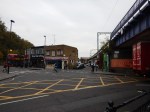
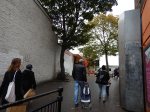
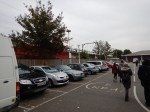
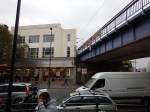
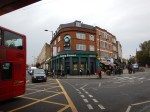
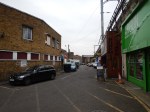
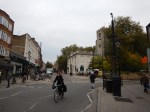
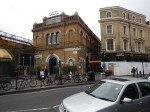
This is a series of pictures with comments.


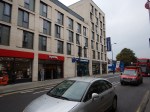
Conclusions
Hackney Central has some interesting buildings on which to develop the area. Unfortunately, there is some bad examples of boring architecture.
Some sites definitely have potential.
- Could the top floors of the Iceland building, be converted into a Southern station entrance, with perhaps a cafe and a couple of shops that travellers like?
- Bohemia Place could be a nice oasis with cafes, workshops and individual shops, a bit like the Box Park at Shoreditch High Street station.
- Bohemia Place will be better, when the arches under the railway are opened up.
- The right architect could do a fine job on the M & S Building.
- The car park at Hackney Central station might be much better as a bus interchange.
In my view the key is Bohemia Place, as this could be a magnet for people of all ages, races and classes to come and shop and refresh themselves.
My Mid-Life Crisis
They were talking midlife crises on Radio 5 yesterday, so I sent in a text, which was broadcast.
My mid-life crisis was caused by the death of my wife and our youngest son to cancer smd then my stroke at 63. But I survived and raised money for pancreatic research at mine and my late wife’s University of Liverpool. Yesterday, I visited the unit and left feeling that there is now some hope for people suffering from this awful cancer. My mid-life crisis seemed to be receding as I took the train home.
Hopefully, life can only get better!
Incidentally, since my visit to Liverpool, I’ve spoken to three or four people, who have been affected by pancreatic cancer and I hope my attitude has given them a bit of strength to face the future.
The Curse On My Family
Something has dripped through the genes and behaviour in my family, that could well explain, factors that contributed to the early death of my paternal grandfather and my youngest son; George.
I have known six of my relatives well; my father and mother, my father’s mother and my three sons.
I will ignore my mother and grandmother, as both lived to their eighties, which is probably good by any standards.
I shall also ignore my eldest son, as I am not in contact with him.
I believe that my coeliac disease, which must be inherited, came from my father and both my late wife and myself believed that if any of our three children were coeliac, it would have been George. But neither my father or George were ever properly tested.
As a child, I was sickly and I was always being taken to the doctor and I had endless tonics and potions.
It only gradually improved when I got to about ten or so and why it did has never been successfully explained. But I can remember being off-school for large parts of the Spring term several times.
I can remember a couple of times in summers, when I was about eight or so, suddenly giving up playing with friends and going home to watch television or play with my Meccano. I think I just found it too hot or perhaps my eyes didn’t like the sun.
In some ways, I was just following my father’s behaviour, which generally involved tinkering with his car in the garage or working in his print works. He would occasionally sit in the sun to smoke his pipe, but I never ever saw him strip off on a beach say.
From about seven, he always took me to work at the weekend and I enjoyed myself doing real jobs, like setting type, collating paper and pulling proofs.
If it left me with any psychological traits, it was that hard work is good for you!
But it kept me out of the sun.
I got married to C at twenty-one and within four years we had three sons. In some ways this got me out in the sun more and perhaps in my late twenties, when we were living in the Barbican, I started to experience better health. I was probably getting more sun, as in those days, I tended to cycle across to Great Portland Street regularly. But C used to drag me out in the sun.
Over the next thirty years or so, my health often tended to deteriorate in the winter, but I think it is true to say, it improved marginally, when the boys grew up, as we started to take more holidays in the sun.
Then in 1997, when I was fifty, I had a particularly bad winter and a very elderly locum decided I needed a blood test to see if I lacked anything. It was the first time my blood had been tested and I was found to be totally lacking in vitamin B12.
I struggled on, with nurses injecting me with B12 every month or so, until my GP sent me to Addenbrooke’s. After another set of blood tests, they said, I was probably coeliac and this was confirmed by endoscopy.
I certainly felt a lot better on a gluten-free diet.
I was also now able to walk and work in the sun and sunbathe without getting burnt. Although, avoiding the sun was still burned into my behaviour, so I often retreated under an umbrella.
Another change was that whereas before going gluten-free I was always bitten and C never was, after going gluten-free, the reverse was true.
I only remember one bad winter from that period and that was when C had breast cancer in 2003-2004, which I think was a sunless winter. We didn’t have our long winter holiday in the sun and I paid the consequence with plantar faciitis, which some reports claim is linked to vitamin D deficiency.
After she died, my problems to a certain extent returned and my GP actually suggested I wasn’t getting enough sun. So in all weathers, I drove around in my Lotus Elan with the top down, to make sure that I got the sun.
I felt a lot better.
If I look at George, he also had my father’s and my behaviour of avoiding the sun. As he smoked heavily, whilst he wrote his music in the dark, was it any wonder he got the pancreatic cancer that killed him?
The curse on my family is of course coeliac disease, which before diagnosis, seems to make us avoid the sun. My father and George certainly did and I would have done before diagnosis without C’s constant persuasion. Now though as I showed in An Excursion To Lokrum, I have no problems in the sun and rarely use any sun screen.
We’ve had some miserably weather over the last few months in London and I come to the conclusion, that I just haven’t got enough vitamin D.
I’ve also only recently found out, that gluten-free foods are not fortified, as regular ones are. So I don’t get any vitamin D through my food.
Did The Tailor Of Bexley Come From Koningsberg?
My paternal great-great-great grandfather; Robert, was a tailor from Bexley, who I wrote about in The Tailor Of Bexley. I said this in that post.
My father once told me, that his grandfather, who must have been William, once told him, of a first hand account of Robert the tailor of Bexley, who was his grandfather.
He said that he was German and that he didn’t speak any English. Because of my coeliac disease, which is quite common in East European Jews and his profession, we can probably assume that Robert; the tailor of Bexley was Jewish. My father also told me that the family name was Müller, which had been Anglicised.
I know little more of him and his place of birth is not known to me. All I know is that he had a son; Edward in 1816, so that would put his birth in the late eighteenth century.
My trip to North-East Poland got me thinking, as I saw the branches of the Prussian Eastern Railway and discussed the history of the area with Piotr; our excellent Polish guide from Gdansk.
I also searched the Internet for Koningsberg and learned more details of its history in the late eighteenth century, with the Napoleonic Wars and the various partitions of Poland. I also read how Koningsberg was a large and cultured city. Wikipedia says this.
A university city, home of the Albertina University (founded in 1544), Königsberg developed into an important German intellectual and cultural centre, being the residence of Simon Dach, Immanuel Kant, Käthe Kollwitz, E. T. A. Hoffmann, David Hilbert, Agnes Miegel, Hannah Arendt, Michael Wieck and others.
But with the Second World War, the elimination of Jews from the city by the Nazis and the eventual takeover of the area by the Russians, the recent history has been less than a happy one.
Knowing myself, it sounds like the sort of city that I like, as my three favourite cities are Hong Kong, Liverpool and of course London.
Hence the question that is the title of this post!
My family is very ambitious and opportunistic and as Koningsberg was a major port, exporting goods from the area all over Northern Europe, I can imagine Robert deciding in his twenties to get out of the city to avoid yet another war or partition and taking a ship to London to find fame and fortune. He might even just have finished his apprenticeship as a tailor.
From arriving in the London Docks, he didn’t need to go far to end up in Bexley. A few years later he moved to Shoreditch, just a mile or so from where I live now!
I think Robert could have given me two characteristics, other than the ambition and the coeliac disease.
- His Jewish religion, but not its philosophy and values, seems to have been abandoned. I am very much a confirmed atheist with what I think, are fairly sound moral values, shared with most mainstream religions.
- He also endowed me with genes that enable me to endure the cold.
It may not be a correct tale, but even so, isn’t it a reflection down the centuries of today’s streams of refugees from Syria, Afghanistan, Eritrea and other places.
Nothing changes!
Except the religion!
The Tailor Of Bexley
When I had my family traced, the earliest ancestor of mine that could be found was Robert Miller, who was a tailor in Bexley in 1837.
He was found to have had one son; Edward, who was born about 1816 in Bexley, Kent and died in 1871 at Shoreditch.
Linking backwards from the modern day.
My father was Wilfred Ewart born in 1904
My paternal grandfather was Herbert born in 1878 and died in 1929
My paternal great-grandfather was William born in 1853 and died in 1911.
My paternal great-great-grandfather was Edward born in 1816 and died in 1871.
So the tailor of Bexley was my paternal great-great-great grandfather.
My father once told me, that his grandfather, who must have been William, once told him, of a first hand account of Robert the tailor of Bexley, who was his grandfather.
He said that he was German and that he didn’t speak any English. Because of my coeliac disease, which is quite common in East European Jews and his profession, we can probably assume that Robert; the tailor of Bexley was Jewish. My father also told me that the family name was Müller, which had been Anglicised.
Robert Winder in his excellent book; Bloody Foreigners, talks about how many poor Germans came over to London in the early days of the nineteenth century and lived in terrible conditions in the East End of London.
So was Robert one of those poor Germans?
When you dig into your family history, you find professions that are no longer PC. Some of my ancestors were ivory turners and skin dressers in the fur trade.
Searching For My Mother’s Birthplace
My mother described herself to me as a Ponders Plonker, as she had been born in Ponders End. I think at some time she may have told me she had been born at home.
So as census records show that in 1911, her parents lived at 32 Clarence Road, I took a train to Ponders End station and went for a walk.
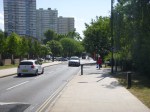
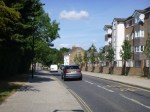
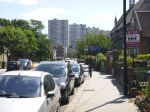
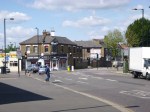
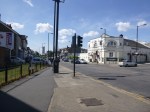
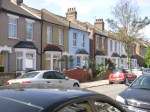
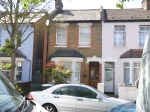
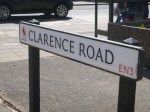
As there were several brothers and sisters and the family had moved out from Stoke Newington, I thought the house would have been bigger.
But according to an elderly lady I met, it appeared the houses had been built around that time, so they were probably the first owners. As my grandfather was working as an engraver with I think his premises somewhere in the Barbican area of the City, transport from Ponders End station to Liverpool Street would have been easy.
Judging by the age of much of the property in the area, my grandparents would probably recognise most of the houses and other buildings.
Walking Through My Maternal Grandparents’ Lives
My maternal grandmother, Harriet Martha Upcott, was born opposite Dalston Junction station in Dalston Lane in May 1871. In September 1894, she married my grandfather, Henry Millbank, who had been born in Clerkenwell in 1870. Census and other records show that in 1894 they lived at 29 Dalston Lane and then by 1901 they had moved to 90, Princess May Road in Stoke Newington. As Princess May Road is perhaps a kilometre from where I live now, I walked round all these places this morning.
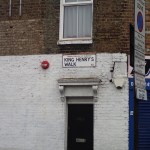
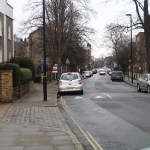
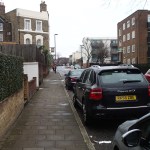
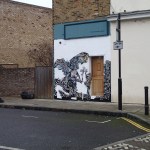
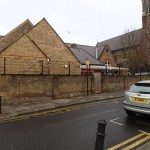
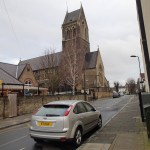
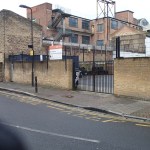
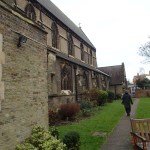
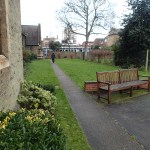


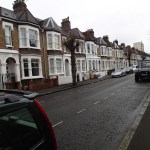
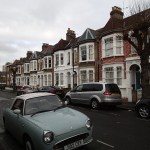
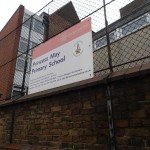

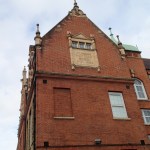
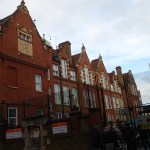
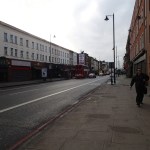

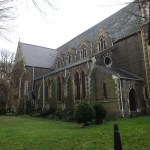
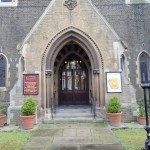
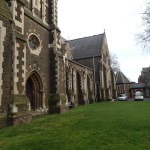
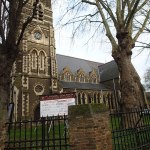
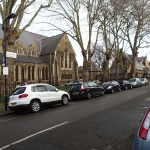
In some ways, one thing that struck me as I walked in a semi-circle to St. Mark at the back of the famous Ridley Road Market was how intact the late Victorian terraces were. But why was 90, Princess May Road missing. Was it just development or did the Luftwaffe have a hand? I shall go to the Hackney Records Office opposite where my grandmother was born in the week.
It was a family joke between my parents, that my grandmother was born in the Balls Pond Road, when it was posh the first time around. The Balls Pond Road is the continuation of Dalston Lane towards Islington.
I can’t salso ever remember talk of Dalston, despite my mother having worked at Reeves. Stoke Newington and Islington were mentioned.
 The Anonymous Widower