Two Stations For Guildford
Guildford station is one of those stations that is very crowded.
So the Borough of Guildford is promoting two stations, one in the East and one in the West.
Merrow Station
A station at Merrow is proposed in the East on the New Guildford Line between London Road and Clandon stations.
This Google Map shows the location.
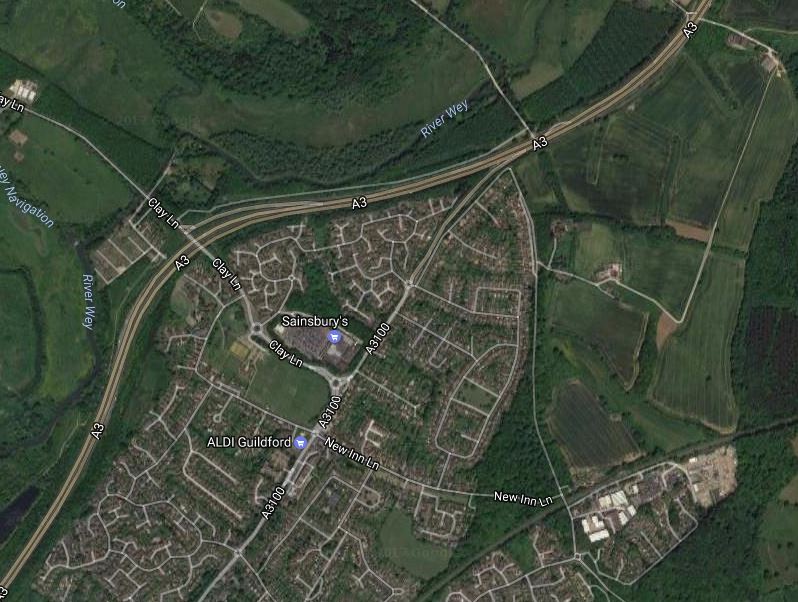
The station is proposed to be on the site of Merrow Depot, which is in the South-East corner of the map, with the railway line conveniently across the North of the site.
Guildford West Station
A station in the West of Guildford is proposed on the Ascot-Guildford Line between Guildford and Wanbotough stations, close to the Royal Surrey Coumty Hospital.
This Google Map shows the location.
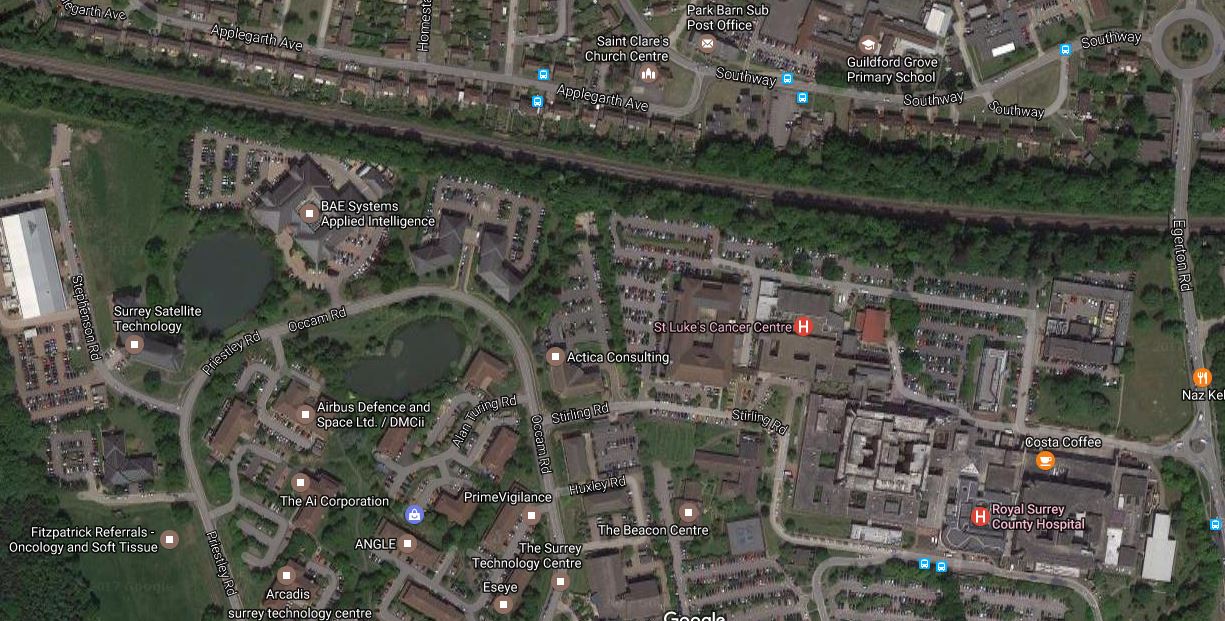
It is certainly a very convenient station for the hospital and the technology park.
There must be scope given that the railway is in a wide cutting, to do some development over the station and the railway.
A Plea For A Shropshire Metro
Shrewsbury station is not one of the best stations, as I remarked in Passing Through Shrewsbury Station.
Clean toilets and a Starbucks doth not a station make!
I was drawn to this letter in the Shropshire Star, which was entitled Better rail investment would reduce problems on the roads.
The writer details some of the problems on the five rail lines that meet at Shrewsbury, which they start with this paragraph about the lack of parkway stations.
Shropshire, in particular, could benefit enormously from reopening old stations in the form of parkways or even parkways near to where stations used to be. Thus the five lines running into Shrewsbury are badly serving the public except the one from Crewe which does still have small stations, utilised occasionally but could be improved by upgrading to parkways and additions.
The writer also says that Hereford is just as bad.
This map shows the lines meeting at Shresbury.
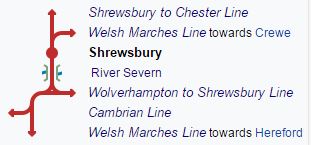
The lines meeting at Shrewsbury station are as follows.
- Shrewsbury to Chester Line with 4 open and 14 closed stations before Chester.
- Welsh Marches Line to Crewe, with 6 open and 4 closed stations before Crewe.
- Wolverhampton to Shrewsbury Line, with 8 open and 5 closed stations before Wolverhampton
- Cambrian Line, with no open and 6 closed stations before Welshpool.
- Welsh Marches Line to Hereford, with 4 open and 15 closed stations before Hereford.
There certainly were a lot more stations in the past.
But it does appear that some new stations are in the pipeline.
Adnaston
Admaston is a possible reopened station on the Shrewsbury to Wolverhampton Line.
Baschurch
Baschurch is a possible reopened station on the Chester to Shrewsbury Line.
Cefn
Cefn is a possible reopened station on the Shrewsbury to Chester Line.
Hadnall is a possible reopened station on the Welsh Marches Line.
Johnstown
Johnstown is a possible reopened station on the Shrewsbury to Chester Line.
Meole Brace
Meole Brace is a possible new station in Shrewsbury.
Conclusion
It looks like the letter writer’s plea has been answered.
Putting four trains per hour on all of the routes from the centre at Shrewsbury would probably create a more than acceptable system.
It looks like the trains would have to be diesels, as I can’t see much electrification in this area.
But who knows what will happen, if someone develops a fast charge system for a hybrid/battery train, that could be implemented at Chester, Hereford, Shrewsbury and Wolverhampton?
The No Frills Station
I’m always putting in the same picture of Zwickau Zentrum station on the Vogtlandbahn in Germany into posts, so I thought I should give the picture a post of its own.
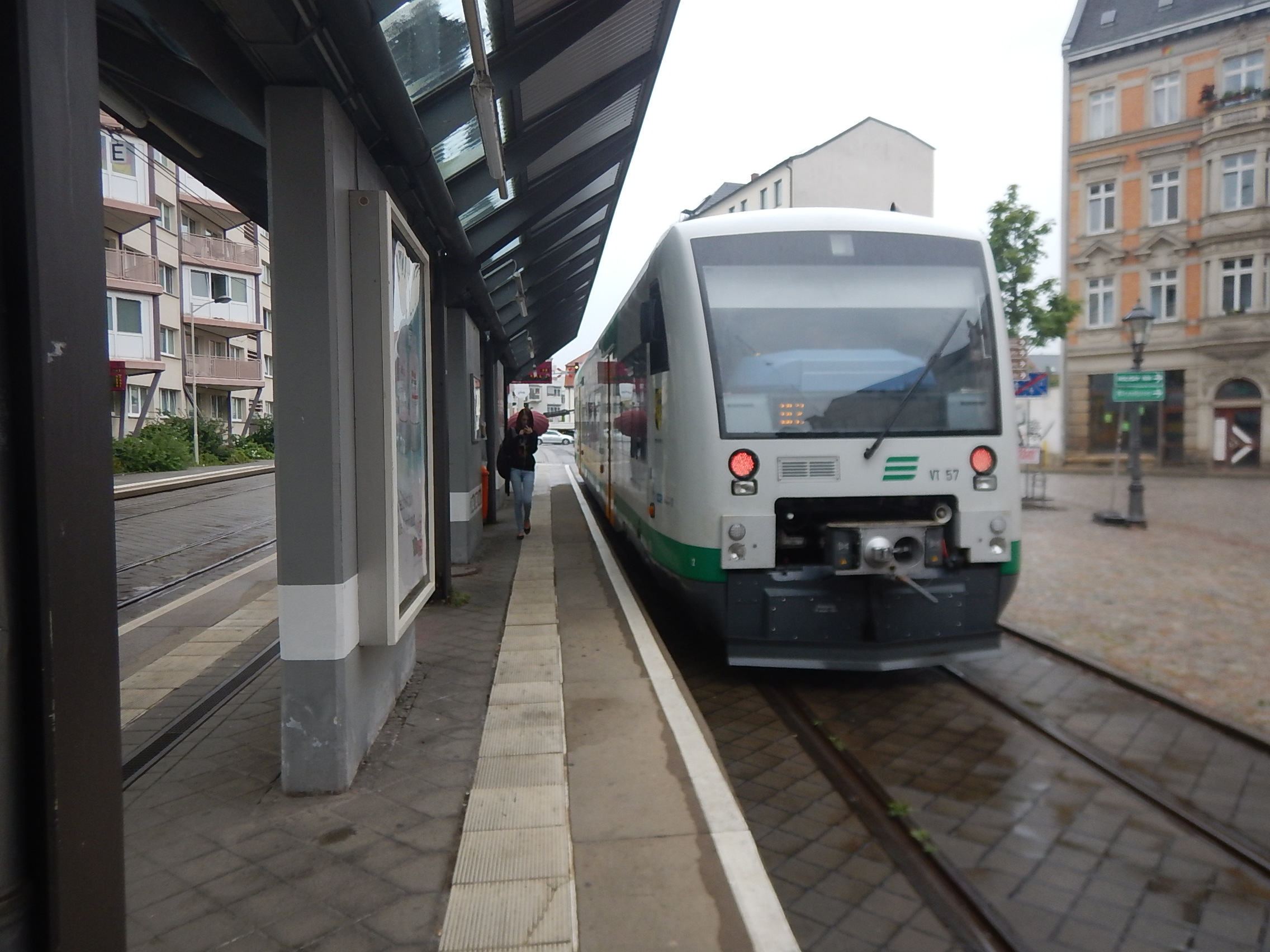
The station is one of the simplest I’ve ever seen and it has been designed very much like a tram stop.
- There is no footbridge, as if travellers need to cross the line, they just walk round.
- The access is as step-free as it gets in Germany.
- The other side of the platform is a stop for Zwickau’s trams.
- There is no electrification, which must improve safety.
- The station could be made long enough for any train that might call.
- The station has been landscaped into the local environment.
But we’re starting to see simple stations like this in the UK.
These pictures show Galashiels station on the recently opening Borders Railway.
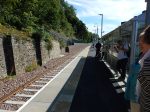
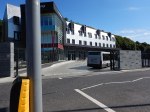
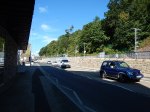
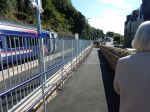
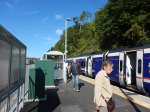
Galashiels is an interesting solution, as there is a single-platform step-free railway station on one side of the road and a comprehensive bus interchange on the other with seats, cafes, shops and warm shelter.
Both Zwickau Zentrum and Galashiels are served exclusively by diesel trains and as electrification can be a hazard to some passengers and is expensive, I would feel that most stations like this, would be better served by trains that are self-powered.
We shall be seeing more simple station designs like these, as architects and designers get very innovative.
A Station For Marlborough
Marlborough once had a pair of stations, as this map of the railways in the town shows.

Note the various stations in an area, where Marlborough the largest town has a population of 8,395.
This railway map shows the important Reading to Taunton Line that passes to the South of Marlborough. This Google Map shows that line as it crosses the A346 road.
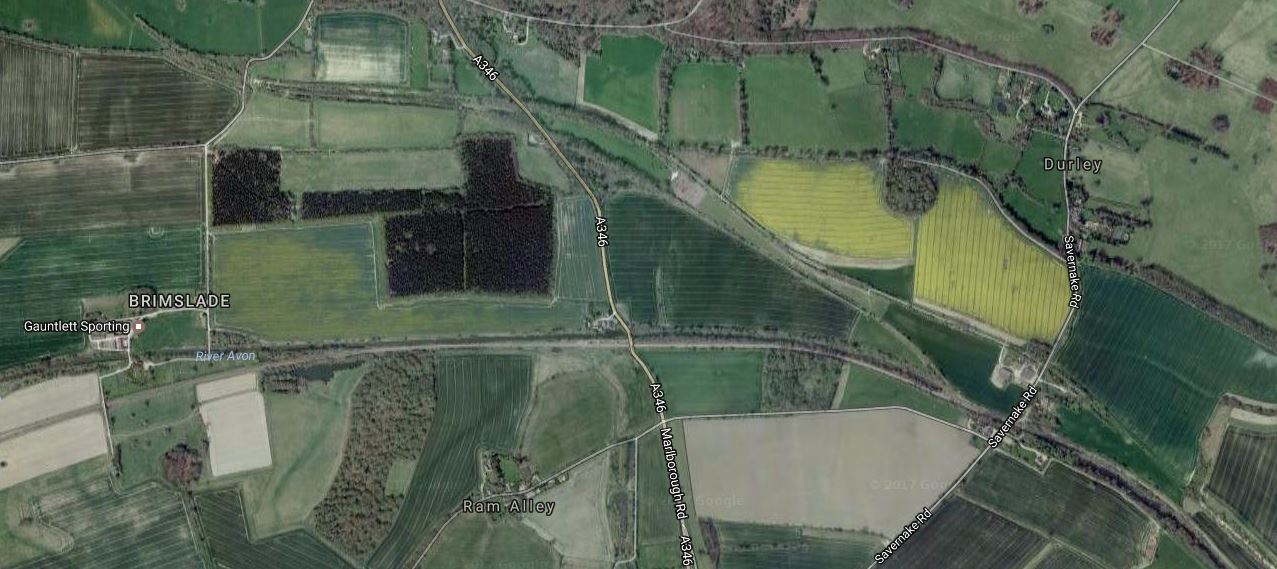
The Reading to Raunton Line South Of Marlborough
Note.
- The Reading to Taunton Line crossing the map in an East-West direction, generally following the Kennett and Avon Canal.
- Marlborough is to the North
- Pewsey station is to the West.
- Bedwyn station is to the East.
- Savenake Low Level station used to be somewhere to the South of what look like yellow field of Rape.
- The small town of Biurbage is to the South.
There would also appear to be tracks of disused railways leading North-Westerly from Bedwyn towards Marlborough.
If Marlborough and the surrounding area were to be given a better rail connection, I would think that a possible solution would be a parkway station, perhaps where the A346 crosses the railway and the canal.
It should be born in mind, that modern trains are designed to perform fast stops at stations, so the extra station at Marlborough would not be the time penalty, it was a few years ago.
Transition Marlborough’s Proposal
But a local action group called Transition Marlborough have their own plans for a Marlborough Rail Link, which as this graphic shows are more ambitious.
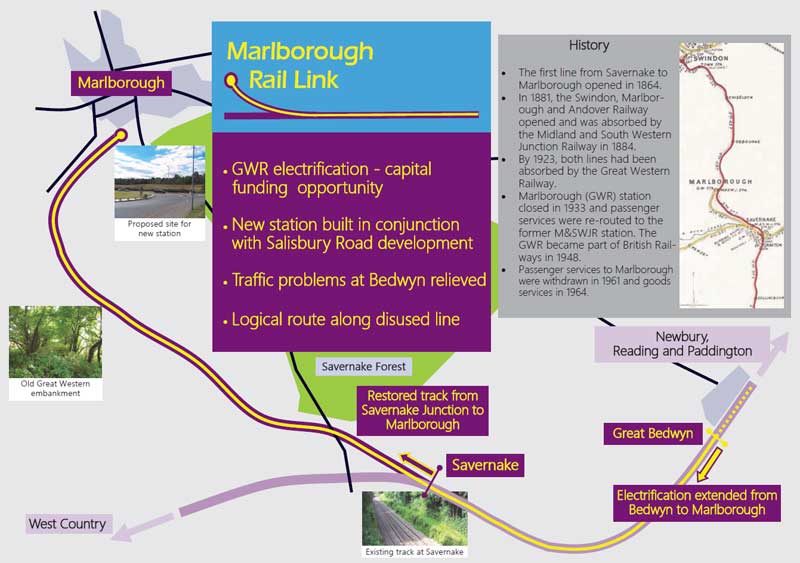
Their plans would involve restoring and electrifying the line to Marlborough, where a well-positioned station will be built.
These are my initial thoughts.
- The route of the line appears feasible.
- Electrification may be a problem given Network Rail’s expertise in this area.
- Bedwyn would not appear to be the best terminus for a line to London.
- I’ve not been to Bedwyn station, but I suspect it could be a bleak place in some kinds of weather.
After I wrote this list, a kind soul in the area sent me this message.
You’ll find that Bedwyn station is a pretty bleak place, especially in Winter. To reach it by road from Marlborough involves a 7.5 mile road trip, at least 3 miles of which is on an unmarked road through a forest. Bedwyn station is almost inaccessible for people without cars, as the connecting bus service is poor and unreliable.
My Version Of The Proposal
I think the best solution could be to create a single-track railway without electrification to a simple station with adequate parking at the proposed Salisbury Road Business Park location.
I would put the station in the car park of the Tesco supermarket in this Business Park.
The distance between Reading and Marlborough by train would be about 37 miles. Network Rail’s plans to electrify the line between Reading and Bedwyn are probably best described as fluid, but I suspect that electrification to Newbury could be possible, which would mean that only twenty miles between Paddington and Marlborough would be unwired.
So this would mean that when inevitably an electric train with onboard energy storage has a range of forty miles, Marlborough could get a modern electric service to and from Paddington.
The advantages of this strategy are as follows.
- No ugly overhead catenary marching across the country.
- Work would only include restoring a single track railway and building a simple no-frills station at Marlborough.
- Marlborough station would not have any electrification and could be designed like a tram stop.
- Fast Environmentally-friendly electric trains to and from Reading and Paddington.
- The route would be designed for six-car trains in case Marlborough College put on a free concert featuring the Rolling Stones.
- The route could be designed to allow two trains per hour (tph), as opposed to the current one tph service to and from Bedwyn.
- Marlborough to Paddington would have a maximum time of around 80 minutes.
But the biggest advantage is that the scheme is that it could be affordable.
This article on the BBC is entitled Marlborough £30m railway line restoration plan.
If this branch line is developed as I believe Network Rail are now thinking, there could be money left over for a good launch party!
Conclusion
With the next generation of electric train with onboard energy storage or IPEMUs, a Marlborough station on a new Marlborough Branch Line can be used to create a two tph service to and from Paddington to replace the current one tph service from Bedwyn.
So a new Marlborough station would be a win for all those using stations on the Reading to Taunton Line to the East of Pewsey.
I also wonder how many other similar services can be developed by extending a service past a main line terminal to a new or reopened branch line, which is built without electrification and run using trains with onboard energy storage.
Reopening Newcastle To Ashington
In No-Frills Mini Trains Offer Route To Reopening Lines That Beeching Shut, one of the lines mentioned in the original Times article that might be suitable for reopening is the Blyth and Tyne Line between Newcastle station and a new Ashington station in the North East.
- More details of this route are given on the South East Northumberland Rail User Group web site.
This map is taken from their web site.

The East Coast Main Line is shown in red, with the proposed reopened line in orange.
Reopening the line would be a lot simpler than many others.
- Most if not all of the track is intact and used by freight trains.
- Some of the route is only single-track.
- Stations would need to be rebuilt or built from scratch.
- To work the desired frequency of two tph would probably need two units.
- Digital signalling would be needed, as there are freight trains on the same lines.
As there are electrified lines in the area, it might be an ideal line for a pair of Class 319 Flex trains, which could run on diesel, where there was no electrification.
Judging by the map, the service could call at the following stations coming North from Newcastle
- Manors
- Seghill
- Seaton Delaval
- Newsham for Blyth
- Bebside
- Bedlington
- Ashington
- Cambois
- Woodhorn
- Choppington
There would be two terminals at Newbiggin-by-the-Sea and Morpeth.
I also think that there is scope for more routes and stations.
Conclusion
It all looks very feasible.
A Station For Maltby And Other Villages
Maltby in South Yorkshire is a village of around 17,000 people, with transport links, based on buses and private cars.
This Google Map shows the village, which shares a mini-connurbation with Hellaby and Bramley, as you go West.
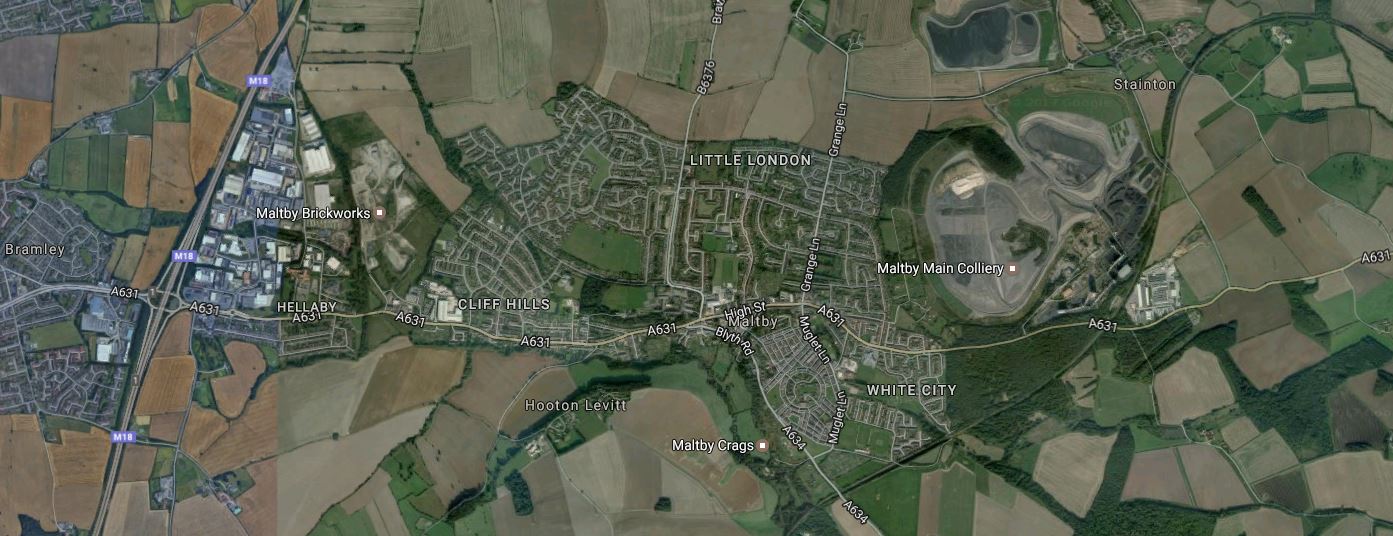
Bramley, Hellaby And Maltby
Note the massive Maltby Main Colliery, which thankfully closed in 2013. Curving round this scar on the face of Yorkshire is a railway, which starts in the North East corner and disappears South-Westerly out of the bottom of the map.
This railway is the South Yorkshire Joint Railway, which is described in this page in Grace’s Guide.
The line ran from Kirk Sandall Junction on the Great Central’s Doncaster-Cleethorpes line to a junction with the Great Central and Midland Joint Railway, just south of Dinnington. The N.E.R. had access over the G.C.R. from Hull, the M.R. had access from the Nottingham-Worksop line, over G.C.R. metals from Shireoaks, the L&Y joined at St. Catherine’s Junction from their Dearne Valley Railway and the G.N.R. had connections to the south of Doncaster. As opened the S.Y.J.R. was 21.25 miles (34km) in length, including its colliery branch lines and connections to the several lines it crossed in its path. It opened to freight on 1 January 1909, and to passengers on 1 December 1910.
Wikipedia says this about services on the line.
Passenger trains on the line ended in 1929; freight work continued on the line, with eight collieries served at peak. Most of the collieries closed by the 1990s; as of 2011, the line remains an important freight line for coal transportation both north and southwards to the Trent and Aire Valley power stations.
So now that coal is virtually in the dustbin of history, except in Trummkopf’s mind, perhaps it is time to do something positive with this railway.
The route between Doncaster and the Sheffield-Lincoln Line would appear to have the following characteristics.
- It is single-track and looks intact.
- There is no trace of any station.
- The line passes through several large villages including Anston and Dinnington.
- The line passes through the town of Doncaster and even goes close to the racecourse.
- The Northern end joins the South Humberside Main Line just to the West of Hatfield and Stainforth station.
- The Southern end joins the Sheffield-Lincoln Line at a partially-closed triangular junction between Kiveton Park and Shireoaks stations.
But the biggest factor in developing the line is that the South Yorkshire Joint Railway goes straight through the site of the proposed Doncaster Inland Port or Doncaster iPort. This is Wikipedia’s introduction for the iPort.
Doncaster iPort or Doncaster Inland Port is an intermodal rail terminal; a Strategic Rail Freight Interchange,[note 1] under construction west of Rossington and south of Doncaster at junction 3 of the M18 motorway in England. It is to be connected to the rail network via the line of the former South Yorkshire Joint Railway, and from an extension of the former Rossington Colliery branch from the East Coast Main Line.
The development includes a 171 hectares (420 acres) intermodal rail terminal to be built on green belt land, of which over 50 hectares (120 acres) was to be developed into warehousing, making it the largest rail terminal in Yorkshire; the development also included over 150 hectares (370 acres) of countryside, the majority of which was to remain in agricultural use, with other parts used for landscaping, and habitat creation as part of environment mitigation measures.
This Google Map shows the location of the Doncaster iPort.
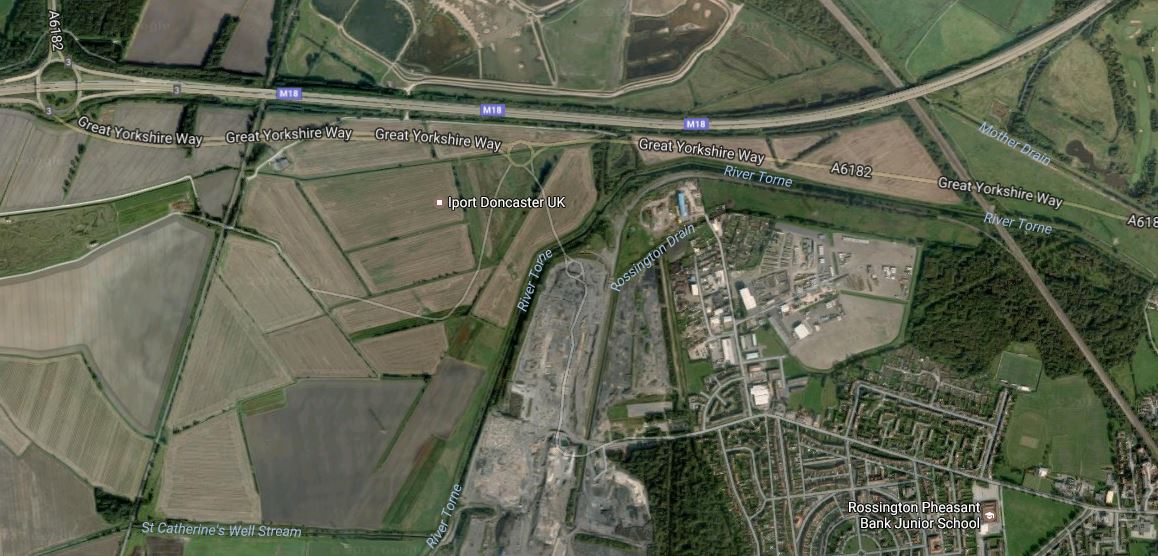
Note.
- Junction 3 of the M18 in the North-West corner of the map.
- The South Yorkshire Joint Railway crossing the site from North to South.
- The under-construction A6182 or Great Yorkshire Way, which is described in this news article on the BBC, with a headline of New £56m Robin Hood Airport to M18 link road opens.
- The scar of Rossington colliery, to the North of the village of Rossington.
- The East Coast Main Line to the East of the village.
The only thing that missing is a way to get large container ships to the iPort. Air freight will be sorted, as I wrote in A Station At Doncaster Sheffield Airport, with a choice of road or rail links between the iPort and Doncaster Sheffield Airport.
Some questions come to mind.
- Will the Rossington Colliery Branch, when extended to the iPort have a junction with the East Coast Main Line that enables traffic to arrive at and leave from the iPort in both directions?
- Will the Rossington Branch have a connection to the Joint Railway to give a route for passenger trains between Doncaster and the Joint Railway?
- How will freight trains get from the iPort to the Great Northern Great Eastern Joint Line to go South for Felixstowe?
But it does seem that Maltby and all those villages will be getting a busy railway through their midst.
It would surely be sensible to add in a few passenger services, that connect Maltby and all the other villages to perhaps Doncaster, Sheffield and Worksop.
.
A Reopened Levenmouth Rail Link
This article in Global Rail News has a title a title of Levenmouth – Scotland’s next railway?.
According to the article, the figures look good, for the reopening of the Levenouth Rail Link, with a Benefit Cost Ration of 1.3, which compares well with a figure of 0.96 for the successful Borders Railway.
It would be a five mile extension from the Fife Circle Line and would serve a station at Leven and a large Disgeo distillery.
The Robin Hood Line In Nottingham
This Google Map shows the Southern end of the Robin Hood Line as it connects to Nottingham station.
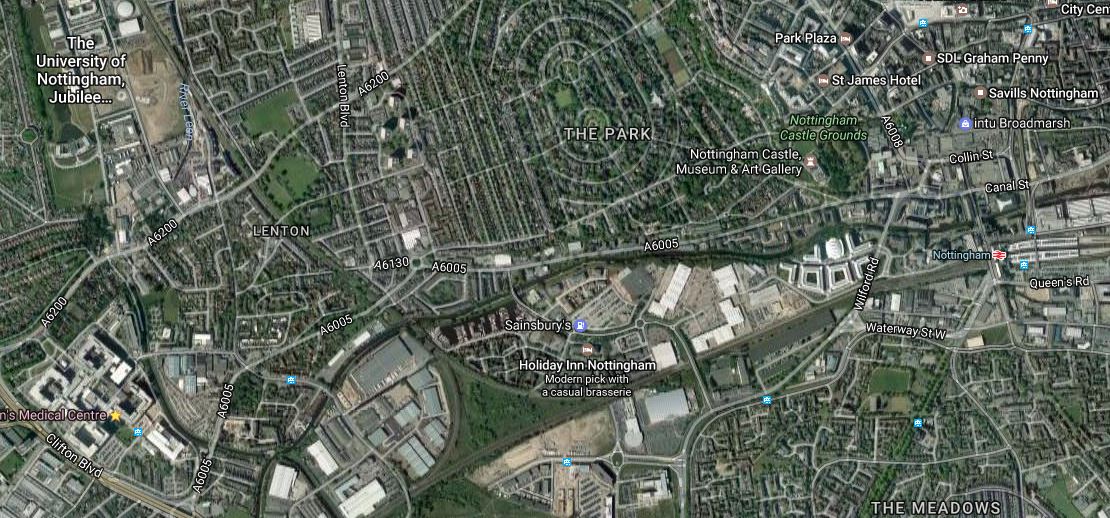
Note the triangular junction towards the bottom of the map.
- The line to the East goes into Nottingham station.
- The line to the West goes to Beeston and eventually to London. In a few years time, it will go to the East Midland Hub station for HS2.
- The line to the North is the Robin Hood Line and the Erewash Valley Line.
The \Erewash Valley Line splits to the West, from the Robin Hood Line just off the top of the map to the North of Nottingham University’s Jubilee Campus.
It is worth looking at services that go between these two branches and Nottingham station.
Langley Mill station on the Erewash Valley Line has the following services.
- One train per hour (tph) between Nottingham and Leeds.
- A few trains per day between Liverpool and Nottingham.
- Some trains between Sheffield and London stop.
Passengers though are expected to take the infrequent service to Nottingham for onward trains.
On the 2nd of April, Ilkeston station will open on the Erewash Valley Line between Nottingham and Langley Mill.
Hucknall station on the Robin Hood Line has two hourly services.
- Between Nottingham and Mansfield Woodhouse
- Between Nottingham and Worksop.
Plans also exist for a branch to Ollerton, so this might change the service pattern. But there is no more than a total of four or five trains per hour in both directions.
All of these services go round the North-East chord of the junction and thus connect Nottingham University’s Jubilee Campus and Nottingham station
But there are no stations along this line, although there used to be one at Radford.
In A Look At New Station Projects, I came across references to stations at Faraday Road and Lenton.
Both locations are on this section of line and it would seem logical that the more Northerly location would be ideal to serve the Jubilee Campus.
If only the local trains stopped, it would have the following services.
- 1-2 tph to Ilkeston, Langley Mill and Alfreton
- 2 tph to Hucknall, Kirkby-in-Ashfield and Mansfield
- 3-4 tph to Nottingham.
Other questions and issues are raised.
- Would a second station to the South nearer to the triangular junction be worthwhile?
- Could the Nottingham Express Transit. have an interchange with the trains the Robin Hood Line?
- Could the Nottingham Express Transit call both campuses of the University of Nottingham?
- In future could 1-2 tph go to the HS2 station at East Midland Hub?
It does appear that there is scope for improving connectivity in the Western Part of the City Centre.
A Station For Leiston
The Aldeburgh Branch Line is still intact, as far as Sizewell nuclear power station.
Past Sizewell, it would appear that the original route and track-bed is not obstructed and can be seen on the Google Maps all the way to Aldeburgh.
This Google Map shows the route, where it enters Aldeburgh.
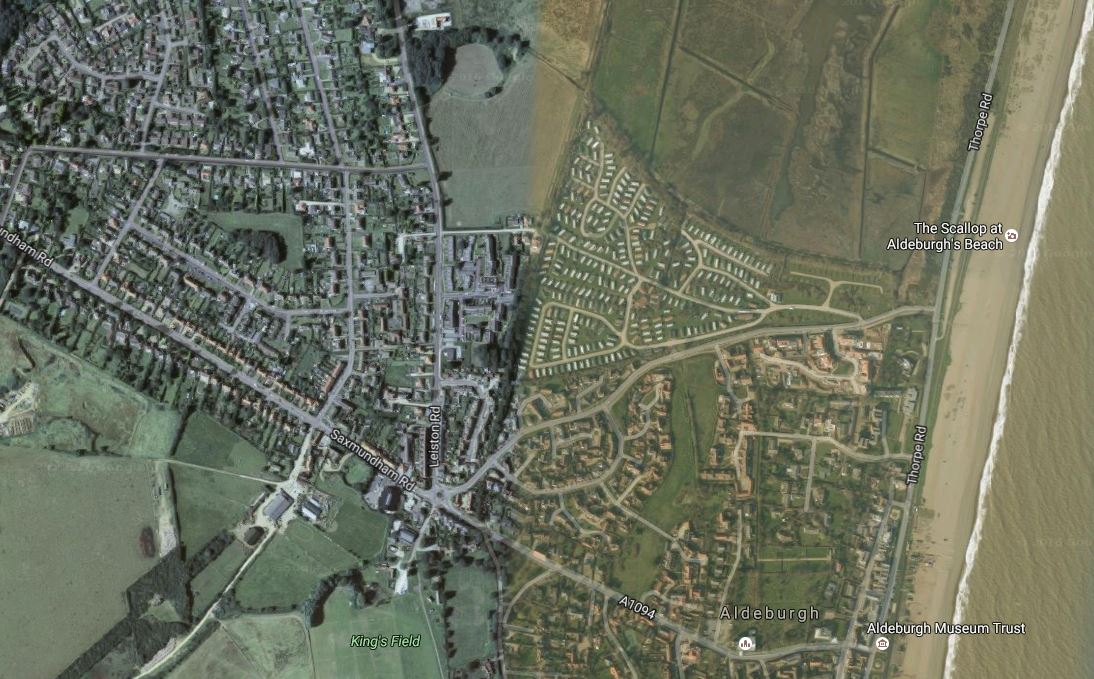
The prominent road that runs diagonally across the map in a North-West/South-East direction is Saxmundham Road and it goes all the way to the sea.
Reaching to this road is the dark scar of the railway, which runs parallel to the coast. Aldeburgh station was somewhere, where the two features meet.
Sizewell C
If Sizewell C is built, then I could envisage sets of circumstances, which meant that the line was reopened to passengers, at least as far as Leiston station.
Providing a service on the line to Ipswich would not be a problem, once Ipswich station had been rebuilt with a new platform 0 and an extended platform 1, which I believe is necessary to provide better services to Lowestoft and Felixstowe.
But whether the service would generate sufficient traffic to be viable and profitable in the long term, would be very much open to doubt.
Doubling Frequency From Ipswich To Saxmundham
If we assume that the main East Suffolk Line has a one train per hour (tph) service between Ipswich and Lowestoft, I wonder if an Ipswich to Aldeburgh Branch Line service could be used to double the frequency at the Southern end of the East Suffolk Line.
Ipswich to Saxmundham currently takes thirty seven minutes., so on a crude estimate, Ipswich to Aldeburgh could certainly be done within the hour.
I suspect that this would mean that it would not be difficult to run the Aldeburgh Branch Line trains on a one tph basis to fit in between the Ipswich-Lowestoft trains.
As at least one platform would need to be built somewhere on the single-track branch to reverse the trains, it could be built at Leiston, Thorpeness or Aldeburgh provided the track went that far.
So by reinstating the Aldeburgh Branch Line and giving it an hourly service from Ipswich would also give Saxmundham to Ipswich a 2 tph service.
Leiston Station
This increase of frequency at the Southern end of the East Suffolk Line and the needs of any future nuclear power station at Sizewell, will be the only possible reasons that passenger services will resume on the Aldeburgh Branch Line.
If trains ventured onto the Aldeburgh Branch Line, surely they would call at Leiston station.
A Modern Branch Line For Leigh
There is a group called the Lowton East Neighbourhood Development Forum or LENDF, who are proposing to reinstate part of the Bolton and Leigh Railway, to create a branch line to from a reopened Kenyon Junction station on the electrified Liverpool and Manchester Railway to a reopened Leigh station.
This Google Map shows the Southern part of the route, where it connects to the Liverpool and Manchester Railway at the former Kenyon Junction station.
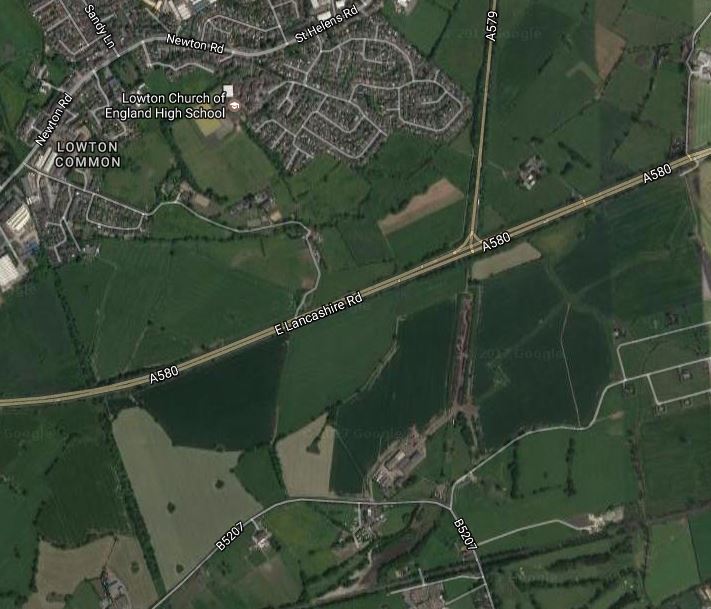
Note.
- The scar of the Bolton and Leigh Railway is clearly visible in line with the A579, which was built alongside the railway North of the A580.
- The Kenyon Junction station site can also be spotted and was recently used as a work site for the electrification of the line.
There is certainly enough space on the former station site to create a two platform station, with perhaps a bay platform to handle a shuttle train to Leigh.
This Google Map shows, where the line goes at the Northern end.
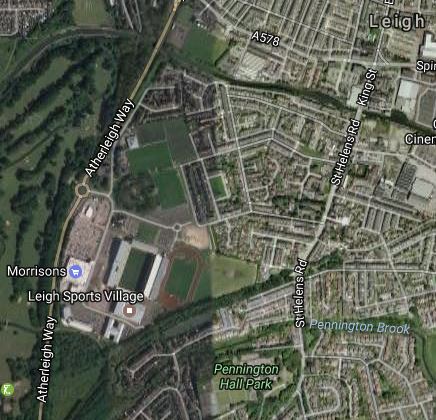
I would think that Amberleigh Way follows the route of the Bolton and Leigh Railway.
One major factor defines how far the line could go.
It would probably be prudent to restrict the length, so that the chosen train could do a round trip in under thirty minutes, thus giving a two trains per hour (tph) service with just one train and no passing loops or complicated operation.
Four tph would probably require two trains, a passing loop and some clever train scheduling.
And then you mustn’t blow the budget!
Building The Line
I would build the line as simply as possible.
- Single-track.
- Single-platform tram-style stations with no footbridges, as at say Galashiels station.
- Step-free access to the train.
- No electrification.
- No passing loop, as not needed with one train and 2 tph.
- One set of points to connect the branch to the main line for rolling stock transfer.
Kenyon Junction station would be more complicated, as it would need.
- Two long platforms for Liverpool and Manchester trains.
- A bay platform for the Leigh branch.
- A footbridge and other necessary facilities.
- Appropriate car parking.
Kenyon Junction station would be the most expensive part of the project.
Train Operation
Train operation would be under rules called One Train Working, bur probably also applying the sort of rules under which trams work.
- Lower speed.
- Warning systems
- Very visible trains
- Driver keeping a good look-out.
This picture shows a two-car diesel multiple unit working under similar rules at its terminus in the centre of the German town of Zwickau.
Note these points about the train and the infrastructure in the Zwickau Zentrum terminus of the Vogtlandbahn
- The train is more-or-less standard.
- The good driver visibility.
- The orange warning lights.
- The track laid like a tram track into the street.
- No electrification.
- The tram-style stop, designed to fit the trains using it.
- Pedestrians and cyclists cross the track in designated places after a good visual check for a train.
As this train goes about a hundred kilometres from this terminus, it still has visible couplings and other railway paraphernalia. These could probably be faired-in for safety and only exposed for recovery of a failed train.
Wikipedia calls this type of operation the Zwickau model, but I prefer to think of it as train-tram, as the train works as a train and then reverts to tram operation on the streets or perhaps through somewhere like parkland or moorland.
Note that in Zwickau, although the trains and the local trams have different gauges, they share tracks, using a unique three-rail track.
As there are no trams in Leigh and if they were, they would be the same gauge as the train, this is not a problem in Lancashire.
The Train
Any suitable and available self-powered train could be used.
- A diesel multiple unit like a Class 172 train.
- A fully developed Class 230 train
- A simple bi-mode train like a Class 319 Flex train.
- A train with onboard storage, perhaps charging using electrification in the bay platform at Kenyou Junction.
- One of Merseyrail’s new Stadler trains fitted with a pantograph and onboard energy storage.
I always think, that the train should be a quality unit to attract passengers.
Whatever train is chosen, the bay platform at Kenyon Junction station and all the other platforms on the branch must be sized to fit the train to ensure level access.
Conclusion
It is certainly possible to create a 2 tph service for this new branch line at an affordable cost using a standard train, working to the same rules as the Vogtlandbahn in Zwickau.
 The Anonymous Widower