Jobs, Homes And The Economy: Bakerloo Line Upgrade And Extension To Be Transformational For London
The title of this post, is the same as that of this article on Rail Technology Magazine.
This is the sub-heading.
The government has been urged to use the upcoming spring budget to commit to upgrading and extending the Bakerloo line after a new impact assessment found its effects could be transformational.
These three paragraphs introduce the article.
The impact assessment – commissioned by Central London Forward, a partnership of 12 central London boroughs – finds that such a move would boost the economy, unlock new homes, create new jobs, and more.
The upgrade would centre around new trains and signalling, while the extension would take the terminus to Lewisham in the first phase, and eventually to Hayes – adding 14 new stations.
The impact assessment concludes that the extension and upgrade of the Bakerloo line would create 9,700 jobs, 190,000 square metres of commercial floorspace, as well as generate £1.5bn of GVA.
The article is a must-read and eloquently puts the case for the Bakerloo Line Extension.
I have a few thoughts.
A Loop At Brixton For The Victoria Line
This has been proposed and the Wikipedia entry for the Victoria Line has this paragraph.
Proposals have been made to extend the line one stop southwards from Brixton to Herne Hill, a significant interchange in south London providing access to Kent, Blackfriars, London Bridge and Sutton. The latter station would be on a large reversing loop with a single platform removing a critical capacity restriction eliminating the need for trains to reverse at Brixton and provide a more obvious route for passengers who look for the nearest tube station before any other transport options.
I like this idea.
- It will make it easier to run the full frequency of 33 trains per hour (tph) between Brixton and Walthamstow Central stations.
- Loops at Heathrow and Liverpool seem to work very well.
- A single-platform with platform-edge doors has a high level of safety.
- Only one tunnel boring machine (TBM) would be needed.
- Large lifts could be used between the surface and the platform.
- It is a more affordable option.
But perhaps most importantly, I am sure, the loop could be built whilst other services at Brixton and Herne Hill were running almost without disruption, as services did at Kennington, whilst the Battersea Extension of the Northern Line was built.
A Loop At Elephant And Castle For The Bakerloo Line
I have spent forty years involved in project management, writing software for project managers and generally listening to some of the thoughts and experiences of some of the best engineers from all over the world.
One common thread, which is best illustrated by how the size of lift possible increased in the North Sea in the 1970s, is that as time has progressed machines have got bigger and more capable, and the techniques of using them has improved immeasurably.
The Crossrail tunnel boring machines (TBM) make those used on the Jubilee Line extension or the Channel Tunnel look like toys. But not only are the TBMs bigger and faster, they have all the precision and control to go through the eye of the smallest needle.
If we look at the proposals for the Bakerloo Line Extension, there have been several differing ideas. Some envisage going under Camberwell and in others the trains terminate on the Hayes line.
Transport for London (TfL), obviously know the traffic patterns, but do we really want to take the chance of say connecting the Hayes line to the Bakerloo and then finding that it’s not the best solution?
What we should do is augment the services in the area, by providing a good alternative transport route, that links to some of the traditional rail lines to give even more flexibility. We certainly shouldn’t repeat the grave mistake that was made at Brixton in the 1960s by not connecting the Victoria line to the surface rail lines.
This is Transport for London’s indicative map of the extension.

I have reason to believe that the Northern Line Extension may be being built as an extension to the Kennington Loop.
So could we design the Bakerloo Line Extension as a loop starting and finishing at Elephant and Castle calling at important stations?
A possible route could be.
- Elephant and Castle – Interchange with Northern Line and National Rail including Thameslink
- Old Kent Road 1 – Proposed on Map
- Old Kent Road 2 – Proposed on Map
- New Cross Gate – Interchange with London Overground and National Rail
- Lewisham – Interchange with Docklands Light Railway and National Rail including Hayes Line
- Catford Bridge – Interchange with Catford station and National Rail including Hayes Line and Thameslink
- Peckham Rye – Interchange with London Overground and National Rail
- Camberwell – Interchange with National Rail including Thameslink
- Elephant and Castle
The advantages of this simple design are.
- The tunnel would be excavated in one pass by a single TBM.
- The line could be deep under any existing infrastructure.
- Most stations would be simple one-platform affairs, with perhaps only large lifts and emergency stairs, to give unrivalled step-free access for all from the street to the train. Surely lifts exist, that are large and fast enough to dispense with escalators.
- For safety, passenger convenience and flows, and other reasons, the stations could have two entrances, at opposite ends of the platform.
- The simple station entrances would be much easier to position on the surface, as they wouldn’t need to be much bigger than the area demanded by the lifts.
- A single loop would only need half the number of platform edge doors.
- At stations like New Cross Gate, Lewisham, Catford and Peckham Rye the lifts would surface within the confines of the existing surface stations.
- The route has interchanges with the Brighton Main Line, East London Line, Hayes Link, Thameslink and other services, so this would give lots of travel possibilities.
- Trains do not need a terminal platform, as they just keep going on back to Elephant and Castle.
- The loop would be operationally very simple, with no points to go wrong. TfL have aspirations to run twenty-seven trains per hour on the Bakerloo and a simple reversing loop , which would mean the driver didn’t have to change ends, must certainly help this. It would probably be a lot more difficult to get this capacity at the northern end of the line,where Harrow and Wealdstone doesn’t have the required capacity and the only possibility for a reversing loop would be north of Stonebridge Park.
- Elephant and Castle would need little or no modification. Although it would be nice to have lifts to the Bakerloo Line.
- Somewhere over two billion pounds has been quoted for the extension. A single loop with simple stations must be more affordable.
The main disadvantage is that the loop is only one-way.
But making even part of the loop two-way would create all the operational difficulties of scheduling the trains. It would probably be better, less costly and easier to make the trains go round the loop faster and more frequently.
But if a passenger went round the loop the wrong way and changed direction at Elephant and Castle that would probably only take a dozen minutes or so.
Alternatively, I’m sure some New Routemasters would step up to the plate and provide service in the other direction between the stations.
Future Rolling Stock For The Bakerloo Line
This has a section in the Wikipedia entry for the Bakerloo Line, where this is said.
In the mid 2010s, TfL began a process of ordering new rolling stock to replace trains on the Piccadilly, Central, Bakerloo and Waterloo & City lines. A feasibility study into the new trains showed that new generation trains and re-signalling could increase capacity on the Bakerloo line by 25%, with 27 trains per hour.
In June 2018, the Siemens Mobility Inspiro design was selected.[ These trains would have an open gangway design, wider doorways, air conditioning and the ability to run automatically with a new signalling system.[35] TfL could only afford to order Piccadilly line trains at a cost of £1.5bn. However, the contract with Siemens includes an option for 40 trains for the Bakerloo line in the future. This would take place after the delivery of the Piccadilly line trains in the late 2020s.
A loop from Elephant and Castle with a train every 2¼ minutes, is not going to be short of passengers.
The Catford Interchange
Catford and Catford Bridge stations are not far apart.
In An Opportunity At Catford, I talked about what could be done to create a full step-free interchange, which could be connected to the Bakerloo Line loop underneath.
Would It Be Possible For The Bakerloo And Watford DC Lines To Use The Same Trains?
I answered this question in a post with the same name and this was my conclusion.
A common fleet used by the Bakerloo and Watford DC Line would appear to give advantages and it has been done successfully before.
But what the Bakerloo Line, the Watford DC Line, the Abbey Line and the Bakerloo Line Extension need is a good dose of holistic design.
The current trains on the Watford DC Line would be moved to the London Overground. They could be ideal for the future West London Orbital Railway.
Would There Be Advantages In Creating The West London Orbital Railway And Extending The Bakerloo Line As One Project?
Consider.
- The two lines will have an interchange station at Harlesden, which will need to be rebuilt.
- The current trains on the Watford DC Line could be cascaded to the West London Orbital Railway.
- As new trains are delivered to the Piccadilly Line, some of the current trains could be cascaded to the Bakerloo Line.
- Major work for the Bakerloo Link Extension includes a new tunnel, updated signalling and at least seven underground stations.
- Major work for the West London Orbital probably includes track refurbishment, new signalling and updated stations.
I believe that with good project management, that if these two lines were to be created together, this would be advantageous.
Conclusion
I have only outlined how the two projects might be done together.
But I am absolutely certain, that someone with full knowledge of both projects could build the two at a very affordable cost.
Would It Be Possible For The Bakerloo And Watford DC Lines To Use The Same Trains? – 6th March 2023 Update
These two lines are very different.
- The Bakerloo Line is a classic London Underground Line with 25 stations and services run by 1972 Stock trains.
- The Watford DC Line is part of the London Overground with 19 stations and services run by Class 710 trains.
Ten stations are shared between the lines, of which only one; Queen’s Park offers level boarding.
The Shared Stations
The nine shared stations often have considerable steps up and down, as at Willesden Junction station, which is shown in Train-Platform Interface On Platform 1 At Willesden Junction.
I am rather pleased and pleasantly surprised, that there are not more accidents at the shared stations, but using the line must be a nightmare for wheelchair users, buggy pushes and large case draggers.
If Transport for London proposed building a line like this, they would have to launch it at the Hammersmith Apollo, where comedians perform.
The One Train Type Solution
To my mind, there is only one solution. The two services must use the same type of trains.
These are a few thoughts on the trains.
Trains Would Be Underground-Sized
As the trains will have to work through the existing tunnels to Elephant & Castle station, the trains would have to be compatible with the tunnels and therefore sized for the Underground.
I suspect they would be a version of the New Tube for London, that are currently being built by Siemens for the Piccadilly Line.
New Tube For London And Class 710 Train Compared
This Siemens infographic summarises the New Tube For London.
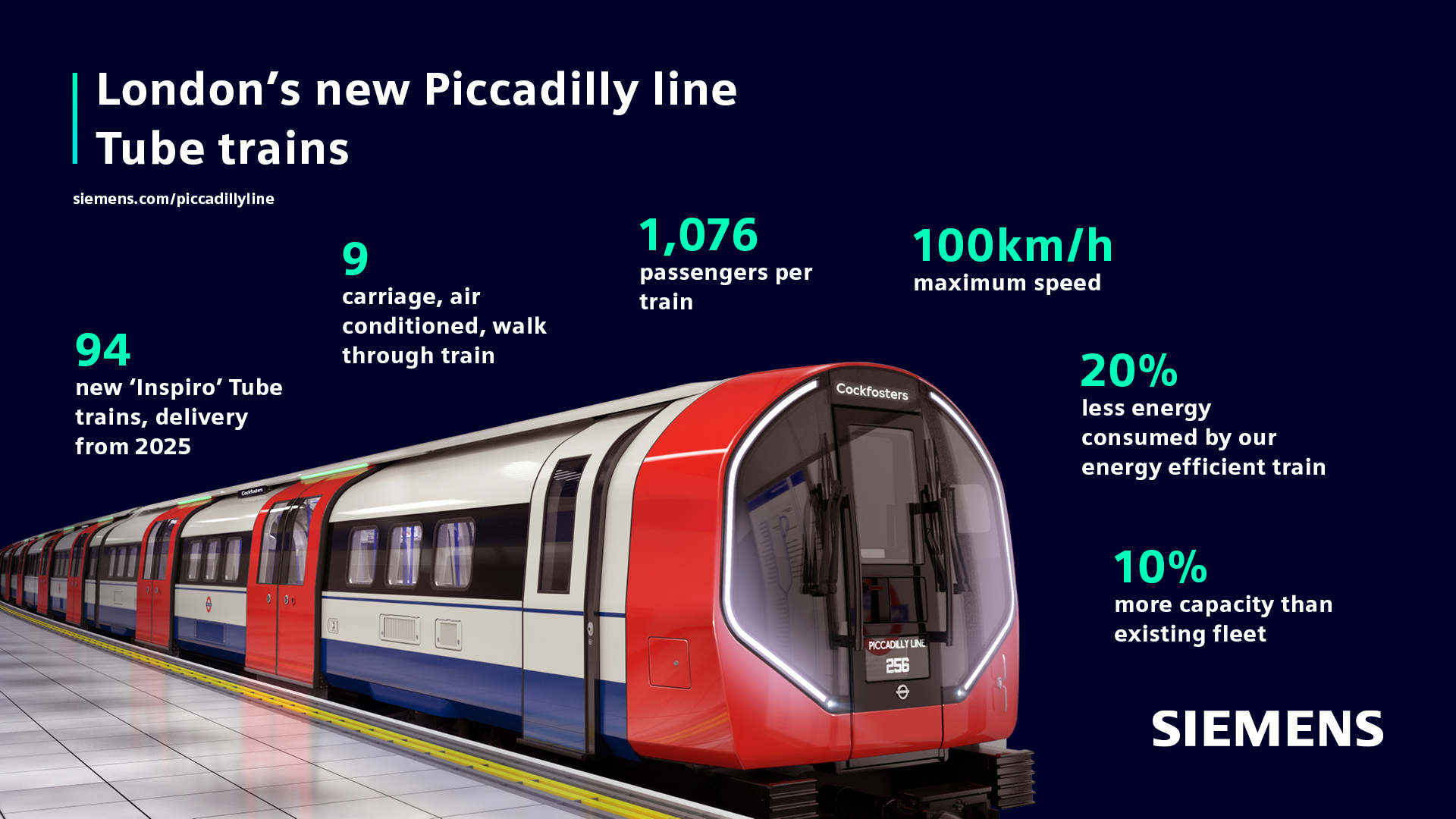
These figures are from Wikipedia.
- Cars – NTFL – 9 – 710 – 4
- Car Length – NTFL – 12.6 metres – 710 – 20 metres
- Train Length – NTFL – 113.4 metres – 710 – 80 metres
- Seated Passengers – NTFL – 268 – 710 – 189
- Total Passengers – NTFL – 1076 – 710 – 678
- Passenger Density – NTFL – 9.5 per metre – 710 – 8.2 per metre
- Speed – NTFL – 62 mph – 710 – 75 mph
Note.
- The figures for the Class 710 train are for a four-car train.
- The passenger density and speed are closer than I thought they’d be.
- I’m sure Siemens can design a longer and/or faster train if required for the Euston service.
I feel that the New Tube for London design could be adjusted , so that it could work the Watford DC service.
Platform Modifications
I suspect that the New Tube for London will be lower than the Class 710 train and all platforms would need to be lowered to fit the new trains.
I would also suspect that it would be easier to lower platforms, than modify them, so that they had dual-height sections to satisfy two classes of train.
It should be noted that the New Tube for London has shorter cars than the sixteen metre 1972 Stock trains currently used on the line, so there will be smaller gaps at stations with curved platforms like Waterloo.
I believe that with one class of train, all of the stations on the Bakerloo and Watford DC Lines could be made step-free between train and platform.
Platform Height On Platform 9 At Euston
I took these pictures on Platform 9 at Euston station.
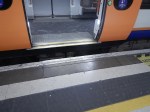
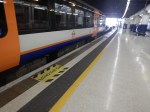
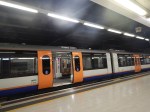
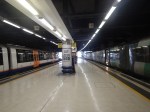
Note that it is rather a high step into the train and there is a large gap.
But if say, a modern London Underground train from say the Victoria Line pulled into the platform would it be a better fit?
Platform Height At Kilburn High Road Station
These pictures show Kilburn High Road station.
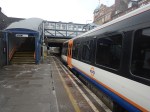
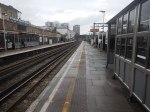
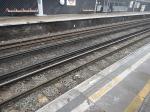
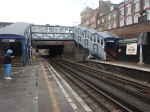
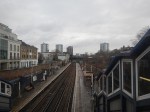
I should have taken more pictures, but the step between the platform and train is similar to Platform 9 at Euston.
Platform Height At South Hampstead Station
These pictures show South Hampstead station.
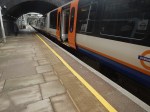
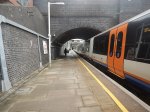
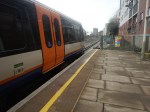
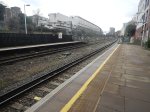
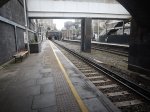
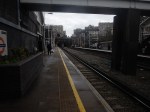
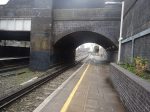
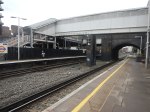
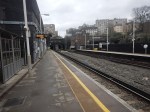
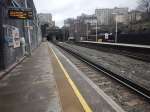
I should have taken more pictures, but again the step between the platform and train is similar to Platform 9 at Euston.
Were The Platforms At Euston, South Hampstead And Kilburn High Road Built For Another Class Of Train?
This Wikipedia entry is for the London Underground Watford Joint Stock train, where this is said.
The Watford Joint Tube Stock was built for the service to Watford along both the Bakerloo tube and the London North Western Railway. As a result, the cars were owned by both the Underground and the London North Western Railway. To be able to operate on both lines, the car floors were 4+1⁄2 inches (110 mm) higher than other tube cars. This was a compromise height between the platform heights on the two lines.
The cars were ordered in 1914, but construction was delayed by The First World War. As a result, the first cars were not delivered until early 1920.
Note.
- The Wikipedia entry has links to some images of which this is one.
- They must have been rather cramped trains if they were built for deep tunnels and had a floor that was 110 mm higher, than other tube trains.
It certainly appears to be possible to design a train, that would fit both lines.
But would it fit modern regulations and give full step-free access?
Queen’s Park And Euston
This map from cartometro.com, shows the route between Queen’s Park and Euston stations.
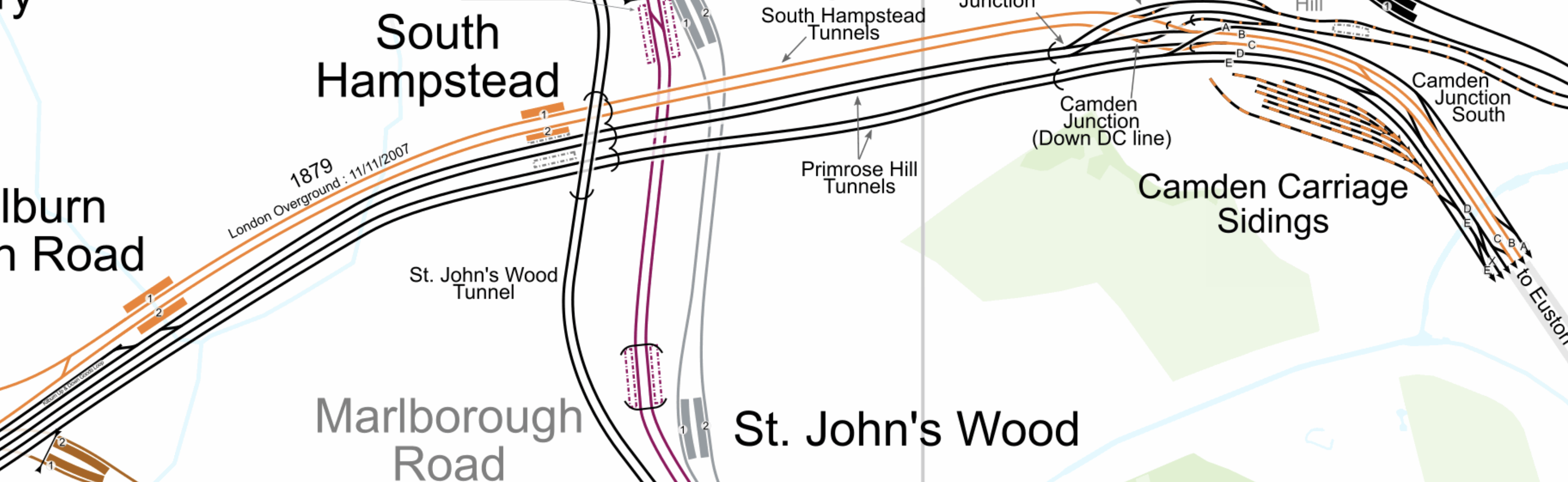
Note.
- The Watford DC Line is shown in orange.
- Queen’s Park station is to the West of Kilburn High Road station.
- It appears that Watford DC Line trains always use Platform 9 at Euston station.
The route seems to be a self-contained third-rail electrified line into Euston station.
On the subject of electrification between Queen’s Park and Euston stations, there would appear to be a choice between the third-rail system and London Underground’s four-rail system.
But it is rumoured that the New Tube for London will have a battery capability.
As Euston and Queen’s Park stations are only 3.7 miles apart, perhaps the choice would be to use battery power into Euston station, which would remove electrified rails from Euston?
How Many Trains Could Run Into Euston?
Currently, four trains per hour (tph) run into Euston.
It is generally accepted that six tph can use a single platform. But would this be enough?
I suppose there is the possibility of tunnelling under Euston station to a pair of terminal platforms.
In that case the current platform could be used by other services.
Southern’s Milton Keynes And Clapham Junction Service
This service wouldn’t be affected as it uses the fast lines between Willesden and Watford Junction.
Advantages Of One Train Type On The Bakerloo And Watford DC Lines
I can think of these advantages.
- Step-free access between train and platform, should be achieved.
- A unified fleet.
- A higher frequency between Euston and Willesden Junction stations.
- Higher frequency where needed.
- If trains had a battery capability, Euston could be free of third-rail electrification.
As only one type of train will be using the Watford DC line between Euston and Watford Junction, this could result in operational efficiencies.
Linking Of The Bakerloo And Abbey Lines
This could be the biggest advantage of all.
This map from cartometro shows the lines at Watford Junction station.
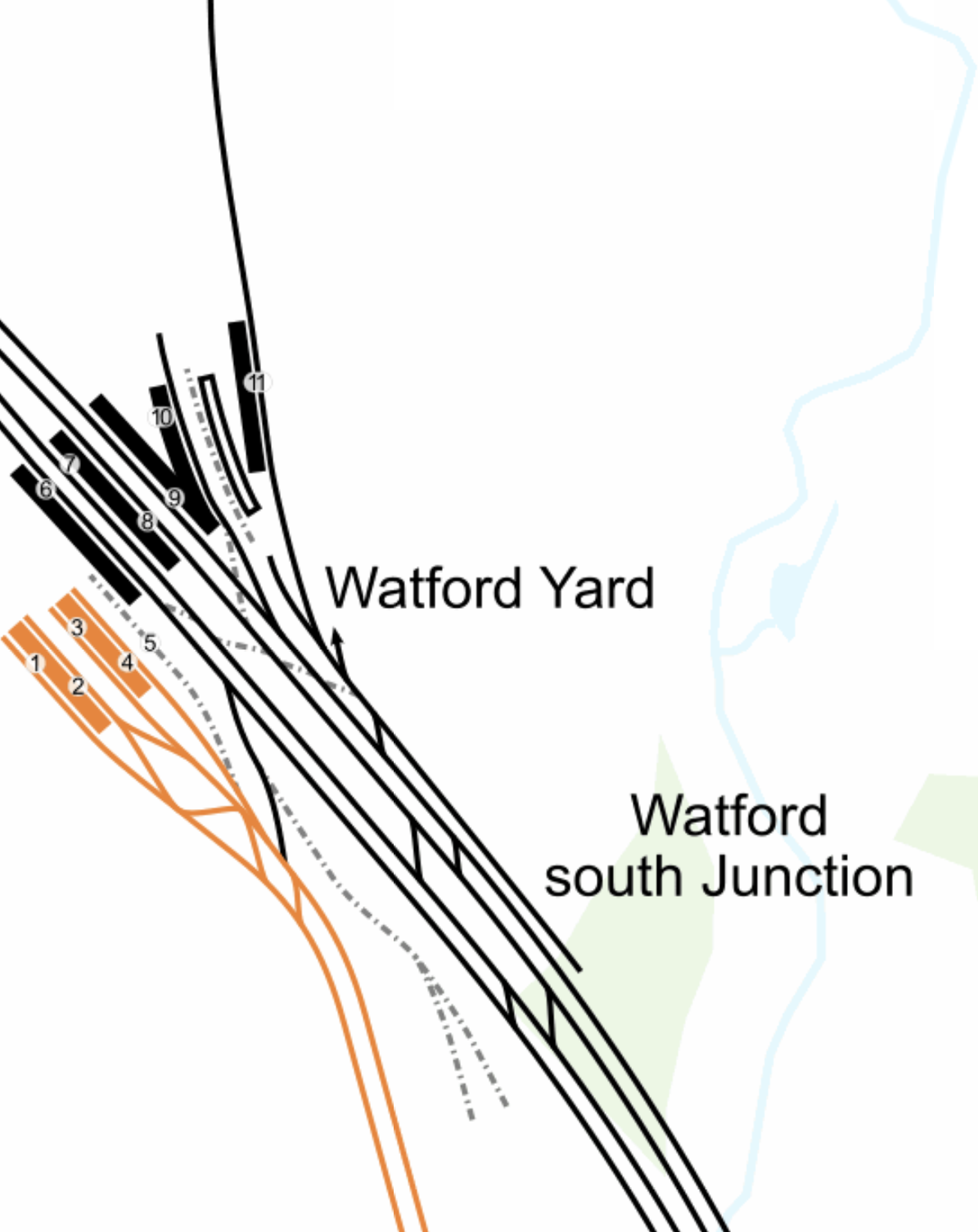
Note.
- The orange lines are the current Watford DC Line services of the London Overground, terminating in platforms 1 to 4 of Watford Junction station.
- These lines would be taken over by the unified Bakerloo/Watford DC Line services, running nine-car New Tubes For London.
- The next station to the South is Watford High Street.
- The West Coast Main Line goes through the station and uses platforms 5 to 10.
- At the North of the station is Platform 11 on the Abbey Line which leads roughly North East to St. Albans.
Look at how the Abbey Line is more or less in line with the twin-tracks of the Watford DC Line.
Recently, during the Bank Station Upgrade, a 488 metre long single track tunnel was built to divert the Southbound Northern Line.
This tunnel was not dug with a tunnel boring machine, but traditionally by hand, using men, picks, shovels and I suspect a few small machines.
I believe, that a similar technique could be used to dig a tunnel, to connect the Abbey Line and the Watford DC Line.
- It would only be single-track
- It would probably be less than 500 metres long.
- It would connect to the Abbey Line to the South of Platform 11.
- It would be deep-level tube-sized.
- It might be dug by hyperTunnel.
- Geography wouldn’t allow the tunnel to terminate in the Watford DC Line platforms at Watford Junction station.
But where would the terminal be on the Southern side of the West Coast Main Line?
This map from OpenRailwayMap, shows the two routes between Watford Junction and Bushey stations.

Note.
- Watford Junction station is at the top of the map.
- The orange line is the West Coast Main Line.
- The yellow line looping to the West of the West Coast Main Line is the double-track Watford DC Line.
- Bushey station is at the bottom of the map, where the two rail lines meet.
- Watford High Street station is in the middle of the map on the Watford DC Line.
The new service could certainly take the Watford DC Line as far as Watford High Street station.
- The station is close to the centre of Watford, the hospital and Vicarage Road stadium.
- But there is no space for a terminal platform.
This second OpenRailwayMap shows the disused railways to the West of Watford High Street station.
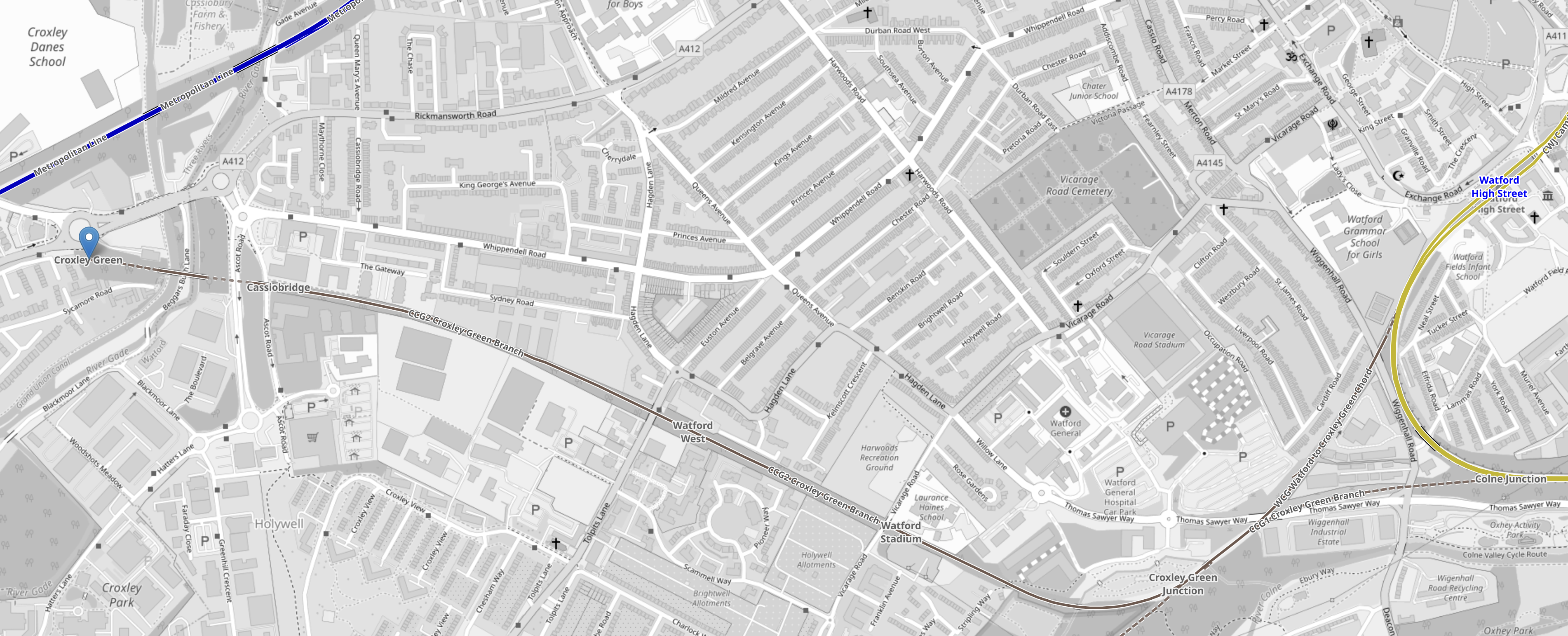
Note.
- The yellow loop at the East of the map is the Watford DC Line.
- Watford High Street station is on this loop.
- There is a triangular junction, that connects the former Croxley Green branch to the Watford DC Line.
- The terminus at Croxley Green station is marked by a blue arrow.
- There used to be intermediate stations at Cassiobridge, Watford West and Watford Stadium.
- This route was used for the failed attempt to build the Croxley Rail Link.
But could a Western extension of the Abbey Line be built?
- It would terminate at either Croxley Green or Cassiobridge.
- There would be intermediate stations at Watford West, Watford Stadium and Watford High Street.
- There would be two tph.
- Trains would be nine-car New Tubes For London.
- The current Abbey Line is 6.4 miles and would be run using battery power, with possible charging at St. Albans Abbey station.
- The tunnel under the West Coast Main Line would be run on battery power.
- The Western extension from Watford High Street station would be run using battery power, with possible charging at the Western end.
I believe, an extended Abbey Line could be a viable alternative to the ill-fated Croxley Rail Link.
- I have used battery power, as I doubt Health and Safety would allow any new third-rail electrification.
- I have used nine-car New Tubes For London for the extended Abbey Line, as their small cross-section would allow a smaller tunnel and they would be certified for running in tunnels.
- Some platforms on the Abbey Line would need to be lengthened, but these would be the only modifications, other than the possible installation of the charging system.
- The extended Abbey Line would serve Watford Hospital and Vicarage Road.
The capacity of the extended Abbey Line would be substantially more than the current line.
Conclusion
A common fleet used by the Bakerloo and Watford DC Line would appear to give advantages and it has been done successfully before.
But what the Bakerloo Line, the Watford DC Line, the Abbey Line and the Bakerloo Line Extension need is a good dose of holistic design.
Extending The Elizabeth Line – Piccadilly Line To Ealing Broadway
Transport for London have proposed a reorganisation of the Piccadilly and District Lines in the Ealing area.
I first wrote about this in Is There Going To Be More Change At Ealing Broadway Station?, but now the Elizabeth Line is on the verge of being connected across London, I feel that this post needs to be replaced.
A Possible Proposal
Ealing Broadway station is being upgraded for Crossrail.
In the November 2017 Edition of Modern Railways, there is a Capital Connection supplement, which discusses London’s railways.
On Page 7 in a section about the sub-surface lines, this is said.
One possibility being discussed is that the Piccadilly should take over the District’s Ealing Broadway service. This would free up space on the South side of the inner-London circle for more City trains off the Wimbledon branch, one of the sub-surface network’s most-crowded routes.
On Page 15 in a section about the Mayor’s plans, this is said.
It is suggested Piccadilly Line services run to Ealing Broadway instead of the District Line, enabling increased frequencies on the latter’s Richmond and Wimbledon branches.
As the plan is mentioned twice, certainly the proposal is being thought about.
The Lines At Ealing Broadway Station
This map from carto.metro.free.fr shows the lines at Ealing Broadway station.
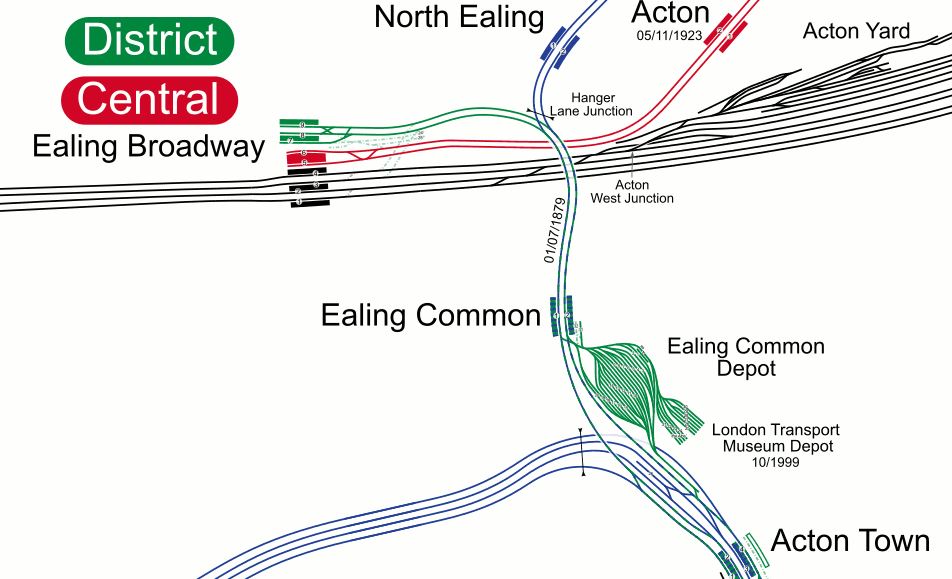
Note how the Piccadilly and District Lines share tracks from Ealing Common station, which then split with District Line trains going to Ealing Broadway station and Piccadilly Line trains going to Rayners Lane and Uxbridge stations.
If the change happened and Ealing Broadway station was only served by the Piccadilly and Central Lines of the Underground, then there might be opportunities to improve the efficiency of the Underground side of the station.
Capacities And Lengths Of London Underground Trains Serving Ealing Broadway Station
I’ll express these as a table.
- Central Line – 1992 Stock – 930 passengers – 130 metres – 7.15 pass/m.
- District Line – S7 Stock – 1209 passengers – 117.45 metres – 10.29 pass/m.
- Piccadilly Line – 1973 Stock – 684 passengers – 106.8 metres – 6.40 pass/m.
- New Tube for London – 1076 passengers – 113.7 metres – 9.46 pass/m.
Note.
- The New Tube for London is the shortest train, with the second highest capacity and the highest passenger density.
- The New Tube for London will be replacing the Piccadilly Line trains first.
- The New Tube for London will be replacing the Central Line trains second.
It looks like there will be no platform-length problems running the New Tube for London to Ealing Broadway station.
The District Line Platforms At Ealing Broadway Station
These pictures show the District Line at Ealing Broadway station.
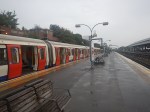
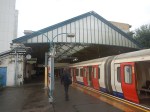
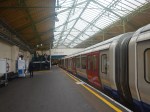

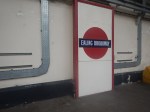
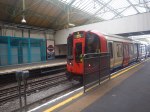
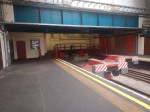
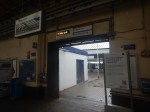
Note.
- There are three platforms for terminating District Line trains, which are numbered 7 to 9.
- The service frequency is six trains per hour (tph).
- The bridge to the far platform 9, is not step-free.
- It appears to be possible to walk between platforms 8 and 9 behind the buffer stops, but it wasn’t signed.
- As a comparison the Central Line runs 9 tph to East London from two platforms, that are numbered 5 and 6.
- There was also a 3 tph Night Tube service before the pandemic, which appears to be running again.
- Platforms 8 and 9 seem to be covered by a building of very little architectural merit.
This map from OpenRailwayMap shows the detailed platform layout.
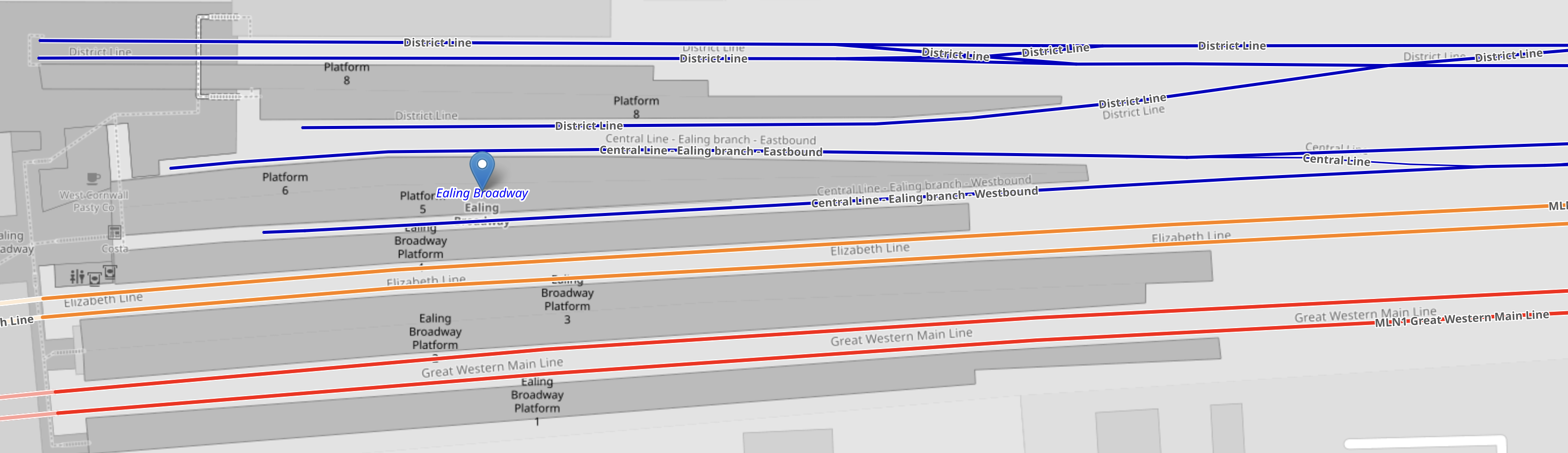
Note.
- Platforms are numbered from 1 to 9 from the South.
- Underground tracks are shown in blue.
- Elizabeth Line tracks are shown in orange.
- Great Western ~Main Line tracks are shown in red.
I believe that the three District Line platforms could be upgraded into an excellent terminus for another branch of the Piccadilly Line.
Consider.
- Two platforms would probably be enough, but a third would be useful for service recovery.
- As the Piccadilly and Central Line trains are the same size, could Platform 7 be a platform be available to both Underground services when needed?
- The New Tubes for London are a few metres shorter than the current District Line trains, so would this help in creating a step-free level walkway between Platforms 8 and 9, behind the buffer stops?
- Platforms 8 and 9 may need to be lengthened.
- Is there any scope for any appropriate oversite development?
I certainly believe that a much better replacement could be created.
Changing Between The Underground Lines And The Elizabeth Line At Ealing Broadway Station
Ealing Broadway station is now step-free and changes between the Eastbound Elizabeth Line and the Underground are a walk on the level.
Only when changing to or from the Westbound Elizabeth Line do you need to use stairs and/or a lift.
Elizabeth Line Effects On Access To Heathrow
The Elizabeth Line will change the way a lot of passengers go to and from Heathrow Airport.
Elizabeth Line To Heathrow
At present, the service will be.
- 4 trains per hour (tph) between Paddington and Heathrow Central and Heathrow Terminal 4 or Heathrow Terminal 5 via Ealing Broadway.
After November 6th, 2022, the service will be.
- 4 tph between Abbey Wood and Heathrow Central and Heathrow Terminal 4
- 2 tph between Abbey Wood and Heathrow Central and Heathrow Terminal 5
In addition these services will serve all station including Canary Wharf, Liverpool Street, Bond Street, Paddington and Ealing Broadway.
Effect On Heathrow Express
It will be difficult to predict what will happen to Heathrow Express, but I suspect several groups of passengers will desert it.
- Passengers wanting to go anywhere East of Paddington without changing trains.
- Passengers wanting any Elizabeth Line station.
- Passengers, who don’t like the prices of Heathrow Express.
- Passengers using Oyster or contactless cards.
- Passengers who want to ride on London’s spectacular new Elizabeth Line.
- After Old Oak Common station is opened for High Speed Two, the numbers could further decrease.
Will Heathrow Express survive?
Effect On Piccadilly Line
The current Piccadilly Line route to the Airport will not be closed, as for many it will still be a convenient route to the Airport
- Passengers who live on the Piccadilly Line and don’t want to change trains. Think Southgate, Knightsbridge, Hammersmith and Osterley!
- Passengers to the West of Acton Town station.
- Passengers, workers and others needing to go to Hatton Cross station.
If the Elizabeth Line connected with the Piccadilly Line at say Holborn, it would be all so different.
Effect On District Line
When Crossrail opens, the District Line will become a loop from Crossrail, between Ealing Broadway and Whitechapel running along the North Bank of the Thames via Earls Court, Victoria, Charing Cross and Monument.
The step-free interchange at Ealing Broadway could become busy with passengers travelling to and from the Airport.
Effect On Piccadilly Line Overcrowding
Heathrow trains on the Piccadilly Line can get very overcrowded with so many passengers with heavy cases.
It must sometimes be very difficult to get on a Piccadilly Line train between Heathrow and South Kensington stations.
The Elizabeth Line should take the pressure from these trains, by allowing passengers to use the District Line with a change at Ealing Broadway.
The New Tube for London will also help to reduce the overcrowding.
Effect On My Personal Route
My personal route to the airport is to take a 141 bus to Manor House station and then get the Piccadilly Line. It takes 94 minutes.
After the Elizabeth Line fully opens, if I take the East London Line from Dalston Junction to Whitechapel and then used Crossrail, I’d take 57 minutes.
Conclusion
The Elizabeth Line will affect the way many get to and from Heathrow Airport.
But there are large areas of London, who still will need to change trains twice to get to the airport. But for many, one of those changes will be a step-free one at Ealing Broadway, Paddington or Whitechapel stations.
Piccadilly Line To Ealing Broadway Effects
Adding Ealing Broadway station as a fourth Western terminus to the Piccadilly Line will have effects, but not as important as the opening of the Elizabeth Line.
Some Improved Journey Times To Heathrow
Some Piccadilly Line stations will see improved journey times to Heathrow.
Hammersmith to Heathrow currently takes 37 minutes by the Piccadilly Line.
Taking a Piccadilly Line train to Ealing Broadway and then using the Elizabeth Line could save a dozen minutes.
The District Line Connection To The Elizabeth Line At Ealing Broadway Is Lost
Passengers along the District Line from Monument to Hammersmith will lose their direct access to the Elizabeth Line at Ealing Broadway.
Cross-platform access to the Piccadilly Line at Hammersmith and other stations will probably be provided or improved, but it will be a second change.
Note that until the Piccadilly Line gets upgraded and new trains arrive around 2023, the District Line with new trains and the soon to be installed new signalling may well be a better passenger experience.
More Trains To Richmond
This will certainly be possible, if some Ealing Broadway trains are diverted to Richmond.
But the Elizabeth Line has another delight in its cupboard for Richmond.
Old Oak Common station is scheduled to open in 2026 and will offer an interchange between the Elizabeth Line and the North London Line.
Richmond will certainly be getting a better train service to Central and East London.
More Trains To Wimbledon
This will certainly be possible, if some Ealing Broadway trains are diverted to Wimbledon.
The Ealing Common Problem
At Ealing Common station, the Piccadilly and District Line share the same tracks and platforms.
Some commentators have suggested that the new trains on the Piccadilly Line will be designed to work with platform-edge doors for improved safety and dwell times.
So if platform-edge doors were to be fitted to all stations on the Piccadilly Line as has been suggested, there would be no way the doors would fit the new S7 Stock of the District Line.
Swapping Ealing Broadway from the District to Piccadilly Lines would solve this problem and give more flexibility, but it might give London Underground other problems with regard to access for District Line trains to Ealing Common depot.
These pictures show Ealing Common station.
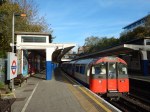
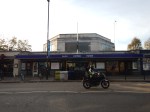
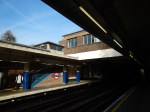

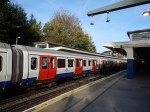
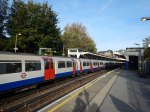
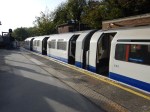
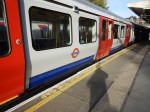
Note the difference in levels between the Piccadilly and District Line trains.
There would be no way to provide level access for both types of train using a Harrington Hump.
So is making a station that serves both deep-level and sub-surface lines, step-free, a problem that is still to be cracked?
This Google Map shows Ealing Common station.
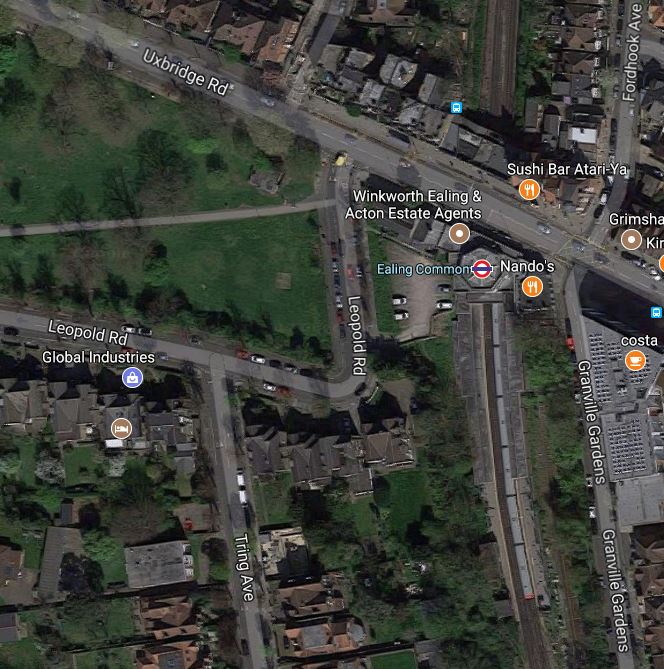
It doesn’t look that it is a station, where two extra platforms could be squeezed in, so both lines could have their own platforms.
Could Ealing Common station be one of the main reasons to serve Ealing Broadway station with the Piccadilly Line?
Acton Town Station
These pictures show Acton Town station.
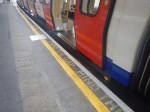
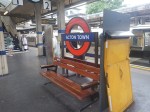
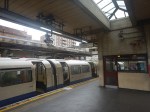
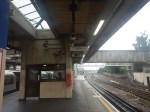
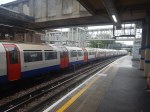
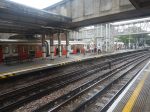

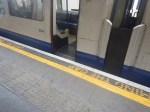
Note.
- The two central tracks appear to be Piccadilly Line trains only.
- The two outer tracks appear to be able to be used by both District and Piccadilly Line trains.
- There is quite a step-down to Piccadilly Line trains on some platforms.
Making Acton Town station, a Piccadilly Line-only station, would ease making the station step-free, as it would only be served by one type of train.
Chiswick Park And Ravenscourt Park
This section is shown in this map from cartmetro.com.
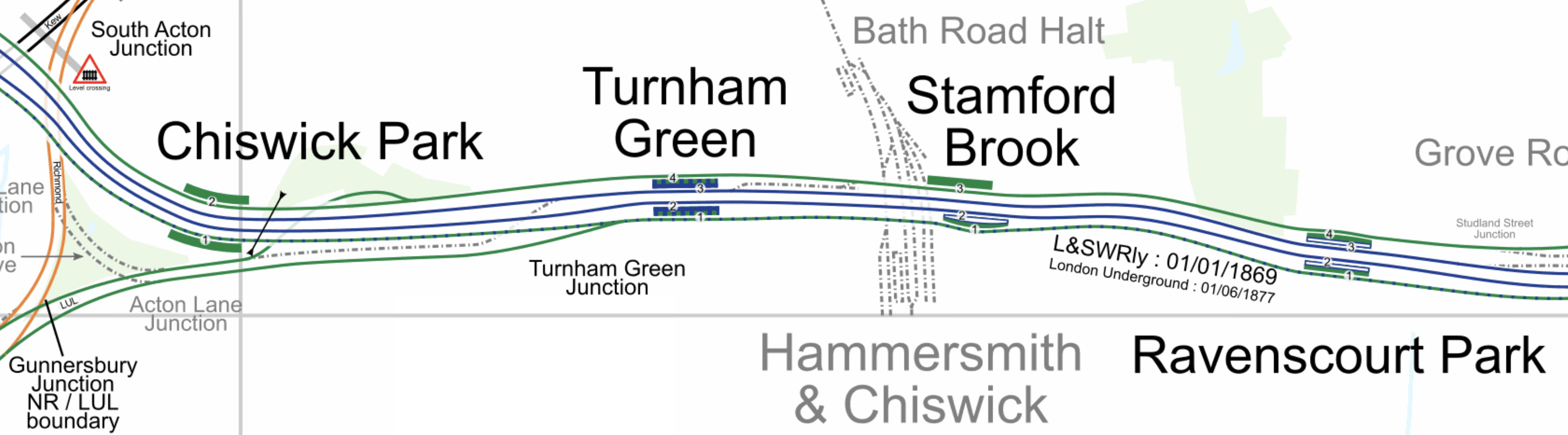
Note.
- The District Line is shown in green.
- The Piccadilly Line is shown in blue.
- The two Piccadilly Line tracks are in the middle and generally trains go straight through the four stations.
- The two District Line tracks are on the outside and trains stop at most stations.
It appears that the tracks have been laid out so that Piccadilly Line trains can get a real shift on between Acton Town and Hammersmith.
This could save a few minutes on some Piccadilly Line journeys.
But there is a problem!
- District Line trains serve all stations.
- Piccadilly Line trains serve none.
- How is Chiswick Park station going to be served, as there are no District Line trains passing?
- Passengers for intermediate stations, would need to get on the District Line trains before entering the Acton Town and Hammersmith section.
- Passengers may want to change between Ealing Broadway and Chiswick Park.
There will also be no trains running on the current District Line tracks between Acton Town and Turnham Green Junction. The only ones that do now, go to Ealing Broadway and they’re being changed to Piccadilly Line trains.
Serving Chiswick Park Station
Chiswick Park station only has platforms on the District Line, which will not see any passing trains if the District Line doesn’t go to Ealing Broadway.
One suggestion I found was to add two new District Line platforms to the Richmond branch.
This Google Map shows the station.
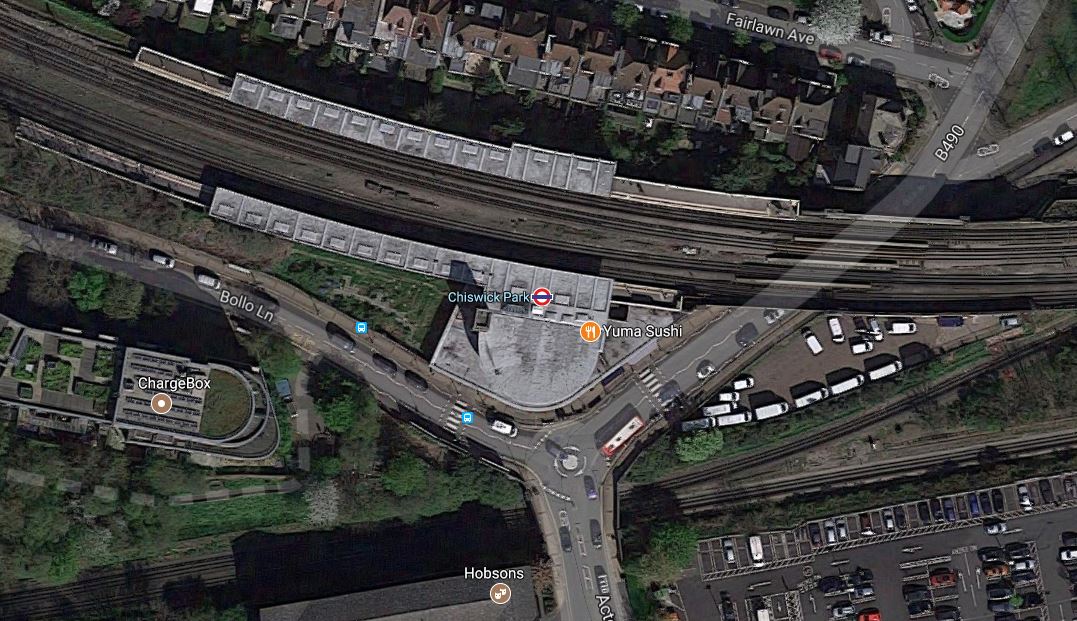
Note the Richmond branch passing South of the station.
This second Google Map shows the tracks between Chiswick Park station and Turnham Green junction.
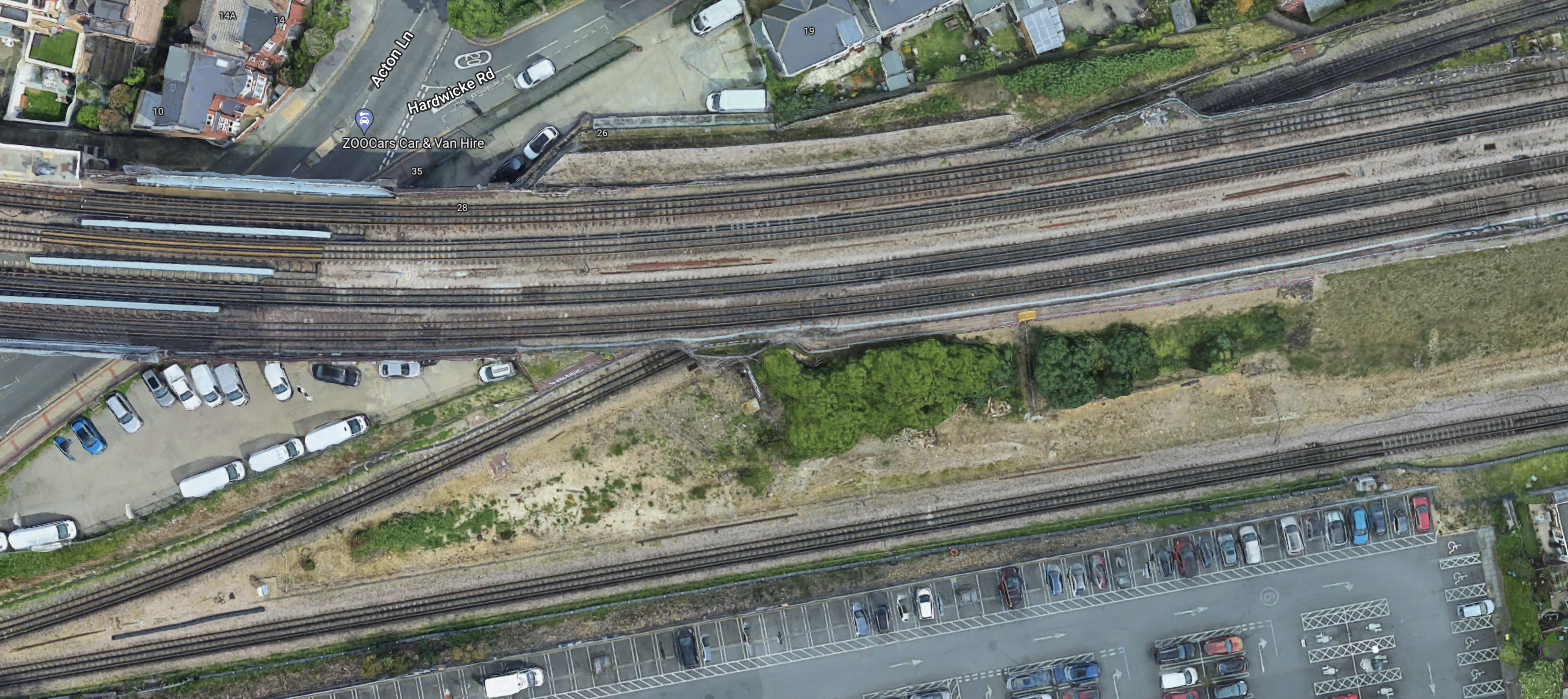
Note.
- The four tracks between Acton Town and Hammersmith stations.
- The current District Line tracks are the outside two of the four tracks.
- The Piccadilly Line tracks are the middle two.
- The two tracks at the South-West corner go to Richmond station.
- The Eastbound track from Richmond goes under the four-track railway, before joining the current Eastbound District Line track.
- The Westbound track to Richmond runs along the South side of the four-track railway, before joining the current Westbound District Line track.
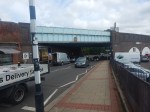
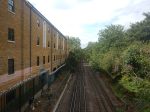
These pictures were taken from a train approaching Chiswick Park station from the East.

Note, that there is enough space for a platform along the single track.
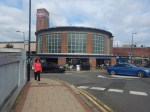
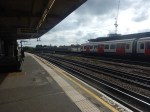
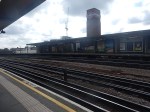
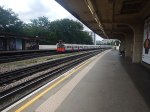
These pictures are of Chiswick Park station.




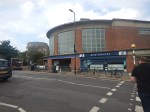
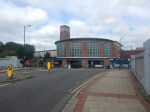

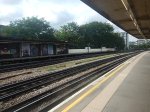
Note.
- The distinctive architecture of London Transport stations of the period.
- The two fast lines in the middle, with Piccadilly Line trains speeding through.
- The two District Line trains on the outside with platforms.
- The Richmond Branch passing to the South of the station and between the station and Sainsburys.
I would suspect that a pair of platforms could be built on the two tracks of the Richmond branch.
- District Line trains to and from Richmond would stop at the new platforms at Chiswick Park stations and Turnham Green, Stamford Brook, Ravenscroft Park, Hammersmith, Baron’s Court and Earl’s Court stations.
- Passengers between Ealing Broadway and Victoria stations would change at Hammersmith, Baron’s Court or Earl’s Court stations.
- The car park at the bottom of the map is for a large Sainsbury’s. Perhaps, they would like a station entrance?
- Chiswick Park station is Grade II Listed.
I’m sure that a good architect can find a more than acceptable solution.
Turnham Green Station
As I passed through Turnham Green station, I got off and took a few pictures, before catching the next train to Ealing Broadway.

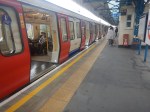
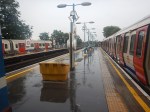
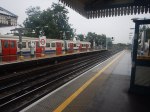
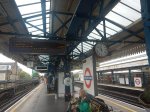
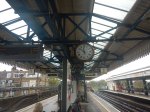

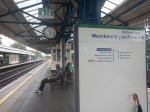
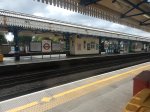
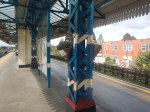
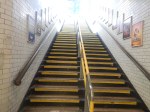
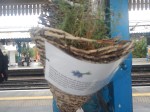
Note.
- Piccadilly Line trains don’t generally stop, although they do at times to provide a service when the District Line is not running.
- The station is not step-free, with stairs to the entrance.
- It has some nice features.
- Herbs are provided for passengers
If required a step-free interchange between District and Piccadilly Lines could be arranged.
Hammersmith Station
I arrived at Hammersmith station on a Piccadilly Line train and left on a District Line train, after taking these pictures.
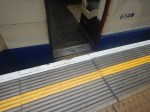
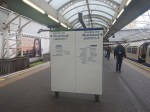

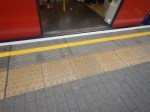
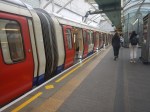
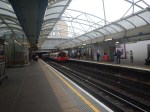
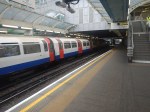

Note.
- The change is on the same island platform.
- There is plenty of space on the platform.
- The District Line trains are level with the platform.
- The Piccadilly Line trains require a step-down from the platform.
- The District Line trains run at a frequency of 12 tph.
- The Piccadilly Line trains run at a frequency of 21 tph.
- Hammersmith is also a big bus interchange and shopping centre.
There should be no problem changing between Piccadilly and District Lines at Hammersmith, with a wait of no more than five minutes.
Baron’s Court Station
In a brief stop at Baron’s Court station, I took these pictures.
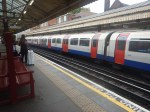
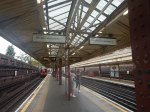
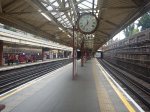
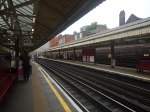
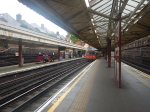
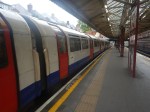
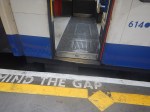
Note.
- The change is on the same island platform.
- There is less space on the platform, than at Hammersmith station.
- The District Line trains are a step-up from the platform.
- The Piccadilly Line trains require a step-up from the platform.
- The District Line trains run at a frequency of 12 tph.
- The Piccadilly Line trains run at a frequency of 21 tph.
There should be no problem changing between Piccadilly and District Lines at Baron’s Court, with a wait of no more than five minutes.
Earl’s Court Station
I arrived at Earl’s Court station on a Piccadilly Line train and left on a District Line train, after taking these pictures.

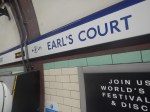
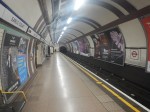

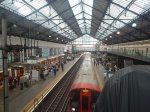
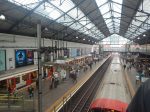
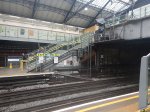
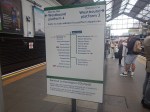
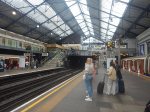
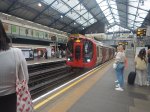
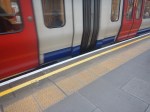
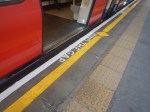
Note.
- The change means that platforms have to be changed
- The District Line trains are a step-up from the platform.
- The Piccadilly Line trains require a step-up from the platform.
- The District Line trains run at a frequency of 12 tph.
- The Piccadilly Line trains run at a frequency of 21 tph.
There should be no problem changing between Piccadilly and District Lines at Earl’s Court, but Hammersmith and Baron’Court don’t need a change of platform.
What Is The Best Station To Change Between Piccadilly And District Lines?
It appears that the best place to change would be Hammersmith, or failing that Baron’s Court.
- Earl’s Court requires a change of platform.
- Turnham Green requires a change of platform and two sets of steps.
- Hammersmith has a shopping centre and a lot of buses.
- I’ve used Hammersmith before to get home from Heathrow, with a change to a 141 bus at Monument station.
I would always for preference use Hammersmith.
Conclusion
It appears to me, there are three opposite forces on either side of a possible proposal to serve Ealing Broadway station with the Piccadilly Line, rather than the District Line.
- The District Line will form a loop South of Crossrail between Ealing Broadway and Whitechapel stations.
- The loop of the District Line serves Victoria, Embankment, Blackfriars, Cannon Street and Tower Hill stations for access to National Rail services.
- Making a station step-free that handles both deep-level and sub-surface lines, is not an easy undertaking.
Running the Piccadilly Line to Ealing Broadway means that a change is required at Hammersmith or Barons Court stations to use the loop described in point 1.
But this change would enable the step-free access to be created in all stations in the area.
I think that the change of terminus will go ahead, with the following additions.
- Improved access to Ealing Common depot.
- Improved cross-platform access at Hammersmith or Barons Court stations.
- Possibly two extra platforms on the District Line at Chiswick Park station.
What started out as a simple change could end up as a substantial project.
But overall, because it sorts out step-free access in the area, I think it is a good proposal.
Knightsbridge Station – 25th April 2022
I wrote Development Of Knightsbridge Station on November 27th 2017.
It is now a few days short of four years and five months later and the station looks a bit different.

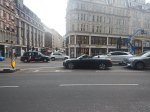
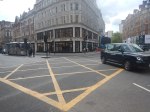

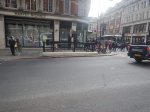

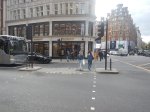

Note.
- The original station entrance on the corner of Sloane Street and Knightsbridge is now a new retail unit for Burberry.
- The original entrance in front of Harvey Nicholls is still open.
- The entrance opened in 2017 on the North side of Knightsbridge is still open.
- The new step-free entrance with lifts, is behind the black hoarding to the right of the new Burberry.
- The pavements are wider around the frontage of Burberry, than they were, when it was the station entrance.
The station is intended to fully open with lifts to the Piccadilly Line by Summer 2022.
Conclusion
This Google Map shows the site of the original Sloane Street entrance.
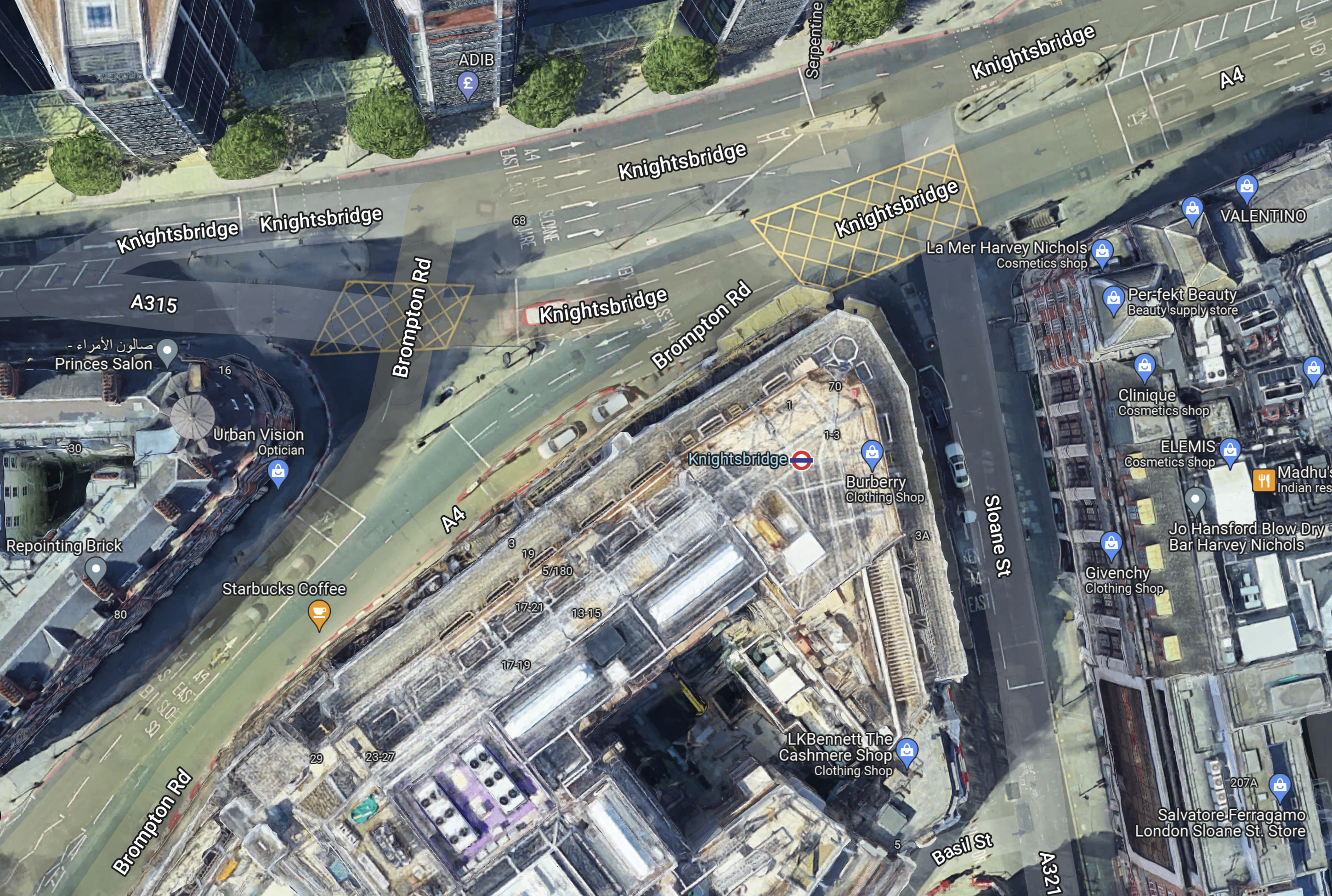
Note.
- Knightsbridge running East-West across the top of the map.
- Brompton Road running towards the South-West and past Harrods.
- Sloane Street running North-South towards the right of the map.
- The London Underground roundel indication the old entrance.
- Thee large size of the development site.
Is this going to be the world’s most expensive step-free rebuild of a Metro station?
The development is being carried out by the owners of the site; the Knightsbridge Estate, who are ultimately owned by one of Saudi Arabia’s richest families.
On the Development page of the web site, this is said about improving the public realm.
Significant improvements are being made to the public realm. The pavements on Brompton Road and Sloane Street have been widened to ease the pedestrian flow, Hooper’s Court, which links Brompton Road and Basil Street, is being completely remodelled and the Knightsbridge underground station is being substantially upgraded. A brand new tube entrance is being created further west along Brompton Road, a step-free access via two 17-person lifts located on Hooper’s Court will be introduced as well as on-platform cooling systems.
How many other tube stations are there in London with air-cooled platforms?
But then those, who buy the multi-million pound flats in this development, will expect a constant atmosphere between flat and platform. Remember too, that the New Tubes for London being built by Siemens for the Piccadilly Line will be air-conditioned.
Should All Trains Have Grab Handles By The Doors?
These pictures show the vertical grab handles on London Overground Class 710 trains.
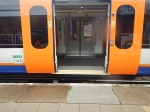
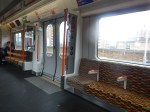
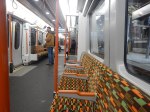
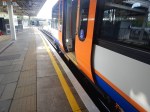


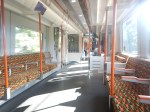
Note the vertical handles everywhere and especially tucked into the corner behind the door.
These pictures show the interior of a 1973 Stock train on the Piccadilly Line.
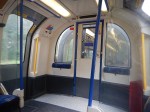


There are worse trains in the UK.
It should be noted that the trains were extensively refurbished in 1996-2001.
Should all trains have lots of grab handles like these two examples? And especially by the door?
I think they should.
This is an interesting picture of a Siemens design study, which I wrote about in Siemens’ View Of The Future Of The Underground.
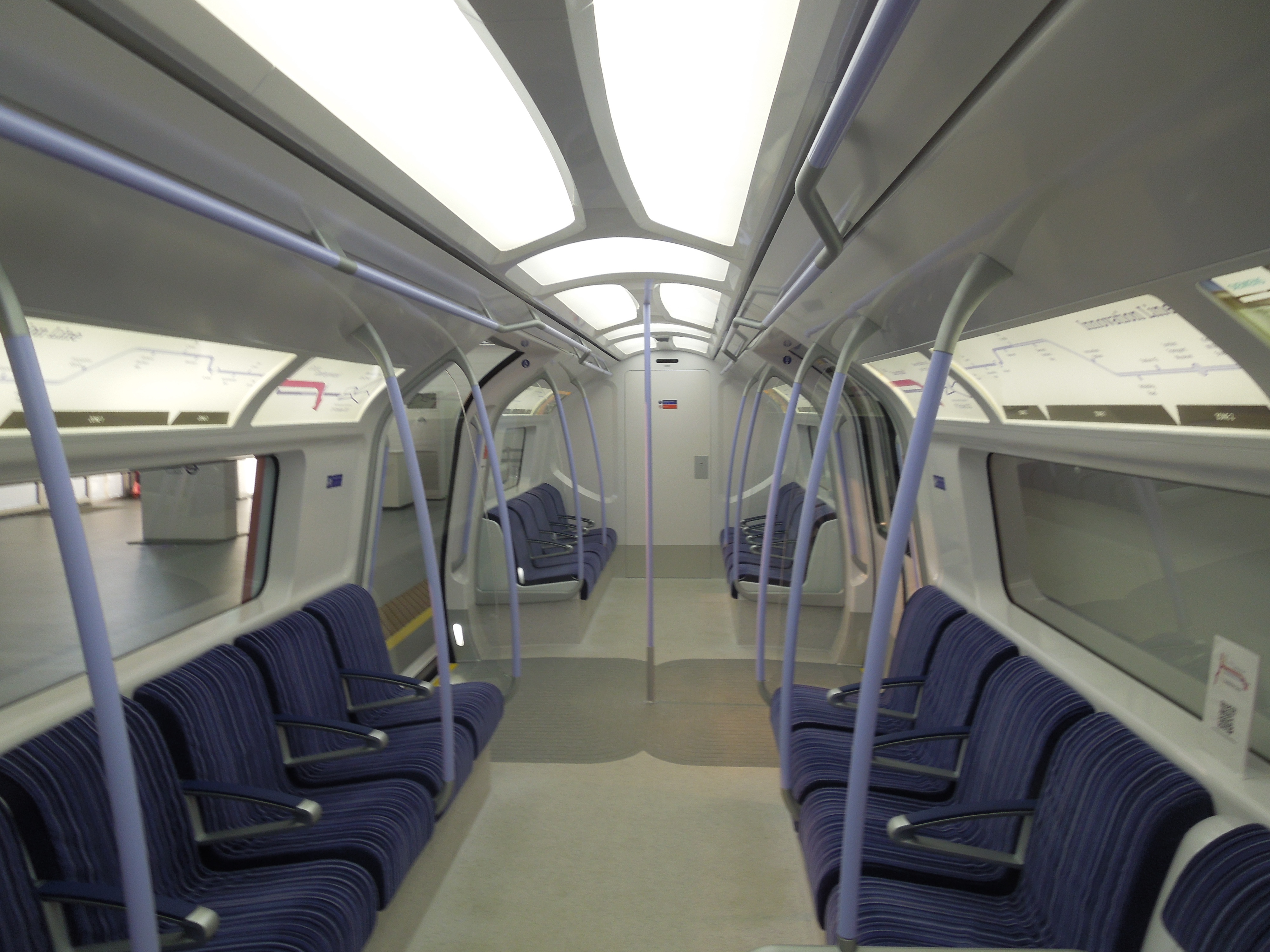
Note the grab handles by the sides of the doors.
So at least Siemens are following the rule of grab handles by the door.
Air-Conditioned Piccadilly Line Train Designs Presented
The title of this post, is the same as that of this article on Railway Gazette.
The article has four pictures of the final design of the new trains for the Piccadilly Line and the pictures don’t seem to be the same as those I took of the mock-up in October 2013 and can be seen in Siemens’ View Of The Future Of The Underground.
- The design has a less dramatic nose compared to the mock-up.
- It also appears to be taller.
- Judging by the external profile, the design has a clerestory to perhaps add a couple of inches.
- The seats appear to have a chunky profile. Is the air-conditioning partly behind the seats.
The interior seems to borrow heavily on the design for the London Overground’s Class 710 train.

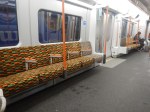
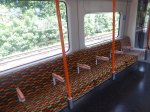


Note.
- The air-conditioning outlets in front of or underneath the seats.
- No grilles behind the seats.
- The Class 710 train has a clerestory for extra height, but it is not visible on the outside. Does the one on the Siemens’ design have grilles from air entry or exit?
These are some views of seats in current Underground stock.


Note.
- The Piccadilly Line trains were fully refurbished in 2001.
- The Northern Line trains were fully refurbished in 2013.
- The grilles behind the seats on the Northern Line trains.
You can see a progression through the various designs, with the Class 710 trains
It looks like Siemens are using a similar interior layout to current trains on the Underground and the Overground.
A few thoughts.
Heated Floors
Some Bombardier Aventras like Greater Anglia’s Class 720 trains have heated floors. Will Siemens copy this idea?
These trains will go to some of the coldest parts of the Underground around Cockfosters.
USB Charging
This Siemens’ picture shows a front view of the seats.
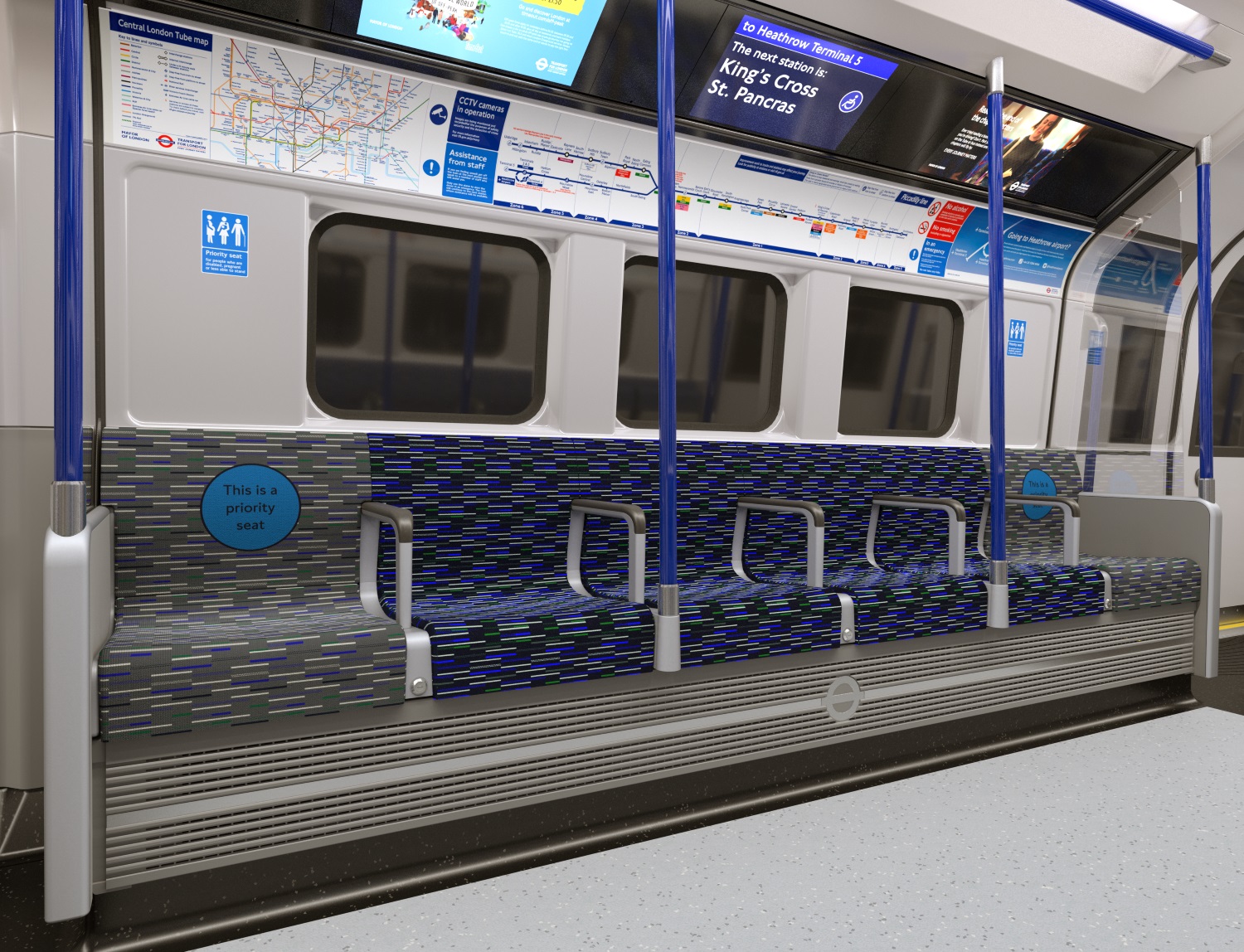
I thought for a moment, that there was a USB charge point in the front of the seat, but on second thoughts, that is just a fitting to enable extra vertical grab rails.
Siemens should put USB charge points in the arm rests, as Vivarail have done.
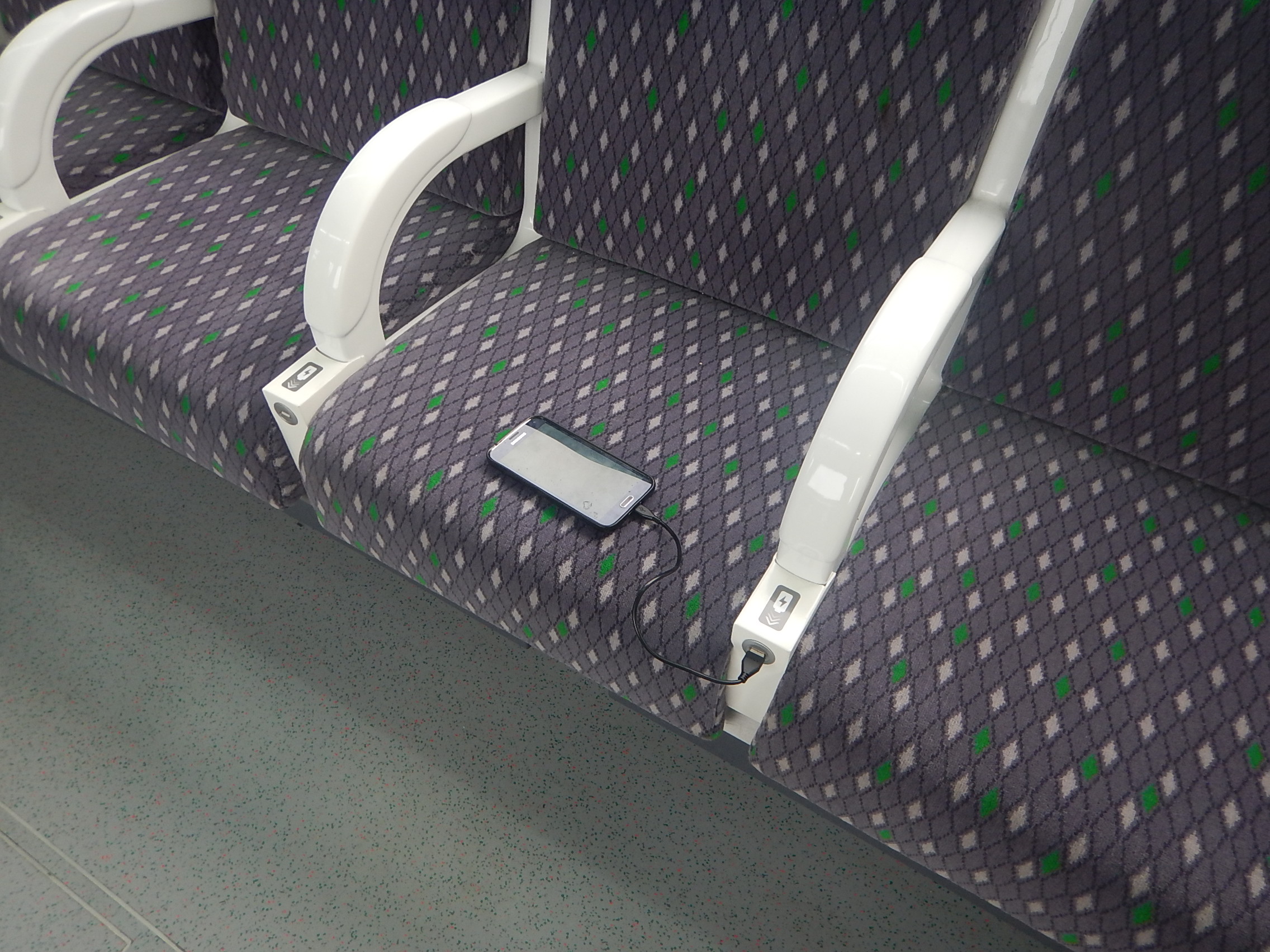
Good design is often simple.
Walk-Through Cars
The Railway Gazette article says this about walk-through cars.
The longer cars and walk-through interior of the articulated design would maximise the usable interior space, increasing capacity by 10%.
They say nothing about what I think is there biggest advantage – Passengers can freely circulate in the train, to perhaps get a better seat or be better placed for a quick exit.
Do women feel less vulnerable in wall-through trains?
Step-Free Entry
One of the good points of the mock-up in 2013 was that entrance into the train was step-free, as this picture shows.
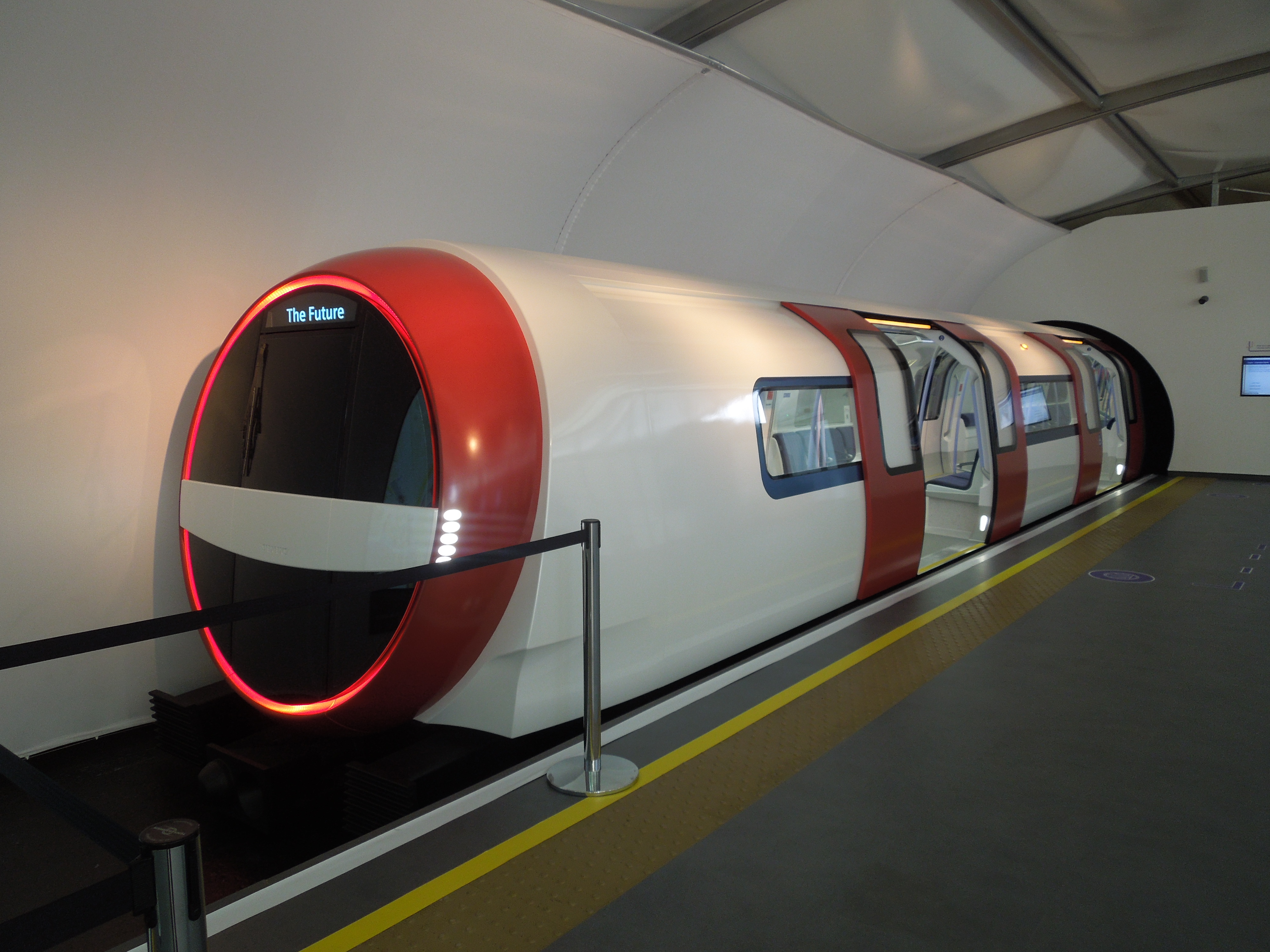
But look at this screen-capture for the detailed design.
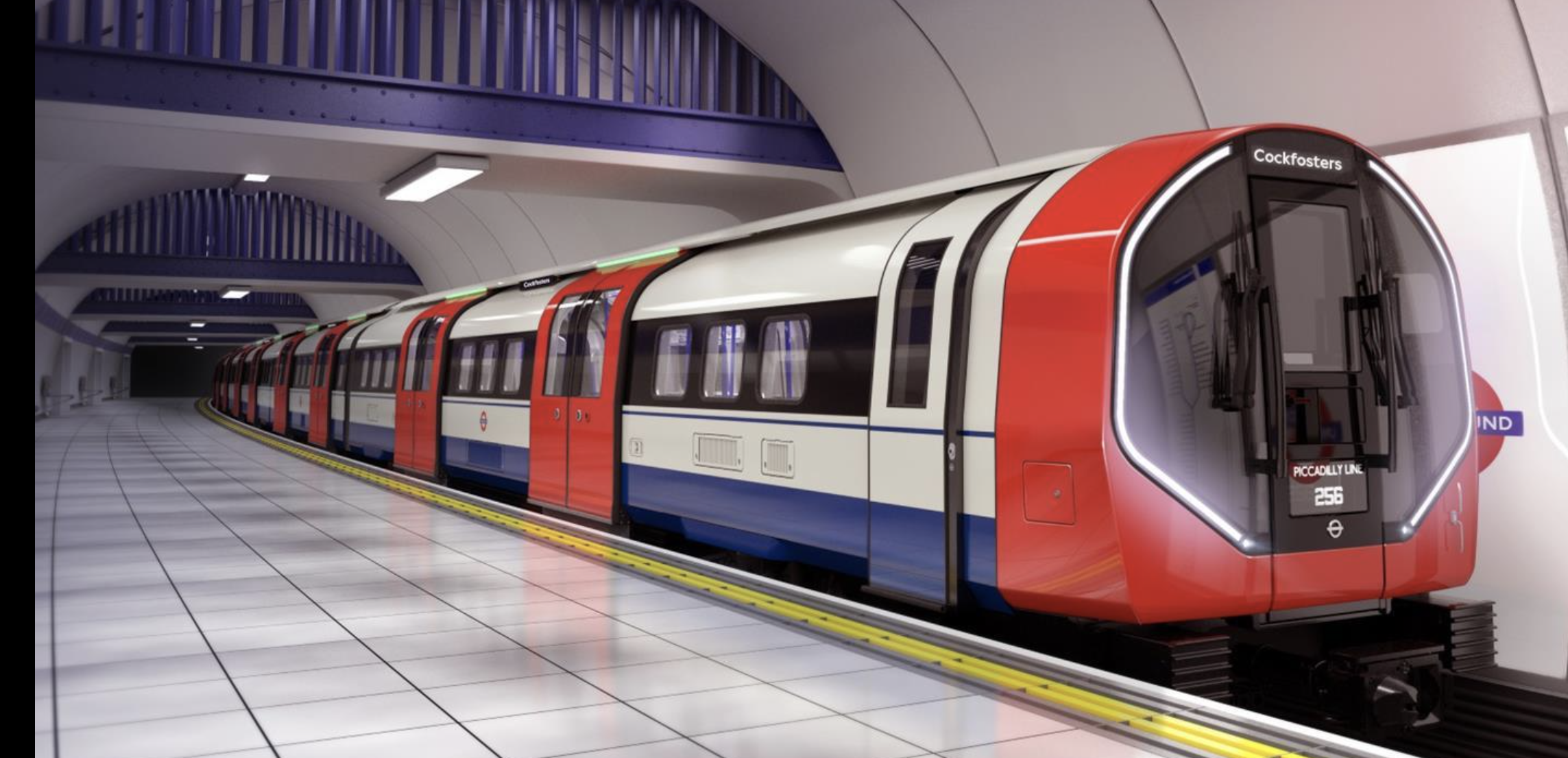
The doors now seem a couple of inches above the platform.
Have the designers removed a must-have feature?
German trains have a terrible reputation for not being step-free between train and platform, but if Stadler and Merseyrail can do it with the new Class 777 trains, then surely it can be done on the London Underground.
Front End
The previous two pictures do show the front end of the mock-up and final design well.
I do wonder, if the original design with the bar across didn’t go down to well with drivers.
- The driver on most trains sits to the left.
- Trains in the UK generally run on the left.
- Signals on the Underground are usually placed on the left.
So did the bar across get in the way of looking across at passengers, as a train entered a station?
Driver’s Doors
The previous two pictures also show that the original mock-up is without a door for the driver, but that these have been added to the final design.
Perhaps drivers feel a separate door is necessary, as it can’t be blocked by baggage, bicycles or buggies.
Train Length
In Thoughts On The New Tube For London, I speculated about train length and feel that with clever cab design, that the trains can be a bit longer than the platform with the walk-through design.
After all on the East London Line at a few stations, the platforms aren’t long enough for the five-car trains and passengers in the last car are just asked to walk forward.
This picture shows what happens on the Overground at Canada Water station.
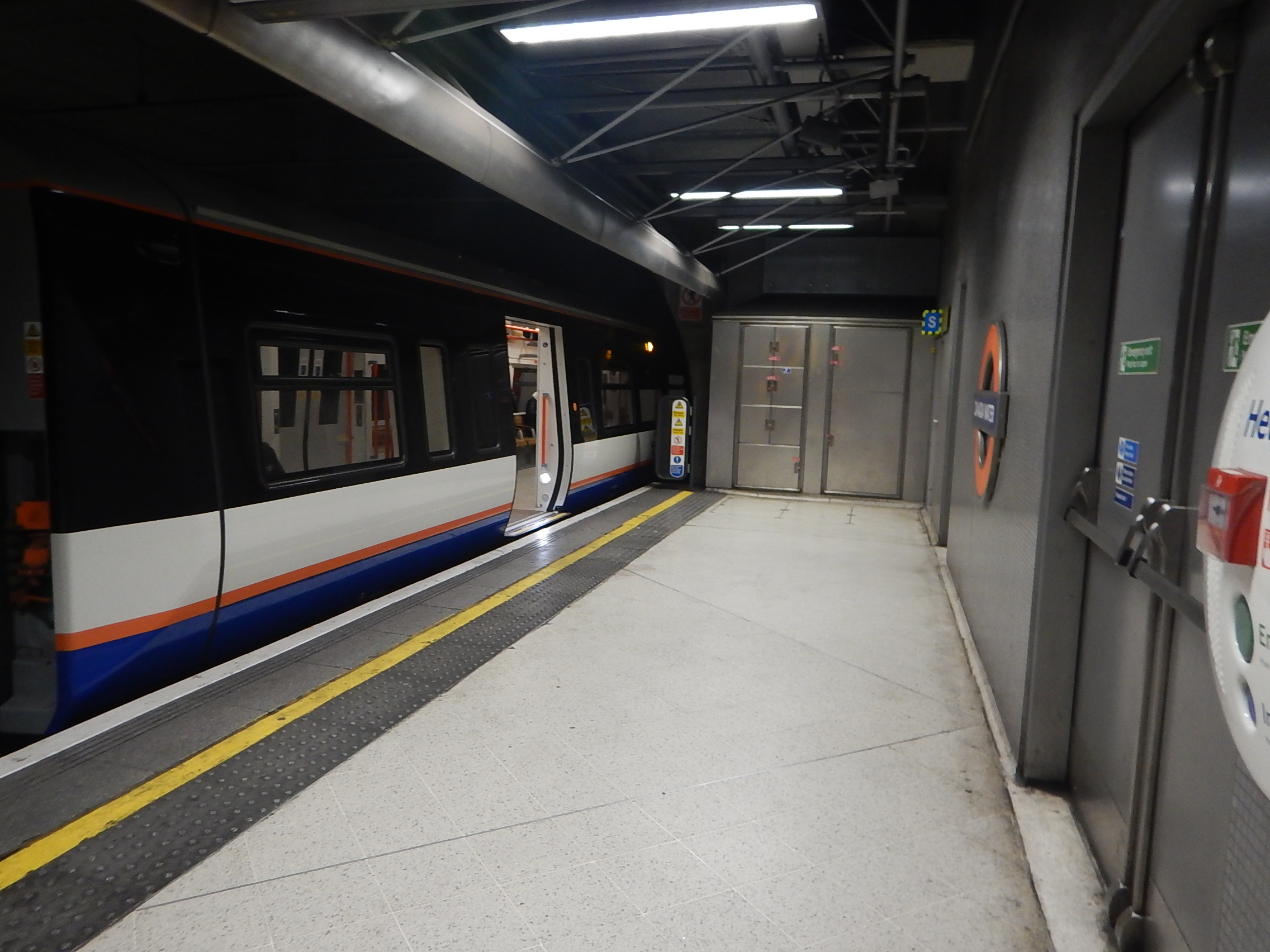
Those travelling in the last car of the train have to walk forward to the front doors of the car to exit. I suspect that with Siemens new trains, this will be the case on the Piccadilly Line.
The big advantage is that it avoids lengthening the platforms, which would be extremely tricky and very expensive.
So will the new Siemens trains be made longer, by allowing overhang into the tunnel at the rear and messaging to inform passengers?
I think they might!
Wikipedia gives the length of the new Siemens 2024 Stock as 113.7 metres, which compares with the 106.8 metres of the current 1973 Stock.
So the new trains are 6.9 metres longer.
Does that mean that if the front of the train is at the same position it is now, the rear end of the train will be overhanging the platform, by almost seven metres?
Judging by what happens on the East London Line, I think it would be feasible. It could even be a few metres longer, in which case the first set of double-doors would be outside the platform and wouldn’t open.
Seats Per Car
I believe this Siemens’ picture shows the view of one of the end cars looking towards the driver’s cab.

Note.
- The red and green labels on the door to the driver’s compartment at the far end.
- The two pairs of passenger doors and the lobbies with the black floors.
- The six banks of seats, each of which have six individual seats.
This means that the driver cars each have thirty-six seats.
According to Wikipedia, each new Siemens train has nine cars and a total of 268 seats.
So that means that the middle seven cars have a total of 196 seats or twenty-eight in each car. What convenient numbers!
Could that mean that the seven intermediate cars have four banks of seven seats arranged around a lobby with a pair of double-doors on both sides?
Could the intermediate cars have just one set of wide doors? I shall be taking a tape measure and my camera to a Class 710 train, to see what Bombardier have done.
So a new Siemens train might look something like this.
- Car 1 – driver cab – six seats – double-door/lobby – six seats – double-door/lobby – six seats
- Car 2 – seven seats – double-door/lobby – seven seats
- Car 3 – seven seats – double-door/lobby – seven seats
- Car 4 – seven seats – double-door/lobby – seven seats
- Car 5 – seven seats – double-door/lobby – seven seats
- Car 6 – seven seats – double-door/lobby – seven seats
- Car 7 – seven seats – double-door/lobby – seven seats
- Car 8 – seven seats – double-door/lobby – seven seats
- Car 9 – six seats – double-door/lobby – six seats – double-door/lobby – six seats- driver cab
Note.
- There will be a maximum of fourteen seats between any two entrance and exit lobbies.
- The train will have eleven sets of doors on either side.
- Trains of different lengths can be made for the Waterloo and City Line, where trains are shorter, and the Jubilee, where trains are longer, by just removing or adding intermediate cars.
For the Piccadilly Line, so long as the distance between the front of the train and the first set of doors is greater than 6.9 metres, these trains can be run using the overhanging into the tunnel method used on the East London Line of the London Overground.
Observations From The Underground And Overground
I went for a look and can say this.
- The seats on Overground Class 710 trains and Underground S Stock trains have a width of 0.5 metres. So is this a Transport for London standard?
- Double doors on both trains are around 1.5 metres wide.
On Class 710 trains, some cars have a run of fourteen seats. Is it a design clue for Transport for London train interiors?

There must be some proof somewhere that fourteen 0.5 metre seats and two 1.5 metre lobbies can handle large numbers of passengers.
The new Siemens trains will have an articulated join in the middle.
Could The Trains Be Lengthened?
The only things we know about the lengths of the cars of the new Siemens trains are.
- The average length of cars is 12.6 metres.
- The two driving cars are probably identical.
- The seven intermediate cars are probably identical.
- The distance between the end of the train and the first set of doors must be long enough to allow the first set of doors to open on the platform, with nearly seven metres of the train in the tunnel.
If we assume that the length of the intermediate car is X metres and it has two banks of seats and one lobby, then the driving car with three banks of seats, two lobbies and a driving cab could be almost twice as long.
I can do a little calculation.
How long would the driver cars be for various lengths of intermediate car?
As the driver car is effectively an intermediate car with an extra pair of doors/lobbie and an overhang containing another set of sets and the driving cab, I can also estimate the between the end of the train and the first set of doors, by subtracting the intermediate car length and two metres for the lobby from the driver car length
- 9 metres – 25.35 metres – 14.35 metres
- 9.5 metres – 23.6 metres – 12.1 metres
- 10 metres – 21.85 metres – 9.85 metres
- 10.5 metres – 20.1 metres – 7.6 metres
- 11 metres – 18.35 metres – 5.35 metres
- 12 metres – 14.85 metres – 0.85 metres
Note.
- The three figures are intermediate car length, driver car length and an estimate of the distance between the end of the train and the first set of doors.
- I shall improve this table, when I get the measurements from a Class 710 train.
- As there is a need for at least an overhang into the tunnel of at least 6.9 metres, it looks like intermediate cars can’t be longer than 10.5 metres.
Suppose that the intermediate car length is 10.5 metres.
Adding an extra car would mean that the new train length would be 124.2 metres, which would be 17.4 metres longer than the current Piccadilly Line 1973 Stock train.
This would be an overhang of 8.7 metres at both ends of the train, which would probably mean that the train wouldn’t fit the route, as the overhang is not long enough to accommodate it.
But with a length of ten metres, the overhang would be only 8.45 metres, which would appear to be feasible.
I wonder, if it would be possible with appropropriate modifications to the tunnel mouths and by using in-cab signalling to run ten car trains, if the intermediate cars were limited to ten metres.
- It looks to be possible mathematically.
- There would need to be no modifications to the platforms.
- There would be a ten percent increase in capacity.
It will hopefully come clear, when Siemens release the length of the driver and intermediate cars.
I believe that it is possible, that Siemens have designed these trains, so they can be extended without having to lengthen the platforms.
Should The Drain Get The First New Tubes For London?
Introducing new trains onto a rail route can be a difficult process, where all sorts of problems occur.
Testing And Introducing Class 710 Trains
Currently, London Overground are introducing Class 710 trains on the Gospel Oak to Barking Line.
As the trains are about eighteen months late, I think that there must have been problems.
I’ve never tested a train, but the modern train must require lots of systems to be tested and Aventras and other recent trains could best be described as computers-on-wheels.
So I must admit, I was a bit surprised, when I heard that first route to receive the new Class 710 trains was the Gospel Oak to Barking Line.
- The line had only been recently electrified.
- Both diesel and electric freight trains use the route.
- Eight trains are needed to run a complete service.
As this will be the first time the trains are used, there would appear to be a lot of things that could go wrong.
The simplest route, where the new Class 710 trains are to be used is the Romford-Upminster Line.
- It is 5.4 km long.
- It is single-track
- It has a 30 mph speed limit.
- There is only three stations, each of which are a single platform.
- The journey takes nine minutes.
- The service operates every thirty minutes.
- There is only one signal.
- Only one train is needed for the service.
It must be one of the simplest electrified railways in the world.
My instincts would have been to put a single train on this line and constantly shuttle it backwards and forwards.
This was exactly how Bombardier tested the Class 379 BEMU train on the Mayflower Line.
- Only the train is being tested.
- Passenger systems can be tested.
- Drivers can be trained.
- Passengers can be asked their opinions.
If the train fails, there is a regular bus service between the two stations and service engineers are not far away at Ilford Depot.
There must be good reasons, why this approach hasn’t been used.
Perhaps, it’s just that London Overground are not going to use a Class 710 train on this route. There have been rumours of this, that I talked about in A Heritage Class 315 Train For The Romford-Upminster Line.
The New Tubes For London
London Underground are buying New Tubes For London from Siemens for four lines.
- Piccadilly – 100 trains
- Bakerloo – 40 trains
- Central – 100 trains
- Waterloo & City – 10 trains
First trains are to run on the Piccadilly Line in 2023.
I think that it will not be a simple case of replacing one fleet of old trains, with another fleet of new trains, as has been done in the past.
It was managed successfully in recent times on the Victoria Line, when 2009 Stock trains replaced 1967 Stock trains.
But Siemens design is more radical and may need track and platform work to be performed before the trains can be run.
My research in The Train-Platform Interface In London, showed that the interface seemed fairly consistent on the Piccadilly Line, so it may be easy to design trains to run the line efficiently with step-free access between train and platform.
But what about the section of the line, where the trains share track with the S8 Stock trains of the Metropolitan Line.
If the Piccadilly Line has to be closed to make it fit for the New Tubes for London, then it will be a major undertaking, even if it is done in sections.
It would be a high-risk undertaking.
A Test Line For New Tubes for London
I believe there would be advantages in creating a test line for the following purposes.
- Test the engineering for track and platforms.
- Test the train performance and reliability.
- Test the Automated Train Control
- Test the passenger systems.
One of the suburban sections could be used, but there could be problems.
The Waterloo & City Line As A Test Track
On the other hand the Waterloo & City Line could be an ideal test track.
- It has only two stations.
- It is step-free
- It is only 2.4 km. long.
- Journeys take four minutes.
- It is integrated with a depot.
The only problem is that trains have to be moved in and out by the use of a crane.
Using the Waterloo & City Line as a test track does have other advantages.
Alternative Routes During Closure
If the line had to be closed for any period of time for track or platform work, then in 2023, there will be some excellent alternative routes.
- Northern Line to Tottenham Court Road and then the Central Line to Bank.
- Northern Line to Tottenham Court Road and then Crossrail to Moorgate.
- Bakerloo Line to Embankment and then the Circle/District Lines to Monument.
- Jubilee Line to London Bridge and then the Northern Line to Bank.
- Southeastern From Waterloo East to London Bridge and then bus or walk.
There is also the direct 76 bus and possibly others.
It should be noted that from late 2021, the Northern Line platforms at Bank station will be much improved.
So, if the Waterloo & City Line was used to test the trains, this in itself would not present any problems during closure or unreliable service.
Improved Capacity For The Line
According to an article in the November 2017 Edition of Modern Railways, which is entitled Deep Tube Upgrade, new trains for the Waterloo & City Line will give a capacity increase of twenty-five percent.
This is much-needed.
Automatic Train Control Testing
Testing of any automatic control system must be very rigorous and the short double-track route of the Waterloo & City Line would be ideal for testing automatic control of the new trains.
Trains could test twenty-four hours per day and every day of the year and not annoy anybody.
Driver Training
It could a valuable resource in training new drivers and converting others to the new trains.
Ongoing Train Development
It is London Underground’s and Seimen’s objective to have the same trains on as many lines of the London Underground as possible.
Siemens might get it right first time, but each line has its own quirks and design features and having a short line in London, where the next version of the trains could be tested by the public could be an advantage.
Conclusion
I believe that introducing the New Tubes for London on the Waterloo & City Line before the other lines could give advantages in the testing and designing of the trains and for the passengers of this short route.
What Will Be The Operating Speed Of The New Tube for London?
Transport for London have said that the New Tube for London will definitely be deployed on the Piccadilly, Central and Bakerloo Lines.
These three lines have sections at one or both ends, where the lines run through the countryside and the stations are farther apart.
Only the 1992 Stock of the Central Line have their operating speed given in Wikipedia.. It is 62 mph, which is the same as the S Stock for the sub-surface lines.
The 2009 Stock of the Victoria Line, despite being similar to the S Stock have an operating speed of only 50 mph.
Because of the nature of the ends of the Piccadilly, Central and Bakerloo Lines, will 62 mph be the optimum operating speed for these trains.
I’ll look at the factors on these lines separately.
Piccadilly Line
The Piccadilly Line will be self-contained, after the sorting of the shared sections West Rayners Lane and between Ealing Broadway and Acton Town, that I discussed in Thoughts On The Power System For The New Tube for London.
I suspect the operating speed of the New Tubes for London on the Piccadilly Line, will be decided on what is best for that line.
Central Line
The Central Line is also self-contained and the best operating speed for the line will be chosen.
Bakerloo Line
The Bakerloo Line could be a problem, as currently Class 378 trains run on the same trcks. These have an operating speed of 75 mph.
These Class 378 trains will be replaced by Class 710 trains, which could have a faster performance.
Surely for optimum running, the trains should need similar performance.
The Benefit Of Automatic Train Control
On all the lines on which New Tubes for London will operate, there will be Automatic Train Control.
The operating speed will be set by the control system, whereas the maximum operating speed will be set by the trains design.
So I think we could see a maximum operating speed of 75 mph or even higher for the New Tube for London, so that it could run on faster lines and not slow the other faster trains.
More Speed Means More Powerful Trains And Improved Acceleration And braking
To go faster, you probably need more powerful trains, but the motors required would give better acceleration and braking, that would speed up services, by executing station stops in a shorter time.
Conclusion
I would expect from y Control Engineering training, that the New Tube for London could have a maximum operating speed in-line with the Class 710 train. So around 75-90 mph.
Could we even see an Underground train, that is capable of 100 mph?
It would only rarely, if ever, run at that speed on current plans, but it might enable Underground and National Rail services to share tracks in surprising places.
Will The Extended Bakerloo Line Be Twenty-Seven Trains Per Hour All The Way?
There are two major projects that will be implemented on the Bakerloo Line in the next decade or two.
- The replacement of the current 1972 Stock trains with the New Tubes for London.
- The extension of the line to Lewisham station.
I certainly feel, that the two projects will bring the Bakerloo Line into the twenty-first century
The Planned Train Frequency
Under Current And Future Infrastructure, the Wikipedia entry for the Bakerloo Line says this.
Transport for London proposes to upgrade the line eventually, but not until other deep-level lines have been dealt with. This will include new signalling and new trains, enabling a maximum frequency of 27 trains per hour. TfL currently expects these to be in place by 2033.
Twenty-seven trains per hour (tph) seems very much in line with other deep-level Underground Lines.
- Central Line – 35 tph
- Jubilee Line – 30 tph
- Northern Line – 24 tph for each branch
- Piccadilly Line – 33 tph after upgrade.
- Victoria Line – 36 tph
Perhaps, it is a bit lower, but the engineers usually manage to squeeze more out of a line.
The Bakerloo Line Extension To Lewisham
The planning is underway to extend the Bakerloo Line to Lewisham station.
The Bakerloo Line Extension looks like it will be a four-station extension, with interchanges at Elephant & Castle, New Cross and Lewisham.
This map from Transport for London, shows the extension.
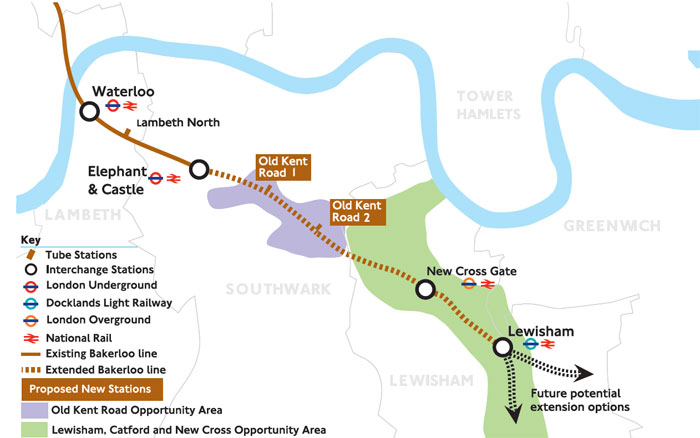
I think it will be highly likely, that the extension will be built using a similar design and techniques to that of the Northern Line Extension to Battersea.
- It will be double-track.
- There are unlikely to be any junctions.
- The Lewisham station will have two platforms with overrun tunnels.
- There appears to be no depot planned.
I have come to some conclusions about the design.
Planned Frequency
If the track layout of the extension and particularly at Lewisham follows the layouts of the Victoria Line termini, I can see no reason, why the proposed frequency of twenty-seven tph can’t be achieved.
I also suspect that provision will be made, so that the frequency can be increased.
A higher frequency would also be expected if the Bakerloo line, were to be further extended to two separate branches, as the map indicates.
Number Of Trains
I suspect that for the extension to work in an optimum manner new trains will be needed.
Project Timescale And Cost
The Northern Line Extension to Battersea appears to be taking about six years from sign-off to completion.
This extension is twice as long and has double the number of stations, but is probably not as grand.
I would put my money on a seven year project and a couple of billion.
As it is unlikely, that the required new trains will not be available until 2033, the project probably has a sign-off date of around 2025.
The project could be pulled forward.
- The trains could be built after those for the Piccadilly Line.
- An early decision could be made.
Saying go in 2022 would enable a finish in 2029.
The Northern Section Between Queens Park And Watford Junction
North of Queens Park station, the line is double-track all the way to Watford Junction station.
Queens Park Station
At Queens Park station itself, it’s a lot more complicated.
This map from carto.metro.free.fr shows the track layout at Queens Park station.
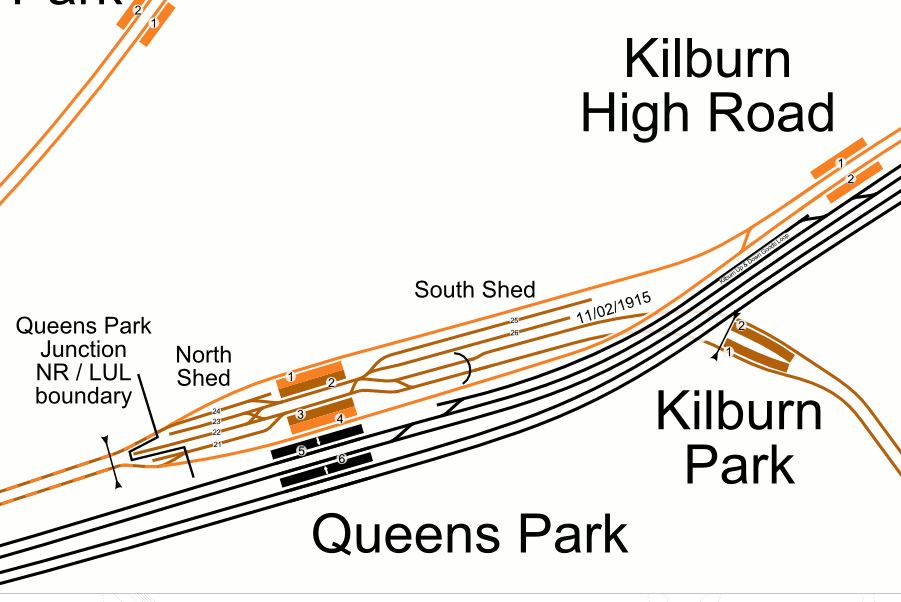
Note.
- The Watford DC Line of the Overground is shown in orange and runs through Kilburn High Road and Queens Park stations.
- The Bakerloo Line is shown in brown and runs through Kilburn Park and Queens Park stations.
- There are reversing sidings to the West of Queens Park station for the Bakerloo Line.
The following services go through or terminate at Queens Park station.
- Three tph between Euston and Watford Junction on the London Overground.
- Six tph between Harrow & Wealdstone and Elephant & Castle on the Bakerloo Line.
- Three tph between Stonebridge Park and Elephant & Castle on the Bakerloo Line.
- Eleven tph between Queens Park and Elephant & Castle on the Bakerloo Line.
It is also likely that the Overground service will go to four tph.
So this means that services will be as follows.
- Four tph on the Watford DC Line run through Kilburn High Road station.
- Twenty tph on the Bakerloo Line run through Kilburn Park station.
- Nine tph on the Bakerloo Line run through Queens Park station.
- Four tph on the Watford DC Line run through Queens Park station.
- Eleven tph on the Bakerloo Line terminate at Queens Park station.
Thirteen tph will continue to various destinations towards Watford Junction.
What Is The Capacity North Of Queens Park Station?
So how many trains could the double-track line between Queens Park and Wartford Junction stations handle?
Consider.
- All services on the line are london Overground or London Underground.
- There are no junctions, where services divide and join.
- There is a turnback facility at Harrow & Wealdstone station, that can handle six tph.
- The Overground trains are being replaced with Class 710 trains, which must be able to be made compatible with digital signalling.
- Watford Junction station has four platforms connected to the Watford DC Line.
- Good design should be able to make the stations step-free for both Class 710 trains and New Tube for London.
- The Watford DC Line service, always seems to terminate in platform 9 at Euston.
- London Underground have run thirty-six tph on the Victoria Line for about a year now.
I suspect that if the trains are digitally signalled, with a degree of Automatic Train Control, that there could be as many as thirty-six tph between Queens Park and Watford Junction stations.
I also think it is significant that the New Tube for London, specifies that the Bakerloo Line will run at twenty-seven tph. Why not more, if the theoretical capacity North of Queens Park is thirty-six tph?
But a single platform at Euston can probably handle six tph, so add 27 and 6 and you get thirty-three tph, which is the proposed core frequency of the Piccadilly Line.
Will The Bakerloo Line Run All The Way To Watford Junction?
Suppose too, that all Bakerloo services ran all the way to Watford Junction, as has been proposed in the past.
- This would simplify operation and especially at Queens Park, Stonebridge Park and Harrow & Wealdstone stations.
- Digital signalling would easily handle the frequency.
- The platform arrangement at Queens Park would be unchanged, with Euston services on the outside and Bakerloo services in the middle.
Watford Junction would have superb thirty-three tph service to two destinations in London.
Will The New Tube for London Run The Euston Service?
I will speculate, that the Watford DC Line service could be run by New Tubes for London..
- One type of train would be easier to handle for staff and passengers.
- All platform heights could be the same.
- All services would be step-free between train and platform.
- Digital signalling could easily handle thirty-three tph along the shared route.
In Thoughts On The Power System For The New Tube for London, I proposed that the New Tube for London could run on a conventional third-rail system.
This would further mean the following for the Bakerloo Line.
- New Tubes for London could use the existing track to access Euston, without serious modification.
- If the Bakerloo Line is extended to Hayes, Beckenham Junction or Bromley North stations, the existing tracks could continue to handle existing third-rail trains to provide other services.
- Only one type of train would be needed to run all services on the Bakerloo Line to its various destinations.
Use of New Tubes for London on all routes may be possible to create a service on the Northern section of the Bakerloo Line with the following characteristics.
- Twenty-seven tph between Watford Junction and Elephant & Castle stations.
- Six tph between Watford Junction and Euston stations.
- All stations would be step-free between platform and train.
- All trains would be identical New Tubes for London.
- All trains would run under Automatic Train Control, as does the Victoria Line.
All passengers on the existing Bakerloo and Watford DC Lines would see a better service.
The Bakerloo Line Extension to Lewisham
Note, that I have said nothing about the Bakerloo Extension to Lewisham.
In my view, that extension does what it says on the tin and creates a new twenty-seven tph service between Elephant & Castle and Lewisham stations, which brings new services to an area of South-East London, where they are much needed.
Effectively, the Bakerloo Line would become two twenty-seven tph lines, that happen to connect back-to-back at Elephant & Castle station to enable cross-London journeys.
Could Bakerloo Line Services Still Be Turned Back At Harrow & Wealdstone?
The following could be argued.
- Watford Junction doesn’t need twenty-seven tph on the Bakerloo Line and six tph to Euston.
- Watford needs a cross-Watford service like the in-limbo Croxley Rail Link.
So could a few trains be turned back using the existing facility at Harrow & Wealdston station to create paths to allow an appropriate service between say Watford Junction and Amersham stations?
More Frequent Services
If we look at the Victoria Line, where the frequency has increased over the last few years by the addition of various improvements, I would not be surprised to see the frequency of twenty-seven tph increased.
After all London Underground’s engineers have been squeezing Dear Old Vicky for half a century, so they must know more tricks, than Paul Daniels knew at the peak of his success.
Conclusion
Undoubtedly, the New Tube for London could run at twenty-seven tph all the way between Watford Junction to Lewisham stations.
Whether that frequency is needed all the way is another matter.
Thoughts On The Power System For The New Tube for London
Obviously, very little has been said about the power system of the New Tube for London.
London Underground Electrification
This description of Lundon Underground electrification comes from Electrification in the Wikipedia entry for London Underground Infrastructure.
The lines are electrified with a four-rail DC system: a conductor rail between the rails is energised at −210 V and a rail outside the running rails at +420 V, giving a potential difference of 630 V. On the sections of line shared with main line trains, such as the District line from East Putney to Wimbledon and Gunnersbury to Richmond, and the Bakerloo line north of Queen’s Park, the centre rail is bonded to the running rails, as the electrical return from National Rail trains is via the wheels. This was first used in the early 20th century, the isolated traction current return allowing a train’s position to be detected using DC track circuits, and reduced any earth leakage currents that could affect service pipes and telephone cables.
This picture shows a typical London Underground track on the Central Line at Bank station.

Note the suicide pit under the rails.
This layout is rather unusual and different to the third rail system used by National Rail services in London and the South East and on Merseyrail.
Battery Power
This article on Rail Engineer is entitled London Underground Deep Tube Upgrade.
This is an extract.
More speculatively, there might be a means to independently power a train to the next station, possibly using the auxiliary battery, in the event of traction power loss.
Batteries in the New Tube for London would have other applications.
- Handling regenerative braking.
- Moving trains in sidings and depots with no electrification.
It should be born in mind, that battery capacity for a given weight of battery will increase before the first New Tube for London runs on the Piccadilly line around 2023.
Conversion To A Conventional Third-Rail System
Given, that space in the deep tunnels is limited, I wonder if removing the third rail in the middle and going to a third-rail 630 V DC system will give more space under the train, that could be used for equipment and a lower floor.
The following lines could eventually be converted to the New Tube for London.
- Bakerloo – Shared running with the Watford DC Line to the North of Queens Park station.
- Central – No shared running
- Jubilee – No shared running
- Northern – No shared running
- Piccadilly – Shared running with the Metropolitan Line to the West of Rayners Lane station and the District Line to the West of Acton Town station.
- Victoria – No shared running
- Waterloo & City – No shared running
So could the shared running be eliminated to make conversion easier.
The Bakerloo Line North of Queens Park Station
The New Tube for London must be able to share the track with the Class 710 trains working the Watford DC Line.
There would be no problem with traction, as both types of trains could use conventional third-rail track.
But there would be a problem with platform height.
Between Rayners Lane and Uxbridge Stations
In Can Between Rayners Lane And Uxbridge Stations Be Step-Free?, I investigated the line between these two stations, including these possibilities.
- Unattended Train Operation (UTO) on the Piccadilly Line, which may mean platform edge doors.
- Terminating The Piccadilly Line At Rayners Lane Station
- Terminating The Metropolitan Line At Rayners Lane Station
- A Piccadilly Line Service Be Run Between Uxbridge and Ealing Broadway Stations
- Extending The Central Line To Uxbridge
I came to this conclusion.
There are a lot of possible improvements that can be done to the train service to Uxbridge.
That is probably a bit of a cop-out, but then there are a lot of possibilities, some of which eliminate the Piccadilly and Metropolitan Lines sharing the track to Uxbridge.
Between Acton Town And Ealing Broadway Stations
This map from carto.metro.free.fr shows the lines Between Acton Town and Ealing Broadway stations.
Note how the Piccadilly and District Lines share tracks from Ealing Common station, which then split with District Line trains going to Ealing Broadway station and Piccadilly Line trains going to Rayners Lane and Uxbridge stations.
Transport for London are suggesting the following.
- Ealing Broadway is served by the Piccadilly Line, rather than the District Line.
- District Line trains would terminate at Richmond and Wimbledon stations instead of Ealing Broadway.
- East of Acton Town, Piccadilly Line trains would call at Turnham Green, Ravenscroft Park and Hammersmith
- District Line trains would call at a relocated Chiswick Park, Turnham Green, Stamford Brook, , Ravenscroft Park and Hammersmith.
- East of Hammersmith, both District and Piccadilly Line routes would be unchanged.
Passengers needing to travel between Ealing Broadway and stations between Victoria and Whitechapel, would change at Turnham Geen, Ravenscroft Park or Hammersmith, by walking across the platform.
If this change is implemented, there will be no shared running between the Piccadilly and District Lines.
National Rail Shares Tracks With The Metropolitan And District Lines
There is some shared running on the Metropolitan and District Lines but that would be unaffected.
Conclusions On Conversion To A Conventional Third-Rail System
It looks to me, that it would be possible to convert the deep-level Underground Lines to conventional third-rail, by eliminating sharing with other lines.
But would such a radical change to the electrification of London’s deep-level Underground lines be feasible and economic?
Conversion From Four Rails To Three
I suspect that when the New Tube for London is introduced on a line, the track will be renewed or at the least given a good refurbishment.
Some years ago, I obtained a database of all the faults on the London Underground for a year. Very few of the faults were down to track faults and the only problems in tunnels seemed to be water ingress.
So I think we can assume, that the track foundations are probably in good condition. If they aren’t I suspect London Underground know all about the problems.
My project management knowledge leads me to believe that a well-planned series of track closures should be possible to convert the track.
Safety
At all stations, the rail in the centre of the track would not be there anymore and the only electrified rail could be placed on the far side from the platform in deep-level stations.
This is another picture from Bank station.
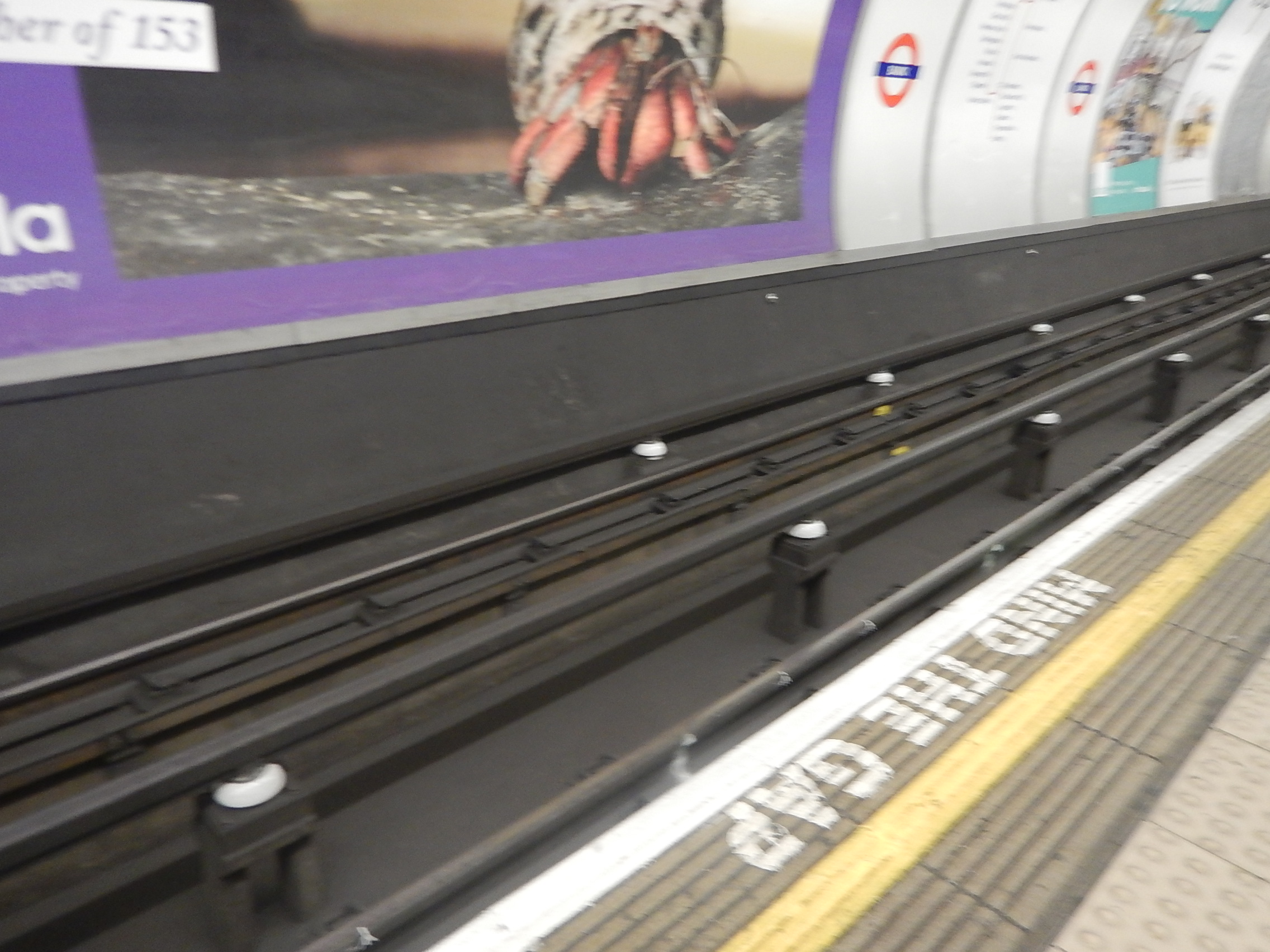
Note.
- The +420 VDC power rail sitting on insulators close to the wall
- The -210 VDC power rail sitting on insulators on posts in the suicide pit.
- How the two running rails neatly fit on ledges on either side of the suicide pit.
Imagine how it would look with the negative power rail removed.
The single rail could also be shielded, by perhaps an insulating board on both sides of the rail.
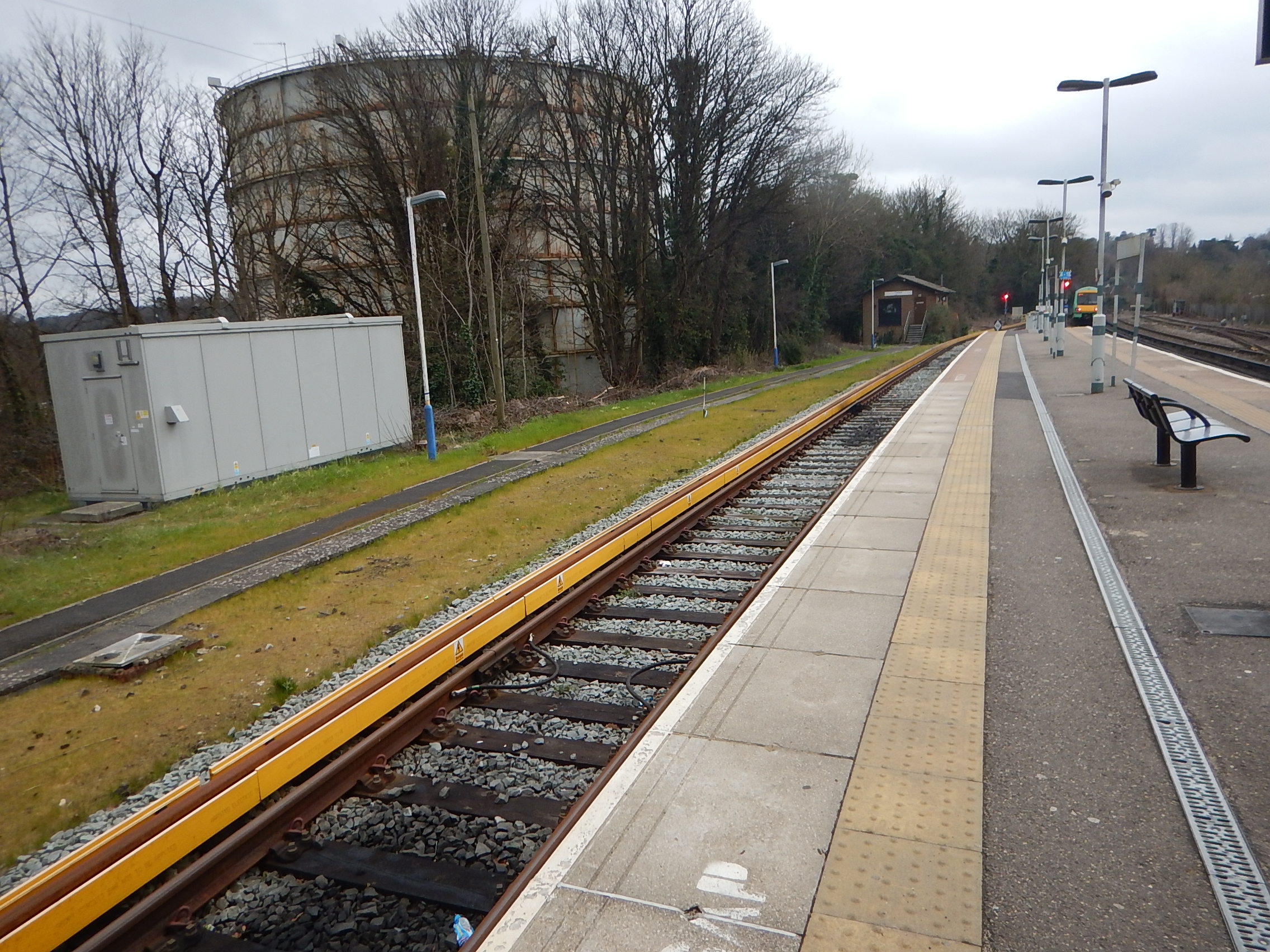
This picture shows an insulated third rail at Oxted station. The yellow insulator is wood, that has been painted.
I would extrude the insulator using recycled plastic. After all polythene’s first major use was as an insulator in radar during World War II.
I believe that a three-rail track could be designed, that would surely be much safer than the current track, should anybody fall or be pushed off the platform.
There is also the possibility of using battery power in some or even all stations. Power would only be supplied to the trains between stations, where batteries would be charged.
The third rail would stop perhaps forty metres at either side of a station and the gaps would be bridged by battery power.
It might be possible to make stations, with no electrified rails visible or accessible.
Eliminating The Gap
I would imagine that the design of the New Tube for London will make sure that the doors are aligned with the platform, as these doors on a Class 378 train are with the platform on the London Overground.
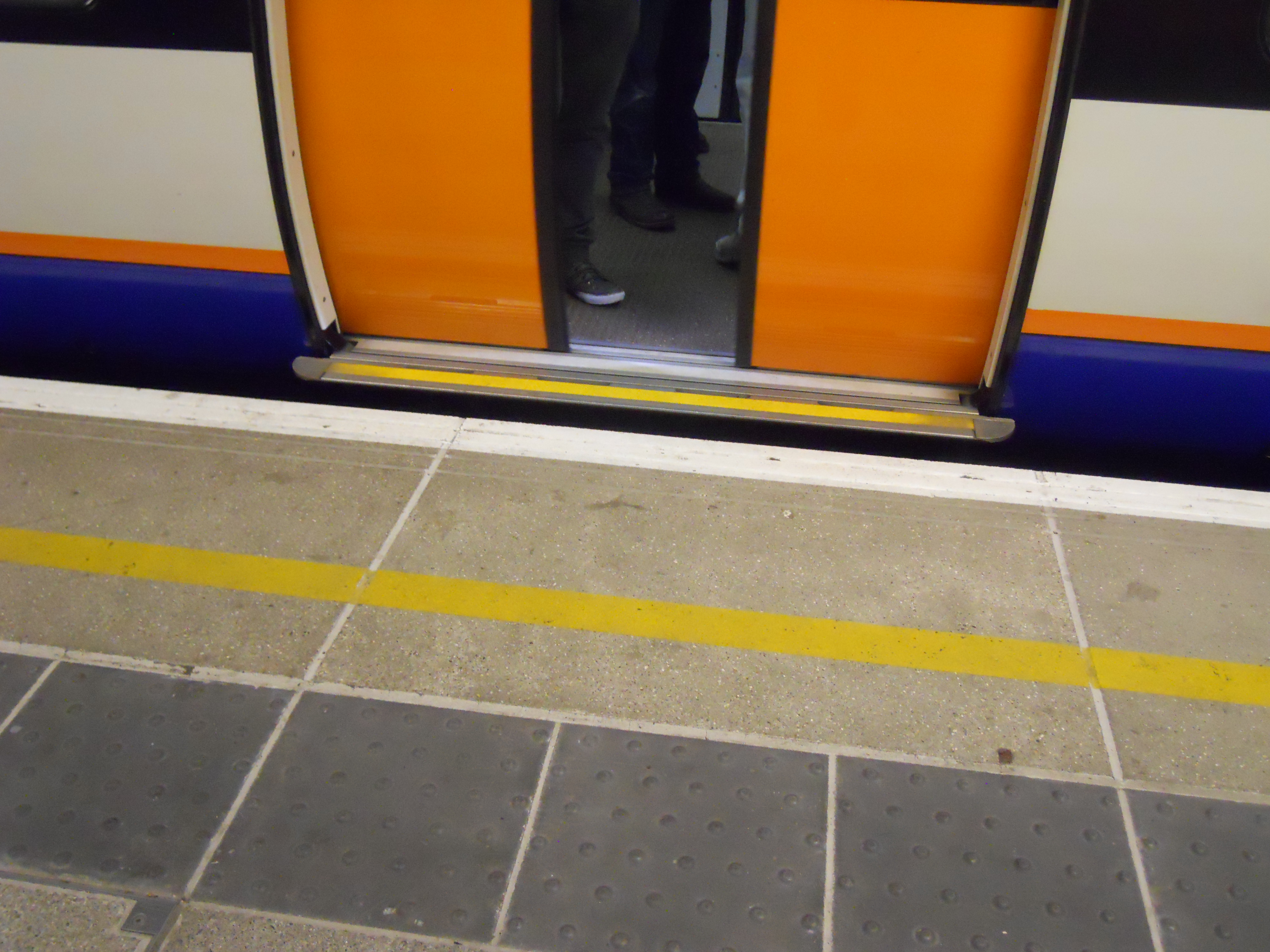
I would imagine, that by making certain that the running rails are correctly adjusted, then step-free access between train and platform can be achieved.
I’ve certainly seen passengers in wheel-chairs push themselves in and out of trains at Dalston Junction station.
Electrolytic Corrosion
Mark said this in a comment.
There is a very important reason why the tube uses two power rails. It was quickly discovered that using a ground return on a DC circuit lead to the return current actually coming back via te cast iron tunnel lining rings and electrolysis and electrolytic corrosion of the lining.
Transport for London’s engineers would be very aware of any problems, and I suspect that they have a viable solution.
This article on Rail Engineer is entitled New London Underground Slab Track Cast In-Situ.
It describes how they are using slab track cast in the tunnel to fit problems in short tunnels. They also expect the solution to last a hundred years.
Such a solution would surely work in the cast-iron deep-level tunnels to allow new track to be installed in whatever format was desired.
There Is One Major Problem
The New Tube for London won’t be able to run on the existing track and the current 1973 Stock won’t be able to run on the future track.
So London Underground sensible policy of phasing in the new trains alongside the old ones, as was done on the Victoria Line would not be possible.
The first line to be equipped with New Tube for London trains will be the Piccadilly Line, which has the following characteristics.
- There are two depots; Cockfosters and Northfields, which are conveniently at each end of the line.
- There are sidings at Arnos Grove, South Harrow and Uxbridge.
- Trains can be turned back to the West at Acton Town, Arnos Grove and Wood Green
- Trains can be turned back to the North at Acton Town, Barons Court, Green Park and Rayner’s Lane.
- There are crossovers at Hatton Cross, Hounslow Central and Kings Cross St. Pancras.
There are many more sidings, turnbacks and crossovers than most other lines.
These may enable a phased conversion of the line to the new track design, signalling and trains.
Conclusion
I believe it is feasible to convert London’s deep-level Underground lines to a conventional third-rail system, as used in the rest of London, the South East and Merseyrail.
This would give these advantages.
Running On Coventional Third-Rail Tracks
New Tube for London trains could run on the following lines and share with trains like Aventras, Desiro Cities, Electrostars and Networkers equipped for third-rail operation.
Routes where this might be useful include.
- Extending the Bakerloo Line along the Watford DC Line, to the North of Queens Park station.
- Extending the Bakerloo Line Extension to the South of Lewisham station to Beckenham Junction, Bromley North and Hayes stations.
Route 2 would release paths into an overcrowded London Bridge station.
Look at this map from carto.metro.free.fr, which shows the new terminus of the Northern Line at Battersea Power Station station.
The under-construction Northern Line Extension is shown dotted.
Could Northern Line services come to the surface, join the surface lines and run to Clapham Junction station and possibly beyond?
Creating More Space And A Level Floor In The New Trains
Removing the centre rail will give more space in the limited tunnels of the deep-level Underground lines and must make it easier to squeeze in all the equipment that has been specified for the new trains.
Increasing Safety
It is my view, that the suicide pit under the train will be wider and will not be guarded by an electric rail.
The main power supply will be right out of the way in stations and could even be eliminated from stations by the use of batteries.
 The Anonymous Widower
