Glencore & Strategic Partner Britishvolt Strengthen Relationship And Agree To Build Battery Recycling Ecosystem In The UK
The title of this post is the same as that of this press release from Glencore.
These are the first two paragraphs.
Glencore is proud to have entered an industry-leading battery recycling joint venture with strategic partner and battery pioneer Britishvolt, the UK’s foremost investor in battery cell technologies and R&D.
The joint venture will develop a world-leading ecosystem for battery recycling in the UK. This ecosystem will be anchored at a new recycling plant located at the Britannia Refined Metals operation (BRM-located in Northfleet), a Glencore company. BRM will continue with its current production and trading operations.
These appear to be some of Glencore’s objectives for the project.
- They intend to recycle a minimum of 10,000 tonnes of lithium-ion batteries per year, including but not limited to valuable battery manufacturing scrap, portable electronics batteries and full EV packs.
- They intend to recycle Britishvolt’s scrap.
- They intend to be up and running by mid-2023.
- They intend to be 100 % powered by renewable energy in the longer term.
It all seems admirable.
These are my thoughts.
Britannia Refined Metals
This Google Map shows the Britannia Refined Metals site at Northfleet.
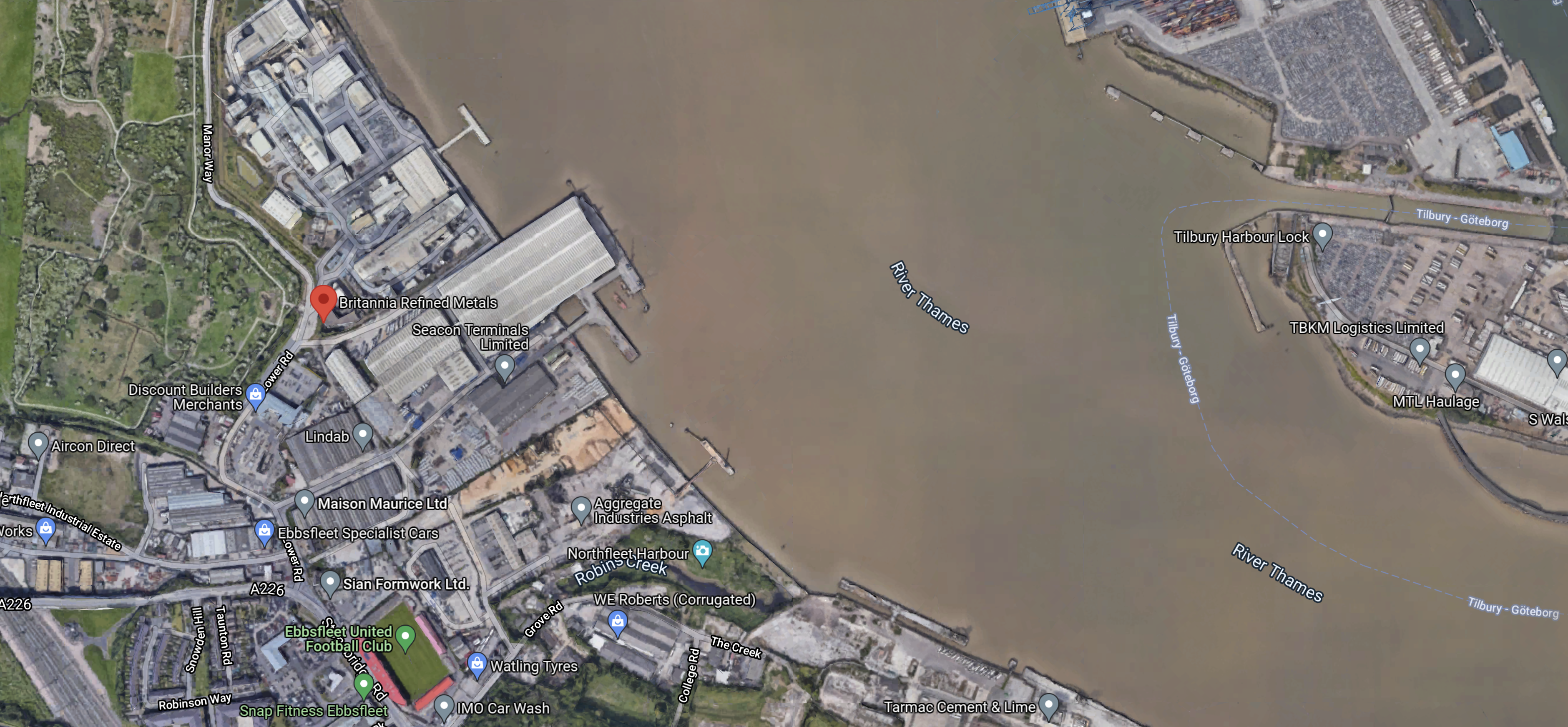
Note.
- Britannia Refined Metals is indicated by the red arrow.
- The Port of Tilbury is on the other side of the Thames.
This second Google Map shows the site in more detail.
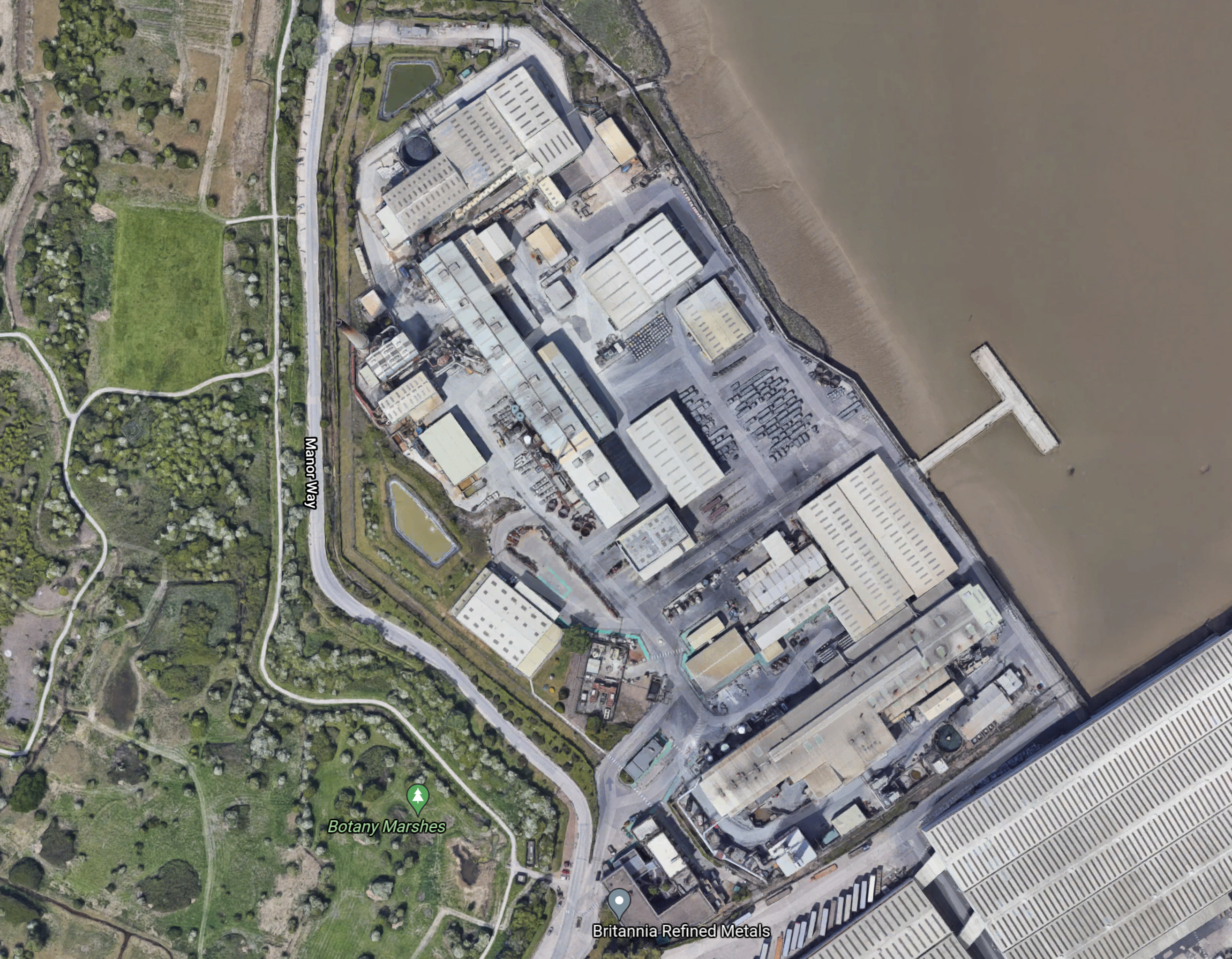
Note.
- It is not a very large site.
- There doesn’t appear to be much space for expansion.
- They appear to have a wharf on the river.
I’ve found this company video from the 1980s on the Internet.
They do seem to have developed a sophisticated process for recycling lead-acid batteries.
Renewable Energy
There are these offshore wind farms in the Thames Estuary.
- Gunfleet Sands – 172 MW
- Kentish Flats – 140 MW
- London Array – 630 MW
- Thanet – 300 MW
Two of these could be extended.
I am sure that there could be more space in the Thames Estuary for more wind power.
Recycling Batteries
I have found this article on the BBC, which is entitled As The World looks To Electrify Vehicles And Store Renewable Power, One Giant Challenge Looms: What Will Happen To All The Old Lithium Batteries?.
This is the third paragraph.
While this may sound like the ideal path to sustainable power and road travel, there’s one big problem. Currently, lithium (Li) ion batteries are those typically used in EVs and the megabatteries used to store energy from renewables, and Li batteries are hard to recycle.
The article talks about possible solutions.
- Don’t treat the batteries as disposable.
- Increasing the number of batteries recycled from the measly five percent.
- Automate the recycling process, which currently is labour intensive.
- Give the cathode, anode and other parts a second life in new batteries, by refurbishment.
- Batteries that degrade on command.
But the idea, I like is described in this paragraph from the article.
The next step for scientists pushing direct recycling of Li batteries forward is working with battery manufacturers and recycling plants to streamline the process from build to breakdown.
In context with the tie-up between Glencore and Britishvolt, you can imagine engineers from both companies, getting together to improve the design of the battery, so that manufacturing and recycling of batteries are two mutually efficient and complimentary processes.
I can also see some very sophisticated logistics systems being developed to return batteries to an approved recycler, who may be in another country.
But then we are dealing with something that could have a substantial value.
Deals Between Battery Manufacturers And Recyclers
I can see more deals like this between battery manufacturers and recyclers.
- It could reduce the cost of batteries.
- It could impress governments seeking to reduce the about of batteries going into landfill.
- It would reduce the amount of new metals to be mined.
It may even help, in the protection of intellectual property rights, that are concerned with battery manufacture and recycling.
A Second Similar Glencore Deal
There is also a second deal about battery recycling mentioned in a press release on the Glencore web site, which is entitled Glencore & Managem Set Up Partnership For Moroccan Production Of Cobalt From Recycled Battery Materials.
- The press release was issued only a few days before the one announcing the deal with Britishvolt.
- It is for 12,000 tonnes of recycling.
- The press release mentions renewable power.
I do wonder, if Glencore or one of their companies has developed a new process.
 The Anonymous Widower