Is HS2 At Risk Of Derailing?
There is an article in The Telegraph entitled HS2 at risk of derailing at top speeds, report finds.
I have read the article and the report by Professor Woodward at Heriot-Watt University is obviously, based on sound mathematics and enginering principles.
We have a problem with HS2, which is not unlike the problem with the new Hinckley Point nuclear power station.
There is a big need for extra capacity, but it will cost an awful lot of money.
In both projects too, there is a lot of opposition.
Professor Woodward’s research has one serious consequence, even if the high design speed of the line doesn’t make the trains derail.
It is that if you reduce the speed of the line, the economic case for HS2 is shot to pieces.
If you decide that there could be a safety problem with the embankments, you have to strengthen them and that ruins the economic case too.
If we look at Hinckley Point C nuclear power station, not building it, is not as serious as not building HS2.
We have several other ways to generate power and also lots of ways to save it. Also, the widely quoted strike price of £92.50/MWh would make a lot of other much cheaper schemes like tidal power viable.
But this doesn’t solve the problem of creating more capacity on the rail lines between north and south for both passengers and freight.
HS2 doesn’t carry freight, but hopefully, it will free up paths on traditional routes to the north, that could be used by freight trains.
If you think we don’t, travel between Euston and Glasgow on Virgin Trains and look at the passenger loading.
At present, Network Rail are carrying out various schemes to squeeze more capacity out of the current lines and it is hoped that in the short term, this will help.
But in some ways all it will do is create more demand for travel on the routes.
So at some time we’re going to have to build a new line, which will allow faster speeds than the current lines.
If you look at Phase 1 to the West Midlands, this will have the following effects.
- Extra capacity between London and the West Midlands.
- Journey times of around fifty minutes.
- Making Birmingham Airport, a viable one for those living in North London.
- Paths released for freight on the West Coast Main Line.
- Reorganisation of traditional services on the West Coast Main Line to serve more places.
In Phase 1, there would probably be no more than half-a-dozen trains in both directions on the southern section of HS2, south of Birmingham International station.
On the other hand, when Phase 2 to Manchester and Leeds opens there will be upwards of twenty trains per hour both wayson the same southern section.
I can understand, why those in the Chilterns are getting angry.
So to the protesters, Professor Woodward’s research could be manna from heaven.
For some time, my view has been that we need new tracks between London and the North via Birmingham, as even if all existing lines were upgraded, there wouldn’t be enough capacity.
I think we’re going to need some radical thinking.
For instance, suppose you made Birmingham International a hub, where the lines from the North met a line to London and one into Birmingham city centre.
This might help in the design of HS2 to the north of Birmingham, but that is not the area, where there is major opposition to the line. That is between Birmingham International and London, where land is limited and wherever you build it, you’ll annoy someone.
I suspect, a lot of people working on the project, sometimes feel like going and working elsewhere.
But whatever we do with HS2, we must improve the traditional routes.
- Electrify the Midland Main Line to Derby. Nottingham and Sheffield,
- Electrify the Chiltern Main Line to Birmingham.
- Electrify the routes across the Pennines from Preston and Liverpool to Hull, Leeds and Newcastle via Manchester.
- Sort out the Digswell Visduct on the East Coast Main Line.
- Improve speeds to as high as possible on all routes to the North.
The only trouble, is that the more we improve traditional routes, the more people will travel by train and the need for HS2 will become more urgent.
My Kind Of Energy Company
I found this article on edie.net entitled Ovo Shuns Coal And Nuclear.
I am very much against using coal as a fuel for various reasons, but as I get older and hopefully wiser, I feel that nuclear energy is non-viable economically.
The cost of the new station at Hinkley Point doesn’t look good value for money, when compared to some of the new developments in the pipeline.
Tidal, such as the Swansea Bay Tidal Lagoon, personal solar and linking the UK to Iceland with an undersea cable, might well prove to be better long term investments.
So I applaud OVO for their stance and will continue to use them as my energy supplier.
From Ravenglass To Sellafield
After lunch, I continued up the Cumbrian Coast Line towards Carlisle and these are pictures I took between Ravenglass and Sellafield stations.







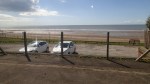


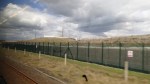
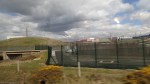
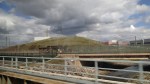

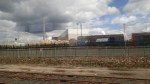

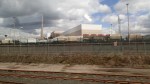
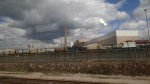


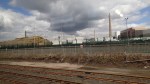

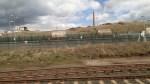

You get good views of the coast and also the Sellafield nuclear facility.
As I get older, I’m getting more and more sceptical the value of nuclear power.
There are so many things that we think are commonplace today, that in fifty years time will be laughed at by our descendants.
Nuclear power could be one of those things that will be no longer used for power generation, except possibly as a last resort.
I’m not worried about safety, but I believe that the expense of generating nuclear power and disposing of the spent fuel, will mean that other simpler and less-worrying for some methods of generating electricity for our needs. I don’t think wind will be promoted as much as it is now, as something better will come along.
We’ll still need plants like Sellafield, as we’ll be keeping some plants running and decommissioning others. This Google Earth image gives an idea of the size of the facility.

Sellafield
I just wonder what Sellafield would be like today, if the River Severn had been barraged around fifty years ago, as was proposed by Sir Frederick Snow.
Should We Nuke Russia?
The title of this post is not a serious question in the way you think it is.
I was thinking about how we control Russia in its expansion into Ukraine and wondered how much gas we buy from the country. Google found me this article on the Forbes web site. It has the title of Nukes Best Option Against Russian Gas. It however did give some interesting facts about Russia and its gas, particularly with respect to the sale of the gas. The article contained the answer that I wanted in this sentence.
Russia gets about €300 billion a year (US$417 billion/yr) from fuel exports to Europe, almost 20% of its GDP
So it looks like that by its policies and purchases, the EU is strongly supporting Russia. The article also contained these paragraphs.
It is unfortunate that Germany closed down almost half of their nuclear plants in the wake of Fukushima, 8 out of 17. Nukes really come in handy during this kind of energy conflict. It would behoove Germany to rethink that decision and to postpone their plans to shut down the remaining nuclear plants over the next ten years, to give them more leverage to address the Russian aggression as they continue transitioning to alternatives.
Until recently, Germany’s 17 nuclear plants produced power exceeding the energy produced by all of the Russian gas entering Germany. With eight shut down, the amount of nuclear energy produced still offsets much of that produced by Russian gas. If Germany insists on prematurely shutting the rest of its nuclear fleet, then the amount of gas needing to be imported into the country will double, even with projected increases in renewables.
This explains the title of the article.
The writer has a point. Whether we like it or not, Europe and especially Germany is playing the Russian’s game, by buying more gas and giving Putin the funds to be aggressive.
The sooner we stop buying gas from Russia the better. We need to start fracking and build more nuclear power stations.
Is Now The Time To Visit Chernobyl?
Chernobyl isn’t that dangerous a place to visit, unless you go very close. Especially, if you go on a properly organised tour.
Today, the BBC web site has a report on the construction of the steel umbrella to go over the reactor.
I’ve looked up tours to Chernobyl and it would appear they run daily from Kiev according to this web page.
So an ideal itinerary would be to fly to Odessa to see the Potemkin Steps and the Black Sea coast.
Then it would be a train to Kiev and after Kiev and Chernobyl, it would be a series of trains home, by way of Warsaw and Berlin.
If anybody fancies the trip, just put a comment here.
Only those with a serious love of travel, trains and engineering need apply. Being slightly off your trolley might be a good idea too!
A Tidy Site Is A Safer Site
I saw this notice on the fences round a Crossrail site near Liverpool Street station.
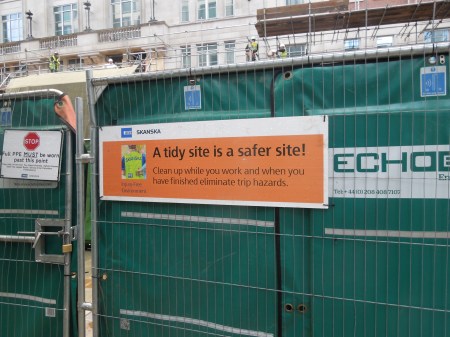
A Tidy Site Is A Safer Site
Agreed. The most untidy site I have been over was a nuclear power station in the United States. It was an accident waiting to happen. But one didn’t, although the station is now closed.
The Death Of A Brave Man
This story from the BBC, tells the story of Masao Yoshida and his fight to get the nuclear reactors at Fukushima under control after the tsunami and his recent death from an unrelated cancer.
It is worth reading, as it shows how people will make a sacrifice for the greater good.
And People Worry About HS2 And Other Developments!
I do sometimes worry about the grip some people have on sense. Look at this article, about the damage done by the slag heap from a coal mine to the railways near Doncaster.
We should have got rid of our coal mines just after we found we had North Sea Gas and Oil, and probably developed nuclear power for most of or electricity. Instead we struggled on with the world’s most polluting fuel for many years.
Now the Nimbys don’t want any developments, be they fracking, nuclear power, wind power or even new railways like HS2. I suspect, if you had a vote on new motorways it would pass, provided they didn’t build one near to the voters.
But how many people will call this trouble with the trains near Doncaster, an environmental disaster caused by not getting rid of coal years ago? I will!
Nuclear Dilemmas
The Times today reports that an independent Scotland under the SNP would want no part of the Trident nuclear missiles based at Faslane. So this would mean we’d need to build new facilities in England. The extra cost would mean that those arguing against Trident replacement be helped greatly.
I actually think that we should scrap Trident and if we needed to keep a nuclear deterrent, we should use cruise missiles fired from a vessel like an Astute class submarine.
But the bigger nuclear diemma is over nuclear power. It is being reported that today, David Cameron and Nicholas Sarkozy will sign a wide ranging treaty which among other things enables new nuclear power stations in the UK.
But Francois Hollande has said, that if he wins the French Presidency, he’ll scrap nuclear power in France. Remember that Scotland will need nuclear power, when the wind doesn’t blow.
Let’s have some engineers in politics.
 The Anonymous Widower