Very Light Rail Trial For Heathfield Branch?
The title of this post, is the same as that of an article in the May 2024 Edition of Modern Railways.
This is the first four paragraphs.
Investigations are ongoing as to whether the disused Heathfield branch line in Devon could be used as a test route for the Revolution Very Light Rail (RVLR) vehicle.
Heathfield Rail Link Association (HRLA) says a survey has been completed along the four-mile line from Newton Abbot, which was last used by timber trains in 2017 and hasn’t seen a regular passenger service since 1959.
The work, by Lampitt Rail, has been completed for Eversholt Rail, one of the firms behind RVLR, a hybrid vehicle, which aims to help reduce costs on existing branch lines and those earmarked for reopening.
A spokesman for Eversholt said the line is one of more than 200 potential opportunities for RVLR ahead for 2026, when it’s hoped tests will start on branch lines around the country using three new battery prototypes.
These are my thoughts and observations.
The Heathfield Branch
This OpenRailwayMap shows the Heathfield branch.
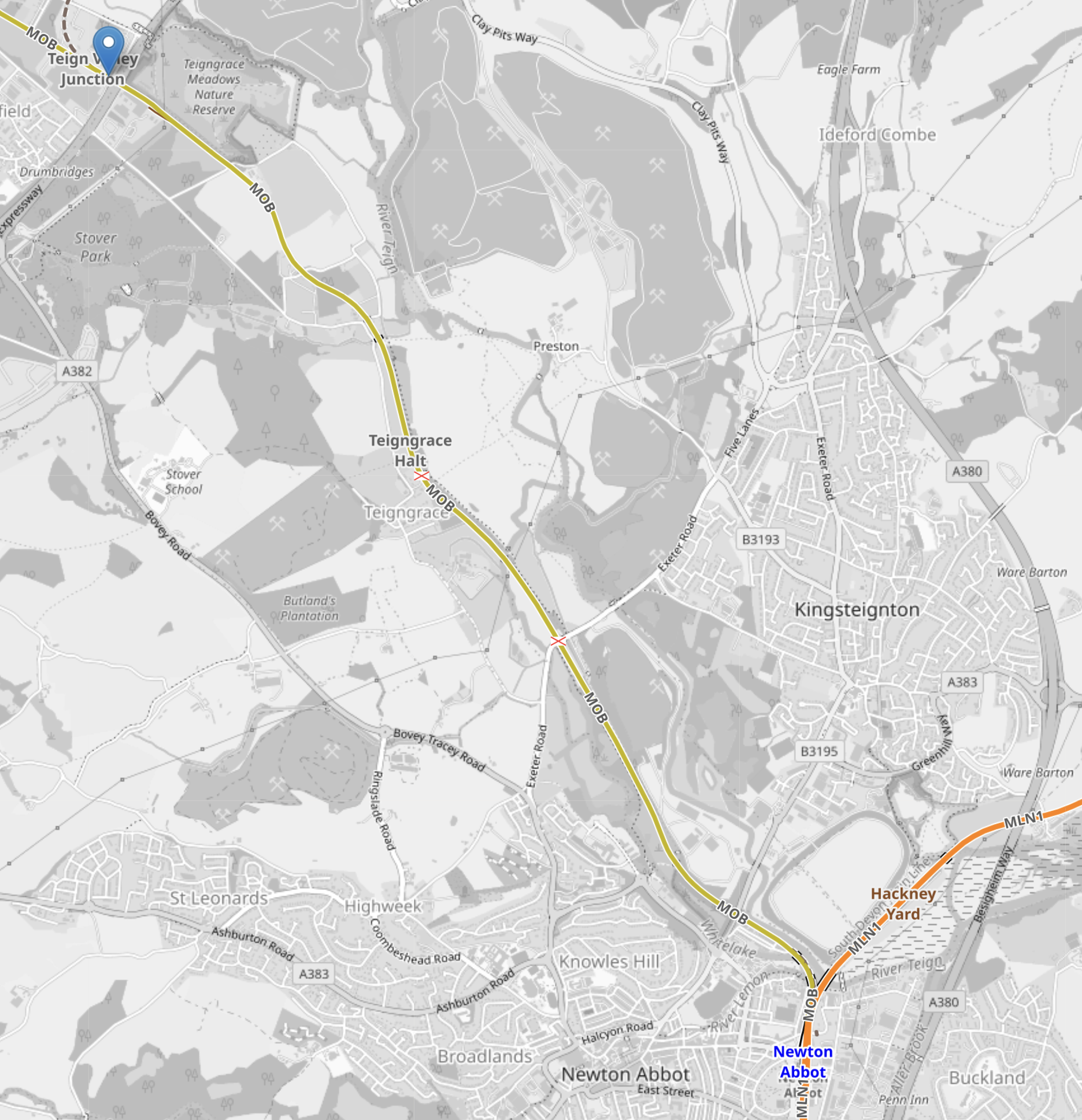
Note.
- The former site of Heathfield station is indicated by the blue arrow.
- The yellow track is the Heathfield branch.
- The orange track is the Cornwall Main Line, that goes through Newton Abbot station to Plymouth and Penzance stations.
This second OpenRailwayMap shows the track layout Newton Abbot station.
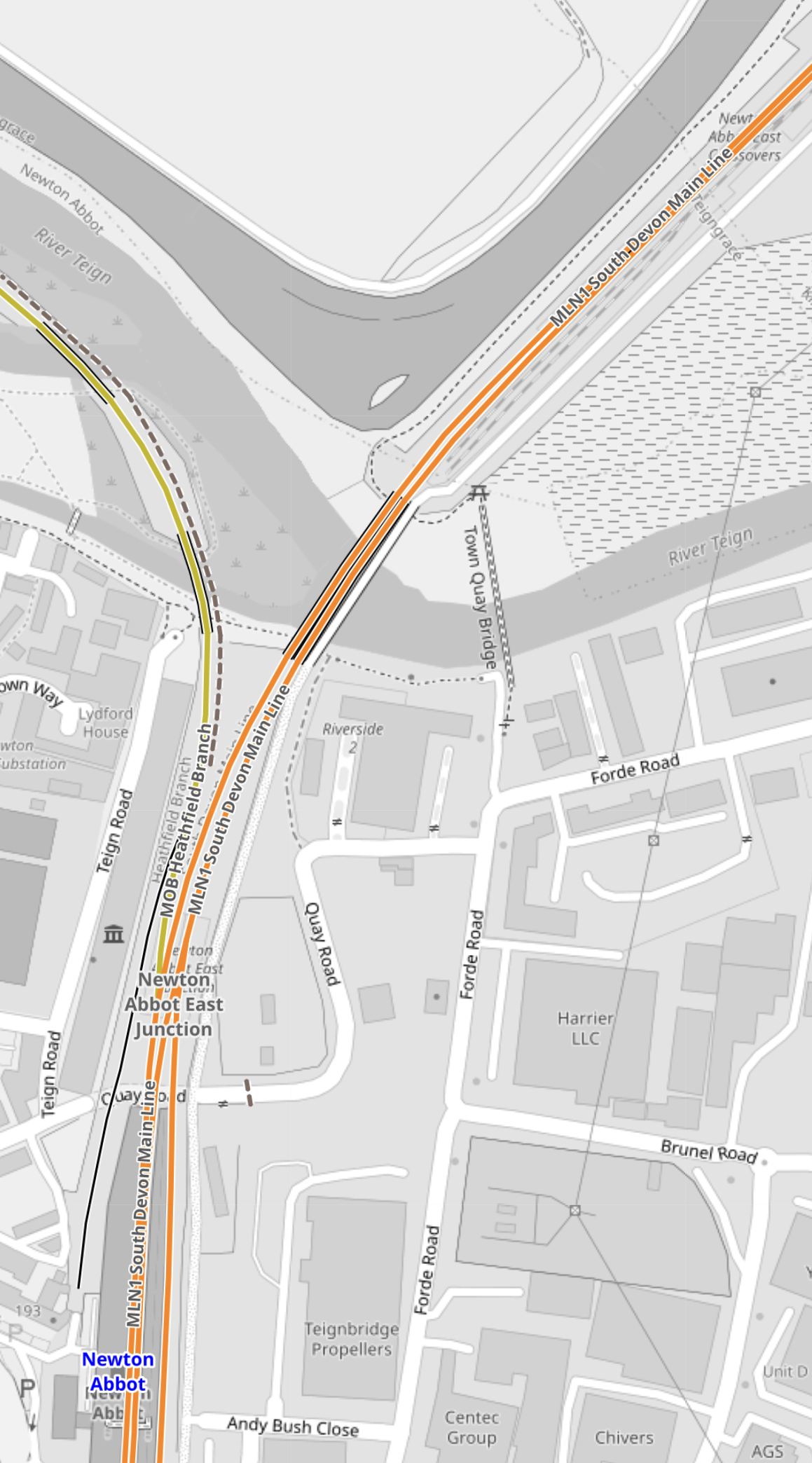
As there are three platforms, I suspect that matters can be arranged to turn an occasional train from the branch.
How Will The Revolution VLR Be Charged?
The Modern Railways article says this about charging.
Eversholt Rail and partner firm Transport Design International have stated they will build three new battery-powered vehicles for the 2026 tests, which will need rapid charging points, made up of two rails in-between the running lines which would contact a shoe hanging from the train. HRLA is working with UK Power Networks to find locations for these chargers, including at Newton Abbot.
It sounds very much like the Vivarail/GWR Fast Charge equipment.
What Will Be The Range Of The Revolution VLR?
The range of the Revolution VLR has not been stated.
But this is stated in the Modern Railways article.
Heathfield Rail Link Association (HRLA) says a survey has been completed along the four-mile line from Newton Abbot.
So will the train be able to do a round trip on one charge or just a single journey?
Or could this route be a strong possibility, as the Revolution VLR has the range to do a round trip on one charge?
Three New Battery-Only Revolution Very Light Rail Vehicles
This title of this post, is the same as that as this press release from Eversholt Rail Group.
These are the three bullet points.
- Eversholt Rail funding three brand-new Revolution Very Light Rail vehicles for passenger trials and ongoing operation.
- Manufactured in the UK by Transport Design International.
- Battery-only propulsion, providing zero-emissions operation.
These three paragraphs fill out the story.
Innovative new lightweight passenger trains that will help decarbonise Britain’s railways are to be trialled after a new deal was announced this week.
The new Revolution Very Light Rail vehicles will run entirely on battery power and could be carrying passengers within three years. A new system of lineside fast charging will mean the whole operation has zero emissions.
Some of Britain’s major rail operators are already showing interest in the RVLR vehicles as they seek to fulfil promises to make rail ‘cleaner’.
This is also said about looking for routes, to trial the new vehicles.
Eversholt Rail and TDI are working with key stakeholders across the UK rail industry to agree routes and services where operators can run passenger-carrying trials using these new vehicles. These trials will generate actual passenger demand data to support business cases for long-term deployment of RVLR vehicles as well as providing further passenger and operator feedback on their design and capabilities.
I have some thoughts and questions.
What Is The Top Speed?
A lot of questions like this are answered by this article on Rail Engineer, which is entitled Very Light Rail – A Revolution.
These can be ascertained from this comprehensive article.
- Top Speed – 65 mph
- Seats – 56
- Wheelchair space
- PRM TSI accessibility compatible
- Tare Weight – 24.8 tonnes
- USB Charging
For comparison these figures relate to a PRM-compliant Class 153 diesel train.
- Top Speed – 75 mph
- Seats – 59
- Tare Weight – 41.2 tonnes
This picture shows one of the Class 153 trains at Matlock Bath station.
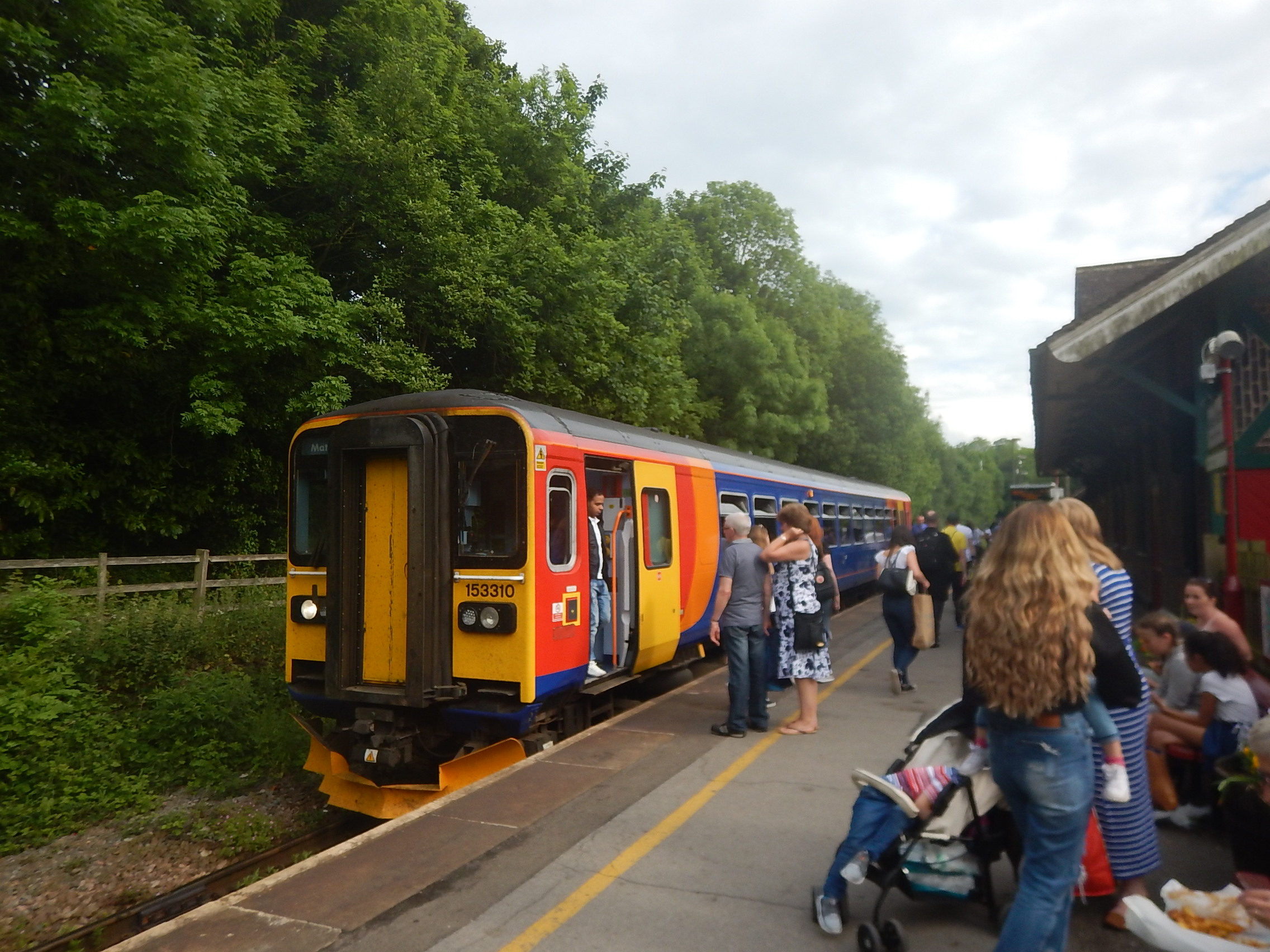
There are still around thirty in service in the UK.
Can Two Revolution VLRs Run As A Two-Car Train?
From the pictures on the web, the trains have buffers and space for a coupler, so until someone says they must always run as single units, I’ll assume they can at least run as a pair.
Can A Revolution VLR Recharge Its Batteries Using Conventional 25 KVAC Overhead Electrification?
One route, that is a possibility for running using Revolution VLR must surely be the Greenford Branch, which connects to the electrified Great Western Main Line at West Ealing station.
In this and at several other places on the network, it could be easier to charge the trains using the existing overhead electrification or an extension of it.
Another possibility; the Marston Vale Line is also electrified at both Bedford and Bletchley.
In New Mobile Rail Charging Facility For Long Marston, I talked about how Siemens are developing a mobile charger, which initially will be deployed at Long Marston.
It could be very useful for efficient operation, if the batteries on a Revolution VLR could be charged in a number of places, which included conventional electrification.
If charging only happened, whilst trains were stationary, a lightweight pantograph and appropriate electrical gubbins might be sufficient.
Can A Revolution VLR Replace A Class 153 Train?
I suspect on some routes this will be possible, but on others, the speed or hill-climbing requirements might be too stiff for the lightweight train.
But, if I was designing a train like the Revolution VLR, I’d make sure it fitted as many markets as possible.
The picture was taken at Matlock Bath station on the Derwent Valley Line, which is a single track with a fifty mph limit and an uphill climb. I suspect that the Revolution VLR would be designed to handle the uphill part of the route, but would the train be able to handle the speed of the Midland Main Line to Derby.
The Revolution VLR would probably attract more passengers, so it might be necessary to double up the service by running a pair.
Can A Pair Of Revolution VLRs Replace A Class 150 Train?
I don’t see why not!
Could The West London Orbital Use Revolution VLRs?
This might be a proposed route that could use Revolution VLRs.
The two routes would be.
- West Hampstead and Hounslow.
- Hendon and Kew Bridge.
Both services would use the Dudding Hill Line and serve Neasden, Harlesden, Old Oak Common and Acton, with a frequency of four trains per hour (tph).
Although this service could be run using conventional multiple units, it might be more affordable to use Revolution VLRs charged on sections of line that are already electrified.
Could the Greenford Branch Use Revolution VLRs?
The Greenford Branch would be a classic application and trains could be charged by fitting a charger in the bay platform at West Ealing station.
In An Automated Shuttle Train On The Greenford Branch Line, I did a rough calculation to see if an automated shuttle could achieve four tph.
Four tph might be too ambitious, but automatic trains shuttling along a branch line might be an affordable way to provide zero-carbon trains with an adequate capacity.
- The driver would drive the train using the sort of remote control used for drones.
- The driver would sit in a convenient place on the train, with CCTV to help them see everything.
- When the train was ready to leave, the driver would push a button to tell the train to move to the next station.
- On arrival at the next station, the doors will open.
- The process would repeat along the line.
If this method of operation sounds vaguely familiar, the Victoria Line has used it since 1067.
Although the Victoria Line drivers always sit in the front.
But on a line with no other trains running at the same time, all they need is a good view of the doors.
Branch lines that could be run in this way could include.
Bodmin Parkway and Bodmin General
Brockenhurst and Lymington Pier
Grove Park and Bromley North
Lancaster and Morecambe
Liskeard and Looe
Lostwithiel and Powey
Maidenhead and Marlow
March and Wisbech
Par and Newquay
Plymouth and Gunnislake
Romford and Upminster
Sittingbourne and Sheerness-on-Sea
Slough and Windsor Central
Southall and Brentford
St. Erth and St. Ives
Truro and Falmouth Docks
Twyford and Henley-on-Thames
Watford Junction and St. Albans Abbey
West Ealing and Greenford
Wickford and Southminster
Wymondham and Dereham
Cambridgeshire Company’s Self-Charging Trains Project Wins Government Funds
The title of this post, is the same as that of this article on the BBC.
These four paragraphs outline what the company is developing and how they received government funding.
Echion Technologies, based in Sawston near Cambridge, is creating train batteries that can charge from overheard wires, the Department for Transport said.
The trains would be able to use the batteries on unelectrified track.
The project was among the winners of the government’s First of a Kind competition.
The competition aims to award funding to projects that could transform the future of transport.
I have a few thoughts.
The Description In The First Of A Kind 2022 Winners Document
In this document, this is said.
Project No: 10039100
Project title: UBER – Ultra-high power Battery for low Emission Rail
Lead organisation: ECHION TECHNOLOGIES LTD
Project grant: £59,917
Public description: Project UBER (Ultra-high power Battery for low Emission Rail), aims to demonstrate for the first time, Echion’s XNO(tm) battery chemistry as the preferred battery technology for certain classes of battery electric trains. It targets Theme 1 of this competition.
Specifically, UBER aims to demonstrate the suitability of XNO(tm) for passenger trains that can be powered by the AC overhead electrification and charge a battery from the overhead wire (or another form of ‘standard’ trackside power — e.g. 3rd rail), to then run in battery-only mode on unelectrified section of a route. An example of such a train is the Revolution Very Light Rail (Revolution VLR) developed by Transport Design International (TDI), who is a partner in UBER.
Applying The Echion Technologies Batteries To Electric Trains
Consider.
- The BBC article is accompanied by a picture of a Class 717 train, which like the Class 700 train is dual voltage.
- Southeastern have thirty similar Class 707 trains, which are third-rail, although according to Wikipedia, were tested as dual-voltage trains.
- Most modern trains, like these Desiro City units made by Siemens, have a mix of motored and trailer cars, with one or more pantograph cars between the two driver cars.
- Because power is needed in all cars, there will be an electrical bus from one end of the train to distribute power.
- All trains in the family appear to have at least one trailer car, which will also be connected to the electrical bus.
With a family of trains like the Desiro City, Alstom’s Aventra, CAF’s Civity, Hitachi’s AT-200 or AT-300 or Stadler’s FLIRTs, train manufacturers assemble various cars, interiors and electrical gubbins together, to get the train performance and capability.
I would expect that the battery would be placed, where there is space and the most likely place is under the trailer car.
In some ways, it would work like the battery in a laptop computer, where operation is as follows.
- If there is external power, the computer runs on that power and the battery is also charged, if it is not fully-charged.
- If there is no external power, the computer runs on battery power, until the battery goes flat.
With a battery-electric train, operation is similar, with an important addition.
- If there is external power, the train runs on that power and the battery is also charged, if it is not fully-charged.
- If there is no external power, the train runs on battery power, until the battery goes flat.
- Desiro City and many other electric trains have regenerative braking and under braking, the electricity generated is is stored in the battery, if it is not fully-charged.
It could be considered by some, that regenerative braking is self-charging. But unfortunately, regenerative braking doesn’t recover all energy during braking. But it can be up to 70-80 % efficient.
Connecting The Echion Technologies Battery To The Train
The battery will have to be connected to the electrical bus, that runs the full length of the train.
As a Control Engineer, I suspect there will be a sophisticated control system, that will switch the battery between various modes and control the pantograph and third-rail shoes.
Perhaps, Echion Technologies have developed an all-purpose controller that could fit all trains?
Prototype Revolution Very Light Rail Vehicle Ready For Testing
The title of this post, is the same as that of this article on Rail Business UK.
It is very much a complete article, which gives full information on the current status of the Revolution VLR very light rail prototype railcar.
- The railcar is an eighteen metre long bi-directional vehicle.
- It has capacity for 56 seated passengers and 40 standees. This is more than a double-deck bus load.
- It has a Cummins diesel-electric power-train.
- Maximum speed is 65 mph.
- There is regenerative braking to a battery, which can be used for traction in built-up areas.
I must admit that I am surprised that Revolution VLR is not fully zero-carbon, but as this is a prototype, that is probably a sensible move, as it will be able to test the concept and show the railcar to potential customers.
However, as Cummins are a member of the consortium and they are now embracing hydrogen as an alternative fuel, a zero-carbon hydrogen power-train may be under development, that would be suitable for the Revolution VLR.
When the Revolution VLR consortium was in its early stages I wrote Very Light Rail Research On Track, based on a Railway Gazette article with the same title.
That earlier article did talk about a problem.
However, the drawback of a lightweight vehicle is that its lower crashworthiness could make it unsuitable for mixed traffic lines.
But the consortium felt that the limitation could be overcome by better traffic management and digital signalling.
Mixed traffic running was also flagged up as a problem by the tram-trains running in Sheffield, but touch wood, they seem to be working well!
Hopefully extensive testing of this prototype will identify any limitations of the concept.
Thoughts On Very Light Rail
The article on Railway Gazette International, which is entitled Very Light Rail Research On Track, a list of thirty-five rail lines, that could use the technology are given.
These are some of my thoughts.
Multiple Working
These are some examples of branch lines, where very light rail my be used.
- Cromer to Sheringham – 226,000
- Liskeard to Looe – 118,000
- St Erth to St Ives – 750,000
- Twyford to Henley-on-Thames – 771,000
- Maidenhead to Marlow – 300,000
- Slough to Windsor & Eton Central – 2,024,000
- Watford to St Albans Abbey – 167,000
Note.
- The first station is on the main line and the second is the terminus of the branch line.
- The figure is the number of passengers, who used the terminal station in 2018-2019
The numbers have quite a range and I’m sure that a single eighteen metre vehicle carrying 56 seated and 60 standing passengers, will not be big enough, even if it runs at a frequency of four trains per hour (tph) on some routes.
So I am convinced that the vehicles must be able to work in multiple.
One picture on this page on the Transport Design International web site, shows the vehicle with a coupler.
Increasing Passenger Numbers, Festivals And Sporting Events
Forecasting passenger numbers on a new rail service, is a very inexact science. I talk about London Overground Syndrome, which seems to occur regularly.
There are also the problems of festivals and sporting events of various kinds, where perhaps for a week or so traffic is much higher.
Extra very light rail vehicles can be added to the trains as required or even drafted in at times of high demand.
Automatic Coupling And Uncoupling
They must also be able to couple and uncouple quickly and automatically, as needs vary throughout the day and to rescue a stranded unit.
Transit Mode
Suppose a large event, like say the Open Golf was taking place near a station with an inadequate train service and for the duration of the event, a dozen very light rail vehicles were to be running a shuttle to the nearest major rail hub.
A method must be developed to bring the vehicles to the event. I suspect Rail Operations Group, who are the experts in rolling stock movements would have a simple solution, perhaps by using a diesel locomotive to tow them to and from central warm storage.
It could probably be argued, that a capability to build temporary stations is needed.
Automation
These very light rail vehicles are prime candidates for automation.
I can envisage a lot of routes being run automatically, with the driver in a supervisory role, very much as the Victoria Line has been run since it opened in 1968.
- At each station, when they had ascertained that the passengers had all left and boarded the train safely, they would close the doors and activate a control to start the vehicle.
- It would then move to the next station and stop in the right place.
- The doors would then be opened automatically or by action of the crew.
Dear old Vicky has been doing this for over fifty years!
I also think, that with automation and CCTV, a system could be devised, where the driver stays in one cab all the time.
This would speed up operations.
Procedures For Running On Shared Tracks With Freight, Private And Heritage Railways
These suggested routes for very light rail are either freight, private or heritage railways.
- Bodmin Parkway to Bodmin General
- Kidderminster to Stourport
- Ashington to Blyth
- Sheffield to Stocksbridge
- Paignton to Brixham
- Totton to Hythe
I’m sure procedures can be devised, so that all traffic can run safely.
Economics Of Very Light Rail Between Cromer And Sheringham
In Very Light Rail Research On Track, I reviewed an article of the same name on Railway Gazzette International.
The article ,mentioned that the route between Cromer and Sheringham stations could be run by very light rail vehicles.
Very Light Rail Vehicles
Very Light Rail vehicles are defined as weighing less than a tonne per linear metre.
- Warwick Manufacturing Group (WMG) found the most efficient propulsion system, was diesel-electric hybrid with battery storage. Was it nicked from an LEVC taxi?
- An eighteen metre long vehicle will hold 56 seating and 60 standing passengers.
- Will turn round times at the end of a shuttle route be reduced to perhaps two minutes as the driver only has to walk eighteen metres?
- The article doesn’t give any speed estimates for very light rail vehicles. But I suspect 50-60 mph would be possible, as this is the operating speed of a Class 399 tram-train and very much the speed of typical single-decker buses.
If seated passengers weigh 90 kilograms with baggage, bikes and buggies and standing passengers perhaps 75 kilograms, this gives a vehicle weight of around 27.5 tonnes.
I estimate that a three-car Class 755 train, with the same passenger load would weigh around 108 tonnes or about 98 tonnes empty, which is about a tonne and a half per linear metre. A single-car Class 153 train is about 1.8 tonnes per linear metre.
Very light rail vehicles appear to be considerably lighter.
Cromer And Sheringham Line
This section of the Bittern Line can be considered a branch of the main section of the line, which links Norwich and Cromer stations.
- It is single-track.
- There is a simple cross-over outside Cromer station
- It is just over 3.5 miles long.
- Sheringham station is a single platform, that has recently been extended to take four-car Class 755 trains.
- The only intermediate station is West Runton, which is a single platform.
- Cromer station has two platforms.
- Trains take eight minutes to go between Sheringham and Cromer stations.
- The average speed of the train between Sheringham and Cromer is just 26 mph.
- The maximum speed of the route is given in Wikipedia as 75 mph. As it is fairly straight it could probably be improved.
As four trains per hour (tph) between Cromer and Sheringham would take a total of 64 minutes, it would seem to be impossible to run such a schedule with current trains, given that the driver would have to change ends eight times in an hour.
Cromer Station
This Google Map shows the two-platform Cromer station.

Note the Northern platform, which is directly connected to the route to Sheringham.
A Split Service
Operation of a split service could be as follows.
- A shuttle using the Northern platform 2 to Sheringham via West Runton.
- A service to Norwich using the Southern platform 1.
I suspect to save signalling costs, that the Sheringham service could be run for most of the time under the principle of one-train on the line.
Could Four tph Run Between Cromer And Sheringham?
I suspect that a driver in running shoes could squeeze four tph out of a three-car Class 755 train.
Consider.
- Three-car trains would save 160 metres of walking over four-car trains.
- The Class 755 trains are designed for quick stops and have fast acceleration.
- Versions of the trains are to be fitted with batteries.
- Two crew working together with some automation might mean that the driver doesn’t have to change ends.
- Three tph would be easier, as it would give more time for the driver to change ends.
- Automation with the crew having an override could surely be used.
I don’t believe it would be impossible for a system of operation for this shuttle to be run using a Class 755 train.
Certainly, three tph is easier, but four tph is much more passenger friendly.
Could Two tph Run Between Cromer And Norwich?
Currently, trains take fifty-seven minutes between Norwich and Sheringham, which means that two tph would be very complicated, but not impossible.
Running the Cromer and Sheringham section independently, would mean that the time between Cromer and Norwich could be as low as forty-six minutes.
For a start, this means that a single train could work an hourly service between Cromer and Norwich.
It probable means that two trains could run a two tph service, provided that they could pass at a suitable place, where there are two tracks, as at North Walsham or to the South of Hoverton & Wroxham station.
Possible Service Patterns
I think the ideal service pattern would be something like this.
- Two tph between Cromer and Norwich.
- Three or four tph between Cromer and Sheringhan.
Currently, there is an hourly service along the whole route, which needs two trains to operate.
Two tph to and from Norwich and a shuttle would only need one extra train.
Savings With Very Light Rail
There are various ways cost savings can be made.
Cost Of The Vehicle
Leasing a single very light rail vehicle will be much less than leasing even an ancient one-car Class 153 train.
Obviously, for a reliable service, a spare will be needed, if a company had several routes that could be developed using very light rail, then the spare could be shared.
It looks like Greater Anglia are also thinking about other routes, so this may be an economic proposition.
One Train On Line Operation
Cromer and Sheringham could be run with a single train shuttling between the two stations and the points set, so that no other train could use the track.
This must surely reduce signalling costs.
Track Access Charges
Lighter trains have lower track access charges.
This could be a substantial saving, especially if there were four tph in both directions.
Cost Of New Infrastructure
Some routes that will be proposed for very light rail operation will need bridges and embankments to be built.
If the maximum weight of the vehicle is lower, this must surely reduce costs, as lighter structures could be used.
Fast Turnround Times
One of the limiting factors in providing frequent services over a short branch line is the time it takes to turn the train at each end of the route.
But in a very light rail vehicle, which is only eighteen metres long, the driver can probably change cabs in under two minutes, which is of the order of the time it takes to load and unload the train with passengers.
The only high frequency shuttle service over a short route in the UK is the one between Stourbridge Junction and Stourbridge Town stations.
- The route is just 0.8 of a mile long.
- It is served by Class 139 trains, which are just 8.7 metres long and can carry 20–25 seated, 30–35 standing passengers.
- Trains run every ten minutes
- The turnround time appears to be about two minutes
It is reputed to be the shortest operational branch line in Europe.
I can’t see why, that in a well-designed very light rail vehicle that is only twice the length of a Class 139 train, that the turnround time could not be the same time of two minutes.
It probably can’t be any shorter, in case several people turn up in wheel-chairs at the same time.
If we look at the Cromer and Sheringham route, I can see the following timing being possible for a well-designed shuttle train on the route.
- Cromer to West Runton – two minutes
- Stop at West Runton – one minute
- West Runton to Sheringham – two minutes
- Turnround at Sheringham – two minutes
- Sherington to West Runton – two minutes
- Stop at West Runton – one minute
- West Runton to Cromer – – two minutes
- Turnround at Cromer – two minutes
Note.
- The round trip would take fourteen minutes.
- I have assumed that the train is running at around 50-60 mph.
- The West Runton stop could be by request.
- There is only one train on the route at all times.
The round trip could be scheduled at four tph.
It must surely be an affordable way to provide a service.
I would also do the following.
- As at Stourbridge have a second train on standby, to guarantee a reliable service, rescue a failed train and perhaps double the capacity at busy times.
- Services between Cromer and Sheringham would be free.
- Cromer, West Runton and Sheringham would be part of a group called Cromer stations, like Birmingham stations and Manchester station. So to book to any of the stations, you’d buy a ticket to Cromer stations.
If the latter ideas didn’t attract passengers then nothing would.
Greater Anglia would get their revenue on the onward services from Cromer.
Could The Cromer And Sheringham Shuttle Be Extended To Holt?
If the train crosses the level crossing at Sheringham station, the track extends all the way to Holt on the North Norfolk Railway.
This Google Map shows the two stations at Sheringham on either side of the level crossing.
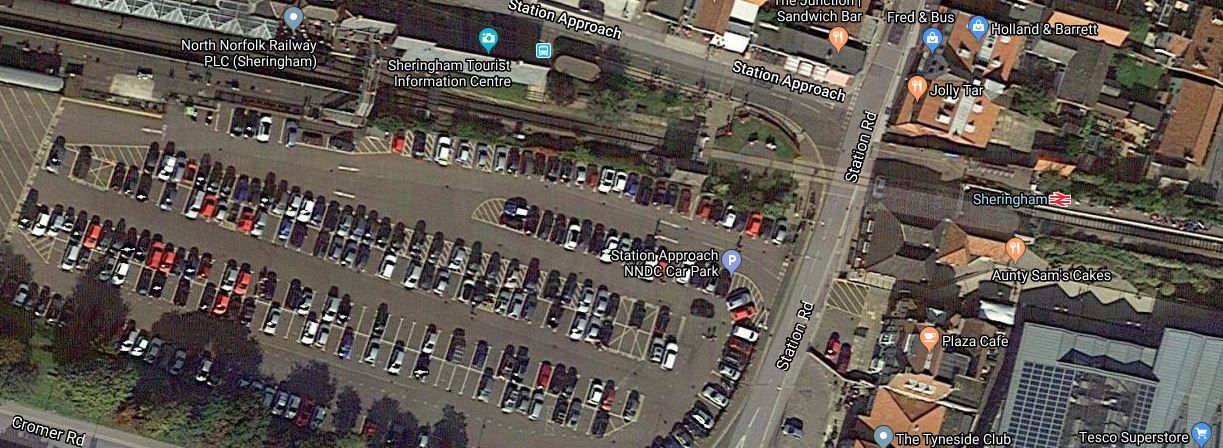
The National Rail station is on the East side, with the heritage railway on the West.
Some heritage railways are certified to be able to run scheduled services to and from the main rail network.
This may even be possible here, to allow a service between Cromer and Holt.
Although the North Norfolk Railway seem to run a frequent timetable, I’m sure if there was the necessary coming together, that a service that was beneficial to all parties could be arranged.
Conclusion
Very light rail could be very exciting!
Very Light Rail Research On Track
The title of this post is the same as that of this article on Railway Gazette International.
It details the progress on very light rail, which is defined as a vehicle with a weight of less than one tonne per linear metre.
It is a thorough article and very much a must-read.
It also details thirty-five rail routes in the UK and several cities, where the technology could be employed.
Some of the routes mentioned include, ones that I’ve covered on this blog, including.
- Cromer – Sheringham – Part of Greater Anglia
- Saxmundham – Aldeburgh – Part of Greater Anglia
- Coventry – Nuneaton – Part of West Midlands
- Liskeard – Looe – Part of Great Western
- Plymouth – Tavistock – Part of Great Western
- St Erth – St Ives – Part of Great Western
- Henley-on-Thames – Twyford – Part of Great Western
- Maidenhead – Marlow – Part of Great Western
- Slough – Windsor & Eton Central – Part of Great Western
- Truro – Falmouth- Part of Great Western
- Watford – St Albans Abbey – Part of London Midland
- Ashington – Blyth
- Fleetwood – Poulton-le-Fylde
Note.
- On reading the full list, I wondered why Greenfood – West Ealing and Southall – Brentford weren’t included, but it’s probably because freight uses the lines.
- I particularly like the inclusion of Saxmundham – Aldeburgh and Watford Junction – St. Albans Abbey.
You can understand why the rail leasing company; Eversholt, has got involved, as they must see quite a few possible sales.
There is more information on the concept call Revolution on this page on the Transport Design International web site.
Some points that can be gleaned from this page.
- One picture shows a coupler on the front of the vehicle. So can they work in multiple?
- Vehicles will have low axle weights (around 4 tonnes),
- Self-powered vehicles, with energy recovery and storage systems as standard,
- Reduced infrastructure costs for installation, operation and maintenance.
The consortium is also aiming for a sub million pound price tag.
Conclusion
It is a bold plan, which is backed by some large companies and organisations with deep pockets.
Eversholt Joins Very Light Rail Consortium
The title of this post is the same as that of this article on Global Rail News.
- Eversholt Rail Group are a rolling stock operating company.
- The very light rail consortium is called Revolution VLR, which has an impressive list of backers, including several Councils and Universities, Network Rail and the Department of Transport.
One of my previous clients; Cummins are involved. I used to provide analysis software for their factory in Darlington.
- That factory, used to specialise in providing custom-built engines for smaller applications. So if say you wanted a diesel engine for a customised application, Cummins were the first place to go.
- The factory was also geared up to making small numbers of these engines.
- The company was very keen on getting quality right, which had actually led to my involvement.
I doubt Cummins would get involved in a project, that didn’t have a good chance of success.
I think the addition of Eversholt to the consortium could be beneficial.
Their traditional market is being eroded by new players looking for safe long-term investments funding some of the new trains.
But they have expertise in funding rail systems and Revelution VLR’s concept of very light rail running on a lightweight slab track could be something that they could fund, especially as a very light rail solution, must be cheaper than a traditional solution.
I shall be watching this consortium.
 The Anonymous Widower