Cardiff And Caerphilly – 24th March 2026
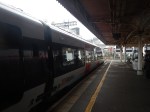
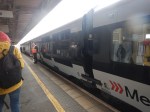
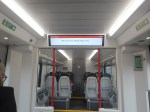
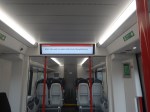
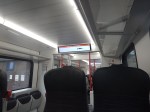
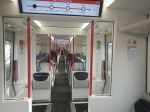
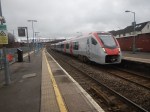
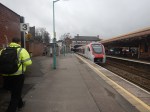
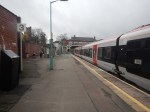
I took this pictures, as I rode up the Rhymney Valley from Cardiff to Caerphilly.
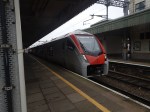
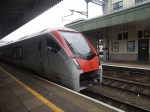
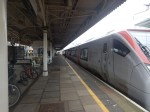
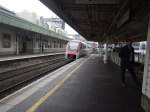


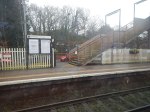
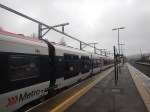
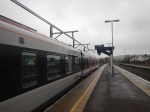
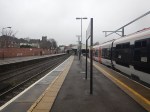
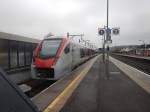
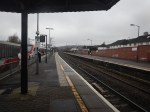
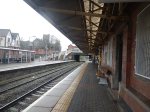
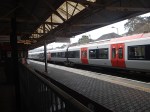
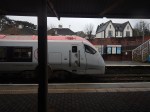
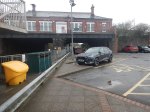
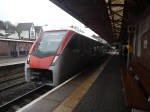
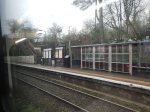
Note.
- The trains I took up and down the valley were both Class 756 tri-mode trains.
- My train reversed to Penarth in Platform 1.
- I think they were running using the diesel power in the power pack.
- There is an overhead conductor rail in Platform 1 at Caerphilly station to charge trains.
- The electrification North of Caerphilly station can be seen through the bridge in one of the pictures.
- Platforms 2 and 3 are not electrified.
I think Caerphilly station is a very neat electrification layout for occasional charging of battery-electric or tri-mode trains.
I have some specific thoughts.
What Have Caerphilly And St. Pancras Thameslink Stations Got In Common?
These pictures show the rigid conductor rail through St. Pancras Thameslink station.
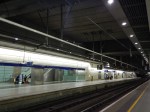
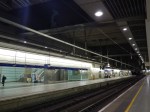
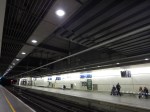
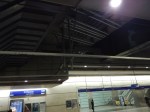
It looks remarkably similar to that in Platform 1 at Caerphilly station.
Judge in this picture.
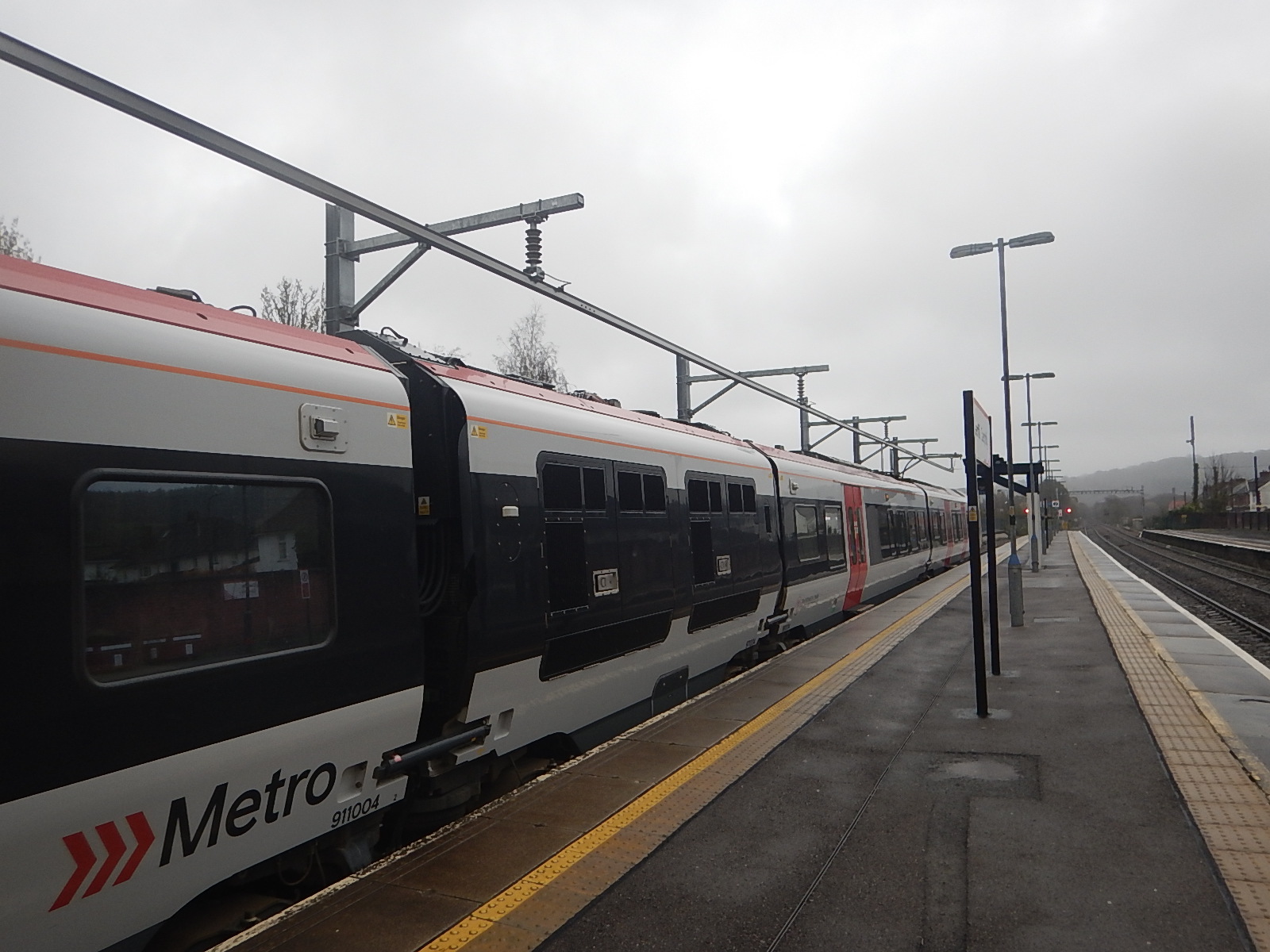
The rails are probably out of the same Swiss electrification maker’s parts bin.
Both look equally professional with an I-section conductor, which could be aluminium, as it is lightweight and a good electrical conductor.
Google AI finds this.
The I-beam overhead conductor system used in St. Pancras Thameslink station is made of a hollow extruded aluminium profile. This system, known as a conductor beam, holds a conventional copper contact wire, providing a rigid, low-profile alternative to traditional overhead wires.
Key details:
Material: Extruded aluminium profile.
Structure: Hollow, designed to hold an un-tensioned, conventional copper contact wire.
Application: Developed by Balfour Beatty to reduce the required depth of overhead line equipment.
Installation: Often installed in a sinusoidal wave to ensure consistent wear on the pantograph.
This technology is used in areas with restricted overhead space, such as tunnels and some modern station approaches, to manage 25kV AC electrification.
It looks like it’s been used to provide a charging rail in Caerphilly station.
Is The Conductor Rail In Platform 1 Used To Create A Continuous Electrical Connection Around Caerphilly Station?
Look at this OpenRailwayMap, which shows the completed electrification through Caerphilly station.
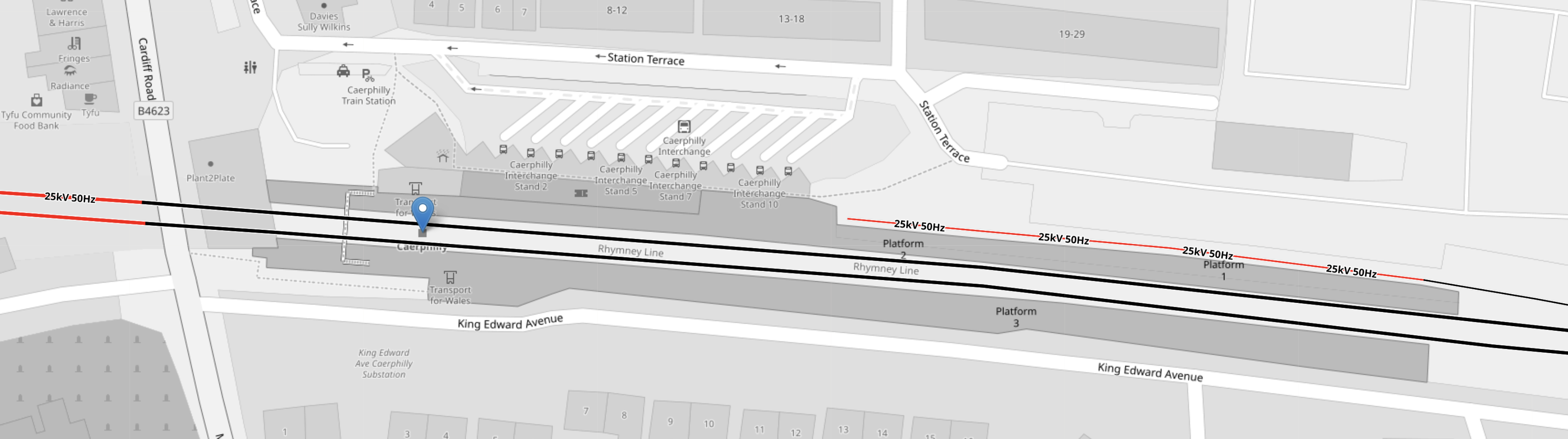
Note.
- Red tracks are electrified.
- Black tracks are not electrified.
- Caerphilly station is indicated by the blue arrow.
- The electrification continues to the Western end of the station.
- The two main platforms 2 & 3 are not electrified.
- The bay platform 1 is electrified to charge trains for return to Cardiff.
- Class 756 tri-mode electric-diesel-battery trains are already in service.
- There appears to be a comprehensive bus interchange.
The power for Platform 1 could come from the electrification at the Western end of the station.
I wouldn’t be surprised that the Rhymney Line will be fed with electricity at the heads of the valleys and it is fully-connected down to Cardiff to give a secure electrical connection.
Will Welsh Wind Power From The Heads Of The Valleys Be Used To Power The Cardiff Valley Lines?
To start with, as I know it can be blowy there, I asked Google AI, this question.
“Is Onshore Wind Planned At The Heads Of The Valleys In South Wales?”
I received this answer.
Yes, there is significant onshore wind energy development planned and in progress along the Heads of the Valleys area in South Wales. This region, encompassing areas like Merthyr Tydfil, Blaenau Gwent, and northern Rhondda Cynon Taf, is part of a broader push to increase onshore wind capacity in Wales, with many projects located on Natural Resources Wales forestry land.
Key Developments and Proposed Projects (2025-2026):
Trydan Gwyrdd Cymru: The Welsh government-owned developer has selected sites in South Wales for new, large-scale wind farms intended to be operational by 2040.
Carreg Wen Wind Farm: A planned 18-turbine project located between Aberdare and Maerdy (Rhondda Cynon Taf), near the Hirwaun/Heads of the Valleys area.
Hirfynydd Renewable Energy Park: A proposed project located on the Hirfynydd mountain range between Seven Sisters and Banwen, north of Neath, near the western end of the Heads of the Valleys.
Mynydd Llanhilleth and Trecelyn Wind Farms: Projects in the pre-application or planning stages by Pennant Walters in the Blaenau Gwent area.
Abergorki Wind Farm: A consented three-turbine project on Mynydd Maerdy (Rhondda Cynon Taf) with construction scheduled for 2026.
Operational Context:
Pen y Cymoedd: Already operational and currently the largest onshore wind farm in England and Wales, situated in the hills above the upper Neath, Afan, Rhondda, and Cynon Valleys.
Grid Infrastructure: Proposed new substations, such as one near Hirwaun (Rhondda Cynon Taf), are intended to connect these new projects to the national grid.
These developments are part of a target to generate 70% of Wales’ electricity from renewable sources by 2030, with a focus on areas previously identified as suitable for large-scale wind development.
Note.
- Pen y Cymoedd is the largest onshore wind farm in Wales and England, with an installed capacity of 228 MW.
- With the right size of battery, I’m fairly sure, that this wind farm could go a long way to powering the Cardiff Valley Lines.
- Carreg Wen Wind Farm is planned to be 108 MW wind farm.
- Hirfynydd Renewable Energy Park is planned to be a 100 MW hybrid development of wind turbines and solar with a battery.
- Mynydd Llanhilleth is planned to be a 48 MW wind farm.
- Trecelyn is planned to be a 20 MW wind farm.
- Abergorki is planned to be a 13 MW wind farm.
The total of new developments is 389 MW, which is about the same size as a Rolls-Royce SMR.
Climbing The Valley Lines In The South Wales Metro
There are five terminal stations on the Cardiff Valley Lines, of which four will be served by battery-electric trains or tram-trains from Cardiff.
In this post, I will show how they will achieve this feat.
Consider.
- To get to Aberdare, Merthyr Tydfil or Treherbert, a tram-train must first get to Pontypridd.
- To get to Rhymney, a train must first get to Caerphilly.
I will now deal with the seven stations in alphabetic order.
Aberdare
This OpenRailwayMap shows the three branches of the Cardiff Valley Lines, that go through Pontypridd.

Note.
- Electrified lines are shown in red and unelectrified lines are shown in black.
- The branch to Aberdare is the middle of the three branches.
- It is planned that the service on the Aberdare branch will be provided using Class 398 tram-trains, that will be fitted with batteries.
- Electrification will be complete between Aberdare and Pontypridd.
It would appear that a tram-train could run between Aberdare and Pontypridd using the complete electrification.
Caerphilly
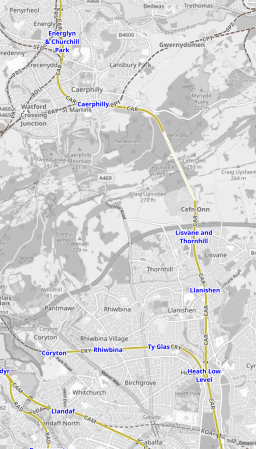
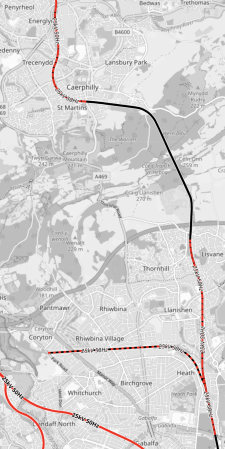
These two OpenRailwayMaps show the tracks through Caerphilly.
Note.
- The map on the left shows infrastructure, with the Rhymney Line shown in yellow.
- Caerphilly station is in the top third of the map.
- The white section of the Rhymney Line is the Caerphilly tunnel.
- The map on the right shows electrification, with the sections of the Rhymney Line that will be electrified are shown in red.
- Black sections will not be electrified.
- North of Caerphilly, the Rhymney Line is electrified, but through the station and the Caerphilly tunnel, there will be no electrification.
Trains will use battery power, where there is no electrification.
Ebbw Vale Town
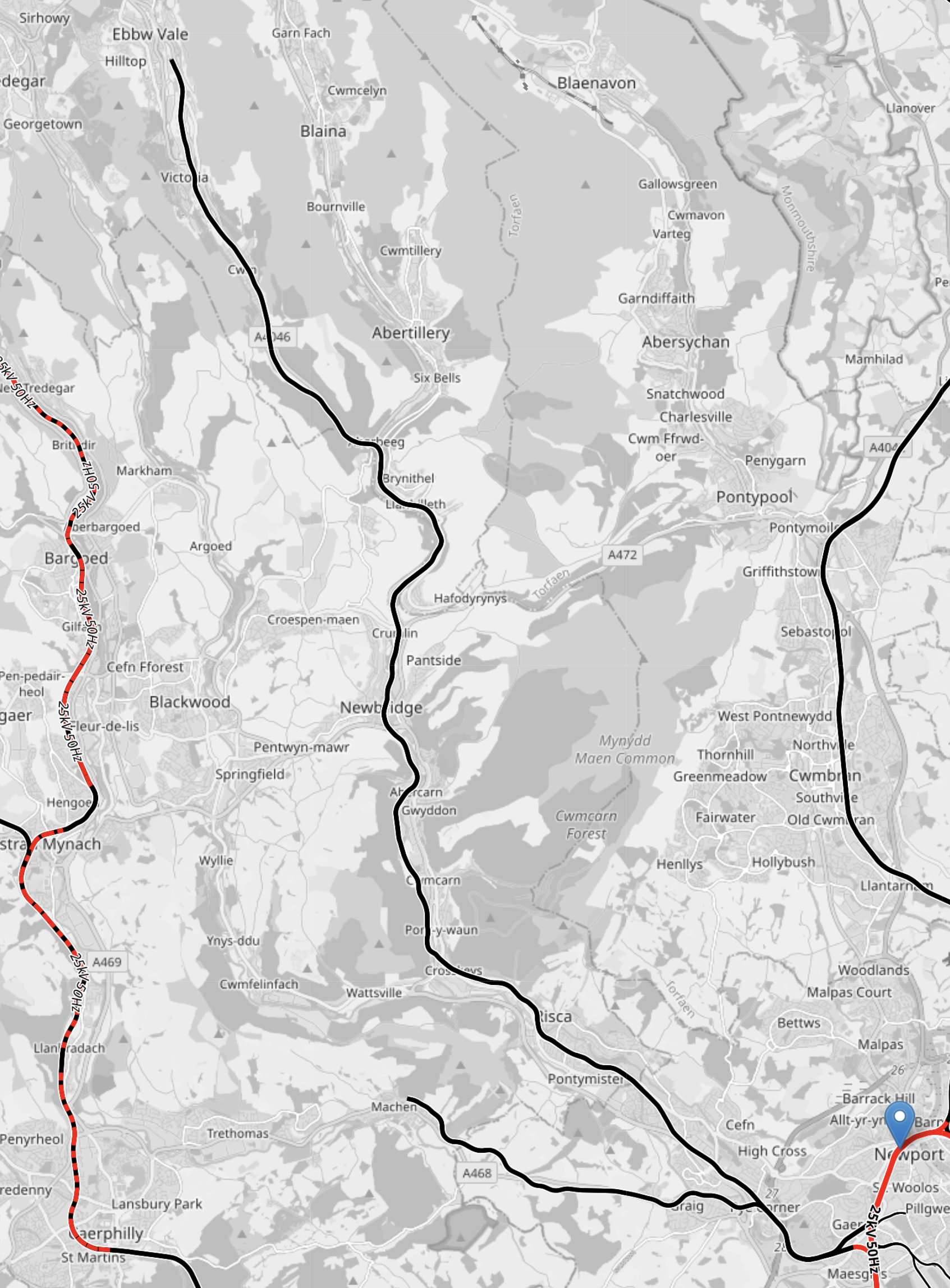
This OpenRailwayMap shows the Ebbw Valley Railway.
Note.
- Electrified lines are shown in red and unelectrified lines are shown in black.
- Lines where electrification will be installed are shown in red and black.
- Newport is marked by the blue arrow.
- The North-South Line at the left is the Rhymney Line.
- The North-South Line in the middle is the Ebbw Valley Railway.
- The North-South Line at the right is the Marches Line to Hereford and Shrewsbury.
Trains will use diesel power on the Ebbw Valley Railway, as there is no electrification and no means of charging battery-electric trains.
It does seem strange that no electrified solution has been proposed for the Ebbw Valley Railway.
Consider.
- An Abertillery branch has been proposed.
- A Newport and Ebbw Vale Town service has been proposed and will be implemented.
- Perhaps the line is difficult to electrify.
It could just be, the electrifying the Ebbw Valley Railway, was a step too far.
Merthyr Tydfil
This OpenRailwayMap shows the three branches of the Cardiff Valley Lines, that go through Pontypridd.
Note.
- Electrified lines are shown in red and unelectrified lines are shown in black.
- The branch to Merthyr Tydfil is the rightmost of the three branches.
- It is planned that the service on the Merthyr Tydfil branch will be provided using Class 398 tram-trains, that will be fitted with batteries.
- Electrification will be complete between Merthyr Tydfil and Pontypridd, except for two short sections.
- I would assume that the short unelectrified sections can be handled using the tram-trains battery power.
It would appear that a tram-train could run between Merthyr Tydfil and Pontypridd using the electrification and the tram-trains batteries.
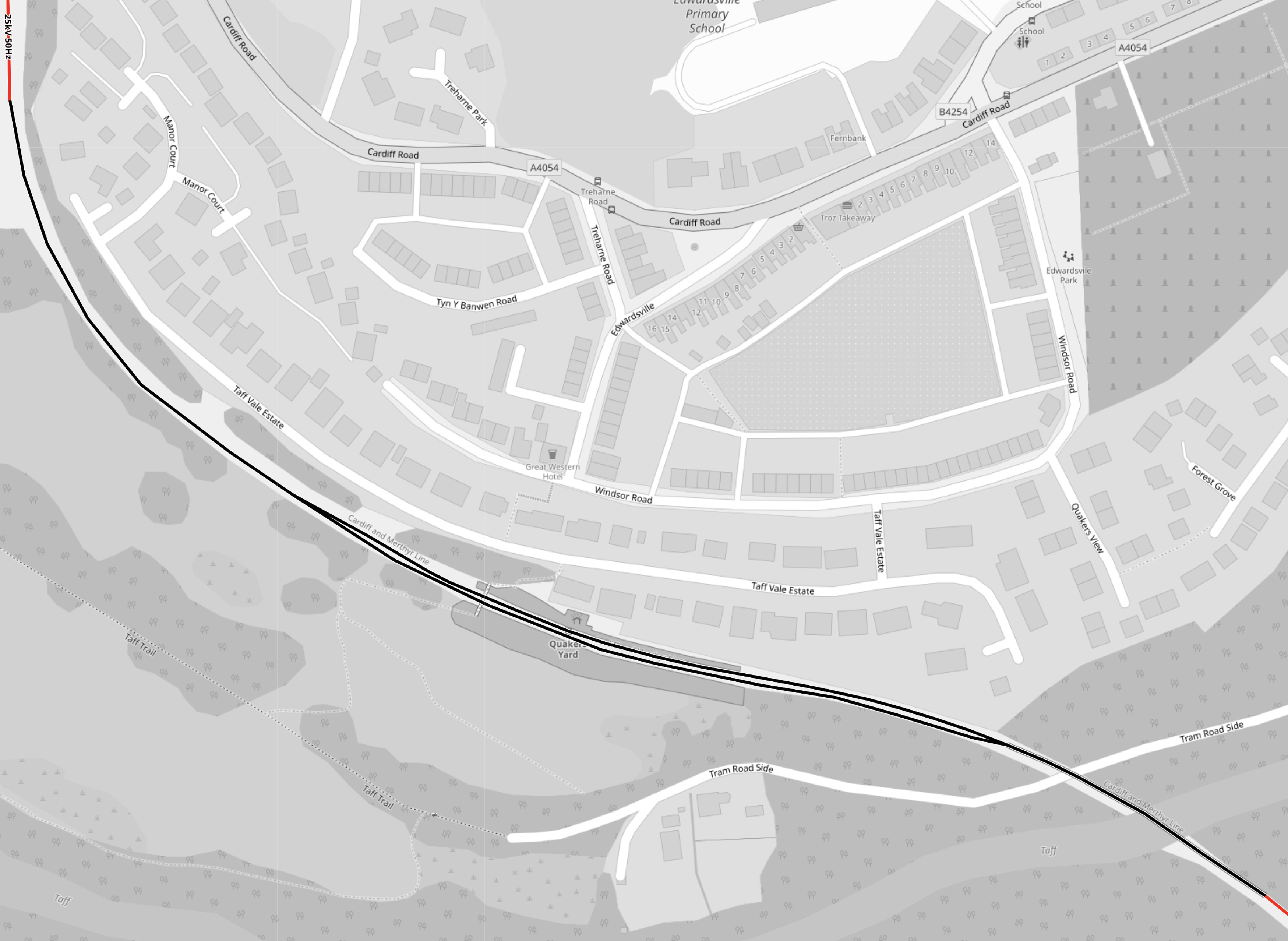
This shows the track layout at Quaker’s Yard station.
Note.
- Electrified lines are shown in red and unelectrified lines are shown in black.
- There are only two short length of electrification shown in the corners the map.
- Quaker’s Yard station has two platforms.
- The track layout appears to have single- and double-track sections.
It looks like it has been decided not to electrify this section. Perhaps, it was just too complicated to electrify easily?
This 3D Google Map shows the terminal station at Merthyr Tydfil.
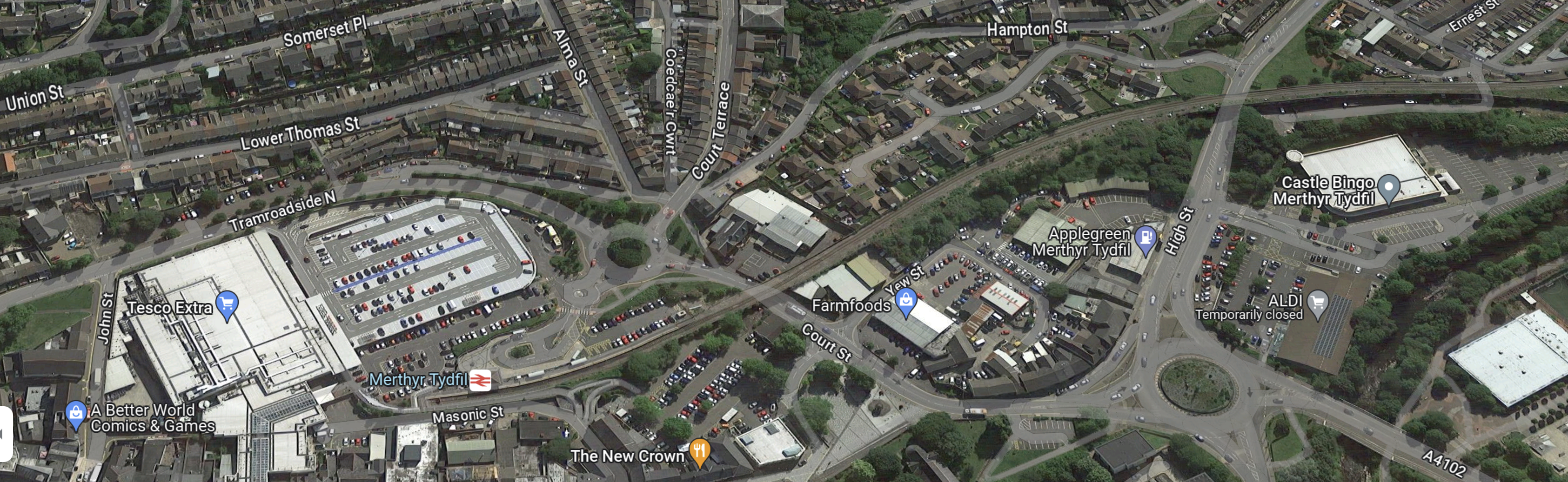
It looks like the railway runs through the town to the station. So perhaps leaving out the electrification made everything safer?
Pontypridd
This OpenRailwayMap shows the tracks through Pontypridd.
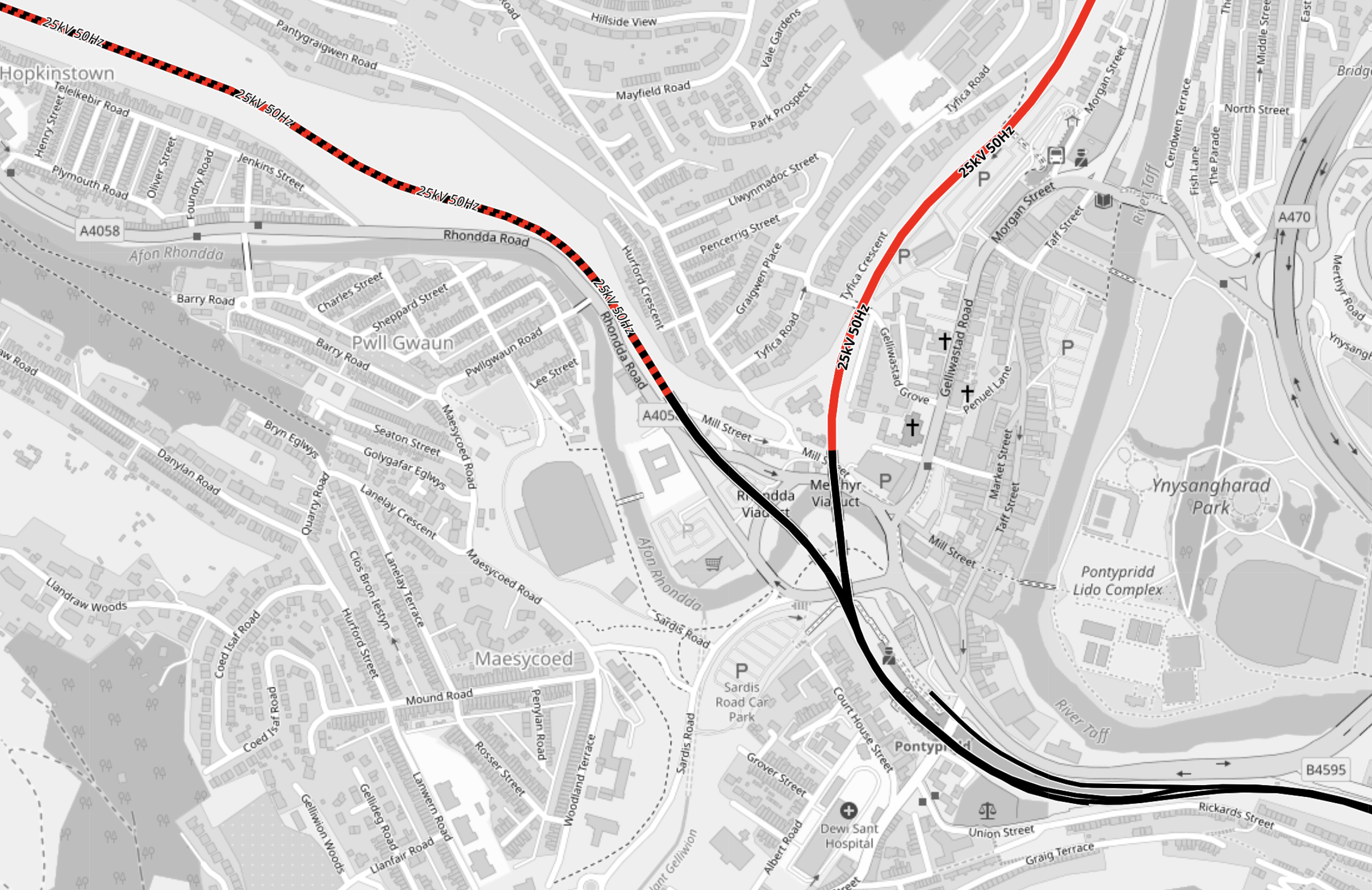
Note.
- Electrified lines are shown in red and unelectrified lines are shown in black.
- Lines where electrification will be installed are shown in red and black.
- The line leaving the map in the South-East corner is the line to Cardiff.
- The line leaving the map in the North-West corner is the Rhondda Line to Treherbert.
- The line leaving the map in the North-East corner is the Merthyr Line to Aberdare and Merthyr.
Pontypridd stations lies at the junction of the three lines.
This OpenRailwayMap shows the platforms at Pontypridd.
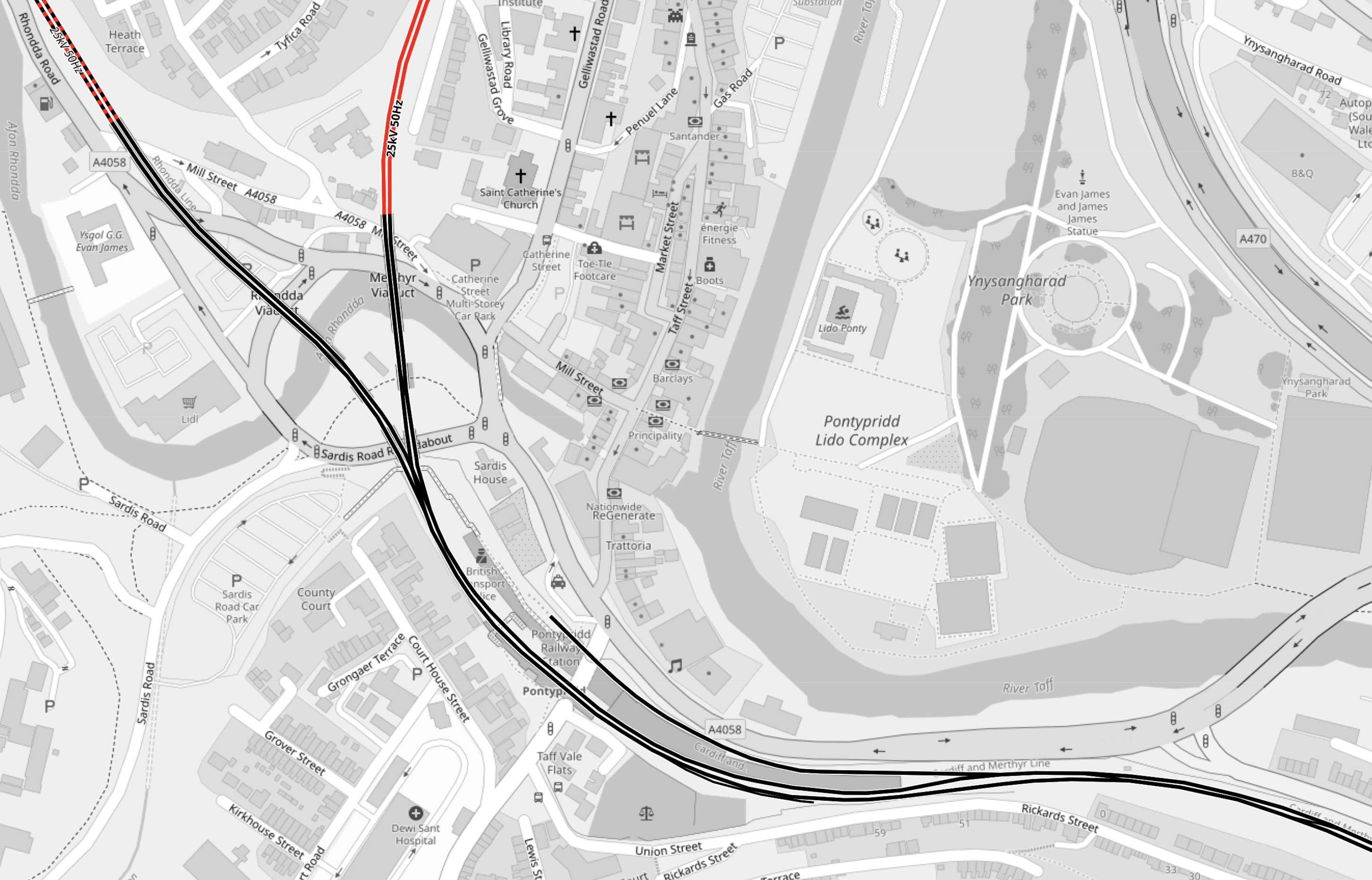
Note.
- There are two long through platforms.
- There is a bay platform on the North side of the station for extra Cardiff services.
- The station is not electrified.
These pictures show Pontypridd station.
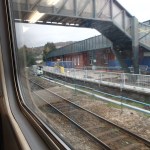
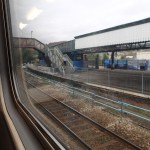
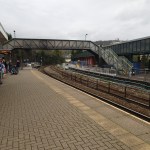
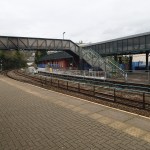
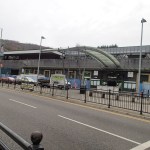
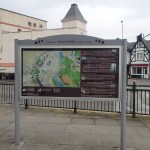
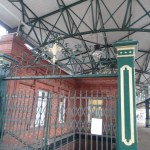
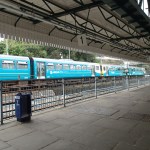
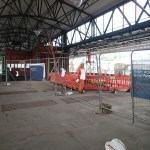
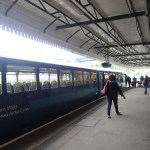
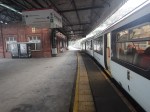

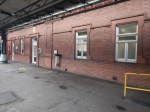
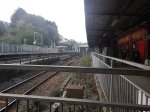
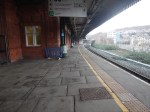
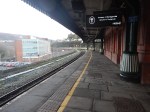

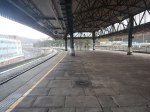
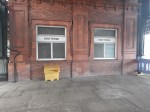
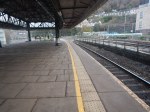
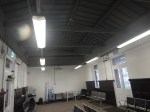

The station is Grade II Listed.
How will the tram-trains be powered through Pontypridd station?
Older Welsh railwaymen have told tales of how the coal trains from the mines in the valleys to Cardiff Docks were powered in part using gravity to propel the trains to the Docks. Steam locomotives then hauled the trains up the hills to get another load of coal.
Will Newton’s Friend be used to help the tram-trains return to Cardiff?
As the tram-trains descend, regenerative braking can be used to recharge the batteries.
A sophisticated computer control system, would choose the source of power from that which is available.
Descending from the terminal stations of Aberdare, Merthyr and Treherbert, and through Pontypridd would probably need a small amount of battery power to nudge the train to descend down the hill.
Fully-electrified stations like Aberdare and Treherbert will have the luxury of being able to use power from the electrification to start the descent.
Climbing the hills will be mainly on battery power, with the batteries being charged, where overhead electrification exists.
Rhymney
This OpenRailwayMap shows the Northern part of the Rhymney Line from Caerphilly to Rhymney.
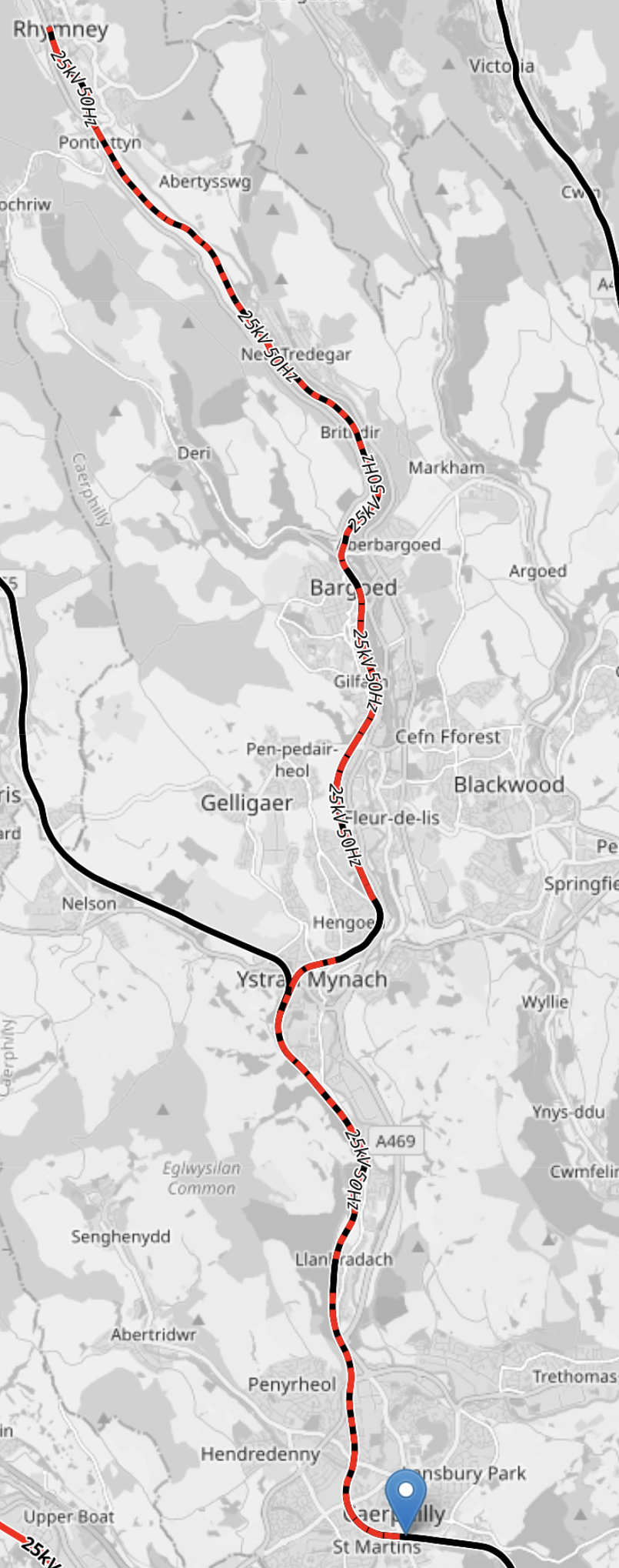
Note.
- Electrified lines are shown in red and unelectrified lines are shown in black.
- Lines where electrification will be installed are shown in red and black.
- Caerphilly is marked by the blue arrow at the bottom of the map.
- Rhymney is at the Northern end of the rail line.
- Bargoed, Hengoed, Llanbradach and Caerphilly stations appear not to be electrified.
- It is planned that the service on the Rhymney Line will be provided using Class 756 trains, that will be fitted with batteries and diesel engines.
The Class 756 trains appear to have been designed to climb to Rhymney in all conditions, including a complete power cut. They will use batteries on the unelectrified sections of the climb.
Treherbert
This OpenRailwayMap shows the three branches of the Cardiff Valley Lines, that go through Pontypridd.
Note.
- Electrified lines are shown in red and unelectrified lines are shown in black.
- Lines where electrification will be installed are shown in red and black.
- The branch to Treherbert is the leftmost of the three branches.
- It is planned that the service on the Theherbert branch will be provided using Class 398 tram-trains, that will be fitted with batteries.
- Electrification will be complete between Treherbert and Pontypridd.
It would appear that a tram-train could run between Treherbert and Pontypridd when the electrification is complete.
Conclusion
Each of the five lines use their own methods of getting trains up the hills.
I suspect we’ll see some of the ideas used here on other stretches of electrification.
Crafty Electrification On The Rhymney Line
I was puzzled on Wednesday, when I took the Class 231 train to Caerphilly on the Rhymney Line, when I saw no signs of electrification.
These are pictures I took at Caerphilly station.
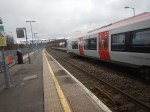
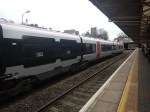
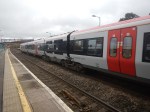
These two OpenRailwayMaps show the tracks through Caerphilly.
Note.
- The map on the left shows infrastructure, with the Rhymney Line shown in yellow.
- Caerphilly station is in the top third of the map.
- The white section of the Rhymney Line is the Caerphilly tunnel.
- The map on the right shows electrification, with the sections of the Rhymney Line that will be electrified are shown in red.
- Black sections will not be electrified.
- North of Caerphilly, the Rhymney Line is electrified, but through the station and the Caerphilly tunnel, there will be no electrification.
Trains will use battery power, where there is no electrification.
This article on Modern Railways gives more information.
This OpenRailwayMap shows the electrification around Cardiff Central and Queen Street stations.
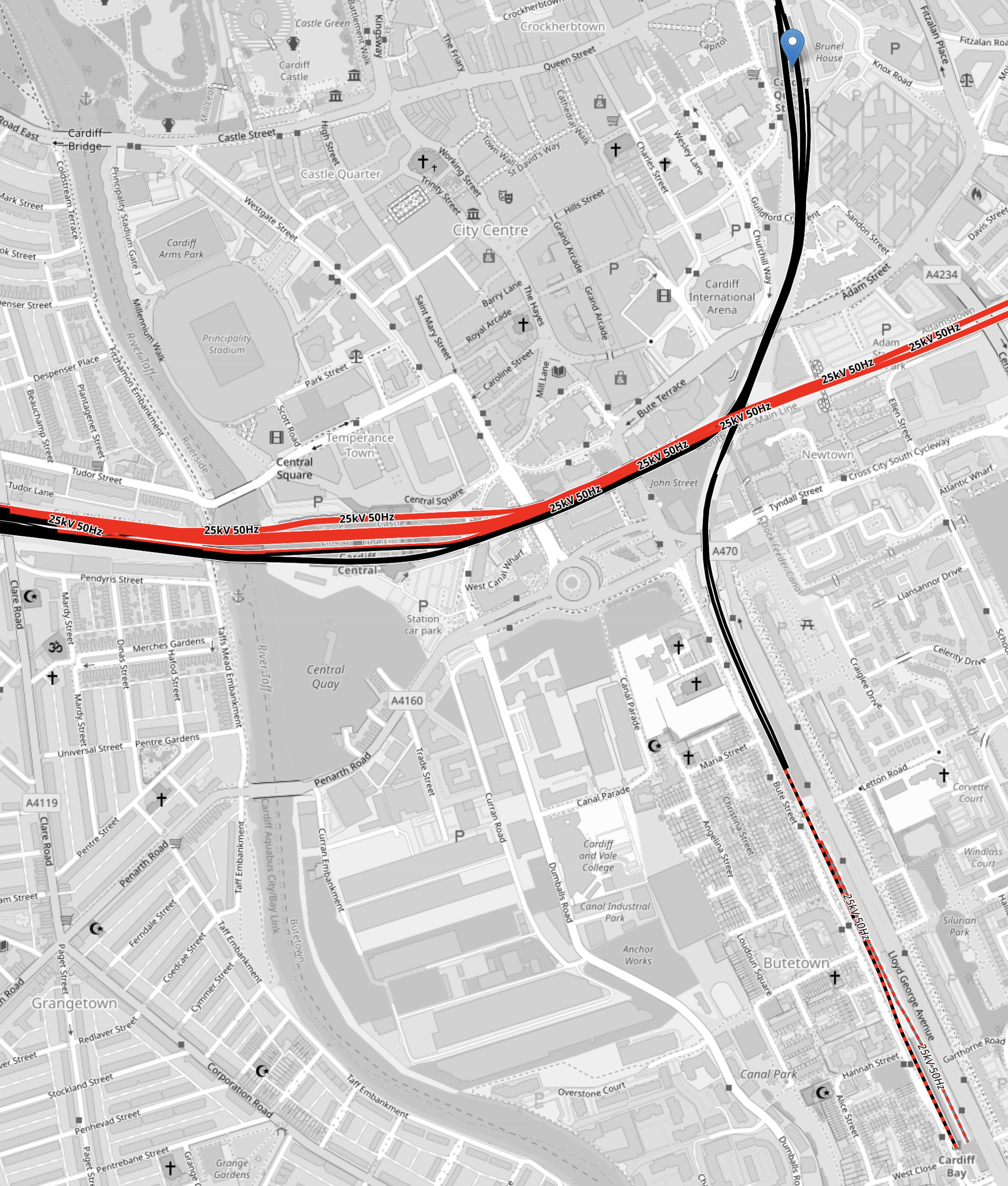
Note.
- Electrified lines are shown in red.
- Unelectrified lines are shown in black.
- The four-platform Cardiff Queen Street station is marked by the blue arrow in the North-East corner of the map.
- There appears to be no plans for electrification in Cardiff Queen Street station.
- The electrified line across the map is the South Wales Main Line.
- The nine-platform Cardiff Central station sits on the South Wales Main Line.
- The main line platforms at Cardiff Central station are electrified, but it appears that Platforms 6.7 and 8. that will serve the South Wales Metro, will not be electrified.
- The line going to the South-East is the branch to Cardiff Bay station.
- The Southern part of this branch appears to be planned to be electrified. so that it can charge the tram-trains before they return North.
This article on Modern Railways says this about catenary-free sections (CFS) in the electrification of the South Wales Metro.
Catenary-free sections are concentrated on areas where it is disproportionately expensive to erect overhead wires. These include the area around Cardiff Queen Street station and the adjacent junction, which has complicated switches and crossings. North of Queen Street, the Cathays area adjacent to Cardiff University and the hospital would present a significant electromagnetic compatibility challenge, so a CFS avoids this complication. Other catenary-free areas will include Pontypridd, where the station features listed canopies and the track is curved, and around the new depot at Taff’s Well, where there will be a significant number of new switches and crossings as well as challenges around highway bridges.
I am in touch with two major electrification companies and I am sure we’ll be seeing a lot more crafty electrification and the use of battery-electric trains.
My First Ride On Class 231 Trains – 22nd November 2023
I had several rides on Class 231 trains on a visit to Cardiff.
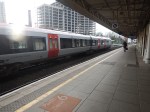
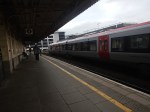
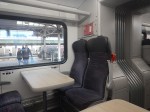
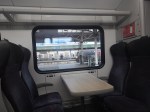
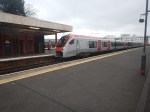
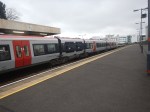
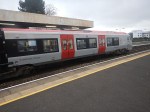
Note.
- The trans were running on the Rhymney Line.
- Like Greater Anglia’s Class 755 trains, they have pop-out steps and a PowerPack in the middle.
- The trains didn’t appear to be using their pantographs to run on electric, where it existed.
They were very similar to the Class 755 train.
More On Tri-Mode Stadler Flirts
In the July 2018 Edition of Modern Railways, there is an article entitled KeolisAmey Wins Welsh Franchise.
This is said about the Stadler Tri-Mode Flirts on the South Wales Metro.
The units will be able to run for 40 miles between charging, thanks to their three large batteries.
In Tri-Mode Stadler Flirts, I said this.
I would expect that these trains are very similar to the bi-mode Stadler Flirt DEMUs, but that the power-pack would also contain a battery.
As an Electrical and Control Engineer, I wouldn’t be surprised that the power-pack, which accepts up to four Deutz diesel engines, can replace one or two of these with battery modules. This could make conversion between the two types of Flirt, just a matter of swapping a diesel module for a battery one or vice-versa.
Note that the three-car Class 755 trains for Greater Anglia have two diesel engines and the four-car trains have four engines.
So could it be that the tri-mode Stadler Flirts have three batteries and just one diesel engine in the four slots in the power-pack in the middle of the train?
I wonder how much energy storage you get for the weight of a V8 diesel, as used on a bi-mode Flirt?
The V8 16 litre diesel engines are made by Deutz and from their web site, it looks like they weigh about 1.3 tonnes.
How much energy could a 1.3 tonne battery store?
The best traction batteries can probably store 0.1 kWh per kilogram. Assuming that the usable battery weight is 1.2 tonnes, then each battery module could store 120 kWh or 360 kWh if there are three of them.
How Far Would A Full 360 kWh Battery Take A Three-Car Flirt?
In an article in the October 2017 Edition of Modern Railways, which is entitled Celling England By The Pound, Ian Walmsley says this in relation to trains running on the Uckfield Branch, which probably has a terrain not much different to the lines to the South and West of Cardiff.
A modern EMU needs between 3 and 5 kWh per vehicle mile for this sort of service.
This would mean that a 360 kWh battery would take a three-car train between twenty-four and forty miles. The claim in Modern Railways of a forty mile range, isn’t that out of line.
How Much Energy Is Needed To Raise A Three-Car Flirt From Ystrad Mynach To Rhymney?
In Tri-Mode Stadler Flirts, I estimated the following about the weight of three-car Flirt.
- I reckon, that the weight of the train will be around 130 tonnes.
- I will assume 150 passengers at 80 Kg. each, which gives a weight of 12 tonnes.
Raising it through the 125 metres between Ystrad Mynach and Rhymney, will need 48 kWh.
But what about stopping and starting at the seven stations on the route?
At every stop, a proportion of the energy will be recovered. If 20% is lost at every station, I think we can add about another 20 kWh of energy use.
And then there’s the power rneeded to run the train. Using the Ian Walmsley formula shown earlier, we get between
three-cars x 10 miles x 3kWh and three-cars x 10 miles x 5 kWh or between 90 kWh and 150 kWh.
It would appear there is certainly enough power from a full battery, that will have been charged all the way from Cardiff to drive a three-car Flirt up to Rhymney on battery power.
For a four-car train my weight estimate is 166 tonnes, which means Raising the train between Ystrad Mynach and Rhymney, will need 57 kWh.
I estimate that losses for stopping and stasrting would be about 24 kWh
Train running power would be between 120 kWh and 200 kWh.
It would still be possible to go between Ystrad Mynach and Rhymney on battery power.
Conclusion
It looks to me, that Stadler have designed a tri-mode train on steroids!
More On Discontinuous Electrification In South Wales
In the July 2018 Edition of Modern Railways, there is an article entitled KeolisAmey Wins Welsh Franchise.
This is said about the electrification on the South Wales Metro.
KeolisAmey has opted to use continuous overhead line equipment but discontinuous power on the Core Valley Lnes (CVL), meaning isolated OLE will be installed under bridges. On reaching a permanently earthed section, trains will automatically switch from 25 KVAC overhead to on-board battery supply, but the pantograph will remain in contact with the overhead cable, ready to collect power after the section. The company believes this method of reducing costly and disruptive engineering works could revive the business cases of cancelled electrification schemes. Hopes of having money left over for other schemes rest partly on this choice of technology.
Other points made include.
- A total of 172 km. of track will be electrified.
- The system is used elsewhere, but not in the UK.
- Disruptive engineering works will be avoided on fifty-five structures.
- Between Radyr and Ninian Park stations is also proposed for electrification.
Nothing is said about only electrifying the uphill track, which surely could be a way of reducing costs.
Ystrad Mynach To Rhymney
The article also states that on the Rhymney Line, the section between Ystrad Mynach and Rhymney stations will be run on batteries.
- The distance is about ten miles.
- The altitude difference is is about 125 metres.
- The station area at Rhymney station will be electrified.
- Rhymney will be an overnight stabling point.
- Trains will change between overhead and battery power in Ystrad Mynach station.
- Trains could charge the batteries at Rhymney if required.
Effectively, there is a avoidance of at least fourteen miles of electrification.
- Four miles of double track between Ystrad Mynach and Bargoed.
- Six miles of single track between Bargoed and Rhymney.
But as Rhymney to Ystrad Mynach currently takes about fourteen minutes, there will have to be some extra double-track, so that the required frequency of four trains per hour (tph) can be achieved.
None of this extra track will need electrification.
As the trains working the Rhymney Line will be tri-mode Stadler Flirts, with the capability of running on electricity, diesel or battery, I don’t think that KeolisAmey are taking any risks.
The Merthyr Line
The Merthyr Line splits North of Abercynon station into two branches to Aberdare and Merthyr Tydfil stations.
- South of Abercynon the branch is double-track.
- Both branches are single track.
- The Aberdare branch is about eight miles long.
- Aberdare is around 40 metres higher than Abercynon.
- Trains take 27 minutes to climb between Abercynon and Aberdare stations and 21 minutes to come down.
- The Merthyr Tydfil branch is about ten miles long
- Merthyr Tydfil is around 80 metres higher than Abercynon.
- Trains take 27 minutes to climb between Abercynon and Merthyr Tydfil stations and 21 minutes to come down.
If the proposed four tph are to be run on these branches, there would need to be some double-tracking North of Abercynon.
Will both tracks be electrified, or will it be possible with just electrifying the uphill track?
The Rhondda Line
The Rhondda Line splits from the Merthyr Line to the North of Pontypridd station and goes North to Treherbert station.
- South of Porth station, the line is double-track.
- North of Porth station, the line is single-track with a passing loop at Ystrad Rhondda station.
- Treherbert is 90 metres higher than Porth..
- Trains take 28 minutes to climb between Porth and Treherbert and 20 minutes to come down.
If the proposed four tph are to be run on this branch, there may need to be some double-tracking North of Porth.
Will both tracks be electrified, or will it be possible with just electrifying the uphill track?
Conclusion
I suspect there’ll be more savings, as the engineers get to grips with the capabilities of battery trains and discontinuous electrification.
As I said, will it be necessary to electrify downhill tracks?
The tri-mode Stadler Flirts and the Stadler Citylink Metro vehicles could use regenerative braking to their batteries.
The use of gravity in this way to charge the batteries, would increase the efficiency of the South Wales Metro.
Train Depot In Taffs Well, While Newport Factory Named As Preferred Bidder For New Diesel Trains
The title of this post, is the same as that of this article on Walesonline.
The interesting part is the holistic thinking, where a new depot is to be built at Taff’s Well, where the station is also to be modernised, with the addition of a Park-and-Ride.
Taff’s Well station is a very outdated affair, as these pictures show.

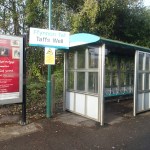
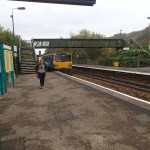
Note.
- The station could certainly do with a new step-free bridge.
- The train frequency is also being raised from six to twelve trains per hour (tph)
- Six tph will go to The Flourish.
- There will also be a new two tph service on the City Line.
- All trains will be new Stadler Citylink Metro Vehicles.
That Park-and-Ride will certainly be needed.
As Taff’s Well station will be at the heart of the tram-train network, it is most certainly a good place for the depot.
The article also says that enhanced stabling facilities will be built at Treherbert and Rhymney stations.
Enhancements At Rhymney
Rhymney station is the terminal of the Rhymney Line.
These are my pictures of the station.
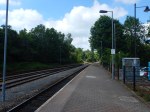
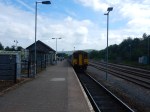
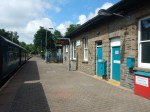

This Google Map gives an aerial view.
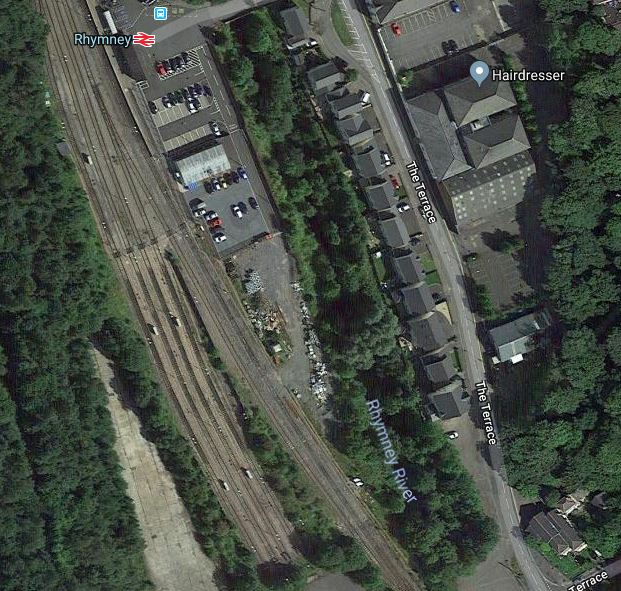
In addition to the enhanced stabling, the station will also be upgraded to accommodate more and longer Tri-Mode Stadler Flirts.
There’s certainly a lot of space for the stabling.
Enhancements at Treherbert
Treherbert station is the terminal of the Rhondda Line.
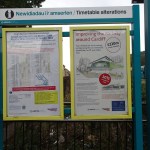
I took these pictures of the station in 2014.
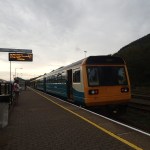
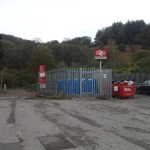
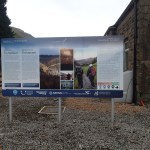
This Google Map shows an gives view.
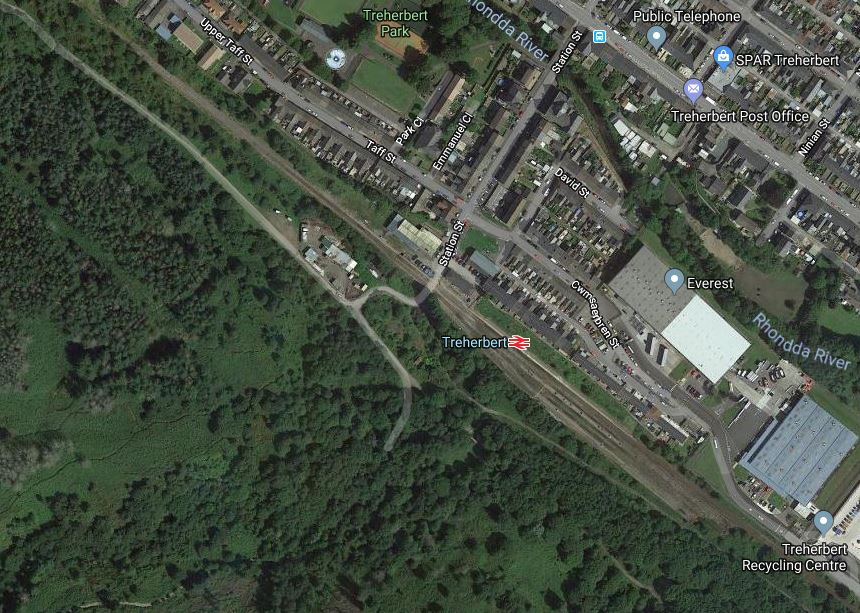
There certainly would appear to be space for the enhanced stabling.
KeolisAmey’s Plans For The Rhymney Line
This document on the KeolisAmey web site details their plans for the new Wales and Borders Franchise.
The Rhymney Line has the following characteristics.
- It runs between Cardiff Queen Street and Rhymney stations.
- Most of the line is double-track, with a short length of single-track from Tir-Phil station.
- There is the Coryton branch line to Coryton station.
- From Cardiff to Bargoed station, there are four trains per hour (tph)
- North of Bargoed, an hourly service generally operates.
- \from Cardiff to Coryton station, there are two tph.
- Some services, run through Cardiff to Penarth or Barry Island stations.
- Services take sixty-one minutes between Rhymney and Cardiff.
- Services take eighteen minutes between Coryton and Cardiff.
What improvements will be made to the Rhymney Line?
New Trains
From 2019, cascaded Class 170 trains will run services on the line.
In 2023, these trains will replaced by new Tri-Mode Stadler Flirts.
Current plans, don’t envisage any of the Stadler Citylink Metro Vehicles working the line. But I don’t see any reason why they can’t, if say Transport for Wales wanted to run a service from Cardiff Bay to Coryton or any other station.
It could be that their batteries don’t have enough capacity for the Caerphilly Tunnel.
New Stations
The KeolisAmey document, states that a new station will be built at Crwys Road.
I’ve also read somewhere that there may be a station on the Coryton Line to serve a major new hospital.
Improved Services
In 2023, the following services will be in place.
- From Cardiff to Rhymney station, there will be four tph.
- From Cardiff to Coryton station, there will be two tph.
- Services will take forty-eight minutes between Rhymney and Cardiff.
- Services will take twenty minutes between Coryton and Cardiff.
The Coryton service is slower because of the proposed new station.
Electrification
The line will be electrified using 25 KVAC.
- There is a short tunnel at Bargoed station.
- There is a mile-long tunnel at Caerphilly.
- There were quite a few footbridges across the tracks.
- The margins on either side of the track seem adequate on much of the route.
It looks to me, that electrification of the Rhymney Line cshuld be possible, provided the design is good.
The Tri-Mode Stadler Flirts will have batteries, which will have these purposes.
- Provide traction power for the trains, where there is no electrification.
- Capture the energy generated by the traction motors under braking.
- Ensure that power is always available for the train’s control, driver and passenger systems.
On the Rhymney Line, battery power will also be used to provide traction power in the mile-long Caerphilly Tunnel.
I have been told that although the tunnel will not be electrified, there will be an overhead rail for the pantograph in the tunnel, which will not be electrified.
This means that the pantograph doesn’t have to be raised and lowered, as the train goes up and down the hill, as there is a continuous overhead rail and line for the pantograph to use all the way.
I believe that when the train is coming down the hill, that gravity and the onboard battery will give sufficient power to bring the train safely down the hill.
So is there any point in electrifying the downhill path?
- The two terminals on the line; Rhymney and Coryton stations, are single platform stations on single-track lines, which will surely be electrified.
- If necessary batteries could be topped up before on the single track sections, before joining the double-rack line to Cardiff.
- There is very little if any freight or engineering trains on the line. But these will be diesel-hauled.
- After the modernisation, all the passenger trains will be the new electric trains with batteries and/or diesel engines.
- Diesel trains and locomotives could continue to work the lines as required.
I don’t think there is any operational reason for the downhill path to be electrified.
It would reduce costs in both construction and maintenance.
 The Anonymous Widower