Railways In North East Poland
Look at this Google Map of the Polish town of Goldap, where we stopped for supplies on our holiday.

Goldap
Just to the North of the main road, it appears that there is the recognisable scar of a multiple-track railway.
Our Polish guide confirmed that Goldap had a large station with several platforms, and that it is still there.
Until the end of the Second World War, this area was East Prussia and was part of Germany. The railways were connected to the Prussian Eastern Railway, which connected Berlin to the major East Prussian city of Koningsberg. The Prussian Eastern Railway still exists as far as Braniewo on the Polish side of the Border, but there doesn’t appear to be a rail connection onward to Kaliningrad as Koningsberg is now called. This Google Map shows the area from Braniewo in Poland to Mamonova in Russia.
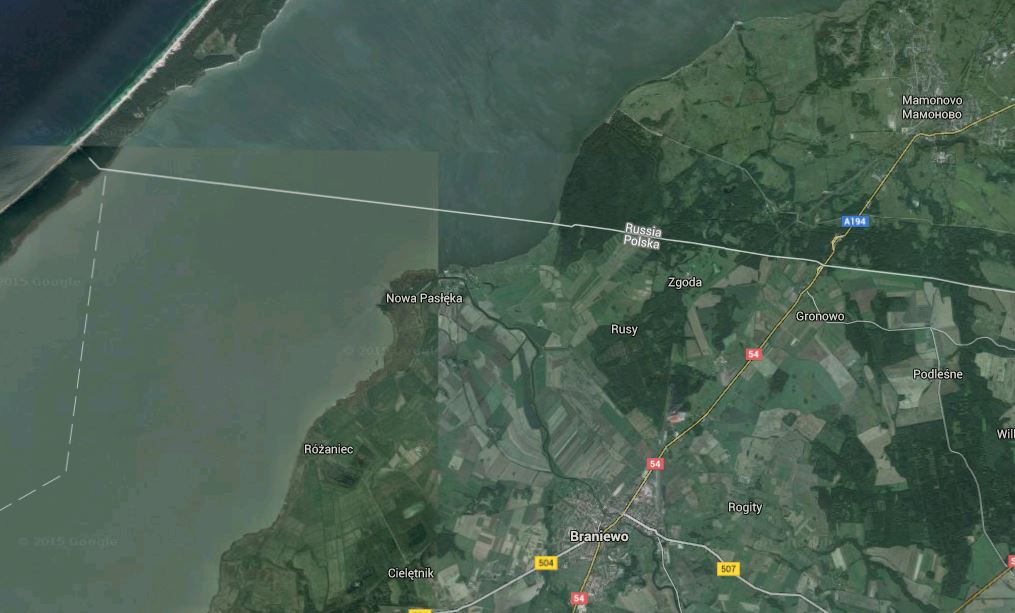
Braniewo To Mamonova
The white line across the map is the border.
You can pick out the old railway from Braniewo to Mamonova.
If we lived in a sane and reasonable world, which I’m afraid that President Putin doesn’t, it would appear that some form of direct rail connection could be created, which would connect Russia and the Baltic States to Poland.
There is the problem of gauge as like Spain, Ireland and India, Russian railways don’t use the same gauge as everybody else. At one time the platforms in Kaliningrad-Passazhirsky station, were arranged so that those facing Poland were standard gauge and the others were Russian gauge.
As a train enthusiast, wouldn’t it be nice to travel from Berlin to Kaliningrad by luxury train, spend some hours in the city, before taking a train on to St. Petersburg.
It would sadly appear that Putin doesn’t have the commercial nous to run the Russian equivalent of a whelk stall.
It is a long term ambition of the European Union to connect the Baltic States and Finland to the rest of the European Union by rail, they have funded the creation of Rail Baltica. This map shows the route.
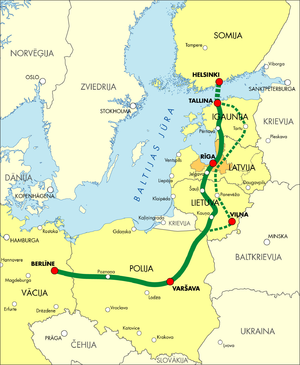
Rail Baltica
The objectives are broadly as follows.
- Build a 200 kph double-track standard gauge railway all the way.
- By-pass Russia and Belarus.
- Put a lot of the extensive freight traffic in the area on the railway rather than the roads.
The overall aim is to finish by 2025, although rumours persist that the section from Warsaw to Kaunas in Lithuania could open this year.
An interesting take on the project is given by this article on the Latvia Public Broadcasting web site, which is entitled Rail Baltica hits buffers at Polish border. This is said.
Even though Poland has allotted €16 billion to modernizing its railroads by 2023, not a single zloty has been earmarked to be spent on developing the connection to Rail Baltica at the Polish side of the border with Lithuania. Without this 200-kilometer section, the planned high-speed European gauge rail from Tallinn through Rīga through Kaunas won’t be connected with the rest of Europe, reported LSM’s Russian-language site on Friday.
It does appear that the section between Bialystok and Trakiszki isn’t up to scratch.
There is an interesting take on Rail Baltica in this article on a blog, which is entitled Rail Baltica Project Directed against Russia’s Security, Pavlovsky Says. This is said.
The Rail Baltica project, eventually intended to link Berlin with Helsinki via Poland and the three Baltic countries is “extremely doubtful from an economic point of view” but has obvious security implications for the region and Russia’s interests there, according to Moscow commentator Igor Pavlovsky.
The project, which will allow trains to pass from one end of the line to the other without changing from Western to Russian gage track, may never carry as many passengers or as much freight as its boosters claim, he writes on Regnum.ru; but it can carry troops and materiel from the West to the border of Russia.
Ever since I first heard of Rail Baltica, I’ve been rather surprised on the silence from Putin and his merry thugs!
At Poland’s Border With Russia
After the Second World War, all the borders in the area we were staying changed dramatically.
Koningsberg, which had been German before the war and was largely destroyed during the war was the capital of East Prussia, and all the land around it became Russian, as did the previously independent Baltic States. What remained of the city, whichhad once been one of the largest and most cultured in Germany became Kaliningrad.
We were actually staying in the old East Prussia to the east of the town of Goldap, not far from the border with the Russian enclave that is surrounded by EU territory.
These pictures were taken at the border.

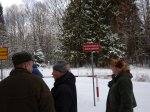

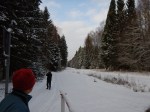

It doesn’t appear to be a very heavily-defended frontier.
Although none of us did anything that would threaten the Russians.
From The Country That Brought You The Lada; The New Battle Tank
Ever since I met a British Army General a few years ago, whose opinions of large battle tanks were distinctly sceptical and I had several drinks with a US Air Force A-10 pilot, I’ve always thought that tanks are a waste of money, except for perhaps frightening the population of countries you’re not invading, as the Russians have been doing in the Ukraine.
What adds to my sceptism is that if you look at tank warfare over the last hundred years, when a country makes a big improvement in tank size and firepower, other nations attempt to leapfrog them. As you can’t rustle up a thousand tanks immediately, countries think laterally. In the Second World War, we countered German tanks by developing the Hurricane IID or flying can opener and the PIAT anti-tank gun. In the 1970s, the Americans designed and built the A-10 Thunderbolt, one of whose jobs was to be to destroy Russian armour.
You can rest assured that research and development is going on in countries, who might be threatened by tanks to develop the next generation of tank killers.
So when I see that Putin has spent billions of roubles to develop the T 14 Armata, I just think he has got more money than sense.
I didn’t even laugh when I read this article in the Daily Telegraph, which says that a tank has broken down in the rehearsal for an important parade.
The General would probably have said that this is typical tank reliability.
Fracking For Freedom
In this post, I said that Iceland can help us overcome energy shortages, caused by the problem of Putin.
Today in an article in the Sunday Times, Jim Ratcliffe, the boss of chemicals giant Ineos is saying that he would pay landowners and communities £2.5billion. Here’s what the Sunday Times says.
ONE of Britain’s richest men hopes to trigger a shale gas boom by giving away billions of pounds to landowners and communities affected by fracking.
Jim Ratcliffe, the 61-year-old Lancastrian who founded chemicals giant Ineos, has promised to hand over 6% of the revenue from oil and gas wells — 4% to landowners and 2% to local communities — in an effort to jolt the moribund industry into life. The offer would equate to £375m for a typical exploration area of 36 square miles, and goes far beyond the 1% giveaway to which the industry has committed. Ratcliffe estimated the offer could be worth £2.5bn in total.
I would never be affected by fracking here in Central London.
But if we could get all our energy supplies without resorting to those basket cases of Russia and the Middle East, we wouldn’t be in bed with some of the nastiest regimes in the world.
Moscow To Neryungri
I found this article about long journeys by train in Russia on the RailStaff website.
Fascinating, but there are lots of easier places to see first!
Is Iceland Part Of The Solution To The Problem Of Russia?
Putin’s Russia is increasingly becoming a problem to the rest of the world, as the events in Ukraine show. I’ve also been to Poland recently and talking to Poles, some are getting quite worried about Russian intentions.
We may impose sanctions on the Russians, but the real problem with our relationship, is that many countries in Europe are highly dependent on Russian gas. Germany is especially dependent and has the direct Nord Stream link through the Baltic.
But how do we replace all of that gas?
We already have a Langeled pipeline from the UK to Norway, the Interconector to Belgium and the RBL pipeline to the Netherlands. We are also importing compressed natural gas from the Middle East. We may also see the benefits of fracking in the next few years. So as far as the UK and our near Continental neighbours are concerned, it’s probably a case of “I’m Alright, Jack”
Gas may be a cleaner fuel, than the coal the Germans are rushing to use, but it still is a fossil fuel, although it only generates about forty percent of the CO2, that coal does when you burn it.
On my trip to Iceland, I saw how you could use geothermal and hydro-electric power to create heat and electricity to power a country and energy consumptive industries like aluminium production and data centres.
But they could generate a lot more and that zero-carbon electricity could be plugged into the European electricity grid. A project called Icelink has been proposed that would link Iceland to the UK and onward to Europe.
There is even plans on the drawing board in other parts of the world, where electricity is used to convert aluminium oxide or bauxite to aluminium in a smelter. The aluminium is then transported to where you need more electricity and then burned in a conventional power station to generate that power. After burning the aluminium is turned into oxide, which is then shipped back to be re-smelted into metal. It sounds crazy, but get the designs right and it might well be financially feasible and considerably cheaper than laying an undersea cable.
Connecting all of Western Europe’s gas and electricity systems together will allow everybody to share resources to mutual advantage.
If we do bring Iceland into this network, it will all help to make Russia’s abundant energy unnecessary and give Putin the cold shoulder, he deserves.
Is Putin Watching?
I’m watching the Eurovision Song Contest. But is Putin? Or has he just switched off the signal to all Russian sets, as a bearded drag act is representing Austria?
Remember Adolf didn’t need much of an excuse to invade Austria!
Mary Whitehouse Would Have Been Pleased
According to this story, Russian media and the arts will become a swearword free zone.
Putin really is trying to put the toothpaste back in the tube and go back to a state where thoughts and dissent in any form is illegal.
Should We Nuke Russia?
The title of this post is not a serious question in the way you think it is.
I was thinking about how we control Russia in its expansion into Ukraine and wondered how much gas we buy from the country. Google found me this article on the Forbes web site. It has the title of Nukes Best Option Against Russian Gas. It however did give some interesting facts about Russia and its gas, particularly with respect to the sale of the gas. The article contained the answer that I wanted in this sentence.
Russia gets about €300 billion a year (US$417 billion/yr) from fuel exports to Europe, almost 20% of its GDP
So it looks like that by its policies and purchases, the EU is strongly supporting Russia. The article also contained these paragraphs.
It is unfortunate that Germany closed down almost half of their nuclear plants in the wake of Fukushima, 8 out of 17. Nukes really come in handy during this kind of energy conflict. It would behoove Germany to rethink that decision and to postpone their plans to shut down the remaining nuclear plants over the next ten years, to give them more leverage to address the Russian aggression as they continue transitioning to alternatives.
Until recently, Germany’s 17 nuclear plants produced power exceeding the energy produced by all of the Russian gas entering Germany. With eight shut down, the amount of nuclear energy produced still offsets much of that produced by Russian gas. If Germany insists on prematurely shutting the rest of its nuclear fleet, then the amount of gas needing to be imported into the country will double, even with projected increases in renewables.
This explains the title of the article.
The writer has a point. Whether we like it or not, Europe and especially Germany is playing the Russian’s game, by buying more gas and giving Putin the funds to be aggressive.
The sooner we stop buying gas from Russia the better. We need to start fracking and build more nuclear power stations.
The Computer Software Update Problem
I don’t like automatic updates of computer software and this story from the BBC about Kaspersky Labs and their anti-virus software is vindication of my view . Here’s the first two paragraphs.
Thousands of computers running Microsoft’s Windows XP operating system were unable to connect to the internet after installing an anti-virus update.
Users said they were also unable to access their internal company networks.
I only update my software, when I find the current system has a serious bug, as I’ve been stung so many times in the past. And then I update software, when I want to, so I have time to test it before it drops me in the doo-dah.
Another question thatr has to be asked here, is given the current political situation, why would anybody use Russian anti-virus software.
 The Anonymous Widower