Rolls-Royce Powers World’s Fastest Offshore Crew Transfer Vessels
The title of this post, is the same as that of this news item from Rolls-Royce.
These three bullet points, act as sub-headings.
- Sea trials demonstrate maximum speed exceeding 53 knots under operational load.
- Each of the three ships is powered by four 16-cylinder mtu Series 2000 engines.
- 35-meter ships are designed as “Surface Effect Ships” (SES)
This is the introductory paragraph.
The Singapore shipbuilder Strategic Marine has commissioned three new offshore supply vessels that, with a maximum speed of over 53 knots, are the fastest of their kind in the world. Each vessel is powered by four 16-cylinder mtu Series 2000M72 engines from Rolls-Royce. The vessels will be used by a national oil company in Africa for passenger transfer to offshore platforms. To enable fast and safe transfer, the 35-meter-long vessels were designed as so-called “Surface Effect Ships”.
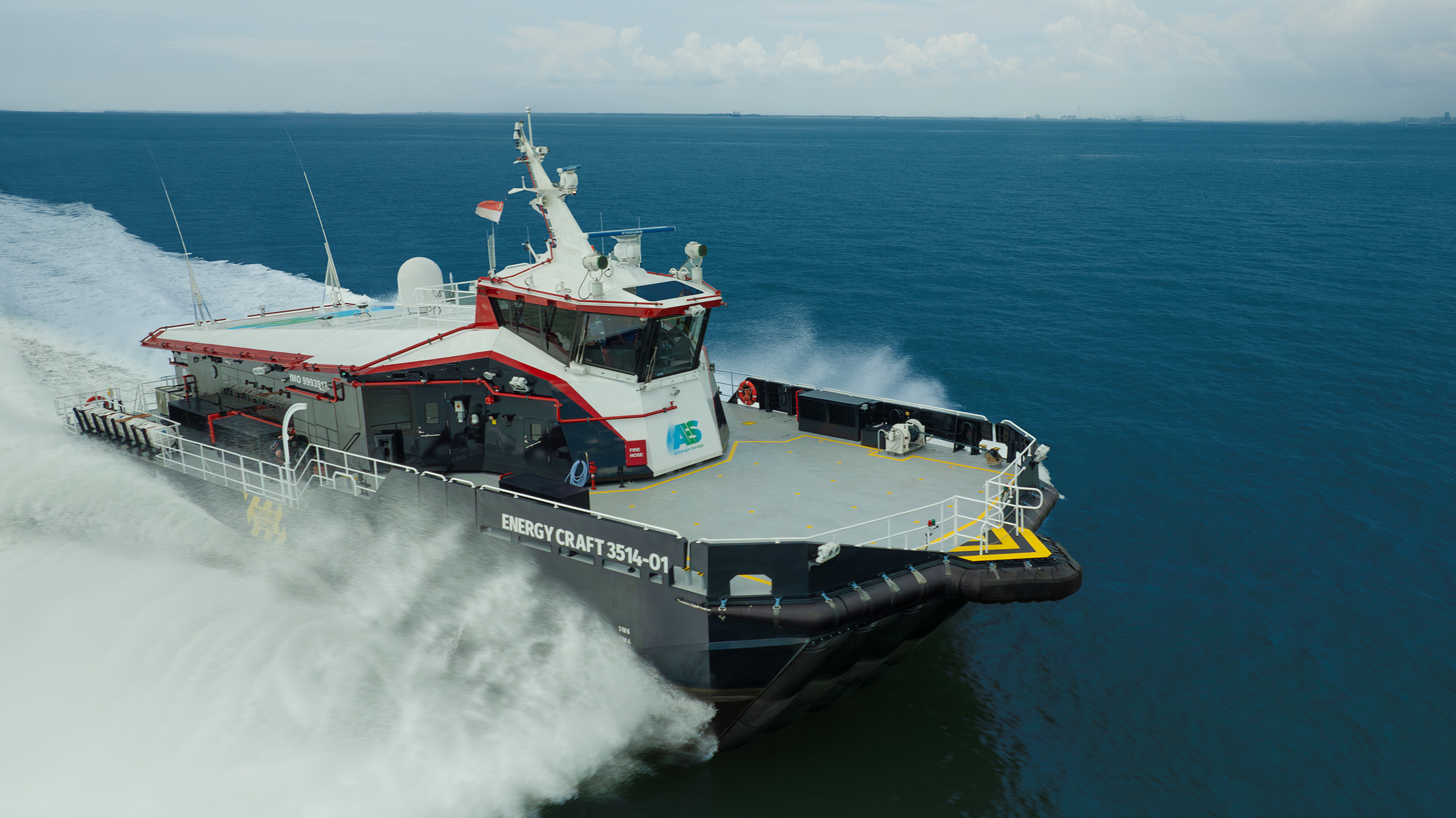
This Rolls-Royce image shows one of the Crew Transfer Vessels at 50 knots.
On a slightly different tack, this Rolls-Royce image shows The Spirit of Innovation.
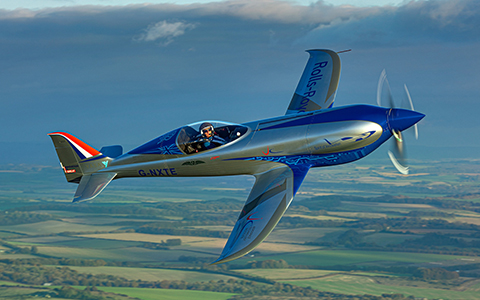
Rolls-Royce described it in this press release which is entitled ‘Spirit of Innovation’ Stakes Claim To Be The World’s Fastest All-Electric Vehicle, using these words.
During its record-breaking runs, the aircraft clocked up a maximum speed of 623 km/h (387.4 mph) which we believe makes the ‘Spirit of Innovation’ the world’s fastest all-electric vehicle.
I’ve probably been over 1,300 mph in Concorde.
So are the three offshore supply vessels, the fastest of their kind in the world?
This video shows one of the Crew Transfer Vessels doing, what they are intended to do.
Rolls-Royce seem to be borrowing a philosophy from their past, where they showed in the Schneider Trophy, just what their engines could do.
These two paragraphs describe the design of the Crew Transfer Vessels.
To enable fast and safe passenger transfer to offshore platforms, the 35-meter-long vessels have been designed as so-called “Surface Effect Ships” (SES). SES uses air-cushion technology within a catamaran hull form. This design was used for the first time in the offshore oil and gas industry.
The boats have an optimized power-to-weight ratio and use powerful fans to generate an air cushion between the hulls that minimizes hull drag and resistance. Combined with the mtu propulsion package (each delivering 5,760 kW of power), the vessels can travel at much higher speeds than conventional monohulls and catamarans, with consumption remaining at the same per hour of operations. The high speed of well over 50 knots (more than 90 km/h) ensures shorter transit times, while the low hull resistance saves fuel and reduces emissions.
I believe, that the Rolls-Royce mtu diesel engines used in these vessels can also be fueled by hydrogen, so is that the next development?
Could we be seeing hydrogen-powered fast ferries on short sea routes around the world?
‘Spirit of Innovation’ Stakes Claim To Be The World’s Fastest All-Electric Vehicle
The title of this post is the same as that of this press release on the Rolls-Royce web site.
This is the first paragraph.
We believe our all-electric ‘Spirit of Innovation’ aircraft is the world’s fastest all-electric aircraft, setting three new world records. We have submitted data to the Fédération Aéronautique Internationale (FAI) – the World Air Sports Federation who control and certify world aeronautical and astronautical records – that at 15:45 (GMT) on 16 November 2021, the aircraft reached a top speed of 555.9 km/h (345.4 mph) over 3 kilometres, smashing the existing record by 213.04 km/h (132mph). In further runs at the UK Ministry of Defence’s Boscombe Down experimental aircraft testing site, the aircraft achieved 532.1km/h (330 mph) over 15 kilometres – 292.8km/h (182mph) faster than the previous record – and broke the fastest time to climb to 3000 metres by 60 seconds with a time of 202 seconds, according to our data. We hope that the FAI will certify and officially confirm the achievements of the team in the near future.
Rolls-Royce also claim that the maximum speed achieved of 387.4 mph make it the world’s fastest all-electric vehicle.
To put that speed into perspective, it is faster than a Mark V Spitfire, which was powered by a legendary Rolls-Royce Merlin engine. These aircraft were powered by a Merlin 45 engine that generated 1074kW.
By comparison the Spirit of Innovation has a maximum power of just 400 kW.
Why Do It?
This paragraph from the press release gives an explanation.
As well as a stunning technical achievement, the project and world record runs provided important data for our future electric power and propulsion systems for all-electric urban air mobility and hybrid-electric commuter aircraft. The characteristics that ‘air-taxis’ require from batteries, for instance, are very similar to what was developed for the ‘Spirit of Innovation’.
I’ll go with that, as Rolls-Royce seem to be associated with several electric aviation projects.
But I can’t help feeling that there are parallels with the 1930s, when Supermarine and Rolls-Royce teamed up to produce the Supermarine S 6B, that won the Schneider Trophy outright in 1931. It is generally accepted that the knowledge gained at the time helped to design the Spitfire and the Merlin engine.
 The Anonymous Widower