Thoughts On Midland Main Line Electrification
I have been thinking about how the method of electrifying the Midland Main Line might change if the Aventra IPEMU was available.
These are thoughts in no particular order.
The Battery High Speed Train
An Aventra uses a modern version of the same bogies that are used in the Class 222 trains, which are capable of 200 kph. As the Class 387 train, which is a version of the Electrostar, can travel at 110 mph, I wouldn’t rule out that the more modern Aventra could run at 200 kph or 125 mph.
Acceleration on batteries would be the problem, not maintaining a high speed. that had been built up whilst running under the wires.
Also, when the train comes to the end of its northward journey at say Corby, it has to brake. With regenerative braking on the Aventra IPEMU, all of this energy would go back into the batteries.
So does this mean that no charging would need to be provided at say Corby?
I’m not totally sure of the mathematics and physics, but I’m certain that a battery electric train with regenerative braking, would put a significant part of the electricity it would need to accelerate away from a station, into the batteries as it stopped.
This would mean that stops at Wellingborough and Kettering would not stop Corby services from reaching their destination.
St. Pancras to Corby
I estimate that the distance from the end of the electrification at Bedford and Corby station is about thirty five miles.
This would mean that this route out of St.Pancras could be covered by an Aventra IPEMU.
Would this release a Class 222 train for use elsewhere? Or would the Aventra IPEMUs enable East Midlands Trains to offer more capacity or an increased frequency on this service?
St. Pancras to Leicester
I estimate that the distance from the end of the electrification at Bedford and Leicester station is about fifty miles.
This would mean that this route out of St.Pancras to Leicester could be covered by an Aventra IPEMU, especially if it were possible to recharge the train at Leicester, using the sort of short electrification, I wrote about at Rugeley Trent Valley station in Up And Down The Chase Line.
Leicester has problems as a station, as this extract from Wikipedia says.
Train operators using the station include CrossCountry and East Midlands Trains. Due to a 15 mph maximum speed to the south of the station, all passenger trains stop at the station. Up until the winter 2008 timetable, the morning southbound The Master Cutler express from Leeds to London St Pancras was an exception although this now also calls.
Leicester is a bottleneck station as it has only four platforms. All platforms are well utilised, especially platforms two and three which receive freight as well as passenger trains. A freight loop goes to the east of the station alongside the carriage sidings which run adjacent to platform four.
This Google Map of the station shows the platforms and the freight loop.

Leicester Station
It does look that there would be space to expand the station and from this section in Wikipedia, I’m sure Network Rail are working on an upgrade to the area to address all the problems.
It would appear to be stating the obvious to say, that Leicester station must be sorted first before any electrification in the area.
An extra bay platform would probably allow Aventra IPEMUs to run an electrified service to St. Pancras, if East Midlands Trains felt this was needed. Because of the regenerating braking of the train, it might not be necessary to provide a means of charging the trains at Leicester.
Creating A High Speed Route To Chesterfield and Sheffield
A few years ago, much of the Erewash Valley Line was upgraded ready for electrification and high speed running. On the Future of this line, Wikipedia says this.
Network Rail as part of a £250 million investment in the regions railways has proposed improvements to the junctions at each end, resignalling throughout, and a new East Midlands Control Centre.
As well as renewing the signalling, three junctions at Trowell, Ironville and Codnor Park will be redesigned and rebuilt. Since the existing Midland Main Line from Derby through the Derwent Valley has a number of tunnels and cuttings which are listed buildings and it is a World Heritage Area, it seems that the Erewash line is ripe for expansion. As the new signalling is rolled out, train detection is moving away from the traditional Track circuit detection of trains to Axle counting.
So could we see all of the very fastest services from St. Pancras to Chesterfield and Sheffield using this route?
Is the route from Trent Junction in the South to Chesterfield and Sheffield in the North ready for electrification?
Network Rail must ensure that as much of the line is capable of 125 mph running and that all bridges and tunnels have sufficient clearance from London to Sheffield via Chesterfield.
Creeping The Electrification North
From Bedford the electrification would be crept north at a sensible pace, which would be designed to cause minimum disruption to services.
Every mile it went north would increase the reach of the new electric trains, but only after the bottleneck of Leicester was eased to allow high speed running through the station.
The Electric Spine
If the Electric Spine was to be implemented in full from Southampton to Sheffield and Doncaster, then the electrification must be completed North of Bedford.
But as there are a lot of places where the electrification will not be completed elsewhere, will we see a shift towards electro-diesel freight locomotives like the Class 88.
So although freight would take advantage of an electrified Midland Main Line, it may not be as important as many think.
Completing The Electrified Routes to Sheffield, Nottingham and Derby
These three important cities all have extensive local rail networks, that could benefit from an electrified hub, so that Aventra IPEMUs could be used to bring benefits to all the communities served by diesel multiple units and in Sheffield’s case, quite a few Pacers.
So as a minimum, this electrification must be completed.
- East Midlands Parkway to Derby
- East Midlands Parkway to Nottingham
- East Midlands Parkway to Chesterfield and Sheffield via the Erewash Valley Line.
Chesterfield to Derby would probably be filed in the Too Difficult box, but would be an easy run for an Aventra IPEMU.
Note that I would start the electrification from East Midlands Parkway, as this station and the Airport are talked about as destinations for tram-train services.
Obviously to complete the Electric Spine, the following electrification would also need to be done.
- Complete the electrification between Bedford and East Midlands Parkway.
- Sheffield to Doncaster.
But once Sheffield station is electrified none of the many local lines reaching out from the city would need to be electrified, as most services could be run using Aventra IPEMUs. Obviously, if there was a special reason like freight or tram-trains, this wiring would only help the Aventra IPEMUs.
New Elecric Services
Once electrification has been installed up the Erewash Valley Line to Sheffield, lots of important places become within range of Aventra IPEMUs running from St. Pancras.
- Barnsley
- Bradford
- Huddersfield
- Leeds
- Manchester
It would also mean that several existing cross-country services could be run using electric trains.
- Liverpool to Norwich
- Nottingham to Cardiff
- Bristol to Newcastle
Remarkable in some ways as a lot of electrification has been dropped.
Did You Know Sheffield Had A Strassenbahn?
I didn’t either, but if you read this first paragraph of this Wikipedia entry for NET 2012.
Der NET 2012 (Abkürzung für Niederflur Elektrotriebwagen 2012) ist ein Straßenbahntriebwagen, der bei Vossloh für die Verkehrsbetriebe Karlsruhe hergestellt wurde. Der Triebwagen wurde für den Einsatz bei der Straßenbahn Karlsruhe entwickelt und verkehrt dort seit 18. Oktober 2014. Ähnliche Fahrzeuge werden für die Straßenbahn Chemnitz und die Straßenbahn Sheffield hergestellt.
I know it’s in German, but look at the last sentence. It loosely says similar cars will be produced for the Strassenbahn in Chemnitz and Sheffield.
So as I suspected most of technology for the Class 399 tram-train for Sheffield is proven in extensive use on the Karlsruhe Strassenbahn. It would appear that there may even some vehicles that run on both 750 VDC and 16.7 kVAC in Karlsruhe, according to this Wikipedia entry for Karlsruhe Stadtbahn.
The big difference is that the Karlsruhe tram-trains come from Dusseldorf, whereas the Sheffield vehicles are coming from Valencia. But if you look at the Vossloh specifications of the two tram-trains, the German NET 2012 and the British Class 399, they seem to be very similar.
As the first Sheffield tram-train has been unveiled in Valencia, it shouldn’t be long before they are seen on the streets of Sheffield, even if it will be a couple of years before they run to Rotherham.
Vossloh’s Product Sheet For The Class 399 Tram-Train
I was reading this article on Global Rail News about the full certification of the Vossloh Citylink tram-trains that are being used in Karlsruhe and Chemnitz. I’ve seen both systems and these are some pictures that I took.
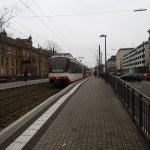
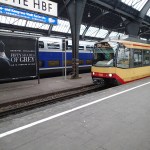
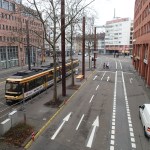
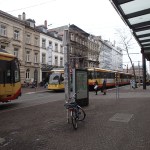
I apologise, if I’ve got some identification wrong.
On searching the Internet I found this product sheet on the Vossloh web site. It is actually titled Dual-Voltage Tram-Train Sheffield.
There are two bits of good news.
The product sheet says that the tram-train is air-conditioned.
But the best news is this from the article in Global Rail News.
Operator Verkehrsbetriebe Karlsruhe GmbH (VBK) has now exercised two options for a total of 50 additional Citylink LRVs to add to the 25 procured in 2011. All of the new low-floor vehicles should be delivered by summer 2017.
Would Karlsruhe have ordered seventy-five trams, if they weren’t up to the job?
So Sheffield isn’t getting some totally brand-new technology. They may be the first dual-voltage Vossloh Citylink tram-trains, but that is technology, that has ben wel-proven in many places.
The End Of The Don Valley Stadium
Sheffield’s Don Valley stadium was built for the World Student Games in 1991. It was never a real success and is now being demolished.

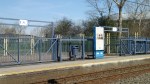

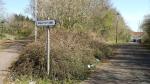

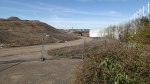
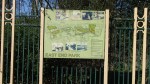

If there is a lesson from this story, it is to get the planning of what you do after the Games right. Manchester after the 2002 Commonweath Games rebuilt the stadium for Manchester City and the London 2012 Olympic stadium is going to be used by West Ham. Glasgow’s excellent 2014 Commonealth Games imaginatively built an Athletics Track inside Hampden Park. The Don Valley stadium didn’t seem to interest either or both of the city’s football clubs as a venue after the Games, so became a white elephant.
I do think a factor was that the stadium was designed in-house by Sheffield Council’s own architects. This policy was used extensively by British Rail and created some real monstrosities in the 1960s and 1970s.
By contrast the award-winning John Smith’s stadium in Huddersfield, which I visited in the afternoon and was built a few years later, was designed by specialist architects, as have most sports stadia around the world in recent years.
I do think too, that Sheffield missed a chance here of creating a prefabicated set of stands, in steel naturally, that would have fitted the standard athletics track. After the Games most could have been taken down leaving just enough for less-grand events. As the stadium is in a bowl, surely this could have been used to create an uncovered natural amphitheatre, where most people just sat on the grass. This has been used successfully at many horse racing venues in the UK and further afield, like Ascot, Goodwood and Epsom, where these areas have a totally different atmosphere.
In some ways it’s all rather sad and it has been probably a big waste of money, that could have been better spent. Athletics hasn’t drawn large crowds in the UK outside of the big set piece games and championships. The Alexander Stadium in Birmingham seems to be more than sufficient with a capacity of 12,700 for most other events, so the Don Valley stadium was probably a stadium too many for athletics. The nearest stadia at Gateshead, Manchester and the smaller track in Leeds, seem to have successfully negotiated multi-sport partnerships and appear to be on a much sounder footing, than the Don Valley Stadium ever was.
If they’d got the planning, re-use and design right, it might have been a very different story!
Quiet Flows The Don
The tram-trains between Sheffield and Rotherham will join up to the Sheffield Supertram in the area of the Meadowhall South/Tinsley tram stop.
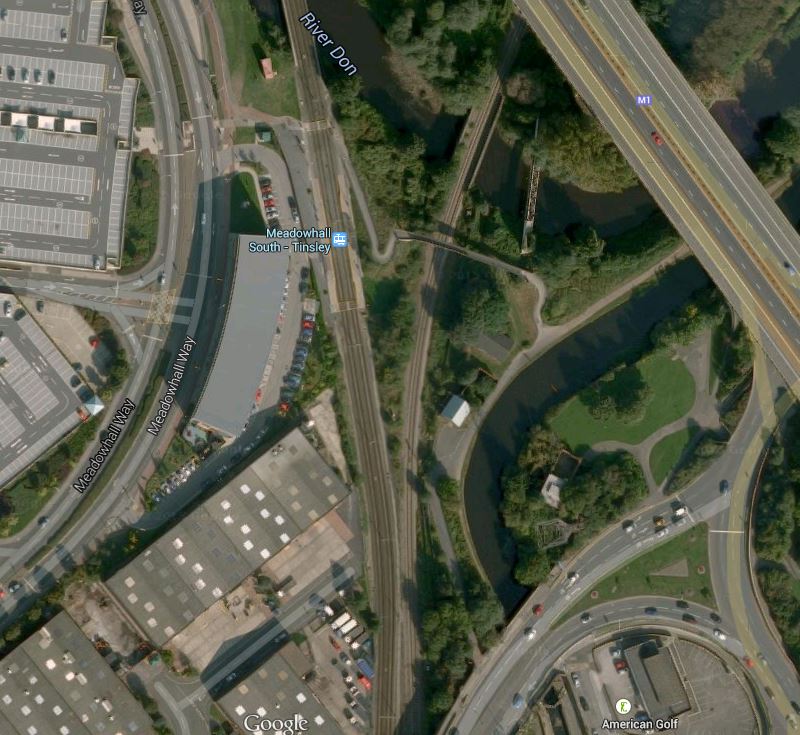
This Google Earth image shows the area.
Tinsley Area
Note the tram line marked by the blue symbol which shows the Meadowhall South/Tinsley stop, running down the map, with the single-track Tinsley/Masborough South Junction-Rotherham freight railway, splitting off to the right. Note the footbridge that rises from the tram stop and crosses the freight line, which you can see in the pictures. You can also see Meadowhall at the left and the M1 at the right and the various roads leading to and from Sheffield.
I took these pictures of the area.
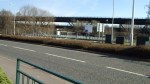
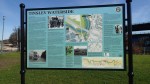
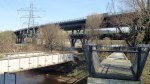
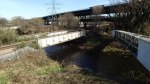
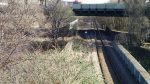
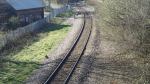
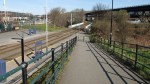
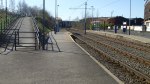
Believe it or not, in the midst of all this chaos is a quiet area by the River Don.
For the eagerly awaited tram-train, a connection will need to be made between the tram line and the single-track freight line. There is little detail at present about how the connection will be made, but the freight line will have to be provided with some form of overhead electrification at either 750 V DC or 25kV AC. However, the Class 399 tram-trains will be able to use any handy voltage.
I’ve just found this page on the Network Rail web site, which is their home page for the creation of the Tinsley Chord which will connect the tram line to the freight line. I was able to create this map of the chord from one of their published documents, from the impressive and comprehensive site.
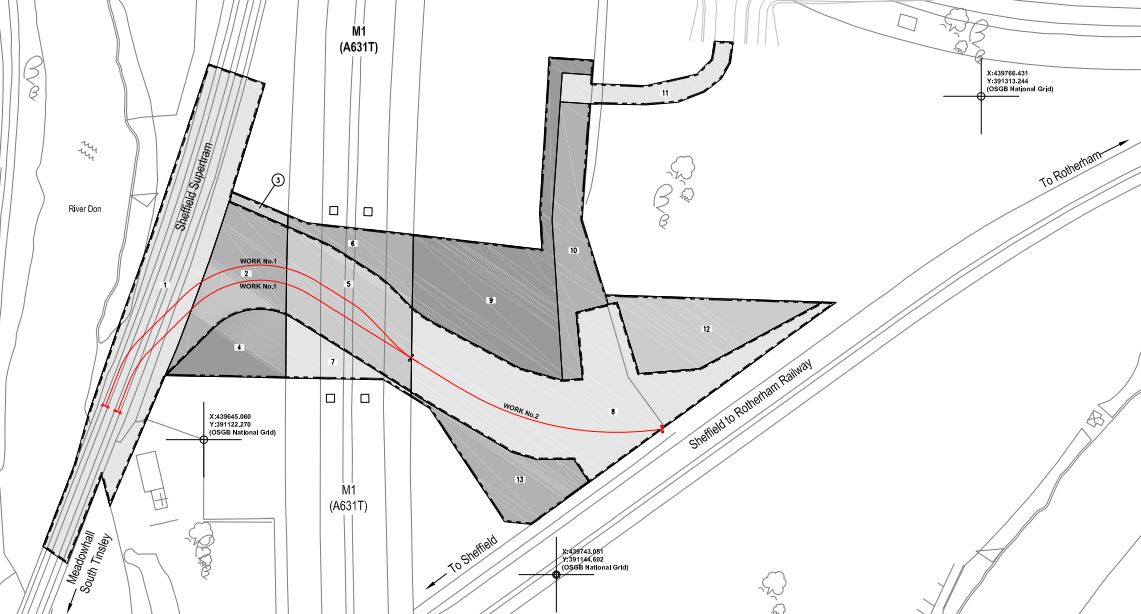
The Tinsley Chord
The new chord is shown in red and curves between the tram line at the left and the freight line, which goes off to the right.
Note that the Meadowhall South/Tinsley tram stop is the Sheffield side of the chord, so passengers going between Rotherham and Meadowhall could enter the Meadowhall Centre via Debenhams, as I did after my walk by the River Don.
Incidentally, Network Rail and their contractors will like working on this one, as sixty percent of the work is virtually indoors, as it is underneath the massive Tinsley Viaduct that carries the M1 over the area.
If you want to know how this chord underneath the M1 will effect the local bats, hedgehogs and newts it’s all laid out in this document.
Perhaps the best news of the project is contained in this recent report from the Sheffield Star, which is entitled Construction work planned for long-awaited £60m Sheffield to Rotherham tram-train scheme.
The article hopes that tram-trains will be running in 2017.
A Use For A Small Sheba Knife
My Sheba cutlery gets used in all sorts of ways.
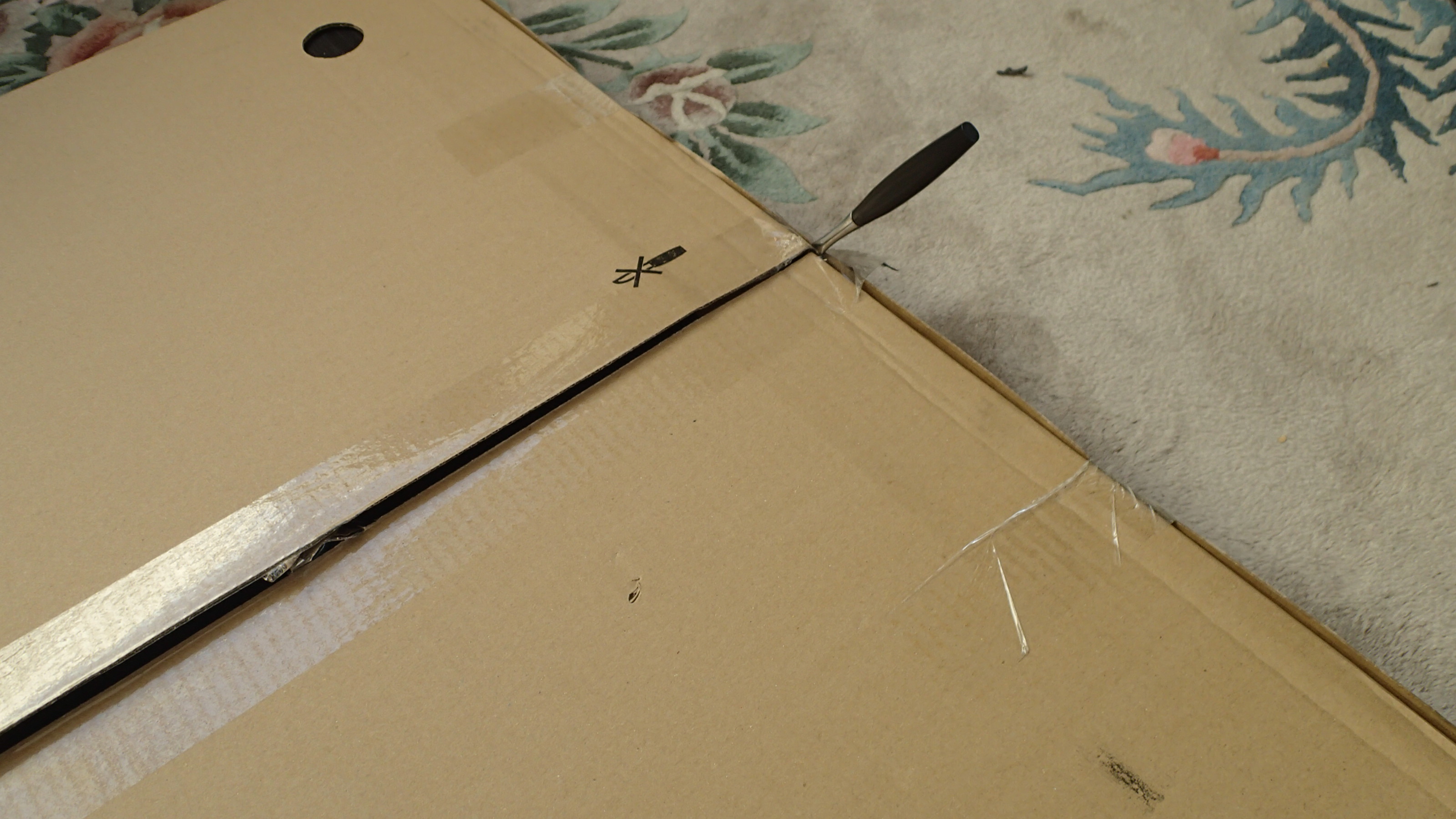
A Use For A Small Sheba Knife
As the small knives are more designed for spreading butter and jam, rather than cutting, they are ideal for opening packages without damaging the contents.
Sheba is the greatest cutlery design ever. And they were made in Sheffield and my upward of twelve settings have been used for nearly fifty years!
Are Tram-Trains A Good Idea?
After my trip around Germany and France, have I come to any conclusions about the concept of tram-trains?
I must admit, I was sceptical when I set out, as some of the claims about the advantages of tram-trains seemed too good to be true!
So what are their strengths? And how would they fit the planned test route to Rotherham that will extend the Sheffield Supertram?
Dual Voltage
In both Mulhouse and Paris, the tram-trains are dual voltage and can run on both 750 V DC and 25kV AC. This type of tram-train will become the standard as main lines are increasingly electrified with the higher AC voltage.
In the case of Sheffield, which will be electrified to London, Doncaster and other places in the next decade or so, dual voltage Class 399 tram-trains will be essential to future proof the system.
Standard Gauge
All except one of the tram and tram-train systems I used or saw were standard gauge systems. The exception was Darmstadt, where trams were of a narrow gauge. Any standard gauge system could be used by tram-trains of the same gauge. In the UK, France and Germany that means to incorporate tram-trains on a tram network, that the tram network must be standard gauge.
There are no tram systems in the UK, that are not standard gauge.
Tram-Trains Can Be Low Floor
Buses and trains are moving towards totally flat and low floors, where to enter you just step or wheel yourself across.
The Mulhouse and Paris Siemens Avanto tram-trains achieve this and it has been stated that the Class 399 tram-trains for Sheffield will be low-floor.
Tram-Trains Are Larger Than Trams
Generally tram-trains are larger than trams. I don’t know for sure, but this could be for crash-worthiness reasons when running as trains.
With Sheffield this is an advantage as the Sheffield trams are bigger than most of those in other systems.
Tram-Trains Are Faster Than Trams
I don’t know at what speed the tram-trains that I rode ran, but it was certainly faster than the average tram.
Tram-Trains Are Almost As Fast As Pacers
A Class 142 Pacer has a top speed of 120 km/hr, whereas the Siemens Avanto used in Mulhouse and Paris has a top speed of a hundred and the Class 399 tram-trains for Sheffield have a top speed of 110 km/hr.
I suspect though that the electric vehicles have better acceleration and braking, so they might even be quicker over a route like the Hope Valley Line. I won’t comment on the passenger experience, but I will say that they probably have a slightly higher capacity of over two hundred, if you count standing passengers.
Tram-Trains Release Platforms In City Centres
This was well-illustrated in Kassel, where the Hauptbahnhof has been effectively released for other uses after the building of two underground island platforms.
By joining services together it might also be possible to release platform needs, just as Thameslink and Crossrail will do in London.
I’ve spent a lot of time waiting for local train services in Sheffield, so is there any scope for joining more services together.
Acting Like Trams In A City Centre
This was impressively shown in Kassel, where except for the colour and size, you couldn’t tell which vehicles were trams and which were tram-trains.
Sheffield’s tram line layout is very like Kassel with a shared centre section.
Acting Like Trains On Train Lines
Once on a railway line, the trams must be able to use the voltage of that line, have the same crash protection and signalling of a train and have the performance not to interfere with all other traffic.
Tram-Trains Can Have Alternative Power Sources
Around the world, there are several examples of tram-trains that have on-board diesel engines as well. Kassel has ten for a start.
And there are of course the battery trams in Nice and Seville.
Tram-Trains Don’t Need Lines To Be Converted
If tram-trains need to use a line they don’t stop other traffic like freight trains and express passenger services using that line. In some places in the UK, tram lines have been created by ripping up heavy rail tracks, which might need to be used again.
Tram-Trains Can Create An Extensive Network
The Manchester Metrolink has a network of around ninety kilometres, whilst Sheffield’s Supertram has a length of around thirty.
Compare this to Kassel at over a hundred and eighty kilometres and Karlsruhe at over two hundred and sixty.
The two German cities are substantially smaller than the two major English ones.
Tram-Trains And Sheffield
Tram-trains are not some difficult concept, but any competent group of railway, tram, electrical and control engineers should be able to create a system that works pretty well.
At least in choosing the line to Rotherham, they haven’t set themselves too difficult a task. Sheffield also has a very good layout in the area to the east and north of the main line station.
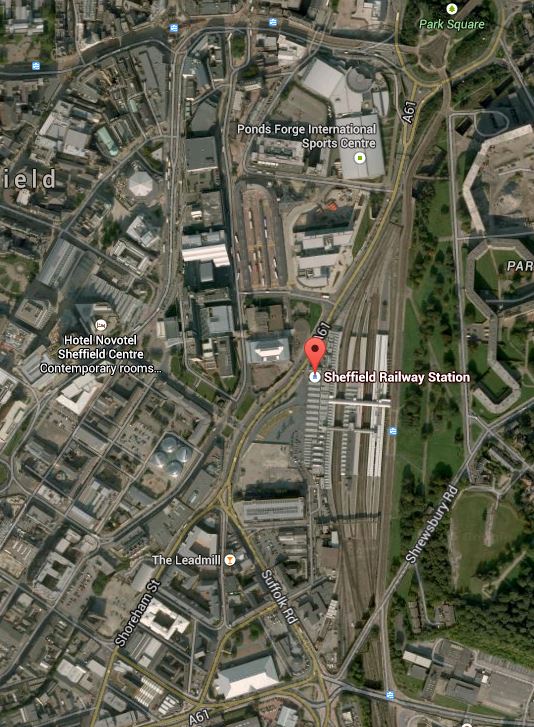
The Trams Around Sheffield Station
There are some things to note in this Google Earth map.
1. At the top right of the map, the three branches of the system meet in a triangular junction. The northern branch goes to Meadowhall and in the future Rotherham, the southern branch goes past the rail station and the western branch goes through the city centre. I don’t think that services use this junction in every posible direction, but it appears to have been future-proofed to cater for all eventualities.
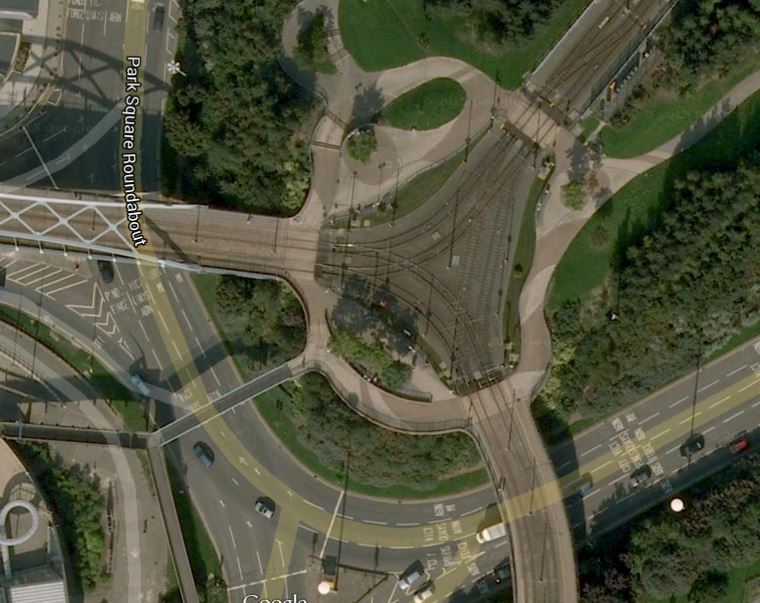
In this enlargement, the tracks and wires are clearly shown.
2. The southern branch past the station runs parallel to the rail lines.
3. There is quite a bit of space to put in extra tracks.
I also think, that after seeing the systems in Kassel and Karlsruhe, Sheffield could incorporate tram-trains fairly easily. Not being the first is a definite advantage, as ideas, designs and technology have moved on, as the Mulhouse system showed.
At some point in the future a lot of rail lines in the Sheffield area are going to be electrified to the main line standard of 25 kV AC and this might mean that the line used by the tram-trains to get to Rotherham in future may have this voltage. The Class 399 tram-trains themselves will be bought with a dual voltage capability, so they won’t care, but it seems a pity to put up one set of wires and then rip them down for another. Perhaps, you put up main line catenary initially and use it to provide a 750 DC supply! I’ll leave that one to the engineers.
An Extension To Dore
Plans have existed in the past to extend the Sheffield Supertram to Dore and some reports state that Dore will be linked to Meadowhall to improve HS2 connectivity. This Google Earth map shows Sheffield and Dore and Totley stations.
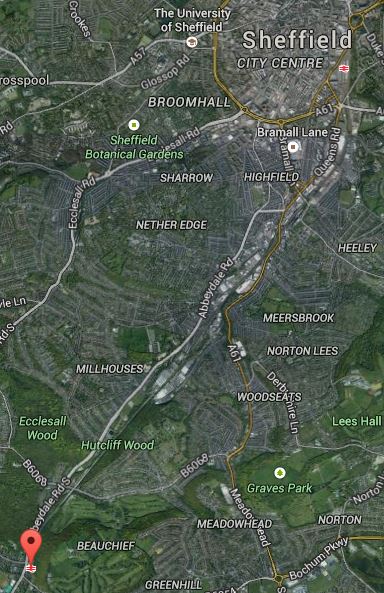
Sheffield To Dore
Dore and Totley station is on the Hope Valley Line, which will probably be electrified in the next ten years or so.
So could tram-trains come past Sheffield station and then go down an electrified Hope Valley Line?
I know little of the area, but because plans have been drawn up in the past, others must have a good idea. This document from Sheffield University written in 2003, gives a summary of what might happen.
But it predates any thought of tram-trains in Sheffield.
Could The Hope Valley Line Run Tram-Trains To Both Sheffield And Manchester?
This section in Wikipedia’s article about the Hope Valley Line, talks about proposals to to extend the Manchester Metrolink to Rose Hill Marple station on a spur off the line. Tram-trains could be used.
As Dore and Totley station is at the Sheffield end of the Hope Valley Line, could we see tram-trains going to both Manchester and Sheffield?
And What About Manchester And Sheffield?
I can remember reading in my Meccano Magazine in the 1950s about the ground-breaking electric-hauled Woodhead Line between the two cities.
This is said about tram-trains in the Wikipedia section for extensions to the Manchester Metrolink.
Metrolink and the TfGM Committee have prepared five costed proposals for extending Metrolink using tram-train technology over the existing heavy rail network in the region; along the Mid-Cheshire Line (between Stockport and Hale), the Hope Valley Line (between Manchester and Marple), the Glossop Line (between Manchester and the dual termini at Hadfield and Glossop), the Manchester to Sheffield Line (between Manchester and Hazel Grove), and along the Manchester to Southport Line (between Manchester and Wigan via Atherton), with an estimated total funding requirement of £870 million as of 2013.[197] TfGM intend to proceed to the identification of potential rail industry funding options, subject to a review of lessons from a tram-train pilot scheme in Sheffield.
So could we see the opening up of routes between the two cities using tram-trains, if the trial in Sheffield to Rotherham is successful.
The old Woodhead Line is just over sixty kilometres long, which means that from what I saw in Karlsruhe and Kassel, tram-trains could easily handle the distance between Manchester and Sheffield.
An interesting possibility for which the technology exists is a dual voltage tram-train leaving Manchester and taking the Hope Valley Line, which is electrified at its western end, which then travels over the Pennines to Dore, using either diesel or battery power, from where it becomes a tram on Sheffield’s network.
It won’t happen soon, but it is no fantasy, as I’ve seen all the technology needed in Kassel, Karlsruhe and Essex.
So will we see, heresy-of-heresies, an operational merging of the tram systems across the Pennines?
But imagine two, three or even four new tram-trains an hour on each of the routes between Manchester and Sheffield, that would extend their journeys into the city-centres, rather than need valuable platform space at Sheffield or Manchester Piccadilly stations.
I don’t know the lines well, so this might be pure speculation, but as the systems in Germany showed, if you get the track, power and signalling working, then good tram-trains can go virtually anywhere they’re needed.
A Vision For The North?
Let’s assume that the tram-train experiment from Sheffield to Rotherham is a success, which after my German and French experiences, I wouldn’t bet against.
So what happens next?
That is very much in the hands of the politicians, at both a national and local level, but from Sheffield and Manchester I could see tram-trains getting used on the numerous local lines that fan out from Manchester and Sheffield.
1. At present many of these lines are served by dreaded diesel Pacers, so the new tram-trains would be very welcome.
2. Some lines like the Hallam Line between Sheffield and Leeds via Barnsley could probably be just electrified with 750 V DC, to allow tram-trains to run.
3. As at Kassel not all lines would need to be electrified, as other technologies exist.
Everybody needs to have a bit of vision and if the Class 399 tram-trains, do what it says in the specification, we could be seeing them all over a dense network of lines in the north.
If all of these lines were upgraded, there is one thing that will happen for certain. The areas will improve in all ways, with better housing, more jobs and business and leisure opportunities.
Conclusion
To answer my original question, tram-trains are not a good idea, but a brilliant affordable solution to the big problem of urban transport all over the world.
In the UK, we must prove that the technology will work in a UK environment and I suspect there are many councils, tram and train operators eagerly awaiting the outcome.
What Is Happening To The Sheffield-Rotherham Tram-Train?
The Sheffield-Rotherham Tram-Train is a pilot project to prove whether the technology can work on UK railways.
It’s a laudable aim, but I don’t like pilot projects as if they work, then you usually end up with an inadequately funded permanent one, that is lacking in certain areas and has to be upgraded. On the other hand, if they don’t work you have all the expense of ripping them out.
It is much better to take proven technology and phase the introduction of the system, funding and building every phase adequately.
This Google Earth map shows the area where the tram-train will run.
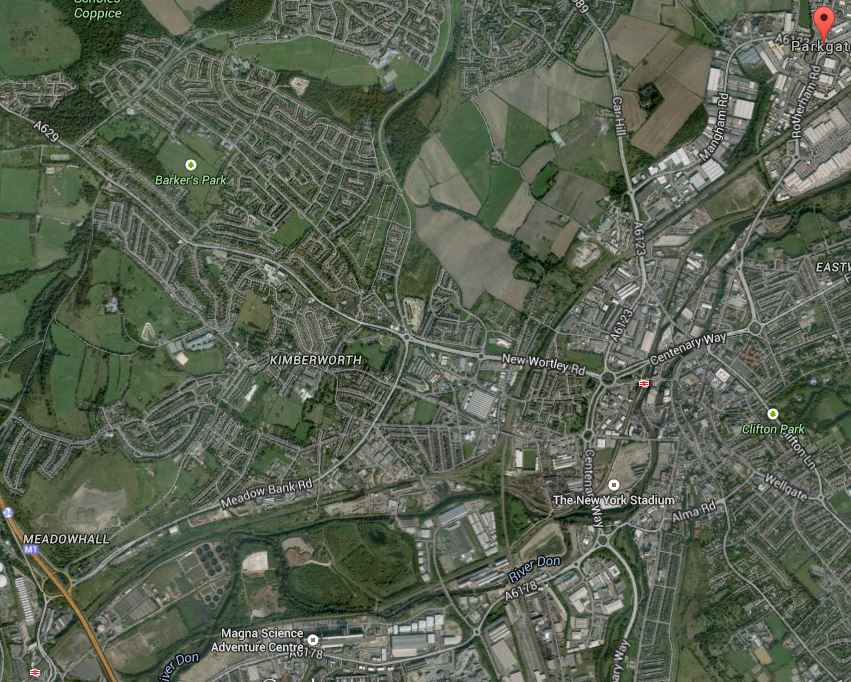
Sheffield Rotherham Tram Train
In the top right or north east corner of the image is the Rotherham Parkgate Retail Park, which will be the terminus of the route. In the bottom left hand corner is Meadowhall Shopping Centre, with the associated Interchange station, where the tram-train will join the Sheffield Supertram network. Tram-trains are proposed to run three times in an hour, which would be in saddition to the two or three trains per hour on the route.
This Google Map shows the layout of train tracks around Rotherham Central station.
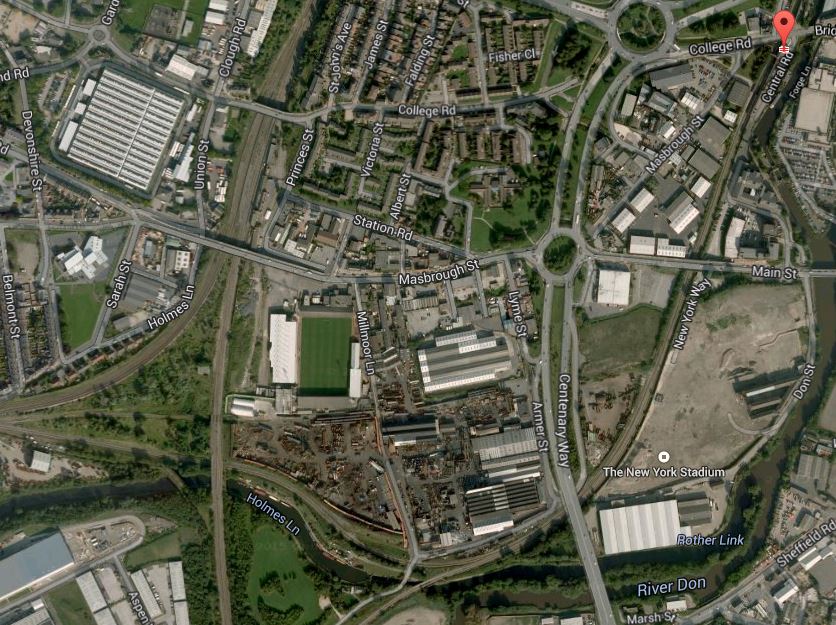
Lines Through Rotherham
Note the New York stadium marked on the map, but not shown, as the image was taken before the stadium was built. Just after the stadium, the lines split with one going west to join other lines and go direct to the Meadowhall Interchange and the other, which is now a freight route, going more south-west over the river towards Sheffield.
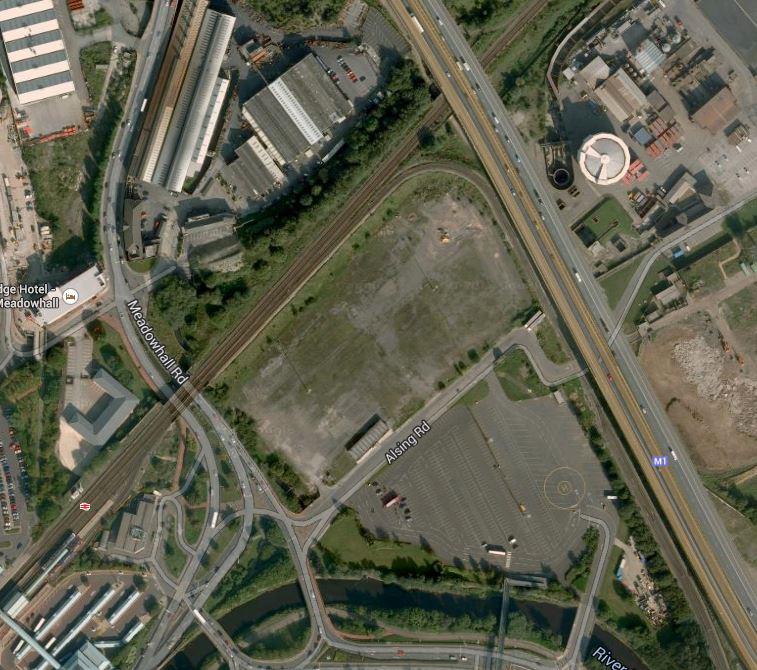
This Google Map shows the layout of the railway lines and the tram tracks around Meadowhall Interchange.
Meadowhall Tram-Train Connection
Meadowhall Shopping Centre itself, is just off the bottom of this map and is connected to the station by a bridge over bus, tram and train stations, which can just be seen in the bottom-left corner.
Note how the railway to the east from Sheffield goes under the M1 motorway, with the Sheffield Supertram coming up parallel to the motorway and then turning into the interchange.
It will be difficult to get this connection right, as a direct tram-train from Rotherham will come under the motorway and then stop in the Meadowhall Interchange station. I would assume that it would stop in the Sheffield Supertram platforms and then reverse direction to go on to Sheffield.
This must be wrong, as it would be a difficult scheme to run efficiently with three tram-trains an hour in each direction reversing in the tram platforms and then Rotherham-bound trams sometimes waiting there to cross the westbound rail line to get on the right track for Rotherham.
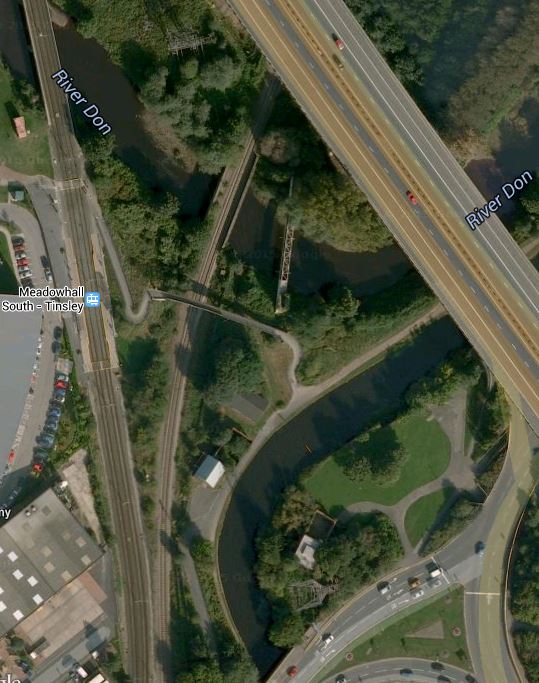
So I would assume the second route that breaks off to the south-west from Rotherham would be used. This Google Earth map shows where the line meets the Sheffield Supertram around Meadowhall South station.
Medowhall South
This would be a much easier connection and I think this is the way the tram-trains will go to and from Rotherham.
The Sheffield-Rotherham tram-train has been a long time coming since the decision to start. I wonder if the reason is that the engineering of both track and signalling has been much more difficult than first thought. The first direct route is difficult if not impossible operationally, but sorting out the tracks for the second route may not be too easy, as looking at the image there is a lot of water about, that might need to be bridged, by the tight turn.
I think too, that as it’s only a trial, we might see a single track curve, as the tram-trains will be reversing at Meadowhall Interchange. That would at least cut costs and men less disruption to the Supertram, whilst the connection is being made.
One issue that has to be thrown into the pudding, is the electrification for the trams, which is 750 volts DC overhead. If at some future date the planned electrification of the Midland Main Line and trans-Pennine routes at Sheffield is extended to Meadowhall and Doncaster, then the new station at Rotherham Central would possibly be electrified at 25kV AC.
So it could be that extending the tram-train pilot scheme between Sheffield and Rotherham into the future, might be scuppered by electrification plans for the North.
It does strike me that the £60million or so being spent on the tram-train pilot, might be better spent on providing extra trams for the Sheffield Supertram and trains for more services through Rotherham.
Could it be that just as the great and good in the Department for Transport, forced Cambridge to have a guided busway, they are persuading Sheffield and Rotherham to have a tram-train?
Sheffield To Cambridge By Train
As I wanted to have lunch with an old friend in Cambridge I came home the slow way by taking a train from Sheffield and then changing at Ely.
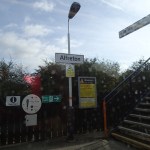
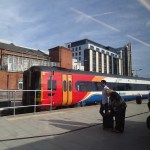

The journey took five minutes over three hours, which included a waits at both Nottingham and Ely of over ten minutes.
I doubt we’ll see any improvements in this service in the next few years, but it really was a slow journey in a two coach Class 158 trains. Perhaps as some of the InterCity 125 are released as the new Class 800 trains are delivered, we might see services like Liverpool to Norwich run by these trains. After all a lot of the route between Liverpool and Norwich in a few years time will allow trains at over a hundred miles per hour.
There has been talk of electrifying the cross-country routes from Ipswich to Peterborough via Ely, specifically for freight. I think it will happen, but until Liverpool to Sheffield and Nottingham to Grantham are also electrified, it could be many years before electric trains cross from one side of England to the other.
Does Sheffield Need A Bus Tram?
Sheffield is an unusual city in the UK, in that it has lots of hills.
On Tuesday night, when I went to Carluccio’s on the Ecclesall Road it meant that I hsd to get a bus, as this was off the tram route, which only has a fixed route through the city.
It was not the easy journey it would have been on the tram, as ordinary buses don’t have enough information on them. So although, I got off in almost the right place, the journey would have been less fraught on a tram.
It looked to me that the Ecclesall Road has a lot of buses, but just as I have locally the route 38, which I nickname the Hackney Tram, would it be better if Sheffield had a fleet of modern buses that had some of the features that tram passengers like, such as information, on-board staff, comfortable seats and disabled access.
This type of operation needs no new infrastructure and you can add and subtract vehicles to the route as required. Buses like London’s new Routemasters may also make lighter work of the hills. I’m not sure of the figures, but I think a good hybrid bus has more acceleration and short-term power than one with a large diesel. Our new Routemasters do have a touch of the Linford Christies.
 The Anonymous Widower