Crossrails For The North
Regularly there are references in the media for Crossrail for the North.
This article in Rochdale Online is entitled Andy Burham calls for ‘Crossrail for North’
Note that the misspelling of Andy Burnham; the Mayor of Manchester’s name is from the web site.
Andy Burnham and many others have a point that West-East connections across the North are not good, but it is not that simple.
Hence the reason, I’ve called this post Crossrails For The North and not Crossrail For The North.
Northern And London Crossrails Compared
If you look at Greater London, the distance between Reading and Shenfield stations, which are two of the termini of London’s Crossrail, is about eighty miles and when Crossrail opens a train will take about one hour forty minutes.
By comparison, Liverpool to Leeds is just over seventy miles and the current fastest trains take ninety minutes with two stops at Manchester Victoria and Huddersfield stations.
Those that live East of Leeds, keep reading.
The differences between the two routes, when Crossrail opens will be mainly down to the number of stops, frequency and connectivity.
- The Northern Route is shorter and hence marginally faster.
- The London route has more stops.
- The London route has a higher frequency.
- The London route is electrified.
- The London route will be served by specially-designed Class 345 trains.
But possibly most importantly, the London route connects to a large number of North-South cross-city railways.
It is sensible to think of London’s Crossrail as a loose ball of chunky knitting wool with a big fat needle stuck through it.
The ball of knitting wool is Central London with all its Underground and Overground Lines.
- Bakerloo Line – North-West – South-East through City Centre
- Central Line – West-East through City Centre
- District Line – West-East through City Centre
- East London Line – North-South to East of City Centre
- Gospel Oak to Barking Line – West – East to North of City Centre
- Hammersmith and City Line – West – East through City Centre
- Jubilee Line – North-East through City Centre
- Metropolitan Line – West – East through City Centre
- Northern Line – North-South through City Centre
- Northern City Line – North from the City Centre.
- North London Line – West – East to North of City Centre
- Piccadilly Line – North – West through City Centre
- Thameslink – North – South through City Centre
- Victoria Line – North-East – South-West through City Centre
- Waterloo and City Line – South from the Centre Centre
- West London Line – North-South to West of City Centre
Crossrail is the big fat needle struck right through the middle.
You could actually argue that not just one big fat needle is through the middle, as Crossrail is paralleled by some of London’s historic Underground Lines.
- The Central Line connects at Stratford, Liverpool Street, Tottenham Court Road, Bond Street and Ealing Broadway stations.
- The District Line connects at Whitechapel and Ealing Broadway stations.
- The Metropolitan Line connects at Whitechapel, Farringdon and Paddington stations.
- In the future, the North London Line will connect at Stratford and the new Old Oak Common station.
Crossrail is going to be a massive playground for the duckers-and-divers, as they search for the fastest route.
How London Crossrail Will Develop
London Crossrail is not a complete system, with certain connections not of the best.
- Eurostar from St. Psncras International
- HighSpeed services from Stratford International
- HS2
- Piccadilly Line
- Scottish and Northern services from Euston and Kings Cross
- Victoria Line
Several of these connections can be addressed by smaller projects like the necessary rebuilding of tube stations like Bank, Charing Cross, Euston and Oxford Circus.
A lot of London politicians are pushing for Crossrail 2 , but London will be given a big increase in capacity with Crossrail and I think there is an opportunity to redefine the scope of the later project, in the light of what happens after Crossrail opens.
Consider the following, which will happen after Crossrail opens.
- Huge pedestrianisation will happen in the City of London and the West End.
- Hopefully, walking in large parts of Central London will improve to the standard of the bus- and car-free Central Liverpool.
- On foot interchanges like Oxford Circus-Bond Street and Bank-Liverpool Street will be easier and quicker than now.
- The long-neglected and ill-fated Northern City Line is getting new trains, higher frequencies and hopefully a deep-clean of the stations.
- Liverpool Street and Moorgate stations will effectively become one station with world class connectivity.
- The Waterloo and City Line will be improved and probably go 24/7!
- Waterloo station will get a forty percent capacity increase this summer.
- The Northern Line Extension to Battersea will open in 2020.
- New trains will have been delivered for London Overground’s Liverpool Street and Gospel Oak to Barking services.
Londoners will fully exploit the network and importantly Transport for London will have detailed information from the ticketing system on the routes taken and the bottlenecks as they develop.
Access For All
Access for All is a National programme, that is making stations all over the country accessible to as many passengers as possible.
Check the list of stations being updated under Access For All
After the General Election, I would not be surprised to see funding for this programme increased all over the country, as it is both necessary and a quick way to attract more passengers to the railways.
New Stations
Since 2000, seventy-four new stations have opened or reopened.
I can rarely remember stations reopening last century, but the 4-5 new stations every year since the turn of the Millennium, seems to have continued this year with the opening of Cambridge North, Ilkeston and Low Moor
The New Franchises
Five franchises have been awarded lately.
- Greater Anglia
- Northern
- ScotRail
- South Western Trains
- TransPennine
A feature of all these franchises is that the operators are introducing a lot of new trains and substantially refurbishing others.
Will this trend continue?
Obviously, the operators have done their sums and find that new trains attract more passengers.
There is a major problem with new trains, in that capacity to build them must be getting very short. I also don’t think that Chinese trains will be welcomed.
If I was Prime Minister, I’d make sure there was enough capacity to build and refurbish trains in the United Kingdom.
Building Crossrail 2
There is no doubt that at some time in the future, Crossrail 2 will be built.
But unlike Crossrail, which is a massive project similar in size to the Channel Tunnel,, the electrification of the Great Western Railway or HS2, it is a collection of smaller projects that can be phased over the years, with each phase giving substantial benefits to London, train companies and passengers, be they Londoners, commuters, visitors or tourists.
I would build it in the following sequence of sub-projects.
- Four-Tracking Of The West Anglia Main Line – Extra capacity on the West Anglia Main Line is needed for both improved London-Stansted-Cambridge services and Crossrail 2.
- New High-Capacity Crossrail-Compatible Trains North of London – Greater Anglia and London Overground have already ordered these trains to replace the current thirty-year-old trains.
- Station Improvements North of London – Improvement are much needed and are already planned and underway at Tottenham Hale and Meridian Water.
- Improve Connection To Sub-Surface Lines At St. Pancras Station – The current connectivity is terrible between these lines and Thameslink and the HighSpeed lines to Kent.
- Connect Euston Square Tube Station To Euston Station To Give Extra Capacity During Euston Rebuilding For HS2
- Introduction Of A New Stratford-Tottenham Hale-Angel Road Service – The delivery date for STAR is 2019.
- Introduction Of Chingford-Walthamstow-Stratford Services – This would improve access to Crossrail and take pressure from the Victoria Line.
- New Stansted And Cambridge Services From Stratford – Greater Anglia have suggested this and there’s even an unused loop at Stratford, that could be used to turn trains and allow them to call at Stratford International for Eurostar to the Continent and HighSpeed services to Kent.
- More Terminal Capacity for Trains From North of London – The Stratford loop would increase the terminal capacity for Greater Anglia and also give access to the Jubilee Line for London Bridge, Waterloo and Westminster.
- Use Improved Capacity At Waterloo To Increase Services On Proposed Crossrail 2 Southern Branches – The extra capacity should help.
- New High-Capacity Crossrail-Compatible Trains South of London – South Western Trains have indicated this will happen.
- Station Improvements South of London – Improvements are much needed.
- Rebuild Euston Tube Station In Cnjunction With HS2 –
Only when these phases are completed, would the central tunnel be bored.
This step-by-step approach has several advantages.
- The pace of the project can be geared to the finance and resources available.
- Some developments can have a significant local design and scope input.
- Much needed stations can be built early to generate passengers and cash flow.
- Trains can be follow-on orders to Crossrail.
- The suburban sections of the route will always be available for passenger traffic.
When Crossrail 2 is complete, the second big fat knitting needle has been stuck in the ball of wool.
What Can The North Learn From London?
I would argue that one of the keys to London’s success over the years has been its comprehensive multi-layered public transport system.
- Crossrail, Crossrail 2, Thameslink and the Overground could be considered the top layer.
- The Underground, the Docklands Light Railway and the suburban electric trains are the middle layer.
- Buses form the local and bottom layer.
Underneath a walking and cycling layer is emerging.
The North of England can be considered a series of local transport networks, which are connected by a series of major lines, which are equivalent to London’s Crossrail, Crossrail 2 etc.
Northern Connect
I find it interesting that Northern are introducing a Northern Connect service, which Wikipedia describes as follows.
From December 2019, Northern will operate a network of twelve Northern Connect interurban express services. Eleven of these will be operated by brand-new Class 195 diesel multiple units and Class 331 electric multiple units, whilst the Middlesbrough to Carlisle via Newcastle route will be operated by refurbished Class 158 units.
Places that will be served by Northern Connect routes include Bradford, Chester, Halifax, Leeds, Liverpool, Manchester, Middlesbrough, Nottingham, Newcastle, Preston, Sheffield, Barnsley, Lincoln, Wakefield and York.
Local Networks In The North
Some of the local Northern networks in places like Leeds, Liverpool, Manchester, Newcastle, Nottingham and Sheffield are certainly better than others.
It could also be argued that the six cities I named, are among the most successful and vibrant cities of the North.
I feel that for the railways to be successful in the North and for some cities to have a major improvement in prosperity, that some of the local networks need substantial improvement.
TransPennine And Feeder Routes
The starting point is to detail the Northern Connect and TransPennine Express services in the North.
The Northern Connect services given in the January 2016 Edition of Modern Railways are as follows.
- Middlesbrough to Newcastle
- Newcastle to Carlisle
- Hull to Sheffield
- Nottingham to Bradford via Leeds
- Lincoln to Leeds via Sheffield and Barnsley
- Liverpool to Manchester Airport via Warrington
- Chester to Leeds via Warrington, Manchester Victoria and the Calder Valley
- Blackpool North to York via Preston and Leeds
- Barrow to Manchester Airport
- Bradford to Manchester Airport via the Calder Valley.
- Blackpool to Manchester Airport
- Windermere to Manchester Airport
I suspect plans have changed since January 2016, but the possible routes are a good start.
According to Wikipedia, TransPennine routes are as follows.
- Liverpool Lime Street to Newcastle via Manchester Victoria, Huddersfield, Leeds and York
- Manchester Airport to Middlesbrough via Manchester Piccadilly, Huddersfield, Leeds and York
- Manchester Airport to York via Manchester Piccadilly, Huddersfield and Leeds
- Liverpool Lime Street to Scarborough via Manchester Piccadilly, Huddersfield, Dewsbury, Leeds and York
- Manchester Piccadilly to Hull via Huddersfield, Dewsbury, Leeds and Selby
- Manchester Airport to Cleethorpes via Manchester Piccadilly, Stockport, Sheffield, Meadowhall and Doncaster
- Manchester Airport to Edinburgh Waverley/Glasgow Central via Manchester Piccadilly
These routes will change in the next year, when the Ordsall Chord opens.
The opening of the chord, may mean that certain services to Manchester Airport, will not need to reverse at Manchester Piccadilly.
Summarising the East-West routes across the Pennines gives.
- Newcastle to Carlisle
- Manchester Victoria to Leeds via the Calder Valley Line
- Manchester Victoria to Leeds via Huddersfield
- Blackpool North to Leeds via Preston and the Calder Valley Line
- Manchester Piccadilly to Doncaster via the Hope Valley Line and Sheffield
None of these lines are fully electrified.
They are also connected to their ultimate destinations by feeder lines.
- Liverpool to Manchester Airport via Warrington
- Chester to Manchester Victoria via Warrington
- Liverpool to Manchester Victoria
- Leeds to Newcastle via York
- York to Middlesbrough
- York to Scarborough
- Leeds to Hull
Only the following lines will be fully electrified by December 2017.
- Liverpool to Manchester Victoria
- The West Coast Main Line
- The East Coast Main Line
- Some Suburban Routes in Blackpool, Liverpool, Manchester and Preston
- Some Suburban Routes in Bradford and Leeds
Most of the routes will have to be run by diesel or bi-mode trains.
The Crossrails For The North
There are five East-West routes across the Pennines used by Northern Connect and TransPennine Express.
- Newcastle to Carlisle
- Manchester Victoria to Leeds via the Calder Valley Line
- Manchester Victoria to Leeds via Huddersfield
- Blackpool North to Leeds via Preston and the Calder Valley Line
- Manchester Piccadilly to Doncaster via the Hope Valley Line and Sheffield
To these I would add two extra lines.
- Leeds to Carlisle via Settle
- Preston to Leeds via Burnley, Colne and Skipton.
Note
- I have added the Settle-Carlisle Line, as it is world-renowned, is in excellent condition and if provided with a decent train service, could be a major attraction, that would bring tourists to the area.
- The Skipton to Colne Line should be reinstated, to create a direct connection between the electrified local networks servingLeeds/Bradford and Liverpool/Manchester/Preston.
But there would be seven magnificent routes across the Pennines, which could be updated to the following objectives.
- Frequent trains on all lines with at least two trains per hour (tph)
- 100 mph running where possible.
- As high a frequency as possible on the core section between Manchester Victoria and Leeds. Plans exist for six tph, which is a good start.
- In the East trains would fan out to Cleethorpes, Grimsby, Hull, Newcastle and Scarborough, as they do now.
- In the West trains would fan out to Blackpool, Chester, Crewe and Liverpool.
- Lots of cross-platform connections at stations like Leeds, Liverpool, Manchester Victoria, Newcastle, Preston and York with long distance North-South services to London and the South and Scotland.
- All stations would be step-free with lifts or ramps.
In addition provision should be made early to make sure that there are good connections to HS2.
Electrification
Obviously, electrification would be an ultimate goal on all these East-West routes.
But there are various problems with the electrification of the Peenine sections of the routes.
- These lines have large numbers of low bridges and high viaducts.
- Electrification would need to be robust because of the weather.
- Electrification gantries might not fit well in the scenery.
- Installation and servicing of overhead electrification may not be an easy process.
On the other hand, the noise of diesel trains might not be welcomed.
However, I believe that in the next ten years much quieter self-powered trains will be commonplace.
At the present time, if diesel or bi-mode trains are acceptable, then they should be used to provide a service.
Looking at the various feeder routes to the East and West of the Pennine sections, it is a different matter.
- Routes are less challenging.
- There are fewer bridges and viaducts.
- Installation and servicing of overhead electrification would be easier.
There is already a lot of electrification at the East and West, which could be extended to places like Chester, Hull and Middlesbrough.
A Pennine core without difficult electrification, between electrified feeder routes may be the most efficient way to run the routes using bi-mode trains.
It might be sensible to use Class 88 bi-mode locomotives instead of the currently proposed Class 68 locomotives with rakes of coaches, as is planned by TransPennine Express.
A Hull to Liverpool service would run under the following power.
- Hull to Bradford via Leeds – Electricity
- Bradford to Stalybridge- Diesel
- Stalybridge to Liverpool via Manchester Victoria – Electricity.
Around thirty miles would be on diesel and the difficult electrification in the Pennines would be avoided.
Infrastructure
This table is a brief summary of the routes.
- Newcastle to Carlisle – Double track, 18 stations
- Manchester Victoria to Leeds via the Calder Valley Line – Double track – 17 stations
- Manchester Victoria to Leeds via Huddersfield – Double track – 14 stations
- Blackpool North to Leeds via Preston and the Calder Valley Line – Double track – 14 stations
- Manchester Piccadilly to Doncaster via the Hope Valley Line and Sheffield – Double track – 18 stations
- Leeds to Carlisle via Settle – Double track – 10 stations
- Preston to Leeds via Burnley, Colne and Skipton – Part Single track
Note.
- Most routes are double track, which aids train scheduling.
- All except Skipton to Colne seem to be in good condition.
- I can’t find much information about speed limits.
I think it is true to say, that none of the routes could be a high speed line, although a large proportion could have substantial speed increases.
From what I have seen in East Anglia, I suspect most routes could be upgraded to 100 mph, which with the train frequencies of say four tph could give a substantial increase in service quality.
Stations
Many of the secondary stations on these routes are not blessed with facilities like ticket machines, lifts and step-free access.
If I compare, what I see on the web, with what I have experienced in East Anglia, the quality of the smaller stations is not good.
Services
The services along the lines are not of a high frequency or of a high speed, but Northern and TransPennine Express intend to increase frequencies and speed.
The new trains with their faster stops will help.
This is said about the Future Services of TransPennine Express on Wikipedia.
A twice-hourly service between Manchester and Newcastle will be phased in between December 2016 and December 2017, made up of the existing service from Liverpool and a reinstated service from Manchester Airport. Trains between Liverpool and Newcastle will be extended to Edinburgh via the East Coast Main Line, giving a twice-hourly service between Leeds and Edinburgh together with an hourly CrossCountry service. Trains between Liverpool and Scarborough will be rerouted via Manchester Victoria and Newton-le-Willows to provide a half-hourly fast service between Liverpool and Manchester. It is also planned to operate a six train per hour frequency between Manchester and Leeds, up from five today.
I can’t find anything about timings.
A High Speed Line
Building a new high speed line will be difficult, expensive and may take years, as there will probably be a need for a costly tunnel through solid rock between Manchester and Leeds.
So a prudent Project Management strategy could be phased in the same way I proposed for London’s Crossrail 2.
- Increase Line Speed – This would probably give the largest benefit, as it would enable more and faster trains.
- Electrify From Leeds To York – This would enable TransPennine’s Class 802 trains between Liverpool/Manchester Airport and Newcastle/Edinburgh to run more efficiently.
- Electrify From Liverpool To Manchester Airport Via Warrington – This would tidy up electrification between Liverpool and Manchester.
- Electrify To Chester From Crewe and Warrington – This would link North Wales to the TransPennine routes.
- Electrify From Leeds To Hull – This would be a comparatively easy electrification.
- Create The Skipton To Colne Link – This would link the two Norhern suburban electric networks and become a valuable transport asset for both local residents and visitors.
- Improve Stations – Better facilities and atep-free access is desperately needed. Especially at secondary stations.
- Improve Local Networks In Selected Cities – Some are much better than others.
- Increase Train Frequencies – Run at least two tph on all routes.
Hopefully, a decent service can be provided, until a new high speed route can be built.
One great advantage that this project has compared say to the electrification of the Great Western Railway, is that because there are several current routes, if one needs to be closed for a short time, there is a suitable alternative.
Exploring Skipton Station
Skipton station is more than just the terminus of the Airedale Line from Leeds and Bradford Forster Square stations.
It is the Eastern gateway to the iconic Settle and Carlisle Railway, that after suffering temporary closures in 2015-16 because of Storm Desmond and some of the most challenging reconstruction in recent years, the line is now ready to play its part as one of England’s most memorable tourist attractions.
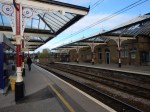
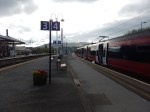
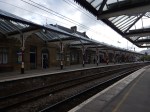
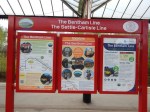
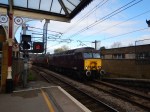
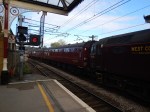
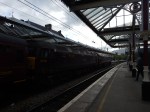
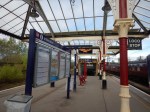
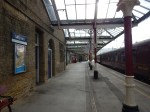
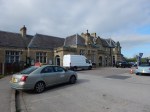
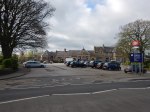
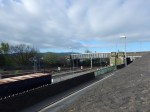
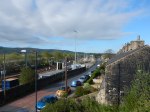
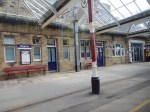
These pictures show the station and the lines towards Settle.


But Skipton and its station can get more important.
Under Future in the Wikipedia entry for the station, these improvements are mentioned.
More Virgin Services To London
Virgin Train’s new Class 800/801 trains are more flexible than the current trains working to Leeds.
- Five and nine car Class 801 electric trains.
- Five and nine car Class 800 electro-diesel trains.
I think we will see two five car trains joining together to form ten-car trains, as this will make better use of the capacity of the railway.
So could a five-car train from Skipton connect with a five-car train from Harrogate and become a ten-car train from Leeds to London?
I suspect the answer is yes, despite the fact that the Harrogate Line is not electrified.
More Capacity On The Airedale Line
This is needed and could be by allowing six instead of four car trains or increased frequencies.
The length increase to six-cars would be necessary for the Class 800/801 to run to Skipton.
More Trains To Carlisle Via Settle
After all the money spent on this line, I can see the line made to work hard to pay back the cost.
More Trains To Morecambe via Lancaster
If one line gets more trains, why not the other?
It also needs better trains than the Class 150 train, I saw going to Morecambe.
Skipton To Colne
SELRAP have been lobbying to reopen the rail link between Skipton and Colne.
There are problems with reopening the line, especially around Colne.
But I think it is one of those projects, that if that keen hill-walker and Prime Minister; Theresa May said go, it would happen.
It certainly, isn’t a crazy project.
A Tram-Train Between Skipton And Colne
Skipton station is a station at the western end of the electrified lines to and through Leeds. There are several plans for the future, involving direct trains to London and more frequent services to and from Leeds. There is also an aspiration of the Embsay and Bolton Abbey Railway to extend into Skipton.
Colne station is at the eastern end of the partly single-track East Lancashire Line, with services all the way to Blackpool South station via Burnley, Blackburn and Preston.
The two stations used to be connected until 1970, when it was closed, despite not being recommended for such by Beeching.
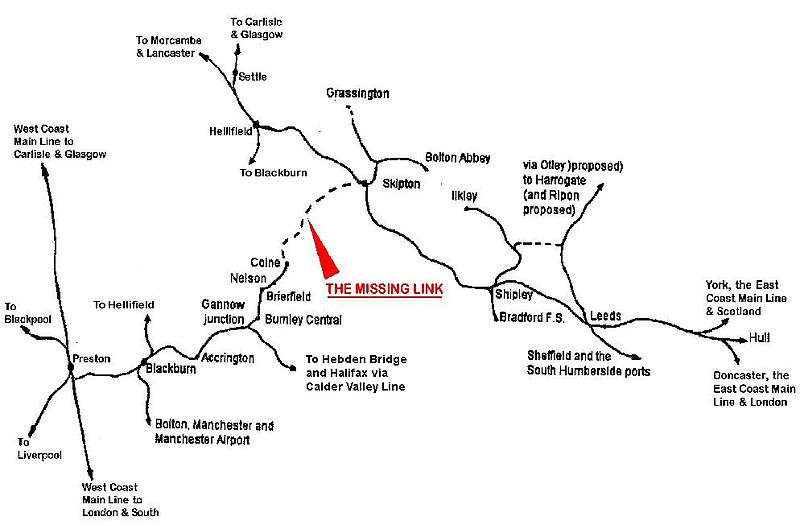
An organisation called Skipton-East Lancashire Rail Action Partnership is pressing for the line to be reopened. This map shows the rail lines in the area.
Skipton To Colne
Reopening this just under twelve miles length of track could bring a lot of benefits.
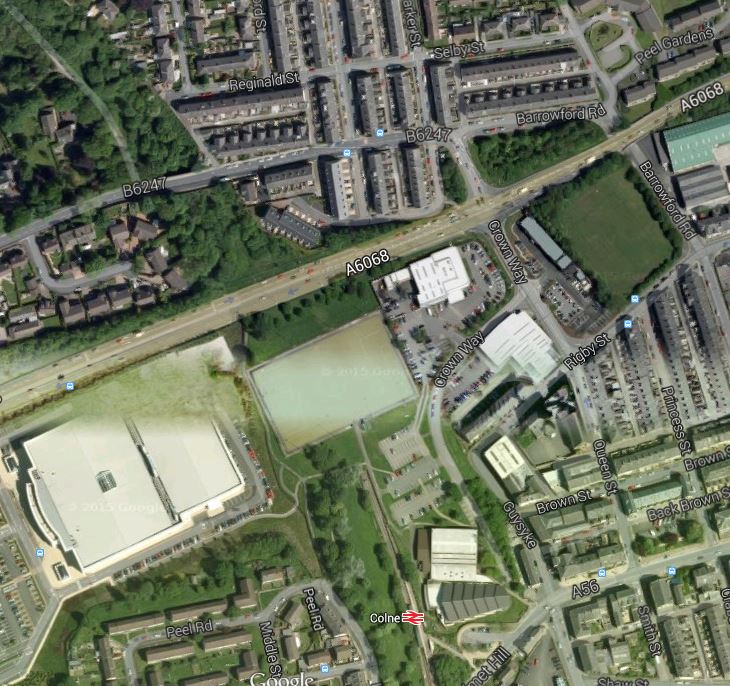
Most of the trackbed hasn’t been built on, but look at this Google Map of Colne station.
Colne Station
Note how the dual-carriageway, A6068 and a football pitch have been built, where any link from Colne would probably go.
So there would be a need for an expensive bridge. But as the line to Colne is only single-track, I suspect that the bridge could get away with one track, providing there was a passing loop at Colne station.
Having seen tram-trains in Germany, I know what the Germans would do and that is run tram-trains from the Blackpool tramway across Lancashire as trains and then over a tramway to Skipton. The advantage would be simpler infrastructure and lower costs.

The Tram-Train At Karlsruhe Station
The picture shows one of Karlsruhe tram-trains at the Hauptbahnhof. The tram-train is essentially the same as those that will be trialled between Sheffield and Rotherham in the near future.
The advantages of tram-trains would be simpler infrastructure and lower costs. Once the Calder Valley Line is electrified between Preston and Burnley Manchester Road station, a tram-train could start at either Leeds or Bradford Forster Square stations, go via Keighley, Skipton and Colne and then reach Blackburn and Preston, after joining an electrified Calder Valley Line at Rose Grove. From Skipton to Rose Grove, the line could be single track with passing loops and the electrification would be 750 VDC, like all trams in the UK. But of course, Skipton to Leeds and the Calder Valley would be to the main line standard of 25 kVAC.

An Outwardly Normal Class 379 Train
But we have our own British solution in the shape of the IPEMU. The picture shows the prototype, which I rode as a paying passenger in early 2015.
These trains have batteries or some other form of energy storage, which is charged whilst running on electrified lines.
An IPEMU could charge its batteries at Skipton and Preston and use batteries on any line without electrification in between.
The advantage would be no wires and possibly only a single track across the Pennines.
But if it is decided to create a link between Skipton and Colne, the railway technology developments of the last few years, could make the link more affordable and much less of an intrusion into some of our most beautiful countryside.
North Yorkshire Proposes Rail Expansion
It surprised me when I read that North Yorkshire was the largest county in England. But thinking about it, there can’t be many others of a similar size.
This document on the coumty’s web site is entitled North Yorkshire County Council Local Transport Plan 2016 – 2045 and it lays out, what it says on the fitrst page.
It has these two sections about rail.
Rail Line Re-openings
The County Council supports, in principle, proposals for rail reopening in the County, on identified routes such as Skipton to Colne and Harrogate to Ripon / Northallerton.
In the past many of the line re-openings were considered to be “local schemes” and therefore required local funding. The Council will only actively support opportunities for line re-openings where these are demonstrated as of National or pan North of England importance. National or pan North strategic importance will be assessed on the basis of the contribution to network resilience, improved strategic connectivity, the delivery of greater capacity or improved rail freight opportunities.
In all cases North Yorkshire County Council will only work with railway industry and local stakeholders where there is common agreement to develop a proposal.
Future of Rail
On the East Coast Main Line, over £240m is being spent by Network Rail on infrastructure, increasing capacity, reducing journey times and improving reliability. With investment in new InterCity Express trains and the franchise holder’s commitment to further investment, including a new timetable with 6 direct services between Harrogate and London, the route is set to be transformed by 2020.
The re-franchising for both the Northern and TransPennine services has produced invitations to tender that are transformational. In North Yorkshire this will result in many routes having increased frequencies, additional Sunday services, new or modernised trains and better customer focus. With greater local input into the management and development of the franchises through Rail North it is felt that we can achieve the rail services that are needed for the North.
High Speed connectivity with proposals for HS2 network linking London –Midlands– Sheffield-Leeds–York and the North East in the early 2030s and the work of Transport for the North on HS3, providing fast frequent and reliable links between Northern Cities provides opportunities now for the Council to develop its plans for good connectivity for North Yorkshire to and within these networks.
Private investment such as the Potash Mine near Whitby (improvements planned for the rail service on the Esk Valley) along with other planned housing and economic growth in North Yorkshire all combine to facilitate growth in rail.
The County Council remains committed to ensuring North Yorkshire benefits from the growth and investment in our railways and will continue to influence decisions to achieve the best outcome for the County
The Council is recommending re-opening these two lines.
Skipton to Colne
Skipton station is a station at the western end of the electrified lines to and through Leeds. There are several plans for the future, involving direct trains to London and more frequent services to and from Leeds. There is also an aspiration of the Embsay and Bolton Abbey Railway to extend into Skipton.
Colne station is at the eastern end of the partly single-track East Lancashire Line, with services all the way to Blackpool South station via Burnley, Blackburn and Preston.
The two stations used to be connected until 1970, when it was closed, despite not being recommended for such by Beeching.
An organisation called Skipton-East Lancashire Rail Action Partnership is pressing for the line to be reopened. This map shows the rail lines in the area.
Skipton To Colne
Reopening this just under twelve miles length of track could bring a lot of benefits.
Most of the trackbed hasn’t been built on, but look at this Google Map of Colne station.
Colne Station
Note how the dual-carriageway, A6068 and a football pitch have been built, where any link from Colne would probably go.
So there would be a need for an expensive bridge. But as the line to Colne is only single-track, I suspect that the bridge could get away with one track, providing there was a passing loop at Colne station.
Having seen tram-trains in Germany, I know what the Germans would do and that is run tram-trains from the Blackpool tramway across Lancashire as trains and then over a tramway to Skipton. The advantage would be simpler infrastructure and lower costs.
But we have our own solution in the shape of the IPEMU, which could charge its batteries at Skipton and Preston and use bateries on any unelectrified line in between. The advantage would be no wires and possibly only a single track across the Pennines.
But if it is decided to create a link between Skipton and Colne, the railway technology developments of the last few years, could make the link more affordable.
Harrogate to Northallerton
Harrogate station has local services on the Harrogate Line to Leeds and York and some long-distance services to London and the South. The lines through the station are not electrified.
Northallerton station is on the East Coast Main Line
The plans would reopen the section north of Harrogate of the Leeds and Northallerton Railway. This would reconnect the cathedral city of Ripon to the rail network.
Under the Wikipedia entry for the former Ripon station, this is said.
Today much of the route of the line through the city is now a relief road and although the former station still stands, it is now surrounded by a new housing development. The issue remains a significant one in local politics and there are movements wanting to restore the line. Reports suggest the reopening of a line between Ripon and Harrogate railway station would be economically viable, costing £40 million and could initially attract 1,200 passengers a day, rising to 2,700. Campaigners call on MPs to restore Ripon railway link.
On the face of it, it might appear a good plan, but there are still questions to be answered.
- Ripon would need a new route and probably a parkway station.
- Leeds to Northallerton is under sixty miles and is electrified at both ends, so a passenger service could be run by IPEMUs.
- Would the line be double-track and electrified?
- Would the line be capable of being used as a diversion route for the East Coast Main Line?
- Would freight trains be encouraged to use the line to relieve pressure on the busy East Coast Main Line?
I’ll repeat what the report says about the East Coast Main Line..
On the East Coast Main Line, over £240m is being spent by Network Rail on infrastructure, increasing capacity, reducing journey times and improving reliability. With investment in new InterCity Express trains and the franchise holder’s commitment to further investment, including a new timetable with 6 direct services between Harrogate and London, the route is set to be transformed by 2020.
It is probably true to say, that what happens on the East Coast Main Line is going to determine, whether the Harrogate to Northallerton Line gets reopened.
This article in the Northern Echo is entitled £230m plan to reinstate key North railway line receives major boost details a lot more about the project and the Council’s enthusiasm.
Improved Connectivity
This is always an aim of Councils and reports like that commissioned by North Yorkshire County Council. These come to mind.
Esk Valley Line
The only specific mentioned is that York Potash might be funding improvements to the Esk Valley Line.
In An Alternative Approach To Provide A Local Metro Network, I put forward the concept of using IPEMU trains with minimal electrification to dvelop a Tees Valley Metro.
I believe with some small amount of electrification at Middlesbrough, the Tees Valley would get its Metro and Whitby an improved service of new electric trains.
Leeds to Sunderland
Reopening an electrified Harrogate to Northallerton line, with additional electrification from Leeds to York on the Harrogate Line and Northallerton to Middlesborough on the Northallerton to Eaglescliffe Line, would open up the possibility of extending services between London and Leeds to Harrogate, Ripon, Northallerton, Middlesbrough and Sunderland without using the East Coast Main Line north of Doncaster.
Again with minimal electrification, the service could be run by 110 mph IPEMUs.
Sorting Northallerton
Northallerton station is in a nest of level crossings. Removing these is probably high up Network Rail’s list of must-do projects, but it strokes me that in the future, if all plans for the East Coast Main Line, the Northallerton to Harrogate Line and the various electrification schemes in the area come to pass, then Northallerton station and the tracks leading away from it, need a very strong sorting out.
Conclusion
To me, the most important thing about this report from North Yorkshire is that the council is looking seriously at transport options for the future.
The Todmorden Curve Has Helped A Campaign For More
The opening of the Todmorden Curve seems to have been a success according to press reports I’ve found, but this article from the Lancashire Telegraph, entitled New hope for campaigners looking to re-establish link between East Lancashire and North Yorkshire, shows that the opening is having other effects. This is the first paragraph.
A NEW hope has emerged for campaigners looking to re-establish a link between East Lancashire and North Yorkshire after a transport chief signalled concerns about possible logjams in Calderdale and Leeds.
The link between Colne and Skipton, which is mentioned in the article is shown in this map.
Skipton To Colne
It is being promoted by the Colne-East Lancashire Rail Action Partnership.
Having explored the area a lot in the last couple of years. I feel very much that tram-trains perhaps linked to Blackpool and/or Manchester have a lot of possibilities. I said as much in Could Tram-Trains Be Used To Advantage In Blackpool? It may sound fanciful and ambitious, but a single track tram-train link from Colne to Skipton, would have a high passenger capacity and wouldn’t require the infrastructure of heavy rail.
Things seem to be moving fast in East Lancashire.
In North London, there has been strong enthusiasm for the recent extension of the Overground. I now perceive a wanting for more of the same.
So are the good citizens of East Lancashire behaving in the same way?
Walking Between Burnley Manchester Road And Central Stations
Burnley is unique in British medium-sized towns that I know in that it has three rail stations in the town centre.
Barracks – A small single-platform halt on the East Lancashire Line
Central – Another small single-platform halt on the East Lancashire Line
Manchester Road – A modern station on the Caldervale Line
To make matters more difficult, all of the stations are a walk uphill from the pedestrianised town centre.
So Burnley is one of those unique places, where the going is a lot easier than the coming back.
If you look at passengers numbers for the three stations in 2012-13, they were respectively roughly 20,000, 150,000 and 240,000, but these probably don’t show the full pattern of usage, as I suspect with the hard walk uphill to the station, that those coming to the town to use the shops, probably use an alternative method to get home, if they are heavily loaded.
I took these pictures as I walked between the Manchester Road and Central stations taking in an excellent cup of chocolate in the centre.
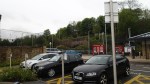


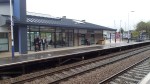
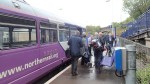
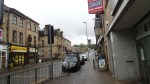

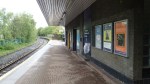
It wasn’t the hardest drag up the other side, but I timed it so that I just missed the train to Blackburn. So I wouldn’t think the service on from Central station, isn’t the most customer-friendly.
When I go to Burnley normally, it’s to see Ipswich play their football team at Turf Moor. This Google Earth image shows the town from the Central station to Turf Moor.
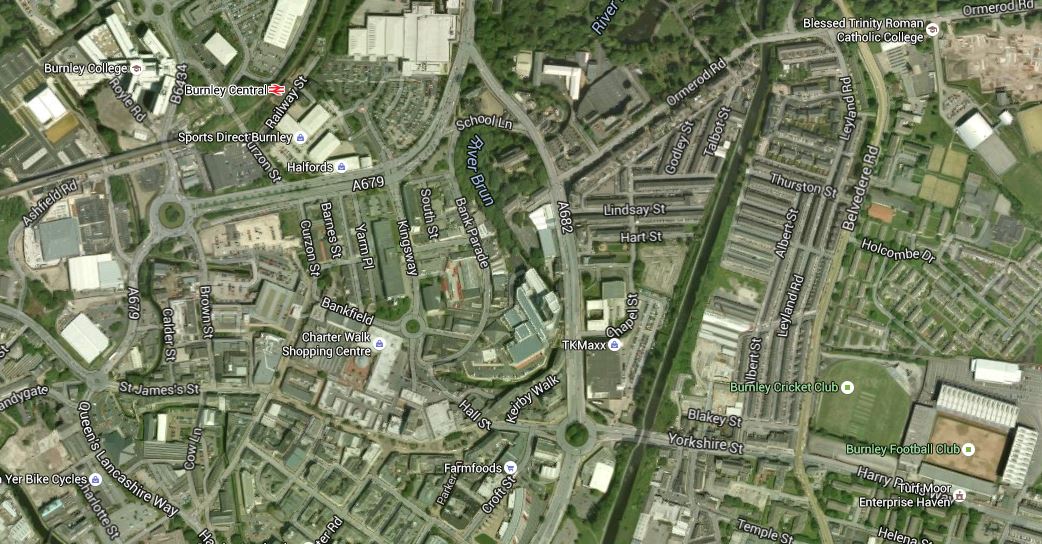
Burnley Central Station To Turf Moor
Normally I come in at Manchester Road station, which is off the map at the bottom. It’s a long mainly-downhill walk to the match and a long mainly-uphill walk back to the station. At least now there now are a few more trains and I could return to Manchester and London by taking a train to either Todmorden, Blackburn or Preston.
But is it possible to walk the contours of the hillside from the ground to Burnley Central? But then that only gives you one train an hour and you wouldn’t want to miss it on a pouring wet and cold day.
What Burnley needs is a better connection from the town centre to the Central and Manchester Road stations.
In an ideal eco-friendly modern world, there would be a free electric town centre mini-bus between the two stations, stopping on the way in the town centre and the bus station, which is not an easy walk from either rail station.
Providing better access to Manchester Road station, will always have to rely on vehicles of some sort. There is also the problem that the station despite being brand-new is not step-free from passenger drop-off to the Blackburn-bound platform.
On the other hand, the access to Burnley Central station, could possibly be met by creating a well-contoured path from the town centre and then using a lift to bridge the height gap to the platform, which is on the viaduct that carries the East Lancashire across the town.
At present the East Lancashire Line has an hourly service in each direction as far as Colne. But as I said in this piece on tram-trains and their use in Blackpool I believe that they could be used to extend the line to Skipton in the east and Central Blackpool on the coast.
But that will never happen, as where is Skipton? In Yorkshire and Burnley, Blackburn, Blackpool and Preston are in Lancashire.
On the train, through Todmorden yesterday, I heard the odd comments about how the countryside wasn’t as pretty, as we passed the town.
The old parochial attitudes refuse to die.
The Scenic Route From Preston To Blackburn
I didn’t take the direct route from Preston to Blackburn, but decided to explore the East Lancashire Line that stretches from Blackpool on the coast to Colne deep in the hills.
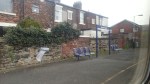
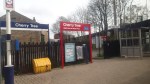
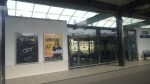


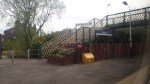



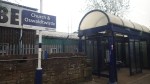

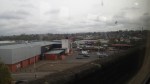



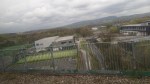





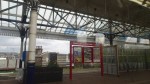
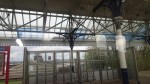



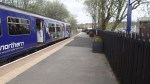
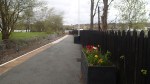
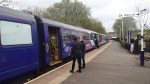

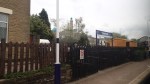
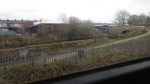



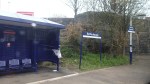
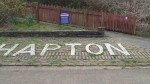
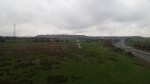
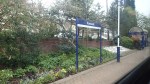

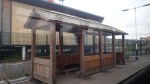

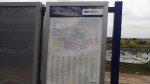
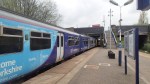
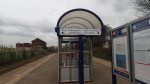
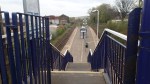
It is one of those rural lines, that has a lot of the flavour of the Valley Lines in South Wales. Trains are elderly, but well-turned out Class 142 and Class 150 trains, running between a series of stations, many of which have been recently upgraded. To get a better feel of the Burnley area, this is a Google Earth image of the centre of Burnley.
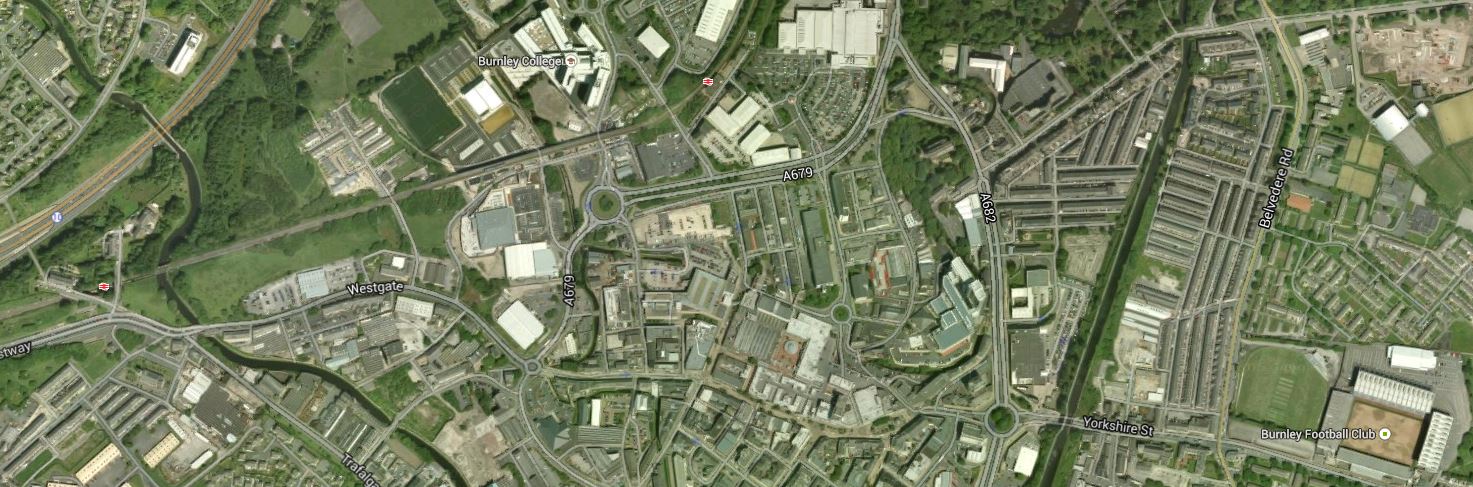
The Centre Of Burnley
The two stations; Central and Barracks lie on the rail line that goes across the top-left corner of the image. For most of that way, the line is on a viaduct with a station at each end. Turf Moor, the home of Burnley FC is at the far right of the map.
The East Lancashire Line is very much down the list of electrification priorities, but as it has interchanges at Preston, Blackpool and Rose Grove, that are electrified or will be in a few years, the costs of electrification will be eased by the supplying of power being already there.
Some work needs to be done on the stations, but a lot is informational like the signage and local maps at Mill Hill. Some like Mill Hill and perhaps others, need improvement to their disabled access.
There is pressure to extend the line past Colne to Skipton. and it is description under South East Lancashire Rail Action Partnership. The Wikipedia article says this about the link.
The missing section of railway between Skipton and Colne is 11.5 miles in length; it was closed in January 1970 although it was not a target under the Beeching Axe.
Dr. Beeching is a hot topic, but when he said a railway shouldn’t be closed, history has in some cases like the Varsity Line, shown him to be right.
At least with Colne to Skipton, the trackbed hasn’t been built on.
Having seen tram-trains working successfully in Germany and France, I think that if the Class 399 trains prove successful in their trials between Sheffield and Rotherham, that vehicles like this may offer a cost effective way of linking between two electrified lines. Skipton station is electrified, but Colne is not. However from Rose Grove to Preston and on to Blackpool is planned to be completely electrified in the next few years.
So as Burnley Barracks and Central, Brierfield, Nelson and Colne will effectively be on a single line branch from Rose Grove could it be electrified to perhaps only a tramway standard with occasional passing places and extended to Skipton? Intriguingly, at the other end of the line at Blackpool South the trains could then transfer to the Blackpool tram system.
It may sound all rather fanciful, but it might be easier to slot a tram track through Colne, rather than build a new railway, especially as this Google Earth image of Colne station, shows that there is the dual-carriageway A6068 and a football pitch in the way.
Colne Station
It would surely be cheaper to cross the main road with a tram rather than a railway track.
Surely another advantage of using tram technology is that it will be easier to add extra stops on the line.
I do think that this neglected line from Blackpool South to Colne via Preston has scope for improvement. Judging by some of the ideas in various forums on the Internet, there are a lot of ideas that get proposed by politicians, rail professionals, enthusiasts and train users.
Three things though are going to help decide what happens to this line.
If the incoming government does what is threatened at the present time and electrifies the Calder Valley Line from Preston to Leeds via Blackburn and Burnley, there will likely be a sound economic case for electrifying from Blackpool South to Preston and from Rose Grove to Colne, as both lines are mainly single track.
Electrification will also make sound sense, as there will be more than a few electric trains available, as Crossrail and Thameslink are getting new trains and the displaced trains will be cheaper to refurbish than build new diesels.
I believe tram-trains will be a success and that these could prove ideal to extend the Blackpool tramway. Incidentally, I’ve found a report on the Sintropher website, which details how the Blackpool tramway will be made compatible with tram-trains.
Could Tram-Trains Be Used To Advantage In Blackpool?
Blackpool tramway is unique in the United Kingdom in that it runs a mixture of modern and heritage trams, which I’ve only seen done on a big scale in Lisbon, where like Blackpool, the heritage trams are a tourist attraction.
It may also be unique in that it is already tram-train ready in terms of dimensions, power supply and other details according to this report on the Sintropher web site.
Blackpool’s trams have two major problems.
The obvious one is that the trams do not serve the main railway station at Blackpool North.
The second is that the trams don’t connect well to any of the stations served by the Blackpool South to Colne service. The best connection is a two hundred metre walk between Squires Gate station and Starr Gate tram stop.
The branch to Blackpool North is being electrified and this should be completed in 2017. The final report of the North of England Electrification Task Force has also recommended that the lines from Burnley to Colne and Kirkham to Blackpool South be electrified in the Tier Two group of lines to be wired.
So it would be reasonable to assume that in a few years Blackpool will have two stations with electric trains to Preston, Liverpool and beyond.
This is a Google Earth image of the area between the two stations.
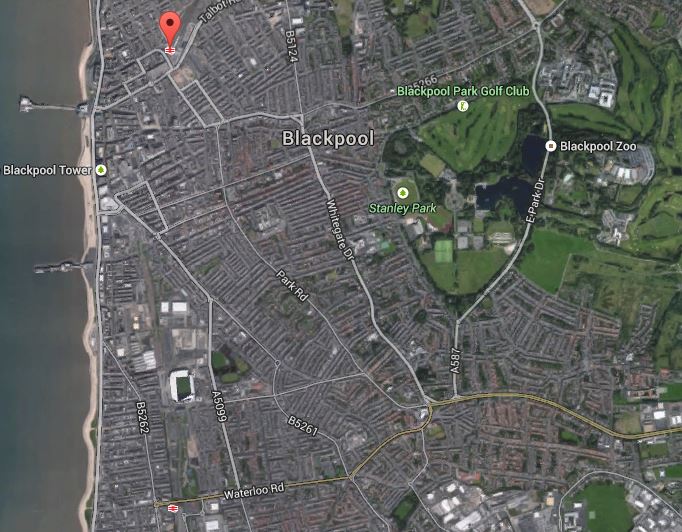
Blackpool North and South Stations
Blackpool North is indicated by the red arrow and Blackpool South at the bottom of the image, about five hundred metres or so from the sea front and a short walk south of the football ground and extensive car parking for visitors. Neither the football ground or the car parking are well served by the current tramway.
Blackpool South
This Google Earth image shows the area north of Blackpool South to the football ground to a larger scale.
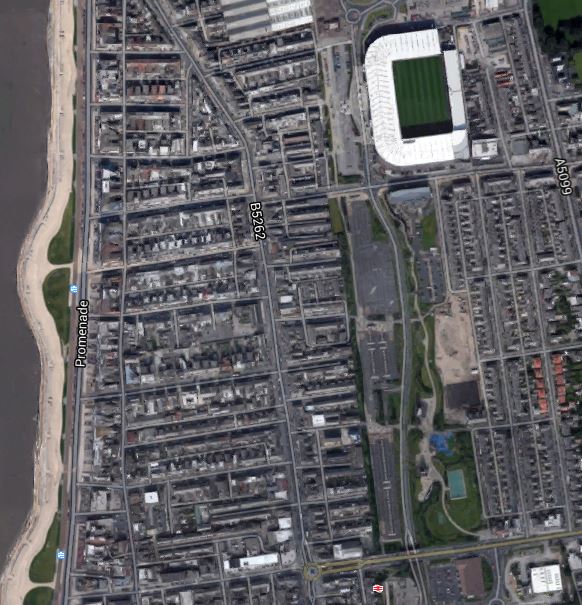
North of Blackpool South Station
I feel that it should be possible for a tram to start northwards from Blackpool South station, go past the car parks and the football ground and then thread its way through to the main tramway route along the sea front.
To the south of the station the rail line is single track all the way to Kirkham and Wesham station, where it joins the main Blackpool branch to Blackpool North.
As this line is now slated for electrification, there are probably cases to electrify it to either main line standard or make the line an extension of the tramway.
If tram-trains successfully pass their trial between Sheffield and Rotherham, then surely using tram-trains to work the services between Blackpool South and Colne, will be looked at seriously.
One factor that could come into the discussion about upgrading of the Blackpool South branch is the important golf course at Royal Lytham and St. Annes, as Ansdell and Fairhaven station is adjacent to the course and is used to transport spectators for important tournaments.
So when will the next Open Championship be staged at Royal Lytham?
Blackpool North
At Blackpool North station, the tram extension is now funded and is being planned.
But will the announcement of electrification to Blackpool South and hopefully successful trialling of tram-trains in Rotherham, add extra possibilities to how the extension to Blackpool North station is implemented?
This is the Google Earth image of Blackpool North station, which is indicated by a red arrow, to the sea front.
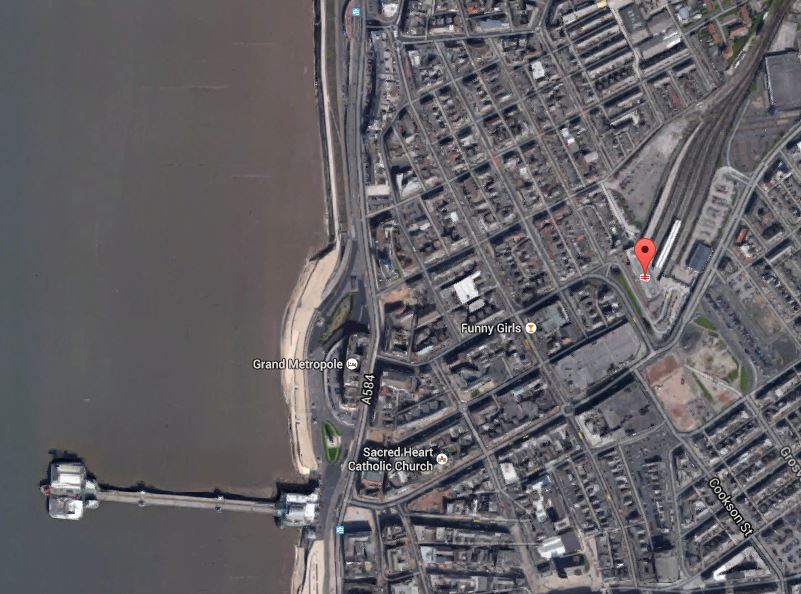
Blackpool North Station
Wikipedia also indicates that the spur to the station will join the main tramway north of the North Pier, which is the pier shown in the image.
One possible way of building the spur, would be to make it compatible with tram-trains so that some trains arriving at Blackpool North could transfer to the tramway.
The Karlsruhe Model
If both Blockpool stations were to be served by tram-trains that then ran between the two two stations, then would be an example of the classic Karlsruhe model that has been successfully working in the city since 1992.
Between the two stations, they would work as trams and once clear of the tramway, they would work as normal trains.
Advantages Of Using Tram-Trains Between The Two Blackpool Stations
The tram-train services would probably be on a simple loop between the two stations, with tram-trains turning back at either Kirkham and Wesham or Preston stations. Alternatively, services could be something more substantial serving the wider area. Certainly some tram-trains would go all the way to Colne to replace the current service.
But whatever is done, if tram-trains are used to link the two stations, various advantages will be seen.
1. Long distance services into Blackpool North would have easier access to the tram network, which would probably be step free.
2.As Preston would probably have more trains to Blackpool, this would give Blackpool better access to other long distance services to say Glasgow, Edinburgh, London and Birmingham.
3. Local services running tram-trains from perhaps Preston and Colne would have immediate access to some of the central tram stops in Blackpool, as these stops would be on the link between the two stations.
4. Blackpool South station would become a simple tram stop.
5. Space might also be released at Blackpool North station, depending on how much space was needed for the tram-train stop.
6. Extra trams would be running on the busiest central section of the tramway.
7.If the football ground and the main car parks were on the central loop, this would improve transport links to the town.
Probably the most difficult thing to get right would be the ticketing method, which London has shown must be based on a contactless bank card.
Implications Of Tram-Trains On Services To Colne
With the announcement that the East Lancashire Line is to be electrified to Colne, there would be no problem running tram-trains through both Blackpool stations and then through Preston and on to Colne.
The line from Rose Grove to Colne appears to be mainly single track, with some stations looking like tram stops, with a pile of bricks at the track-side.
If tram-trains were to run on the Colne Line as trams, this would actually be a service upgrade, despite the apparent downgrading of the line from trains to trams. If the powers-that-be thought that more stops were needed, these would be simple affairs, with a low platform on one or both sides of the track, with perhaps a simple shelter and a ticket machine. As on other tram lines in the UK, passengers would walk across the line rather than use an expensive footbridge. To see what is possible on a good tramway, look at this post about good stop design for trams and tram-trains.
But the two biggest improvements would be a much more frequent service, that probably ran at least twice an hour on weekdays and hourly on Sundays, that used new comfortable electric low-floor tram-trains something like the Class 399, being used for trials in Sheffield.
As to speed, the increased acceleration of the tram-trains would mean that stopping wasn’t as time-consuming as on say a Class 142 train. also outside of urban areas and some way from stops, they would be able to run at a more appropriate speed using the railway rules currently in force on the line. Incidentally, some UK trams like Croydon and Edinburgh go faster than you think when the track allows.
Tram-trains would appear at a cursory glance, to be a simple and affordable way to improve services in this neglected part of Lancashire.
Improving Transport In Burnley
Burnley is one of those places most famous outside the local area for football, but it is a market town of over seventy thousand people. The town probably needs improved transport connections, despite having four railway stations, the most important of which; Burnley Manchester Road has recently been rebuilt.
A big improvement will come by electrifying all of the lines, which will mean that Rose Grove and Manchester Road, will be on an important electrified artery between Leeds and Preston. The other line is the Colne Branch of the East Lancashire Line and this has three stations in the town; Rose Grove, Burnley Barracks and Burnley Central.
This Google Earth image shows the four stations as they relate to Burnley.
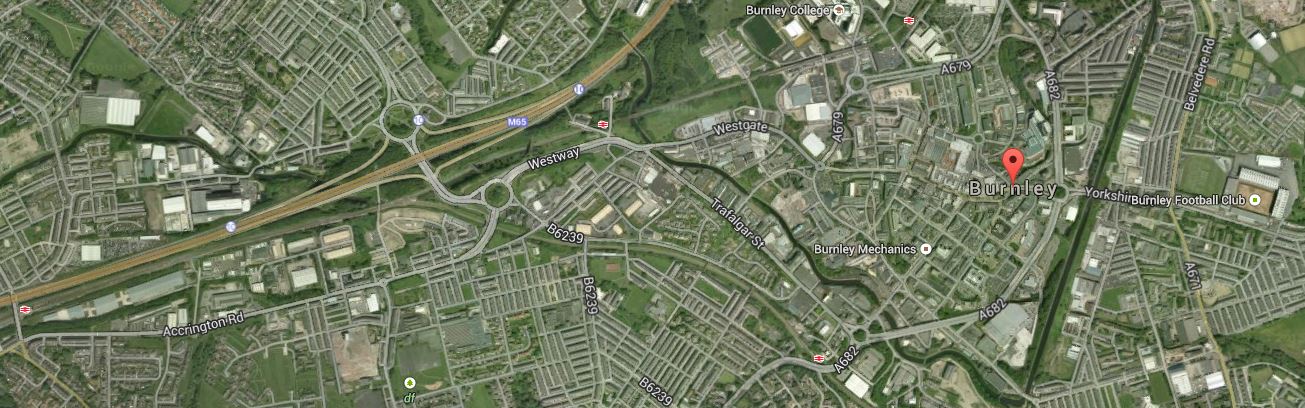
Burnley And Its Stations
Rose Grove is at the West, just to the south of the M65 motorway and is served by both lines. The Colne Line curves to the north with the two stations at Barracks and Central to the western end of the town centre, which is indicated by the red arrow. Manchester Road station is at the southern edge of the image, a steep walk up the hill from the town centre.
If the Colne Line were to be run by tram-trains, would this create a better and more accessible railway for Burnley.
As an example of what could happen, north from Burnley Central , the Colne Line follows the Leeds and Liverpool Canal, so are there possibilities to use a tram-train to give better access to the countryside above the town?
Using tram-trains on the Colne Line could improve public transport in Burnley and the other towns like Nelson and Colne, without laying a metre of new expensive railway.
But why stop the trains at Colne?
The final report of the North of England Electrification Task Force has also recommended that the lines from Skipton to Carlisle via Settle be electrified in the Tier Three group of lines to be wired.
The Skipton – East Lancashire Rail Action Partnership is also campaigning for the line between Colne and Skipton to be reinstated. This map of the missing part of the line is taken from the Wikipedia entry.
Skipton To Colne
Would the missing link be easier and more affordable to build, if it continued as a modern, single-track tramway?
This type of line would also be less visually intrusive, if it used 750 V DC overhead wires, which are all that would be needed for the Class 399 tram-train.
Building this link between Skipton and Colne would further connect the electrified lines in the Leeds area, with the soon to be electrified ones of North Lancashire. As the map shows, Skipton is on the iconic route through Settle between Leeds and Carlisle, which is also in the queue for electrification.
Skipton is the key to the success of any scheme to improve the Colne Line and link it to the town. The town is known as the Gateway to the Dales and already has direct services to London. This section in Wikipedia shows that there are impressive plans for services in the future.
But that was written before the North of England Electrification Task Force reported that Skipton to Carlisle through Settle was an electrification scheme for Tier Three. This was probably included more for freight reasons, as it creates a new route for electrified freight trains from Yorkshire, the East Midlands and the Electric Spine from Southampton to Scotland.
And to think that the line was nearly closed, but a certain Michael Portillo didn’t sign it off!
So will we see electrified passenger services from the South coming up via Leeds and Skipton to Carlisle? I think we will and if the Borders Railway is a success, then I think in perhaps 2040, these trains will reach Edinburgh.
So I think this all means that the tram-trains to Colne, should be used to create a link to Skipton.
Services Between Blackpool And Liverpool
Currently there is just a measly single train each hour between Blackpool and Liverpool.
Ormskirk to Preston is another line that could be chosen for electrification and it is likely that under the Liverpool rules it will be served by four trains per hour.
So I think it is reasonable to assume that when electrification to Blackpool North is complete, that the frequency of Liverpool-Blackpool services will be increased. After all when electrification is complete various routes via Ormskirk, Wigan, Newton-Le-Willows and St. Helens will all be possible.
But the possibility also exists for the use of tram-trains on this route, which will then go round the loop in Blackpool.
Obviously, passenger numbers will determine what services are worth trialling.
There is also the possibility of linking Royal Lytham and St. Annes with the other high-quality golf courses south of Southport.
Conclusion
The Blackpool tramway could use tram-trains to connect the electrified stations at Blackpool North and South, and over a wider network, especially over the Colne Line and its possible extension to Skipton.
 The Anonymous Widower