The Monster That Is AquaVentus Is Waking Up
I have written about AquaVentus for some time, but inh the last couple of days, ten references have been found to the project by my Google Alert.
What Is AquaVentus?
AquaVentus has a web page on the RWE web site, from where I clipped this image.
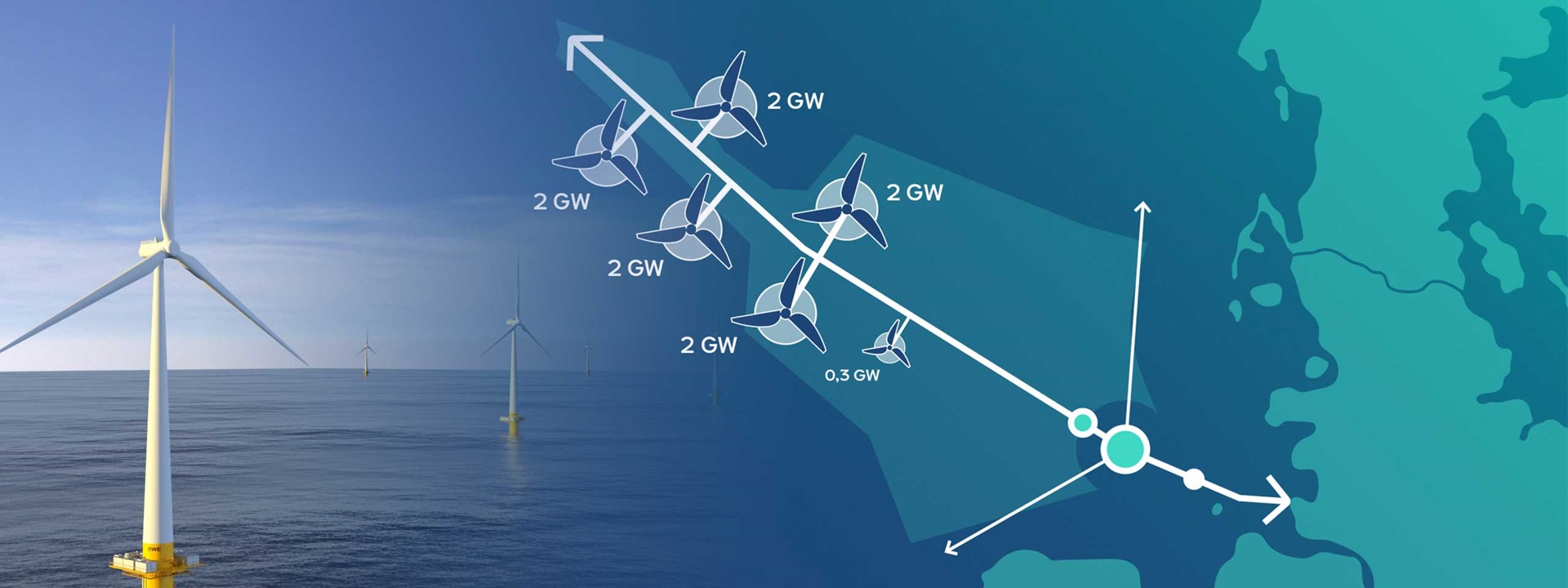
Note.
- The spine of AquaVentus is a pipeline called AquaDuctus to bring hydrogen to Germany.
- This image shows 10.3 GW of hydrogen will be generated and brought to near Wilhelmshaven in North-West Germany.
These two paragraphs introduce AquaVentus.
Hydrogen is considered the great hope of decarbonisation in all sectors that cannot be electrified, e.g. industrial manufacturing, aviation and shipping. Massive investments in the expansion of renewable energy are needed to enable carbon-neutral hydrogen production. After all, wind, solar and hydroelectric power form the basis of climate-friendly hydrogen.
In its quest for climate-friendly hydrogen production, the AquaVentus initiative has set its sights on one renewable energy generation technology: offshore wind. The initiative aims to use electricity from offshore wind farms to operate electrolysers also installed at sea on an industrial scale. Plans envisage setting up electrolysis units in the North Sea with a total capacity of 10 gigawatts, enough to produce 1 million metric tons of green hydrogen.
It is not an unambitious project.
North Sea Hydrogen Co-operation: AquaVentus And Hydrogen Scotland
The title of this section is the same as that of this page on the Hydrogen Scotland web site.
This is the introduction.
Hydrogen Scotland signed a comprehensive Memorandum of Understanding (MoU) with AquaVentus at Offshore Europe in Aberdeen. The partnership aims to unlock the North Sea’s vast potential for hydrogen production and establish Scotland as a key supplier to European markets through the development of shared infrastructure.
Both partners are committed to intensifying research activities and advocating for the rapid scale-up of a European hydrogen economy.
By joining forces, members of AquaVentus and Hydrogen Scotland can help advance the development and deployment of technologies along the entire value chain – from production through transport and storage to the use of hydrogen for decarbonising the energy system. In addition, both organisations intend to intensify their supporting activities and jointly advocate for the accelerated ramp-up of a European hydrogen economy.
This map of the North Sea, which I downloaded from the Hydrogen Scotland web site, shows the co-operation.
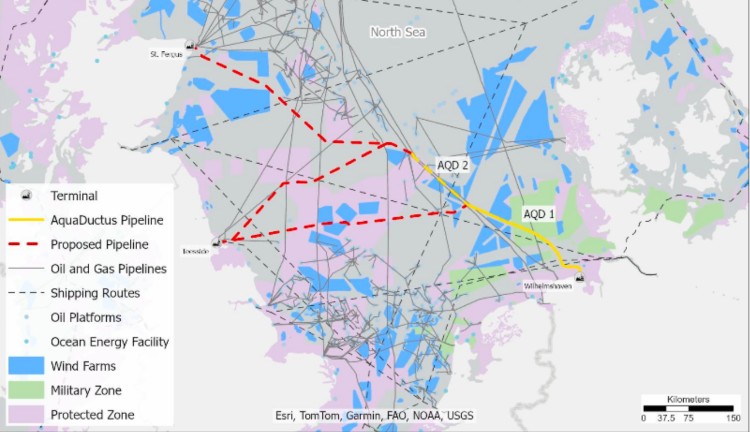
Note.
- The yellow AquaDuctus pipeline connected to the German coast near Wilhelmshaven.
- There appear to be two AquaDuctus sections ; AQD 1 and AQD 2.
- There are appear to be three proposed pipelines, which are shown in a dotted red, that connect the UK to AquaDuctus.
- The Northern proposed pipeline appears to connect to the St. Fergus gas terminal on the North-East tip of Scotland.
- The two Southern proposed pipelines appear to connect to the Easington gas terminal in East Yorkshire.
- Easington gas terminal is within easy reach of the massive gas stores, which are being converted to hold hydrogen at Aldbrough and Rough.
- The blue areas are offshore wind farms.
- The blue area straddling the Southernmost proposed pipe line is the Dogger Bank wind farm, is the world’s largest offshore wind farm and could evebtually total over 6 GW.
- RWE are developing 7.2 GW of wind farms between Dogger Bank and Norfolk in UK waters, which could generate hydrogen for AquaDuctus.
This cooperation seems to be getting the hydrogen Germany needs to its industry.
These five paragraphs outline a position paper by AquaVentus.
This opportunity for German-British cooperation on hydrogen is highlighted in a position paper presented by AquaVentus alongside the signing of the MoU. This paper addresses how the requirements of German-British cooperation – as outlined, for example, in the July 2025 Kensington Treaty between the UK and Germany and the European Commission’s Common Understanding published in May 2025 – can be met.
The position paper highlights the significant potential of hydrogen production in Scotland, the necessity of imports for Germany, and references transport infrastructure already under planning. It thus lays the foundation for cross-border hydrogen trade between Germany and the United Kingdom, and for deeper European cooperation in the hydrogen sector, with three essential prerequisites:
Firstly, the networking of producers and consumers across national borders is critical for a successful market ramp-up
Secondly, beyond this synchronised production and transport infrastructure, regulatory frameworks must also be harmonised. Hybrid connection concepts (pipes & wires) that integrate both electricity and hydrogen networks provide the necessary flexibility for future energy needs, enable efficient use of renewable energy and ensure cost-effective grid expansion
Thirdly, the development from a national core network to a European Hydrogen Backbone is emphasised. Projects such as AquaDuctus can serve as a nucleus for building a pan-European hydrogen network that will shape Europe’s energy infrastructure in the long term. For the authors, strengthened cooperation with the United Kingdom is not only a sound energy policy and economic decision, but also a key contribution to European energy resilience.
Note.
Shell’s Jackdaw Gas Field Given Go-Ahead By Regulators
The title of this post, is the same as that of this article on the BBC.
These are the first two paragraphs.
Development of a major North Sea gas field has been approved by regulators.
The Jackdaw field, east of Aberdeen, has the potential to produce 6.5% of Britain’s gas output.
This is Greenpeace’s response
But environmental campaigners have condemned the move.
The activist group Greenpeace said it believed the approval could be unlawful and it was considering legal action.
“Approving Jackdaw is a desperate and destructive decision from Johnson’s government, and proves there is no long-term plan,” said Ami McCarthy, a political campaigner for Greenpeace.
I have my thoughts.
The Short Term Problem
We are all paying the high gas price, brought about by Vlad the Mad’s illegal invasion of Ukraine.
On the other hand, I am all for cutting carbon emissions, but stopping the development of the Jackdaw gas field will do nothing to cut total emissions in the short term.
In my view, the only way to cut carbon emissions is to replace the use of natural gas with hydrogen or electricity produced by renewable sources like solar, tidal, wave or wind power.
This change to every heating system and important industries like cement, chemicals, glass and steelmaking to hydrogen and renewable energy is not a short term or low-cost project. Especially whilst we’re still recovering from the pandemic and trying to handle Vlad the Mad.
We will need a supply of natural gas for a few years and if we don’t have enough gas will Greenpeace and their ilk, be happy to see everybody freezing and a large increase in unemployment?
The Government is between a rock and a hard place, where they can either bow to Greenpeace or buy Putin’s bloodstained gas, where there are two alternatives.
- Buy liquified natural gas (LNG) from countries like Australia, Canada, Qatar or the United States.
- Develop our own proven resources.
The advantages of taking the second route include.
- Some of the countries from where gas is available, have bizarre views on human rights and keeping their people safe.
- Gas is transported over long distances in a liquid form. Liquifying natural gas uses a lot of energy. Is that energy renewable?
- Countries from where gas is available are thousands of miles away. How much carbon dioxide will be emitted liquifying and transporting it?
- Gas from our own resources is delivered by pipeline.
- Development of gas fields like Jackdaw, will surely create employment in the UK.
At a first look, I feel that developing Jackdaw and other similar fields, may well be a sensible option to help us through these difficult times.
Exporting Gas To Europe
If you look at the geographical position, you would feel, that the gas will be landed at St. Fergus gas terminal, which is to the North of Aberdeen.
But no! The gas will be landed at Bacton in Norfolk through the SEAL pipeline, which is 475 km. long
Could this be because Shell want to make sure the South of England gets its gas?
Possibly, but much of the UK’s gas imports arrive at LNG terminals in the South.
But Bacton has other assets, in that it has two undersea gas pipelines to the Continent. One is to Belgium and the other is to the Netherlands.
Surely, if we export our gas to other countries, then it is their business what they do with the carbon dioxide.
Not our’s or Shell’s!
Perhaps, we should develop other proven gas fields, as they will create employment in the UK and valuable exports. It will also help our friends out in Europe, in their time of need!
Will Shell Play The Market?
I have just been informed, that recently, improvements have been made to the pipelines in the area and Jackdaw’s gas could now go to St. Fergus.
This surely would give the gas from Jackdaw three destinations.
- Scotland via St. Fergus.
- England via Bacton
- Europe via Bacton and the undersea pipelines.
So will Shell play the markets?
If in the future, we start to produce massive amounts of green hydrogen, I’m sure Europe, will be happy to buy that instead.
Powering Platforms With Renewable Energy
The BBC article says this.
And it plans also to re-power its offshore platforms with renewable electricity rather than burning gas.
Looking at the map, Jackdaw will not be far from the 2 GW wind farm, that Shell are developing.
Will they build a short interconnector from this wind farm to the gas platforms of Jackdaw and other nearby fields?
Will Shell Produce Hydrogen Offshore?
This article on Gas Processing And LNG is entitled Construction Of World’s Largest PEM Electrolyzer Completed.
This is the first two paragraphs.
Air Liquide has completed the construction of the world’s largest PEM (Proton Exchange Membrane) electrolyzer. Supplied with renewable energy, this unit is now producing up to 8.2 tons per day of low-carbon hydrogen in Bécancour, Québec. With this large-scale investment, the Group confirms its long-term commitment to the hydrogen energy markets and its ambition to be a major player in the supply of low-carbon hydrogen.
The new 20 MW PEM electrolyser, equipped with Cummins technology, is the largest operating unit of its kind in the world and will help meet the growing demand for low-carbon hydrogen in North America. Bécancour’s proximity to the main industrial markets in Canada and the United States will help ensure their supply of low-carbon hydrogen for industrial use and mobility. The commissioning of this electrolysis unit increases by 50% the capacity of Air Liquide’s Bécancour hydrogen production complex.
Note.
- This article is about a year old and electrolysers will get larger.
- 20 MW of electricity will produce 8.2 tons per day of low carbon or green hydrogen.
- It may surprise some, that the electrolyser has been built by Cummins, who are diesel engine manufacturers. They are a company, who appear to have seen the way the wind is blowing and are making sure they lead the revolution.
How much hydrogen could a 2 GW wind farm produce?
- Wind farms have a capacity factor, which is how much energy they actually produce compared to their rating.
- Shell’s 2 GW wind farm will be a floating wind farm and these typically have a capacity factor of at least 50 percent.
- I will assume the capacity factor of 50 percent.
This will give 8,200 tonnes per day of green hydrogen. This is nearly three million tons per year.
How Will The Hydrogen Be Brought Ashore?
The HyDeploy project is investigating blending of hydrogen into our natural gas grid.
- It appears that up to 25 % of hydrogen can be added without the need to change boilers and appliances.
- This blending of hydrogen into our natural gas supply, would cut our carbon emissions by a worthwhile amount.
So will we see gas piped to nearby gas platforms like Jackdaw for blending with fresh virgin natural gas?
This would have the following advantages for Shell.
- They wouldn’t need to install an electric cable to the shore with all its associated onshore and offshore substations.
- The hydrogen could be brought ashore at either Bacton or St. Fergus gas terminals.
- Shell could invite other local wind farms to share their electrolyser.
- Shell would need to new onshore installations.
If Shell get this right, they could cut the project cost.
Will Shell Produce Blue Hydrogen Offshore?
I wonder if Shell have a cunning plan.
- It is known, that Shell have developed a catalyst-based blue hydrogen process, which splits natural gas into hydrogen and carbon dioxide, with the addition of oxygen from the air.
- I suspect the process could need a lot of energy to work. But at least a GW from the nearby wind farm will probably be a good start.
- Could that carbon dioxide be captured and stored in a depleted gas field.
- The hydrogen could be piped to either Bacton or St. Fergus, as I previously described.
This hybrid method might be a more economic way to produce zero-carbon hydrogen.
Conclusion
I wouldn’t be surprised if Shell will produce hydrogen offshore.
 The Anonymous Widower