Width And Height Of A Stadler Regio Shuttle RS1 Compared To UK Multiple Units
I am building this table, so that I can get a feel for where Stadler RS ZERO trains can go on the UK network.
Height Of The Regio Shuttle RS1
This is given as 3.70 metres in Wikipedia.
Other figures given in Wikipedia are.
- Class 150 – 3.774 metres
- Class 156 – 3.805 metres
- Class 158 – 3.73 metres
- Class 165 – 3.79 metres
- Class 185 – 3.71 metres
- Class 195 – 3.85 metres
- Class 378 – 3.774 metres
- Class 345 – 3.760 metres
- Class 399 – 3.720 metres
- Class 710 – 3.760 metres
- Class 745 – 3.915 metres
- Class 755 – 3.915 metres
Surprisingly, the Regio Shuttle RS1 is the shortest train!
But this means, that if the Regio Shuttle RS1 can get under all the bridges on a route, then all the other trains can.
Width Of The Regio Shuttle RS1
This is given as 2.90 metres in Wikipedia.
Other figures given in Wikipedia are.
- Class 150 – 2.816 metres
- Class 156 – 2.730 metres
- Class 158 – 2.700 metres
- Class 165 – 2.810 metres
- Class 185 – 2.673 metres
- Class 195 – 2.772 metres
- Class 378 – 2.800 metres
- Class 345 – 2.772 metres
- Class 399 – 2.650 metres
- Class 710 – 2.772 metres
- Class 745 – 3.720 metres
- Class 755 – 3.720 metres
Surprisingly, the Regio Shuttle RS1 is the widest train!
But this means, that if the Regio Shuttle RS1 can squeeze between the narrowest infrastructure on a route, then all the other trains can.
Conclusion
Does this mean, that once a Regio Shuttle RS1 can run on a route, lots of other trains can?
Itb looks to me, like a clever example of cunning Swiss engineering.
Could Stadler RS ZERO Be Used For The West London Orbital Railway?
In Stadler Presents A World First In Berlin, I talked about the launch of the Stadler RS ZERO.
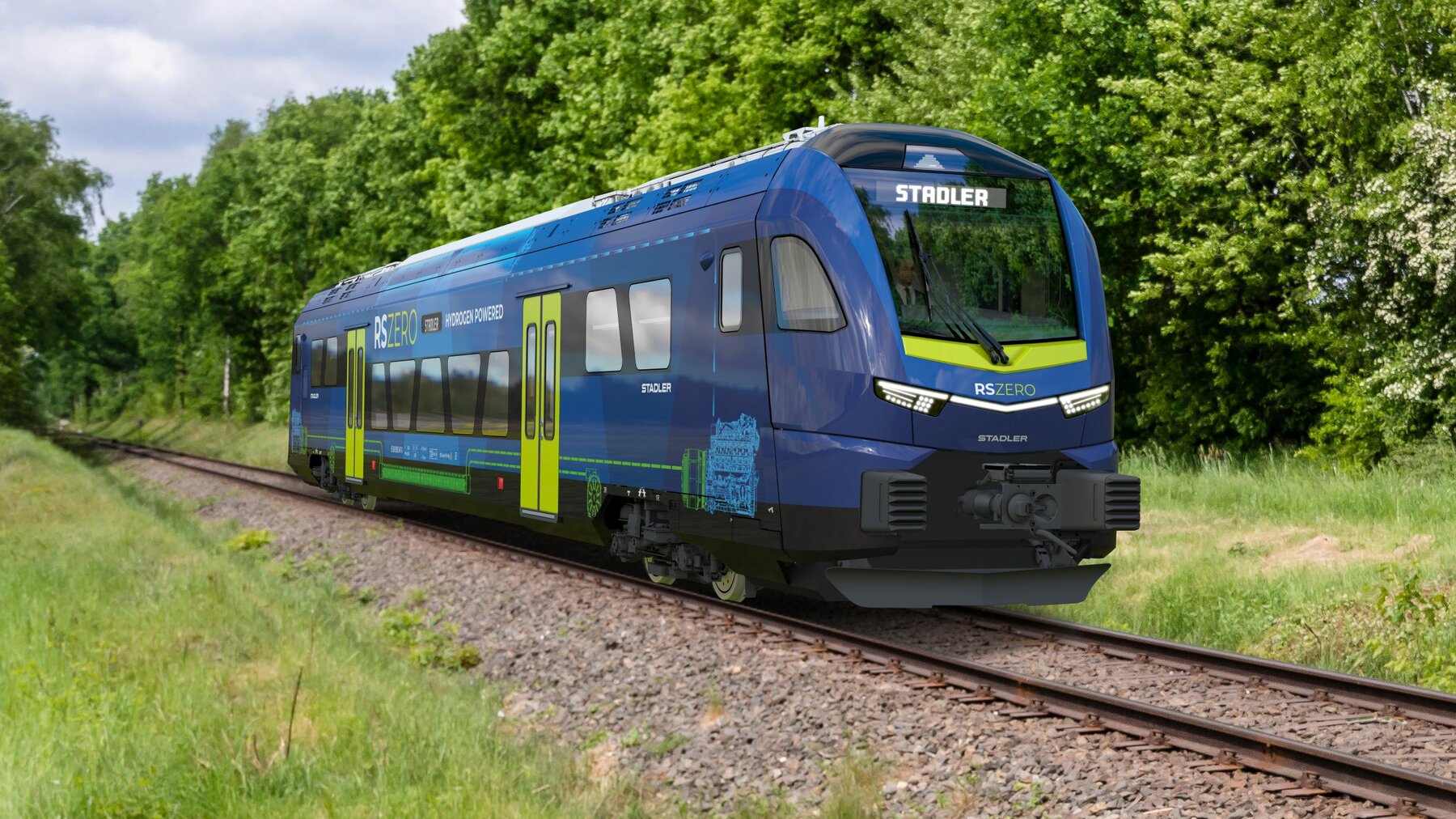
I wonder, if these newly-launched trains, would be ideal for the West London Orbital Railway?
- They will be zero-carbon and will not be emitting fumes or carbon dioxide.
- Stadler could size the trains to UK platform height, just as they did the Flirts for Greater Anglia.
- The two routes are only eleven miles long with 25 KVAC electrification at the Midland Main Line end, so the battery-electric version could be ideal.
- They are likely to be extremely quiet, as battery-electric trains always seem to be.
This picture of the earlier Stadler Regio-Shuttle RS1 from Chemnitz, shows that it should be possible to have almost level boarding.
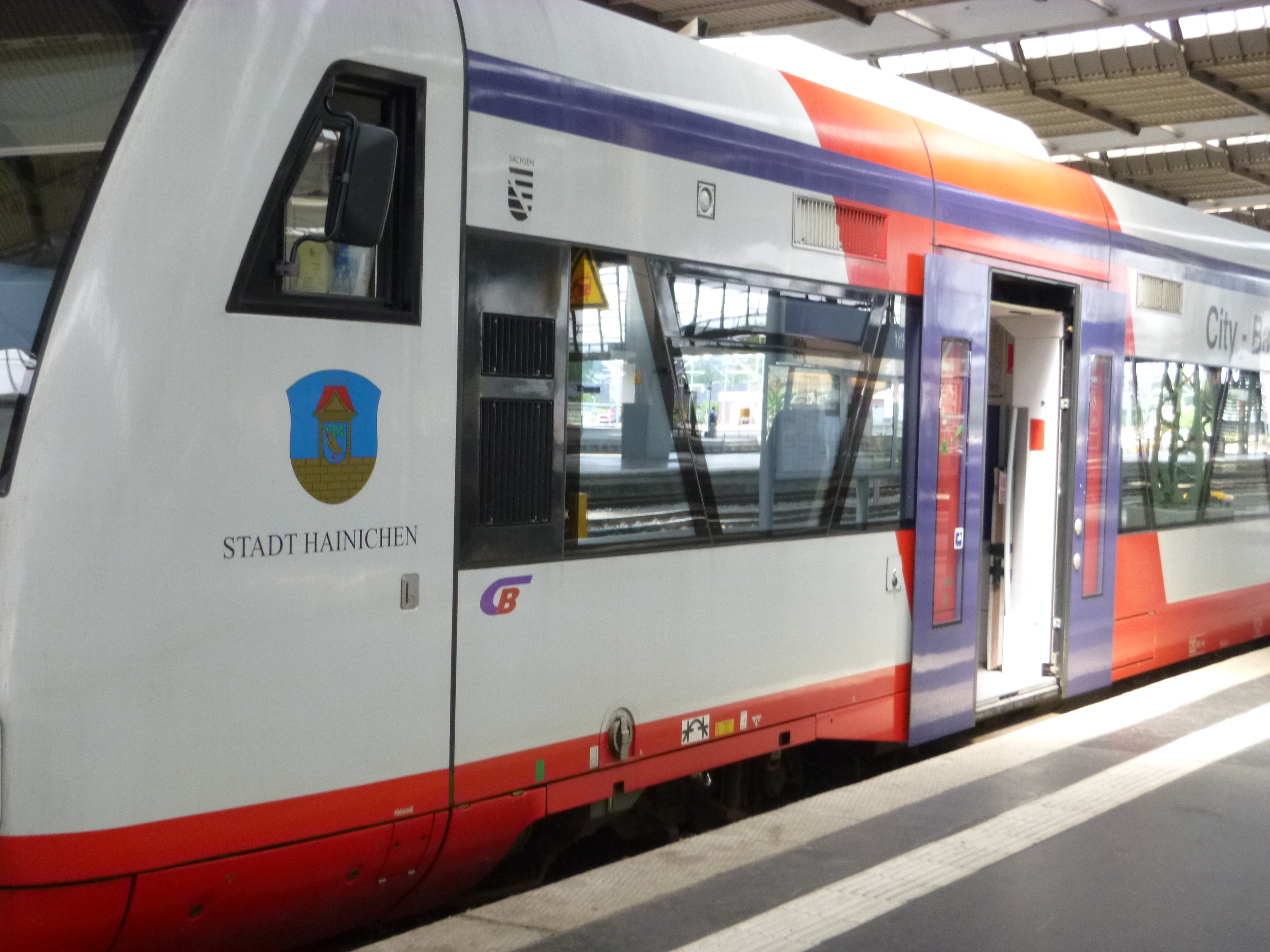
At least at new stations, where the platform height could be built for the RS ZERO.
The new stations along the Dudding Hill Line could be very simple indeed.
Conclusion
I feel that a fleet of RS ZEROs could convert the Dudding Hill Line into an efficient, step-fee and frequent addition to London’s passenger railways.
Stadler Presents A World First In Berlin
The title of this post, is the same as that of this press release from Stadler.
These are the first two paragraphs.
With the RS ZERO, the rail vehicle manufacturer is presenting the successor to the successful Regio-Shuttle RS1 model. There is a choice of two modern and environmentally friendly drive technologies: Hydrogen and battery. Both will enable CO2 emission-free operation of secondary lines in the future.
Stadler today unveiled the prototype of the new RS ZERO, the innovative successor to the successful RS1 Regio-Shuttle. The Regio-Shuttle has been one of the most popular vehicles in German regional rail transport for 28 years, with around 500 RS1 vehicles currently in operation in Germany and the Czech Republic. Stadler is building on this proven technology and integrating state-of-the-art, environmentally friendly drive systems. The RS ZERO is optionally available with a hydrogen and/or battery drive and thus not only sets new standards for environmentally friendly rail transport, but also presents a world first.
These pictures from Chemnitz Trams And The Chemnitz Model, show the Regio-Shuttle RS1.
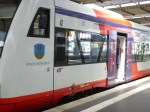
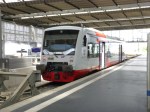
Note.
- The Regio-Shuttles can run as up to seven car trains.
- These Regio-Shuttles are electro-diesel.
- The distinctive diagonal windows.
- They can carry 170 passengers at 75 mph.
- They can run as train-trams using the Chemnitz model on compatible tram networks.
The Regio-Shuttle Wikipedia entry gives more details.
This image from the press release shows the prototype RS ZERO.
It looks very similar to my pictures from Chemnitz.
I have a few thoughts.
Comparison To A Class 150 Train
A Class 150 train can carry up to 149 seated passengers at 75 mph, which is similar to the RS ZERO.
As Stadler have built trains for Greater Anglia, Merseyrail and the Glasgow Subway, I believe that Stadler could build an RS ZERO, that would fit the UK loading gauge.
In What Train Is This?, I show the standard of interior, that can be achieved by refurbishing a Class 150 train, but unlike the RS ZERO, the train won’t be zero-carbon.
Does The RS ZERO Have A Toilet?
This is a paragraph from the press release.
The prototype of the RS ZERO presented today in Berlin is a one-car vehicle with hydrogen drive. Stadler is demonstrating the numerous design options with a multi-purpose area equipped for carrying bicycles, pushchairs and bulky luggage, lounge and comfort zones, standard and privacy seats, a wheelchair space, WC and a train office.
The train appears to be able to have what an operator might need.
What Will Be The Range Of An RS ZERO On Hydrogen?
I suspect, Stadler will provide a train, that will handle the route.
Conclusion
This could be a very handy train to decarbonise branch and secondary lines in the UK.
 The Anonymous Widower