The Adverse Effects Of Electric Vehicles
This article in theMail OnLine has one of those titles which are all you need to read.
UK could need 20 more nuclear power stations if electric cars take over our roads and cause ‘massive strain’ on power network
There is also a similar article in The Times.
The articles are based on research by Transport for London.
The article has a point and TfL have done the sums.
Consider the future.
At present London doesn’t apply the full Congestion Charge for electric vehicles and they get other discounts. So as electric vehicles get more affordable and with a longer range, it will be sensible to purchase an electric vehicle and take advantage of using it at a discount in London.
So will London be grid-locked by electric vehicles?
We may get cleaner air, but how will all those, who depend on buses and taxis get through all this congestion?
Many of these new electric cars will be driverless, which will increase their attraction and just add to the congestion.
All of these vehicles will also need to be charged, so will we see every parking space fitted with a charging point.
Who is going to pay for these points?
And then as Transport for London say, just providing enough electricity for London’s transport, will require two nuclear power stations.
So how about using hydrogen fuel cells to power these vehicles?
But to create the hydrogen you need electricity to electrolyse water. So more nuclear power stations?
So what will we do?
London is lucky, in that compared to other cities in the UK, it has an extensive public transport network that works, that people like to use.
So Crossrail 2 and possibly 3 and 4, if properly designed can take the pressure off London, to allow space for driverless electric buses and taxis, and a severely restricted number of other vehicles.
Just as people are now complaining that they were told by the Government to buy a diesel car and now they are being abused as polluters, in a decade or so, those buying electric cars will be abused as congesters.
Owning a car in the future will become an increasingly expensive and annoying business.
Taxis And Bank Junction
The City pf London is proposing to make Bank Junction accessible to only buses and cyclists.
On a personal note, I’m in favour, as my normal route to and from the area of Bank station is to take a 21 or 141 bus. I also use the 141 bus to get to and from London Bridge station, as the terminal stop is on the staion forecourt. They are extremely convenient buses for me as the Northbound stop is perhaps fifty metres from my house over a zebra crossing. Going South, the walk is a little further, but it is no more than a hundred and fifty metres.
However, not everyone is in favour of restricting traffic at Bank Junction.
This article in the Standard is entitled Cycling campaign groups slam black cab protest over traffic ban at Bank station.
This is said.
Cycling campaign groups have slammed a taxi protest over plans to close Bank junction off to most traffic, saying drivers are supporting “the right to poison Londoners”.
Black Cab drivers brought traffic to a standstill on Monday evening as they protested plans to close off the notorious junction to all traffic apart from bikes and buses.
Union members have argued that the proposals to only allow cyclists and buses at the junction are an example of TfL dodging the problem of congestion.
So it would be cyclists on one side and black cabs on the other.
The RMT union blames Uber on their web site.
This is said in the article.
The union claims the congestion is caused by Uber cars which, in turn, leave people turning to cycling out of “desperation”.
RMT General Secretary, Mick Cash, said: “The decision to close Bank Junction to traffic is a comically inept one, made exceptionally bitter as the Mayor promised greater access to road space for black cabs.”
As I said earlier, all I want is this vital junction to run smoothly for buses.
I don’t use a taxi very often, except on say a busy, wet day to bring my shopping home, as the rank is outside Marks and Spencer, Waitrose and Sainsburys. How convenient is that?
The taxi drivers are not happy, but then London’s black cab drivers have rarely been happy in the years I’ve used them, since the 1960s.
- Getting to my house has caused a new moan, which is caused by the work that I wrote about in Why I’m In Favour Of Cycling Superhighways.
- Cyclists are always good for a moan.
- But their biggest ire is usually reserved for Uber and their lack of regulation.
Surprisingly, I’ve had no moans about moving to low-emission or electric vehicles.
So how do I think the situation will improve in the next few years?
Crossrail
Crossrail doesn’t serve Bank Junction directly, but I will be surprised if the massive double-ended Crossrail station at Liverpool Street and Moorgate, doesn’t attract a lot of passengers travelling to and from the City of London.
Bank Station Upgrade
Under Future Developments, Wikipedia says this.
- A new entrance on Walbrook, near Cannon Street station, will provide new escalators and lifts to the Waterloo and City line platforms.
- TfL is also consulting on retunnelling and widening the Northern line platforms.
- Adding lifts and new entrances on King William Street and Cannon Street.
- A new tunnel could be built to relocate the southbound Northern line platform.
The work could be completed by 2021 and will boost capacity by 40%, with 12 new escalators and 3 new lifts.
A well-designed Bank Underground station must relieve surface traffic of all types in the area.
Waterloo And City Line
When the new entry at Wallbrook to the Waterloo and City Line, opens hopefully in late 2017, it will dramatically improve the usefulness of the Waterloo and City Line.
But improvements are also needed at the Waterloo end of the line.
- Better connections to the new platforms 20-24 at Waterloo will be needed. Are they being provided in the current works.
- Better connection to Waterloo East station, so passengers can get access to Charing Cross services.
- Direct access to the street.
- Step-free access.
The line should at least run seven days a week, if not all the time under automatic control.
It could be a much more important line in London’s transport system.
It could even be renamed the City and South Bank Line.
The Northern City Line
The Northern City Line is London’s forgotten suburban line, as it terminates in a two-platform station under Moorgate station.
One of Crossrail’s collateral improvements will be to give the Northern City Line excellent connections to the following.
- Crossrail
- Liverpool Street station
- Central Line
The deep and dingy station will also have much better connection to the various walking routes in the area.
But connectivity would be nothing without trains and the Northern City Line is getting new Class 717 trains, which could run at up to twelve trains per hour all day.
The original plans for the Northern City Line envisaged the line running to Lothbury station, which would be just to the North of the Bank of England.
If this extension had been built, it would have surely proved to have been a valuable part of London’s railways. But it wasn’t and probably to build it now would be too expensive and impossible.
Walking Routes
The actual City of London is compact and this Google Map shows the Northern part of the City between Bank, Moorgate and Liverpool Street stations.
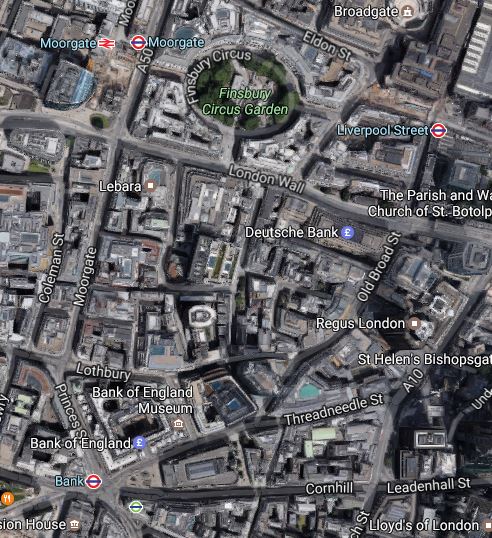
Note.
- How one of the three main stations is within reach of much of the area.
- I would reckon that the three stations are about eight hundred metres apart.
If you don’t fancy walking, there are bus routes between the stations and the Central and Northern Lines also provide connections.
Uber
Uber is the fox in the hen coup.
It is disruptive technology and I don’t like it for various reasons.
- I like to pick up my cab from a rank or by hailing it on the street.
- I feel that apps with credit card details in them will be the next big fraud opportunity.
- I like a properly trained and regulated driver, who understands the intricacies of London’s streets.
I took an Uber cab once from Walthamstow to home and the driver came from West London and managed to get lost twice. As I wasn’t paying, I didn’t bother.
I can’t help feeling that Uber is very inefficient for the driver and only works if they have a monopoly of taxis on the streets.
Conclusion
I have given alternatives to the use of taxis around Bank Junction.
Taxi drivers will protest, but that area is one, where for most people, public transport will increasingly be the best way to travel.
Crawling Home From Gatwick
Getting home from Gatwick for me, should be an easy process.
- Touch in with my American Express card at Gatwick Airport station.
- Train to East Croydon station.
- Touch out to close the transaction.
- Train to London Bridge.
- 141 bus to home.
But there was trouble in this simple plan.
- Thameslink services appeared to have problems.
- The tragic Croydon tram accident.
- There appeared to be a shortage pf trains to East Croydon.
- Staff weren’t very numerous.
- The closure of ower Bridge.
I eventually got to East Croydon and touched out without going through the barrier, so I was now in Freedom Pass territory. The train from Gatwick was a Class 377 train, which although brilliant for commuters, is not designed for anybody with a suitcase.
There needs to be a reader on the platform at East Croydon, so that passengers with Freedom Passes can touch in and out, without going to the barrier. But sorting this minor irritation, is probably the least of Southern’s worries.
After a wait of about thirty minutes, I got on a trainto London Bridge and although, I’d intended to get the Overground from Brockley, I missed the stop as in the dark, I missed the stop, so I went to London Bridge, which should be quicker anyway.
But it wasn’t, as on arrival at the station, there were no buses and only a couple of taxis.
I took the taxi and the amiable driver immediately turned off the meter.
It was all due to the total gridlock created by works on both Tower and London bridges.
After crossing the river, it was more or less plain sailing.
It could be argued that my journey would have been easier, if I hadn’t wanted to go via East Croydon, so that I could save a few pounds.
I don’t need the money but other travellers do! The system certainly doesn’t cope well with those, who want to change from using their Freedom Pass to a ticket at East Croydon station.
If I’m going out and back through Gatwick, the problem can also be solved by buying a return ticket from East Croydon to Gatwick Airport from a ticket machine from certain companies like the Overground and Thameslink.
I
Heathrow Express Class 332 Trains Are Back
On my trip to Cardiff today, I took this picture of a Class 332 train back running the Heathrow Express.
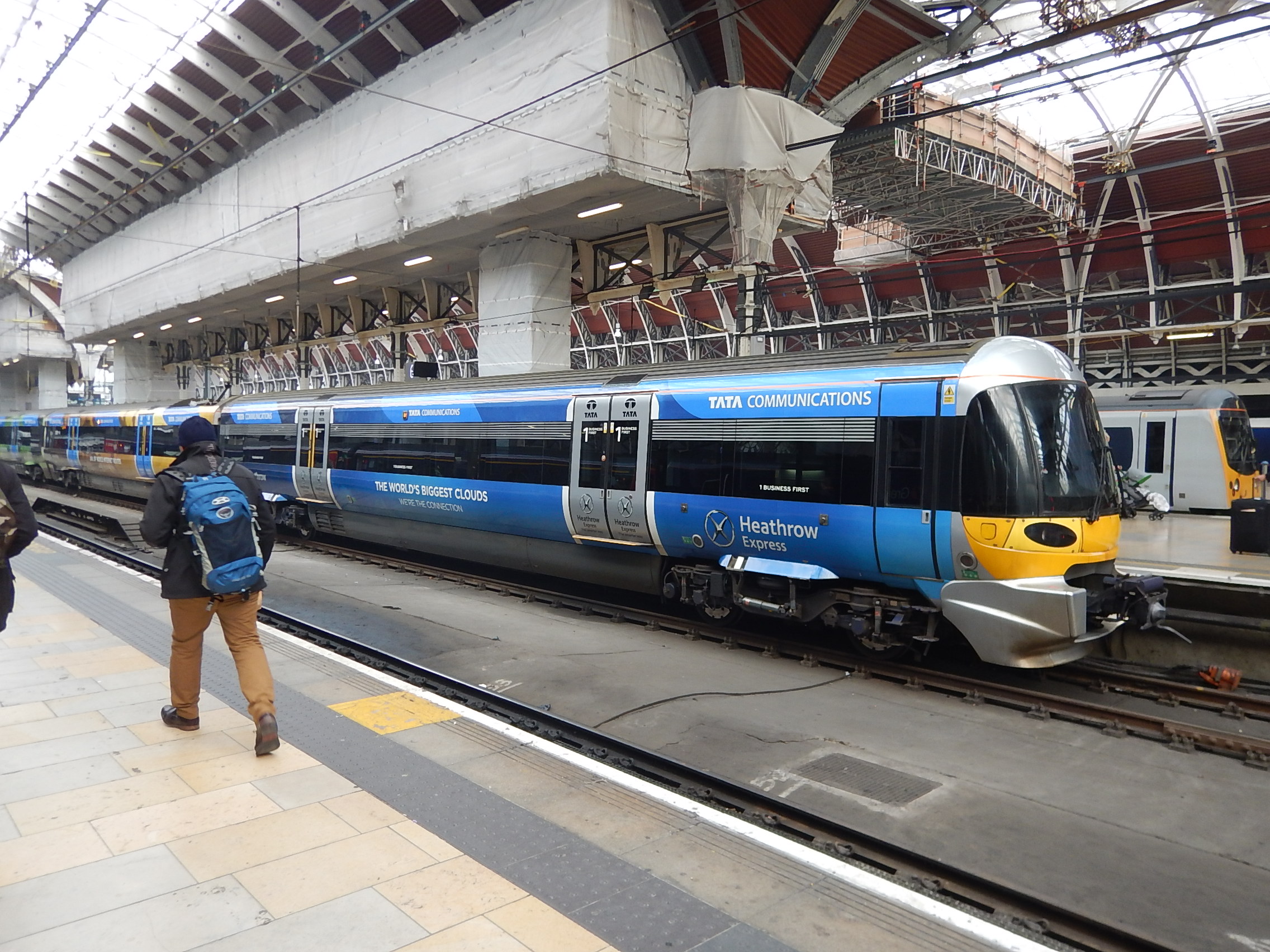
Heathrow Express Class 332 Trains Are Back
When I got home, I found this recent article on Rail News.
I still won’t be using them, as to get to Paddington is not easy from Dalston withiout using a taxi, as I did when going out.
On return, I needed to get some supper and as Marks and Spencer is closed at Paddington, I had to get the tube to Kings Cross to get the food I needed.
From there I got a taxi home.
It won’t be easy to get to Paddington until Crossrail opens and if it opens as planned, there will be no need for those of us in the East to use Heathrow Express.
Small-Scale Connectivity To Crossrail
I live about twenty-five minutes from my nearest Crossrail station at Moorgate on a 141 bus and as I walked around today, I just wondered what will be the best way to access London’s new East-West rail line when it opens in a few years time.
So what do I mean by small-scale connectivity?
I think it is best defined as any method that isn’t more than perhaps ten stations on heavy rail, light rail, the Underground or trams.
And of course, you might substitute Thameslink for Crossrail! Or if you don’t live in London, it could be your major cross-city line.
So in my case, the following would be small-scale connectivity to Crossrail.
- Walking
- Cycling
- Car
- Taxi
- Bus
I do have a heavy rail link to Crossrail in the form of the East London Line between Dalston Junction and Whitechapel, so that will be included as it is only a short stretch of line of four stations.
These are the methods available to me in Dalston.
Walking
For good connectivity, the walking routes around a station should be properly mapped and signposted on a physical wayfinding system, like Legible London used all over the capital.
I also think it is essential that a common format is used, along a line.
So this probably means that London will decide how walking maps and signposts at Crossrail stations in Essex and Berkshire will look.
Will that be acceptable to towns and cities, that have called in consultants to design their ideal wayfinding system?
One problem with wayfinding systems, is that in some places the locals who know the city or area well, say they don’t need the system and think it a waste of money.
You also have the problem in areas with more than one local authority, that each go their own way, rather than agree on a common system.
Remember too, that London is so large, that the average resident finds themselves regularly in an area of the city they don’t know. So Londoners on the whole are very pro-Legible London.
I feel that we need to impose the same wayfinding system all over the UK.
Cycling
Just as there should be good walking routes to a station, the cycling routes should be obvious and well-signposted.
And if bikes are provided for hire at the station, the payment system must be compatible with London’s.
Perhaps we need a nationwide bike hire system?
Car
Many people will want to drive to their local Crossrail station and park their car before they get the train.
i have a feeling that when Crossrail opens, the biggest complaint will be the lack of car parking at stations.
Taxi
For about the last three months, I’ve been suffering badly from plantar fasciitis and because of the limited mobility, it gives me at times, I now feel very strongly that every Crossrail station, should have a proper black taxi rank.
Recently Transport for London have announced that one of my local stations; Highbury and Islington, is going to have a taxi rank. I have yet to find a taxi driver who is against the idea and I believe this could be a winner for both passengers and black cab drivers.
Bus
Every London rail and tube station is a bus hub with its own spider map, which details all of the buses and their routes from the area. This is my lovcal bus spider map for Dalston.
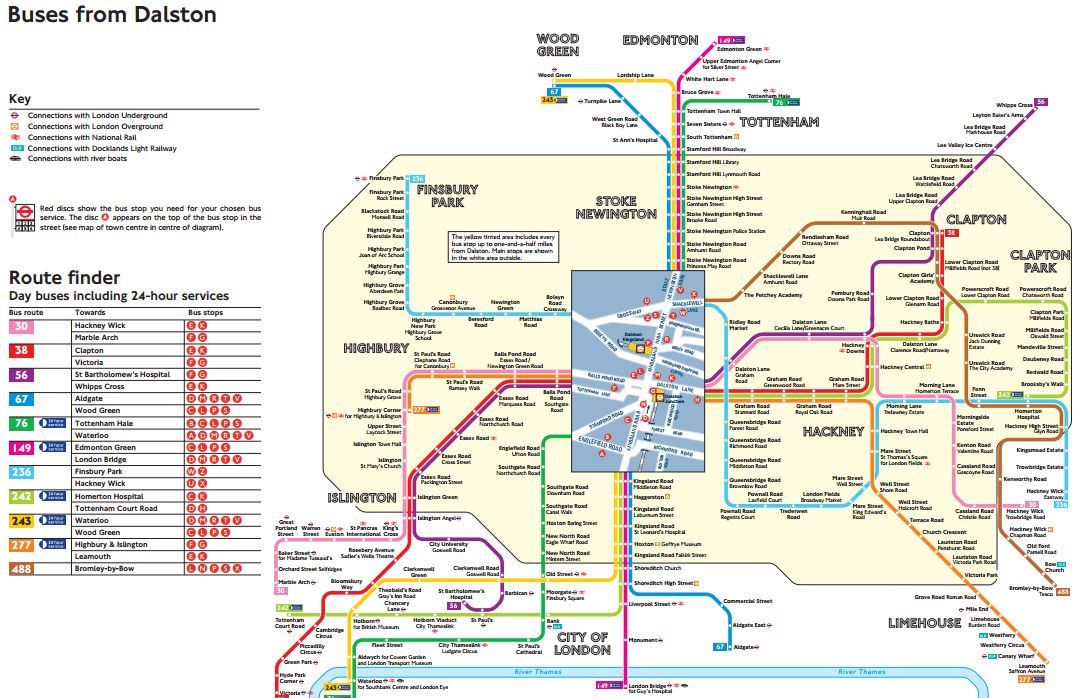
Dalston Bus Spider Map
Venture outside of London and in many places, bus mapping is often missing or very bad to give it the benefit of the doubt.
As with walking maps, local authorities outside of London with a Crossrail station, will have to adopt London’s system.
Other Rail Lines
Crossrail does connect to quite a number of heavy rail, Underground and Overground Lines.
- Bakerloo Line
- Central Line
- Circle Line
- District Line
- East London Line
- Great Eastern Main Line
- Great Western Main Line
- HS1 – After extension to Gravesend
- HS2 – After Old Oak Common
- Jubilee Line
- Metropolitan Line
- North Kent Line
- Northern Line
- Northern City Line
- North London Line
- Thameslink
- West Anglia Main Line
- West Coast Main Line – After extension to West Coast Main Line
- West London Line
I have included links to extensions to Gravesend and the West Coast Main Line and Old Oak Common in this list.
Small Branch Lines
But it also connects with several smaller branch lines or perhaps in the future, some tram and light rail lines.
- Abbey Line – After extension to West Coast Main Line
- Brentford Branch Line
- Croxley Rail Link – After extension to West Coast Main Line
- Greenford Branch Line
- Henley Branch Line
- Marlow Branch Line
- New North Main Line
- Reading to Basingstoke Line
- Romford to Upminster Line
- Shenfield to Southend Line
- Slough to Windsor and Eton Line
- Staines and West Drayton Railway
- Waterloo to Reading Line
I believe that Local Authorities will develop these smaller lines and create others to maximise their benefit from Crossrail,
A Metro In The East
The two lines that I think have the most likely chance of being developed, are the Romford to Upminster and Shenfield to Southend Lines.
- The main line rail company; c2c, is very ambitious.
- In the next couple of decades, South East Essex will be an important economic growth area.
- Better links are needed to Southend Airport and the London Gateway.
- There is substantial development of jobs, housing and leisure opportunities in the areas the lines serve.
- Give the people of Essex an opportunity and they embrace it fully.
I wouldn’t be surprised to see a substantial metro network created in the area, based on Billericay, Shenfield, Southend and Thurrock.
A Metro In The West
If a metro network can be successfully developed at the eastern end of Crossrail, is there the potential of creating something similar at the western end?
Consider.
- Heathrow dominates thinking in West London and feels that everybody should jump to its tune.
- Heathrow should wake up to the fact that it will never get a third runway, as London’s electorate will always vote to block this.
- There will always be a Heathrow, but in time, it will cease to dominate the air travel market in the UK, as it does now!
- Heathrow has very limited rail connections to Basingstoke, Reading and the West.
- If you look at the list of small branch lines, several are clustered around the western end of Crossrail, with its two hub stations of Slough and Reading.
A metro in the west could be developed based on hubs at Basingstoke, Heathrow, Slough and Reading. The Windsor Link Railway is surely thinking along those lines.
A Metro In The South East
Of all the stations on Crossrail, Abbey Wood is one of the most disappointing.
As a terminus for Crossrail, that connects to the North Kent Line and to services to South East London and the Dartford area, four platforms doesn’t seem enough, when you compare the station to the other terminals of Reading and Shenfield.
Transport for London have proposed that the Gospel Oak to Barking Line could cross the river to serve Abbey Wood and if this should happen, there must be opportunities to create another metro system based on Abbey Wood.
A Metro In The North
There are proposals to extend Crossrail to Milton Keynes from Old Oak Common.
This would surely, bring in the possibility of a network of local lines based on Watford.
- The Abbey Line is one of those difficult-to-run lines, that needs substantial improvement.
- The Croxley Rail Link could be expanded to serve Amersham.
- Local services on the West Coast Main Line and the Watford DC Line are very crowded.
This will only be developed once Crossrail serves Watford.
Conclusion
Crossrail in 2030, will be an entirely different line to that being created today.
Looking For Taxis At Birmingham New Street Station
Because of the fasciitis in my right foot, I decided to take a taxi from Birmingham New Street station to St. Andrews.
But where were the taxis?



Eventually an immaculate Metrocab did turn up and the driver explained. Apparently, there’s a row between the taxi drivers and NCP, who organise the taxi rank.
So Birmingham New Street station, may have a doggie toilet, but it doesn’t have many taxis or any trams.
It has also abandoned the traditional paper posters, with their lists of trains.
I Don’t Go In Cars Very Often
Listening to the Jokeswagen Scandal radio in bed this morning, I realised that since I moved to London in December 2010, I’ve hardly been in a car at all.
I thin the longest trip I’ve done is a couple of journeys back from football at Ipswich after football because the trains were on the blink.
I’ve obviously taken the occasional taxi, but it just shows how relevant cars are to my way of life.
Why I Won’t Use Uber
I don’t use taxis much at all.
I did in Blackburn on Saturday, as one was there, when I came out of Ewood Park and as trains to Preston, are fairly infrequent, I felt it might be quicker than finding a bus and I might catch an earlier train. I didn’t!
Other than that since the first of September, I’ve used taxis perhaps twice to come back home after arriving late at night in a rail station, just to save time. I usually get them off the rank at the station.
I use a mini-cab perhaps twice a year, to get to and from my son’s house on Christmas Day, which I book personally at the office around the corner from where I live.
The reason for this low usage is also because I have a dozen or so bus routes within two hundred metres and four of these are all night routes. And as London buses are ideal for parcels and shopping, when coming home with bags, I rarely need a taxi.
I would also put taxis in that category of wasted money, which is better spent on something more enjoyable like a proper lunch, rather than a drink and a banana.
But the main reason, I don’t use Uber is that it’s an app and I don’t want to put any apps on my smart phone, which I use exclusively for the web and to send and receive text messages.
I also don’t like giving my e-mail address and mobile phone number to companies or individuals willy-nilly, as so many companies like to send me unsolicited messages.
I’m certain, that apps will be the next security hole, that will be targeted by fraudsters.
As Uber has created lots of enemies for itself, I would put the Uber app at the top of the list of innocent trojans to get control of your phone, as fraudsters would like an app used by lots of users in insecure places.
People would also be much more careful with a financial app from their bank, financial advisor or credit card.
I think it is true to say, that in London, I am annoyed by traffic congestion which slows the buses and creates more air pollution.
Uber is helping to make this worse, as there are more and more mini-cabs in London.
Last week, I was on a bus that took an hour to get from Upper Street to Monument at ten in the morning, when the timetable says twenty-three minutes.
So I very much back Boris, who wants to limit the number of mini-cabs.
London To Kassel
When I left the UK, my aims were to travel to Kassel, Karlsruhe and Strasbourg and a few other cities, I’d not visited before as a tourist.
I was also intending to see and ride on some of the tram-trains that seem to be used in the area.
I started my journey on a 73 bus and finished it in a taxi. More on why I used a dreaded taxi later.
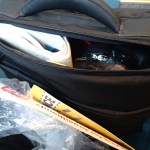
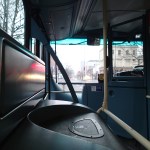
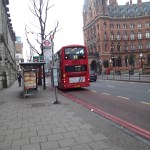
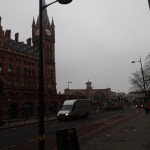

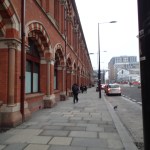

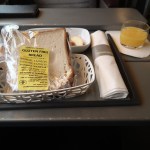




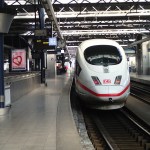
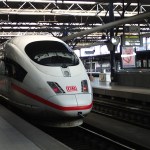
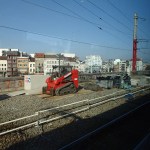






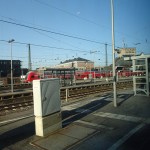


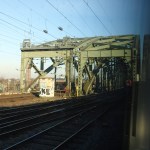

These pictures tell the story.
In some ways it was an easy but boring journey, which because of the extremely dull weather past Liege there wasn’t much to see.
Personally, I can’t wait for a direct London to Frankfurt train, which would make trips like this so much easier.
Valletta’s Electric Taxis
I didn’t take a ride, but was intrigued by Valletta’s little electric taxis.
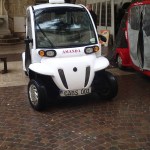


Certainly, it would be a good idea if in cities like London, all taxis were electric.
 The Anonymous Widower