Real Tennis as a Recovery Index
I played my first competitive game of real tennis since the last stroke yesterday. I didn’t do too well, but I think I was getting better as the hour progressed.
As real tennis has a computerised handicap system, it will be interesting if my handicap gets better or worse over the coming months.
SO if you’re recovering from a stroke or any other illness for that matter and you can play tennis, why not consider learning real tennis. It can be played at a gentle level if you wish, but as it depends very much on your thinking, as your physical prowess, you will at least know, if you are improving.
Real Tennis at Cambridge
I went into Cambridge today to have a game of real tennis at the Cambridge University Real Tennis Club in Grange Road. I was also introducing an old Metier friend and colleague, Spencer Hamill, to the game.
I fared better than last time and still miss balls that are low at the left with a backhand. But then I was always crap in that area. But I did find that I could volley reasonably well and also I was serving overhead, which I haven’t done since the stroke. Here’s a clip.
Next time I play it’ll be off handicap and it will be interesting to see what happens.
A Gentle Game of Real Tennis
Today, I had my first game of real tennis since I had my stroke two months ago. So it was only a gentle workout with Andrew, the professional at Newmarket and Suffolk Real Tennis Club, but it made me feel a bit better.
Real tennis is a full body and mind workout, if ever there was one!
- Your eyes have to track a moving ball, as it bounces and spins of both the walls and floor of the court. It can be frustrating to someone starting the game and I found it a bit so, as I struggled sometimes to get my racket to the ball.
- You also have to move properly to the ball and I did find this difficult at times, as I wasn’t too sure where it would bounce. But I did think, I was getting better as we played on.
- As I am right-handed and that had been unaffected by the stroke, I was hitting quite a few balls successfully and in some cases I was actually hitting the ball, so they got the optimum length.
- My backhand wasn’t good, but then it never was.
- The big thing about real tennis is that it is a game for the mind as well. As we progressed, I was remembering the strategy and was able to play better to my strengths and my oponent’s weaknesses.
So all in all, I found it valuable.
It will be interesting to see if I get better in the coming weeks.
On a serious pointoif there is anybody out there who would like to learn and enjoy the game, why don’t they contact me? I could teachthem the basics at either Newmarket OR Cambridge. The only snag would be that they would have to give me a lift to the court!
An E-Mail To The University of Ulster
I wrote this e-msil to the team developing the computer games at the University of Ulster.
You could argue, that I’m in a sorry state, being a 62-year-old widower of three years, who has just lost his youngest son at just 37 to pancreatic cancer. To cap it all I have just had a series of strokes,which have left me with a gammy left hand amongst other smaller issues.
As someone who has spent nearly 50 years programming, writing reports and lately blogging on the Internet, the standard PC keyboard totally frustrates me. You want to hit shift to get a capital and you hit caps lock or control, which means the precise document you are creating gets into a mess, because you have capitalisation all over the place or say you hit something like control-W which opens a new window in Internet Explorer.
I have found a partial solution in the Microsoft Comfort Keyboard, but sadly it doesn’t quite go far enough.
One of the features of this keyboard is the ability to disable individual keys, so they don’t work.For example, I have disabled the Caps Lock key and this now means that I don’t have to rewrite large portions of documents, when I accidentally toggle the key. Having no Caps Lock is no problem to me, as I have never ever used the key in my work.
I also want to disable other keys :-
- One and/or both of the control keys – Disabling just the left would be an interesting option, as for things like control-C and control-V, which I still use would be available using the right one. My right hand is still 100%.
- The Windows key – I’ve never used that key and used with some keys it does lot of things that you don’t want to do in a Word Document or Internet Explorer. With L it locks the computer, which is something you don’t want to do inadvertantly.
- The ALT key – Who uses that? Except in control-alt-del.
The driver of the keyboard should be able to be modified to disable any key and perhaps allow certain combinations, such as those commonly used ones with Control, but that would need co-operation from Microsoft. Microsoft’s driver and control panel is a good template and starting point.
I should say that I programmed quite complex keyboard drivers in some of my software, but that is actually a level above the actual deep-level driver. When you hit a key, you first check which of the modifier keystrokes, (control, alt etc.) are depressed and take an appropriate action, so it should be easily possible to ban single keystrokes as Microsoft do in part, but allow the combinations you want. If I could write a Windows keyboard driver, I know I could do it. I also have the money to pay someone who can to create something that would ease the lives of many stroke sufferers and disabled individuals.
I have discussed this driver with my doctor at Addenbrookes and he feels it would be worthwhile, but has never come across anything like it. If you search my blog for keyboard you will find more thoughts. As this e-mail is effectively a specification for the driver, I shall probably post it on the blog, together with a link to your work.
I see that you have developed computer games for stroke sufferers. I have never played any computer games, as I prefer games to be real. I am going to get back to playing real tennis, which is a game with a world-wide handicapping system, that can be used to measure your progress. You can also find quite a few gentle players, like the elderly or kids to play with, so that you can build up your skill and power levels gradually.
Keep up the good work.
But as my Irish racehorse trainer, Tadey Regan says, “The Struggle Continues”
Some might say that publishing here is just giving away an idea, thst might be stolen by someone else.
As Rhett Butler said in Gone With The Wind, “Frankly my dear, I don’t give a damn”. If I get my driver I’ll be pleased.
A Real Marathon
Wimbledon had a match yesterday that had to be halted for the night at 59-59 in the fifth set. It is the longest match ever.
At least these two players have lasted longer than our under-performing players, of whom only Andy Murray lasted until the third day.
We complain about our footballers, but at least youngsters, like James Milner, Connor Wickham, Adam Johnson and many others are coming through the system with promise. Where are the tennis players in the same age group with a high level of talent? Also, if cricket, golf, rowing,sailing, cycling and many other sports can do it, why can’t tennis, especially, as they have more resources than most?
Tennis On The Radio
Yesterday, I lay in the sun in the garden and listened to the tennis from Wimbledon.
It’s funny, but tennis is rather a good sport to listen to, rather than watch.
But then, we have a very proud heritage of listening to tennis on the radio, as many times, I’ve heard the superb commentary from the great Max Robertson, perhaps in a car or whilst working in the garden or on my car. Read the Wikipedia entry about Robertson, as he was a truly great all-round broadcaster.
Tennis on Radio 5, is a bit like Test Match Special, in that it is about sport and chat, with some interesting guests during rain and between action. I remember one memorable interview by John Inverdale of Julian Golding. Inverdale was initially surprised that Golding, a black Olympic sprinter was at Wimbledon. Golding said that he had been invited by the LTA, as he was encouraging youngsters in London to take part in sport. Golding disclosed that he had been a promising tennis player, but had found the life very lonely, when travelling to overseas tournaments. So he had turned to his other sporting asset, athletics, mainly because of the cameraderie of his fwllow athletes. When we moan about the lack of decent tennis players in the UK, I hope we take advice from Golding.
But why is it that some sports, like boxing, cricket, horse racing, tennis and football work on the radio and others like rugby don’t?
I suspect that a sport which allows time for chat works. After all, some of the best BBC sports broadcasts are the racing ones from the Cheltenham Festival. Radio allows the characters to shine through.
But then as that late great broadcaster; Brian Redhead once said, if radio had been been invented after television, radio would be the dominant medium.
A First Game of Real Tennis
Well not the first, but the first game since I had the stroke. In fact it was exactly five weeks since my last game.
I lost that one, just like I lost the one today. But today wasn’t disastrous as I lost the set 6-2 and was leading the second 5-1 at one point. When time ran out I was 5-4 ahead. Was I tiring? I won’t use that excuse.
Now what will be interesting is to see how my handicap progresses in future months. I haven’t checked but I think it is about 54.
Could games with a rigorous handicap system like real tennis be used to gauge how people are progressing with various brain and mental problems?
Around the World in 33 Days
Well not quite thirty-three days, but a give or take a night or two, that is how long I’ll take to go round the world.
The purpose includes the following.
- I need a holiday and want to have some fun and relaxation.
- I want to see a few old friends.
- I want to take pictures of any old Heidelberg printing machines, still working.
- I want to talk to various people about my new project management system.
The last reason is probably not as serious as the others, as I don’t need the money and the hassle. But if I can find the model that makes the software sell and get market share, then I’ll go for it like a rat up a drain pipe!
So what is the route?
Stop 1 – Hong Kong – Arrive Wednesday, May 12th at 16:05
I need to break the journey and what better place than Hong Kong. I will probably stay in the Mandarin Oriental. My late wife and I always did and it’s worth every penny.
Stop 2 – Melbourne – Arrive Saturday, May 15th at 06:15
Of all the major cities in the greater south-east of Australia, Melbourne is the only one I haven’t visited. I suppose I haven’t visited Canberra either, but then my Aussie friends say it isn’t worth it.
I also want to play real tennis in the city and see the sights. I’m also going to see some old Metier mates.
Stop 3 – Brisbane – Arrive Tuesday, 18th May at 14:15
Seeing an old mate that I’ve never met! We’ll talk about Artemis, Metier and the new project management system.
Stop 4 – Hawaii – Arrive Friday, 21st May at 09:25
Now I’ve never been to Hawaii, but it looks like a place that is worth a stopover as I make my way across the Pacific. I also want to visit Pearl Harbor. After all, I’ve stood on the dock at Taranto, where the Fleet Air Arm proved the concept for the Japanese. Read the Attack on Taranto by Lowry and Wellham for more details. Note that the book is an American publication.
Stop 5 – San Francisco – Arrive Monday, 24th May at 20:35
I’ll probably spend a day or so in San Francisco and then it will be a mix of trains, plains and automobiles across the United States until I get to the other side at Boston.
The first leg is planned to be a drive to Las Vegas
Stop 6 – Las Vegas – Arrive Thursday, 27th May
I was in the Luxor Hotel in Las Vegas, when I heard about the massacre at the real Luxor in Egypt. To me it has the ultimate bad-taste that sums up Vegas to me. I don’t gamble, except occasionally on horses, so it will be a short stay.
Stop 7 – Route 66/Grand Canyon – Arrive Friday 28th May
There are places in this area that I want to visit again, like the Hoover Dam, the Grand Canyon, Route 66, the meteor crater at Winslow and the ruins of the pueblas.
Stop 8 – Phoenix – Arrive Saturday 29th May
Phoenix is somewhere I’ve been before but only for a change of flights.
Stop 9 – Houston – Arrive Monday 31st May
This will be a flight from Phoenix, probably getting in around lunchtime.
Stop 10 – New Orleans – Arrive Thursday 3rd June
I’ve never been to New Orleans, so I’ll drive from Houston.
Stop 11 – Washington – Arrive Sunday 6th June
A flight here to the capital.
Stop 12 – New York – Arrive Tuesday 8th June
I’ll probably take the train.
Stop 13 – Boston – Arrive Friday 11th June
I’ll probably drive from New York, going slowly from New York.
Stop 14 – London- Leave Boston on Saturday, 12th June at 21:30
And then it’s back to London.
This will get filled out as the time unfolds.
What’s Wrong with British Tennis
Just when you think it had sunk to its lowest level, British tennis sinks even lower.
So Murray wasn’t playing, but then who’d want to be part of this shambles. We were talking about it down the real tennis club yesterday and kept asking the same question. Why do we not produce more good players?
But the ones we have produced in recent years have all come from special circumstances. Murray and Henman came from tennis families, Rusedski was Canadian. Even some of our women haven’t taken the traditional route.
So perhaps the traditional route is wrong? British coaching and facilities may just not be what is right for the modern game. After all, the other country that is most like us, Australia, doesn’t seem to have a lot of new talent coming through.
As a man who is small in stature, I’ll throw in a heightist comment. Because of modern rackets, you need to be a giant to play lawn tennis well. There are few good men players under six foot and some are nearly seven. But in the UK, sports like rugby, football, cricket, rowing and athletics also like players in larger sizes, so there is a lot of competition. And there isn’t that many of them about.
So perhaps good junior tennis players are either too short or they are good at other sports, where they are part of a team. The athlete, Julian Golding, was a very good tennis player and in an interview on the BBC, he said that he took up athletics because of the camaraderie. I believe he still works with the LTA helping to promote tennis.
So will we ever produce more than the odd good player?
No!
Not until we identify good tall juniors and probably pay for them to go to one of the academies that have a proven record of success. We don’t seem to be able to do it in the UK, despite pouring millions down the drain.
Incidentally, one of those who suffered defeat in Vilnius, Dan Evans, is only 1.75m. He’s just too short to be good in this sport of giants.
I’ll stick to real tennis, where height is never an issue and we play with proper wooden rackets. Those hi-tech large-headed monsters have already ruined lawn tennis and they will never be allowed in the real version of the game.
Galerie Nationale du Jeu de Paume, Paris
The Galerie Nationale du Jeu de Paume is a museum in Paris, with a nasty past in the Second World War, which now is a museum of contemporary art.
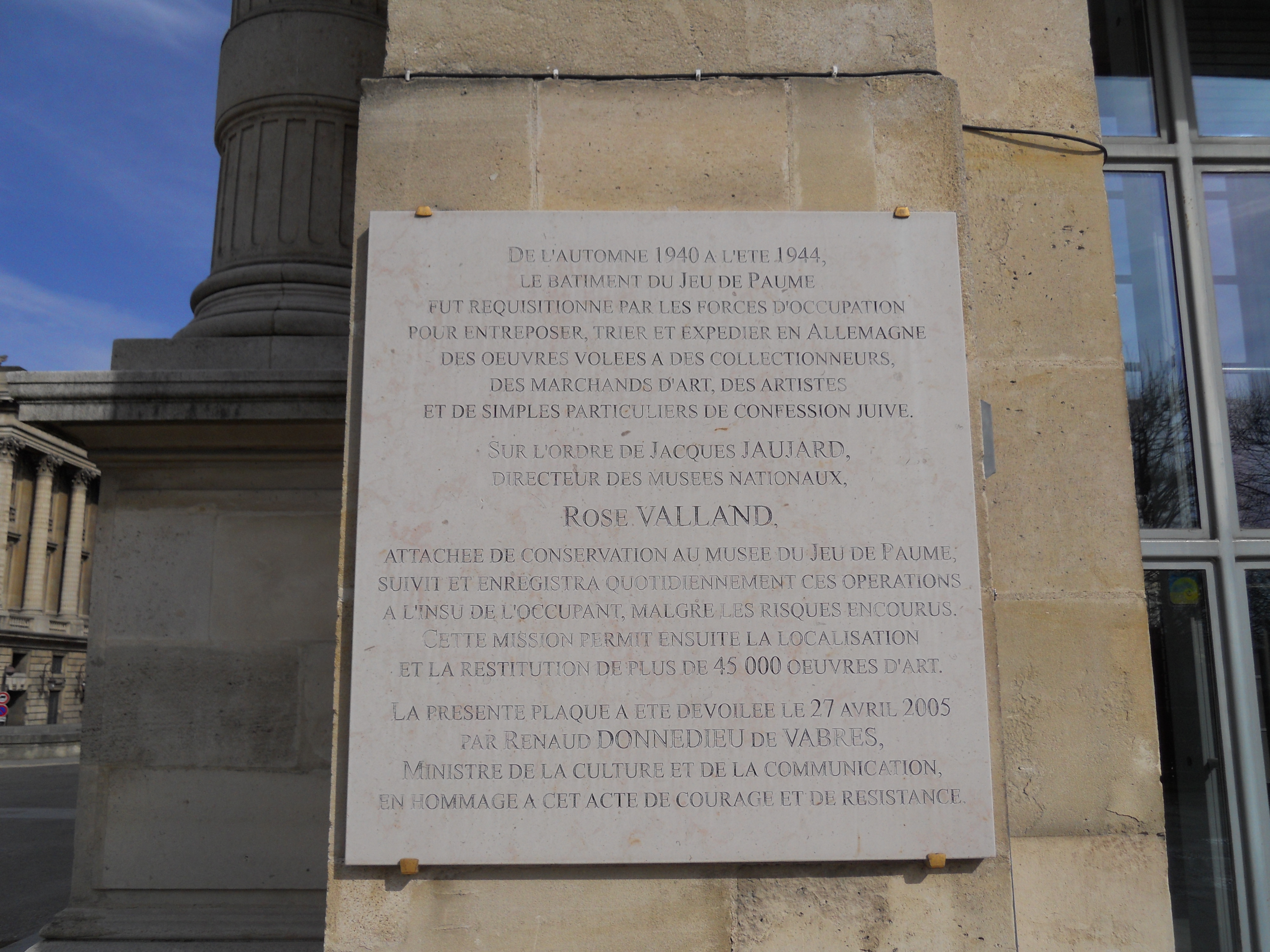


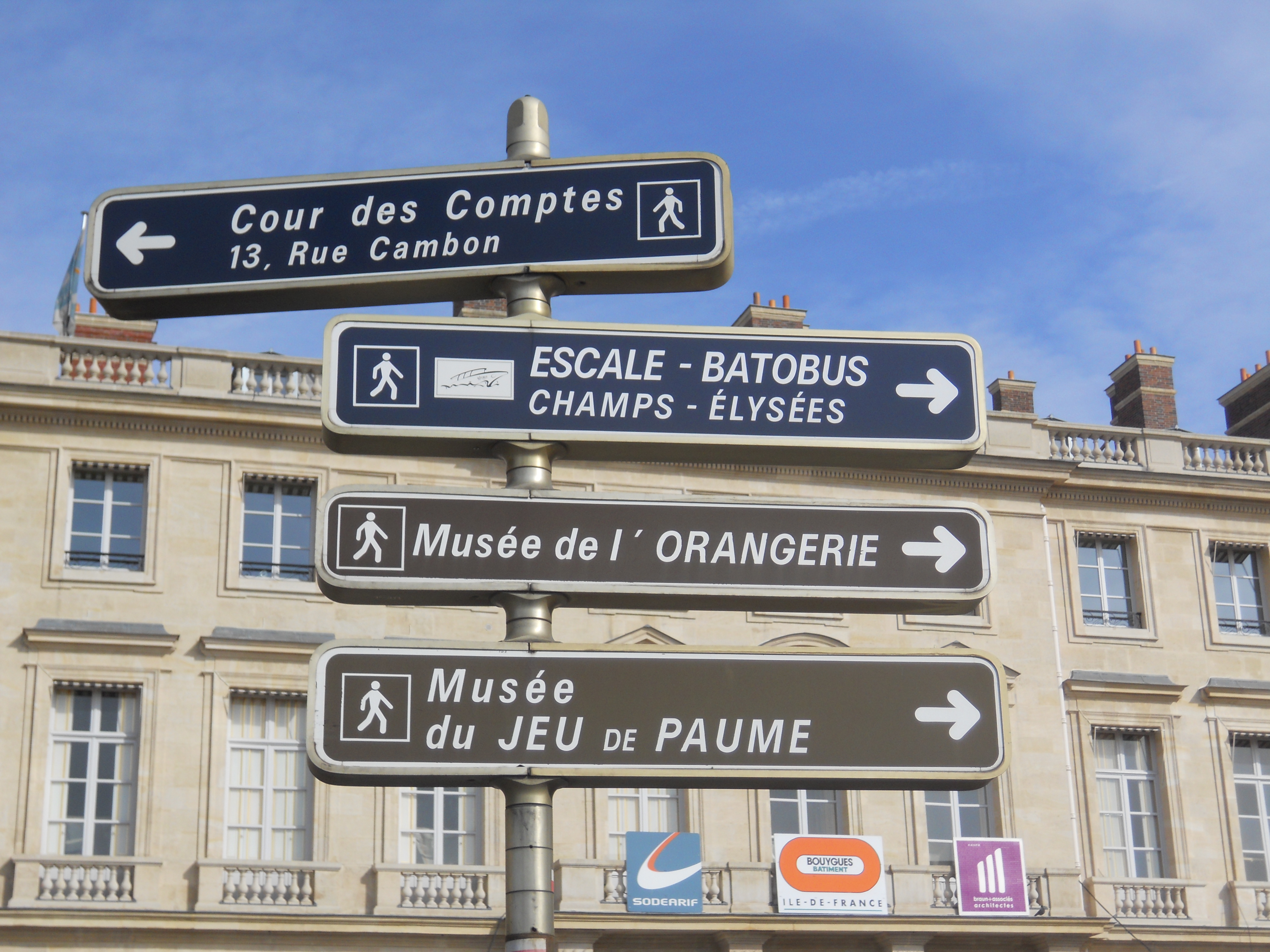

Jeu de Paume is the French name for Real Tennis and that was the original purpose of the building. They must have been some courts!
 The Anonymous Widower