Observations On Thameslink Between Brighton And Cambridge
Yesterday, Thameslink opened the first of their services up the East Coast Main Line.
I gave more details in Thameslink Is Now Serving Peterborough And Cambridge.
Today, I did the following trips.
- Dalston Junction to Brighton, by Overground, tram and Thameslink.
- Brighton to Cambridge, leaving at 11:32 and arriving at 14:14, which was a journey time of two hours, forty-two minutes.
- Cambridge to Finsbury Park, leaving at 14:24 and arriving at 15:10, which was a journey time of forty-six minutes.
These are pictures, I took along the Brighton to Cambridge part of the route.
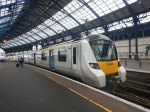

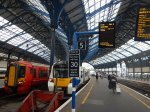
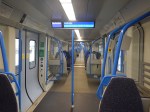
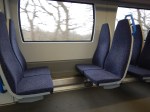






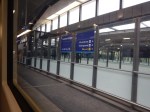





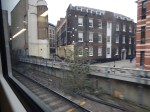



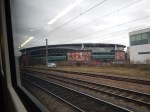









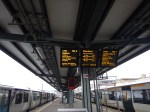
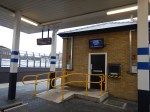
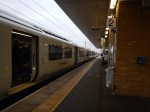
These are some of my observations.
Are The Class 700 Trains Fast Enough?
There didn’t seem to be any problems today, but usually, when an electric train runs with the 125 mph trains on a High Speed Line like the East Coast, West Coast and Great Western Main Lines, they are a little bit faster than the hundred mph of the Class 700 trains.
Both, Class 350 trains and Class 387 trains are 110 mph trains and they have run successfully on High Speed Lines with 125 mph trains.
Interestingly, TransPennine Express has bought Class 397 trains, to work the West Coast Main Line. These are 125 mph trains, but they will have to work with uprated trains at 140mph, when in-cab signalling is installed.
In-Cab Signalling On The Main Lines
When modern in-cab signalling is installed on the Brighton, Midland and East Coast Main Lines will the current in-cab signalling of the Class 700 trains be able to be quickly updated?
I suspect it will not be a difficult project.
The Updating Of The Midland Main Line
In OLE Changes To Boost Midland Main Line Speeds, I said this.
The title of this post is the same as that of an article in Issue 840 of Rail Magazine.
Currently, the overhead line equipment (OLE) between St. Pancras and Bedford is rated at 100 mph.
But the new OLE between Bedford and Corby via Kettering is going to be built to a standard that will allow 125 mph running.
The article goes on to say that to make the best use of 125 mph bi-mode trains, the possibility of upgrading the St. Pancras to Bedford electrification to the 125 mph standard.
This must give advantages.
Are the Class 700 trains able to to take full advantage?
And are they fast enough to work with 125 mph bi-mode trains?
Are The Class 700 Trains Powerful Enough?
I ask this question, as surely changing from a slow line to a fast line, needs some acceleration and acceleration needs power.
The power available divided by the number of cars for the three trains is as follows.
- Class 387 train – 420 kW/car
- Class 350 train – 375 kW/car
- Class 700 train – 417 kW/car
These figures are not that different.
By comparison, the Class 319 trains, which worked Thameslink for many years had just 247.5 kW/car.
The Class 700 Trains Aren’t Passenger Friendly For Long Distances
I regularly use Class 700 trains for short journeys on Thameslink around London. But going between say West Hampstead Thameslink and Blackfriars, is more of the sort of journey you would take on an Underground train.
- They are perfectly adequate for short journeys in Central London.
- The trains are generally lightly loaded, with seats often available.
- There are plenty of hand-holds for safe standing.
- The on train information is good.
- I’ve even used the trains for their toilets.
On the other hand, taking an hour’s journey around London, there are several journeys, where you get a train with much better seats and a higher level of comfort.
- Aldgate to Uxbridge on the Metropolitan Line, riding on a S8 Stock train.
- Highbury and Islington to West Croydon on the London Overground, riding on a Class 378 train.
- Liverpool Street to Shenfield, riding on a Class 345 train.
- Liverpool Street to Bishops Stortford on a Class 317 train.
- Paddington to Reading, riding on a Class 387 train.
- Waterloo to Windsor, riding in a Class 455 train.
Note the presence of two seriously-old trains; Classes 317 and 455, and a train designed for the Underground.
Some of these journeys will get better, as new trains are introduced.
If you look at your new car, passenger features are much better than what you had twenty years ago.
The same can be said for some of London’s commuter trains, but can it be said for the Class 700 trains, when compared with the previous Class 319 trains.
- Standing is a better experience on a Class 700 train.
- Sitting is a better experience on a Class 319 train.
- Entry and exit is better on a Class 700 train.
- The toilets are better on a Class 700 train.
- There is no wi-fi or power sockets on either train.
- The Class 700 train is a better train to serve an Airport.
- The Class 700 train uses the colours of a nuclear submarine, to calm passengers down!
After my trip of two hours forty-two minutes yesterday, between Brighton and Cambridge, I’m convinced the Class 700 train is unsuitable for this length of journey.
- The seats are not comfortable enough for this distance.
- By Cambridge, my phone was in desperate need of a re-charge.
- At least I don’t generally use wi-fi.
The train was not very crowded, so with a more comfortable seat and a power-socket I’d have been a lot happier.
Passenger Loading Of The Train
For most of the journey, the train was virtually empty and I had four seats to myself.
Incidentally, I suspect that a lot of groups travelling all the way, will put their feet on the seats opposite for comfort.
The only time, the train had more than a few passengers was between Gatwick Airport and London Bridge stations, when it was almost completely full.
Various factors probably contribute.
- Between London and Brighton, you can take one of Southern’s comfortable Class 377 trains.
- Between London and Bedford, you can still take one of East Midland’s comfortable trains.
- Between London and Cambridge, you can take one of Great Northern’s comfortable Class 387 trains.
- Between London and Cambridge, you can take one of Greater Anglia’s comfortable Class 379 trains.
Competition may work in the Off Peak, but surely commuters have no choice.
But it was interesting, that the only crowded part of the route was the section, where there is no competition.
Take the standard grandparents living in Cambridge wanting to go to see their grandchildren in Brighton.
Will they take a two hours forty-two minutes journey in an uncomfortable train, when you can break the journey in a pleasant cafe in Central London?
Regular travellers on long Thameslink routes will work out their best strategies.
I’d love to analyse Thameslink’s passenger statistics.
But then Thameslink didn’t specify the trains.
Summing Up Brighton To Cambridge
These thoughts can probably be applied to Bedford to Brighton as well.
On the plus side, there is the following.
- The journey time.
- Entry and exit to the train.
- Standing space, which makes it an excellent extra Underground Line in Central London.
- Toilets
On the negative side, there is the following.
- The seats.
- The lack of passenger-friendly features like tables, power sockets and wi-fi.
But, I suspect that for Thameslink, these trains will not be welcoming to Off Peak travellers, where the competition is other operators and the car.
Is Thameslink An Extended Underground Line?
Crossrail has been designed as an extended Underground Line from Reading and Heathrow in the West to Abbey Wood and Shenfield in the East.
- Between Whitechapel and Paddington, the line functions as a high-capacity Underground Line.
- Crossrail will appear on the Tube Map.
- Crossrail stations will have excellent connections to the Undeground.
- By linking services from Paddington and Liverpool Street together back-to-back, platform space is released at two major stations, which can be used to increase capacity on other routes.
- Crossrail’s stations are seen as locations to create commercial and residential developments.
- All stations on the route are being improved and made step-free.
- Crossrail’s trains appear to have been designed to function as both Underground trains and commuter trains, borrowing heavily from the successful S8 Stock of the Metropolitan Line.
So how does Thameslink compare?
- Thameslink seems to have been designed as a series of main routes across London, that go through a Central Tunnel.
- Between London Bridge and Finsbury Park/West Hapstead Thameslink, Londonders will use the line as a high-capacity Underground Line.
- Thameslink will not appear on the Tube Map.
- Thameslink stations have mixed connections to the Underground, that were designed by that useless designer called Topsy.
- Platform space has been released at St. Pancras and London Bridge and the latest remodelling has improved matters.
- Are Thameslink’s stations seen as development hubs?
- Are Thameslink’s stations being given the right level of improvement and step-free access?
- Thameslink’s trains were not designed for the job they are doing.
Thameslink is most certainly not an extended Underground Line!
A Comparison With The Great Eastern Main Line
The Great Eastern Main Line is a line I know well.
- It has a long-distance service from Liverpool Street to Norwich via Colchester and Ipswich.
- It has an extensive commuter network from Liverpool Street.
- Crossrail will increase capacity at Liverpool Street.
When Greater Anglia decided to replace the fleet, they could have gone for a unified fleet.
But they decided on a split fleet.
- Stadler Class 745 trains for long-distance and Stansted Airport services.
- Stadler Class 755 bi-mode trains for rural services in Suffolk and Norfolk.
- Bombardier Class 720 trains in five- and ten-car formations for London commuter services..
Note.
- It was a pragmatic decision, that provided the right train for each service.
- Particular attention has been paid to the interior design.
- The interior design has been shown to passengers, before any trains have been built.
- All trains will have toilets.
- First Class will be eliminated on the Class 720 trains.
- The Class 720 trains could share tracks and platforms with Crossrail’s Class 345 trains.
It looks like Greater Anglia took a lot of care.
Did the Department for Transport take a similar amount of care to get the design for the Thameslink trains?
Obviously not!
What Needs To Be Done
These are my ideas.
Split The Train Fleet
Greater Anglia’s decision to split their fleet is a telling one.
- Express services between London and Norwich and Stansted Airport services will be run by twelve-car Class 745 trains with First Class seats.
- London commuter services will be run by five- and ten-car high-capacity Class 720 trains with no First Class.
- Both trains have 100 mph operating speeds.
- Both trains appear to have well-designed interiors.
- Both trains will be compatible with respect to station, track and signalling.
Additionally, their Class 755 trains for secondary routes will have similar performance, opening up the possibility of other direct services to London.
I believe that eventually, Thameslink services will be run by two sets of compatible trains.
If they borrowed from Greater Anglia’s logic, this could see.
- A sub-fleet suitable for long-distance services with twelve-car trains, First Class, tables and better seats for steerage.
- A sub-fleet suitable for London commuter services with eight-car trains and no First Class.
Note.
- The current seats may be acceptable for eight-car trains running short commuter routes.
- All trains would be fitted with wi-fi, power-sockets, cup holders, seat-back tables and other passenger-friendly equipment where appropriate.
- Of the long-distance routes, only Cambridge to Maidstone East is proposed to be run by an eight-car train.
- The long-distance trains would have the ability to run at 110 mph, where possible and needed.
I believe with a bit of sorting and remanufacturing, the current fleet could do a much better job.
- Passengers would get better seats and other facilities.
- Thameslink would get faster services on long routes.
- Would a more passenger-friendly train attract more passengers, especially in the Off Peak?
- Services on the Brighton, East Coast and Midland Main Lines would allow faster running of other services.
I don’t think I’m talking about anything that is too difficult.
Would It Be Advantageous To Allow Some Twelve-Car Trains To Split And Join?
In Has Thameslink Got The Wrong Length Of Train?, I showed how if the trains were twelve- and six-car units and the latter had the ability to split and join automatically, this would lead to the following.
- More efficient use of trains.
- Better operation on the Sutton Loop Line.
- The creation of extra services by splitting at the ends of a route.
I also showed how it may be possible to adjust the lengths of the current fleet into twelve- and six-car units.
Put Thameslink On The Tube Map
I know it was an initial service, but passenger numbers on my journey from Brighton to Cambridge , must have been well below Thameslink’s forecast for the route.
I doubt more than a handfull did the whole route, like I did.
It was particularly noticeable, that passengers were thin on the ground between London Bridge and Finsbury Park stations.
And yet this route will have the following characteristics, when Thameslink is fully open.
- Six trains per hour (tph). Running all day.
- Two extra tph in the Peak.
- Full step-free access at London Bridge station.
- Full step-free access at Finsbury Park station, including to the Piccadilly and Victoria Lines.
- Same platform interchange with services to and from Moorgate on the Northern City Line at Finsbury Park.
- Step-free access at all the intermediate stations between London Bridge and Finsbury Park.
I think that Finsbury Park could become a well-used interchange for Thameslink passengers.
But like other interchanges, it needs to be shown on the Tube map, so passengers know it’s there.
On the other hand, if you ask National Rail’s timetable, the best route from Brighton to Oakliegh Park at 11:30 on a Monday, it advises using Thameslink to Finsbury Park and then a local train on the Northern City Line.
More And Better Interchanges on Thameslink
Thameslink doesn’t have many interchanges with the Underground.
- West Hampstead Thameslink
- Kentish Town
- Finsbury Park
- Kings Cross St. Pancras
- Farringdon
- London Blackfriars
- London Bridge
- Elephant and Castle
Some are fairly rudimentary and involve some walking, that is not easy.
There is also two interchanges with the Overground.
- Peckham Rye
- Denmark Hill
But the Thameslink frequency at these stations, is only four tph, with two extra in the Peak.
Various plans have been floated in the last few years.
- New stations at Camberwell and Loughborough Junction have been proposed.
- A new transport hub linking Catford and Catford Bridge stations has been proposed.
- A pedestrian link between City Thameslink and St. Paul’s stations.
- An extension to the Docklands Light Railway to City Thameslink and on to Charing Cross, Euston and Victoria.
Thameslink will only get bigger and better.
Could Crossrail And Thameslink Serve Clapham Junction Station?
This may seem a silly question, but I believe it is a valid one for the following reasons.
Clapham Junction Is A Major Interchange
Wikipedia says this about Clapham Junction station.
Routes from London’s south and south-west termini, Victoria and Waterloo funnel through the station, making it the busiest in Europe by number of trains using it: between 100 and 180 per hour except for the five hours after midnight. The station is also the busiest UK station for interchanges between services.
It is also the tenth busiest station measured by passenger numbers in Great Britain.
Clapham Junction Is Step-Free
Clapham Junction station has both a bridge and a subway between the seventeen platforms.
The bridge is fully step-free with lifts to all platforms.
Clapham Junction Has A Wide Bridge
The bridge between platforms is not only step-free, but very wide.
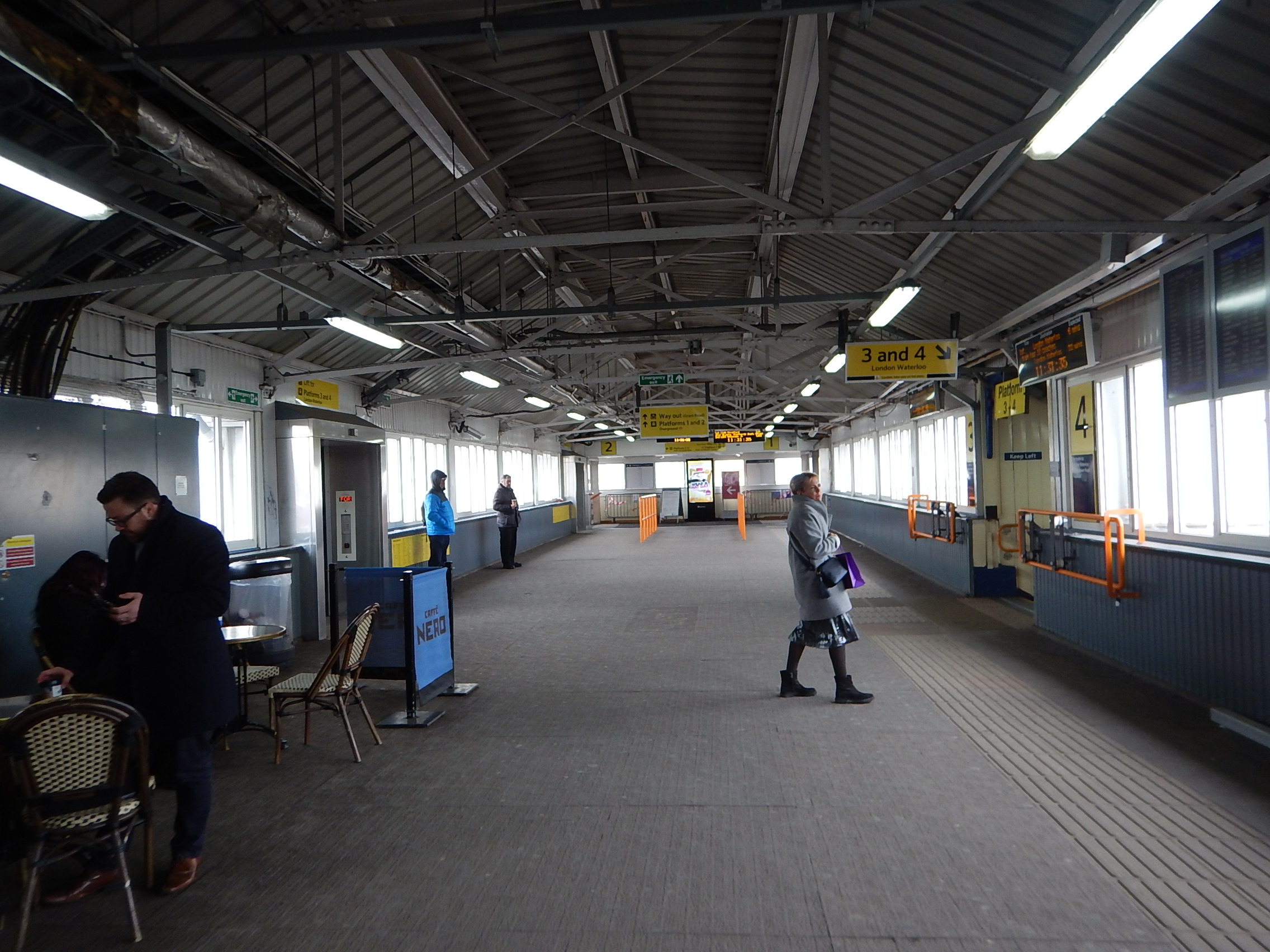
rchitects have copied this Victorian design at Leeds and Reading stations.
Clapham Junction Is Often A Convenient Place to Change Trains
When I go to Portsmouth or Southampton, I will often avoid Waterloo, by using the Overground between Dalston Junction and Clapham Junction stations.
It may be slower, but it is a very easy interchange, especially if I go step-free on the wide bridge.
Perhaps this explains why interchange passengers at Clapham Junction, are almost as many as those entering or leaving the rail network.
With some journeys like say Southampton to Wembley Stadium, changing at Clapham Junction is probably the most convenient.
Clapham Junction Links To The Overground
This interchange, is something I use a lot, as I have four trains per hour (tph) on the London Overground, from my nearest station at Dalston Junction.
As there are thirty-one stations on London’s circular railway, the interchange probably generates a lot of traffic.
Clapham Junction Seems To Be Well-Organised
If you want to go to say Gatwick, then generally the same platform will be used.
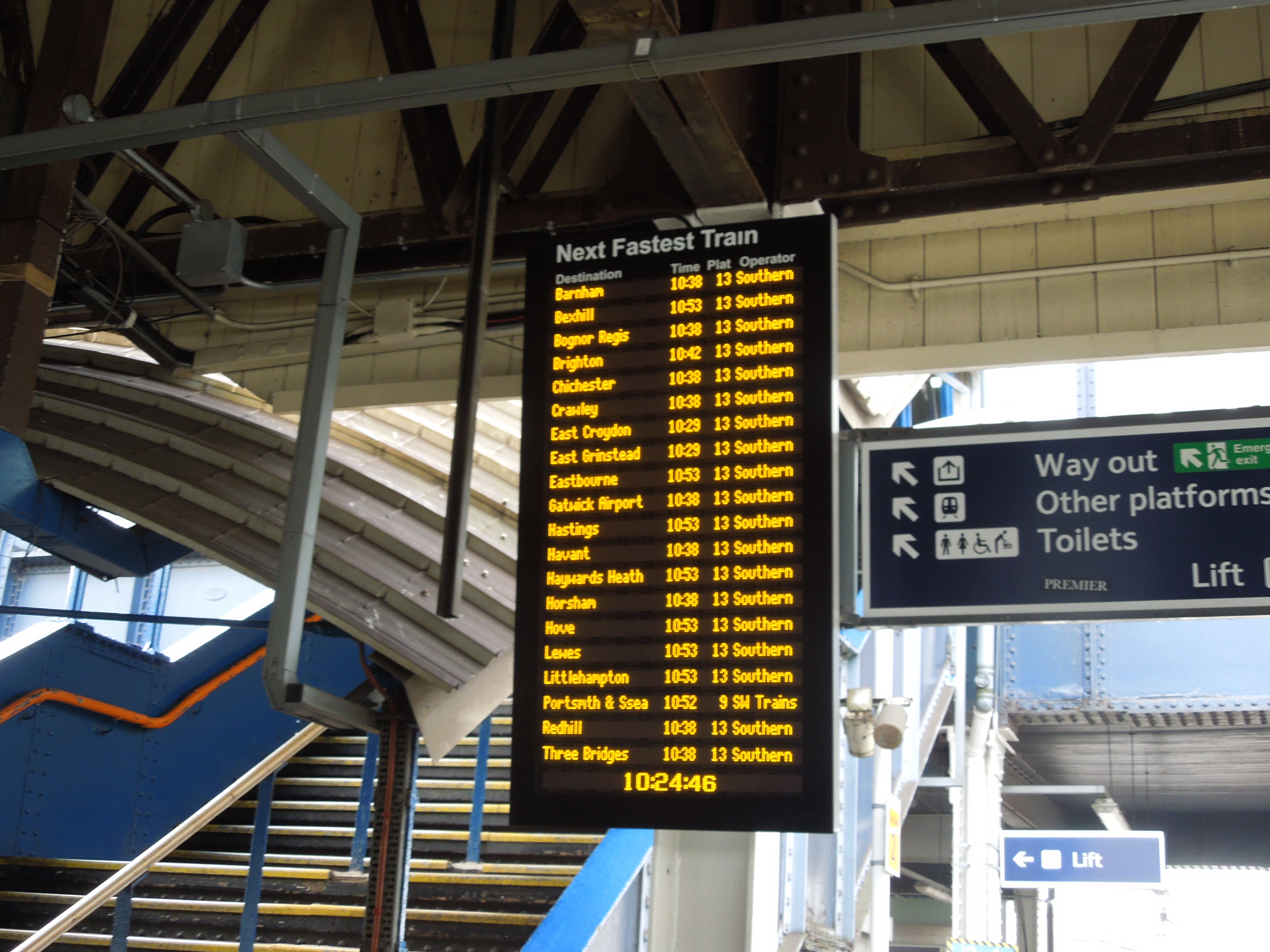
All Trains To Gatwick Go From 13
This can’t be said for many stations.
The station even has lists of stations and the platform to use.
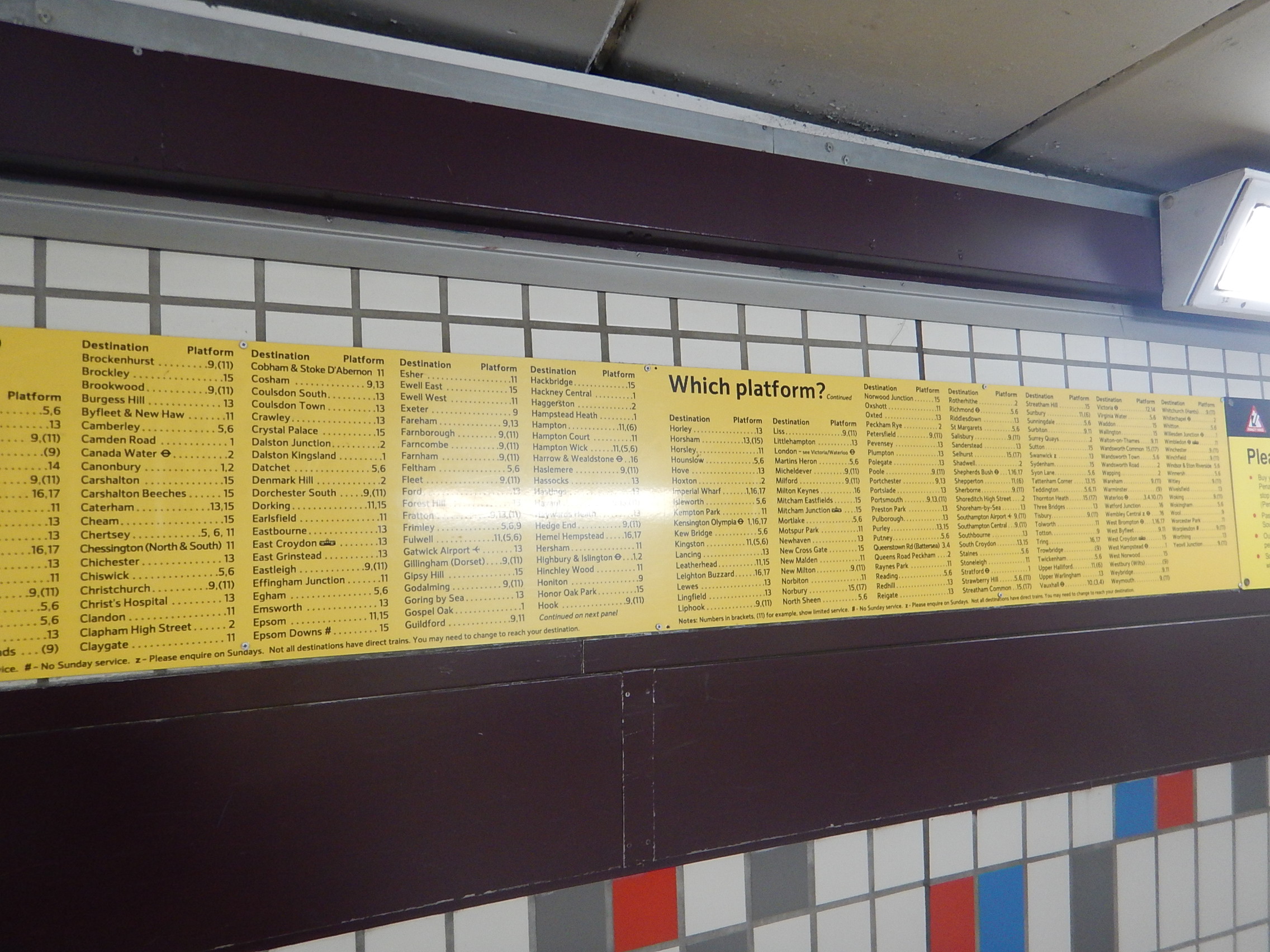
This would be impossible at most large stations!
But this is the busiest station in Europe by the number of trains using it!
The Victorians certainly got the design right!
Does this passenger-friendly design attract passengers?
Crossrail, Thameslink And Clapham Junction Station
Crossrail and Thameslink don’t call at Clapham Junction station.
But some services do directly link Crossrail and Thameslink to Clapham Junction station.
London Overground From Stratford To Clapham Junction Via Willesden Junction
This West London Line service has a frequency of four tph, which from some time this year will be raised to six tph or one train every ten minutes.
It will have the following interchanges in the future.
- Thameslink at West Hampstead
- Crossrail at Old Oak Common
It will also have interchanges with the Bakerloo, Central, District, Jubilee and Victoria Lines.
London Overground From Stratford To Clapham Junction Via Canada Water
This South London Line service has a frequency of four tph, which from some time this year will be raised to six tph.
It will have the following interchanges in the future.
- Thameslink at Denmark Hill and Peckham Rye
- Crossrail at Whitechapel
It will also have interchanges with the District, Docklands Light Railway, Hammersmith and City,Jubilee and Northern Lines.
Southern From East Croydon To Milton Keynes
This West London Line service has a frequency of one tph.
It will have the following interchanges in the future.
- Thameslink at East Croydon
- Crossrail at Old Oak Common
If Crossrail is extended along the West Coast Main Line, there will be additional interchange stations.
It will also have interchanges with the Bakerloo, Central, District and Northern Lines.
Southern From Clapham Junction To Brighton Main Line
There is a high-frequency service from Clapham Junction along the Brighton Main Line.
- 3 tph – Brighton
- 1 tph – Hastings
- 2 tph – Eastbourne
- 2 tph – Littlehampton
- 4 tph – Horsham
- 4 tph – Haywards Heath
- 4 tph – Three Bridges
- 6 tph – Gatwick Airport
- 12 tph – East Croydon
Most of these services terminate at Victoria.
The named stations, except for Hastings and Eastbourne, will also be served by Thameslink.
From the passenger point of view, those going to and from London from the Brighton Main Line and South Coast stations, have a choice of London terminus.
- Thameslink – London Bridge, Blackfriars, City Thameslink, Farringdon, St. Pancras and Thameslink’s Northern stations.
- Southern – Clapham Junction and ictoria.
The two separate routes have Central London fully covered.
Deficiencies Of The Current System
Suppose you want to travel from the extremities of Crossrail and Thameslink to say somewhere like Basingstoke, Bournemouth, Exeter, Portsmouth or Southampton, that is served by Waterloo and Clapham Junction in Central London.
- From Brighton and other stations on the South of Thameslink, there is a high-frequency Southern service.
- From Luton and other stations on the North of Thameslink, you will probably use the Jubilee Line between London Bridge and Waterloo.
- From Shenfield and other stations on the East of Crossrail, you will probably use the Jubilee Line between Bond Street and Waterloo.
- From Heathrow, Reading and other stations on the West of Crossrail, you will probably use the Bakerloo Line between Paddington and Waterloo.
All the Underground interchanges will be fully step-free with lifts and lots of escalators, but the connections could be simpler.
The Arrival Of Old Oak Common Station
The building of the new mega-hub station at Old Oak Common will tie together the following lines.
- Crossrail
- HS2
- North London Line
- West Coast Main Line
- West London Line
There is also the possibility of the West London Orbital Railway linking Old Oak Common to Hendon and West Hampstead Thameslink.
Old Oak Common and Clapham Junction stations will be two mega-hub stations, that for obvious reasons will need a high-frequency connection service.
Currently, that is planned to be the following services.
- 6 tph – London Overground from Stratford to Clapham Junction.
- 1 tph – Southern from Milton Keynes to East Croydon.
It is not enough, especially, if either connection at Old Oak Common and Clapham Junction is a long walk.
But there are easy ways to increase the numbers of connections.
Improve The Southern Service
In his report, Chris Gibb recommended that this Milton Keynes to East Croydon route be transferred to the London Overground. I wrote about this in Gibb Report – East Croydon – Milton Keynes Route Should Be Transferred To London Overground.
In my view Chris Gibb is right for the following reasons.
- All passenger services on the West London Line would then be run by London Overground.
- London Overground have a reputation for running a good train service.
- The Milton Keynes to East Croydon service could be integrated with the Watford DC Line, the North London Line and a possible West London Orbital Railway to produce an integrated frequent local service in an area of West London, that needs a greatly improved train service.
- Frequency between Old Oak Common and Clapham Junction could be raised to as high as ten or twelve tph.
- It would improve connections between Watford and the expanding Wembley Stadium complex with South London.
I doubt it would be an expensive and difficult project to move this service between operators.
Build The West London Orbital Railway And Extend It To Clapham Junction
In this article on Ian Visits, this is said about the service on the proposed West London Orbital line.
Phase 1: 4 trains per hour from West Hampstead to Hounslow, calling at West Hampstead, Cricklewood, Neasden, Harlesden, OOC, Acton Central, South Acton, Brentford, Syon Lane, Isleworth, Hounslow.
Phase 2: additional 4 trains per hour from Hendon to Kew Bridge, calling at Hendon, Brent Cross/Staples Corner, Neasden, Harlesden, OOC, Acton Central, South Acton, Kew Bridge.
The track is all in place and with a new bay platform at Hounslow, trains running on batteries could work Phase 1 with ease. The batteries would be charged South of Acton Central station.
Because of the importance of Clapham Junction as an interchange,, would it be a sensible idea to extend Phase 2 from Kew Bridge to Clapham Junction, by way of Chiswick, Barnes Bridge, Barnes, Putney and Wandsworth Town stations?
This may not be possible, as the route may not be able to accept four extra trains.
This map from carto.metro.free.fr shows the track layout around the two Overground platforms at Clapham Junction.

I also took these pictures of Platform 2.
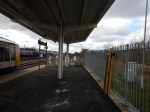
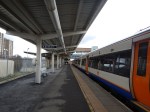
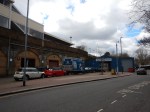
I suspect that a bay platform could be added, opposite to Platform 2.
- There would appear to be plenty of space.
- The platform would share the lift, facilities and staff with Platforms 1 and 2.
- It would make a good interchange, with simple connections to Platforms 1 and 2.
There could even be the possibility of making Platform 2 bi-directional so that a loop service from Hendon to Dalston Junction could be created, if that was considered the best solution.
One advantage of extending the Phase 2 Kew Bridge route, would be that it would give more electrified running to charge a battery train.
Luton/Bedford to Clapham Junction
If this route from Hendon to Clapham Junction via Old Oak Common and Kew Bridge can be successfully created, it establishes the important link between the Luton/Bedford branch of Thameslink and Clapham Junction.
Cambridge/Peterborough to Clapham Junction
There is no direct route, but probably the fastest is to dive into the Victoria Line at Finsbury Park and go to Vauxhall, from where it’s a single stop to Clapham Junction.
Just avoid changing to the Victoria Line at St. Pancras, unless you like long walks.
Crossrail to Clapham Junction
Three factors will determine how good using a double change at Old Oak Common and Clapham Junction to get between Crossrail and Clapham Junction will be.
- The frequency of trains between Old Oak Common and Clapham Junction.
- The quality of the interchange at Old Oak Common. As it will also involve HS2, I suspect it should be good.
- The quality of the interchange at Clapham Junction. It probably needs improvement, but it’s not bad for something designed by the Victorians.
It could be a very good link.
Could Thameslink Serve Clapham Junction Directly?
From the Brighton Main Line, there is a frequent service, but going North to Thameslink is not easy.
It could be possible to use the West London Orbital Railway to get to and from Hendon, but whether anything other than a local route is needed is open to doubt.
Could Crossrail Serve Clapham Junction Directly?
This Google Map shows the Old Oak Common area.
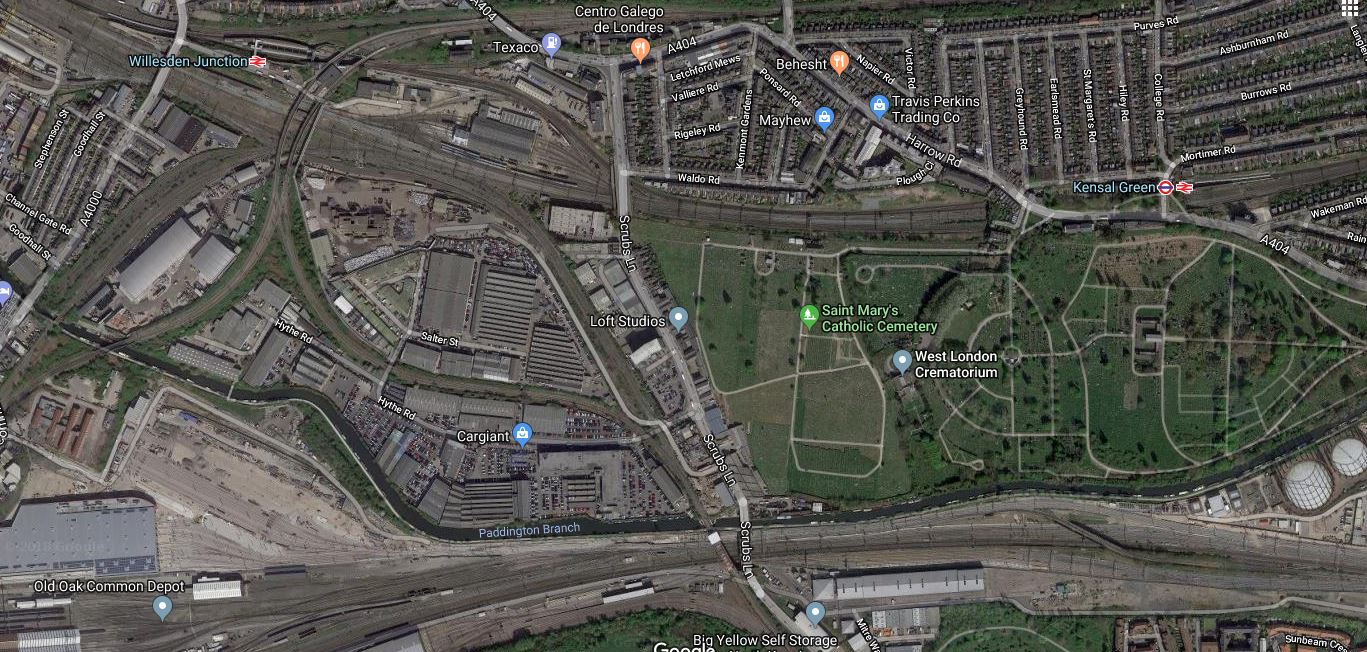
The railway running across the map to the North is the West Coast Main Line, whilst the Great Western Main Line goes across the bottom.
Looking at the map in detail, it might be possible to thread flyovers or dive-unders into the area to allow Crossrail trains to take the West London Line to the North or South from the East or West.
Consider
- There are certainly some large industrial sites that could be cleared.
- There are a couple of cemetries too.
- There are Central, Chiltern, Crossrail, Great Western Main Line, HS2, North London Line, West Coast Main Lines to connect together.
- A Heathrow to Gatwick Link could be threaded through.
It all depends on how much can be spent!
And Then There’s The Heathrow Southern Railway!
This is a bit different, as it’s a privately-funded railway that aims to sneak into Heathrow by following and hiding by the M25 and the use of the odd tunnel.
This map is a schematic of the proposed railway, which is caused the Heathrow Southern Railway.
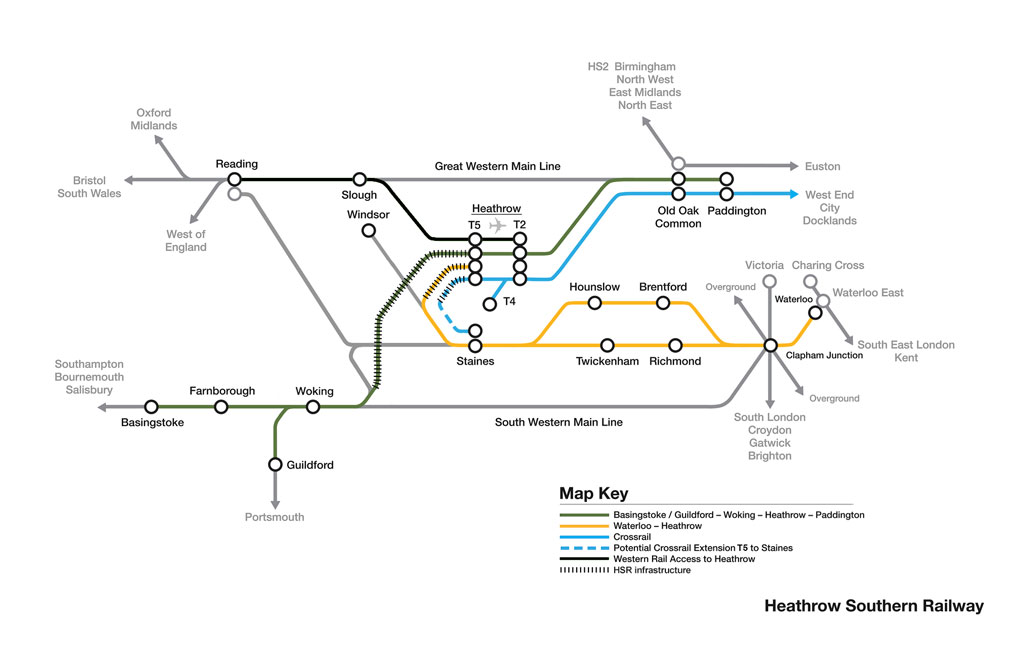
Note.
- The blue line is Crossrail.
- The yellow line is a direct link from Waterloo to Heathrow.
- The station in a six pointed star is Clapham Junction.
On the Heathrow Southern Railway web site there is a section called Service Opportunities.
It details two routes.
Heathrow – Staines – Clapham Junction – Waterloo
- Most track is existing.
- New track will run along the M25.
- Trains will be fully-integrated with South Western Railway.
- Four tph should be possible with planned capacity improvements.
- A bay platform will be added at Staines, within the current railway.
- Xrossrail could be extended from Terminal 5 to Staines.
Heathrow Southern Railway envisage that a lot of passengers from Staines will use Crossrail for London.
Basingstoke/Guildford – Woking – Heathrow – Paddington
The web site says this about the route.
An exciting additional benefit of Heathrow Southern Railway is the scope to introduce half-hourly services from Basingstoke and Guildford to Heathrow and Paddington. These trains would provide a 15-minute frequency from Woking, with stops at Farnborough Main (Basingstoke services), Woking, Terminal 5, Terminal 2 and 3 and Old Oak Common.
I like the ideas and the tone of the project.
Conclusion
With all the ideas in the West of London, I think that some very good things will happen to the railways in the area, whether Heathrow Airport builds another runway or not.
In
Thameslink Is Now Serving Peterborough And Cambridge
This article in the Standard is entitled First Direct Trains From Cambridge To Brighton Via Central London Launch.
This is said about the initial service.
There will be one return service from Brighton to Cambridge, departing at 11.32am from Brighton and 2.14pm from Cambridge, and two between Horsham and Peterborough. These will depart at 10am and 1.30pm from Horsham and 9.46am and 1.17pm from Peterborough.
Do it looks like things are getting started.
Unfortunately, they’re not running on Saturday, when Greater Anglia is employing the dreaded buses.
A Class 700 Train In Platform 5 At London Bridge Station
I took these pictures of a Class 700 train in Platform 5 at London Bridge station.


I assume it was there for driver training and was waiting to pass through the central section of Thameslink.
According to the March 2018 Edition of Modern Railways services through the Central London core will be.
May 2018: 18 Thameslink trains per hour (tph) through central London core (12 tph via London Bridge and six via Elephant & Castle)
At least drivers and other staff seem to be getting trained.
Distilling the report in Modern Railways, gives the following service from May 2018.
Via London Bridge
- 2 tph – Bedford – Brighton – semi-fast/fast – 12-car – All Day
- 2 tph – Bedford – Gatwick Airport- semi-fast/semi-fast – 12-car – All Day
- 2 tph – Peterborough – Horsham – semi-fast/semi-fast – 12-car – All Day
- 1 tph – Cambridge – Brighton – semi-fast-fast – 12-car – All Day
- 2 tph – Bedford – East Grinstead – fast/stopping – 12-car – Peak Only
- 1 tph – Bedford – Littlehampton – fast/fast – 12-car Peak Only
- 2 tph – Luton – Rainham – all stations/all stations – 12-car – All Day
Note.
- This means seven tph all day between central London and Gatwick.
- semi-fast/fast means semi-fast North of the Thames and fast South of the Thames etc.
Via Elephant & Castle
- 4 tph – St. Albans – Sutton – all stations/all stations – 8-car – All Day
- 2 tph – Luton/Kentish Town – Orpington – 8 car – All Day
Note.
- The four tph St. Albans – Sutton go round the Sutton Loop, with two tph in each direction.
Here Are 31 Better Names For City Thameslink, The Worst Name For A Railway Station Ever Devised
The title of this post, is the same as that of this article on CityMetrics.
I tend to agree, as the name doesn’t give too much information about the location, unless you’re a Londoner or someone, who knows about Thameslink.
Look at the passenger statistics for 2013-14 for the station and its neighbours.
- Farringdon – 5.45 million
- City Thameslink – 6.02 million
- Blackfriars – 14.4 million
They are in line with their neighbours, but nothing special.
So would a renaming help.
Of the thirty-one names proposed by CityMetric, one name stands out to me. This is St. Paul’s West.
These pictures show City Thameslink station.
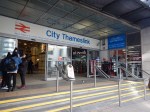



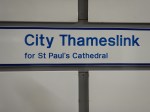



Note.
- It is a double-ended station.
- The Northern entrance is on Holborn Viaduct.
- The Southern entrance is on Ludgate Hill.
- There are escalators and lifts at both ends.
- The station name is given on the platform as City Thameslink for St. Paul’s Cathedral.
This is a Google Map of the area.

Note St. Paul’s cathedral and Southern entrance to City Thameslink station are connected by Ludgate Hill. As Ludgate Hill suggests, it is uphill to the cathedral.
So perhaps a name like Ludgate and St. Paul’s West, might be better.
There could always be a referendum or an on-line vote. But some wag would come up with an unsuitable name that would win.
City Thameslink station is a modern high-capacity station.
- The station is fully accessible.
- The platforms accept twelve-car Class 700 trains.
- Thameslink will soon be running twenty-four trains per hour (tph) in both directions.
- Northern destinations include Bedford, Cambridge, Luton Airport, Peterborough, Saint Pancras International and Stevenage.
- Southern destinations include Brighton, Gatwick Airport, Littlehampton, London Bridge, Maidstone, Rainham and Sevenoaks.
- There is commercial development over much of the station, some of which is better than others.
I have also read that the signalling of Thasmeslink could accept thirty tph through the Snow Hill Tunnel. So the station could see a twenty-five percent increase in train capacity.
What the station needs is better East-West connections to make better use of the station.
Crossrail
Crossrail connects to Thameslink, one station to the North at Farringdon station, which is not a long walk.
A Pedestrian Connection To St. Paul’s Tube Station
I believe this is possible and I wrote about it in A Pedestrian Connection Between City Thameslink Station And St. Paul’s Tube Station.
A Connection To The Docklands Light Railway
This map from Transport for London, shows the possible Western extension of the DLR.
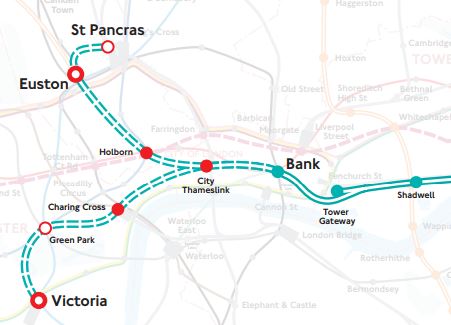
I wrote about this extension in detail in A Connection Between City Thameslink Station And The Docklands Light Railway.
Conclusion
City Thameslink station could grow significantly in importance.
As to the name, if it grows in importance, perhaps it deserves a more important name?
The French would name it after an important politician, artist, philosopher or soldier!
We don’t do that!
If City Thameslink station ends up with a good pedestrian connection to St. Paul’s station and the cathedral, perhaps the whole station complex should just be called St. Paul’s.
Thameslink Trains Are Going Through London Bridge Station
This article on Rail Technology Magazine is entitled Thameslink Test trains Travel Through New London Bridge Platform For First Time.
This is said.
GTR’s first test passenger trains have made the trip through the new platform 5 at London Bridge following the completion of nearly three years of work.
The eight-carriage Class 700 RLU was the first passenger train to complete a journey over the new Bermondsey Dive-Under, as it came into London Bridge from New Cross Gate on New Year’s Day.
But they have increased their testing since.
This is a screen capture from Real Time Trains, showing Thameslink trains around 19:00 last night.
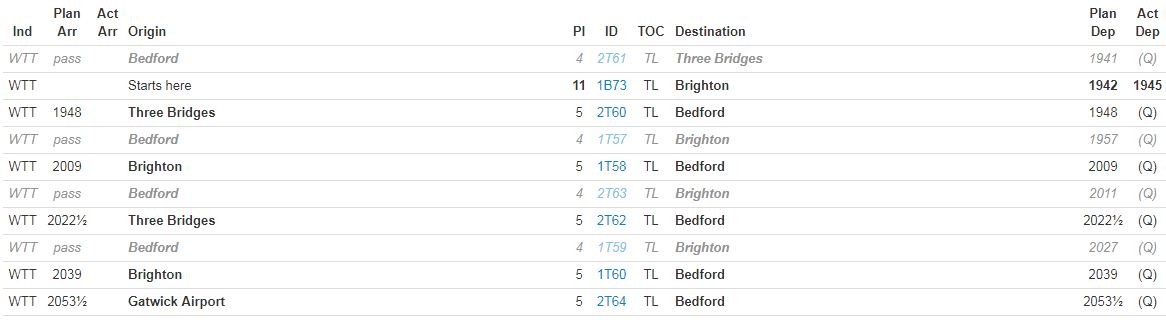
Note.
- Under the Platform column 4 and 5 are shown.
- Some trains appear to be stopping.
I’ve just checked this morning and it appears that Northbound trains are stopping in Platform 5 and Southbound services are going through Platform 4.
Thameslink Begins Testing At Redeveloped London Bridge
The title of this post, is the same as that of this article in Rail Magazine.
This is said.
Direct trains from Blackfriars to London Bridge stopped in January 2015, but will resume this month once further testing and driver training has been completed. A full service introduction is planned for May.
That sounds like good news to me!
OLE Changes To Boost Midland Main Line Speeds
The title of this post is the same as that of an article in Issue 840 of Rail Magazine.
Currently, the overhead line equipment (OLE) between St. Pancras and Bedford is rated at 100 mph.
But the new OLE between Bedford and Corby via Kettering is going to be built to a standard that will allow 125 mph running.
The article goes on to say that to make the best use of 125 mph bi-mode trains, the possibility of upgrading the St. Pancras to Bedford electrification to the 125 mph standard.
This must give advantages.
Thameslink Services Through Brockley
This post is a follow up to Thameslink’s 24tph Introduction Held Over To 2019, which I wrote yesterday, after doing a little bit of digging anf buying the printed copy of Rail Magazine.
When the full 24 trains per hour (tph) timetable is fully implemented the routing of Thameslink services through South London could be as in the provisional timetable in Wikipedia.
- 1/2 – Bedford to Brighton – via London Bridge, East Croydon and Gatwick Airport
- 3/4 – Bedford to Gatwick Airport – via London Bridge and East Croydon
- 5/6 – Peterborough to Horsham – via London Bridge and East Croydon
- 7/8 – Cambridge to Brighton – via London Bridge, East Croydon and Gatwick Airport
- 9/10 – Cambridge to Maidstone East – via London Bridge, New Cross and Swanley
- 11/12 – Bedford to East Grinstead – via London Bridge and East Croydon
- 13/14 – Bedford to Littlehampton – via London Bridge, East Croydon and Gatwick Airport
- 15/16 – Luton to Rainham – via London Bridge, New Cross and Greenwich
- 17/20 – St. Albans to Sutton – Bia London Blackfriars and the Sutton Loop
- 21/22 – Luton or Kentish Town to Orpington – via London Blackfriars and Catford
- 23/24 – Welwyn Garden City to Sevenoaks – via London Blackfriars, Catford and Otford.
Looking at the routes of these trains shows.
- Twelve tph will run between London Bridge and East Croydon along the Brighton Main Line through stations between Brockley Norwood Junction.
- Ten tph serve Gatwick Airport.
- Ten tph serve Luton Airport.
This morning I stood on Brockley stations and counted trains on the two fast lines of the Brighton Main Line.
In half an hour, I counted less than eight trains in each direction of which one was Network Rail’s leaf cleaning train and another was the Thameslink service between London Bridge and Brighton.
This article in Rail Magazine is entitled Thameslink’s 24tph Introduction Held Over To 2019.
This is a paragraph.
However, GTR will start running some trains on routes earlier than planned. Speaking exclusively to RAIL on November 15, Chris Gibb, chairman of the Thameslink Programme Industry Readiness Board, said that as soon as drivers were trained, GTR services would be diverted via London Bridge from January instead of May, and via the Canal Tunnels from April.
From my observations this morning and my scrutiny of the proposed timetable, it would appear that the twelve tph between London Bridge and East Croydon can be accommodated on the fast lines of the Brighton Main Line, given the following conditions.
- The track and signalling between London Blackfriars and New Cross Gate via London Bridge is completed.
- The London Bridge to Brighton service is discontinued, as Thameslink will replace it.
Thameslink running through London Bridge from January, will surely mean the following.
- Faster and more reliable services between London and Gatwick Airport and the South Coast, using more direct route and the Brighton Main Line, North of East Croydon.
- Less congestion on the Blackfriars route for Thameslink, as it winds through South London.
At present only four tph run on Thameslink, that could use the new direct route.
So if these transfer in January to their own platforms in London Bridge, there will be improvements.
In the Rail Magazine article, Chris Gibb also stated that the Canal Tunnels will be in use by April.
So will we see services gradually added to the Thameslink service, as the route proves it is capable of handling the trains?
This is no Big Bang change, but a simple step-by-step process.
More Details In The Print Copy Of Rail Magazine
The full Rail Magazine article has now been published in print and I have a copy.
Chris Gibb describes the May 2018 timetable change as a Big Bang.
- Capacity increase of 35,000-40,000 into the core at Peak periods.
- New service between Cambridge and Brighton.
- New service between Horsham and Peterborough.
- New service between Luton and the Medway Towns.
- New service between Littlehampton and Bedford.
- New service between East Grinstead and Bedford.
There will be 18 tph through the core.
The article say this frequency will rise to 20 tph in December 2018 and 22 tph in May 2019.
A Possible Thirty Tph Through The Core
The Rail Magazine article also says this.
He (Chris Gibb) explained that 30 tph could run through the core, but that infrastructure either side of it, would not support this.
This increase must open up the possibility of new destinations to the North and South.
Everybody would have their favourites.
Mine could be.
- Ashford International for Eurostar.
- Old Oak Common via the Dudding Hill Line.
- Kettering and Corby
- Milton Keynes
It will be interesting to see what is proposed, let alone implemented.
Thameslink’s 24tph Introduction Held Over To 2019
The title of this post is the sane as that of this article in Rail Magazine.
This is the first paragraph.
Govia Thameslink Railway will introduce the full 24 trains per hour through the central London ‘core’ between St Pancras International and Blackfriars, as part of the £6 billion Thameslink programme, in December 2019, and not December 2018 as planned.
The decision has apparently been taken after an independent review, and has been designed to reduce risk at a major timetable change in May 2018.
But is it not all bad news. This is another paragraph.
However, GTR will start running some trains on routes earlier than planned. Speaking exclusively to RAIL on November 15, Chris Gibb, chairman of the Thameslink Programme Industry Readiness Board, said that as soon as drivers were trained, GTR services would be diverted via London Bridge from January instead of May, and via the Canal Tunnels from April.
Looking at the timetables for January, there doesn’t appear to be any Thameslink trains through London Bridge in the January timetable.
 The Anonymous Widower