Gibb Report – Moorgate Services Could Be Transferred To The London Overground
The Gibb Report, looks in detail at services out of Moorgate station on the Northern City Line in detail.
Note that current plans for this line include.
- New Class 717 trains to replace the Class 313 trains, which are little better than scrapyard specials.
- Higher frequency and faster services to Hertford North, Letchworth Garden City, Stevenage and Welwyn Garden City.
- Better Off Peak services.
- A step-free connection at Moorgate to Crossrail and four Underground lines.
It could also be rebranded as the Great Northern Metro.
Chris Gibbs flags up various issues with this service. He says this about the infrastructure.
25 new Class 717 six-car trains are being built by Siemens as a dedicated fleet for this route, and will be maintained by GTR at their Hornsey Depot. The line between Drayton Park and Moorgate is a former underground line transferred to BR in 1976 and partly converted for main line trains.
It retains various Underground characteristics, such as third rail electrification with a fourth return rail, and tripcocks at all signals, and I believe Old Street and Moorgate stations are owned by London Underground as part of shared stations, and are in need of modernisation. The track and signalling is owned and operated by Network Rail.
I would add a personal observation. Highbury and Islington station is a station where the below-ground platforms are in desperate need of improvement and step-free access. Over the last year or so, with GTR’s labour troubles, the operation of the station at times, has not been smooth, much to the exasperation of London Underground/Overground staff.
Chris Gibbs also notes several issues with the employment of staff after 2018.
Other current Great Northern services run between Kings Lynn, Cambridge, Peterborough and Kings Cross, and these will be part of the Thameslink operation from 2018, with most services continuing to destinations south of London and a few running to Kings Cross. I understand Great Northern drivers will be “temporarily” split between Metro and Thameslink in 2017 to avoid them all having to learn the cross London routes and Class 700 trains, so there may then be a some division for TUPE purposes.
At present it is proposed not to initially train about 100 drivers on Class 700 trains, spread across several locations, and it is proposed to open new drivers depots, for example at Welwyn Garden City and Finsbury Park. These proposals have not yet been approved by DfT, and recruitment has not yet begun. However there is still risk that splitting the driver workforce, who currently enjoy variety of work, may be unpopular, and more work is required to evaluate this. All Great Northern Metro services are currently DOO.
It looks like a disaster waiting to happen to me.
He finishes his discussion on the Great Northern Metro like this.
I believe there is an option to transfer the Great Northern Metro operation to TfL and it’s London Overground concession in 2018. If TfL / the London Overground concessionaire were to take the lead in this transfer, and the implementation of the new trains and service, this could reduce risks associated with the Thameslink programme, led by GTR.
However to do this, a decision should be made immediately, and discussions commenced with
TfL, GTR and the London Overground concessionaire.
Personally, I think that this would be a very good idea.
In this area of London, we have three stations that need to be dramatically improved; Old Street, Essex Road and Highbury and Islingtont.
All are on the Northern City Line and they could start with a deep clean at Essex Road, which was probably cleaner when it opened in the same year my father was born.
But being serious, these three stations could be serious development opportunities.
- Highbury and Islington is a major interchange that hasn’t been rebuilt properly since it was bombed in World War 2 and was changed on the cheap to squeeze the Victoria Line through underground.
- Essex Road could also be redeveloped with a modern step-free station underneath.
- Old Street is now surrounded by towers and the road layout is being simpified, so why not put a massive tower on the site and build a modern station underneath?
Having only one operator at the stations must surely ease redevelopment.
I think if the split between GTR and the Great Northern Metro was thought through properly, there could be advantages all round.
- All services North of Welwyn Garden City on the East Coast Main Line and the Cambridge Line would be provided by GTR.
- All Hertford Loop Line services would be provided by London Overground.
- All Hertford Loop Line stations would be managed by London Overground.
- All stations South of Welwyn Garden City on the East Coast Main Line would be managed by London Overground.
- A turnback platform would be built at Stevenage.
- Welwyn Garden City and Stevenage stations would be updated to allow easy interchange between GTR and Great Northern Metro services.
- Alexandra Palace station is developed, so that cross platform interchange is possible between GTR and Great Northern Metro services.
It certainly looks like a properly integrated 100 mph suburban rail route can be built to Stevenage, with similar fleets of 100 mph Class 700 trains and Class 717 trains on Thameslink and the Great Northern Metro respectively.
The East Coast Main Line would work as now.
- Great Northern Metro services between Moorgate and Welwyn Garden City
- Outer suburban services between Kings Cross and Stevenage, Peterborough and Cambridge.
- In 2018, Thamelink will link St. Pancras to Stevenage, Peteborough and Cambridge.
On the Hertford Loop Line, there would just be a Great Northern Metro service between Moorgate and Stevenage, via Hertford North.
There could be possible problems and questions.
- Would residents of Hertfordshire, object to services being controlled by the London Mayor?
- Who would pay for the required turn-back platform at Stevenage?
- Could London Overground absorb the route without too many problems?
- Would there be enough paths on the East Coast Main Line?
- Where would the depot for the Class 717 trains be located?
- How will Siemens respond to the change of operator for their Class 717 trains?
But there are some other factors in favour.
- The Great Northern Metro service on the Hertford Loop Line would effectively be an independent double-track railway capable of handling as many six-car Class 717 trains as were desired. The current three trains per hour (tph) is probably way below the theoretical capacity, which is probably determined by the single platform at Stevenage.
- London Overground successfully integrated the Lea Valley Lines into their operation.
- London Overground and the Great Northern Metro both work under DOO.
- Hopefully, Transport for London have the knowledge to integrate the Class 717 trains into the tunnels to Moorgate. But they have an excellent museum!
- London Overground’s working practices would appear to be similar to those on the Great Northern Metro.
- London Overground’s station manning policies are better for passengers and may even be better for staff, who always seem to be courteous and enjoying their work.
But surely the biggest thing in the transfer’s favour, is that it gives responsibility to new train introduction and updating of the Great Northern Metro to another operator, who has a proven record in this field, so that GTR can concentrate on launching Thameslink services.
Collateral Benefits Of Updating Great Northern Metro Services
After train replacement the Great Northern Metro will be run by modern 100 mph trains, as opposed to 75 mph scrapyard specials.
Currently, the Class 313 trains take the following times.
- Moorgate and Hertford North – 45 minutes – 13 stops
- Moorgate and Letchworth Garden City – 79 minutes – 16 stops.
- Moorgate and Stevenage – 63 minutes – 15 stops.
- Moorgate and Welwyn Garden City – 49 minutes – 16 stops
As modern trains can save a minute or two on each stop, there must be the possibilities of faster services, with the serious possibility of Letchworth Garden City within an hour from Moorgate, with the new 100 mph Class 717 trains.
Stevenage would certainly be well within the hour and I suspect that because of the extra speed an additional fourth train could be run to both Hertford North and Welwyn Garden City, with all Hertford North trains running on and terminating at Stevenage, once the turnback platform is built.
To run four tph each route would require just eight trains or sixteen trains in total.
If you split the order for twenty-five trains into two, that would mean twelve trains would be available for each route, which are enough trains to have the following service.
- 6 tph – Moorgate to Welwyn Garden City
- 6 tph – Moorgate to Stevenage via Hertford North
These are the sort of frequencies that train operating companies like to run in South London.
Alexandra Palace to Moorgate would have a massive twelve tph.
The current timetable handles this frequency in the Peak, so it could be possible all day, with very little work needed on the infrastructure. London Underground would probably laugh at 12 tph, when you consider the Northern and Victoria Lines handle three times as many trains to a two platform below ground terminal.
But is it really needed?
If you look at the timing of the fast Class 387 trains between Stevenage and Finsbury Park, they take around twenty minutes going fast down the East Coast Main Line, as against the Class 313 trains which take forty-four minutes using the Hertford Loop Line. On a rough estimate the new Class 717 trains might be able to do this trip in perhaps twenty-five minutes on an updated Hertford Loop Line.
A fast high-capacity service on this route that has been neglected, must be capable of development with perhaps a Park-and-Ride and a couple of new stations.
It may not be a bad idea to update the Hrtyford Loop Line with modern signalling and to allow faster running, as surely if the normal trains on the loop were modern 100 mph units, then extra paths could be found to act as diversion routes for the bottleneck of the double-track Digswell Viaduct.
It’s amazing how faster trains can unlock the potential of a rail route.
Conclusion
Chris Gibb has made an interesting proposal.
There are good reasons to transfer the Great Northern Metro to London Overground.
- London Overground have the expertise to introduce the new trains.
- Transport for London have the expertise to redevelop the stations on the route at the Southern end.
- GTR will be able to concentrate on Thameslink
- Moorgate, Old Street, Essex Road and Highbury and Islington stations become Transport for London-only stations.
- London would gain a new Metro line between Moorgate and Alexandra Palace via Highbury and Islington and Finsbury Park, that extends into Hertfordshire and has a frequency of at least twelve tph.
- Crossrail gets another North-South feeder line.
- Highbury and Islington and Finsbury Park will become high quality interchanges.
- The Hertford Loop Line can be developed independently of Thameslink and the East Coast Main Line to be a high-capacity North-South Metro from North London to Stevenage.
- The Victoria Line gets a cross-platform connection to the Great Northern Metro for Crossrail at Highbury and Islington.
The only problem, is that it might remove some of the reasons for extending Crossrail 2 to New Southgate.
Overall it strikes me that GTR have been working totally without any vision or any idea about how their new trains will transform the Great Northern Metro.
Kent On The Cusp Of Change – Thameslink
The Kent On The Cusp Of Change article in the July 2017 Edition of Modern Railways talks about Kent and Thameslink.
This is said.
Under the Thameslink plans, due to come in next May, are two trains per hour (tph) Maidstone East to Cambridge and 2 tph Rainham to Luton, while the longstanding Sevenoaks via Bat & Ball to Blackfriars service will be extended to Welwyn Garden City in the peaks.
The Rainham to Luton service effectively creates a four tph service through the Medway towns to Abbey Wood, Greenwich, London Bridge and beyond.
The Maidstone East to Cambridge service, also creates four tph between London and Otford.
Onward From Maidstone East
I do wonder if the powers that be, looked at extending the service to Maidstone East station to the well-connected Ashford International station.
Consider.
- With the opening of the Ashford Spurs in Spring 2018, South East London and a lot more of Kent would have good access to Continental services.
- Thameslink would have a Southern access to Thanet to complement the Northern access at Rainham.
- Stations on the Maidstone Line could get four tph.
As Maidstone East to Ashford International takes thirty minutes, I suspect the extra time needed, makes scheduling trains difficult.
On the other hand, the Class 700 trains, probably execute stops faster than the current trains.
Could Thameslink Serve Ebbsfleet International Station?
If the Fawkham Junction Link is reinstated, this is a possibility.
Could A Catford Interchange Improve Thameslink?
The Maidstone East and Sevenoaks services both go through Catford station, which is close to Catford Bridge station.
Transport for London have said several times, that they would like to create a consolidated Catford Interchange station.
If one were to be created, could there be a bit of tidying up of services through the area, in much the same way as Gatwick Airport station acts as an important interchange on the Brighton Main Line?
Could Thameslink Capacity Be Increased?
I feel that Thameslink’s decision to serve Maidstone East and Rainham stations is a good one, but I suspect there are strips of paper on the Timetabling Room floor with other Kent and Sussex stations on them, like Ashford International, Canterbury, Dover, Hastings and Uckfield.
I also think too, that there may be stations, where additional trains could be desirable.
So could the current twenty-four trains through the central core of Thameslink be increased?
I think the answer is probably in the affirmative, as signalling, driver aids and the drivers themselves will get better, as the system develops.
In this article in Rail Engineer entitled Crossrail – approaching the final stages, this is said.
When the new Elizabeth line opens, 24 trains per hour will operate in each direction through the centre of London. The new signalling system will incorporate Automatic Train Operation to support this service, with the capacity for higher frequency of 30 trains per hour in the future. As a consequence, Siemens is installing the Communications-Based Train Control system (CBTC). It is similar to one already successfully installed in Copenhagen, so expectations are high.
So could similar techniques be used in Thameslink to create another six paths an hour.
That would still only be one train every two minutes.
I suspect too, capacity could be increased by lengthening some trains from eight to twelve cars.
Conclusion
Thameslink is very tied up with the Southeastern franchise.
See Also
These are related posts.
- Abbey Wood Station
- Ashford Spurs
- Crossrail
- Elimination Of Slow Trains
- Fawkham Junction Link
- Highspeed Routes
- High Speed To Hastings
- Historic Routes
- Longfield Station
- Maidstone
- Reading To Tonbridge
- Thanet Parkway Station
- Track Improvements
- Ultimate Class 395 Train
- Victoria As A Highspeed Terminal
To know more read Kent On The Cusp Of Change in the July 2017 Edition of Modern Railways.
Kent On The Cusp Of Change – Crossrail
The Kent On The Cusp Of Change article in the July 2017 Edition of Modern Railways talks about Kent and Crossrail.
This is said.
In December 2018, the Elizabeth Line is due to reach its south-eastern terminus at Abbey Wood, where there will be interchange with the North Kent line.
A wide range of new journey opportunities will open up, which over time will influence many choices over work and home locations. A train every five minutes from Abbey Wood to Canary Wharf and central London is expected to have a dramatic effect in North Kent.
The article goes on to say that a working group called Crossrail Gravesend is pushing to extend the Elizabeth Line to Ebbsfleet International station for High Speed One.
Current Services Between London, Abbey Wood And The Medway Towns
Adding together current services at Abbey Wood station as given in Wikipedia with the proposed Thameslink service between Rainham and Luton, which I wrote about in Thameslink To Rainham, gives the following service level at Abbey Wood station.
Westbound;
- 6 trains per hour (tph) to London Cannon Street via Greenwich
- 2 tph to London Charing Cross via Lewisham
- 2 tph to Luton via Greenwich.
All trains will call at London Bridge station, which after rebuilding for Thameslink is complete, will be a formidable interchange to other services, such as the Underground, buses and Shank’s pony.
Londoners tend to think of Crossrail, as London’s most important rail project, but I do think that the rebuilding of London Bridge station in a few years time will be considered the second most important.
In addition, as Abbey Wood will be connected to Crossrail, there must be few places in Central London, to which travel is difficult from Abbey Wood station.
Eastbound;
- 2 tph to Barnehurst via Slade Green returning to London via the Bexleyheath Line
- 2 tph to Dartford
- 2 tph to Gillingham (Kent)
- 2 tph to Rainham (Kent)
- 2 tph to Crayford via Slade Green returning to London via the Dartford Loop Line,
This map from carto.metro.free.fr shows the lines around Dartford station.

Note.
- Barnehurst is on the Bexleyheath Line.
- Cayford station is on the Dartford Loop Line.
- The North Kent Line goes East from Datford station to Gravesend , the Medway Towns and Thanet.
In addition at Abbey Wood station, using their separate platforms and separate tracks to the Crossrail tunnel, 12 tph will be providing the Crossrail service.
Future Services From London To The Medway Towns
Looking at the Southeastern services to Gillingham and the Thameslink services to Rainham, the following can be said
- These are the only services, that go more than a few miles past Abbey Wood station.
- The Gillingham service is a Southeastern Metro service, so probably needs to be run by faster modern trains, rather than the current Class 465 trains.
- The combination of the Gillingham and Rainham services will hopefully give a very passenger friendly train every fifteen minutes between Abbey Wood and Gillingham, via Dartford, Gravesend, Rochester and Chatham.
- The Gillingham service calls at Lewisham, Blackheath, Charlton and Woolwich Arsenal between London Bridge and Abbey Wood.
- The Rainham service calls at Greenwich between London Bridge and Abbey Wood.
I do wonder, if it would be better if the Southeastern service from Charing Cross to Gillingham were to be extended to Rainham and always run by a twelve-car train.
- Rainham is only four minutes further from London than Gillingham.
- Rainham has a twelve-car bay platform.
- Gillingham’s bay platform may not be able to take a twelve-car train.
- Four tph can be handled in a single bay platform.
This would give a high-capacity four tph service between Abbey Wood and the Medway Towns, with two tph from Thameslink and two tph from Southeastern.
But the major factor would be that passengers would surely find it a very easy service to use.
Service Frequencies East Of Dartford
Note that of the eastbound trains, only 6 tph go through Dartford, as the other 4 tph loop back to London.
Between Dartford and Rochester, there is only the 4 tph to Gillingham/Rainham, although they are joined by 2 tph Highspeed trains between Gravesend and Rochester.
It would thus appear that the maximum frequency between Abbey Wood and Rochester is probably 6 tph.
When you consider that the trains through the area, will all be modern trains fitted with the latest ERTMS signalling, handling these numbers of trains and perhaps 4-8 tph for Crossrail between Abbey Wood and Gravesend in the future, will be well below the 24 tph handled by Crossrail and Thameslink in their central tunnels.
The New Track Layout At Abbey Wood Station
Looking at the new track layout at Abbey Wood station, it appears to be very simple with just a reversing siding to the East of the two Crossrail platforms 3 and 4.
Cross-overs appear to be provided so that the following is possible.
- Trains from Crossrail can continue towards Dartford after calling at Platform 4.
- Trains from Dartford can continue towards Crossrail after calling at Platform 3.
It looks to me, that the track layout is designed, so that Crossrail trains can easily run to and from Dartford or any other station that the planners decide is the terminus.
Capacity Between Abbey Wood And Rochester
As the double-track line between Abbey Wood and Rochester with modern signalling can probably handle up to probably 24 tph, there is capacity for a lot of Crossrail trains to go past Abbey Wood.
Suppose Crossrail is extended to Gravesend with 4 tph extended to the new terminal and trains stabled at a new depot at Hoo Junction to the East of the town.
The following frequencies to and from London would apply at various stations.
- Abbey Wood – 10 tph + 12 tph Crossrail
- Belvedere – 10 tph + 4 tph Crossrail
- Erith – 10 tph + 4 tph Crossrail
- Slade Green – 10 tph + 4 tph Crossrail
- Dartford – 6 tph + 4 tph Crossrail
- Stone Crossing – 4 tph + 4 tph Crossrail
- Greenhithe – 4 tph + 4 tph Crossrail
- Swanscombe – 4 tph + 4 tph Crossrail
- Gravesend- 4 tph + 4 tph Crossrail + 2 tph Highspeed
North Kent is going to get a better train service.
Hoo Junction
Hoo Junction, which is a few miles to the East of Gravesend station, has been identified by Crossrail planners, as a suitable area for a depot to serve an extended South-Eastern branch of the line.
Chris Gibbs, in his extensive report on GTR’s performance, suggests that the Hoo Junction area , be used as a depot for Thameslink services to North Kent. I wrote about this in Gibbs Report – Hoo Junction Depot.
In addition, Southeastern are running short of space in Slade Green Depot.
But that’s just the railways.
This report on the BBC indicates that the new Lower Thames Crossing will cross North-South between Gravesend and Hoo Junction.
Should there be a Park-and-Ride station at Hoo Junction?
It would have a four tph service between London and the Medway Towns with a stop at Abbey Wood for Crossrail.
In Gibbs Report – Hoo Junction Depot, I came to the following conclusion.
Crossrail, the Department of Transport, Kent County Council, Network Rail, Southeastern, Thameslink and all other stakeholders and residents should sit round a large table and agree a common long-term philosophy that is in all their best interests for the future.
What happens at Hoo Junction, will be tremendously important to transport infrastructure in the South East of England in general and Kent in particular.
Crossrail To Ebbsfleet International Station
The article talks about extending Crossrail to Ebbsfleet International station, by adding two new tracks through Slade Green and Dartford stations, serving existing stations.
As I showed in the previous section, I think extra tracks are not necessary, as modern signalling can handle the required number of trains with ease. I suspect though, that the 75 mph Class 465 trains will need to be retired from the North Kent Line, as their performance is just not good enough.
The report says this about the connection at Ebbsfleet.
There would be a new station that would have pedestrian access with Ebbsfleet HS1 station and Northfleet on the historic line – this could be the terminus, or the new line might reach as far as Hoo Junction on the east side of Gravesend.
I’ve always felt that Ebbsfleet International station was a logical South-Eastern destination for Crossrail, mainly because of the space at the station for platforms, depots and car parking.
Consider.
- St. Pancras station may have too few platforms for Continental services in the future, so Ebbsfleet International may end up being a terminus for some of these services.
- Southeastern is developing the Highspeed commuter services to East Kent and East Sussex, which probably need a connection to Crossrail and/or Thameslink.
- The Fawkham Junction link connects Swanley and Ebbsfleet International stations, and it could be used by extra Highspeed services or Thameslink.
I’ve always felt that there’s a simple solution in there, but vested interests and politicians seem to stop railway planners from finding it.
So why not use upgrade Northfleet station with the following features?
- The ability to accept the services along the North Kent Line – 4 tph + 4 tph Crossrail
- The ability to accept twelve-car trains.
- A pedestrian link to Ebbsfleet International station based on something a bit sexy. Perhaps a fast travelator or some other form of people mover.
This Google Map shows that there is plenty of space between the stations.
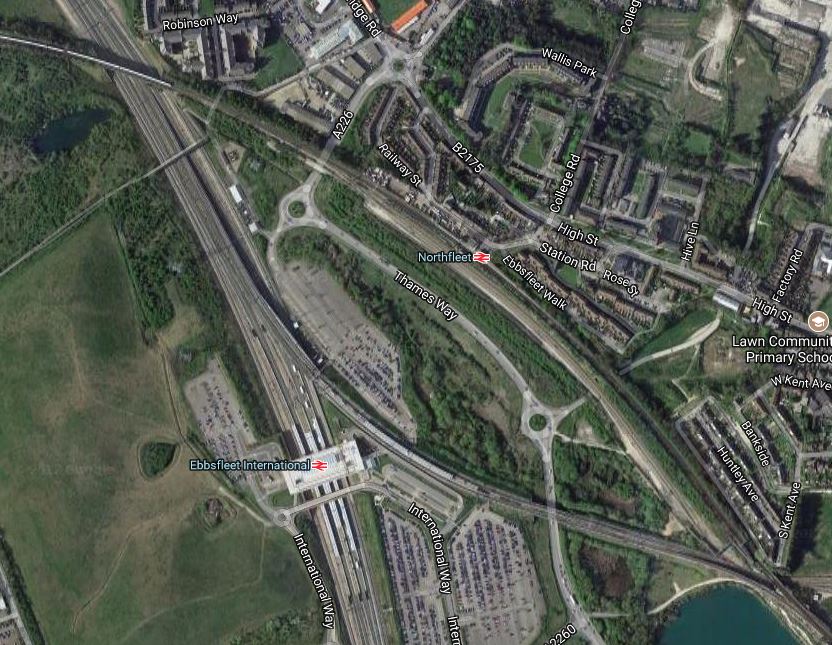
Northfleet station is to the North-East of Ebbsfleet International station.
Could it be that a simple solution would work?
- Belvedere, Erith, Slade Green, Dartford, Stone Crossing, Greenhithe and Swanscombe become Crossrail and North Kent stations.
- Northfleet station is connected to Ebbsfleet International station in a passenger-friendly way.
- The four tph service through the Medway towns to London Bridge continue and are better-integrated with Thameslink at London Bridge.
- The Swanley link to Ebbsfleet is reopened to allow more service opportunities.
But then what do I do know?
Is Abbey Wood Station A Cross-Platform Interchange?
One thing that the Modern Railways article says, is that Abbey Wood station has been designed with cross-platform interchange, in such a way that any delays to Kent services don’t have any knock-on effects on the new services.
The Modern Railways article says that Abbey Wood station is a cross-platform interchange, as do other articles.
This map from carto.metro.free.fr shows the layout of lines at Abbey Wood station.
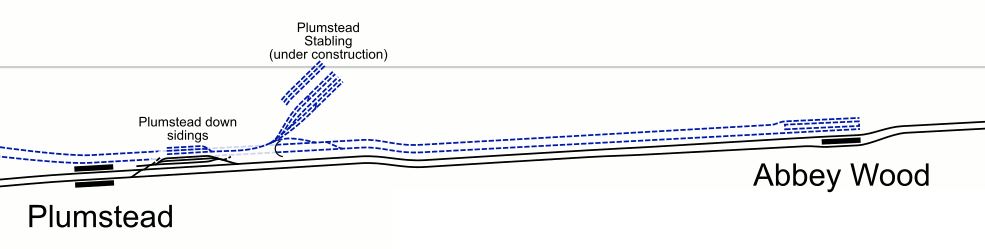
Compare this with this track layout, that I posted in Abbey Wood Station – 29th August 2016.
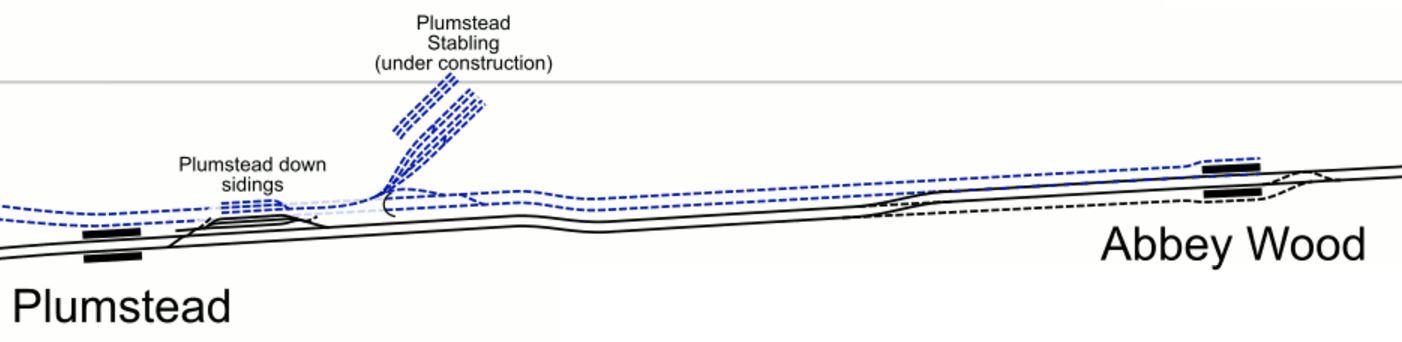
Note the following.
- The older layout shows cross-platform interchange.
- The current one has two pairs of platforms, with Platforms 3 and 4 for Crossrail and Platforms 1 and 2 for other services.
- The current layout probably connects better to the existing lines to Dartford.
These pictures were taken on the 28th June 2017.


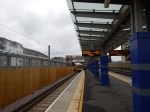
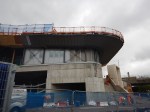

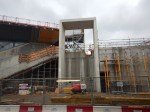
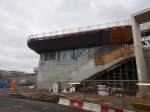

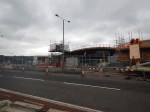




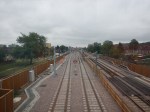


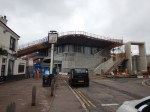
They show a similar layout, of two Northern platforms (3 & 4) for Crossrail and two Southern platforms (1 & 2) for all other services.
Note.
- The two cross-overs to the West of Abbey Wood station to get the Crossrail trains to and from the right platforms.
- The station building and the two footbridges over the lines.
- The solid wooden fence between the two pairs of lines.
- The robust nature of the overhead wiring.
I suspect, that if they had wanted to have Eastbound and Westbound lines each share an island platform, it would have required a flyover, which would have been a large expense.
But at least with this layout, Crossrail trains can have their own pair of lines to the East, running to the North of the current tracks. The Modern Railways article says this.
Mindful of this, the working group is proposing two new dedicated tracks for the extension, running alongside the line through Slade Green and Dartford, with platforms serving the existing stations.
This Google Map shows the route through Dartford.

In some places putting in two extra tracks would be very difficult and extremely expensive and very disruptive to local residents.
Given the capabilities of modern signalling, now being demonstrated on Thameslink in Central London, I believe that something practical for the train companies and friendly for the passengers will emerge.
But one thing is certain. There will not be cross-platform interchange between Crossrail and other services at Abbey Wood station.
Interchange Between North Kent Services And Crossrail
I have a feeling, that this will come down to personal preferences.
After the opening of Crossrail to Abbey Wood in 2018 and the opening of Thameslink to Rainham, passengers will probably have to use Abbey Wood, where it will be an up-and-over via escalators, lifts or stairs.
If and when Crossrail is extended to Gravesend, any of Abbey Wood, Dartford and Gravesend, could be used as a same-platform interchange.
It would also be possible to take a Highspeed service from Ramsgate and change to Crossrail at Gravesend. Would this avoid the extra charge for High Speed One?
I think that Gravesend could become the interchange of choice, as it could have the following London-bound trains, if Crossrail is extended.
- 2 tph – Thameslink to Luton
- 2 tph – Southeastern to Charing Cross
- 2 tph – Highspeed to Ebbsfleet International, Stratford international and St. Pancras.
- 4 tph – Crossrail
There could be a need to improve the platforms to cope with the increase of passenger numbers.
Conclusion
Crossrail will get very involved with the new Southeastern franchise.
See Also
These are related posts.
- Abbey Wood Station
- Ashford Spurs
- Elimination Of Slow Trains
- Fawkham Junction Link
- Highspeed Routes
- High Speed To Hastings
- Historic Routes
- Longfield Station
- Maidstone
- Reading To Tonbridge
- Thameslink
- Thanet Parkway Station
- Track Improvements
- Ultimate Class 395 Train
- Victoria As A Highspeed Terminal
To know more read Kent On The Cusp Of Change in the July 2017 Edition of Modern Railways.
The Changing Face Of Cambridge
I took these pictures, as my train to Cambridge North station, made a stop at Cambridge station.

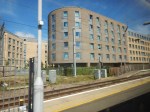


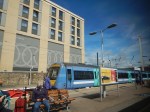
There’s certainly been a lot of new building.
Over the years, I’ve seen Cambridge station change from a simple station, where staff had to work hard to juggle terminating and through trains to maintain a decent service into a major rail interchange with the following platforms.
- Two very long through platforms; 1 and 7, capable of taking the longest trains on the UK rail network.
- Platform 1 is actually bi-directional and can be used as two shorter platforms; 1 and 4.
- Two London-facing bay platforms; 2 and 3 capable of taking eight-car trains.
- Two North-facing bay platforms; 5 and 6, capable of taking six-car trains from Ipswich, Norwich, Peterborough and the North.
- A twelve-car platform; 8, that can be used as either a through or a bay platform.
Is there another regional station in the UK with such a comprehensive layout?
Cambridge station and its new sibling a few miles to the North are certainly ready for all the rail developments planned to happen in the next few years.
- Thameslink arrives in 2018
- Greater Anglia’s new trains arrive in 2019.
- The East-West Rail Link could arrive in the mid-2020s.
I would not be surprised if Cambridge created the Trinity by starting the proposed new Cambridge South station at Addenbrooke’s Hospital in the next couple of years.
After all, a third station, will give Cambridge one more station than Oxford.
Connecting Ebbsfleet International To South London
In the May 2017 Edition of Modern Railways, there is an article entitled Kent Capacity Constraints Highlighted.
The article says this.
The provision of a direct connection from Ebbsfleet to South London is proposed using the route from Swanley to Fawkham Junction, which was used by Eurostar services to Waterloo. Options include providing a new terminal platform at Ebbsfleet adjacent to the existing lines or a connection into the existing domestic platforms.
This Google Map shows the Chatham Main Line between Farningham Road and Longfield stations.
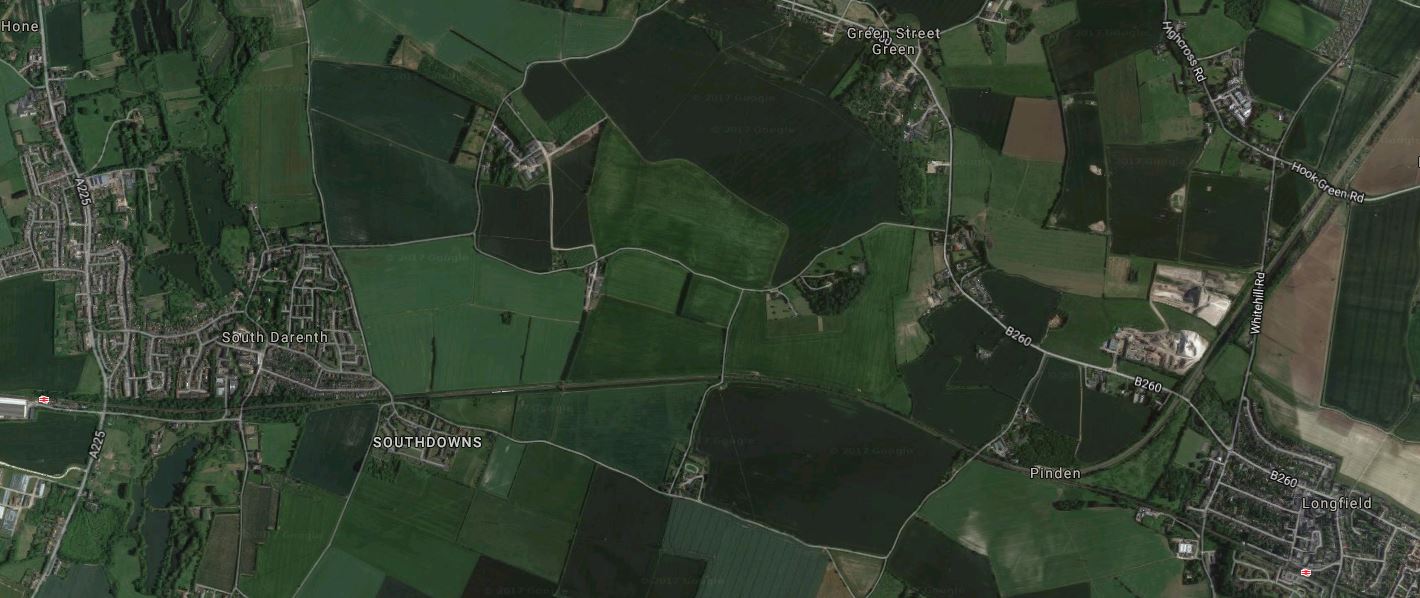
Note.
- The Chatham Main Line goes from West to East across the map.
- Fawkham Junction to the West of Longfield station.
- The rail line curves away North-Easterly to Ebbsfleet International station, using the same track-bed as the former Gravesend West Line.
This Google Map shows Ebbsfleet International station.
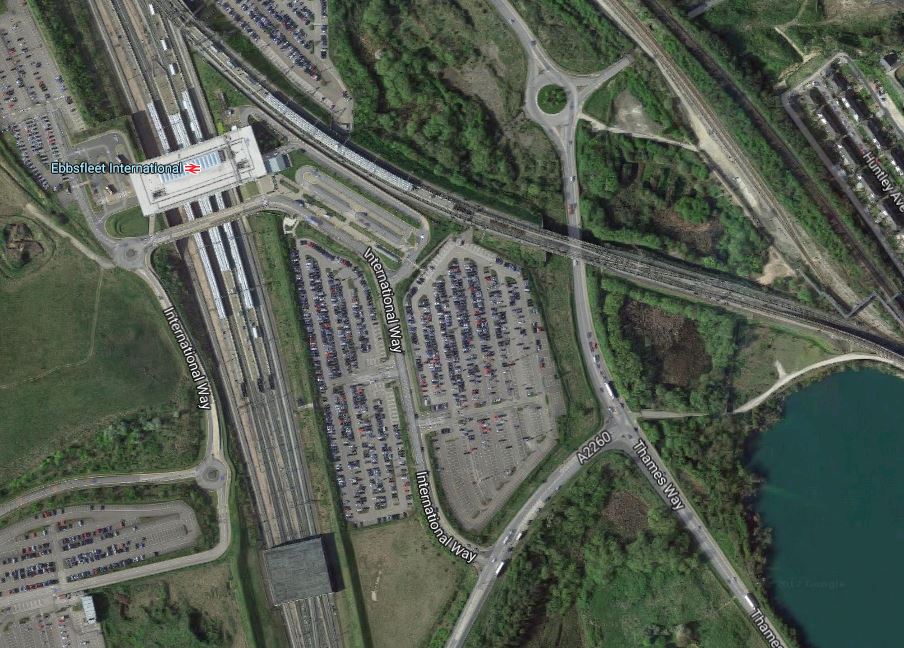
Note.
- HS1 runs North-South through the station.
- HighSpeed services to Thanet destinations use the line that runs across the map from North-West to East.
- HighSpeed services to Ashford Internationl station have their own separate platforms on HS1.
The local line into Ebbsfleet International station can be as simple or complicated as the budget will allow.
The simplest arrangement would be where a single track chord connects the Gravesend West Line into the space between the stations and its Eastern car parks.
This Google Map shows the station and the Gravesend West Line.
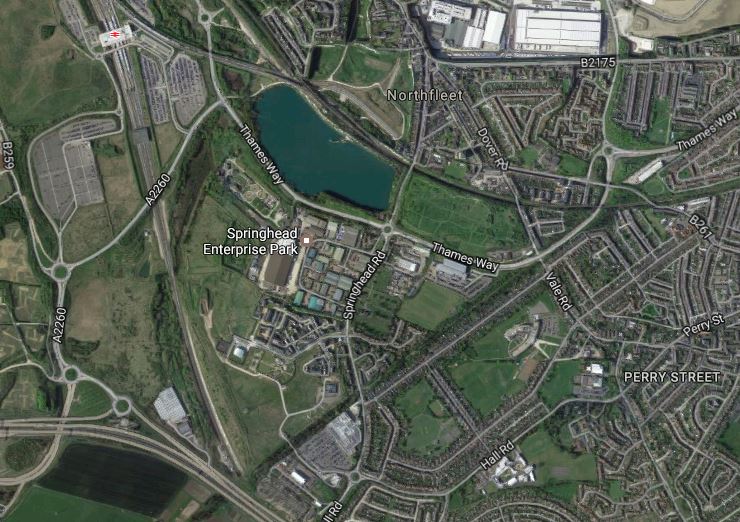
It almost looks like a good bit of space was left to connect Ebbsfleet International station to Fawkham Junction.
Train Services To Ebbsfleet
Southeastern and Thamesline are probably in pole position to provide services, as their services call at Swanley station which would be directly connected to Ebbsfleet International by the new link.
The most efficient solution would be a shuttle train or even a tram-train, at a frequency of four trains per hour.
But we shouldn’t forget Crossrail, that could be extended to Gravesend.
Has Thameslink Got The Wrong Length Of Train?
The Train And Half-Train Philosophy
If you look at some recent train orders and one successful old one, they seem to suggest a train and half-train philosophy.
- Great Western Railway’s order for Class 80x trains.
- Virgin Trains East Coast’s order for Class 80x trains.
- Greater Anglia’s order for Aventras.
- South Western Railway’s order for Aventras.
- Southeastern’s Highspeed Class 395 trains.
In all these fleets, it would appear that two half-trains can be used to create a full length train, when needed. This coupling and uncoupling is done throughout the day and often on an automatic basis in around a couple of minutes.
This video shows Javelins at it.
Impressive isn’t it? The second train left Ashford station thirty seconds after the first.
In a few years time, all trains will be able to couple and uncouple automatically like this.
Thameslink’s Class 700 Trains
Thameslink’s Class 700 trains only come in lengths of eight and twelve cars.
The eight-car train is needed for short platforms on the Sutton Loop Line.
But eight-car trains have disadvantages compared to say a six-car train.
- Two trains can’t be joined together to make a full-length train.
- Sixteen-car trains would be just too long for operational reasons.
- An eight-car train uses one of the valuable twenty-four hourly paths through the central core of Thameslink, just as a twelve-car train does.
The train length seems to be inefficient.
I can’t think of a train operator, who has two similar train fleets longer than five-cars, where one fleet is not half the length of the other.
Maximising Capacity In The Core
The capacity of the central core of Thameslink, depends on how many trains go through in an hour.
Current proposals given in Wikipedia are as follows.
- 14 x 12-car trains
- 10 x 8-car trains
If the 8-car trains were replaced with 12-cars, this would give a sixteen percent increase in capacity in the central core.
The Sutton Loop Line
The Sutton Loop Line could be run by using six-car trains that split and join in the area of Streatham station.
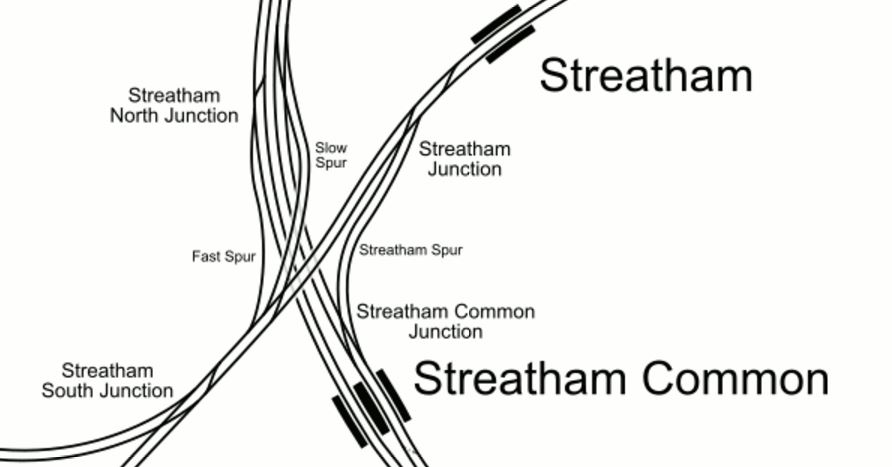
This map from carto.metro.free.fr shows the track layout at Streatham, at the start of the loop.
Note.
- Streatham South Junction is the gateway to the Sutton Loop, with the tracks to the West going via Tooting station and those to the South via Mitcham Eastfields station.
- There is a lot of spare land in this area.
- Transport for London keep talking about creating an interchange at this point.
I think, if and when the interchange is built, it could be designed, so that it increased traffic around the Sutton Loop Line.
- Two six-car trains running as a twelve-car could split at the interchange.
- One train would go round the loop clockwise and the other anti-clockwise.
- The trains would rejoin together at the interchange.
The same procedure could be done at Streatham, without creating the interchange, but it would block the station, if trains got delayed on the loop.
Currently, two trains per hour (tph) are proposed to run in both directions on the Sutton Loop Line.
This requires four eight-car trains and four paths through the central core.
If four six-car trains were to be used, running in pairs splitting at Streatham or a new Streatham Common interchange, there would still be two tph in both directions round the Sutton Loop, but only two paths would be needed in the central core.
Travellers to and from stations on the loop would see six-car, rather than the proposed eight-car.
If the number of six-car trains were to be doubled and four paths used in the central core, the Sutton Loop Line would see four tph in both directions.
But this might be two much traffic for Platform 9 at Wimbledon station.
Splitting Trains At The End Of A Route
It is not beyond the bounds of possibility for two six-car trains to do the following.
- Start independently in the North.
- Join at a convenient station.
- Pass through the Snow Hill Tunnel as a twelve-car train.
- Split at a convenient station.
The two six-car trains would then continue to two separate destinations.
One possibility would be to do the following.
- Start at Peterborough and Cambridge.
- Join at Hitchin.
- Split at Three Bridges
- Finish at Horsham and Brighton.
Between Hitchin and Three Bridges, the train is twelve-cars, whereas at other times they are six-cars.
Hopefully train length could be geared to passenger traffic.
I don’t think there are many opportunities at the current time.but as Thameslink develops, with perhaps more stations and electrification, the use of this technique might increase.
Although, It should be noted that the current eight-car trains are not suitable.
Eight-Car Trains Across The City
Three of the services through the core are as follows.
- Cambridge North and Maidstone East.
- /Luton(Peak)/Kentish Town(Off Peak) and Orpington
- Welwyn Garden City and Sevenoaks
All services are served by eight-car trains, with the first two services running all day.
In the May 2017 Edition of Modern Railways, there is an article entitled Kent Capacity Constraints Highlighted.
Reading this article, gives the impression that several stations served by Thameslink in the Southeastern area have platforms that are a tad short.
So perhaps this is the reason for the short trains.
But would using two six-car trains joining at a station like Bromley South, enable another twelve-car train to go through the central core.
Conclusion
Six-car trains instead of eight-car trains on Thameslink, may increase capacity.
According to Wikipedia, the formation of the two trains are as follows.
- Class 700/0 – DMCO-PTSO-MSO-TSO-TSO-MSO-PTSO-DMCO
- Class 700/1 – DMCO-PTSO-MSO-MSO-TSO-TSO-TSO-TSO-MSO-MSO-PTSO-DMCO
It would appear that the 12-car trains have two extra MSO cars and two extra TSO cars.
If all the TSO and MSO cars are identical, I wouldn’t be surprised that to lengthen the trains from eight to 12 cars, is just a cut-and-shut job, as it is with the London Overground’s Class 378 trains and Crossrail’s Class 345 trains.
With sixteen percent extra capacity by lengthening all trains to twelve cars, I would expect that this capacity will be claimed when needed.
An alternative could be to shorten the sixty eight-car trains to six-cars, which would release sixty each of MSO and TSO cars. Sixty new PTSO and DMCO car could be added and there would be another thirty six-car trains, making ninety in total.
I suspect Siemens could add automatic coupling and uncoupling.
These six-car trains would give the following.
- Twelve-car trains through the core.
- Better use of valuable paths through the core.
- Six-car trains on the Sutton Loop Line, by splitting and joining in the Stratham area.
- The ability to split and join trains to serve new destinations.
Thameslink’s train problem is not insoluble.
Reverse Commuting To Cambridge North Station
Cambridge North station opens on the 21st May 2017.
Around 1070, I commuted from London to Welwyn Garden City. It was much more relaxing than sharing the busy trains into London and on early trips to Cambridge in the last few years, I’ve noticed that quite a few people commute from London to Cambridge.
So given the proximity of the new Cambridge North station to the Cambridge Science Park, I wonder how many will use the service to get to and from their place of work?
The Service On Sunday, 21st May 2017
Trains would appear to be every hour at XX:42 taking about ten minutes under two hours.
The Service On Monday, 22nd May 2017
The weekday service would appear to be more comprehensive.
- 06:08 KX 1:02
- 06:44 KX 0:53
- 06:52 KX 1.14
- 07:04 KX 1:32
- 07:28 LS 1:32
- 08:04 KX 1:29
- 08:14 KX 1:00
- 08:28 LS 1:33
Note that KX is Kings Cross and LS is Liverpool Street.
All the trains shown arrive before 10:00 or a few minutes after.
Given that Thameslink will improve this service in May 2018, by adding another two trains per hour, it is certainly a good start.
Last ‘319s’ On Thameslink This Summer
The title of this post is the title of an article in the May 2017 Edition of Modern Railways.
This is the first paragraph of the article.
Govia Thameslink Railway plans to withdraw its last Class 319s by the end of June, allowing it to operate a full Class 700 service on Thameslink this summer.
According to Wikipedia on the 28th April 2017, Thameslink still have thirty-five examples (319/0 – 13 and 319/4 – 22) and there are twelve examples Off Lease (319/2 – 1,319/3- 6 and 319/4 – 5)
So it looks like there could be a maximum of forty-seven trains released, of the following types.
In Riding In A Clean Class 319/4 Train, I wrote about riding in a particularly nice Class 319/4 train. If any of the other twenty-six are in as good a condition, operators will want to take them over.
There’s certainly enough trains to keep the refurbishment line busy for four or five years.
There is also plenty of scope for speculation about the specification of the refurbished trains and where the trains will see service.
- How many will end up as bi-mode Class 319 Flex trains?
- How many will retain their third rail capability?
- How many will retain their First Class seats?
- How many will get wi-fi?
- How many will end up in a reserve fleet to cover for train shortages? Think level crossing accidents!
- Will any have a luxury interior, so they can be used as special event trains and shuttles? Think Edinburgh to St. Andrews for the Open or Manchester to Aintree for the Grand National!
- Will any be bought for use in non-passenger roles? Think 100 mph parcel carriers bringing goods into and out of big city stations at three in the morning!
- Will any be bought by Network Rail for engineering purposes? Think testing and checking overhead and third-rail electrification!
Uses will be demand-led and I suspect some will be very surprising.
Operators have never had a train that is both a 100 mph electric train and a 90 mph diesel train, which is available, affordable and proven.
I shall discuss a few of the ideas in detail.
Parcels Trains
Currently, Royal Mail uses the closely-related Class 325 trains to move parcels traffic around the country. These trains have the following specification.
- They are four-car electric units.
- They can run as four, eight and twelve car units.
- They are 100 mph dual-voltage trains.
- Each car can carry twelve tonnes.
- They use the same running gear as the Class 319 trains.
If they have a problem it is that they can only run on electrified lines, so they seem to be confined to the West and East Coast Main Lines.
Royal Mail and their train operator DB Cargo UK, might be interested in some more trains. They might even have use for some Class 319 Flex trains for routes with no or partial electrification.
In A Station At Doncaster Sheffield Airport, I talked of Peel Group’s plans to develop the Airport.
I said this.
It should also be stated that Doncaster Sheffield Airport has air cargo ambitions.
Consider.
- It has a massive runway, that was able to accept the Space Shuttle in an emergency.
- The airport has lots of space for cargo terminals.
- The largest cargo planes, that exist only in the minds of Airbus and Boeing engineers would be welcome.
- The Great Northern and Great Eastern Joint Railway, which is a major freight route between the South East and the North passes the airport.
- Plans exist to create a network of high speed package carrying trains. I’d use Doncaster Shjeffield Airport as a hub.
- Amazon already fly freight to and from the Airport. Deliveries could leave the United States in the evening and be in Edinburgh, Glasgow, Liverpool, London and Manchester for a morning delivery.
It looks like the Peel Group have a plan to create a transport interchange for both passengers and freight for a cost of millions, not billions. But it were to be worth spending billions, I’m certain that they can obtain it.
Could Class 319 trains be the trains delivering the parcels to main-line stations all over the country for onward distribution?
There must also be specialist and possibly perishable cargoes like fish and flowers, perhaps between Cornwall and London. Some of the cargoes now go in the large space in the locomotives of the InterCity 125s , but these trains are being phased out.
Could a Class 319 Flex train substitue with honour?
The Luxury Go-Anywhere Shuttle Train
Look at the venues for the Open Championship and they seem to be tucked away. But supposing there was an all Class 319 Flex train fitted with all First Class seating and a bar, it would make a very good alternative to get spectators to the venue in style.
Other venues within the trains range would include.
- Aintree, Ascvot, Chelternham, Doncaster, Epsom, Goodwood, Haydock Park, Newbury, Newmarket, Sandown Park and York racecourses.
- Glastonbury for the Festival
- Henley for the Regatta.
- Important football and rugby matches.
Travel First Class in any InterCity 125 and you realise the standard that can be applied to a Mark 3 coach.
Reserve Trains
Greater Anglia are often short of a train or two, with the cause often being a level crossing accident.
Their way round the problem is to hire in two Class 68 locomotives and some elderly coaches.
But surely, a better way, would be to have an appropriate number of Class 319 Flex trains available for hire with a driver!
They could deputise for a 100 mph electric train and an up to 90 mph diesel train.
Network Rail Use
Network Rail have a highly-instrumented InterCity 125 called the New Measurement Train, which is used to test the condition of the tracks all over the UK.
But it can only test those tracks where an InterCity 125 train is allowed.
If Network Rail ever need to create a smaller version of the train and especially one to test both overhead and third-rail electrification systems, a Class 319 train would be a candidate.
Conclusion
Porterbrook’s Sales and Marketing Department are going to have fun!
Passengers At Cambridge Station
I found a reference to the passenger growth at Cambridge station, which is confirmed in Wikipedia.
In 2011/12 passengers at the station were around 9 million and in 2015/16 that had grown to around 11 million.
Consider.
- Cambridge North station opens in May this year.
- Thameslink will start services to Cambridge from all over London in 2018.
- Greater Anglia will be increasing capacity and frequency to Bury St. Edmunds, Colchester, Ipswich, Norwich, Peterborough and Stansted Airport.
So what will be the traffic in say 2020?
Will DOO Mean DOO on Thameslink?
On Thursday I took a Thameslink Class 700 train from St. Pancras to Blackfriars.
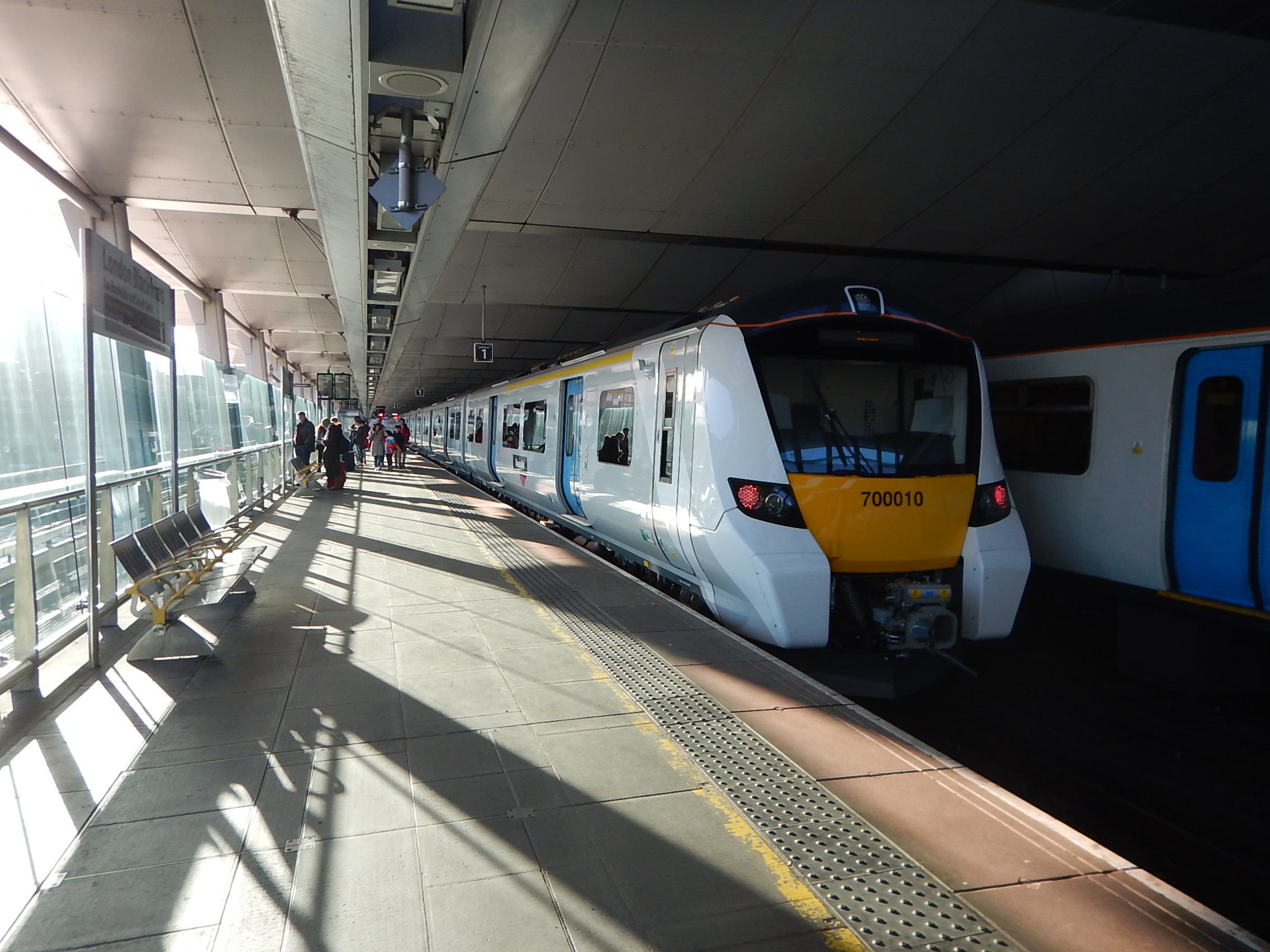
A Class 700 At Blackfriars
At Blackfriars an announcement said that the doors would open automatically.
Which they did without any of the usual intervention from passengers after the driver had released the doors.
This is how DOO works on the London Underground.
It is surely better, especially if you are getting off and your hands are otherwise engaged.
 The Anonymous Widower