Wires In The Canal Tunnels
It would appear that the Canal Tunnels have now got overhead wires to connect it to the East Coast Main Line. If you want to know more about this important but forgotten part of London’s rail infastructure, read this page on Network Rail’s web site.
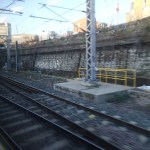

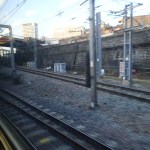
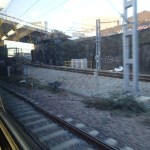
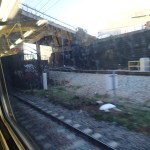
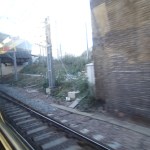
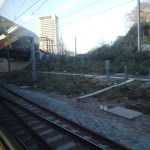
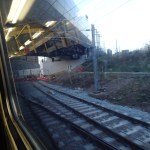
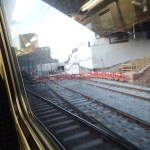
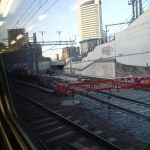
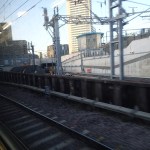
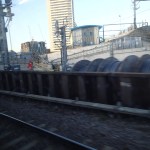
So it looks like the work that caused the chaos at Christmas is substantially complete. In a document on the Carillion web site, it says that the work will be complete by May 2015.
I took this series of pictures early today, which is looking to be a clear sunny one, from a rather dirty Class 313 train going from Finsbury Park to Kings Cross Stations.
The Problems At London Bridge
There have been lots of problems in the evening peak at London Bridge and the Thameslink Program has issued this apology.
On this page on the Thameslink Program web site, this is said.
From 5 January 2015, for three years until January 2018, no Bedford to Brighton Thameslink trains will call at London Bridge station. A reduced service will run between Brighton and London Bridge in the off-peak and a very limited service will run in the peak.
Effectively, whilst London Bridge is rebuilt, these trains will not go through the station.
One of the solutions being applied to the current trouble is to reduce the number of trains between London Bridge and West Croydon in the evening peak times.
So you need another route to get the passengers home to West Croydon. The obvious one is to avoid London Bridge entirely and take the Jubilee Line to Canada Water or the District/Metropolitan Line to Whitechapel, where from both stations you get an Overground train to West Croydon.
But the problem with this is the lack of capacity on the East London Line. This is being cured by delivering a fifth carriage for the Class 378 trains. But not many seem to have turned up yet. I’ve only seen one 5-car train twice and I travel on the line regularly.
With my project management hat on, it strikes me that the capacity upgrade on the London Overground and particularly the East London Line should have been completed before the major interim changes and capacity reductions at London Bridge. In fact according to this Transport for London document, the East London Line should have been running five car services by December 2014.
So what has delayed the arrival of the fifth carriages?
Could it be that the delivery of the new Class 387 for Thameslink jumped the queue for building by Bombardier in front of the fifth carriages for the Class 378?
The Site Of The Kings Cross Problems
These pictures show the state of the Canal Tunnels on the Monday after the troubles of the Saturday.
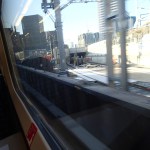
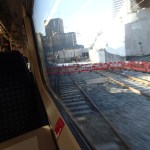

Compare these pictures with the one in this post taken in August, which I have added. All pictures are dated in their descriptions.
The overhead wires now seem to be up for a start. I shall keep trying to get better pictures of these tunnels.
The Problems At Kings Cross
When I was at Kings Cross station early this morning, I asked a guy from the Information Desk, if the problem was with the Canal Tunnels, which will connect Thameslink to the East Coast Main Line, and which I photographed in this post. He said that the problem was in that area.
Network Rail have said they have had some sort of equipment failure. Where the work is being done, is a very critical area.
Incidentally, once Thameslink opens this will build quite a few alternative routes and destinations into the system. For example, if Kings Cross couldn’t be used for some reason, the Thameslink route could be used to shuttle passengers to Peterborough.
Before Thameslink opens, it strikes me that they could have told passengers to go to Cambridge from Liverpool Street or Tottenham Hale, from where they would provide a coach to Peterborough. This option has been used before, when there has been overhead line problems.
In the longer term, I think it is important that as many diversionary routes as possible are electrified and cleared to be able to handle the largest trains. With today’s problems, if Ely to Peterborough had been electrified, GreaterAnglia could have used some of their 12-car Class 379 trains to extend the Liverpool Street to Cambridge service to Peterborough.
How Thameslink Sorts Out London’s Trains
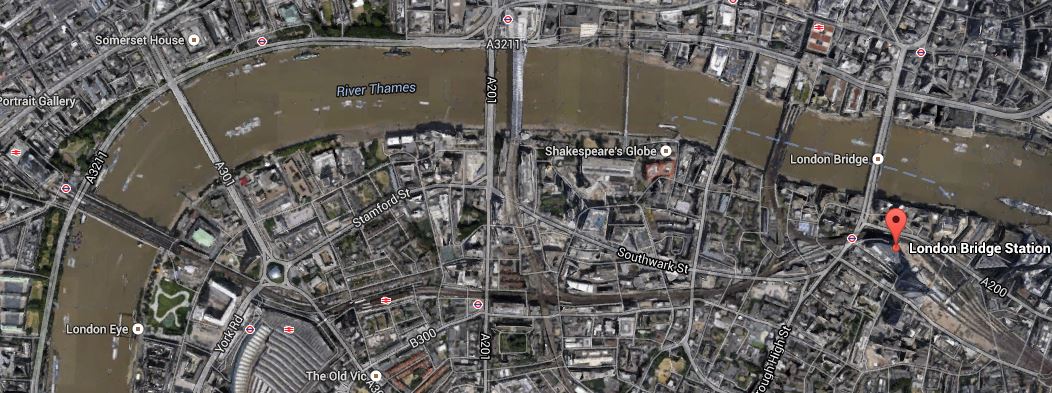
After taking the pictures of the new viaduct at London Bridge yesterday, I thought it would be good to post a map, which showed how it all fits together.
Stations Along The Thames
The picture shows most of the stations along the river that serve the South. And of course the North if they’re connected to Thameslink.
The main stations from left to right (west to east) follow.
Charing Cross is at the far left of the image, where it sits at the end of the Hungerford bridge, by which all trains enter and leave the station. The station is marked by the red British Rail double-arrow symbol, with the London Underground roundel showing the related Embankment tube station.
Waterloo is opposite Charing Cross at the other side of the Thames, although there is no direct rail connection between the stations.
Waterloo East is to the east of Waterloo and this station does have a rail connection to both Charing Cross and London Bridge.
This picture shows the position of the three stations and the rail lines to a larger scale.

Charing Cross, Waterloo and Waterloo East Stations
Note the rail lines going across Hungerford Bridge between Charing Cross and Waterloo East. I’ve never been to Waterloo East or even stopped at it on a train, but you can walk between the two Waterloo stations.
In this image the domed circular roof of the Waterloo IMAX cinema and Nelson’s Column can be clearly seen.
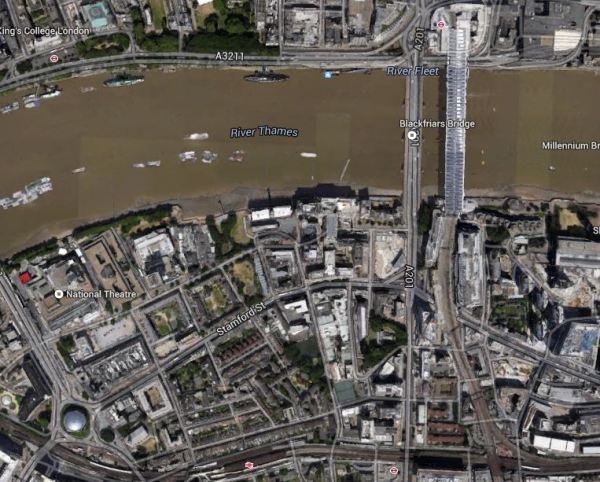
Blackfriars is the next station and its unique position across the river is shown in the middle of the main picture. It is the right one of the pair of bridges and the British Rail symbol indicates the main station entrance on the North Bank of the Rover. This picture shows its position in more detail.
Blackfriars and Thameslink
Note how the Thameslink lines from Blackfriars to the south go in two directions.
One line goes to the East for London Bridge, after joining with the lines from Charing Cross and Waterloo East, at the bottom right of the picture.
The other line goes directly South to Elephant and Castle.
The Temple area is at the top left of this picture, where there is a tube station. London’s new Garden Bridge will between here and the Southbank area, when it is built.
Cannon Street on the North Bank is the next station and like Charing Cross, all trains access the station by a bridge over the Thames.
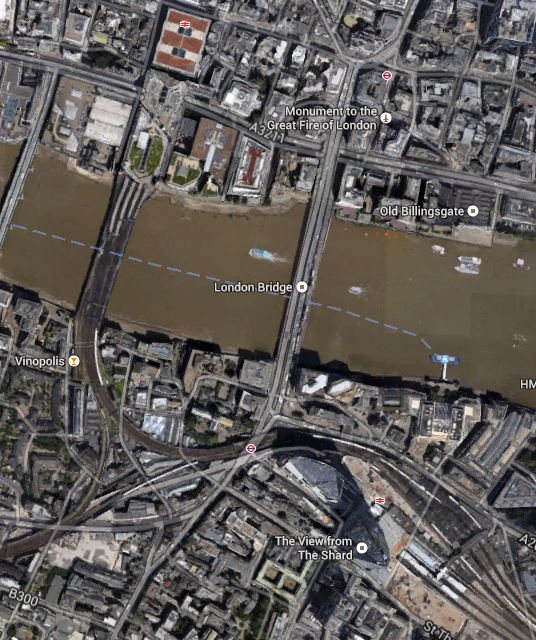
Cannon Street and London Bridge
Note the triangular junction South of the Thames, that gives access to both Charing Cross and London Bridge from Cannon Street.
London Bridge station is shown in more detail in this picture.

London Bridge Detail
The detail would be a lot better, if it wasn’t for the shadow from The Shard, which is visible at the bottom right.
The pattern of the lines to and through London Bridge that will be in operation with the full Thameslink scheme is beginning to emerge.
1. The number of through platforms at London Bridge, for services on Thameslink and to/from Charing Cross and Cannon Street is being increased from six to nine.
2. The extra viaduct over Borough High Street and the Market can be seen.But it doesn’t have any tracks in this image.
3. London Bridge station itself, appears to be a big building site, with trains going through.
Incidentally, I’m not sure of the date of the Google Earth view.
The Thameslink program is vast and will add a hundred stations to the existing network. Wikipedia sums it up like this.
The Thameslink Programme, is a £6 billion project in south-east England to upgrade and expand Thameslink to provide new and longer trains between a wider range of stations to the north and to the south of London without requiring passengers to change trains in London. Work includes platform lengthening, station remodelling, new railway infrastructure, and additional rolling stock.
In this post, I have traced it south of the Thames and shown how it interfaces with the lines into Charing Cross and Cannon Street. If the architects have got the design of London Bridge station right, this alone should unlock a myriad of new routes for all those millions of Londoners and those that come into the City.
A couple of years after the new London Bridge is completed, Crossrail with its connection to Thameslink at Farringdon will open, adding even more travel possibilities.
Some months ago, I wrote a post called A Divided City.
Hopefully, the enlarged Thameslink, will help to cross the great divide of the Thames, that without which London wouldn’t even exist.
A Quiet Finsbury Park Station
As Finsbury Park station was quiet I took these pictures.

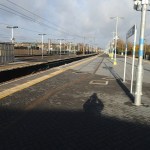
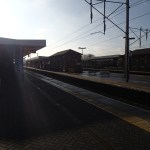
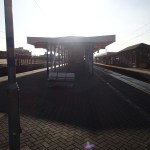
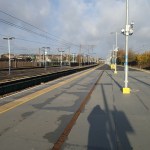
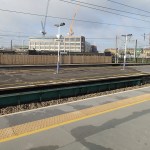
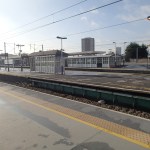


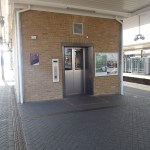
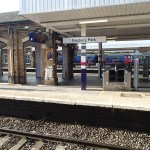

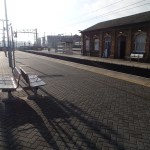
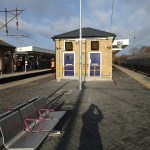
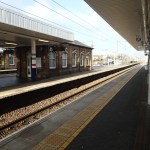
It’s certainly a lot better than it was just a few years ago.
After the full Thameslink service opens in 2018, the service pattern in Finsbury Park will be very different, as instead of terminating at Kings Cross, Cambridge and Peterborough trains will go through the tunnels to places in the south. So will some of these stop here?
Underneath The Shard
The space between Thameslink and the Shard has been tidied up a lot, as the pictures show.
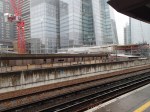
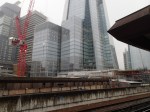
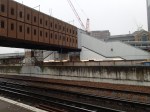
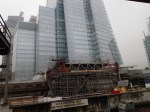
All is now ready for a start to be made on the next phase of the rebuilding of London Bridge station.
Wikipedia has a section on rebuilding the station.
This link shows the final platform layout. It’s very different to what platforms were used in the past and are now.
But hopefully, it’ll be all right on the night!
The Trains Going North
Today, I went from East Croydon to Luton and then on to Bedford in two Class 319 electric trains.
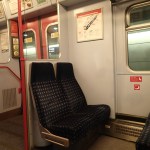
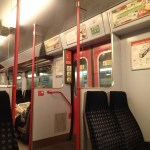
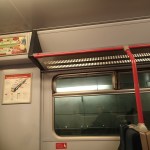
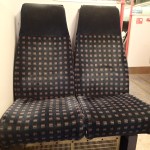
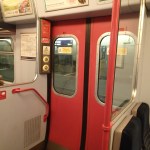

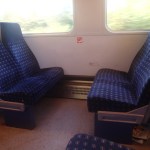
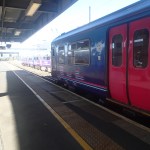

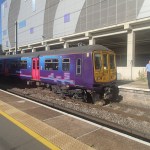
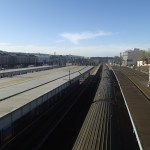
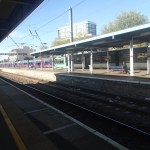
They were originally going to be fully refurbished, but now according to Wikipedia, the refurbishment will be more basic.
The cascaded trains will get a more basic refurbishment than previously proposed, which will include a new Passenger Information system, LED lighting, new seat covers and an internal and external repaint.
It will be interesting to see the trains in Lancashire. Certainly, the ones I rode today had a poor passenger information system and too much awful pink paint.
But the plus point is like all Mark 3-derived trains, they rode smoothly and quickly through the countryside, at speeds approaching their maximum of 100 mph.
The New Age Of The Train
The Independent today has an article which talks about the proposed costs of building HS2. Buried in the text is this paragraph.
Tomorrow, George Osborne, the Chancellor, will announce plans for what has been dubbed HS3, a line across the Pennines that would act as a major economic boost to the North. Writing on page 42 today, the Shadow Chancellor, Ed Balls, and former Transport secretary Lord Adonis dismiss the promise as “pre-election posturing”.
I shall be awaiting what the Chancellor says with interest.
The problem of trains in the North has existed for years and so if the Labour Party was in government unchallenged for over ten years, what did Balls and Adonis do about the problem?
Since 2010, and the Coalition Government, the closet trainspotter, has signed off the first part of the improvement in the North, the Northern Hub and extended electrification in the area.
In my view this improvement across the Pennines is the most important rail project outside London.
It is worthwhile looking at the list of large rail projects that are scheduled for completion in the current decade.
Crossrail and Thameslink
Crossrail and Thameslink should always be thought of together, as they will have an important hub at Farringdon and will revolutionise travel across the wider South East and possibly further. So many journeys like Ipswich-Gatwick, Reading-Cambridge and Brighton-Heathrow will be easy journeys with a just a change or two.
Last night, I had an awful taxi journey back from the Gherkin, as roadworks meant that the whole area was gridlocked. The taxi driver was sceptical about trains, so I asked him, where he lived. As he said Goodmayes, I asked him how he got to Gatwick and he replied it was an awful drive of well over an hour. By train today it takes nearly an hour and a half, with two changes, although both are step-free at Stratford and London Bridge. After Crossrail/Thameslink is fully open the first leg to Farringdon will take 24 minutes and currently the Farrington-Gatwick link takes 50 minutes. But there is only one change at Farringdon and I suspect that trains on the Farringdon-Gatwick leg will be much more numerous and perhaps even quicker.
This sort of improvement will be delivered all over the South East.
But that is not the end of it!
Many towns and cities will be just a train ride away from a Crossrail or Thameslink terminus. Bristol, Norwich, Nottingham, York, to name just three, all have fast trains, that link to the network. So for many there will be no humping heavy cases across the Underground network to go to and from places like Heathrow, Gatwick, Brighton, Cambridge and the Thames Valley.
I think the only problem many passengers will have is choosing the best change to get to their destination. For instance with a journey from Nottingham to Gatwick or Brighton, would you change at Bedford, Luton or St. Pancras. I suspect it wouldn’t be the badly-designed St. Pancras. So if one of the others was just a simple walk across that would get the traffic.
Some main lines out of London and the areas they serve though, are not well-connected to Crossrail or Thameslink. If I go round London, the only major lines that come to mind are the West Coast Main Line and South Western Main Line. There are published ideas about taking Crossrail to Tring or Milton Keynes, which solves the problem of the former, but getting to Waterloo or Clapham Junction from Crossrail or Thameslink is a problem. But then Basingstoke to Reading is down to be electrified as part of the Electric Spine, so surely if this is done properly, this could mean Basingstoke was almost part of Crossrail.
Great Western Main Line Electrification
After Crossrail, the full modernisation of the Great Western Main Line is the next most expensive project at £5-billion.
It is comprehensive and includes resignalling and electrification of the line all the way to Swansea.
It will be interesting when both this project and Crossrail are complete how the passengers use the two lines to get to say Bristol and South Wales. I for one, might get my Crossrail train to Reading to pick up the Great Weatern there, if the interchange is easier.
I suspect too, that in the first few years of the next decade there are various tweaks to the Great Western/Crossrail interface.
Plans at present are for a lot of Crossrail trains to turnback at Paddington, but will train companies tend to run some of these trains past Reading to perhaps Oxford or Basingstoke.
It will all depend on what the passenger statistics throw up!
Northern Hub
Talk to most people, including many in the North, about the Northern Hub and they won’t have heard of it. Even if they’ve seen some of the related projects like Huyton station.
If Crossrail is unlocking tremendous potential for London’s rail network, then the Northern Hub should do the same for the Greater Manchester area. On a personal note, getting from London to places like Bolton, Burnley, Blackburn and Huddersfield should be a lot easier, but even from December 2015, the first tangible benefit of the Northern Hub should be seen, when faster electric trains between Liverpool and Manchester start to run. So they are 1980s-vintage Class 319 trains, but being Mark 3 coach-based, they should scrub-up well and be magnitudes better than Northern Rail’s scrapyard specials.
Electric Spine
If the Northern Hub is invisible, then the Electric Spine is even more so, although it is costed at £800-million.
It will have a big effect, as it creates an all-electric railway from Southampton to the Midlands and ultimately Sheffield, Doncaster and the North, which will enable more freight trains to travel up and down the spine of the country, helping to free up road space on the A34 and the motorways.
Midland Main Line Electrification
Th Midland Main Line electrification is effectively now part of the Electric Spine and the two proects should probably be treated as one large one.
East-West Rail Link
The East West Rail Link is the reinstatement of the old Varsity line between Oxford and Cambridge, via Bletchley and Bedford.
The Western section will be opened first and part of it will be in the Electric Spine. This section of the line will also be used by Chiltern’s new Oxford service, which according to this press release should be fully running by Spring 2016.
But the line’s main use will be probably be freight winding it’s way between Southampton and the West Coast and Midland Main Lines. In some way the East West Rail Link is a new section of the M25 for freight trains.
Cardiff Valley Lines
I explored the Cardiff Valley Lines on my recent trip to Cardiff. This £350-million project is a follow on to the Great Western Electrification. A good proportion of the track-work seems to have already been done.
Greater Bristol Metro
The Greater Bristol Metro is a proposal to upgrade all the local lines around Bristol. The upgrade is not as comprehensive as that in South Wales, but it should provide a substantial improvement to train services in the area.
Waverley Line
Like the East-West Rail Link, the Waverley Line or Borders Railway is another reinstatement of a line closed in the 1960s. I said in this post, that this line has more significance than anybody thinks. If it’s the success I think it will be, it could mean that we see more proposals for reopening lines turning from dreams to reality.
Class 88 Locomotive
I like to think I’m an innovative engineer and the Class 88 locomotive is the sort of idea I like. It is effectively an electric engine with an onboard diesel engine, so that it can work away from the wires if necessary.
I was talking to a freight locomotive driver yesterday and as an example, he said that they have to use diesels like Class 66 or Class 70 to take trains into Felixstowe, as they can’t put wires up in the port, due to cranes loading and unloading the trains.
But I do think that the concept of the Class 88, may well be well suited to the UK, where there are still a considerable number of places like Felixstowe, where there is no overhead wiring, but electric lines aren’t far away.
If the first engines delivered in the next few years, prove to be up to the work, I could see lots of Class 88s working the network.
Conclusions
It is a good time to be any sort of railway engineer!
But the public don’t seem to realise what is happening for the better! And in some places like South Wales, they still think it won’t happen!
There’s certainly an awful lot of taxpayers investment going in! Only time will tell, if it’s worth it!
Should Thameslink Be On The London Tube Map?
in 2018, Crossrail and an updated Thameslink will be fully opened to form an East-West/North-South railway crossing London.
Transport for London has stated that Crossrail will be added to the tube map, but should Thameslink be added as well?
In the 1980s, Thameslink was for a period on the tube map, as is indicated in this forum.
But the tube map is very crowded around St. Pancras and Farringdon, which probably led to the line’s removal.
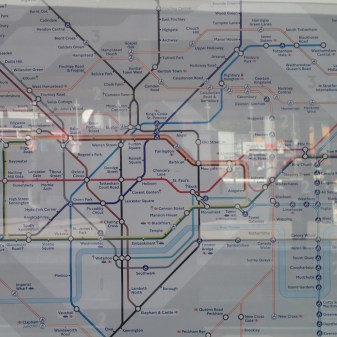
London Tube Map
To make matters worse the upgraded Thameslink will call at more Underground and Overground stations, like Finsbury Park, Peckham Rye and Denmark Hill.
So to put Thameslink on the 2018 tube map might not be very easy.
 The Anonymous Widower
