Thameslink’s Connections To Long Distance Trains
When Thameslink and Crossrail are complete how will this effect those tricky long distance journeys that should be done by train.
Some journeys like Eastbourne to York will become easier, as you’d probably hop along to Brighton and then take a train to Peterborough, for your train to York.
So how do two destinations I know well connect to the main radial routes from London.
I’ll start with Cambridge.
Great Eastern Main Line – Not really a problem, as you’d probably take a local train to Ipswich and Norwich. You could also go direct into Liverpool Street or change onto Crossrail at Farringdon.
East Coast Main Line – You’d still do what you’ve always done and take a train into London. Whether there will be fast trains into Kings Cross itself, has not been said. But travelling to Scotland without the direct Kings Cross trains and a heavy case, would mean lugging it across from St. Pancras Thameslink. If Thameslink improves the service to Stevenage that would be an alternative for the ECML, but train company management, must be wishing that over zealous cuts in the past that left Cambridge with no direct train lines to Peterborough or Bedford, had not been made.
Midland Main Line – This would be a walk or lift up from St.Pancras Thameslink. It would be nice though if there was a lift directly between Thameslink and the MML platforms.
Eurostar – This would be a walk or lift up from St.Pancras Thameslink.
West Coast Main Line – This is a bad change, as it’s a long walk from St. Pancras Thameslink to the Underground. It’s also difficult with a heavy case.
Great Western Main Line – If the interchange to Crossrail at Farringdon is properly designed, which it should be, you’d use Crossrail to get to either Paddington or Reading.
South Western Main Line – This one is difficult, as it’s either a struggle to the Underground at St. Pancras Thameslink and then a change to get to Waterloo or Clapham Junction. Whatever it is, it’s a nightmare with a heavy case. A better alternative might be to go to London Bridge and then get the Jubilee Line to Waterloo.
Lines from Victoria – As with Waterloo, Victoria is difficult with a heavy case, due to the Underground connections. From Cambridge to Victoria, you are probably better taking a Liverpool Street train to Tottenham Hale for the Victoria line.
Now I’ll look at Brighton.
Great Eastern Main Line – Not really a problem, as you’d just change onto Crossrail at Farringdon for Liverpool Street, Stratford or even Shenfield. Or for perhaps Ipswich and Norwich, you might just go to Cambridge and get a relaxed local train, through the countryside.
East Coast Main Line – This is a connection that will be greatly improved, as you might skip London and go direct to Peterborough, to pick up the train there.
Midland Main Line – This would be a walk or lift up from St.Pancras Thameslink. It would be nice though if there was a lift directly between Thameslink and the MML platforms. Or would you go to somewhere like West Hampstead Thameslink or Luton.
Eurostar – This would be a walk or lift up from St.Pancras Thameslink.
West Coast Main Line – This is a bad change, as it’s a long walk from St. Pancras Thameslink to the Underground. It’s also difficult with a heavy case.
Great Western Main Line – If the interchange to Crossrail at Farringdon is properly designed, which it should be, you’d use Crossrail to get to either Paddington or Reading.
South Western Main Line – You’d probably do as you do now and take a train direct to Clapham Junction and change there.
Lines from Victoria – These are no problem, as you can get a train to either Victoria or Clapham Junction.
One thing that becomes obvious from this post, is that Euston, Waterloo and Victoria don’t have the best links to Crossrail and Thameslink.
Euston’s problems are mainly because when the station was built in the 1960s, together with the Victoria line, passengers were treated as fit, uncomplaining individuals, who should be satisfied with what the government paid for.
Victoria suffers from similar problems to Euston.
Waterloo’s problems are that to get there from St. Pancras by Underground, requires a change of train.
What doesn’t help any of these transfers is the substandard interchange between Thameslink and the Underground at St. Pancras. It may be step free, but it’s a long walk.
If the interchange with main lines in London to Thameslink and Crossrail are to be improved, the following should be looked at.
Improve the Access to St. Pancras Thameslink
If you’re going up from St. Pancras Thameslink to Eurostar or the Midland Main Line, it isn’t too bad, but the long hike to the Underground is a disgrace. Especially for a station that is only a few years old.
I wonder if it’s possible to create a tunnel between Thameslink and the Northern line at St. Pancras.
Build a Crossrail station at Old Oak Common
This would make it easier to get on trains out of Euston on the West Coast Main Line.
Link Thameslink to Clapham Junction
This would help travellers from the north to get on the lines out of Victoria and Waterloo.
I use Clapham Junction a lot as it is very useful station, and I can get the Overground there easily.
Crossrail 2
This may be the real solution to a lot of the problems, as it is proposed it will link Kings Cross/St. Pancras/Euston to Victoria and Clapham Junction.
It will be interesting to see how Thameslink changes in the first couple of years of operation.
Two Other Low Profile Rail Projects
Over the next few years there are a lot of projects being implemented on the UK Rail Network, as I listed here.
But two other projects that few have heard of, will have a significant effect on UK rail services.
Travel in or out of Kings Cross and you don’t realise the work what is going on underneath the lines going into the station.
The two Canal Tunnels are being fitted out, which will allow trains on the Thameslink route to go up the East Coast Main Line to Peterborough and Cambridge. These will probably be the most significant new tunnels to be fitted out and opened in the period between the Channel Tunnel and Crossrail. According to the provisional timetable for Thameslink, eight of the 24 trains each hour in each direction will go to and from the ECML. Of these eight trains, four will go to Cambridge. So many difficult cross-London journeys will become much simpler and will become either direct or will involve just a single change.
But think again!
Twenty-four trains an hour is a train every two and a half minutes between St. Pancras and Blackfriars. And to make matters more difficult, the trains will have to change electrical systems from overhead to third rail or vice-versa halfway through each journey.
How do they do that?
New signalling will be installed and the new Class 700 trains will take advantage of this to maintain the schedule. They will be fitted with ERTMS to aid in this task.
And this leads me to the other hidden project that is going to completely change the UK’s railways.
The project is ERTMS or European Rail Traffic Management System. Network Rails plan is here.
In simple words it means that all conventional signals will be removed from the tracks on the railway and the train drivers will have everything on a screen in the cab. This sounds very similar to the way airline pilots have worked for years.
This is Network Rail’s view of the benefits.
Installing ERTMS across the country as signalling becomes life-expired will save an estimated 40 per cent over conventional systems. Each train will run at an appropriate safe speed, allowing more trains onto the tracks. ERTMS will improve train performance and reduce energy consumption.
As an example of what it will mean, most high speed lines in the UK, will be limited to 140 mph instead of 125. This could mean thirty minutes off the journey time from London to Scotland.
A Round Trip To St. Albans
Today, it looked like it was going to be miserable and wet.
I’d also been wanting to go to St. Albans to see the Abbey Line, which is one of those short connecting lines like Upminster to Romford and the Greenford branch.
So after checking the weather, which showed it might brighten up at lunchtime, I decided to take a chance.
These pictures show my round trip using Overground to Watford Junction and then the Abbey Line to St. Albans Abbey station before coming home from St. Albans City.


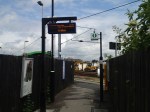
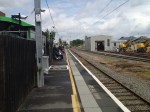
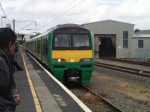


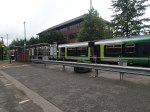
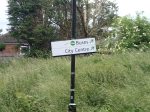


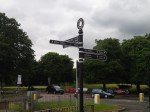








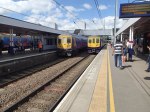
The pictures show I was right about the weather.
St. Albans is a medium-sized city with several attractions for visitors, but unfortunately whichever station you use to get to the city, it’s a walk up the hill.
If the city wants to attract more visitors by train, then it should inform visitors which bus they use to get up the hill. In fact, although they have quite a few fingerposts, St. Albans could do with a few maps.
A Timetable Of Major Projects On The UK Rail Network
This is for my own use at present and it will be updated as more information becomes available.
2014
2015
2016
Cambridge Science Park Station
Great Western electrification to Oxford and Newbury.
Introduction of Class 700 trains onto Thameslink.
Oxford to Marylebone
Preston to Blackpool electrification
2017
Great Western electrification to Cardiff
Introduction of Class 800 and 801 trains
Midland Main Line electrification to Corby
Modernisation and electrification of Great Western Main Line
2018
First trains start running on Crossrail.
2019
East-West Link – Oxford to Bedford
Midland Main Line electrification to Derby and Nottingham
2020
Midland Main Line electrification to Sheffield
Note that some projects have been left out, as they are not ones that particularly interest me. An example would be small stations that I am unlikely to use that are outside London. Some projects like HS2 and the Northern Line Extension To Battersea have been deliberately left out until the project timetables are firmed up.
Leeds To Get Two New Stations
Modern Railways is reporting, that two new stations; Apperley Bridge and Kirkstall Forge are to be built in the Leeds area.
Stations seem to be like buses. You wait for a new one for years and then they arrive in bunches.
Edinburgh – Plane Or Train?
I have just been up to Edinburgh and the Borders to see friends. I went up by EasyJet from Stansted and came back in First Class by East Coast.
I took the 11:50 flight and that meant I left home about eight in the morning. That sounds early, but as I needed to get there as the gate closed at 11:20 and the train took an hour or so, I wasn’t taking any chances. I also wanted to have a good breakfast on the way to the airport, as I know that there isn’t a good gluten-free restaurant air-side at Stansted.
I also had to take my passport for security purposes.
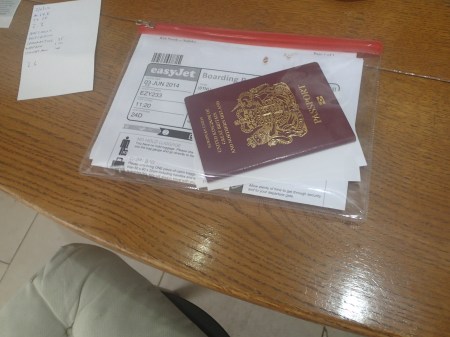
A Passport For Scotland
I suppose if Scotland votes for independence, this will become the norm for every journey across the border.
The plane was a few minutes early and after getting slightly lost in the Terminal, I was met by one of old friends and we were soon on one of the new trams to the city centre.
The flight up had cost me £47.93 for the actual flight, £13.85 to get to Stansted and £9 to get into Edinburgh. Which makes a total of £70.78.
Coming back yesterday, I bought my First Class ticket at nine o’clock in the evening on Wednesday for £64.35.
This cost surprised me and should I say my hosts in the Borders, thought it was good value.
It did of course include snacks on the way down, which I declined, as they we’re gluten-free, but I did keep myself plied with free drink all the way. It was mostly tea, but I did have a miniature of whisky (Scotch of course!) and was offered a second.
On the flight up, all I’d got on board, was an excellent lemonade in a box. Paid for at £2.50. If EasyJet keep selling these, it’ll certainly mean when I fly, I’ll know where to book.
If we look at the time taken. From my house to the centre of Edinburgh, it took me an elapsed time of about five and a half hours. I did give myself a lot of time to get to Stansted, but I needed it, as security took nearly an hour. Gone are the days of turn-up-and-go at London’s third airport.
Coming back, the train left at 14:30 and I just missed the end of the One Show, which means that the time was about seven-thirty. So it was just over five hours.
I don’t think I’ll be flying up to Edinburgh again from Stansted. Both journeys took about the same time, but the train was cheaper, more luxurious and included as much free food and drink as I wanted. Even if as a coeliac, I couldn’t eat the food. On the train, I also got a proper table on which to lay my paper flat out. And of course, security was more noted by its apparent absence.
Over the next few years the train will get faster as new trains, in-cab signalling and track improvement will mean that large portions of the line will be capable of 140 rather than the current 125 mph.
So city centre to city centre travellers like me will probably always take the train. For me, all that East Coast Trains need to do is get some decent gluten-free food. As Virgin do it, why can’t they?
Should Network Rail Manage More Stations?
This post was suggested by this article pointed to by Global Rail News, which says that Network Rail is going to take more stations directly under their control. Here’s the first two paragraphs.
Newcastle and York are to become Network Rail-managed stations from the start of the new East Coast franchise in 2015.
The main line stations will join Reading and Bristol Temple Meads, which Network Rail took over on April 1, under a new management model designed to improve long-term planning for the UK’s railway stations.
So what stations do Network Rail actually manage? There is a list of the nineteen stations, they current manage on on their web site.
Living in London, I use a lot of Network Rail managed stations, as all London terminals except for Blackfriars are managed by the company. The signs are consistent and even when the station is only used by one train operating company, like Liverpool Street or Waterloo, the national signs are dominant! As they should be! So a visitor to London, unfamiliar with where they are going, should find navigating around stations easy. Some large Continental stations could do a lot worse than mimic the signs at Euston, Waterloo or Kings Cross.
Generally, I think Network Rail gets it right. They also have a policy of getting better and often healthier food outlets into stations. Stations like Waterloo, Kings Cross, St. Pancras and Manchester Piccadilly have benefited from this policy. I have too, in that in the last couple of seasons, when I went to football at Blackburn, Burnley or Blackpool, I have sometimes arranged one journey with a change at Piccadilly, so I could have lunch or supper.
As someone, who hasn’t even managed a whelk stall, surely if one company manages a lot of stations, then good ideas filter across the group.
I wouldn’t call for all stations to be directly managed, as the vast proportion of smaller ones deal with one company. But even here, they should follow Network Rail’s policy on signs and possibly architecture and station furniture. In the case of the latter, I’ve seen some truly inappropriate designs. To be fair to Network Rail, they have produced this design guide and they are currently responsible for leading the Access for All.
So after Newcastle and York, what other stations, should they manage?
In the article from Global Rail News, one of the comments suggests that Clapham Junction station be directly managed.
The station has been improved and is managed by South West Trains, but used in addition by Southern and London Overground. The station needs further improvement and with Southern becoming part of the new Thameslink franchise, there will be three big beats using the station, which will be managed by a competitor.
It strikes me that there needs to be a policeman sitting about the corporate fights that will break out in one of the UK’s busiest stations. Network Rail are the obvious candidate.
There are other busy stations like Clapham Junction, which could probably need someone to sort out problems, caused by the station manager being the dominant train operating company in the station. In this class, I would name Peterborough, Preston, Derby, Nottingham, Sheffield and Wolverhampton.
And then there’s Cardiff.
Surely, if Glasgow Central and Edinburgh Waverly are managed by Network Rail, Cardiff Central must have string claims, even though it’s in Wales. But the Scots don’t seem to have problems over their two Network Rail managed stations.
I think by the end ofthis decade, more of the larger stations will be under Network Rail’s umbrella.
Deptford Station Is Almost Finished
In April 2012, I went to see the new Deptford station and I reported on it here. Today after seeing HMS Bulwark I walked along the Thames to the station to get a train to London Bridge station.
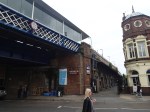
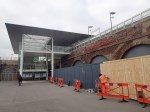
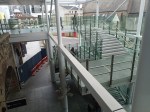
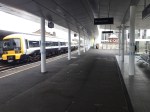
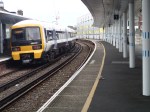

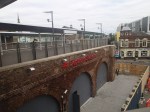

It shouldn’t be long before Deptford has a station of which it can be proud.
Innovations In Diesel Locomotives
All across Europe there is a shortage of locomotives to pull both freight and passenger trains. In some ways this may well be good news, as it could be said that the economies of some countries are at last picking up.
In the UK, there have been orders for the new Class 68 to pull both freight and passenger trains and for some more of the ubiquitous Class 66. As the latter class doesn’t meet the current emission standards, the order for the Class 66 will probably be the last for the type. In my view that is a good thing, as I’ve talked to drivers and although the engines are reliable, the working environment could be better. They also aren’t popular with some residents, who live near busy freight routes, as they aren’t the quietest.
So in the UK, we’ve seen a scraping around for motive power, and this partly explains, why some elderly engines, like the Class 20, I saw a couple of days ago, are still working.
But we have also ordered some new Class 88, which are an electric engine, with an on-board diesel engine, so are capable of going all over the network. So for say Felixstowe to Manchester via the routes through London, could be done without changing the engine en route.
I also found another interesting idea on the web yesterday. This article in Global Rail News describes the delivery of a new TRAXX locomotive in Germany. What is unique about the TRAXX P160 DE is that instead of one large diesel engine, it has four smaller ones. So the power can be adjusted to the load, therefore using less fuel and creating much less noise.
This technique has been used on some diesel multiple units like the Class 185 used by Trans Pennine. On their hilly routes, some parts need more power than others, so these trains have an eco-mode.
Over the next few years, we will see a lot more serious developments with respect to more power, better fuel economy and less noise.
Why We Should Improve Train Lines
I’m biased and love trains and other forms of public transport.
But everybody should read this document, which describes how and why a group wants to upgrade all the train services in the Lea Valley.
It details various solutions and the benefits they will bring.
It is also a report that has been listened to!
Lea Bridge station is being reopened and the London Overground, is taking over the Lea Valley lines.
The report is also full of innovative and sensible suggestions about how to improve the area for work, rest and play. Typical is the idea to create a footpath and cycleway to Northumberland Park station across the Lea Valley.
If the Overground can do for the Lea Valley lines, what it has done for other parts of London, it’ll be a good start.
 The Anonymous Widower