Congestion At Ipswich Station
Ipswich station suffers from too much traffic and not enough platforms
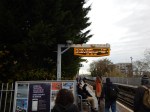
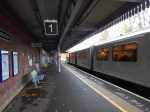
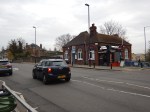
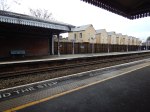
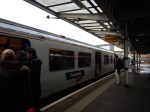
This set of pictures was taken as I changed trains for Felixstowe, at around 12:00
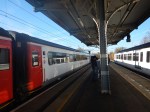

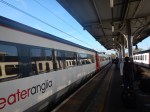
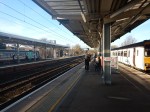
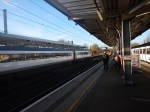

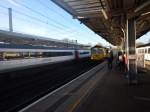
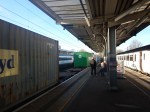
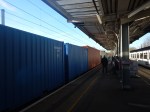
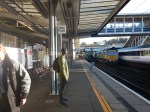
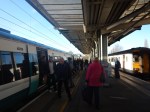
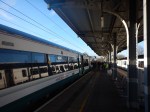
In the short time, I was there, I saw the following trains go through the station.
- A Norwich to London Express.
- A London to Norwich Express
- A very long freight train.
- A train arrive from Lowestoft and wait in Platform 1.
- My train arrived from Felixstowe.
What made matters worse was a light engine sitting on the avoiding line between the two main lines.
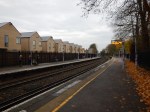
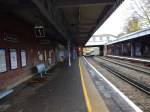
I took these pictures later on my return from Felixstowe.
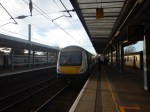
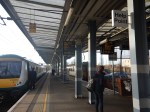
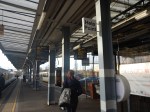
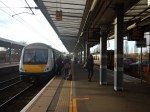
The two sets of pictures illustrate some of the problems at Ipswich station.
- There is a large number of freight and passenger trains, that go through the station.
- The platforms available for services to Cambridge, Felixstowe, Lowestoft, Norwich and Peterborough is limited.
- Trains sometimes have to terminate in the Through Up Platform 2.
- Two long passenger trains per hour between London and Norwich, go through in each direction.
Unfortunately, 3 and 4 interact badly with each other and this interaction will get worse with the new Flirt trains, which are longer than the current trains.
One solution would be a second bay platform, alongside the current Platform 1.
The new Greater Anglia Franchise has also had a sort out of services through Ipswich. The two most important ones that will be implemented are.
- Peterborough-Ipswich will be hourly and continues to Colchester. So Colchester has the problem of turning the train.
- The hourly Liverpool Street to Ipswich service will be extended to Norwich, to increase the Liverpool Street to Norwich frequency to three trains per hour.
These two changes reduce the amount of platform space needed, as these services will stop and hopefully be quickly on their way!
A Good Look At Platform 1 At Ipswich Station And The Work On The Far Side
In Curious Rail Construction At Ipswich Station, I wondered what was happening on the far side of Platform 1 in the station.
This morning although there was congestion later, that I wrote about in Congestion At Ipswich Station, the platform was empty long enough for me to take these pictures.

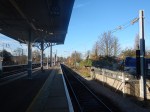
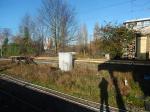
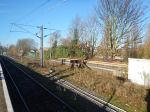


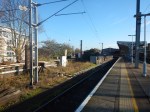
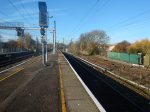
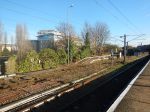
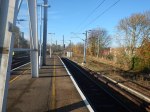
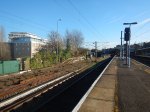
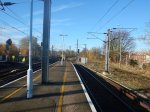
Note that in the pictures and this reasoning, I refer to the construction as Platform 0, but it could be just a ramp so that drivers can access their freight locomotives.
Consider.
- Platform 1 would accommodate a five-car train and it could be lengthened to perhaps six-cars.
- Platform 0 would accommodate a one-car Class 163 train or possibly a two-car train.
- It might be possible to extend Platform 0 towards the main part of the station, by digging out the corner of the car park and moving a few steel girders.
- The end supports for the catenary would need replacing with a longer Platform 0, but that is not difficult electrification.
- An extended Platform 0, wouldn’t need moving of the free bicycle parking and the waiting room.
- If Platform 0 and 1 were for Felixstowe and Lowestoft, interchange between the two lines and London trains would be easy.
- Changing from trains from London to trains at Platforms 0 and 1 would be by using the nearby recently-built step-free bridge.
With two bay platforms 0 and 1, there would be no need to use Platform 2 as a terminus, as my Felixstowe train did today.
The curious point, is that except for the Express London to Norwich services, there are no current or planned electric passenger services to Norfolk or the West from Ipswich.
So why are the wires in Platform 1 and the area that could become platform 0, so comprehensive?
I believe that Greater Anglia might be thinking of running electric trains with on-board energy storage from the station.
Felixstowe is the most likely possibility, as the other routes could be too long.
So could we see a five-car Aventra with on-board energy storage shuttling along the Felixstowe branch?
It’s all a bit different from the Class 105 train, that I rode on the route in the early-1960s
As I said a few days ago, it’s all very curious.
Autumn Statement: Is Rail Devolution In London Dead?
This is the title of an article on the BBC web site.
This is how the article starts.
Sadiq Khan is not the first mayor to want more control over London’s rail service.
Previous mayors have managed it – Ken Livingstone took over Silverlink and Boris Johnson gained control of West Anglia.
But it looks like the chances of more takeovers are not that promising.
The article then goes on to make the point, that the timescale for taking over Southeastern metro services is very tight.
As time is a very absolute constraint, action needs to be taken now!
Curious Rail Construction At Ipswich Station
I came into Ipswich station today on a train from Lowestoft and took these pictures before I got on a train to London.
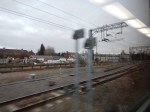


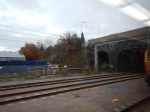

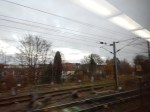



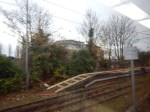

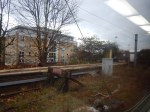
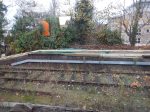
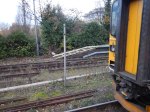
They would appear to show the following.
- An electrified line has been created to the North of Ipswich Yard between the Felixstowe Branch Line and Ipswich station.
- Some construction on the far side of the siding that lies next to the platform used for Lowestoft and Felixstowe trains.
Could the construction, be tye start of work for a dedicated platform for the Felixstowe Branch?
Consider the following about traffic on the Felixstowe Branch Line.
- According to this article in Rail Magazine, there are now twenty-three daily freight trains out of Felixstowe.
- The freight trains are getting longer and I have seen trains hauled by a pair of Class 66 locomotives.
- Passenger trains are a single-car Class 153 train every hour.
- The Class 153 train takes twenty-six minutes.
- The line is around fifteen miles of unelectrified line.
- The Freightliner motive power depot is going to be moved from Ipswich to Felkixstowe.
- The December 2016 Edition of Modern Railways is saying that a 1.4 km loop will be built on the branch and six level crossings will be closed.
Despite the last two points, the single track branch line must be very much full.
There are also issues with the Class 153 trains at Ipswich.
- Do they sometimes find it difficult to get through all the freight trains to the bay platform at Ipswich?
- Sometimes, they use the end of the main platform 2, but as the Flirts will be longer, this won’t be possible when the new trains arrive.
- Various reports have said that two bay platforms are needed; one for Felixstowe services and one for Lowestoft services.
We don’t know their actual plans, but Greater Anglia would probably love to put a modern electric train on the Ipswich-Felixstowe route.
Electrification of the Felixstowe Branch is not even likely.
- Electrification of the Felixstowe Branch without wiring all the way to Nuneaton would probably not be good value for money.
- Where would Freightliner get all the electric locomotives?
- The Port of Felixstowe isn’t wired and might not want wires all over the place with cranes everywhere!
- The Gospel Oak to Barking Line will be electrified and what effects will this have?
The only bright spot on the horizon is Greater Anglia’s new Flirts, which could release fifteen well-maintained and reliable Class 90 locomotives.
A modern two-coach train, even if it was a diesel, would have benefits.
- It would be faster and thus scheduling the crowded route could be easier.
- It might attract more passengers to the line, especially, if there was space for bicycles and buggies.
- It should be more reliable.
But I suspect Greater Anglia would want an electric train with all the trimmings.
So am I right, that a new electrified line has been created into the station in a place where a new platform can be created?
- I might be wrong and it could have been there for years to enable the movements of electric locomotives, without blocking the main line.
- But there are certainly modern style gantries and supports for the overhead wires.
- The existing bay platform 1 is wired. Why? No current or possible electric services could use the platform.
But something is certainly happening.
- Is it a new platform or just tidying up?
- Is it a walkway to enable train drivers to get to locomotives in Ipswich Yard?
- Is it a short platform to take up to a two-car train?
There is one other possibility, that fits with my observations at Maidenhead and the Marlow Branch, that I wrote about in Bourne End Station And Improving The Marlow Branch Line.
At Maidenhead, I came to the conclusion, that electric trains (Class 387s?) with on-board energy storage were going to be used on the Marlow Branch to Bourne End, with a diesel shuttle between Bourne End and Marlow.
Is the current Platform 1 at Ipswich, which could probably accommodate a five-car Aventra going to be used in the same way?
Consider how an electric train with on-board energy storage, would work the Ipswich-Felixstowe service.
- I’ll assume that a fully-charged train starts from the new depot at Manningtree or some othe suitable overnight stabling.
- The train positions early in the morning for the first service from Felixstowe, using overhead power to Ipswich and on-board power on the branch.
- Passengers load at Felixstowe and the train proceeds to Ipswich under on-board power to the current Platform 1 at Ipswich.
- The train would sneak into the platform on the North side of Ipswich Yard, well out of the way of the Great Eastern Main Line and any freight movements.
- If the platform was busy and the train had to wait at a signal, it could even up pantograph to start the recharging of the on-board storage.
- Once in Platform 1, the train would either start or continue the charging process.
- The pantograph would be lowered, when the charging was complete or the train was approaching the limit of the overhead wiring on its way out to Felixstowe.
The process would continue all day.
But Aventras will be a clever train. This is a snippet from an article in the Derby Telegraph.
Unlike today’s commuter trains, Aventra can shut down fully at night and can be “woken up” by remote control before the driver arrives for the first shift.
So could we see a train parked at Felixstowe overnight, ready for the driver to get into a nice warm train?
I used to live round the corner from Felixstowe station and as the train would be in full view of the Police Station opposite and electrifically dead, I doubt there would be any security problem.
A five-car Aventra parked overnight with an appropriate all-over paint scheme might even encourage new passengers to give it a try.
Obviously, the suitable Aventra doesn’t exist yet, but putting in a new short platform 0 at Ipswich station, that can accept a three-car train, would mean.
- Platform 2 would no longer be needed for terminating trains at Ipswich.
- Twelve-car Flirts could work the London-Norwich services, without terminating services interfering.
- Felixstowe and Lowestoft services would have a short platform 0 and a longer platform 1, to use appropriately.
- The infrastructure would be ready for the Aventra with on-board storage.
But surely the biggest advantage is that a second bay platform would probably be to make it possible to schedule all trains such that if passengers were changing between the various lines to Bury St. Edmunds, Cambridge, Felixstowe, London, Lowestoft and Norwich, it was a convenient process of less than ten minutes.
Whether an Aventra with on-board storage will ever appear on this route is unknown at present, but there could be other advantages to running such a train on the Felixstowe Branch.
- Electrification of the branch can be kicked into some very long grass or buried at sea.
- The branch gets a massive increase in passenger capacity, without losing any paths for freight trains.
- The extra capacity with plenty of space for bicycles and buggies.
- Greater Anglia get a line for training drivers to use on-board storage.
- Bombardier get a demonstration of a train with on-board energy storage.
It could be a win for all parties.
Why I Like The Heathrow Southern Railway Proposal
Rail Projects
For nearly twenty years I spent a lot of time talking to project managers and reading about the implementation of large projects and systems.
It has led me to various conclusions about large projects and what makes some succeed and others fail.
If you look at rail projects over the last few years, you get some very good examples of projects and some very bad ones too!
Look at how the following factors affect the outcome.
Size
In my view, size can be discounted, as it doesn’t seem to affect the outcome. There’s been good and bad projects of all sizes.
I think it’s just as likely to get a severe problem on a small project as a large one.
Stations
There has been the occasional station project delivered late, but in general stations have been on time and mostly on budget.
Some like Canary Wharf, Kings Cross, Manchester Victoria, Reading and St. Pancras aren’t small and a few existing ones have been rebuilt around a working station.
The project management has been good, but could it also be that building a station, with the exception of the tracks, is not much different to constructing any other complicated hi-tech modern building, like an office block, university building or a hospital?
Tunnels
In all the tunnels built in London over the last fifty years, there has only been a couple of problems with the actual tunnels during construction and since.
None were serious!
I think until proven otherwise, we seem to have tunneling under control.
Tracks, Chords, Bridges and Dive-Unders
Over the last few years, several major bottlenecks have been removed at places like Acton, Hitchin, Ipswich, Jane Croft, Norton Bridge and other places by creating lengths of new railway. Sometimes, they have even been electrified.
Network Rail and their contractors seem to have improved dramatically, since the dark days of Hatfield.
I’ve Started So I’ll Finish
I believe that the best way to give a project problems, is to get everybody all geared up to start work, only for management or politicians to have second thoughts.
Give The Public Bread And Circuses
We can’t rate Crossrail yet, but Thameslink has not been a very happy project.
A lot of Thameslink’s problems have been magnified by the way they have treated the public.
Crossrail on the other hand has been open, as to what is happening and hasn’t been slow to use things like archaeology to their advantage.
Large Projects Should Be A String Of Smaller Ones
In my view large projects should be a string of smaller projects, that can be done independently.
If you look at Crossrail, the largest project is the creation of the tunnels through London, which can be built without affecting the existing railway. When they are virtually complete, then the tracks are changed to connect the new and old railway.
In some ways it’s a bit like building a housing estate on a greenfield site, where you put in the roads and services first and then build all the houses.
With Crossrail, very few Londoners or travellers will have had their daily lives disrupted.
The smaller, but still large projects are now being built along the tunnels.
Crossrail has been well-designed around a project plan that allowed it to be built.
Thameslink on the other hand, is several big projects, all of which have the ability to cause major disruption.
- The creation of two new tracks from London Bridge to Charing Cross.
- The total rebuilding of London Bridge station.
- The Bermondsey dive-under to untangle the tracks.
- The project is also complicated by the introduction of the new Class 700 trains.
As these projects are all being done at the same time, it is a recipe for chaos and disruption.
Thameslink is very delayed from its original planned finish date and it has been started and stopped more times than a 73 bus on Oxford Street.
Electrification
Electrification is the fox in the chicken coop, especially when it is being added to existing lines.
Look at these schemes.
- Great Western Electrification
- North Western Electrification
- Edinburgh to Glasgow Improvement Program
You could even include the Gospel Oak to Barking Line Electrification, where things don’t seem to be going very fast on a smaller scheme.
Is it we’re just not any good at it, or is it that electrifying old infrastructure, with all the problems that brings, a very difficult job.
The Heathrow Southern Railway
It is outlined on this web site, which I suspect will become more informative. If you want to know more, buy the December 2016 Edition of Modern Railways.
This Google Map shows Heathrow Airport and the area to the South and South-West.
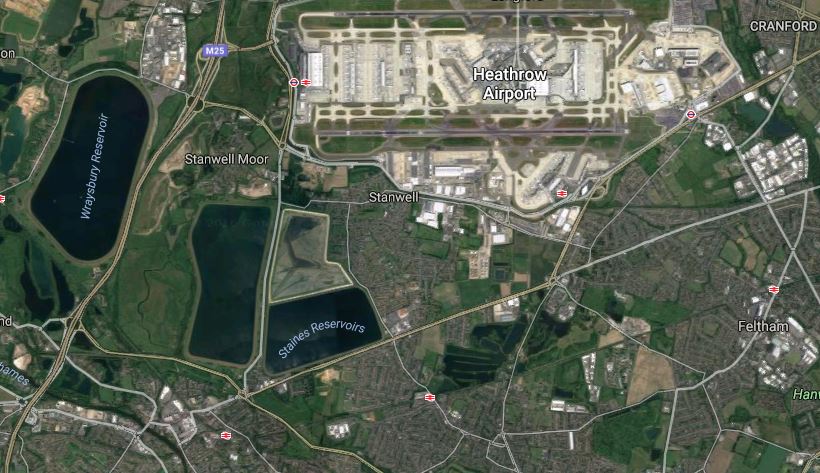
South And South-West Of Heathrow Airport
Note the A30 road going diagonally across the map South of the Airport.
South of this road is a row of three stations; Staines, Ashford and Feltham, which are all on the Waterloo to Reading Line. To the West of Stains, the Staines to Windsor and Eton Line branches away to the North via Wraysbury.
The proposal for the Heathrow Southern Railway envisages.
- A short tunnel into the existing Heathrow Terminal 5 station, which was designed to accept a line from the West
- A rail link alongside the M25 to a junction on the Staines to Windsor and Eton Line just West of the M25.
- A chord at the junction of the Staines to Windsor and Eton Line and the Reading to Waterloo Line to allow trains to go between the Airport and Reading.
- The rail link alongside the M25 would continue South and connect the Airport to Chertsey station on the Chertsey Branch Line. This would allow trains to run between the Airport and Woking.
This Google Map shows where the rail link would go between Terminal 5 and Staines.
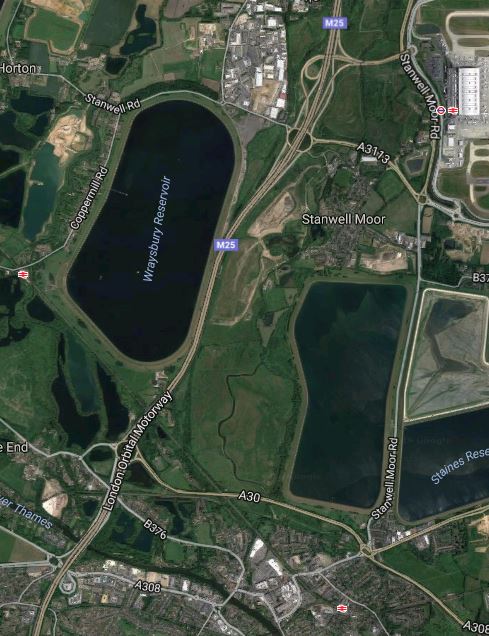
Terminal 5 To Staines
Staines is the station at the South of the map with Wraysbury at the West. \they are joined by the Staines and Windsor and Eton Line, will will have a connection to the Airport.
This Google Map shows Stainesstation and the rail lines in detail.
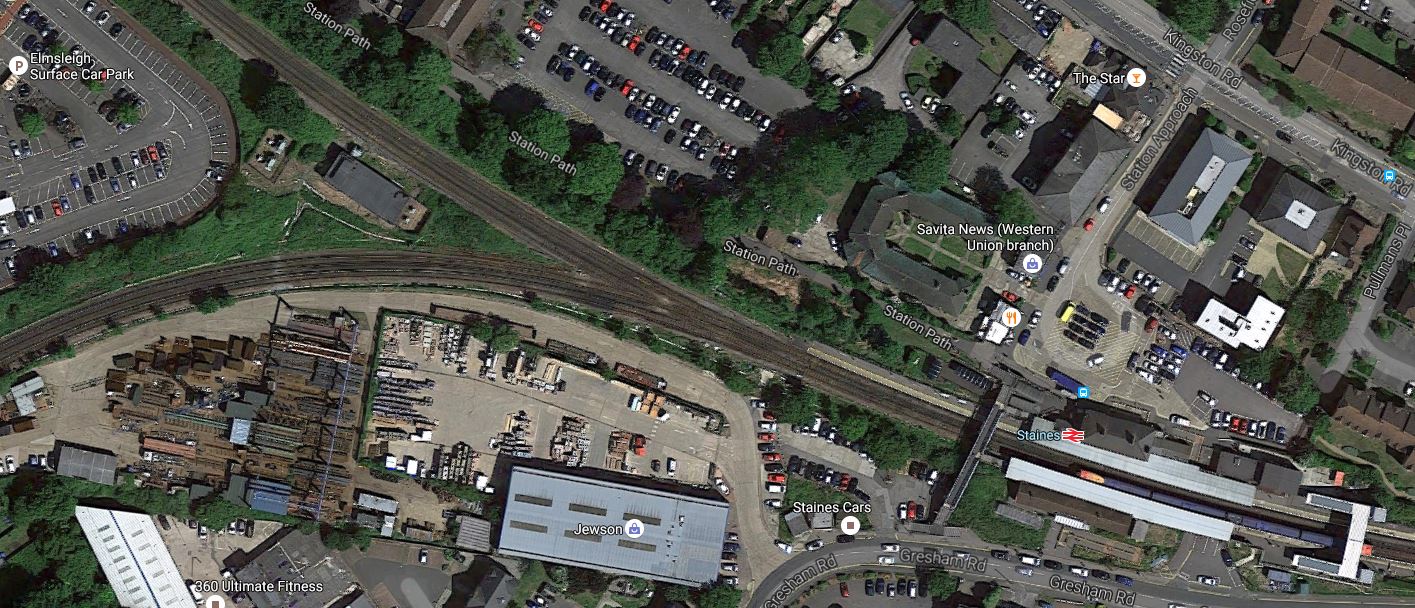
The line to the North West goes to Windsor, whilst the one to the West goes to Reading. The line to the East goes to Waterloo via Feltham, Twickenham and Clapham Junction.
It might be tight to create a chord between the Windsor and Reading Lines, but Heathrow Southern Railway believe there is room for a bay platform at Staines station. They also propose, that Staines could be another Crossrail destination.
This Google Map shows the route to connect the rail link to Chertsey station.
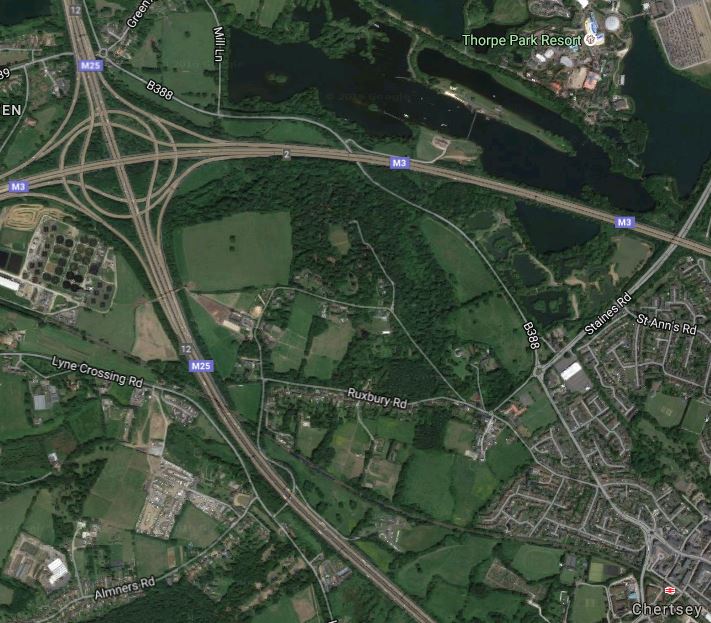
Chertsey Station And The M25
Chertsey station is in the South-East corner of the map, with Thorpe Park Resort in the North East corner.
The junction between the rail link from Terminal 5 and the Chertsey Branch, would probably be close to the motorway.
So why do I like this proposal?
The main work needed for the core of the railway is as follows.
- Create a rail tunnel into the existing station at Heathrow Terminal 5.
- Build a railway alongside the M25 to connect to existing rail lines to Waterloo, Stains and Woking.
- Update the railways and stations under Heathrow to allow trains to go from Old Oak Common through the Airport and out the other side.
Once the core is complete, a succession of smaller projects would connect the railway to longer distance services at Basingstoke, Clapham Junction, Old Oak Common, Reading and Waterloo stations.
There is a lot to like about the concept.
Construction
These points apply to the construction of the rail link.
- Much of the difficult construction work is probably inside the fence at Heathrow, creating the connection to Terminal 5 station.
- The problems of constructing on this route alongside the motorways, are probably well-known.
- The M25 could even be put in a tunnel, with the railway on top.
- The map in Modern Railways shows no tunnels except for the one to Terminal 5 and just three rail bridges.
- I doubt there would be much demolition of properties.
- Land take inside built-up areas would be minimal, with junctions outside of the towns and villages.
I feel that with good project management the railway could be built without disrupting existing rail services or road traffic.
Electrification
The route would be electrified with the following points applying.
- Heathrow Terminal 5 station is electrified at 25 KVAC overhead.
- Most of the lines South-West of Heathrow are electrified using 750 VDC third-rail.
- Modern trains like Crossrail’s Class 345 trains and Thameslink’s Class 700 trains can handle both systems.
- There is no electrification of existing railways.
- Electrification of any new railway could use third-rail, to be less visually intrusive.
I doubt there will be any problems with electrification.
Connectivity
The new link provides excellent connectivity to places like Basingstoke, Clapham Junction, Guildford, Paddington, Reading, Richmond, Waterloo, Windsor and Woking.
It also has excellent links to these services.
- Crossrail at Heathrow, Old Oak Common and Paddington.
- South Western Railway at Guildford, Waterloo and Woking.
- Chiltern and HS2 at Old Oak Common.
- Great Western Railway at Paddington and Reading.
The Heathrow Southern Railway is so much more than a link into Heathrow from the South and West.
South Western Railway
The new franchise for London and the South-West would appear to be ambitious and it has already decided to change its rather assorted suburban trains for a new fleet of Class 701 trains.
These new trains are from the same Aventra family as Crossrail’s Class 345 trains.
South Western Railway also has a common part-owner with Great Western Railway, which must mean that co-operation between the two operators is more likely, than a turf war about who runs services into Heathrow.
In some ways though, one of the biggest strengths of the Heathrow Southern Railway, is that it could take the pressure of the South West Main Line and allow some services to use Paddington instead of Waterloo as a terminus.
Heathrow’s Plans
Heathrow may get a third runway, but their plans do envisage a complete rebuilding of the airport into two main terminals; East and West, which would be served by all trains.
Whatever they do, one of Heathrow’s biggest problems is the pollution caused by the road traffic servicing the airport.
A comprehensive rail network stretching East and West of the airport, must surely help in reducing this pollution, by bringing more passengers, works and freight into the airport on electric trains.
Funding
Because of the possible returns on capital, I suspect that it would be very easy to finance privately.
Conclusion
It is definitely one of those projects, where by creating something a bit out of the ordinary, leads to lots of other worthwhile things.
Out Of The Mouths Of Brummies
The December 2016 Edition of Modern Railways has a special report on railways and trams in the West Midlands.
There are some choice quotes from those involved in planning the future of the rail network in the area.
On HS2
“It’ll be half an hour from Birmingham Interchange station to the Crossrail interchange at Old Oak Common. That means Birmingham Airport will be in London Zone 4, timewise.”
On Stations
“Nobody looks at their strategic value to the community”
On New Street Station
“The Birmingham New Street Gateway rebuilding has quadrupled the passenger circulation area in the station, but it hasn’t addressed the key issue of lack of track capacity”`
On Battery Power For Trams
“Since then there has been lots of work and we’re now comfortable that battery technology has advanced sufficiently for it to be viable.”
“Under test conditions with plain straight track a tram could travel 20 km catenary-free. In practice, this would be rather less for a fully laden tram ascending the 9% gradient on Penfold Street. The longest catenary-free run we’ve envisaged is around 2 km, and we’re comfortable we can achieve that”
On More Trams
“They will have to be bespoke to a degree in order to operate catenary-free, but the rail sector is embracing alternative technology and on-board energy store so we may be looking at something more advanced afain.”
Conclusion
It’s all upbeat and it looks like Birmingham is looking forward to the battery trams.
No-one mentioned the B-word!
The Natives Are Getting Restless In Crofton Park
One of my Google Alerts picked up this article on Brockley Central, which is entitled You Shall Go To Blackfriars – Join The Campaign For Crofton Park Trains Every Fifteen Minutes.
This is said.
Local action groups aren’t supposed to be this successful. The Cinderella Line is a campaign to improve the frequency and quality of services that run through Crofton Park Station.
The group has had a recent success, in that there are now four more trains stopping at the station in the peak.
So I thought I’d go and have a look, getting my paper and some bits of shopping I need on the way.
I had started out, just before 0900, with the aim of getting the 0930 Thameslink train to Crofton Park station. Hopefully, it would have been running a bit late, so I could use my Freedom Pass.
But it was worse than that, as the train had been cancelled, so in the end, I had to take a train to Catford station and then come back a station to get to Crofton Park. As I couldn’t afford to wait, I had to pay for the ticket myself.
Not that I’m bothered!
But did Thameslink cancel the first train after 0930, to force people to catch an earlier train at full price, if they wanted to get to work on time?
Am I being cynical?
These pictures tell the story of my journey to Crofton Park and back via Peckham Rye station to Haggerston station, from where I walked home.



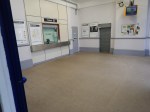
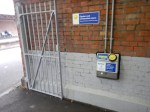
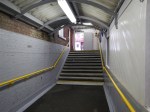
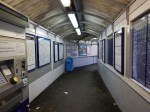

A few points.
Overcrowding
I took three Thameslink trains and one London Overground train this morning.
- St. Pancras to Catford – 8-cars and overcrowded until Farringdon.
- Catford to Crofton Park – 4-cars and crowded.
- Crofton Park to Peckham Rye – 4-cars and overcrowded
- Peckham Rye to Haggerston – 5-cars and plenty of space, with seats for those who wanted them.
Considering, that all these journeys were in the Off Peak, except for the last Overground train, it is just not good enough.
Crofton Park Station
Crofton Park station, is typical of many stations, that are South of the Thames.
- It is certainly scruffy.
- The main entrance is not step-free and the stairs are steep.
- The platforms are ready for twelve-car trains.
- There was a bad gap to mind, between train and platform.
- Staff were only noticeable by their absence.
- A fellow passenger said that announcements were unreliable.
- The information displays were not of the best.
- Typical Off peak services are 2 trains per hour (tph)
But it was certainly a station, that with the spending of some money to add lifts, could be a station of high quality and a modicum of quality.
The New Class 700 Trains
Hopefully, the new eight-car Class 700 trains will improve matters at Crofton Park, as they are better designed than the overcrowded four-car Class 319 trains, that I had to endure this morning.
This report on Brockley Central, says this about the new trains.
“We have also been pushing Thameslink to introduce new Class 700 trains, with 30% more capacity than the trains we currently have. The first of these will appear from the end of November and then replace our current trains at the rate of one per week.
So that is good news.
Extra Services To Victoria And Blackfriars
The report on Brockley Central, says this about the new services.
“From December 12th, four new trains will stop at Crofton Park between 7-9am . Three will go on to Denmark Hill and Victoria and one to Elephant & Castle and Blackfriars.
“The Victoria services currently pass through Crofton Park but don’t stop there, so they will now make the additional stop at Crofton Park.
So that is good news as well.
The interesting thing about these new train services, is that no new services are actually being introduced, but the extra service at Crofton Park is being created by getting a train that normally goes straight through to stop at Crofton Park.
The latest generation of trains, are designed to execute a stop and start in a minimum time, so I think we’ll see extra stops added on more than a few services.
This quick stop feature is achieved by several things.
- Powerful braking and acceleration.
- Wide doors.
- Level step between train and platform.
- Good information, so passengers getting on can find space.
- Good coordination between the driver and staff on the platform.
Increasingly, for some operators, a fast dwell time will be an important factor in choosing the trains to procure and providing a better service.
Here at Crofton Park station, it is being used to get extra trains to stop at the station.
Increasing Thsmeslink Frequency From 2 tph To 4 tph At Crofton Park Station
This is an aspiration for Crofton Park, but I suspect that this cannot be done at present, as there are not enough paths through the core Thameslink tunnel.
So until Thameslink is fully open in 2018, Crofton Park will probably get 2 tph.
Thameslink is consulting on the service when the full service opens.
This document on the Thameslink web site, shows two different services calling at Crofton Park.
- TL8 from Blackfriars (Welwyn Garden City in the Peaks) to Sevenoaks
- TL9 from Kentish Town (Luton in the Peaks) to Orpington.
Both have a frequency of 2 tph at all times,so this gives 4 tph through Crofton Park.
Thameslink put it like this in their proposal.
Thameslink Metro Routes TL8 and TL9 combine to provide four trains per hour (daily) between Central London, Catford, Bromley South and Bickley. During peak times these services may be supplemented by Southeastern Metro services providing six trains per hour.
That’s a well-thought out service, by any standards.
The Catford Metro
I always like calling lines like this a Metro.
As Govia Thameslink Railway have just given the name of the Great Northern Metro to the services out of Moorgate, why not call this line the Catford Metro?
It would call at the following stations.
- London Blackfriars
- Elephant & Castle
- Camberwell (if added)
- Denmark Hill
- Peckham Rye
- Nunhead
- Crofton Park
- Catford
- Bellingham
- Beckenham Hill
- Ravensbourne
- Shortlands
- Bromley South
So it looks like Crofton Park could be in the middle of a Catford Metro.
- It would have a frequency of at least 4 tph.
- It would be running new eight-car Class 700 trains.
- 2 tph would go North to each of Welwyn Garden City and Luton in the Peak
- 2 tph would go North to each of Blackfriars and Kentish Town in the Off Peak
- 2 tph would go South to each of Orpington and Sevenoaks.
- It would have a good connection to the 4 tph South London Line at Denmark Hill and Peckham Rye.
It’s a lot better than Crofton Park has at the present time!
Conclusion
Crofton Park has a big future.
How To Spend Five Million Pounds
Whtton station has recently been rebuilt. I was alerted to the completion by this article in Rail Technology Magazine, which is entitled £5m upgrades completed at Whitton station.
I took these pictures this morning.

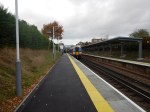

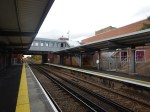
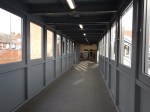
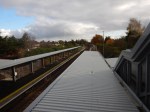
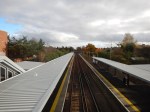
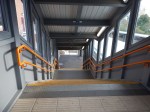

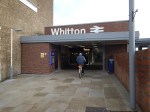

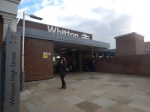
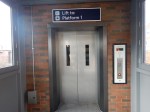

It is a no-frills design, which uses a lot of painted steel beams and classic brickwork.
I think it is true to say, that they’ve spent the money on what a station like this needs.
- Full length platforms
- Lifts
- Adequate platform cover.
- New cafe and booking office.
- More than one ticket machine.
- Bicycle parking.
- Seats
The one thing it needs, is a bit of colour!
But then, the station is in the London Borough of Richmond and flowers could be the solution. Before Overground – Highams Park, shows a station with a group of community gardeners.
Certainly, the grass needs to grow!
It’ll be interesting to see this station in a couple of years.
For more on how the station was designed and built, this page on the Innovare Systems web site.
This is said.
The station will rebuilt by Innovaré Systems using the i-SIP building system. The system uses structural insulated panels (SIPs), high performance building components which will complete the thermal watertight structure within one week, compared to the 8 weeks which would normally be required using traditional construction.
This off-site construction method will both simplify the works and provide a highly energy-efficient building for the public to use. The construction will be carried out during daytime hours to avoid unnecessary night time disturbance.
Looking at the impressive quality, I’ll think we’ll see more use of this system.
Feltham Station
I hadn’t intended to go to Feltham station, but whilst talking to a South West Trains driver, he suggested I go to look at the improvements there and the level crossing.
Location
This Google Map shows the station’s location to the South-East of the Airport.
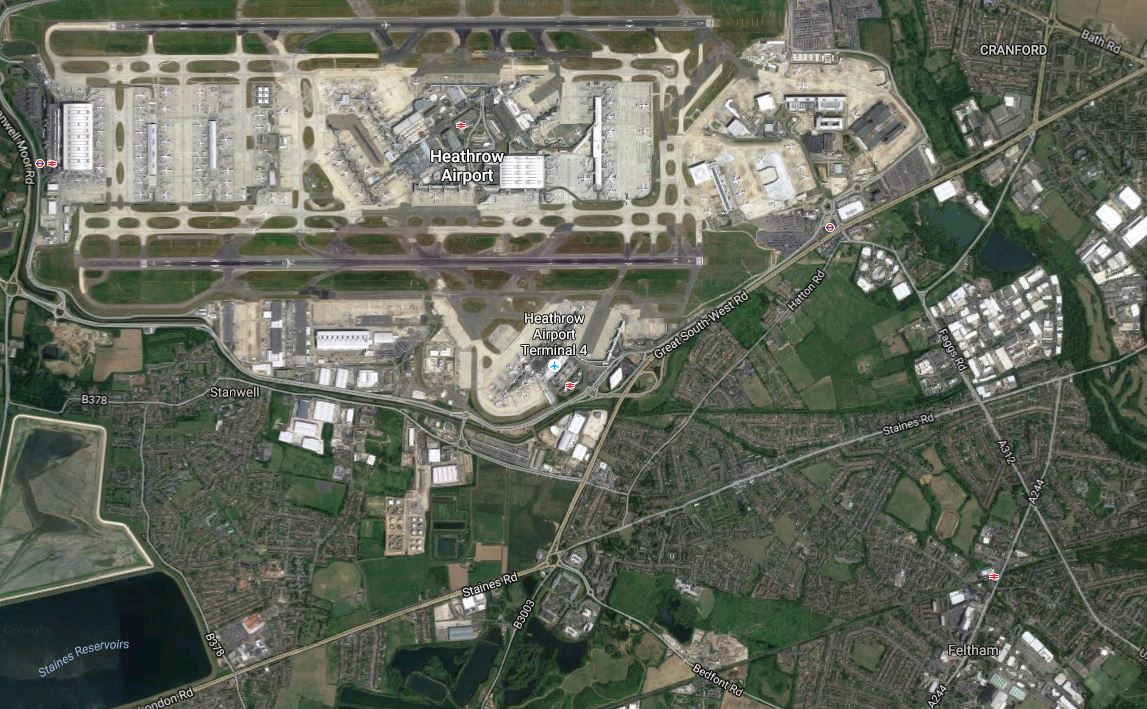
Heathrow Airport And Feltham Station
Feltham station is the station in the South East corner of the map.
A Modern Station
Feltham station is a modern station, as these pictures show.
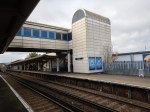
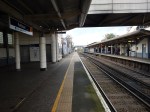
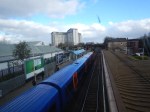
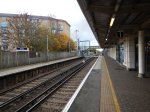
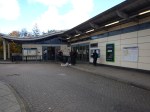


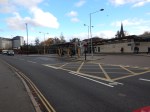
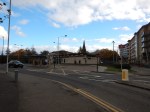
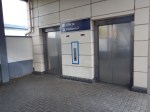


If it has one problem it is the level crossing at the Western end of the station.
Services
The station is well-connected with six trains per hour (tph) to and from Waterloo on weekdays and 5 tph on Sundays.
But there are a long list of stations, who have in excess of 2 tph connections to the station on weekdays and good connections on Sundays. The list includes.
- Clapham Junction
- Putney
- Reading
- Richmond
- Staines
- Twickenham
- Weybridge
- Windsor and Eton Riverside
It is an impressive level of connectivity to the buses that serve Heathrow’s terminals.
I was at Feltham station for about twenty minutes and saw several newish buses drive off towards Heathrow.
A railway called Heathrow Airtrack was proposed, but abandoned to link Waterloo to Heathrow, via Feltham.
It doesn’t seem to be mentioned much these days.
I just think, that because the services through Feltham are at a level of one train every ten minutes and because the line has several level crossings, that trying to squeeze an airport service into the mix, although probably not impossible, was difficult and would give rise to too many objections to fight off.
An Alternative Link
But Heathrow may have the solution in their hands and that would be to use an enlarged version of the Heathrow Pod system, that I wrote about in A Visit To Heathrow Terminal 5.
Or they could use some other charismatic system, that flew people at helicoptor-height over the route to and from Heathrow.
Several systems come to mind; cable-car, tram, monorail, a modern Schwebebahn or MAGLev.
The Schwebebahn in Wuppertal, was built over the River Wupper in the early Twentieth Century and it still running today. I wrote about it in The Wuppertal Schwebebahn. You wouldn’t build anything like this, but the construction of the Schwebebahn shows that you can put a lightweight railway over a river.
This Google Map shows Feltham station in greater detail.
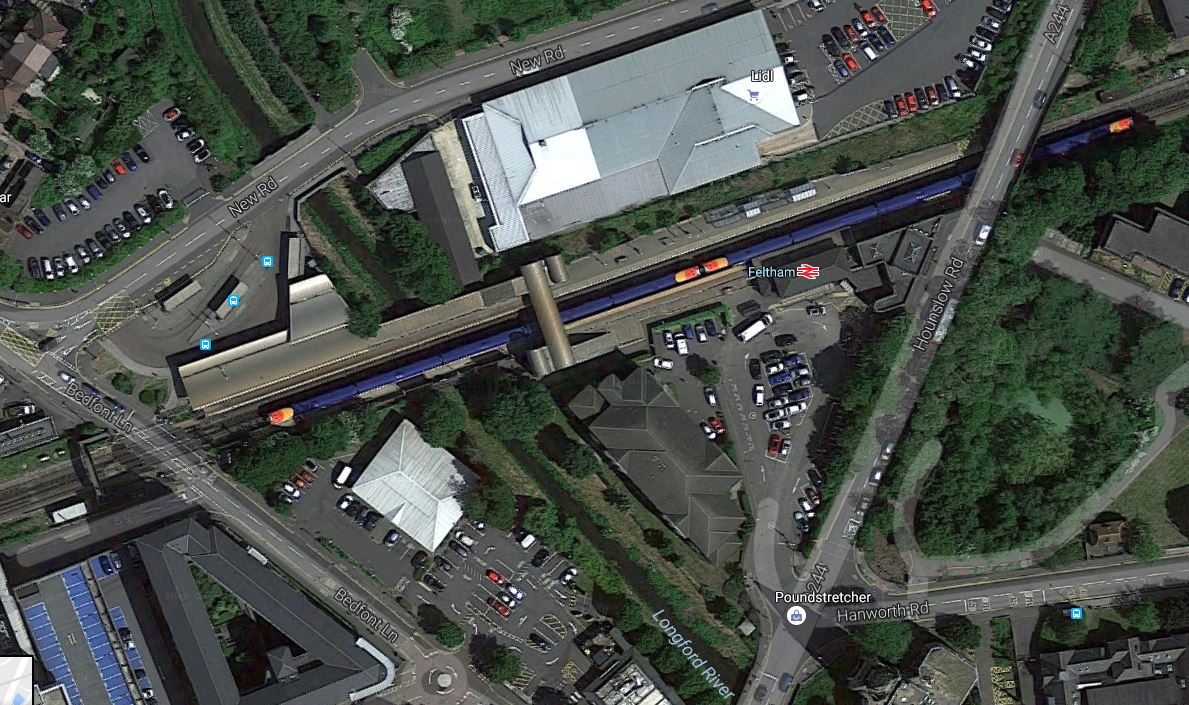
Feltham Station And The Longford River
Note the Longford River, which passes under the station.
This Google Map shows Terminal 4 at Heathrow Airport.
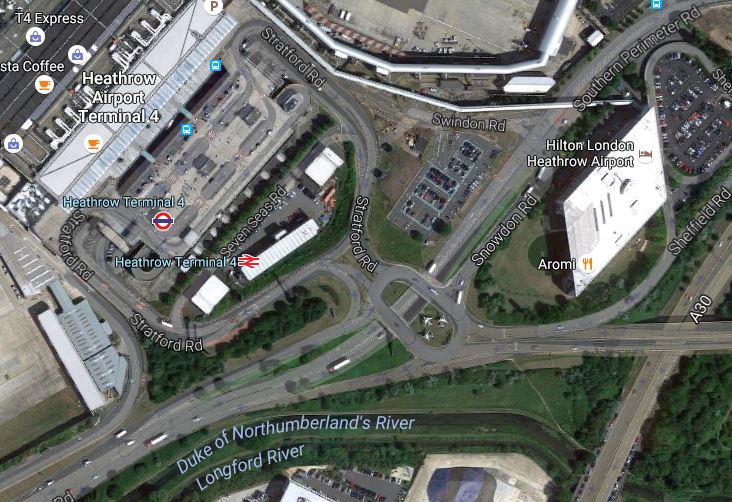
Heathrow Terminal 4 And The Longford River
Again note the Longford River.
So could some form of lightweight aerial railway be created to run at perhaps fifteen metres above the river and some of the roads in the area. This picture shows the Heathrow Pod that connects some car parks to Terminal 5.
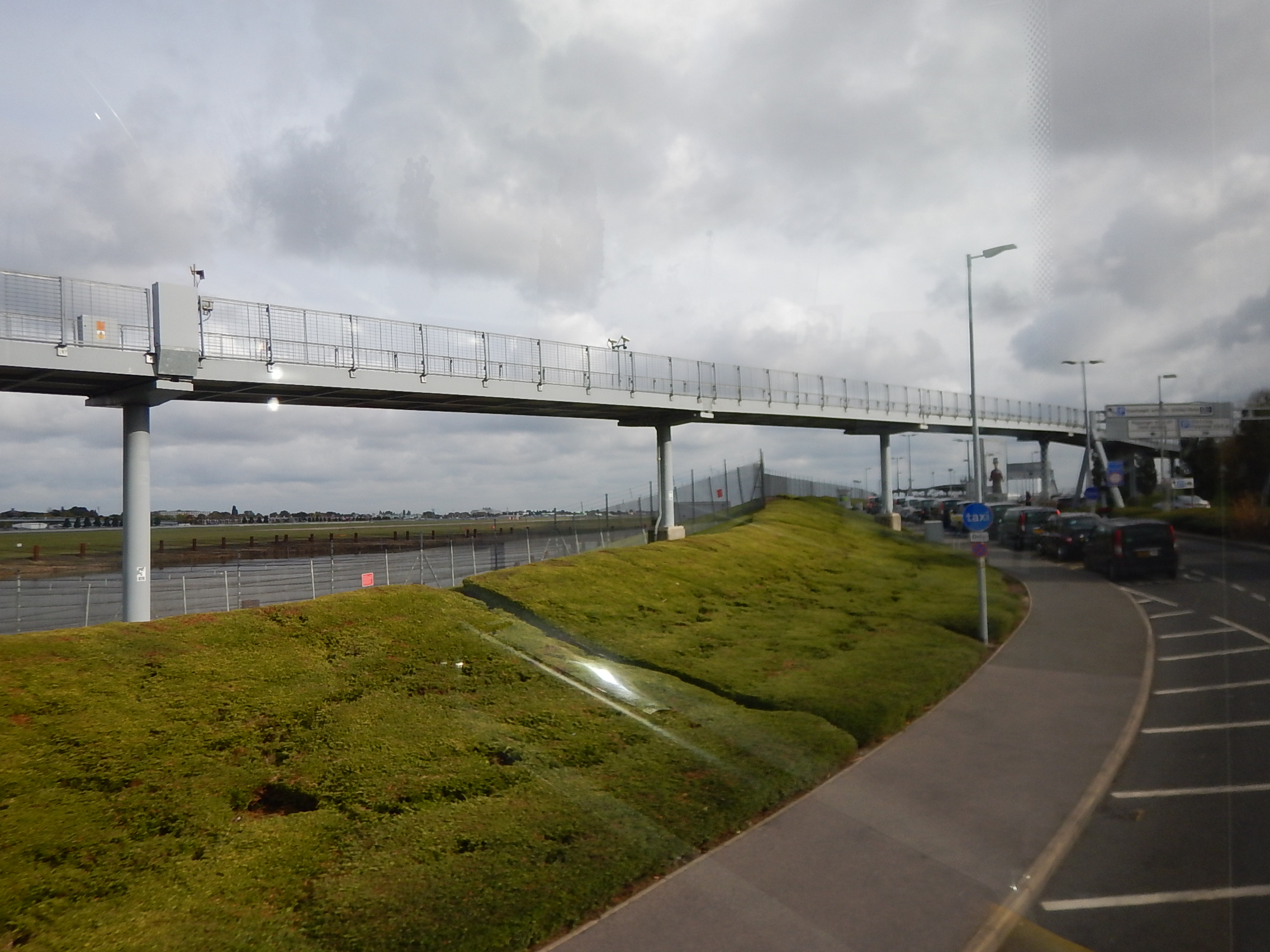
The Heathrow Pod Crosses To Terminal 5
The Terminal 5 system is described here in Wikipedia and is 3.9 km long. I estimate that Feltham to Terminal 4 would be about 6 km.
As Heathrow are thinking of using the Heathrow Pod system to go all the way to Kingston, I would suspect that Feltham would be in range.
My big worry would be, that the number of pods required to transfer passengers to and from Feltham might be too large for the system.
So I think that even if the Heathrow Pod system couldn’t be used for the link, within a few years, someone will devise a system that would create the ultimate airport link between Feltham and Heathrow Airport.
Is This The Worst Bottleneck On The UK Rail Network?
This Google Map shows Norwich station and the various rail lines that serve it.
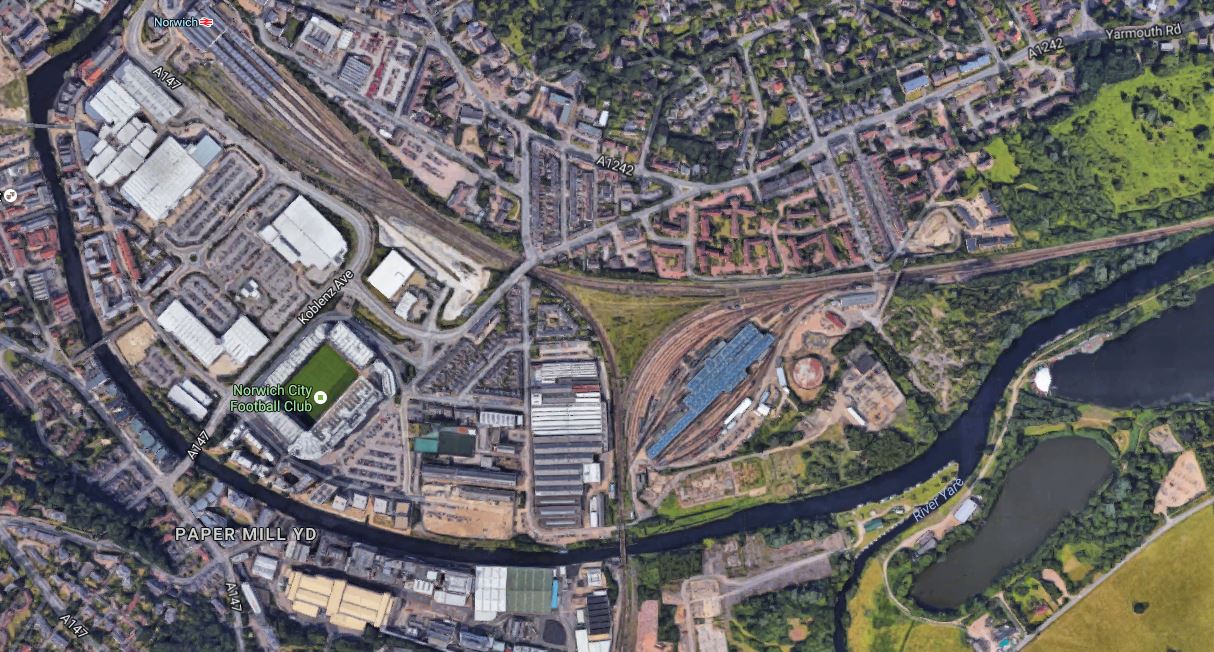
Norwich Station And Approach Lines
All the lines come into the station from the East and they split soon after leaving the station, with lines to Cromer, Lowestoft, Sheringham and Yarmouth taking the Eastern line, with trains to Ipswich and Cambridge taking the Southern line.
Between the two lines, lies Crown Point Traction and Rolling Stock Depot, which looks after much of Greater Anglia‘s rolling stock.
This Google Map shows the bridge at the South West corner of the depot, where the rail line to Ipswich and Cambridge, crosses the River Wensum.
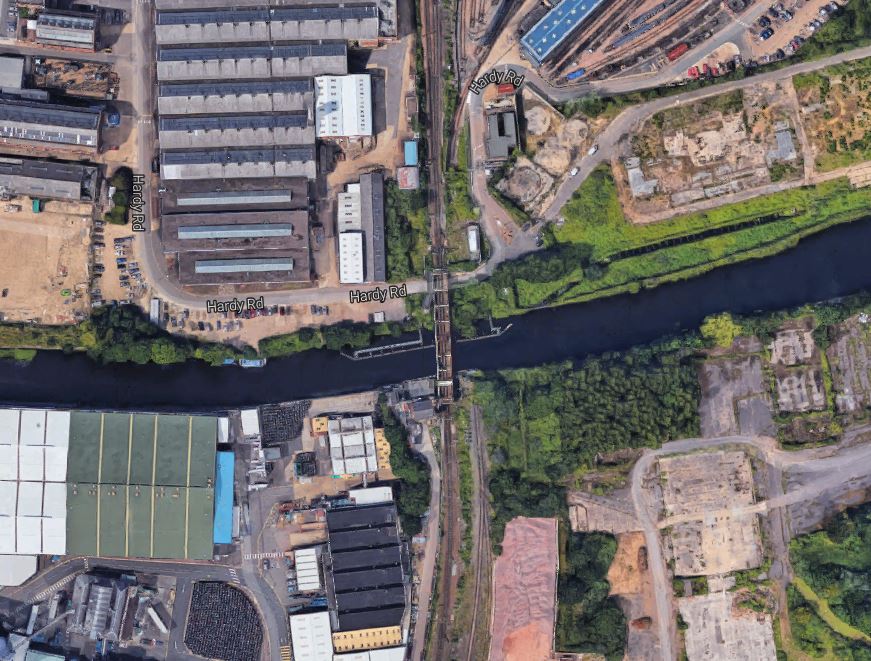
Trowse Bridge
Trowse Bridge is no ordinary bridge.
- It is a single track swing bridge.
- It was built in the 1980s, probably to a low cost design.
- It is electrified by overhead conductor rail, rather than overhead wire.
- It is mandated by an Act of Parliament to open for traffic on the river on demand.
- It is rather unreliable.
It must be a nightmare for both Greater Anglia and Network Rail.
I wonder if this bridge has had effects on projects that are happening in East Anglia.
The New Depot At Brantham
A new depot is being built by Greater Anglia at Brantham, just North of Manningtree station. There are obviously, good reasons for this, but could the access over the Trowse Bridge to Crown Point be a factor.
It would certainly be easier for bi-mode Flirts working Lowestoft-Ipswich and Colchester-Peterborough to be based at Brantham rather than Crown Point. Wikipedia says this.
Scheduled to open in 2018, it will be the home depot for Greater Anglia’s new fleet of Class 745 and Class 755 Stadler Flirts.
Greater Anglia would be a very unusual company, if they didn’t have an efficient plan for the stabling and maintenance of their new trains.
Direct Yarmouth To Lowestoft Trains Via A Reinstated Reedham Chord
There used to be a direct Yarmouth to Lowestoft Line, but now it is possible to use the Wherry Lines, with a reverse at Reedham station.
Network Rail are talking about reinstating the Reedham Chord to create a more direct route between East Anglia’s largest North-Eastern towns. This is said about the Reedham Chord in Direct Yarmouth Services in the Wikipedia entry for Lowestoft station.
In January 2015, a Network Rail study proposed the reintroduction of direct services between Lowestoft and Yarmouth by reinstating a spur at Reedham. Services could once again travel between two East Coast towns, with an estimated journey time of 33 minutes, via a reconstructed 34-chain (680 m) north-to-south arm of the former triangular junction at Reedham, which had been removed in c. 1880. The plans also involve relocating Reedham station nearer the junction, an idea which attracted criticism.
Could one of the reasons for looking at the the reinstatement of the Reedham Chord, be that it would allow diagrams for the trains working the branch lines to the East of Norwich and Ipswich to avoid the Trowse Bridge?
The Design Of The London To Norwich Trains
The current rakes of eight Mark 3 coaches hauled by Class 90 locomotives, that run the service between London to Norwich, only have one pantograph.
So does this mean there are operational problems with the train on the Trowse Bridge, as it does seem that the bridge owes a lot to Mr. Heath Robinson.
A long modern electric multiple unit, like say the Class 345 trains for Crossrail, often has two pantographs. This should be more reliable, if one should fail.
Consider.
- The Class 745 trains, which have been ordered to replace current trains, will be somewhere around two hundred metres long.
- These trains are Stadler Flirts, which in some cases have two pantographs.
- Trowse bridge is less than thirty metres long.
- The other passenger trains that will use bridge, will be bi-mode like the Class 755 trains or diesel.
- On modern trains, pantograph control is automatic and fast.
- Electrification gaps are common on third-rail systems.
Would two pantographs, allow the Class 745 trains to bridge an electrification gap on the bridge.
Suppose, the electrification was removed from the Trowse Bridge!
Would this and other improvements make it possible to simplify the bridge and improve reliability?
|Electric trains could use the following procedure to cross the bridge.
- Trains could approach the bridge with the front pantograph lowered., drawing power from the rear one.
- The train would cross the bridge and when the front pantograph was under the overhead wire on the other side, it would automatically raise and connect, lowering the rear pantograph appropriately.
Bi-mode trains would just use their diesel engines, swapping between modes automatically.
The Replacement Of The Bridge
Eventually, the bridge will have to be replaced, but surely a bridge without electrification would be easier to design and build. It could even be double-track to improve capacity into and out of Norwich.
I suspect that the long-term solution would be a double-track lifting bridge, similar to the Kingsferry Bridge in Kent. This was built in 1960 at a cost of £1.2million, which is £19.3million in today’s money.
When it is completed the Western Gateway Infrastructure Scheme, will incorporate a similar lifting bridge which will carry a road and the Manchester Metrolink over the Manchester Ship Canal.
Both these schemes also incorporate roads, so the Trowse Bridge will be simpler.
I think there could be scope for an engineer or architect to design something special for this crossing.
The Affordable Alternative
It has to be said, that perhaps the most affordable solution would be to build a stylish fixed link, probably with a double-track railway and foot and cycle bridges.
As to the boat users, all boats that need to go under the bridge regularly would be modified so their masts could be lowered at no cost to their owners.
Other bribes could be given to occassional users.
 The Anonymous Widower