Network Rail’s Mobile Maintenance Train
I wrote about this train in How To Work Outdoors.
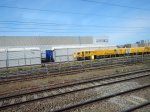
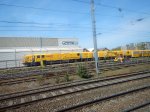

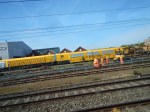
It was parked outside the Plasser depot in West Ealing.
Eurostar Is Testing To Amsterdam
This article in Global Rail News is entitled Velaro Under Test In The Netherlands. This is the first two paragraphs.
NS and Siemens have completed the first tests of Eurostar’s new e320 train on the Dutch rail network.
Eurostar plans to launch direct services between Amsterdam Central and London St Pancras in 2017 and has now begun testing its new fleet on the Dutch HSL-Zuid.
It would appear that St. Pancras to Amsterdam will take about four hours.
I suspect they still got a few details to sort out.
- Immigration control, as the UK is not in Schengen.
- The Dutch signalling system.
- The unusual Dutch train voltage of 1,500 VDC, as opposed to the British, French and HSL-Zuid of 25 KVAC.
- To complicate matters the Germans use 15 KVAC and drive on the right.
It’s a pity for many, that HSL-Zuid was built deliberately to avoid calling at Den Haag.
Slow Progress On Electrification To Oxford
A few piles have started to appear on the line between Didcot and Oxford.

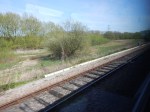
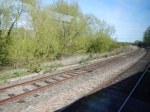

But a guy on the station, said Oxford won’t be electrified soon.
The Victorian Methods Worked
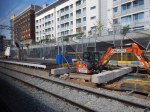
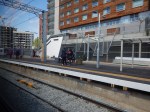
In Victorian Construction Methods, I noted how the Crossrail contractors, were throwing men and traditional methods into getting Hayes and Harlington station ready for the start of a Hayes Shuttle on the 16th of May.
These pictures, which I took today, would appear that they have made substantial progress.


Intriguingly, when I looked at the time-table a few days ago, I think it changed on the 16th of May. Now only one service has been moved backward by two minutes.
It would appear that perhaps Great Western Railway haven’t finalised the time-table yet. Perhaps they haven’t obtained the required trains yet!
Two Beautiful Seats At West Acton Station
This seat forms the waiting area at West Acton station on the Central Line.
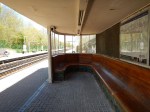

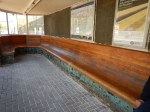

With the rounded window, it must be one of the most beautiful platform shelters on any rail station.
Note the picture of the second one on the other track.
Wikipedia says this about the design of the station.
The current station, replacing the original building, was designed by the Great Western Railway, on behalf of London Transport as part of the LPTB’s 1935-40 New Works Programme improvements and extensions to the Central line, by the GWR’s architect Brian Lewis and was completed by November 1940.
So it was actually designed by the Great Western Railway.
Leicester Station
I took these pictures as I passed through Leicester station.
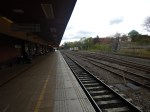
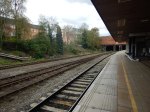


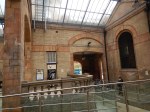
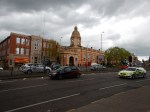
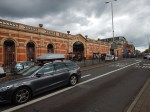
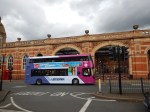
It has a just slightly less than magnificent façade, but the problems are more with the tracks and layout of the platforms.
This Google Map shows the station from above.

Leicester Station
There are various plans for the future of Leicester station.
I will now speculate.
My train back from Leicester didn’t stop at all and took six minutes over the hour.
The biggest problem on the journey was that it was the second train into the platform at St. Pancras station and I had to walk miles to get off the platform and then the adjacent escalators were set to up. The more I use St. Pancras, the more I realise what a disaster for passengers it is.
Nearly a billion pounds was spent to create se by A Fur Coat And No Knickers Station. Everybody concerned with the design and rebuilding of the station, should be sent to put a railway on St. Helena.
But that has nothing to do with Leicester, which has a station that generally works well.
I believe that electrification will transform journeys between London and Leicester.
Bombardier have stated that their new Aventra trains will be 125 mph high-speed trains, that will also handle commuters and could have on-board energy storage. I wrote about that in A High Speed Train With An IPEMU-Capability.
These trains could do the following.
- Go between Leicester and London in an hour.
- They might even be able to do this with a single stop at Bedford for Thameslink, so commuters could avoid St. Pancras.
- Probably be eight, ten, or even twelve cars long, so that they fit the inadequate platforms at St. Pancras better.
- They would have a modern interior, that satisfied the needs of those on business or leisure journeys and regular commuters.
But as the trains could be IPEMUs with an on-board energy storage capability, Leicester station might not be electrified and the trains would use batteries for stopping and restarting in the station. Think of the disruption and construction costs that would save. The freight loop down the East side of the station could be electrified, so that electric locomotives could pull freight trains through the station.
The April 2016 Edition of Modern Railways has an article entitled Leicester Remodelling Recommended For CP6. This is mentioned.
- Grade separation at Wigston North Junction, where services to Nuneaton branch off South of Leicester.
- Improvements at Syston Junction, where services to Peterborough branch off North of Leicester.
- Four tracking between the junctions.
- New platforms at Leicester station.
- Better separation of services.
- A second platform at Syston station.
Cost is given as up to a billion pounds.
This map clipped from Wikipedia shows the rail lines through Leicester.
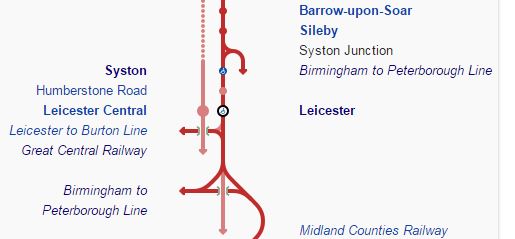
Leicester Lines
Cost could be saved by not electrifying between the two junctions if IPEMUs were to be used on the Midland Main Line.
Intriguingly though, as it is unlikely that the Birmingham to Peterborough Line will be electrified in the near future, a short length of electrification through Leicester would enable the cross-country route from Birmingham to Peterborough and on to Stansted Airport to be run using the same trains with an IPEMU capability, that could be working the Midland Main Line.
Leicester also needs better connection between the city centre and the station.
I think it needs some form of battery tram as in Seville, shuttling down Granby Street.
I say more about this in Leicester City Centre.
From Ladbroke Grove To Ealing Broadway
I took a train to West Drayton this morning and on the way, I took these pictures of the Crossrail works . The map from carto.metro.free.fr, shows the line between Ladbroke Grove and Ealing Broadway station.
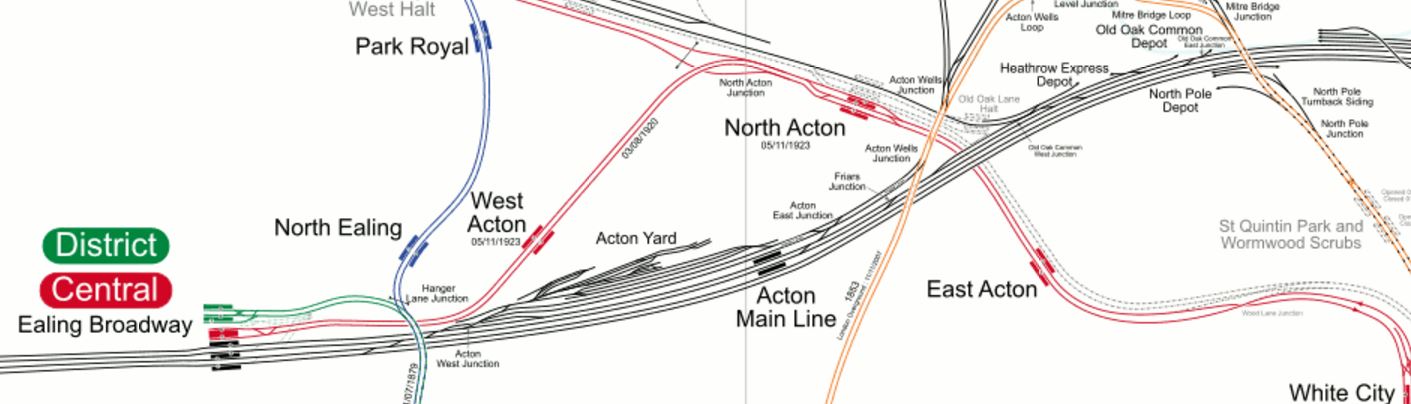
Labroke Grove To Ealing Broadway
These are the pictures I took on the same stretch of line.
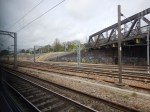
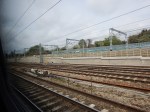
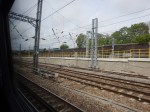

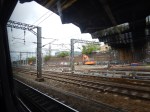

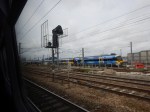


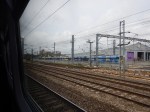
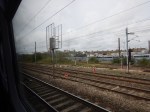


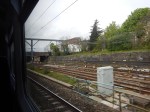
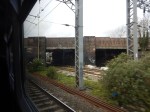


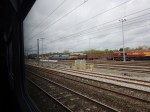

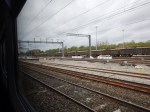
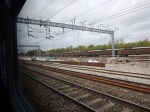
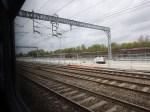

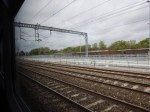
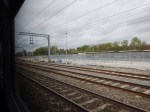
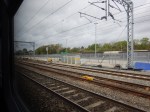

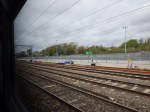
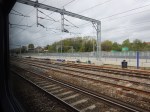
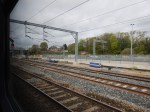
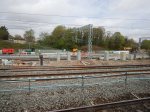
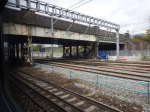
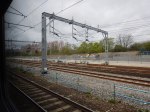


The pictures show various features of the line.
- The route by which empty trains move between Paddington station and the depots at Old Oak Common.
- The depots at Old Oak Common.
- Where the Acton-Northolt Line leaves the Great Western Railway.
- The Acton Yard
- The now almost-complete Acton Dive-Under.
This Google Map of the Acton Dive-Under was probably captured a few months ago.

The Acton Dive-Under
Note the buttresses and how the other lines cross over between them.
The best information I can find on the structure of the Acton Dive-Under is this article from IanVisits. Ian sums up the Acton Dive-Under like this.
When it is all finished, that small but complex bit of work, a single line of track in a cutting will do more to cut delays on the mainline into Paddington that could ever be appreciated by its simple size and design.
I wouldn’t be surprised to see the knowledge learned in this project, put to good effect in other places on the UK rail network.
Incidentally, it looks like the project cost around twenty million.
Disappointing Bristol
On Thursday last week, I went to Bristol with the aim of perhaps doing a bit of a wander around some of the local railways in the area.
I know the centre of Bristol quite well and I’ve visited the usual attractions and walked along the Avon. After a previous visit, I wrote Walking Around Bristol. I’ve have also visited the SS Great Britain a couple of times, but it is not an attraction, that you can walk past and enjoy, like say HMS Belfast or the Cutty Sark in London. After a previous visit, I wrote The Disappointing SS Great Britain.
I had thought, that I might go to Severn Beach, as I’d read that the trip is one of the most scenic of railways.
But trains were only every two hours and I’d just missed one. How visitor-friendly is that? Anybody going on the off-chance would love to be stuck at Bristol Temple Meads station for two hours.
Services like those to Severn Beach should be at least twice an hour and preferably four times to attract passengers to the route.
I couldn’t even buy any gluten-free food, as the only place to buy anything was WH Smith. The nearest Marks was in the Centre. As there are no shops at Paddington at the moment due to rebuilding, I was starting to get hungry.
It’s also quite a boring and long walk between Bristol Temple Meads station and the City Centre. So I wondered if there was a local bus that could be used to get to Cabot Circus, where I might have some lunch. But there was no information, that I could find.
So, I did what my family always does at times like this. I did a runner! In this case to Bath!
Bristol may be getting new electric trains all the way to London, but they need to think seriously about providing a more welcoming experience for visitors.
I certainly wouldn’t recommend to anybody going to Bristol by train for a day out! Portsmouth, Liverpool, Cardiff and even Birmingham are so much better.
If Bristol was in Europe or had a bit more ambition, which I’ve always felt the city lacks, it would have a tram system.
This Google Map shows the City Centre.
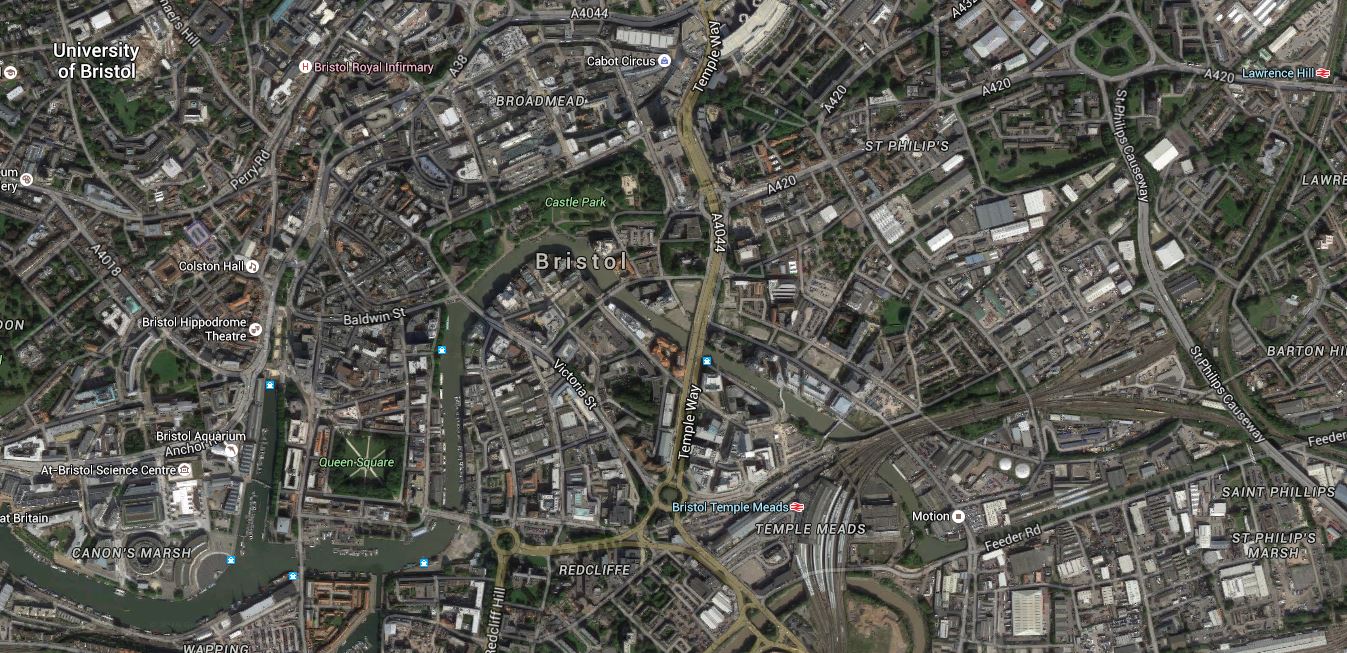
Bristol City Centre
Bristol Temple Meads station is in the middle at the bottom. Only one other station is shown on the map and that is Lawrence Hill station in the North-Eastern corner of the map. Wikipedia describes the station as having minimal facilities. This extract from Wikipedia, describes the services at the station.
As of the December 2013 timetable, Monday to Friday, three trains every two hours run along the Severn Beach Line from Bristol Temple Meads to Avonmouth via Clifton Down, with one extended to St Andrew’s Road and Severn Beach. Most services start at Bristol, but one evening service to Avonmouth begins at Weston-super-Mare. On Saturdays only two trains per hour each direction call. Sunday sees an hourly service to and from Bristol, with only two services extending to Severn Beach, except during the May–September timetable period when all services are extended. The first and last Sunday trains towards Bristol are extended to Taunton via Weston-super-Mare, and there are similar workings in the other direction.
No wonder, the station only has minimal facilities, that level of service will struggle to attract the proverbial one man and his dog.
If as I believe there should be at least a two trains per hour service on local lines, then if the Severn Beach Line and the service to Avonmouth had this frequency, then there would be four trains per hour service across the eastern side of the city centre.
Bristol is trying to organise MetroWest, but compared to say Cardiff, Liverpool and other large cities, it has a distinct lack of rail lines and stations in or near the City Centre.
Talk is of a start in 2019, but I doubt, anything will start until the late 2020s, at the earliest.
In 2014 I wrote Is Bristol Left Behind? After my visit on Thursday, I can’t help feeling that the City is the most disappointing one in England.
It’s Less Than Twenty Days Until The Rail Timetable Change
The new rail timetable for the UK comes into affect on the 15th May 2016.
The Oracle (the National Railweb site) has a page that lists all the timetable changes. This page gives all the changes for December 2015.
But where is the page for May 2016?
Some of the changes are reflected in the timetables, like the start of services from Lea Bridge station, which I wrote about in The Full Service From Lea Bridge Station Starts On The 16th May 2016.
But other services are not in the on-line timetable!
Some companies also seem to have decided that not to publicise their plans for May 2016.
It is just not good enough!
Work On The Platforms At Hayes And Harlington Station
I took these pictures of the extended Platforms 4 and 5 at Hayes and Harlington station on Wednesday.

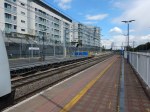
Obviously, there would appear to be some work needed before the services to Hayes can start, as I wrote about in Hayes Shuttles To Start.
 The Anonymous Widower