The Rise Of Gatwick Airport
I used to hate Gatwick Airport, but now on my short flights to Europe, I often find myself using the Sussex airport, as it is usually an easier train ride, than Heathrow or Stansted.
The South East’s Next Runway
I am coming more to the conclusion, that despite the report of the Airports Commission, Heathrow Airport will never have a third runway, but Gatwick may get a second one, as they can start to plan, for when the deal to not build a second runway with Sussex County Council, runs out in 2019.
- No serious candidate for London Mayor would win an election if they proposed a third runway at Heathrow.
- Heathrow is surrounded by housing, whereas Gatwick is surrounded by more much open countryside.
- The protests over another runway at Heathrow would be enormous.
- In a few years time, Gatwick will have the better rail links and fifteen million people will live within an hour’s train journey of the Airport.
But the main reason is that building a second runway at Gatwick will be a lot easier. Just look at this Google Map of Gatwick Airport.
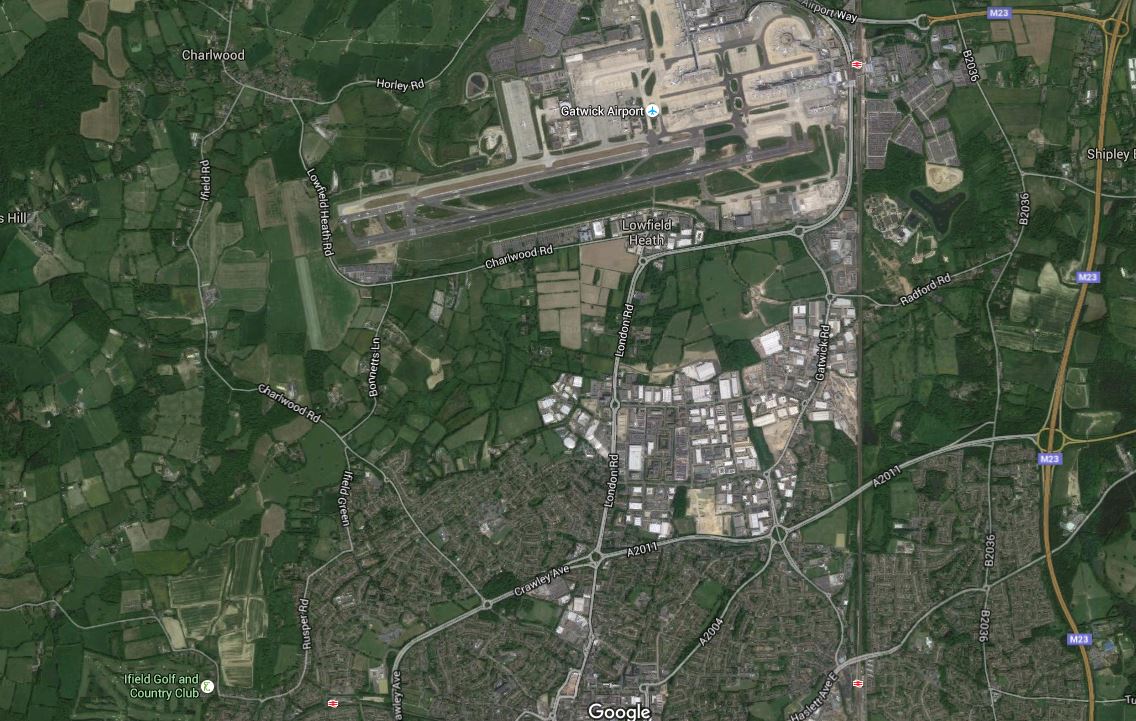
Gatwick Airport
Note the following about the map and the expansion of Gatwick Airport.
- The second runway will be built to the South of the existing runway.
- There doesn’t appear to be much housing in the area of the proposed new runway.
- The M23 Motorway and the Brighton Main Line run North-South to the East of the Airport.
- A third terminal would be built near to the existing railway line.
- Note in the map, that in addition to the single runway, the taxiway can be used as a runway, if say the runway is under repair or blocked.
The second runway would increase the capacity of the Airport to over 80 million passengers a year.
I’ve always believed that Gatwick could also build a North-South runway over the M23. This was proposed in the 1980s by pilots and with the capability of aircraft increasing all the time, I don’t rule it out at some time in the future.
The Biggest Airport Terminal In The World
I have argued in the past, that when Crossrail and Thameslink are completed, then the following airports and international rail stations will be connected together.
- Heathrow Airport
- Gatwick Airport
- Stansted Airport
- Luton Airport
- St. Pancras International station
- Ebbsfleet International station
There will also be an easy link to HS2 for the North and Scotland.
As passengers will be increasingly savvy, in many cases they will organise their travel to what is best for them and not the travel agents, airlines and the airports.
I believe that London will sell itself, as a place to break that long journey, just as Singapore and Dubai have done for years.
As the North of England, Scotland and Wales always say, London always wins!
But then London is the capital of the world!
Rail Links To Heathrow Airport
Crossrail should give Heathrow Airport a world-class link to Central London, if they can sort out Crossrail’s access problems to the airport, that I wrote about in Heathrow Express And Crossrail.
The over-priced joke that is Heathrow Express will be on borrowed time once Crossrail opens in 2019.
But there will still be problems with rail access to Heathrow Airport.
- Terminal 5 will not be connected to Crossrail.
- Changing terminals at Heathrow is a chore.
- Heathrow Express only takes passengers to and from Paddington.
- There is no direct rail access to Reading for the West.
- For some parts of London, the Piccadilly Line will still be the best way to go to and from the Airport.
- Access to Continental rail services from Heathrow will be difficult.
You would never describe Heathrow as fully integrated into the the UK’s rail network.
Heathrow will of course argue, that links to Central London are excellent and that those continuing their journey will just change terminals and be on their way.
Obviously, improvements will come, but nothing important for passengers will happen, until Heathrow puts passengers first and drops it’s arrogant attitude, which thinks it is London’s only airport.
Rail Links To Stansted Airport
Stansted Airport has the Stansted Express from Liverpool Street, which runs about four times an hour.
I believe in the next few years, the following will happen.
- Crossrail will arrive at Liverpool Street in 2019, giving one-change journeys to and from Heathrow.
- The West Anglia Main Line will be four-tracked, allowing faster Stansted Express services.
- An improved rail service will be provided to the increasingly important rail hub at Cambridge.
- An extra Stansted Express service will run to Stratford via the new Lea Bridge station.
- Stansted Express will probably get new air passenger-friendly trains.
But the biggest improvement of rail services to Stansted Airport will come, when and if Crossrail 2 is built, as this will make travel to the airport from all over London a lot easier, with just a single change at Tottenham Hale or Broxbourne.
I also wouldn’t be surprised to see some Crossrail 2 trains extended to Stansted. After all, the tracks exist and if the airport said to Transport for London, here’s a few million from our petty cash to run Crossrail 2 to Stansted, I’m sure TfL would oblige!
This would give Stansted Airport one-change services to Gatwick, Heathrow and Luton airports, Continental Rail Services and HS2.
Rail Links To Luton Airport
Luton Airport has its own Thameslink station at Luton Airport Parkway.
But also it has plans to expand, as is reported in this article in the Daily Mail, entitled Luton Airport reveals plans for direct rail line that would cut train journey from central London to just 20 minutes.
I think that Luton Airport could use something like Class 387/2 trains, as used on Gatwick Express with an IPEMU capability, so that they could use a branch line without any electrification to underneath the airport terminal.
Rail Links To Gatwick Airport
I found this article in TravelWeekly, which is entitled Gatwick outlines plans for a train departure to London every three minutes.
It gives a very good summary of the train services that will run to Gatwick after Thameslink is completed.
The planned hourly timetable would see:
• Four dedicated Gatwick Express trains to Victoria
• Six trains to Victoria – originating from East and West Coastway, Horsham/Littlehampton, and Three Bridges/Haywards Heath
• Four trains to Bedford via London Bridge – originating from Gatwick and Brighton
• Two trains to Cambridge via London Bridge – originating from Brighton
• Two trains to Peterborough via London Bridge – originating from Horsham
• Two trains to London Bridge – originating from Littlehampton/West Coastway, and Haywards Heath/Three Bridges.
That is a total of twenty trains to and from London and beyond and most of the South Coast from Southampton to Hastings.
How many better rail-connected airports are there anywhere in the world?
The article also quotes Guy Stephenson, the Airport’s Chief Commercial Officer as saying.
The new high frequency service that will serve Gatwick will transform rail journeys for our passengers, with capacity doubling and a train to London every three minutes.
Crucially, the new trains will be much more reliable and will be stacked with amenities suited to the needs of air travellers. Combined with robust new track and signalling systems, Gatwick’s passengers will experience a really pleasant and dependable service.
Overall, the improvements to Gatwick’s rail service means that 15 million people will be brought within 60 minutes of Gatwick by rail – the best reach of any UK airport,
Reading the article, you might think that Thameslink should be called Gatwicklink!
According to this Press Release on the Gatwick Airport web site, Gatwick Airport are going to spend £120.5million on updating the rail station. This is an architect’s impression of the new station.

I also think that Gatwick could extend their Gatwick Express services.
I think we can also see development of Airport services to and from Gatwick Airport station based on the following existing services.
- Reading via the North Downs Line.
- Tonbridge and Ashford International via the Redhill to Tonbridge Line.
Will we be seeing a second Gatwick Express route from Ashford or Ebbsfleet to Reading via Gatwick Airport?
Consider.
- It would inevitably get known as the M25-on-rails.
- It gives a large number of passengers a way to get to Gatwick and Continental Rail Services without going through Central London.
- It could serve Heathrow, if they got their act together.
- Surprisingly, I think this route will be quicker to go between Reading and Gatwick, than using Crossrail and Thameslink with a change at Farringdon.
- The trains for such a service could be the same as the new Class 387/2 Gatwick Expresses, but with an IPEMU capability.
But it wouldn’t be just an Airport service, as I suspect that given adequate parking at stations, it would become a valuable cross-country route linking the rail hubs of Ebbsfleet, Gatwick and Reading. After all, North of London, the East West Rail Link is being created from Reading to Cambridge via Oxford, Milton Keynes and Bedford.
Southern also run a service from Milton Keynes to South Croydon via the West London Line. In the future this service will serve Old Oak Common station on Crossrail, HS2, the West Coast Main Line and the North London Line.
So will this service be extended from South Croydon to Gatwick and become a third Gatwick Express service?
These two additional Gatwick Express services would greatly increase or ease the airport’s links across the wider South East and to HS2 services out of Euston.
The only problem, is the overcrowding on the Brighton Main Line.
Conclusion
Gatwick will become the best rail-connected airport in the UK and will get a second runway!
A Trip To Seaford
This morning, I took a trip to Seaford station on the Seaford Branch in Sussex via Brighton, to see if I could learn more about the East Coastway Line at Brighton.
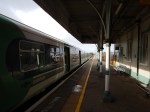
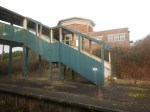
I took these pictures.












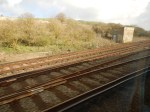


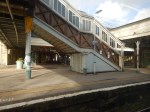




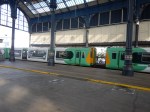
Note.
- The service from Brighton to Seaford is run by 3-car Class 313 trains.
- The Class 313 trains are elderly, but well-maintained and lacking features that passengers expect these days, like wi-fi, information displays, adequate space for bicycles and fully-accessible toilets.
- The train was fairly full on a cold but sunny, Sunday morning around Falmer station, where the University of Sussex and The Amex are located.
- I was surporised at how many people arrived at Brighton on a Thameslink service.
- Lewes station is being given a full upgrade.
- Most other stations are simple affairs, that need some refurbishment.
- It was sad to see the Port of Newhaven so quiet.
- I couldn’t identify the place, where the Wealden Line used to join the East Coastway.
Certainly the route has potential, which will probably be driven by traffic at Falmer station, which has already been upgraded to take 8-car trains.
The trains should be replaced by something like a four-car Class 377 or Class 387, that could run in pairs for busy days at the The Amex.
The question also has to be asked, if the new trains had an IPEMU capability, would it be more affordable to run the Seaford Branch, if the electrification were to be removed.
Will Southern Create A South Coast Express Using IPEMUs?
This post is pure speculation on my part,which I’ve written to illustrate the capabilities of an IPEMU.
What is an IPEMU?
Many rail passengers in the UK, have ridden in one of Bombardier’s fairly ubiquitous Electrostar trains. Here’s a short list of some of the types and the services they run.
- Class 357 trains run services out of Fenchurch Street for c2c.
- Class 375, Class 376 and Class 377 trains running commuter services to the South of London.
- Class 378 trains running on the London Overground.
- Class 379 trains running from Liverpool Street to Stansted Airport and Cambridge.
- Class 387 trains currently running on Thameslink, but perhaps soon on a line near you.
A Class 379 was used to create the IPEMU or Independently Powered Electric Multiple Unit and a year ago, I rode this train in public service between Manningtree and Harwich.
A battery pack had been added to the four-car train, which was charged up, when the train is running on an electrified line; third rail or overhead and the energy can then be used to propel the train on a line without electrification.
I was told by the engineer sitting opposite me,monitoring train performance on a laptop, that this Class 379 IPEMU had the following characteristics.
- A range of upwards of sixty miles on battery power.
- Similar performance on battery or direct power.
- Virtually identical driving experience.
I would also add that the passenger experience was virtually identical.
Network Rail and Bombardier have put a lot of time, effort and money into the IPEMU. They believe, that IPEMUs and their battery power will have the following applications.
- Providing affordable electric services on branch lines or other lines that are difficult to electrify.
- Moving trains around in depots and sidings that have not been electrified.
- Train recovery and diversion, when the power fails.
- Used in conjunction with regenerative braking, IPEMU technology saves electricity.
Obviously, Bombardier very much believe in the technology, as their new train; the Aventra has been designed to use energy storage.
IPEMU is an acronym, that will increasingly be used with trains.
The Class 387 Train
Southern, who operate a lot of services south of London are users of Class 387 trains.
- 29 x Class 387/1 trains running on Thameslink
- 27 x Class 387/2 trains ordered for Gatwick Express.
The Class 387/1 trains will be replaced by Class 700 trains, as they arrive from Germany.
Unfortunately, due to the well-documented problems of Network Rail’s electrification, it looks like a lot of these twenty-nine trains could be put into storage.
I believe that some of these trains will be given an IPEMU capability to be used to provide electric train services on certain lines.
As they are closely related to the Class 379 train used for the prototype, I feel that most of the technical problems have been solved.
Along The South Coast From Southampton to Ashford
The South Coast from Southampton to Ashford is covered by two separate rail routes.
- The East Coastway Line that runs between Brighton and Ashford International stations is only partially electrified and uses two-car diesel Class 171 trains.
- The West Coastway Line that runs between Brighton and Southampton Central stations is fully electrified and uses elderly three-car Class 313 trains, which have a top speed of 75 mph.
If you want to travel between say Hastings and Worthing, you will have to change trains at Brighton.
This usually means a wait of a few minutes and a change of platform.
Any sane person would believe that if a single train could run all the way from Southampton to Ashford, this would be better for many reasons.
- The train company would probably need less trains.
- Passengers wouldn’t have to change trains at Brighton.
- There could probably be a simpler interchange between Coastway and Brighton Main Line services at Brighton station, which might release platform space.
- Both Coastway routes are limited to speeds below 80 mph and are fairly straight, so perhaps with some improvements, faster services could be introduced.
Until recently, the only trains capable of going from Ashford to Southampton would have been diesel multiple units, but as the only part of the route that is not electrified is the Marshlink Line from Ore to Ashford, it would now be possible to run the service using an IPEMU variant of a Class 387 train. The train would charge its on-board batteries between Southampton and Ore and at Ashford and then use battery power to bridge the gap of about thirty miles on the Marshlink Line.
As IPEMUs have a range of sixty miles, then it would seem that there should be few problems in running the trains between Ashford and Ore.
This approach has benefits.
- The Class 387 train is an 110 mph electric train with regenerative braking, so services could be faster.
- GTR has quite a few of the standard Class 387 trains in service, so the company and their drivers probably know them well.
- GTR could say they have removed a number of diesel trains and they are a greener company.
- Network Rail would only have to update the track and signalling of the Marshlink Line for four-car trains and wouldn’t need to electrify any of the route.
Currently, to go from Ashford to Southampton takes three hours forty-five minutes and it is quicker to go via St. Pancras and Waterloo. But with a 110 mph train and no changes, timings must be possible in the region of three hours.
I suspect that with some selected track improvements, a limited-stop service could be a real South Coast Express.
There certainly is some scope and I’ll detail each improvements on the main East and West Coastways separately,
The Marshlink Line
The Marshlink Line is not fully double-tracked, has several level crossings and a low speed limit, which if improved, would probably be welcomed.
The Marshlink Line Action Group web site has an extensive report about improving the line, of which this is an extract, from a report which discusses extending the Class 395 train service from Ashford to Hastings.
The basics of the project are substantially as presented last year with line speeds generally expected to be 60-90 mph from Ashford to Doleham and 40-60 mph onwards to Hastings. But the ongoing big question for NR (and of concern to MLAG from an environmental point of view and compatibility with rolling stock in the surrounding lines) is whether the power source would be third rail (as MLAG would prefer) or overhead. NR acknowledges the difficulty of overhead power along the Marsh with gantries having to be built on (obviously) marsh land and with the strong winds. Whichever, some 30 miles of track would need to be laid but, apparently, only about half a mile of dualled track to the west of Rye.
Incidentally, there has been talk about running Class 395 trains from St. Pancras to Eastbourne via HS1 to Ashford and the Marshlink Line. It would undoubtedly be a fast service, but it has some inherent disadvatages.
- The Marshlink Line would need to be electrified, probably with 25KVAC overhead wires.
- Some people might object to the wires across the marshes?
- Would it need some extra Class 395 trains to be purchased?
- Would it mean that one franchise was encroaching on the territory of another?
On the other hand, using IPEMU trains would simplify the job and mean no electrification would be needed.
However, it would probably be a good idea to make sure that as much dualled track was created, to maintain an efficient service on the line in the future.
The Willingdon Chord And Eastbourne
There has been talk about reinstating the Willingdon Chord, which could shorten the line by making it possible for trains to by-pass Eastbourne, But the locals fear, that Eastbourne would lose services.
However, surely some fast long-distance services along the South Coast could by-pass the town.
A skilled compiler of timetables could probable devise one for Eastbourne, that gave the town, faster and better services to Brighton, Southampton and London.
Lewes And The Wealden Line
It is an aspiration of many to reinstate the Wealden Line, as a new route to London to take pressure off the Brighton Main Line.
In Musical Trains In Sussex, I gave my reasons for believing that the Uckfield Branch could be run using Class 387 IPEMUs.
I also believe that if the Wealden Line is reinsatated that it will use the same type of train.
Obviously, Network Rail and Southern, will make sure that the Wealden Line project doesn’t conflict with a desire to run fast trains along the South Coast.
Hove Station
Hove station is a busy one with up to eight services an hour passing through in both directions, to and from Victoria and Gatwick Airport as well as Brighton.
There were aspirations that in the future to add the London Bridge to Littlehampton via Hove service to Thameslink. The service would use the Cliftonville Curve to access the Brighton Main Line, as it does now.
This would give all stations on the West Coastway Line between Hove and Littlehampton, two trains per hour through to London Bridge and beyond
Except for the Future Developments section in the Wikipedia entry for Hove station, I can’t find any more about this proposal.
The Arundel Chord
One piece of infrastructural that gets mentioned is a chord at Arundel that would connect the West Coastway Line to the Arun Valley Line between Angmering and Ford stations.
If it were to be built, it would create another route between Brighton and Three Bridges using the eastern part of the West Coastway and the Arun Valley Line.
Westward From Littlehampton
My only experience of the western end of the West Coastway line, was missing a train and having to wait an hour on a freezing and deserted Bosham station for the next train.
The service could probably benefit from a rethink.
Brighton
Brighton is the major interchange between the two Coastway services and the Brighton Main Line with its Gatwick Express, Victoria and Thameslink services.
Brighton station certainly needs improvement to cope with the large increase in capacity to the city, that Thameslink and its new Class 700 trains will bring.
Each twelve-car Class 700 train, will have a capacity approaching 1,800 passengers and there will be four of these trains to and from Central London and beyond every hour.
Obviously, the trains won’t be full at Brightpon and not all passengers will be walking to and from the station, so there needs to be better connections to buses and the two Coastway Lines.
At present, it takes a few minutes and a platform change to pass through Brighton if you’re going between services at the station.
- Brighton Main Line, Gatwick Express and Thameslink services.
- East Coastway services
- West Coastway services.
- Great Western Railway services to the West.
The platform layout at Brighton doesn’t look as if it was designed to make train services for passengers and train companies efficient.
So surely, if Coastway services could be linked, so that they came into the station, set down and picked up passengers before going out in the other direction, this would be a more efficient way to organise trains at the station.
It would also make the interchange between Coastway and Brighton Main Line services easier and hopefully, just a walk across a platform.
A reorganised Brighton could probably contribute several minutes to the savings in journey times along the Coastway.
This Google Map shows Brighton station and the two Coastway Lines coming into the station.
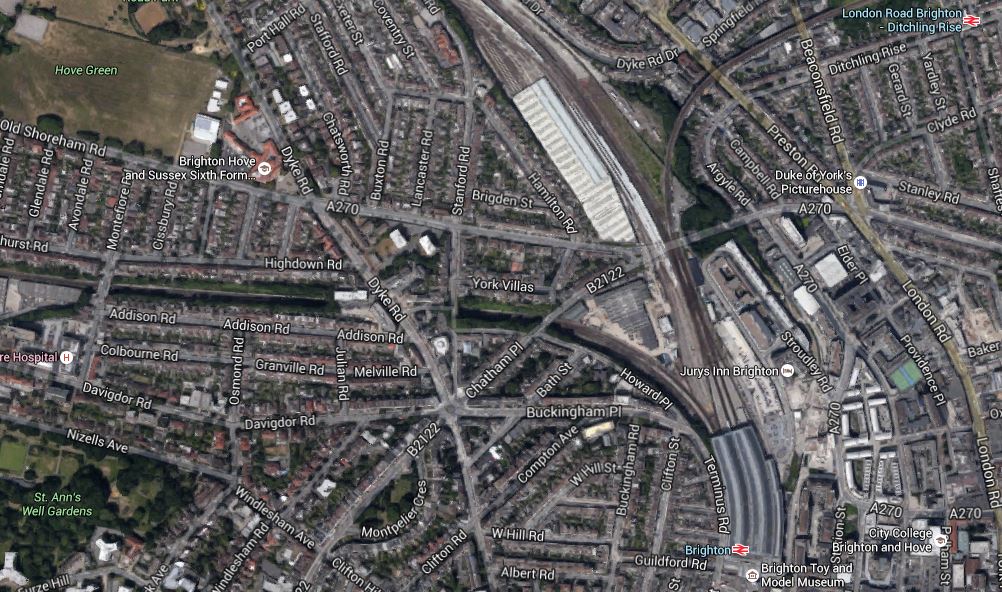
Brighton Station And The Coastways
I don’t think it would be an affordable or even a sensible solution, to combine the two Coastways together north of Brighton station.
The Wivelsfield Alternative
But Network Rail have come up with an alternative solution, so that the two Coastways can be connected together.
Just sixteen kilometres north of Brighton is Wivelsfield station. It is possible to access the East Coastway Line just south of the station at Keymer Junction, which unfortunately is not grade-separated and probably needs to be to improve Eastbourne services from Victoria.
Wikipedia has a section on the future of Wivelsfield station, which says this.
In Autumn 2015 Network Rail released the Sussex Area Route Study, where two options for the proposed grade separation of Keymer Junction are detailed, both of which would transform the station dramatically. Option 1 is the minimal option and creates a new platform 0 on the west side of the station served by a 3rd track from the new flyover line from Lewes. Option 2 is much more ambitious and builds on option 1 by adding an additional 4th platform on the east side of the station as well, served by a 4th track on the line to Lewes. Whilst this would enable each line to the south to have a dedicated platform the primary benefit would be that the existing platforms could be used to turn back trains in either direction as needed without blocking the main lines.
As services can access the West Coastway Line through the Cliftonville Tunnel to Hove, which is a couple of miles north of Brighton station, it would appear that the two Coastways could be connected, with a reverse at Wivelsfield.
The route would be.
- Lewes
- Cooksbridge
- Plumpton
- Wivelsfield
- Burgess Hill
- Preston Park
- Hove
This is not a complete solution, as there would have to be a way to get to Brighton station, by probably changing at Lewes, Wivelsfield or Hove.
A Brighton Metro
In a trip to Brighton, I travelled to Seaford using the East Coastway and the Seaford Branch. Even on a Sunday morning in February, the three-car Class 313 train was pretty full, especially around the University of Sussex at Falmer station.
So could the half-hourly Brighton-Seaford service be extended to the west of the City to perhaps Hove, Littlehampton or even Bognor Regis?
It would surely generate its own traffic across the city, which could help to reduce Brighton’s bad traffic jams. Stations could be.
- Hove
- Brighton
- London Road (Brighton)
- Moulsecoomb
- Falmer
- Lewes
- Southease
- Newhaven Town
- Newhaven Harbour
- Bishopstone
- Seaford
I think if you can sort out Brighton station or create the Wivelsfield alternative, you could run a four trains per hour stopping service across the city for as far as you want.
Perhaps the slower stopping trains would go via Brighton and the semi-fast services would go via Wivelsfield.
It’s a problem, that I suspect Network Rail have thought through fully!
Train Movements At Brighton
The only problem would be that the combined Coastway Line would need to cross the throat of the station, probably in a flat junction.
Say the Joint Coastway Line had the following services at Brighton.
- 2-4 trains per hour between Seaford and Littlehampton/Bognor, that would stop at all stations including Brighton.
- 2-4 trains per hour between Ashford International and Portsmouth Harbour and/or Southampton Central, that would stop at major stations only.
These would come into a platform or platforms on the Eastern side of the station, which would mean any train going to or coming from the West Coastway, would have to cross the Brighton Main Line to London.
The services to and from London after Thameslink is fully opened could be.
- 3 trains per hour to Victoria.
- 4 trains per hour on Thameslink
I’m no signalling expert, but I do feel that much more onerous train movements are coped with in stations like Manchester Piccadilly, Paddington and Waterloo.
Note the four trains per hour frequency on Thameslink (two from Cambridge and two from Bedford) Surely, if Coastway services are four trains per hour, then all services should have a pattern, so journeys like Seaford to Cambridge, involved just a walk across a platform at Brighton.
I’m sure some clever train scheduler can come up with an optimal pattern of changing trains at Brighton, especially if some trains used the alternative route via Wivelsfield.
But my feeling is that as Brighton is such an important station, that all Coastway services must either terminate or stop in the station.
At least there does not appear to be significant freight running on the Coastways.
Capacity At Brighton Station
The Thameslink Program and its Class 700 trains, will probably increase passengers through Brighton station.
Knowing the quality of Network Rail’s passenger transport modelling, I would not bet against Thameslink being so successful between London and Brighton, that additional services have to be added.
As the Thameslink trains will be new and they serve lots of destinations in London and beyond, I think it is a given, that passengers from places like Eastbourne and Worthing, might use Thameslink instead of their local direct route, changing at either Brighton or Gatwick Airport.
Conclusions
Improvement of the Coastways, is just one part of an evolving plan for rail and air services in Kent, Surrey and Sussex.
As there are important lines in the area that are not electrified, I’m certain that IPEMUs will play a part in this development.
After all, the technology works and we will soon have lots of Class 387 trains sitting in sidings.
More Steam Up For The Borders Railway Extension To Carlisle
This article on the BBC, which is entitled Call for Borders Railway extension to Carlisle renewed during Lamington work, is typical of many articles in papers like the Glasgow Herald and Scotsman, and on vartious media web sites.
In ‘Encouraging signs’ on Borders Railway Extension to Carlisle, I felt that as Network Rail are creating a hub to connect all the scenic routes in the Borderland together, that the Borders Railway should be extended to Carlisle and other routes should either be electrified or upgraded so that passenger services could be run by four-car electric trains or IPEMUs.
The failure of the Lamington viaduct and its closure until March, illustrates why we need more diversion routes, not just in the Borderlands, but everywhere it is feasible.
A Class 700 Train On Test
I took this picture of a Class 700 train just North of Norwood Junction station.
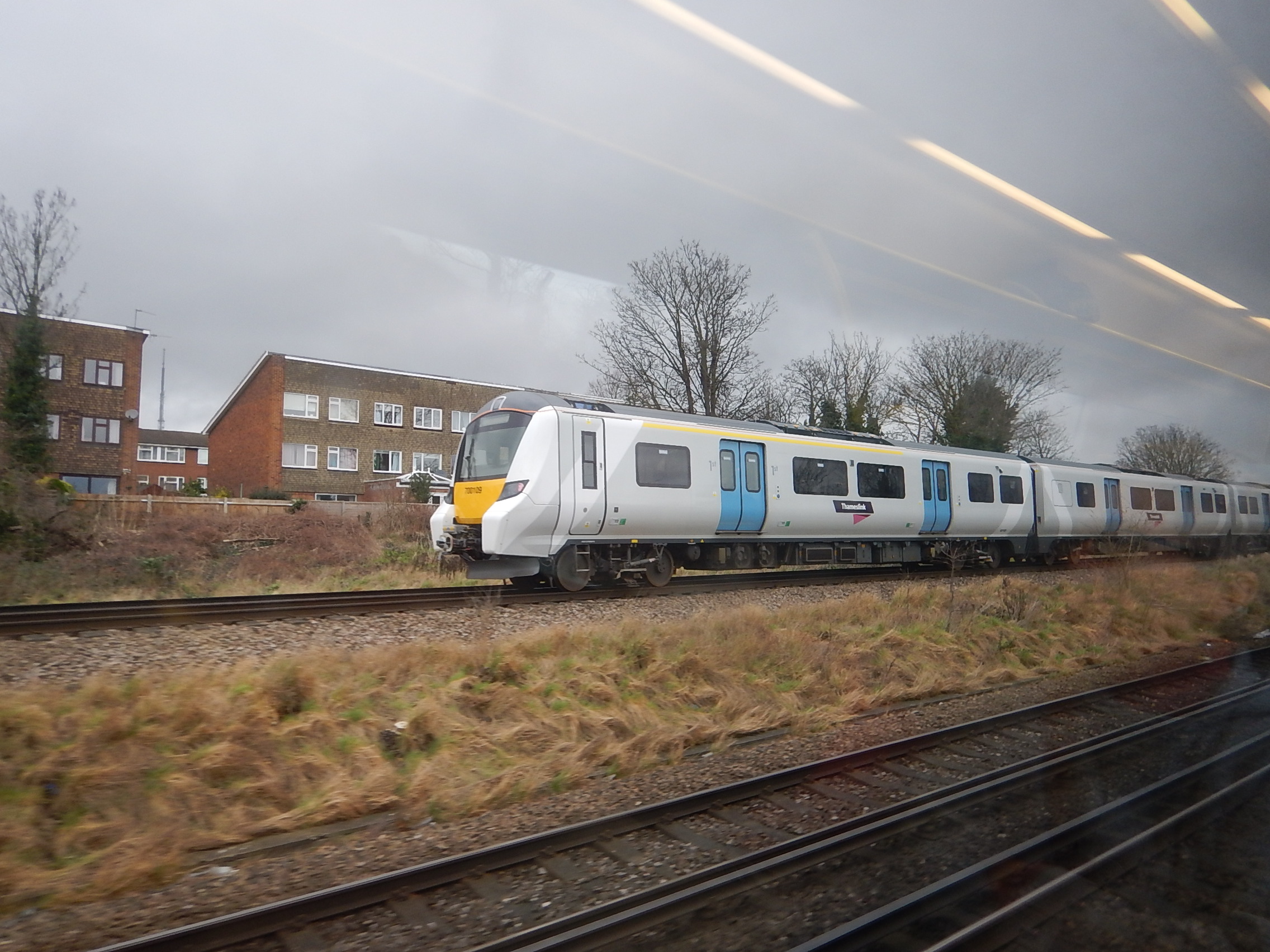
A Class 700 Train On Test
After halting for a minute or so, it turned off towards Crystal Palace.
During the day, I also saw a couple of bright-red Class 387/2 Gatwick Expresses running around. In one case, I felt that it wasn’t just an eight-car formation, but possibly a twelve-car. As I was in a waiting room at East Croydon station, I can’t be sure, but it certainly appeared to be a long train.
According to this page on the Thameslink web site, the Class 700 trains will start to be introduced on the 16th April 2016.
The Thameslink web page also says that the introduction of trains will be completed in June 2018. So give or take a month, that is twenty-five months to introduce sixty eight-car and fifty-five twelve-car trains. So that is a rate of somewhere between four and five trains per month.
At present the Thameslink service is run by three different types of trains.
- Twenty-nine Class 387/1 trains, which are supposed to be going to the Great Western Railway, but can’t as there are no overhead wires.
- Thirty-two Class 377 trains, which could go to Southeastern to improve their services. Clare Perry has promised new trains and these would fit.
- Upwards of fifty Class 319 trains, which I suspect will do what Mark 3 based stock does best and fill in where operators have a shortage of trains. Handsome is as handsome does!
It does appear that as time progresses there will be a number of Class 387 trains, available to provide a quality service.
It’s why I think, thast some will be converted into IPEMUs.
And as GTR, have lots of experience and drivers for Class 387s, it would appear logical that Class 387 IPEMUs would be used to replace the Class 171 trains on the services on the Oxted Line and the Marshlink Line.
Capturing The Benefits Of HS2 On Existing Lines
This is the title of a report written in 2011 by Greengauge 21.
This is how the report starts.
When High Speed Two (HS2) is complete, the longer distance, non-stopping trains on the West Coast Main Line (WCML) will in the main transfer to the new, quicker, route, freeing up valuable capacity. However, until now plans for services on the WCML once HS2 is open have been broad brush assumptions made for the purposes of completeness in the economic appraisal. This report looks ahead in more detail to consider what services should operate on the existing rail network once HS2 is open. The aim is to help kick start the development of this wider strategy in which the benefits of HS2 are maximised, not just for those using the new line, but for travellers on the existing railway. The effective re-use of the capacity released by HS2 is a key project benefit. It will allow new local and regional passenger and new freight trains to operate: services that are and will continue to be prevented by network capacity constraints.
It is well worth reading the full document, even though it was written in 2011,, as I think it explains how HS2 could benefit those other than those, who want to get quickly between London and Birmingham.
Places With Better Services To And From London
The report singles out three areas, that could benefit from a freed-up West Coast Main Line between London and Birmingham.
It says that the following places.
- Walsall
- Shropshire
- Mid and North East Wales.
Could all gain new direct services to and from London.
Feeders To The West Coast Main Line
The report talks about how three new or improved lines and schemes will act as feeders to the services on a West Coast Main Line, that will have more capacity for semi-fast services, connecting London with Birmingham, Liverpool, Manchester and Scotland.
- The Croxley Rail Link will link Watford to a wide area of Hertfordshire and Buckinghamshire.
- The East-West Rail Link intersecting the WCML at Milton Keynes would improve services from a lot of the South Midlands and East Anglia.
- Improvements between Leamington and Nuneaton (Nuckle) would improve connections for Warwickshire.
These three schemes are now progressing and will be fully working by the time HS2 opens in 2026.
Chiltern Electrification
The three feeder schemes mentioned above all contain two ambitious words Chiltern Railways.
Consider the following.
- The Croxley Rail Link could and probably will be extended to Amersham via Rickmansworth.
- TheEast West Rail Link will deliver a Chiltern service from Marylebone to Milton Keynes via Aylesbury.
- The Greengauge 21 report talks of a Marylebone to Coventry service via Leamington and Kenilworth.
- Oxford to Milton Keynes will be electrified.
- Chiltern use some rather elderly but excellent diesel trains.
- Coventry, Milton Keynes and Watford are already electrified.
I can’t believe that there is not more talk about electrifying the Chiltern Railways network.
I don’t think that Chiltern Railways would need full electrification, if they were to use IPEMU technology in conjunction with some limited electrification.
- The Snow Hill Lines in Birmingham, perhaps as far south as Leamington.
- The southern section of the Chiltern Main Line, perhaps between Marylebone and High Wycombe.
Electrification is a future aspiration of Chiltern Railways and it could give a second 125 mph line between London and Birmingham.
This would mean that a much increased number of towns would have a high speed connection to both major cities and many places in between and North of Birmingham.
I think that enabling electric trains to use the Chiltern Main Line and the Snow Hill Lines, should be given a high priority.
Moving Towards A Pan-European Locomotive
This article on Global Rail News is entitled Traxx approved for entire DACH region.
The article talks about how the Bombardier Traxx Last Mile locomotive has been approved for Germany, Austria and Switzerland (DACH). The Global Rail News article, says this about the locomotive.
The Last Mile variant, although an electric locomotive, has a low-emission diesel engine and battery on board, allowing it to run on both electrified and non-electrified routes.
One of my first thoughts, was it’s a pity that the standard Traxx is probably two large for the UK’s small loading gauge.
But then I found this article in Railway Gazette, about a proposed UK version of the locomotive. This is said.
Bombardier believes that the Traxx P200 AC UK Bo-Bo electric locomotive fitted with a ‘last mile’ diesel engine would offer ‘a lot of value for money’ for UK operators such as Greater Anglia. Whereas the MkIII coaches used on London – Norwich inter-city services are ‘excellent’ vehicles that may last for another 20 years, the Class 90 locomotives will need to be replaced before that.
Lacchini emphasises that a 25 kV 50 Hz version of the Traxx family suitable for the UK with its small loading gauge will not require a special design to be developed. About 60% of components are common to all versions of the Traxx, one feature being the location of the main traction package in the centre of the locomotive rather than on either side of a central aisle. This makes it relatively easy to build a smaller and narrower version that would fit the UK loading gauge, Lacchini indicated.
It looks to me that Bombadier have designed a powerful family of electric locomotives, that can be used in much of Europe.
With the Class 88 locomotive also due to be delivered soon, it does appear that the UK may have a choice of modern locomtives for freight trains and fast passenger services in the near future.
The Return Of Red Star Parcels
In the 1970s, I used to use Red Star Parcels regularly. As there was no Internet, if I wanted to send a software update of Artemis to London, I’d go into Ipswich, pay a fee to register the parcel with Red Star and they’d put it on the next train to Liverpool Street. I’d phone the train time through and someone in London would pop over to Liverpool Street station and collect it.
C and other lawyers in her Chambers, also used the service to get briefs between London, Colchester, Ipswich and Norwich.
The service worked very well and there is nothing to match it today, except for paying for a courier with a high-speed bike or car.
Perhaps, the best story about Red Star was one that appeared in the Sunday Times.
Parents had bought one of the first Andrews Maclaren baby buggies for their child, but the frame had broken at the back, a day before they were going on holiday. A call to the firm in Derby, told them to Red Star the buggy to Derby station, which they duly did. A few hours later, they were phoned by the company to say that the buggy would arrive in London on the 19:00 train.
The story was true, but you wonder how much was spin on the part of Andrews Maclaren and British Rail.
Network Rail are trying to make their assets sweat. I did see a report a couple of years ago, where Colas Rail and TNT were experimenting with bringing freight trains into Euston for deliveries to shops like Sainsburys and Ryman using electric and low carbon delivery trucks.
A company called InterCity RailFreight is now starting a service using high-speed passenger trains. This is said on their web-site.
We have proven that using passenger trains works – for everything from ultra-time-critical tissue samples delivered to testing laboratories, to fresh seafood carried from fishing boats into the kitchens of top London restaurants.
Not only is our service fast, frequent and reliable – it is cheaper and greener
It sounds very much like the reincarnation of Red Star Parcels.
They are helped by some of the rolling stock that work the services. The InterCity 125s have a generous amount of space in the power car for luggage and some of the driving van trailers used to Norwich can take a copious amount of goods, but what attracted me to the service was this article in Rail Magazine, which is entitled Plans submitted to modify Mk 3s as freight vehicles.
Mark 3 coaches don’t seem to know, when the time is right, to make a dignified exit to the scrapyard.
They would certainly make very good high-speed freight cars for high value goods. We might even see some complete InterCity 125s converted to freight to bring sea food from the far South West or England and the far North of Scotland to places, where they will be consumed.
Could we also see Royal Mail using them as long distance mail and parcel carriers?
Lines Through Hampstead And Harringay
This map from carto.metro.free.fr shows the layout of railway lines through Hampstead.

Lines Through Hampstead
I believe that it is a network that will be changed dramatically in the next few years.
In the west of the map, there is a triangular junction to the north of Cricklewood station, which connects the Dudding Hill Line to the Midland Main Line.
Also to the North of Cricklewood station is the old Cricklewood TMD (traction maintenance depot), which is now being developed as Brent Cross Cricklewood with houses, oficces, an extension to the Brent Cross Shopping Centre and a new station called Brent Cross Thameslink.
In the east of the map, Gospel Oak station is prominent and if you take a close look you can see how a double track spur connects the Gospel Oak to Barking Line (GOBlin) at Junction Road Junction to the Midland Main Line at Carlton Road Junction. This short length of line, which is used by freight trains, is also being electrified, so that freight trains can be electric-hauled from Barking and then up the Midland Main Line.
From Carlton Road Junction, freight trains can sneak up the western side of the Midland Main Line and either go North to freight depots like the proposed Radlett or take the Dudding Hill Line to connect with the West Coast Main Line or the Great Western Main Line. You can see the tracks that freight trains would use is this image taken looking south from the bridge at West Hampstead Thameslink station.

Lines Through West Hampstead Thameslink Station
The tracks that freight trains will use are to the far right.
Transport for London’s Transport Plan for 2050 talks about improving the Overground, by using existing lines to create a circular railway based on the GOBlin. It could be routed via the Dudding Hill Line to Hounslow.
Looking at the above image, it would appear that it could be fairly easy for trains from the GOBlin to stop at West Hampstead Thameslink on their way to the Dudding Hill Line. This Google Map shows the station.

West Hampstead Thameslink Station
It would appear that there may even be space for an island platform, but I suspect a bi-directional platform sharing with the current Platform 4, will be much easier to create and more affordable.
The extended GOBlin would then call at Cricklewood station, from where it could either go straight down the Dudding Hill Line or perhaps via a reverse at the new Brent Cross Thameslink station.
This Google Map shows the area between Brent Cross and the Midland Main Line.
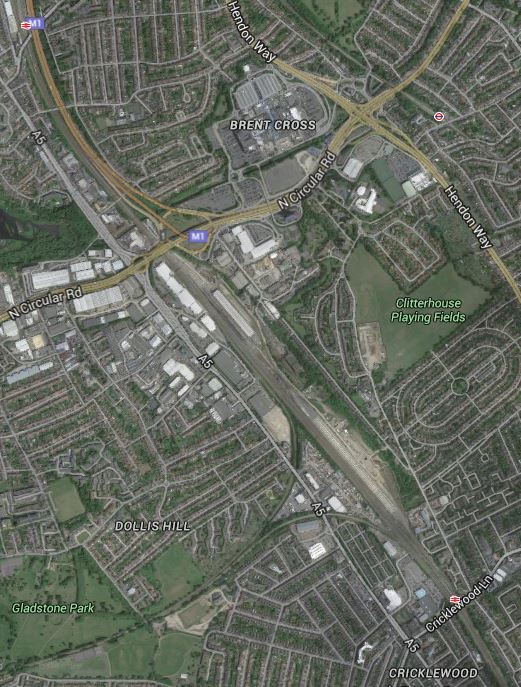
Brent Cross
Note the large area of the current Cricklewood TMD to the North East of the triangular junction with Cricklewood station south of the area. The development will be partly on the northern part of the TMD.
The advantage of the indirect route, would be that the Shopping Centre and all the new development in the area, gets good connections from Hounslow and Acton in the West to Holloway, Tottenham and Walthamstow in the East.
If the trains run at the current four trains per hour of the GOBlin, then this line would be a valuable link across North London connecting to the Midland Main Line and Thameslink at either Brent Cross or West Hampstead stations.
It is an interesting proposition.
But it might get even better!
London’s two big problems are housing and transport, so look sat this Google Map of the area to the East of Gospel Oak station.

A Site To The East Of Gospel Oak Station
There is a large site around the triangular junction formed by the GOBlin in the North, the Midland Main Line in the South and the link between the two lines in the East.
It could be used for much-needed housing and other developments in the future. At the present time, it is owned by J. Murphy and Sons, who by chance are the contractors working on the electrification of the GOBlin.
Look at the map and I think that there is enough space to put a new station on the eastern side of junction.
So trains from Upper Holloway station to the Dudding Hill Line could go through.
- Junction Road if that station is built.
- Murphy’s Town
- West Hampstead Thameslink
- Cricklewood
- Brent Cross Thameslink
I think that some of the out-of-the-box-thinkers at Transport for London will come up with some extensive knitting in North London.
Look at this Google Map, which shows the GOBlin through Harringay.
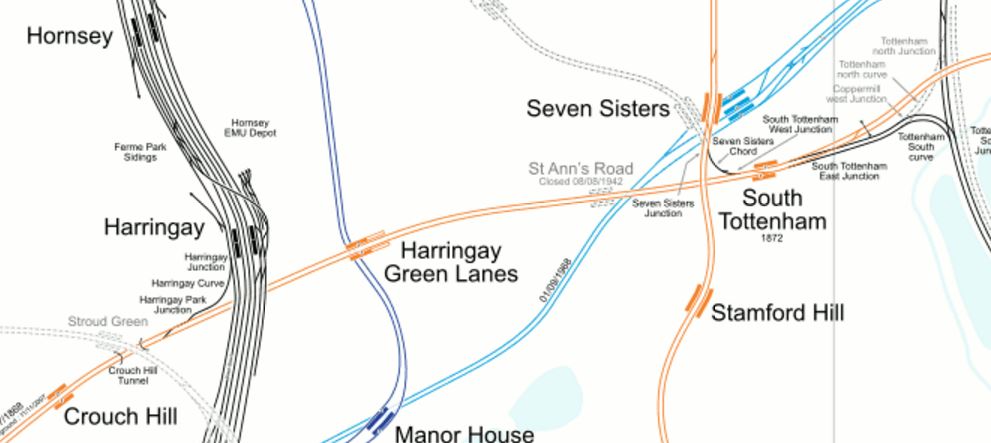
Lines Through Harringay
The GOBlin is or could be very well connected.
- The connection to the East Coast Main Line is being electrified.
- Harringay Green Lanes station sits on top the Piccadilly Line.
- Seven Sisters station will be connected to South Tottenham station by Crossrail 2.
- It is linked to the Lea Valley Lines south of Tottenham Hale station.
Who knows what Transport for London will do with the GOBlin?
I wonder if in conversations in the pub near TfL’s offices, they wish that they still had the Palace Gates Line to play with. You can see it’s line on the map above as it goes away to the North West from Seven Sisters station.
I do find it strange however, that the route of Crossrail 2 from Seven Sisters to New Southgate, very much follows the route of the Palace Gates Line.
So can we assume, that the Victorians got that one right too?
 The Anonymous Widower