Conclusions On Phase 2 Of The Nottingham Express Transit
Phase 2 Of The Nottingham Express Transit seems to have opened without a hitch and from what I saw, the reactions of the passengers seemed to be very positive, as they travelled around with smiles on their faces.
These were some of many comments I heard from fellow passengers.
- I can get to the hospital easier, by parking at the Park-and-Ride by using the tram.
- My grandchildren love the tram.
- I’ll use it instead of driving in a lot of the time.
- A student didn’t realise the tram went to the University until I told him and he was pleased.
These comments lead me to the conclusion that I doubt, they’ll be scratching around for passengers.
I do have some reservations on the system, which is otherwise well-designed.
Contactless Ticketing With Ban/Credit Cards
One of the many Customer Service Representatives at Nottingham station, told me that she had already been asked by a traveller from London, if contactless ticketing with a band or credit card was allowed.
Hopefully, as their Mango card is a touch-in and out system, they will be able to incorporate this later.
In my view contactless ticketing with a bank or credit card is something that any transport system should allow as it is so visitor-friendly.
Maps And Information
Maps at tram stops do exist, but they are only small and should be bigger, with perhaps showing walking routes to local attractions. For instance, the stop at Meadows Embankment should show visitors how to walk through the gardens and along the river to the major sports grounds.
There is also a need for a display at the Nottingham station tram stop, showing departures and arrivals in the main station below.
London Overground Syndrome
But my biggest conclusion is that now the NET is a real system, rather than a line to just the north of the city, is that it will suffer from London Overground Syndrome.
The London Overground was designed and opened in 2009, with just enough three-car Class 378 trains, with platforms to fit these trains.
These have now been augmented with additional trains in 2011 and progressively lengthened to five carriages, which has necessitated lengthening the platforms.
NET doesn’t have the platform lengthening problem, but I do feel they will have to beg, borrow or steal some extra trams. At least the track and signalling seems to be able to cope with two different tram types, so if say more trams came from a new supplier, there would probably not be a problem. After all, Edinburgh, Sheffield and the Midland Metro are the only tram systems in the UK with one type of tram. Soon Sheffield will have two.
Just before I left, I talked with one of NET’s Customer Service Representatives. Except that he was a Senior Manager checking things out and getting feedback. Good for him!
Tram-Trains
I suggested to him that after what I’d seen in Germany an especially at Nottingham’s twin city of Karlruhe, that the city is crying out for tram-trains.
His demeanour had Watch This Space written all over it!
So do I think that we’ll see tram-trains in Nottingham?
Wikipedia says this in the section on further routes for the system.
A document raised the possibility of tram-train lines from Nottingham to Gedling and/or Bingham, and to Ilkeston.
Obviously tram-trains will have to prove their worth in Sheffield first.
Gedling, Bingham and Ilkeston, all are on or close to railway lines radiating from Nottingham, although Bingham on the line to Grantham, is the only one with a station.
A couple of points about tram-trains and Nottingham.
If tram-trains had been proven and certified for the UK, when the NET was designed and the Robin Hood Line was reopened in 1998, they would have could been used to create a continuous tram-train route between Nottingham to Worksop.
Tram-trains release platform space at central stations, as they go straight through the station and on to the destinations where people really want to go. Nottingham station is very crowded with split platforms and other techniques being used to get the number of trains through the station.
Tram-Trains To The East Of Nottingham
Look at this Google Map of Central Nottingham.
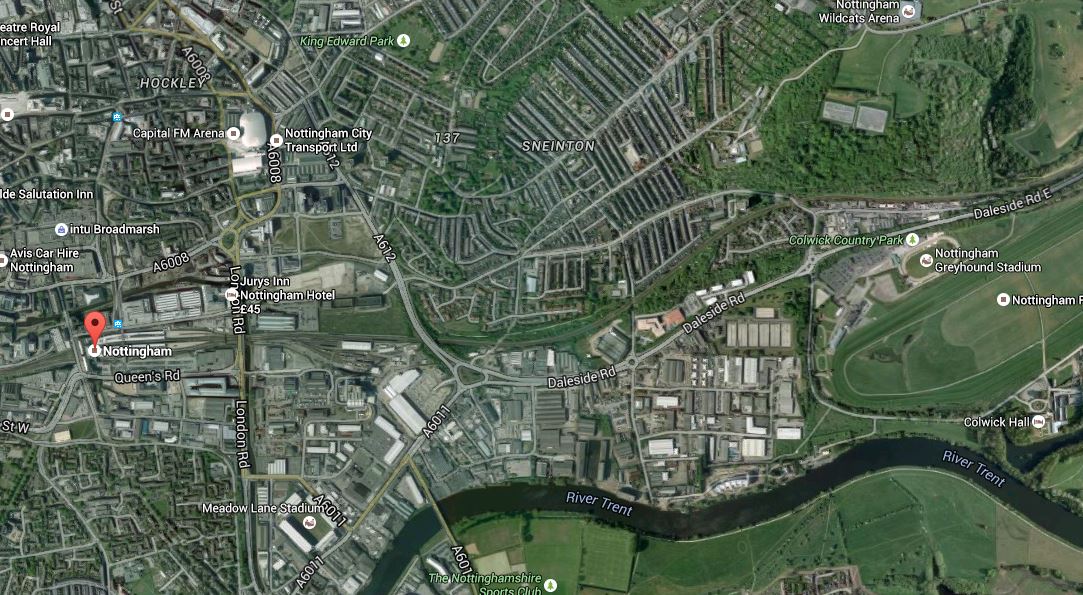
Central Nottingham
The main station is indicated by the red arrow and note how the railway lines to the East pass to the North of the racecourse in a green corridor from the city centre.
To the edge of this map, the lines split into two with the northernmost one going to Carlton station in the Borough of Gedling and then on the Nottingham to Lincoln Line to Newark and Lincoln, whilst the southernmost one goes to Bingham station on the Nottingham to Grantham Line to Grantham.
Both lines have a generally hourly service, which given the population density is probably not enough, especially in the more densely populated areas closer to Nottingham.
So running tram-trains from Nottingham to a convenient intermediate station would be a means of upping the frequency closer to Nottingham, if you could find a way of getting the tram-trains onto the tram network to finish their journeys.
Tram-Trains To The West Of Nottingham
Ilkeston is to the west and a new Ilkeston station is being built at the town. It will be the first station out of Nottingham on a line that goes through the western suburbs of the city, which also passes through some sizeable communities.
Tram-Trains On The Robin Hood Line
I said earlier that if tram-trains had been certified for the UK, when the NET was designed and the Robin Hood Line was reopened in 1998, that tram-trains would have most likely been used between Nottingham and Mansfield and Worksop.
Nottinghamshire County Council is looking to extend the Robin Hood Line to Shirebrook, Warsop and Edwinstowe on an old freight route.
If this extension is done properly, I can’t see tram-trains not being involved. Especially, as an extension like this, would probably be cheaper to build if it was built to tram standards rather than heavy rail.
What difference would it make to passengers from say Mansfield or Worksop, if instead of having a direct train service into Nottingham station, they had a tram-train service going direct to Nottingham city centre and the Nottingham station tram stop.
- New Class 399 tram-trains would probably be used on the route and these would be faster and offer more capacity than the current trains used.
- There are numerous stops on the route and electric trains save a minute or so at each stop because of their better acceleration.
- The current frequency is generally two trains per hour to/from Mansfield and one to/from Worksop. Three or four trains per hour should be possible.
- Train times from Mansfield to Nottingham station would probably be about the same, even though the tram section from Nottingham station to Bulwell takes twenty four minutes, as opposed to ten.
- There would be no reason, why trains still couldn’t use the direct route into Nottingham station.
- A present, many passengers going to Nottingham city centre probably now change at Hucknall or Bulwell onto the tram. With tram-tains, they would do the journey without a change.
- With perhaps extra steps and escalators between Nottingham station and Nottingham station tram stop, interchange between Robin Hood Line and other services might be easier.
Obviously, whether this project goes ahed, would be determined by the traffic patterns and needs of travellers.
A subsidiary factor would be the amount of freight on the line. Electric tram-trains would not interfere with freight any more than the current diesel units, but if the line was electrified to main line standards, more efficient electric locomotives could be used.
Getting Tram-Trains On The NET At Nottingham Station
I think connecting tram-trains to the northern branches of the NET might be difficult, but as Nottingham is a station on a spacious site, connection to the lines going south might be easier. But what do I know?
I only know Nottingham as a visitor and don’t know the demographics and routes of travellers, but it strikes me that it would be possible to use tram-trains running between the southern branches of the NET and the lines to Newark, Lincoln, Grantham and Ilkeston, creating stops or stations at important centres on the routes.
As the rail routes already exist, outside of the Nottingham station area, there would be little disruptive construction needed, other than creating the stations and stops.
In designing the connection at Nottingham station, remember that trams and tram-trains running as trams are much more manoeuvrable than trains and can go round very tight corners, so can reach places trains cannot reach.
As Nottingham station has been through a big remodelling in recent years, I would suspect that the work was future-proofed for any tram-train connection. As tram-train proposals for Nottingham were talked about in this report on the Nottingham Post website in 2009, one has to assume that the connection is at least on an engineering fag-packet in Network Rail’s bottom drawer.
Some external factors and projects will complicate or simplify any development of tram-train routes around Nottingham,
When and if, the Midland Main Line is electrified, will have the biggest effect, as it will bring a number of electrified routes into the city. Some of these may be suitable for tram-train operation alongside main line services.
To the east of the city, there is the need to sort out the flat junction at Newark, where the Nottingham to Lincoln Line crosses the East Coast Main Line. It strikes me that if this line was an electric route from Nottingham to the East Coast Main Line, this might open up other possibilities.
Those Canny Yorkshire Folk Seem To be Thinking About More Stations
Different parts of the country seem to have there own preferred ways of expanding their transport network.
Only London can probably afford large projects like Crossrail or Crossrail 2, but several cities like Manchester, Cardiff and Nottingham can make good cases for sensible projects that cost from say a hundred million pounds up to a billion. Projects in this category would include.
Croxley Rail Link to Watford – £230 million – Click for details
Midland Metro extension to New Street – £127 million – Click for details
North West Electrification – £422 million – Click for details
Nottingham Express Transit – Phase 2 – £570 million – Click for details
Valley Lines Electrification – £400 million – Click for details
The costs I have quoted are probably only indicative, as Network Rail have had their problems lately. But I just wanted to show that trains and trams don’t come cheap.
Underneath these large and medium sized projects, there are a large assortment that generally get chosen to suit the problems of an area. For example.
1. East Anglia got the Bacon Factory Curve at Ipswich to sort out delays to all traffic caused by the large number of freight trains going into and out of the Port of Felixstowe.
2. Lancashire got the Todmorden Curve to allow direct trains from Blackburn and Burnley to Manchester Victoria.
3.Warwickshire received funds to develop new stations at Coventry Arena, Bermuda Park and Kenilworth.
So as I said at the start of this post different areas of the country see their own priorities and attempt to get schemes funded.
Sheffield and Manchester for example might promote schemes based on their tram networks, and Leeds and Liverpool might want to expand their successful rail networks.
It is interesting to look at this page, which is a list of current projects on the West Yorkshire Metro.
Three new stations; Apperley Bridge, Kirkstall Forge and Low Moor are either under construction or could be so in the next year or so.
Improvements at major stations in the area are listed and there is even a project to identify places for new stations.
So as I said in the title of this post, it looks like West Yorkshire is hoping new and improved stations will be a successful, practical and affordable way of bringing more traffic to the network.
They do have a project on the possible introduction of tram-trains in the City. The web site just says this.
Development of a tram-train network for the Leeds city region would be through conversion of existing heavy rail routes and construction of some on-street alignments.
Further consideration will be given following the outcome of a trial in South Yorkshire.
How sensible!
Like many other cities and areas are probably doing, to wait for the trial between Sheffield and Rotherham to show if tram-trains are viable in the UK, is a very good idea.
If what I have seen in Germany is any indication of how the Vossloh tram-trains are introduced and perform, I suspect we’ll be seeing quite a few of their UK variant, the Class 399 tram-train.
Did You Know Sheffield Had A Strassenbahn?
I didn’t either, but if you read this first paragraph of this Wikipedia entry for NET 2012.
Der NET 2012 (Abkürzung für Niederflur Elektrotriebwagen 2012) ist ein Straßenbahntriebwagen, der bei Vossloh für die Verkehrsbetriebe Karlsruhe hergestellt wurde. Der Triebwagen wurde für den Einsatz bei der Straßenbahn Karlsruhe entwickelt und verkehrt dort seit 18. Oktober 2014. Ähnliche Fahrzeuge werden für die Straßenbahn Chemnitz und die Straßenbahn Sheffield hergestellt.
I know it’s in German, but look at the last sentence. It loosely says similar cars will be produced for the Strassenbahn in Chemnitz and Sheffield.
So as I suspected most of technology for the Class 399 tram-train for Sheffield is proven in extensive use on the Karlsruhe Strassenbahn. It would appear that there may even some vehicles that run on both 750 VDC and 16.7 kVAC in Karlsruhe, according to this Wikipedia entry for Karlsruhe Stadtbahn.
The big difference is that the Karlsruhe tram-trains come from Dusseldorf, whereas the Sheffield vehicles are coming from Valencia. But if you look at the Vossloh specifications of the two tram-trains, the German NET 2012 and the British Class 399, they seem to be very similar.
As the first Sheffield tram-train has been unveiled in Valencia, it shouldn’t be long before they are seen on the streets of Sheffield, even if it will be a couple of years before they run to Rotherham.
Vossloh’s Product Sheet For The Class 399 Tram-Train
I was reading this article on Global Rail News about the full certification of the Vossloh Citylink tram-trains that are being used in Karlsruhe and Chemnitz. I’ve seen both systems and these are some pictures that I took.
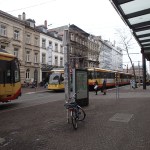
I apologise, if I’ve got some identification wrong.
On searching the Internet I found this product sheet on the Vossloh web site. It is actually titled Dual-Voltage Tram-Train Sheffield.
There are two bits of good news.
The product sheet says that the tram-train is air-conditioned.
But the best news is this from the article in Global Rail News.
Operator Verkehrsbetriebe Karlsruhe GmbH (VBK) has now exercised two options for a total of 50 additional Citylink LRVs to add to the 25 procured in 2011. All of the new low-floor vehicles should be delivered by summer 2017.
Would Karlsruhe have ordered seventy-five trams, if they weren’t up to the job?
So Sheffield isn’t getting some totally brand-new technology. They may be the first dual-voltage Vossloh Citylink tram-trains, but that is technology, that has ben wel-proven in many places.
Chemnitz Trams And The Chemnitz Model
Like most German cities Chemnitz has an extensive tram network, which even runs a few vintage trams.
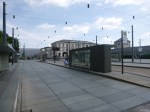
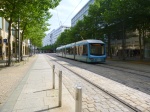

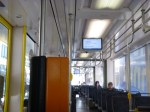
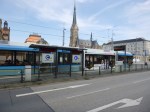


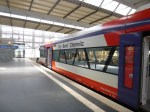
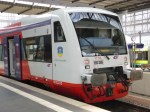
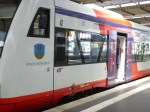
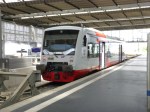
One of the reasons, I went to Chemnitz was that they are extending the system, by using tram-train technology in reverse. Normally in the Karlsruhe model, the city’s trams venture out into the surrounding area, by joining the heavy rail lines. I took pictures of this system, working in Karlsruhe, Kassel and Mulhouse. In Chemnitz, the City-Bahn Chemnitz allows trains to turn into trams at the Hauptbahnhof. In the pictures the red-and-white trams are train-trams.
In some ways the only difference between a train-tram and a tram-train, is whether the original vehicle is based on tram or train technology. But in the end the objective is the same and that is to have a vehicle that is capable of running on both tram and train tracks, with the crash-worthiness of a train. The Germans have ascribed the Chemnitzer model to what they are doing in Chemnitz. This is part of the first psaragraph of the article on the Chemnitzer model.
A special feature of the pilot line of the Chemnitzer model for Stollberg is the low platform height of 20 centimeters above the top of rail , while according to the Railway Construction and Operating Regulations (EBO) in new buildings and conversions actually at least 38 centimeters high platform are required. The vehicles ordered for the 1st stage of the CityLink family have doors with different entry heights, which both the inner city and the railway lines a barrier-free allows passenger access to platforms that are 38 or 55 centimeters high.
It illustrates the tortuous thinking that applies to some tram systems and it would appear tram-train systems. In Sheffield the Class 399 tram-trains will be low-floor , which will be compatible with the Sheffield Supertram, which is worked by trams that are 40% low-floor. But then in Sheffield, they have chosen to run tram-trains on a route where only one station will be shared with heavy rail. So will the trams have different door heights like Chemnitz or some other solution. This article from Rail Engineer explains.
Network Rail will also be building a turn back siding with a tram stop at Parkgate and low level platform extensions to Rotherham Central station.
So it sounds like one section of the platform will be used for trains and a lower one will be used for the tram-trains. It is an arrangement similar to the Clapham Kiss, where passengers walk down the platform to change trains.
Could Tram-Trains Be Used To Advantage North Of Manchester?
In A Plea For Help From Lancashire, I said this about creating a better service to Rossendale.
Perhaps one way to do create a service would be use Class 399 tram-trains to extend the Metrolink from Bury, if they are proven to work successfully between Sheffield and Rotherham in the next few years. After all, the first phase of the Manchester Metrolink to Bury was built by converting the old East Lancashire Railway,
I also said that I feel that the Germans and the French would use tram-trains in the area.
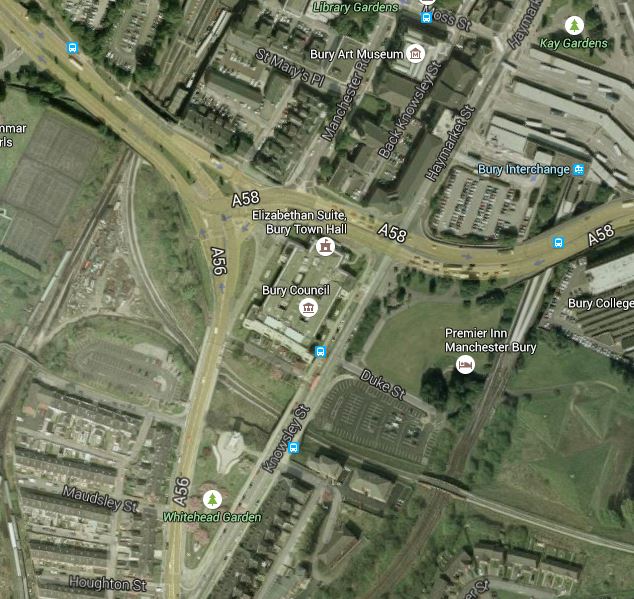
So how feasible would it be to extend the trams from Bury? This is a Google Earth image of the centre of Bury around the end of the Metrolink line from Manchester.
Bury Interchange
Note how the East Lancashire Railway from Bolton Street station passes under the A58 and turns east to continue to its next station at Heywood. The Metrolink stop is marked by the blue symbol labelled Bury Interchange and the tram line goes south passing under the A58 and the rail line.
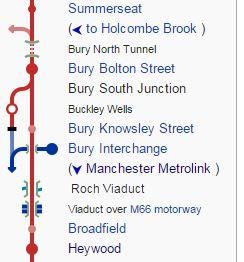
I clipped this route diagram from the Wikipedia entry for the East Lancashire Line.
Bury Rail Lines
My untrained eye says that it wouldn’t be that difficult to have some tram-trains go via Bury South Junction and then up the East Lancashire Railway. A Buckley Wells Metrolink stop and Park and Ride has been proposed and the site is already owned by Transport for Greater Manchester. Although, I would suspect that the lines would run differently to those shown.
If Class 399 tram-trains or similar going up the East Lancashire Railway were to be proposed, it would certainly result in at least two additional stops in Bury at Buckley Wells and Bolton Street. The biggest problem would be to decide how far the trams would go. Originally the electric trains on the Bury Line as it then was, went to Rawtenstall station. Wikipedia says this.
The Association of Train Operating Companies have identified that the community of Rawtenstall on the East Lancashire Railway Heritage Railway could benefit from services connecting the station to the National Network.
So perhaps this could be a possibility.
One of the advantages of using tram-trains to add a commuter service to the East Lancashire Railway, is that it would reduce the need to find heavy rail platforms at Manchester Victoria. There may be a problem though in the capacity of the current Bury Line, which has a double tram every six minutes. But then a second crossing of the city centre is being built and there are proposals to add all sorts of extensions to the Metrolink network.
Tram-trains are remarkably flexible vehicles in that provided the loading gauge, platform height and track is correct, there is a power supply and signalling system they can use, they can go a vast number of places on the rail and tram network. As an example, here’s one of Karlsruhe’s tram-trains in a platform in the main station alongside a TGV.
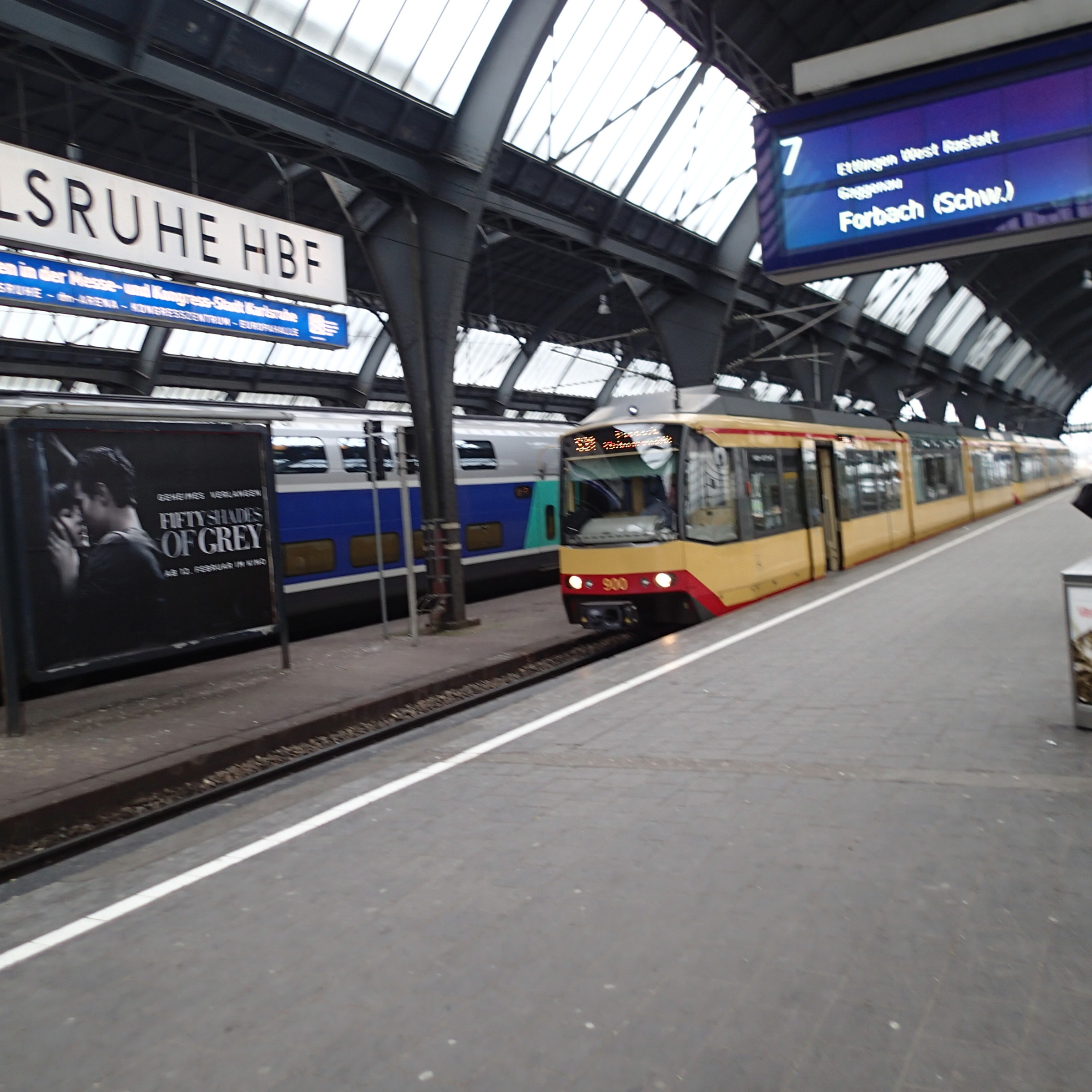
So the only thing that limits their use is the correct certification for a route and the training of the staff. Tram-trains also have the advantage that they can run at slowish tram speeds in city centres and at much faster speeds on rail lines designed for such.
In my view all this means that to expand the Metrolink outside of its current network, you need to get a tram-train that can run on the central network in the city centre and then gradually equip and certify all of the branches out of the city for the chosen tram-train.
It would be nice to think in my view, that we could come up with one specification for a tram-train, that could be used everywhere in the country.
To show how tram-trains could be used, I’ll use the example of the new service around the Todmorden Curve from Manchester Victoria to Burnley and Blackburn.
The Caldervale Line through Blackburn, Accrington and Burnley is going to be electrified in the next few years, so it would only be necessary to additionally electrify the line from Rochdale to the Todmorden Curve.
Rochdale where the train and tram lines are close together as this Google Earth image shows, gives two possibilities.
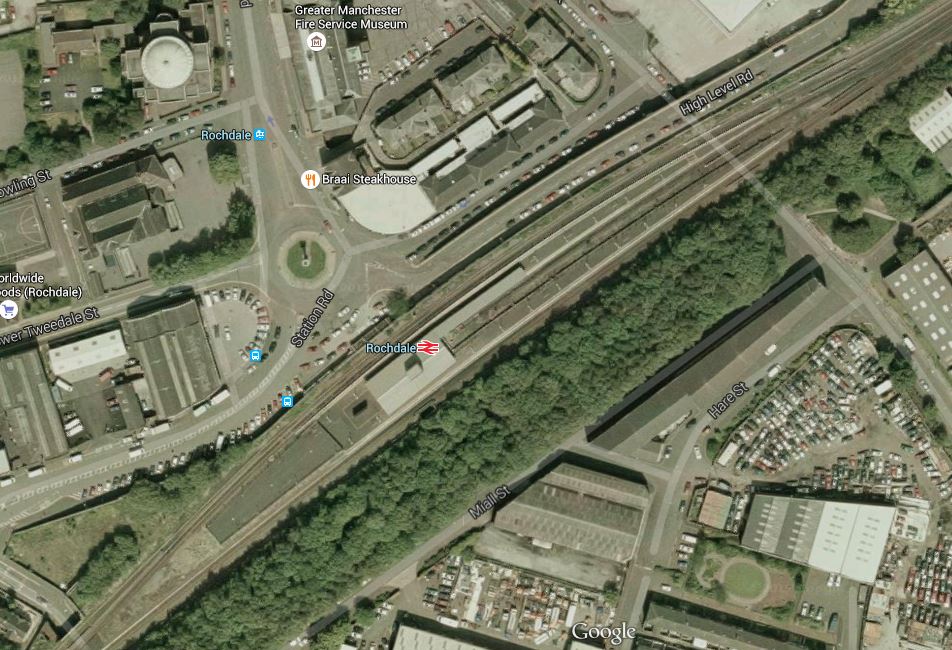
Rochdale Interchange
The tram-train could either go on the current route into Manchester Victoria, provided of course it was electrified or it could run to the city centre on the tram lines.
You pays your money and takes your choice depending on what optimises the network best for the passengers.
A Plea For Help From Lancashire
I have a Google Alert setup to look for stories about the Todmorden Curve. Normally, it picks up worthy stories about the Todmorden Curve and the new services from Blackburn and Burnley into Manchester.
However, today, I picked up this story from the Rissendale Express, which is entitled Rossendale Scribbler: Forget the bus station, we should look to rail to improve our transport links. This is the first couple of paragraphs.
Watching the TV news on Sunday night, I saw a report on the opening of the Todmorden Curve – a short stretch of railway which now makes it possible to travel directly from Burnley to Manchester by train.
As train fans know, this stretch of track is but a few hundred metres long, yet it’s taken an absolute age to get it opened.
So you’d think that if a rail link is good for Burnley and Blackburn, then one would be good for Rossendale, which lies to the north of Bury and south of Blackburn.
The Rossendale scribbler then goes on to explain how Lancashire County Council is giving £3.5million to create a bus station in Rawtenstall, whereas he and a lot of the locals would prefer a rail service. A couple of weeks ago I had to take a bus from Blackburn to Manchester and I know where my sympathies lie.
He then goes on to explain, that there is already a rail line, but it is a heritage railway called the East Lancashire Railway. He then says this.
After all, Rossendale has a head start over many areas wanting a rail link – the railway track is already down.
Of course, fans of the East Lancashire Railway speak of concerns that commuter services would damage the heritage railway which attracts so many visitors to the area.
That need not be so of course. The two could run side by side, and train services running on from the ELR to Manchester could bring more people to the heritage line.
Some suggestions put the cost of commuter services at £10.5m.
It strikes me that if it is best for all citizens of the area, then a solution must be found that allows commuters into Manchester to share the line with those that want to play with steam trains.
There is also this article on the Manchester Evening News, where rail enthusiast, Pete Waterman, talks a lot of sense about dual use of the line.
If the Todmorden Curve is a success, I think that there will be more pressure to bring a commuter service into Manchester via the East Lancashire Line.
And then you get a story like this in the Lancashire Telegraph, which is entitled TODMORDEN CURVE: £12m spin-off for Burnley’s economy
Enough said!
As someone, who lives in an area of London, that has been reinvigorated by the refurbishment of the North and East London Lines, I know the effect a good rail line can have on employment, leisure, business and housing opportunities. So if running services into Manchester, would give the area a significant uplift, the services should start.
Perhaps one way to do create a service would be use Class 399 tram-trains to extend the Metrolink from Bury, if they are proven to work successfully between Sheffield and Rotherham in the next few years. After all, the first phase of the Manchester Metrolink to Bury was built by converting the old East Lancashire Railway,
I’m certain, that if the Germans or the French were creating a system like the Manchester Metrolink now, they would look at tram-train technology based on the Karlsruhe model. But this type of tram-train operation only dates from 1992, so unfortunately Manchester didn’t have the option to look at it, when the Metrolink was first proposed in 1982.
Would A Tram-Tube Be Feasible?
I have seen tram-trains at work in Karlruhe, Kassel and Mulhouse and they work well as they travel on the tram-tracks in the city centre and the train tracks as they travel outside and to the next major town. We’re soon to introduce Class 399 tram-trains between Sheffield and Rotherham as an experiment and after what I’ve seen in Europe, I don’t believe that the trial will be a substantial failure because of the concept.
When I looked at Crossrail 2 at Wimbledon, I said I had a bonkers idea. If we can have tram-trains, then why can’t we have tram-tubes?
Dimensional restrictions would apply and I suspect it would only be possible with the larger size of tube train. But the cross-section of the modern S7/8 stock is not that different to your average tram, although they are longer. Although, I’ve seen some substantial tram-trains in Europe, with at least four coaches.
What gave me the thought was the problem of the Tramlink platforms at Wimbledon would be solved if they could run up the District Line to another terminus.
It is probably infeasible at Wimbledon for various reasons, but once the tram-train technology is proven in a UK environment, I can’t see why the concept might not work in the right way in the right place on the sub-surface lines of the London Underground. One possibility would be to create a branch line shuttle. Such a concept could have been used at Barking Riverside, but they have decided to extend the Gospel Oak to Barking Line instead.
I do think it will be wrong to underestimate the devious minds of those engineers trying to squeeze the last drop out of London’s transport infrastructure.
Quiet Flows The Don
The tram-trains between Sheffield and Rotherham will join up to the Sheffield Supertram in the area of the Meadowhall South/Tinsley tram stop.
This Google Earth image shows the area.
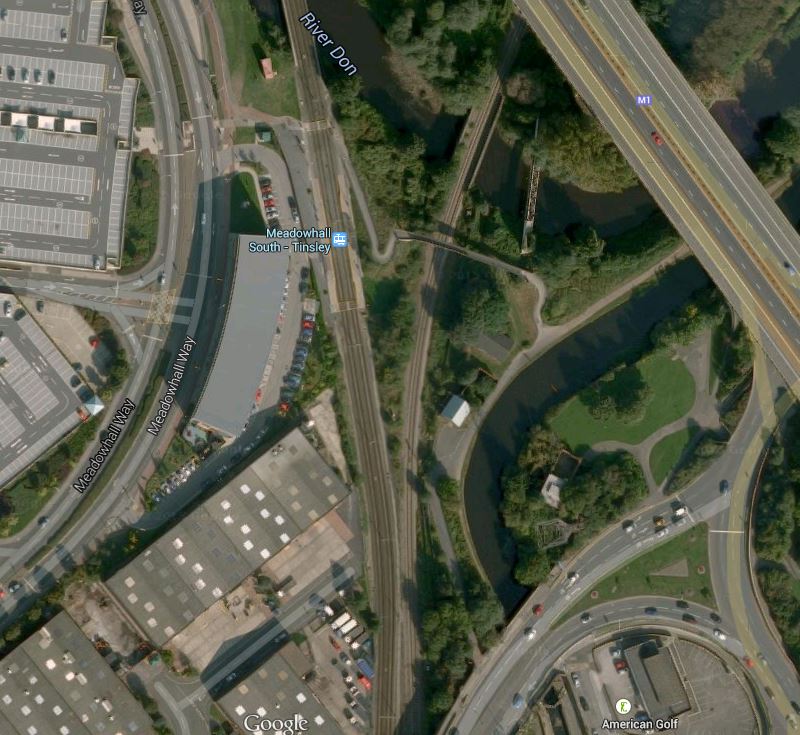
Tinsley Area
Note the tram line marked by the blue symbol which shows the Meadowhall South/Tinsley stop, running down the map, with the single-track Tinsley/Masborough South Junction-Rotherham freight railway, splitting off to the right. Note the footbridge that rises from the tram stop and crosses the freight line, which you can see in the pictures. You can also see Meadowhall at the left and the M1 at the right and the various roads leading to and from Sheffield.
I took these pictures of the area.
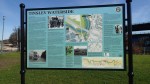
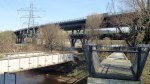
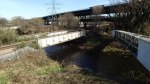
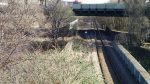
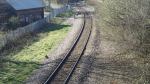
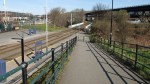
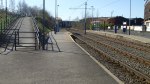
Believe it or not, in the midst of all this chaos is a quiet area by the River Don.
For the eagerly awaited tram-train, a connection will need to be made between the tram line and the single-track freight line. There is little detail at present about how the connection will be made, but the freight line will have to be provided with some form of overhead electrification at either 750 V DC or 25kV AC. However, the Class 399 tram-trains will be able to use any handy voltage.
I’ve just found this page on the Network Rail web site, which is their home page for the creation of the Tinsley Chord which will connect the tram line to the freight line. I was able to create this map of the chord from one of their published documents, from the impressive and comprehensive site.
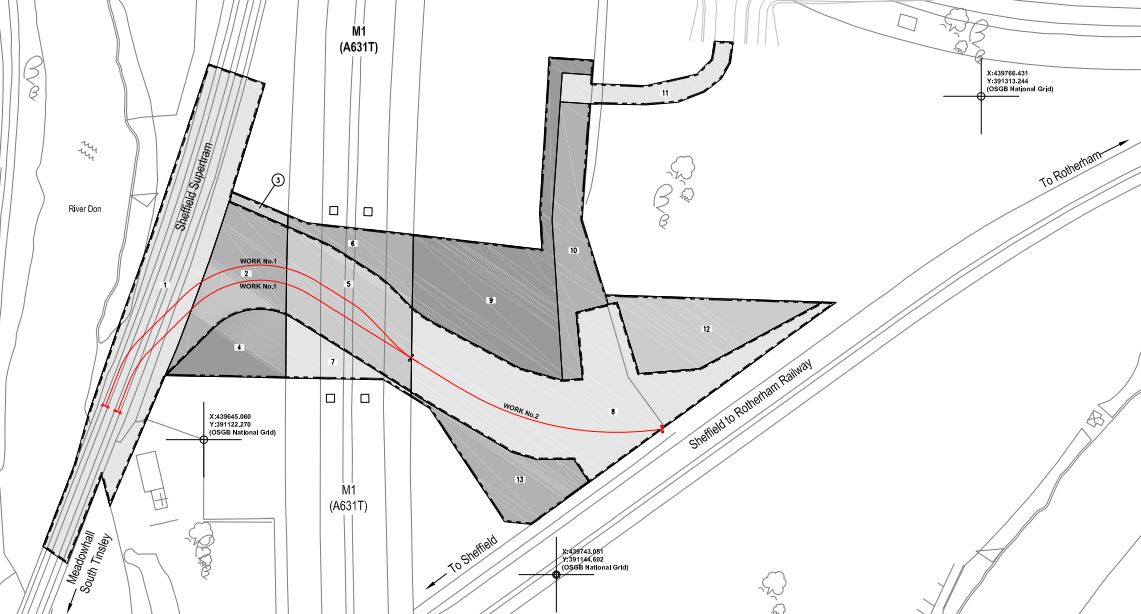
The Tinsley Chord
The new chord is shown in red and curves between the tram line at the left and the freight line, which goes off to the right.
Note that the Meadowhall South/Tinsley tram stop is the Sheffield side of the chord, so passengers going between Rotherham and Meadowhall could enter the Meadowhall Centre via Debenhams, as I did after my walk by the River Don.
Incidentally, Network Rail and their contractors will like working on this one, as sixty percent of the work is virtually indoors, as it is underneath the massive Tinsley Viaduct that carries the M1 over the area.
If you want to know how this chord underneath the M1 will effect the local bats, hedgehogs and newts it’s all laid out in this document.
Perhaps the best news of the project is contained in this recent report from the Sheffield Star, which is entitled Construction work planned for long-awaited £60m Sheffield to Rotherham tram-train scheme.
The article hopes that tram-trains will be running in 2017.

