Thoughts On The Sutton Loop Line
The Sutton Loop Line is a bit of a problem.
- It runs two trains per hour (tph) in both directions.
- Trains are eight-cars.
- It is not the most heavily-used of lines.
It is deeply political and difficult to make any changes.
Network Rail’s original plan is described under Political Developments in the Thameslink entry in Wikipedia. This is said.
Network Rail had planned to terminate Sutton Loop Thameslink trains at Blackfriars station, rather than have them continue through central London as at present. This would increase the capacity of the central core as the Sutton Loop could only accommodate shorter trains. This upset many residents in South London and their local politicians, who saw it as a reduction in services rather than an improvement. In response to pressure, government has ordered Network Rail to reverse the decision.
Was this design by those, who don’t understand the complexity of designing and running a train service?
On the other hand, the line has some strengths.
- It is a double-track railway.
- It is fully-electrified using 750 VDC third-rail.
- Stations have long platforms.
- There seems to be quite a bit of housing and other development.
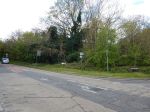
But in some ways, the line’s biggest strength, is the wide margins at both sides of the tracks.
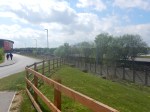
This section between Hackbridge and Carshalton stations is not untypical.
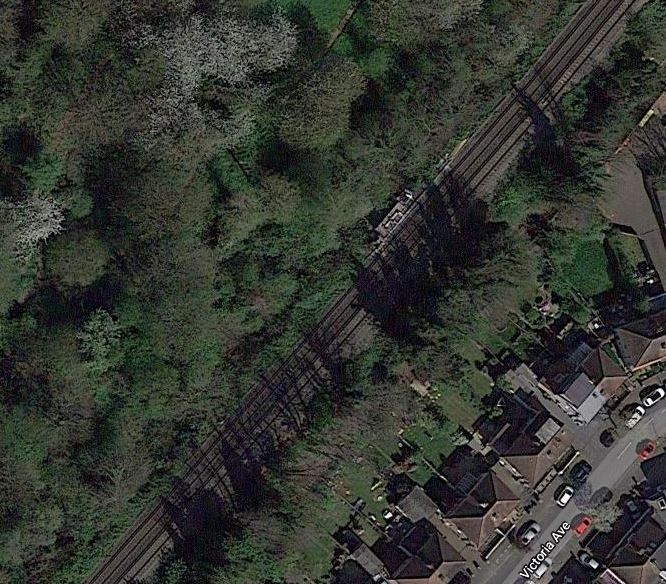
Adding extra platforms or complete stations would not be difficult.
What solutions are available to improve train services on the Sutton Loop Line, for both passengers and train operators?
Splitting And Joining Trains
In Has Thameslink Got The Wrong Length Of Train?, I proposed the following.
- Using twelve- and six-car trains on Thameslink.
- Allowing two six-car trains to work as a twelve-car unit.
- Trains would be able to join and split automatically, as Hitachi’s Class 395 trains are able to do.
I also proposed the following method of operation for the Sutton Loop Line.
The Sutton Loop Line could be run by using six-car trains that split and join in the area of Streatham station.
This map from carto.metro.free.fr shows the track layout at Streatham, at the start of the loop.
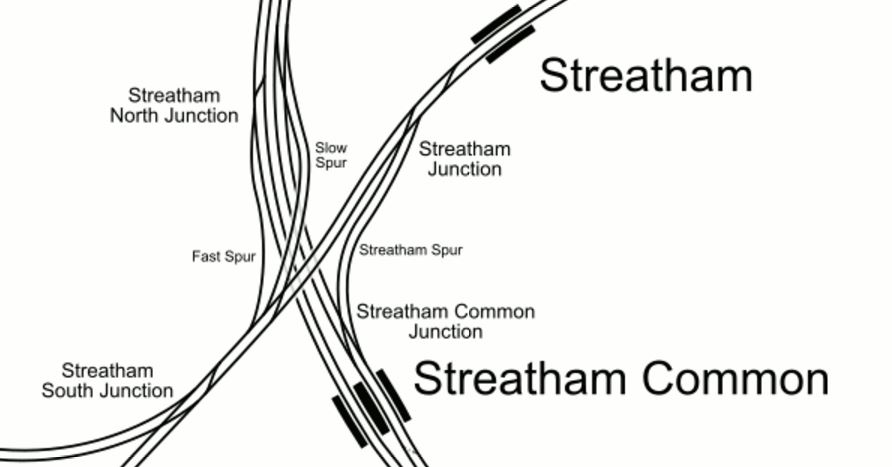
Note.
- Streatham South Junction is the gateway to the Sutton Loop, with the tracks to the West going via Tooting station and those to the South via Mitcham Eastfields station.
- There is a lot of spare land in this area.
- Transport for London keep talking about creating an interchange at this point.
I think, if and when the interchange is built, it could be designed, so that it increased traffic around the Sutton Loop Line.
- Two six-car trains running as a twelve-car could split at the interchange.
- One train would go round the loop clockwise and the other anti-clockwise.
- The trains would rejoin together at the interchange.
The same procedure could be done at Streatham, without creating the interchange, but it would block the station, if trains got delayed on the loop.
Currently, two trains per hour (tph) are proposed to run in both directions on the Sutton Loop Line.
This requires four eight-car trains and four paths through the central core.
If four six-car trains were to be used, running in pairs splitting at Streatham station or a new Streatham Common interchange, there would still be two tph in both directions round the Sutton Loop, but only two paths would be needed in the central core.
Travellers to and from stations on the loop would see six-car, rather than the current eight-car.
If the number of six-car trains were to be doubled and four paths used in the central core, the Sutton Loop Line would see four tph in both directions.
It sounds complicated but it would work and it has the following advantages.
- Train frequency could be increased as required.
- Paths are released in the central core.
- Twelve-car trains would go through the central core, where the capacity is needed.
The service would need a few more drivers and other staff.
Loop Only Services To A New Streatham Common Interchange
If a new interchange station is built at Streatham Common, then extra services could easily be run round the loop.
- Thameslink services could be reduced to perhaps one tph in each direction.
- These would be augmented by perhaps a four tph shuttle around the loop starting and finishing at Streatham Common.
- The shuttle trains could be any suitable unit, but surely a four-car would suffice.
I suspect that this wouldn’t work, as it would upset the natives.
The German Solution
I can’t help feeling that the Germans and especially those in Karlsruhe would look at the Sutton Loop Line and because there are both trams and trains, in the area, they would come up with a solution based on trains and tram-trains.
As fsr as I know, no-one has ever built a third-rail-powered tram-train!
But I don’t think that a tram-train powered by third-rail electrification, when running as a train is an impossibility. I lay out my ideas in The Third-Rail Tram-Train.
Safety
As to safety, look at this picture taken at Mitcham Junction station.
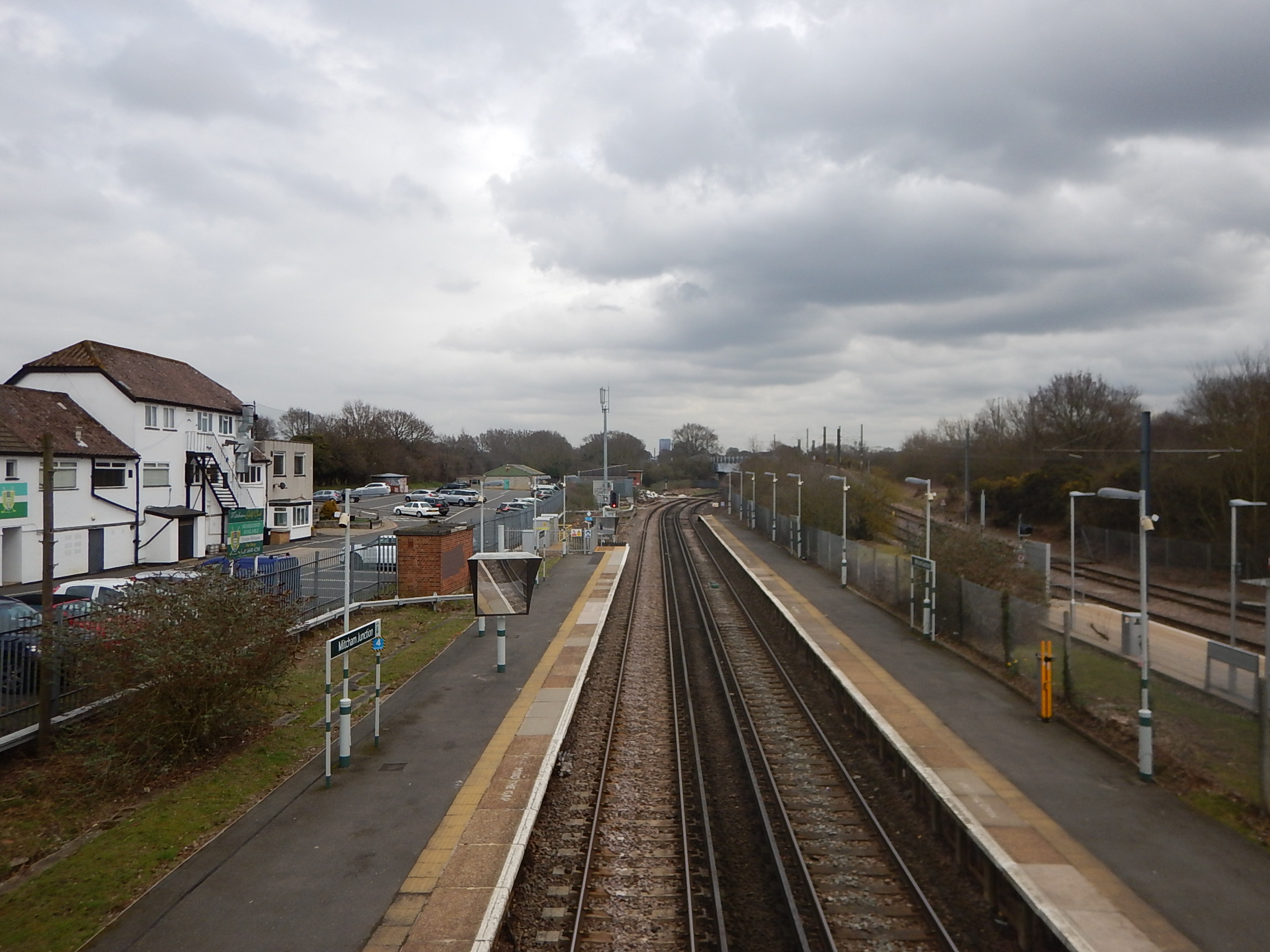
Note how the third electrified rails are in the middle away from the platforms. This is standard practice with this form of electrification.
So if it is deemed to be safe for trains now, it will surely be safe for third-rail train-trams.
When running as trams, the tram-trains will use 750 VDC overhead electrification.
Changing Networks
Tram-trains will need to change between the tram and rail networks.
This map from carto.metro.free.fr shows the track layout at Mitcham Junction station.
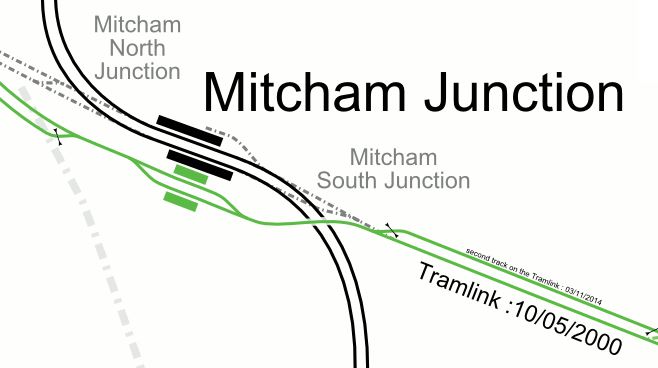
Note.
- Wimbledon is to the West and Croydon is to the East.
- With the addition of some extra tracks, it should be possible for tram-trains to pass between the networks.
- As trams can take tight curves, a chord could allow Westbound tram-trains from Croydon to turn South to Sutton.
- Tram-trains will probably change networks using a couple of ininutes of battery power.
I doubt any of the engineering will be too difficult.
Adding The Sutton Loop Line To Tramlink Using Tram-Trains
Tram-trains would take the following route.
- Arrive from Croydon at Mitcham Junction, where they would turn South onto the Sutton Loop Line.
- Pass through Hackbridge and Carshalton stations.
- Call in Sutton station for interchange with trams and National Rail.
- Continue to Wimbledon station calling in Platform 9 for interchange with trams in Platform 10 and 10b and National Rail.
- Pass through Hatdons Road and Tooting.
- Take new chord to cross to the other leg of the Sutton Loop Line.
- Pass through Itcham Eastfields station.
- Rejoin the tram route at Micham Junction station.
Tram-trains could also travel in the reverse direction.
Trams And Tram-Trains At Wimbledon
This map from carto.metro.free.fr shows the track and platform layout at Wimbledon station.
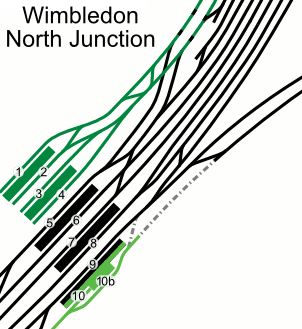
Note.
- Currently, Thameslink services on the Sutton Loop Line use Platform 9 in both directions.
- Hayons Road station is to the North-East and |Wimbledon Chase station is to the South.
- Tram-trains on the Sutton Loop Line would do the same.
- Platform 9 probably defines the capacity of the Sutton Loop Line.
Access to the trams in Platforms 10 and 10b, is just a walk across the platform.
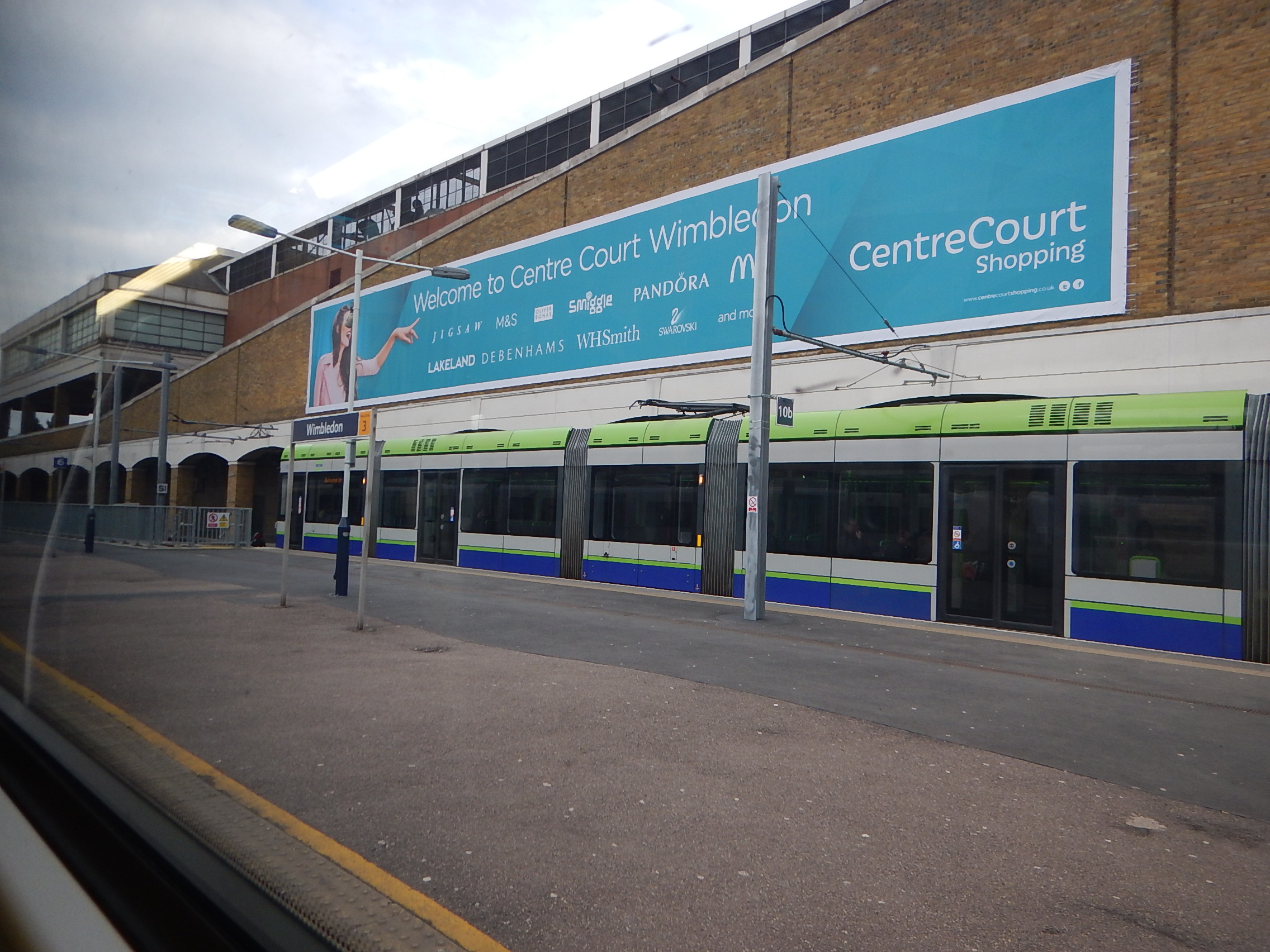
The picture was taken from a Thameslink train.
There might even be space for another tram platform, that can be accessed from the Haydons Road direction.
Trams And Tram-Trains At Sutton
This map from carto.metro.free.fr shows the track and platform layout at Sutton station.
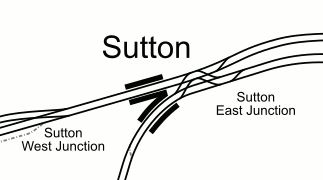
Note.
- The Sutton Loop Line is the Northernmost pair of tracks.
- Carshalton station is to the East and West Sutton station is to the West.
- It could be possible for tram-trains to by-pass Sutton station and run on the streets of Sutton.
This picture shows Sutton High Street.
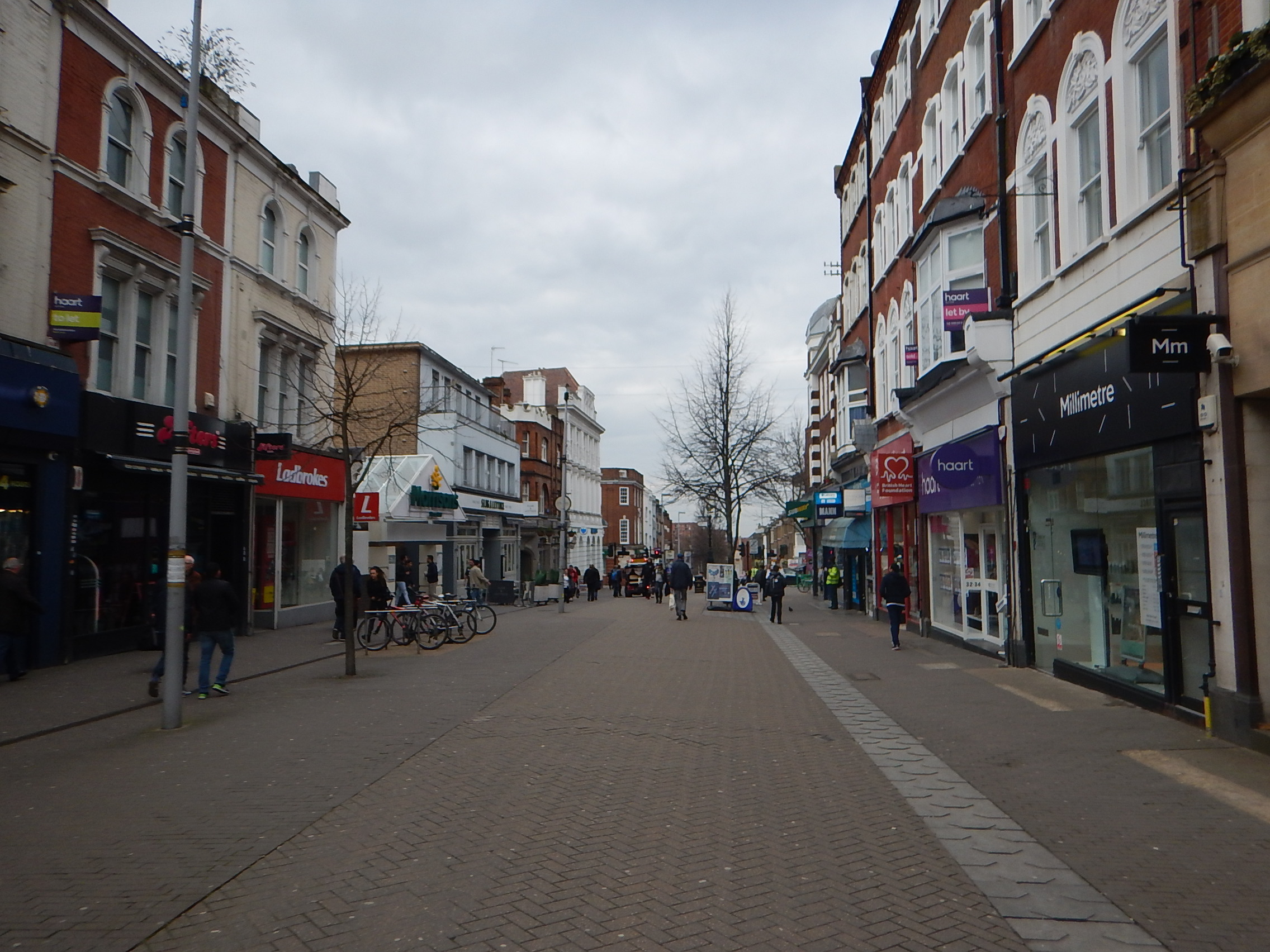
Is it going to be easy to bring the planned tram extension from Wimbledon to Sutton?
Dual Platform Issues
Platforms at the stations on the Sutton Loop Line are long and are certainly capable of taking eight-car trains.
But are they long enough to have a lower section of platform, so that tram-trains can have step-free access?
This is one of the problems, that should be solved in the tram-train trial in Sheffield.
The Split At Streatham Common
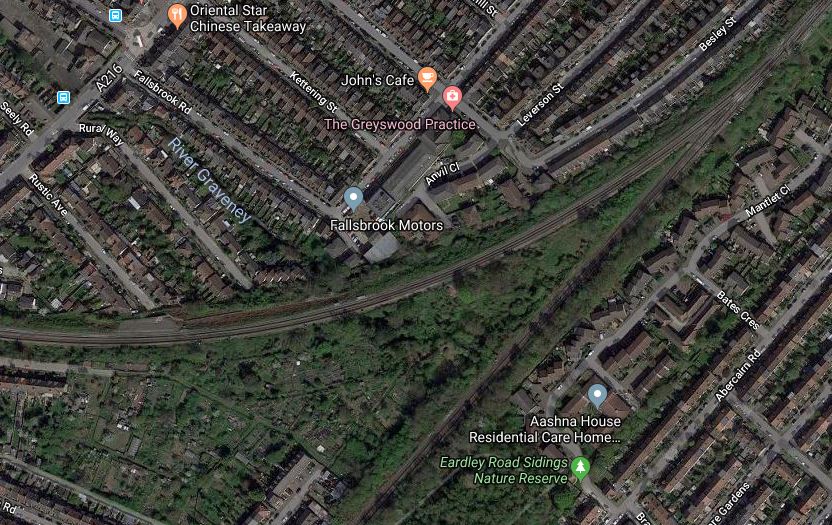
This Google Map shows, where the two routes of the Sutton Loop Line meet near Streatham Common station.
This picture shows a train going towards Mitcham, from one having passed through Tooting station.
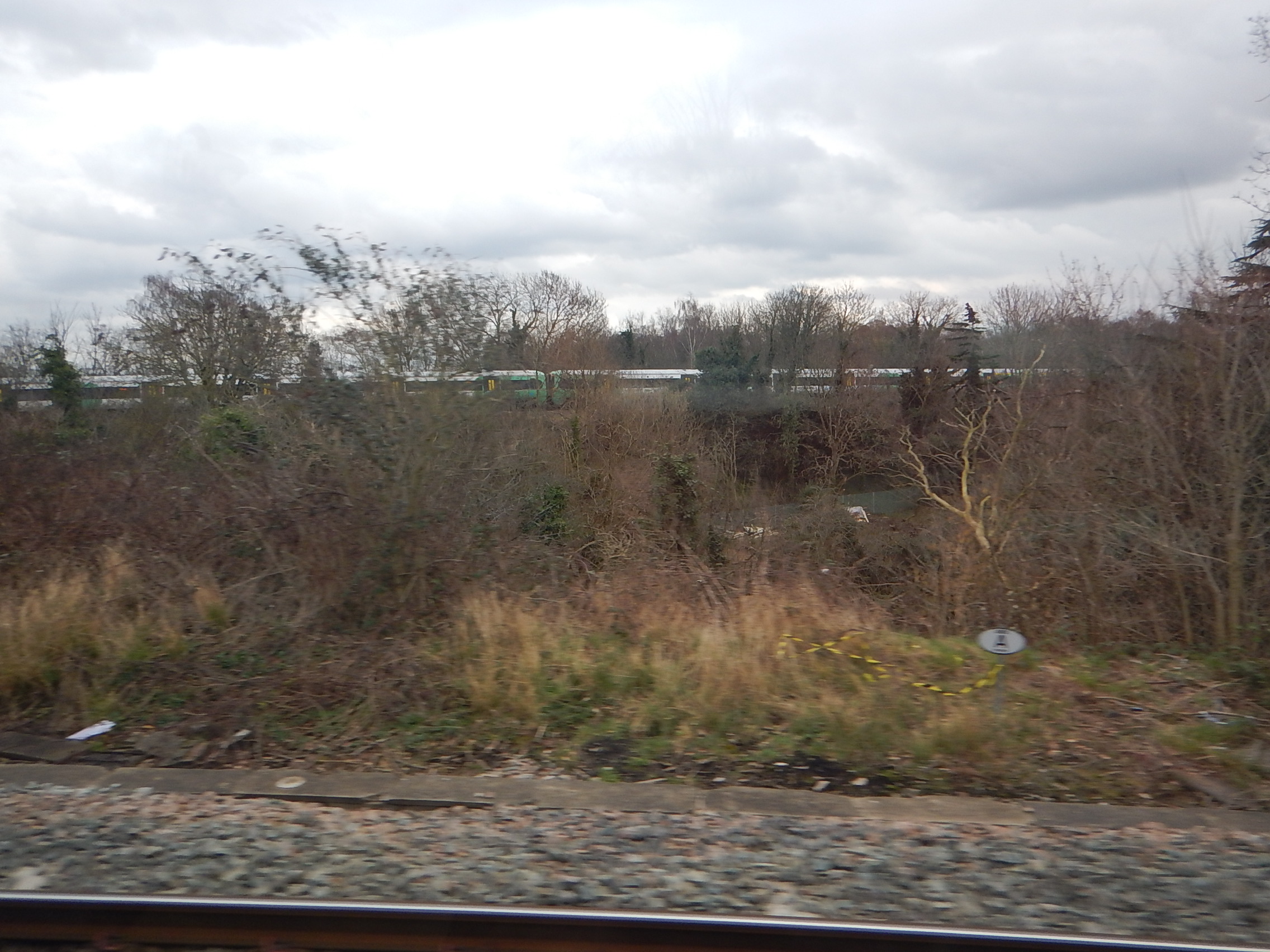
I don’t think it would be the most difficult engineering project to create a chord, that would allow tram-trains to go directly between Tooting and Mitcham Eastfields stations.
A Possible Service
As I said earlier, Platform 9 at Wimbledon station. is probably the limiting factor on services round the Sutton Loop Line.
Thameslink is planning two tph in both directions.
I suspect that this could be supplemented by two tph services run by tram-trains, if a signalling solution can be implemented to allow four tph in each direction, through the platform.
Conclusion
There are several ways to improve the Sutton Loop Line.
A Trip To Baden-Baden By Tram-Train
These pictures show how I caught a tram-train in the Centre of Karlsruhe and went to Baden-Baden both to have a look and an early supper.











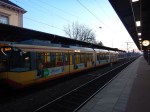

It was a good illustration about how tram-trains widen the transport possibilities of a city or large town.
- I caught the tram-train in the middle of the main street of Karlsruhe.
- It used the tram lines to get to Karlsruhe station.
- From there it became a train anmd went all the way to Baden-Baden station.
- I then caught a bus to the centre of Baden-Baden using the same ticket.
The only problem was that the service frequency was only one tram-train every half-hour.
But then German trains and trams aren’t as frequent as those in the UK.
Is The West Midlands Going To Get A Tram-Train Line?
This article on Global Rail News is entitled Midland Metro Extension Receives £200m Boost From UK Government.
This is the first paragraph.
West Midlands mayor Andy Street has confirmed that £200 million from the UK government’s new ‘Transporting Cities Fund’ will be used to extend the Midland Metro to Brierley Hill.
The Brierley Hill Extension would use the currently disused South Staffordshire Line. It would link Wednesbury to Stourbridge, via Dudley, Brierley Hill and the Merry Hill |Shopping Centre.
Wikipedia says that ten trains per hour would run South of Wednesbury and five services would go to each of Birmingham and Wolverhampton.
The Need For Tram-Trains
The South Staffordshire Line is also wanted by Network Rail for use as a freight line.
Tram-trains would be the solution for a line-share.
- The extension could be configured to suit Class 399 Tram-trains.
- Class 399 tram-trains seem to be working well in Sheffield as trams.
- In Rotherham the Class 399 tram-trains will co-exist with the heaviest of freight trains.
- Dual-voltage tram-trains would allow electrification of the South Staffordshire Line with 25 KVAC at a later date if required.
The biggest advantage would be the cost savings, as both the tram-trains and the freight trains could use the same standard of track.
But I also feel that all the design problems for the extension will have been explored in a practical way in the Sheffield-Rotherham trial.
Should the Tram-Trains Terminate At Stourbridge?
The Global Rail News article doesn’t mention Stourbridge, but Wikipedia indicates it could be the terminus of the tram route.
If tram-trains are used on the route, then to run them as trains to Stourbridge Junction station may be a good idea.
Conclusion
This extension of the Midland Metro has a lot of possibilities.
I think that like the Midland Metro’s proposed use of battery trams, it shows that the West Midland Combined Authority is not afraid to be innovative.
Authorities Plan Joint Tram-Train Procurement
The title of this post is the same as that of this article in Global Rail News.
This is the first paragraph.
Several European transport authorities are planning to work in partnership to procure new tram-trains in order to bring down the cost enough to make the transport mode more commercially viable.
This later paragraph gives the members.
The new association includes Karlsruhe’s transport authorities, Albtal-Verkehrs-Gesellschaft (AVG) and Verkehrsbetriebe Karlsruhe (VBK), Saarland tram-train operator Saarbahn Netz, Kassel operator Kasseler Verkehrs-Gesellschaft, Upper Austria’s Schiene Oberösterreich, Erms-Neckar-Bahn and Regionaltangente West in Germany’s Rhine-Main area.
I hope Network Rail keeping a watching brief!
After all, the Class 399 tram-train being trialled in Sheffield is a 25 KVAC version of the tram-trains used in Karlruhe, where the main line voltage is 15 KVAC.
This picture shows a Class 399 tram-train in Sheffield.

This is one of Karlsruhe’s similar tram-trains.

There are some cosmetic differences and the German tram-trains have a coupler for multiple working.
Surely, any initiative for a standard European tram-train, that could work all over the Continent would bring benefits.
- Prices would probably be more reasonable.
- Solutions and problems could be shared.
- \setting up a new tram-train line should become easier and more affordable.
Having travelled extensively on Karlsruhe’s tram-train network, it would appear that they are using not only the tram-trains, but several other ideas in Sheffield.
Different Voltages
Overhead line voltages vary across Europe.
- 15 KVAC is used in Germany
- 1,500 VDC is used in The Netherlands and for some local networks.
- 25 KVAC has become an international standard and is generally used for high speed lines.
Surprisingly, all our overhead electrification used on railways is 25 KVAC. All other systems have been either replaced or closed.
All these different voltages can be handled by a good electrical system on the tram.
This will handle the problem ehere a route runs between two areas or countries with different voltages.
Changing From Tram To Train Mode And Vice-Versa
In Karlsruhe this is performed by connecting the two systems together with a cermaic rod in the catenary to separate the voltages.
Tram-trains just drive across, with perhaps some battery assistance.
I suspect Sheffield are using a similar method to Karlsruhe.
Platform Height
If the tram-trains are to have level access, as most low floor trams do these days, then platform height can be a problem.
Trams generally have low platforms as this picture from Tramlink shows.
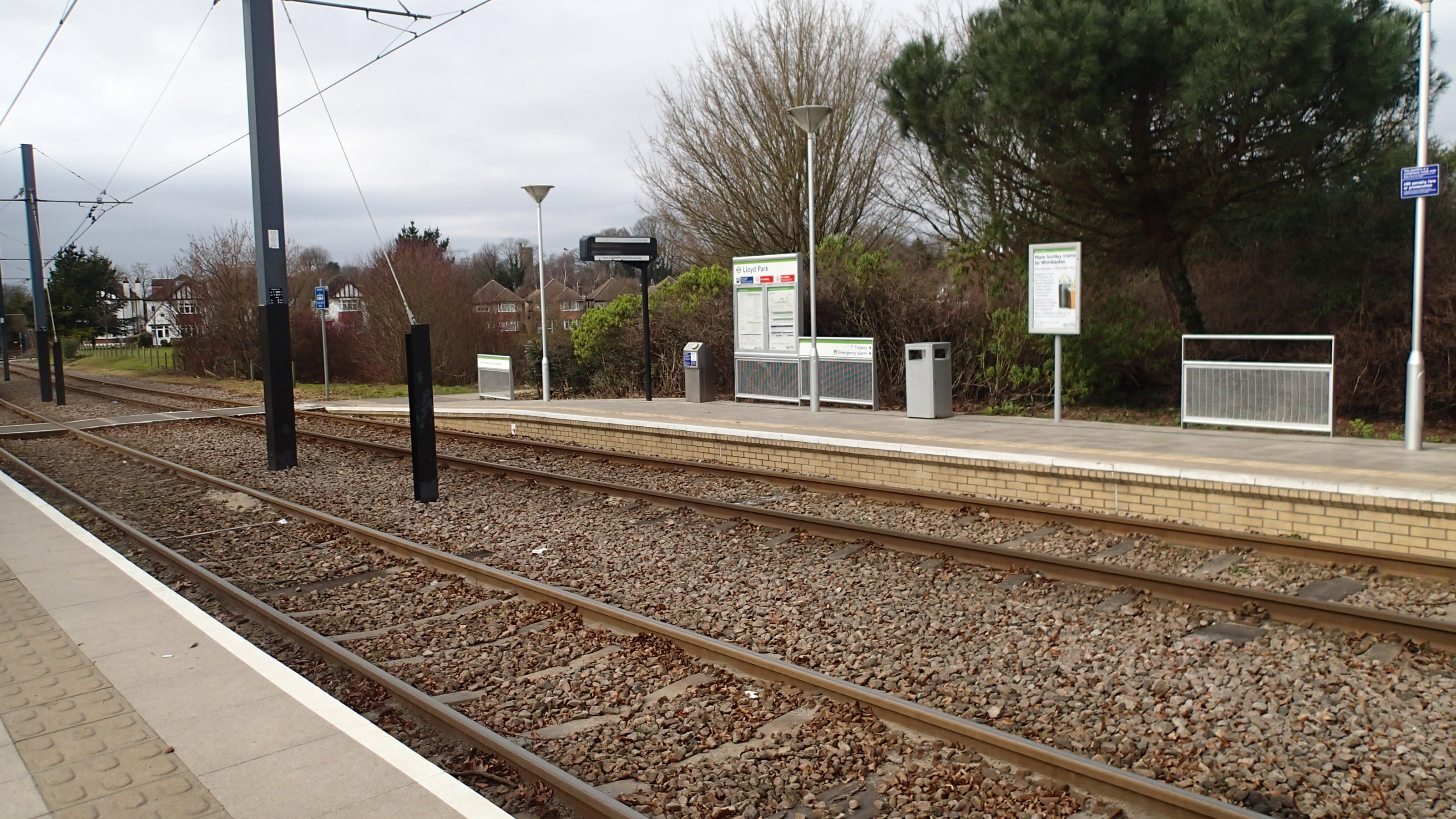
On the Continent, the main line platform heights are often simiar, so level access can be easy.
But in the UK, platform heights are generally higher. The problem appears to be being solved at Rotherham Central station by means of dual height platforms. This technique is used in Karlsruhe.
The article says this about platform height.
VDV has said the tram-trains will be available as two or four-door vehicles and will be able to meet different platform heights and maximum axle loads.
So hopefully, it will be one size fits all!
Karlruhe
This is a paragraph from the article.
AVG and VBK would receive more than half of the new vehicles under the arrangement. AVG said it had already been approached by other transport companies interested in adopting the so-called Karlsruhe model tram-train system.
Karlsruhe certainly seem to be leading this project, in more ways than one.
The Sheffield tram-train trial could be said to use the Karlsruhe model.
Conclusion
I believe that nothing I have seen on the various tram-train systems, I have visited, would stop a common tram-train that worked being developed.
This must lead to the development of a lot more tram-train systems.
The Penistone Line And Rotherham Tram-Train Trials
The Penistone Line Tram-Train Trial
The Penistone Line from Sheffield to Barnsley, Penistone and Huddersfield was the line originally selected for the tram-train trial.
In the Wikipedia entry for the line, this is said about the tram-train trial.
On 18 March 2008, the Department for Transport released details of a proposal to trial tram-trains on the Penistone Line, the first use of such vehicles in the UK. The trial was to start in 2010 and last for two years. Northern Rail, the operator of passenger services on the line, asked potential manufacturers to tender for the design and construction of five new vehicles, which Northern Rail would subsequently lease. In addition, Network Rail planned to spend £15m modifying track and stations to make them compatible with the new vehicles.
However, it was announced on 15 September 2009 that a city tram-train trial between Rotherham and Sheffield would replace the Penistone Line scheme.
More about the trial is said in this article on Rail News, which is entitled Penistone Line Is Chosen For £24m Tram Trains Trial. In particular, this is said.
One of the biggest initial tasks is to set a specification for the building of the five diesel-electro hybrid tram trains at a cost of £9 million. The trains will have to be equipped with braking systems suitable for on-street running and a Train Protection Warning System which is required for running on lines with ‘heavy’ rail passenger and freight trains.
The article was written in 2008 and Chemnitz hybrid Citylink tram-trains didn’t enter service until 2016.
So was the trial on the Penistone Line a disaster before it even started?
It had the following problems.
- It was expecting a diesel-electric hybrid tram to be designed and built before 2010.
- A long distance was involved.
- The track-work needed to connect to the Sheffield Supertram could have been incredibly complicated.
- The first all-electric Citylink tram-trains weren’t delivered to Karlsruhe until May 2014, which was seven months late.
For these and other reasons, I think that the decision of the trial to be delayed and to use Rotherham, was a prudent decision.
The Rotherham Tram-Train Trial
Consider these characteristics of the current trial, between Cathedral and Rotherham Psrkgate.
- The tram-trains are virtually standard Karlsruhe Citylink tram-trains, adapted for UK 25 KVAC and painted blue!
- A simple chord connecting the two systems.
- A few miles of electrification, that could be powered by either 750 VDC or 25 KVAC.
- Modification of the recently-built Rotherham Central station.
- Building of a new terminal tram stop at Rotherham Parkgate.
It’s a simple plan, but one that covers a lot of design possibilities and has few, if any, risky elements, that haven’t been done in the UK or Karlsruhe.
The following can be tested.
- The Class 399 tram-trains on the Sheffield Supertram network and an electrified main line.
- Passenger entry and exit at Rotherham Central station and all over the Supertram network.
- Operation under both 750 VDC or 25 KVAC.
- Signalling systems on both tram and main line networks.
The one thing that can’t be tested is a diesel hybrid tram-train as they have in Chemnitz, as they haven’t ordered any!
But if they did want to order some, they could easily be tested between Cathedral and Rotherham Parkgate.
Conclusion
The original plan to use the Penistone Line and diesel-electric tram-trains was impossible.
Network Rail might have got this one right at the second attempt.
They could even run a UK version of the Chemnitz hybrid tram-train on the test route between Sheffield and Rotherham.
Class 399 Tram-Trains In Service
On my two day trip to Sheffield, I reckon that I saw six of the seven Class 399 tram-trains in service on the Supertram.
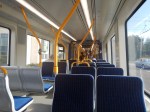
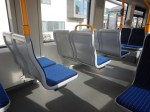
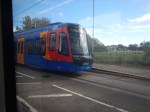
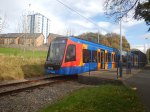
These pictures were taken on a quiet Saturday morning trip from the station to Herdings Park.
Current Service
Currently, the Class 399 tram-trams are running on the Purple Route from Cathedral to Herdings Park, which is generally tun at a frequency of two trams per hour.
If you arrive in Sheffield station and don’t feel like walking up the hill, you take any of the trams from the stop on the station side of the tracks.
But take a tram going to Cathedral and over the two and a bit days I was in Sheffield, it was always a Class 399 tram-train.
Comparison With Current Fleet
The Class 399 tram-trains and the existing Siemend-Duewag Supertram are surprisingly similar in several ways.
- Both have three sections and four doors on either side.
- The Siemens tram is 34.8 metres long, whereas the Class 399 is 37.2 metres long.
- The Siemens tram weights 46.5 tonnes, whereas the Class 399 is a lot heavier at 66.1 tonnes.
- The Siemens tram has installed power of 1108 kW, whereas the Class 399 has just 870 kW.
- The Siemens tram has room for 86 sitting and 155 standing passengers, whereas the Class 399 has room for 88 and 150 respectively.
- The seats and their arrangement are vaguely similar.
- Neither tram has wi-fi.
The big difference other than the tram-train capability and what that entails, is that the Class 399 tram-train is faster with a 100 kph top speed, as against the 80 kph of the Siemens tram.
Other differences are detailed in the next sub-sections.
Step-Free Access
Getting on and off both trams is step-free and I saw people in wheel-chairs on both vehicles. One was easily pushed into a Class 399.
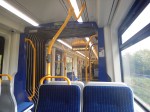
These pictures show the steps inside the two trams.
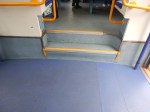
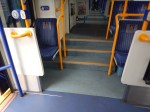
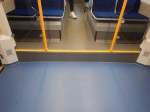
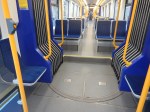
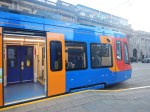
There is only a single-step on the Class 399 tram-train, whereas the Siemens tram has more.
Neither tram is a hundred percent step-free.
Weight
Note that the weight of the Class 399 tram-train is more than that of the Siemens tram.
As the two vehicles are of a similar size, could this mean that any of the following causes the weight increase.
- The electrical equipment needed to handle 15/25 KVAC power.
- The weight of the two extra traction motors.
- Strengthening for main line operation.
As someone, who has ridden for a few hours in both the Karlsruhe and Sheffield variants of the Citylink tram-train, they certainly don’t ride badly.
Performance
The current Siemens tram has 1108 kW of power and a weight of 46.5 tonnes, which gives an installed power/weight ratio of 23.8 kW/tonne.
The Class 399 tram-train has 870 kW of power and a weight of 66.1 tonnes, which gives an installed power/weight ratio of 13.1 kW/tonne.
So it would appear that the Class 399 tram-trains may not have the acceleration and hill-climbing capability of the Siemens trams.
However look at this data sheet on the Stadler Rail Espana web site for the Class 399 tram-train.
It clearly shows that the tram has four bogies and the text says that three are motored and one is a trailer. So this means that the central car is not a trailer and that power must be distributed along the tram, which probably puts the power to the rail in a more efficient way.
I did speak to a driver and he told me that on some of the hills the Siemens trams will strruggle with a full load, but the Class 399s can go up the hills at 40 mph.
The Class 399 tram-trains are very similar to the Stadler tram-trains in Karlsruhe, where the hills are much stiffer than Sheffield.
So it would appear that the layout of six smaller motors in a more modern vehicle probably does the trick.
Energy Efficiency
The question has to be asked if, as the Class 399 tram-trains have twenty-one percent less installed power, does this result in a saving of electricity use?
Comparison With Karlsruhe’s Tram-Trains
The Karlsruhe and Sheffield tram-trains are both variants of the Vossloh Citylink tram-train, that is now built by Stadler at Valencia in Spain.
The tram-trains in Karlruhe would appear to be very similar to the Class 399 tram-train, with a few small technical differences.
- They work on 750 VDC and 15 KVAC overhead wires, whereas the Class 399 can work on 750 VDC and 25 KVAC.
- As an electrical engineer, I wonder if the electrical systems are the same in both tram-trains and both can work 750 VDC and 15-25 KVAC, so they could work cross-border routes between say Germany and France.
- They have couplers to work in multiple.
- They have different passenger door arrangements.
- The driver’s cab windows have different arrangement.
These pictures show Karlsruhe’s tram-trains.
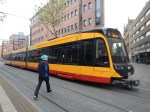
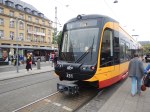
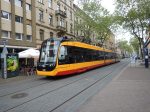
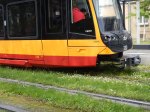

Imagine these trams in Supertram colours on the streets of Sheffield.
Take a close look at picture 4.
You will notice that the Karlsruhe tram-trains have an obvious coupling and it can be assumed that they can work in ,multiple, although I don’t seem to have seen it happening.
Picture 4, also shows passengers apparently sitting in the back cab of the tram-train.
The fifth picture was taken from sitting inside the tram-train looking backwards, over the folded-down driver’s desk.
This feature wasn’t being used in Sheffield and this could be for one the following reasons.
- The Class 399 tram-trains don’t have the feature installed.
- There has been a Health and Safety decision.
- It takes perhaps ten minutes to fold up the driver’s desk and this would slow the timetable.
It’s a pity , as this feature of German trams is very common and popular.
Comparison With Class 144 Train
The Class 399 tram-trains and Northern’s Class 144 train will share routes and on some routes the tram-trains may even take over from the Pacers.
So how do the two trains compare?
- The Class 399 has room for 88 sitting and 150 standing passengers, whereas the Pacer has 99 seats in a two-car and 157 in a three-car train.
- The Class 399 weighs 66.1 tonnes, whereas a two-car Pacer weighs 49.2 tonnes and a three-car weighs 72 .7 tonnes.
- The Pacer has a toilet.
- The Class 399 is air-conditioned, whereas the Pacer relioes on waste heat from the engine.
- The Pacer is a 75 mph train, but seems to operate most of the time at 60 mph
- The Class 399 has installed power of 870 kW, whereas the Pacer has just 336 kW.
- The Pacer is thirty-year-old crap, that should have been strangled at birth, whereas the Clas 399 is a modern unit.
You could argue, that I’m being biased, as the tram-train can’t operate without electrification.
But it can!
Chemnitz or Karl Marz Stadt as the East Germans renamed it. also runs Stadler Citylink tram-trains, which are similar to the Class 399 tram-trains.
But the tram-trains in Chemnitz are different in that instead of being dual-voltage like Sheffield and Karlsruhe, they have a diesel-generator to power them away from the 750 VDC overhead wires.
This data sheet gives a few details of the Chemnitz Hybrid tram-train. The data sheet doesn’t specify the power of the diesel powerpack, but the much heavier Class 769 train uses two rail-proven MAN diesel engines of 390 kW each.
In this article on Rail News, which is entitled Penistone Line Is Chosen For £24m Tram Trains Trial, the original trial is described and this is said.
One of the biggest initial tasks is to set a specification for the building of the five diesel-electro hybrid tram trains at a cost of £9 million.
The article was written in 2008 and hybrid Citylink tram-trains didn’t run in Chemnitz until 2016.
So the original proposal envisaged using hydrid diesel tram-trains.
Why not use them in Sheffield?
Operational Details
The Class 399 tram-trains have other features that became apparent on my observations.
Battery Use
Passing a Class 399 tram-train, I took this picture.
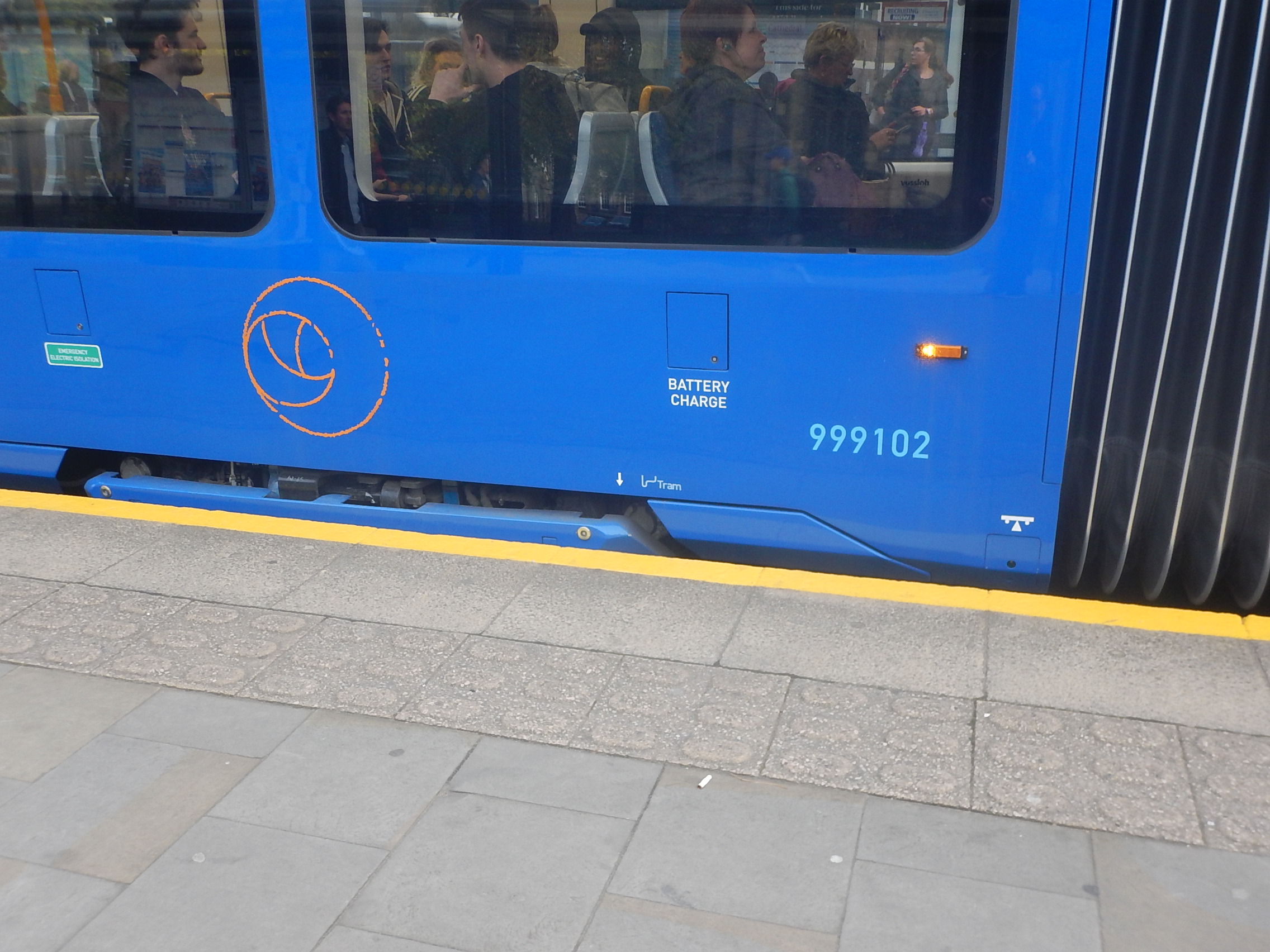
I hadn’t thought about it before, but batteries on a tram must have similar uses to those in any vehicle.
- Starting up the vehicle.
- Raising the pantograph, on an electric tram, train or locomotive.
- Opening the powered doors.
- Providing lighting and other important services in a power failure.
- Being able to move the vehicle a short distance in case of a complete overhead power failure.
- With a dual-voltage vehicle, it must be there in case the changeover isn’t successful.
But with a tram-train, battery operation surely opens up the possibility of changing between the tram and heavy rail lines using very simple track without electrification, points and cross-overs.
The driver would do the following.
- Pan down on one network.
- Use battery power to move perhaps fifty or a hundred metres to the other system.
- Raise the pantograph on the other network.
Provided the driver obeys the rules and the signals, it should be a safe transfer.
Regenerative Braking
This article on the Railway Gazette is entitled Karlsruhe orders Vossloh tram-trains.
These tram-trains were the first of the Citylink family of tram-trains, of which the Class 399 tram-trains are a member.
This is said.
The three-section steel-bodied tram-trains will incorporate extensive crashworthiness design elements and provision for regenerative braking. Top speed will be 80 km/h, with the four bogies having pneumatic secondary suspension. The air-conditioned interior will have 104 seats cantilevered from the sides for easy cleaning.
How do the Citylink tram-trains handle the regenerative braking?
Two methods are possible.
- They return the braking energy to the overhead wires.
- They store it in their battery for reuse.
In the Wikipedia entry for the Supertram, there is a section called Overhead Wiring. This is said.
The contact wires are twin cadmium copper ones, twin wires being necessary because of the high installed power rating of the trams (1 megawatt). The regenerative braking on the tram feeds current back into the wires.
So any braking energy can be returned to the wires.
But as the Railway Gazette article dates from 2011, I wonder if the trams have been developed to use battery storage?
How Far Could The Tram-Train Go On Battery Power?
I’ll assume the following.
- A New Routemaster bus battery of 75 kWh can be fitted to the Class 399.
- Running on an easy track, the Class 399 could need 5 kWh for each car-mile.
This would give a range of five miles.
Note.
- The stiffer the route the smaller the range.
- Battery capacity should increase through the years.
- Battery cost should decrease through the years.
- Charging stations can be fitted at station stops.
The only certainties are that practical battery range will increase and battery cost will decrease.
Conclusions
These tram-trains have been well worth waiting for.
If I was in charge of the Sheffield Supertram and a decision was made to replace the original Siemens trams, I would think seriously about going to Stadler for a replacement fleet.
If the fleet was all Class 399 tram-trains, this could offer other savings.
- The lower-power of the Class 399 tram-trains might cut electricity use.
- Regenerative braking using onboard batteries saves electrification costs.
- Would expensive twin cadmium copper contact wires still be needed?
- One tram type would save costs in maintenance and staff training.
New must-have features like wi-fi and 4G boosters could be added, as the technology has now been developed, since the Siemens trams were built.
Why Can’t A Train Be More Like A Tram?
This is the title of a two-part article by Ian Walmsley in the May 2017 edition of Modern Railways.
Part 1 – How Hard Can It Be?
In the First Part, which is entitled How Hard Can It Be?, he contrasts tram operation with typical heavy rail operation.
He starts the First Part with this paragraph.
After a career in trains, I wish they could be more like trams, at least for the short-distance commuting market. Big windows, low-back seats, super-cool looking front ends, terrific acceleration and braking, all at half the price. Meanwhile commuter trains are bogged down with legislation, defensive driving and restrictive practice.
He also compares trams and heavy rail with the London Underground, which has the frequency and speed of a tram to get the needed capacity. This is another quote.
Heavy-rail’s answer to capacity is to take a few seats out or declassify a First Class compartment, going faster is too difficult.
These points are also made.
- A turn-up-and-go frequency is made possible by a continuous stream of trams doing the same thing, uninterrupted by inter-city or freight intruders.
- Frequent stops on a tram mean rapid acceleration is essential, so a high proportion of axles must be motored.
- In many heavy rail services, the culture of caution has removed any urgency from the process.
- Separation of light from heavy rail is essential for safety reasons.
- Trams can take tight corners which helps system designers.
- Trams save money by driving on sight.
- Lots of safety regulations apply to heavy rail,but not trams.
He also uses a lot of pictures from the Bordeaux trams, which I wrote about in Bordeaux’s Trams. These trams run catenary-free in the City Centre.
High-Cacapity Cross-City Heavy Rail Lines
It is interesting to note that cross-city heavy rail lines are getting to the following ideals.
- High frequency of upwards of sixteen trains per hour (tph).
- High-capacity trains
- Heavy-rail standards of train and safety.
- Slightly lower levels of passenger comfort.
- Step-free access.
- Several stops in the City Centre.
- Interchange with trams, metros and other heavy rail services.
- Separation from freight services.
- Separation from most inter-city services.
Have the best features of a tram line been added to heavy rail?
Worldwide, these lines include.
- Leipzig – S-Bahn Mitteldeutschland
- Liverpool – Merseyrail Northern Line
- London – Crossrail
- London – East London Line
- London – Thameslink
- Paris – RER
There are obviously others.
Crossrail with up to 30 tph, platform edge doors, fast stopping and accelerating Class 345 trains, and links to several main lines from London could become the world standard for this type of heavy rail link.
30 tph would be considered average for the London Underground and modern signalling improvements and faster stopping trains, will raise frequencies on these cross-city lines.
All of these lines have central tunnels, but this isn’t a prerequisite.
Manchester is achieving the same objective of a high-capacity cross-city rail link with the Ordsall Chord.
Part 2 – Tram-Train, Are You Sure You Really Wnt |To Do This?,
In the Second Part, which is entitled Tram-Train, Are You Sure You Really Wnt |To Do This?,
Ian starts the Second Part with this paragraph.
Anyone with a professional interest in public transport must have been to Karlsruhe in Germany, or at least heard of it.
He then wittily describes an encounter with the diesel tram-train in Nordhausen, which I shall be visiting within a week or so.
He was not impressed!
I like the concept of a tram-train, where the same rail vehicle starts out in the suburbs or the next town as a train, goes through the City Centre as a tram and then goes to a destination on the other side of the city.
But you could also argue that Merseyrail’s Northern Line and London Underground’s Piccadilly and Central Lines achieve the same purpose, by running at all times as a rail line, with the centre section in a tunnel under the City.
The Sheffield Tram-Train Project
Ian then goes on to talk about the Sheffield Tram-Train Project. He says this about the route extension from Meadowhall to Rotherham.
This route extension runs just over three miles and after a series of delays, it will not open until 2018, 10 years, after the first proposal, six after the scheme approval. The cost is £58million. That’s 21 million Rotherham – Meadowhall single fares, for which the existing journey time is six minutes. Bargain.
He also says that because Nick Clegg was a Sheffield MP, the project should stay in Sheffield.
I will add some observations of my own on the Sheffield -Rotherham tram-train.
- The Class 399 tram-train is a variant of the tram-trains used in Karlsruhe – Good
- The route, doesn’t connect to Sheffield station – Bad
- The frequency is only a miserly three tph – Bad
- The route is too short – Bad
Hopefully, the bad points don’t result in a system that nobody wants.
The Expert View Of Rotherham’s Problems
There is an article in the Yorkshire Post, which is entitled Rotherham could get new rail station, which gives detail from a consutant’s report of how to improve services in the town.
- Rotherham Parkgate station should be developed as an inter-regional station, at a cost of up to £53.2 million
- Rotherham Central station would be be more about local services.
- Rotherham should have one tph to Leeds and Manchester, three tph to Doncaster and six tph to Sheffield.
The consultant’s estimate was that this investment could benefit the area by up to £100million.
Ian’s Conclusion
Ian says this and I am coming to agree with him.
I, like many others, have been a fan of tram-train, but a little knowledge is a dangerous thing.
The more I think about it, the more I think trams and trains have their place and mixing them up is fraught with problems.
As I said earlier, I’m off to Karlsruhe ad I’ll see how they’re getting on with the enormous hole in their budget; the new tunnel on the Karleruhe Stadtbahn.
Imagine building a cut-and-cover down Oxford Street in London.
Train Like A Tram
Ian finishes with two further sections, the first of which is Train Like A Tram.
He says this.
Heavy rail needs to recaspture a sense of urgency and realise that more speed = more trains = more capacity. Risk analysis should allow the use of low-back seats and plastics; based on the lower average speeds. All axles need to be motored for tram-like acceleration and lots of regenerative braking.
I agree with what he says, but I’m surprised that he doesn’t mention Zwickau.
In that German town, an extension was built from the Hauptbahnhof to a new station in the town centre. I wrote about Zwickau’s unique system in Riding The Vogtlandbahn
Standard two-car diesel multiple units, run alongside Zwickau’s trams on a dedicated route according to similar operational rules on the three kilometre route.
Surely, there is scope to do this in the UK, on existing and new branch lines or spurs.
- The route must be short.
- All stops would be built like tram stops.
- Trains would be independently-powered by diesel, battery or fuel cell.
- Signalling would be heavy-rail.
In my view this sort of system would be ideal for serving Glasgow, Leeds-Bradford and Liverpool Airports, where off main line running would be done across open country that could be appropriately fenced.
Tram Like A Train
Ian finishes his final section, where he talks about the likelihood of more tram-train systems following Sheffield, with this.
I suspect that the number of follow-on vehicles in the foreseeable future will be about the same as the number of battery EMUs based on the last research trial.
Don’t feel too bad though; do we really want the national rail system full of 50 mph-limited trams?
I feel that Ian and myself would have different views about battery EMUs.
What Do You Do With A Problem Like Rotherham?
I mentioned a consultant’s report earlier and the easiest way to get their recommended frequency of trains through Rotherham would be to expand the electrification network, by wiring the following lines.
- Sheffield to Doncaster
- Leeds to Colton Junction
- Leeds to Selby
- Fitzwilliam to Sheffield
As some of these lines were built or rebuilt recently for the Selby Coalfield, I suspect electrification would be starting from decent documentatyion.
Until the electrification is complete Class 319 Flex trains could work the routes.
Electrification At Rotherham
These pictures show some of the electrification gantries around Rotherham Central station.
The overhead gantries would appear to be Network Rail’s standard for 25 KVAC, rather than the lighter-weight structures used on the Sheffield Supertram for their 1500 VDC.
So are Network Rail future-proofing the gantries for later conversion to 25 KVAC or are they being wired to that voltage, so that the tram-trains can be tested on the 25 KVAC as well?
The latter would be prudent, so that the problems and strengths of dual-voltage 25 KVAC/1500 VDC tram-trains can be assessed.
However, as I returned to Sheffield later, it appeared that the line connecting Rotherham and Sheffield had both heavy-weight and light-weight gantries in place.
Could there be a last minute change of project scope to include 25 KVAC running in the Sheffield tram-train trial, which also explains the timing of the rebuilding of the College Road Bridge?
This is said under Future in the Wikipedia entry for the Sheffield Supertram.
A tram-train extension to Rotherham is currently under construction and is scheduled to open in 2018, with a fleet of seven Vossloh Citylink Class 399 tram-trains in a UK first. This will involve trams operating on Network Rail’s Dearne Valley Line from Meadowhall Interchange to Rotherham station with a short extension to Rotherham Parkgate Shopping Centre. The proposed station will be a combined tram stop and railway station.[10] It is also planned that Rotherham Parkgate will be the hub for longer distance inter regional services,[11] while Central station will be the hub for local, Yorkshire based services. To cater for the tram train services, Rotherham Central will have a third platform built. It is thought that constructing the station will cost around £14 million (£53 million including the railway service to Leeds) and deliver economic benefits worth over £100 million. A study has concluded that it is not worth expanding Rotherham Central railway station because it would cost £161 million to expand the station but only deliver benefits worth £76 million. This is why constructing a new station is considered more viable.
That explains a lot, especially as it is a big change from what was being said perhaps a year ago.
There is an article in the Yorkshire Post, which is entitled Rotherham could get new rail station, which gives a lot more detail.
- Parkgate station could cost up to £53.2 million
- Parkgate would be the inter-regional station.
- Central would be more local
- Rotherham should have one train per hour (tph) to Leeds and Manchester, three tph to Doncaster and six tph to Sheffield.
As I came through the Rotherham Parkgate area on my train between Leeds and Rotherham earlier, I didn’t see any evidence of station construction.
I think that Network Rail by putting up gsntries that can accept 25 KVAC electrification have made sure that they can fit any future plans.
So long as they can get some sort of wiring along the route and a reversing facility somewhere in the Rotherham area, I can see tram-trains running next year.
If Parkgate station is built, then provided any tracks are in the right place, this shouldn’t be a problem.
But the interesting idea could be to use Class 319 Flex trains on the route to Leeds via the Wakefield Line. The gaps in the electrification would be initially covered by the trains onboard diesel power.
As electrification is installed, they would eventually be able to do Rotherham Central to Leeds under electric power.
Whilst, Network Rail were electrifying the tram-train route, would it not be prudent to put up the wires to Meadowhall Interchange station or even Sheffield station?
The other way they could also electrify the short Swinton to Doncaster Line, which would allow electric trains from London to reach Rotherham Parkgate, Meadowhall and Sheffield stations.
I can certainly see something like the following services through Rotherham when Parkgate station is open.
- 1 tph Sheffield to Leeds calling at Parkgate and Central
- 1 tph Doncaster to Manchester and Manchester Airport calling at Parkgate and Sheffield
- 2 tph Doncaster to Sheffield calling at Parkgate and Central
Add in three tram-trains per hour between Sheffield Cathedral and Parkway via Central and the required frequencies are achieved.
It will be interesting to see what finally happens.
Could Third-Rail Tram-Trains Work The Epsom Downs Branch?
The Epsom Downs Branch is a single-track branch line from Sutton to Epsom Downs station.
Currently, it has a service to Victoria of around two trains per hour (tph), but it doesn’t seem to generate much business.
In 2015-16, Epsom Downs station had 112,000 passengers, whereas Sutton station had 7,111,000.
As the three stations on the branch are all single-platform stations with few facilities, can it be viable to run Class 377 and Class 455 trains on the branch?
When the London Tramlink arrives in Sutton, I wonder if the branch would be more suited to be running by trams.
But as the line is electrified with the standard 750 VDC third-rail system, is it one of those places, that could it be served by a third-rail tram-train, as I proposed in The Third-Rail Tram-Train?
I think the answer is in the affirmative.
Consider.
- The tram service could terminate at the proposed Streatham Common Interchange station.
- It takes less than ten minutes to go between Sutton and Epsom Downs
- In the Peak or when more capacity is needed, Class 377 trains could still run the service.
- The tram-trains could provide a step-free service.
Running the service with tram-trains, would give one big advantage; the ability to run a service to the Royal Marsden Hospital, which according to this document from the hospital is not the best, when it comes to public transport.
A single-track branch from the Epsom Downs Branch could start South of Belmont station and tram-trains running on batteries could serve both the Royal Marsden Hospital and the Institute of Cancer Research.
This Google Map shows Belmont station and the hospital.
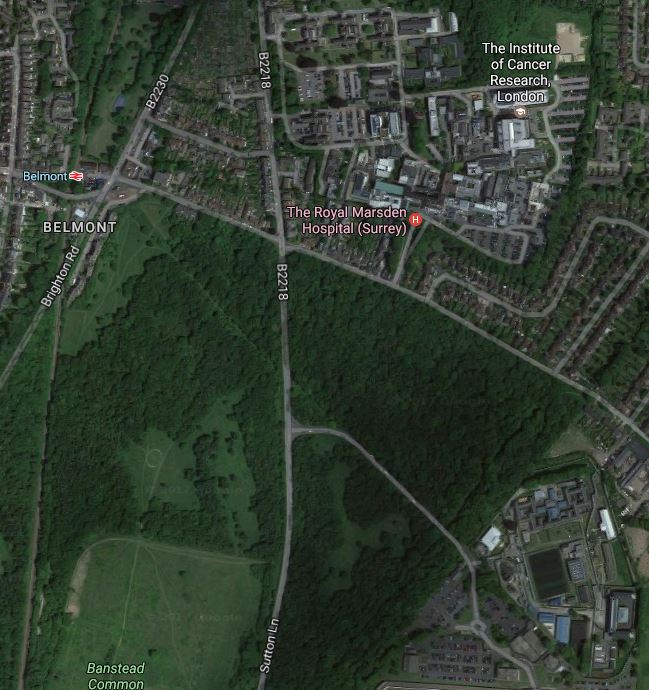
Note.
- The rail line from Belmont station to Epsom Downs station running down the West side of the map.
- There are two prisons in the South East corner of the map.
- The road from Belmont to the Hospital may only be half a mile, but it is up a steep hill.
- Why is every train arriving at Belmont station, not met by a shuttle bus to the Royal Marsden Hospital?
- There is one train per hour through Belmont station in both directions.
A silent battery tram-train without any overhead wires, climbing up on the railway line and then turning East across Banstead Common calling at the prisons en route to the Hospital, might be acceptable to the Planning Authorities. It would surely be less intrusive than some of cars and vans, I saw rushing through the Downs.
I would think that the hospital needs a frequency of four trains per hour to Sutton, in addition to the current sewrvices between Sutton and Epsom Downs.
A charging station, like a Railbaar, at the end of the short branch might be needed, to make sure that the gradients were conquered.
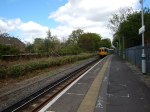
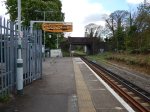
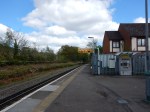
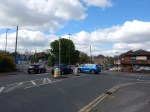
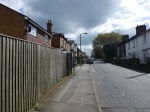
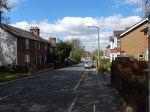
These pictures show Belmont station and the walk to the Royal Marsden Hospital.
Knowing, what I now know of the Royal Masrsden Hospital, it wouldn’t be my choice of hospital.
I don’t think, I’vw seen a hospital with such terrible access by public transport!
Could Third-Rail Tram-Trains Be Used To Increase Services In South London?
I ask this question, as some of the frequencies on suburban lines in South London aren’t up to their equivalent in the North.
Sutton Loop Line
As an example, Sutton Common station on the Sutton Loop Line of Thameslink, has this Off Peak service according to Wikipedia.
The typical off-peak service from the station is 2 trains per hour to Wimbledon (clockwise around the loop) and 2 trains per hour to Sutton (anticlockwise).
Other stations on the loop with this level of service include Haydons Road, Morden South, St. Helier, South Merton, Tooting, West Sutton and Wimbledon Chase.
On the other side of the loop via Mitcham Junction station, the service is augmented by London Victoria to Epsom services, running at two trains per hour (tph).
People might say, that the solution to the poor service at stations on the Sutton Loop Line is just to run four tph in both directions round the loop.
But that would probably mean the Snow Hill Tunnel with its capacity of 24 tph, will become overloaded.
Thameslink’s Route To Sevenoaks
Crofton Park station on Thameslink’s route to Sevenoaks station has this Off Peak service according to Wikipedia.
Two trains per hour to West Hampstead Thameslink and Sevenoaks.
The passengers moan about it as I wrote in The Natives Are Getting Restless In Crofton Park.
They want four tph now!
But again they can’t have them, as it’s the capacity of the Snow Hill Tunnel.
Transport For London’s Philosophy
Transport for London, have released a report on the Bakerloo Line Extension that they call the Option Selection Summary Report.
It is one of those worthy documents, you get from analysing the data from consultations.
But it is full of several nuggets, which although not directly associated with the Bakerloo Line could be very important for passengers coming from or venturing to South London.
They have also provided this helpful map, which lays out possible actions and improvements.
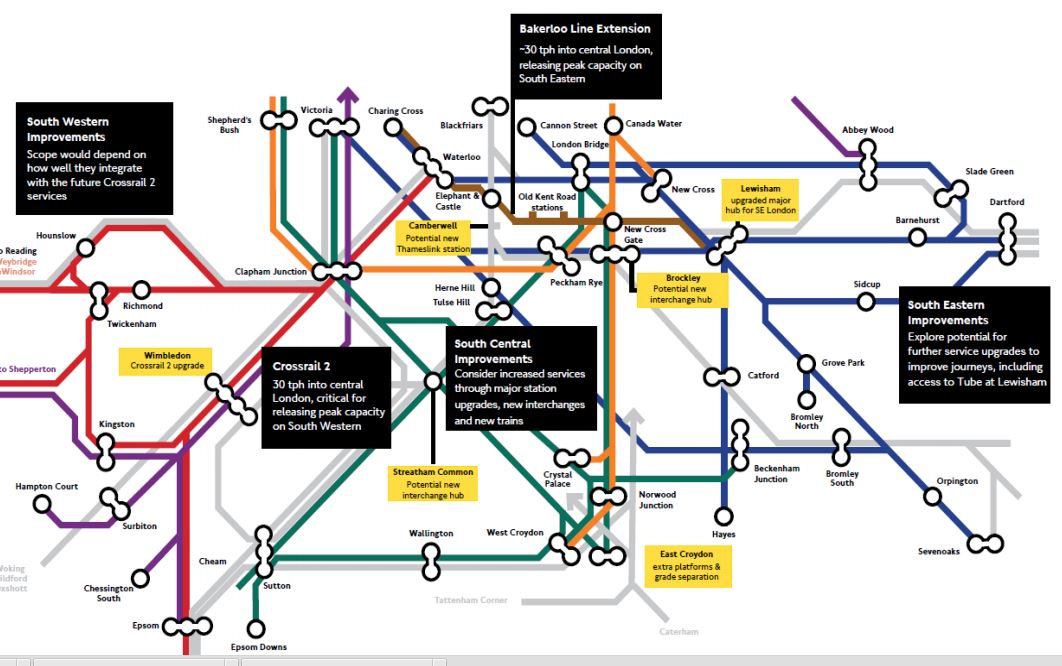
It seems to me that TfL are following a plan to add more transport hubs to their network South of the Thames.
Currently, the following are important interchanges between Underground, Overground, trains, Tramlink and buses.
- Bromley South
- Clapham Junction
- East Croydon
- Greenwich
- Lewisham
- Wimbledon
- Woolwich
Note.
- East Croydon will benefit in a large way from Thameslink, but so will Greenwich and Woolwich in a smaller way.
- Clamham Junction and Wimbledon will be stations on from Crossrail 2, if it’s ever built.
- Lewisham will become the terminus of the Bakerloo Line.
The map and other sources also show other stations becoming important transport hubs or connections.
- Brixton, where all the lines in the area are in a single station.
- Brockley
- Catford, where the current Catford and Catford Bridge stations become one station.
- Crystal Palace, which will soon get extra services from Whitechapel and Highbury and Islington stations.
- Orpington
- Penge
- Streatham Common
- Sutton
London Bridge station shouldn’t be ignored, as after Thameslink is completed, it will be an efficient interchange between the North-South Thameslink services and the Southeastern services between Charing Cross/Cannon Street and the wider South-East.
Put all of these proposals together and could third-rail tram-trains be a useful addition to transport in South London?
I will detail a few possible routes.
Onward From Beckenham Junction To Bromley South or Orpington
In Could Beckenham Junction To Birkbeck Be Run Using Third-Rail Tram-Trains?, I detailed how third-rail tram-trains could be used between Harrington Lane tram stop and Beckenham Junction station to create more capacity.
If run by tram-trains, this service could be extended to Bromley South or Orpington.
Orpington station has four bay platforms facing towards London and Beckenham Junction.
This map from carto.metro.free.fr shows the track layout at the station.
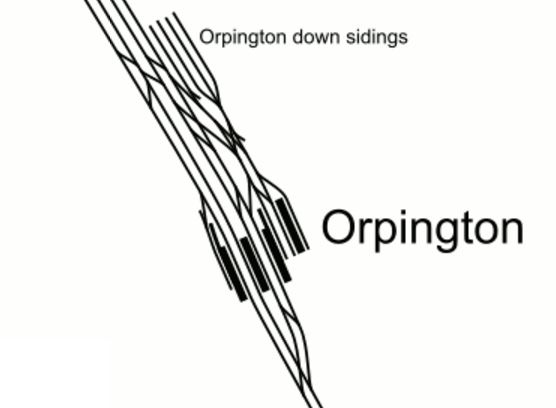
The tracks reduce from four to two at Orpington station, which probably means that tram-trains should probably not go further than Orpington station.
Bromley South station is another possibility for a terminus for tram-trains and this map from carto.metro.free.fr, shows the station layout.
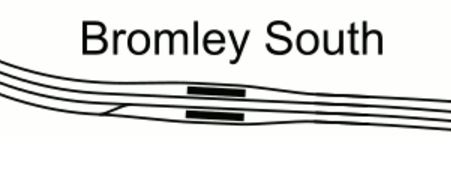
The tram-trains would probably use the two Northern tracks.
At present there are the following services between Birkbeck and Beckenham Junction stations.
- 2 trains per hour between London Bridge and Beckenham Junction
- 6 trams per hour between East Croydon and Beckenham Junction
Looking at the frequencies, I suspect that if two of the trams per hour, were tram-trains and ran to Bromley South and Orpington, this could be accommodated in the timetable.
I think that this route would have the following advantages.
- Bromley South and Orpington stations would be valuable interchanges to Southeastern’s and Thameslink’s Kentish destinations.
- Running tram-trains between Birkbeck and Beckenham Junction stations as tram-trains on a double-track line, must improve capacity and reliability.
- Bromley town centre has been touted as an extension to Tramlink.
Bromley South station, might not be Bromley town centre, but it is only a short walk.
However, if it were needed, I suspect that a single-track spur to serve the town centre could be created to the West of Bromley South station.
This Google Map shows the Southern end of Bromley High Street and Bromley South station.
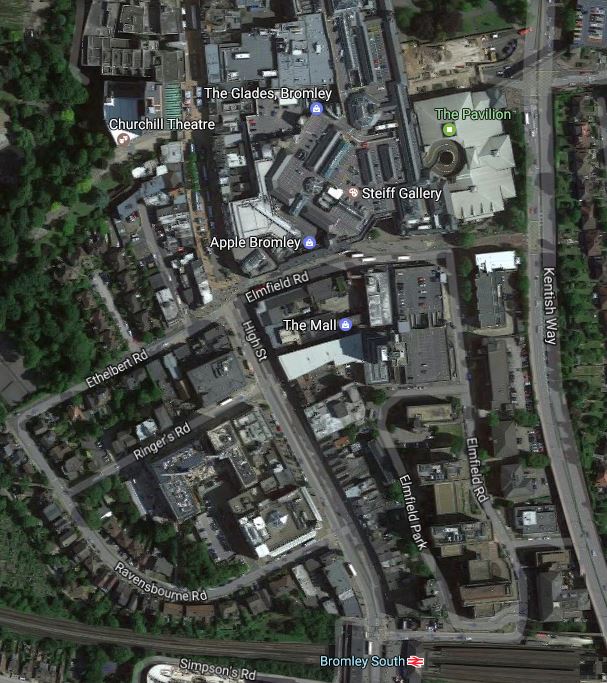
It could probably use battery power to pull up the short hill to Bromley town centre.
- The terminal tram stop could be at the South end of the pedestrianised area.
- The on-street route would be single-track, bi-directional and electrically dead.
- A second tram stop could be provided by Bromley South station.
- The maximum frequency to a single platform would probably be two trams per hour.
In some ways, the town centre tram stop is a bay platform for Bromley South station, that can only be used by tram-trains with a battery capability.
Onward From Harrington Road To Crystal Palace
It was always hoped that Tramlink could be extended to Crystal Palace station and this has been developed as Route 5.
The Wikipedia entry for Harrington Road tram-stop says this.
Transport for London once had plans to extend the Tramlink system to Crystal Palace. These plans were known as Extension D or Tramlink route 4, and would have involved a junction to the north of Harrington Road, with the extension joining the existing railway in the opposite direction to the current line 2.
The planned extension to Crystal Palace was formally dropped by Transport for London in 2008.
But using tram-trains could make this a more flexible low-cost option.
- Battery power could be used to go to the terminus at Crystal Palace Parade.
- Battery trams would be very easy to install in a park, if required.
- A charging station, like a Railbaar, could be provided at the terminus, if the battery running looked like needing assistance.
- Tram-trains could go past Crystal Palace to a station with a suitable bay platform.
This Google Map shows the route.
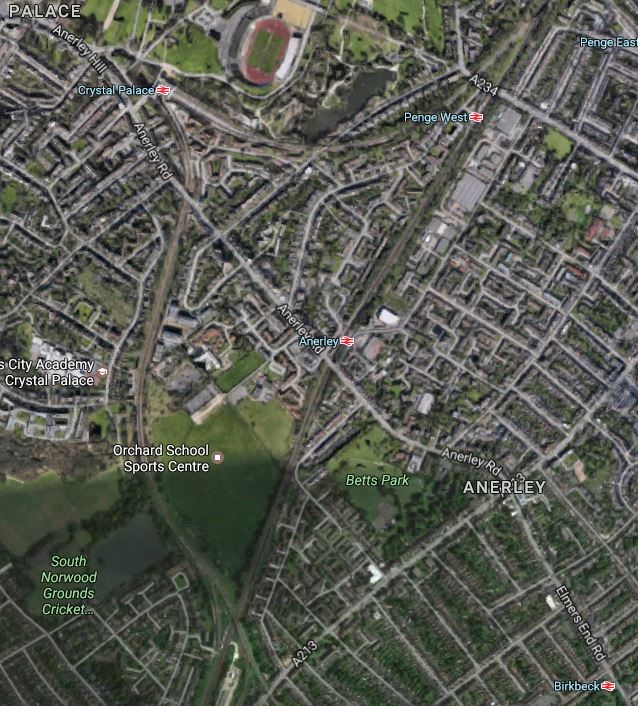
Note Crystal Palace in the North West corner, by the running track and Birkbeck station in the South East.
New tram stops have been proposed at Penge Road and Anerley Road and as the lroute will be run by tram-trains, I suspect that an innovative island station design could serve both tram-trains and trains.
Crystal Palace station, which in a couple of years will have six tph from the well-connected Whitechapel, would benefit from a Tramlink connection.
Onward From Elmers End To Catford
Elmers End station has six trams per house from East Croydon.
This Google Map shows the station.
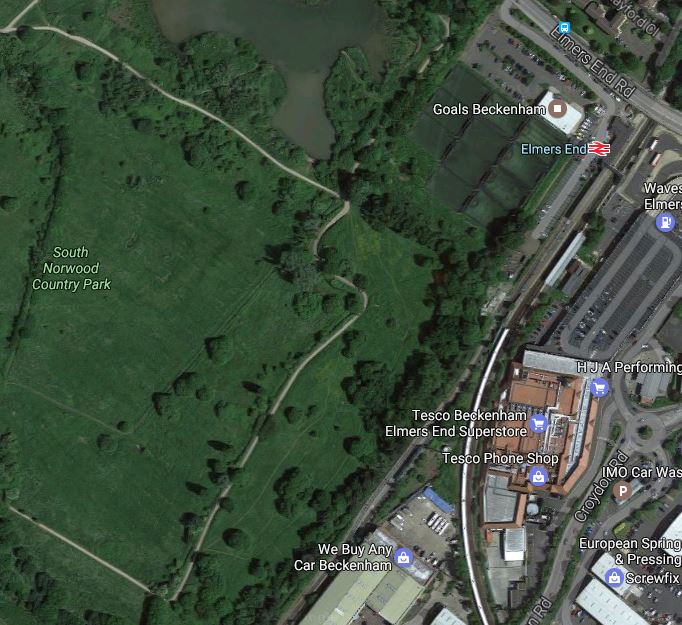
Note how it connects to the Hayes Line and I doubt if it would be difficult to allow through running of tram-trains between East Croydon and stations to the North on the Hayes Line.
The logical Northern terminus would probably be in a new Catford Interchange, which Transport for London have talked about to combine Catford and Catford Bridge stations.
This Google Map shows the two stations and Catford town centre.
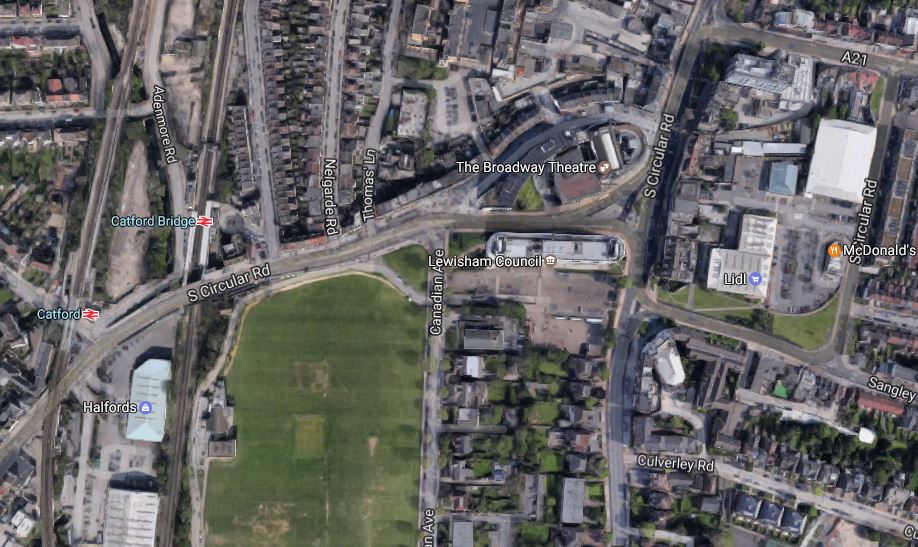
A tram-train could probably run on batteries to the town centre, perhaps with a terminus at Catford Broadway by Lewisham Town Hall and the Broadway Theatre.
But with the right design of the new interchange, the tram-train could go further North to a station with a handy bay platform, if that was deemed necessary.
Increasing The Frequency On The Sutton Loop Line
As I said earlier stations on the Western side of the loop, generally get about two tph in both directions, but those on the Eastern side get an extra two tph going between Victoria and Epsom.
The trains on the line are typically eight-car trains of a variety of types. Capacity may be a problem, but a line like this needs at least four tph all day.
There could also be a case for an extra station to serve St. George’s Hospital and perhaps another as part of the development at Hackbridge.
There is a Hackbridge Masterplan on Wikipedia. This is the first paragraph.
The London Borough of Sutton is working to make Hackbridge the ‘UK’s first truly sustainable suburb’. There has been a regeneration scheme in Hackbridge which has a number of developments on many sites. These are mentioned as part of the Hackbridge Regeneration. Detailed plans include proposals for new eco-friendly homes, more shops, leisure and community facilities, jobs, sustainable transport and pedestrian/ cycle initiatives, improved networks and open spaces.
It all sounds good to me. This is a Google Map of the area.
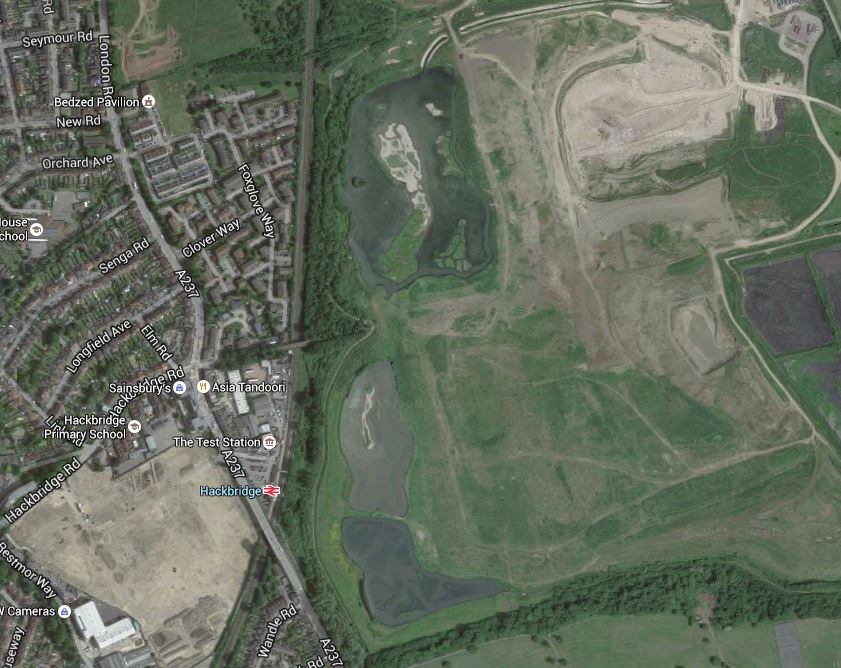
Hackbridge
Note the rail line going up the map with Hackbridge station about a quarter of the way up.At the top of the map, is an icon indicating the BedZed Pavilion.
If they are truly into green transport, it strikes me, that there needs to be another station between Hackbridge station and Mitcham Junction station, which is the next one to the North. As the Tramlink through Mitcham Junction runs down the eastern side of the site and has a stop at Beddington Lane on the north east corner, I would also feel that there scope for extensions to the through Hackbridge.
So for frequency and environmental reasons, I think there is a strong case to improve the Sutton Loop Line.
The obvious way to increase the service would be to have two tph start and finish in a bay platform, at the proposed Streatham Common transport interchange. Not only would it provide four tph on the whole loop, but if the trains were scheduled correctly, all stations on the loop would have the following services to Blackfriars.
- 2 tph direct.
- 2 tph with a change at Streatham Common.
- 2 tph direct via Sutton
- 2 tph via Sutton with a change at Streatham Common.
With good design the change at Streatham Common could be a walk across the platform.
I don’t think that the extra services would need to be eight-car trains, but why use tram-trains?
The tram-trains major advantage is that they could go walkabout to perhaps serve some of the new developments or hospitals like St. Helier or the Royal Marsden.
Using The Sutton Loop Line As A Reversing Loop For Trams From Croydon
This Google Map shows Mitcham Junction station.
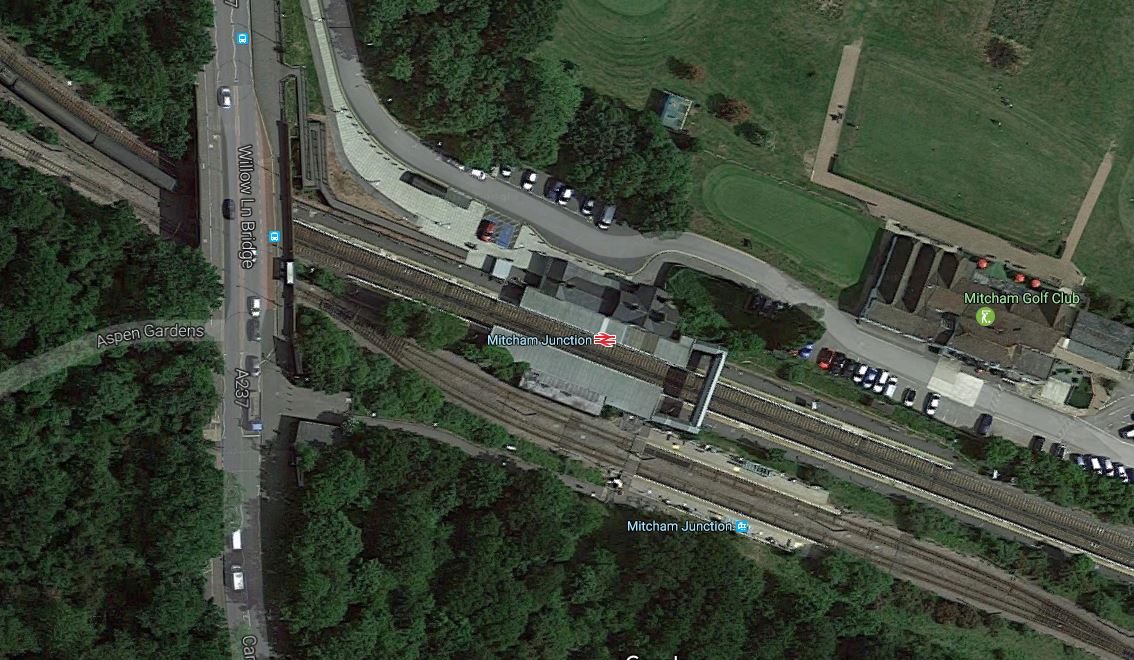
I don’t think it would be too difficult to add chords to the junction, so that a tram-train coming from Croydon could transfer from Tramlink to the Sutton Loop Line. The tram-train would then go round the loop including passing through Wimbledon station on the opposite face of the Tramlink platform.
After returning to Mitcham Junction, the tram-train would return to Croydon.
It may seem a long way round, but there’s probably only a couple of minutes in it.
But it would need a chord at Streatham Common for the tram-trains to by-pass the station.
This Google Map shows the location of the proposed Streatham Common interchange.
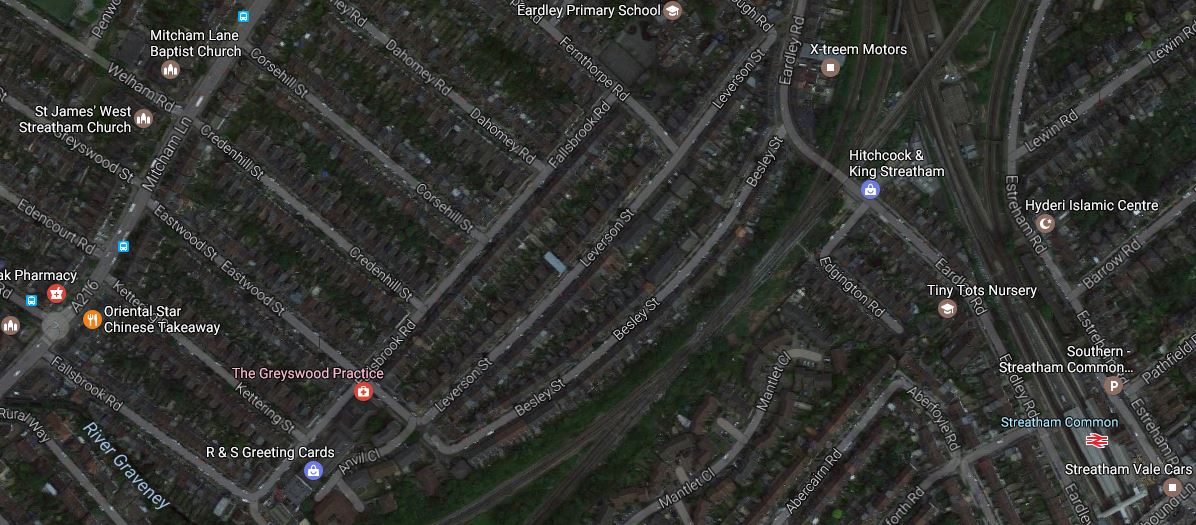
The current Streatham Common station is in the East, The interchange would be built, where the lines cross.
The chord would be built to the South of where the two lines of the Sutton Loop meet, at the bottom of the map.
The track could be adjusted, so that tram-trains could go round the loop both ways.
Will The Victoria-Epsom Service Call At Streatham Common Interchange?
Stops with modern trains are much quicker than they used to be only a few years ago.
So If the design of Streatham Common station and the timetable could allow a fast interchange, it might improve journey times for those living on the Wimbledon side of the Sutton Loop Line, which don’t get direct services from Victoria.
The Proposed Tramlink Extension To Sutton
The proposed Tramlink route Between South Wimbledon And Sutton is possibly a worthwhile extra public transport link to throw into the mix. It is described under Extension A in the Wikipedia entry for Tramlink. This is said.
In July 2013, Mayor Boris Johnson affirmed that there is a reasonable business case for Tramlink to cover the Wimbledon – Sutton corridor. A map has been released showing the planned route. It would leave the existing route just to the east of Morden Road and head along the A24 and A297 to Rosehill Roundabout, then the B2230 through Sutton town centre, ending at the station. A loop via St Helier Hospital and a possible extension to Royal Marsden Hospital also are shown.
This is a map of the route.
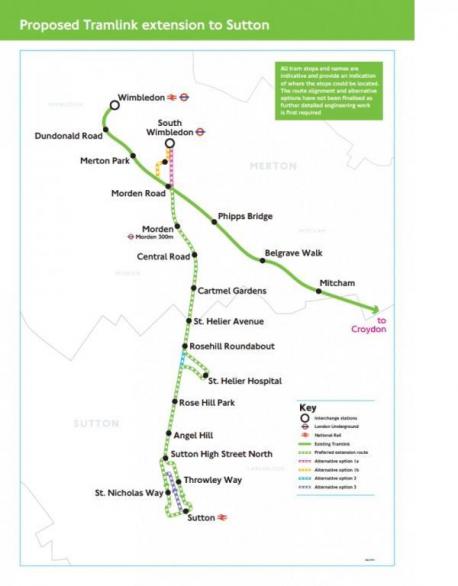
So how would third-rail tram-trains using the Sutton Loop Line affect the proposed Tranlink Extension to Sutton?
- There are at least four tph in both directions on the Sutton Loop Line.
- The trams will reach Sutton, but only running as trains.
- St. Helier Hospital is not served.
- Tram-trains could possibly serve the Epsom Downs Branch, in addition to the direct services to Victoria.
I describe how third-rail tram-trains could serve the Epsom Downs Branch and the Royal Marsden Hospital in Could Third-Rail Tram-Trains Work The Epsom Downs Branch?
 The Anonymous Widower