The 10:35 From Liverpool Street To Shenfield
I took these pictures on the untimetabled 10:35 TfL Rail service between Liverpool Street and Shenfield stations and on the return to Liverpool Street.


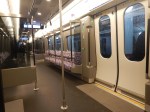
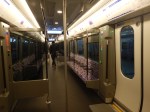


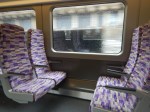
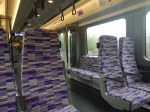

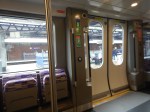


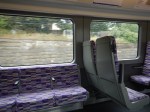
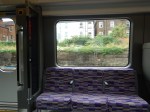


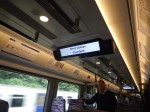


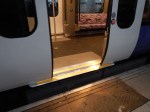

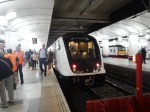
As you can see it is a new Class 345 train.
There were a lot of Crossrail and Transport for London staff about, talking to passengers.
These are my thoughts on various issues.
Ride Quality
This is up with the best or the legendary British Rail Mark 3 coach, which was designed in the 1960s.
One of the Crossrail staff was wearing stiletto heels close to four inches and she was walking up-and-down with no difficulty.
For someone who suffered a bad stroke, my balance is good and I had no difficulty walking along the seven-car train.
Cabin Height And Width
I don’t know how Bombardier have done it, but the cabin seems higher and wider than any other train I’ve ridden in the UK.
Next time, I ride one, I’ll take a couple of tall guys and a tape measure.
Information
The current on-train information is simple, but then as I suspect the screens are software driven, any degree of required complication can be added.
I don’t know whether it is deliberate but everything is large and easy to read. There is also no maps or exhortations about security.
Long may it stay that way!
Simple is efficient!
Seats
Not everybody was completely satisfied with the seats, but I found them much more comfortable than those in the Class 700 trains on Thameslink.
There were some good points.
- The sets of four seats were arranged as they were in the original InterCity 125 around a large window.
- The metro-style seating had a wide aisle in the middle, that would satisfy a basketball team.
- An amply-proportioned man, thought the seats comfortable.
- Most seats had well-designed armrests.
- There was plenty of space under the seats for airline-size carry-on baggage or a labrador.
On the other hand, there were no cupholders, tables or litter bins. But there aren’t any on the Class 378 trains or London Underground‘s S Stock.
Entry And Exit
I feel that trains should be a level step across from the platform.
This train wasn’t as good as a Class 378 train on many Overground stations, but it was better than some.
As many Crossrail stations will be one train type only there is probably scope to get this better.
I regularly see a lady in a simple wheel-chair on the Overground and I feel she would probably be able to wheel herself in and out, which she does at Dalston Junction station with ease.
It should be noted that each coach has three sets of wide double doors and a large lobby, so perhaps a mother with triplets and a baby in a buggy would find entry easier than any train on the Underground.
Walking Up And Down The Train
I found this very easy on a train that was no more than a third full, as it was an extra service to introduce the train to passengers.
There were numerous hand-holds and vertical rails in the centre of the lobbies. Unlike on some trains in France, Italy or Germany, the rails were very simple. They also borrowed heavily from the Overground’s Class 378 trains.
Wi-Fi And 4G
I didn’t try the wi-fi, as it is not something I use very often.
But I was getting a strong 4G signal all the way to and from Shenfield. Was this direct or was I picking up a booster in the train? I suspect it was the latter at some points close to Liverpool Street.
Windows
The windows on the train are large and well-positioned.
The simple seat and window layout, seems to appeal to all classes of rail user.
A Train For Families
When Celia and I had three children under three, with two able to toddle-along (they had too!) and the youngest in his McClaren, I could imagine us taking a train from Barbican station to perhaps go shopping on Oxford Street, sitting in one of those set of four seats by that large window.
A Train For Commuters
The Class 378 trains of the Overground cram them in and the metro layout of much of the Class 345 train will accommodate large numbers of commuters.
I would question, if there are enough seats, but the proof should be apparent by the end of the year, as eleven of the current seven-car trains will be in service between Liverpool Street and Shenfield.
For the full Crossrail service, they will be lengthened to nine cars and there is a possibility of adding a tenth.
A Train For Shoppers
If say, I’d been to Eastfield at Stratford and was coming back to Moorgate heavily loaded with shopping to get a bus home, I could probably put some bags under the seat. Try that on the Underground!
A Train For The Not-So-Young
From what I saw today, I couldn’t make too many observations, as the train wasn’t crowded, but the few older travellers that I did see were smiling at the experience.
A Train For The Disabled
As I’m not disabled, I can’t comment and would love to hear from those who are.
A Train For The Tall
Compared to other trains in London, the headroom seemed to be generous, but then I didn’t see anybody who was much more than six foot.
A Train For The Airport
Class 345 trains will serve Heathrow Airport. I feel they will cope, as the metro layout of the Class 378 trains, seems to accommodate large cases well!
Comparison With A Class 700 Train
The Thameslink Class 700 trains are designed for running over a longer distance at a higher speed and they have toilets.
But for a thirty minute journey through a busy part of London, there is no doubt in my mind, as to which train I would choose.
The Class 345 train, with its large windows, more comfortable seating, space for bags, uncluttered views and the appearance of more space, is undoubtedly in my view a better designed train.
Incidentally, for every metre of a nine-car Class 345 train, 7.31 passengers can be accommodated, as opposed to 7.07 in an eight-car Class 700 train.
I think we can put all this comparison down to Derby 1 – Krefeld 0!
Comparison With A Class 387 Train
The trains will be compared with Bombadier’s last Electrostar, the Class 387 train, which will be in service with GWR between Paddington and Reading, alongside the Class 345 train.
Passengers will be able to take whichever train they want on this route.
Will they choose the Class 387 train, with its tables, very comfortable seats and toilets or the Class 345 train?
I’d choose the Class 387 train, as I like to lay out my newspaper for reading.
No matter what happens Derby wins again.
Moving Forward On Approach To Liverpool Street
I was surprised how many people walked to the front as we approached Liverpool Street.
But were they only demonstrating the Londoners’ ducking and diving ability of getting to the right place for exit.
Regular passengers on regular routes will anticipate their stops and I will be interested to see how much passenger behaviour increases the capacity of the train.
Conclusion
This first Aventra feels like it is a very good train.
Consider how Bombardier improved the Electrostar since it was first produced in 1999.
So what will an Aventra be like in 2035?
Improvements To South Kensington Tube Station
Transport for London have announced that they are looking for a partner to improve South Kensington tube station.
It’s all described in this article in the Construction Enquirer, which is entitled TfL invites bids for South Ken tube station revamp.
The following improvements are mentioned.
- Improve the retail and commercial units of the station.
- Refurbish the buildings at 20-34 Thurloe Street.
- Restore the Grade II Listed entrance to its original state.
- Provide step-free access to the District and Circle line via a new station entrance on Thurloe Street.
- Bring a disused Eastbound platform back into use.
- Improve the gate line and emergency exits.
There will also be some extra development on TfL’s land.
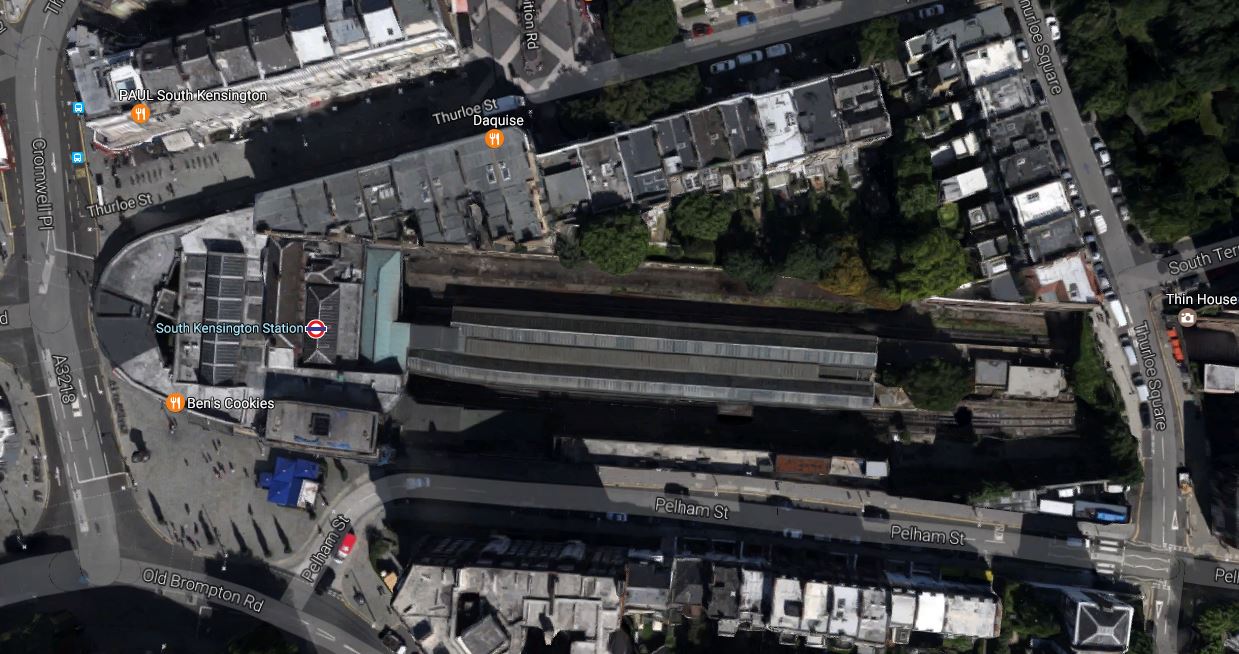
This Google Map shows the layout of the station.
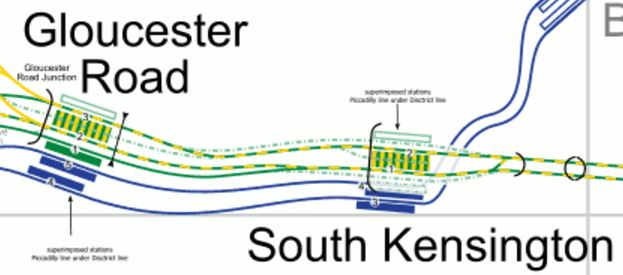
And this map from carto.metro.free.fr shows the layout of the lines.
TfL are hoping work can start next year.
Has Sadiq Khan Got His Sums Right?
This article on the Rail Technology web site, which is entitled Underground set to undergo biggest capacity expansion ever, is a good summary of Sadiq Khan’s plans for Transport for London.
It’s All About Cash Flow
I am unsure about the plans, as it seems to me that a there is a lot of money to find in two years less to fund the building of the Bakerloo Line Extension.
So there is the double whammy of the fare freeze and accelerated construction!
Crossrail And Thameslink
I also think that Crossrail will contribute some of this money and because it is properly designed, it will stimulate growth in areas like Canary Wharf, Farringdon, Old Oak Common, Paddington, Romford and West Drayton, to name a few places.
The same however, can’t be said for Thameslink.
- It doesn’t serve many areas ripe for development.
- As it is not a TfL route like Crossrail, it won’t generate anything like the same fare revenue.
- Thameslink could turn out to be too much of a long-distance commuter line.
- Govia Thameslink Railway’s first loyalty is not to London.
On the whole, I don’t think it will benefit London as much as Crossrail will.
The Underground
Until I learn otherwise, I do think that the engineers of the Underground, may have thrown the Mayor a few lifelines.
- It would appear that the Victoria and Jubilee Lines can go to 36 trains per hour (tph).
- By raising the voltage and installing automatic train control on the sub-surface lines, there can be a 33 % increase in capacity.
- New Piccadilly Line trains will be ordered in 2017.
One and two, should happen easily and if the design is right, three could be a big game-changer.
But the problem, is that although these will generate cash flow in the long term, only 36 tph on the Victoria Line will happen in the near future.
I also feel, that although the capacity of the Victoria Line can easily be increased, will the stations be able to cope. Highbury and Islington, Oxford Circus and Victoria are not mentioned in the article.
All of these trains and passengers will also generate lots of heat and although Crossrail is designed to handle the watts, the deep-level Underground trains and stations were not.
This might mean a route change by passengers from older lines to Crossrail, which could have various effects.
The Non-Devolution Of Rail Lines To TfL
I have a feeling that the figures show that this is very much neutral to TfL’s finances, as some of the routes need a lot of money spent on stations and new trains. But under the new arrangement, TfL will probably have more say in service quality on the lines, than they do now.
Good Design Of The Bakerloo Line Extension
There must surely be scope to save more money in the design of the Bakerloo Line Extension. But I suspect that most of the easy savings have already been found.
However, I wouldn’t be surprised to see a radical design for the extension come out at a late stage. But this is less likely, as because the line is an extension, it must be compatible with the existing line.
The Petty Cash
I think that where the Mayor might make up the shortfall is in the smaller things, that people forget.
For example.
- Expansion of the Night Tube to all lines, the Drain and the Overground.
- Tactical and expanded contactless ticketing.
- Better train scheduling.
- Expansion of the Gospel Oak to Barking Line and the Barking Riverside Extension.
- Expansion of the East London and Lea Valley Lines.
- Extra stations and station entrances.
- Development of Old Oak Common.
But some things already proposed will be tricky.
- I don’t think that he’ll save the money he wants on staff.
- Politicians always overestimate what they’ll earn from property development.
- You can only build so much affordable housing.
- Developers might find building housing just outside London is more profitable.
- The Mayor could have Union trouble.
There are probably a lot more where these came from.
Conclusion
With Brexit and Trump, there is a possibility of a drop in passenger numbers and income, which could derail everything.
It will be a close run thing.
Autumn Statement: Is Rail Devolution In London Dead?
This is the title of an article on the BBC web site.
This is how the article starts.
Sadiq Khan is not the first mayor to want more control over London’s rail service.
Previous mayors have managed it – Ken Livingstone took over Silverlink and Boris Johnson gained control of West Anglia.
But it looks like the chances of more takeovers are not that promising.
The article then goes on to make the point, that the timescale for taking over Southeastern metro services is very tight.
As time is a very absolute constraint, action needs to be taken now!
Behind London’s Contactless Ticketing
I have just read this article on London Reconnections, which is entitled Don’t Fear the Beeper: Bus Hopper Tickets and the Future of Oyster.
It is fascinating stuff and a lot consists of an interview with Shashi Verma, TfL’s Director of Technology and Customer Experience.
One thing that surprised me is that Oyster and Contactless have separate back-ends, but the two will be combined in 2018.
So I think we’ll see lots of new features coming in after 2018.
As many of these will improve the customer experience, isn’t Sadiq a lucky Mayor, as he’ll get the credit rather than the geek who had the idea and did the coding.
This is said in the article about the Bus Hopper
This isn’t to say, of course, that the Hopper was an entirely new idea.
“[It] is something we have wanted to do for years and years.” Verma confirms. “But we haven’t wanted to do in the way that some politicians have wanted it to be done.”
So it was there all along.
How many other things will be possible, when the back offices are combined?
Use With Railcards
According to this page on the TfL web site, railcards don’t work with contactless cards.
I would suspect that one feature after 2018, would be that if you create an account for contactless or Oyster and add a railcard to the account, your fares will be adjusted accordingly.
The system could also handle the very popular Two Together Railcard. You’d just register two accounts for each traveller with the same railcard, then if they’re both used within say five minutes for the same journey, the back office applies the discount.
Use With Freedom Pass
Once the back offices are combined, the Freedom Pass could be made to work in two ways.
As now!
Or it is registered in your TfL account along with your contactless card and the back office would charge you an appropriate fare.
So if say I wanted to go to Gatwick Airport or anywhere in the Oystercard area, I just tap in and out with my contactless bank card and the back office charges be the £3, I would be charged if I went to East Croydon using my Freedom Pass and left the station before coming back in using contactless to get a train to the Airport.
If such a method was possible, I would certainly use it, as quite a few of the journeys I do are just outside the Freedom Pass area, but still within the Oystercard area.
It would then mean that I would only have to carry one card in my pocket.
The Outer London Freedom Pass
Say you live in one of the administrative districts that ring London. I’ll use Epping Forest as an example.
Because of your age or circumstances, you are entitled to a bus pass, but you get no free travel on trains or the Underground.
If your local authority decided to have a Freedom Pass scheme for all travel in the district, you would get any train or tube travel between stations in the local authority or to the boundary of the area, free.
In the case of Epping Forest, you’d get the outer reaches of the Central Line.
So if you were travelling from Theydon Bois to Liverpool Street, you’d only get charged for the tube between Woodford or Grange Hill and Liverpool Street.
You would create a contactless/Oyster account on TfL and add your bus pass and/or railcard to the account.
The back office would do the rest and you’d travel all over the Oystercard area using your contactless card.
I think that some local authorities could look at this concept seriously to encourage card holders to shop locally.
Stations Could Allow Freedom Passes Outside Zone 6
I’ll take Greenhithe for Bluewater station as an example.
The clue is in the station name.
Suppose that the Shopping Centre felt it would get a lot more business from Freedom Pass holders if it were to be in Zone 6, would it pay for the cost of tickets for Freedom Pass holders to attract them to their relaxed shopping experience.
It should be noted that there are already stations outside Zone 6, like Watford High Street and Shenfield stations, that allow Freedom Passes provided you use the London Overground or TfL Rail.
Other possibilities include.
- Gravesend by an extended Crossrail.
- Gatwick Airport
- Watford Vicarage Road
- Windsor
Who knows, which local authorities, events and attractions would find subsidising travel worthwhile.
Imagine for instance Winter-only Off Peak use of a Freedom Pass to say Brighton or Southend.
Conclusion
Travel in London is going to get even more interesting.
I look forward to the day, when I have a single card in my pocket!
A Contactless Card Explosion
According to Becky Barrow in the Sunday Times, it not yet ten years since contactless cards were introduced.
She says that during the first six months of this year, we spent £9.3billion using the cards.
In the same period of 2009, we spent just £315,953 and half of that was Patsy and Edina in Harvey Nicks.
That is some increase.
When contactless cards were introduced on London’s buses, after listening to quite a few idiot techophobe politicians, I set up a very tight Internet trawl about ticketing problems on London’s transport.
I have not found a single problem reported in a newspaper or web-site.
My problem with contactless cards, is that I can’t use them for small train or tram trips outside London. Every train company and local authority seems to be reinventing London’s wheel.
No wonder London gets all the tourists!
I also had a small problem where a branch of a well-known store set up their tills incorrectly and AMEX thought it was fraud and refunded my purchases.
Is This The Most Significant Public Transport Development Of This Century So Far?
This article on Rail News is entitled Contactless export deal will help London fares freeze.
Whether the deal does keep fares down is irrelevant to me in London, as I get London’s extensive transport network for nothing! The only benefit, I’ll see is new services paid for by licencing revenue.
But how long will it be, before, when I go to say Birmingham, Berlin or Bucharest, that the only thing I will need to use public transport will be a contactless bank card?
Everything is now in place for all cities to use a similar system to London!
The only reason, it won’t get used in a city or public transport area, is that mistakenly because of NIH syndrome, politicians have gone their own route, which are incompatible with contactless bank cards and mobile devices impersonating them.
Say for instance Paris, Venice or New York didn’t allow the use of cards and devices, how would their visitor revenue drop?
I trawl the Internet extensively for reports of contactless cards used on public transport in London.
- I have not found one adverse report on the media, although I have found a couple of travel sites recommending using a bank card as a ticket in London.
- Remember that you get the same price as Oyster, which is less than cash, without having to use a special card.
- Oyster use is dropping in London.
- Carrying umpteen cards is so twentieth century.
- How much money do people have lying dead on Oyster cards, they’ve mislasid in old jackets etc.?
- There was a big worry from the left, that cashless and contactless ticketing would hurt the less well off. This Luddite-view has been shown to be totally wrong, with some of the highest non-Oyster use in London’s poorest boroughs.
- There has been a reduction of attacks on staff, as the only money they carry is now their own.
- I have been unable to find a report of someone using a stolen contactless card as a ticket.
The world will embrace London’s model and now, that Cubic has the licence, there is nothing to stop the march of contactless bank card ticketing.
Except of course stupid politicians!
A Good Information Board
I saw this information board at Kings Cross station.


I think the seat on the right, should be by the Tube Map.
But it’s a good attempt!
An Announcement From TfL
This article in Rail Technology Magazine is entitled Battersea Power Station to be extensively redesigned for Northern Line extension.
I think that they’ve found that putting together the new Battersea station, is not as simple as the developers thought.
In fact, they could have discounted it, as how many of the developers, architects or owners of the new properties will actually use the line?
But Londoners, visitors and others are looking forward to the Northern Line Extension, as it gives access to an area, that is not the easiest place to visit, unless you use several buses or a long walk.
However, the most significant news in the article is the last paragraph.
At the same meeting, the committee were also asked to authorise TfL to submit a proposal for a final fixed licencing price in order to commercially exploit the software used in its contactless payment systems.
Does this mean, that London’s contactless payment system will be seen all over the world?
I certainly hope so, as I’ve never found a system that comes within a hundred miles of London’s proven go-anywhere ticketing on either an Oyster-like card or a contactless bank-card.
If I ruled the world, I’d make this compulsory for all public transport!
It would create the biggest economic stimulus to tourism and trade, since coins were first used in the Iron Age.
 The Anonymous Widower