New Rail Testing Scheme Launched For Small Businesses
The title of this post is the same as that of this article on Rail Technology Magazine.
This is the first two paragraphs.
Businesses in the West Midlands are being offered subsidised access to test and trial facilities as a way to boost railway innovation.
The University of Birmingham has joined forces with Quinton Rail Technology Centre (QRTC) to offer access to the UK’s only privately owned and independent outdoor rail testing and trialling site.
There would appear to be one major condition, companies must be signed up to the DIGI-RAIL program at the Uiversity of Birmingham.
I think this concept is an excellent idea, as often finding a way to test a new product, is the most difficult part of the development process.
But why restrict the process to rail developments?
I have had friends in Cambridge, who have been involved in medical developments.
Finding a route to test their product, often means finding an overseas partner, as much of the NHS and its research partners almost have a policy to exclude, ideas that they didn’t think of.
As someone, who helped fund the successful development of a metered-dose inhaler for asthma drugs, I can honestly say, we would have been greatly helped by a far-sighted agency attached to a reputable University.
Oxford Splashes Out On £4bn Science Hub
The title of this post is the same as that of this article on page 8 of today’s copy of The Times.
Legal & General is investing the four billion in three related projects.
- Affordable homes for post-gradiates and staff.
- An innovation hub in Begbroke.
- An innovation quarter at Osney Mead.
Oxford is breaking out!
If I have one criticism, it is that Begbroke and Osney Mead appear badly placed for rail and bicycle access.
As some of the best innovators and researchers are short of money, this could be a mistake.
All our universities; large or small, ancient or modern, must come to the aid of the country!
Disappearing Balances
One of my old school friends came round last night for a drink and a chat. At one point, I used my letter balance to weigh something.
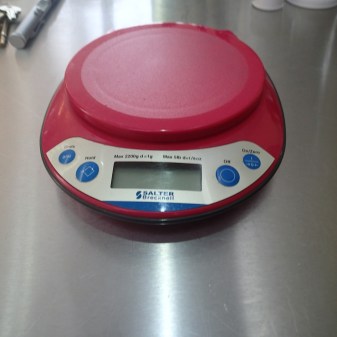
My All-Purpose Balance
They said, that at the University, where he works, they have given up on expensive weighing machines and now use cheap letter balances, as the students nick them, to weigh out their drugs.
Such is University life these days!
John Lennon Gets A Building
I don’t know what John Lennon would have thought about this building at Liverpool John Moores University.



But at least it’s an impressive one in a prominent place in the City!
Which Is The Best UK University For Students With Coeliac Disease?
When I went to Liverpool University in the 1960s, I hadn’t been diagnosed with coeliac disease, but this article from the BBC web site about students with nut allergies got me thinking.
In my travels around the country, I find cities and towns vary with their knowledge of the disease. For instance, London, Brighton, Cambridge and Liverpool are easy cities for a coeliac and others like Ipswich, Blackpool and Middlesbrough are difficult.
I think drinking could be the biggest problem, as it is only in a few places you can drink a pint of something gluten-free, like real cider. At least these days, there is a wide availability of microwaveable meals from the major supermarkets that are gluten free and there are now reliable Indian restaurants, who cook with gram flour everywhere. And you can usually find a Pizza Express. Who’d have thought that good gluten-free pizza would be available nearly everywhere, a few years ago?
I think in the 1960s, being a coeliac, would have been a real problem at university and I probably would have taken an easy option to stay in London with my aunt. I couldn’t have lived with my parents in Felixstowe, as there was no University in the county.
So my life as a coeliac would have been totally different. I certainly wouldn’t have met my wife and would have missed out on forty very happy years.
Checking Foreign Aid
There has been a lot of discussion in the last day or so about foreign aid and whether it is worth it.
A few years ago, I went to a presentation by a senior manager in Unicef.
They said, one of the biggest problem, was checking that aid was spent correctly. Ask the government if the £2million had been spent on say measles immunisation and you would get the answer the government wanted you to hear.
So Unicef always asked an independent organisation, such as a University to check. Even in some of the poorest and less academic countries, academic standards usually ensured that Unicef got an honest answer, they could trust.
The British government should use similar methods to check all aid is correctly spent on what it was intended.
A Clever Funding Route From Huddersfield University
Huddersfield University has teamed up with peer-to-peer lender; Funding Circle to create an interesting route to finance and develop small businesses. It is described in this article. These paragraphs sum up the essence of the scheme.
Known as the Business Lending Partnership, Funding Circle’s recently-announced scheme alongside the University of Huddersfield has set a precedent for commercial and alternative lenders to start providing capital for non-traditional institutions.
Using Funding Circle, the university will lend an initial tranche of £100,000 to small businesses across the UK. The initiative seeks to support SME pioneers of the present and future, with all interest earned by the university’s investments to be put towards student scholarships for the University’s ‘Enterprise Development’ degree. Over the next five years, it is expected that more than 200 students from socially deprived backgrounds will gain access to the course.
Both Funding Circle and the university will also develop a series of seminars and internship opportunities with borrowers to ensure that the upcoming generation of business leaders can gain hands-on experience with flourishing British businesses as part of their degrees.
Obviously, not all partnerships will use the same model, but Huddersfield University and Funding Circle have used a clever model that can be cloned and/or adapted for other partnerships.
It will be interesting to see the nature of partnerships that develop in the next few years.
Crowd Funding For Research
I sometimes get involved in helping research projects at Liverpool University and I will also lob small amounts of funding towards projects I think are worthwhile.
I also look into innovative ways of raising funding for individuals and businesses, like Zopa and Funding Circle. I also loan money to the Developing World using Kiva.
So can their methods be used to raise funding for research projects.
Let’s take a researcher interested in how patients manage with the gluten-free diet, they need for coeliac disease. They perhaps want to interview as many patients as possible and produce a report that highlights both the problems and the successes, possibly on a regional basis.
So they have two needs.
A small amount of money is probably required, the size of which would depend on the size and scape of the project.
The second thing, that many projects, like the mythical one I outlined, often need subjects for the research.
Surely, a properly designed system could do both.
Similar things have been done under the general heading of crowd funding. There’s more here on Wikipedia.
How would such a system work? I would steal some of the methodology from sites like Zopa and Kiva.
The on-line system would be uploaded with suitable research projects, which borrowing from Zopa’s methods, would be checked as to the veracity of the researcher.
Prospective funders and participants would join and then search for projects, they might like to support, just like you search for suitable borrowers on Kiva.
Obviously, you could also rate researchers, just as you rate buyers and sellers on eBay.
There are some obvious winners, if this could be made to work!
I know from those in Universities, I’ve talked with, that getting funding for small projects is difficult and a lot of time and money is wasted.
Are there going to be any losers? Not directly, but I suspect some charities and their inefficient structures might be by-passed.
I will probably not develop the system, but someone will! On the other hand, if anybody wants to, I’ll be happy to advise.
More New Universities
We’ve just had a whole new set of universities created, as the BBC reports here.
I would have thought we had enough. On the other hand Cornwall gets its first university and other colleges like the Royal Agricultural College are upgraded.
The Development of the New Bus for London
I went to a lecture last night at the Institute of Mechanical Engineers about the New Bus for London. A very good lecture, given by David Barnett, the Development Engineering Manager of The Wright Group, who build the bus.
His talk should be recorded and shown to all students, who might think they would benefit from going to University to do engineering, as it showed how innovative thinking can transform a product as everyday as a bus.
I think the lecture, also confirmed my view, that the buses we ride in ten years from now, will be even better. The current New Bus for London is just the start of the development of buses that will transform the way we get around.
I think it is worth emphasising that buses, trams and trains are only part of a transport system. They need to be backed up by all kinds of information technology from simple maps to web pages and mobile phone apps, so that passengers find their way around with ease.
 The Anonymous Widower