Essex Councillors Call For Underground Link
The title of this post, is the same as that of this article on Railnews.
This is the first paragraph.
Councillors in Harlow are calling for a new Underground link, saying that they are examining ‘all possibilities for improving and modernising transport connections’.
I’ve tackled this subject before in Does Harlow Need An Improved Train Service?, but this time I’m starting with what is possible and working backwards.
Harlow’s Current Train Service
Currently, these trains serve Harlow Town station.
- Stratford and Bishops Stortford – 2 tph – via Lea Bridge, Tottenham Hale, Waltham Cross, Cheshunt, Broxbourne and Sawbridgeworth
- London Liverpool Street and Cambridge North – 1 tph – via Tottenham Hale, Cheshunt, Broxbourne, Bishop’s Stortford, Audley End, Whittlesford Parkway and Cambridge
- London Liverpool Street and Cambridge North – 1 tph – via Tottenham Hale, Cheshunt, Broxbourne, Roydon, Sawbridgeworth, Bishop’s Stortford, Stansted Mountfitchet, Elsenham, Newport, Audley End, Great Chesterford, Whittlesford Parkway, Shelford and Cambridge
- London Liverpool Street and Stansted Airport – 1 tph – via Tottenham Hale
- London Liverpool Street and Stansted Airport – 1 tph – via Tottenham Hale and Stansted Mountfitchet
In addition these services run through Harlow Town station without stopping.
- London Liverpool Street and Stansted Airport – 2 tph – via Tottenham Hale
Note.
- tph is trains per hour
- The Stansted services are fast services and take 29 minutes between London Liverpool Street and Harlow Town.
- The other services seem to take a few minutes longer.
Summarising the services gives the following.
- Eight tph pass through the station of which six tph stop.
- Cambridge and Cambridge North has a 2 tph service.
- London Liverpool Street has a 4 tph service.
- Stansted Airport has a 2 tph service.
- Stratford has a 2 tph service.
- Tottenham Hale has a 6 tph service.
Each of Greater Anglia’s new Class 720 trains, when working as a ten-car formation can carry well over a thousand passengers.
Harlow Town station has a fairly good service, but it could probably be improved.
What Are Harlow’s Councillors Suggesting
This paragraph in the Railnews article gives the councillors wish list.
Harlow Councillor Michael Hardware is portfolio holder for strategic growth. He said: ‘With Harlow’s close proximity to London our plans include investigating the potential for the extension of the central line to Harlow, lobbying to extend London Transport Zones to Harlow, examining connectivity to Crossrail 2 and promoting four tracking of the main line to Stansted Airport as well as improving existing public transport links in and out of the town.
I’ll look at each proposal in turn.
Extending The Central Line To Harlow
Epping and Harlow are about nine miles apart.
This Google Map shows the two towns and the M11 that runs to the East of both towns.
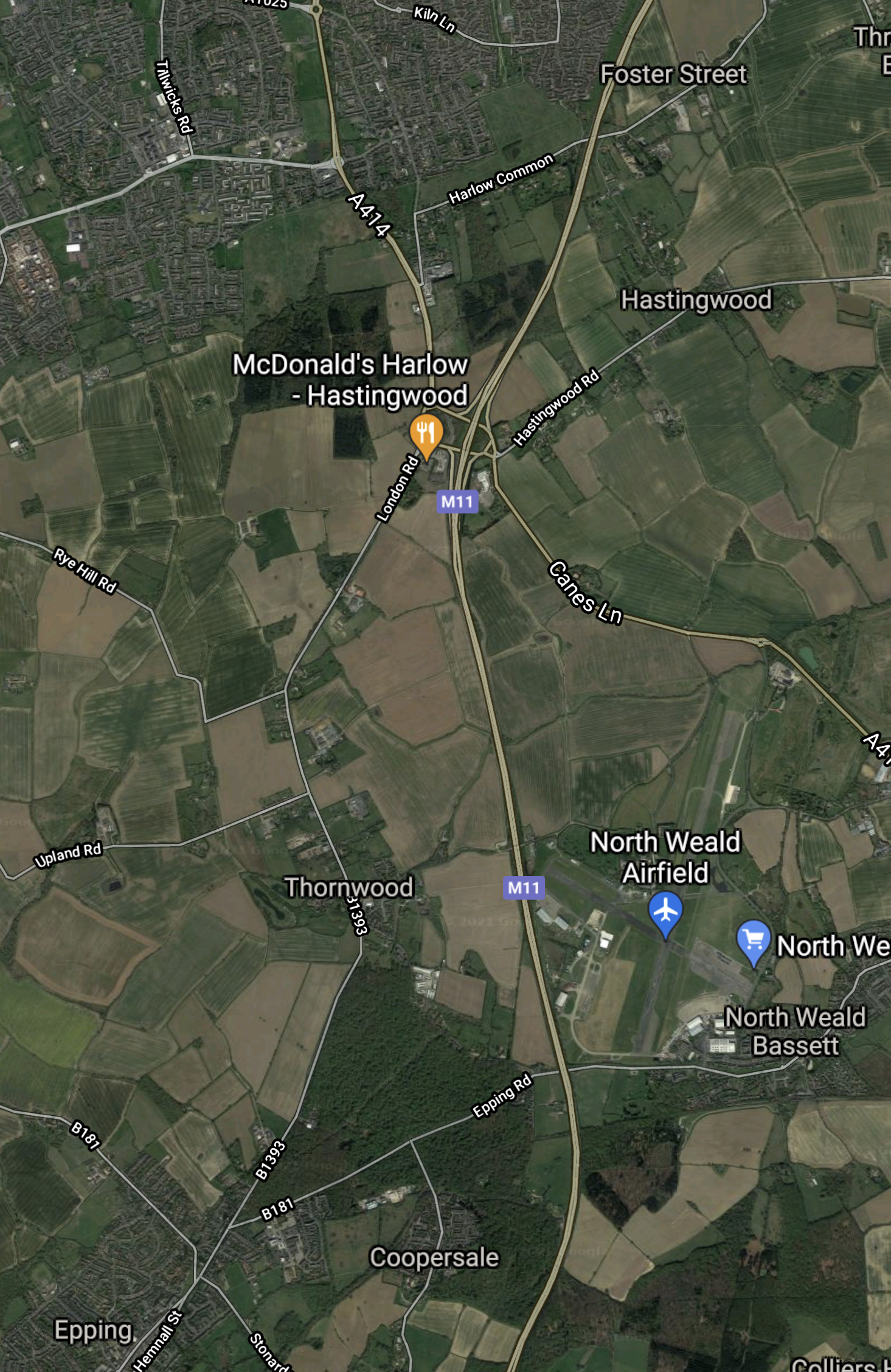
Note.
- Epping is in the South-West corner of the map.
- Harlow, which is a large town of nearly 90,000 residents is at the top of the map.
- The M11 runs North-South across the map to the East of both towns.
- North Weald Airfield lies to the East of the motorway.
Would it be possible to run an extension of the Central Line from Epping to Harlow?
It could run up the West side of the motorway.
- The terminus could be in South-East Harlow close to Junction 7 of the M11.
- Any plans for the development of North Weald Airfield could have a big effect on any plans.
This Google Map shows the location of Epping station with respect to the motorway.
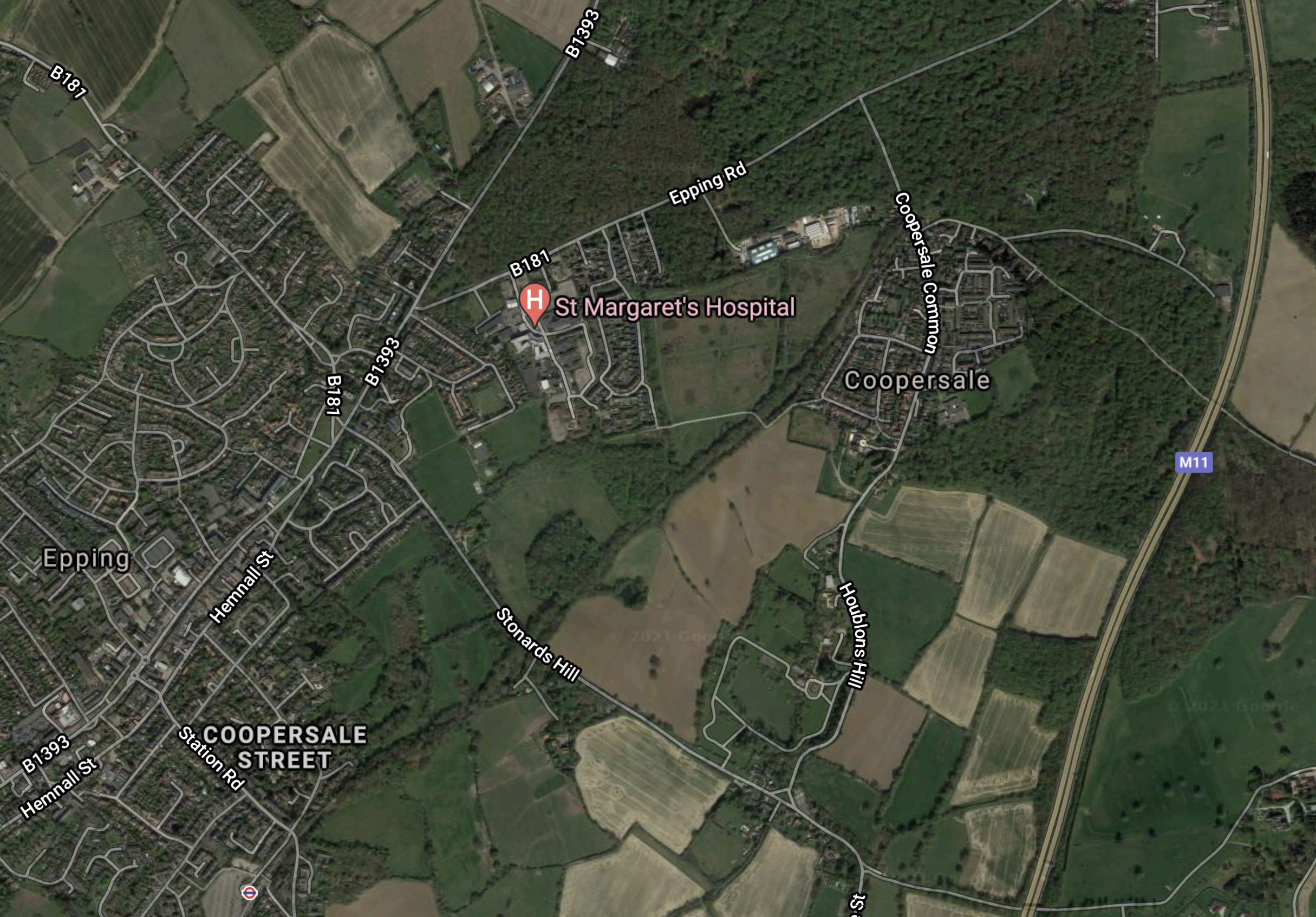
Note Epping station is in the South-West corner of the map.
Running North-East from the station, the dark green scar of the single-track Epping Ongar Railway can be picked out, as it runs between St. Margaret’s Hospital and the village of Coopersale.
This third Google Map shows the railway as it passes under the M11.
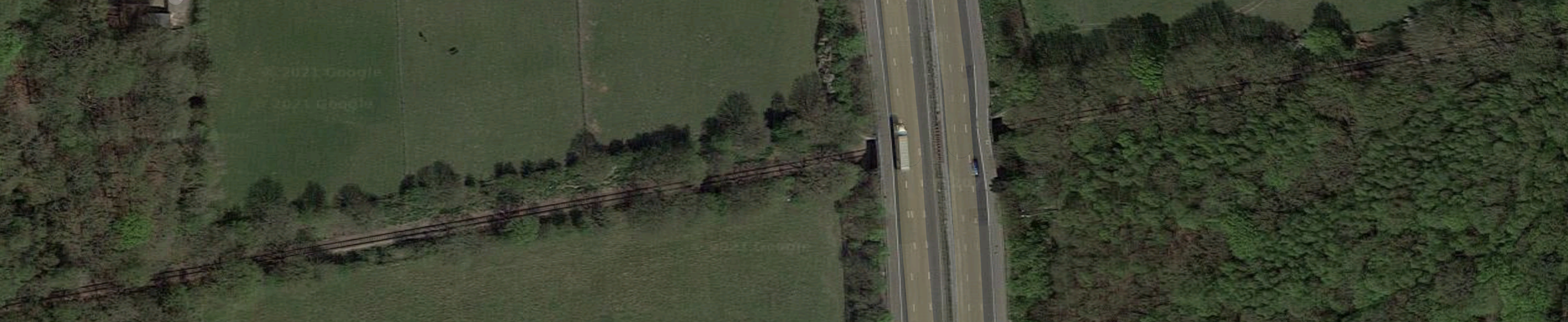
Would it be possible to use the route of this line to connect to a new line alongside the motorway?
This fourth Google Map shows Epping tube station.
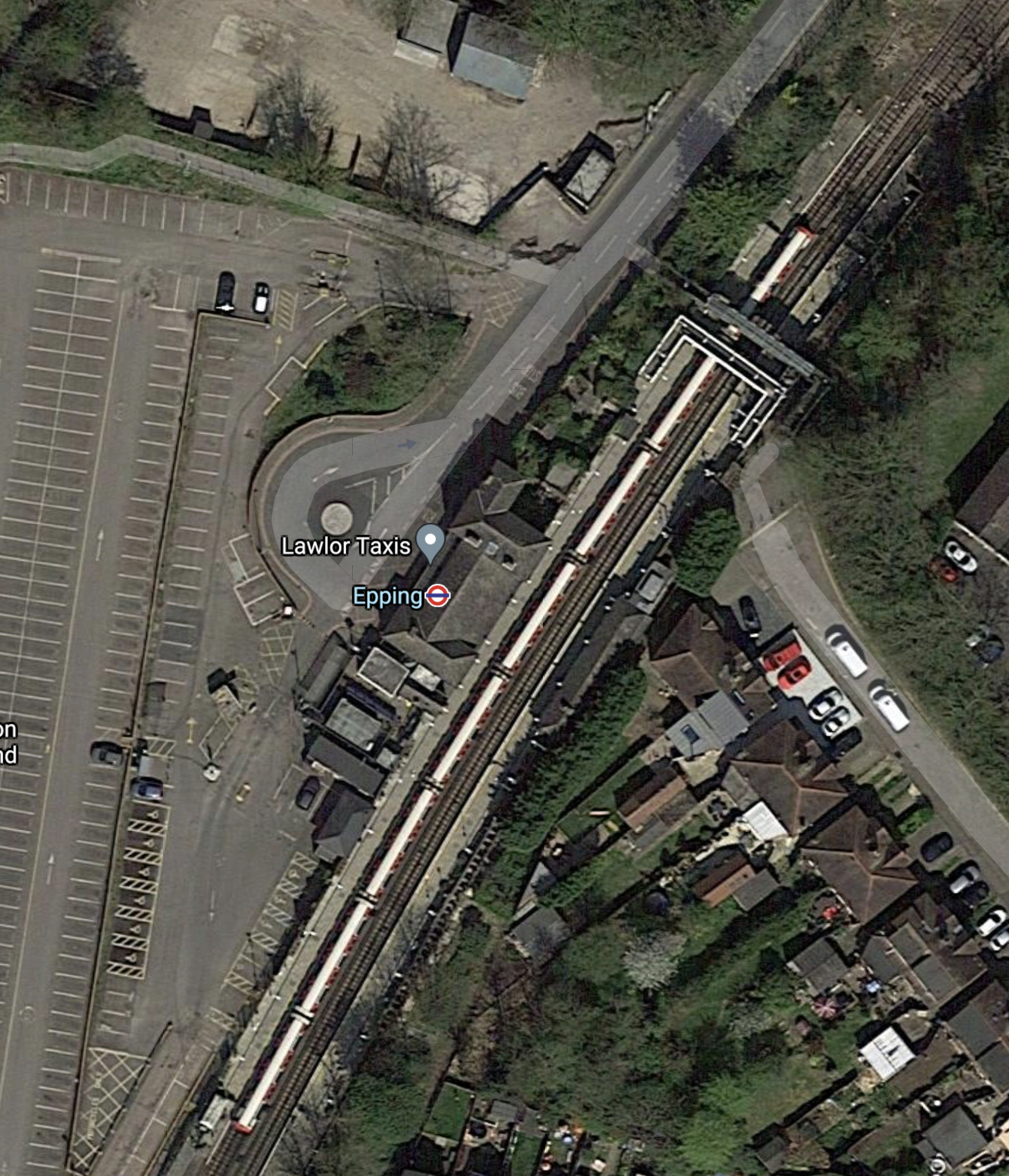
Note.
- The station has two platforms, but is not step-free.
- It has a large car-park.
- Trains take thirty-seven minutes between Epping and Liverpool Street stations.
- Trains have a frequency of nine tph.
This map from cartometro.com shows the track layout at Epping station and the interface with the Epping Ongar Railway.
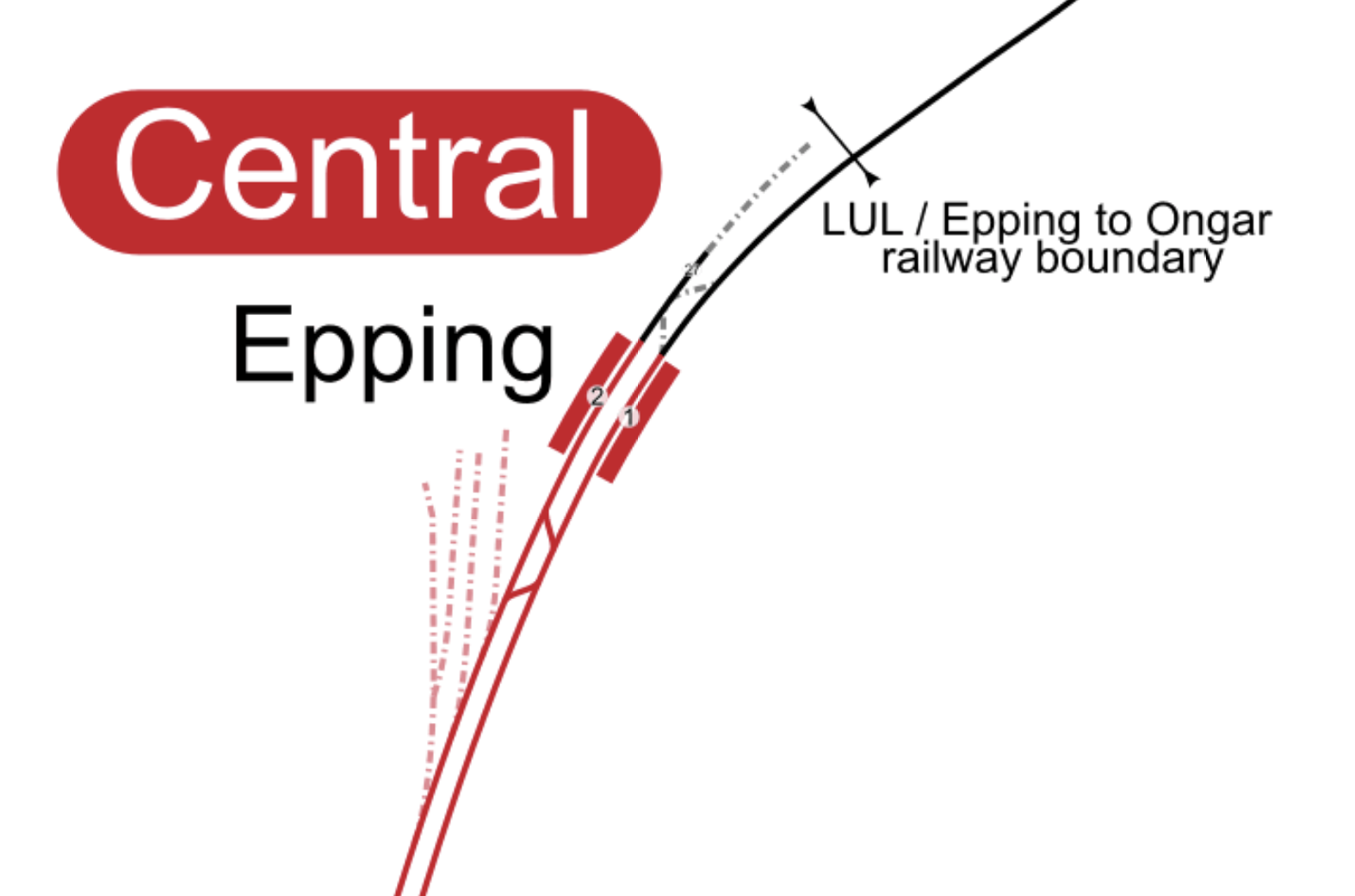
Note.
- The Epping Ongar Railway has always been single track.
- The crossovers to the South of Epping station allow either platform to be used for Central Line services.
- When the Central Line ran to Ongar, it looks like all services used Platform 1 at Epping.
I feel that it might be possible to create an extension to Harlow, by doing something like the following.
- Add a second bi-directional track alongside the Epping Ongar Railway between Epping station and the M11.
- Extend Platform 1 to the North, so that the heritage trains can load and unload passengers at Epping station.
- The Central Line platforms would be unaltered, so could still handle the nine tph they currently handle.
- Trains to and from Harlow would always use Platform 2.
At the M11, the new bi-directional track would turn North and become double-track to Harlow.
- The double-track would allow trains to pass.
- If the rolling stock for the Central Line has been renewed, it might be possible to run the extension on battery power.
- If Harlow had a single platform, it would be possible to run four tph to Harlow.
- The current 2012 Stock trains have a capacity of around a thousand passengers.
- I estimate that trains would take about ten minutes between Epping station and the new Harlow station.
I feel something is possible, but building the line might be easier if new battery-electric trains were available, as this would probably allow the extension to be built without electrification.
On the other hand, it might not have the greatest financial case.
- It could be difficult to add large numbers of passengers to the Central Line.
- At around forty-seven minutes, the Central Line service will be slower than the main line trains, which currently take around a dozen minutes less.
I’ll be interested to see what the professionals say.
Extending London Transport Zones To Harlow
Harlow Town station has ticket barriers, but I don’t think it is part of London’s contactless card zone.
Adding Harlow Town and all stations between Harlow Town and the zone could be very beneficial to passengers and train companies.
Examining Connectivity To Crossrail 2
I think that in the current economic situation this should be discounted.
- It is a very expensive project.
- Building it will cause tremendous disruption on the West Anglia Main Line.
- It is only planned to go as far as Broxbourne station.
But I don’t think politicians from outside London and the South-East would sanction another massive project for London.
I don’t think Crossrail 2 will ever be build in its currently proposed form.
Four Tracking Of The Main Line To Stansted Airport
Consider.
- Currently, the numbers of trains on the West Anglia Main Line is under twelve tph.
- Modern double-track railways with the latest digital in-cab signalling like Thameslink and Crossrail can handle twice this number of trains.
- The West Anglia Main Line will be getting new trains with better acceleration.
Four-tracking is mainly needed to cut times to Cambridge and Stansted Airport, but I suspect that with some clever design and improved signalling, the current double-track can be improved significantly.
Improving Existing Public Transport Links In And Out Of The Town
I think that this could be a fruitful area.
- As I said earlier, Harlow has only 6 tph trains stopping in the station.
- I believe this could be increased to at least 10 tph, if the West Anglia Main Line were to be modernised.
- Extending London Transport Zones To Harlow, which I discussed earlier would surely help.
- Is there enough car parking?
- Are there enough buses to the stations?
- Would a fleet of zero-carbon buses tempt people to use them?
- Would it be possible to run a hydrogen commuter bus service up and down the M11 between say Harlow and Ilford for Crossrail?, as is being done in Dublin, that I wrote about in Three Hydrogen Double Decker Buses Set For Dublin.
Hopefully, Harlow’s councillors would have a few good ideas.
A Few Thoughts On What Is Possible
These are a few of my thoughts on what is possible.
Digital Signalling Could Increase The Number of Trains Per Hour Significantly
Consider.
- Currently, the West Anglia Main Line handles ten tph between Liverpool Street and Bishops Stortford.
- Thameslink handles 24 tph with digital signalling.
- Crossrail will handle 24 tph with digital signalling.
- High Speed Two will handle eighteen tph.
I certainly believe that another four tph could be easily handled through the two Harlow stations, with full digital signalling.
Perhaps a frequency of eight tph, that would match TfL Rail between London Liverpool Street and Shenfield would be ideal.
If it works for Shenfield it should work for Harlow!
Rebuild Cheshunt Station
Cheshunt station with its level crossing is a bottleneck and any increase in the number of trains through the station will need the level crossing to be replaced by a bridge.
But developers are talking of high class housing in the area and removal of the level crossing appears to be in their plans.
New High-Capacity Class 720 Trains
Pairs of five-car Class 720 trains are coming to the West Anglia Main Line and each pair will carry over a thousand passengers.
These will be used on four tph, that call at Harlow Town station.
Turn Trains In The High Meads Loop at Stratford Station
The single-track Wirral Line Loop under Liverpool handles up to sixteen tph.
Network Rail built a double-track loop under the Eastfield Shopping Centre, which calls at Platforms 11 and 12 in Stratford.
If this loop was used to turn trains it could probably handle at least twelve tph on one platform.
Liverpool Street currently handles these trains that go up the West Anglia Main Line or the Lea Valley Lines.
- 6 tph – Greater Anglia
- 6 tph – London Overground
It looks to me that the terminal capacity in London could be as high as 20 tph.
Run More Trains On A Digitally-Signalled Route Through Seven Sisters
Just four tph run on the London Overground route through Seven Sisters station.
Compare that with the East London Line of the London Overground, where sixteen tph run between Dalston Junction and Surrey Quays stations.
The London Overground has ambitions to run four tph to Cheshunt and Enfield Town, as they do to Chingford, but that would only up the frequency through Seven Sisters to eight tph.
The tracks in the area also allow trains from Stratford to use the lines through Seven Sisters stations to go North.
Run West Anglia And Lea Valley Services Together
Currently, Greater Anglia and London Overground seem to do their own things, but surely properly integrated and with the moving of more services to the London Overground, I suspect that everything could be more efficient.
I believe that by using Liverpool Street and Stratford as twin London terminals for Lea Valley services, that upwards of twenty tph can on digitally-signalled West Anglia Main Line and the Lea Valley Lines.
These are the current trains.
- Bishops Stortford – 2 tph
- Cambridge North – 2 tph
- Cheshunt – 2 tph
- Chingford – 4 tph
- Enfield Town – 2 tph
- Hertford East – 2 tph
- Stansted Airport – 4 tph
Note.
- This is a total of eighteen tph
- The pinch point is surely the stretch between Bethnal Green and Clapton stations, which handles 14 tph including a mix of fast expresses and London Overground services.
- On the other hand the route through Seven Sisters is handling just four tph.
- Ten tph run between Tottenham Hale and Cheshunt stations on the West Anglia Main Line.
- Only two tph terminate in Stratford.
If the Cheshunt and Enfield Town services are increased to 4 tph, as is London Overground’s aspirations we get the following.
- Bishops Stortford – 2 tph
- Cambridge North – 2 tph
- Cheshunt – 4 tph
- Chingford – 4 tph
- Enfield Town – 4 tph
- Hertford East – 2 tph
- Stansted Airport – 4 tph
Note.
This is a total of twenty-two tph.
But there is still plenty of spare capacity at Stratford and through Seven Sisters.
If our objective is more trains through Harlow, why not double up the Stratford and Bishops Stortford service.
- Bishops Stortford – 4 tph
- Cambridge North – 2 tph
- Cheshunt – 4 tph
- Chingford – 4 tph
- Enfield Town – 4 tph
- Hertford East – 2 tph
- Stansted Airport – 4 tph
Note.
- This is a total of twenty-four tph.
- Harlow will have eight tph to and from London.
- There will be 8 tph through Seven Sisters.
- There will be twelve tph between Tottenham Hale and Cheshunt stations on the West Anglia Main Line.
- Four tph will terminate at Stratford.
Perhaps to reduce the trains on the West Anglia Main Line, the Hertford East trains could go via Seven Sisters.
But that would mean that stations like Brimsdown and Ponders End would lose a lot of their service.
So why not add extra stops to the Bishops Stortford services?
Conclusion
I believe that by doing the following.
- Adding digital signalling to all lines.
- Turning more trains at Stratford.
- Using the route through Seven Sisters at a much higher frequency.
- Rebuilding Cheshunt station and level crossing.
- Reorganising stops on the West Anglia Main Line.
That it would be possible to create a high-frequency Metro up the Lea Valley.
Except for the digital signalling and Cheshunt station, there is not much work to do on the infrastructure.
Could A Fourth Track Be Squeezed In At Tottenham Hale Station?
Eventually, when Crossrail 2 is built, there will be four tracks through Tottenham Hale station. It has been anticipated by Network Rail as they have numbered the platforms at the station 2, 3 and 4.
These pictures were taken from the island platform 2/3.
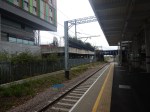

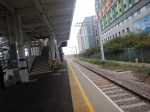
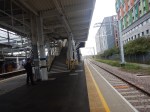
It does appear that another track could be squeezed in, on the other side of the electrification gantries.
Crossrail 2 Four-Tracking
In Crossrail 2 Question Time, I describe a meeting with two Crossrail 2 engineers.
I was told that four tracks on the West Anglia Main Line would be tricky and that the slow Crossrail 2 tracks would be on the East side, with the fast tracks on the West.
In the post, I state that I think, it could be easier to have the Crossrail 2 tracks on the West side, with the Fast tracks on the East.
- If the Crossrail 2 tracks are on the East side, then, this means that a platform will be needed on the fourth track at Tottenham Hale station.
- On the other hand, if the fourth track was a fast line, it might be possible to build it without a platform, which would save space.
Each layout has its benefits and disadvantages.
If nothing else, this illustrates some of the engineering problems of Crossrail.
The Ferry Lane Bridge
One of my pictures, shows the Ferry Lane bridge in the distance. This is the bridge in its glory in close-up.
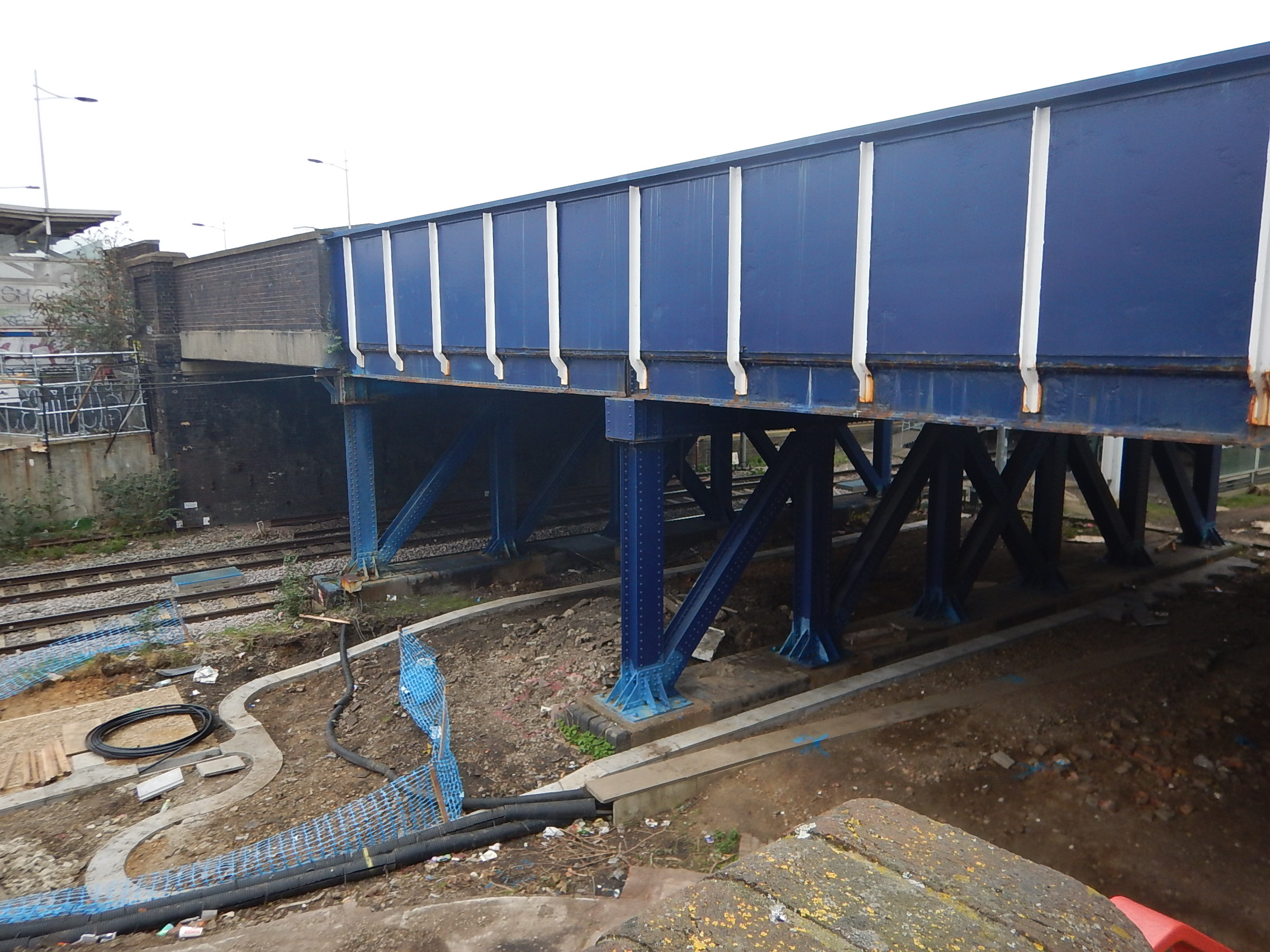
I feel it will need to be replaced before a fourth track is built.
- Rebuilding the bridge will cause massive disruption to the area.
- It will have a very large cost.
Does this explain why the STAR project to increase capacity on the West Anglia Main Line was only a three-track solution?
At some point in the next few years, after all the current transport improvements are completed and before the construction of Crossrail 2 is started, this bridge will be replaced.
Hopefully, someone will come up with a way of replacing the bridge, that doesn’t cause too much disruption.
Conclusion
As the Crossrail 2 engineer said, four-tracking of the West Anglia Main Line will be tricky.
Platforms Have Been Renumbered At Tottenham Hale Station
Tottenham Hale station is currently a two-platform station, with a third platform due to open in May to provide extra services to Meridian Water station.
I took this picture as I passed through on Monday.
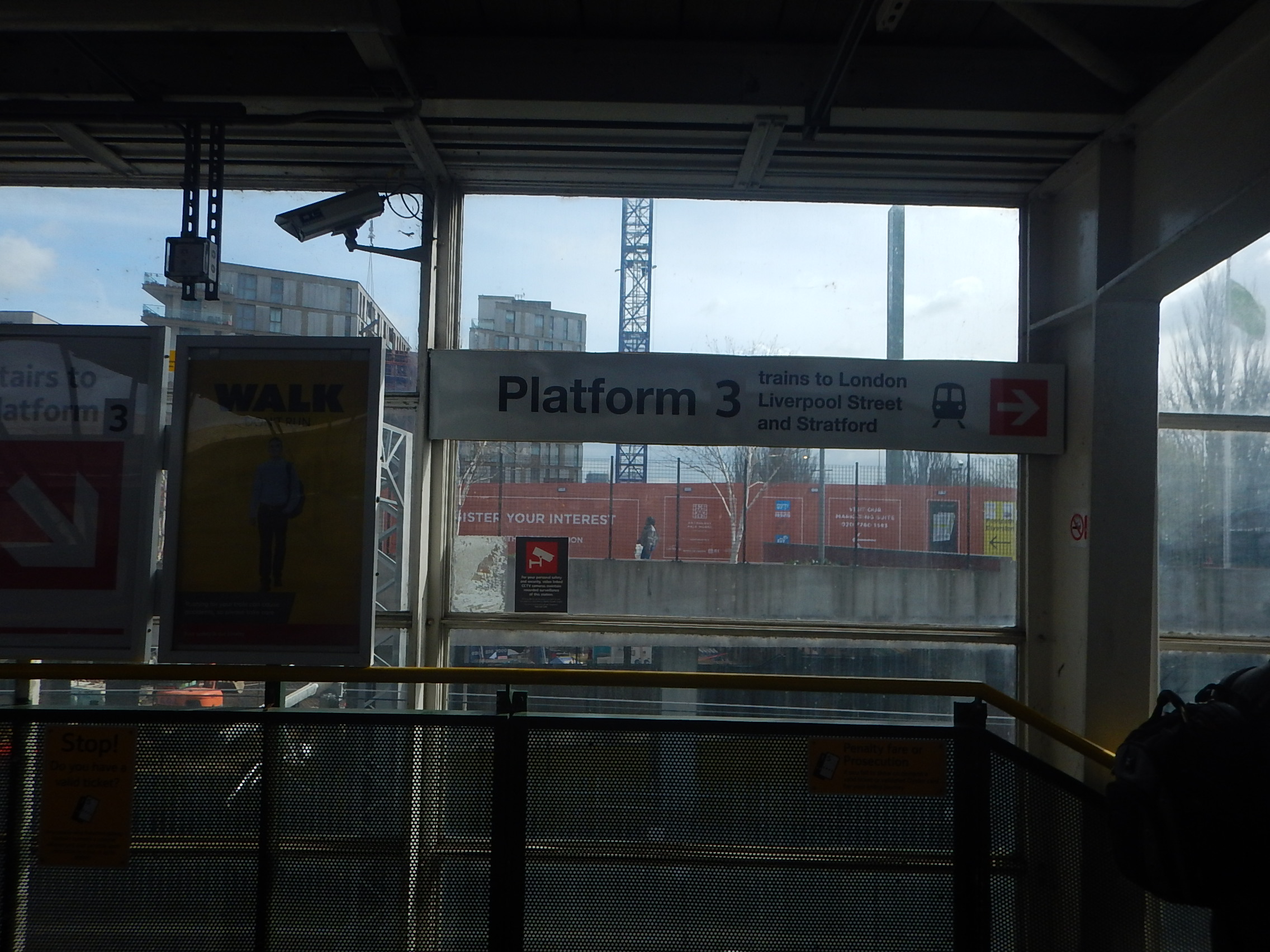
So now, the two platforms are numbered 3 and 4.
I suppose the new platform will be numbered 2, with platform 1 reserved for when they four-track the West Anglia Main Line.
Nervous Operators Force Network Rail To Defer King’s Cross Plan
The title of this post is the same as that of this article on Rail Magazine.
King’s Cross station has to be closed for three months, so that tracks, electrification and signalling can be replaced and modernised for about 1.5 miles from the buffer stops at the station.
The original dates of the closure were to have been between December 2019 and March 2020, but now it looks like it could be delayed by up to a year.
The article on the web site, is a shortened version of the article in the magazine, where this is said.
Closure dates have yet to be announced, and NR is still developing a passenger handling strategy which could include long-distance services at Finsbury Park or some services terminating at Peterborough. Some trains could even be rerouted into London Liverpool Street.
I wonder, if Network Rail’s planners are cursing that the around thirty miles between Peterborough and Ely is not electrified.
If it were electrified, it would allow electric trains as well as diesel and bi-mode trains to access Liverpool Street station via the West Anglia Main Line.
What Benefits Would There Be From Electrifying Peterborough To Ely?
I can imagine Oxford-educated civil servants in the Department of Transport and The Treasury dismissing calls for more electrification in the backwater of East Anglia, after the successful electrification to Norwich in the 1980s.
But now Cambridge is powering ahead and East Anglia is on the rise, with the massive Port of Felixstowe needing large numbers of freight trains to other parts of mainland UK.
This East Anglian success gives reasons for the electrification of the Peterborough-Ely Line.
Direct Electric Trains Between Peterborough And Cambridge
I have met Cambridge thinkers, who believe that Peterborough is the ideal place for businesses, who need to expand from Cambridge.
Peterborough has the space that Cambridge lacks.
But the transport links between the two cities are abysmal.
- The A14 is only a two-lane dual-carriageway, although a motorway-standard section is being added around Huntingdon.
- Peterborough station has been improved in recent years.
- The direct train service is an hourly three-car diesel service between Birmingham and Stansted Airport, which doesn’t stop at the increasingly-important Cambridge North station.
The road will get better, but the rail service needs improvement.
- There needs to be at least two direct trains per hour (tph) between Cambridge and Peterborough.
- They would stop at Cambridge North, Waterbeach, Ely and March.
- End-to-end timing would be under an hour.
- Greater Anglia will have the four-car bi-mode Class 755 trains, which would be ideal for the route from next year.
If the Peterborough- Ely Line was electrified, Greater Anglia could use five-car Class 720 trains.
An Electric Diversion Route For The East Coast Main Line
The works at Kings Cross station, and the possible proposal to run some trains into Liverpool Street station, show that an electric diversion route would be useful, when there are closures or problems on the East Coast Main Line.
In the case of the Kings Cross closure, if Peterborough were to be used as the terminal for some trains from the North, then I suspect some high-capacity Class 800 trains could shuttle passengers to Liverpool Street.
If the date of the Kings Cross closure is 2020, then certain things may help.
- Crossrail will be running.
- Extra trains will be running from Finsbury Park to Moorgate.
- Hull Trains will be running bi-mode Class 802 trains.
- There could be more capacity on the West Anglia Main Line.
- There could be more capacity and some longer platforms at Liverpool Street.
What would really help, is the proposed four-tracking of the West Anglia Main Line.
The latter could prove extremely useful, when Network Rail decide to bite the bullet and four-track the Digswell Viaduct.
Extending Greater Anglia’s Network
Greater Anglia have bought new bi-mode Class 755 trains.
This would appear to be more than enough to covering the current services, as they are replacing twenty-six trains with a total of fifty-eight coaches with thirty-eight trains with a total of one hundred and thirty-eight coaches.
That is 46 % more trains and 137 % more coaches.
The new trains are also genuine 100 mph trains on both electricity and diesel.
Obviously, Greater Anglia will be running extra services, but with the explosive growth around Cambridge, coupled with the new Cambridge North station, I feel they will be running extra services on the Peterborough to Cambridge route and perhaps further.
The new Werrington Grade Separation will make a difference.
- It will open in a couple of years.
- Trains between Peterborough and Lincoln won’t block the East Coast Main Line.
- The Leicester route could also be improved.
So services to and from Lincoln and Leicester would probably be easier to run from Cambridge and Stansted Airport.
CrossCountry run a service between Birmingham New Street and Stansted Airport stations.
- The service stops at Coleshill Parlway, Nuneaton, Leicester, Melton Mowbray, Oakham, Stamford, Peterborough, March, Ely and.Cambridge and Audley End stations.
- The service doesn’t stop at Cambridge North station.
- The service is run by an inadequate Class 170 train, which sometimes is only two coaches and totally full.
- Trains take just over three hours ten minutes for the journey.
Will Greater Anglia take over this route? Or possibly run a second train as far as Leicester?
Their Class 755 trains with better performance and specification would offer the following.
- Electric running between Ely and Stansted Airport stations.
- Greater passenger capacity.
- wi-fi, plugs and USB sockets.
- A three hour journey both ways.
- The extra performance would probably allow an extra important stop at Cambridge North station.
The new trains would certainly offer what passengers want.
CrossCountry run an extra train between Birmingham New Street and Leicester, so perhaps at the Western end, the Greater Anglia service need only go as far as Leicester.
At the Stansted end of the route, there will be an hourly train between Stansted Airport and Norwich, so there could be scope for perhaps cutting one the services back to Cambridge.
Obviously, time-tabling would sort it out to the benefit of the train operators and passengers, but I can envisage a set of services like this.
- Norwich and Stansted Airport – Greater Anglia – 1 tph
- Birmingham New Street and Stansted Airport – CrossCountry – 1 tph
- Leicester and Cambridge – Greater Anglia – 1 tph
- Colchester and Peterborough – 1 tph
- Norwich and Nottingham (Currently Liverpool Lime Street) – 1 tph
Adding these up you get.
- Stansted Airport and Cambridge – 2 tph – As now!
- Stansted Airport and Cambridge North – 2 tph – New service!
- Cambridge and Ely – 4 tph – At least!
- Ely and Peterborough – 4 tph – At least!
- Cambridge and Peterborough – 2 tph – Up from 1 tph
- Stansted Airport and Peterbough – 1 tph – As now!
- Cambridge and Leicester – 2 tph = Up from 1 tph.
This pattern or something like it would be much better for all.
If the Ely-Peterborough section of the were to be electrified then it would enable the following.
- A reduced journey time for electric or bi-mode trains.
- If required Greater Anglia could run an extra electric service using Class 720 trains between Stansted Airport and Peterbough.
I said earlier that the Werrington Grade Separation will make it easier to run services between Peterborough and Lincoln.
So why not add an hourly service between Cambridge and Lincoln?
I can envisage, when the West Anglia Main Line is four-tracked at the southern end, that there might be enough capacity for a Liverpool Street to Lincoln service via Cambridge, Cambridge North, Ely, Peterborough, Spalding and Sleaford.
But whatever happens Greater Anglia’s choice of bi-mode Class 755 trains, seems to give them the flexibility to match services to passengers needs.
Electro-Diesel and Battery-Electric Freight Locomotives
The Class 88 locomotive is an electro-diesel freight locomotive, that can use either power from overhead electrification or an pnboard diesel engine.
I believe that locomotives like this will become more common and that eventually, we’ll see a battery-electric heavy freight locomotive.
I wrote about the latter in Thoughts On A Battery/Electric Replacement For A Class 66 Locomotive.
The Peterborough-Ely Line will see increasing numbers of trains hauled by these powerful electric locomotives, with either diesel or battery power to propel them over the gaps in the electrification.
Electrifying the line would speed these hybrid trains through and increase the capacity of the route.
Conclusion
Network Rail have annoyed the train operators with their planning and timing of the upgrade at Kings Cross station.
It looks to me, that the part of the problem, is that there is no viable electrified secondary route to London.
Bi-mode trains can use the Peterborough-Ely Line to go to Liverpool Street via Cambridge.
This line is one of those routes that sits in a sea of electrification, which carries a lot of traffic, that would bring several benefits if it were to be electrified.
- Direct electric trains between Cambridge and Peterborough, would greatly improve the spasmodic service between the two cities, with large economic benefits to the county.
- An electric diversion route would be created from Peterborough to Liverpool Street via Ely and Cambridge.
- It would allow Greater Anglia to develop routes West of Cambridge to places like Lincoln and Leicester using their future fleet of Class 755 trains.
- It would also make it easier for battery-electric freight locomotives to cover the busy freight route between Felixstowe and Peterborough.
I also feel that it wouldn’t be the most difficult route to electrify.
The Fens are flat.
There is no history of mining.
The track is fairly straight and simple.
I suspect that it could become a high-quality 90-100 mph, electrified line.
With
Tottenham Hale Station Becomes Clearer
I went to Tottenham Hale station this morning and took these two series of pictures.
These were of the station itself.


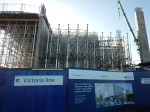
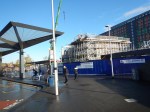

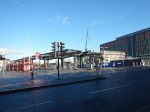
Note.
- The new step-free footbridge.
- The giant box of the new station under the scaffolding.
- The angular roof of the bus station.
These pictures show the construction site of a new tower on the other site of the tracks.
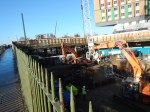
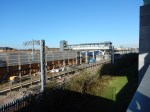
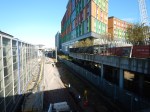
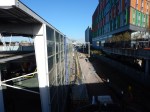
Note.
- A 32-storey tower is going on the site, so the foundations will be deep.
- The third track and the new platform 3 at Tottenham Hale station.
- The concrete structure between the tracks and the tower could be demolished.
This Google Map shows the area.
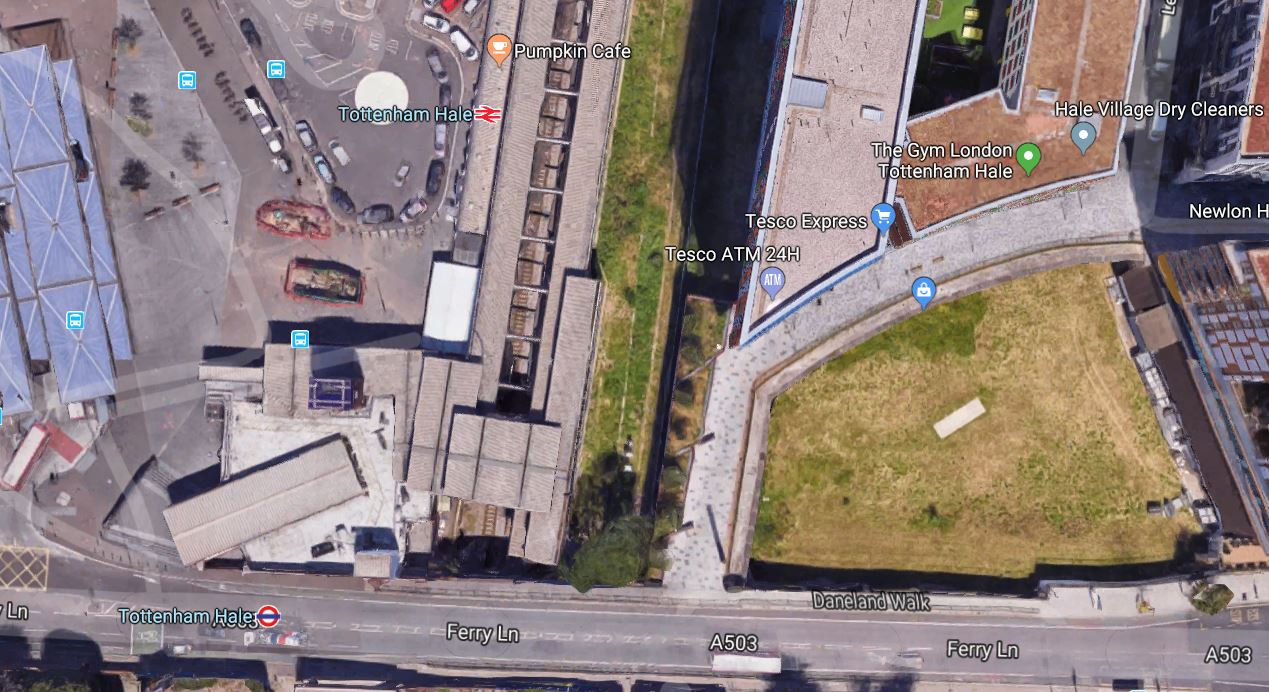
The new tower is going into the green space in the bottom-right of the map.
West Anglia Four-Tracking
It is an ambition of Newtwork Rail, Greater Anglia and Stansted Airport to have four tracks on the West Anglia Main Line.
It very much looks as if, the building of this tower will enable a fourth track to be threaded through alongside the third track being constructed at the present time for the new service between Stratford to Meridian Water stations.
I think though, that the bridge could be a bigger problem, as this picture shows.
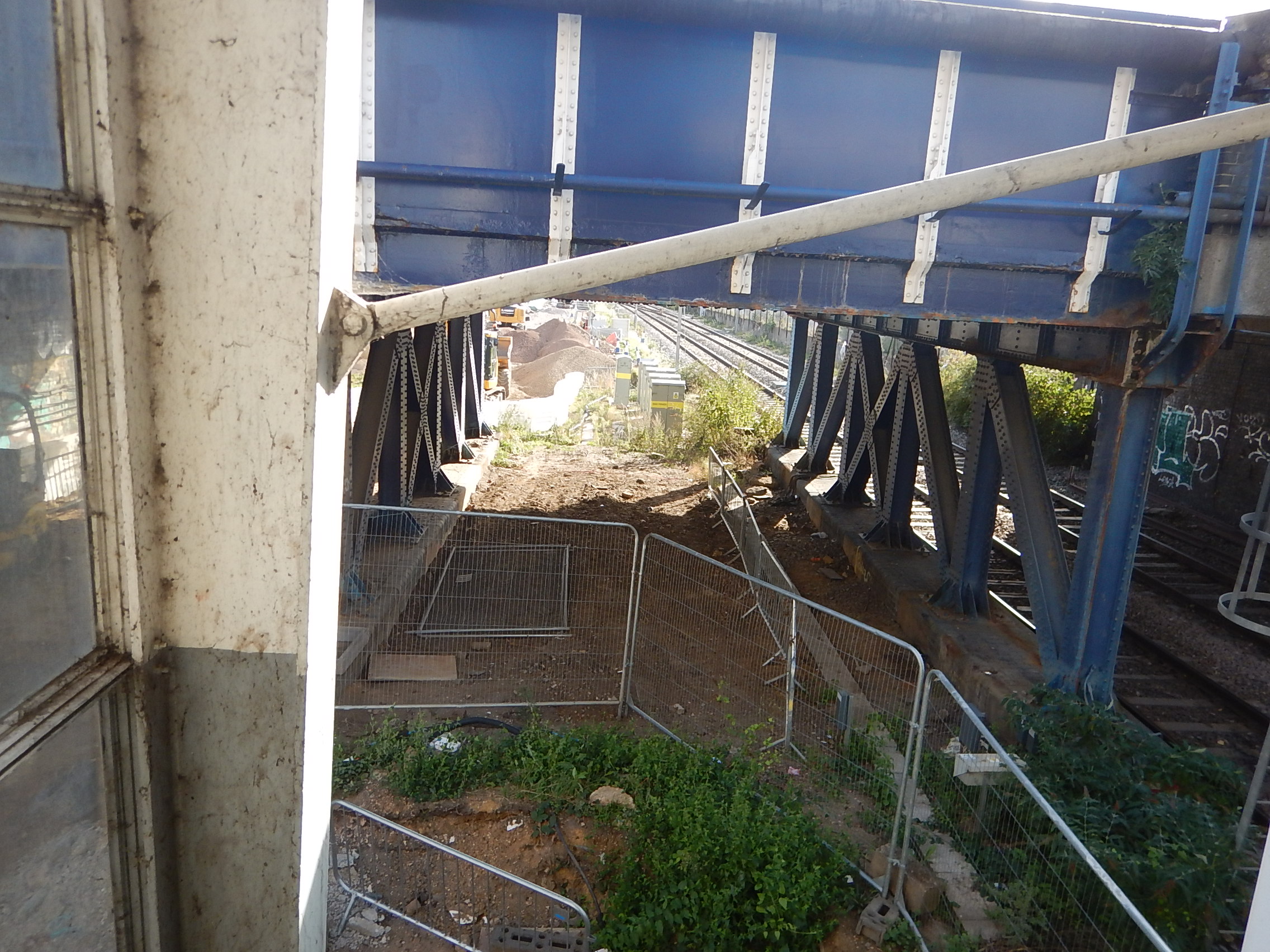
Could it be considered a bridge on crutches?
But a well-designed replacement bridge would probably allow a fourth track to be laid underneath!
Northumberland Park Station – June 12th 2018
The new Northumberland Park station is coming on and has allowed the temporary footbridge to go somewhere else!
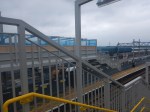
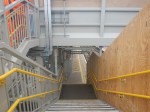
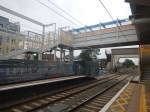
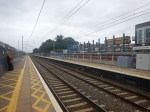
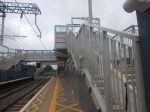
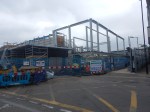
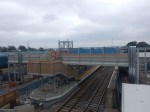
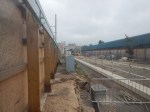
The level crossing will not be reinstated and I was wondering how pedestrians and others will cross the railway. There is still an old bridge on the other side to the station, but it doesn’t look to be in the best condition.
I then saw the two staircases in the new station.
So will there be two separate routes across the railway in one bridge?
This image from Network Rail, shows the station from the Eastern side.
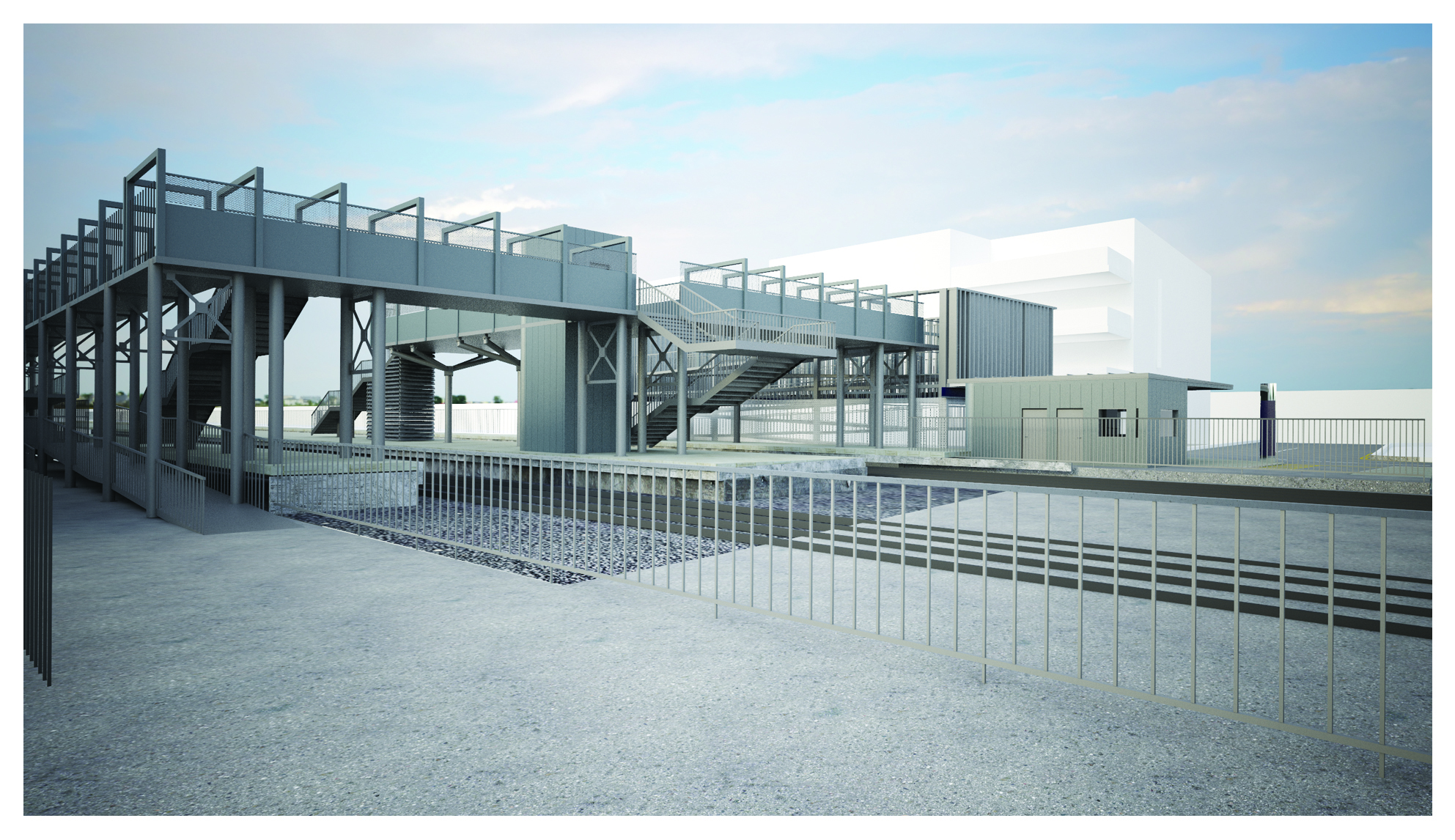
There appears to be the following.
- Two bridge sections, with the one on the far side connected to the low station buildings.
- Two sets of stairs and a lift giving access from the bridge to the current Platform 1 and new platform behind it, that will become an island platform.
- Two tracks this side of the island platform.
- With the two tracks on the other side of the island platform, this means the station will be ready for four-tracking of the West Anglia Main Line.
- A set of steps leading down from the near rend of the footbridge, this side of the extra tracks.
I have wondered for some time, when the West Anglia main Line is four-tracked and/or Crossrail 2 is built, which pair of tracks will be the fast lines.
In the interim it is obvious, that the third rack, which will run between Meridian Water and Lea #bridge stations, will run on the near side of the island platform.
My only question is will it only handle trains towards Stratford or will the line be bi-directional?
But when the line is fully four-tracked, I think that the lines from West to East will be as follows.
- Northbound Slow (Current Platform 2) – Local trains and Crossrail 2
- Southbound Slow (Current Platform 1) – Local trains and Crossrail 2
- Northbound Fast – Stansted and Cambridge services
- Southbound Fast – Stansted and Cambridge services
I have put the slow lines on the West, as these are the platforms with the best access and few if any, fast services will stop in the station.
Crossrail 2 could of course change everything.
But I suspect that Northumberland Park station is being rebuilt, so that it will work with the most likely arrangement of tracks.
Will We See More Slab Track On UK Railways?
I ask this question, as I’ve just read this article on Rail Engineer, which is entitled Slab Track Austria: Now A Serious Contender?
Slab track or ballastless track has a Wikipedia entry.
This is said under Characteristics.
In ballastless tracks, the rails are rigidly fastened to a special type of concrete ties/sleepers that are themselves set in concrete. Ballastless tracks therefore offer a high consistency in track geometry, the adjusting of which is not possible after the concreting of the superstructure. Therefore, ballastless tracks must be concreted within a tolerance of 0.5 millimetres. The elasticity of the ballast in the traditional railway superstructure is replaced by flexibility between either the rails and the concrete ties/sleepers or the ties/sleepers and the concrete or asphalt slab as well inherent elasticity within the conglomerate of the tie/sleeper, whereas the concrete or asphalt slab is usually inelastic.
Applications in the UK recently include.
- Tunnels on Merseyrail, Crossrail and other routes.
- Gospel Oak to Barking Line.
- Borders Railway.
- Edinburgh to Glasgow Line at Glasgow Queen Street station and the Winchburgh Tunnel.
This picture shows some of the slab track on the Gospel Oak to Barking Line.

I suspect, that slab track was used here mainly because of limited clearance. But low maintenance and long life, must have improved the financial case.
Returning to the Rail Engineer article, it would appear that the engineers behind the slab track, have rethought a lot of the process of building a railway.
Slab Track Austria, which used to be called PORR-STA, seems to offer the following.
- Factory-build or one-site fabrication.
- Ease of installation.
- Accurate alignment
- Switches and crossing can be fabricated.
- Transition solutions to ballasted track.
- Low noise and vibration.
- Ease of maintenance
- Sixty year life.
Slab Track Austria would also appear to have worked extensively with Austrian Railways, to get everything as right as possible.
It just shows how much improvement can be squeezed out of some traditional industrial and construction processes.
HS2
TheSlab Track Austria track has also been used extensively on the new Berlin to Munich high speed line, that I wrote about in From Berlin To Munich In Four Hours By Train. This is said about the use of the track on that line, in the Rail Engineer article.
PORR was contracted to design and build three major sections of the railway route. Its patented slab track, STA, was installed over a total length of 320km, in tunnels, on bridges and in open sections. Operations started successfully in December 2015 on the VDE 8.2 section, from Erfurt to Leipzig and Halle. Since December 2017, the sections VDE 8.1.2, from Coburg to Illmenau, and VDE 8.1.3, from Bad Staffelstein to Coburg, have been in operation. Trains have been running on the STA slab track layout at speeds of 300km/h. Prior to commissioning, this slab track was tested at 330 km/h.
So it would appear to be suitable for the 400 kph, that is quoted for HS2, with perhaps a bit of tweaking.
The article also says this about using the track on HS2.
Cost analysis research suggests that the savings made from the reduced maintenance required for STA track will equate to a payback of within 15 to 20 years when compared to ballasted track systems. The opportunity for significant savings, as well as increased network availability due to the reduced maintenance requirement, has to mean that this system is a serious contender for any new railway route, one of which, of course, is HS2.
A dedicated factory producing the slabs would surely increase quality.
But whatever happens, with its numerous, bridges, tunnels and viaducts, I suspect that HS2 will be built using slab track.
In the last quote, a payback time of fifteen to twenty years is suggested, if the track is used on a new railway.
So where else could slab track be used to advantage?
East-West Rail Link
I feel that the East West Rail Link, could be a possibility.
Consider.
- It will not be initially electrified.
- It is through terrain that is not very challenging
- It is fairly close to HS2 and a possible slab track factory.
Building the line with slab track, could help make the East West Rail Link a low-energy and low-noise line for battery or hydrogen trains.
West Anglia Main Line Four-Tracking
Adding two extra tracks to the West Anglia Main Line between Coppermill Junction, which is just South of Tottenham Hale station, and Broxbourne station will be a difficult project.
The line is hemmed in on both sides by housing and slab track might give advantages.
- Ease to squeeze the tracks in the limited space available.
- Reduced noise.
- Speedier construction.
If Crossrail 2 is built, this four-tracking will have to be done.
Calder Valley Line
The Calder Valley Line should be updated to create a quality roue across the Pennines from Preston to Leeds.
Parts of the line would be challenging to improve to say the least, with lots of heritage features around the track.
Using slab track in places, has has been done on the Gospel Oak to Barking Line, might help with the following.
- The construction works needed.
- Increasing line speed.
- Lowering noise.
- Reduced maintenance.
The Wikipedia entry for the Calder Valley Line has a section called Holme Tunnel Engineering Work. This is said.
Holme Tunnel, which lies between Hebden Bridge and Burnley Manchester Road, was closed for 20 weeks from November 2013 until March 2014. This was to allow for major engineering work to fix the distorted shape of the tunnel, caused by movement of the ground through which it passes. The project was budgeted to cost £16.3million. During the works, buses replaced train services. Trains can now pass through at 45 mph.
I don’t think slab track was used in the work in this tunnel, but do we need 45 mph speed limits on Trans Pennine routes? After reading this article on Rail Engineer, it would appear that 75 mph will be possible in the future.
But this project does show some of the major problems on Trans Pennine routes!
It will be interesting to see what happens on this line.
Other Trans Pennine Routes
The other two Trans Pennine routes, the Huddersfield Line and the Hope Valley Line both have similar characteristics.
- Twisting routes.
- Several tunnels.
- Lots of bridges.
They are also busy with passenger and freight traffic.
When the plans for the updating of these lines is published, I suspect that slab track will feature, especially in some of the tunnels.
Across Chat Moss
George Stephenson had difficulty building the Liverpool to Manchester Railway across Chat Moss in 1829. Wikipedia says this about his solution.
Chat Moss threatened the completion of the Liverpool and Manchester Railway, until George Stephenson, with advice from East Anglian marshland specialist Robert Stannard, succeeded in constructing a railway line through it in 1829; his solution was to “float” the line on a bed of bound heather and branches topped with tar and covered with rubble stone. The M62 motorway, completed in 1976, also crosses the bog, to the north of Irlam.
I have talked to drivers, who drive Class 319 trains along the now-electrified line across Chat Moss. They told me, that the soft suspension gives an interesting ride.
Under Timings And Line Speeds in the Wikipedia entry for the Liverpool-Manchester Lines, this is said.
The fastest recorded run was from Manchester Exchange to Liverpool Lime St in 30 minutes 46 seconds by a 1936 built Jubilee 5707 with 7 coaches. An 1882-built compound steam locomotive was timed on the same route in 38 minutes 18 seconds. Until 1968 trains from Liverpool to Manchester by all 3 routes were scheduled to take 40 minutes and often took less. The southern route via Warrington is now restricted to 85 mph and the northern route via Earlestown to 90 mph, with 75 mph over Chat Moss.
It would appear that something needs to be done to get timings between Liverpool and Manchester, back to those of the 1930s.
Would slab track across Chat Moss be part of the solution?
Tunnels
Various tunnel upgrades have shown how using slab track in tunnels is a very helpful technique.
Many tunnels will need to be updated to increase clearance for freight trains and overhead wires and also to solve structural problems caused by anno domini.
I believe we’ll see a lot more slab track in tunnels on the UK rail network.
Noise Reduction
The Rail Engineer article, says this about Slab Track Austria’s slab track.
The elastomeric layer also helps to reduce vibration and structure-borne noise, thus offering protection to supporting structures and reducing the noise created by passing trains – an important feature in built-up areas and tunnels.
So will we see increasing use of slab track in areas, where noise asnd vibration is a problem?
Other Lines
I see the Gospel Oak to Barking Line, as an example use of slab track that will be very much copied.
Slab track has been used successfully in sections, where clearance is limited and noise is a problem.
The use of slab track, might have meant that several bridges didn’t need to be rebuilt.
How many places in the UK have similar needs.
Conclusion
The rethinking of how we build railways by Slab Track Austria, will benefit our rail network and all those who use it.
We’ll be seeing a lot more slab track!
New Bridge In Tottenham Marks The Beginning Of Restoring A Line Lost During The Beeching Era
The title of this post says it all and is the same as this article on Rail Professional.
Some might argue that Beeching got it wrong!
My feelings though are the politicians and British Rail managers of the day generally didn’t have any vision about how the railways should be simplified to on the one hand save money and on the other perhaps create paths, cycleways and leisure facilities, for the good of everyone.
Harold Wilson’s view that everybody would have their own car and the railways were finished didn’t help either.
The Lea Valley was my childhood playground and I’d regularly cycle to the area. But unlike now, much was closed to the public.
This Google Map shows the location of the bridge.
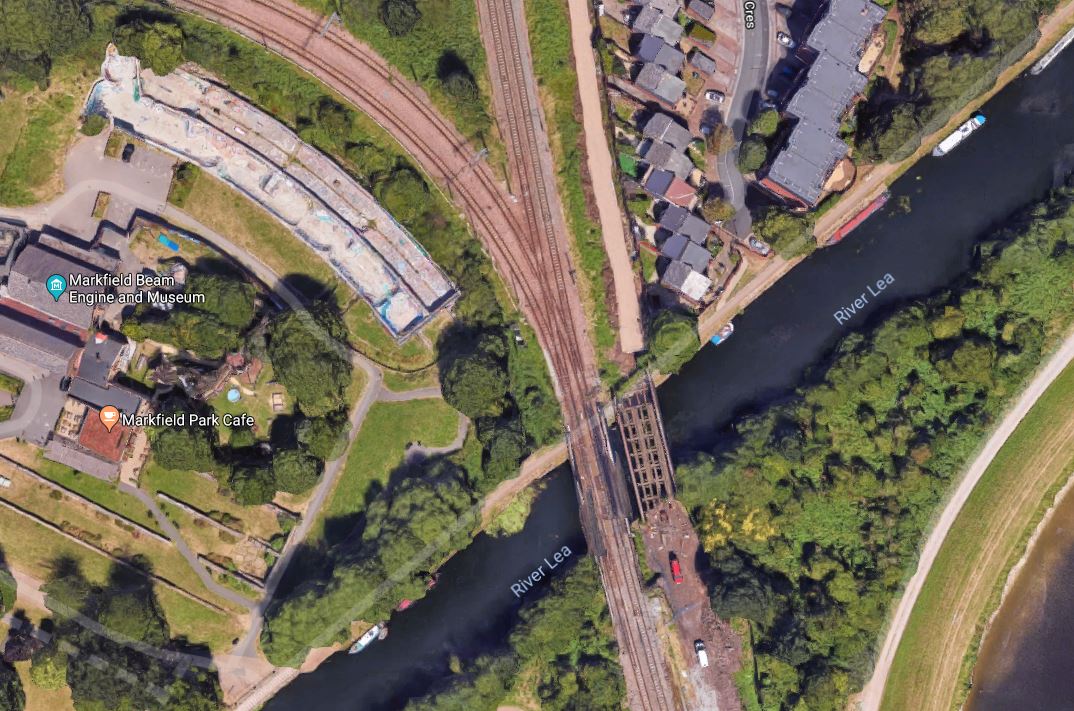
Note.
- The railway line is the West Anglia Mail Line, running South from Tottenham Hale stations.
- The bridge carrying the Easter pair of tracks is being replaced.
- Tottenham South Junction is North of the bridge and the line going West is the Tottenham South Curve, that links the West Anglia Main Line to the Gospel Oak to Barking Line.
- The Markfield Beam Engine is to the West.
- The Walthamstow Wetlands are to the East.
The area will get even more complicated in the future, when Crossrail 2 is built.
These are various pictures of the bridge site, taken on different dates
The bridge will be an important link in the development of the railways in the area.
Is It Possible To Squeeze Two New Tracks Through Tottenham Hale Station?
Now that the area behind the station is more or less cleared and the signalling cables seem to have been rerouted, you can get a better idea.
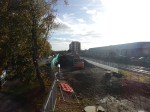
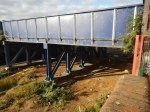



Will the new tracks be the Slow or Fast Lines?
As the third track is being installed for STAR at the present time, it would appear that the two new lines will be the Slow Lines.
 The Anonymous Widower