Principle Power Unveils New Floating Wind Foundations For 15 MW+ Turbines
The title of this post, is the same as that of this article on offshoreWIND.biz.
This is the sub-heading.
Principle Power has expanded its WindFloat portfolio by introducing two new semisubmersible floating wind foundation designs, called WindFloat TC and WindFloat FC, which are said to be optimised for 15 MW+ wind turbines.
A large picture and these two paragraphs introduce the new designs.
According to the company, the new designs are natural evolutions of the existing WindFloat technologies that support a wind turbine located on a column in the centre of the platform.
Designed to complement the existing perimeter column designs WindFloat T and WindFloat F, the new solutions share the same 4th generation design heritage and benefits.
Smart Hull Trim System
The article also mentions a Smart Hull Trim System in this sentence.
Some of these include a Smart Hull Trim system to maximise annual energy production and reduce loads.
I would assume that the Smart Hull Trim System, works very much like the control surfaces of an aeroplane or submarine to keep the craft straight and level.
On the Principle Power web site, the various WindFloats are described as follows.
- WindFloat T – Proven WindFloat® design, suitable for tubular construction.
- WindFloat F – A pontoon-based design suitable for flat panel construction.
- WindFloat TC & FC – Center column design solutions, optimized for 15MW+ turbines with stiff-stiff towers.
From work, I did in the 1970s, with two Cambridge University engineering professors, I reckon that the TC and FC designs will be the best.
Conclusion
Whatever way you look at it, a 15 MW+ floating wind turbine, when you consider they can have capacity factors in excess of 50 %, could be a very powerful electricity generator.
Wales’ First Floating Offshore Wind Farm Gets Marine License
The title of this post, is the same as that of this article on offshoreWIND.biz.
This is the sub-heading.
Blue Gem Wind, a joint venture between TotalEnergies and Simply Blue Group, has secured a marine license for the 100 MW Erebus floating offshore wind project in Wales.
These are some other points from the article.
- The project will use seven next-generation 14 MW turbines.
- They will be mounted on WindFloats, which are a proven technology.
- The wind farm will provide enough renewable energy to power 93,000 homes.
- It is aimed that the project will be commissioned in 2026.
The project has a web site, which is in English and Welsh. The home page has a good visualisation of three wind turbines on their WindFloats. Underneath is this mission statement.
Independent studies have suggested there could be as much as 50GW of electricity capacity available in the Celtic Sea waters of the UK and Ireland. This renewable energy resource could play a key role in the UK meeting the 2050 Net-Zero target required to mitigate climate change. Erebus, the first floating offshore wind project in the Celtic Sea will provide new low carbon supply chain opportunities, support coastal communities and create long-term benefits for the region.
Wales will be powered by sea dragons!
Floating Offshore Wind Could Reach Full Commercialisation By 2035, Research Says
The title of this post, is the same as that of this article on offshoreWIND.biz.
This is the sub-heading.
Floating offshore wind could reach full commercialisation by 2035, said 60 per cent of respondents in the latest research that was done by DNV, with 25 per cent believing it will be as early as 2030.
I’ll go along with that, but as a serial disruptive innovator, I believe full commercialisation could be earlier than 2027.
It will be for these reasons.
Capacity Factor
There is reason to believe from the figures from existing floating wind turbines, that the capacity factor is very good and could be higher than those of turbines with fixed foundations.
Wikipedia says this about the world’s first commercial floating offshore windfarm; Hywind Scotland.
In its first 5 years of operation it averaged a capacity factor of 54%, sometimes in 10 meter waves.
If other floating technologies show as good capacities as this, then the technology may well find it easier to attract finance.
Design
We have only seen a couple of designs deployed; Hywind and WindFloat.
There will be plenty more to come.
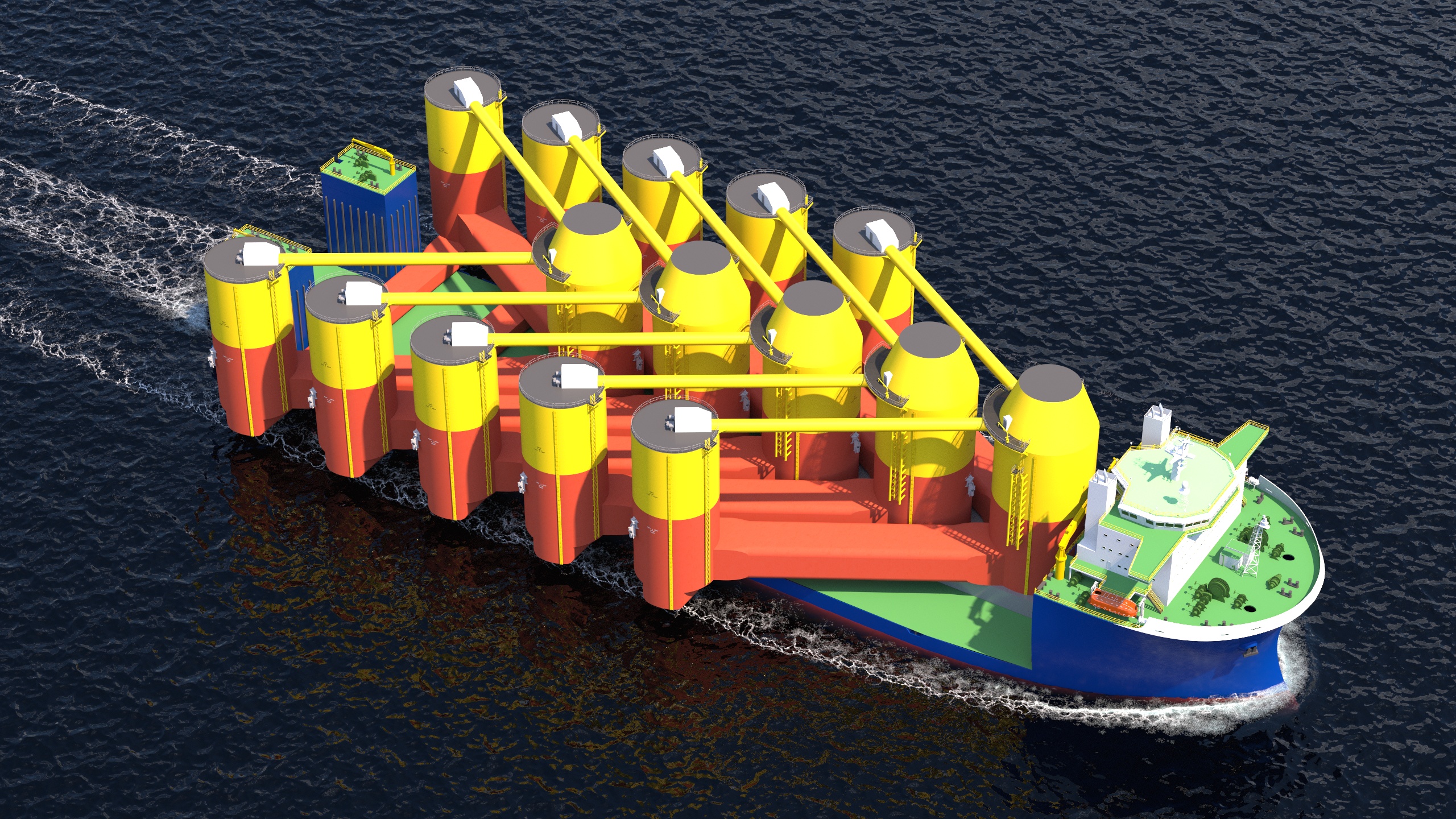
This visualisation shows five D-Floaters being transported on a ship.
Note.
- D-Floaters are being developed by Bassoe Technology.
- As many floats will be manufactured, a long way from their final mooring, why not make them easy to transport.
- Other companies are developing floats that can be bolted or welded together from standard components.
I wouldn’t be surprised if one design came to dominate the market.
This might be a good thing, as it would surely speed up deployment of floating wind farms.
Construction And Installation
This video shows the construction and installation if Principle Power‘s, Windfloat prototype.
Note.
- All the construction and assembly is done in a dock with a suitable crane.
- This is much easier than doing it the assembly out at sea, as has to be done with turbines with fixed foundations.
- I suspect that with the best design of float and turbine, high rates of turbine assembly can be achieved.
- Health and Safety will prefer this type of assembly.
I suspect other floating wind turbines will be similarly assembled.
Suppose you were assembling 15 MW floating turbines at a rate of one per day, that would be a production rate of over 5 GW of turbines per year from just one dock.
Early Delivery Of Power
I suspect that to build a floating wind farm, one of the first things to be towed out would be the substation to which all the turbines will be connected.
- This could even be floating.
- I’ve seen floating sub station designs, that incorporate energy storage and hydrogen production.
Once the substation is fully-installed and tested, floating turbines could be towed out, anchored, connected to the substation and immediately start to produce electricity.
I have built a lot of cash-flow models in my time and I believe that one for say a 2 GW floating wind farm would be very friendly to proposers, investors and operators.
There’s A Lot Of Sea Out There!
And after nearly sixty years of offshore semi-submersible platforms in UK water, we now how to work in the conditions.
In ScotWind Offshore Wind Leasing Delivers Major Boost To Scotland’s Net Zero Aspirations, I said this, about the total capacity, that will be developed under the ScotWind leasing round.
- Adding up these fixed foundation wind farms gives a capacity of 9.7 GW in 3042 km² or about 3.2 MW per km².
- Adding up the floating wind farms gives a capacity of 14.6 GW in 4193 km² or about 3.5 MW per km².
Note.
- You appear to get ten percent more capacity in a given area of sea with floating wind farms.
- The energy density of floating wind farms is 3.5 MW per km².
I suspect investors will prefer the floating wind farms.
Lower Visibility
Floating wind farms will generally be further out to sea and less likely to be objected to, than installations nearer to land.
Maintenance And Updating
Floating wind farms can be towed into port for servicing and updating, which must ease the process.
Project Management
I believe that floating wind farms, are projects, that would benefit highly from good project management.
Sometimes, I wish I was still writing project management software and I am always open to offers to give my opinion and test anybody’s software in that area!
Finance
I can see that floating wind farms could offer better cash flows to investors and this will make them invest in floating wind farms at the expense of those with fixed foundations.
Conclusion
For all these reasons, but with my instinct telling me that floating wind farms could offer a better return to investors, I wouldn’t be surprised if floating wind farms came to dominate the market.
The Salamander Project
The Salamander project may be a strange name for a proposed Scottish offshore wind farm, but that is what it is.
It is being developed by Ørsted and the Simply Blue Group.
There is a web site, which has this bold mission statement.
Helping To Unlock Scotland’s Floating Offshore Wind.
These paragraphs outline the project.
The Salamander project will utilise innovative and cutting-edge floating offshore wind technologies to produce zero-carbon electricity. The development aims to be a stepping stone to help Scotland and the UK to progress towards a net-zero future.
With a proposed 100 MW pre-commercial size project, the Salamander project which is located off Peterhead in the East coast of Scotland, is in an advanced planning stage. Salamander has a strong focus on supply chain development and will provide an opportunity for the local supply chain to gear up for commercial scale opportunities in Scotland, as well as de-risking floating wind technologies for the future commercial projects in Scotland and beyond. This will allow Scotland to maximise the financial benefit of its strong offshore wind resource and generate long term jobs for its local communities.
The project will contribute to the Scottish government’s target of 11 GW of installed offshore wind by 2030, as well as the UK government’s target of 5 GW of operational floating offshore wind by the same date.
There is also a video, which is very much a must-watch.
Floating offshore wind is a relatively new technology and will become the major generator of the world’s electricity within the next decade.
Note this phrase in the first paragraph.
The development aims to be a stepping stone to help Scotland and the UK to progress towards a net-zero future.
This philosophy is shared with other projects.
In DP Energy And Offshore Wind Farms In Ireland, I said this.
They are also developing the Gwynt Glas offshore wind farm in the UK sector of the Celtic Sea.
- In January 2022, EDF Renewables and DP Energy announced a Joint Venture partnership to combine their knowledge and
expertise, in order to participate in the leasing round to secure seabed rights to develop up to 1GW of FLOW in the Celtic Sea. - The wind farm is located between Pembroke and Cornwall.
The addition of Gwynt Glas will increase the total of floating offshore wind in the UK section of the Celtic Sea.
- Blue Gem Wind – Erebus – 100 MW Demonstration project – 27 miles offshore
- Blue Gem Wind – Valorus – 300 MW Early-Commercial project – 31 miles offshore
- Falck Renewables and BlueFloat Energy – Petroc – 300 MW project – 37 miles offshore
- Falck Renewables and BlueFloat Energy – Llywelyn – 300 MW project – 40 miles offshore
- Llŷr Wind – 100 MW Project – 25 miles offshore
- Llŷr Wind – 100 MW Project – 25 miles offshore
- Gwynt Glas – 1000 MW Project – 50 miles offshore
This makes a total of 2.2 GW, with investors from several countries.
It does seem that the Celtic Sea is becoming the next area of offshore wind around the British Isles to be developed.
These Celtic Sea wind farms include Erebus, which like Salamander is a 100 MW demonstration project.
Salamander And Erebus Compared
Consider.
- Both are 100 MW floating wind demonstration projects.
- Salamander and Erebus are 27 and 21 miles offshore respectively.
- Salamander and Erebus are close to the deepwater ports of Peterhead and Milford Haven.
- Both are described as stepping-stone projects.
- Both projects talk about developing supply chains.
- The developers of Salamander and Erebus include Ørsted and EDF Renewables respectively, who are both big beasts of the offshore wind industry.
Both wind farms are in areas, where the UK, Scottish and Welsh governments want to develop massive offshore wind farms, that will eventually total over 50 GW. I believe that Salamander and Erebus will indicate any problems, that will be likely to occur in the building of these massive offshore floating wind farms.
It is a very sensible plan and could lead to an energy rich future for the UK.
How Long Will It Take To Assemble A Floating Wind Turbine?
Each floating wind turbine requires these major components.
- A wind turbine, which in the Kincardine Wind Farm have a capacity of 9.5 MW, is obviously needed. Some proposed floating offshore wind farm are talking of turbines between 14 and 16 MW. These turbines will be very similar to onshore turbines.
- A float, usually made out of steel or possibly concrete. Various designs have been built or proposed. The Wikipedia entry for floating wind turbine gives several examples.
- The anchoring system to keep the float with its turbine in the desired position.
- The electrical system to connect the wind turbine to the offshore substation, which could also be floating.
Note that the designs for the float, anchoring and electrical systems will rely heavily on technology proven in the offshore oil and gas industry.
Principle Power are the designer of the WindFloat, which is one of the first floats to be used in floating offshore wind.
Their home page has a continuous full-screen video, that shows a WindFloat being assembled and towed out.
The video shows.
- The completed float being floated alongside a dock, which obviously has an appropriate water depth.
- The dock has a large crane.
- The turbine tower and then the blades being lifted into position and securely fixed.
- Finally, a tug tows the completed turbine/float assembly to its position in the wind farm.
This would appear to be an assembly operation, that could flow just like the production in any world-class vehicle factory.
- There would need to be just-in-time delivery of all components.
- The weather would need to be cooperative.
- Lighting might be needed to work in poorer light levels.
- This method of assembly would be turbine and float agnostic.
- Multiple shift working could be employed.
My project management involvement tells me, that it would not be unreasonable to assemble, at least one complete turbine and its float and accessories in a working day.
I can do a small calculation.
The average size of turbine is 15 MW.
One turbine is assembled per day.
There are 300 working days possible in a year with multiple shift working, ignoring Bank Holidays and bad weather.
Just one site could produce 4.5 GW of floating wind turbines per year.
How Many Production Sites Could There Be?
These are surely the best possibilities.
- Barrow
- Belfast
- Clyde
- Devon/Cornwall
- Forth Estuary
- Great Yarmouth
- Haven Ports
- Holyhead
- Humber
- Liverpool
- Milford Haven
- Peterhead
- Southampton Water
- South Wales
- Teesside
- Thames Estuary
I have named sixteen areas, that could be suitable for the assembly of floating wind turbines.
So let’s assume that eight will be developed. That could mean as much as 36 GW of capacity per year.
The Energy Density Of Floating Wind Farms
In ScotWind Offshore Wind Leasing Delivers Major Boost To Scotland’s Net Zero Aspirations, I summarised the latest round of Scotwind offshore wind leases.
- Six new fixed foundation wind farms will give a capacity of 9.7 GW in 3042 km² or about 3.2 MW per km².
- Ten new floating wind farms will give a capacity of 14.6 GW in 4193 km² or about 3.5 MW per km².
Returning to the earlier calculation, which says we could have the ability to create 36 GW of wind turbines per year, with 15 MW turbines, this means with a generating density of 3.5 MW per km², the 36 GW would take up around a hundred kilometre square of sea.
Conclusion
We will become Europe’s powerhouse.
This Is A 30 MW Power Station
This YouTube video shows a thirty MW power station, that is being built in France.
This page on the Principle Power web site describes the project.
This Google Map shows the location of Leucate and Le Barcares.
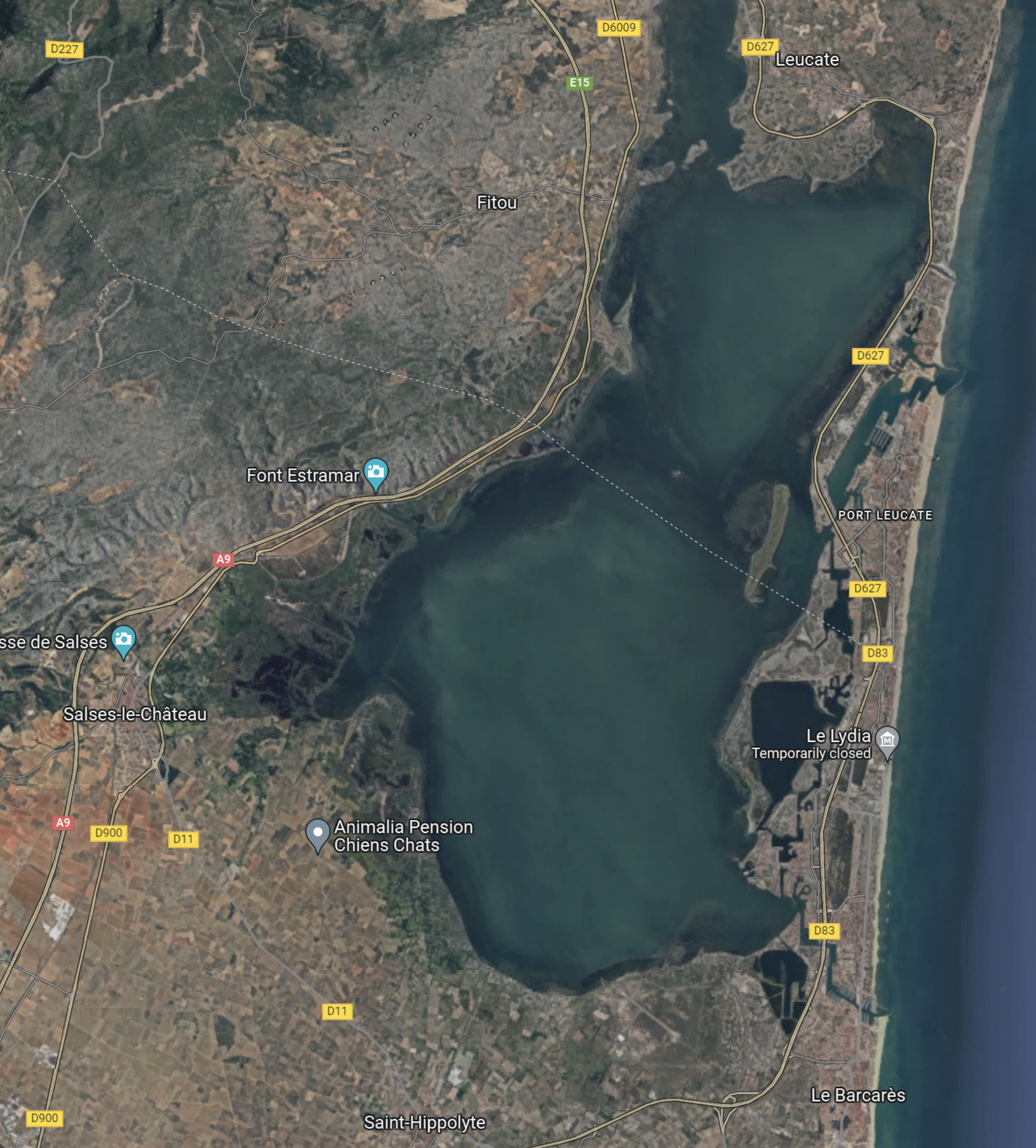
The wind farm is around 16 kilometres offshore.
Enjoy!
Biden-Harris Administration Announces New Actions To Expand U.S. Offshore Wind Energy
The title of this post is the same as that of this fact sheet from the White House briefing room.
This is the sub-title.
Departments of Energy, Interior, Commerce, and Transportation Launch Initiatives on Floating Offshore Wind to Deploy 15 GW, Power 5 Million Homes, and Lower Costs 70% by 2035.
Some points from the fact sheet.
- The President set a bold goal of deploying 30 gigawatts (GW) of offshore wind by 2030, enough to power 10 million homes with clean energy, support 77,000 jobs, and spur private investment up and down the supply chain.
- Conventional offshore wind turbines can be secured directly to the sea floor in shallow waters near the East Coast and the Gulf of Mexico.
- However, deep-water areas that require floating platforms are home to two-thirds of America’s offshore wind energy potential, including along the West Coast and in the Gulf of Maine.
- Globally, only 0.1 GW of floating offshore wind has been deployed to date, compared with over 50 GW of fixed-bottom offshore wind.
- The Floating Offshore Wind Shot will aim to reduce the costs of floating technologies by more than 70% by 2035, to $45 per megawatt-hour.
- The Administration will advance lease areas in deep waters in order to deploy 15 GW of floating offshore wind capacity by 2035.
This all seems to be ambitious!
But!
- In ScotWind Offshore Wind Leasing Delivers Major Boost To Scotland’s Net Zero Aspirations, I looked at Scotland’s latest round of offshore wind leases.
- If the lessors carry out their proposals Scotland will add 9.7 GW of fixed-foundation offshore wind farms and 14.6 GW of floating offshore wind farms, which I estimate will be built by 2035.
- In Three Shetland ScotWind Projects Announced, I looked at three floating wind farms to the East of Shetland, which are a secondary deal after ScotWind, which could generate 2.8 GW by 2035.
- In Is This The World’s Most Ambitious Green Energy Solution?, I describe an ambitious plan called Northern Horizons, proposed by Norwegian company; Aker to build a 10 GW floating wind farm, which will be 120 km to the North-East of the Shetlands.
It could be possible that little Scotland installs more floating wind farms before 2035, than the United States.
And what about England, Wales and Northern Ireland?
- England hasn’t announced any floating wind farm projects, but has around 17 GW of fixed-foundation offshore wind farms under development in the shallower waters along the East and South coasts.
- In Two Celtic Sea Floating Wind Projects Could Be Delivered By 2028, I looked at prospects for the Celtic Sea between Wales, Ireland and Devon/Cornwall. It is possible that a GW of floating wind could be developed by 2028, out of an ultimate potential of around 50 GW.
- Northern Ireland is a few years behind England and Scotland and might eventually make a substantial contribution.
But Biden’s aims of a strong supply chain could be helped by Scotland, as several of the floating wind farms in Scotland are proposing to use WindFloat technology from Principle Power, who are a US company. The Principle Power website has an explanatory video on the home page.
Three Shetland ScotWind Projects Announced
The title of this post, is the same as that of this press release on Crown Estate Scotland.
These three paragraphs outline how the leases were allocated.
Three projects will be offered seabed agreements for offshore wind projects following Crown Estate Scotland’s ScotWind clearing process.
The announcement comes as an offshore wind supply chain summit is held in Aberdeen today (22 August) with Sir Ian Wood, chaired by Michael Matheson MSP, Cabinet Secretary for Energy, and including a keynote address by First Minister Nicola Sturgeon MSP.
Clearing saw the ‘NE1’ area east of Shetland made available for ScotWind applicants who met the required standards but who did not secure their chosen location earlier in the leasing process.
I think it was good idea to offer these leases to those bidders that failed to get a lease, the first time around, despite meeting the standards.
- Would it encourage bidders, if they knew that after the expense of setting up a bid, that if they failed, they could have another chance?
- It must also save the Scottish Government time and money checking out bidders.
- How many times have you interviewed several applicants for a job and then found jobs for some of those, that you didn’t choose for the original job?
Let’s hope the philosophy has generated some good extra contracts.
This map from Cross Estate Scotland shows all the contracts.

Note the three new leases numbered 18, 19 and 20 to the East of Shetland, in the North-East corner of the map.
Their details are as follows.
- 18 – Ocean Winds – 500 MW
- 19 – Mainstream Renewable Power – 1800 MW
- 20 – ESB Asset Development – 500 MW
Note.
All are floating wind farms.
- Ocean Winds is a Spanish renewable energy company that is developing the Moray West and Moray East wind farms.
- Mainstream Renewable Power appear to be a well-financed and ambitious company, 75 % owned by Aker.
- ESB Energy appear to be an experienced energy company owned by the Irish state, who operate several wind farms and Carrington gas-fired power station in the UK.
2.8 GW would appear to be a generous second helping.
Ocean Winds and Mainstream Renewable Power
This web page on the Ocean Winds web site, is entitled Ocean Winds Designated Preferred Bidder For Seabed Leases For 2.3 GW Of Floating Projects East Of Shetland, Scotland, contains several snippets of useful information.
- Crown Estate Scotland announced the result of ScotWind Leasing round clearing process, awarding Ocean Winds with two seabed leases for floating offshore wind projects: a 1.8 GW capacity site with partner Mainstream Renewable Power, and another 500 MW capacity site, east of the Shetland Islands.
- Ocean Winds’ international portfolio of projects now reaches 14.5 GW of gross capacity, including 6.1 GW in Scotland.
- Floating wind turbines for the two adjacent sites are confirmed, because of the water depth.
- The partners are committed to developing floating offshore wind on an industrial scale in Scotland, generating local jobs and opportunities in Scotland and the Shetland Islands.
- From the picture on the web page, it looks like WindFloat technology will be used.
- Ocean Winds developed the WindFloat Atlantic project.
Ocean Winds appear to want to go places.
The Shetland HVDC Connection
The Shetland HVDC Connection will connect Shetland to Scotland.
- It will be 160 miles long.
- It will have a capacity of 600 MW.
- It is estimated that it will cost more than £600 million.
- It will allow the 66MW Lerwick power station to close.
- It will be completed in 2024.
I have a feeling that all these numbers don’t add up to a sensible answer.
Consider.
- The three offshore wind farms can generate up to 2800 MW of green electricity.
- With a capacity factor of 50 %, an average of 1400 MW of electricity will be generated.
- The Viking onshore wind farm on Shetland could generate up to 450 MW.
- More wind farms are likely in and around Shetland.
- Lerwick power station can probably power most of the Shetland’s needs.
- Lerwick power station is likely to be closed soon.
- Sullum Voe Terminal has its own 100 MW gas-turbine power station.
- Load is balanced on Shetland by 3MWh of advanced lead-acid batteries.
- Lerwick has a district heating scheme.
If we assume that Shetland’s energy needs are of the order of a few hundred MW, it looks like at times the wind farms will be generating more electricity, than Shetland and the Shetland HVDC Connection can handle.
Various plans have suggested building electrolysers on Shetland to create hydrogen.
Conversion of excess electricity to hydrogen, would have the following advantages.
- The hydrogen could be used for local heavy transport and to replace diesel.
- Hydrogen could be used to fuel a gas turbine back-up power station, when needed.
- Hydrogen could be used for rocket fuel, if use of Shetland as a Spaceport for launching satellites takes off.
Any excess hydrogen could be exported to the rest of the UK or Europe.
Offshore Wind Champion Appointed As £160m Floating Offshore Wind Fund Opens For Expressions Of Interest
The title of this post, is the same as that of this press release from Kwasi Kwarteng.
These three paragraphs describe the policy.
Ambitious plans to expand offshore wind around the United Kingdom to power homes and businesses with cheap, homegrown energy received a further boost today with the appointment of a new government champion and a multimillion-pound manufacturing fund opening for expressions of interest.
The appointment of Tim Pick as the first UK Offshore Wind Champion was confirmed by Prime Minister Boris Johnson and Business and Energy Secretary Kwasi Kwarteng today.
The Floating Offshore Wind Manufacturing Investment Scheme (FLOWMIS) will provide £160 million in government funding to boost floating offshore wind capability around the UK at sites in Scotland, Wales and elsewhere by supporting manufacturers and giving private investors the confidence to back this emerging sector which is expected to rapidly expand in the years ahead.
Floating offshore wind needs the following components.
- Wind turbines, which are the same as those used onshore.
- Floats, which are generally made from steel, but concrete can also be used. There are a few proven designs, like the Windfloat from Principle Power.
- Mooring systems for the turbines.
- Electrical substations and cables.
There is also a need for deep water docks, with large cranes to assemble the systems, prior to towing the turbines into position.
Floating offshore wind is a new industry and there will be new ideas coming through from innovators.
I feel that the strategy could help bring new ideas through.
Boris Johnson Wants To Build ‘Colossal’ Irish Sea Wind Farm Within A Year
The title of this post, is the same as that of this article in The Telegraph.
This is the sub-title.
Prime Minister tells industry leaders he has ‘a dream’ that giant floating wind farm could provide ‘gigawatts of energy’
These are the first three paragraphs of the article.
Boris Johnson is pushing energy firms to build a “colossal” offshore wind farm in the Irish Sea within 12 months.
The Prime Minister told industry leaders he has “a dream” that a giant floating wind farm could provide “gigawatts of energy and do it within a year”, according to a government source.
He was addressing wind energy firms at a round table discussion in Downing Street as the Government finalised its energy security strategy.
It is said in the article, that industry leaders smiled at the suggestion.
My feelings though are different and I wonder if Boris has been briefed by an offshore wind expert, who knows what they’re doing.
Quietly and unobtrusively, a new technology has been developed, that allows Boris the luxury to dream.
The World’s Largest Floating Wind Farm
In the UK, we are getting used to superlatives being applied to our offshore wind farms.
- According to Wikipedia at the current time, nine of the fifteenth largest offshore wind farms in the world are in the United Kingdom.
- The Hornsea wind farm, comprises the 1.4 GW Hornsea Two wind farm, which is the largest offshore wind farm in the world.
- Previously, the 1.2 GW Hornsea One wind farm was the largest offshore wind farm in the world.
In this article on offshoreWIND.biz, which is entitled World’s Largest Floating Offshore Wind Farm Fully Operational, this is said.
Located 15 kilometres off the coast of Aberdeenshire, Scotland, in water depths ranging from 60 metres to 80 metres, Kincardine is the largest operating floating wind farm.
The project consists of five Vestas V164-9.5 MW and one V80-2 MW turbine, each installed on WindFloat® semi-submersible platforms designed by Principle Power.
This picture from Cobra Group shows one of the turbines being towed into position at Kincardine.
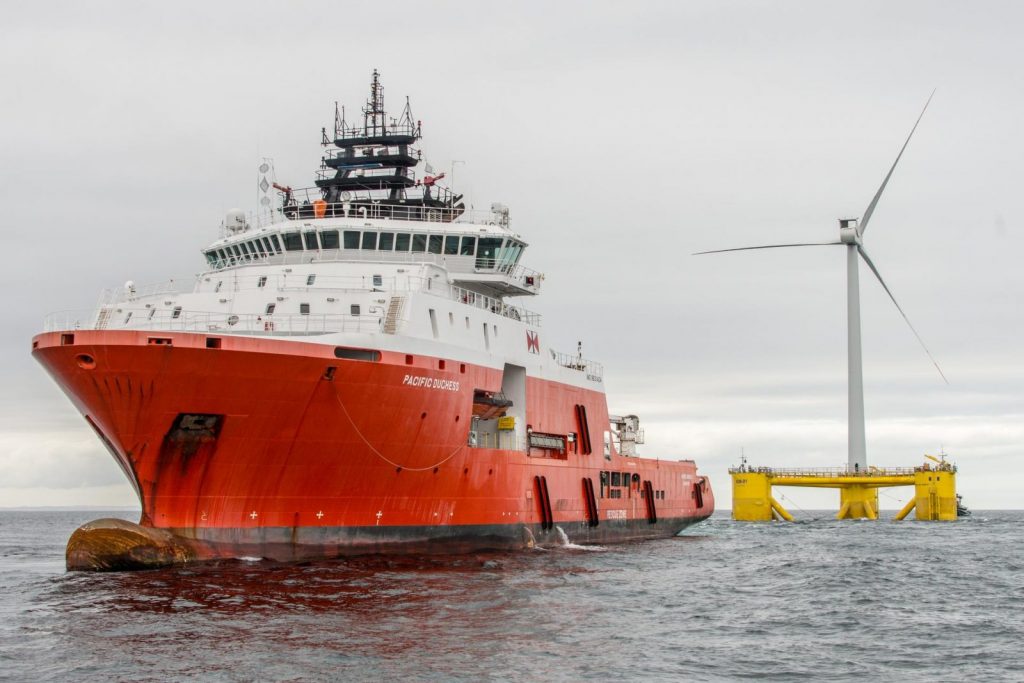
There are more pictures on this web page.
WindFloats would appear to be proven technology, as there are now two commercial wind farms using the technology and several others under development.
Erebus And Valorous
But Kincardine Wind Farm won’t be the world’s largest floating wind farm for long!
The next two wind farms, using the technology are Erebus and Valorous, who will provide a total of 400 MW from a company called Blue Gem Wind, which will use larger 14 MW turbines.
They will be installed to the South-West of the Pembrokeshire Coast.
Blue Gem Wind
Blue Gem Wind are based in Pembroke Dock and are a partnership of Simply Blue Energy, a pioneering Celtic Sea energy developer, and TotalEnergies.
Simply Blue Group are an Irish company, who are also working with Shell on the development of 1.35 GW of wind power to the West of Ireland.
50 GW Of Wind In The Celtic Sea
On the Projects page of the Blue Gem website, this is said about floating wind in the Celtic Sea.
Floating wind is set to become a key technology in the fight against climate change with over 80% of the worlds wind resource in water deeper than 60 metres. Independent studies have suggested there could be as much as 50GW of electricity capacity available in the Celtic Sea waters of the UK and Ireland. This renewable energy resource could play a key role in the UK meeting the 2050 Net-Zero target required to mitigate climate change. Floating wind will provide new low carbon supply chain opportunities, support coastal communities and create long-term benefits for the region.
Is this Boris’s project?
These are my thoughts.
How Many Turbines Would You Need For 50 GW?
If you need 7 x 14 MW turbines for each 100 MW, that would mean you need 3500 turbines and WindFloats for 50 GW.
How Would Each Turbine Be Installed?
It appears from pictures on the Cobra Group web site, that the turbine is mounted on the WindFloat using a large crane on a dock, whilst the WindFloat is alongside.
- The WindFloat and the turbine are then towed out into the desired position.
- It would then be anchored to the sea-bed.
- Finally, it would be connected to the power network.
I would doubt, that one team could probably install more than one turbine per day.
But I suspect more than one team could work in and out of one port at a time.
How Many Ports Could Be Used For Turbine Assembly?
As Blue Gem Wind is based in Pembroke Dock, I would assume that one of the ports would be on Milford Haven Waterway.
But there are other ports on the Welsh and Irish coasts, where the turbine lift could be accomplished.
How Much Capacity Could Be Installed In Twelve Months?
Suppose you had two ports doing assembly, with two teams working at each port, which would mean four turbines could be installed in a day.
- In a month, that would be 4 x 14 x 30 MW per month.
- This is nearly 1.7 GW per month or 20 GW per year.
It does appear to me, that floating wind farms with the right project management could be very much quicker to install than traditional fixed foundation wind turbines.
I believe that if we get the manufacturing and the project management right, that a colossal 20 GW of floating wind can be installed in twelve months.
Conclusion
Most people won’t believe Boris’s claim, but I feel that there is a degree of reality behind it, if we can produce four WindFloats and four turbines per day and enough cables and electrical gubbins to link them all together.
Blue Gem Wind
Principle Power are the designers of the WindFloat.
The Projects page of the Principle Power web site led me to a project called Erebus. This is Principle Power’s description of the project.
The Celtic Sea, located between the United Kingdom and Ireland, holds an estimated 50 GW of offshore wind resource. The 96 MW Erebus project, located offshore Pembrokeshire, Wales, is a flagship project planned by Blue Gem Wind, a joint venture between Total and Simply Blue Energy, to unlock the potential of this region.
The project will feature between 7 and 10 turbines on WindFloat® floating platforms located approximately 44 km southwest of the Pembrokeshire coastline.
The Erebus project will see the deployment of a fully industrialized WindFloat® and represents a stepping stone that will allow the local supply chain to build capabilities for the delivery of larger projects under development in the Celtic sea region.
Note.
- Developing 50 GW of offshore wind in the Celtic Sea is not a small amount of wind power.
- The 96 MW Erebus project would appear to be the first project in the Celtic Sea.
- The turbines would be between 9.5 and 14 MW.
- The Principle Power website states that the water depth of the Erebus wind farm is seventy metres.
- The deployment of a fully industrialized WindFloat.
- The Erebus wind farm is being developed by Blue Gem Wind.
It would be larger than the current world’s largest floating wind farm, which is the Kincardine Wind Farm.
Who Are Blue Gem Wind?
Blue Gem Wind have a web site, with a picture of three turbines riding on WindFloats and a couple of support boats and this mission statement.
Floating Offshore Wind
A new generation of energy in the Celtic Sea
The Our Projects page shows a good picture and says this.
Floating wind is set to become a key technology in the fight against climate change with over 80% of the worlds wind resource in water deeper than 60 metres. Independent studies have suggested there could be as much as 50GW of electricity capacity available in the Celtic Sea waters of the UK and Ireland. This renewable energy resource could play a key role in the UK meeting the 2050 Net-Zero target required to mitigate climate change. Floating wind will provide new low carbon supply chain opportunities, support coastal communities and create long-term benefits for the region.
A header indicates a stepping-stones approach to assist the local supply chain and says this.
We believe that a stepping stone approach to the development of floating wind in the Celtic Sea brings a number of benefits. Starting with smaller demonstration and early-commercial projects, increasing in size, will help to capture the highest local supply chain content. It will also maximise knowledge transfer and facilitate a sustainable transfer to a low carbon economy.
Because of this focus on stepping stone projects we have proposed Erebus, a 96MW test and demonstration project followed by Valorous, a 300MW early-commercial project.
These links give more details of the two projects.
- Erebus – 100MW Test & Demonstration project in the Celtic Sea
- Valorous – A 300MW Early Commercial project in the Celtic Sea
It appears that the company is taking a sensible approach.
- They are starting small and building up deployment.
- They are using proven WindFloat technology.
- They are developing a local supply chain.
This Google Map shows the area of the two wind farms.
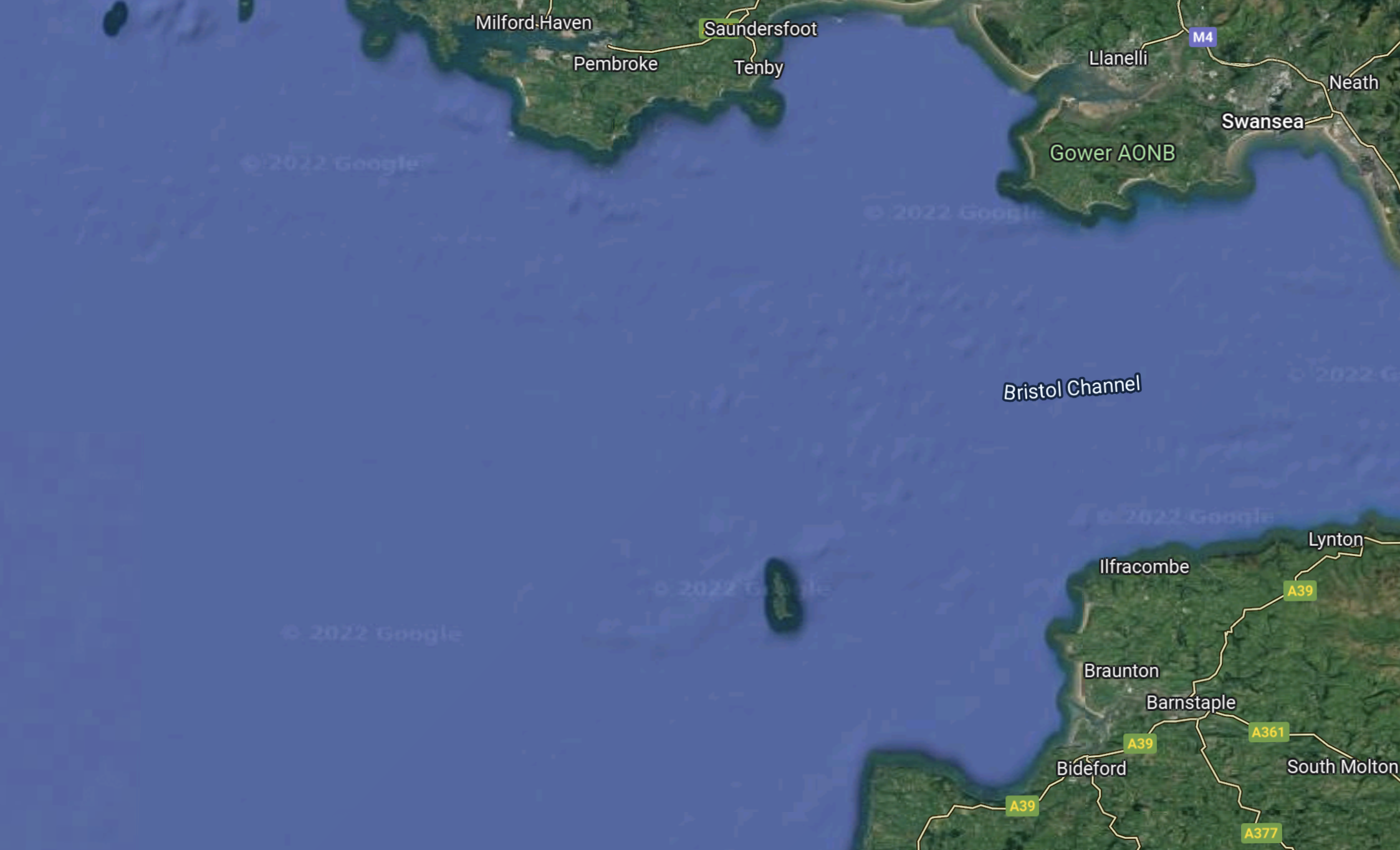
Note.
- Pembroke in the middle at the top of the map.
- Barnstaple and Bideford in Devon in the South-East corner of the map.
- Lundy Island off the Devon coast.
I estimate that the two wind farms will be about the Western edge of this map, with Erebus to the North of Valorous. They wouldn’t want to be too far to the West, as that would put them in the shipping lanes between Ireland and France.
Will The Turbines Be Assembled In The Milford Haven Waterway?
This Google Map shows the Milford Haven Waterway.
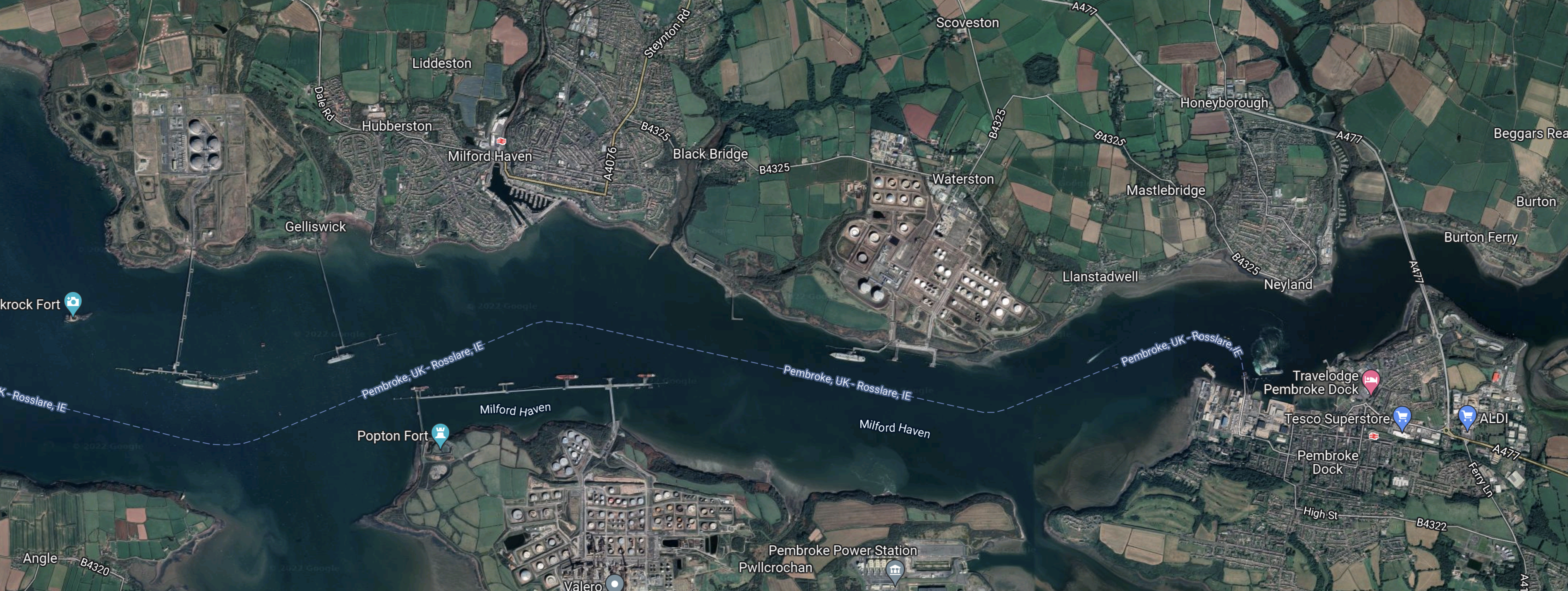
Note.
- Pembroke Dock, where Blue Gem Wind has its offices, is at the Eastern end of the map.
- The oil refineries and LNG terminals.
- Milford Haven on the North side of the waterway.
- The 2.2 GW gas-fired Pembroke power station on the South side of the waterway.
- The ferry route between Rosslare and Pembroke Dock.
But as the waterway is one of the deepest natural harbours in the world, I wouldn’t be surprised to find, that the turbines will be lifted on to the WindFloats in this waterway.
The turbines would be brought in by sea and the WindFloats would be towed in from their manufacturing site.
Where Will The WindFloats And Turbines Be Built?
There could be enough space to build the WindFloats in the Milford Haven Waterway, but I suspect they will be built in a shipyard, which is close to a supply of steel. South Wales is an obvious possibility.
I estimate that for the two wind farms between twenty-eight and forty turbines would be needed and these would probably be brought in by sea and then lifted onto the WindFloats somewhere in the Milford Haven Waterway.
It could be a very efficient process.
Will Pembroke Power Station Have A Future Role?
Consider.
- Pembroke power station is the largest gas-fired power station in Europe.
- It has a capacity of 2.2 GW.
- It was only completed in 2012, so it has many years of life yet!
- It is also probably young enough, to be able to be converted to run on hydrogen.
- It obviously will have a very good connection to the National Grid.
I would suspect that initially, the power cable from Erebus and Valorous, would use the same grid connection as the power station.
But in the future there must be some interesting ways that the wind farms and the power station can work together.
- A large electrolyser could be built to create hydrogen for heavy transport and industrial uses, from excess electricity.
- Could the oxygen from the electrolyser be used for steelmaking in South Wales?
- As natural gas is phased out the power station could be converted to hydrogen power.
- In times of low wind, the power station could make up the shortfall.
- The wind farms could be used as the primary electricity source, with the power station adding the extra power needed to meet demand.
There are certainly ways, the wind farms and the power station can work together.
Conclusion
These two related wind farms seems a good way to start wind developments between the UK and the island of Ireland.
 The Anonymous Widower