Why Did You Cancel Your BT Direct Debit?
I picked up the phone and a believable voice asked the title of this post.
As there was no number visible on the phone display, I said that I hadn’t cancelled it and said, that I’ll check with my bank, before I put the phone back in its cradle.
It rang immediately, so I picked it up and told the caller to Fuck Off, as no company like BT would react like that, after I’d told them, I would check with my bank.
The phone rang about four more times and I suspect they had control of it, so I didn’t use it, but conteacted my bank on my mobile. The BT Direct Debit was still there.
An hour or so later, I rang a couple of friends to check my phone and the phone appeared to be working fine.
On checking with BT, they told me it was a well known scam.
The strange thing was that the call came on the day before my BT bill was due to be paid.
So as the scammer, had my phone number, name and billing date, it sounds like someone had read my details in a BT database.
One thing though the helpful girl from BT told me, was that if you cancel your Direct Debit to BT for any reason, you’ll get an e-mail.
So if you haven’t received an e-mail saying you’ve cancelled, it would appear that you haven’t cancelled.
Bloodly scammers!
Crossrail Has Power To Maidenhead
This article on Rail Technology Magazine is entitled Crossrail minister rides train as electrification and testing milestones passed.
This is said.
Meanwhile, Crossrail confirmed that electricity is now running on 12 miles of railway between Maidenhead and Heathrow junction (pictured). Over 80% of the wiring programme has now been completed, with 800 workers installing over 1,400 piled foundations and 834 overhead line structures.
So that means, that Crossrail is now live all the way from the main line station at Paddington to Maidenhead.
Will we be seeing GWR’s Class 387 trains to Maidenhead from Paddington in the near future?
Can Mark 3 Coaches Come To The Rescue?
The Mark 3 coach is one of the mainstays of UK railways.
- Chiltern Railways use thirty one coaches on Birmingham and Oxford services from Marylebone.
- CrossCountry have thirty-eight coaches as part of InterCity 125s.
- East Midlands Trains have over a hundred as part of InterCity 125s
- Greater Anglia use one hundred and thirty coaches between Liverpool Street and Norwich.
- Great Western Railway have over four-hundred and fifty coaches as past of InterCity 125s.
- Virgin Trains East Coast have over a hundred coaches as part of InterCity 125s.
It should be said, that some are in better condition than others and very few meet the latest access regulations.
But even the table hides a few strength and problems.
Chiltern Trains
Chiltern Trains run their Mark 3 sets with a driving van trailer (DVT) and a Class 68 locomotive on some Birmingham and Oxford services.
- Marylebone to Birmingham Moor Street is a two trains per hour (tph) service and the journey takes ten minutes under two hours.
- Marylebone to Oxford is a two tph service and the journey takes a few minutes over an hour.
The Birmingham service needs eight trains for a 2 tph service.
The Oxford service would need six trains for a 2 tph service, but if the journey could be under the hour, there could be a reduction in the number of trains needed.
If Chiltern decided to run a 2 tph service between Oxford and Birmingham, as I suggested in Where Next For Chiltern?, this would need another four trains.
This leads me to say.
- As Chiltern only have six sets of Mark 3 coaches, they will have to use Class 168 trains for some of the services.
- Probably by clever timetabling, they would need at least a dozen trains to run a quality two tph service on both routes.
- They would probably like all their services to Birmingham and Oxford to share a common train type, for operational and marketing reasons.
So where do Chiltern find another probably ten trains?
- The Class 68 locomotives would have to be hired.
- There are up to a dozen DVTs in storage at Long Marston according to Wikipedia, so creating some for the trains, might be a reasonably predictable refurbishment.
But where do they find the sixty coaches needed?
This article from Rail Magazine in June 2012, is entitled Making the Mk 3s even better, describes Chiltern’s methods.
This is an extract.
Economics dictate that it is cheaper to rebuild the Mk 3s than to order brand new DMUs. Indeed, because of track access and fuel costs, if a LHCS formation is more than five coaches (as they are in Chiltern’s case), then the costs favour locomotive-hauled trains.
The freedom to be able to do this is also a factor for Chiltern. The franchise is owned by Deutsche Bahn, which also owns the coaches. This means that vehicles can be tailored to exactly what the operator wants, rather than thinking about the re-sale value. No expensive engineering will be needed, again because this is what Chiltern wants.
Note the trains are in the same ownership as Chiltern; Deutsche Bahn.
As a passenger, the proof of the pudding is in the eating.
The product looks, feels and tastes good!
Greater Anglia
Greater Anglia could be a good source of quality Mark 3 coaches.
- Greater Anglia have 130 of them, which are leased from Porterbrook.
- The trainsare due to be replaced by new Flirt electric multiple units during 2019/2020.
- The trains have recently been refurbished and have been fitted with wi-fi and retention toilets.
The problem is that they are still slam-door stock and don’t meet the latest access regulations.
But this is not a great problem, as Chiltern have form in updating Mark 3 coaches to meet the latest standards.
Greater Anglia are also replacing fifteen sets of carriages with just 10 electric multiple units, which will provide Norwich in ninety minutes at 3 tph, as opposed to the current service of Norwich in two hours at just 2 tph.
Incidentally, just eight trains are needed to provide the current service, so Greater Anglia could have a few spares.
So it looks to me, that immediately each Flirt is in service, there will be a Mark 3 set sitting in Crown Point ready to go on its next task.
But as just ten Flirts will be replacing fifteen Mark 3 sets, it looks to me, Chiltern might be able to raid Greater Anglia’s stock of spare trains earlier than has so far been thought.
Suppose three trains could be released, this would release twenty-four refurbished coaches and three DVTs.
If another DVT could be sources from Long Marston, then there would be another four rakes of coaches for refurbishment to Chiltern’s standards.
One of the great advantages of modifying the Greater Anglia coaches, is that they have all been refurbished to a high standard, so I suspect that all the mechanicals and structure of the coaches are in virtually in as-new condition.
This page on the Greater Anglia web site, gives full details of the refurbishment.
This is said.
The significant refresh will see all of the train operator’s MkIII fleet enhanced, with improvements throughout for both First Class and Standard carriages including, plug points; new LED lighting; new carpets; new tables; new seat covers; upgraded environmentally-friendly controlled emission toilets with new floors and new taps; re-painting of the carriage interior saloon and vestibule panels, walls and ceilings.
It also appears that Greater Anglia set up a special work-shop in Crown Point TMD to do the update.
Could Greater Anglia have stolen a copy of Chiltern’s rule-book? More likely, they used the same consultant.
After a recent trip in one of these coaches with a friend, I wrote The Power Of Three! To say she was impressed, could be an understatement!
Chiltern just need to fit the new doors and their own interiors.
The Various InterCity 125 Coaches.
There are several ideas as to what to do with the various High Speed Trains formed from two Class 43 locomotives and an appropriate number of Mark 3 coaches.
This according to Wikipedia is Abellio’s Scotrail’s plan.
Abellio ScotRail will also introduce 9 four-car (2+4) and 17 five-car (2+5) refurbished High Speed Trains by December 2018 on longer-distance services between Edinburgh, Glasgow, Aberdeen and Inverness. Scotrail will receive the first locomotives and carriages late 2017, with the refurbishment program taking place at Brush Loughborough (power cars) and Wabtec Doncaster (carriages) between late 2017 and May 2019.
There have been rumours that Great Western Railway will do something similar with a few more trains.
As the InterCity 125s will each be shortened by a few coaches this will release more coaches for use by other operators.
Lots Of Mark 3 Rakes Of Coaches
There are probably enough Mark 3 coaches in excellent condition and DVTs, that can be refurbished, to create perhaps another twenty-five rakes of between five-car and eight-car Mark 3 coaches, tailored to an individual customer’s need.
All of the design work has been done and proven by Chiltern or their contractors.
Obviously, you wouldn’t fit the doors and do the final parts of the refurbishment, until you actually had a customer, but it looks to me, that Porterbrook, who own the Greater Anglia Mark 3 coaches, seem to be doing a bit of speculation. Obviously, they have a plan in there to make money, as ROSCOs don’t do charity!
There is also this article from Rail Magazine, which is entitled Refurbished Mk 3s for Tornado.
It describes how, a rake of Greater Anglia’s Mark 3 coaches, will be acquired to be used with the new-build steam locomotive 60163 Tornado. One would even be fitted with a water tank to extend the range of the engine. Surely, a Mark 3 can handle that sort of weight.
Porterbrook have done well in the last few months out of a speculative order for Class 387 trains, that helped tide some train companies through rolling-stock shortages.
So have they seen a market niche to create an affordable train for longer routes based on Mark 3 coaches hauled by a Class 68 locomotive or perhaps a Class 88 electro-diesel locomotive.
Consider.
- It would meet all the access and environmental regulations.
- It would probably be quieter than a shortened InterCity 125.
- According to the Rail Magazine article, track access charges are affordable.
- As Chiltern and Greater Anglia are showing, it would deliver a superb customer experience.
- Chiltern like the package and could be a customer or do something similar themselves.
- It would be ideal for some of CrossCountry’s long routes like Aberdeen to Plymouth.
- It would be ideal for an open-access operator, developing a new route.
- Virgin West Coast might like it for Euston to Holyhead.
- With a faster version of the Class 88 locomotive, it might have a maximum speed in excess of 100 mph.
It would do anything a Class 800 train can do, at probably a more affordable purchase price, lower track access charges and an earlier delivery date.
Conclusion
Their is something behind Porterbrook’s decision to refurbish Greater Anglia’s Mark 3 coaches, when they knew there was a good chance they would be replaced by new trains, as the clapped Class 90 locomotives certainly couldn’t do London to Norwich in ninety minutes, as mandated in the new East Anglian franchise.
I suppose that Abellio could have been keen to upgrade the coaches, as the interiors were very much on the tatty side and the upgraded coaches would hold the fort until the Flirts arrived, without too much grief.
On the other hand, if the Great Western Electrification gets later and Abellio ScotRail lose their source of shortened InterCity 125s, locomotive-hauled Mark 3s to a high standard would be a very acceptable and affordable alternative.
I must also ask this question.
Could Greater Anglia’s Mark 3 coaches have been refurbished, so that to fulfil Scotrail’s requirements, all that needs to be done is the following?
- Fit doors that are compliant with the access regulations.
- Shuffle the coaches to the length and First and Standard Class capacities required.
- Give the rake of coaches a Scotrail livery.
- Couple a Class 68 or Class 88 locomotive on one requisite end.
I suspect the negotiation would be quite convivial, as both Greater Anglia and Scotrail are owned by Abellio.
The only problem would be that Scotrail need 9 four-car and 17 five-car trains and there may not be enough DVTs. However, some sets could be to the original plan of shortened InterCity 125s.
Scotrail certainly have a Plan B, if the Great Western Electrification gets even more pear-shaped.
Appendix – Posted on December 24th, 2016
In the January 2017 Edition of Modern Railways, under a heading of Pennine Pretendolino, there is a picture of a Class 68 locomotive hauling, the jokily named spare rake of Mark 3 coaches to Laira depot for attention, so that it can be used for driver training purposes by TransPennine Express, prior to the arrival pg the new Mark 5A coaches from CAF.
The Pretendolino is described under rolling stock on the Virgin Trains entry in Wikipedia. This is said.
Following the loss of a Class 390 Pendolino in the Grayrigg derailment, a Mark 3 set with a Driving Van Trailer was leased with a Class 90 hired from English Welsh & Scottish as required. In 2008 Virgin looked at leasing two Class 180[49] but decided to retain the Mark 3 set. Nicknamed the Pretendolino, this received re-upholstered seating, power points, wi-fi and a full external re-paint at Wabtec, Doncaster in 2009.[50] Virgin used this set with a Class 90 locomotive hired from Freightliner on a Euston to Crewe (via Birmingham) service on Fridays only until December 2012. From 9 December 2013 it was utilised to operate a London Euston -Birmingham New Street train on Thursdays and Fridays only, until its withdrawal in October 2014. The Mk.III set was also occasionally hired out as a private charter train. It was used in the filming of Harry Potter and the Deathly Hallows and can be seen at King’s Cross station at the end of the film. It is currently in use as a ‘hot spare’ with Abellio Greater Anglia
Like most of its siblings, it is showing a very strong survival instinct and keeping well away from the scrapyard.
Over the last year or so, I’ve ridden to and from Ipswich in the train several times, as it has been filling in whilst, the operator was updating their own Msrk 3 coaches.
Where Next For Chiltern?
Chiltern Railways have now got their Marylebone to Oxford service up and running.
Wikipedia gives a list of their future plans. Included are the following.
- Platform lengthening.
- Restoration of former tracks.
- Remodelling Banbury, which has already been done.
- Building of the West Hampstead Interchange.
- Development of services between Aylesbury and Milton Keynes.
- Creation of a Chiltern Metro.
- Reopening various branch lies.
In addition there has been talk of electrification and opening a route along the New North Line to Old Oak Common.
Building On Oxford
As of yesterday, as I wrote in Oxford To Marylebone Opens For Business, they now have a two-platform terminus at Oxford station.
I can’t believe they have made this investment there, without other plans to use it. Wikipedia says this about the platforms at Oxford station.
The scheme also includes two new platforms at Oxford station, to be built on the site of the disused parcels depot. The new platforms will initially be five carriages in length, but provision will be made for them to be extended southwards to eight carriages.
A two platform terminus like this, will have a large capacity, when fully developed.
- Two of Chiltern’s Class 68 locomotive hauled sets of Mark 3 coaches could be accommodated at the same time.
- Two shorter trains could be handled in one platform at the same time.
- Rebuilding plans for Oxford station would improve passenger handling.
- The two-platform underround terminus at Moorgate handles 12 tph.
It could probable handle the proposed two trains per hour (tph) for the East West Rail Link with ease.
I can’t believe that these two platforms, won’t become a vibrant mini-station within Oxford station.
But where will trains and passengers go?
Expansion At Birmingham Moor Street
Birmingham Moor Street station is one of those stations, that spent decades in the wildeness and has now become an important alternative station.
Wikipedia says this about Proposed Future Developments concerning expansion of the station.
The currently disused third bay platform would be reopened, and an additional new fourth bay platform would be opened to accommodate the new services.
This is also said about HS2.
The High Speed 2 terminus in Birmingham is planned to be built on an adjacent site and will likely be linked to Moor Street, though have a separate name (either Fazeley Street or Curzon Street). The station and high-speed line is proposed to be completed by the mid-2020s.
So it looks as if Moor Street will become a more important Birmingham station for commuters and a gateway to high speed vservices from the city.
Services Between Oxford And Birmingham
Currently around two tph run between Oxford and Birmingham.
- Typically, they call at places like Banbury, Leamington Spa, Coventry and Birmingham International.
- Services are run by Cross-Country.
- Services take between sixty and seventy minutes.
- Services continue to places like Bournemouth, Manchester Piccadilly and Newcastle.
I’ve travelled on the route several times.
- It tends to be overcrowded.
- Service quality is not of the quality, you get with Chiltern, London Midland or TransPennine Express.
I think there could be a niche for an extra service between Oxford and Birmingham,, just as Chiltern hope and probably know, there’s room for one between London and Oxford.
- Services would go between the bay platforms at Oxford and Birmingham Moor Street.
- The Banbury remodelling must have helped the timetabling of the service.
- A Chiltern quality service would be provided.
- Two tph would leave at the same minutes past the half-hour.
- Services could call at Banbury, Leamington Spa, Warwick, Warwick Parkway and Solihull, or whatever was appropriate.
- Journey time could be sixty minutes or just under.
- 2 tph on an hourly service would need four trains to run a service all day.
- The Oxford Birmingham route would get four tph.
The only loser would be Cross-Country, who might lose passengers to the new service.
But then like Chiltern, they are ultimately owned by Deutche Bahn.
But, you can’t run a service without trains.
From 2019, Greater Anglia will start to receive new twelve-car Flirts for Liverpool Street to Norwich services. Currently, to run this service Greater Anglia uses 15 sets of eight Mark 3 carriages, with Class 90 locomotives and driving van trailers. In the last couple of years, all have been superbly refurbished with the addition of wi-fi and retention toilets. All the trains need is to fit sliding doors, as Chiltern have done for their Mark 3 coaches and replace the Class 90 with a Class 68 locomotive.
This would enable, Chiltern to offer a Mark 3 -only service between Marylebone and Birmingham and Oxford and the release of other trains for the Oxford to Birmingham service.
As every operator is short of trains and delivery timescales slip, it might be worth looking at the availability of suitable trains.
- According to Wikipedia, as many as twelve driving van trailers could be in store at Long Marston. How many could be brought back into service?
- Greater Anglia are replacing fifteen sets of Mark 3 carriages and a DVT, with ten electric Flirts, that will increase the frequency from 2 tph to 3 tph. Could this mean that one or two sets could be released before the Flirts enter service?
- Hopefully, InterCity 125s will start to be available, as they are replaced with Class 800 trains from Summer 2017.
There are also other possibilities if events go to plan.
This is certainly a development to file under Watch This Space.
Oxford To Marylebone Opens For Business
I took these pictures, at Oxford station today, as the Great and Good opened the Chiltern’s new service to Oxford.
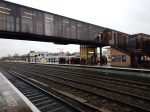
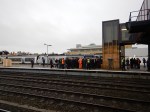
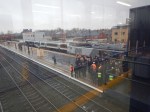
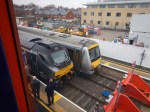
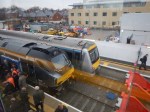
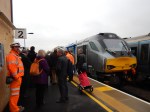
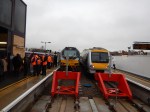

Compare the pictures, with these, I took on the 1st of December.




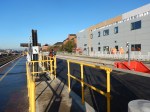
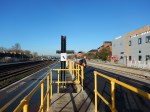
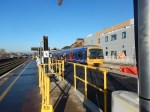
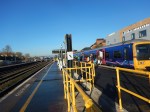
It does appear a lot of work has been done, in the intervening ten days.
HS2 Euston Hub May Not Be Viable, LBC Discovers
This is title of this article on the LBC web site. This is the first paragraph.
The time saved by travelling on HS2 could be wasted waiting for a tube at Euston, a the Deputy Mayor of London for Transport has told LBC.
I don’t know whether the statement will prove correct, but I’ve always thought that Crossrail 2, should be built before HS2..
In Call For Crossrail 2, I said this.
HS2 is currently planned to terminate at Euston station, although I think that could be changed by a more innovative solution. But whatever happens to the London end of HS2, it needs to be simply connected into the knitting of the Underground, so terminating somewhere in the area between Kings Crossand Euston, is probably a certainty.
Every recent design for Crossrail 2 shows it serving the three important London stations of Kings Cross, St. Pancras and Euston. It also links these stations to Victoria and Clapham Junction.
Have you ever tried to use the Victoria Line between Euston and Victoria with a heavy case or a baby in a buggy? It’s bad enough at normal times and impossible in the rush hour.
So when HS2 starts squeezing more passengers through the congested Euston Underground station, it will be a disaster.
I believe that the only way to connect HS2 into London is to build Crossrail 2 first.
But what do politicians know about building things, except messes and debts?
Up And Down The Bakerloo Line
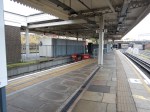
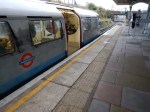
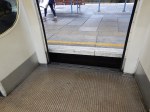
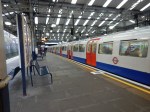
These pictures were taken of access on the Northern reaches of the Bakerloo Line.

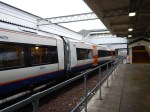


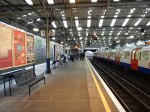


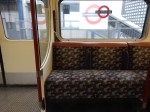
Note.
- I suspect that the Class 172 train, was getting ready to restart the service on the Gospel Oak to Goblin Line.
- The step-down into a 1972 Stock train.
- How a ramp is used with a Class 387 train.
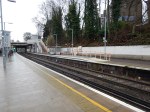
- Queen’s Park station has good step-across access.
Good design can surely make the access better.
How To Build A Step-Free Access Ramp For A Train
This new ramp or Harrington Hump, has been built on Platform 1 at Canonbury station.
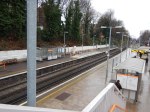

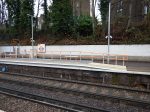
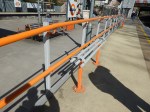
I didn’t use it, as I was going the other way.
It looks to be a very good design.
- Like all the best designs, it is simple.
- It is double-ended.
- It’s a gentle slope to ascend to train level, with no steps to trip on.
- It’s got seats to prop yourself on.
- It’s got a rail to hang on to.
- Those with poor eye-sight wouldn’t miss it and trip over.
- I suspect any sensible local builder could build one of these, from a kit of parts and instructions on a page of A4.
It looks to me like it is one of those classic engineering designs, that was developed using copious amounts of real ale, with everything written down on the back of fag-packets and used envelopes.
After my musings on dual-height platforms for the Bakerloo Line Extension, in How Will They Build The Bakerloo Line Extension?, I think that a modified version could handle the problems at stations on the Northern reaches of the Bakerloo Line, where 1972 Stock and Class 378 trains, share a platform.
Platform Height Issues On The Watford DC Line
At Queen’s Park station, the Bakerloo and Watford DC Lines join as they go towards Watford Junction station.
This map from carto.metro.free.fr shows the lines at Queen’s Park station.
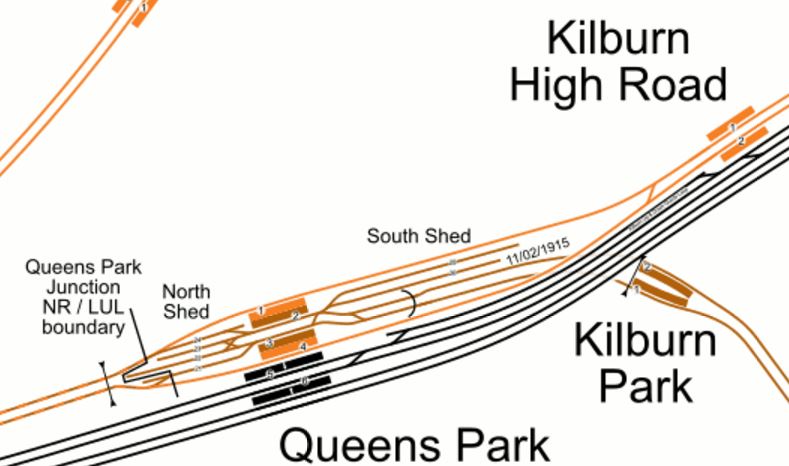
Lines Through Queen’s Park Station
Note how there is a cross-platform interchange between the two pairs of lines.
Northwards from Queen’s Park station, the platform height is a compromise, with a step down into an Underground 1972 Stock train and a step up into Class 378 train.
- It is not level access by any means and very difficult for wheel-chair users or those pushing buggies or heavy wheeled cases.
- I suspect that at some point it could even be illegal under disability regulations.
- With a more intense service, loading and unloading trains may become a seriouscause of delay.
It is not just a would-like, but a must-have.
Queens Park station though, is totally level.
The current five-car Class 378 trains are 100 metres long, which compares with the 113 metre length of the 1972 Stock train.
One way to solve the platform height issue, would be to have a dual height platform with one end of the platform level access for the 1972 Stock and the other for the Class 378 train.
This would probably need a platform of the order of 215 metres.
But London Overground have ordered a set of four-car Class 710 trains for the Watford DC Line. These trains will be perhaps 80 metres long, as the type will be shared with the shorter platforms of the Gospel Oak to Barking Line.
This shorter length train should make the design of a dual-height platform acceptable to all users a lot easier.
Currently Off Peak services through Willesden Junction are as follows.
- 3 trains per hour (tph) from Euston to Watford Junction – London Overground
- 9 tph on the Bakerloo Line.
Some sources mention that there are ambitions to run 27 tph on the Bakerloo Line. So even if all the trains went through to Watford Junction, that would only mean 30 tph stopping at stations on the line.
Currently, 2 tph on the Bakerloo Line turnback at Queen’s Park station, so it looks like with good deual-height platform design, the current schedule of three tph on the Overground, stopping at South Hampstead and Kilburn High Road can be continued and supplemented with perhaps 18-20 tph on the Bakerloo Line North of Queen’s Park station.
Platforms could be about 180-200 metres long, with a height to fit the Bakerloo Line trains. At one end they would have an 80 metre section of platform to suit the Class 710 trains.
The Class 710 trains would obviously be wheelchair friendly, like the current Class 378 trains, but they would be designed to fit a typical station on the Watford DC and Gospel Oak to Barking Lines.
If Class 378 trains were also providing services on the line, they would use their selective door opening to use the four-car raised section of the platform.
So, if the stations were to be given lifts to fit the new dual-height platforms, the service would have the following characteristics.
- Totally step-free and level access at all stations for all trains.
- South Hampstead and Kilburn High Road stations would keep their current service.
- Most stations would have an increased service.
- 27 tph through the central section of the Bakerloo Line would be enabled.
The biggest problem would be walking or pushing to the right end of the platform for your train, at stations served by both size of train.
Why the Piccadilly Line is Struggling
Many Londoners and quite a few visitors have found problems with the servcice on the Piccadilly Line recently.
This article in the Standard is entitled Piccadilly line ‘should be shut down and Night Tube launch delayed until train shortage fixed’.
This is the first paragraph.
Rail union bosses have called for the Piccadilly line to be temporarily shut down and its Night Tube launch delayed until an ongoing “shortage of trains” is resolved.
That is drastic.
I have just found this article on the London Reconnections web site, which is entitled Wear and Lathing in Northfields: Why the Piccadilly Line is Struggling.
The article may not offer a solution, but it does offer the reasons for the shortage of trains.
Read it!
 The Anonymous Widower