Labour Alienates The Jews And Drivers And Owners Of Diesel Vehicles
I come from mixed Jewish/Huguenot lines and my philosophy is probably humanist, although I’m a confirmed atheist.
But if I’m wrong, finding Heaven could be a bonus when I die!
This article on the BBC is entitled Labour ruling ‘fails Jewish community’, says Chief Rabbi.
Individuals, like Livingstone have no place in an inclusive political party.
This article on the BBC is entitled Date announced for London ultra low emission zone.
I am not against the ultra low emission zone, just the way that it is being brought in unilaterally in London.
We need ultra low emission zones all over the country and there is many things we can do.
- Cross-city railways and trams.
- More hybrid and electric buses when they are available at an affordable cost.
- Park-and-ride facilities.
- Trucks should be more environmentally and cyclist friendly.
- Grants will probably be needed to scrap older diesel vehicles and invest in new trucks and buses.
The one thing that is right is to bring in the zone in 2019, which will be just after the Central London section of Crossrail has opened.
There needs to be measures from Central Government, but as ever, staying in power comes first.
I have a feeling that London’s ultra low emission zone will not be good for Sadiq Khan in London, as it’s going to cause inconvenience for many in London.
The Pop Group That Saved A City With A Little Help From Their Friends
It is the fiftieth anniversary of the release of one of the best albums of all time; Sergeant Pepper’s Lonely Hearts Club Band.
I bought the album and still have it somewhere.
But I don’t think most people understand how the Beatles changed a city completely.
Liverpool in the sixties had nasty undercurrents of violence and religious hatred. But in the five years, I lived in the city, these changed for the better, with the rivalry being transferred to support for your favourite group or football team.
Liverpool acquired a belief that it could take on the world and win.
Now, when I go back regularly, I find a confident, bustling, modern and friendly city, that compares to any in the world.
But what would have happened if the Beatles hadn’t?
A Tough Way To Spend Easter
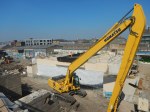
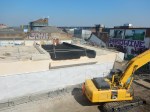
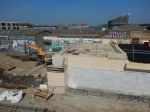
Hackney Wick station is being rebuilt.
It is not an easy job, as the rail line is on a viaduct six metres above ground level.
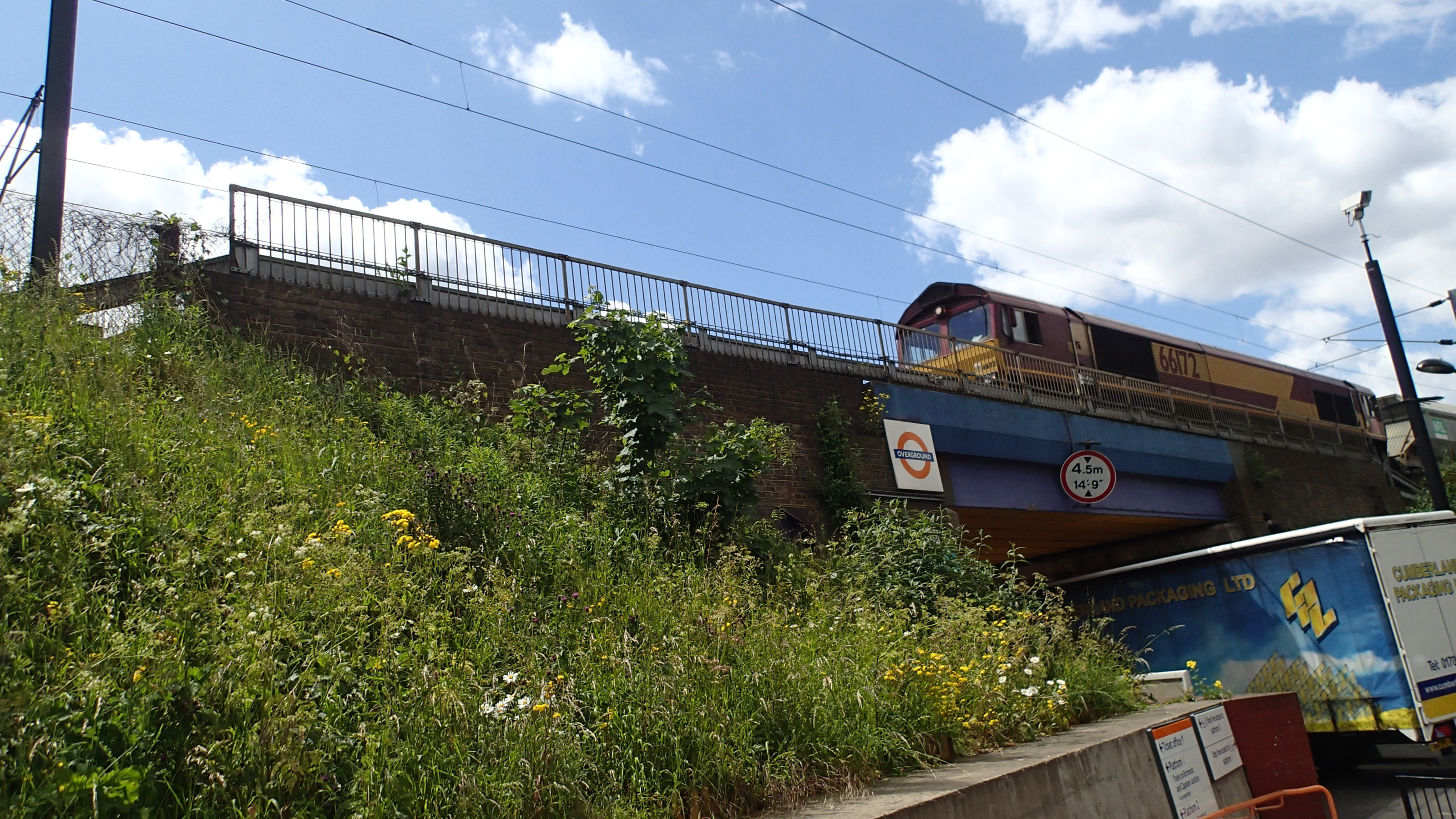
In addition to being a major line of the the London Overground, the North London Line is also an important freight route.
The picture was taken from the ramp that leads up to the station, which is high on the left.
To complicate matters on top of the station was a concrete footbridge.
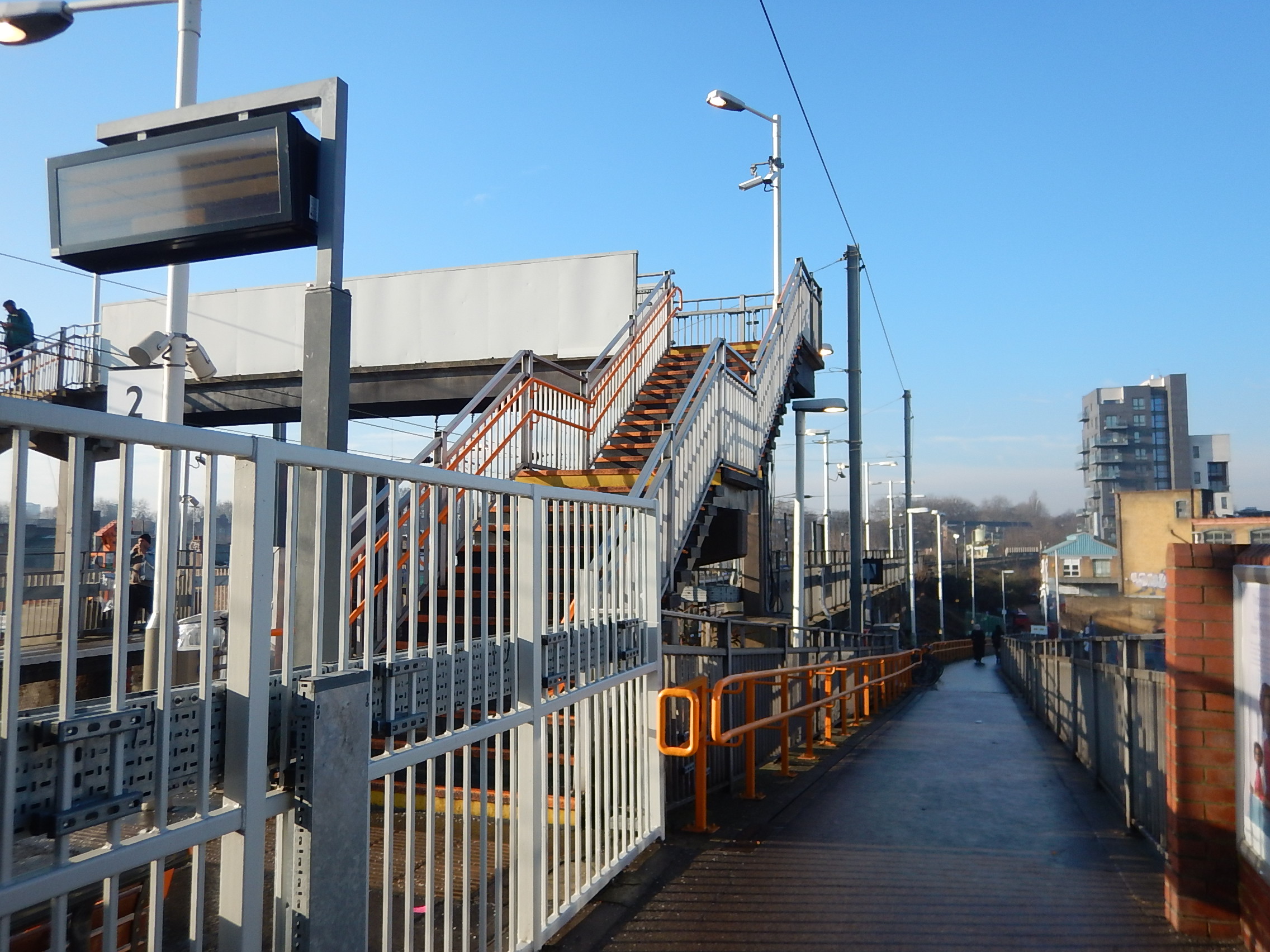
This was demolished a month or so ago.
To make the creation of the subway through the embankment, even more challenging, they are building the subway to the North of the embankment.

And over Easter, they will do the tricky bit.
Starting on Friday, the 14th April, they will execute this sequence of operations.
- Remove the track through Hackney Wick.
- Dig a massive gap in the embankment and dig down to the stable gravel level.
- lightweight polystyrene blocs will even be used to replace a proportion of backfill.
- Push the station subway, which is 12.7 metres wide and 22.5 metres long into the gap.
The job will then be completed by rebuilding the railway on top, ready for the start of services on the Tuesday.
This is the sort of job that needs a web-cam high on a convenient tower block.
Hackney Wick Station – 8th April 2017
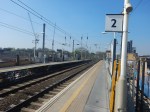
These pictures show the station on the Saturday before work starts.
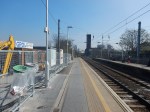
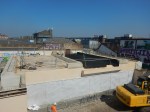
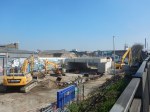

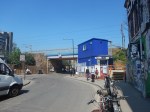
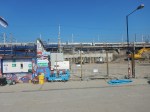
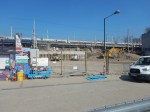
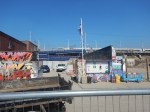
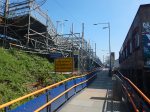

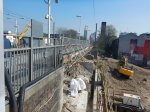


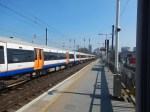
Is the subway going to be turned before it is moved into place?
Call In A Herd If Mammoths – 13th April 2017
These pictures show the subway tunnel being readied for the big push!
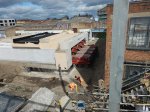
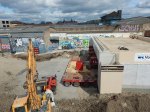
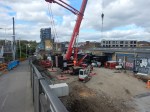
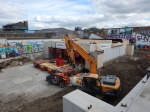
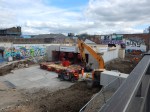
I think the last train into Hackney Wick station gets there at three minutes past midnight.
Counting Them All In And Counting Them All Out – 14th April 2017
The embankment is now being removed and I have put up a series of pictures in Counting Them All In And Counting Them All Out.
Here is a picture from the 8th of April and a sample from today for comparison.
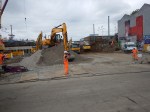
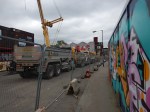
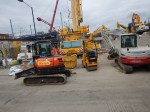
It is an impressive operation, with a stream of trucks coming and going.
Where Are All The Class 700 Trains?
Yesterday, as I returned from Ilkeston station, there were large numbers of Class 700 trains in sidings along the Thameslink route from Bedford to St. Pancras.
But this morning, when I sat in the sun on West Hampstead Thameslink station for an hour and a quarter, I saw the following trains running Thameslink services.
- 12 Class 319 trains
- 7 Class 700 trains
- 1 Class 377 train
There wasn’t a reliable service due to an earlier train failure.
On a rough calculation 65% of all services are still run by the previous fleet and only 35% by new Class 700 trains.
This article in Rail Magazine, which is dated September 2016, is entitled 29th Class 700 delivered to UK.
This is said in Wikipedia about the first delivery of the Class 700 trains.
The first delivered train arrived in the UK by the end of July 2015, and was delivered to the Three Bridges depot The first test run on the Brighton Main Line took place in December 2015.
The first train in service was unit 700108 forming the 1002 Brighton to London Bridge service on 20 June 2016.
So it would appear that Siemens have delivered about two trains per month.
That would mean that since September 2016, another twelve trains have been delivered, which would make a total of 41. This works out that 35% of the Class 700 trains have been delivered.
So that means that, the proportion of services run by Class 700 trains, is the same as that of the number of trains delivered.
Perhaps not too surprising!
It will be interesting to see this percentage in say a couple of months time.
Delivery Of The Complete Fleet
This article in Railway Gazette International is entitled Thameslink Class 700 testing to begin soon, says this about the completion of the fleet’s introduction into service.
The first units are expected to enter service with Govia Thameslink Railway in spring 2016, initially on the Thameslink route and then on Great Northern services by 2017. All Thameslink services would be operated by Class 700s from 2017, with the full fleet in service by the end of 2018.
So this means that if there were 29 trains in the UK at the end of September 2015 and there will be 115 trains in service at the end of December 2018, this means a delivery rate of about three trains per month.
An increased rate of delivery is probably to be expected, as Siemens learn more about the production process.
Reliability
As to hard facts on train reliability, there is very little.
In the January 2017 Edition of Modern Railways,, Roger Ford compares the first few months of the Class 700 with the first few months if a Class 444 train.
This is said.
The lesson is clear; no matter how good your product or how many thousands of miles of test running accumulated at Wildenrath or Velim, the real world is a different matter.
Roger Ford also says the following.
- The performance of the Class 707 trains, which are Class 700 clones, will be very interesting, as they’ll have all of Thameslink’s experience.
- Put a ten pound bet on improvement.
So reliability is probably what to expect.
Comfort, Wi-Fi And Cup-Holders
If the Class 700 have a problem it is the interiors.
In By Class 700 Train To Brighton And Back, I said this.
I would describe the trains as adequate for the core route from East Croydon to West Hampstead and Finsbury Park, but they do have limitations for long-distance commuters.
- There are no tables or even anywhere to put a drink.
- There is no wi-fi.
- There are no power sockets to charge a laptop or phone.
The new Class 345 trains for Crossrail, don’t have tables either, but they do have wi-fi and 4G. But these are short-distance trains and unlike the Class 700 trains, which are taking over from Class 387 trains with tables, most of previous stock that worked from Reading to Shenfield didn’t have tables, wi-fi or power sockets.
Govia Thameslink Railway must be really pleased to get a set of trains, without some of the features their passengers demand.
To be fair it’s not their fault, as these trains were designed to fit a Passenger Focus report which can be found on the Internet, that was written in the dying days of the last Labour Government.
Read the document and draw your own conclusions.
It’ll be interesting to see how long the trains are in service, before they have a refit!
Conclusion
It looks like the trains are being delivered as promised and, their reliability could be as expected, but the interior is not what the passengers need or want.
Ilkeston Station Opens
I went to the new Ilkeston station this morning and took these pictures.

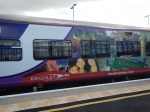
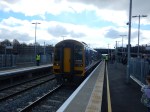

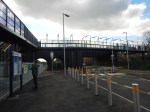
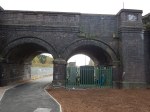
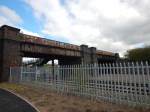

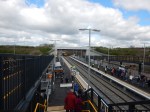
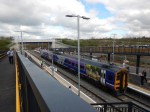
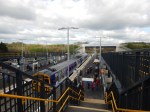
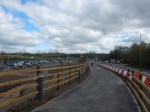
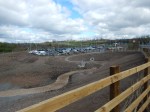
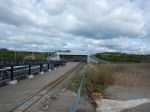
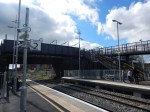
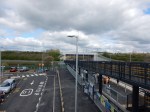
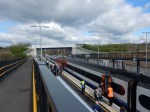
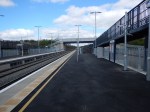
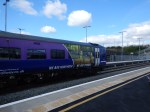
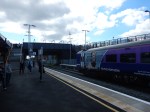
It is not the most sophisticated of stations and it is worth comparing the design with Lea Bridge station.
This picture is from A Look At Lea Bridge Station, which shows the station in detail.

Comparing Ilkeston and Lea Bridge stations, there are similarities and differences.
- Both stations are built adjacent to existing road bridges.
- Both road bridges have some good brickwork and a utilitarian span over the railway.
- Both stations have two platforms on the outside of a double-track main line.
- Both stations don’t have ticket barriers.
- Lea Bridge has lifts and Ilkeston has long ramps for step-free access.
- Lea Bridge is fitted with comprehensive CCTV for Driver Only Operation (DOO). Ilkeston is not!
- Ilkeston has car parking and Lea Bridge has none.
Both stations cost around ten million pounds, with perhaps Lea Bridge slightly more because of the lifts and DOO cameras.
My Overall View
I think that Ilkeston station is a job well-done by the architect to keep costs to a minimum for a well-functioning station, that meets all current and future regulations.
These are more details on various features.
The Station Entrance
One of my gripes with Lea Bridge station, is that when I use that station, I take a bus to it, which drops me just before the road bridge over the station. I then have to walk past the station footbridge, with no possible access and in a great circle to get to the station entrance at the side.
At Ilkeston, those walking to the station by the side of the road that crosses the bridge, just walk over the station footbridge, from which they walk down to their chosen platform.
This is a much better arrangement and will surely suggest to passers-by, that using the train isn’t a hassle.
When I went to Ilkeston, some months ago, I remember that the area between the Town Centre had what developers call potential and perhaps could be turned into a green walking and cycling route.
This Google Map shows the relationship between the town and the station.
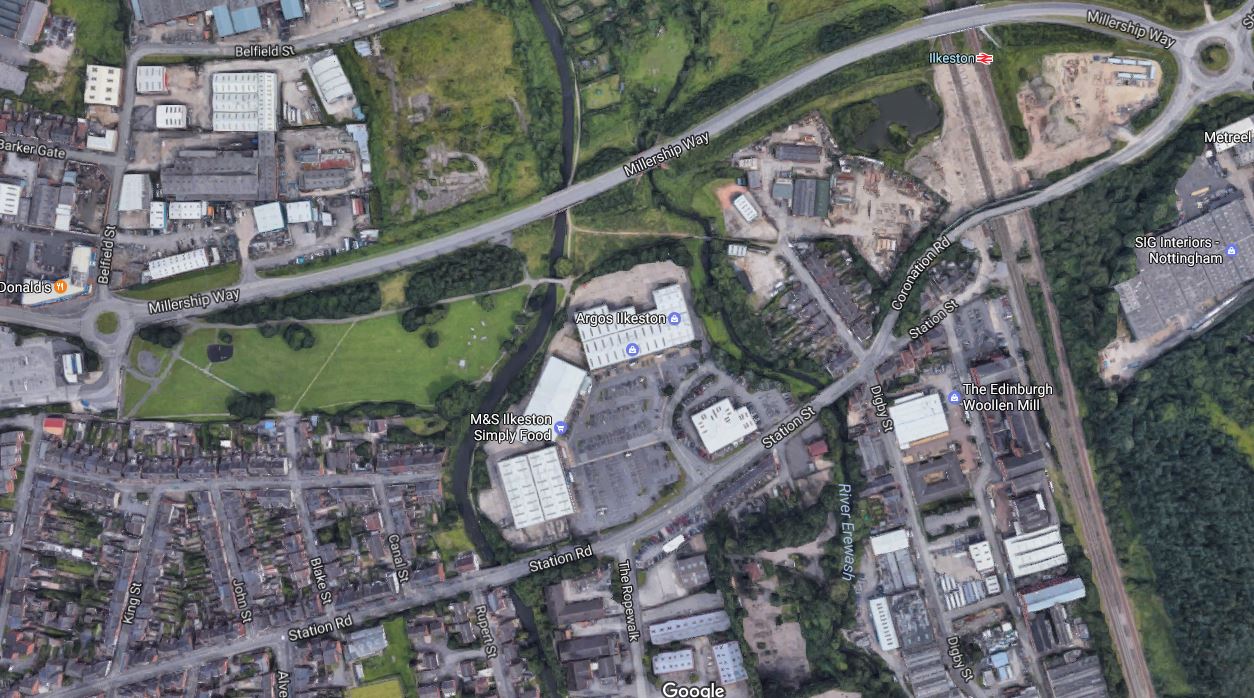
It certainly isn’t as desolate as the Town Centre was on my last visit. There’s even a Marks and Spencer’s Simply Food store in a retail park, just a couple of hundred metres from the station.
I made a mistake in not exploring that way today, as it looked not to be finished.
I shall return!
Car Parking
The car parks are on both sides of the tracks, which is good for the able-bodied passengers, as if space allows they can park where is best for their personal circumstances.
My one worry about the car parking, is that 150 spaces might not be enough.
On the other hand car ownership is low in the Erewash Valley! So perhaps they expect a lot of passengers to walk to the station.
Access To The Platforms
At present, the landscaping is not finished on the Nottingham-bound side (Platformk 2) of the station and I suspect the walking route to the platform will be improved.
But supposing you are a passenger with a touch of arthritis and failing eyesight. Whatever side you park your car, you will have to negotiate both long ramps to cross the tracks, when you catch a train out of Ilkeston or on your return.
But saying that several London Overground stations near me use long ramps and there doesn’t appear to be too many protests.
Lifts would of course be better. But a lot more costly!
Picking Up And Dropping Off Passengers
The drop-off/pick-up point is by the Chesterfield-bound Platform 1, but I suspect that when the station is completed, drivers will be able to do the drop-off/pick-up in the car park by Platform 2.
Taxi Rank
The taxi rank is by the Chesterfield-bound Platform 1, so passengers arriving on Platform 2 will have to cross the tracks on the footbridge.
I did talk to a taxi driver called Paul Kitchener, who is one half of a taxi company called Paul and Jackie Taxi. I was able to find them on Fscebook, so if you have special needs for a taxi and you don’t live in Ilkeston, you could always contact them first.
Shelters and Ticket Machines
As expected a shelter is provided on both platforms, but perhaps more surprisingly, there is a ticket machine on both platforms as well.
Thjs duplication of ticket machines is to be welcomed, as is placing them in an obvious place on the platform.
The Germans make their ticket machines very easy to find, which is not often the policy of some of our train operators.
Two ticket machines by stairs to the footbridge, which pedestrians will use as access to the station, is an idea, that might result in more revenue for the train operator.
Bike And Motor-Cycle Parking
I didn’t see much, although there were a few hoops outside Platform 1
Coffee Kiosks
A guy from London Overground, told me that if you have a coffee kiosk on the platform, it may attract more passengers.
The platforms at Ilkeston might not be quite big enough for a kiosk, but I’m certain the architect has ideas.
Future Proofing
There have been troubles recently, where stations have been built without enough clearance for future electrification.
Without getting out a measure, it appears that the two existing road bridges and the new foot-bridge at Ilkeston, may have enough clearance to satisfy the most nit-picking of inspectors. The bridge that could be dodgy is the rusty road bridge and that would not be the most difficult bridge to replace with a new one.
Perhaps, as it has not been given a coat of paint, the new bridges are being constructed, as I write.
The design of the station, would also allow the following.
- Two fast lines through the station, between Platform 2 and the boundary fence, where there is already an avoiding line.
- The possibility of putting a second face on Platform 2, so that a bay platform or a platform on a fast line could be created.
- The addition of lifts.
I also suspect that the platforms are long enough for a Class 222 train to call.
A Good Local Reaction
One of the staff told me that he reckoned about five hundred people had come to have a look at the new station, which he felt was more than expected.
Several, that I spoke to seemed enthusiastic.
One couple, I spoke to, said forty-eight pounds each was a lot to get see their daughter and her family. But yet again, they hadn’t heard of the Two Together Railcard. They felt thirty-two pounds was a lot more reasonable.
Services
Current services through the station are an hourly train between Leeds and Nottingham via Sheffield and a two-hourly service between Liverpool and Nottingham via Manchester.
This gives an impressive list of destinations from Ilkeston, that includes Barnsley, Chesterfield, Ely (for Cambridge), Leeds, Liverpool, Manchester, Norwich, Nottingham and Sheffield.
But what is missing are connections to Birmingham, Derby, London and Mansfield.
London will be solved in the future, when passengers by their journey hsbits put sufficient pressure on the train operator.
A solution for Derby and Mansfield was proposed in this article in the Nottingham Post which is entitled Hopes HS2 could see ‘Maid Marian Line’ opened to passengers.
There is a freight-only line between Kirkby-in-Ashfield station on the Robin Hood Line and Pye Bridge on the Erewash Valley Line, on which Ilkeston is situated.
The proposal would allow trains to go between Kirkby-in-Ashfield via Pinxton and Selston to Langley Mill and Ilkeston and then on to Toton for HS2.
From there services could go on to Nottingham or Derby and also give access to the Nottingham Express Transit at Toton.
In my view, the ideal service would be Mansfield to Derby via Kirkby-in-Ashfield, Langley Mill, Ilkeston, Toton (when built), Long Eaton and Spondon.
At Derby, there is also up to four trains per hour to Birmingham.
Conclusion
This is a fine station, which has been built at a keen price, which with more services will be a big asset to Ilkeston.
Shenfield Station – April 1st 2017
It is perhaps around sixty days before the first part of Crossrail opens between Liverpool Street and Shenfield stations.

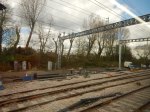
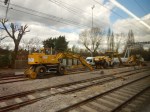
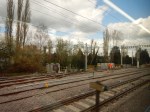
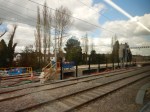
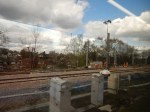
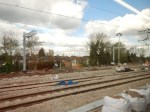
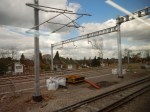
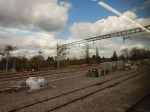
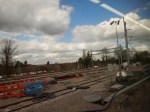
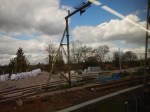
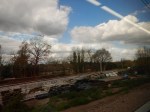
A lot of work has been done.
- It would appear that space could have been made for an extra track most of the way between Brentwood and Shenfield station.
- Is one going to be built to improve access to Platform 5 and the new Platform 6?
- Platforms 3 and 4 would appear to have been lengthened substantially. The new Stadler Flirts may be longer than the current trains.
- It looks like the stabling and reversing sidings are on the outside of the down line to Southend, which dives under the Great Eastern Main Line.
But there is still some work to do.
Greater Anglia’s New Manningtree Depot Site
It’s a bit of a mess, but contractors have started cleaning the site at Manningtree for Greater Anglia’s New Depot.

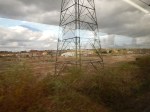

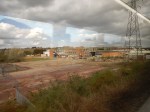
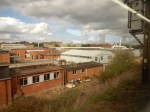
The site is on the left hand side of a train going towards Ipswich.
 The Anonymous Widower