Stephen Fitzpatrick Of OVO On Energy Policy
Stephen Fitzpatrick, the founder of OVO Energy was on BBC Breakfast this morning.
Some of what he said was very enlightening.
Nationalisation Of Distribution Networks
He indicated that this was almost irrelevant, as the technology of energy distribution is changing.
I agree.
Near to where I live, is the Bunhill Energy Centre, which has been built by Islington Council to provide heat and electricity to a local area.
Systems like this are common in some European countries and increasingly, we will see small scale units like this in cities.
In the countryside, solar and wind power linked to energy storage will become more common.
Large industrial users of energy will increasingly generate their own power.
So the distribution networks will become less and less important.
Energy Efficiency
This will become increasingly important, as innovators make devices and appliances that use energy more efficient.
It is interesting, that no Political Party has so far said, that they will promote devices and items that use less energy, by perhaps sponsoring ideas.
OVO’s Customers Spend Forty Percent Less On Gas Than When The Company Started
This was surprising, but it probably indicates that our houses and businesses are getting more energy efficient.
Energy Price Caps
He was in favour, because he believes it opens up the market for energy.
I think it also favours innovative, ethical and highly-regarded energy companies.
Say an energy company predicts that because of the price cap, it will become less profitable.
It can do one of the following.
- Increase the number of customers.
- Sell customers new and innovative goods and services.
- Go out of business.
OVO are taking over a respected boiler servicing company.
I think one of the good things about an energy price cap will be, that bad suppliers, big or small, will be forced out of business.
Conclusion
It was an impressive performance and the BBC should sign him up for Question Time.
A Policy For Brexiteers
As to why people voted to Leave, I have found this academic document from NatCen, which is entitled Understanding the Leave vote.
The summary of their findings are as follows.
- Identity politics played a role
- Voters not persuaded by arguments about economic risks
- ‘New voters’ leant towards Leave
- The vote split across traditional party lines
- Turnout favoured Leave
- Leave brought together a broad coalition of voters
I think it is important that to do well in the General Election, parties must surely key in to the Brexiteers!
Wikipedia gives the Results of the United Kingdom European Union membership referendum, 2016 and from that I have extracted all areas that voted over seventy percent for Brexit.
- Ashfield – 70.5%
- Barnsley East – 70.7%
- Bolsover – 70.8%
- Boston And Skegness – 74.9%
- Castle Point – 72.7%
- Clacton – 70.0%
- Doncaster North – 72.0%
- Dudley North – 71.4%
- Dudley South – 70.2%
- Great Grimsby – 71.4%
- Great Yarmouth – 71.5%
- Kingston-upon-Hull East – 72.6%
- Mansfield – 70.9%
- South Basildon And East Thurrock – 73.0%
- South Holland And The Deepings – 71.1%
- Stoke-on-Trent North – 72.1%
- Stoke-on-Trent South – 70.7%
- Walsall North – 74.2%
By comparison, these cities voted for over sixty percent for Brexit.
- Kingston-upon-Hull – 67.6%
- Stoke-on-Trent – 69.4%
- Sunderland – 61.3%
- Wakefield – 66.4%
- Wolverhampton – 62.6%
It is an interesting set of statistics, with most of the areas not having the best of economic prospects
So far none of the leaks and policies from the various parties seem to be aimed at the areas of the UK, where there was a strong Leave vote.
Those that voted to Leave probably did so for a variety of reasons, but if you look at many with a high proportion of Brexiteers, they are areas with not the best economic circumstances.
I haven’t gone through all the constituencies, but I will, but several feature in A Look At New Station Projects, where I looled at all proposed projects.
In January 2017, I wrote Government Focuses On New Stations And Trains and I just wonder, if we will see a substantial New Stations Fund from the Conservatives, so that some of these places get better connections to where there is work, housing, education, leisure or opportunities.
It seems £10million, buys a reasonable station, so £100million a year would over the life of a parliament create up to fifty stations, especially if they built them like Ilkeston station in under a year.
I will now look at the individual constituencies.
Ashfield
Ashfield is based on the towns of Sutton-in-Ashfield and Kirkby-in-Ashfield, both have which have stations on the Robin Hood Line.
Plans exist to develop this line along existing freight routes in good condition with perhaps two or three simple stations. Add in some better trains and make the frequency two trains per hour (tph) seven days a week and it could have a large positive effect.
Barnsley East
Barnsley East is centred on the town of Wombwell.
Wombwell station is on these two lines.
- The Hallam Line between Leeds, Wakefield and Sheffield.
- The Penistone Line, which links Sheffield and Huddersfield.
Both lines go through Barnsley.
Both lines are in good condition, but the trains are dreadful. Northern will be replacing these with better rolling stock, with the eventual aim of having new Class 195 trains in service by 2020.
If you wanted to give the area a quick fix, you could send in the Class 319 Flex trains at the end of this year.
Bolsover
Bolsover is centred on the town of Bolsover.
There are vague plans to link Bolsover to the rail network using the partly mothballed Doe Lea Line, but nothing concrete. Wikipedia says this.
The Doe Lea line south from Seymour Junction to Bolsover has been mothballed as it runs through the new Markham Vale Enterprise Zone at M1 Junction 29A. It is hoped that someone will invest in this infrastructure to create road-rail interchange facilities.
I can find no reference to any progress.
Note that Bolsover’s MP is left-wing Labour veteran; Dennis Skinner.
Boston And Skegness
Boston And Skegness is a rural constituency in South incolnshire.
The Poacher Line links Skegness and Boston to Nottingham via Sleaford and Grantham.
There is an approximately hourly service along the line, using Class 156 trains and Class 158 trains, but the line probably needs two tph, with good connections to the Peterborough to Lincoln Line at Sleaford.
Castle Point
Castle Point is in South |East Essex.
The railways in this area are generally good, but c2c has expansion and fleet renewal plans.
Clacton
Clacton is in North East Essex.
The railways in this area are gebnerally good, but Greater Anglia have expansion and fleet renewal plans.
Doncaster North
Doncaster North is in South Yorkshire.
The railways in this area suffer because of bad rolling stock and not being electrified.
Note that Doncaster North’s MP is Ed Milliband.
New diesel or bi-mode trains between Doncaster and Sheffield via Rotherham would make a great difference.
If you wanted to give Doncaster North a quick fix, you could send in the Class 319 Flex trains at the end of this year.
Dudley North And Dudley South
Dudley North and Dudley South are the two constituencies for Dudley.
The Wednesbury – Merry Hill Extension of the Midland Metro, is planned to connect Dudley to Birmingham, Wolverhampton and the Merry Hill area.
Great Grimsby
Great Grimsby is centred on Grimsby.
Grimbsy Town station doesn’t receive the best of services. Changes are happening according to Wikipedia.
Great North Eastern Railway had put forward proposals in 2014 to create a rail link between Cleethorpes and London Kings Cross, calling at Grimsby Town, Habrough, Scunthorpe and Doncaster, arriving at a new modern Kings Cross station. This service would have been introduced by December 2017 if Alliance Rail’s plans had been accepted by the Office of Rail Regulation and would create the first direct link to London since 1986. In May 2016, it was announced by the ORR that GNER had been refused permission to operate these services.
In October 2017, services between Cleethorpes and Barton-on-Humber will be transferred to East Midlands Trains – the only remaining Northern operated service left at Grimsby thereafter will be the Saturdays-only one between Sheffield and Cleethorpes via Brigg.
Like most of Lincolnshire, improvement is needed.
Great Yarmouth
Great Yarmouth is at the Eastern side of Norfolk.
The railways in this area are gebnerally good, but trains are infrequent.
Greater Anglia have expansion and fleet renewal plans, with some new infrastructure from Network Rail.
If you wanted to give Great Yarmouth a quick fix, you could send in the Class 319 Flex trains at the end of this year.
Kingston-upon-Hull East
Kingston-upon-Hull East is the Eastern side of Kingston-upon-Hull.
For one of the major cities in the UK, Hull has once of the worst train services.
New trains and the development of the existing lines with perhaps electrification to the East Coast Main Line could give the area improvement.
Mansfield
Mansfield is in North Nottinghamshire.
Mansfield station is on the Robin Hood Line.
Plans exist to develop this line along existing freight routes in good condition with perhaps two or three simple stations. Add in some better trains and make the frequency two trains per hour (tph) seven days a week and it could have a large positive effect.
South Basildon And East Thurrock
South Basildon And East Thurrock is in South Essex.
The railways in this area are generally good, but c2c has expansion and fleet renewal plans.
South Holland And The Deepings
South Holland And The Deepings is another Lincolnshire constituency.
The Peterborough to Lincoln Line and the Poacher Line cross at Sleaford station, but passenger trains are elderly and infrequent.
Stoke-on-Trent South
Stoke-on-Trent South is one of the constituencies in the city of Stoke-on-Trent.
Reading the Wikipedia entry for Stoke-on-Trent station, you get the impression, that train companies have dealt Stoke a bad hand in recent times.
I have no doubt that if Stoke were in France or Germany, there would be a tram or light rail system i the city.
Walsall North
Walsall North is a constituency in the North of the West Midlands.
Walsall station is on the Chase Line between Birmingham and Rugeley.
The line is being fully-electrified, but Network Rail are badly suffering from the E-word.
If you wanted to give Walsall a quick fix, you could send in the Class 319 Flex trains at the end of this year.
Summing Up The Brexit Areas
I think that the rail industry and the politicians who control them have let down some of these constituencies.
The electrification of the Chase Line is a classic Network Rail failure, possibly cheered on by a nimby MP, actually objecting to a faster rail service.
Other areas like South Yorkshire, North Nottinghamshire and Lincolnshire, need plans to widen the benefits of good public transport. Interestingly, all of these areas have good freight lines, often going through the sites of closed and much-needed stations.
I will ignore Essex in this analysis, as the county is getting improvement and the good people of the County, are just following their usual independent line.
If I can be criticised, it is that I have drawn my cut-off limits too high.
Go further down the list and you can add more constituencies to the South Yorks, North Notts, Lincoln area, which all scored nearly 70%.
- Bassetlaw
- Cleethorpes
- Don Valley
- Rotherham
- Scunthorpe
- Wentworth and Dearne
A lot more Essex and East London constituencies creep in as do a few in the West Midlands.
Conclusion
It is surprising how many of these depressed Brexit areas have a poor train service and probably bad bus services too. If you haven’t got a car, then you just vegetate and fade away.
Perhaps, improvement of our secondary rail routes, with more trains and stations, should be given a high priority.
Class 345 Trains At Stratford Station
I was waiting on Platform 8 at Stratford station and I was able to take these pictures of two Class 345 trains going through the station.

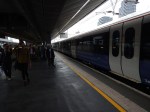
They were not in passenger service, but probably running up and down for purposes of driver training and showing off!
As you can see I was fairly close to the train that passed through Platform 8. The pass left me with the impression that these trains are rather quieter than the Class 315 trains currently working through Platform 8.
Quietness And Aerodynamics
I suspect that this quietness could be down to the better aerodynamics of the modern train and the fact that it was not carrying any passengers.
Remember too, that Bombardier build airliners, so have the various parts of the train, seen the inside of a wind tunnel?
Looking at other photos of the Class 345 on the web, it would appear that especial care has been taken around the join between the articulated carriages, but no-one has published a close-up yet.
One Or Two Pantographs?
I didn’t look and on a crowded platform, it would have been difficult to see, but was the train running on one or two paragraphs?
As pantographs are a source of noise, running on one would be quieter.
They Are Long Trains
As I left Stratford, on the North London Line, a Class 345 train was stationary to the West of Stratford. One impression it gave was that of length.
But then this seven-car train is about one hundred and sixty metres long or the same length as an eight-car Class 315 formation.
Some Videos
Video of the Class 345 trains are starting to appear.
Note.
- The first video shows some internal details through the windows.
- In the second video both pantographs are up.
- You can clearly see the articulated sections between cars.
The first video does raise the question that Crossrail might be extended to Southend Victoria station.
You Need Timing!
As the song says, and any good sportsman will tell you, timing is all important!
When we created Artemis, what helped us to be successful was a growth in large projects around the UK and the alternative methods of large mainframe computers, needed more space and a lot more money to do the same job.
We did to the Project Management industry, what Issigonis did to the UK car market with the Mini, Apple did to the music industry and Dyson did for vacuum cleaners, by launching the right product at the right time.
Because of the UK Electoral System, Theresa May was able to start the 2017 General Election campaign at a time convenient to the Conservative Party and its resources.
I think she chose well, when she announced the election on April 18th, as the organisation was already in place for the Local Elections on May 4th. Building a team is surely one of the major costs of fighting an election, so the costs of fighting the General Election can be shared.
This double election will also save costs for other parties, but are their finances in a robust enough state to fight two elections close together? Especially, when they were only planning for one election!
Theresa May’s manifesto could have been planned to be a very easy-to-write document, as she must have been working out policies with her cabinet since she became Prime Minister last Summer, many of which would have been implemented with or without the General Election.
But then she had the luck, that someone by accident or design, leaked the Manifesto, written by the Corbynistas.
This has enabled the Conservatives to wait to disclose their Manifesto last, just releasing the odd morsel here and there.
Policies like housing have been outlined, but they are by no means complete.
The big surprises if there are any, will be disclosed when the manifesto is finally launched!
How many times have your football team lost or won by a late goal?
Forest Gate Station – 15th May 2017
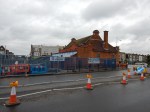
These pictures of Forest Gate station, shows that the three lift towers have been installed.
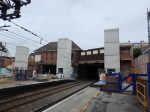
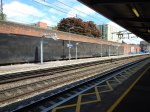
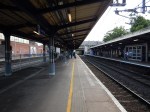
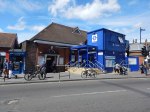


I think the pictures might show that a walkway behind the station building will connect to the three lift towers and staircases beside them.
I also suspect that quite a lot of the walkways, lifts and stairs at Manor Park, Seven Kings and Forest Gate stations will be built from the same factory-made components.
Seven Kings Station – 15th May 2017
In Before Crossrail – Seven Kings, I said of Seven Kings station that This Could Be A Good Station and gave it a rating of 6/10.
These pictures show the station.
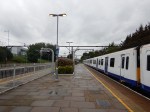
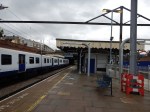

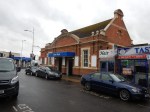


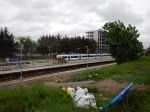
The final design of Seven Kings and Manor Park stations would appear to be very similar.
- I didn’t take any of the inside of Seven Kings, as both stations are a clean design featuring lots of LED lights.
- The layout of the lifts and stairs could be similar.
In addition the brickwork at Seven Kings station appears to be being used as a feature.
Gidea Park Station – 15th May 2017
In Before Crossrail – Gidea Park, I said of Gidea Park station that The Bridge Is Falling Down and I gave it a reasonable score of 6/10
Today, I found that a lot of work had been done on the bridge.

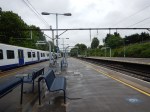

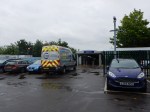
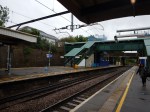
The bridge still needs to be finished, although it is more solid now, and some detailed work like information screens and signs need to be installed.
Manor Park Station – 15th May 2017
In Before Crossrail – Manor Park, I likened Manor Park station to A Ruin With Serious Issues and gave it a score of 1/10.
I also said.
Manor Park is very unusual architecturally. I do wonder if the Luftwaffe tried to demolish the station.
Perhaps the builders just ran out of money and couldn’t afford to put in windows.
With hindsight, I think I was being generous with one point.
But these are the pictures I took today.



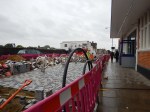
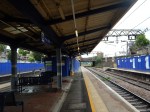

The builder is certainly not our friend Jerry.
When my train arrived, I stepped out close by the driver’s cab. I was surprised to see that half the old station had disappeared and it must have shown, as the driver asked me if I was OK!
I certainly was and it looks like the builders and the architects are well on the way to turning one of London’s worst stations, into one of the better.
- Judging by the position of the gate line on the South side of the Ticket Hall, it will lead to a series of passages to the stairs and the lifts to the platforms.
- I particularly liked the use of strips of LED lights to illuminate the Ticket Hall and the area outside the doors.
- The staff seem to have a good view of the front glass doors from the Ticket Counter.
- It looks to me that any bits of the old station that there were good reasons to keep, have been kept.
- It could be a very welcoming station, that I suspect Transport for London hopes will attract a lot of new passengers.
- I was told that the lifts are only a couple of months away.
Importantly with my Project Manager’s hard hat on, it would appear that they have managed to create much of the new station without too much disruption.
Connecting Ebbsfleet International To South London
In the May 2017 Edition of Modern Railways, there is an article entitled Kent Capacity Constraints Highlighted.
The article says this.
The provision of a direct connection from Ebbsfleet to South London is proposed using the route from Swanley to Fawkham Junction, which was used by Eurostar services to Waterloo. Options include providing a new terminal platform at Ebbsfleet adjacent to the existing lines or a connection into the existing domestic platforms.
This Google Map shows the Chatham Main Line between Farningham Road and Longfield stations.
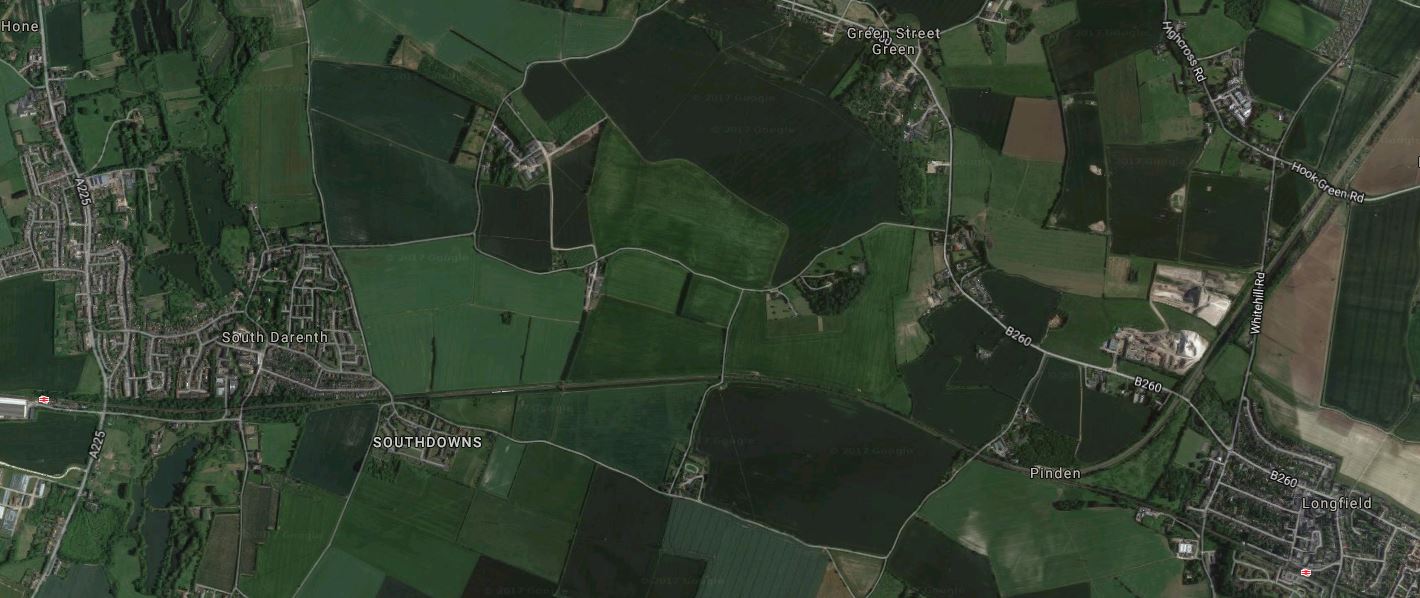
Note.
- The Chatham Main Line goes from West to East across the map.
- Fawkham Junction to the West of Longfield station.
- The rail line curves away North-Easterly to Ebbsfleet International station, using the same track-bed as the former Gravesend West Line.
This Google Map shows Ebbsfleet International station.
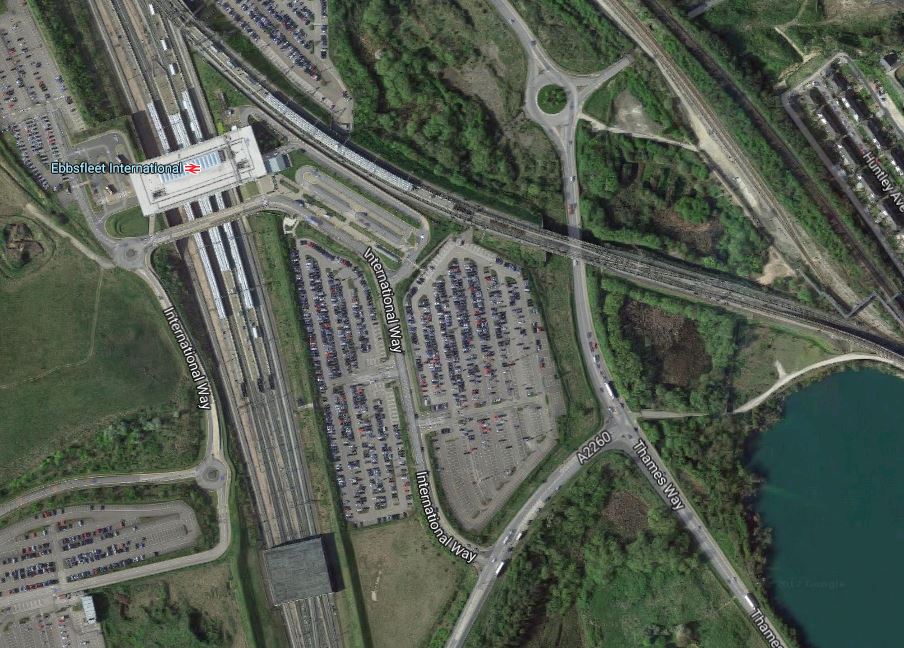
Note.
- HS1 runs North-South through the station.
- HighSpeed services to Thanet destinations use the line that runs across the map from North-West to East.
- HighSpeed services to Ashford Internationl station have their own separate platforms on HS1.
The local line into Ebbsfleet International station can be as simple or complicated as the budget will allow.
The simplest arrangement would be where a single track chord connects the Gravesend West Line into the space between the stations and its Eastern car parks.
This Google Map shows the station and the Gravesend West Line.
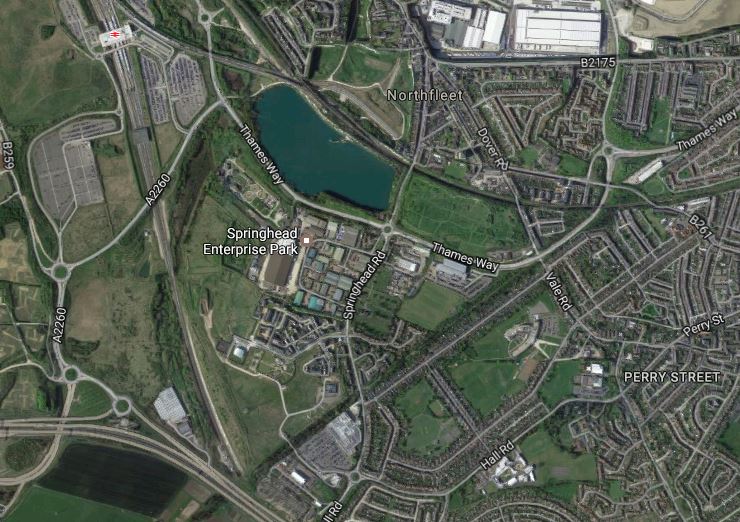
It almost looks like a good bit of space was left to connect Ebbsfleet International station to Fawkham Junction.
Train Services To Ebbsfleet
Southeastern and Thamesline are probably in pole position to provide services, as their services call at Swanley station which would be directly connected to Ebbsfleet International by the new link.
The most efficient solution would be a shuttle train or even a tram-train, at a frequency of four trains per hour.
But we shouldn’t forget Crossrail, that could be extended to Gravesend.
Has Thameslink Got The Wrong Length Of Train?
The Train And Half-Train Philosophy
If you look at some recent train orders and one successful old one, they seem to suggest a train and half-train philosophy.
- Great Western Railway’s order for Class 80x trains.
- Virgin Trains East Coast’s order for Class 80x trains.
- Greater Anglia’s order for Aventras.
- South Western Railway’s order for Aventras.
- Southeastern’s Highspeed Class 395 trains.
In all these fleets, it would appear that two half-trains can be used to create a full length train, when needed. This coupling and uncoupling is done throughout the day and often on an automatic basis in around a couple of minutes.
This video shows Javelins at it.
Impressive isn’t it? The second train left Ashford station thirty seconds after the first.
In a few years time, all trains will be able to couple and uncouple automatically like this.
Thameslink’s Class 700 Trains
Thameslink’s Class 700 trains only come in lengths of eight and twelve cars.
The eight-car train is needed for short platforms on the Sutton Loop Line.
But eight-car trains have disadvantages compared to say a six-car train.
- Two trains can’t be joined together to make a full-length train.
- Sixteen-car trains would be just too long for operational reasons.
- An eight-car train uses one of the valuable twenty-four hourly paths through the central core of Thameslink, just as a twelve-car train does.
The train length seems to be inefficient.
I can’t think of a train operator, who has two similar train fleets longer than five-cars, where one fleet is not half the length of the other.
Maximising Capacity In The Core
The capacity of the central core of Thameslink, depends on how many trains go through in an hour.
Current proposals given in Wikipedia are as follows.
- 14 x 12-car trains
- 10 x 8-car trains
If the 8-car trains were replaced with 12-cars, this would give a sixteen percent increase in capacity in the central core.
The Sutton Loop Line
The Sutton Loop Line could be run by using six-car trains that split and join in the area of Streatham station.
This map from carto.metro.free.fr shows the track layout at Streatham, at the start of the loop.
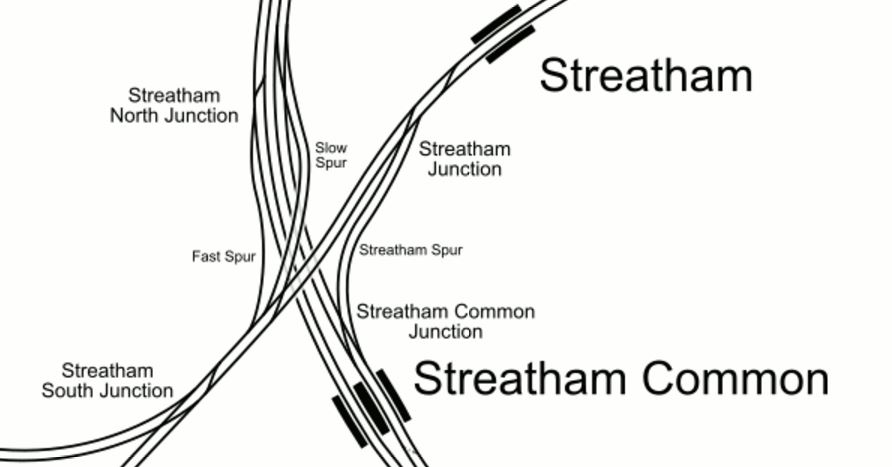
Note.
- Streatham South Junction is the gateway to the Sutton Loop, with the tracks to the West going via Tooting station and those to the South via Mitcham Eastfields station.
- There is a lot of spare land in this area.
- Transport for London keep talking about creating an interchange at this point.
I think, if and when the interchange is built, it could be designed, so that it increased traffic around the Sutton Loop Line.
- Two six-car trains running as a twelve-car could split at the interchange.
- One train would go round the loop clockwise and the other anti-clockwise.
- The trains would rejoin together at the interchange.
The same procedure could be done at Streatham, without creating the interchange, but it would block the station, if trains got delayed on the loop.
Currently, two trains per hour (tph) are proposed to run in both directions on the Sutton Loop Line.
This requires four eight-car trains and four paths through the central core.
If four six-car trains were to be used, running in pairs splitting at Streatham or a new Streatham Common interchange, there would still be two tph in both directions round the Sutton Loop, but only two paths would be needed in the central core.
Travellers to and from stations on the loop would see six-car, rather than the proposed eight-car.
If the number of six-car trains were to be doubled and four paths used in the central core, the Sutton Loop Line would see four tph in both directions.
But this might be two much traffic for Platform 9 at Wimbledon station.
Splitting Trains At The End Of A Route
It is not beyond the bounds of possibility for two six-car trains to do the following.
- Start independently in the North.
- Join at a convenient station.
- Pass through the Snow Hill Tunnel as a twelve-car train.
- Split at a convenient station.
The two six-car trains would then continue to two separate destinations.
One possibility would be to do the following.
- Start at Peterborough and Cambridge.
- Join at Hitchin.
- Split at Three Bridges
- Finish at Horsham and Brighton.
Between Hitchin and Three Bridges, the train is twelve-cars, whereas at other times they are six-cars.
Hopefully train length could be geared to passenger traffic.
I don’t think there are many opportunities at the current time.but as Thameslink develops, with perhaps more stations and electrification, the use of this technique might increase.
Although, It should be noted that the current eight-car trains are not suitable.
Eight-Car Trains Across The City
Three of the services through the core are as follows.
- Cambridge North and Maidstone East.
- /Luton(Peak)/Kentish Town(Off Peak) and Orpington
- Welwyn Garden City and Sevenoaks
All services are served by eight-car trains, with the first two services running all day.
In the May 2017 Edition of Modern Railways, there is an article entitled Kent Capacity Constraints Highlighted.
Reading this article, gives the impression that several stations served by Thameslink in the Southeastern area have platforms that are a tad short.
So perhaps this is the reason for the short trains.
But would using two six-car trains joining at a station like Bromley South, enable another twelve-car train to go through the central core.
Conclusion
Six-car trains instead of eight-car trains on Thameslink, may increase capacity.
According to Wikipedia, the formation of the two trains are as follows.
- Class 700/0 – DMCO-PTSO-MSO-TSO-TSO-MSO-PTSO-DMCO
- Class 700/1 – DMCO-PTSO-MSO-MSO-TSO-TSO-TSO-TSO-MSO-MSO-PTSO-DMCO
It would appear that the 12-car trains have two extra MSO cars and two extra TSO cars.
If all the TSO and MSO cars are identical, I wouldn’t be surprised that to lengthen the trains from eight to 12 cars, is just a cut-and-shut job, as it is with the London Overground’s Class 378 trains and Crossrail’s Class 345 trains.
With sixteen percent extra capacity by lengthening all trains to twelve cars, I would expect that this capacity will be claimed when needed.
An alternative could be to shorten the sixty eight-car trains to six-cars, which would release sixty each of MSO and TSO cars. Sixty new PTSO and DMCO car could be added and there would be another thirty six-car trains, making ninety in total.
I suspect Siemens could add automatic coupling and uncoupling.
These six-car trains would give the following.
- Twelve-car trains through the core.
- Better use of valuable paths through the core.
- Six-car trains on the Sutton Loop Line, by splitting and joining in the Stratham area.
- The ability to split and join trains to serve new destinations.
Thameslink’s train problem is not insoluble.
 The Anonymous Widower