Alstom Coradia iLint Passes Tests
The title of this post is the same as that of this article on Railway Age.
This is the first paragraph.
Alstom has performed 10 days of tests of the Coradia iLint hydrogen fuel cell train—the world’s first passenger train powered by hydrogen fuel cells—on the 65-kilometer line between Groningen and Leeuwarden to the north of the Netherlands.
These details of the tests were given.
- No passengers were carried.
- The tests were done at night.
- A mobile filling station was used.
- The train ran up to a speed of 140 kph.
As green hydrogen was used, the tests were zero carbon.
The Test Route
This map clipped from Wikipedia, shows the Groningen and Leeuwarden route, used for the tests.
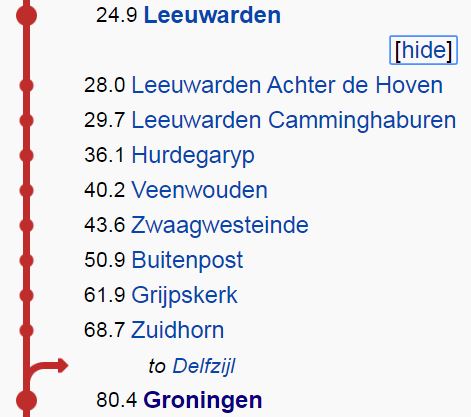
Note.
- It appears to be only single-track.
- It is roughly 65 kilometres long.
- There are eight intermediate stops.
Checking the timetable, the service seems to be two or three trains per hour (tph)
Hydrogen Trains Could Go All The Way To Germany
In From Groningen To Leer By Train, I took a train and a bus from Groningen in The Netherlands to Leer in Germany and eventually on to Bremen Hbf. The route is not complete at the moment, as a freighter demolished the rail bridge.
Once the bridge is rebuilt, a hydrogen-powered train, which could also use the catenary in the area could travel from West of Leeuwarden to possibly as far as Bremen and Hamburg.
It is interesting to note, that Alstom’s hydrogen-powered trains for the UK, which are called Breeze and are currently being converted from British Rail-era Class 321 electric trains, will not lose their ability to use the overhead electrification.
A train with that dual capability would be ideal for the Dutch and German rail network in this area, which is partially electrified.l
Hydrogen Mobility: Coming Soon to a Bus or Truck Near You?
The title of this post is the same as that as this article on Green Tech Media.
The article is a must-read and makes these points.
- Hydrogen could have a significant impact on the transportation sector, even though sales of fuel-cell cars have been minuscule to date.
- More than nine million passenger fuel-cell vehicles could be built.
- In the short term hydrogen could be used for buses and heavy trucks.
- There are only 17,000 hydrogen vehicles worldwide.
- In 2019, there was a 246 percent increase in hydrogen vehicles.
- Hydrogen-powered garbage trucks are being tested in Germany, The Netherlands and the UK.
Overall there seems to be a lot of growth and enthusiasm for hydrogen-powered vehicles.
Developments At Mill Hill East Station
This Google Map shows the area around the least-used station on the Northern Line; Mill Hill East station.
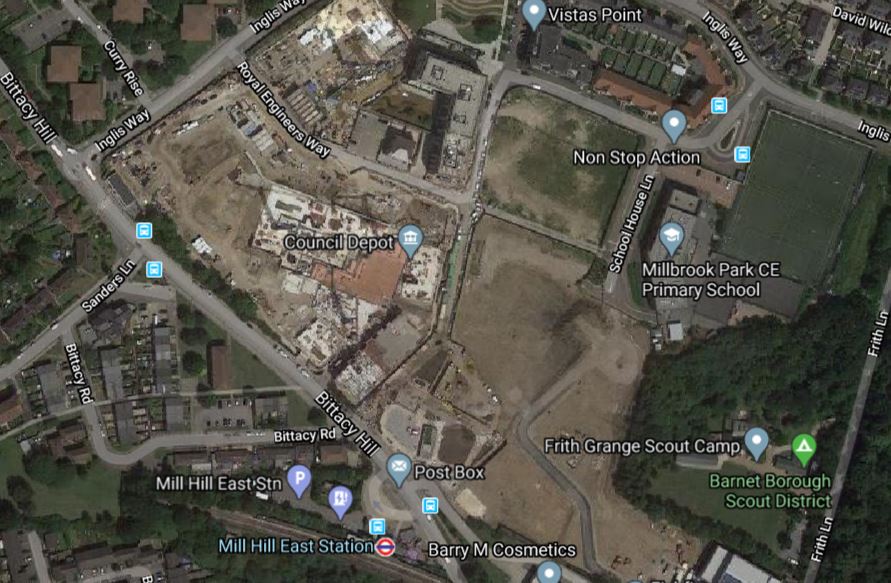
I’d never knowlingly been to the station, but I went yesterday and took these pictures.


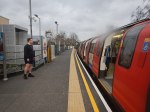
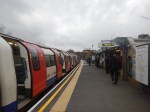
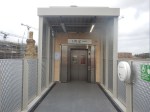




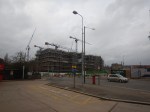
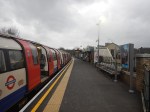

Note.
- The short line with Dollis Brook Viaduct between Finchley Central and Mill Hill East stations.
- The Council Depot shown on the Google Map appears to be being developed as housing called MillBrook Park.
- Mill Hill station now has a lift, to the single platform.
It looks that there are major ongoing improvements.
Will The Station Be Able To Handle The Extra Passengers?
Wikipedia says this about train frequency at Hill Hill East station.
Train frequencies vary throughout the day, but are generally every 11–15 minutes between 05:44 and 00:56 to Finchley Central, Kennington or East Finchley. During peak times train services are extended to Morden.
This map from carto.metro.free.fr, shows the track layout of the track between Mill Hill East and Finchley Central stations.

Note.
- Although according to Wikipedia, the branch was built with space for a double-track, much of the route is only single-track.
- The track layout at Finchley Central station appears comprehensive.
- With the right track-layout, signalling and well-drilled drivers, there are places in the UK rail network, where six trains per hour (tph) can work from a single platform.
I am fairly sure, that with the right systems, if it were to be required, that six tph can be run all day on the branch.
 The Anonymous Widower