Work Begins On New Substation For World’s Longest Electricity Cable Between Denmark and Lincolnshire
The title of this post, is the same as that, of this article on Lincolnshire Live.
This is the sub-title.
Britain and Denmark will be able to share enough clean energy to power 1.5 million homes.
The Viking Link is a 1400 MW at 525 KV electricity interconnector between Bicker Fen in Lincolnshire and Revsing in Jutland, Denmark.
This Google Map, shows the location of Bicker Fen, about halfway between Boston and Sleaford.

This second map shows an enlarged view of the Bicker Fen area.
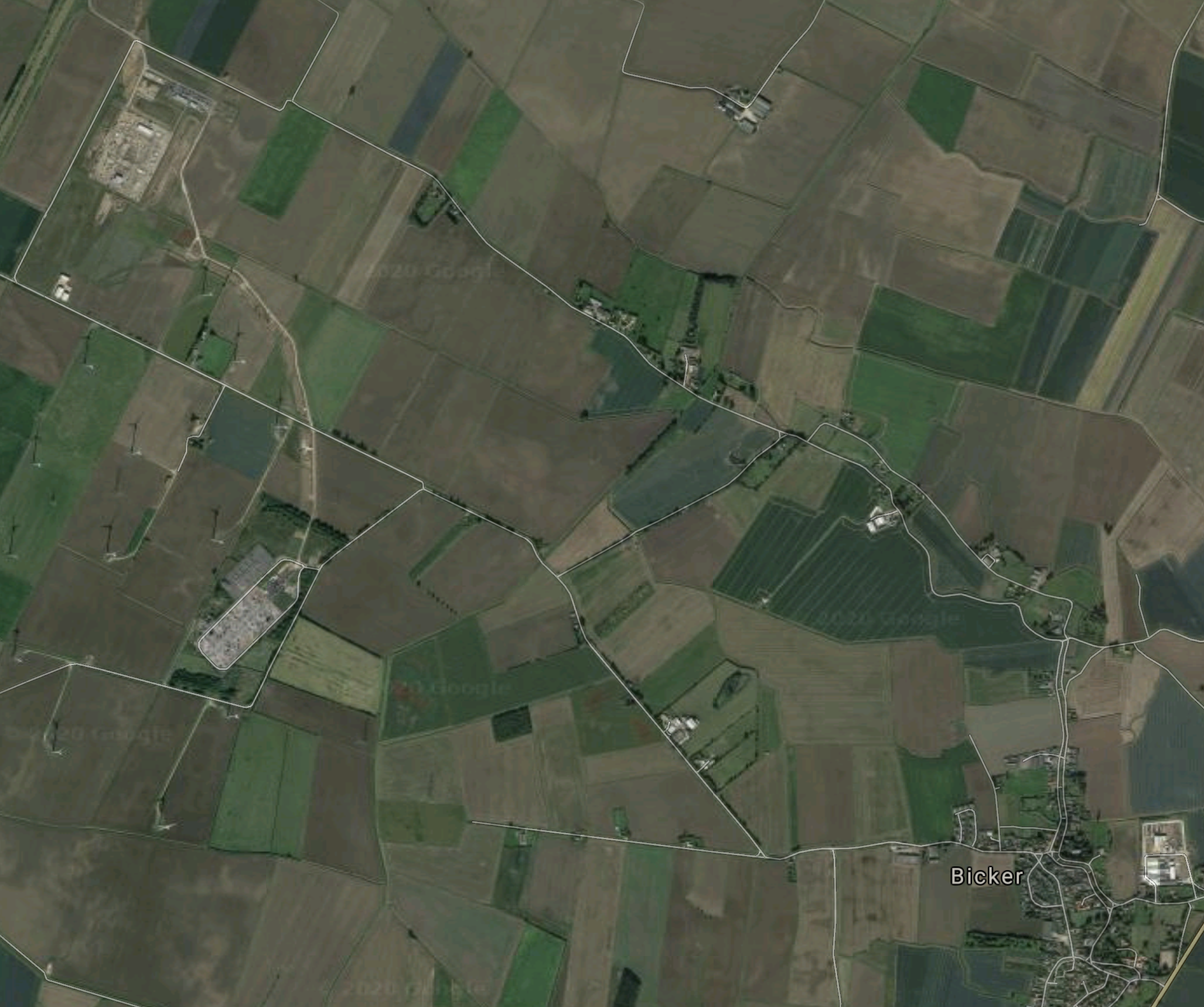
Note.
- The village of Bicker in the South-East corner of the map.
- In the North-West corner of the map is Bicker Fen Wind Farm.
This third map shows the wind farm.
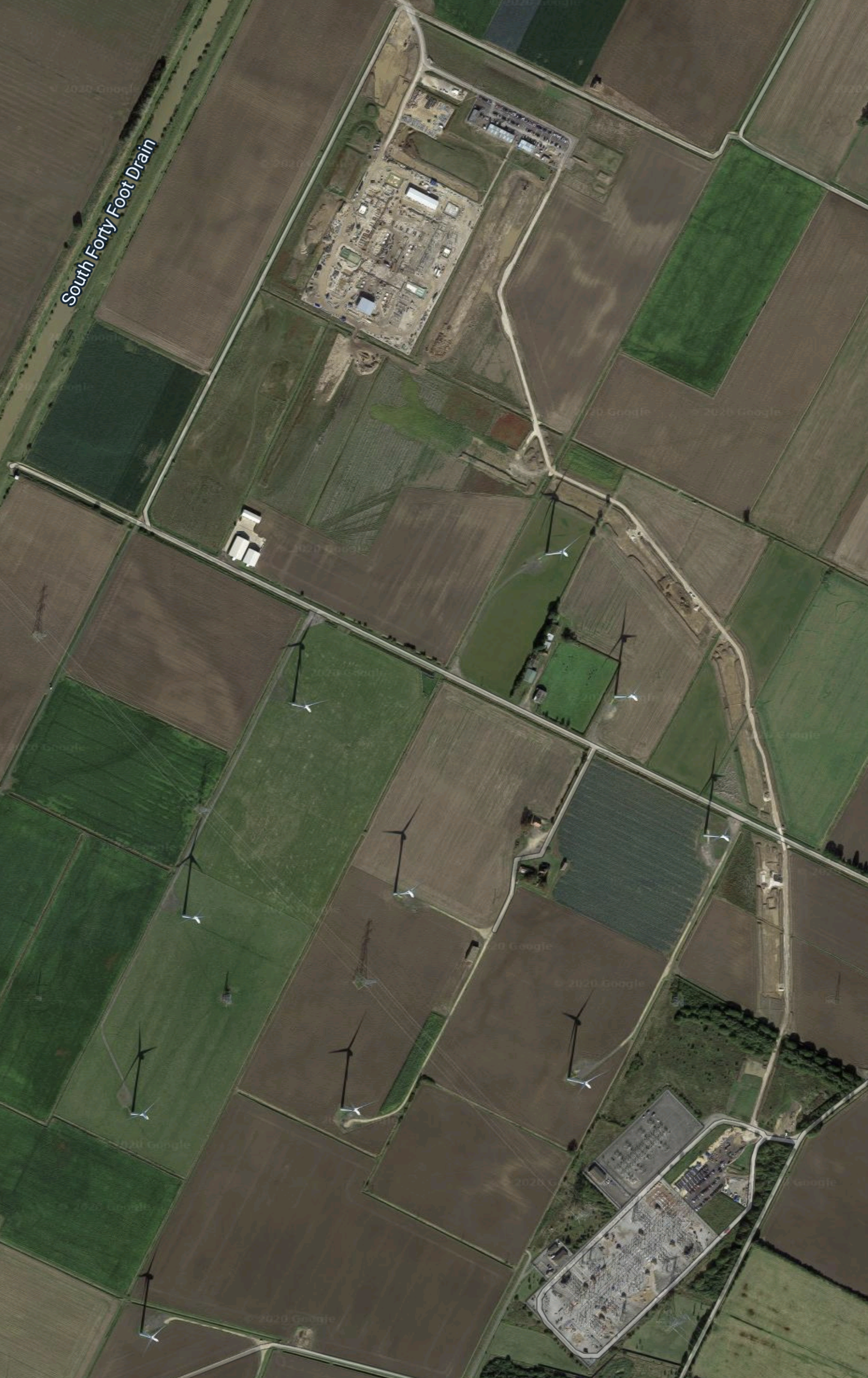
Note the thirteen wind turbines between the two sub-stations full of wo electrical gubbins.
This sentence from the Wikipedia entry for Bicker, gives more details of the wind farm and the future plans for the area.
North of the main line of 400 kV pylons is the Bicker Fen windfarm consisting of 13 turbines producing 26 MW (2 MW each), enough for 14,000 homes. The construction of the windfarm met some local objection. The windmills sit north from Poplartree Farm and were built in June 2008 by Wind Prospect for EdF. They are of the type REpower MM82, made in Hamburg. Bicker Fen substation is also the proposed landing site for a 1,400 MW power cable from Denmark called Viking Link, as well as the proposed offshore wind farm Triton Knoll.
Triton Knoll is a big wind farm, with a planned capacity of 857 MW and should start producing electricity in the next couple of years.
Conclusion
The Viking Link and Triton Knoll are obviously a good fit, as the UK will be able to exchange energy as required.
But it would appear that there’s one thing missing from this setup – energy storage.
I wouldn’t be surprised to see a large battery built at Bicker Fen. Something, like one of Highview Power‘s CRYOBatteries might be ideal.
Hydrogen Is A Trillion Dollar Bet On The Future
The title says it all on this article on Bloomberg.
Read it!
Strangely, it doesn’t mention the Shell Blue Hydrogen Process, that I wrote about in Shell Process To Make Blue Hydrogen Production Affordable.
Talgo Unveils Plan To Have Vittal-One Hydrogen Train Operational By 2023
The title of this post, is the same as that of this article on Hydrogen Fuel News.
This is the most important paragraph of the report.
The company explained that the fuel cell technology it designed for its train is modular. In this way, the tech can be installed on any type of existing train. In this way, the transition away from diesel and into hydrogen fuel. That said, Talgo did underscore that its Vittal platform was the primary reason for which the H2 solution was designed. The company is hoping to win several Spanish tenders, as well as those in other countries, for this regional and commuter train.
Talgo hopes to start testing their train next year.
They certainly seem to have got their skates on, or whatever the Spanish say!
A Hydrogen Train For Scotland
Consider.
- Scotland has a major need for a large number of zero-carbon trains to decarbonise routes outside the Central Belt, which is extensively electrified.
- Talgo are building a factory at Longannet in Scotland.
- Talgo’s Vittal-One train has a modular hydrogen traction system, but the train is designed for European standards.
- This page on the Talgo web site, describes the design philosophy behind the Talgo Vittal. After reading that page, I feel Talgo could build a version of the train for the UK. There are already standard gauge versions in Germany and they’d just need to make a different body, that was about a 100 mm. narrower.
- The Talgo Vittal is a 100 mph train, which is what Scotland needs.
So I feel that Talgo have the technology to build a hydrogen-powered regional train for the UK. And the island of Ireland, which uses a 1600 mm track gauge, which is not far from the Iberian gauge of 1668 mm gauge!
The question has to be asked about, when Talgo chose the location for the factory, were there any nods and winks with the Scottish Government about the country’s future train needs?
It certainly appears that Scotland has the need and the hydrogen, and Talgo has the technology, to decarbonise the railways North and South of the Central Belt in Scotland.
Diesel-Battery Hybrid TER Train To Be Tested Next Year
The title of this post, is the same as that of this article on Railway Gazette International.
These are the two introductory paragraphs.
Testing of a Coradia Polyvalent electro-diesel regional trainset fitted with a battery hybrid traction system is to begin early next year and passenger services are planned for 2022, Alstom has announced.
Two of the trainset’s four diesel engines are to be replaced by lithium-ion batteries, which will be used to recover and store braking energy for reuse. It is hoped that this will reduce energy consumption and greenhouse gas emissions by 20%, as well as reducing operating and maintenance costs.
Other points from the article.
- Testing is planned for 2021, with service entry, the year after.
- There are 300 of these Polyvalent trains in service.
- TER trains will stop using diesel by 2030.
- France intends to run its last diesel train in 2035.
It looks like Alstom are using a similar approach to that of Hitachi in the UK.
It looks like the French are ahead of us in the decarbonisation timetable for rail.
 The Anonymous Widower