Engine Development At ABC Shaped By Sustainability
The title of this post, is the same as that on this article on Riviera Maritime Media.
This is the introductory paragraph.
Belgian engine manufacturer ABC is supplying the power for a new ‘green’ oceanographic research vessel, while it continues development of a hydrogen engine.
The article then gives a good summary of the progress being made by ABC in developing diesel, dual and hydrogen power for ships, based on their existing diesel technology.
- Their diesel engines will be powering the new Belgian maritime research ship; Belgica.
- They are developing hydrogen engines up to 10 MW.
- They aim to have a hydrogen engine working by Q2 2021.
- They have the capacity to build up to a hundred engines a year.
The company seems to be following an alternative route to decarbonisation, by converting existing large diesel designs to hydrogen.
The article is very much worth a read.
Oxford Vaccine Team Use Same Tech To Revolutionise Cancer Treatment
The title of this post, is the same as that as an article on The Times.
I’m no medic, but I know enough about cancer, vaccines and the human immune system, to know that the team that developed the Oxford vaccine, could be on to something here. Especially, as they have got backing from Google’s venture capital arm.
Okehampton Railway Return ‘Clear Reality’ After £40m Commitment In Budget
The title of this post, is the same as that of this article on the Okehampton Times.
This is the introductory paragraph.
The return of a regular passenger rail service to Okehampton is now a clear reality after £40m of funding to reinstate services was included in the Budget.
I am not surprised about this planned reopening, as much of the infrastructure is ready.
Okehampton already has a station, which is shown in this Google Map.
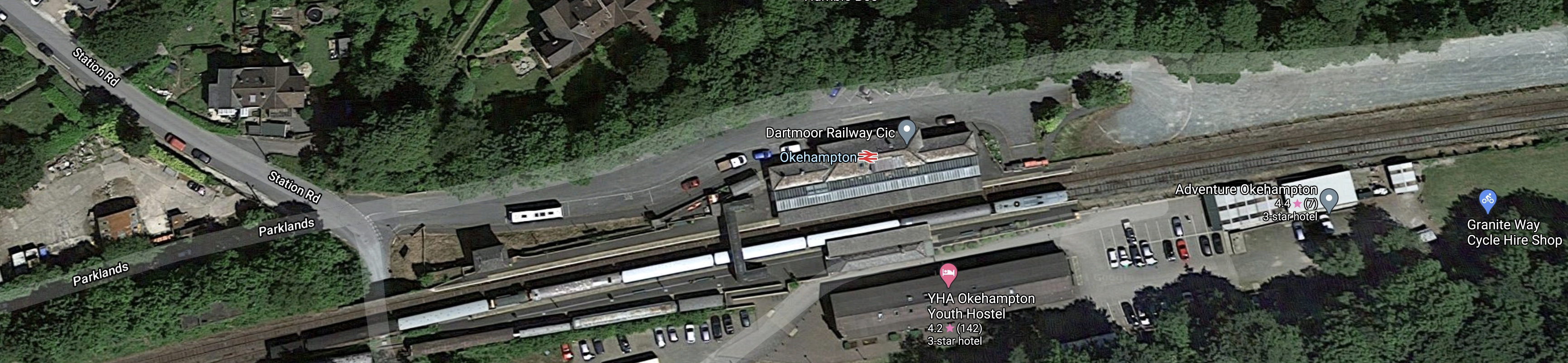
It looks as if there are tourist facilities at the station, where you can stay the night and hire bicycles.
The Dartmoor Railway connects the station to the Tarka Line at Coleford Junction.
- The railway appears to be single track.
- There is a single-platform station at Sampford Courtenay.
- A Great Western Railway passenger service connects St. James Park and Okehampton stations on Summer Sundays.
- This service also calls at Exeter Central, Exeter St. Davids and Ctediton stations.
In a section called Future Options for the Wikipedia entry for Okehampton station, finishes with this sentence.
Work started by Network Rail in 2020 on relaying and refurbishing the track between Coleford Junction and Okehampton with a plan to reopen the line to passengers during 2021.
It looks like a rail service could be made permanent and seven days per week, for an affordable budget.
The trains and those on the Tarka Line to Barnstaple are actually turned in a reversing siding at Exmouth Junction, which is shown in this Google Map.
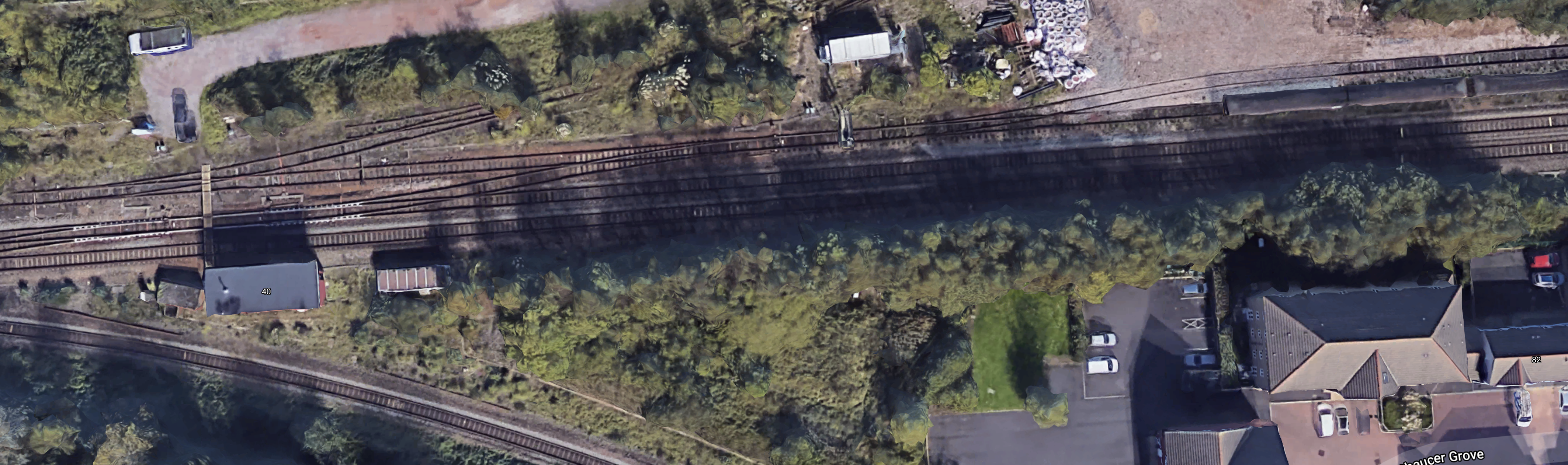
Note.
- St. James Park station is to the West.
- Honiton station is to the East.
- The Avocet Line to Exmouth station goes South East at the bottom of the map.
I suspect that if more trains were reversed at Exmouth Junction, some work on track and signalling might be needed to be done.
This paragraph is taken from this article on the Moorlander, which is entitled Okehampton To Exeter Railway Line Secures More Than £40m Funding.
As The Moorlander has previously reported, the news means that Okehampton will become a ‘railhead’ for the hinterland and benefit three main markets; those wishing to visit the heritage station and Dartmoor, local people from Okehampton travelling to Exeter for work, leisure and education plus potential passengers wanting to connect with the train from West Devon, parts of Torridge and North Cornwall.
That seems all very sensible to me.
Could It Be Trialled As A Pop-Up Metro?
Could it be, that once the line is approved for opening, a service is run for a few months to test out, whether it would be financially viable?
It would be the classic test of the Pop-Up Metro concept, that has been proposed by Adrian Shooter of Vivarail, that I wrote about in Vivarail’s Plans For Zero-Emission Trains.
To be zero-emission, there would need to be one of Vivarail’s Fast Charge systems at Exmouth Junction, which could also charge trains for Barnstaple.
What would zero-emission battery trains serving Barnstaple and Okehampton so for passenger numbers?
Train operators discount the positive effects, these trains have on passengers.
Did Greater Anglia for instance, ever do any market research after the successful trial of the Class 379 BEMU train at Manningtree five years ago? I suspect not!
I estimate that to run the following pair of hourly services would take three trains for each.
- St. James Park and Barnstaple via Exeter Central, Exeter St. Davids and Crediton.
- St. James Park and Okehampton via Exeter Central, Exeter St. Davids and Crediton.
Two extra trains for a hot spare and one in maintenance would typically be added, to give a requirement of eight trains. As Great Western Railway already run the hourly service to Barnstaple, they would probably need another three trains for the Okehampton service.
I think there are two very sensible and affordable philosophies.
Refurbished Class 150 Trains
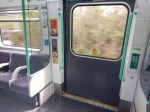
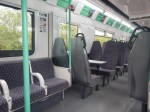
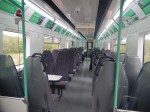
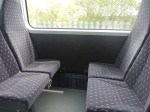
These pictures show a refurbishment of one of Great Western Railway‘s Class 150 trains.
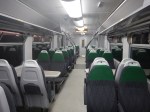
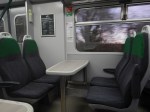
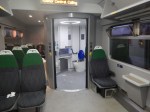
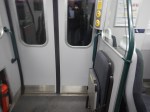
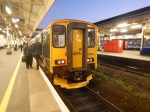
Note.
- It is one of the finest train refurbishments, I have ever seen.
- As I rode one that had been to Barnstable, they can certainly handle the route.
- Great Western Railway have twenty of these trains.
What’s wrong with a fleet of these trains?
Vivarail Class 230 Trains
Battery-electric or diesel-electric versions of these Class 230 trains would be a possibility.
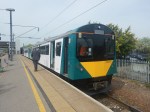
Note.
- I am not sure, if they could manage the climb to Barnstaple, but as they have have so many different power options, I suspect something is possible.
- If they are battery-electric, there could be a Fast Charge system at Exmouth Junction, where the trains turn back.
- Charging may also be needed at Barnstaple and Okehampton to nudge the trains down the hill.
Suppose the various improvements to track, signals and stations and providing charging cost half of the £40 million, that would leave £20 million to pay for the trains. In a cost comparison from October 2015, it is stated that lease costs of Class 230 trains are £7000 per car per month.
So if we call that £10000 to allow for inflation and the pandemic, that means that 8 x three-car trains will cost £2.88 million per year. There will obviously be maintenance and fuel and electricity costs to add. Let’s make the total £4 million per year.
So that would mean, that after spending £20 million on getting the infrastructure ready, the route could be run for five years as a trial.
Conclusion
Consider.
- I feel that this line has been proposed for reopening, as it looks like there could be a good return on the investment.
- The biggest problem would be finding three trains to run the service.
- I suspect, it could also be implemented in a short period of time and perhaps open for Summer 2021.
This train service could be a prototype for many others in the UK.
 The Anonymous Widower