Rolls-Royce Seeks Private Funds To Power Nuclear Project
The title of this post, is the same as that of this article on The Times.
The article is based on this press release on the Rolls-Royce web site, which is entitled More Power And Updated Design Revealed As Nuclear Power Team Targets First Place In The Assessment Queue In Autumn 2021.
This is the first two paragraphs.
The consortium, led by Rolls-Royce, which is creating a compact nuclear power station known as a small modular reactor (SMR), has revealed its latest design and an increase in power as it completes its first phase on time and under budget.
It has also announced it is aiming to be the first design to be assessed by regulators in the second half of 2021 in the newly-opened assessment window, which will keep it on track to complete its first unit in the early 2030s and build up to 10 by 2035.
It would appear that they are following AstraZeneca’s example and building the relationships with the regulators early, so the process of regulation doesn’t delay entry into service.
An Updated Design
These two paragraphs describe the design changes.
As the power station’s design has adjusted and improved during this latest phase – with more than 200 major engineering decisions made during this latest phase – the team has optimised the configuration, efficiency and performance criteria of the entire power station , which has increased its expected power capacity, without additional cost, from 440 megawatts (MW) to 470MW.
The refreshed design features a faceted aesthetic roof; an earth embankment surrounding the power station to integrate with the surrounding landscape; and a more compact building footprint, thanks to successes optimising the use of floor space.
These changes appear to be positive ones.
Transformation To A Focussed Business
Rolls-Royce are transforming the current consortium to an as yet unnamed stand-alone business, as detailed in this paragraph from the press release.
With a focus on continuing its progress at pace, the UK SMR team is transitioning from being a collaborative consortium to a stand-alone business, which will deliver a UK fleet of power stations to become a low carbon energy bastion alongside renewables, while securing exports to make the power station a key part of the world’s decarbonisation toolkit.
Are Rolls-Royce aiming to repeat the success they’ve had with Merlins in World War II and large turbofan engines for airliners with small modular nuclear reactors that decarbonise the world? The strategy is certainly not going against the heritage of the company.
Use Of A Small Modular Nuclear Reactor
This paragraph from the press release outlines a few uses.
The power station’s compact size makes it suitable for a variety of applications, helping decarbonise entire energy systems. Each power station can supply enough reliable low carbon power for around one million* homes, or be used to power net zero hydrogen and synthetic aviation fuel manufacturing facilities, desalination plants or energy intensive industrial sites.
Their size would appear to increase the number of applications.
Hydrogen Production
I particularly like the idea of using an SMR to produce hydrogen for chemical feedstock or to make steel.
I indicated this in Will INEOS And Rolls-Royce Get Together Over Hydrogen Production?
I estimate that a 470 MW SMR would produce around 4,900 tonnes of hydrogen per day.
The numbers certainly seem convenient.
Cost Of Energy And Capital Costs
Tom Samson, Chief Executive Officer of the UK SMR consortium is quoted as saying.
Nuclear power is central to tackling climate change, securing economic recovery and strengthening energy security. To do this it must be affordable, reliable and investable and the way we manufacture and assemble our power station brings down its cost to be comparable with offshore wind at around £50 per megawatt-hour.
Hinckley Point C has a strike price of over £80 per megawatt-hour.
The release also gives a price of around £2.2 billion per unit dropping to £1.8 billion by the time five have been completed.
Benefits To The UK
The press release lists these benefits to the UK.
- create 40,000 regional UK jobs by 2050
- generate £52 billion of economic benefit
- have 80% of the plant’s components sourced from the UK
- target an additional £250 billion of exports – memoranda of understanding are already in place with Estonia, Turkey and the Czech Republic
The value of exports would indicate export sales of over a hundred reactors.
Lifetime
The press release indicates the following about the lifetime of the reactors.
- The reactor will operate for at least 60 years.
- The design, which will be finalised at the end of the regulatory assessment process, proposes that all used fuel will be stored on each site for the lifetime of the plant.
I would assume that Rolls-Royce are developing a philosophy for taking the SMRs apart at the end of their life.
Construction
This paragraph from the press release talks about the construction process.
The power station’s design cuts costs by using standard nuclear energy technology used in 400 reactors around the world, so no prototyping is required. The components for the power station are manufactured in modules in factories, before being transported to existing nuclear sites for rapid assembly inside a weatherproof canopy. This replicates factory conditions for precision activities and further cuts costs by avoiding weather disruptions. The whole sequence secures efficiency savings by using streamlined and standardised processes for manufacturing and assembly, with 90% of activities carried out in factory conditions, helping maintain extremely high quality. In addition, all spoil excavated will be reused on site to build the earth embankment, removing the need for it to taken off site, reducing road journeys that are both financially and environmentally costly.
I have talked to project managers, who have assembled factory-built railway stations and their experiences would back the Rolls-Royce method of construction.
My project management knowledge would also indicate, that the construction of an SMR could be much more predictable than most construction projects, if the factory-built modules are built to the specification.
Funding
According to the article in The Times, the consortium now seems to be in line for £215 million of Government funding, which will unlock £300 million of private funding.
Conclusion
It looks like this project will soon be starting to roll.
DfT To Have Final Say On Huddersfield Rebuild Of Rail Station And Bridges
The title of this post, is the same as that of this article on Rail Technology Magazine.
This is the first paragraph.
As part of the £1.4bn Transpennine Route Upgrade. Transport Secretary Grant Shapps is to rule on planned changes to Huddersfield’s 19th century rail station and not the Kirklees council, in what is to be a huge revamp of the line between Manchester and York.
According to the article eight bridges are to be replaced or seriously modified.
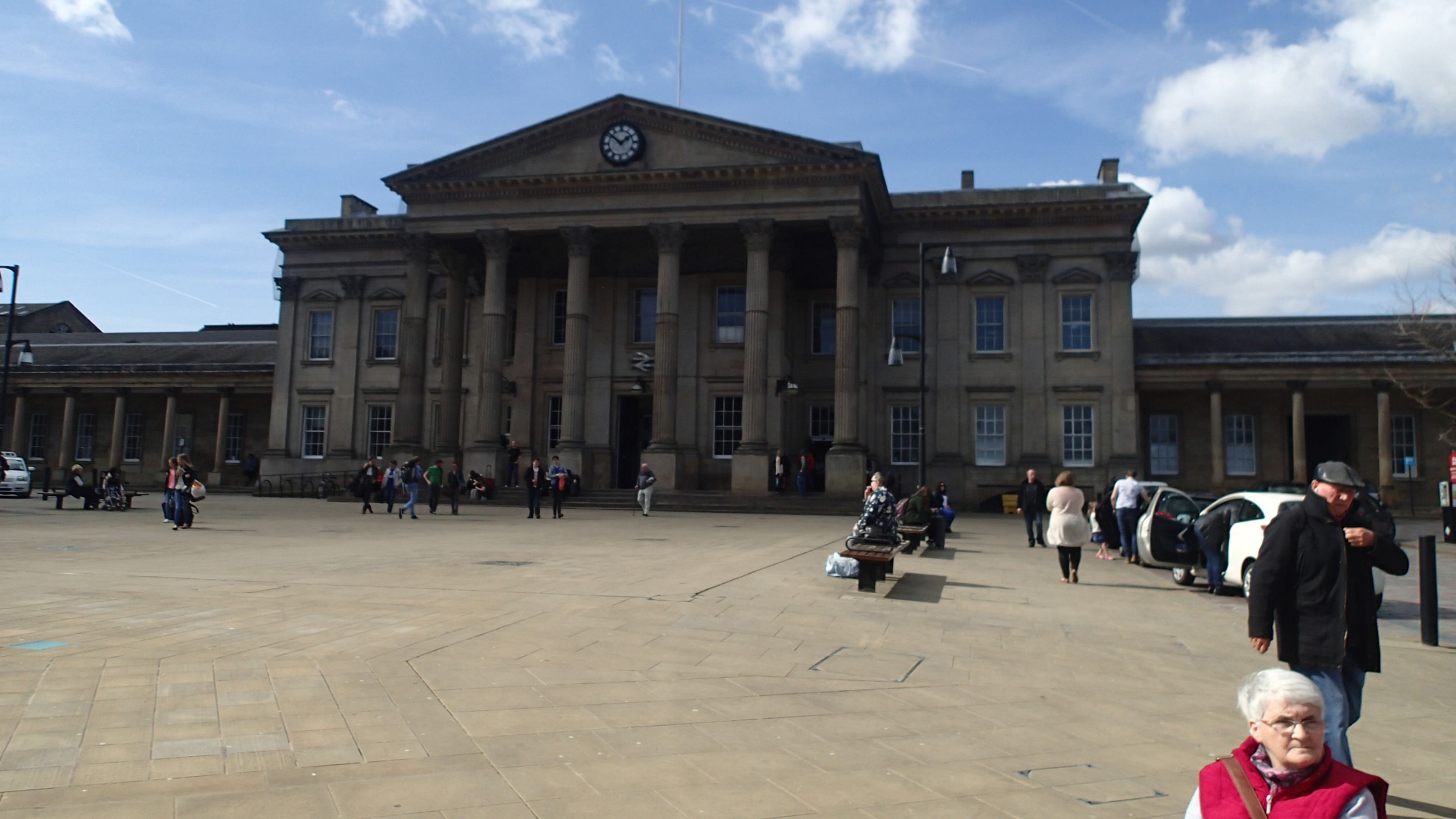
As Huddersfield station (shown) is Grade I listed and three other Grade II listed buildings and structures are involved, I can see this project ending up with a substantial bill for lawyers.
But then, to have a world-class railway across the Pennines, a few eggs will need to be broken.
Electric Trains Across The Pennine
This page on the Network Rail web site describes the Huddersfield To Westtown (Dewsbury) Upgrade.
When the upgrade and the related York To Church Fenton Improvement Scheme is completed, the TransPennine route between Huddersfield and York will be fully-electrified.
As Manchester To Stalybridge will also have been electrified, this will mean that the only section without electrification will be the eighteen miles across the Pennines between Stalybridge and Huddersfield.
Will this final eighteen miles ne electrified?
Eighteen miles with electrification at both ends will be a short jump for a Hitachi Intercity Tri-Mode Battery Train, the specification of which is shown in this Hitachi infographic.

The Class 802 trains of TransPennine Express are able to be converted into these trains.
The trains could work these routes.
- Liverpool Lime Street and Scarborough
- Manchester Airport and Redcar
- Liverpool Lime Street and Edinburgh via Newcastle
- Manchester Airport and Newcastle
- Manchester Piccadilly and Hull
- Manchester Airport and Cleethorpes
Note.
- I suspect some more Class 802 trains with batteries will be needed.
- The trains would either use battery or diesel power to reach Hull, Redcar and Scarborough or there could be a few miles of electrification to stretch battery range.
- Will the Class 68 diesel locomotives be replaced with Class 93 tri-mode locomotives to haul the Mark 5A coaches to Scarborough.
- Manchester Airport and Cleethorpes could be a problem and will probably need some electrification around Sheffield and Grimsby.
This would just mean TransPennine’s two short routes to be decarbonised.
- Manchester Piccadilly and Huddersfield
- Huddersfield and Leeds
As except for the eighteen mile gap between Stalybridge and Huddersfield, these two routes are fully-electrified, I suspect that a battery-electric version of a 110 mph electric train like a Class 387 or Class 350 train could run these routes.
Conclusion
It looks like if these sections of the TransPennine Express network are upgraded and electrified.
- York and Church Fenton
- Huddersfield and Westtown
- Manchester and Staylebridge
Together with a few extra miles of electrification at strategic points, that TransPennine Express will be able to decarbonise.
 The Anonymous Widower