SeAH Steel Holdings’ UK Monopile Factory To Launch With Major Offshore Wind Deals
The title of this post is the same as that of this article on the CHOSUN Daily.
These three paragraphs give more details.
SeAH Wind, the British offshore wind structure subsidiary of SeAH Steel Holdings, is set to begin commercial operations at its local plant next month, bolstering annual revenue growth projected to reach billions of dollars. The facility has received a total investment of £900 million ($1.1 billion or 1.6 trillion won), and the company has already secured orders surpassing the plant’s construction costs, ensuring a solid foundation for stable operations, according to industry sources.
Located in Teesside, northeastern England, the plant is in the final stages of equipment installation and test production ahead of its commercial launch. The facility has an annual production capacity of up to 400,000 metric tons of monopiles—cylindrical steel structures welded from thick steel plates—which serve as seabed foundations for offshore wind turbines.
The £900 million SeAH Wind plant was established with support from various group affiliates. SeAH Steel Holdings founded SeAH Wind in the UK in 2021, initially investing approximately 400 billion won ($274 million or £217 million) in the facility. Additional funding was secured through capital increases, with contributions from SeAH Steel Holdings, its steel pipe subsidiary SeAH Steel, and overseas branches, including U.S.-based SeAH Steel America and South Korea-based SeAH Steel International.
As the UK’s sole offshore wind monopile supplier, SeAH Wind has attracted significant attention. On Feb. 13, King Charles III visited the plant to inspect its production facilities, underscoring its strategic role in the country’s renewable energy sector.
The plant is making monopiles for the Hornsea 3 and Norfolk Vanguard wind farms.
Connecting Reading And The West To Gatwick Airport And Eurostar
I have just checked the electrification between Reading and Ashford International using OpenRailwayMap.
- Between Cardiff and Reading the electrification is 25 KVAC overhead.
- Between Reading and Wokingham the electrification is 750 VDC third-rail.
- Between Wokingham and Reigate is not electrified.
- Between Reigate and Gatwick Airport the electrification is 750 VDC third-rail.
- Between Gatwick Airport and Ashford International the electrification is 750 VDC third-rail.
Only 37.7 miles is not electrified.
Hitachi’s Intercity Battery Trains, have a range on battery power of seventy kilometres or forty-five miles, so these trains could go between Reading or any station to the West to any station on the North Downs Line, including Guildford, Redhill, Gatwick Airport, Tonbridge and Ashford International stations.
The trains would need to be dual voltage and I’m fairly sure, that no new infrastructure would be needed.
A Green No-Fly Route Between Europe And Ireland
Consider.
- The Great Western Main Line is electrified to Cardiff.
- There is no electrification to the West of Cardiff.
- Cardiff and Fishguard Hsrbour is 115.6 miles.
- There is a ferry between Fishguard and Rosslare.
I suspect Hitachi could configure one of their Intercity Battery Trains, that could connect Ashford International and Fishguard Harbour stations.
Gatwick’s Hydrogen Advantage Over Heathrow
The Future Of Hydrogen In Aviation
I believe that hydrogen will have a big future in aviation.
Powering Aircraft
It will be some years, but not as many as some people think, before we see hydrogen-powered aircraft in the air.
Airbus have produced this infographic of three possible hydrogen-powered aircraft.
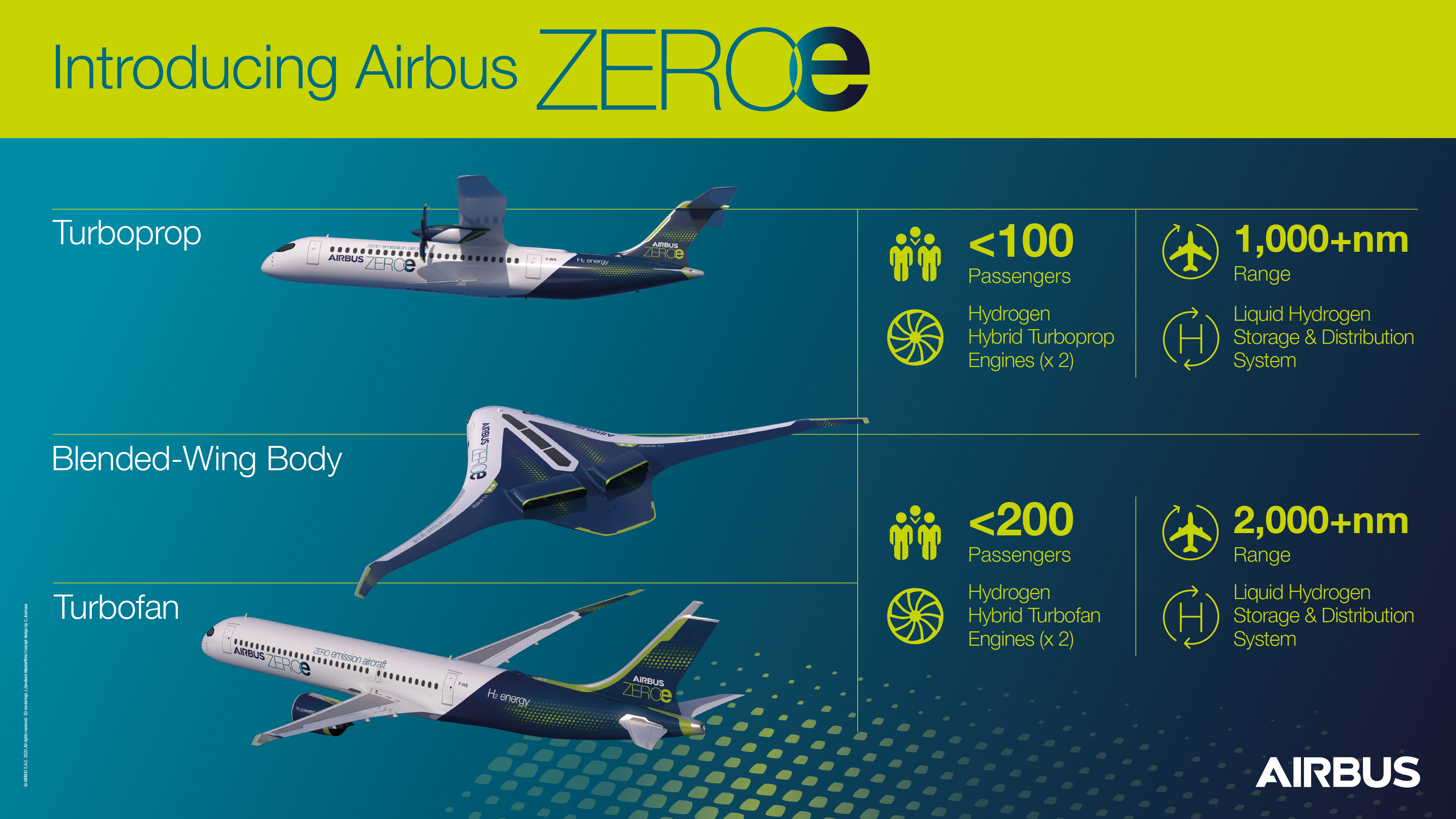
Discover the three zero-emission concept aircraft known as ZEROe in this infographic. These turbofan, turboprop, and blended-wing-body configurations are all hydrogen hybrid aircraft.
I wrote a bit more about these three hydrogen-powered concepts in ZEROe – Towards The World’s First Zero-Emission Commercial Aircraft.
My best estimate is that we’ll see hydrogen-powered aircraft in the air by 2035.
Towing Aircraft Around
Most aircraft are very heavy and towing them around needs a lot of zero-carbon energy.
So I think it is likely, that at some time in the near future,tugs to tow large aircraft around an airport will be hydrogen powered.
If you type “hydrogen-powered aircraft tug” into Google, you get several sensible product developments, including ones from.
- Exeter Airport
- Teesside Airport
- The Royal Air Force.
- The US Air Force
Note.
- The involvement of the military.
- At least two of the tugs are conversions of existing equipment.
- The extra weight of the battery in an electric-powered tug, may make the realisation of a viable electric aircraft-tug difficult.
I suspect we’ll see hydrogen-powered aircraft tugs in use on airports around the world in the near future.
Long-Term Car-Park Buses
I would have thought that using hydrogen-powered or battery-electric buses to serve long-term car-parks at an airport would be an obvious application. But it does appear that airports using zero-carbon buses to serve long-term car-parks are not very common.
- Gatwick uses a large fleet of hydrogen buses to bring passengers and staff to the airport, but these don’t appear to be linked to car parking.
- Incheon Airport in Korea does appear to use hydrogen-powered buses.
Please let me know, if you know of any other uses of hydrogen-powered vehicles at airports.
Hydrogen For Heathrow
This Google Map shows Heathrow Airport.
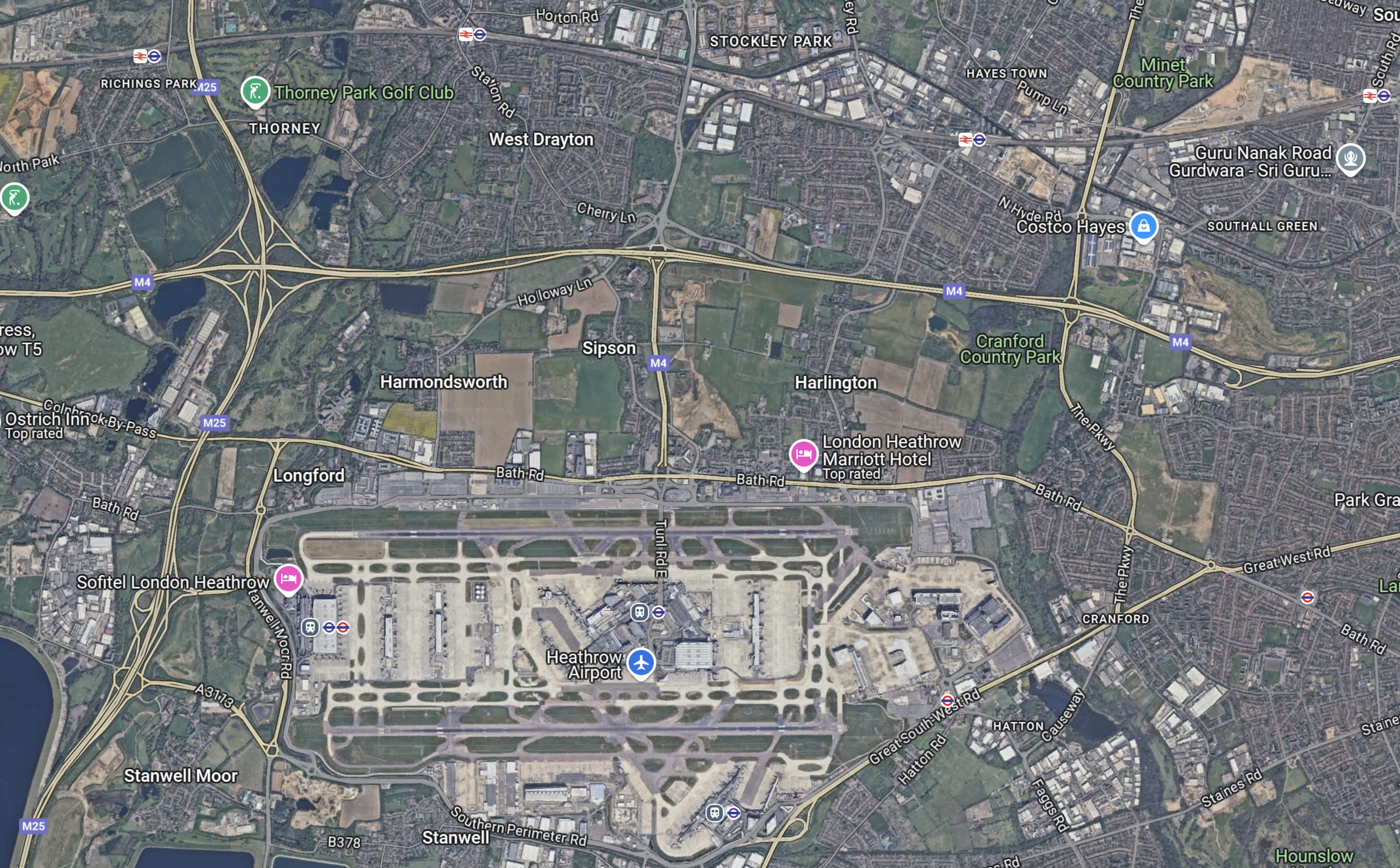
Note.
- The M4 going across the map.
- The two main runways.
- A new third runway would go between the M4 and the Northern runway.
It is likely if the third runway goes ahead, the village of Harmondsworth will be flattened.
It is likely that supplying hydrogen to Heathrow will mean a hydrogen terminal somewhere South of the M4, which could be supplied by rail tankers.
Hydrogen For Gatwick
This Google Map shows Gatwick Airport.
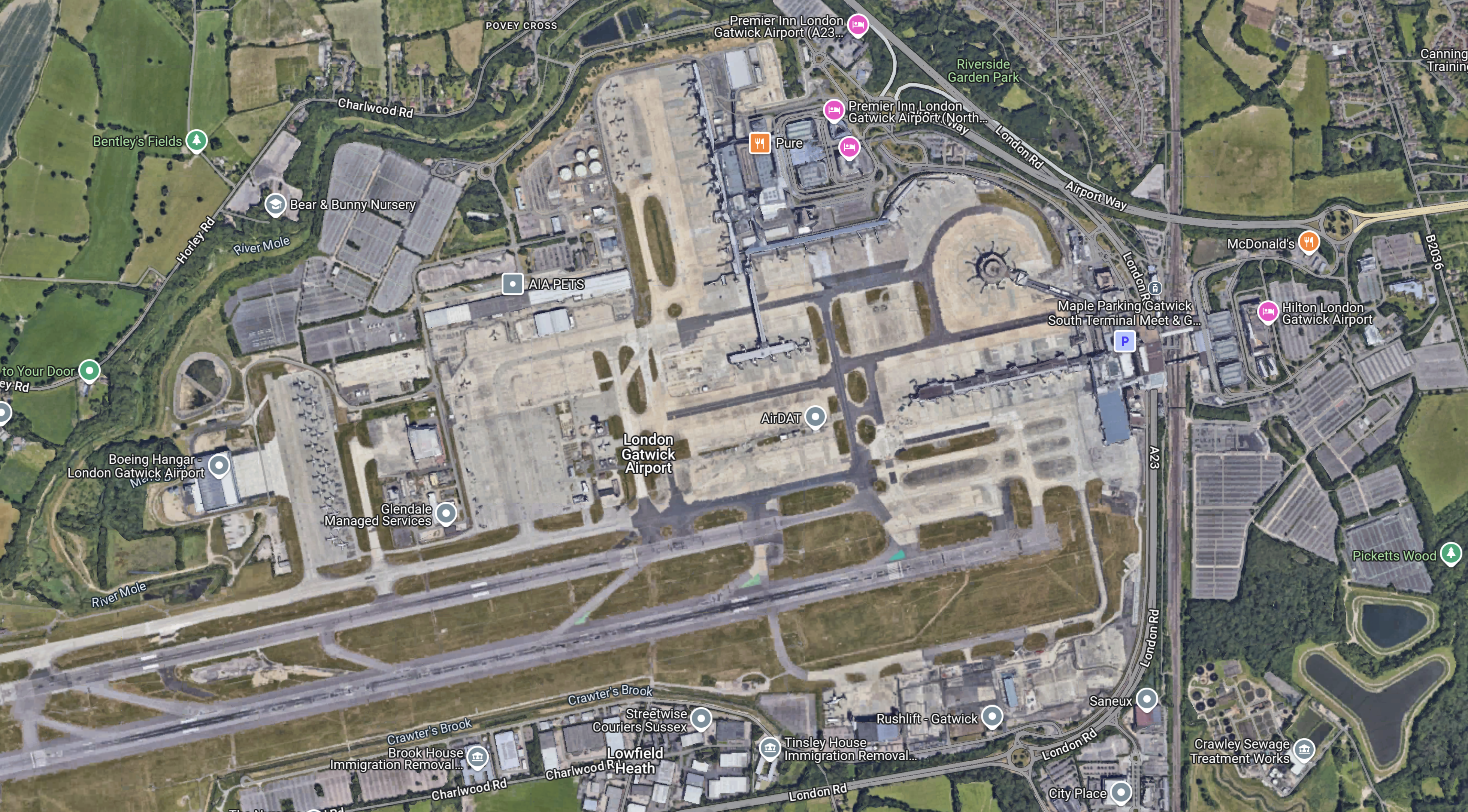
Note.
- The current main runway with the emergency runway to its North.
- Because the runways are too close together they cannot be used simultaneously.
- To create a second runway, the two runways would be moved further apart and the current emergency runway would be enlarged.
- The Brighton Main Line runs North-South past the Eastern end of the main runway.
Gatwick’s expansion plan doesn’t appear to require any properties outside the airport boundaries to be demolished.
This Google Map shows Sussex between Gatwick Airport and Brighton.
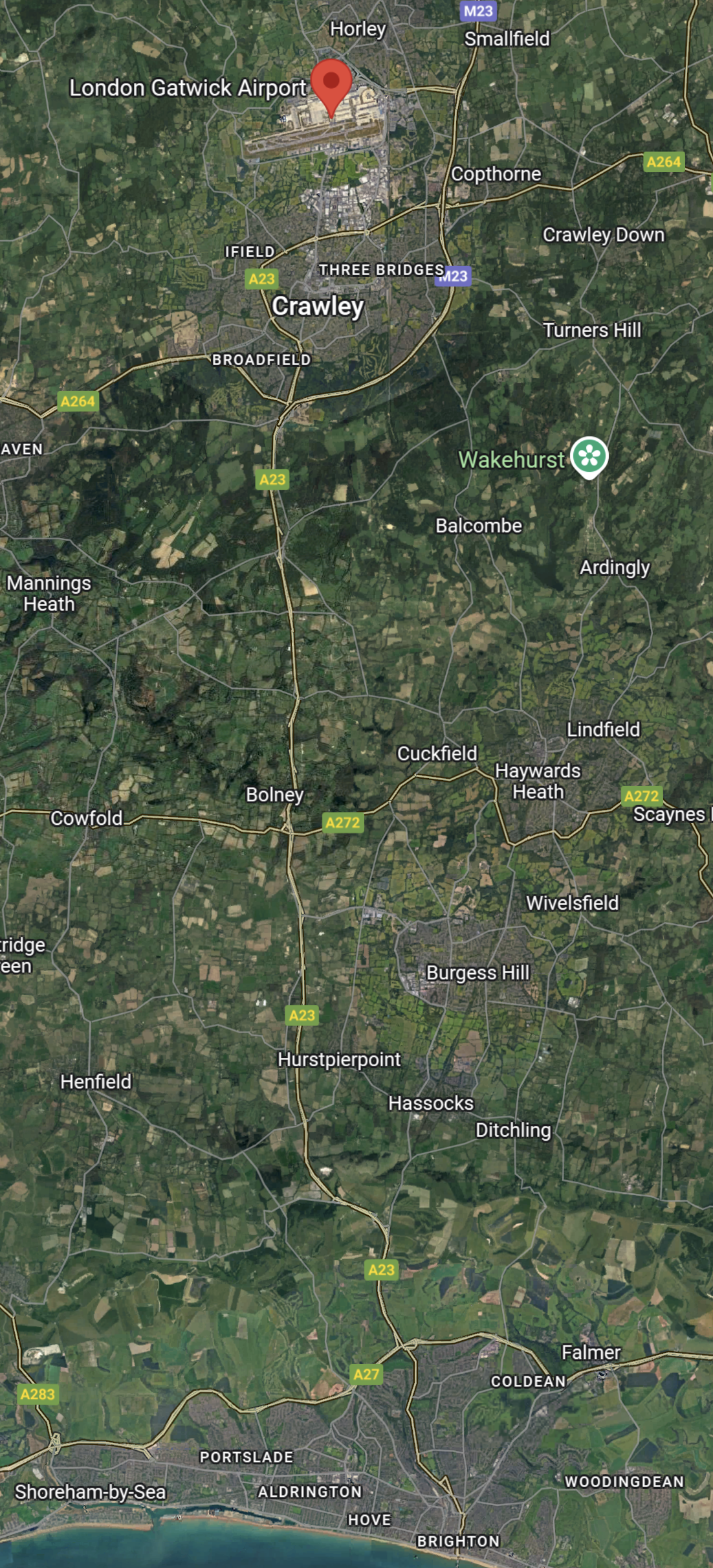
Note.
- Gatwick Airport is indicated by the red arrow at the top of the map.
- Gatwick’s runways can be picked out under the red arrow.
- The South Coast is at the bottom of the map.
- The M23 and the Brighton Main Line connect Gatwick Airport and Brighton.
- Shoreham and Brighton are on the South Coast.
- Click the map to show on a larger scale.
Under current plans, the Ramplion offshore wind farm off the South Coast is going to be increased in size to 1.6 GW.
The simplest plan to provide large amounts of green hydrogen to Gatwick would be to build a large electrolyser in the Port of Shoreham and pipe it along the railway to Gatwick Airport. Hydrogen could also be shipped at night into the Airport using rail tankers.
There’s no doubt in my mind, that it will be much easier to supply large quantities of hydrogen to Gatwick, rather than Heathrow.
In 2023, I wrote Discover How Greater Brighton Is Championing The Transition To Hydrogen, which probably indicates that the locals and their politicians, would welcome the investment in hydrogen in their city.
It should also be noted that world class consultants Ricardo, who are very much involved in the development and promotion of hydrogen technology are based in Shoreham.
Liquid hydrogen could also be imported and distributed from the Port of Shoreham.
Brighton could end up as the South of England’s Hydrogen City.
 The Anonymous Widower