Should We Rethink City Centre Public Transport Access And Pricing?
In my view, certain city and town centres in the UK, have too many vehicles going through.
London certainly does!
But London has a plan to increase capacity on its Underground and Overground network.
- Crossrail to increase E-W capacity – Opening by 2020.
- Thameslink to increase N-S capacity – Opening in 2018.
- The Northern Line Extension to Battersea to increase N-S capacity – Opening by 2020.
- The Northern Line will be split into two lines, after rebuilding Camden Town station – From 2025.
- The New Tube for London to increase capacity on the Deep Tube Lines – From 2023.
- The Sub-Surface Lines are being upgraded
- New trains on the Overground from Liverpool Street – From 2018.
- New trains on the Gospel Oak to Barking Line – From 2018.
- Infrastructure on the Underground is being improved with more lifts, escalators, wi-fi and 4G access.
- The Bakerloo Line is being extended – From 2028/2029.
In addition, there will be a lot of improvement to walking and cycling routes in the City Centre.
Crossing the City Centre will be the Magnificent Seven
- Crossrail will be running 24 nine-car trains per hour between Whitechapel station in the East and Paddington station in the West, via the massive combined Moorgate/Liverpool Street, Farringdon, Tottenham Court Road and Bond Street stations.
- Thameslink will be running 24 eight/twelve-car trains per hour between Kings Cross St. Pancras station in the North and London Bridge and Elephant and Castle stations in the South, via Farringdon, City Thameslink and Blackfriars stations.
- The dear old Victoria Line will be running 40 six-car trains per hour between Finsbury Park station in the North and Vauxhall station in the South., via seven intermediate stations including Victoria.
- The two Northern Line branches; Bank and Charing Cross, will each be running 36 six-car trains per hour between a rebuilt Camden Town station in the North and Kennington station in the South.
- The Central Line will be running over 30 six-car trains per hour between Liverpool Street station in the East and Notting Hill Gate in the West, via ten intermediate stations including Bank and Marble Arch.
- The Jubilee Line will be running 36 seven-car trains per hour between Canary Wharf station in the South-East and Baker Street station in the North-West, via eight intermediate stations including London Bridge, Waterloo and Bond Street.
Just these major services add up to a total of over three thousand cars an hour passing through the City Centre.
Note.
- The Northern Line counts as two lines, as once Camden Town station is rebuilt, it will be split.
- The other five lies are either new or have been substantially modernised.
- I have deliberately chosen end stations either in Zone 1 or Zone 2.
- The Central and Jubilee Lines can almost be considered subsidiary lines of Crossrail, running stopping services that call at a lot more stations.
And then there are the second level of unmodernised lines or ones just outside the City Centre.
- The Bakerloo Line will be running at least the current twenty six-car trains per hour between Paddington station in the North and Elephant and Castle station in the South, via ten intermediate stations including Marylebone, Baker Street, Oxford Circus, Charing Cross and Waterloo.
- The Circle Line will be running at least six seven-car trains per hour in a circle around Zone 1 and on a spur to Hammersmith station.
- The District Line will be running at least eighteen seven-car trains per hour between Whitechapel station in the East and Earl’s Court station in the West across the South of Zone 1, via fourteen intermediate stations including Cannon Street, Blackfriars, Charing Cross and Victoria.
- The East London Line will be running at least twenty six-car trains between Shreditch High Street station in the North and Canada Water station in the South, via four intermediate stations including Whitechapel and Shadwell.
- The Hammersmith and City Line will be running at least six seven-car trains per hour between Whitechapel station in the East and Paddington station in the West across the North of Zone 1, via nine intermediate stations including Liverpool Street, Moorgate, Farringdon, Kings Cross St. Pancras and Baker Street.
- The Metropolitan Line will be running at least eleven eight-car trains per hour between Aldgate station in the East and Baker Street station in the West via seven intermediate stations including Liverpool Street, Moorgate, Farringdon and Kings Cross St. Pancras.
- The Northern City Line will be running at least ten six-car trains between Highbury and Islington station in the North and Moorgate station in the South, via Essex Road station.
- The Piccadilly Line will be running at least the current twenty-one six-car trains per hour between Finsbury Park station in the North and Earl’s Court station in the West, via fourteen intermediate stations including Holborn, Piccadilly Circus and Green Park.
- The Waterloo and City Line will be running at least eighteen six-car trains per hour between Waterloo and Bank stations.
Note.
- I have included some Overground and National Rail Lines in this group.
- These routes add approximately forty percent capacity to the City Centre routes.
- Don’t underestimate the Northern City Line.
All of these lines create an extensive network of lines in London’s City Centre.
London’s City Centre has the following problems.
- Traffic congestion.
- Virtually no available parking.
- Limited parking for the disabled.
- The air pollution is getting worse.
- No space to put any new roads or parking spaces.
- Safety for pedestrians and cyclists could be improved.
I return to half the question I asked in the title of this post.
Should We Rethink City Centre Public Transport Access?
I think the answer is yes, as get it better and travellers might be persuaded to abandon their cars further away from the City Centre.
These are a few things, I’d improve or change.
Enough Car Parking At Outlying Stations
This is not always the case. There should also be enough parking for the disabled.
Good Bus Routes At Outlying Stations
Outlying stations in London are better than most, but some stations need more and better bus routes with better information.
Get it right and it might mean that the need for more car parking is avoided.
Step-Free Access
All stations, platforms, lifts and trains must be suitable for a list of approved scooters, wheel-chairs and buggies.
Better Interchanges
Some interchanges like Kings Cross St. Pancras, Green Park and Waterloo are designed for people, who like to walk down endless tunnels. Transport for London can do better as this picture from Bank station shows.
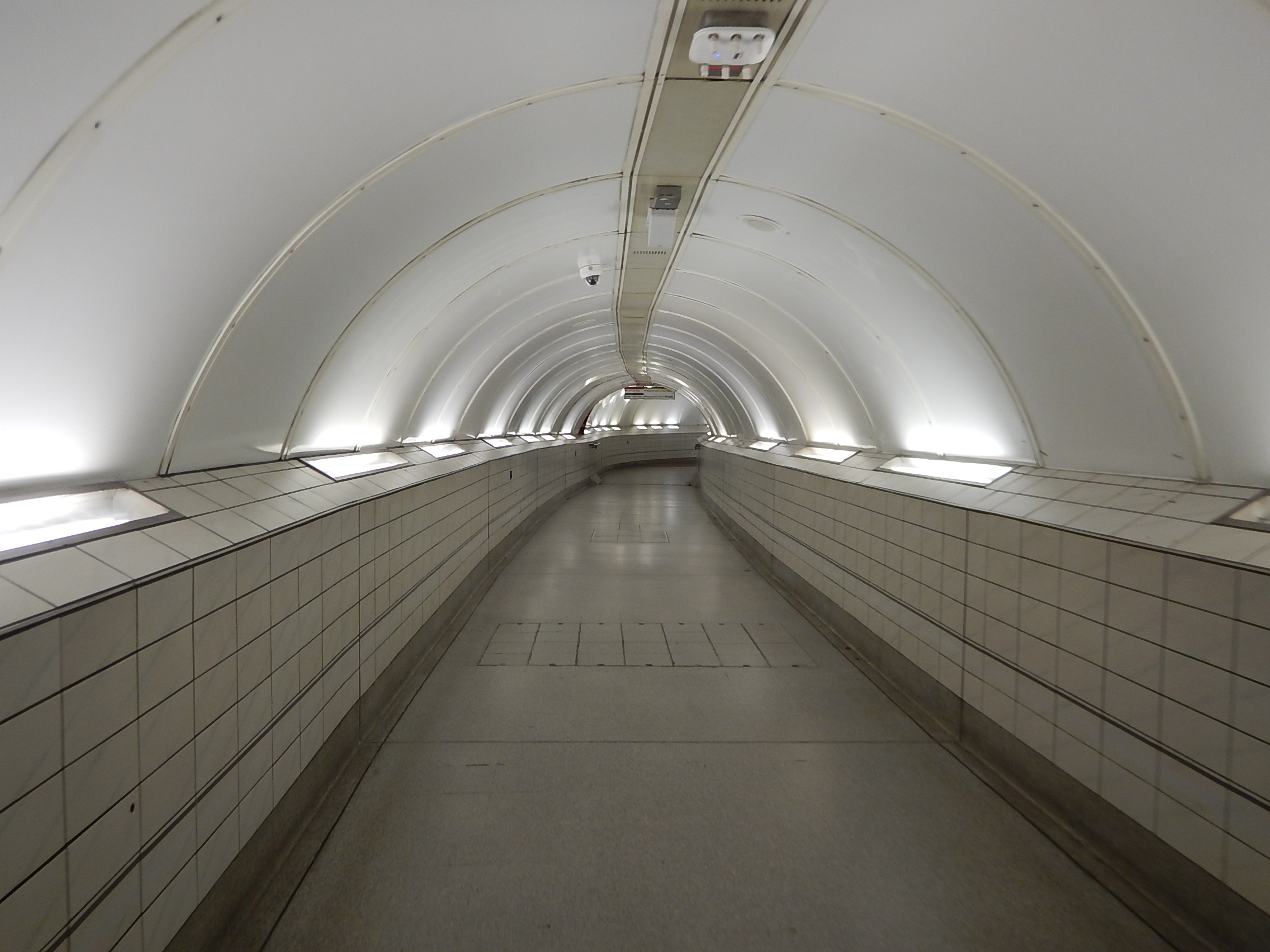
Some certainly need travelators and more escalators and lifts.
My particular least favourite station is Kings Cross St. Pancras, where I always go by bus and come home by taxi, as Underground to and from train, can be a real case of walking for miles.
It’s as if the station complex was designed by someone with a real sadistic streak.
I’m going to Chesterfield from St. Pancras on East Midlands Trains today and will get a bus to in front of the station and walk the length of the station to the platforms at the other end.
When Thameslink is fully open, everybody will be complaining about the lack of lift connections between Thameslink and the EMT platforms, which are on top of each other.
You can’t win with St. Pancras!
More Entrances And Exits At Stations
At Victoria and Shepherds Bush stations, new entrance/exits have been added, and the future Bank, Bond Street and Camden Town stations, will have multiple ways to get in and out.
In addition the massive Crossrail stations at Moorgate/Liverpool Street and Tottenham Court Road will be labyrinthine, with two or more entrances.
More Interchanges
This map from carto.metro.free.fr shows how the East London and Central Lines cross at Shoreditch High Street station.
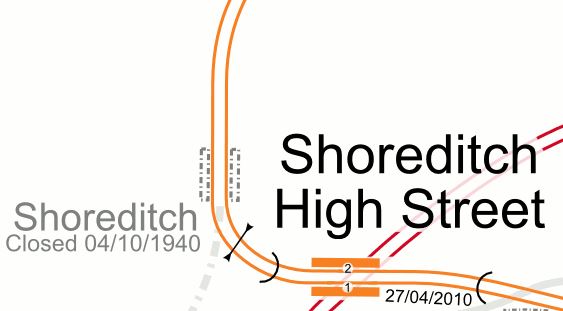
This would be my choice for an extra interchange, as it would mean that I would get easy access to the Central Line after three stations from Dalston Junction station, which is my nearest access to trains.
And What About Pricing?
Crossrail and Thameslink could be railways with an unusual usage profile. I believe that outside of the Peak, the central sections of these two routes could have a much more relaxed feel with the ability to handle lots of passengers in the Off Peak. They will also be like express motorways taking the pressure off lines like the Central, Jubilee, Northern and Piccadilly in the City Centre.
So will this spare capacity, change passengers habits and attract more leisure travellers into the City Centre?
Get the access right and make the City Centre, easy to access from everywhere, with all stations step-free and especially in the City Centre itself, and couple this with the new capacity, I believe that we can reduce the traffic in the City Centre, by encouraging drivers to leave their vehicles further out.
Pricing of tickets could be the smart weapon to encourage this use of Park-and-Ride.
London’s ticketing system, which is based increasing on contactless bank cards collects masses of data about passengers movements and thus Transport for London know all the busy routes and stations.
The system works by logging your various journeys throughout the day and then charging the card overnight, applying any daily, weekly or monthly caps.
Very radical ideas could be applied to the ticketing rules.
For example, anybody who has come into the City Centre from the suburbs can have as many Zone 1 journeys in the day as they want.
So a couple of typical Essex Girls might leave their expensive wheels at Chadwell Heath and just tap in and out all day, as they travelled between Bond Street, Eastfield, Knightsbridge, Marble Arch and Westfield.
How much economic activity would this sort of behaviour generate?
Secondary Effects
If London can persuade anybody coming into the Centre, that the place for a vehicle is not in the Centre, then there will be secondary effects.
- Air pollution levels will drop, especially if all taxis and commercial vehicles are zero-emission.
- Bus numbers can be reduced, if the Underground is more convenient and free for short journeys in the City Centre.
- If traffic in the centre drops, more and more journeys will be done on foot or a bicycle.
Would it also mean, that vehicles could be properly charged for coming into the Centre and checked.accordingly. Would this drop all forms of crime?
What About Other Cities?
Some towns and cities in the UK are developing city centre networks.
To be continued…
A Strange Fog
On Monday night, it was hot in the house and I was listening to the radio and typing up a few things for my blog.
The window was open for fresh air and as I often am, I was just wearing a pair of small black briefs for comfort, modesty and to keep cool.
Id been to the vigil by Tower Bridge and I’d had rather a nice ready meal from Marks and Spencer for supper.
I was also drinking heavily, but it was only endless mugs of tea!
So I laid down on the Chinese carpet on the floor and must have dosed off for half-an-hour.
When I awoke and stood up, I found that I couldn’t see very well.
I was worried at first, but after going into my bedroom to the toilet, I found I could see alright in the other room.
I then thought that the living room must be full of smoke or steam like you’d get if you left a saucepan of water on a lighted stove.
But the kettle and stove were cold, all taps in the house were switched off and there was no obvious source of the fog.
I then weighed myself, as I often do before I go to bed and found that I lost a kilo since Sunday night, despite eating well and drinking a lot.
And then it dawned what the fog was.
The temperature and humidity in the room had been such, that it had drawn the water through my skin and I was looking through a fog of my own perspiration.
I should say, that regularly, I lose a kilo overnight.
All very strange, but totally explained by the laws of physics and my extraordinary skin, which baffles medics, as if say they inject me or take blood, I don’t bleed afterwards and don’t need a plaster, despite being on Warfarin.
The IRA Bombing Campaign In England Of 1939-1940
When most people think of bombings by the Irish Republican Army, they think of the bombings like 1993 Bishopsgate, 1984 Brighton, 1992 Manchester and 1996 Manchester by the Provisional Irish Republican Army of recent memory.
But there was another campaign in 1939-1940 called S-Plan.
There were three hundred mainly small bombs, seven fatalities and ninety-six injured.
Unleash The Hyenas Of Comedy
In January 2010 I Wrote a post called The Ban on Islam4UK. I started it with the following paragraph.
Organisations such as Islam4UK and all the other so-called Muslim organisations, that don’t like the way things are done in the Western World bother me. But then so do right-wing so-called Christian groups and also those fake religions and cults beloved of celebrities with too much money and not enough common sense.
Most preach fiery hate to unbelievers like me and say we will rot in hell. That by the way is impossible, as hell doesn’t exist, unless you are stuck on the M25 (put your favourite in here) at the time of a small bump, that the Police decide is worthy of an enormous investigation.
When these groups commit crimes such as murder, assault, kidnapping and extortion, then hopefully they will feel the full force of the law.
And finished with this.
There is also one very powerful weapon that we should use against all of these people – humour.
Remember in the Second World War nothing was off-limits when combating the Nazis. Just read this little piece about Spike Jones in 1942. We need him now!
All of these groups give splendid opportunities for satire, ridicule and just plain fun.
After the attacks of recent months in the UK, Europe and other parts of the world, perhaps we should unleash the hyenas of comedy.
Remember in a straight fight a hyena would probably make mincemeat of the most vicious pit-bull, but laugh all the time it is doing it.
This article in the Daily Mail is entitled Brits mock ISIS with #IslamicStateClaims hashtag blaming them for everything from Bake Off moving channel to the shrinking size of Quality Street tins.
Everybody go for it! And in packs!
I would also hope that the Masters of Black Propaganda are working on the Internet equivalent version of Aspidistra, which was used with some success, against the Nazis in World War II. Or in this Politically Correct Age, is something like Aspidistra, just unacceptable?
But surely, no non-violent method is unacceptable against those who kill indiscriminately!
Temporary Barriers On London’s Bridges
Barriers to protect pedestrians have been installed on some of London’s bridges.
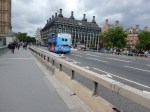
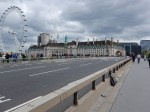
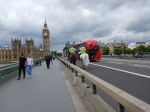
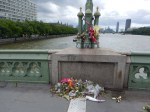
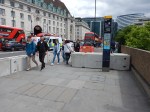
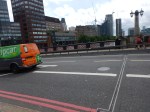
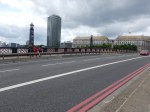
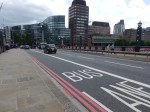
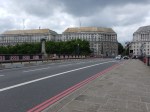
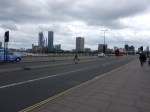
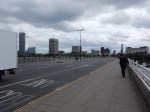

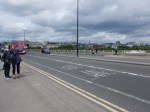
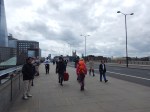
I hope these monstrosities are only temporary and they are replaced with something more in keeping with the historic bridges.
I still feel that we should shut Southwark and Lambeth Bridges to all traffic except buses, cyclists and pedestrians.
Imams Refuse Funeral Prayers To ‘Indefensible’ London Bridge Attackers
This is the title on this article in the Guardian.
This is said.
More than 130 imams and Muslim religious leaders have said they will refuse to say funeral prayers for the perpetrators of Saturday’s attack in London.
In a highly unusual move, Muslim religious figures from across the country and from different schools of Islam said their pain at the suffering of the victims and their families led them to refuse to perform the traditional Islamic prayer – a ritual normally performed for every Muslim regardless of their actions. They called on others to do the same.
Obviously, the last crop of attackers can’t do anything more to us, but will a sanction like this make it more likely other attackers will strike?
I’m not against imams and Muslim religious leaders coming to their own decision, as this is still a free country, but I also think ot’s something the government should stay clear of.
The Vigil For The Victims Of The London Bridge Attack
I went to the Vigil At Potters Field Park for the victims of the London Bridge Attack.

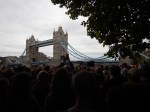



Will London’s solidarity and defiance make any difference?
Crossrail’s High-Tech Leak System At Moorgate Station
Moorgate station is being rebuilt for Crossrail, with a lot of development above the station.
These pictures, show their new high-tech system for protection passengers from the dangers of water leaks.
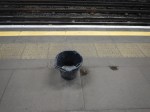


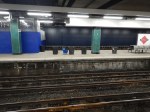

Some things just can’t be improved upon!
‘Unprecedented’ Number Of Shots Fired – Police
This is the title of a section of the BBC’s rolling news feed.
This is said.
Eight police officers fired a total of 50 bullets to kill the three London Bridge attackers, Metropolitan Police Assistant Commissioner Mark Rowley said.
He described it as an “unprecedented” number of shots fired by police.
An IPCC investigation would take place, but he said that the situation officers faced was “critical”.
He said he was “humbled by the bravery of officers who will rush towards a potential suicide bomber”.
I don’t like guns and it is one of the reasons, I don’t go to the United States.
But I still think the number of bullets fired was excessive, especially as one round hit an innocent member of the public.
Thirty years ago, after Metier had been sold to Lockheed, I met one of their guys, who looked after research into unusual devices for Special Forces and Law Enforcement Agencies.
One thing we discussed over a couple of drinks, was a tranquiliser gun, which is regularly used by superheroes and wild animal vets. I can remember him saying that they could have applications where human shields were being used or in crowded encounters, where the chances of hitting the wrong target were high.
I also remember other ideas being tested.
So are we doing enough research into creating weapons that deal with the situations that arose in the London Bridge attacks and will surely arise in the future?
I hope that in the major IPCC review of the attacks, which must happen, the scope and efficiency of the weapons available to the Police is thoroughly examined.
One question, I would ask, is do they have a weapon, that could stop a truck, larger than the Renault van used last night?
Lord Carlile Says Control Orders Could Come Back
This is the title of a section of the BBC’s rolling news feed.
This is said.
The former independent reviewer of terrorism legislation says Theresa May could be looking to reintroduce control orders when she reviews the UK’s anti-terrorism strategy.
Lord Carlile of Berriew said if they had been in place, they “may have saved a lot of lives”.
Control orders were introduced by Tony Blair in 2005. The orders allowed suspects to be relocated away from their home communities, subjected them to 16-hour home-arrest curfews and barred them from using mobile phones or the internet.
They were replaced by Terrorism Prevention and Investigation Measures or Tpims in 2011.
If Lord Carlile says they might have saved a lot of lives, then they should surely be looked at.
 The Anonymous Widower