The Robin Hood Line In Nottingham
This Google Map shows the Southern end of the Robin Hood Line as it connects to Nottingham station.
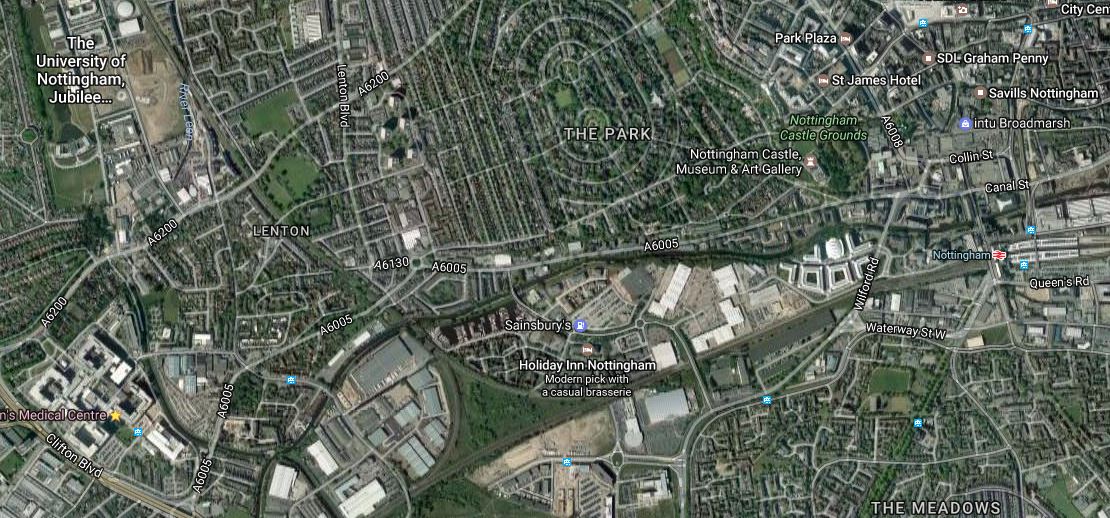
Note the triangular junction towards the bottom of the map.
- The line to the East goes into Nottingham station.
- The line to the West goes to Beeston and eventually to London. In a few years time, it will go to the East Midland Hub station for HS2.
- The line to the North is the Robin Hood Line and the Erewash Valley Line.
The \Erewash Valley Line splits to the West, from the Robin Hood Line just off the top of the map to the North of Nottingham University’s Jubilee Campus.
It is worth looking at services that go between these two branches and Nottingham station.
Langley Mill station on the Erewash Valley Line has the following services.
- One train per hour (tph) between Nottingham and Leeds.
- A few trains per day between Liverpool and Nottingham.
- Some trains between Sheffield and London stop.
Passengers though are expected to take the infrequent service to Nottingham for onward trains.
On the 2nd of April, Ilkeston station will open on the Erewash Valley Line between Nottingham and Langley Mill.
Hucknall station on the Robin Hood Line has two hourly services.
- Between Nottingham and Mansfield Woodhouse
- Between Nottingham and Worksop.
Plans also exist for a branch to Ollerton, so this might change the service pattern. But there is no more than a total of four or five trains per hour in both directions.
All of these services go round the North-East chord of the junction and thus connect Nottingham University’s Jubilee Campus and Nottingham station
But there are no stations along this line, although there used to be one at Radford.
In A Look At New Station Projects, I came across references to stations at Faraday Road and Lenton.
Both locations are on this section of line and it would seem logical that the more Northerly location would be ideal to serve the Jubilee Campus.
If only the local trains stopped, it would have the following services.
- 1-2 tph to Ilkeston, Langley Mill and Alfreton
- 2 tph to Hucknall, Kirkby-in-Ashfield and Mansfield
- 3-4 tph to Nottingham.
Other questions and issues are raised.
- Would a second station to the South nearer to the triangular junction be worthwhile?
- Could the Nottingham Express Transit. have an interchange with the trains the Robin Hood Line?
- Could the Nottingham Express Transit call both campuses of the University of Nottingham?
- In future could 1-2 tph go to the HS2 station at East Midland Hub?
It does appear that there is scope for improving connectivity in the Western Part of the City Centre.
London’s Housing Market Is Changing
This article in Construction Enquirer is entitled Quintain launches London’s largest build to rent site.
Quintain are to build thousands of rental homes at Wembley Park around Wembley Stadium.
Reading the article, they seem to be making a professional job of it.
- 3,000 houses will start construction this year.
- 5,000 houses will be built over seven years.
- There will be a primary School, a seven acre park and a landscaped square.
- Four companies will share the building.
- Quintain have even set up their own company to manage the properties and their rental.
- Brent Council seem to have given the development their blessing.
Looking back to the 1970s, when C, myself and our three boys were looking for somewhere to live, and were unable to get a mortgage because my income wasn’t in any way guaranteed, we had no option but to rent.
We had one choice of a quality development in London, where we could rent and that was the Barbican.
I don’t think we’d have gone to Wembley, but we would have loved to have had a choice.
I suspect we could see other developments like this all over the country.
Everyone will benefit.
Class 88 Locomotives To Start Testing
This article in Rail Magazine is entitled Testing programme in place for first Class 88.
The Class 88 locomotive could revolutionise locomotive haulage on some routes in the UK.
It is a go anywhere locomotive with the ability to use 25 KVAC electric or onboard diesel power. Wikipedia says this.
The UK version will be able to run either on electrified lines using the pantograph, which will be the UK’s standard OHLE current at 25kV AC, or away from electrified lines with the Caterpillar C27 950 hp (710 kW) engine.
The diesel engine is not as powerful the 2.8 MW (3,800 hp) C175-16 engine fitted to its cousin the Class 68 locomotive, which is used by Chiltern on their Main Line services to Birmingham.
The Class 88 has a powerful dual-mode capability, with the locomotive being able to haul a train on diesel power, despite having only twenty percent of the power on electricity.
It will be interesting to see which routes these locomotives serve.
With the completion of the electrification of the Gospel Oak to Barking Line, the two major freight routes across North London will be electrified on much of their length, but some of the secondary routes like the Dudding Hill Line will not be electrified. Also, as many ports in the UK are not electrified, could we see Class 88 locomotives replacing Class 66 locomotives on some of the cross-London freights.
If Sadiq Khan is serious about pollution and noise, then he should push Network Rail and the rail freight companies to go for electric haulage on all routes across London.
I also wonder, if the diesel power of the Class 88, is enough to take a heavy freight train out of the Port of Felixstowe to join the Great Eastern Main Line for London,
The Class 88 is also capable of hauling passenger trains, so could we see them hauling rakes of coaches on long routes, which are only partially electrified.
- London to Holyhead
- London to Aberdeen
- London to Inverness
- London to Sunderland
It could be a suitable locomotive for sleeper services, especially if the Class 88 can work North of Edinburgh and Glasgow.
I suspect though initially, as there are only ten of the locomotives, they will be used in high-profile services with an ecological dimension.
- Services through sensitive areas for noise and pollution, where the line is electrified like North London are an obvious application.
- Direct Rail Services provide motive power for Tesco’s delivery from Daventry to Inverness, which is electrified a lot of the way. This would surely generate headlines if hauled by a Class 88 instead of a Class 66.
- It would be an ideal locomotive for a Whisky-Liner from Scotland to the South,
- Would BMW like it to haul their miniLiners from Oxford to the Channel Tunnel?
The last two applications ask if the locomotive could use the Channel Tunnel. I doubt that using the locomotive to take Minis all the way to Germany though, would be an efficient use of the locomotive, so at some point the locomotive would change. Being able to use the tunnel though, would enable the locomotive change to be made in either England or France.
I think that Stadler will see an order for more Class 88 locomotives before the end of the year. After all, the Class 68 locomotive fleet has continually grown since its introduction in 2013 and not stands at 25 in service and seven on order.
A Station For Leiston
The Aldeburgh Branch Line is still intact, as far as Sizewell nuclear power station.
Past Sizewell, it would appear that the original route and track-bed is not obstructed and can be seen on the Google Maps all the way to Aldeburgh.
This Google Map shows the route, where it enters Aldeburgh.
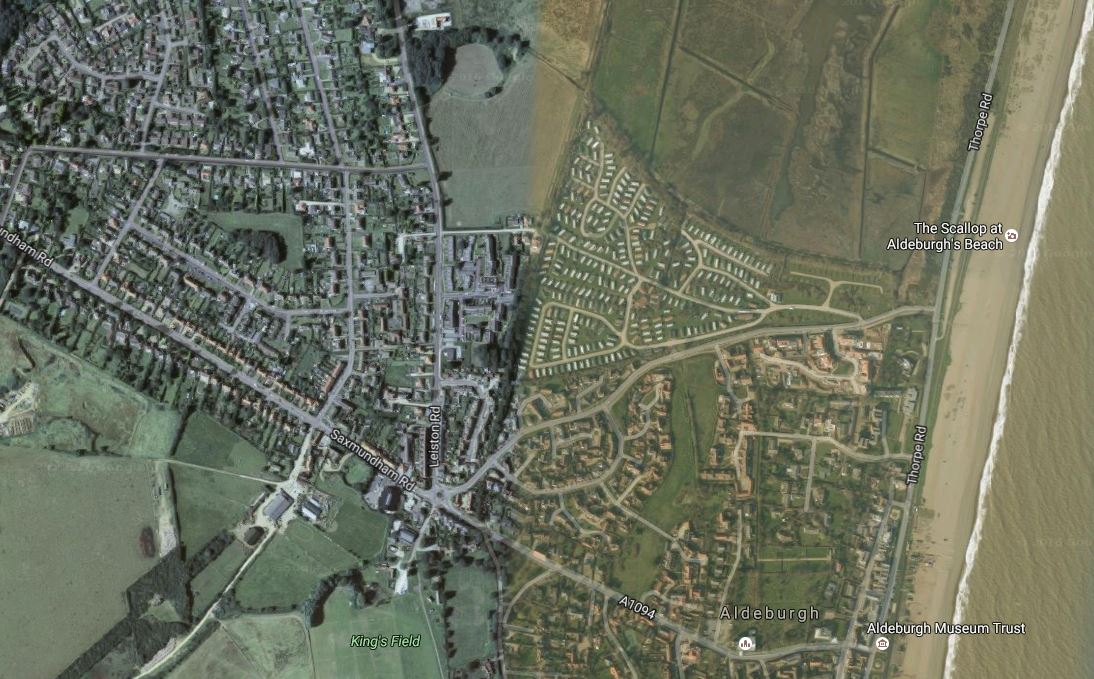
The prominent road that runs diagonally across the map in a North-West/South-East direction is Saxmundham Road and it goes all the way to the sea.
Reaching to this road is the dark scar of the railway, which runs parallel to the coast. Aldeburgh station was somewhere, where the two features meet.
Sizewell C
If Sizewell C is built, then I could envisage sets of circumstances, which meant that the line was reopened to passengers, at least as far as Leiston station.
Providing a service on the line to Ipswich would not be a problem, once Ipswich station had been rebuilt with a new platform 0 and an extended platform 1, which I believe is necessary to provide better services to Lowestoft and Felixstowe.
But whether the service would generate sufficient traffic to be viable and profitable in the long term, would be very much open to doubt.
Doubling Frequency From Ipswich To Saxmundham
If we assume that the main East Suffolk Line has a one train per hour (tph) service between Ipswich and Lowestoft, I wonder if an Ipswich to Aldeburgh Branch Line service could be used to double the frequency at the Southern end of the East Suffolk Line.
Ipswich to Saxmundham currently takes thirty seven minutes., so on a crude estimate, Ipswich to Aldeburgh could certainly be done within the hour.
I suspect that this would mean that it would not be difficult to run the Aldeburgh Branch Line trains on a one tph basis to fit in between the Ipswich-Lowestoft trains.
As at least one platform would need to be built somewhere on the single-track branch to reverse the trains, it could be built at Leiston, Thorpeness or Aldeburgh provided the track went that far.
So by reinstating the Aldeburgh Branch Line and giving it an hourly service from Ipswich would also give Saxmundham to Ipswich a 2 tph service.
Leiston Station
This increase of frequency at the Southern end of the East Suffolk Line and the needs of any future nuclear power station at Sizewell, will be the only possible reasons that passenger services will resume on the Aldeburgh Branch Line.
If trains ventured onto the Aldeburgh Branch Line, surely they would call at Leiston station.
A Modern Branch Line For Leigh
There is a group called the Lowton East Neighbourhood Development Forum or LENDF, who are proposing to reinstate part of the Bolton and Leigh Railway, to create a branch line to from a reopened Kenyon Junction station on the electrified Liverpool and Manchester Railway to a reopened Leigh station.
This Google Map shows the Southern part of the route, where it connects to the Liverpool and Manchester Railway at the former Kenyon Junction station.
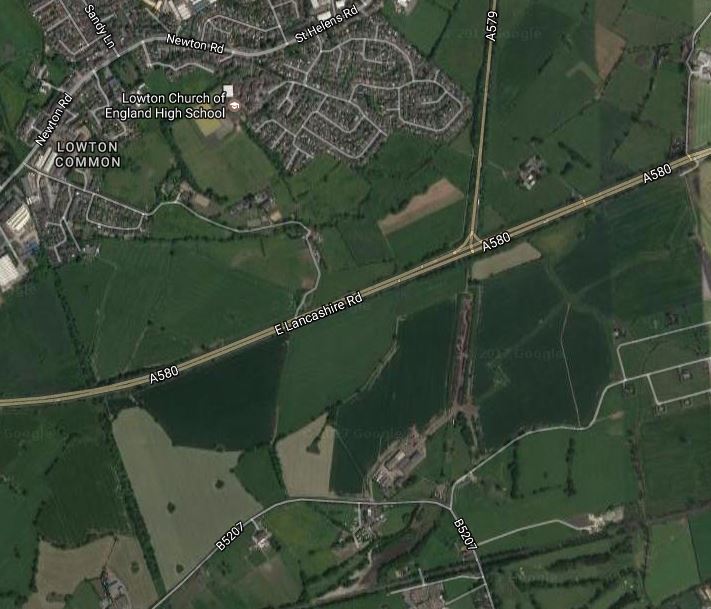
Note.
- The scar of the Bolton and Leigh Railway is clearly visible in line with the A579, which was built alongside the railway North of the A580.
- The Kenyon Junction station site can also be spotted and was recently used as a work site for the electrification of the line.
There is certainly enough space on the former station site to create a two platform station, with perhaps a bay platform to handle a shuttle train to Leigh.
This Google Map shows, where the line goes at the Northern end.
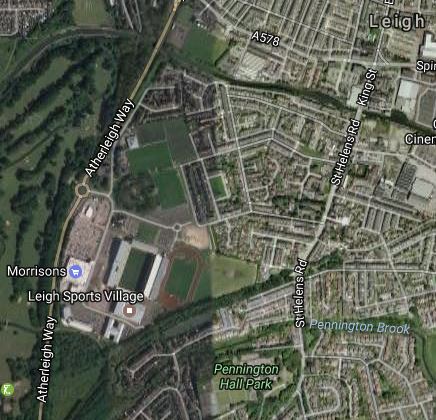
I would think that Amberleigh Way follows the route of the Bolton and Leigh Railway.
One major factor defines how far the line could go.
It would probably be prudent to restrict the length, so that the chosen train could do a round trip in under thirty minutes, thus giving a two trains per hour (tph) service with just one train and no passing loops or complicated operation.
Four tph would probably require two trains, a passing loop and some clever train scheduling.
And then you mustn’t blow the budget!
Building The Line
I would build the line as simply as possible.
- Single-track.
- Single-platform tram-style stations with no footbridges, as at say Galashiels station.
- Step-free access to the train.
- No electrification.
- No passing loop, as not needed with one train and 2 tph.
- One set of points to connect the branch to the main line for rolling stock transfer.
Kenyon Junction station would be more complicated, as it would need.
- Two long platforms for Liverpool and Manchester trains.
- A bay platform for the Leigh branch.
- A footbridge and other necessary facilities.
- Appropriate car parking.
Kenyon Junction station would be the most expensive part of the project.
Train Operation
Train operation would be under rules called One Train Working, bur probably also applying the sort of rules under which trams work.
- Lower speed.
- Warning systems
- Very visible trains
- Driver keeping a good look-out.
This picture shows a two-car diesel multiple unit working under similar rules at its terminus in the centre of the German town of Zwickau.
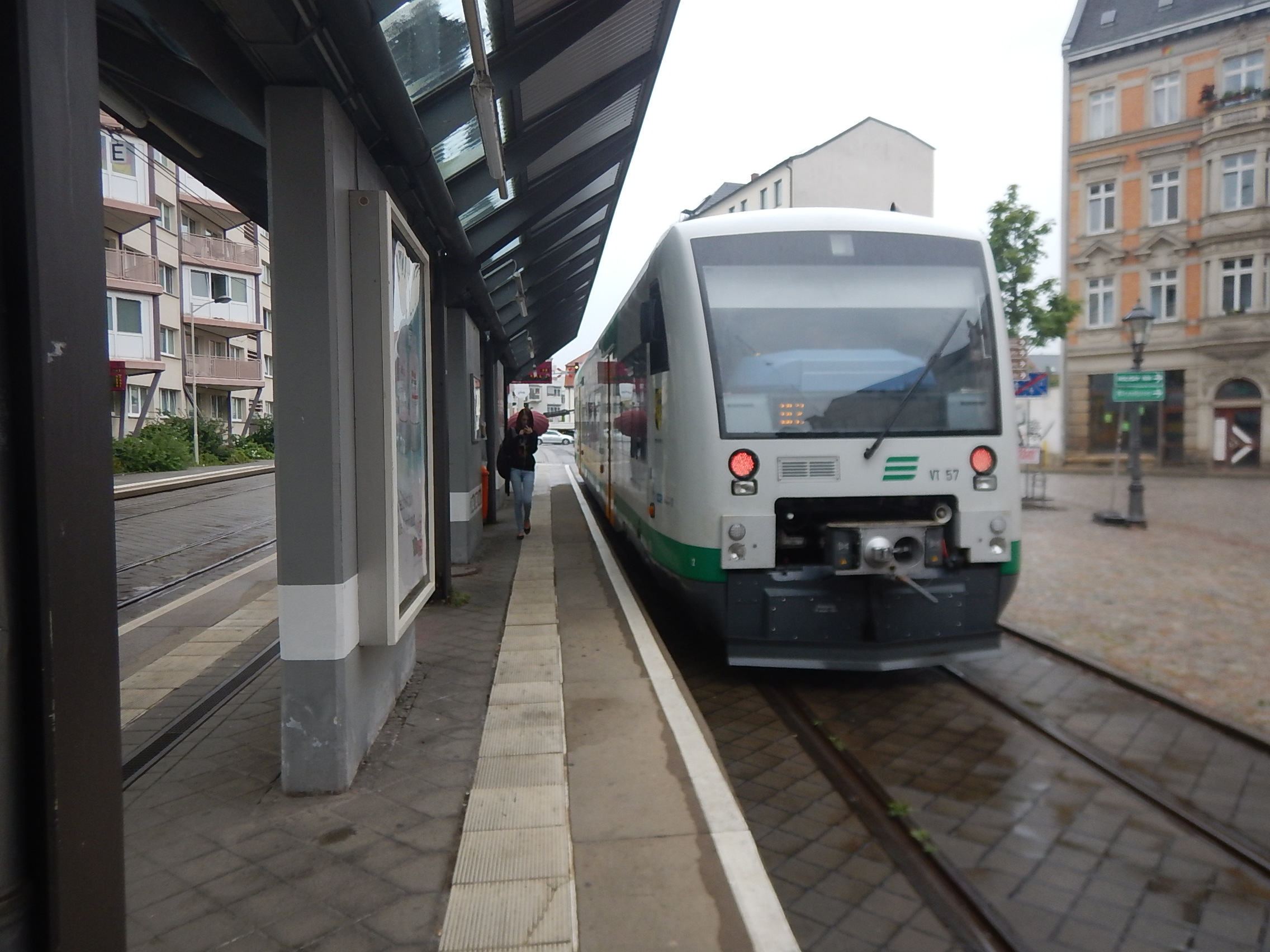
Note these points about the train and the infrastructure in the Zwickau Zentrum terminus of the Vogtlandbahn
- The train is more-or-less standard.
- The good driver visibility.
- The orange warning lights.
- The track laid like a tram track into the street.
- No electrification.
- The tram-style stop, designed to fit the trains using it.
- Pedestrians and cyclists cross the track in designated places after a good visual check for a train.
As this train goes about a hundred kilometres from this terminus, it still has visible couplings and other railway paraphernalia. These could probably be faired-in for safety and only exposed for recovery of a failed train.
Wikipedia calls this type of operation the Zwickau model, but I prefer to think of it as train-tram, as the train works as a train and then reverts to tram operation on the streets or perhaps through somewhere like parkland or moorland.
Note that in Zwickau, although the trains and the local trams have different gauges, they share tracks, using a unique three-rail track.
As there are no trams in Leigh and if they were, they would be the same gauge as the train, this is not a problem in Lancashire.
The Train
Any suitable and available self-powered train could be used.
- A diesel multiple unit like a Class 172 train.
- A fully developed Class 230 train
- A simple bi-mode train like a Class 319 Flex train.
- A train with onboard storage, perhaps charging using electrification in the bay platform at Kenyou Junction.
- One of Merseyrail’s new Stadler trains fitted with a pantograph and onboard energy storage.
I always think, that the train should be a quality unit to attract passengers.
Whatever train is chosen, the bay platform at Kenyon Junction station and all the other platforms on the branch must be sized to fit the train to ensure level access.
Conclusion
It is certainly possible to create a 2 tph service for this new branch line at an affordable cost using a standard train, working to the same rules as the Vogtlandbahn in Zwickau.
A Station At Leicester Forest East
Leicester Forest East is known to most, as a services on the M1, but as this Google Map shows, it is more than that.

Note the Park-and-Ride site at Meynell’s Gorse.
The Leicester and Burton-on-Trent Line runs past the North of the site.
Two Options For East Leeds Parkway Station
The proposed East Leeds Parkway station is a little bit more than your average parkway station.
The Wikipedia entry starts like this.
It will be served by trains from the west of Leeds which would normally terminate at Leeds station; by continuing eastwards to this station, it is hoped that extra capacity for through trains would be created at Leeds. The station would also form the first phase of electrifying the railway line to the east of Leeds. As a parkway station, the intention would be to allow for a park-and-ride service and the plans include parking for 500 cars.
It also adds these points about the station.
- The station will be on the Selby Line.
- It will have two long platforms for Inter City trains and a bay platform for terminating services.
- Proposed Ilkley/Bradford to London services could stop at the station.
- Most importantly, the Local Authorities seem to be prepared to back the station with funds.
Wikipedia also says there are two possible locations for the station.
This Google Map shows East Leeds.

Note the string of stations on the Selby Line running from West to East.
The original location was to put the parkway station at Micklefield, which is in the East, where the line crosses the A1M close to Micklefield station.
Newer plans suggest that the station should be in the region of Thorpe Park, which is close to the major interchange, to the west of where the Selby Line crosses the M1.
I suspect both locations have their merits, but that the Thorpe Park location may have a lot more space and a convenient brownfield site, as this Google Map shows.

The Selby Line runs from West to East at the top of the map.
The site is cetainly well-served by the roads in the area.
A Station For Leeds/Bradford Airport
When I wrote The Glasgow Airport Rail Link Will Be A Tram-Train, I put in a section about the rail link to Leeds/Bradford Airport.
I had just read this article on the BBC is entitled Leeds Bradford Airport railway station one of three planned.
This is said.
The proposed new station about one mile (1.6km) from the airport would also act as a park and ride for commuters to Leeds and Harrogate.
I wonder if the trains at Leeds/Bradford Airport will go the last mile?
Even if the link is not electrified, why can’t we imitate the train/trams in Zwickau, that I wrote about in Riding The Vogtlandbahn.
A diesel multiple unit like a Class 172 train, refurbished for Airport and Park-and-Ride duties could leave the Harrogate Line at the Park-and-Ride and then proceed under tram rules on a dedicated track to a tram-like station at the Airport.
The needed infrastructure would be simple, with no electrification and stations built like the simple affairs on the London Tramlink, with no bridges.
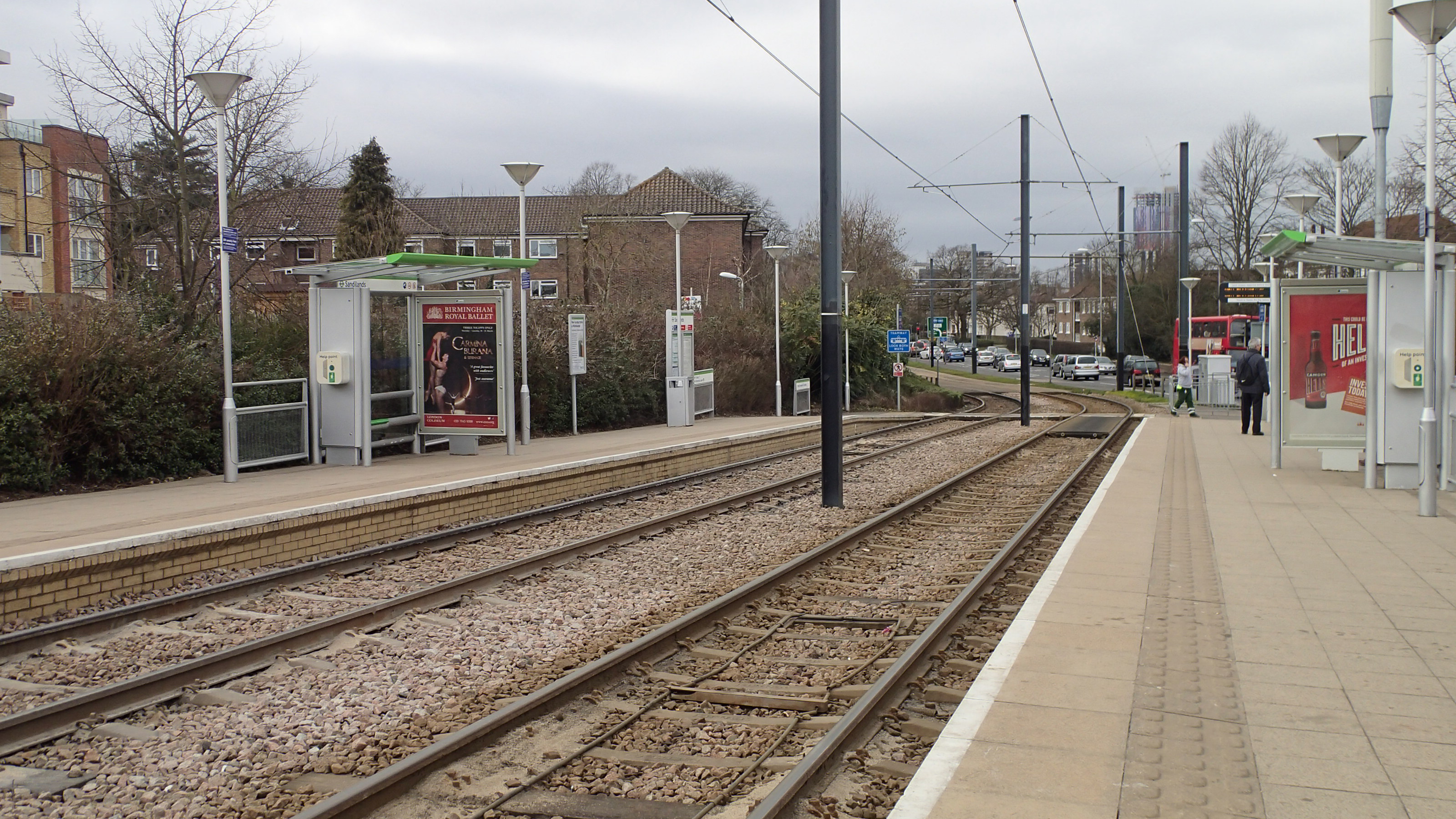
Why not?
Obviously, the ideal solution would be to electrify the Harrogate Line and have trains run into the airport using onboard energy storage.
My only worry about the concept is that of an Airport Link doubling as a Park-and-Ride.
It would need careful capacity planning and be designed so that more frequent and longer trains could be accommodated if the need for more capacity arose.
After all, we don’t know if Yorkshire will vote to exit England!
A Nation Of Shopkeepers
The phrase a nation of shopkeepers, has often been said about the British or the English in a derogatory manner by the French and others.
The Fort Kinnaird Retail Park in Edinburgh is according to Wikipedia, the second largest in the UK.
This Google Map shows the layout of Fort Kinnaird.
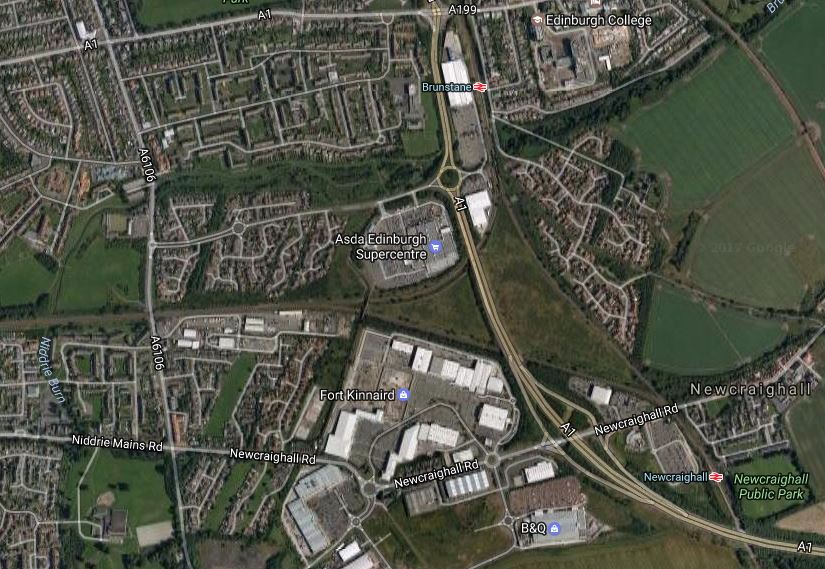
Note the two Borders Railway stations of Brunstane and Newcraighall to the East of the Park, where lines lead to to Waverley station and the Borders .respectively.
But there are other railways in the area.
- The East Coast Main Line runs North-South, just off the map to the East.
- Leading away to the West is the Edinburgh Suburban and Southside Junction Railway, which is now a freight-only link across the city.
- Links exist between the East Coast Main Line and the Junction Railway.
So it could be said that a lot of trains pass Fort Kinnaird.
Plans are in development to open up the Junction Railway to either heavy rail or trams.
Surely, it would be sensible if there were a station at Ford Kinnaird to tie it all together.
If I’m right, the Scots are surely a nation of rail-connected shopkeepers.
 The Anonymous Widower