Heat-Related Hospital Admissions And Deaths In London
I never saw my father ride on a deep Underground line, like the Northern or the Piccadilly, as he always said the air was terrible.
That was despite we lived within walking distance of Oakwood station and his print works was just a hundred metres from Wood Green Underground station.
But then he was a man, who always had a car, when I knew him, so I suppose he felt he better use it.
On one occasion, he took me to the Printing Industries Fair at Earl’s Court, which is just seventeen stops on the Piccadilly Line from Wood Green Underground station, as it still is today.
His route was as follows.
He left his MG Magnette outside the print works on Station Road.
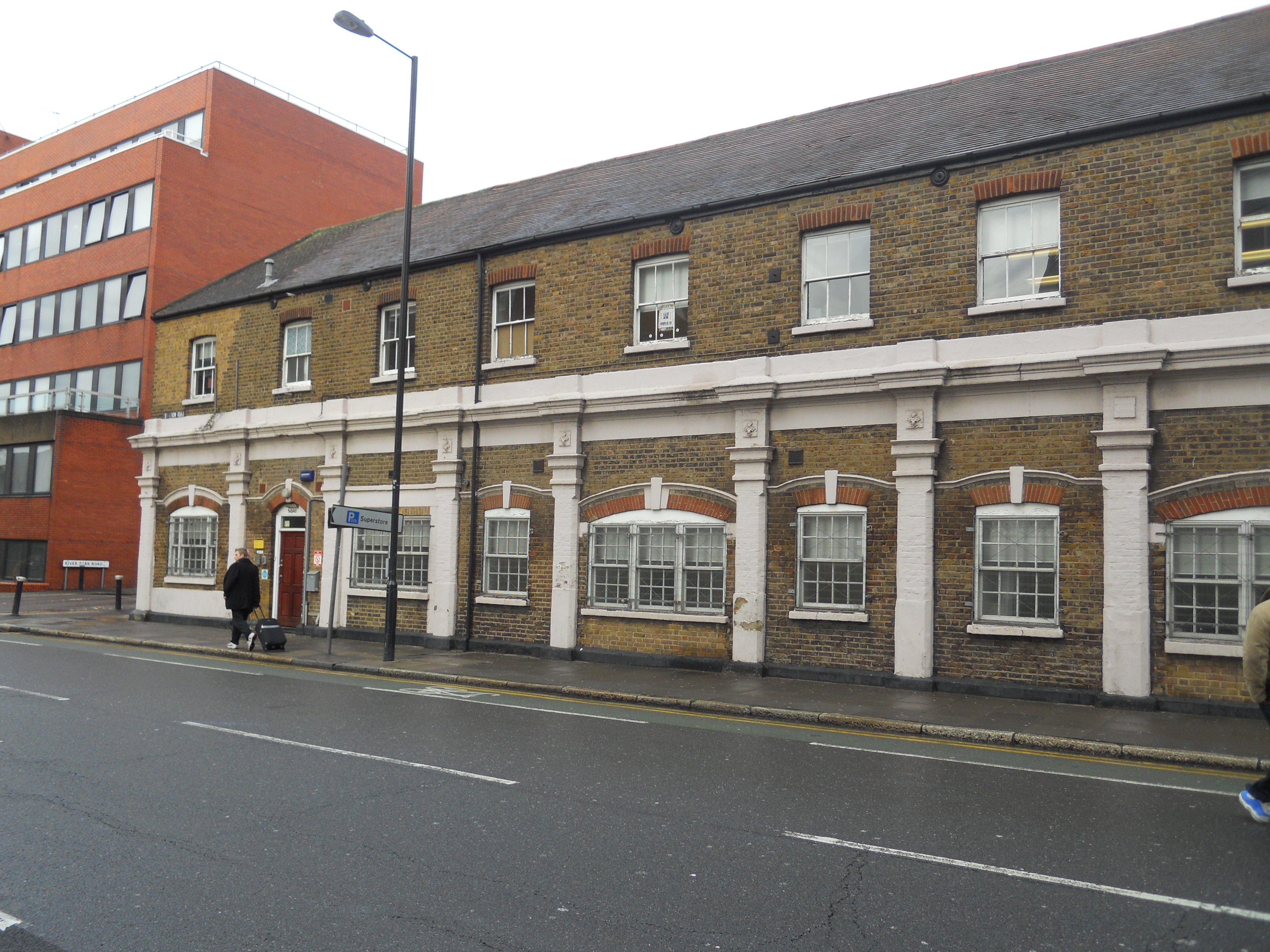
As this picture I took in 2012 shows, parking wasn’t too difficult.
We then walked up the hill to Wood Green station, which is now called Alexandra Palace, from where we took a steam-hauled local train into King’s Cross.
From King’s Cross, we took a Metropolitan Line train to Hammersmith station.
At Hammersmith, we changed stations and then took a train to Baron’s Court station for Earl’s Court Exhibition Centre.
Today, the route between Alexandra Palace and Earl’s Court stations is very different.
- You can change trains at Moorgate, Farringdon or King’s Cross.
- The oldest trains, that you’ll travel on would have been built in 2008.
- All trains will be fully air-conditioned.
I feel, that I could probably get my father to use this route. Although, I doubt it would happen, as he would have turned 120, at the start of this year.
The Growth Of Air Conditioning
Many cars since the 1980s have been airconditioned and now trains are following that route.
In London these are some dates, when trains were air-conditioned.
- Circle, District, Hammersmith & City and Metropolitan from 2008.
- Elisabeth Line from 2017.
- Gospel Oak and Barking from 2019.
- Greater Anglia from 2019/20.
- Lee Valley Lines from 2019.
- London Midland from 2023.
- London Overground from 2009.
- Southern from 2003.
- Southeastern from 2003.
- Thameslink from 2014.
Each year, more and more trains will be air-conditioned.
Conclusion
Has this growth of air-conditioning reduced the number of cases of heatstroke and other heat related admissions to hospitals?
£20 Electronic Ear-Clips Train The Body To Decrease Blood Pressure
The title of this post, is the same as that of this article in The Times.
These two paragraphs outline how the device is used.
A £20 device that delivers “tingling” electric pulses to the ears and can be worn at home could be almost twice as effective as drugs at reducing blood pressure, a neuroscientist has said.
Early trials suggest that wearing the small electrodes clipped to the ears for half an hour per day over two weeks while relaxing, watching TV or eating can reduce blood pressure by up to 15mm of mercury (mm Hg), compared with 8mm Hg to 10mm Hg for drugs such as Ace inhibitors or beta-blockers.
It appears the device has been developed at University College London.
Would I Use Electronic Ear-Clips To Control My Blood Pressure?
Soon after my wife died in 2007, my cholesterol levels rose.
The Ipswich Town Physiotherapist, who was a drinking partner before matches at Portman Road, recommended that I see his dietician.
She identified the following.
- My diet had changed since my my wife’s death, as I was choosing the food and doing the cooking.
- She suspected, that I wasn’t eating enough soluble fibre.
- I was eating enough fruit and vegetables.
Her solution was two-fold.
- Swap butter and other spreads for Benecol.
- Make sure, I eat, at least one small tin of baked beans every week.
Obviously, as I had been found to be coeliac in 1997, I should stay gluten-free.
I’ve seen other dieticians since and none have criticised, what she said.
No doctor has also ever said, that there is something wrong with my cholesterol.
After my stroke in 2010, I was put on Warfarin to thin my blood.
The only addition to my cocktail of drugs, was that after an unexplained collapse, I was put on blood pressure drugs.
So to return to the question I asked at the top of this section.
I may take six or seven drugs and vitamin tablets every day, but swapping one or two for half-an-hour with an electronic device wouldn’t be too much trouble.
That is, if I could tolerate the device, as I’m not keen on headphones.
But it could be an interesting alternative to taking pharmaceutical drugs.
How To Avoid Middle-Aged Spread: Go To Private School
The title of this post, is the same as that of this article in The Times.
This is the sub-heading.
In their mid-forties, those who were educated privately are more likely to be a healthy weight and have lower blood pressure, the research found
These two paragraphs give some more details.
People who go to private school or a Russell Group university are healthier and slimmer in middle age, research has shown.
In their mid-forties, those who were educated privately are more likely to be a healthy weight, have lower blood pressure and perform better on a cognitive task than those who went to state schools.
Note.
- I went to a good grammar school and a Russell Group University.
- So did my late wife!
- Both us were slim and fairly fit until our late fifties.
The research was from University College London.
Can I Please Have A Good Night’s Sleep?
In all my seventy-six years, I’ve never had trouble getting to sleep. I can sleep on trains and in planes and like my father, I have no trouble going to sleep in a hard upright chair.
But everything changed two weeks ago. I would go to bed at my usual 23:00 and perhaps drop off for a quarter if an hour and then start to lie there fully awake.
Normally, I now get up at about two-thirty and do the puzzles in The Times.
Welcome to the chewed-string lifestyle.
I’ve tried herbal sleeping tables, but they don’t help!
I went to see my GP and she made no suggestions.
Can I Please Have A Good Night’s Sleep?
Council Wants To Only Serve Vegan Food At Events
The title of this post, is the same as that of this article on the BBC.
This is the sub-heading.
A West Yorkshire council will only provide vegan food at its meetings and events if a new catering plan is approved.
These three paragraphs explain the policy.
Calderdale Council wants its menus to be entirely plant-based, with a preference for seasonal and non-processed foods.
The council adopted a climate change emergency policy in 2020, which included a commitment to using plant-based catering.
Senior councillors will be asked to recommend that the vegan food scheme is adopted at a meeting on 3 June.
I am coeliac and have to eat a gluten-free diet. Sometimes, I will eat meals marked as vegan, but only after I have checked they are gluten-free.
A couple of times in my life, I have been told that I will be fine with a restaurants’s organic vegan food.
These incidents weren’t in the UK and I quickly moved on to a restaurant, which served food, that I could eat.
But you don’t know, where these sort of restrictions will lead.
- Suppose a Muslim-dominated council, insisted that all women kept their hair covered.
- Or all butcher’s shops in the area were to be closed!
- Will the local hosputal have to serve vegan food?
Any restaurant or catering facility, must serve, what its patrons want or need to eat.
An Incident In My Childhood
I must have been about five or six.
All I can remember, is that she found me very red all over, grabbed me and took me upstairs where she put me in a bath.
I don’t think, she called the doctor.
I now wonder, if the incident was when a low-pressure went over and it drained the water out of my body.
Last night, there was rain in the night, and I’ve woken up with a pain in my hip. I shall have a bath soon.
Strangely, none of my three boys seemed to suffer similar incidents. So perhaps, they don’t have my strange leaky skin?
Last Night, I Had A Very Bad Night’s Sleep
I usually sleep very well. In fact like my father, if I need a nap, I can even take it on a hard upright chair.
He would have a nap like this every day in his printworks. It also looks like my 53 year old middle son has this ability to take a quick nap.
Last night, I slept very badly and woke about two, with a pain in my hip.
I nearly phoned 111, as I felt so rough. Luckily I didn’t!
I didn’t get much more sleep and eventually had perhaps a nap of an hour or so, before I gave up and got out of bed to do a few puzzles on the Internet.
After a large mug of tea, the pain in my hip receded.
My now-retired GP, reckoned I suffered when the atmospheric pressure was low.
So, did an area of low pressure pass through last night and suck water out of my body?
After a good bath, I certainly feel better now, with no pain in my hip.
In My Strange Skin, I describe an incident, where weather sucked water out of my body!
It’s Now Ten O’Clock
I’ve survived the day and managed to take a train to Reading and back.
I had intended to take pictures in Oxford, but when I got to Reading, it was raining hard and I turned back.
Should All Hospital In-Patients Be Tested For Coeliac Disease?
I went to a medical lecture tonight and I came home on the tube with a cardiologist. As we chatted, the title of this post occurred to me.
Consider.
- A diagnosed coeliac on a gluten-free diet tends to have a stronger immune system.
- I am a diagnosed coeliac on a gluten-free diet.
- An undiagnosed coeliac tends to have a poor immune system.
- It would certainly mean, you got the right diet in hospital.
I also have some further more detailed thoughts.
My Son, George
NHS advice on those, who need to be tested for coeliac disease includes this sentence.
Testing is also recommended if you have a first-degree relative (parent, sibling or child) with coeliac disease.
When I was diagnosed as a coeliac in 1997, I told my three sons to get tested. None did!
A month or so before he did, George ended up in Trafford Park Hospital.
If they had tested him, would they have picked up his pancreatic cancer earlier?
Probably not, but it’s a question that must be asked.
Research From The University Of Padua
This paper on the US National Library of Medicine, which is from the University of Padua in Italy.
The University followed a group of 138 patients with coeliac disease, who had been on a gluten-free diet for at least six years, through the first wave of the Covid-19 pandemic in Padua.
This sentence, sums up the study.
In this analysis we report a real life “snapshot” of a cohort of CeD patients during the SARS-CoV-2 outbreak in Italy, all followed in one tertiary centre in a red area of Northern Italy. Our data show, in accordance with Emmi et al., the absolute absence of COVID-19 diagnosis in our population, although 18 subjects experienced flu-like symptoms with only one having undergone naso-pharyngeal swab.
It says that no test subject caught Covid-19, in an admittedly smallish number of patients.ost
But it reinforces my call for more research into whether if you are a diagnosed coeliac on a long-term gluten-free diet, you have an immune system, that gives you a degree of protection from the Covids.
Conditions Linked To Coeliac Disease
This page on the Coeliac UK web site is entitled Conditions Linked To Coeliac Disease, has the following subsections.
- Autoimmune Disease
- Type 1 Diabetes
- Autoimmune Thyroid Disease
- Down’s and Turner Syndrome
- Osteoporosis
- Lactose Intolerance
- Lymphoma And Small Bowel Cancer
- Autism
- Fertility
Some of the keywords are linked to other pages on the Coeliac UK web site.
Testing For Coeliac Disease
Testing for coeliac disease is not an expensive process and just involves a simple blood test, where the blood goes to the lab.
My now-retired GP reckoned in nearly all cases, the test is decisive.
Dr. David Owen And The NHS Infected Blood Scandal
I am writing this post, mainly using Dr. David Owen’s Wikipedia entry.
This paragraph describes Dr. Owen’s early days as a minister in Harold Wilson’s first government and the early days of Harold Wilson’s second government
From 1968 to 1970, Owen served as Parliamentary Under Secretary of State for the Navy in Harold Wilson’s first government. After Labour’s defeat in the 1970 general election, he became the party’s Junior Defence Spokesman until 1972 when he resigned with Roy Jenkins over Labour’s opposition to the European Community. On Labour’s return to government in March 1974, he became Parliamentary Under-Secretary for Health before being promoted to Minister of State for Health in July 1974.
There is also this paragraph describing his involvement as Minister of State for Health in the NHS Infected Blood Scandal.
As Minister of State for Health he encouraged Britain to become “self-sufficient” in blood products such as Factor VIII, a recommendation also promoted by the World Health Organisation. This was principally due to the risk of Hepatitis infection from high-risk blood donors overseas who were often paid and from “skid-row” locations. David Owen has been outspoken that his policy of “Self-Sufficiency” was not put into place (although he was, himself, Minister of Health) and gave rise to the Tainted Blood Scandal which saw 5,000 British Haemophiliacs infected with Hepatitis C, 1,200 of those were also infected with HIV. It was later described in the House of Lords as “the worst treatment disaster in the history of the National Health Service”.
So why did Dr. Owen’s and the World Health Organisation’s view of making the UK “self-sufficient” in blood products such as Factor VIII not prevail?
Did Sir Brian Langstaff and his team go through minutes of cabinet meetings, when Dr. David Owen was Minister of State for Health?
Did Harold Wilson or the Chancellor; Denis Healey overrule David Owen’s view, as they needed what little money we had for other purposes?
I must admit, that if I had been in Dr. Owen’s position in 1974 and the Government were proposing to something against, my engineering experience, I would have resigned. Note that Dr. Owen did resign in 1972, over Labour’s opposition to the European Community.
If any doctors are reading this, who were qualified at the time, I’d like to hear their views.
Conclusion
One way to ascertain the truth, would be to charge Dr. Owen with something serious and led the Law decide.
Thoughts On The NHS Infected Blood Scandal
In the early 1970s, I was working with the Chief Management Accountant of a retail bank, writing a computer system to analyse and compare the performance and costs of all their branches.
We used scatter diagrams and other graphical techniques to show all the branches on single sheets produced by line printers on a powerful time-shared computer. It would be so much easier today.
Any branch not following the rules was often found sitting alone away from the mass of branches on the graphs.
I remember one branch had costs, that were much higher than expected. It turned out it was the Stevenage Branch, where the premises were rented rather than owned freehold.
Expanding The System To Other Industries
The Accountant, who had also been Chief Accountant of a FTSE 500 company, felt that the techniques we had developed had other applications in the management and auditing of large companies and organisations.
Sadly my partner in crime, died of cancer and I went on to other things.
From my own generally good family experiences of the NHS, I feel that this sort of analysis used rigorously could give early warning of some of the scandals we’ve seen in the NHS.
Around the turn of the century, I used similar techniques to improve the manufacturing quality in a diesel engine factory.
Conclusion
Perhaps we need an independent Office of NHS Responsibility?

