I Had My Fifth Endoscopy Yesterday And The Fourth Without A Sedative!
After two at Addenbrooke’s in Cambridge, this was my third endoscopy at Homerton in East London.
The most difficult part was not eating for eight hours before and only drinking water for four hours before.
I have mild anaemia and they were looking for cancer.
Luckily for me, they didn’t find any.
I did however lose nearly a kilo in weight.
Was that the diet or the long walk to the bus, which took me home?
Endoscopies At Homerton
On their information, they sent me, Homerton said they prefer to do endoscopies without a sedative.
I suppose it is more efficient, as Addenbrooke’s told me nearly thirty years ago.
Conclusion
I am certainly not worried about endoscopies and if your doctor says you have should one, make sure they talk you through it sensibly.
Years ago, I was on holiday in Capri and met a party of about six American gastroenterologists, who were horrified, that I had had two endoscopies without anaesthetic.
But then, I think they were more worried about the fees, that the anaesthetist didn’t get.
When Homerton investigated my gallstones, I said I’d be happy to undergo the procedure without a sedative, although, the specialist private surgeon, doing the procedure for the NHS, was accompanied by an anaesthetist. In the end the anaesthetist just stood by, in case he was needed and the surgeon did his first endoscopy without a sedative. He was very pleased with everyone’s performance including mine.
Liver From Ocado
I like to eat liver, as it supplements my B12 injections.
So I was pleased to see that Ocado stock Marks and Spencer’s Liver and Bacon meal-for-one.


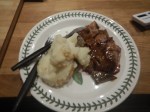
Note, that I cooked it in the oven, which is recommended.
I enjoyed it and I will cook it more often, provided Ocado keep delivering it.
Gluten And Heart Disease
Type “Gluten And Heart Disease” into Dr. Google and you find two major peer-reviewed studies.
This study is entitled Effects Of A Gluten-Reduced Or Gluten-Free Diet For The Primary Prevention Of Cardiovascular Disease.
These are the authors’ conclusions.
Very low-certainty evidence suggested that it is unclear whether gluten intake is associated with all-cause mortality. Our findings also indicate that low-certainty evidence may show little or no association between gluten intake and cardiovascular mortality and non-fatal myocardial infarction.
There would appear to be no strong link, between gluten and heart disease.
This British study is entitled Long Term Gluten Consumption In Adults Without Celiac Disease And Risk Of Coronary Heart Disease: Prospective Cohort Study.
These were the authors’ conclusions.
In these two large, prospective cohorts, the consumption of foods containing gluten was not significantly associated with risk of coronary heart disease. Although people with and without celiac disease may avoid gluten owing to a symptomatic response to this dietary protein, these findings do not support the promotion of a gluten restricted diet with a goal of reducing coronary heart disease risk. In addition, the avoidance of dietary gluten may result in a low intake of whole grains, which are associated with cardiovascular benefits. The promotion of gluten-free diets for the purpose of coronary heart disease prevention among asymptomatic people without celiac disease should not be recommended.
As before there would appear to be no strong link between gluten and heart disease.
To me, this is the most important sentence.
In addition, the avoidance of dietary gluten may result in a low intake of whole grains, which are associated with cardiovascular benefits.
So can we do something about it?
Enter The First Great Ethiopian Marathon Runner
I used to run a bit (badly) at school and my three heroes were Chris Brasher, Bruce Tulloh and Abebe Bikula.
The Ethiopian; Abebe Bikula was a double Olympic marathon champion.
- In 1960, he won in Rome, running barefoot.
- In 1964, he won in Tokyo, a few days after leaving hospital after having his appendix removed.
Both wins were in world record time.
Since 1964, three Olympic men’s marathons have been won by Ethiopians.
Ethiopian women have also won two gold and one bronze medals since the women’s marathon was inaugurated in 1984.
And then there’s the Kenyans, who’ve won a hatful of marathon medals.
Their competence is generally put down to living at altitude and I wouldn’t disagree with that.
My Experience Of Kenya
Soon after C died, I went on holiday to Kenya.
In one part of the holiday, I was riding horses in the Masai Mara and in the other I was glamping.
The second part was upmarket and one evening the chef approached me to find out more about my gluten-free diet. At breakfast next day, he presented me with a couple of rolls made from a local flour, which was probably something like millet or perhaps, teff from Ethiopia.
I had no adverse reaction. and he said, I could eat like a true African, as Western flour had no place in the local diet.
Conclusion
If we are worried about the lack of whole grains in gluten-free food, then perhaps we should add gluten-free whole grains from East Africa.
As a manager in a Marks and Spencer store, told me that they used Ethiopian flour in their gluten-free breads, I suspect this is already happening.
Gluten-Free Egg Sandwiches From Boots
This morning, I had to pick up a prescription from Boots on Moorgate in London.
I use them, as they are by the 141 bus stop, that I can use to get home, so I pass their outlet regularly throughout the week.
After picking up my prescription, I looked at their small food counter. I was actually looking for milk, as I am out and nowhere on the West side of Moorgate sells small one pint bottles.
They didn’t have any, but they did have two flavours of gluten-free sandwiches; cheese and egg.
So I bought a pack of the egg sandwiches.
These pictures show the one, I have just eaten for lunch, with a beer and a banana.

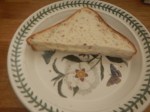
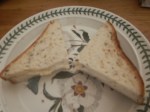

Note.
- In the last picture, the Adnams 0.5 % Ghost Ship can, is marked with the gluten-free symbol.
- The only allergens noted on the sandwich packet are egg and mustard.
- The bread looks like it could be Genius, which is a brand of gluten-free bread, that I trust.
- The packaging can be recycled.
The sandwich was excellent, but then on past experience at the Tate Gallery and Blackburn Cathedral cafe, gluten-free egg sandwiches are a good combination of flavours.
So next time, I’m hungry, I’ll march into Boots.
Was I One Of The First To Have My Temperature Measured By A Thermometer Reading The Radiation From My Ear?
Last week, a doctor read my body temperature, by using an electronic thermometer, that read the temperature inside my ear.
But it wasn’t the first time!
That must have been in 1968 or 1969, when I was working at ICI in Runcorn.
ICI had a problem, in that they needed to read the temperature of chemical reaction vessels.
- Temperatures could be higher, than 1,000 °C.
- Some mixtures could be highly corrosive.
- Safety needed to be as high as possible.
My colleague; John Baxendale was assigned the problem.
John came up with a solution based on black bodies and their unique black body radiation.
These two paragraphs, from the Wikipedia entry for black body, explain the principle.
A black body or is an idealised physical body that absorbs all incident electromagnetic radiation, regardless of frequency or angle of incidence. The radiation emitted by a black body in thermal equilibrium with its environment is called black-body radiation. The name “black body” is given because it absorbs all colours of light. In contrast, a white body is one with a “rough surface that reflects all incident rays completely and uniformly in all directions.”
A black body in thermal equilibrium (that is, at a constant temperature) emits electromagnetic black-body radiation. The radiation is emitted according to Planck’s law, meaning that it has a spectrum that is determined by the temperature alone, not by the body’s shape or composition.
Note, that I have very mildly edited, what Wikipedia says, to the King’s English.
John had developed some clever electronics, that read the spectrum of the radiation and by decoding the spectrum, he was able to calculate the temperature.
Early on in the testing, John found that nearly all of us, have two black bodies on the side of our heads; our ears, so he could measure the temperature inside them.
How I Was Imprisoned In A Pizza Restaurant And Driven Home By The Metropolitan Police
At lunchtime today, I received a phone call, saying that my GP’s surgery could see me at 16:30 this afternoon, to discuss my lack of sleep, arthritis and various strains and pains.
My middle son; Henry had expressed a desire to be at such an appointment, so I said, that if he could chauffeur me to the GP, he could come along.
His diary co-operated and he duly arrived outside my house at 16:00.By the time of the GP’s appointment, we had parked conveniently outside the surgery and we had been ushered into the GP’s consulting room.
We had a good meeting and by just after five, we had broken up and agreed a comprehensive plan for the diagnosis of my problems.
Henry had three problems of his own.
- He had legal work to do for the morning.
- He needed to do some bits of shopping.
- He also said, that he was feeling rather hungry.
- I too was hungry and needed to do some shopping.
So I suggested we drive to Southgate Road and see if we could get a pizza in Sweet Thursday.
- They do gluten-free pizzas, so I would have no dietary worries.
- In previous meals, I have found the quality excellent.
- There are shops nearby, where we could shop, if we needed.
As I approached the restaurant, I decided we had made the right decision, as there was a parking space about twenty metres from the restaurant.
We both had similar meals.
- Ham and mushroom pizzas, although mine was gluten-free.
- I drunk a zero-alcohol Lucky Saint, whilst Henry had a Diet-Coke.
- We both finished off, with two scoops of appropriate ice cream.
It was only, when we had paid and tried to leave that we got a very big surprise.
Parked in front of the restaurant with its disabled ramp extended, like some beached airliner was a 141 bus, that was empty of passengers.
- There was broken glass at the front of the bus.
- Was this evidence, that the bus had hit something or somebody?
- The police had strung white tape everywhere.
- There were half-a-dozen police cars and ambulances blocking Southgate Road.
Henry’s car wouldn’t be going anywhere for some time, as it was blocked in by two ambulances and a police car with flashing blue lights.
- So, Henry and I each had a coffee, to pass the time.
- We also made friends with others trapped in the restaurant.
- Henry also obtained information from the police, that no-one would be moving, until it was known that no-one would be moving until the full state of the injuries of the person hit by the bus was known.
So Henry and I just sat there with several others on the hard chairs in front of the restaurant.
In the end, for me, it was over very quickly.
- I live about a kilometre North of the incident.
- Some were walking from the incident to the Balls Pond Road to get a bus.
- I am fairly sure, Henry had told the police, that it was far too far for me to walk with my arthritic hip.
I was put in the back of a police car and ferried home, at about 21:45.
Thanks to the Metropolitan Police.
I have some further thoughts.
Do I Drink Enough?
Since lunchtime, I have drunk the following.
- 4 x 330 ml – Adnams Ghost Ship 0.5 % Beer
- 1 x 330 ml – Lucky Saint 0.5 % Beer
- 300 ml – Assorted water and juices.
- 1 cup – coffee.
Is that enough?
I certainly slept better last night!
How To Protect The UK Population From Future Pandemics
The Times today has an article, which is entitled Flu Jab: Single-Shot Vaccine ‘Within Five Years’ Could Stop Future Pandemic.
This is the introductory paragraph of The Times article.
A single-shot vaccine against flu that would provide a lifetime of protection even against future mutations could be available in “five years or less”, scientists have said after making a breakthrough.
The article is very much a must-read, but I believe if used alongside a simple proven medical test, it could be even more effective.
Since 1997, when I was diagnosed as coeliac and started eating gluten-free food exclusively, I have never had a dose of flu.
I may have had one very mild dose of Covid-19, but I have never had a serious dose.
Research At The University Of Padua
This partial immunity to Covid-19 has been shown in a peer-reviewed scientific paper, by the University of Padua in Italy.
I discuss the Padua research in Risk Of COVID-19 In Celiac Disease Patients.
Mathematical Modelling Of Pandemics
As a control engineer, mathematical modeller and statistician, I believe that our herd immunity to future pandemics could be increased, if all new entries to the UK population, like babies and migrants, were tested for coeliac disease.
These days the coeliac test is just a blood test, that costs just a few pounds and I believe that a high percentage of gluten-free coeliacs in the UK population, because of their low susceptibility to flu pandemics, would slow the spread of the pandemic.
In a nuclear reactor non-radioactive carbon rods are often used to control the speed of the reaction.
I believe that non-susceptible coeliacs on gluten-free diets would perform the same function in the UK population.
Should Diagnosed Coeliacs Be Forced To Be Gluten-Free?
I would not force coeliacs to go gluten-free.
They would have to face up to the consequences, if they didn’t.
My son was an undiagnosed coeliac, who refused to get tested.
He died at 37 of pancreatic cancer, as his immune system was useless.
Coeliac disease and a gluten-free diet is a good wingman, but undiagnosed it can kill you!
Why Should Migrants Be Tested?
I hope they are, as some might have something nasty.
But if everyone was tested for a wide range of health and genetic conditions, could it act as a deterrent to come to the UK?
Oxford And Cambridge Compared On COVID-19
In Oxford And Cambridge Compared On COVID-19, I compared the COVID-19 rates of the two University cities.
- Oxford and Cambridge are very similar-sized cities and both ae surrounded by similar counties and countryside.
- During the pandemic, Oxford had a much higher COVID-19 rate than Cambridge.
From my experiences and observations in Cambridge, I believe that the city has a high level of coeliacs.
Why Does Cambridge Have A High Level Of Coeliacs?
I doubt, it is due to the genetics of the local population, as if it was, my coeliac disease would have been picked up earlier.
The two most likely causes are.
- Someone in the Health Authority decided to have a Whack-a-Coeliac policy.
- Addenbrooke’s Hospital, in conjunction with Cambridge University and the Sanger Centre were testing the accuracy of the newly-develop genetic test for coeliac disease.
Note.
- Both routes would have needed a streamlined endoscopy unit to test all those thought to be coeliac.
- I was tested twice in such a unit to prove that I was coeliac, after the genetic test showed, I probably was.
- Fit, younger patients were pushed to have the endoscopy without a sedative, which cut the number and cost of recovery beds and staff.
- My endoscopies were performed without a sedative, by a doctor working alone.
- I was able to drive home, a few minutes after the procedure.
It was a classic case of applying good old-fashioned time-and-motion to a test that would have to be applied to a large number of patients.
If Cambridge’s army of coeliacs helped the city take the edge of the pandemic, what would a Whack-a-Coeliac policy, do for other cities?
A Very Bad Night’s Sleep
Last night, I must have woke several times in the night, before I finally gave up at about three-thirty and got up and started doing the puzzles on the Internet, and having some mugs of tea.
At four I went back to bed and was able to grab perhaps thirty minutes of sleep.
But my body hurt all over with a vengeance.
- There was pain in the back of my left hand.
- My toes hurt badly.
- My right hip was painful.
- All my skin felt very dry.
So at five, I decided to get up and have the cure-all remedy, which is a deep hot bath.
It certainly worked and I felt a lot better,
After the bath, I got back in bed, and although I didn’t sleep, I rose and left the house soon after nine to get my gluten-free breakfast in Leon on Moorgate, with added tea and orange juice.
As I left the house, I noticed that one of the upstairs windows was open, so I had to go back and shut it.
As I never open this window, I thought it must have been the cleaners, who’d left it open. Especially, as it had happened before, a couple of weeks ago.
But then, I realised what had happened.
- The window hadn’t been properly secured.
- Last night, a storm with a low-pressure area had gone through..
- The pressure had just been low enough to pop the window open.
- The low-pressure had then just sucked the water out of my body.
My hot bath had put the water back in, the way, that it had come out.
After breakfast and picking up a prescription from Boots, I took a bus home.
On arriving home, I needed to have a poo, but was unable to go, as I was just too constipated.
After a laxative and several drinks, that problem was cured.
Conclusion
Were all my problems today, down to the fact that the weather stole my body’s water and I didn’t drink enough to put it all back?
Appropriate Nutrient Supplementation In Coeliac Disease
The title of this post, is the same as that of this article on PubMed.
I choose this article, as the abstract gave a good list of related problems to coeliac disease.
This is the abstract.
Reduced levels of iron, folate, vitamin B12, vitamin D, zinc, and magnesium are common in untreated celiac disease (CD) patients probably due to loss of brush border proteins and enzymes needed for the absorption of these nutrients. In the majority of patients, removal of gluten from the diet leads to histological recovery and normalization of iron, vitamin, and mineral levels. Iron deficiency anemia is the most common extra-intestinal sign of CD and usually resolves with adherence to a gluten-free diet. However, deficiencies of both folate and vitamin B12 may persist in some patients on a gluten-free diet, thus requiring vitamin supplementation to improve subjective health status. Similarly, exclusion of gluten from the diet does not always normalize bone mineral density; in these cases, supplementation of vitamin D and calcium is recommended. Resolution of mucosal inflammation may not be sufficient to abrogate magnesium deficiency. Since gluten-free cereal products have a lower magnesium content as compared with gluten-containing counterparts, a magnesium-enriched diet should be encouraged in CD patients. In this article we discuss the frequency and clinical relevance of nutrient deficiency in CD and whether and when nutrient supplementation is needed.
I am coeliac and was diagnosed at fifty, by by a mixture of the suspicions of an elderly locum, the very modern genetic test and the classic endoscopic test , in the last few years of the twentieth century.
I have to admit, that being diagnosed was a bit of a surprise.
Are Bodies Cleverer Than We Think?
Because, I had a serious stroke thirteen years ago, I am on Warfarin for life to thin my blood, so that I don’t have another stroke.
INR is short for International Normalized Ratio, which diverts on Wikipedia to the Wikipedia entry for Prothrombin Time, where these is the first two paragraphs.
The prothrombin time (PT) – along with its derived measures of prothrombin ratio (PR) and international normalized ratio (INR) – is an assay for evaluating the extrinsic pathway and common pathway of coagulation. This blood test is also called protime INR and PT/INR. They are used to determine the clotting tendency of blood, in such things as the measure of warfarin dosage, liver damage, and vitamin K status. PT measures the following coagulation factors: I (fibrinogen), II (prothrombin), V (proaccelerin), VII (proconvertin), and X (Stuart–Prower factor).
PT is often used in conjunction with the activated partial thromboplastin time (aPTT) which measures the intrinsic pathway and common pathway of coagulation.
That is very technical and complicated, but what does it mean practically?
Those on Warfarin to thin their blood are generally supposed to keep their INR between 2 and 3.
I test the INR myself with a Coaguchek meter from Roche and have done so for nearly ten years.
Every, so often, I discuss the level of Warfarin with my GP and we adjust the level accordingly.
Typically, NHS patients on Warfarin have their INR checked every few weeks.
But as I am a Graduate Control Engineer, who has written control strategies for chemical plants, I feel this checking every few weeks, is not enough.
At times, I have checked at a higher frequency.
Four times, I have had minor operations.With the first operation, I agreed with the surgeon, that I would lower my INR to 2.1 for the operation and raise it back to 2.5 after the operation.
It all went well and I repeated the exercise for the three other minor operations.
I have checked daily since about the beginning of April, before which, I generally tested on Mondays and Thursdays.
There were two reasons for the change of frequency.
- Regular storms seemed to roll in and for some reason, they tended to lower my INR.
- I also wrote Do Thunderstorms Cause Strokes?, after reading a paper from the United States about the relationship between thunderstorms and strokes.
So I took the prudent decision to test my INR daily.
Then on the 30th May, disaster struck.
My Coaguchek meter found out it had the wrong firmware and Roche implored me to change it.
But I am not a hardware person, so I was left unable to check my INR.
Luckily, I remembered a story from the 1960s about one of ICI’s chemical plants.
This plant was one of the first fully-digitally controlled plants controlled by an IBM 1800 computer.
It also ran 24 hours a day, seven days week.
So in the middle of the night, the plant operators got out all the computer printouts, which showed how the computer had set all the valves and controllers.
One-by-one they reset all the controls on the plant to the settings that the computer had used for the last few days.
Using, this computer-assisted mode the plant was kept running, until engineers could fix the computer.
On the 30th May, my INR was a little bit high at 2.9 and I was using a dosage of Warfarin of 4 mg. one day and 3.5 mg. the next.
The strange dosage was one, that I know from experiment over time produces an INR of 2.5.
My actual average Warfarin dose was 3.73 over the last thirty days and my INR, as measured most days was 2.6 over the same period.
So, I did what the engineers did on the chemical plant, kept calm and carried on.
Yesterday my son fixed the Coaguchek meter and I was able to take my first reading for 17 days. It was 2.7 and only 0.1 higher than the 30-day average on the 30th May.
I had successfully jumped the gap in the readings.
Conclusion
Most systems have an equilibrium. Make sure you know it.

