Tottenham Hale Station – 9th September 2019
These pictures show the progress on the Underground part of the station.
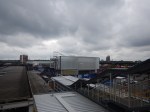
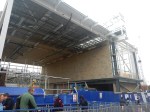
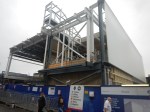
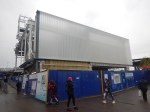
It will be a big glazed structure.
There was talk of the station being completed this year, but I’d rate it for Sprint 2020.
Landscaping Outside Highbury & Islington Station Is Nearing Completion
I took these pictures outside Highbury & Islington station, this afternoon.

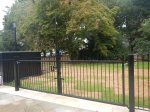
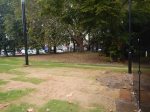


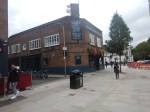


It does appear that this long project is nearing completion.
At least there’s now a large space in front of the station, that leads up towards Upper Street.
Platform 2 At Tottenham Hale Station Was Ready, But The Signs Weren’t
Trains were passing through Platform 2 at Tottenham Hale station today, which obviously was ready and had been signed off by all the relevant authorities.
But look at this picture of the station sign on the platform.
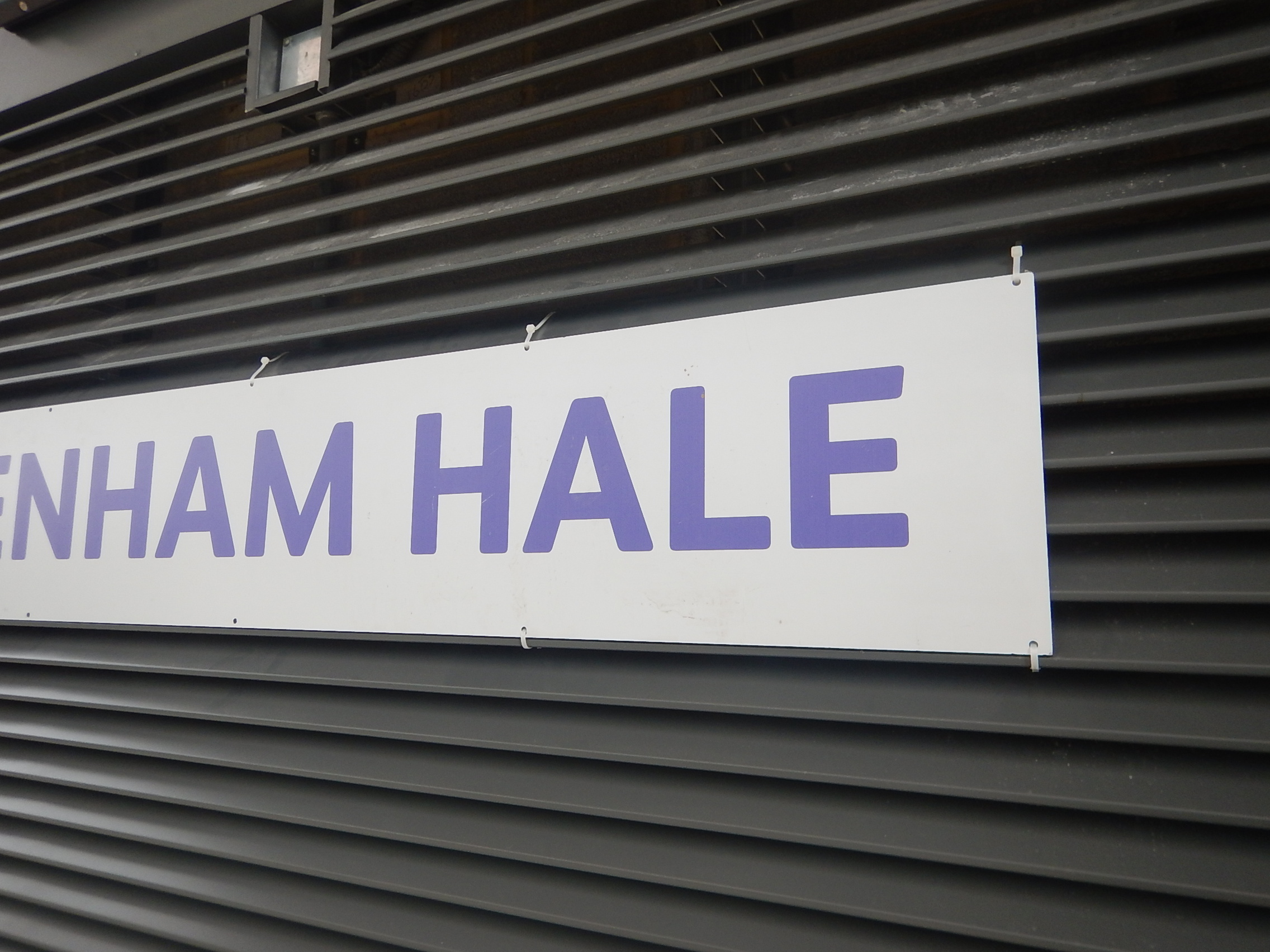
Had someone forgotten to order the signs?
Could A Fourth Track Be Squeezed In At Tottenham Hale Station?
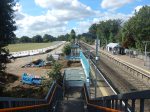
Eventually, when Crossrail 2 is built, there will be four tracks through Tottenham Hale station. It has been anticipated by Network Rail as they have numbered the platforms at the station 2, 3 and 4.
These pictures were taken from the island platform 2/3.
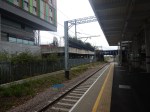
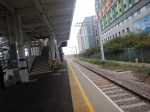
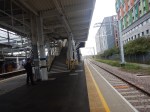
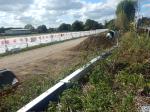
It does appear that another track could be squeezed in, on the other side of the electrification gantries.
Crossrail 2 Four-Tracking
In Crossrail 2 Question Time, I describe a meeting with two Crossrail 2 engineers.
I was told that four tracks on the West Anglia Main Line would be tricky and that the slow Crossrail 2 tracks would be on the East side, with the fast tracks on the West.
In the post, I state that I think, it could be easier to have the Crossrail 2 tracks on the West side, with the Fast tracks on the East.
- If the Crossrail 2 tracks are on the East side, then, this means that a platform will be needed on the fourth track at Tottenham Hale station.
- On the other hand, if the fourth track was a fast line, it might be possible to build it without a platform, which would save space.
Each layout has its benefits and disadvantages.
If nothing else, this illustrates some of the engineering problems of Crossrail.
The Ferry Lane Bridge
One of my pictures, shows the Ferry Lane bridge in the distance. This is the bridge in its glory in close-up.
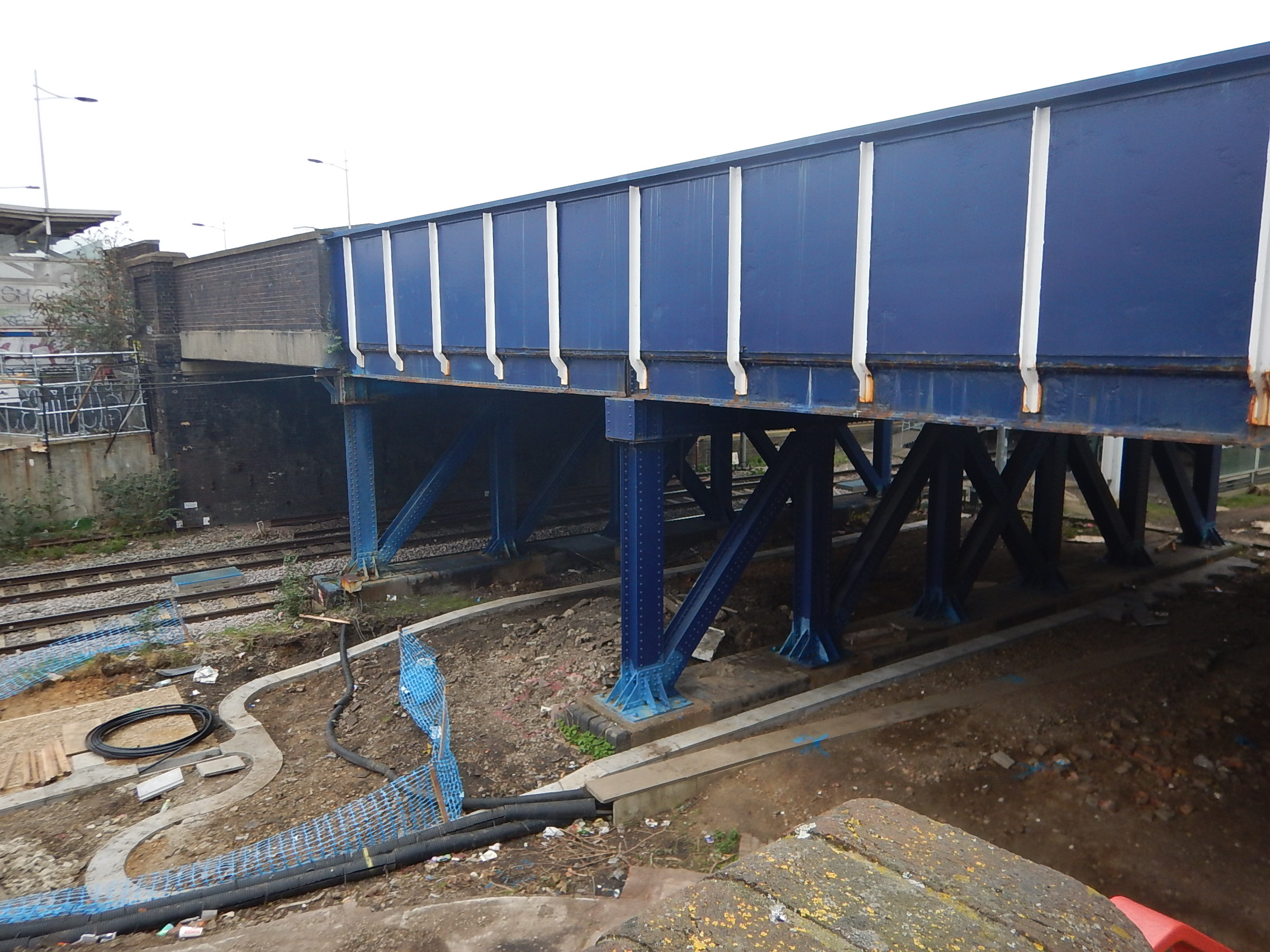
I feel it will need to be replaced before a fourth track is built.
- Rebuilding the bridge will cause massive disruption to the area.
- It will have a very large cost.
Does this explain why the STAR project to increase capacity on the West Anglia Main Line was only a three-track solution?
At some point in the next few years, after all the current transport improvements are completed and before the construction of Crossrail 2 is started, this bridge will be replaced.
Hopefully, someone will come up with a way of replacing the bridge, that doesn’t cause too much disruption.
Conclusion
As the Crossrail 2 engineer said, four-tracking of the West Anglia Main Line will be tricky.
Do We Need More Bikes Like This?
When I moved back to London in 2010, bikes like this were rare!
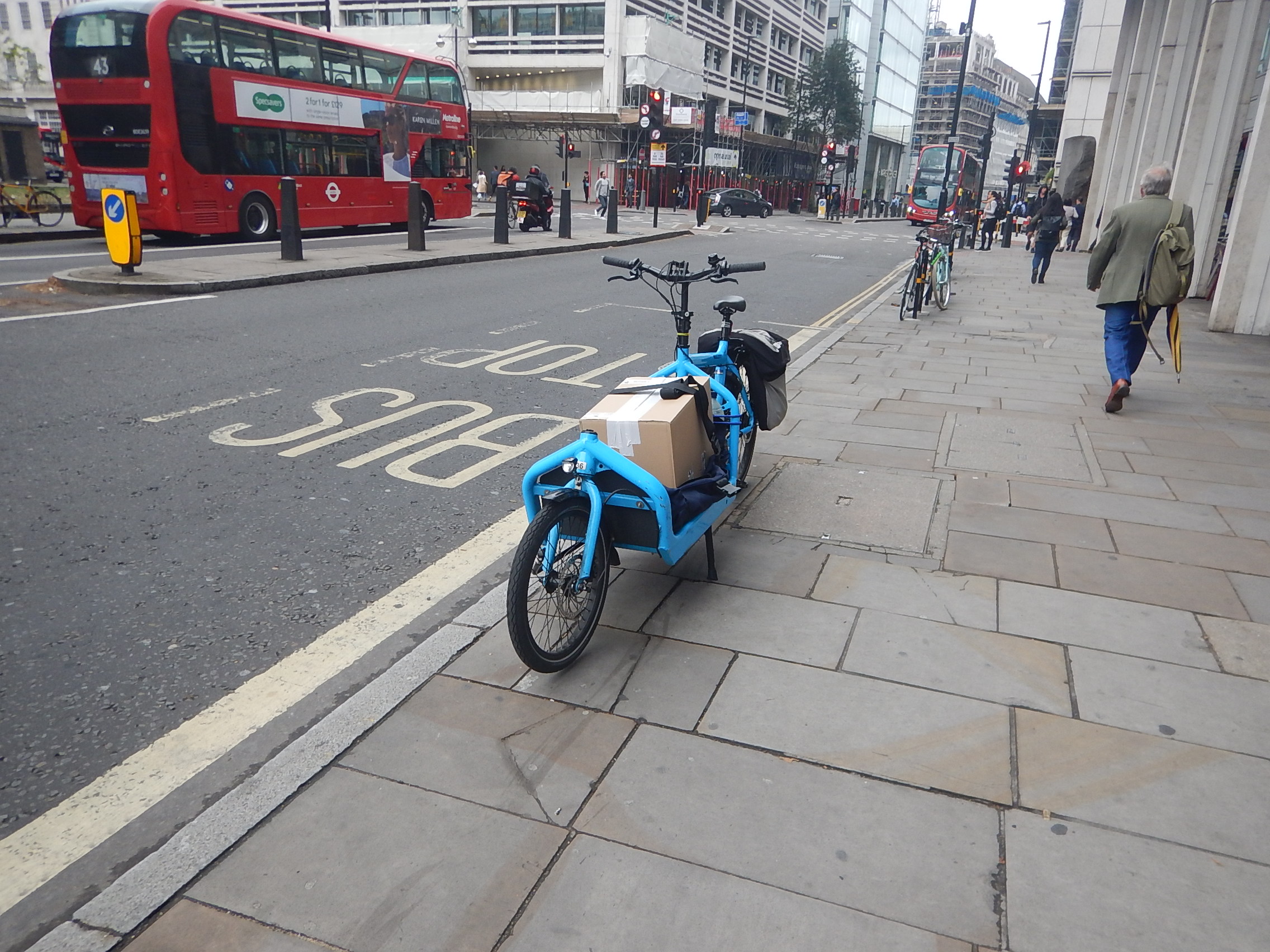
Now, you see various bikes every day delivering bread, children, dogd and parcels in the City and East End of London.
It swhould be noted that in a circle of two to three miles from Bank, London is fairly flat and ideal cycling terrain.
But we still need more!
Have we got enough people, prepared to ride them?
The Wrong Kind Of Bleach?
This article on Railnews is entitled 9 September: News In Brief.
It has the following sub-title.
Wrong Bleach Took Caledonian Sleepers Out Of Service
This is the first sentence.
Cleabers who used the wrong specification of bleach in the toilets and shower rooms on Caledonian Sleepers caused significant damage after the chemicals reacted with stainless steel pipes,
To my knowledge stainless steel, especially when it contains increased levels of chromium and some molybdenum, can be very proof to attack from most substances.
Look at this Butler Shba cutlery made in Sheffield from stainless steel with black Delrin plastic handles, which have seen continuous use in my household for fifty years.
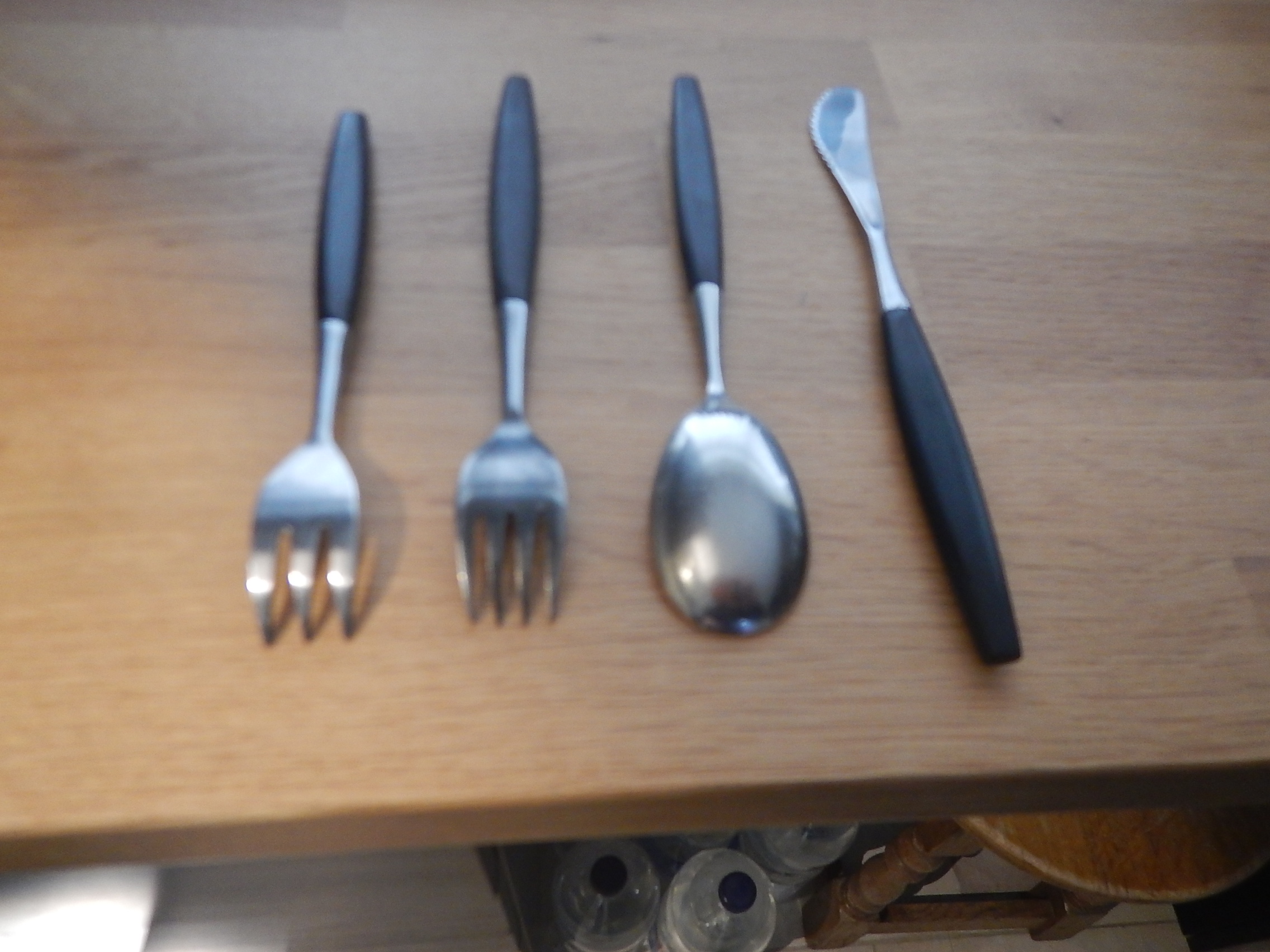
Now that’s what I call stainless steel!
Perhaps, the Spanish used the wrong type of stainless steel?
Delrin is a form of polyoxymethylene, which is an engineering plastic.
This plastic has a wide spectrum of usage, including in zips, bagpipes and metered dose inhalers, to name just three of hundreds.
Thoughts On Hounslow Station
These are my thoughts in no particular order.
Step-Free Access
There are only eight railway stations in the London Borough of Hounslow and only Chiswick and Hounslow stations are not step-free and no plans have been published about creating fully-accessible stations.

This is the rather old-fashioned footbridge at Hounslow station.
Current Train Service
The main current Off Peak train service is four trains per hour (tph) using the Hounslow Loop Line, which conveniently pass each other in the station.
There are also two tph between Waterloo and Weybridge, which means the station has a six tph service.
There are also a couple of extra services in the Peak.
Hounslow Track Layout
This map from carto.metro.free.fr shows the track layout at Hounslow station.

The crossovers on either side of the station probably allow trains to be turned back at the station.
A train arriving from London, which is to the North East would do the following.
- Stop in the Southern Platform 2.
- Wait whilst the driver changes ends.
- Return to London using the North Eastern crossover to change to the correct track.
It would probably take between three and four minutes.
West London Orbital
Hounslow station has been proposed to be one of the terminals of the new West London Orbital Railway.
It will have four tph from West Hampstead Thameslink via the Dudding Hill Line.
How will these trains be trains be turned?
Use The Existing Track Layout
There appears to be almost fifteen minutes gaps between trains through the station, so would it be possible to use the existing North-East crossover and the Southern Platform 2 to turn the trains?
When you consider, that London Overground generally allow between five and twelve minutes to turn a train, timing could be tight. Especially, if the driver needed to take a toilet break!
And what would happen, if a train failed or there were several passengers of limited mobility to unload from or load on the train?
I feel, that this current method would only be used as a little-used fallback.
A Turnback Siding
This Google Map shows the station and the track to the South West.
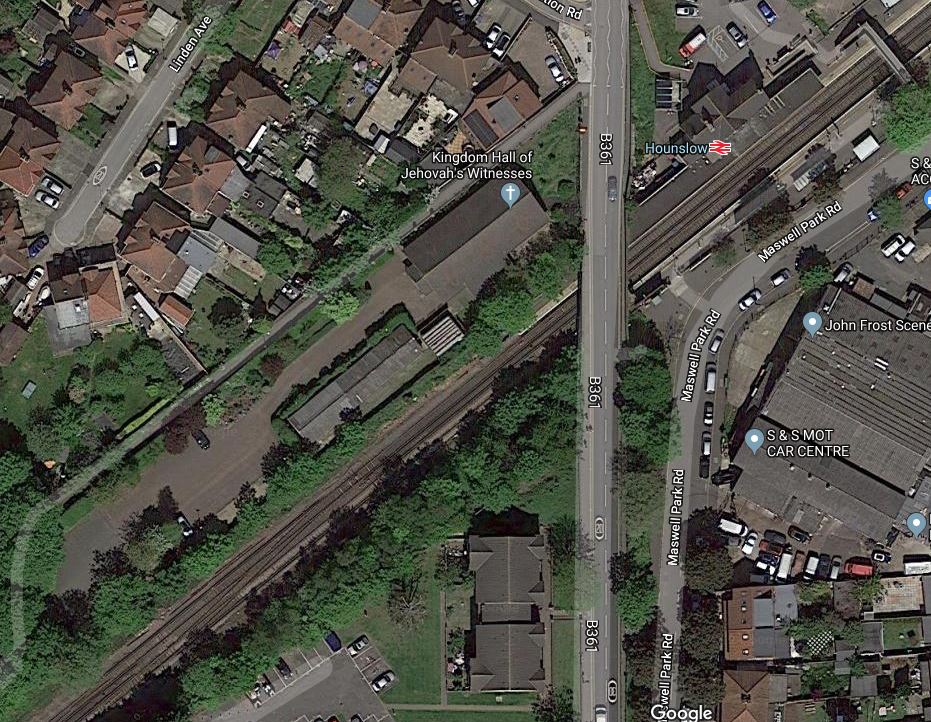
Note that there is probably enough space to put a turnback siding to the South West of the station, with some realignment of the tracks.
This method was used at West Croydon station by services on the East London Line, but recently, the service has started to use the bay platform at the station.
- The train would stop in Platform 2 and unload the passengers.
- It would move to the turnback.
- At the appropriate time it would move into Platform 1 and load passengers.
It would then be ready to start the service to West Hamstead Thameslink.
A Bay Platform
This Google Map shows the North-Eastern (London) end of the station.
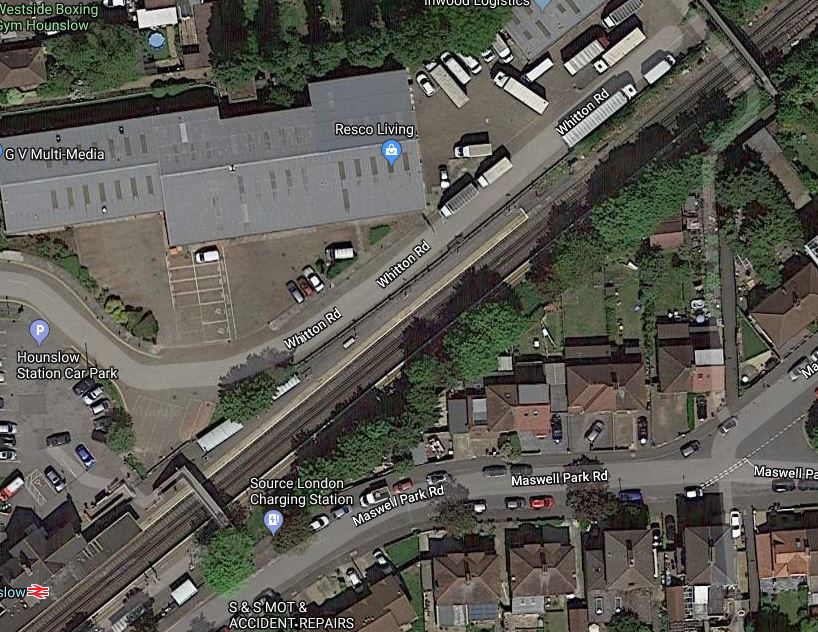
There is a road called Whitton Road alongside the station, where a London-facing bay platform would be built. The crossover would need to be rebuilt to allow trains from London to cross into the bay platform.
But operationally, it would be easier.
- Returning trains to West Hampstead Thameslink would not block the Hounslow Loop Line.
- Passengers using the West London Orbital would only cross the line, if they were continuing their journey from Platform 2..
- I doubt many passengers arriving in Platform 2 would want to use the West London Orbital.
- Passengers with reduced mobility changing between the West London Orbital and bus, car or taxi at Hounslow station would have a step-free route between street and train.
- Drivers would have time for a comfort break.
I will be very surprised if a bay platform is not built to handle the West London Orbital.
A Rebuilt Station
If the West London Orbital is built, which I feel would be highly sensible, the station will probably need to be remodelled to incorporate a bay platform to turn trains.
The footbridge at the station will also need to be replaced with a fully-accessible one.
So Hounslow station will probably need to go through a thorough refurbishing, if not a full rebuild.
Construction Has Started On Feltham Depot
A new depot foe electric multiple units is being created on the site of the old Feltham Marshalling Yard.
I took these pictures as I passed on a train.

I talked about the depot before in SWR Applies To Build New London Maintenance Depot.
Progress At Syon Lane Station – 8th September 2019
It looks like the builders have started to dig the foundations for the step-free footbridge at Syon Lane station.


I wonder, if the digging further down the platform indicates that there has been a change of design.
Riding Sunbeams Deploys Solar Array
The title of this post is the same as that of this article on Railway Gazette.
These are the introductory paragraphs.
Riding Sunbeams Ltd has installed a 30 kWp solar test unit with around 100 panels near Aldershot which is directly supplying electricity to power signalling and lighting on Network Rail’s Wessex Route.
This will enable data to be gathered to assess how much larger solar arrays could be used to power trains.
Note that kWp is peak kW. On a very sunny day, 30 kW is the highest power level that will be supplied.
This page on the Energy Saving Trust is entitled Costs and Saving and this is said.about solar generation in the South of England.
A 4kWp system in the south of England can generate around 4,200 kilowatt hours of electricity a year – that’s the same amount of electricity as it takes to turn the London Eye 56 times. It will save around 1.6 tonnes of carbon dioxide every year.
For comparison, they say this about solar generation in Scotland.
A 4kWp system in Scotland can generate about 3,400 kilowatt hours of electricity a year – that’s the same amount of electricity as it takes to turn the Falkirk Wheel 2,200 times. It will save approximately 1.3 tonnes of carbon dioxide every year.
I’d be interested to know, the two locations, where they measured the sunlight.
It was a lovely sunny day recently, when I passed through Aldershot station, so I’ll use the Southern England figures.
- Uprating the Energy Saving Trust figures by 30/4 gives a yearly output of 31,500 kWh,
- The daily output is 86.3 kWh.
- The hourly output based on a 0600-2200 sixteen hour day is 5.4 kWh
There would probably be a battery to make the most of the electricity generated.
Powering Feeder Stations For Third-Rail Electrification
As the Railway Gazette article says, the trial installation at Aldershot station will be used to power signalling and the station, which will then give figures to assess how trains can be powered.
In the September 2017 Edition of Modern Railways, there is an article entitled Wires Through The Weald, which discusses electrification of the Uckfield Branch in Sussex, as proposed by Chris Gibb. This is an extract.
He (Chris Gibb) says the largest single item cost is connection to the National Grid, and a third-rail system would require feeder stations every two or three miles, whereas overhead wires may require only a single feeder station for the entire Uckfield Branch.
It would appear that 750 VDC rail-based direct current electrification needs many more feeder stations, than 25 KVAC overhead electrification.
Could a solar system from Riding Sunbeams supply power in the following situations?
- Places where there was space for a solar array.
- Remote locations, where a connection to the grid is difficult.
- Places, where the power supply needed a bit of a boost.
How large would an individual solar feeder station need to be?
Consider a feeder station on a rail line with these characteristics.
- Third-rail electrification
- Four-car trains
- Each train uses three kWh per vehicle mile.
- Two trains per hour (tph) in both directions.
- Electrification sections are three miles long.
- Trains run from six in the morning to ten at night.
- Trains pass at speeds of up to 100 mph.
The hourly electricity need for each section would be 144 kWh or 2304 kWh per day and 841 MWh for the whole year.
The Energy Saving Trust says this.
A 4kWp system in the south of England can generate around 4,200 kilowatt hours of electricity a year.
Using these figures says that a solar array of 800 MWp will be needed to provide the power for one feeder station.
Consider.
- The largest solar array in the UK is Shotwick Solar Farm, which has a capacity of 72 MWp.
- Shotwick covers 730 acres.
Am I right to question if that enough electricity to create a feeder station to power trains, can be produced reliably from a solar array and a battery?
I’d love to have the electricity usage and bill for one of Network Rail’s typical third-rail feeder stations. Not that I’d want to pay it!
How Would Station Stops Be Handled?
When a modern electrical multiple unit stops in a station, there is a three-stage process.
- The train decelerates, hopefully using regenerative braking, where the braking energy is returned through the electrification to hopefully power nearby trains.
- The train waits in the station for a minute or so, using power for air-conditioning and other hotel functions.
- The train accelerates away using track power.
Would a Riding Sunbeams system provide enough capacity to accelerate the train away?
In What Is The Kinetic Energy Of A Class 710 Train?, I calculated the kinetic energy of a very full Class 710 train, which is just about as modern and probably efficient, as you can get.
These were my results.
- 50 mph – 15.3 kWh
- 60 mph – 22.1 kWh
- 90 mph – 49.4 kWh – Operating speed of a Crossrail Class 345 train.
- 100 mph – 61.3 kWh – Operating speed of many electric multiple units.
These kinetic energy values are low enough to make it possible that a modern electric multiple unit can run using on-board batteries.
- Regenerative braking would be captured in the batteries.
- Hotel power in the station can be provided by batteries.
- Batteries can cruise the train through sections of line without electrification or with a poor electrical supply.
Suppose there is a twenty mile gap between two stations; A and B, where trains cruise at 90 mph.
- The train arrives at station A, with a battery that has been charged on previous parts of the journey from the electrification.
- Regenerative braking energy will be stored in the battery on braking.
- Acceleration to 90 mph will need 49.4 kWh of electricity from the battery.
- Using my 3 kWh per vehicle mile figure, going from A to B, will need 4 cars * 20 miles * 3 = 240 kWh of electricity.
It looks like a battery with a capacity of 300 kWh would handle this situation
Could this be fitted into a four-car train, like an Aventra?
In this article in Global Rail News from 2011, which is entitled Bombardier’s AVENTRA – A new era in train performance, gives some details of the Aventra’s electrical systems. This is said.
AVENTRA can run on both 25kV AC and 750V DC power – the high-efficiency transformers being another area where a heavier component was chosen because, in the long term, it’s cheaper to run. Pairs of cars will run off a common power bus with a converter on one car powering both. The other car can be fitted with power storage devices such as super-capacitors or Lithium-ion batteries if required. The intention is that every car will be powered although trailer cars will be available.
Unlike today’s commuter trains, AVENTRA will also shut down fully at night. It will be ‘woken up’ by remote control before the driver arrives for the first shift
This was published over eight years ago, so I suspect Bombardier have refined the concept.
If 424 kWh can be fitted under the floor of a two-car Class 230 train, I’m sure in a train designed for energy storage at least 500 kWh or maybe as high as 1000 kWh could be fitted to a four-car Aventra.
A 500 kWh battery would give a battery range of just under forty miles, whilst a 1000 kWh battery would give a ninety-five mile range.
Obviously, the battery would need to be charged, but in many cases the range would take the train between two existing electrified lines. Think Ipswich -Cambridge, Newcastle-Carlisle, the Fife Circle Line, the Uckfield Branch and Ashford-Hastings!
Conclusion
Riding Sunbeams may be suitable for providing local power for signalling and stations, but batteries on trains looks like it could be a better way of powering trains.
 The Anonymous Widower