From Novara To Aosta
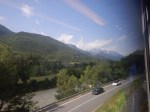
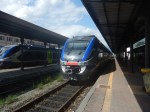
I travelled between Novara and Aosta stations with a change at Ivrea.
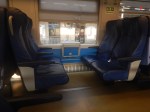

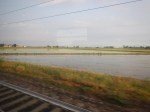
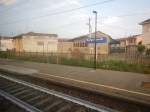

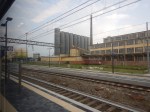
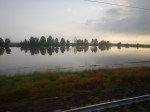
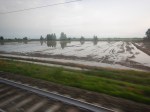

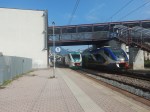
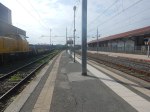
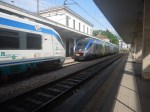
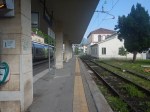

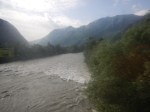
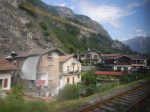
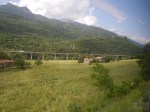
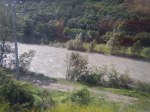



My observations follow.
The Route
The train used the classic Milan-Novara-Turin railway, which is double track and fully-electrified, until Chivasso station.
At Chivasso, the train took the Chivasso-Ivrea-Aosta railway, which is mainly single-track and only electrified as far as Ivrea.
Until Ivrea, the route is fairly flat, but then it climbs into the mountains.
Paddy Fields
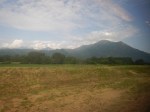
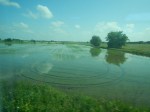
There is a lot of rice-growing around Novara and there were paddy fields alongside the line.
I’d seen paddy fields from a train before in Malaysia, but these fields lacked one feature of the Malaysian fields.
In Malaysia, many fields had a large nesting box above the field.
Apparently, paddy fields attract rats and in Malaysia venomous snakes used to go in to catrch and eat the rats.
The problem was that farmers, also got bitten by the snakes.
The boxes were built to attract birds of prey to live above the fields to control the rat population.
The birds are not some exotic species, but barn owls, which are native to much of the world. I’ve even seen them in the Galapagos Islands.
Ivrea Station
Ivrea station with its three platforms, acts as an interchange station between trains from Aosta, Chivasso, Novara and Turin.
The line to Aosta is not electrified, so diesel trains have to be used on the climb into the mountains.
Use Of Bi-Mode Trains To Aosta
This article in the Railway Gazette is entitled Electro-Diesel Flirt Unveiled.
This is the first two paragraphs.
The first electro-diesel version of the Flirt multiple-unit family was unveiled at Stadler’s Bussnang plant in Switzerland on June 15, two years after the Valle d’Aosta region awarded a €43m contract for the supply of five units and the provision of five years of maintenance.
The Flirt3 units are scheduled to enter service on the Aosta – Torino route in May 2018. Bimode operation will remove the need for passengers to change trains at Ivrea to reach Torino Porta Susa station, where diesel operation is not permitted.
Using the trains from between Turin and Aosta is a classic use of bi-mode trains.
- Between Turin and Ivrea, electric power will be used.
- Between Ivrea and Aosta, diesel power will be used.
It’s a bit different to the application of a UK-version of these Stadler Flirts, in the flat lands of East Anglia.
Currently the service between Turin Porta Nuova and Aosta stations are generally hourly and take the following times.
- Aosta to Turin Porta Nuova – Two hours seven minutes with an eight m,minute change at Ivrea.
- Turin Porta Nuova to Aosta – Two hours twenty-three minutes with a sixteen minute change at Ivrea.
Adding in the turnround at both ends and there is a five-hour round trip.
Using the bi-modes, there is an obvious saving in that passengers won’t need to change trains at Ivrea.
But will the new trains have a faster performance on both sections of the route?
Certainly, the five trains ordered could run the service with a five hour round trip.
The real improvement would come with a four hour round trip, but I think that would be a challenging ask.
The Milan To Paris TGV Goes Through Novara Station
On time, the 06:31 TGV between Milan and Paris Gare Du Lyon passed through to pick up passengers.
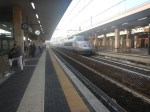
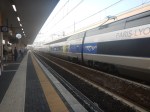


It is a very long train on a long journey.
Piggy-Back Freight At Novara Station
Novara station is on a main rail freight route and I saw a couple of trains carrying trucks go through.
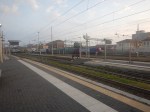
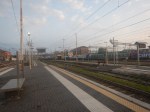
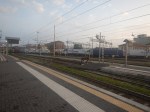
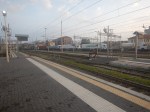
There were certainly a lot of wagons going through. Note the passenger coach behind the locomotive.
I suspect the trains were using the Alpine Rolling Highway, which is described like this in Wikipedia.
The Alpine rolling highway is a combined transport service, in the form of a rolling highway on special wagons ravelling a distance of 175 km between France and Italy by the Mont Cenis Tunnel (aka Fréjus rail tunnel).
Some might think, that we should use a rolling highway from the Channel Tunnel to the North of England and Scotland.
The reason we don’t is that the loading gauge on the routes to the North is just too small.
Disability Issues At Novara Station
Novara is a town about the size of Ipswich and the station is well-provided with equipment and signs to help those with various issues.
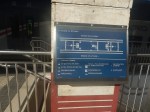

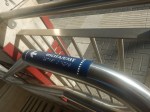


- Note.
- Braille maps are everywhere and most handrails seemed to be marked.
- Each platform had a lift.
- The wheelchair lift is a common sight in Europe to overcome the bad design of trains, which don’t have level access.
Most stations I visited, were similarly equipped.
Exploring Novara
Novara is a typical Italian town.
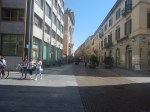
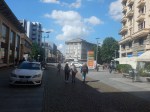
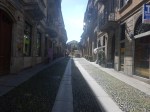
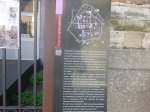


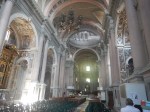
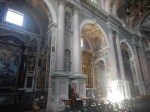
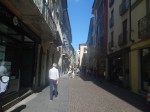
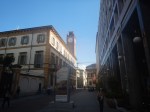
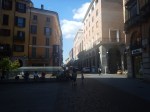
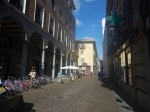
One thing that surprised me was the amount of information for visitors all over the centre..
As one could exect, there was plenty of good ice cream and coffee.
TiLo
Treni Regionali Ticino Lombardia or TiLo is a train company. which is described like this in Wikipedia.
TILO (Regional Trains Ticino Lombardia) is a limited company established in 2004 as a joint venture between Italian railway company Trenord and Swiss Federal Railways (SBB CFF FFS), both companies participate in the equity of TILO SA with participation of 50%.
The company’s goal is to develop the regional cross-border traffic between the Canton of Ticino and the Region of Lombardy.
I came across one of their thirty Stadler FLIRT trains at Milan Centrale station.

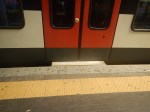

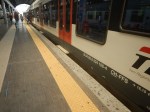
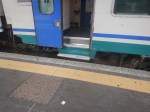
Note how Stadler have solved the step problem, as compared to the train I took to Navara.
Stadler are producing three fleets of trains for the UK.
- Class 745 trains for Greater Anglia.
- Class 745 trains for Greater Anglia
- Class 777 trains for Merseyrail.
The trains are reported to have gap fillers, like the FLIRT in the pictures.
London To Novara
I flew from between London City and Milan Linate airports and then it was a coach and train to Novara.
These are the various legs of my journey.
Home To London City Airport
I took the following route.
- A two-minute bus ride to Dalston Junction station.
- East London Line between Dalston Junction and Shadwell stations.
- Docklands Light Railway between Shadwell and London City Airport station.
It took just fifty minutes.
It is my closest airport.
London City Airport to Milan Linate Airport
I flew with British Airways Cityflyer.
- The Airport was busy and there were delays at security.
- We left a few minutes late.
- The plane was an Embraer 190 SR.
- I had a default aisle seat, but the guy in the window seat didn’t come, so I had room to spread about.
- Some got a free snack, but they had no gluten-free, so BA gave me an extra water from Thirsty Planet.
I took these pictures during the flight.

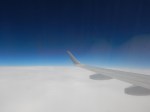
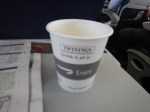
The flight was more expensive than easyJet or Ruanair, but more refined and not as expensive as British Airways from Heathrow.
It was a route, I’d use again.
Milan Linate Airport To Milan Centrale Station
This was a five euro transfer in a coach from the airport to Milan Centrale station.



As I’d bought the ticket for the bus from a guy by the baggage reclaim, it was a painless business.
Wikipedia says this about Milan Central station.
Milano Centrale has high speed connections to Turin in the west, Venice via Verona in the east and on the north-south mainline to Bologna, Rome, Naples and Salerno. The Simplon and Gotthard railway lines connect Milano Centrale to Bern and Geneva via Domodossola and Zürich via Chiasso in Switzerland.
The station is also an important stop on the Milan Metro.
Looking up on Loco2.com, it would appear that most major cities in Italy have an hourly direct service to and from Milan Central.
Many are high speed trains, like the French TGV, which are called Freciarossa.
My journey between aiirport and station took forty minutes.
Unless I need a specific train, I rarely buy a ticket until I get to the station in Italy.
You can either go straight on to your destination on the next train, or dump your luggage in the left luggage lockers and take a couple of stops on the Metro to the cathedral to have a quick look at Milan.
Milan Centrale Station To Novara Station
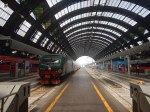
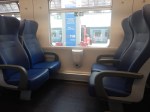
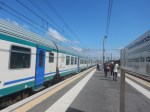
To get to Novara station, I used the hourly express commuter service, that goes to Turin.
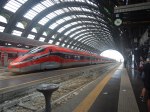



Note.
- The hour’s journey took about an hour and cost me five and a half euros.
- My train ran to the timetable.
- Usually, you can board a train about fifteen minutes before it leaves.
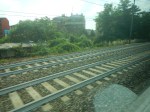
- The Italians paint a lot of rails white. It keeps them cool!
I arrived in Novara about five hours after I took off from London City Airport, so the total journey time coul;d have been under seven hours.
The Intelligent Bi-Mode Train
In the June 2019 Edition of Modern Railways, there is an article, which is entitled Stadler Bi-Modes Taking Shape.
It gives a deep insight into the philosophy of how the trains was designed and how they operates.
Abbreviations Used
- BMU – Bi-mode Multiple Unit – Class 755 train
- EMU – Electrical Multiple Unit – Class 745 train
- Flirt – Stadler’s family of regional trains.
Low-Floor Design
This is said.
Both the BMUs and EMUs will have a low-floor design enabling level boarding at every passenger door, with retractable steps bridging the gap between the train and the platform edge.
How simple is that?
This picture show’s a Flirt in Italy.
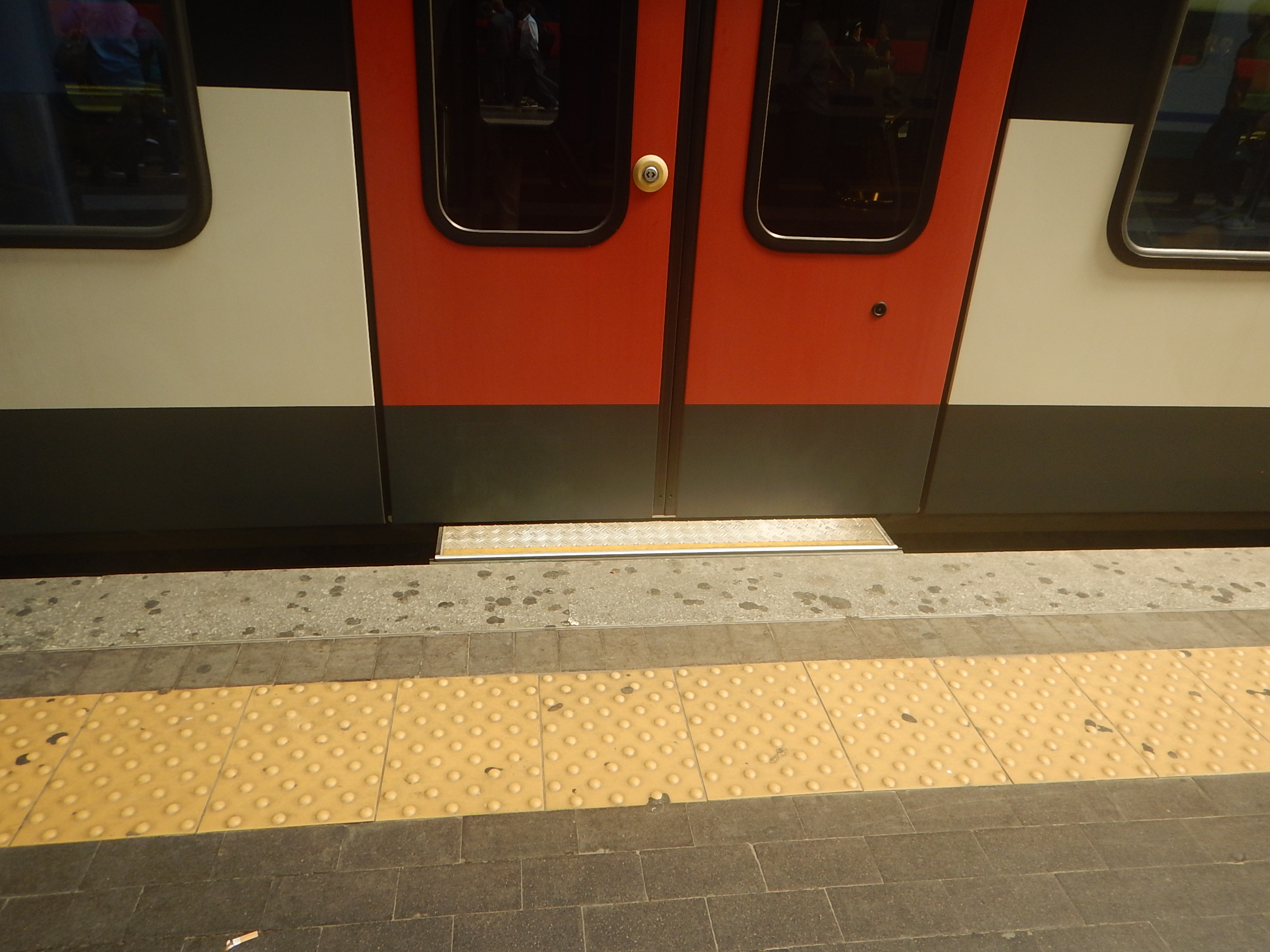
Surely, every train should have level boarding!
Passive Provision For Digital Signalling
The cabling is already installed and rack space has been left.
Sensible!
But I suspect there will be a new train fleet delivered, in the next couple of years, where the trains are not future-proofed.
Drivers Helped Design The Cabs
Consultation was about both hardware and software.
Lots Of Cameras
This is said.
Extensive video surveillance and bodyside cameras will allow drivers to control the opening and closing of doors.
Surely, more cameras means better safety and security, so why are the RMT against these new trains?
Perhaps, RMT members didn’t get free trips to Switzerland?
Twelve-Car Trains Are Possible
This is said.
Up to three BMU sets can operate in multiple, allowing a 12-car formation to run should this ever be required.
Why would Greater Anglia need a twelve-car BMU?
Problems do occur and suppose one of the London-Norwich EMUs had a serious problem, that meant it would be in the workshop for several weeks.
During this time, three four-car BMUs could be run as a twelve-car formation to cover for the missing EMU.
- Performance would be the same.
- Both trains carry around 700 passengers.
- The BMUs would be on electric power all the way.
The only disadvantage would be that the BMUs have no buffet and First Class seats.
In my regular travelling on the Great Eastern Main Line in the last thirty years, I have been involved in two incidents where all trains stopped because of weather or a derailment. If the track, electrification and trains are the best, then there will still be the occasional closure.
But a twelve-car BMU would still be able to use the alternative route via Cambridge!
Do Greater Anglia see the BMUs as a means of getting passengers to their destimation, in circumstances, which interrupt normal service?
They’ve obviously done their sums and is it cheaper to have a couple of BMUs spare to cover for problems, than have passengers wait until everything is fixed?
I think, t is more likely that eight-car trains will be used.
Could for instance two four-car trains start from Lowestoft and Bury St. Edmunds in the morning and then join at Ipswich for a fast run to London for commuters?
Or would eight-car trains be used on Cambridge-Ipswich and Cambridge-Norwich, when there are important football matches?
The BMU train lengths of three and four cars, would also allow train capacity to be geared to the route.
Will we see other train companies buying this type of flexible capacity?
Flexible Power Source
This is said.
Stadler says the bi-mode Flirts are EMUs with a power pack in between just to generate power, adding that the power pack can be removed later to create an EMU or the equipment in the power module exchanged for batteries or other power sources.
Stadler says this flexibility will be important in the train’s lifespan of between 30 to 35 years.
All End Cars Are The Same
Both the BMUs and EMUs have the same end cars.
Except for a switch box to change power source in the BMU.
The four-car BMUs have two extra cars, both of which have a pantograph, whereas the three-car BMUs have just a single extra car.
It has been said, that three-car trains can be converted to four-cars, by just adding another car.
This picture, clipped from Wikipedia, shows the layouts of both trains.
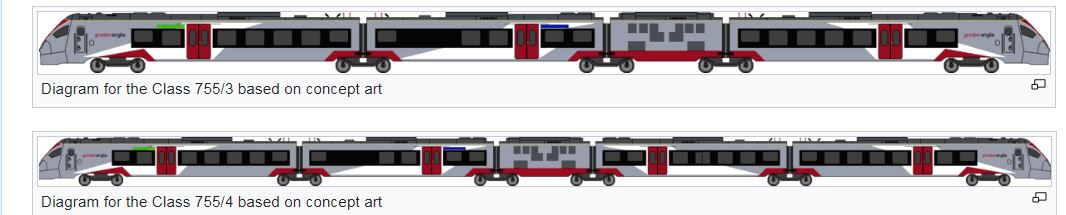
What does a design like this save in manufacture, operation, driver training and maintenance?
Environmentally-Friendly
It goes without saying that the trains comply with the latest emission and noise regulations.
Changing Power Source
This is said.
Drivers of BMUs will be able to switch between electric and diesel modes whilst on the move if agreement is reached with Network Rail.
As a Control Engineer by training, I would feel that if a BMU can’t switch between modes on the move, then it is a very poor design of BMU.
Regenerative Braking
Regenerative braking is fitted and it works in diesel mode as well as electric, but it is not stored on the train in a battery and is just burned off in a brake-resistor, if it can’t be returned through the overhead line.
I would expect, that at some point in the future batteries will be added to the power module to capture and resuse this energy, which is now wasted.
Intelligent Engine Management
This is said.
When the output of all the engines is not required one or more can be shut down to save fuel, with the engine management system ensuring this is shared across all engines over a period of time to balance maintenance schedules.
Sensible.
But, I worked for ICI in the 1970s and some of the early computerised chemical plants used optimisations like this to improve efficiency!
Bicycle Spaces
East Anglian trains, especially those starting or finishing in Cambridge, carry a lot of bicycles.
All the BMUs have provision for six bicycles! Is that enough?
Conclusion
The Class 745 and Class 755 trains are an interesting dual-solution to the problem of East Anglia’s railways, which have a dual electric spine from London to Norwich and Cambridge and a plethora of connecting routes without wires.
Other franchises must be looking seriously at a similar solution.
It should also be noted that Stadler have delivered Flirt EMUs with a 125 mph operating speed to Norway and Sweden.
So could we see 125 mph BMUs operating on lines, like the Midland Main and West Coast Main Line?
It could be that the weight of the power module means that the 100 mph of Greater Anglia’s Class 755 trains is the maximum possible speed on diesel.
In which case could we see a Flirt with 125 mph on electric power and 100 mph on diesel?
A Visit To The Swanage Railway
Yesterday, I noticed this article on Railnews which was entitled National Rail Trains To Score Heritage First.
This was the first two paragraphs.
Scheduled National Rail trains will run on a heritage railway tomorrow for the first time.
South Western Railway is launching Saturday services to Corfe Castle on the Swanage Railway, and Corfe Castle has been restored to the national stations database.
So I thought, I’d be on the first South Western Railway train on a scheduled service into Corfe Castle station on the Swanage Railway.
I caught the 08:25 train from London Waterloo to Weymouth and I alighted at Wareham station to catch the 11:12 train to Corfe Castle.
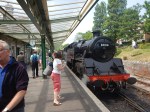
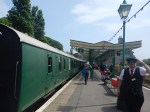
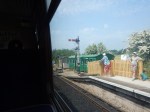
These pictures illustrate my trip.

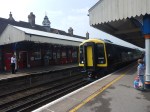
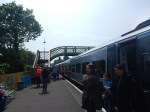
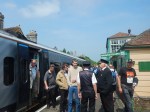
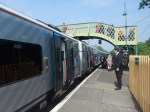
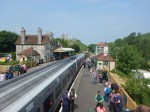
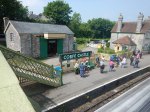
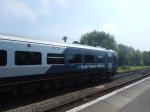
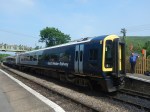
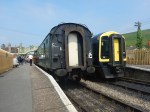

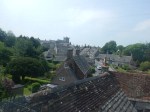
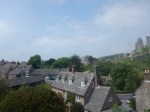
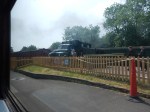




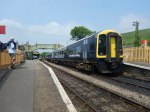
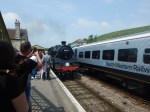
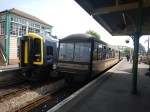

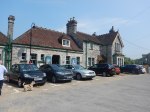
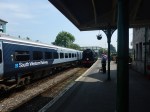
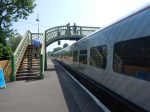
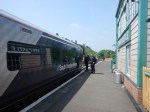
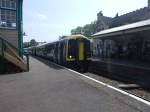
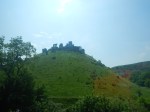
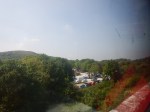
I have various observations.
Costs
I came down from London, so I had to pay for that ticket, but train tickets to Swanage from Wareham cost me five pounds for the South Western Railway leg and ten pounds for steam haulage.
Operations
Everything was very professional and there seemed to be a high-level of communication and good humour between the staff of South Western Railway and the volunteers of the Swanage Railway.
Swanage Railway were operating a steam-hauled shuttle along their line between Norden and Swanage stations and as the pictures show, both companies were able to run their own services, without interrupting the other.
Does Swanage Need A Year Round Train Service?
After my father retired, my parents went to live in Felixstowe.
It certainly didn’t work for me, as it was not the sort of place, a late teenager, could amuse himself, especially as all my friends were in London. As we hadn’t sold the house in London, I was usually to be found there.
I don’t know Swanage and I don’t know what it is like to live there!
But I do remember a short film on the BBC program Tonight in the early 1960s.
They were talking about long-distance commuting and they used as an example, a guy, who had moved his family to Swanage and was leaving home very early in the morning to go back to London for his work.
He was very happy with the arrangement, but the last shot of the film was after the reporter had asked his two teenage daughters what they thought of it all. Their faces said it all and I can remember my mother made an acerbic comment.
I wonder what a year round hourly service would do for Swanage?
Felixstowe has a year-round hourly rail service to Ipswich, but then Felixstowe is over twice as large as Swanage.
On the other hand, Felixstowe also has a fast dual-carriageway road connecting it to the rest of East Anglia.
Providing An Hourly Service To Swanage
Unlike many rail schemes aiming to create a new branch line, a lot of infrastructure is already in place.
Track
Yesterday, the following services were running.
- A roughly hourly steam service between Norden and Swanage stations, run by the Swanage Railway.
- A two-hourly service diesel service between Wareham and Corfe Castle stations, run by South Western Railway.
The track, which is a mixture of single and double track, seemed to cope well.
Interestingly, there is a mothballed oil terminal at Furzebrook, which was used to export oil from the large field at Wytch Farm. It is connected to the Swanage Railway between Norden station and the South Western Main Line.
As development and exploitation of oil fields is a very unpredictable process, I suspect that the Northern section of the Swanage railway is kept in very good condition by Network Rail, just in case Furzebrook has to reopen.
Norden Station
Norden station is the Northernmost station on the Swanage Railway.
This Google Map shows the station.
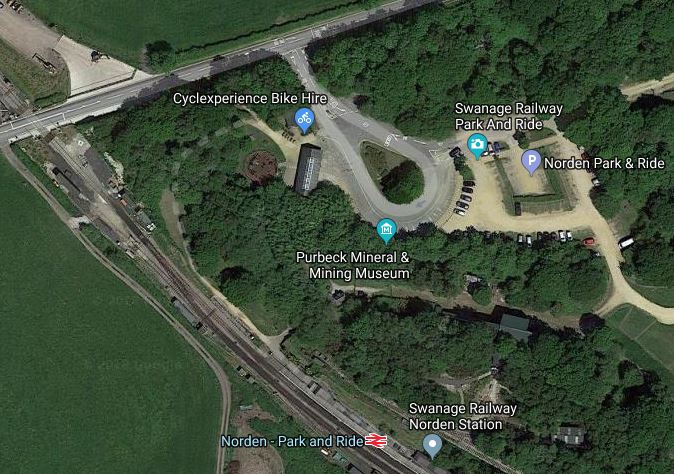
The map clearly shows the single platform, the Purbreck Mineral and Mining Museum and the Swanage Railway Park & Ride.
The Wikipedia entry for Norden station, says this about the car park.
A large car park, provided by Purbeck District Council, allows the station to function as a park & ride facility for the tourist centres of Corfe Castle and Swanage
Could this car park, also be used by local residents wanting to commute to or go shopping in Poole or Bournemouth?
Corfe Castle Station
Corfe Castle station is a well-built station with two platforms and a footbridge, that is as good if not better than many rural stations.
Harman’s Cross Station
Harman’s Cross station is a two platform station, without a footbridge.
It appears from the Google Map of the area, that new houses are being built in Harman’s Cross.
Swanage Station
Swanage station is the terminus station with two platforms.
As the pictures show, the platform used by the steam train is long and would certainly take an eighty metre long train.
Operating As A Single-Track Branch Line
I suspect that on days, when the heritage railway is not in operation, that the Swanage Railway could be used as a single-track branch line.
So perhaps, a diesel multiple unit could run a passenger shuttle along the branch. Operation would be little different to any of several diesel-operated branch lines in the UK.
Surely, if the CAA can allow Loganair to use Barra Airport, which is a beach on the island of the same name, then the ORR must be able to write a sensible rule book, to allow an hourly passenger service between Wareham and Swanage.
This picture shows Zwickau Zentrum station in the centre of the German town of Zwickau.
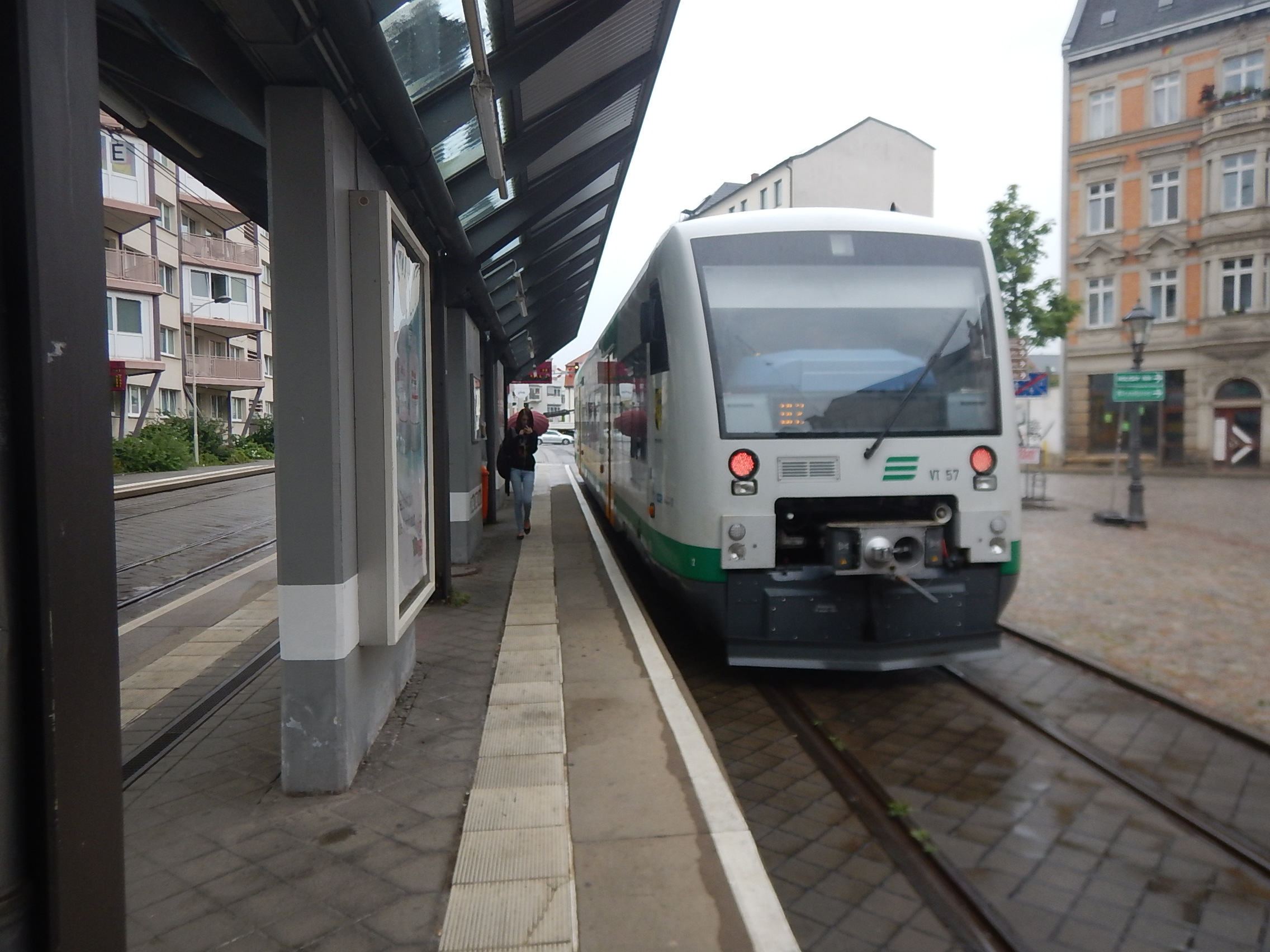
It is the simplest station, I’ve ever seen in a town centre. The diesel multiple unit appears to come into the city under the following rules.
- A sensible speed.
- Orange lights flashing.
- Two crew operation.
Effectively, the train service in Zwickau is run like a tram and even has an unusual three-rail track, that it shares with metre-gauge trams.
Note that as the Swanage Railway is a heritage railway, the speed limit is only 25 mph anyway.
As yesterday showed, South Western Railway and the Swanage Railway are able to operate a practical shared service on days, when the heritage railway is in operation.
Connecting To South Western Main Line Services
As was demonstrated yesterday by South Western Railway’s Class 159 train, operation between Corfe Castle and Wareham stations, is not the most difficult of operations.
Two things help.
- The South Western Main Line is not the busiest of routes through Wareham station.
- There is a cross-over to the West of the station.
These allowed the Class 159 train to use one of the through platforms to turnback.
Would this continue, if say the Swanage Railway were to run an hourly shuttle between Corfe Castle and Wareham stations?
Look at this Google Map of Wareham station.
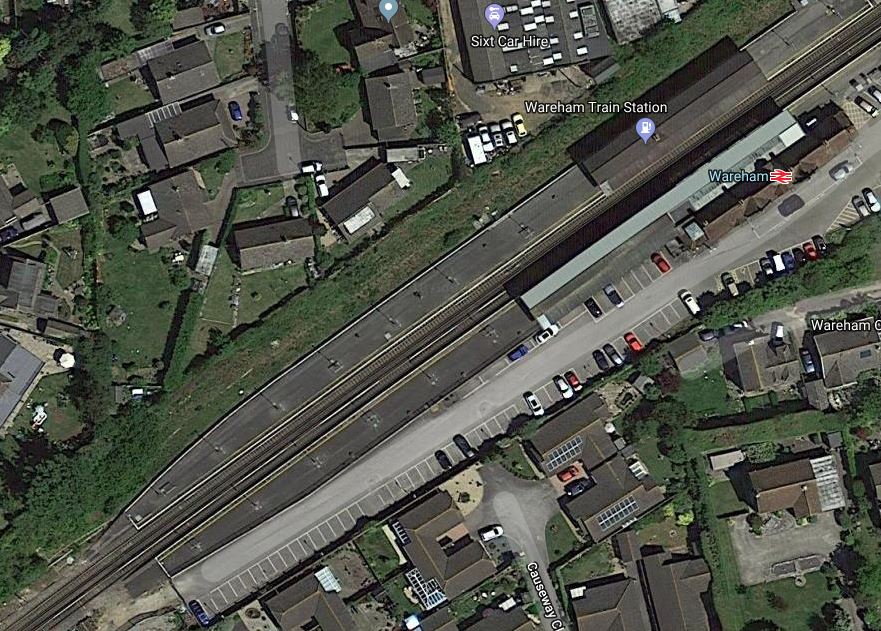
Is there space on the Northern side of the station to add a bay platform, to allow the shuttle to terminate in its own platform?
When I returned from Wareham to Waterloo, I just missed a train and I had to wait thirty minutes for the next train.
Looking at the Google Map of Poole station, there would appear to be a large amount of space around the station,
The Wikipedia entry for Poole station, also says this.
In 2004 proposals were drawn up for the current station buildings and footbridge to be replaced as part of redevelopment plans for the old goods yard. A hotel was to be built on the site of the current station building, however as of 2010 these plans have not progressed.
So would it be feasible at some time in the future to terminate a Swanage service in a bay platform in the much larger town of Poole?
There are certainly possibilities to use Poole or even Bournemouth stations as a terminus of a service to Swanage station, that would also increase the frequency on the South Western Main Line between Bournemouth and Weymouth.
How Long Would A Train Take To Go From Wareham To Corfe Castle And Back?
Looking at yesterday’s figures on Real Time Trains, the following times were achieved yesterday.
- Wareham to Corfe Castle – 21 minutes
- Corfe Castle to Wareham – 26 minutes
Yesterday, the trains were waiting for a long time at Corfe Castle station, to fit with their two-hourly timetable and that of the steam trains on the other track.
If you add in sensible turnback times at Wareham and Corfe Castle, I doubt that a round trip could be done in an hour, making it difficult to run an hourly shuttle between the two stations.
How Long Would A Train Take To Go From Wareham To Swanage And Back?
Using yesterday’s figures and the quoted times for steam trains between Corfe Castle and Swanage stations, we get the following times.
- Wareham to Corfe Castle – 21 minutes
- Corfe Castle to Swanage – 22 minutes
- Swanage to Corge Castle – 20 minutes
- Corfe Castle to Wareham – 26 minutes
Or a total of 89 minutes plus how long the turnround will be at Swanage station.
I have a feeling that timetabling an hourly service could be difficult.
What Rolling Stock Can Be Used?
If the trains travel for more than a few miles on the South Western Main Line, being able to use the third-rail electrification would be useful.
But they would also need to be self-powered on the Swanage Railway.
So perhaps, a bi-mode would be ideal.
As they have rather a heritage flavour, perhaps a Class 769 train would be ideal?
Conclusion
There is a lot of potential to improve services on the Swanage Railway.
I suspect that if South Western Railway and the Swanage Railway got into serious discussion, there will be a solution, that would be beneficial to both parties and all those who live and work in or visit Swanage and the Isle of Purbeck.
 The Anonymous Widower