Bermondsey Dive-Under – 5th June 2016
These pictures were taken ass I came into London Bridge today.

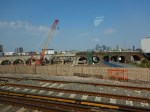
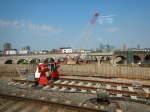
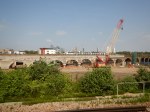

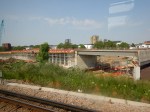

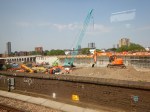
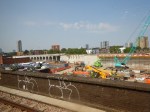
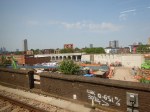


If you compare these pictures with those in Bermondsey Dive-Under – 10th April 2016, there would appear to have been a lot of progress.
It really is becoming an impressive structure, blending the best examples of brick, concrete and steel from the best part of two centuries.
Using Lea Bridge Station For A Purpose
After going to IKEA, as I often do, when I only have one blue bag, I caught the first bus that appeared of either a 192 to Tottenham Hale station or a 341 to the area of Hackney, where I live.

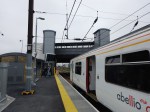

It was a 192 and I took it, now that I have four trains to choose from at Tottenham Hale station.
- A train to Liverpool Street via Hackney Downs.
- A train to Stratford via the Lea Bridge station.
- A direct Liverpool Street train.
- A Victoria Line train.
The first two would be the most preferable, as a bus can take me to fifty metres from my home from either Hackney Downs or Lea Bridge stations.
I could also take a 76 bus to Dalston Junction station. That bus is not as slow as the 341, which gives you a mystery tour of a lot of Haringey and tends to get stuck in the traffic of Tottenham High Road.
As I walked into the station, the first train was announced as a Stratford train via Lea Bridge and by running across the bridge, I was able to get on a fairly crowded train.
Five minutes later and I was on the platform at Lea Bridge station.
After a walk of about a hundred metres with no bridges, two steps and two light-controlled crossing, I was at the bus stop. But I’d just missed the 56 bus, that takes me directly home. So I took the first bus that arrived to Clapton Pond, where I got on one of the frequent 38 buses to my house.
It may seem complicated compared to taking the Victoria Line to Highbury and Islington station, but that station is a 1960s monstrosity, built when the disable didn’t go out or even exist. Walking routes in the long tunnels and bus access at Highbury and Islington is not good either.
But Lea Bridge station is already proving its worth. Several people on the train had used the new station and a young lady at the station said she used the station a lot.
But the station needs more trains and two trains per hour is not enough, especially when Angel Road station is upgraded.
I have a feeling that the forecast traffic through this station will be in the same class as those for the Borders Railway.
Farewell To The Old Gospel Oak To Barking Line
Today is the last day, that you can ride the Gospel Oak to Barking Line to the East of South Tottenham station, until after the wires are erected in a few months time.
So I took some pictures.
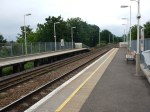
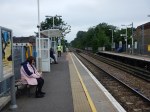
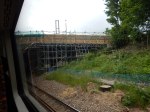
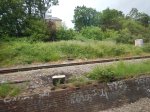


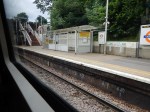

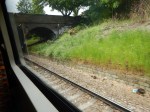
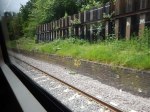


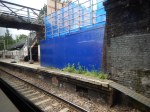

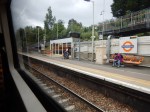
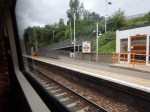

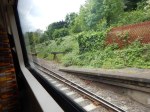
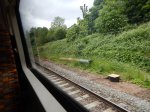
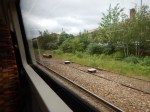
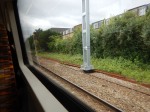
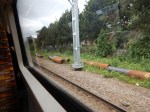
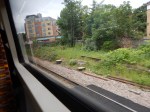

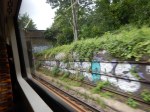


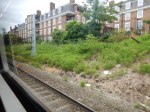

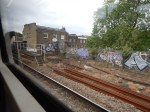

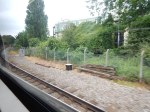

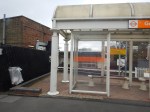
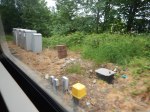
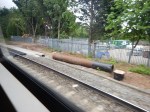
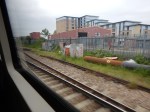
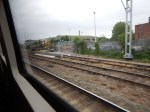
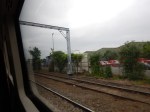
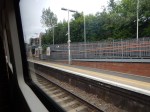


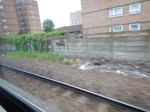
I must say I have not been impressed with progress so far.
- It looks like a large proportion of the piles are in the ground.
- If the piles are in the ground securely, why aren’t more masts erected?
- There would appear to be no start on clearing the platform extensions.
- Only in one place did I see a work-site.
- I didn’t see anyone actually working.
- There is masses of litter
- There’s no sign of how the stations will be electrified.
With my limited experience of looking at large projects that are in trouble, this project has the air of something not being up to scratch.
What has really puzzled me about this project, is that the information coming from Network Rail and especially TfL, has not been up to the usual standard.
The Longer Overground Platfortms At Whitechapel Station Are Now Visible
This picture shows the Northern end of the Overground platforms at Whitechapel station.
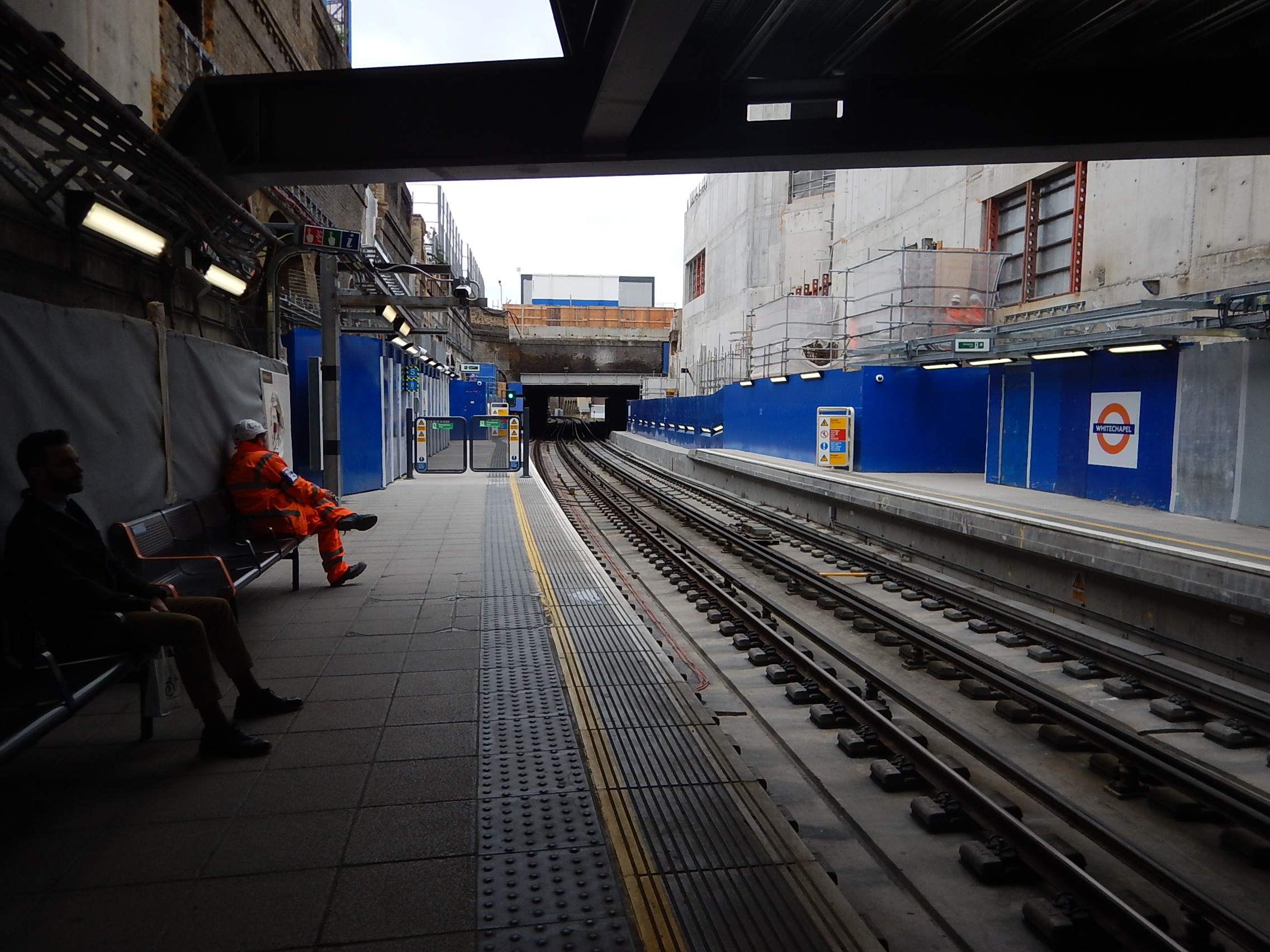
Overground Platforms At Whitechapel Station
It would appear that they have grown enough extra platform length to accommodate all five cars, once some finishing work is completed.
It has been said that after Crossrail opens, these platforms will be at full size!
Have You Heard about…the New European Transport Strategy?
That is the title of an article in Georgia Today, which gives a solid overview of the strategy. This is the first two paragraphs of the article.
In 2013, the European Commission, in a EUR 250 billion European strategy which gives priority to the creation of an integrated transport network and seeks to level the imbalance between the Member States of the European Union, proposed the creation of international transport corridors, bringing together Western and Central Eastern Europe. In order to overcome traffic imbalance in the EU, nine multimodal corridors will be created, each of which has to combine at least three types of transport and connect three states.
The new infrastructure policy will unite 28 EU states under trans-European transport network (TEN-T). Nine transport corridors will be provided: Baltic – Adriatic Sea, North Sea – Baltic, the Mediterranean Corridor, Middle Eastern Corridor, Scandinavia – the Mediterranean Sea, the Rhine – Alps, the Atlantic Corridor, the North Sea – the Mediterranean Sea, and the Rhine – Danube. They will be grouped into three general areas of “East – West”, “North – South” and “Diagonal” corridors. The project is scheduled for completion in 2030. The transport corridors will receive priority funding to connect the east and west of the European Union. To finance the first phase of the project, EUR 26 billion was allocated.
I suppose that the Brexiters will say, that all it will do is bring more migrants to the UK.
But, think of the news a couple of days ago, when the Swiss opened the Gotthard Base Tunnel as is reported in this article on the BBC. This tunnel will have passenger trains, but one of it’s main purposes, is to get trucks from the roads through Switzerland, by moving a million tonnes of freight a year onto the trains. The tunnel removes a bottleneck on the Rotterdam-Basel-Genoa corridor, which has been named the Blue Banana by a group of French geographers.
This is the introduction to the Wikipedia entry.
The Blue Banana (French: banane bleue, also known as the European Megalopolis or the Manchester–Milan Axis) is a discontinuous corridor of urbanisation in Western Europe, with a population of around 111 million. The concept was developed in 1989 by RECLUS, a group of French geographers managed by Roger Brunet.
It stretches approximately from North West England across Greater London to the Benelux states and along the German Rhineland, Southern Germany and Switzerland to Northern Italy in the south.
Since when have Greater London and Manchester been in mainland Europe?
I also didn’t realise that I lived in a megalopis of 111 million people.
We are doing our bit to create the freight rail corridor from Manchester to Milan, by improving rail routes between the Channel Tunnel and up the spine of the country to Manchester and eventually to Scotland.
This must bring benefits to the UK in terms of freight and trade.
- At the Northern end of the route, Liverpool is creating one of the largest container ports in the world.
- Our car factories can export direct to Europe using massive trains, as I wrote about in What A Lot Of Minis!
- British Steel’s renowned long products from Scunthorpe can’t be exported easily other than by train.
- Mediterranean produce can be delivered fresher to the UK.
- Scottish food and drink will have fast access to the heart of Europe.
And these are just five small examples.
One fifty kilometre tunnel in Switzerland has just made trade for the UK, easier.
Some of the other transport corridors will greatly help Eastern Europe, of which some parts need all the help they can get. The article says this about Rail Baltica.
There is a priority project in the railroad Rail Baltica. The Trans-European railway Rail Baltica, linking Helsinki – Tallinn – Riga – Kaunas – Warsaw and continuing on to Berlin, is to be developed within the territories of the co-operating EU Member States. Rail Baltica will support the wider EU goals of parity of access to services and infrastructure of EU Member States and development of sustainable modes of transportation, improved balance and interoperability between different means of transportation, and the establishment of links with the rest of the EU rail network. Even as far back as the 1990s it was in the works to build an underwater railway tunnel between Tallinn and Helsinki, but the project was delayed due to financial constraints. This corridor also involves the development of river waterways and canals (Belgium, Germany, the Netherlands), as well as ferry traffic (between Finland and Estonia). The project cost is estimated at over EUR 3.6 billion, including 50% from the EU budget (program TEN-T), and 50% from the budget of the project participants. In the Baltic countries there is no such means, and there are discussions about the feasibility of building a high-speed road which will pass by numerous settlements.
I feel very strongly, that good rail and road links through an area, improve its prosperity. If we look at that small project of the Borders Railway, can anybody deny that it has been a success and that it has helped to enhance the place of the Scottish Borders on the UK Tourist Map.
As I write this Radio 5 Live is hosting a discussion on Brexit from Cardiff. Some of the issued raisded include steel and agriculture.
The Welsh may not like it, but an electrified Great Western for freight and passengers, will make South Wales fully part of the Blue Banana, which can only be positive for the Principality.
The Longest Underwater Electrification In The UK Since The Channel Tunnel
It may only be a tunnel seven kilometres long and a lot shorter than the Channel Tunnel, but the Severn Tunnel has two tracks, which both have to be electrified, so that the Great Western Railway can run electric trains to and from South Wales.
But the Severn Tunnel was built between 1873 and 1886 and it posed various problems during its construction with water ingress and since with operation because of its length, profile and the pumping of constant water. There is a section in Wikipedia, which is called General, which gives more details.
The Severn Tunnel is probably one of those places, sane engineers wouldn’t want to electrify a railway.
So I was interested to read this article in Rail Engineer, which is entitled Preparing For Severn Tunnel Electrification. The article gives this overview of the project.
The electrification project now moves on to probably one of its biggest challenges: the electrification of the 7.012km long Severn Tunnel. The tunnel will be closed to trains between 12 September and 21 October for the work. It is referred to as the “Severn Tunnel Autumn Disruption” or STAD for short and, just to make it a bit more interesting, included in the STAD are the Patchway Tunnels –1.139km Old (Down); 0.057Km Short (Down); 1.609Km New (Up).
Some facts about the tunnel and the work already done.
- More than 76.4 million bricks were used in the construction.
- Between 10 and 20 million gallons of water have had to be extracted every day to prevent flooding.
- There is also a ventilation shaft through which 80,000 cubic feet of fresh air can be forced into the tunnel each minute by means of an eight- metre diameter fan at the top.
- The contractors first had to scarify 2,500 square metres of tunnel lining to remove more than 35 tonnes of soot.
It is not a small job. But at least the tunnel was in better condition than expected.
The article gives a deep insight into how the Severn Tunnel electrification is a collaboration between several major contractors, who are installing a Swiss system from Furrer + Frey called Rigid Overhead Conductor Rail System in the roof of the tunnel. The ROCS system uses a rigid aluminium rail supported on appropriately designed fittings fixed to the roof of the tunnel. There is more on the ROCS system in this article in Rail Technology Magazine.
To makes things more difficult, the engineers have only got thirty-nine days to do the work.
And if it all goes wrong, there are two sets of politicians who will get very angry!
Is The New Bay Platform At West Ealing Opening On August 1st?
I heard a rumour that the new bay platform at West Ealing station was going to open on the first of August, but I have just found a change in the timetable, that could mean that it is true.
If you look at the on-line timetables, you will find the following.
At present the first two trains after 07:00 from Greenford to West Ealing, are the 07:16 and the 07:46, which go on to Paddington in twenty-six minutes.
From the first of August, they are the 07:13 and 07:43 which are shown as only going as far as West Ealing, where you change for Paddington and do the journey in twenty-eight minutes.
The strange thing is that these two trains are the only ones before nine, that require a change for Paddington.
The times of trains from Hayes and Harlington to Paddington appear to change on the first too!
There is also an additional electric service leaving for Hayes and Harlington at 07:18.
Could it be that electric services are starting on the first of August too?
The Bay Platform And The Reversing Siding At West Croydon
I went to West Croydon and took these pictures at the station.
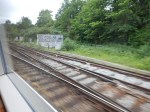
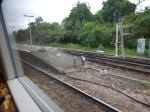
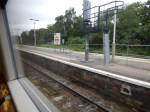
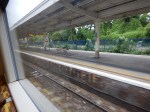
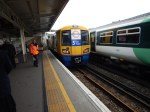
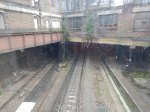
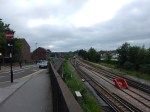
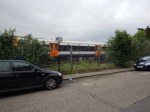
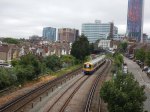
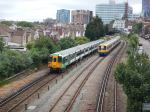
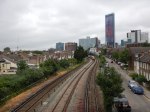
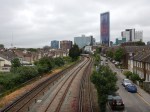
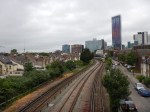
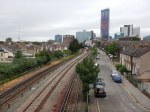
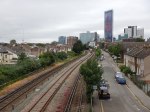
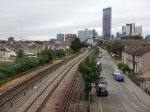
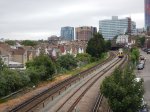
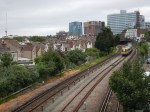
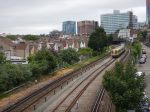
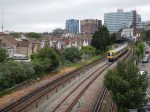
They certainly answer some of the questions I asked in How Trains Reverse At West Croydon.
What is the maximum length of train, that can be handled by the bay platform 1?
On a brief look, it looks to be able to take a ten-car train.
How long does it take to reverse a train?
Look at the sequence I observed.
- 16:30 – Train leaves the siding for Platform 3 to go North.
- 16:33 – Train timed to leave Platform 3 to go North
- 15:34 – Train timed to arrive Platform 4 from the North
- 15:41 – Train arrives in the siding from Platform 4
From entering the siding from Platform 4 to entering Platform 3 seemed took around eleven minutes.
But they were working to a precise timetable with the aim of getting into West Croydon station on time.
How many trains an hour can the station reverse?
So if it takes eleven minutes for the sequence, it looks like this layout with one reversing siding can handle four trains per hour (tph), which it does at present.
In Increased Frequencies On The East London Line, I noted that two extra trains would be going South to Crystal Palace and Clapham Junction. But there appear to be no plans to increase services to West Croydon. Perhaps 4 tph is the maximum possible.
Can more than one train enter the reversing siding?
I wouldn’t have thought so during this type of operation. But it did look like the siding could accept a ten-car train or even two five-car trains.
Summing Up
It does look that there has been a lot of flexibility built into the track and its operation.
I also think that there could be enough space to squeeze some more track into the layout, if something like The Streatham Virtual Tube needed to turn more trains at West Croydon.
One thing that has to be said, is that the station is not an architectural gem worth cherishing. If the number of trains terminating at West Croydon, needed to be substantially increased, then no one would mourn if the station was rebuilt to increase the capacity.
Will The High Speed Trains Ever Die?
I am writing this post as I’ve just read this article on Rail News, which is entitled Strategic Railfreight Interchange Debate Ignites.
The plan is to build a rail freight interchange called Rail Central at Blisworth between the West Coast Main Line and the Northampton Loop Line and then run high speed freight trains based on modified HSTs to destinations all over the country.
To say there is opposition to the plan would be a gross understatement and explodes would probably be a better word in the headline rather than ignites.
The plan reminds me of one that used to be used by Royal Mail called Spokes from Speke, that was used to get First Class letters delivered on time. Basically, small aircraft flew the letters, which had been sorted by destination, from all over the country to Speke airport in Liverpool, where they were sorted and then flown to the destination. So a letter from say the Orkneys to Plymouth, would be flown from Kirkwall to Speke, unloaded and then put on the plane to Plymouth.
If I remember, it worked very well.
On this page of the British Library web site, there is an Oral History of the origins of Spokes from Speke.
As it would appear the system has Network Rail’s backing could it be that someone is creating a Spokes from Blisworh for important parcels?
A Tram-Train Between Skipton And Colne
Skipton station is a station at the western end of the electrified lines to and through Leeds. There are several plans for the future, involving direct trains to London and more frequent services to and from Leeds. There is also an aspiration of the Embsay and Bolton Abbey Railway to extend into Skipton.
Colne station is at the eastern end of the partly single-track East Lancashire Line, with services all the way to Blackpool South station via Burnley, Blackburn and Preston.
The two stations used to be connected until 1970, when it was closed, despite not being recommended for such by Beeching.
An organisation called Skipton-East Lancashire Rail Action Partnership is pressing for the line to be reopened. This map shows the rail lines in the area.
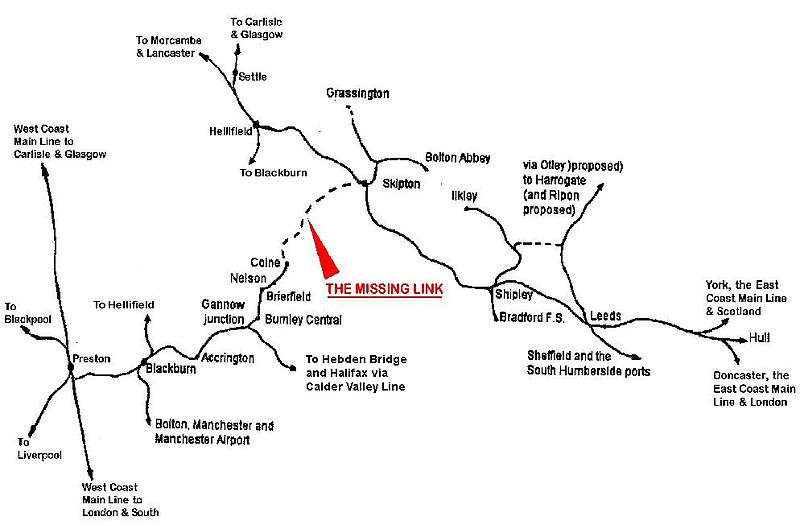
Skipton To Colne
Reopening this just under twelve miles length of track could bring a lot of benefits.
Most of the trackbed hasn’t been built on, but look at this Google Map of Colne station.
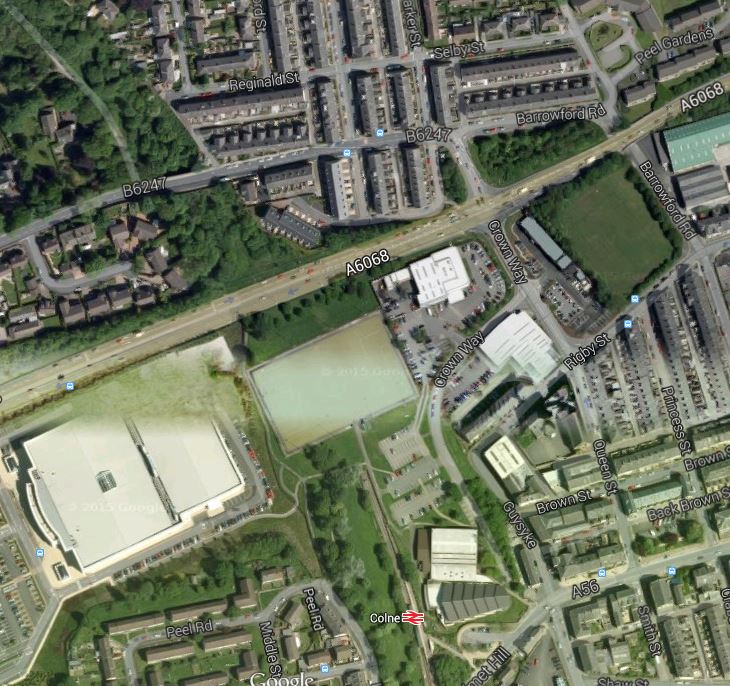
Colne Station
Note how the dual-carriageway, A6068 and a football pitch have been built, where any link from Colne would probably go.
So there would be a need for an expensive bridge. But as the line to Colne is only single-track, I suspect that the bridge could get away with one track, providing there was a passing loop at Colne station.
Having seen tram-trains in Germany, I know what the Germans would do and that is run tram-trains from the Blackpool tramway across Lancashire as trains and then over a tramway to Skipton. The advantage would be simpler infrastructure and lower costs.

The Tram-Train At Karlsruhe Station
The picture shows one of Karlsruhe tram-trains at the Hauptbahnhof. The tram-train is essentially the same as those that will be trialled between Sheffield and Rotherham in the near future.
The advantages of tram-trains would be simpler infrastructure and lower costs. Once the Calder Valley Line is electrified between Preston and Burnley Manchester Road station, a tram-train could start at either Leeds or Bradford Forster Square stations, go via Keighley, Skipton and Colne and then reach Blackburn and Preston, after joining an electrified Calder Valley Line at Rose Grove. From Skipton to Rose Grove, the line could be single track with passing loops and the electrification would be 750 VDC, like all trams in the UK. But of course, Skipton to Leeds and the Calder Valley would be to the main line standard of 25 kVAC.

An Outwardly Normal Class 379 Train
But we have our own British solution in the shape of the IPEMU. The picture shows the prototype, which I rode as a paying passenger in early 2015.
These trains have batteries or some other form of energy storage, which is charged whilst running on electrified lines.
An IPEMU could charge its batteries at Skipton and Preston and use batteries on any line without electrification in between.
The advantage would be no wires and possibly only a single track across the Pennines.
But if it is decided to create a link between Skipton and Colne, the railway technology developments of the last few years, could make the link more affordable and much less of an intrusion into some of our most beautiful countryside.
 The Anonymous Widower