The Steventon Bridge Problem On The Great Western Railway Electrification
Roger Ford in an article in the April 2016 Edition of Modern Railways, which is entitled GWEP Target Dates And Costs, discusses some of the problems of the electrification.
In one section he talks about the problems caused by the Grade II Listed Steventon Bridge.
This is a picture I took of the bridge from an InterCity 125
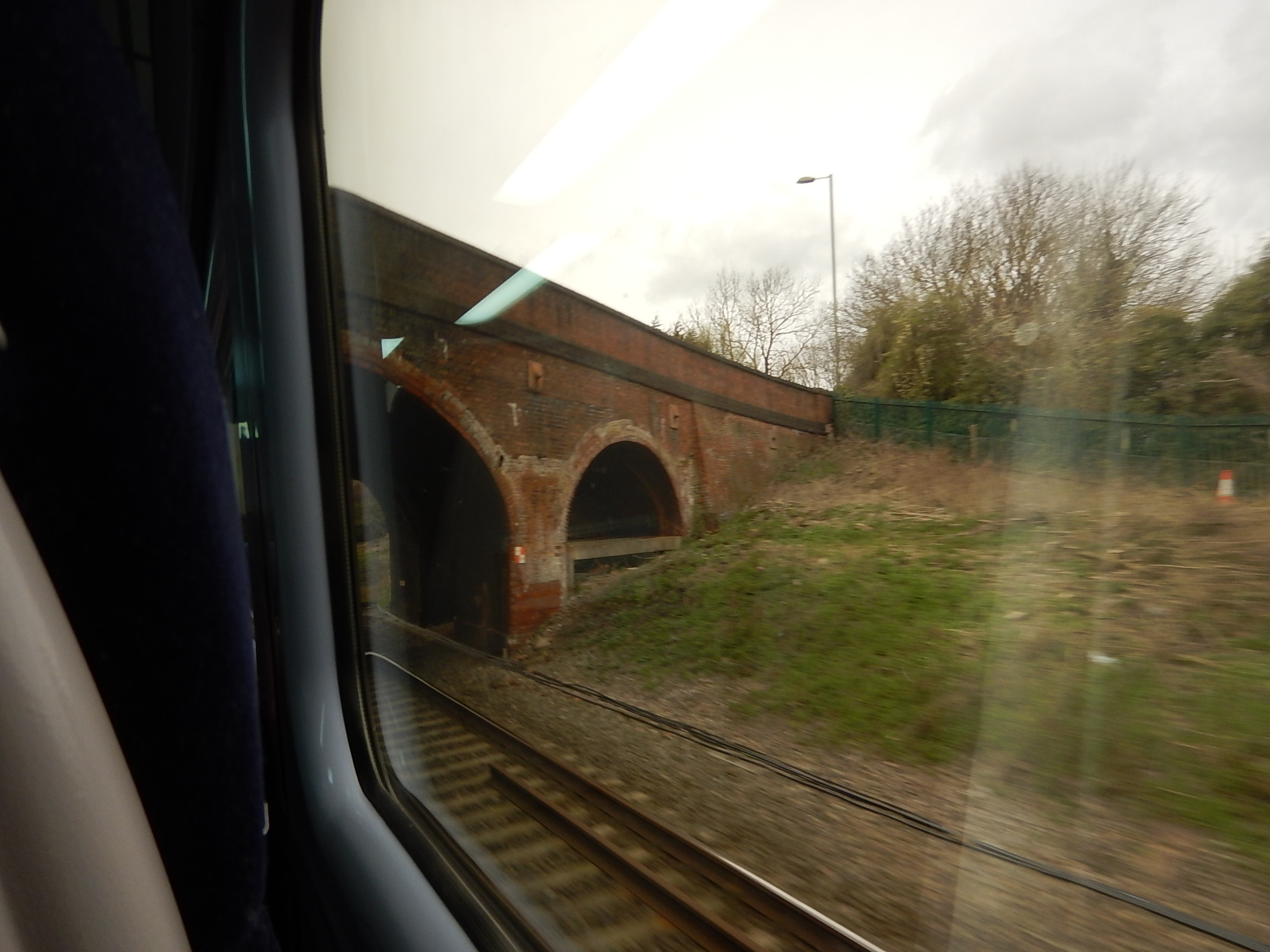
Steventon Bridge
Not the best, but it shows the design of the bridge.
This Google Map shows the Great Western Main Line, as it passes just to the south of the village of Steventon in Oxfordshire.
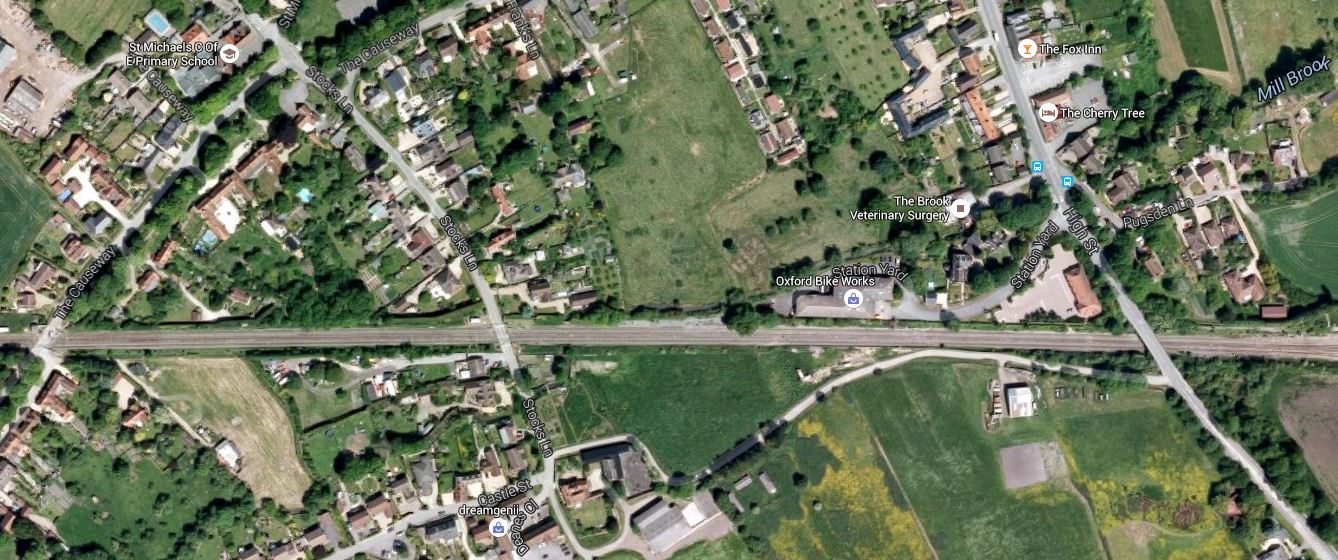
GWML Through Steventon
The bridge is on the Easternmost crossing of the railway, with the other two crossings being level crossings.
Roger explains the problem, which is about putting the overhead electric wires under the bridge.
The overhead wires have to be at maximum height over the level crossings and this means to get the wires under the bridge, they have to dip sharply. This means that excessive wear is caused to the contact wire.
It would appear from the article, that Network Rail are still searching for an acceptable solution.
At least it would appear that one of the level crossings is going to be closed, which could ease matters a shade.
But will the locals put up a fight as Mark Whitby has at the Ordsall Curve?
This article in the Oxford Mail is entitled Demolition of Steventon rail bridge on hold after MP intervention.
Some of the comments are priceless!
My view has a touch of the Philistine about it!
We have thousands of bridges like this and we don’t need to keep them all!
So perhaps we should save the best, but some that would cost too much to keep, should be replaced with modern bridges.
In the case of the Steventon Bridge, if the level crossings didn’t exist, it would appear that the tracks could be lowered under the bridge to give the required headroom.
As level crossings are one of the major causes of death on the railways, we shouldn’t stop until all are eliminated.
It would appear from this document, that one of the level crossings is going to be closed and a height limit of five metres placed on the other.
I think that the ultimate solution for this sort of problem will be technical.
In one of their documents about the use of batteries on trains, Network Rail or Bombardier talk about batteries being used to assist trains over deliberate gaps in overhead wires or third rail.
Third rail generally is not a problem and in the UK, it regularly changes sides and allows the momentum of the train to bridge any gap.
What is needed is a pantograph system, that can be raised to and lowered from the overhead wire with the train at full speed. I don’t know whether this is possible, but I suspect that every other country in the world would just demolish the bridge. I did find some research on the subject on the RSSB web site, which states that SNCF raise pantographs at 225 mph, Deutsche Bahn at 185 mph and Eurostar at 170 mph.
So it is possible!
As a trained Control Engineer, who spent a lot of time in the 1960s simulating dynamic systems, I believe that a system could be designed to lower and raise the pantograph before and after the difficult section.
I suspect that one of the problems here, is that the Class 800 trains that will work this line, were designed in Japan. But this section in Wikipedia about level crossings in Japan, would seem to indicate that the Japanese have a serious problem with level crossings.
Are The TOCs Arguing Over The Class 387 Trains?
The April 2015 Edition of Modern Railways has an article entitled Operators Vying For Class 387s.
Before discussing the article, I’ll describe the trains involved.
Class 387 Trains
At present there are twenty-nine new four-car Class 387 trains running Thameslink services for Govia Thameslink Railway (GTR).
- These are dual-voltage 175 kph (110 mph) versions of Electrostars.
- They can run on probably most of the electrified routes in the UK.
- They are about to be replaced by brand-new Siemens Class 700 trains, as these are delivered.
- They are closely related to the Class 379 trains, which were used for the IPEMU prototype in early 2015.
As they become available, they are supposed to go to the Great Western Railway (GWR).
But GWR only have the working electrification from Paddington to Hayes and Harlington station on which to run the trains. As I showed in Hayes and Harlington Station – 28th February 2016, work is progressing at the station and an extended bay platform is being created.
The finish of platform works at the station, will mean a service can be started between Paddington and Hayes and Harlington.
- It will replace the main-line portion of the service between Paddington and Greenford, which is soon to be discontinued.
- It can be used by GWR for driver training.
- Class 387 trains working in GWR livery will be good publicity.
But I can’t see this service needing more than a couple of Class 387 trains.
This picture shows the colour scheme of a Class 387 train, currently working on Thameslink.

The colour of those doors looks suspiciously like GWR green to me! So perhaps the transfer of operator would not require anything more than downloading new software for the passenger information screens and changing the adverts and notices.
In addition to the current twenty-nine trains on Thameslink, Bombardier have three further orders for Class 387 trains.
- Twenty-seven four-car Class 387/2 trains are being delivered for Gatwick Express.
- Eight four-car trains for GWR.
- Twenty four-car trains have been ordered by Porterbrook.
Bombardier are reported to be on the verge of finishing the Gatwick Express order and starting manufacture of more Class 387/1 trains.
Class 442 Trains
The Class 442 trains, which are being replaced on Gatwick Express by Class 387/2 trains are not the most loved trains in the UK’s train fleet.
It is very likely that despite being the fastest third-rail trains in the world, that they will go to the scrapyard as they are replaced.
The only reason some might be retained on Gatwick Express, is so that some Class 387/2 trains could work Thameslink to release a few of the Class 387 trains for other operators.
Class 700 Trains
The Class 700 trains, being built in Germany by Siemens, are replacing the last Class 319 trains and the new Class 387 trains on Thameslink.
So introduction of these trains is important to release Class 387 trains for other operators.
But these trains are only due to be introduced on the 16th April 2016 and there are inevitable questions.
- What is the introduction into service schedule?
- As with all new trains or car, bus or truck for that matter, will there be any teething problems?
- Will they replace the Class 319 or 387 trains first?
- Will the passengers like them?
The last question is the most important and expect lots of moaning about the lack of free wi-fi!
Class 360 Trains
The Class 360 trains, used on Heathrow Connect, have a peripheral role in the argument, as c2c were trying to sublease two of these trains to sort out their capacity problems.
But the well-documented problems of Heathrow Express, have probably meant that these trains are no longer available.
Summarising The Article
The first paragraph of the Modern Railways article entitled Operators Vying For Class 387s, says that several operators are vying for the Class 387/1 trains currently working on Thameslink.
To summarise.
- c2c, who are big Electrostar operators, are still looking for trains after failing to procure Class 360 trains.
- GWR is anxious to get 387s to start driver training.
- GTR wants to retain them, as there is problems with the new Class 700 trains.
- GWR have apparently suggested that GTR retain the Class 442 trains and use the new Class 387/2 Gatwick Expresses on Thameslink.
- GWR wants to start services to Maindenhead earlier than thought.
It looks like there’s a serious argument going on.
The final paragraph offers a solution.
It could be that the quest to find additional short term capacity at c2c may be solved by early delivery of the next batch of 387s, construction of which is to begin shortly at Bombardier’s Derby factory.
Perhaps, building some of Porterbrook’s trains before those destined for GWR, where they have nowhere to run, could happen!
Bombardier are probably being a bit bullish, as after all one of the reasons for the problems would appear to be the new Class 700 trains from Siemens.
Adding An IPEMU Capabilty To Class 387 Trains
Could it also be, that until this argument is settled, we will not be seeing any Class 387 trains converted into IPEMUs?
I believe that a proportion of trains with on-board energy storage could help some of our electrification problems.
Bombardier have stated that all their new Aventra trains will be wired to accept on-board energy storage if the operator desires it be added. This article in Global Rail News gives full details.
In the meantime, the only train that is available that can be given an IPEMU capability is the Class 387 train.
Electric Services To Maidenhead And Reading
The article says this about electrification to Maidenhead.
Whilst the completion date for wiring to Maidenhead is shown in the re-plan of Network Rail’s Enhancements Programme by Sir Peter Hendy as being June 2017, Modern Railways understands that work is ahead of the new schedule and this section may be completed by the end of 2016.
As electrification to Reading is Crossrail’s problem, this might help too, as different structures are being used.
In Rumours Of Battery Trains, I discussed an article in the September 2015 Edition of Modern Railways entitled Class 387s Could Be Battery Powered, which said that GWR’s eight additional Class 387 trains could be battery powered. This was said in Modern Railways.
Delivery as IPEMUs would allow EMUs to make use of as much wiring as is available (and batteries beyond) while electrification pushes ahead under the delayed scheme, and in the longer term would allow units to run on sections not yet authorised for electrification, such as Newbury to Bedwyn. The use of IPEMUs might also hasten the cascade of Class 16x units to the west of the franchise.
But thinking about electrification to Maidenhead in a practical manner, would a train operator want Maidenhead as the terminus of a new electric service.
Remember that the Class 387 trains are required to increase capacity and bring a whole new level of electric traction and modern comfort to services from Paddington to Bedwyn, Newbury, Oxford, Reading and other places in the Thames Valley, so having to change from your old diesel train to a new electric one at Maidenhead is something that will bring out the worst out of passengers.
If you look at train times between Maidenhead and Paddington, some services take up to thirty-six minutes, but the fastest scheduled journey I can find is probably by an InterCity 125 in nineteen. So you can understand, why GWR would like 110 mph Class 387 trains on the route. They could probably do the journey in a few minutes over twenty.
With Chiltern starting an Oxford to Marylebone in December 2016, GWR are probably preparing to lose a lot of their Oxford business. I know which service I’d choose.
But the Class 387 IPEMU would offer a viable alternative.
- Hayes and Harlington station is fully electrified to Paddington and is just under eleven miles from Paddington.
- Reading station is not electrified and is thirty-six miles from Paddington.
- A Class 387 IPEMU has a range of upwards of fifty miles on batteries.
The Class 387 IPEMU would seem to have been designed to handle Paddington to Reading. But I suspect that electric services will not be offered until the wires reach Maidenhead.
So when will GWR be offering an electric local service between Paddington and Reading?
- Trains would use overhead power to the end of the wires and batteries beyond.
- Enough Class 387 trains will have to be converted to IPEMUs
- Enough platforms at Paddington would have be able to accept electric trains.
Could this be why GWR appear to be so keen to take deliveries of Class 387 trains?
From Reading diesel shuttles would work the lines to Bedwyn and Oxford.
So how does this fit in with Modern Railways assertion, that electrification to Maidenhead will be complete before the end of the year?
If GWR take the IPEMU route to provide services between Paddington and Reading, it just means that the train will be less reliant on the batteries, as Maidenhead to Reading is only twelve miles.
To go to anywhere past Reading is probably difficult, as suitable places like Bedwyn, Didcot and Newbury are more than twenty-five miles from Maidenhead, which probably means the range is too much for an IPEMU, as it has to go both ways on battery power.
On the other hand, every extra mile of usable electrification would extend the reach from Paddington.
But there are three places, where Class 387 IPEMUs could operate without major additional electrification; the three branch lines.
- Henley is 11.5 miles from Maidenhead.
- Marlow is 5 miles from Maidenhead.
- Windsor is 2.5 miles from Slough.
There would probably need to be some short lengths of electrification where the branches join the main line, signalling upgrades and platform lengthening. But not electrifying the branches and using IPEMUs would probably be welcomed by Network Rail, as it would sidestep any legal challenges to the electrification on aesthetic and heritage grounds.
In the peaks there are direct services between Bourne End station on the Marlow Branch and London, which seem to take fifty-four minutes. I suspect that a Class 387 IPEMU could do the journey about twenty minutes faster, with electrification between Paddington and Maindenhead.
Onward To Oxford
Electrification to Maidenhead would not give advantages in providing electric services from Reading to Bedwyn, Newbury and Oxford. It’s just too far for a train powered by batteries.
Commercial common sense, would indicate that with Chiltern scheduled to serve Oxford station in December 2016, if there was one destination, where new electric trains must go, it is Oxford.
And by the end of 2016!
It sounds like an impossible dream!
Roger Ford in an article in the April 2016 Edition of Modern Railways, which is entitled GWEP Target Dates And Costs, says this about testing the Class 800 trains.
GWEP’s 16-mile ‘test track’is between Reading and Didcot; It was originally due to have been energised in September last year.
Energisation for test running is now scheduled for September this year.
He also indicated, and I can confirm it, that substantial amounts of the overhead structures have been installed. So I think we can assume that by September, the test track will probably be working.
As an aside here, I wonder if the test track will electrify and use one of the west-facing bay platforms at Reading station.
If we assume that the test track provides a fully-functioning electrified route between Reading and Didcot, it could surely be used by Class 387 IPEMUs to get to Didcot.
- They would use overhead electrification from Paddington to Maidenhead or the end of the wires.
- They would go to Reading on battery power.
- Reading to Didcot would be using the overhead wires put up for the test track.
- Batteries would be charged on both electrified sections.
Oxford is less than twenty miles from Didcot, so reaching Oxford with an electric service is possible before December 2016.
Onward To Bedwyn
Bedwyn is forty-two miles from Maidenhead and thirty from Reading, so it would appear to be another impossible dream, even if there was electrification all the way to Maidenhead from Paddington.
I do think that unless the Great Western Main Line is electrified to Maidenhead, that getting Class 387 IPEMUs to Bedwyn is impossible.
But there are three possibilities to get to Bedwyn from Paddington, if Maidenhead is electrified.
- A bigger battery to give a longer range.
- As the train stops at Reading, it could stop in an electrified platform and charge the battery.
- Electrifying the junction and a short length of the Reading to Taunton Line, perhaps as far as Reading West station.
I’m sure Bombardier, Network Rail and GWR are working on a solution.
It should also be noted that there are two west facing bay platforms used for services to Basingstoke, Bedwyn and Newbury. These could be electrified and Bedwyn could be served by a shuttle.
Onward To Basingstoke
Another possibility would be to use the Class 387 IPEMUs to provide a service along the Reading to Basingstoke Line, which is currently run using diesel multiple units.
It could be charged at Reading by electrifying the two west-facing bay platforms or even at Basingstoke using third-rail electrification in the bay platform.
Conclusion
I believe that all the Thames Valley services out of Paddington could be run by a fleet of Class 387 trains, some or all of which would be IPEMUs, It would be necessary to do the following.
- Electrify between Airport Junction and Maidenhead.
- Allow the use of the test track between Reading and Didcot by Class 387 services travelling past Didcot.
- Electrify selected platforms at Reading station.
The new trains would provide an increase in capacity, faster services and possibly extra routes.
I also believe that it would be possible to serve Oxford using Class 387 IPEMUs by the end of the year. This might persuade passengers not to desert to Chiltern.
Does this all explain GWR’s reluctance to lose the Class 387 trains, that have been earmarked for transfer from Thameslink?
But with other train companies looking jealously at the GWR’s Class 387 trains, it’s no wonder there’s an argument.
Acton Dive-Under – March 26th 2016
The track is now going in.


Modern Railways reported in the April 2016 Edition, that the civils are completed and the track is goin in. The article also says.
The new junction will enable long empty stone trains to snake westward out of the yard while eastbound Crossrail trains roll through beneath. Segregating the freight and Crossrail trains ads so much reliability into the timetable, it is well worth the investment to create it.
This article on IanVisits is entitled A look at Crossrail’s critical Acton dive under and was written in September 2015, gives a lot more details of the dive-under with quite a few pictures from inside.
Changing Trains At Slough
Yesterday I changed trains at Slough station and took these pictures.
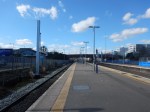
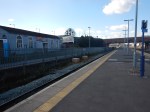
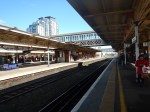

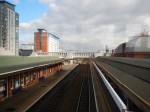
Two pictures were taken a few weeks ago and are added to make the gallery more complete.
The new pictures were taken from Platform 2, which when the electrification is complete and Crossrail has opened, will be the platform serving fast trains to the West.
This Google Map shows the layout of the station.
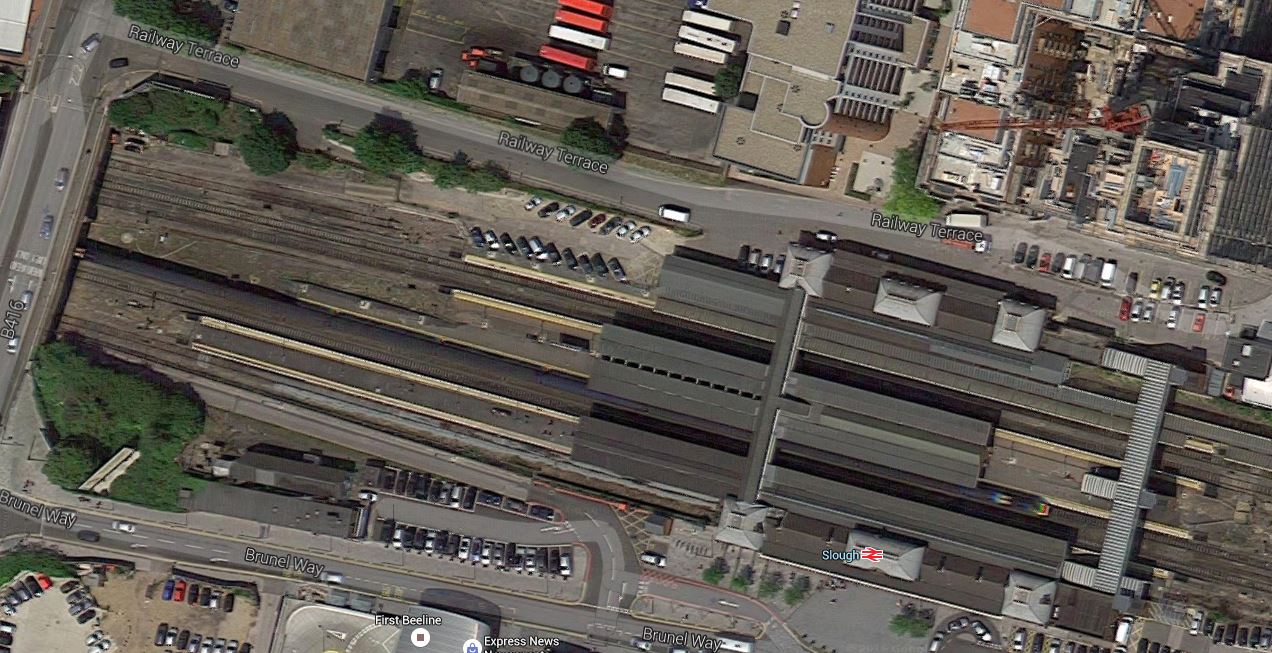
Slough Station
If you look at the left (West) end of the station, you’ll see the extended platform that in addition being Platform 2, also serves the bay platform 1 for Windsor Branch Line services. I took the pictures from this platform.
Platforms 3 and 4 form a long island platform in the middle of the station, with Platform 5 on the far side.
When Crossrail opens, platforms 4 and 5 will be for that service and platforms 2 ans 3 will serve the main lines.
I am puzzling about how the wires will be passed through the station.
Note the following from my pictures and the Google Map.
- The station is Grade II Listed, with lots of period details.
- A lot of the canopies over the platform are good Victorian examples.
- The station has two footbridges; a restored old one and a new modern one.
- The modern one has probably been built to double as a gantry for the overhead wires, but has the old one been strengthened.
- There is a solitary electrification mast on the island platform and this is paired with one on the far side of Platform 1.
- There is evidence that double foundations are being built for a very large gantry at the far western end of the platforms.
I think that over the next couple of months or so, a lot of clues to Network Rail’s electrification design, will become visible at Slough.
Electrifying Didcot Parkway
I took these pictures as I went through Didcot Parkway station this morning.


They seem to be using T-shaped central masts as they did at West Ham and I wrote about in Central Masts At West Ham.
This Google Map shows the station.

Didcot Parkway Station
If you read the Wikipedia entry for the station, you may come to a similar conclusion to myself – In a decade or so’s time, the pattern of services at the station will be very different.
Wikipedia says this about use of the West Curve that allows trains to go between Oxford and Swindon.
There are at present no scheduled passenger services which use the West Curve to avoid the station on direct services from Oxford to Swindon.
But once the East West Rail Link is built, will we see services from Swindon, Bristol and the West using the West Curve to go to Oxford, Milton Keynes and the East?
Aesthetic Problems With Overhead Wires On The Great Western
The April 2016 Edition of Modern Railways has an article entitled Thames Valley Wires Retrofit Planned. This is said.
A retrofit of overhead electrification on the section of the Great Western main line between Reading and Didcot is on the cards following complaints about the visual impact of the current design.
This are some pictures of the overhead gantries.
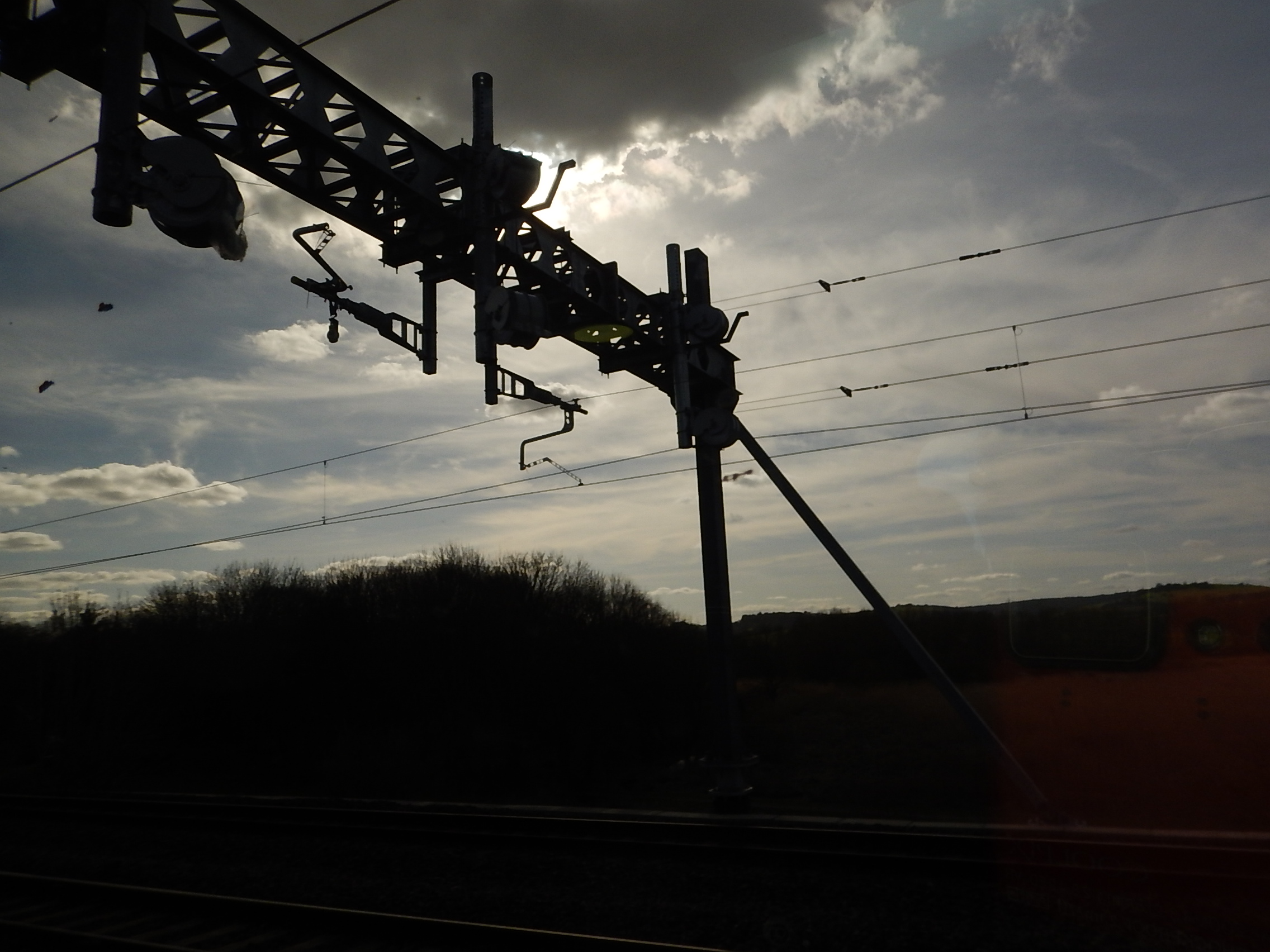


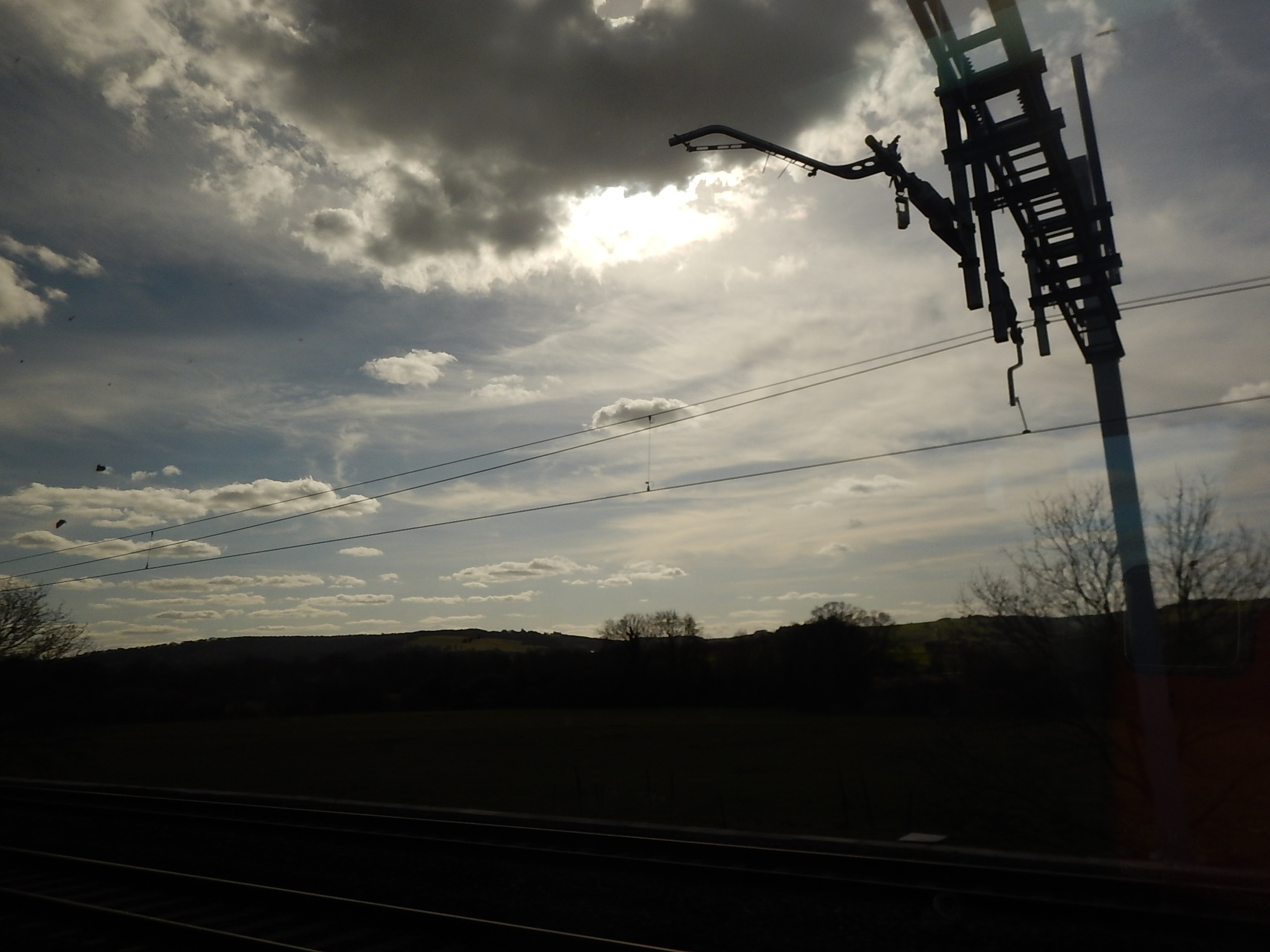
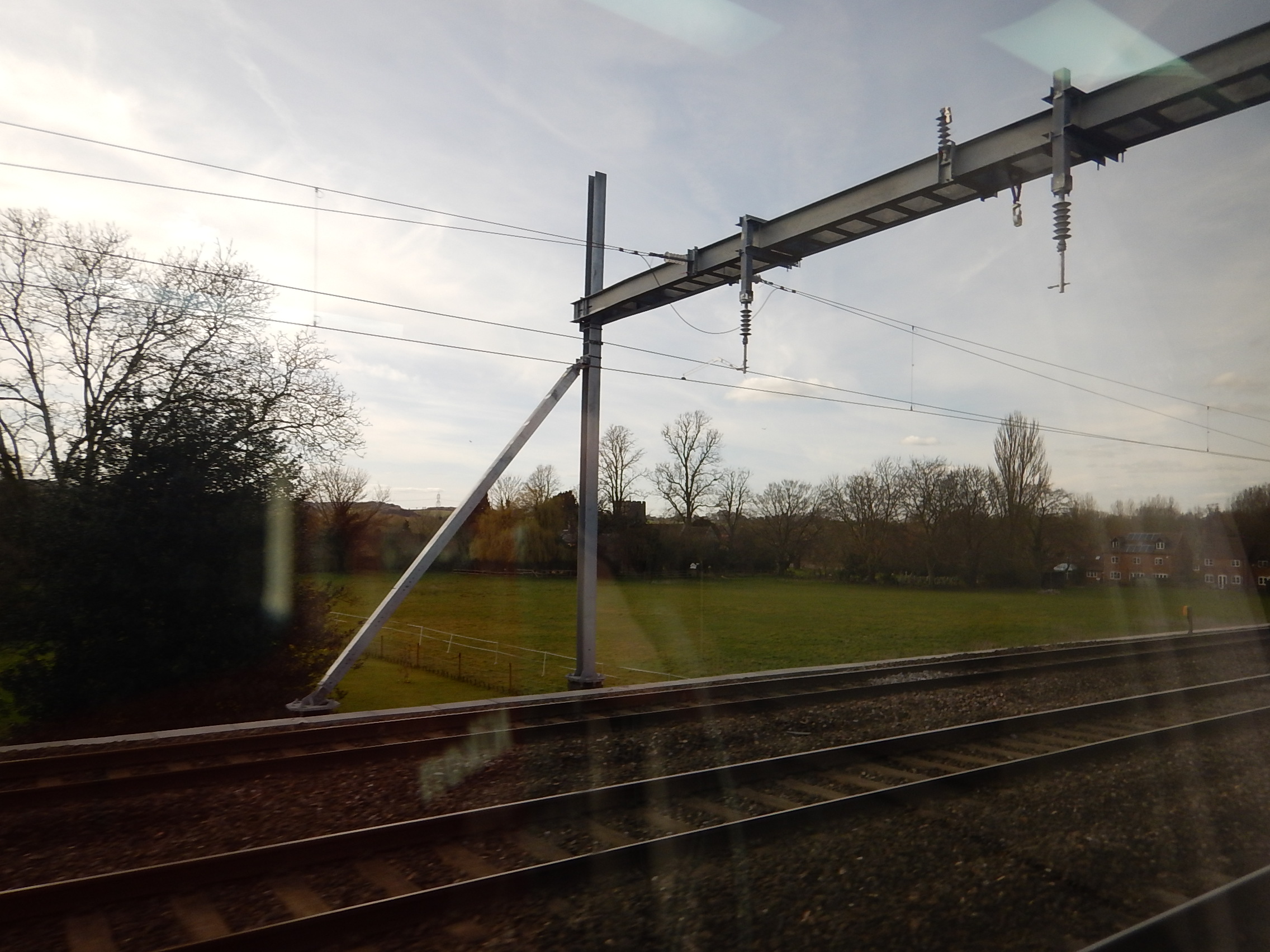
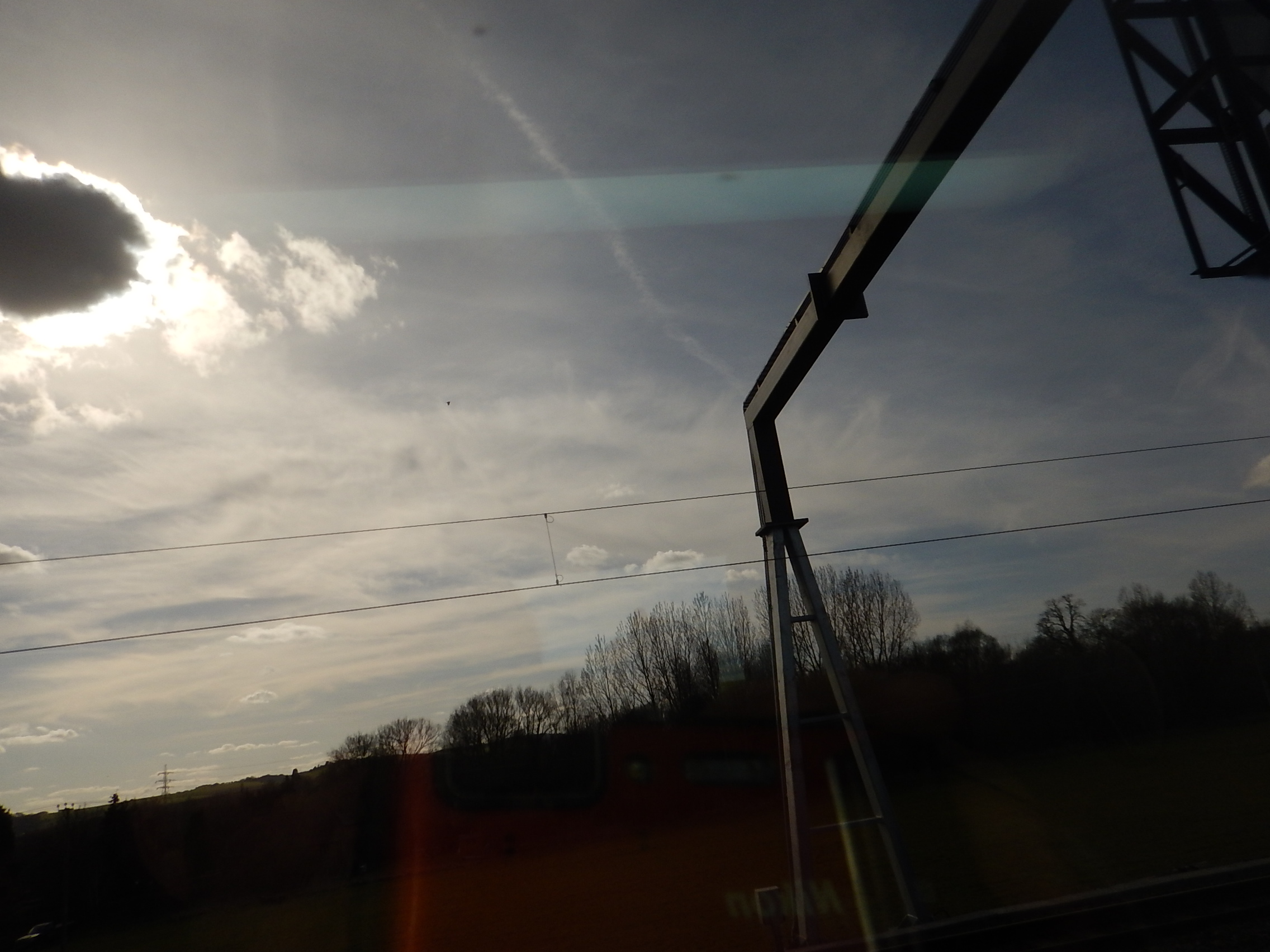
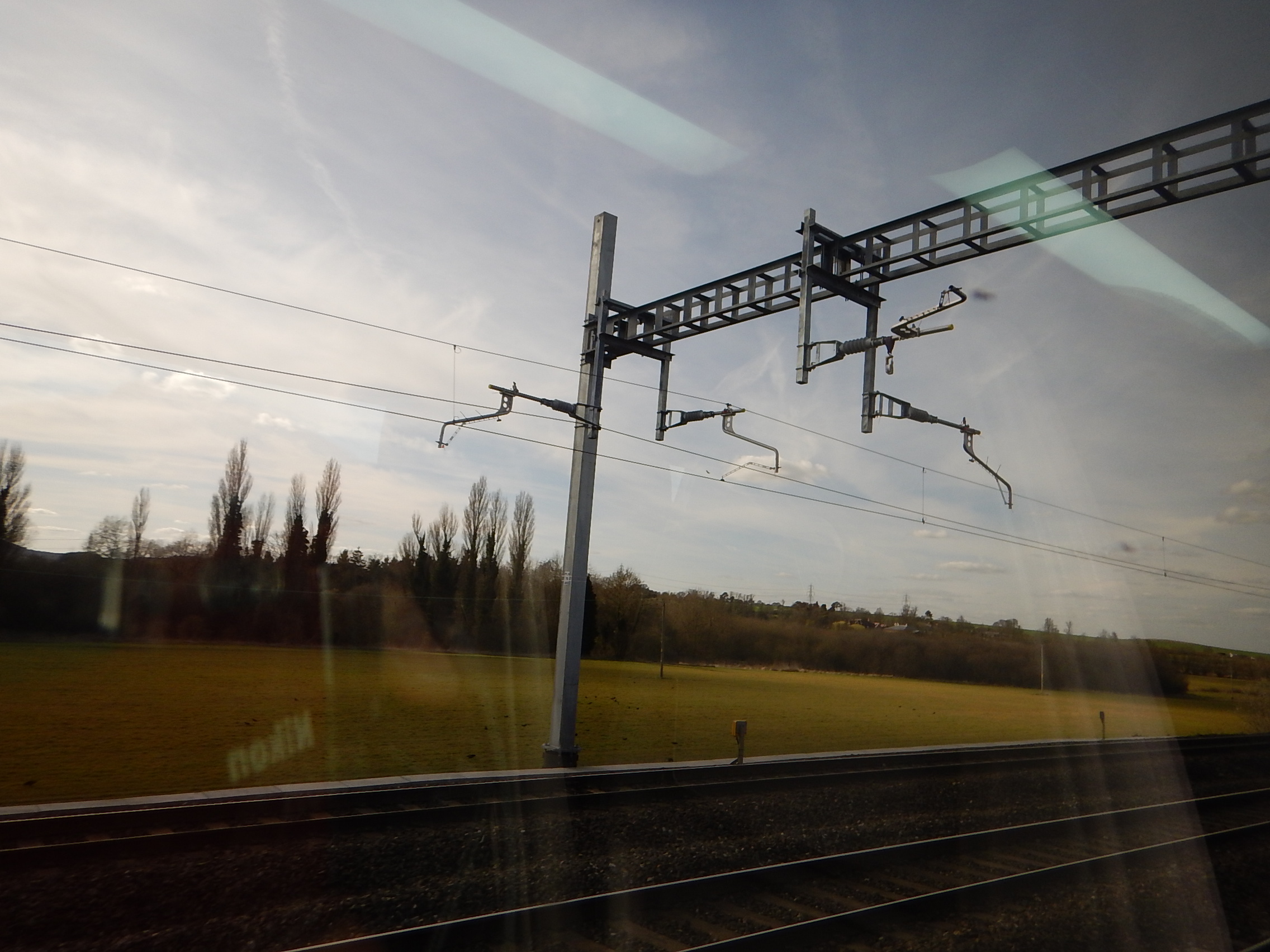
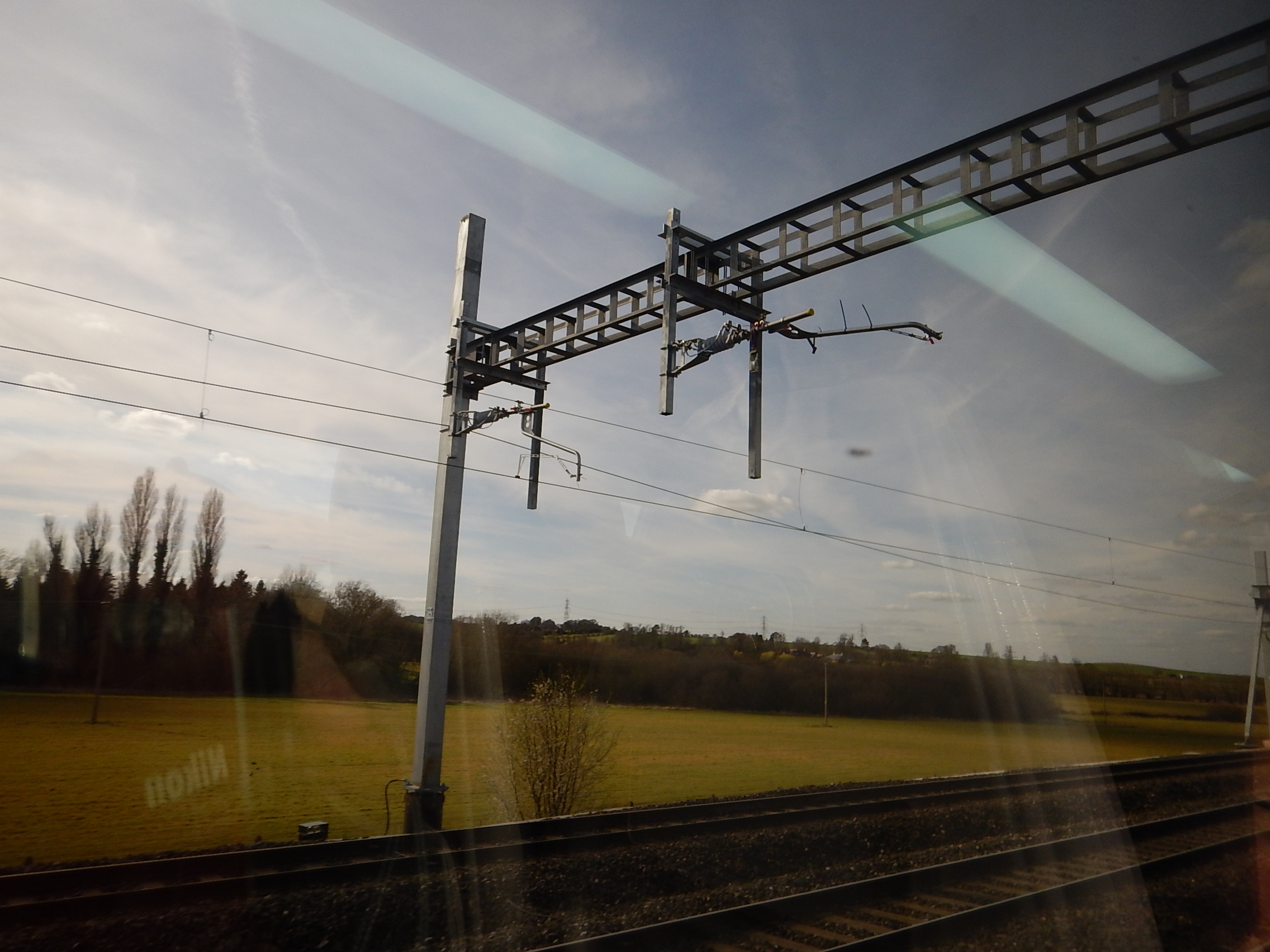
In my view, the design of the overhead gantries may well be better from a structural and reliability point of view, but it isn’t going to win plaudits for looking good.
Network Rail will have to do better!
Could This Be A Ground-Breaking Idea In Station Design?
This is an aerial view of the winning design proposal for Oxford station, by AHR
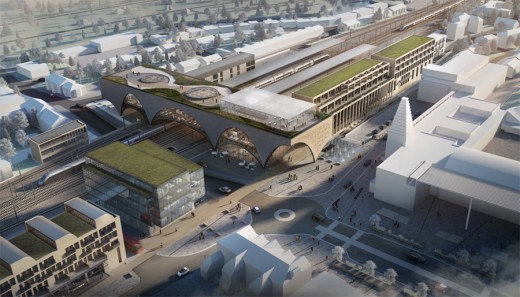
AHR’s Proposal For Oxford Station
It looks from the visualisation,that you have a wide covered bridge across the tracks, with a restaurant and other customer facilities on top.
I think it’s simple, but brilliant and if it gets built as designed, it will be an enormous asset to Oxford.
This Google Map shows the current station.

The Current Oxford Station
Note the white building to the north of the station on the East side, which is the Parcels Office, which is going to be turned into new platforms for Chiltern. In the new design, it looks like they are covered with car parks, with green grass roofs.
The simple concept of a wide covered bridge with a restaurant and other passenger facilities on top, has advantages.
- It turns a station into a fully-functional meeting point for the town or city.
- It could give spectacular views of some historic places.
- I suspect, that like Custom House station, it could be built in a nice clean weatherproof factory and put together like Lego.
- I feel, that it could be erected around and over a working railway without interrupting trains or passengers.
The concept would work in various places on the UK and other rail networks.
- Chelmsford – A major station on a cramped site.
- Coventry – Any poor architect couyld create something better than the current complete crap.
- Durham – Spectacular views of the Castle and Cathedral
It would also work on some of those wonderful stations, where the rail lines are squezed along the coast.
I think that AHR’s concept will be copied extensively.
Piccadilly Line Drivers Give Heathrow Express A Helping Hand
Yesterday, as the BBC reports, the drivers on the Piccadilly Line went on strike.
My view on the tube drivers and their constant strikes, is that it is not about safety, Night Tube or whatever, but a power struggle between the drivers union and Transport for London.
At least it’ll all stop if Sadiq Khan becomes Mayor as the unions will calm things down in the hope, that they’ve got a more union-friendly Mayor.
The only winners yesterday were Heathrow and their overpriced Heathrow Express, which as most Londoner’s wouldn’t use it, except as a last resort, probably got some strong language going in the pubs and on social media.
Now Yorkshire Gets An Outbreak Of London Overground Syndrome
The April 2016 Edition of Modern Railways has an article entitled Kirkstall Forge Opening In Mid-April, which talks about the three stations in Leeds; Apperley Bridge, Kirkstall Forge and Low Moor, which are currently being built.
This is said about Apperley Bridge station.
Meanwhile, the report to the Committee stated that passenger use of Appleby Bridge station has increased more quickly than expected.
So there is another outbreak of London Overground Syndrome, where traffic on a new piece of railway is higher than was predicted.
More On Class 345 Trains
In an article in this month’s Modern Railways, which is entitled 345 Counting On It, Ian Walmsley gives more details of the new Class 345 trains for Crossrail.
Ian uses phrases like.
Let’s get this out of the way first before I start enthusing (and I will) – personally I don’t like the interior colours.
Now I will go into full enthusing mode,
The bogies are the FLEXX Eco Bogie B5000-derivative inside-frame design similar to that on the Meridian (probably the only good thing about Meridians in my view)
The bodyshell is brilliant, and I say this as a passenger and an engineer.
The train is a fine piece of work.
He finishes by saying that he thinks the train will be a success for Bombardier.
Ian also throws in a few clues as to where Aventras might end up.
The 125 mph Aventra
Apparently, 125 mph Aventras are a possibility.So we could see High Speed Trains with similar performance to an InterCity 125, based on a train originally designed for commuters across London.
The High Speed Train With Batteries
One thing that Ian doesn’t mention about the Class 345 trains is whether they will be fitted with onboard energy storage. But he does say this.
Most braking will be done electrically, regenerating power to the grid.
So the answer is probably no! But it should be noted that Bombardier have told me that all Aventras are wired to accept onboard energy storage.
This raises the interesting possibility of the High Speed Train running on batteries.
I think that this could be a surprisingly large market.
Think of the routes which consist of two types of line.
- A high speed electrified line, which permits trains to travel at 100-125 mph.
- A secondary or branch line without electrification, that is up to about forty or fifty miles long.
On a quick look, I can think of these routes.
- London Liverpool Street – Ipswich – Lowestoft
- London Liverpool Street -Norwich – Yarmouth
- London Kings Cross – Bradford
- London Kings Cross – Harrogate
- London Kings Cross – Huddersfield
- London Kings Cross – Hull
- London Kings Cross – Lincoln
- London Kings Cross – Perth
- London Kings Cross – Sheffield
- London Kings Cross – Sunderland
- London St. Pancras – Hastings – Eastbourne – Brighton
- London Euston – Blackpool
- London Euston – Chester
- London Euston – Huddersfield
- London Euston – Shrewsbury
- London Waterloo – Exeter
I am assuming that electrification is at 2016 mileage.
As electrification increases more and more routes will be possible using a High Speed Train with batteries to extend the route away from the main line.
Merseyrail
Ian mentions Merseyrail as another target.
They would appear to be a good match to Merseyrail’s specification, that I wrote about in Is Liverpool Planning To Invade Manchester By Train?
- Merseyrail are looking to buy energy-efficient trains.
- Merseyrail stated in Modern Railways that they were seriously interested in having IPEMUs.
- Merseyrail want to expend their network and routes to Preston, Manchester via Kirkby, Chester via the Halton Curve and Wrexham via the Borderlands Line are very IPEMU-friendly routes.
- Merseyrail needs trains that are certified for working in tunnels.
- Merseyrail needs trains that can work on both third-rail and overhead electrification, which the dual-voltage Class 710/2 Aventra trains for the London Overground can do.
- Ian feels the train’s low weight could be enough to avoid sub-station upgrades.
In addition, the modular nature of the Aventra design means that Merseyrail could have a mixture of train lengths and voltages to optimise their procurement and operating costs.
East Midlands Trains
Ian says this about using Aventras for East Midland trains electrics.
As a 125 mph unit it would cope well with Corby commuters and the ‘Master Cutler’ crowd. – It is all about the interior.
I think there are other factors, that could be useful, if some or all of the trains were an IPEMU variant.
- I think Corby could be reached from St. Pancras by an IPEMU using the existing electrification.
- Running on batteries through the Derwent Valley World Heritage Site, might avoid tricky negotiations with the heritage lobby.
- Services could be extended past the current terminals of Nottingham and Sheffield.
Using Aventra IPEMUs would enable a whole new method of railway electrification.
Starting from Bedford, the electrification would be performed northward and as each section was completed, the Aventras could reach twenty or thirty miles further.
So electric train services would arrive at a town earlier than by using traditional methods.
Europe
Ian finishes the article with.
With the new design, Bombardier can take them all on. I think we will see this product platform around for many years, capitalising on the succes of Electrostar, and who knows, maybe even exporting to Europe? 345 – count on it.
If Bombardier have the right product, why not?
 The Anonymous Widower