If Manchester Victoria And Birmingham New Street Were The First Two Courses, Is Carlisle The Third?
Manchester Victoria and Birmingham New Street stations have one thing in common with the Eden Project – They all have roofs made of a plastic called ETFE.
According to this article on Network Rail’s web site, which is entitled £14.7m upgrade planned for Carlisle station, Network Rail are going to fit a third station with an ETFE roof. This is said.
Eight of the platforms will be rebuilt, and an updated roof will also help to make the station much brighter.
The work will significantly extend the life of the station’s roof structure, which dates back to 1847, as well as reducing the amount of maintenance it will need. The existing roof covering will be replaced with one made from ETFE (ethylene tetrafluoroethylene), the same material used for the roofs of the new Manchester Victoria and Birmingham New Street stations.
There’s also a computer visualisation of how Carlisle station will look.
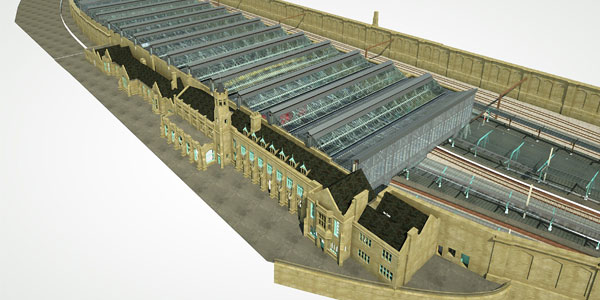
New Roof At Carlisle Station
This Google Map shows the station.
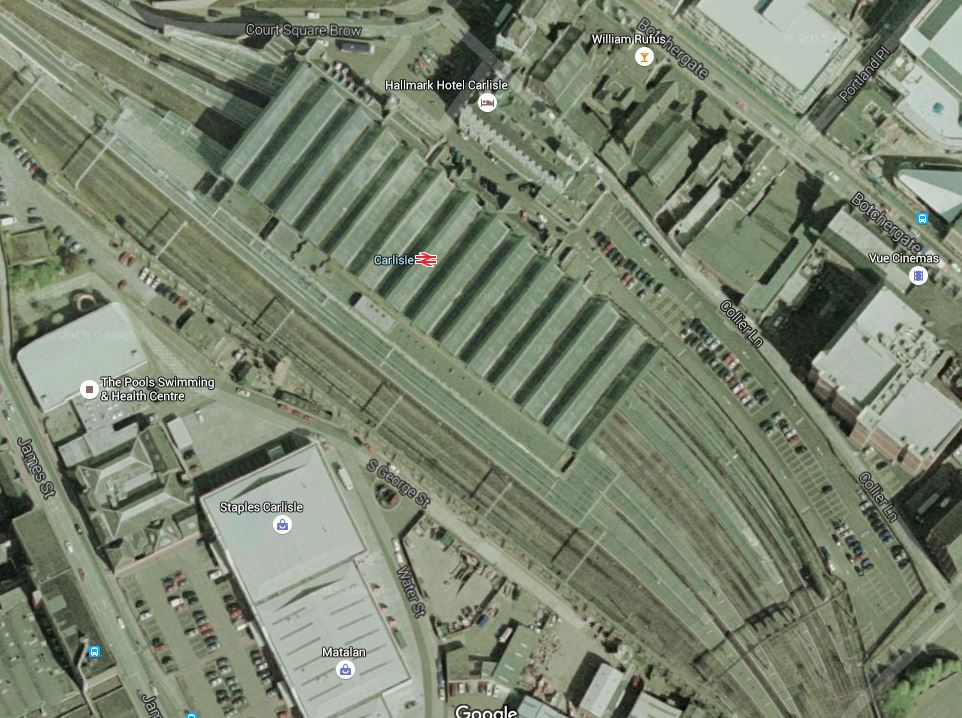
Carlisle Station
Note there are three through platforms, two bay platforms to the North and three to the South. I don’t think too many of the bay platforms are electrified.
I just wonder, if whilst they are rebuilding the platforms, they will electrify some of the bay platforms. Or at least do the preparation work!
This would enable IPEMUs to be able to be recharged, if they were serving routes out of Carlisle, like the Tyne Valley Line, Settle to Carlisle and possibly an extended Borders Railway.
Incidentally, I think that by the time Carlisle station is updated in 2019, IPEMUs or battery trains, would have enough range to reach Edinburgh. You can see the headlines in the Sun!
Investigating St. Johns Station
St. Johns station is a curious one, in that it is just two platforms on the slow lines, amongst a forest of lines.
This map shows the lines around St. Johns station to Lewisham, New Cross and New Cross Gate stations.
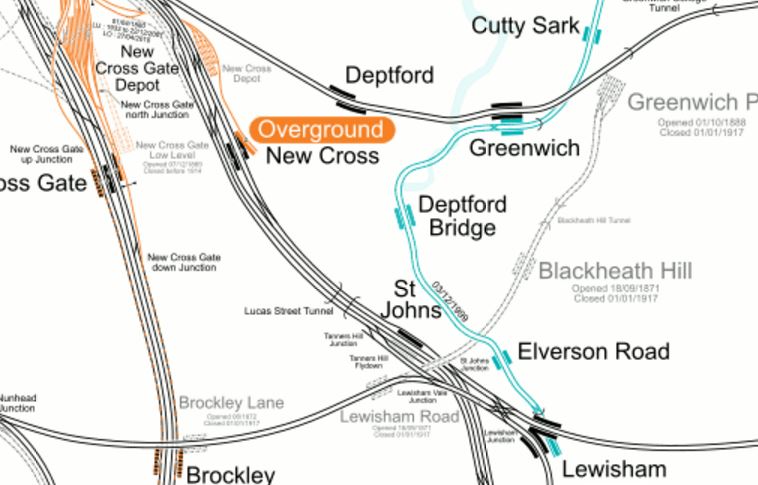
Lines Around St. Johns And Lewisham Stations
These are pictures I took of the station.




As the pictures show, it is a fairly basic station, although it does get over half a million passengers a year.
On the other hand, it does have Southbound services to Lewisham, Orpington, Hayes, Slade Green and a host of places all over South East London.
I believe that if the station were to be upgraded with step-free access to the street, a nice warm waiting room, a coffee stall and excellent information, then this station would become the preferred interchange for passengers on East London Line trains wanting to go to and from many places in South East London.
Changing At New Cross
If you get an East London Line Class 378 train and want to continue your journey South from New Cross station, you often just walk across the platform to catch your next train.
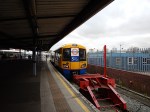
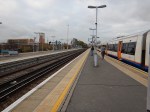
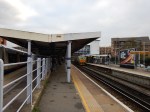
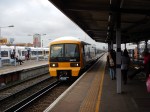
The pictures show how I changed at New Cross for St. John’s station.
There is no problem going South but coming North, you have to climb over the bridge from platforms A or B to get to platform D. The walk is step free, but modern station layouts would be designed, so that you walk across between trains or wait on the platform for a few minutes, until your train arrives.
In an ideal world Northbound East London Line services would start from Platform A, with Platform B being reserved for services to Cannon Street.
New Cross Gate station uses a layout with the East London Line trains calling at the outermost platforms.
This would not be possible at present with the trains terminating at New Cross in Platform D, as they have no means to get to Platform A, without reversing out and crossing the busy lines through the station.
But if the East London Line trains terminated South of New Cross, this would not be a problem.
The service frequency from New Cross to Dalston Junction would still be the same as now, but there would be differences.
- Passengers joining the railway at New Cross wanting to use the East London Line to go North would have to cross the step-free footbridge, just as passengers for Cannon Street do now.
- Usually, because the Northbound East London Line train is waiting, you can sit and wait in a warm train, rather than on a draughty platform.
- Passengers from St. John’s, Lewisham and other stations in the South might avoid at least one change of train, by using East London Line trains.
Remember too, that from 2019, Crossrail will run through Whitechapel, giving better access to the West End, Paddington. Heathrow and East London. Charing Cross and Cannon Street aren’t exactly connected well to Crossrail. This will surely see a lot of passengers going between New Cross and Whitechapel.
An Opportunity At Catford
I’d never been to Catford before, but several things drew me to the area.
- Catford Bridge station is mentioned as a possible stop for the Bakerloo Line Extension.
- Maps show it is very close to Catford station and I wondered why they weren’t one station.
- Catford is mentioned in the Appendix of TfL’s Transport Plan for 2050, as a place for a new link and/or station.
This Google Map shows the two stations.
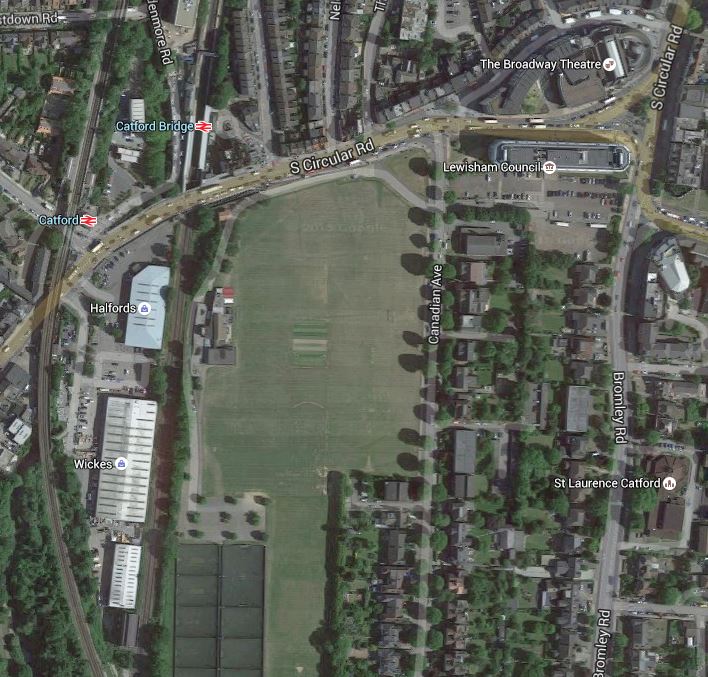
Catford Stations
The two stations are only about eighty metres apart and they are not that far from Catford Town Centre. The big drawback is that the road between the stations and the centre is the dsreaded South Circular Road, so it is busy with traffic.
To be fair to Lewisham Council, they have produced this document entitled Catford Town Centre Local Plan.
The plans are sensible and envisage improving the area of the two stations considerably.
This pictures show the area now.


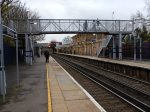


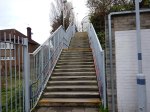


Barratts are building a large number of dwelling on the former Catford Stadium site between the stations. They call it Catford Green and there are more details on the Lewisham Council web site. This is said on the council web site.
The development – located between Catford’s two stations and Ladywell Fields – will comprise 13 blocks up to a maximum of eight storeys in height, along with associated landscaping, including naturalisation of the River Ravensbourne and the creation of a public plaza between the stations, plus a footbridge to Doggett Road.
I’m no architect, but even I can see that the site has a lot of possibilities, especially as the lines through Catford are on a viaduct and are thus higher than the lines through Catford Bridge. So perhaps this natural slope could be used to advantage.
Remember too, these facts.
- Over a million people use both stations in a year.
- Interchange passengers are over fifty thousand a year.
- I think it is true to say that neither station is very customer-friendly and I suspect Catford is rather cold and draughty.
- Catford station will see new Class 700 trains in a few years, as it is on Thameslink.
The effects that the last fact will have on passenger numbers, won’t be negative.
I think it will be unlikely if the two stations are not linked to each other and the town centre by an imaginative development, within the next few years.
Signs Of The Northern Line Extension
I have been past Battersea Power Station twice in the last few days and have been able to take pictures of the conveyors linking the excavations of the now-started Northern Line Extension to the river.
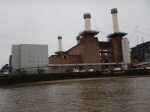
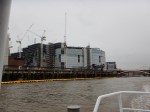
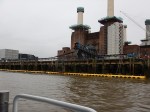
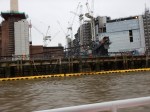
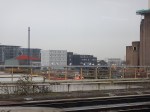
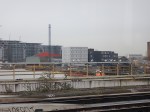
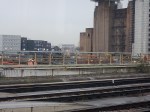

I do wish I could find a train from which it is possible to get a decent photograph of the conveyors and the barge, which is used to take the spoil away. Sadly, it wasn’t there when I took the Thames Clipper trip yesterday.
In this article in the Railway Gazette, the following is said.
Boring of twin tunnels is due to begin in early 2017 and is expected to take six months to complete. An expected 680 000 tonnes of material would be excavated. A 300 m long conveyor belt will carry 92% of this to the River Thames, from where barges will carry it to Goshems Farm in East Tilbury to the east of London.
This is only a small project compared to Crossrail or Crossrail 2, but you have to wonder, if we should be doing a few smaller rail projects like this, to squeeze more capacity out of our overcrowded railways, metros and trams.
In London some smaller projects come to mind.
- Extending the Victoria Line to Herne Hill station, which I wrote about in Could The Victoria Line Go To Herne Hill?
- Extending the Bakerloo Line, which according to this TfL press release has overwhelming support.
- Reinstating the Hall Farm Curve to allow direct services between the Chingford Branch Line and Stratford.
- Connecting the Central and East London Lines at Shoreditch High Street station.
The only certainty, is that the projects that get started will surprise us.
Sailing Down The River
As a child, I enjoyed going for a boat trip on the Thames. I always wanted to go further than just a quick turn at Big Ben, but my mother said it was too expensive. Especially, if you took into accpunt, the cost of going up on the Piccadilly Line and tea in Lyons Corner House.
So this morning, I took the Underground to Putney Bridge station before walking across the river to Putney Pier, where I got a Thames Clipper to Blackfriars.



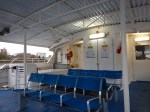
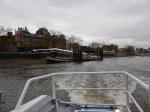
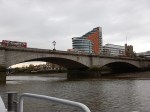




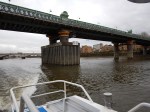
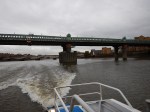







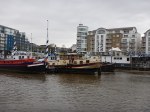


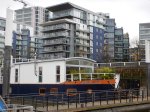

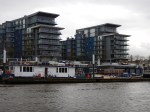
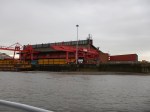
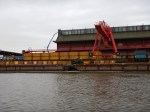
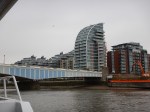


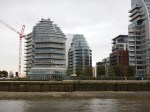






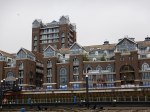
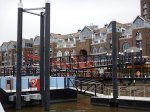





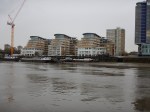
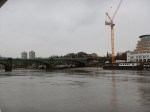

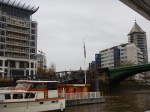

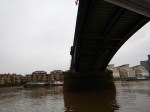
















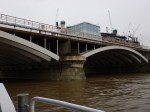
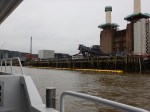
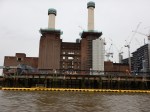
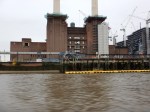
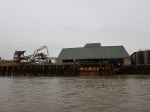




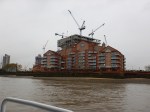




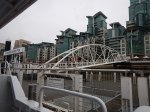





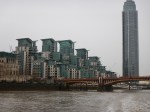


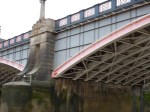




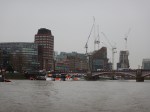




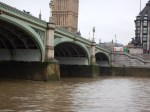


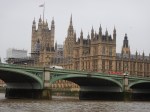
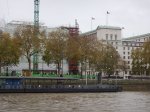
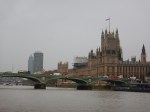



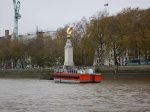
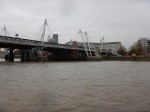
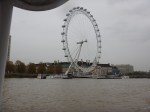

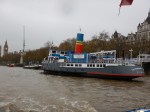


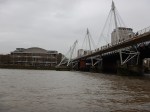

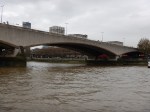

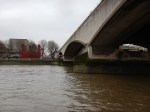
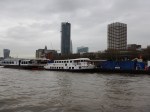





The reason I did it so early, as this is a trip that is only possible in the morning rush-hour. Even so my nine o’clock boat wasn’t very full and there were just two of us on the observation deck.
It’s certainly the best time to do the journey if the weather is fine!
Bombardier’s Battery Technology
I have just found this timely article in the Rail Engineer entitled Battery-Powered Tram Record.
It is a detailed technical article about batteries and their application to Bombardier’s new trams in Germany.
Is it a case of trams today and trains tomorrow?
Are The Class 387 Trains Getting Excited?
I travelled from Blackfriars to St. Pancras on one of Thameslink’s Class 387 trains.


With only a couple of hours to the Chancellor’s Autumn Statement, are these trains getting excited about visiting places they never thought they would?
Since I wrote Rumours of Battery Powered Trains a few months ago, nothing has been heard. In that article I quoted from Modern Railways, who said this about future orders for Class 387 trains.
Delivery as IPEMUs would allow EMUs to make use of as much wiring as is available (and batteries beyond) while electrification pushes ahead under the delayed scheme, and in the longer term would allow units to run on sections not yet authorised for electrification, such as Newbury to Bedwyn. The use of IPEMUs might also hasten the cascade of Class 16x units to the west of the franchise.
Note that IPEMU is Network Rail’s term for a part-time battery train, that has the same performance as a standard train.
It is a deafening silence!
There has been nothing heard about electrification either, except the award of the contract for the Gospel Oak to Barking Line to J. Murphy and Sons as reported in this article in Rail Technology.
So is it a case of no news is good news for electrification?
I still believe that a fleet of Class 387 IPEMUs could be used to extend electrification by stealth, into areas, where everybody thinks it is impossible to go.
I would use them to run these routes for a start.
- Liverpool to Newcastle – There is one gap of 43 miles between Leeds and Manchester
- Blackpool to Scarborough – There might need to be some electrification at Scarborough
- Liverpool to Hull – There might need to be some electrification at Hull
- Euston to Blackpool
- Euston to Chester
- St. Pancras to Corby
- St. Pancras to Leicester – There might need to be some electrification at Leicester
- Kings Cross to Hull
- Kings Cross to Harrogate
- Kings Cross to Lincoln
- Kings Cross to Middlesbrough
- Kings Cross to Sunderland
- Liverpool Street to Lowestoft
- Liverpool Street to Norwich via Ely
- Ipswich to Cambridge
- Ipswich to Peterborough
- Paddington to Oxford, Newbury and Bedwyn
- St. Pancras to Ashford, Hastings and Eastbourne
- London Bridge to Uckfield
- Assorted Branch Lines to Barrow, Felixstowe, Greenford, Maidenhead, Marlow, Windermere and Yarmouth
On many of these lines, IPEMUs could run as soon as they are built or modified from existing trains!
If anybody doubts the concept, it could be proven on the Gospel Oak to Barking Line in North London.
So how does electrification figure in George Osborne’s statement?
Note these points!
- Electrification cuts carbon emmissions.
- Electric trains are faster and more efficient.
- Electrification needs to be done all over the country, so a lot of areas will benefit.
- It looks like there are upwards of thirty Class 387 trains, that have nowhere to go! But fitted with batteries they do!
- Using battery trains means that the costs and disruption of electrification are reduced.
If electrification is enabled using battery trains, it will be the biggest rabbit any Chancellor has ever pulled!
Battery Trains In Japan
Some think I’m wrong about battery trains and believe they will never catch on! But none of the doubters are engineers or physicists, and perhaps more importantly none rode the amazing Class 379 BEMU, when it was being trialled last year in Essex.
I have just searched for battery trains and found this article on the Rail Journal web site entitled Battery-Electric Trains For Japan’s Oga Line. This is said.
EAST Japan Railway Company (JR East) has announced plans to carry out trials with ac battery-electric multiple units (BEMUs) on the 26.6km Oga Line in Japan’s northern Akita prefecture from Spring 2017.
But this is not an experiment, as this is said later.
The Oga Line will be the second line on the JR east network to benefit from BEMU operation, following the introduction of EV-E301 series trains on the Karasuyama Line in Tochigi Prefecture in March 2014.
If the Japanese use BEMU (IPEMU in the UK!) technology in daily service, it can’t be their version of Mickey Mouse! The train is called an EV-E301, and looks a professional train, even if a bit spartan for use in the UK.
I just wonder when George Osborne makes his Autumn Statement today, will he be announcing new battery-electric trains or IPEMUs for all?
In my view, it’s the only way to electrify large parts of the UK and reduce the costs of electrification!
London Gets Its First Community Rail Partnership
There are over fifty Community Rail Partnerships in the UK. This is an extract from the Wikipedia entry.
The Association of Community Rail Partnerships (ACoRP) supports its fifty or so member CRPs and also offers assistance to voluntary station friends groups that support their local stations through the station adoption scheme. Since 2005 the Department for Transport has formally designated a number of railway lines as community rail schemes in order to recognise the need for different, more appropriate standards than are applied to main line railway routes, and therefore make them more cost effective.
As the numbers keep increasing, I suspect that central and regional government, local authorities, passengers rail companies and staff, think they are a good idea.
Today’s in some ways surprising news, is that London is to get its first Community Rail Partnership in Hounslow. Sewvn stations are involved on the Hounslow Loop Line.
This article in Rail Technology Magazine gives more details of the partnership.
How many more Community Rail Partnerships will London embrace in the next few years?
 The Anonymous Widower