A First Ride In A Class 707 Train
I had my first ride in a Class 707 train today, from Clapham Junction station to Waterloo station.
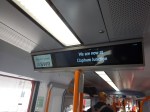
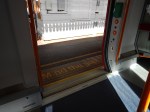
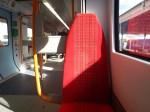
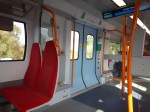
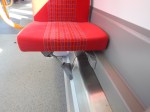
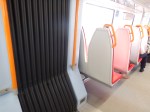
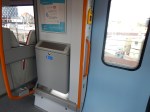
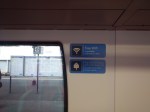
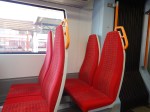
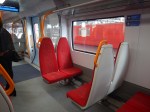
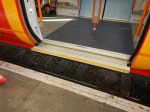
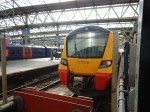
I had expected a few glaring faults, as South Western Railway is dropping the trains.
But there are some good features.
- Wide doors and spacious lobbies.
- Free wi-fi, unlike the closely-related Class 700 trains.
- Power scokets, unlike the Class 700 trains
- Large litter bins.
- Reasonably comfortable and spacious seats.
- Walk-through.
And a few bad ones.
- No 4G signal booster.
- No full-length walk-through as two five-car trains, rather than one ten-car train.
- A high step into and out of the train.
But they are certainly better than Thameslink’s Class 700 trains.
The current schedule between Waterloo and Windsor and Eton Riverside stations appears to be something like this.
- Waterloo to Windsor and Eton – 54 minutes
- Turnback at Windsor and Eton – 31 minutes
- Windsor and |Eton to Waterloo – 56 minutes
- Turnback at Waterloo – 9 minutes
Which works out at a very neat two and a half hours for the round trip.
So for a two trains per hour (tph) service you need five trains.
The timetable is written around 75 mph Class 455 trains, but the Class 707 trains are 100 mph units with a shorter dwell time at stations.
In each direction, there are twelve stops, which will give savings of at least a minute at each stop, due to the faster acceleration and smoother regenerative braking.
So assuming a minute is saved at each stop, that brings the round trip time to 126 minutes. Reduce the turnback time at Windsor and Eton Riverside and I feel it would be possible to do the round trip in under two hours.
Which would mean that the current two tph service would need four trains.
From Twickenham station, the route is fairly straight and this may enable more speed improvements on the route.
The Waterloo to Windsor and Eton Riverside service is a classic example of how running faster trains often needs less trains to provide the same or even a better service.
Conclusion
I could see trains taking forty minutes on this route.
With the possible savings on the Waterloo to Windsor and Eton Riverside service, you can understaqnd, why this is the first route to receive the new trains.
A New UnBorised, Corbynless, Farage-frei British Generation Can Then Step To The Plate
The title of this post is the last sentence in an article in today’s Times by David Aaronovitch, which is entitled Macron Offers Us A Way Out Of Brexit Mess.
It is well-worth a read.
By step up to the plate, he means rethink their relationship with a reformed Europe.
Jumbo Trains Are Arriving
This article on Global Rail News is entitled DB Cargo UK’s First “Jumbo Train” From Cardiff Makes Maiden Journey. This is the first paragraph.
DB Cargo and Cemex UK made history earlier this month when the freight operator’s first “jumbo train” of 34 wagons made its maiden journey from Cardiff.
The cargo was building materials from South Wales for London and the South East.
Yesterday, I also took this picture of a very long cement train at Stratford.
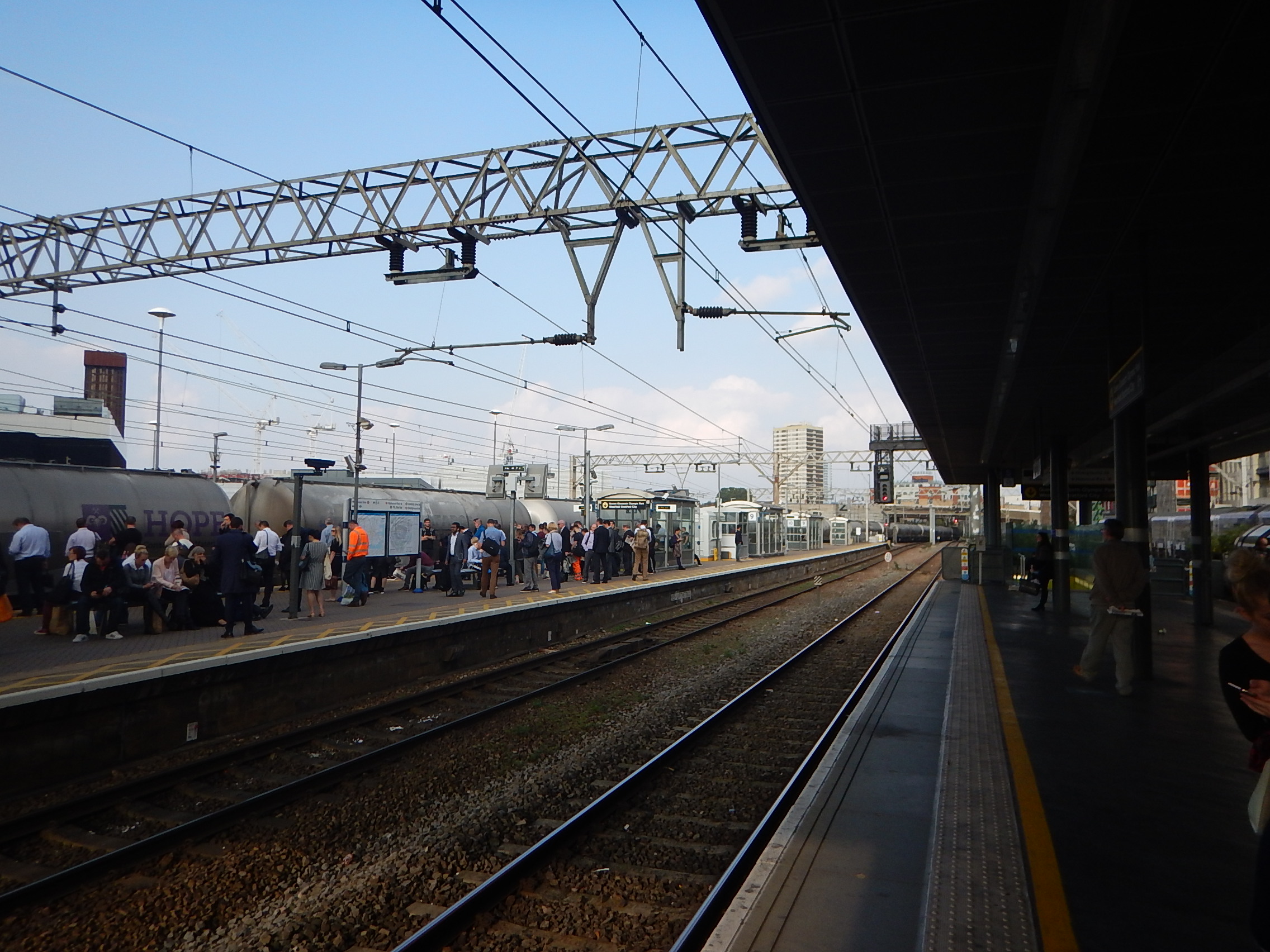
The building boom in London and the South East is still requiring large amounts of cement and aggregate.
Long trains like these have various consequences.
- They increase the capacity of the railway, as longer trains make better use of the available freight paths.
- They take more trucks off the road.
- Track, junctions and sidings may need to be updated to handle the longer trains.
- The trains need two locomotives.
It’s not just aggregates and cement that will be transported this way, but containers, new cars and vans, bio-fuel for power stations and aviation fuel.
New Locomotives
The biggest need will be for new locomotives. At present, Wales to London aggregate trains are hauled by a pair of Class 66 diesel locomotives. When electrification is complete between London and Cardiff, surely this route should be handled by a pair or even a single large electric locomotive.
This article in Rail Magazine is entitled GB Railfreight In ‘Locomotive Acquisition’ Talks.
So at least one freight company is looking for new motive power.
What characteristics will the locomotives need?
Adequate Performance
The power and operating speed of the various modern locomotives used for freight are as follows.
- Class 66 – Diesel – 2,460 kW – 75 mph
- Class 67 – Diesel – 3,200 kW – 125 mph
- Class 68 – Diesel – 2,800 kW – 100 mph
- Class 70 – Diesel – 2,750 kW – 75 mph
- Class 90 – Electric – 3,730 kW – 110 mph
- Class 92 – Electric – 5,040 kW – 87 mph
There is also the Class 88, which can run on both electric or diesel power.
- Diesel – 700 kW
- Electric – 4,000 kW
An operating speed of 100 mph is quoted in Wikipedia.
If the locomotive was to replace two Class 66 locomotives working together, it would appear the locomotive would need a power of around 5,000 kW.
I took this picture of a Class 90 electric locomotive and a Class 66 diesel locomotive double-heading a freight train.
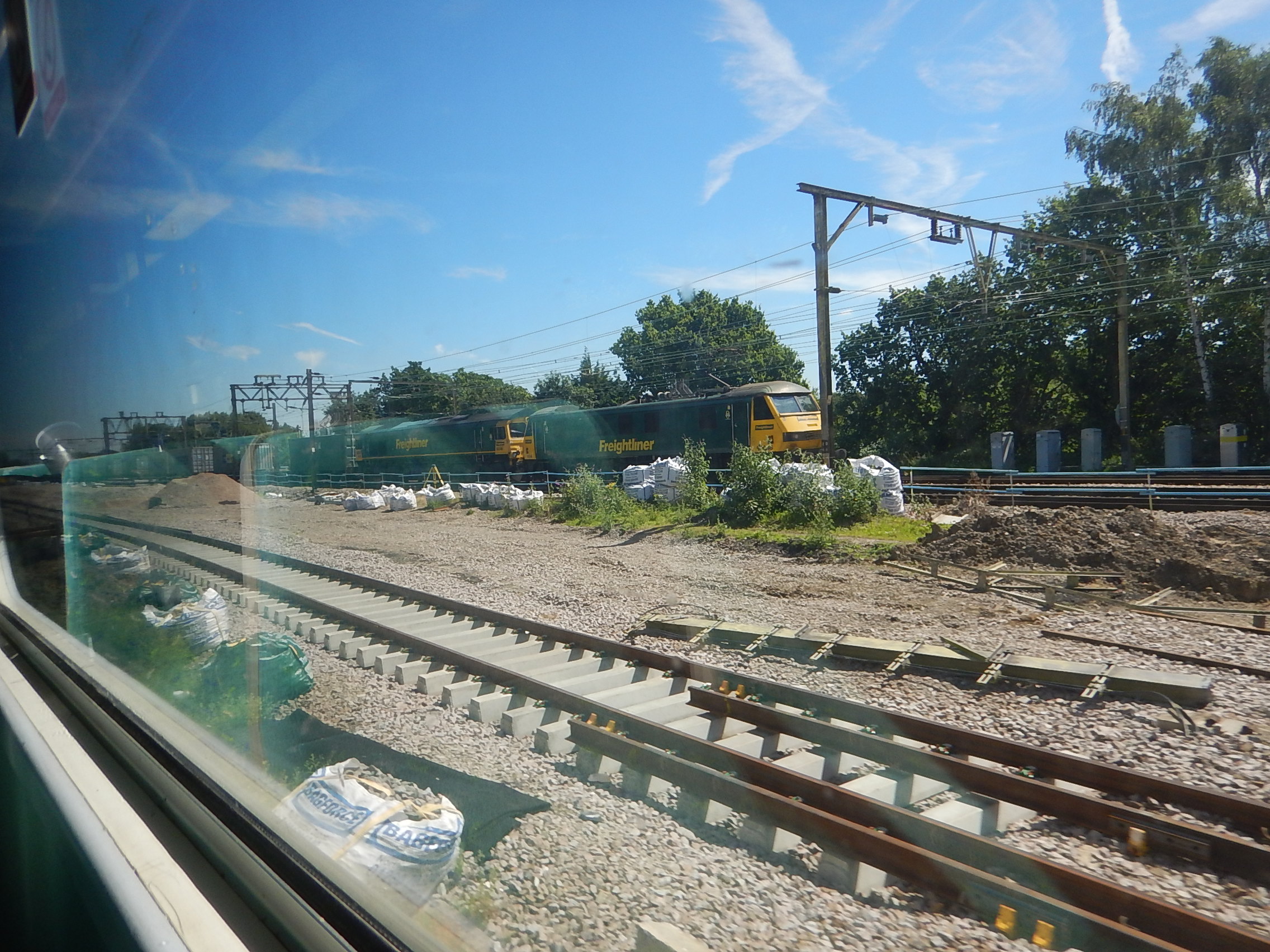
The two locomotives would have a combined power of about 6,200 kW.
Diesel, Electric Or Dual Power
Does the picture, indicate a need for a high-power dual mode locomotive?
Or was it just convenient to pull the freight train out of the Port of Felixstowe with a Class 66 locomotive and then add a Class 90 locomotive to pull the train on the electrified route to London?
As the freight companies are regularly reported as needing more locomotives, I suspect some unusual motive power is used at times.
Now that the Class 88 dual-mode locomotives are coming into service, I would suspect that the capability of these locomotives is being examined in detail.
It may only have 700 kW using diesel, but 4,000 kW using electricity is very respectable, although not as much as two Class 66 locomotives working together.
The Bombardier TRAXX
The Bombardier TRAXX is a family of locomotives, that come in electric, diesel and dual-mode versions.
Several hundred have been ordered.
A version of this locomotive or something similar might fit the specification.
Conclusion
Some more powerful freight locomotives are needed, but the designs should be available.
The Storm In The Teacup Over Uber
I’ve only ever used Uber once and the guy got lost three times between Walthamstow and Dalston. For the pick-up he had come all the way from Ealing, so how environmentally-friendly is that?
I generally only use black taxis from a rank, as otherwise I use the buses or trains, as I have a Freedom Pass.
What I object to about Uber is a variety of things.
- How can I be sure that the driver is fully insured and pays their taxes?
- All private hire cars and taxis should be recognisable. So Uber cars must have an Uber sign on the side!
- I like to pay taxis in cash!
- Uber’s database will get hacked soon and I don’t want to lose my details.
But the biggest thing about Uber and the other private hire vehicles is the congestion and pollution, the number of vehicles in London creates.
All new black taxis will have to be zero-emission after the first of January 2018 and vehicles over 15 years old will have to be retired.
Do the same rules apply to Uber and the other private hire vehicles? If not, it’s not a level playing field!
I said it was a storm in a teacup about Uber. TfL, Uber and the other private hire vehicle companies will agree a set of rules, which is fair to all.
And that must cover the important ones of driver suitability, congestion and pollution.
But within twenty years all taxis will be driverless electric vehicles. As one black-cab driver put it to me, if he could buy one of those, he wouldn’t need to suffer the stresses of driving in London and he could retire.
Mathematics Of The Lea Valley Lines
The mixture of Class 315 and Class 317 trains on the Lea Valley Lines are being replaced by new Class 710 trains.
Train For Train Replacement
London Overground currently has the following fleet, which work the Lea Valley Lines.
- 17 x Class 315 trains – 75 mph
- 8 x Class 317/7 trains – 100 mph
- 6 x Class 317/8 trains – 100 mph
All these trains are being replaced by thirty-one Class 710 trains, which are 100 mph trains with a shorter dwell time at stations.
Time savings of over a minute, are claimed for each station stop, by other train manufacturers for their new generation of trains.
As one train is used on the Romford to Upminster Line, that leaves thirty trains to work from Liverpool Street to Cheshunt, Chingford and Enfield Town stations.
The Current Lea Valley Services
The current Lea Valley services can be considered to be two separate four trains per hour (tph) services to the following destinations.
- Chingford
- Edmonton Green with 2 tph extended to each of Cheshunt and Enfield Town.
Journey times are as follows from Liverpool Street.
- Cheshunt – 39 minutes
- Chingford – 27 minutes
- Ednonton Green – 31 minutes
- Enfield Town – 34 minutes
As an illustration of the slowness of some of these times, the fastest Cheshunt services take around twenty-five minutes, but they use the West Anglia Main Line, which has a higher speed limit.
Improving Journey Times
So how can journey times be improved?
The following factors will apply.
The Aventra Advantage
The Aventra and other modern trains will have the following advantages.
- 100 mph operating speed.
- Powerful acceleration and smooth regenerative braking.
- Driver assistance systems to optimise train speed.
- Level access from train to platform.
The last three factors will minimise the dwell time, when stopping at a station. Savings of up to three minutes have been claimed by some train manufacturers.
All Passenger Trains On The Routes Will Be Aventras
How much time this will save will probably be decided in practice.
Track, Station And Signalling Improvements
The operating speed of the routes is 40-75 mph , which could surely be improved.
Obvious problems include.
- Level crossings at Bush Hill Park, Highams Park and Theobalds Grove.
- Platform-train interface.
- Provision of Harrington Humps.
A detailed analysis will probably be done to iron out any small time delays in running the routes.
Rewrite The Timetables For Aventras
Currently, the timetables are written so that they can be reliably run by the 75 mph Class 315 trains and also to allow for their possible presence on the routes.
How Much Can Be Saved?
This is a bit like asking how long is a piece of string, but assuming savings of a minute a station gives the following times.
- Cheshunt – 24 minutes
- Chingford – 20 minutes
- Ednonton Green – 20 minutes
- Enfield Town – 21 minutes
I would not be surprised if substantial time savings could be saved,
Liverpool Street Station
The pair of four tph services will mean that there will be a train arriving in Liverpool Street station every seven and a half minutes.
This should be no problem on two platforms, especially as all trains will be identical and designed for a fast turn-round.
Will they arrive and depart from a pair of platforms at Liverpool Street stations, like 2/3 or 4/5, so that passengers would know that their Lea Valley Line train always left from the same gates at the station?
This would surely make it easier for the train presentation teams!
Hopefully, by analysing the turning of trains, minutes can be saved.
Each Route In Detail
I shall now look at each individual route.
Liverpool Street To Edmonton Green
North of Hackney Downs station, in the Off Peak, the only trains on the route will be the following services.
- Two tph between Liverpool Street and Cheshunt
- Two tph between Liverpool Street and Enfield Town
These will be augmented in the Peak by some Greater Anglia limited-stop services stopping at Edmonton Green, Seven Sisters and Hackney Downs stations.
Current timings on this route are.
- London Overground – 31 minutes with eleven stops using a 75 mph Class 315 train.
- Greater Anglia – 23 minutes with two stops using a 100 mph Class 317 train.
As the distance between Liverpool Street and Edmonton Green stations is 8.6 miles, these timings give speeds of 16.6 and 22.4 mph respectively.
The following will speed up services on this route.
- All trains on the route will be 100 mph Aventras.
- The performance of the Aventras
- Track, station and signalling improvements.
- Driver assistance systems.
I suspect that my initial crude estimate of twenty minutes between Liverpool Street and Edmonton Green will be high.
Cheshunt Services
North of Edmonton Green station, the only service on the route will be the two tph service between Liverpool Street and Cheshunt.
As the route between Edmonton Green and Cheshunt is only 5.5 miles long, with just three stops, I wonder if when combined with the time between Liverpool Street and Edmonton Green, that the round trip time could be reduced to under an hour, including the turn-round at both ends.
The current two tph service takes a few minutes over an hour-and-a half for a round trip from Liverpool Street, so three trains will be needed to run the service.
But if it could be done in an hour, then only two trains would be needed.
This level of speed improvement may seem ambitious, but the next generation of trains appear to be being built with it in mind.
Chingford Services
If the Chingford trains can do the trip reliably in twenty minutes, this would mean that a train could do a round trip from Liverpool Street to Chingford in under an hour, whereas now they take nearly an hour-and-a-half.
This means that four tph from Liverpool Street to Chingford needs either of the following trains.
- 4 x Class 710 trains
- 6 x Class 315/317 trains.
I doubt London Overground will park the spare trains in a siding.
It might even be possible to increase the frequency between Liverpool Street and Chingford. But this would probably need the removal of the level crossing at Highams Park station.
Enfield Town Services
North of Edmonton Green station, the only service on the route will be the two tph service between Liverpool Street and Enfield Town.
This is likely to be a route, where the return trip to Liverpool Street could be under an hour.
This means that two tph from Liverpool Street to Enfield Town needs the following trains.
- 2 x Class 710 trains
- 3 x Class 315/317 trains.
Conclusion
It does appear that on a rough look, the number of trains required to provide the current service will be less.
I think the three routes will need the following numbers of Class 710 trains to provide current services.
- Cheshunt – 2 trains
- Chingford – 4 trains
- Enfield – 2 trains
As each train is usually eight-cars, then sixteen trains could be a minimum number to provide the current service.
But to do this, trains on each route must be able to do an out-and-back trip within an hour.
I think this could be possible and the extra trains will obviously be used to provide extra services.
AECOM Invests In Heathrow Southern Railway Link
The title of this post is the same as that of an article in Global Rail News.
AECOM is one of the largest engineering consultancy and design companies, who in the UK have been involved in projects like Crossrail, London Gateway, London 2012, Sellafield and Titanic Belfast.
This is the last two paragraphs from the article.
David Barwell, chief executive, AECOM London, said: “We are delighted to announce our investment in Heathrow Southern Rail.
“As a long-term partner to Government AECOM is delighted to bring its development, engineering and delivery capability to resolve current and future infrastructure needs and to bring private sector funding to accelerate the delivery of critical public infrastructure.”
Designing projects like the Heathrow Southern Railway is a complex business and the involvement of AECOM in the project must be beneficial from a design and planning aspect.
When the project was announced in September 2016, I wrote Why I Like The Heathrow Southern Railway Proposal. As things have changed since, I have updated that report and I think I’m getting to like the project even more.
Is Existing UK Electrification Up To Scratch?
I ask this question after a very delayed rail journey from Leeds to London after the football yesterday.
I left Leeds on the 19:15 and all went well until between Grantham and Peterborough the train ground to a halt.
The driver informed us, that the previous train had had a pantograph failure and had brought the overhead wires down.
So we were stuck.
Free water was offered and I took a carrier bag to the buffet and looted half-a-dozen bottles for myself and a few fellow travellers.
But we waited and waited as the the train awaited a tow from a diesel locomotive.
Eventually, one arrived and it towed us to Peterborough, where the train started on its own power to London on the unaffected electrification.
We finally arrived at 02:10 at Kings Cross or four and a half hours behind schedule.
Virgin were rounding up taxis for everyone at Kings |Cross. But the length of queue was such, I came home using that lady of the night;Victoria and a 277 bus.
But consider other facts from last night.
- At least four Southbound trains were delayed upwards of four hours.
- Some Northbound trains, got no further than Peterborough.
- Virgin probably had to make arrangements for large number of disgruntled passengers.
- Taxis appeared to be in short supply.
- The train ran out of snacks.
I also think from comments from friends, that problems with the overhead wires are not uncommon.
This article in Rail Magazine is entitled MPs Debate Reliability Of ECML Wiring. This is a paragraph.
Maskell had asked: “We already know that there is six times higher spend in the South than in the North on rail and transport infrastructure, but we also seem to have an east-west divide in rail – the East Coast route has received £3 billion less than that of the West. Will the Government bring forward their funding to upgrade the East Coast Main Line infrastructure, since the passenger performance measure is now at 25.1% because of overhead line failure?”
Rachel Maskell is MP for York Central.
It would appear that the electrification needs to be made more robust and improved in reliability.
East Coast Main Line Power Supply Upgrade
This page on the VolkerRail web site describes a project called East Coast the Main Line Power Supply Upgrade, which has the following project scope.
The Rail Electrification Alliance (REAL) is responsible for the delivery of Network Rail’s East Coast Main Line Power Supply Upgrade Project. The alliance, comprising of Network Rail, VolkerRail, Siemens, J Murphy and Sons, Jacobs and TSP, will construct new substations, install over 600km of new cabling and renew overhead line equipment (OLE) and structures over 246km of the ECML, from Wood Green in London to Bawtry near Doncaster.
The new power supply upgrade (PSU) is in direct support of the InterCity Express Programme, providing an enhanced traction power supply to enable the introduction of the new faster, more environmentally friendly Class 800 and 801 trains at the end of 2018, providing an improved service for passengers. The improvements will also reduce the amount of maintenance required for OLE.
Hopefully, this will reduce the likelihood of incidents like yesterday’s!
How Will The Class 800 and Class 801 Trains Deal With Line Problems?
In Do Class 800/801/802 Trains Use Batteries For Regenerative Braking?, I looked at the electrical systems of how Class 800 and Class 801 trains and how they would cope with various problems, based on this document on the Hitachi Rail web site, which is entitled Development of Class 800/801 High-speed Rolling Stock for UK Intercity Express Programme.
I found the following.
All Class 801 Trains Have At Least One Generator Unit
All Class 801 trains have at least one generator unit, so it can obviously provide hotel power and probably enough power to limp to the next station, in case of overhead line failure.
So if yesterday’s problem hit and the line was not physically blocked the electric Class 801 train could move to the next station or perhaps cross to an unaffected line.
The Class 800 train would just continue on its onbopard diesel power.
Locomotive Haulage Is Possible
So a rescue similar to yesteday’s is possible.
Automatic Coupling And Uncoupling
This is definitely in line with Class 395 train performance.
Automatic Train Identification Function
This is said in the Hitachi document.
To simplify the rearrangement and management of train configurations, functions are provided for identifying the train (Class 800/801), for automatically determining the cars in the trainset and its total length, and for coupling and uncoupling up to 12 cars in
normal and 24 cars in rescue or emergency mode.
I suspect most modern trains can do this.
One Twelve-Car Train Can Rescue Another
That would have been very useful yesterday.
Conclusion
The design of the new Class 800 and Class 801 trains will probably help in the coping with some of the problems on the East Coast Main Line and any other routes on which they operate.
I suspect there is already a lot of provision of crossovers for trains to cross between slow and fast lines and also to allow trains to run bi-directionally to get around various problems.
Will Elland Road Stadium Ever Get a Railway Station?
The traffic getting to Elland Road for the match between Leeds United and Ipswich Town was horrendous. But then the crowd was over 34,000!
You can see Elland Road stadium as you come into Leeds on the trains from London, and this Google Map shows the relation between the rail line and the stadium.

My friend actually parked her car alongside the rail line and we walked to the ground along Elland Road.
I took these pictures from where we parked.



Development is happening between the railway and the stadium including a new ice rink.
So will a new station be built on this line, if Leeds United won promotion to the Premier League?
This article in Rail Technology Magazine is entitled Plans For Three New Leeds Railway Stations Unveiled. It says that a new station at theWhite Rose Shopping Centre could be built.
This Google Map shows Elland Road Stadium and the White Rose Shopping Centre and the two rail lines in the area.

Note.
- The line through Cottingley station is the Huddersfield Line.
- Cottingley station is currently the nearest station to Elland Road Stadium.
- The Huddersfield Line passes alongside the White Rose Shopping Centre.
- The Huddersfield Line is not electrified.
After the traffic, I saw at the match, something needs to be done.
TransPennine Improvements
The Huddersfield Line will be improved to form part of a strategy for 125 mph trains across the Pennines.
The map from Wikipedia shows the lines between Leeds and Batley stations, that go through Cottingley.

Note.
- The White Rose Centre is probably near the closed Churwell station.
- The four kilometre long Morley Tunnel, which if it is in good condition could be reasonably easy to electrify.
- After Batley the route diverges and serves nemerous towns in the area like Bradford, Brighouse, Halifax and Huddersfield.
There is surely scope for a comprehensive and frquent service to the West of Leeds.
A Digitally-Signalled Trans-Pennine Route
The complexity of the routes around Leeds must be a nightmare to operate.
In this article on Rail Technology Magazine, which is entitled Grayling Commits £5m To Install Digital Signalling On TransPennine Route, the Transport Minister advocates the use of digital signalling to increase capacity and stability on the line.
Having waited at Leeds station to get a train to Guiseley, operation of the suburban routes in Leeds seems to be incredibly complicated and I suspect difficult for both passengers and the operators.
The Ordsall Chord will give Manchester a cross-city route, so could digital signalling open up an East-West route across Leeds and thread it through all the long distance services serving Leeds?
New stations at Apperley Bridge, Kirkstall Forge, Leeds-Bradford Airport, Thorpe Park and White Rose Shopping Centre would all fit this pattern and I believe digital signalling could be the key to making it work, with four trains per hour to each terminus.
More Suburban Electrification In Leeds
In some ways the most important stretch of electrification needed in Leeds would be the route from Neville Hill depot to York, as this would add the following.
- Ease movements of trains between York and the depot.
- Improve the performance of services between Liverpool and Newcastle via Manchester, Huddersfield, Leeds and York.
- Allow electric services from Thorpe Park to destinations on the other side of the city.
There must be an exceedingly good reason, why this route has not been electrified.
Conclusion
Leeds could expand the Metro dramatically by doing the following.
- Running services through two through platforms in Leeds station.
- Building several new stations.
- Electrifying between Neville Hill depot and York.
- Using digital signalling.
- Obtaining some bi-mode trains. Even Class 769 trains would do the job.
The network of lines around Leeds could give Leeds a Metro of a very high standard, at a very affordable cost.
 The Anonymous Widower